



Key Takeaways
Everything school administrators need to know about FBLA — how the organization works, what competitive events look like, and how to give Future Business Leaders of America members the recognition they earn.
Walk into most high school trophy cases and you’ll find team sports hardware from floor to ceiling — state championship banners, football helmets under glass, framed jerseys from alumni who went on to play college ball. Look for the FBLA section, and you might find a single plaque tucked near the bottom shelf. Yet the student who placed second in Business Ethics at the State Leadership Conference cleared the same competitive bar as the athlete who qualified for regionals — and probably prepared just as hard. This guide is for administrators who want to close that gap.
FBLA — Future Business Leaders of America — operates one of the most structured, nationally competitive co-curricular programs available to high school students. Understanding how it works, what achievements mean, and how to recognize them properly is one of the most direct investments an administrator can make in school culture and business education equity.

What Is FBLA? The Foundation Every Administrator Needs
FBLA (Future Business Leaders of America) was founded in 1942 with a mission to bridge business classroom instruction and real-world professional preparation. It is the largest student business organization in the world, serving more than 230,000 members through thousands of chapters in the United States and internationally.
The organization operates under FBLA-PBL, Inc., a nonprofit structure that encompasses four divisions:
- FBLA-Middle Level — for students in grades 5–9, focused on foundational business concepts
- FBLA (High School Division) — the main division for grades 9–12, with competitive events, chapter programs, and leadership development
- Phi Beta Lambda (PBL) — the collegiate division for community college and four-year university students
- Professional Division — for alumni, educators, and business professionals who support the mission
When school administrators refer to “FBLA,” they almost always mean the high school division. Chapters are affiliated with their state FBLA association and the national organization headquartered in Reston, Virginia.
For administrators, the key distinction from other clubs is that FBLA is a co-curricular program — it runs alongside business, marketing, finance, and technology courses as a direct extension of classroom learning. A student competing in the FBLA Accounting event is applying what they learned in their accounting class in a competitive, real-world context. That’s different from a social club, and it deserves to be recognized accordingly.
Understanding this context helps administrators make the case for FBLA to school boards, budget committees, and parents who may not realize what FBLA members actually do. Just as honor roll recognition programs recognize academic performance across disciplines, FBLA recognition acknowledges competitive achievement in business education — an increasingly vital pathway for student career readiness.
How FBLA Chapters Operate in Schools
The Faculty Adviser’s Role
Every FBLA chapter needs a faculty adviser — typically a business education, marketing, or CTE teacher, though any interested and qualified faculty member can serve. The adviser is the chapter’s operational backbone. Responsibilities include:
- Organizing and running chapter meetings (usually weekly or biweekly)
- Coordinating competitive event preparation, including practice tests, mock presentations, and project review
- Managing chapter finances, membership records, and dues collection
- Communicating with the state FBLA association about conference deadlines and logistics
- Coordinating travel, permissions, and supervision for regional, state, and national conferences
Strong FBLA programs invariably have strong advisers — teachers who invest time beyond the school day because they believe in what competitive business education does for students. Administrators can support advisers by acknowledging their work publicly, covering professional development for FBLA-specific training, and building FBLA adviser service into course load considerations.
Chapter Structure and Student Leadership
Each FBLA chapter elects or appoints officers who run the day-to-day operations with adviser guidance. Standard chapter officer positions include:
- President
- Vice President
- Secretary
- Treasurer
- Parliamentarian
- Reporter/Historian
Serving as a chapter officer is itself a recognized achievement — one worth noting in recognition displays, graduation programs, and letters of recommendation. The skills students build in these roles (meeting management, budget oversight, communications, planning) map directly onto post-secondary expectations in college programs and professional environments.
The FBLA Competitive Events System: A Complete Picture
The competitive events program is the centerpiece of FBLA achievement — and the primary source of accomplishments that administrators should recognize formally.
Event Categories at a Glance
FBLA offers more than 70 competitive events across several categories, ensuring that students with different strengths can find events aligned with their abilities:
Objective/Testing Events measure knowledge through timed written tests covering:
- Accounting I and II
- Business Law
- Business Mathematics
- Computer Applications
- Economics
- Entrepreneurship
- Introduction to Business
- Introduction to Information Technology
- Marketing
- Personal Finance
Performance Events evaluate real-time skills in front of judges:
- Business Calculations
- Client Service
- Interview Skills
- Job Interview
- Management Decision Making
- Parliamentary Procedure
- Public Speaking
Team Events require groups of two or three students to collaborate:
- Business Ethics
- Business Plan
- E-business
- Hospitality and Event Management
- Marketing
- Sales Presentation
- Social Media Strategies
Prejudged/Production Events involve advance submission of a project:
- Desktop Publishing
- Digital Video Production
- Graphic Design
- Website Design
- Spreadsheet Applications
Chapter Events assess the entire chapter’s program work:
- American Enterprise Project
- Community Service Project
- Partnership with Business Project
This breadth is one of FBLA’s strongest programmatic features. A student who struggles with standardized testing can excel in an interview skills event. A student with technical skills can pursue website design. A student passionate about social impact can lead a community service project. Administrators who communicate this range to students and families help demystify FBLA and expand chapter participation.
The Competitive Ladder: Chapter to National
FBLA competitions follow a structured four-level progression:
1. Chapter Level — Students select events, prepare with their adviser, and participate in internal practice competitions. This is where preparation begins and initial event selection is refined.
2. Regional/District Leadership Conference — The first external competition, typically held in the fall or winter. Students compete against peers from schools in their region. Top finishers advance to the state level.
3. State Leadership Conference (SLC) — Held each spring, the SLC is the most significant school-year competition. Top performers in each event earn state placement rankings and, for qualifying events, the right to represent their state at the National Leadership Conference.
4. National Leadership Conference (NLC) — Held in June or July each summer, the NLC brings together the top competitors from every state. National finalists and national champions are determined here.
State qualifiers represent a meaningful achievement on their own — comparable to qualifying for a regional athletic tournament. National qualifiers and competitors are among the top business students in the country. Administrators who understand this ladder can calibrate recognition appropriately: a state qualifier deserves formal school recognition; a national finalist deserves the school’s highest-visibility acknowledgment.
FBLA Awards and Honors: What Each Achievement Means
Beyond competitive event placements, FBLA operates formal individual and chapter recognition programs. These awards carry real weight with colleges and employers.
Individual Member Awards
Who’s Who in FBLA is one of the organization’s most prestigious individual honors. This recognition is awarded to outstanding FBLA seniors who demonstrate exceptional academic achievement, significant FBLA participation, leadership, and community service. Recipients are honored at the National Leadership Conference and receive a certificate of distinction that is genuinely meaningful on college applications.
Business Achievement Awards (BAA) are a series of self-paced, activity-based awards recognizing members who develop business skills outside of competitive events. There are four levels — Advocate, Achiever, Leader, and America’s Leader — each requiring documentation of progressively more complex business competencies.
American Enterprise Award recognizes members who demonstrate deep understanding of the American economic system alongside strong FBLA involvement and academic performance.
FBLA Community Service Award recognizes chapters and individuals for sustained, impactful community service — a component that doesn’t get enough visibility in most school recognition systems.
Chapter-Level Recognition
Gold Seal Chapter of Merit is the highest distinction a chapter can earn. Requirements include minimum membership thresholds, documented competitive event participation, verified community service hours, and demonstrated chapter management quality. Gold Seal status is not automatic — chapters must apply and document their performance.
Distinguished Chapter Award recognizes excellence in specific program areas, giving chapters a pathway to recognition even before they meet all Gold Seal requirements.
Administrators should request Gold Seal and Distinguished Chapter documentation from advisers annually. These distinctions belong on school websites, in annual reports to school boards, and in materials used to advocate for CTE program funding. They are verifiable evidence of program excellence.
Why FBLA Recognition Deserves Parity With Athletic Recognition
The recognition gap between athletics and academic competition is a documented challenge across American schools. Athletic achievements — even individual participation — often earn school-wide acknowledgment through morning announcements, social media posts, banners, and trophy cases. FBLA achievements — including state placements and national qualifications — frequently receive a certificate and nothing more.
This matters for several reasons:
It shapes enrollment patterns. When students see which achievements are publicly celebrated, they make enrollment decisions accordingly. Schools that visibly recognize FBLA achievement consistently report stronger chapter participation and higher business course enrollment. Visibility signals institutional value.
It affects student motivation. Recognition research consistently shows that students who see their achievements acknowledged — especially publicly — demonstrate stronger motivation to continue and improve performance. The same principles that make athletic recognition powerful apply to academic and career competition.
It influences school culture. A school that treats FBLA state qualifiers with the same visibility as athletic state qualifiers communicates a coherent, equitable value system to its entire community. Students, families, and staff take cues from what the institution celebrates.
It supports business education advocacy. When a school board is evaluating CTE program budgets, a hallway full of FBLA honors makes a more compelling case than a folder of certificates in a teacher’s filing cabinet.
Comparing FBLA recognition to NHS induction ceremony practices is instructive: NHS receives a formal ceremony, dedicated wall space, and graduation recognition. FBLA — whose members compete at national levels — often receives none of these by default. Administrators who bridge this gap build more equitable, motivating school cultures.
Recognition Strategies for School Administrators
Low-Cost, High-Impact Starting Points
Administrators don’t need to wait for budget approvals to start recognizing FBLA achievement more effectively. Several practices require no capital investment:
Post-conference announcements with specifics. When students return from the State Leadership Conference, name them — event categories, placement rankings, and what those placements mean. “Three of our FBLA students placed in the top 10 at State in Business Ethics and Computer Applications” is more meaningful than a generic “FBLA had a great competition.”
Graduation program recognition. Add a formal FBLA section to graduation programs, listing state qualifiers, national competitors, Who’s Who recipients, and chapter officers alongside NHS members, valedictorians, and AP scholars.
Social media spotlights. A short post on the school’s social media accounts when FBLA members qualify for state or national conferences costs nothing and reaches families and community members directly. Schools with active social media recognize athletes after every game; FBLA students deserve the same frequency of acknowledgment around major competitions.
Include FBLA in school newsletter features. Most districts produce parent communications that feature student achievement. FBLA chapter news — competitive results, community service milestones, chapter awards — should be regular content, not occasional mentions.
Recognize advisers publicly. FBLA advisers invest significant time outside of contracted hours. Acknowledge them in the same channels where coaches and club sponsors are recognized.
Building Toward a Permanent Recognition Display
The most powerful FBLA recognition is permanent, visible, and cumulative. Schools that create a lasting record of FBLA achievement communicate institutional commitment that one-time announcements cannot match.
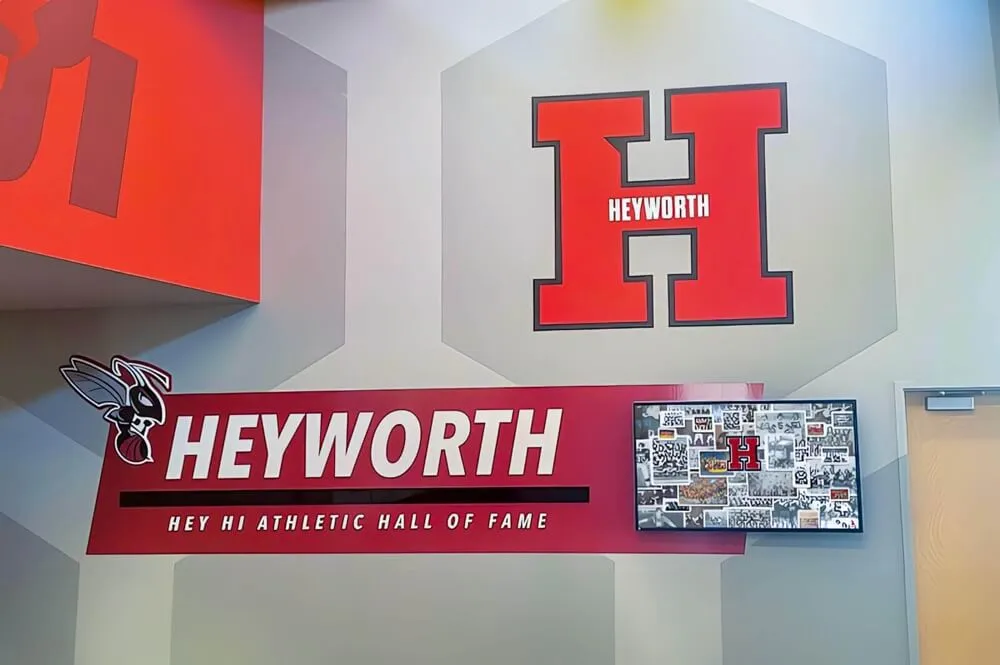
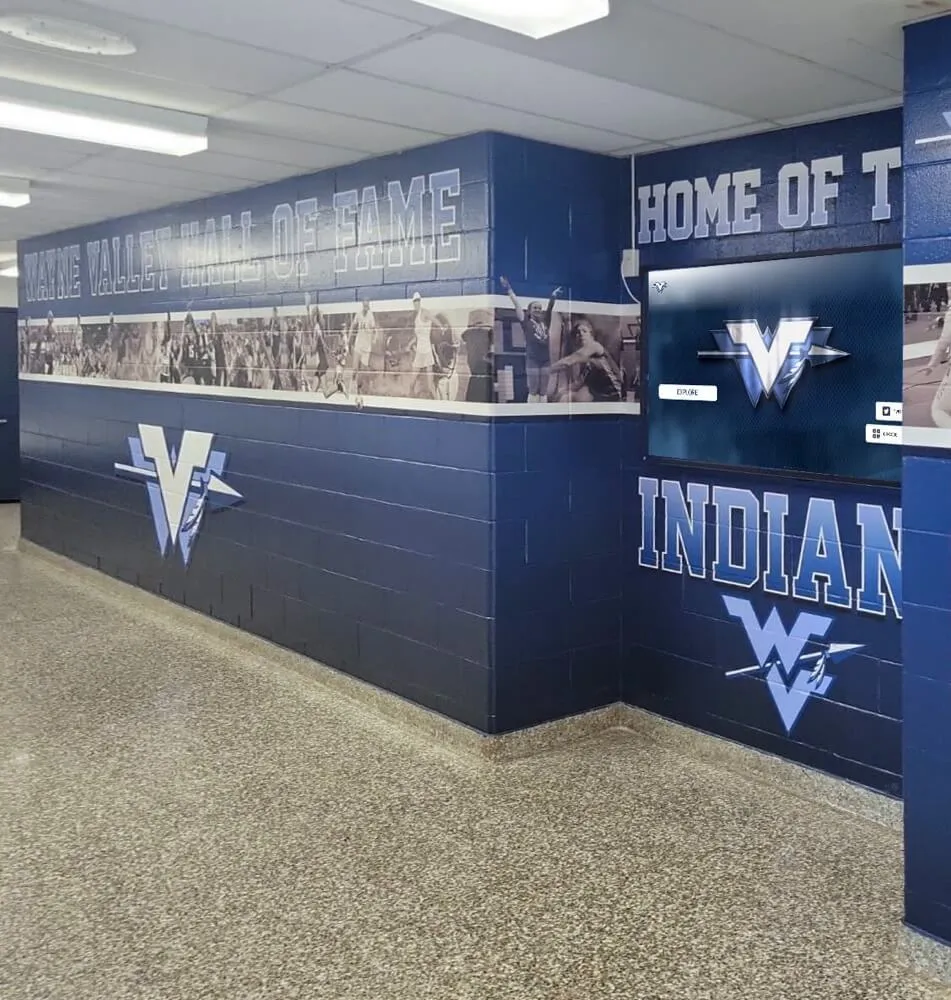
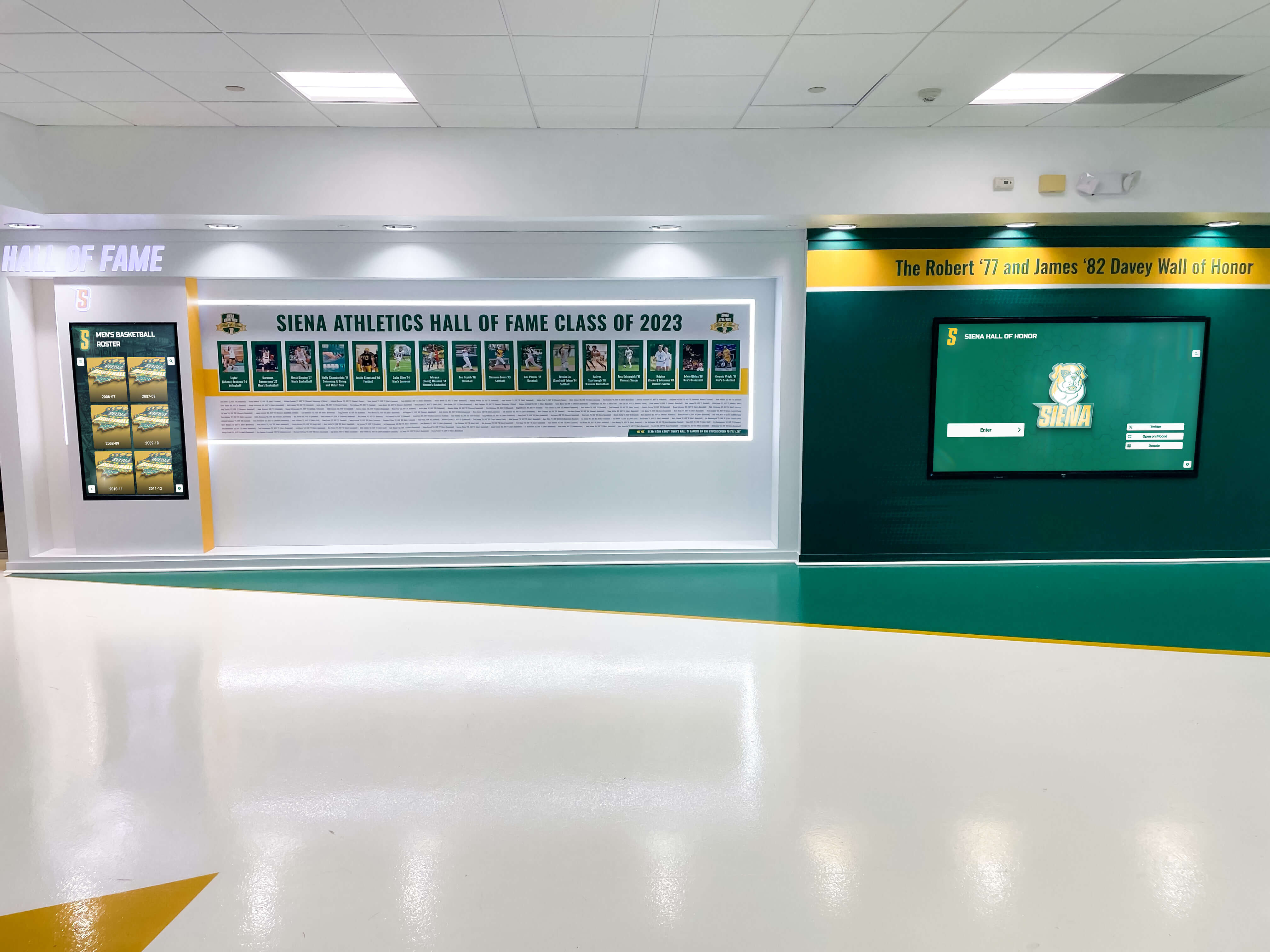
Options range from physical trophy cases with dedicated FBLA sections, to framed photo galleries from State and National Leadership Conferences, to high school wall of fame displays that integrate academic and career achievement alongside athletic honors.
When planning a permanent display, administrators should think about what they want future students to see: the names of national competitors from five, ten, or fifteen years ago; the chapter officer rosters from each class; the year the chapter first earned Gold Seal status. That kind of institutional history inspires current students in ways that current-year plaques cannot.
Digital Recognition Displays: The Case for Interactive FBLA Exhibits
Traditional trophy cases and bulletin boards have physical limits: finite shelf space, materials that age and deteriorate, and an inability to tell the story behind the achievement. Digital recognition systems address all three constraints.
What a Digital FBLA Recognition Display Looks Like
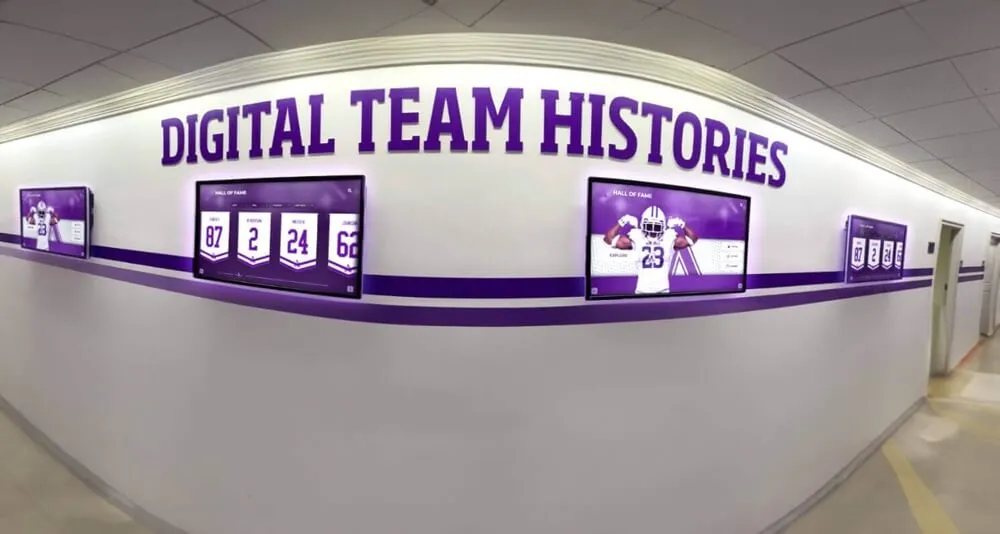
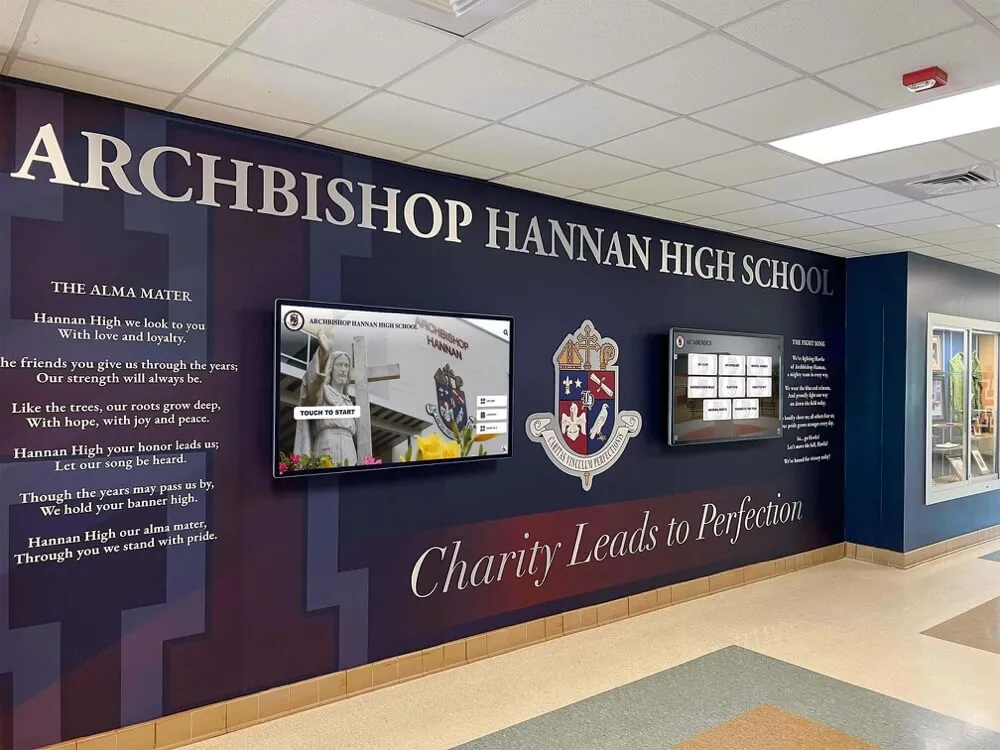
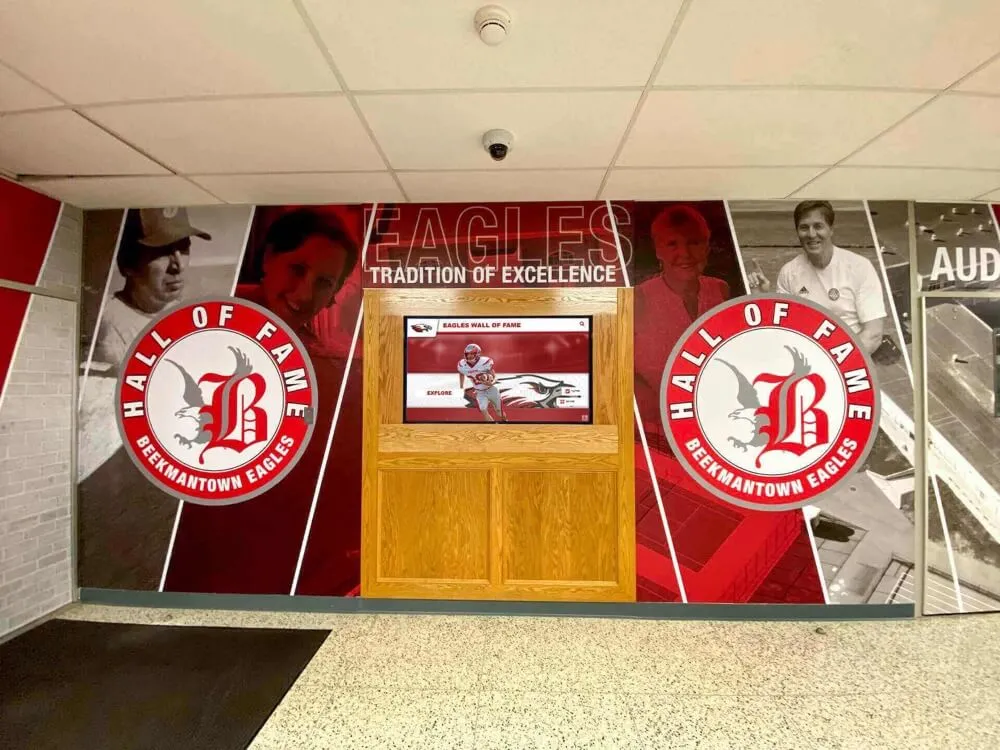
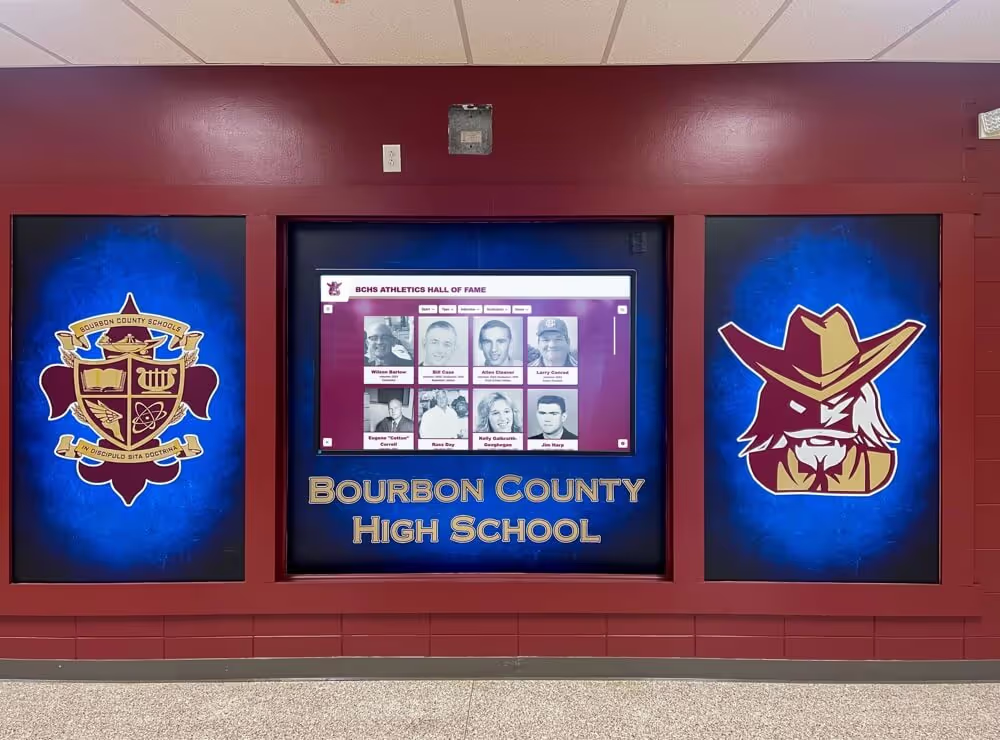
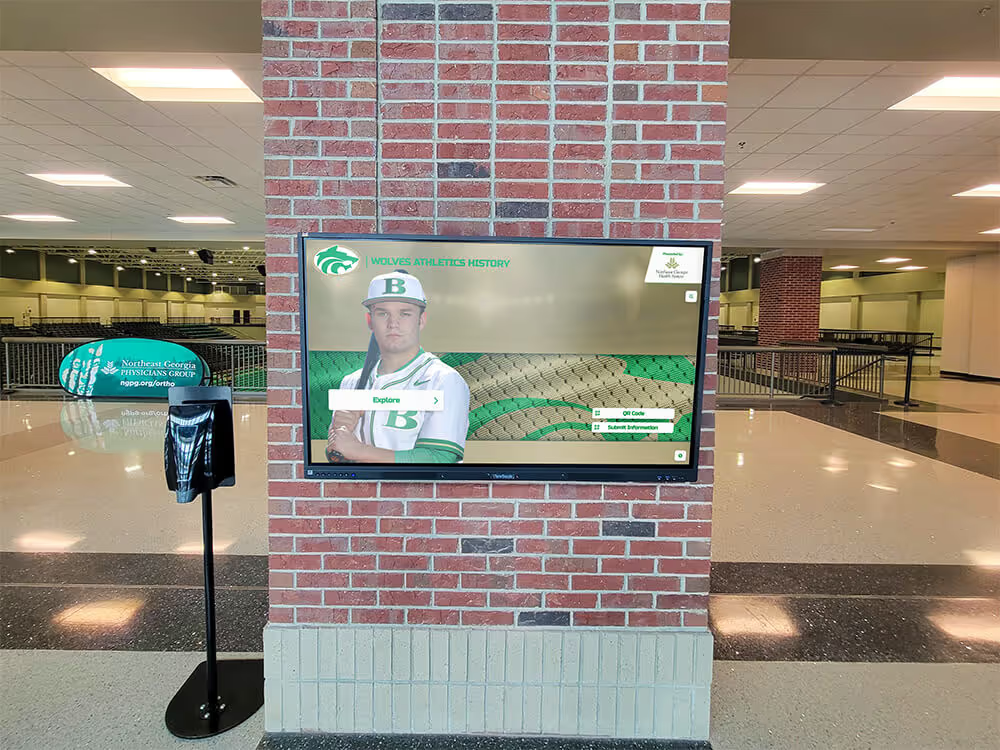
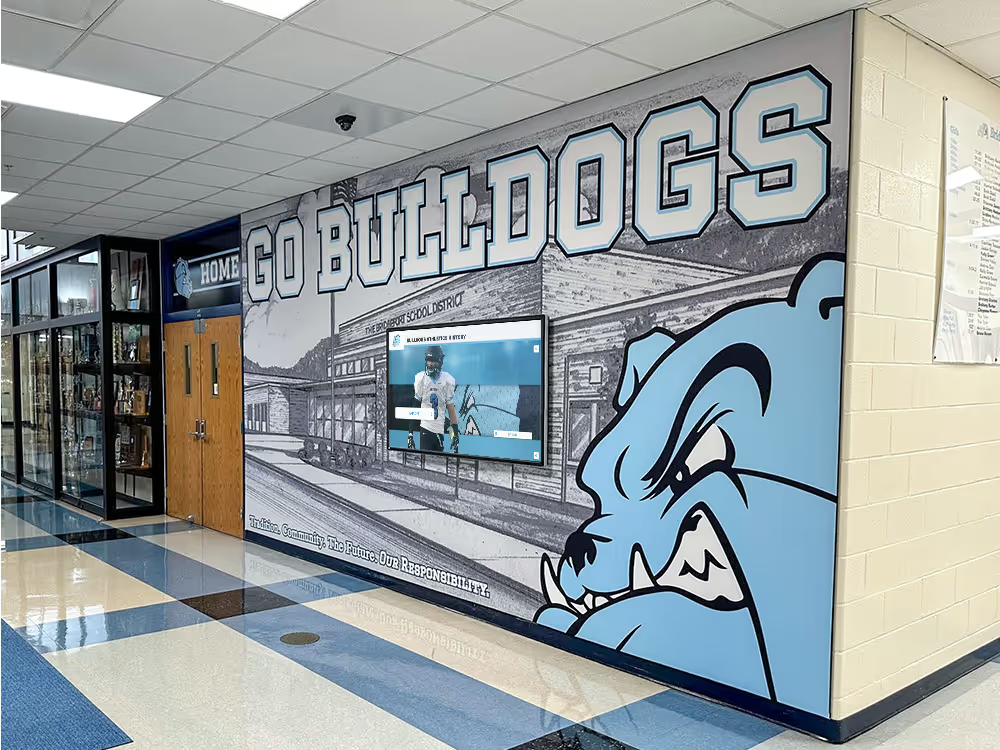
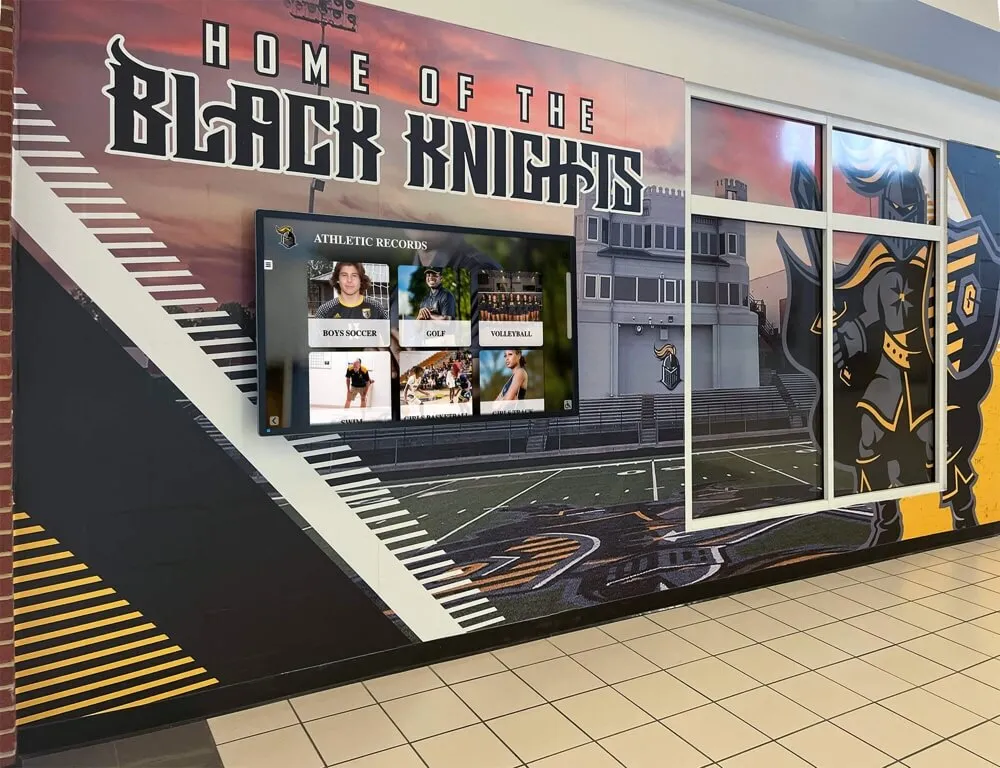
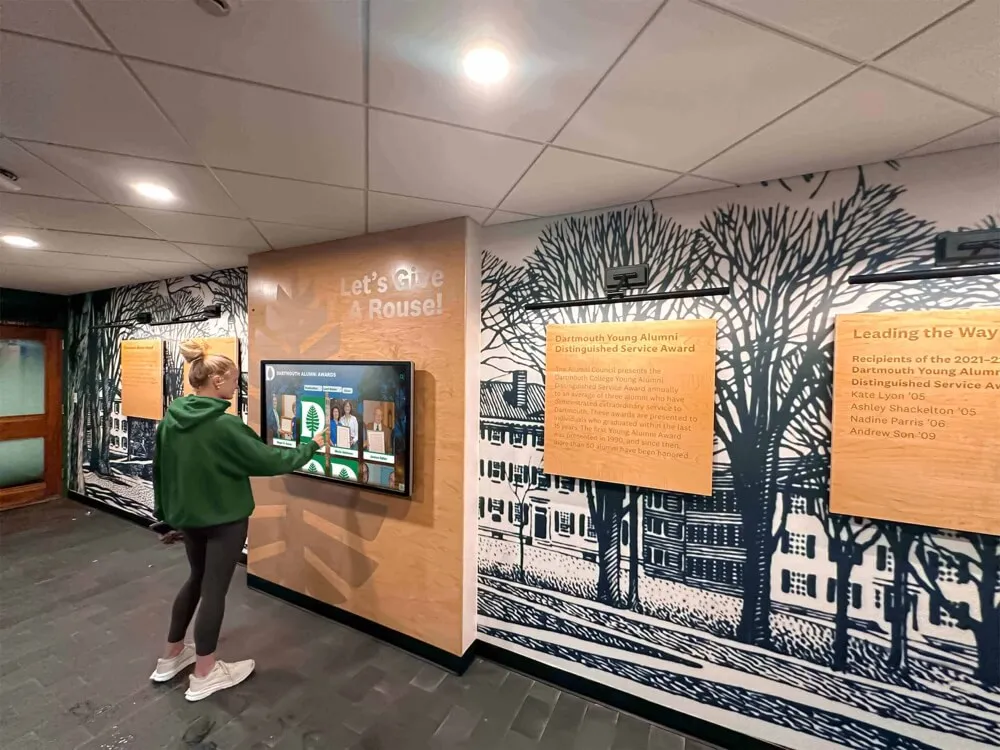
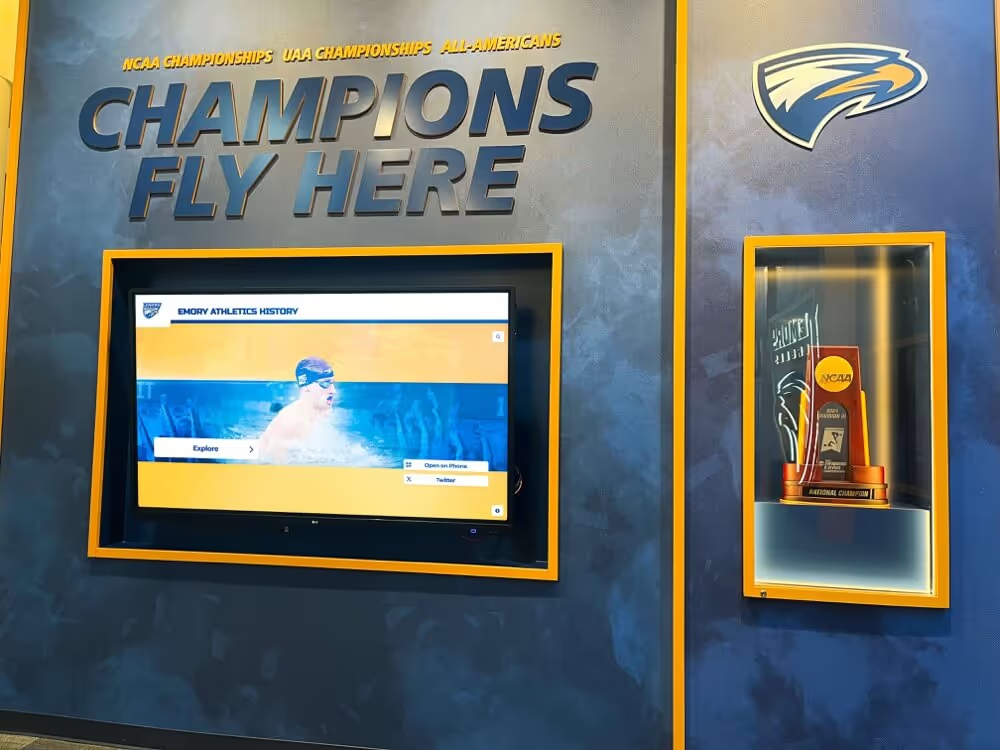
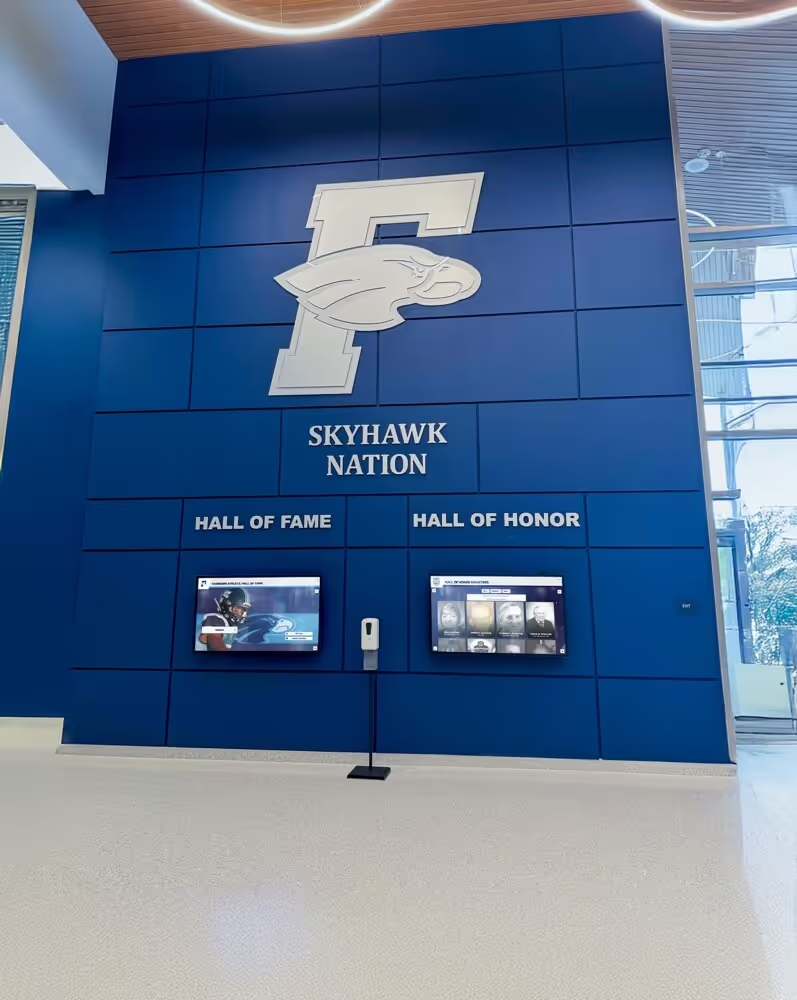
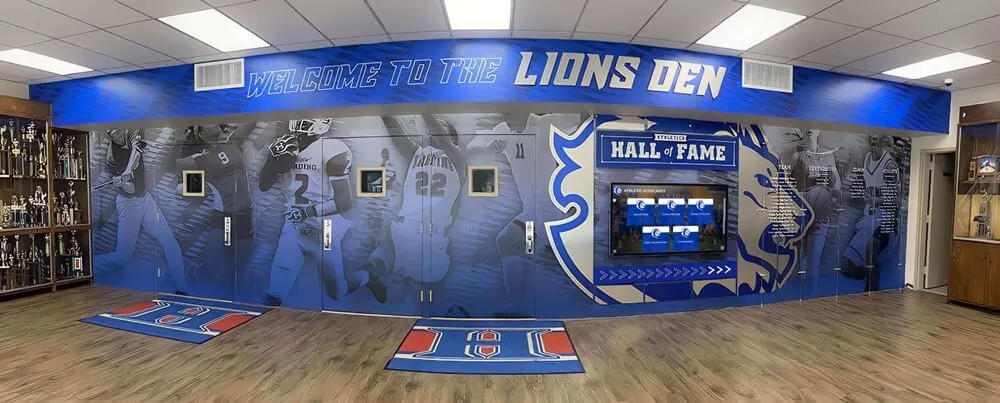
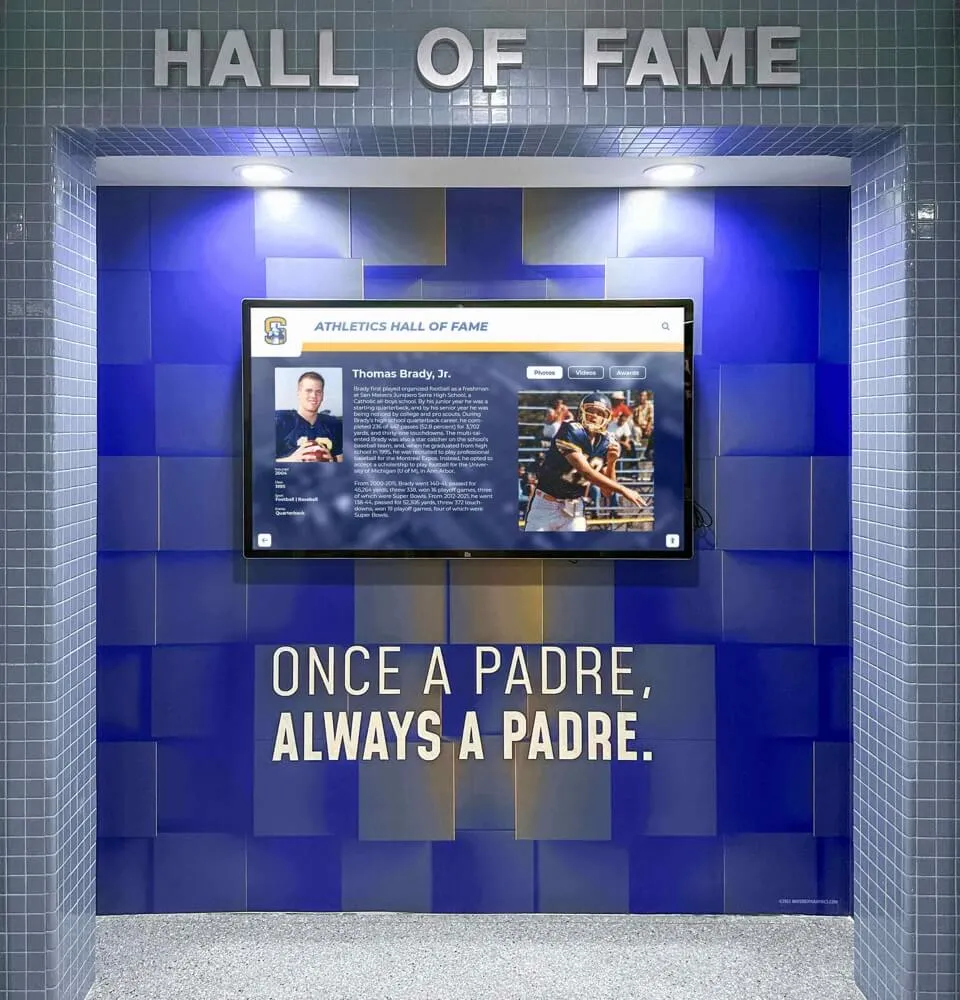
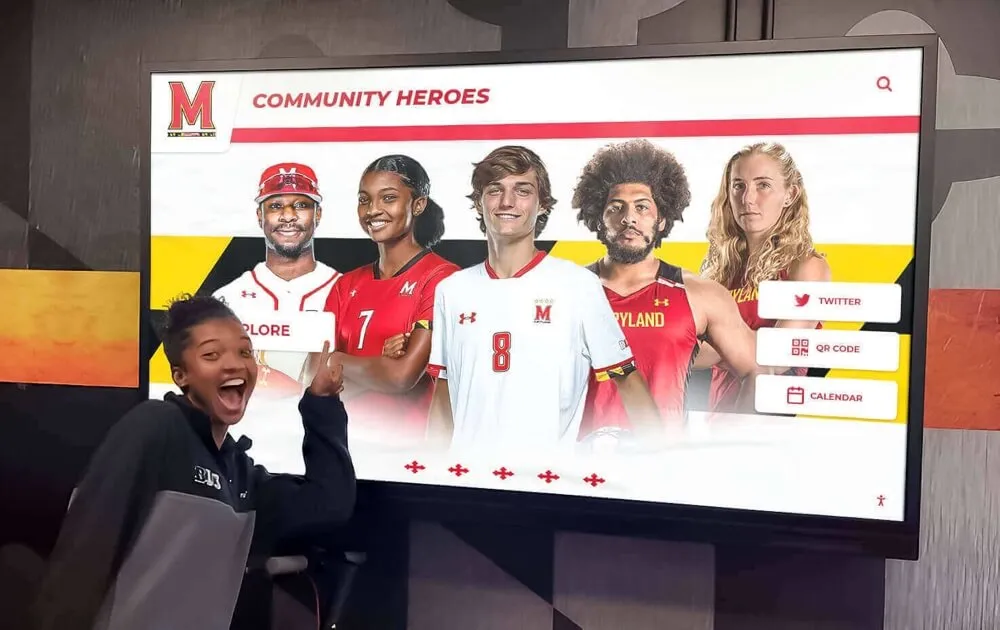
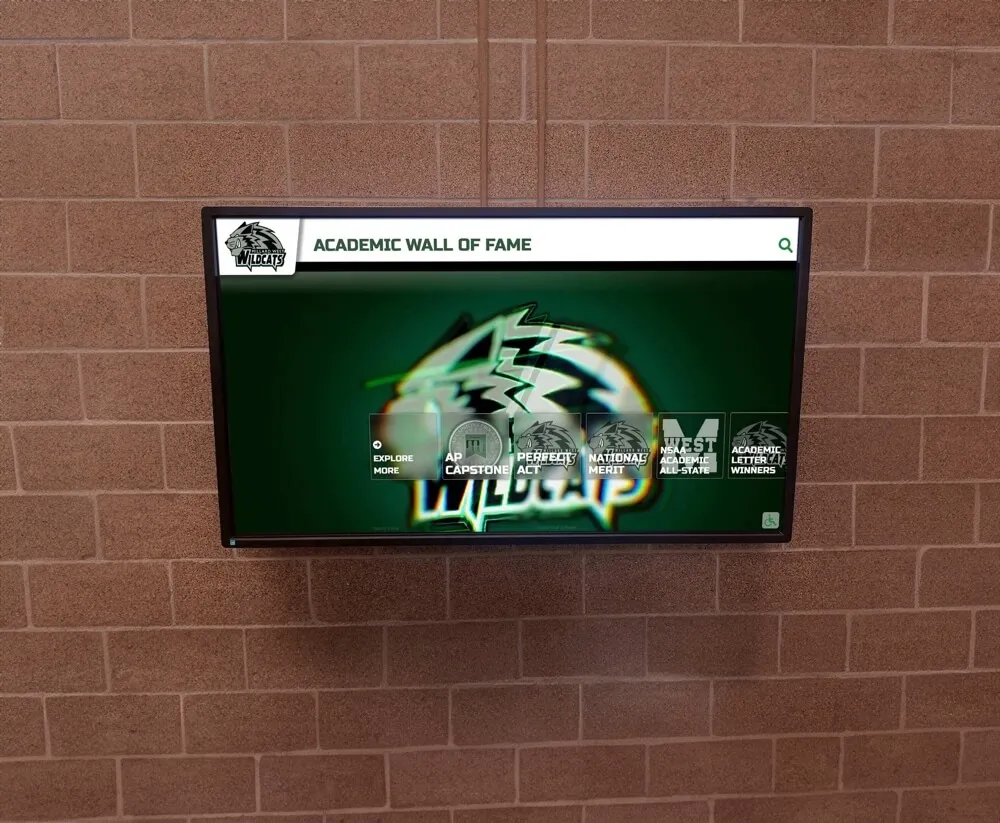
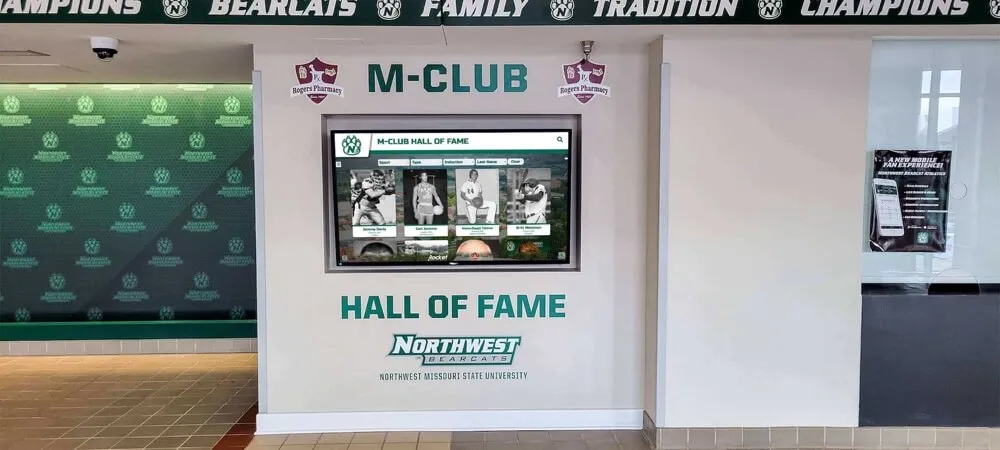
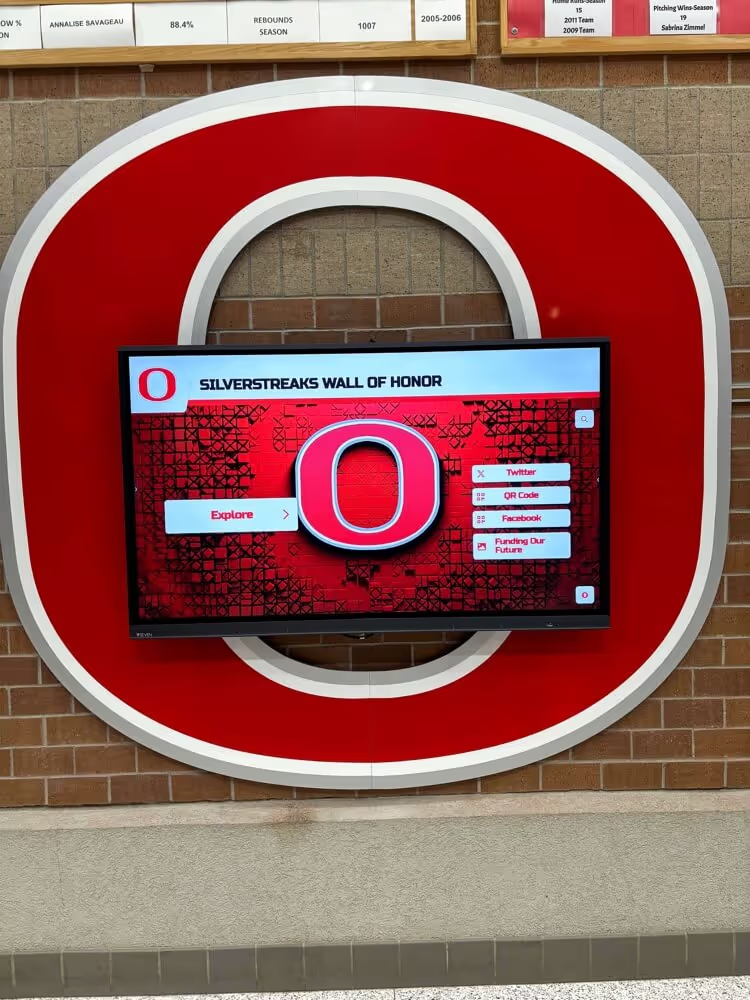
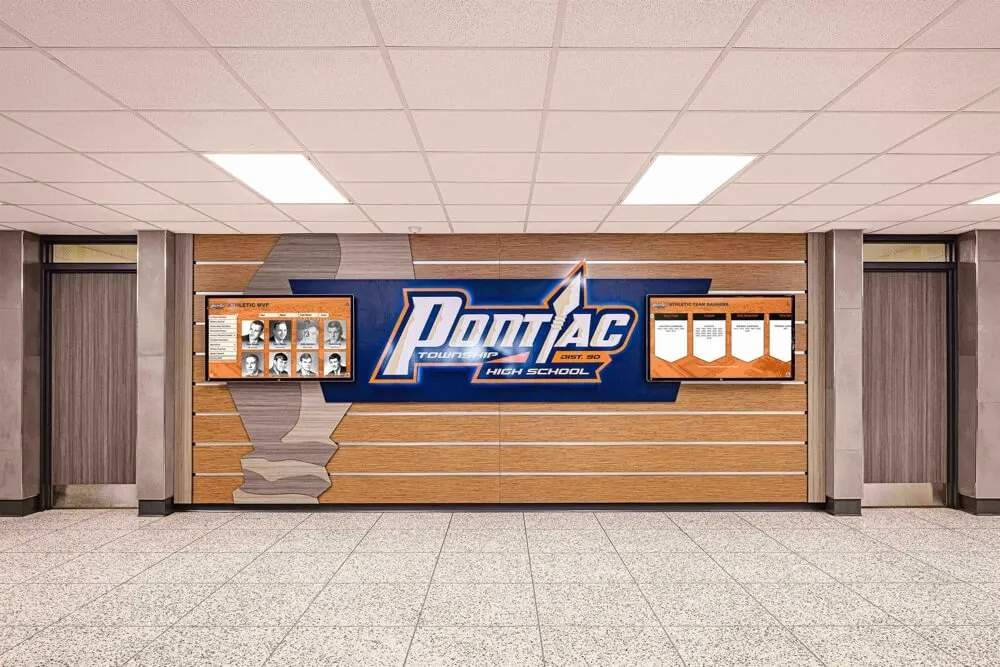
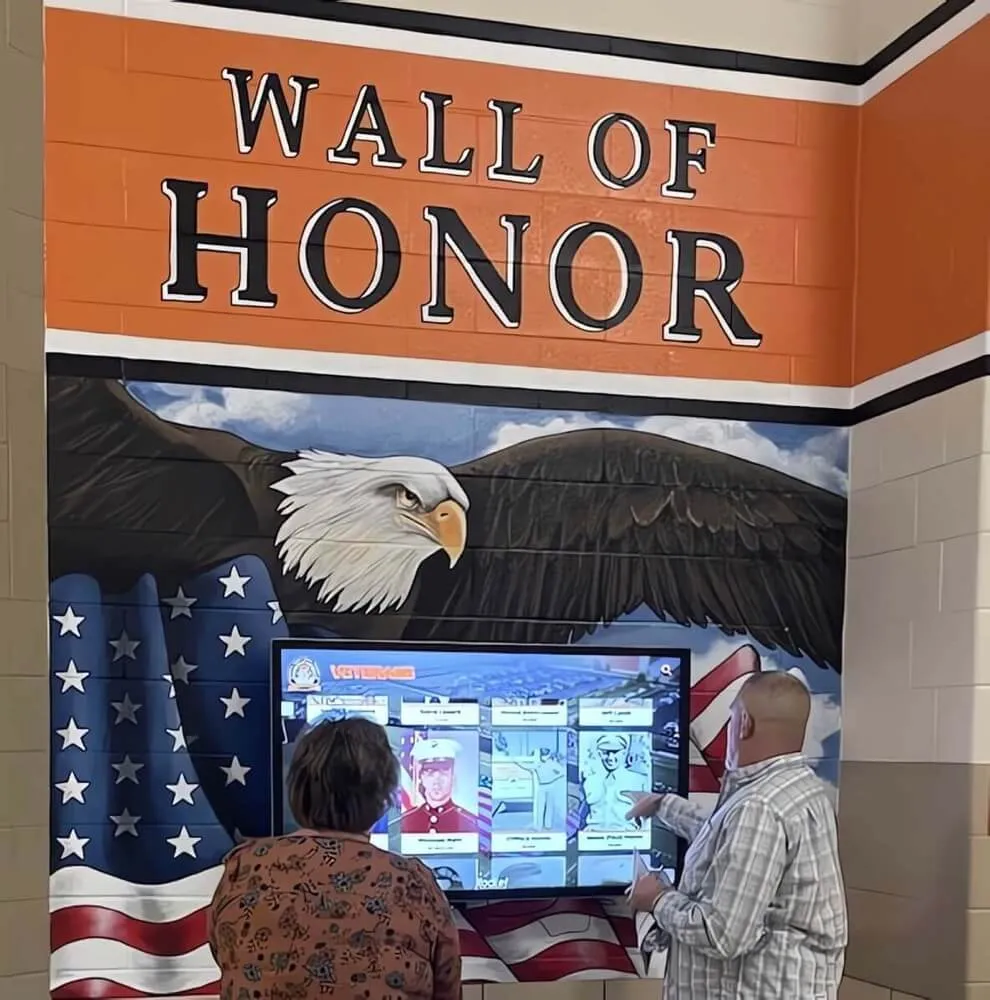
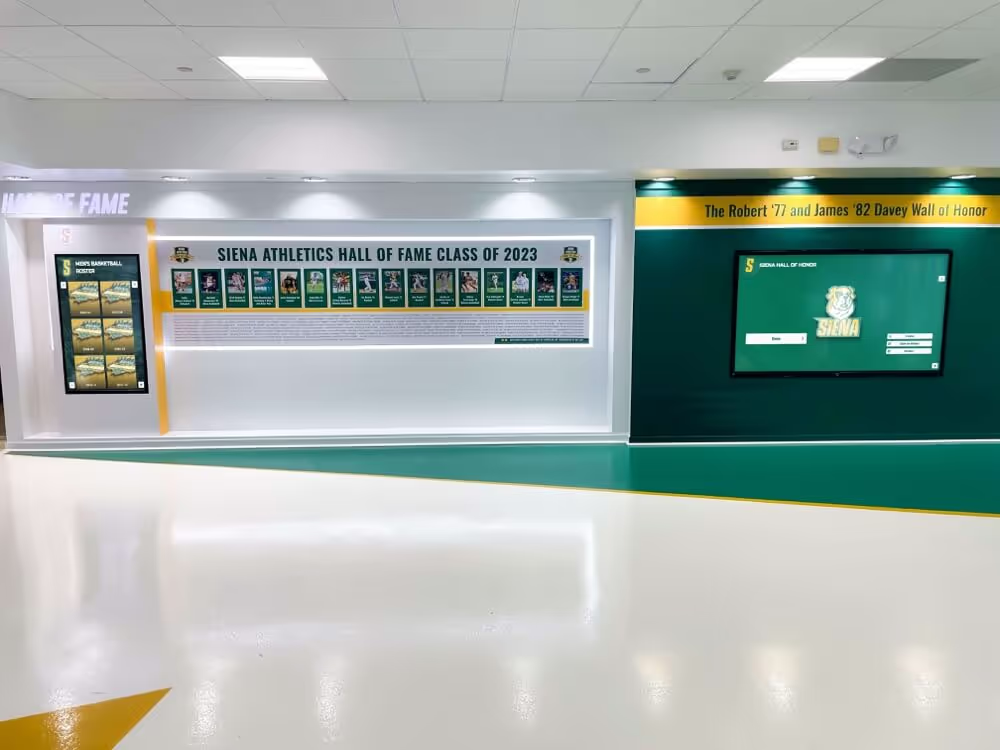
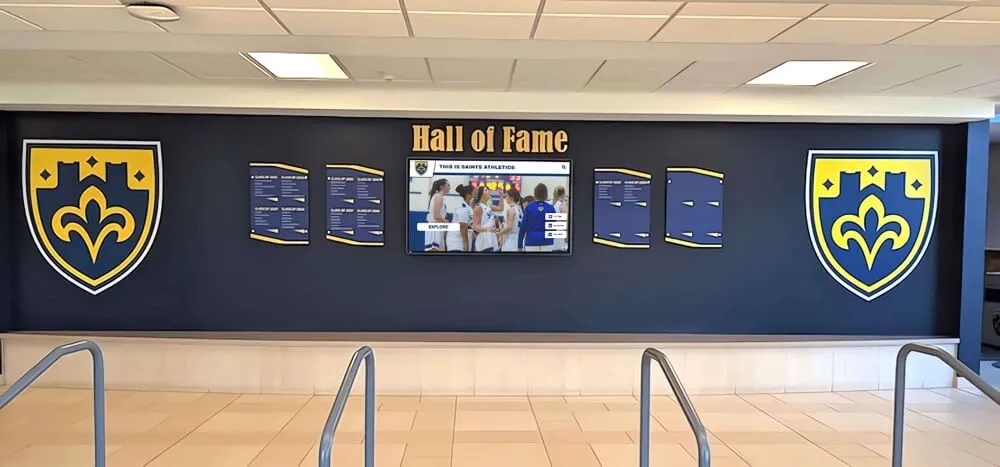
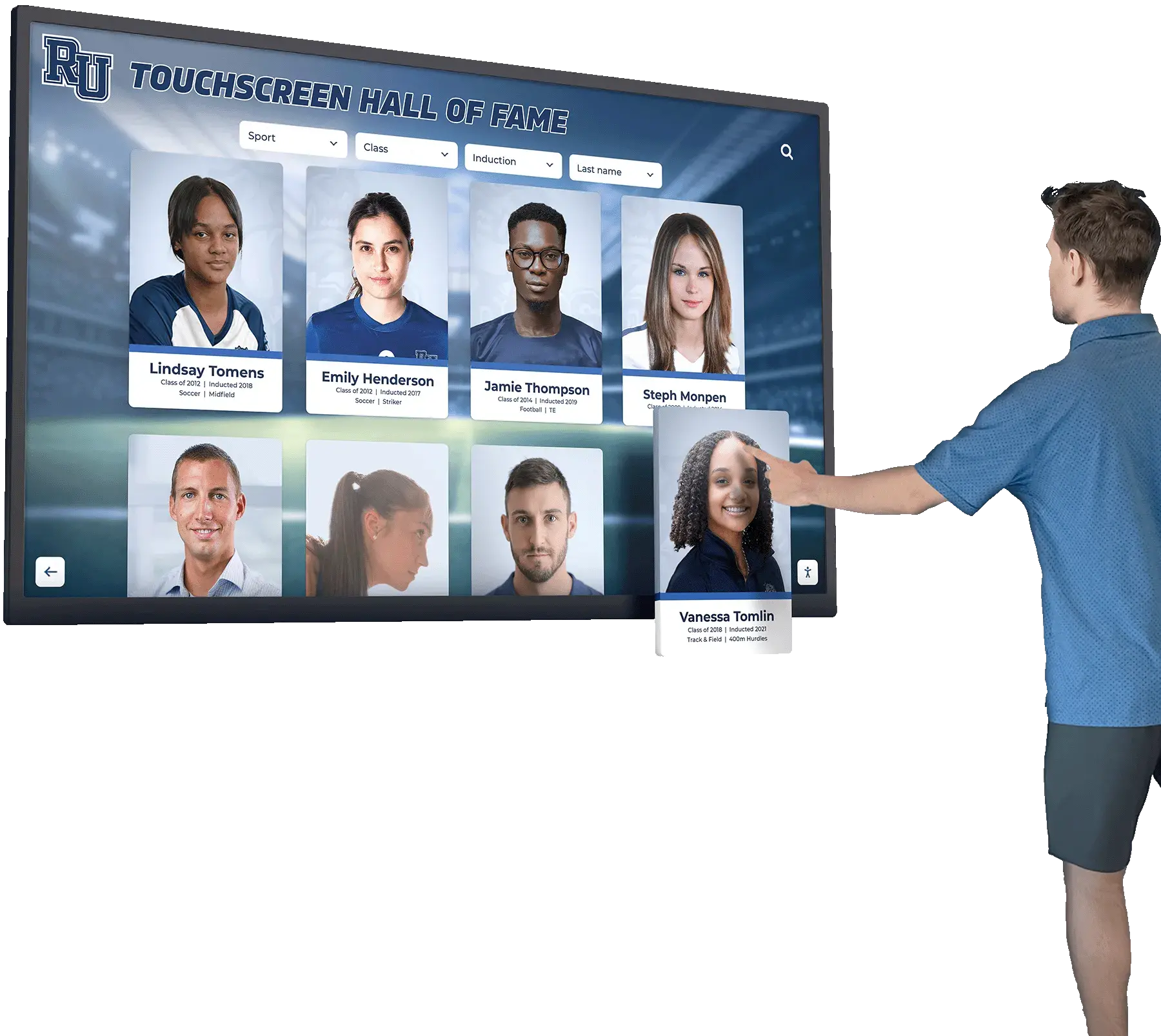
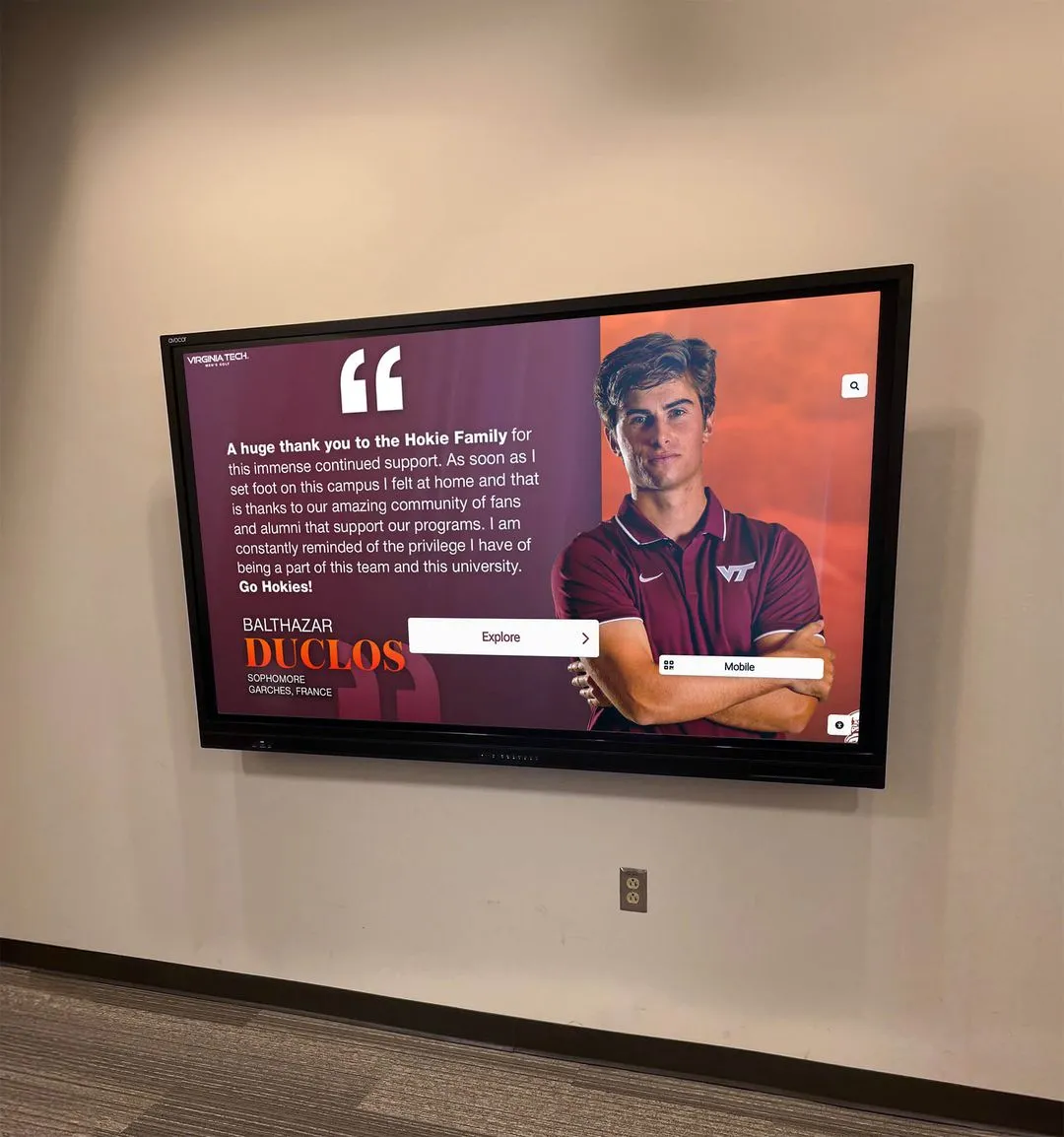
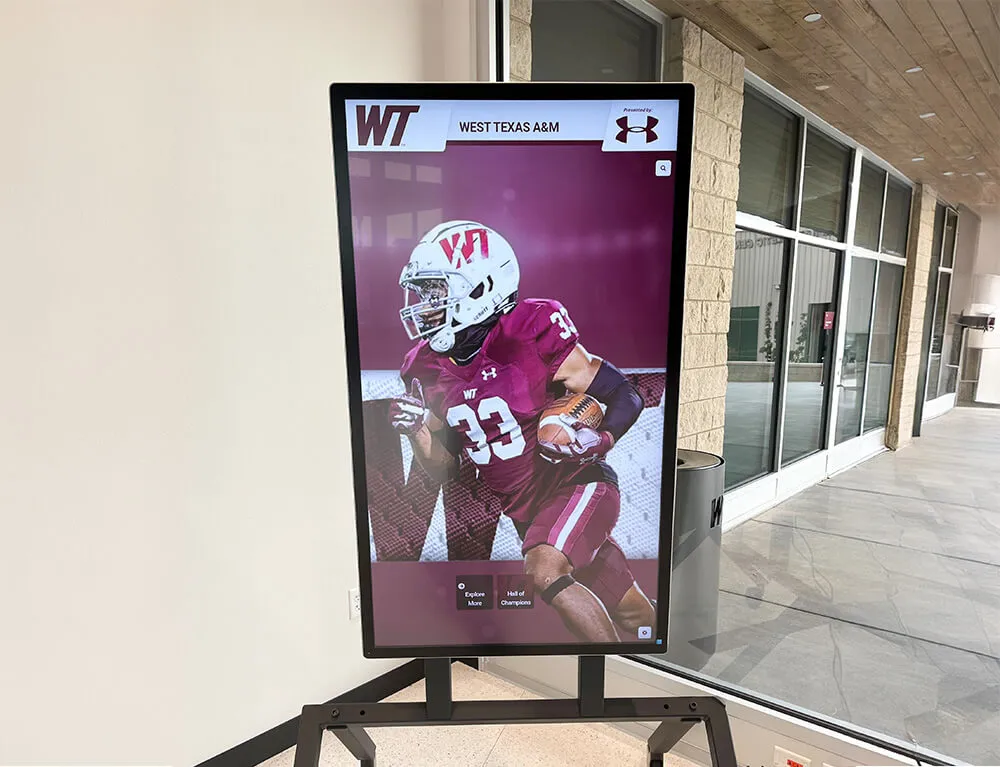
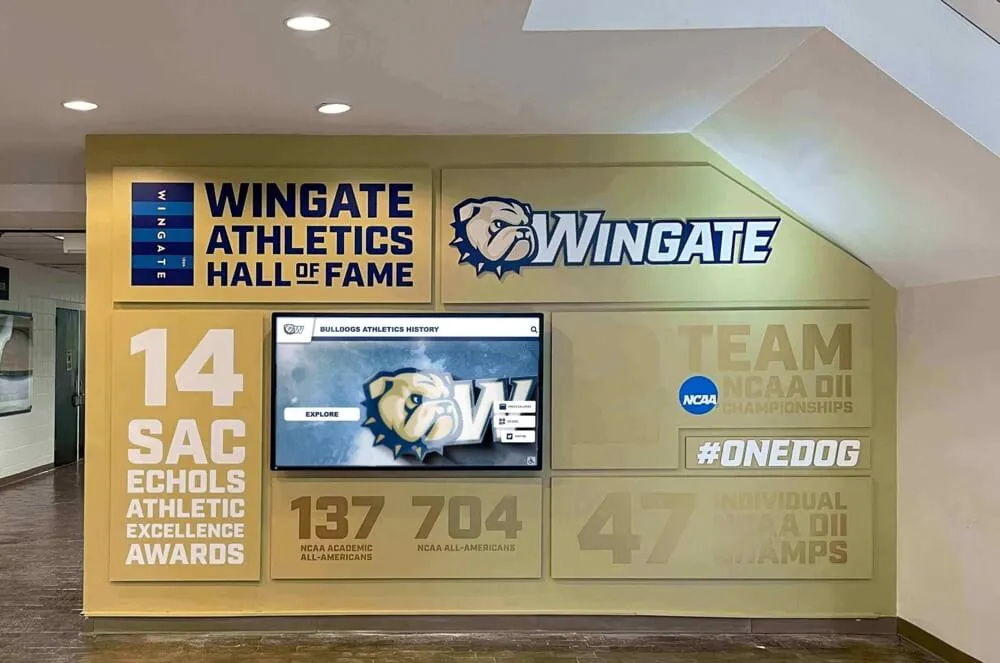
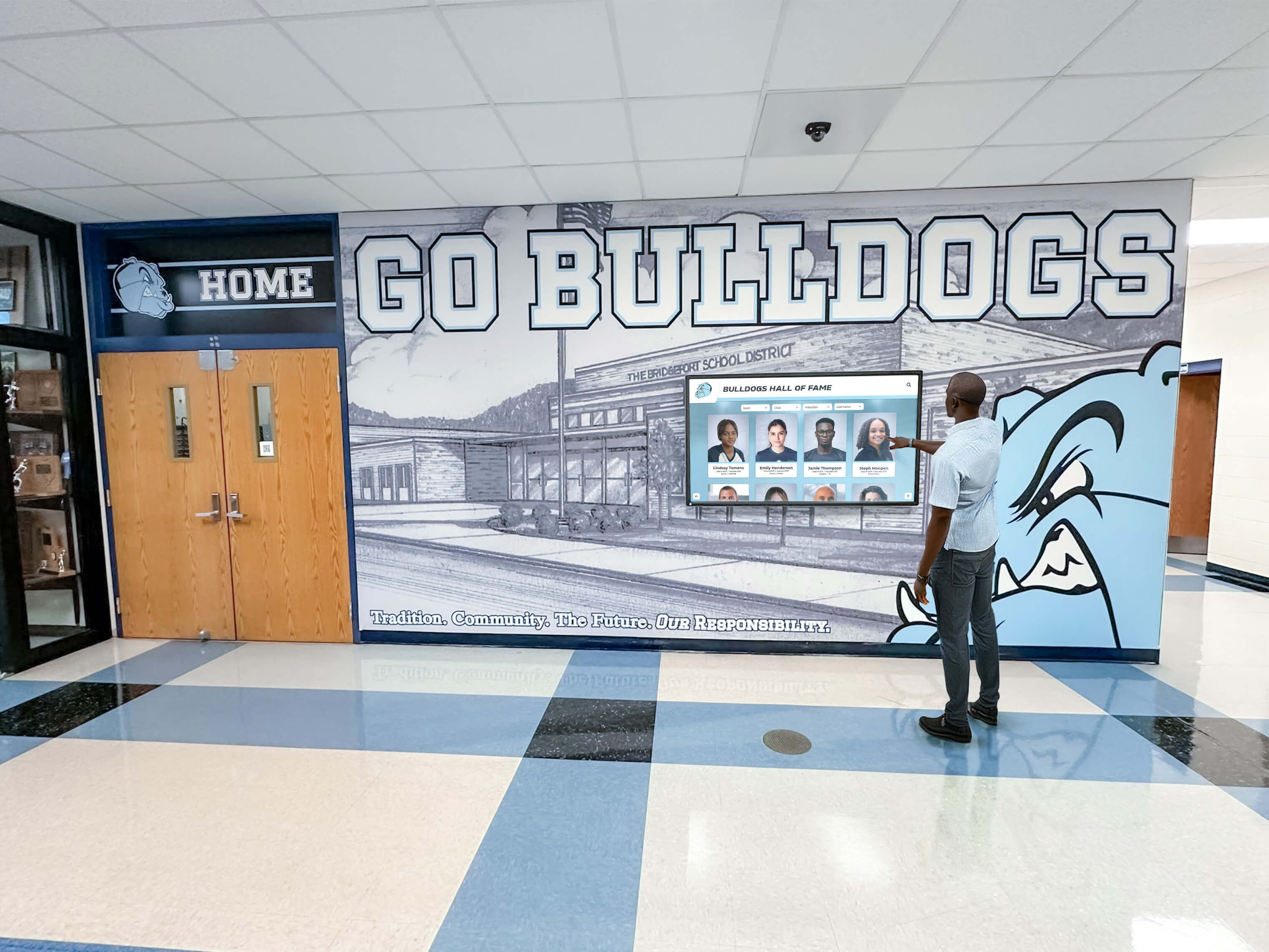
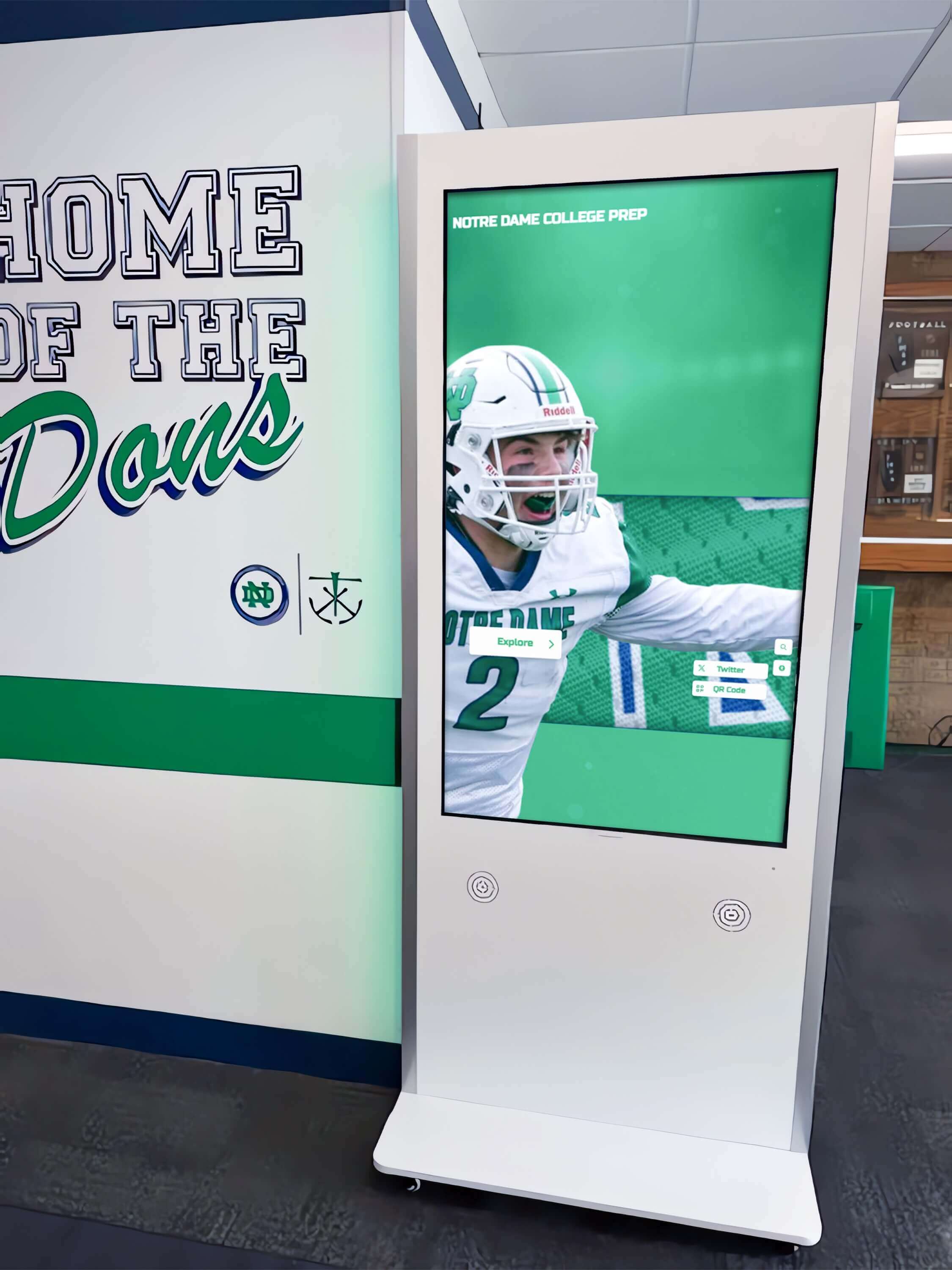
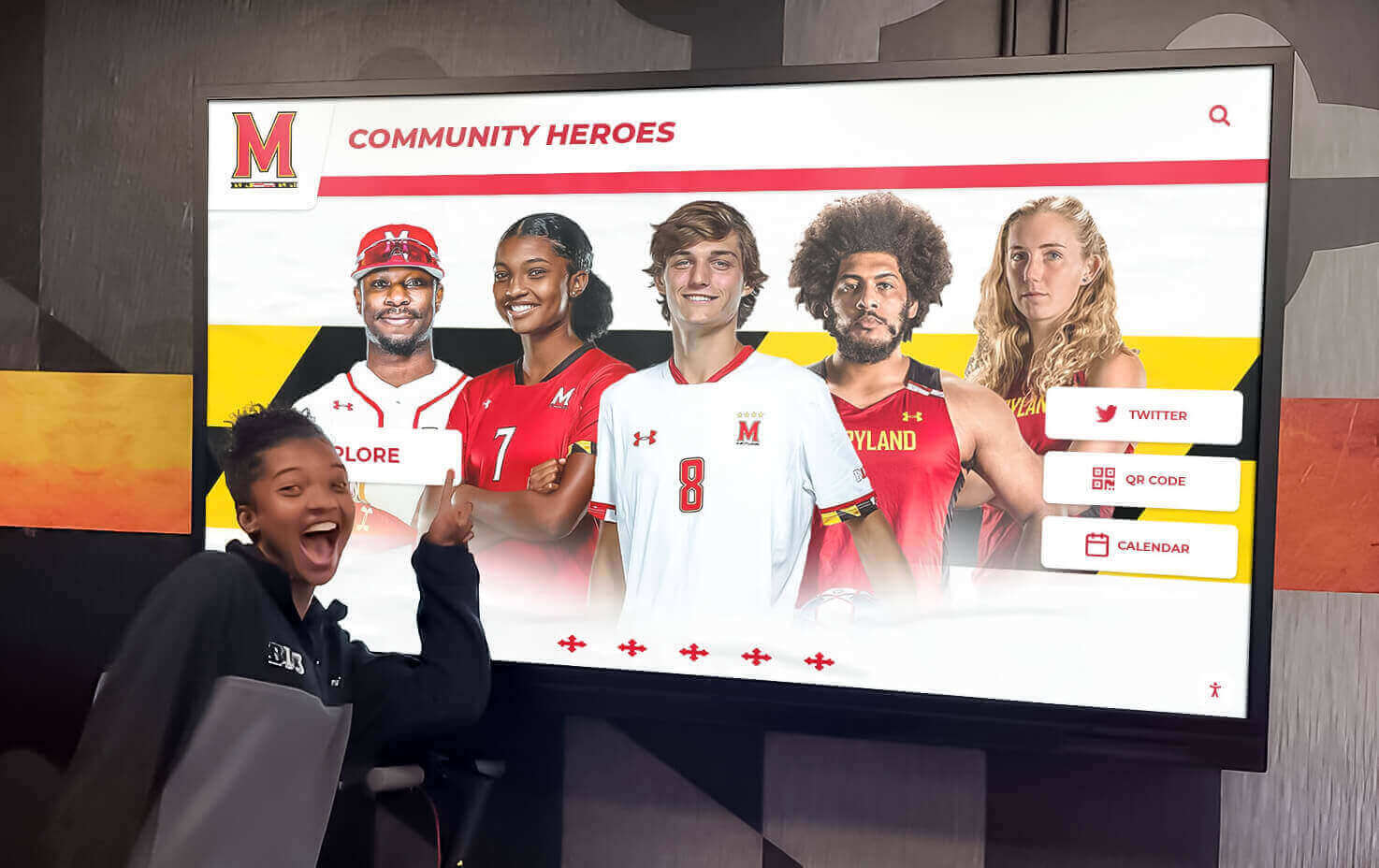
An interactive digital display installed in a school lobby or main hallway can serve as a living record of FBLA achievement. Key content categories include:
Annual State Qualifier Rosters — updated each spring with photos, event categories, and placement results from the State Leadership Conference.
National Leadership Conference Competitors — a highlighted record of every student who has represented the school at the national level, organized by year.
Chapter Officer History — an archive going back as many years as records allow, showing the student leadership legacy of the chapter.
Award Highlights — Gold Seal Chapter years, Who’s Who recipients, American Enterprise Award honorees, Business Achievement Award earners.
Photo Galleries — images from SLC and NLC events that give visitors a sense of the experience without requiring explanation.
Adviser Recognition — honoring the faculty advisers who built the program over time.
Unlike a physical display, a digital system never runs out of space. Unlike an annual plaque, it doesn’t require reproduction costs when updated. Unlike a bulletin board, it stays up year-round and accumulates the kind of institutional memory that makes every cohort of students feel connected to a program larger than themselves.
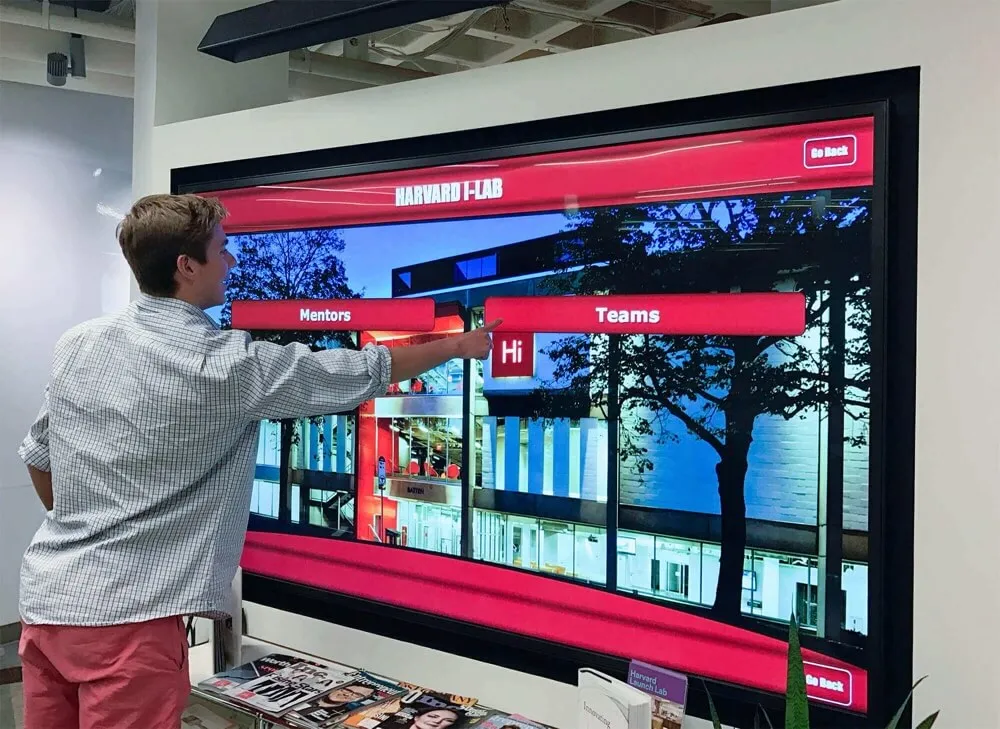
For administrators evaluating options, touchscreen kiosk software guides provide a useful overview of what these systems can do and how they’re typically managed in school environments. The technology is now accessible enough that schools of most sizes can implement it with manageable ongoing costs.
Integration with Broader School Recognition Infrastructure
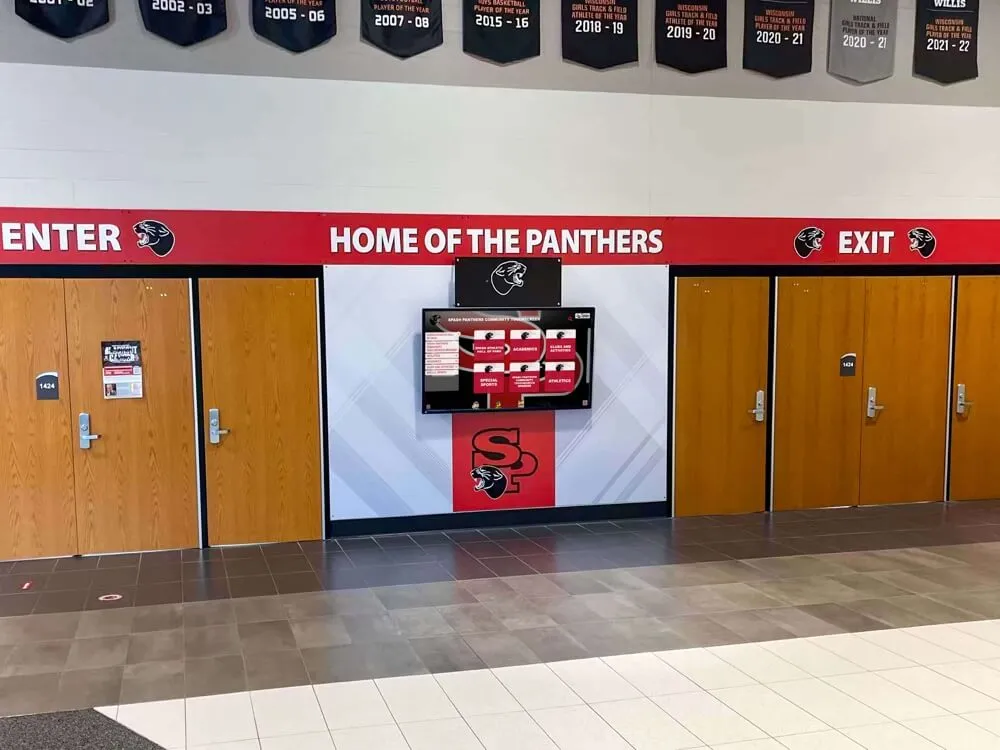
One of the strongest arguments for a digital recognition system is consolidation. Most schools recognize multiple groups — NHS, athletics, FFA, band, and yes, FBLA — through a collection of disconnected physical installations: plaques here, a trophy case there, a bulletin board in a different hallway. Visitors and new students have no clear way to discover the full scope of what the school honors.
A unified interactive display system — covering athletics, academics, arts, and career education — communicates something powerful: this school honors all forms of student achievement, and every program matters. Schools exploring this model can start with resources on digital trophy touch walls to understand what integration looks like in practice.
For schools that want guidance on how athletic administrators make these decisions, choosing a digital hall of fame provider applies equally to academic and career recognition programs — the evaluation criteria for vendor selection, content management, and hardware durability translate across all recognition contexts.
Practical Steps for Administrators Ready to Act
Closing the FBLA recognition gap doesn’t require a capital campaign or a facilities overhaul. It requires deliberate process changes that accumulate over time.
Step 1: Audit your current recognition ecosystem. Walk through your building and document where each student group is recognized. Athletics, NHS, yearbook, band, drama — and FBLA. If FBLA has no permanent presence, that’s the baseline you’re changing.
Step 2: Create a post-conference recognition workflow. Assign someone — the adviser, a front office staff member, or the principal’s administrative assistant — to send formal recognition communications within one week of every State Leadership Conference and National Leadership Conference. Build this into the academic calendar, not as an afterthought.
Step 3: Establish graduation recognition criteria for FBLA. Draft a formal policy that names FBLA state qualifiers, national competitors, Who’s Who recipients, and multi-year chapter officers in graduation programs and commencement ceremonies. Align this with NHS and AP recognition criteria so the standards are parallel.
Step 4: Build a chapter achievement archive. Work with the current adviser and any previous advisers to document the chapter’s competitive history: every state placement, every national qualifier, every chapter award, officer rosters going back as far as possible. This archive is the foundation for any physical or digital display you create.
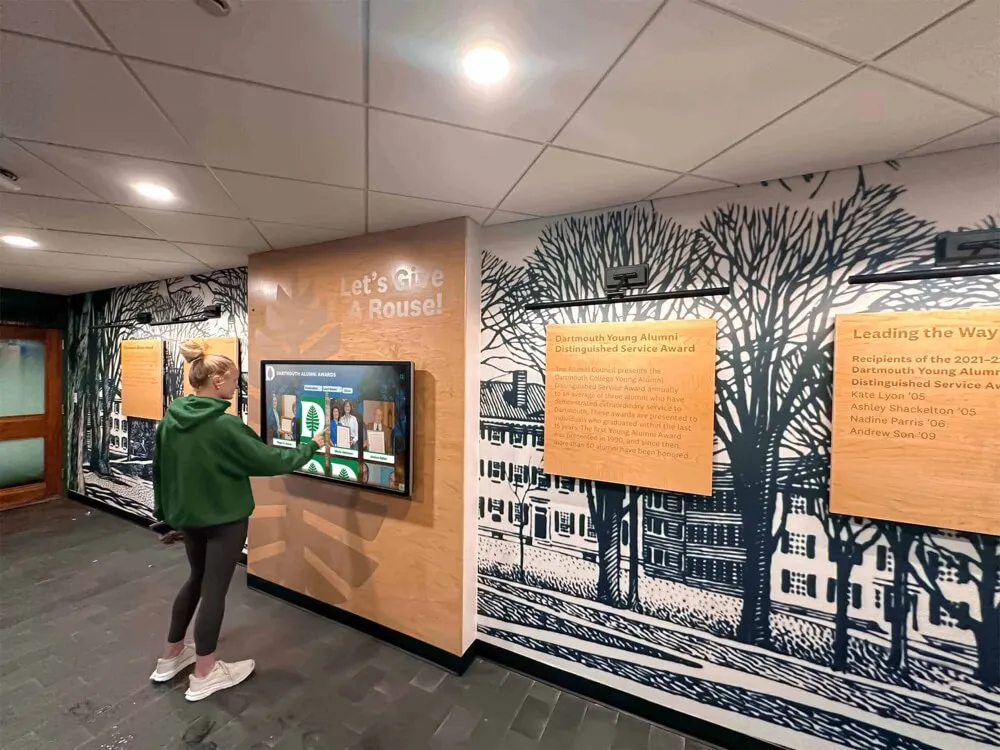
Step 5: Evaluate your long-term recognition infrastructure. If your school is ready to invest in a permanent solution, the options are now sophisticated and accessible. Best digital signage software for schools provides a useful comparison framework for the technology category, while interactive kiosk software guides help administrators understand what installation and ongoing management actually look like.
Step 6: Connect FBLA recognition to broader school culture narratives. The most effective recognition programs aren’t standalone installations — they’re part of a school’s identity story. When the principal talks about what the school values, FBLA achievements should be in that conversation alongside athletic accomplishments and NHS membership. When prospective families tour the building, the FBLA display should be on the tour route. When the alumni association hosts events, FBLA chapter history should be part of the institutional story that gets told.
Similar approaches work for parallel career-focused student organizations — see how FFA award displays and recognition models translate across CTE program recognition to understand the category-wide opportunity.
Recognizing FBLA Supports Business Education Advocacy
Every time a school administrator publicly recognizes FBLA achievement — at a board meeting, in a budget presentation, on the school’s social media accounts — they are making an argument for the value of business education. This matters at a practical level.
CTE programs, including business education, are regularly scrutinized when district budgets tighten. Administrators who can point to a track record of FBLA competitive success, national qualifiers, Gold Seal Chapter distinctions, and Who’s Who honorees are making a data-driven case for the program’s value. Recognition isn’t just about the students who earned it — it’s institutional evidence that the program works.
Schools that build strong FBLA recognition cultures also tend to see measurable programmatic benefits: higher chapter enrollment, better retention of competitive students through senior year, stronger adviser recruitment and retention, and greater community support for CTE funding requests. Recognition and program quality reinforce each other in a cycle that administrators can deliberately initiate.
Rocket Alumni Solutions builds interactive touchscreen recognition systems designed for schools that want to give every student achievement — FBLA, athletics, academics, arts, career education — a permanent, high-visibility home. If your school is ready to give Future Business Leaders of America members the recognition they’ve earned, our team can help you design a solution that fits your building, your budget, and your community.