



Key Takeaways
Explore traditional donor recognition plaque ideas and modern digital alternatives. Compare materials, designs, costs, and benefits to create meaningful recognition that inspires future giving.
Organizations honoring donors face a fundamental decision that significantly impacts both immediate recognition effectiveness and long-term fundraising success: how to acknowledge generous supporters in ways that feel meaningful, inspire future giving, and remain relevant across decades. The donor recognition plaque has long served as the standard solution—permanent, dignified, traditional. Yet modern alternatives challenge this assumption, offering capabilities traditional plaques cannot match while addressing limitations that have frustrated development professionals for generations.
This comprehensive guide examines both traditional donor recognition plaque options and emerging digital alternatives, helping schools, nonprofits, universities, healthcare institutions, and cultural organizations make informed decisions that honor supporters appropriately while building fundraising momentum for the future.
Understanding the Purpose of Donor Recognition
Before examining specific recognition formats, development professionals must understand what effective donor acknowledgment accomplishes beyond simply saying “thank you.” Recognition serves strategic purposes that directly impact organizational sustainability and fundraising performance.
Multiple Functions of Strategic Donor Recognition
Expressing Authentic Gratitude: At its core, recognition demonstrates genuine appreciation for supporters who invested resources in your mission. This gratitude fulfills ethical obligations while reinforcing positive donor relationships essential for continued support.
Creating Social Proof: Public recognition normalizes giving within your community by demonstrating that philanthropy represents expected behavior among peers and leaders. When prospective donors encounter comprehensive recognition of previous supporters, they observe that giving is valued, appreciated, and remembered—powerful motivators for their own contributions.
Inspiring Future Giving: Recognition serves as the most effective silent solicitation tool available. When prospects see distinguished community members, respected alumni, or admired leaders honored as donors, they aspire to join that celebrated group. Effective recognition creates aspirational peer communities that others want membership in through their own giving.
Demonstrating Stewardship Commitment: Comprehensive, well-maintained recognition programs signal to prospective major donors that your organization remembers and celebrates supporters over the long term. This stewardship evidence directly influences major gift decisions, particularly for donors considering transformational contributions.
Building Institutional Legacy: Recognition documents your organization’s philanthropic history, creating visible narratives connecting past generosity to current excellence and future potential. This legacy storytelling demonstrates sustainability to prospects evaluating whether their investments will create lasting impact.
Common Recognition Challenges
Organizations implementing donor recognition programs encounter predictable obstacles:
Space Limitations: Physical recognition displays consume valuable wall space, forcing difficult decisions about which donors to recognize prominently and where recognition can fit within existing facilities. As donor bases grow, space constraints become increasingly problematic.
Cost Pressures: Quality recognition materials—bronze plaques, engraved nameplates, custom installations—represent significant expenses. Budget-conscious organizations struggle to balance recognition investment against programmatic spending, sometimes resulting in inadequate acknowledgment that undermines fundraising.
Update Complexity: Donor recognition requires ongoing maintenance as supporters increase giving levels, new donors join recognition tiers, or information needs correction. Traditional recognition formats make updates expensive and time-consuming, leading many organizations to defer necessary changes.
Equity Concerns: Ensuring all donors feel appropriately acknowledged across giving levels proves challenging. Traditional recognition often concentrates visibility on major donors while annual fund supporters receive minimal acknowledgment, potentially creating resentment rather than inspiration.
Changing Donor Preferences: Generational shifts influence recognition preferences. While some donors highly value traditional plaques, others find digital recognition more engaging and shareable through social channels important to their personal brands.
Traditional Donor Recognition Plaque Options
Despite emerging alternatives, traditional donor recognition plaques remain popular choices offering particular advantages for certain contexts and donor preferences.
Material Options and Their Characteristics
Bronze Plaques represent the traditional standard for permanent donor recognition:
- Aesthetic Appeal: Bronze offers timeless elegance and gravitas appropriate for significant gifts and formal institutional settings
- Durability: Properly maintained bronze withstands decades without degradation, supporting permanent recognition commitments
- Customization: Bronze accommodates detailed engraving, organizational logos, decorative borders, and various finishes (polished, oxidized, etc.)
- Cost Considerations: Bronze plaque expenses include base material, engraving, mounting hardware, and installation, typically ranging $150-$800 per plaque depending on size and complexity
- Maintenance Requirements: Bronze requires periodic cleaning and may develop patina over time that some find attractive while others prefer preventing through protective treatments

Aluminum Plaques provide affordable alternatives maintaining professional appearance:
- Cost Effectiveness: Aluminum costs significantly less than bronze while offering similar visual impact, typically $75-$300 per plaque
- Lightweight Properties: Easier installation and lower shipping costs compared to heavier materials
- Finish Variety: Available in multiple colors and finishes mimicking bronze or creating contemporary aesthetics
- Weather Resistance: Suitable for outdoor installations with appropriate finish treatments
- Perceived Value Considerations: Some donors may view aluminum as less prestigious than bronze, though quality installations minimize this perception
Acrylic and Lucite Recognition offers modern aesthetics:
- Contemporary Design: Clear or colored acrylic creates sleek, modern recognition suited to innovative organizations
- Layered Depth Effects: Acrylic enables dimensional designs with floating text, embedded graphics, and lighting effects
- Lightweight and Safe: Eliminates concerns about heavy plaques falling or requiring substantial wall reinforcement
- Cost Range: Typically $100-$400 depending on size, complexity, and customization
- Environmental Sensitivity: Some organizations avoid petroleum-based plastics for sustainability reasons
Wood Recognition Plaques provide warm, traditional alternatives:
- Natural Aesthetic: Wood offers organic warmth particularly appropriate for environmental organizations, schools, or settings emphasizing tradition
- Variety of Species: Options from economical oak to prestigious walnut or mahogany enable budget flexibility
- Engraving or Plating: Wood accommodates either direct laser engraving or mounted metal nameplates
- Maintenance Considerations: Wood requires protection from moisture and may age less gracefully than metal options
- Cost Range: Generally $60-$250 based on wood species, size, and finishing quality
Glass and Crystal Recognition conveys premium prestige:
- Elegant Presentation: Glass and crystal communicate exceptional appreciation appropriate for major donors
- Etching and Engraving: Techniques create sophisticated text and graphic effects
- Light Interaction: Transparency and reflective qualities create visual interest
- Fragility Concerns: Requires careful mounting and protection in high-traffic areas
- Premium Pricing: Crystal recognition typically ranges $200-$1,000+ per piece
Design Considerations for Traditional Plaques
Individual vs. Collective Recognition Formats:
Individual plaques dedicated to single donors offer maximum personalization but consume considerable wall space and create visual clutter when numerous donors require acknowledgment. This approach works well for major donors but proves impractical for comprehensive annual fund recognition.
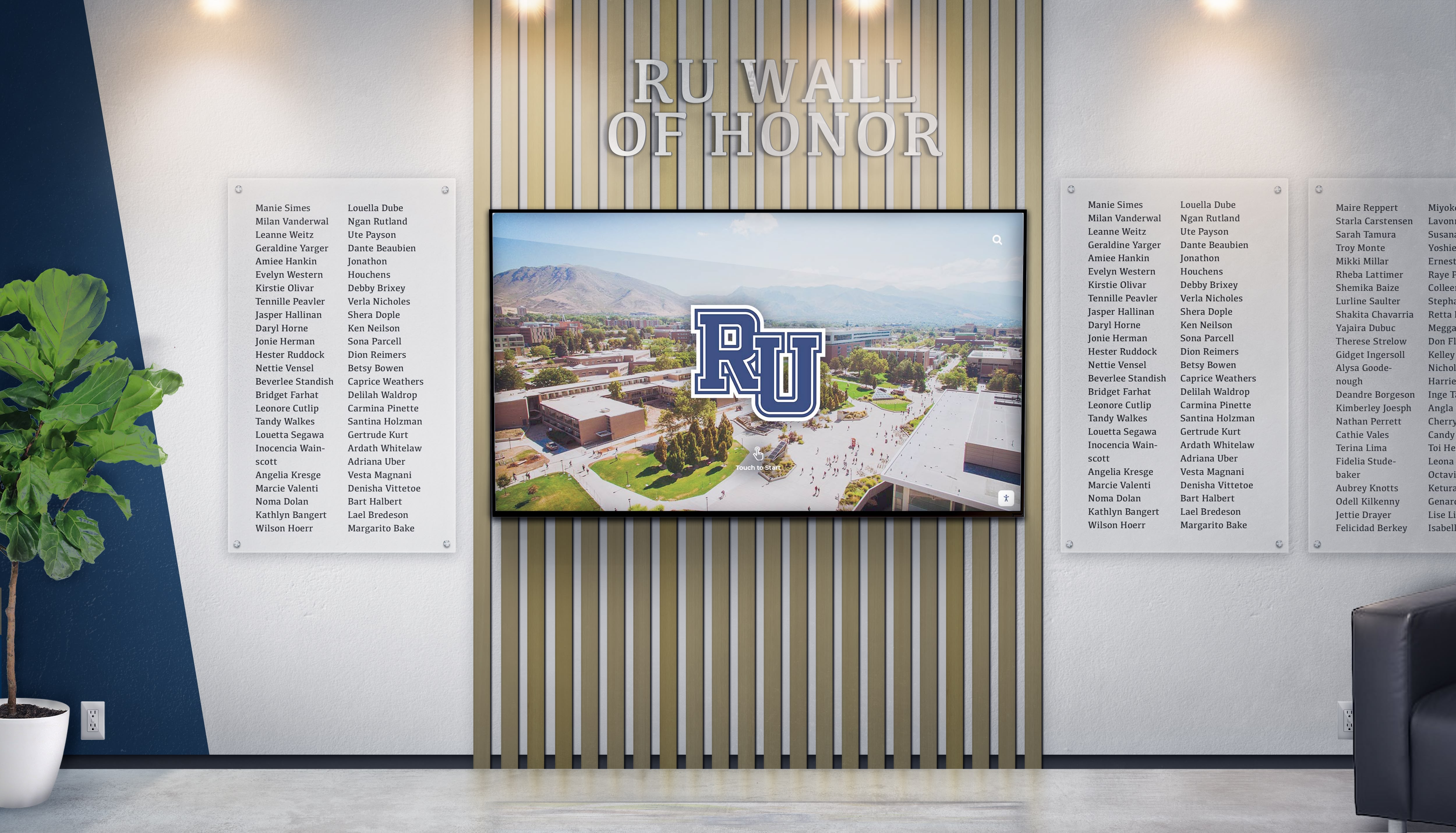
Collective recognition walls featuring multiple donor names on shared plaques maximize space efficiency while maintaining appropriate visibility. Master plaque designs with removable/updatable nameplates enable easier modifications as giving levels change.
Giving Level Differentiation:
Recognition design should clearly distinguish giving tiers while honoring all supporters appropriately:
- Size Variation: Larger plaques for major donors, smaller formats for leadership annual donors
- Placement Prominence: Prime locations (eye level, high traffic areas) for top donors, peripheral placement for lower tiers
- Material Hierarchy: Bronze or crystal for major gifts, aluminum or wood for annual giving
- Design Sophistication: Detailed custom designs for transformational donors, standardized formats for broad recognition
Information to Include:
Thoughtful content decisions enhance recognition impact:
- Essential Elements: Donor name(s), gift year or date, recognition society/level if applicable
- Optional Additions: Gift purpose or designated use, brief quotations from donors, organizational mission statements
- Privacy Considerations: Some donors prefer anonymous recognition (“A Friend of [Organization]”) requiring design accommodation
- Legacy Information: For memorial or tribute gifts, appropriate “In Memory of” or “In Honor of” designations
Aesthetic Integration:
Recognition should harmonize with existing architectural and design contexts:
- Institutional Branding: Incorporate organizational colors, logos, and design language appropriately
- Architectural Compatibility: Respect building character—traditional plaques suit historic architecture while contemporary designs fit modern facilities
- Cohesive Installation: Ensure new recognition integrates visually with existing displays rather than creating jarring aesthetic conflicts
- Professional Installation: Proper mounting, spacing, leveling, and lighting significantly impact perceived quality
Installation and Placement Strategies
High-Traffic Location Selection:
Position recognition where donors, visitors, and stakeholders encounter it regularly:
- Building lobbies and main entrances ensure maximum visibility
- Hallways connecting popular destinations capture substantial foot traffic
- Near event spaces where gatherings occur provides recognition during programs
- Adjacent to facilities or programs funded by donors creates logical contextual connections
Creating Recognition Zones:
Dedicated recognition areas concentrate donor acknowledgment in thoughtfully designed spaces:
- Curated recognition galleries demonstrate institutional commitment to stewardship
- Lighting, seating, and architectural treatments elevate recognition from wall plaques to destination experiences
- Clear signage helps visitors understand giving levels and recognition societies
- Accompanying impact information connects donor names to organizational achievements they enabled
Avoiding Recognition Pitfalls:
- Overcrowding: Insufficient spacing between plaques creates cluttered, difficult-to-read displays that diminish recognition value
- Inaccessibility: Plaques mounted too high, too low, or in poorly lit areas fail to provide appropriate visibility
- Neglect: Outdated information, tarnished materials, or dusty displays suggest poor stewardship rather than gratitude
- Inconsistency: Mixed materials, varying design standards, and ad-hoc placement communicate lack of planning and diminish professional image
Modern Digital Donor Recognition Alternatives
While traditional plaques offer proven recognition approaches, digital donor recognition technology addresses fundamental limitations while creating new possibilities for honoring supporters and inspiring future giving.
Understanding Digital Donor Recognition Systems
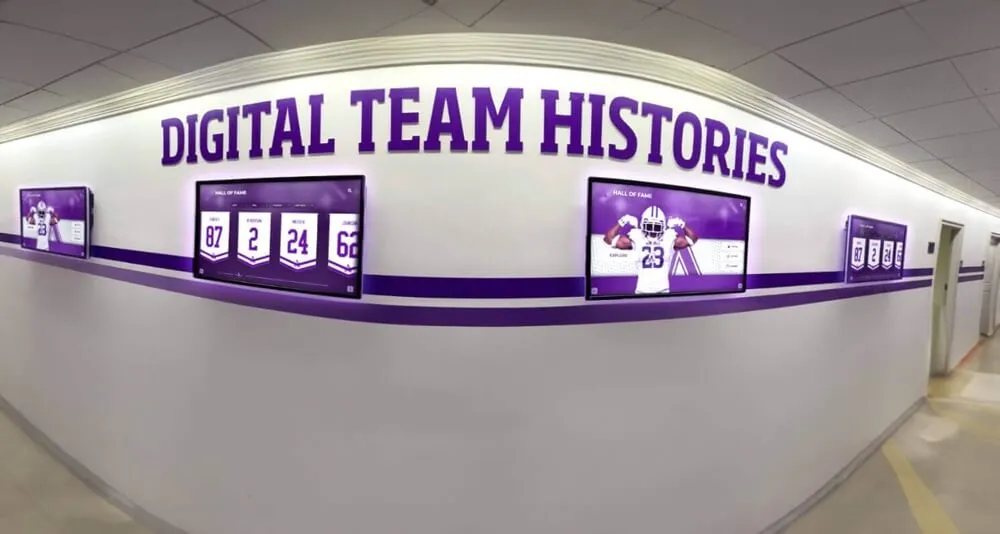
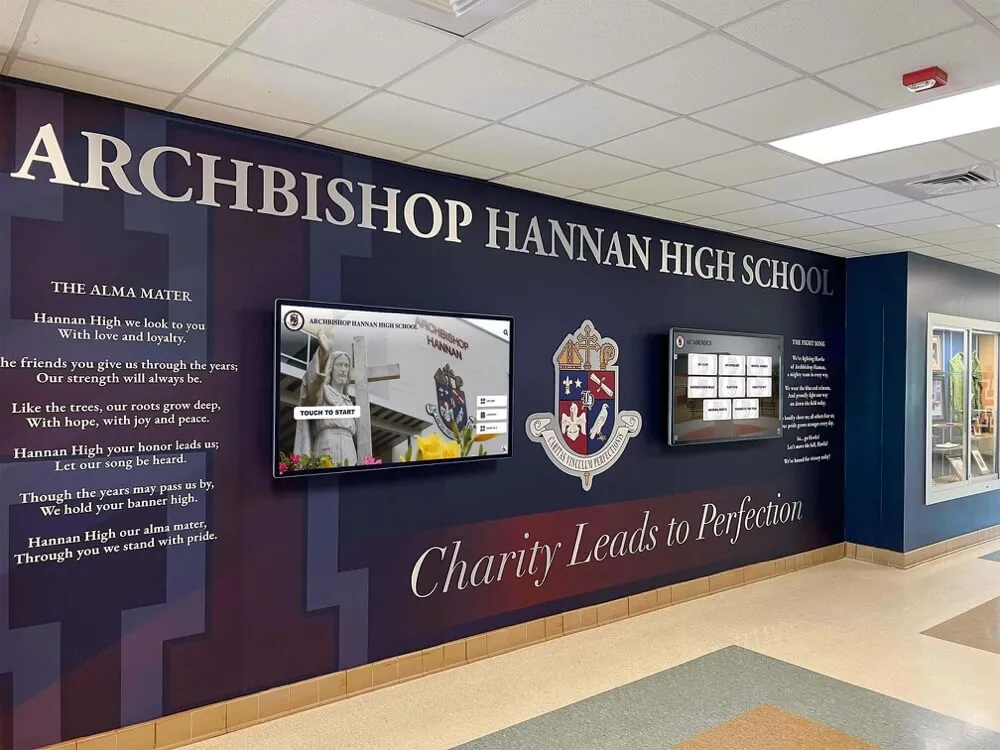
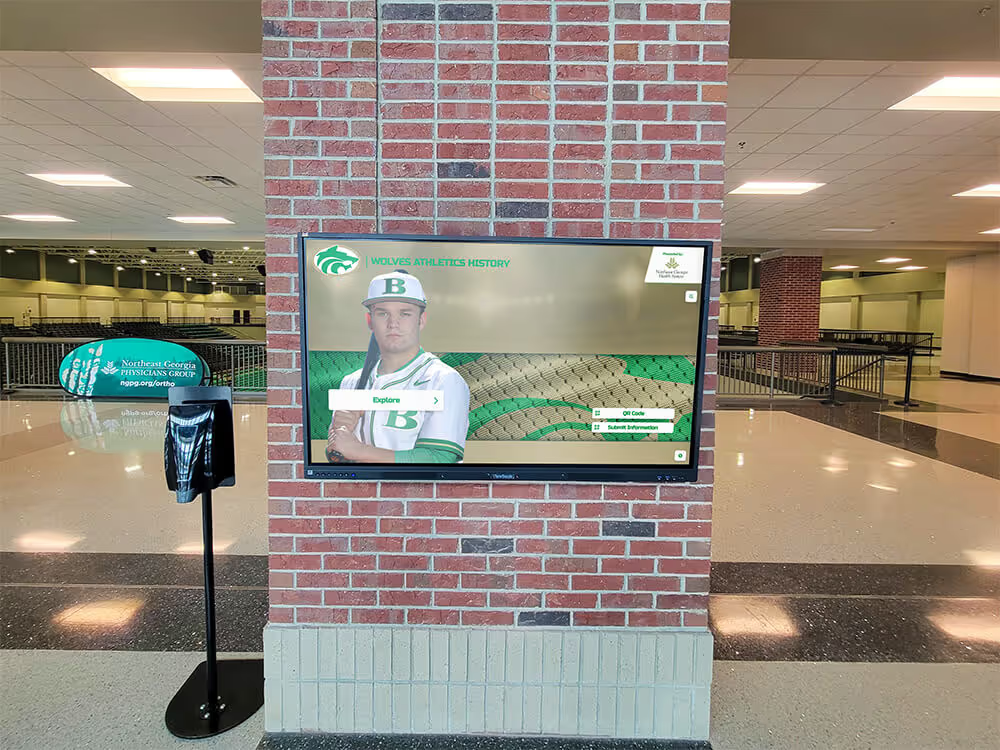
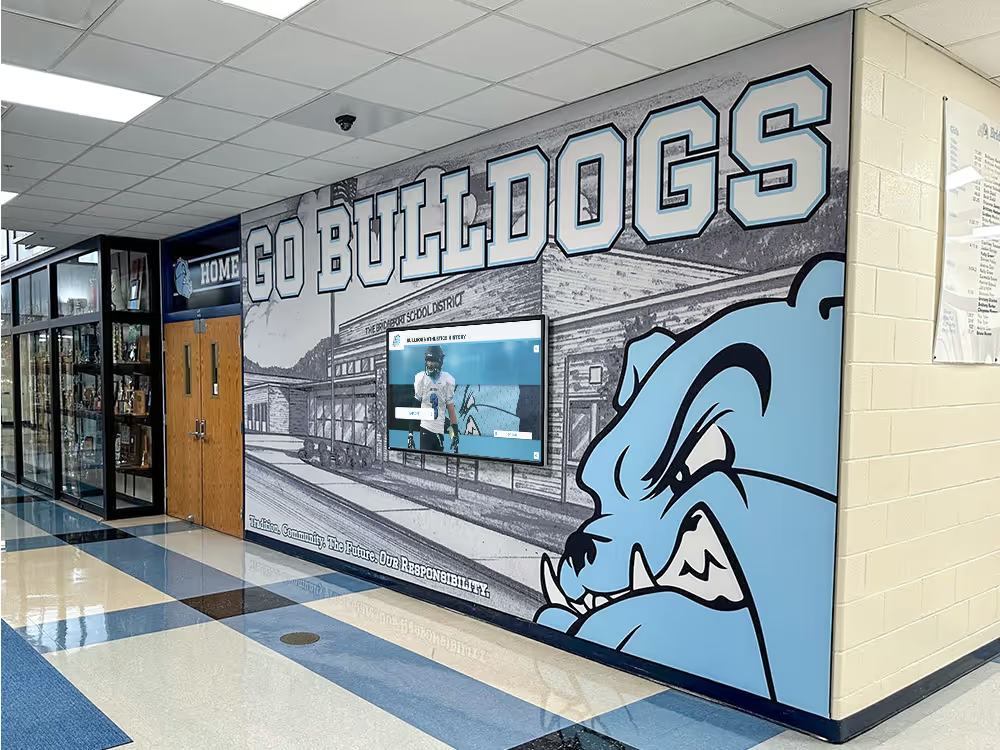
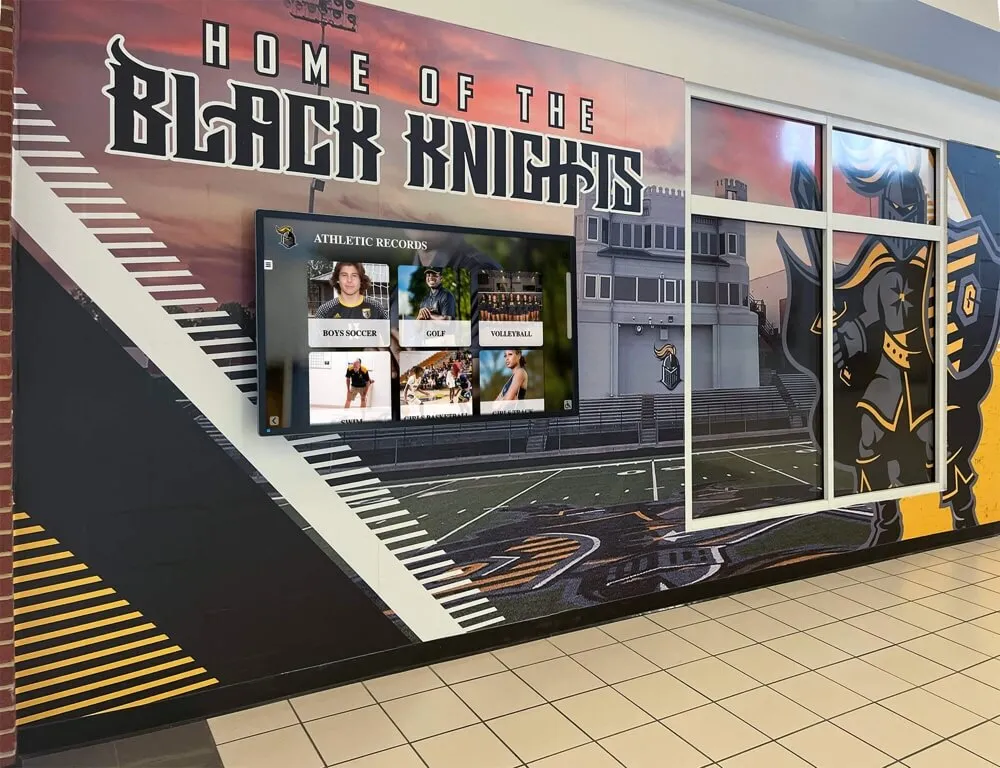
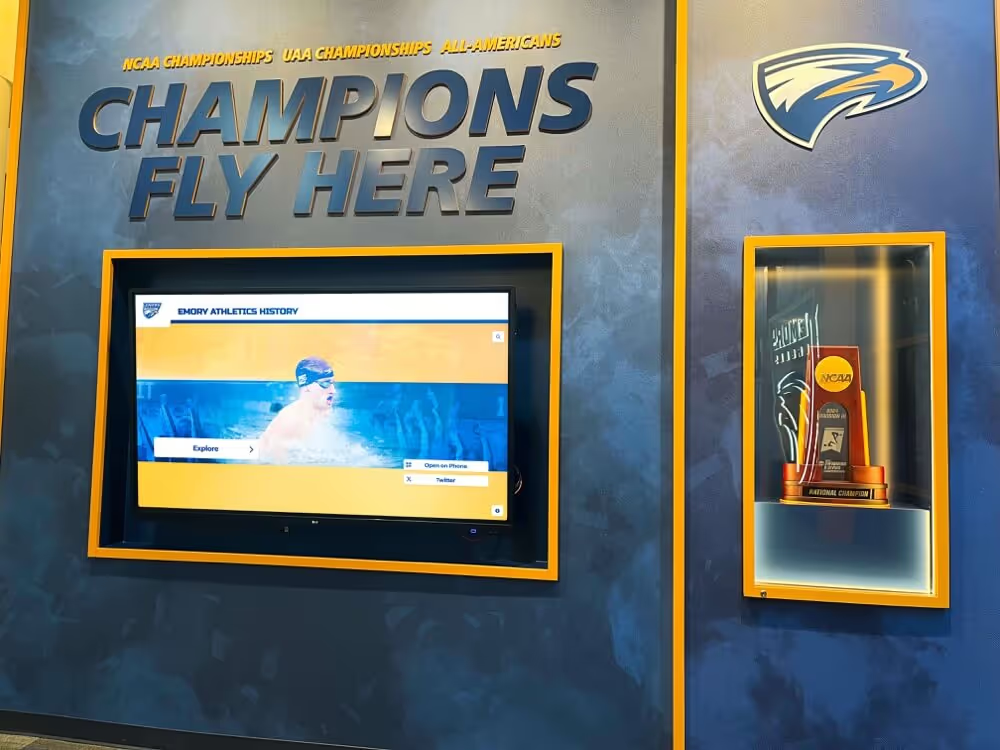
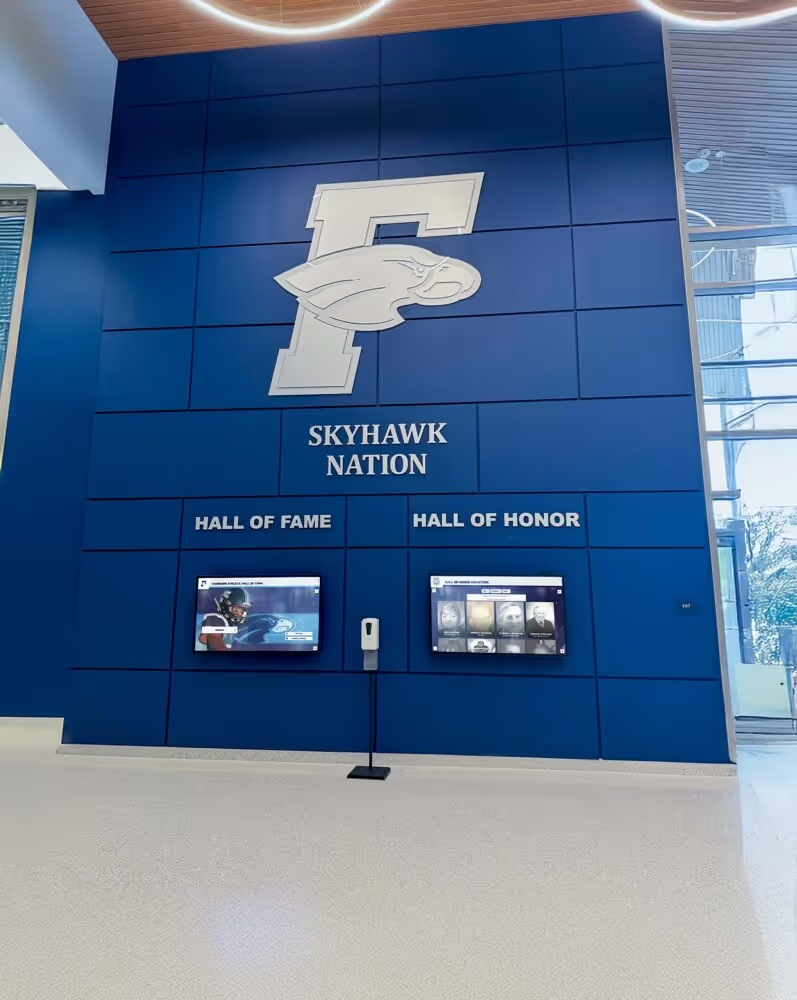
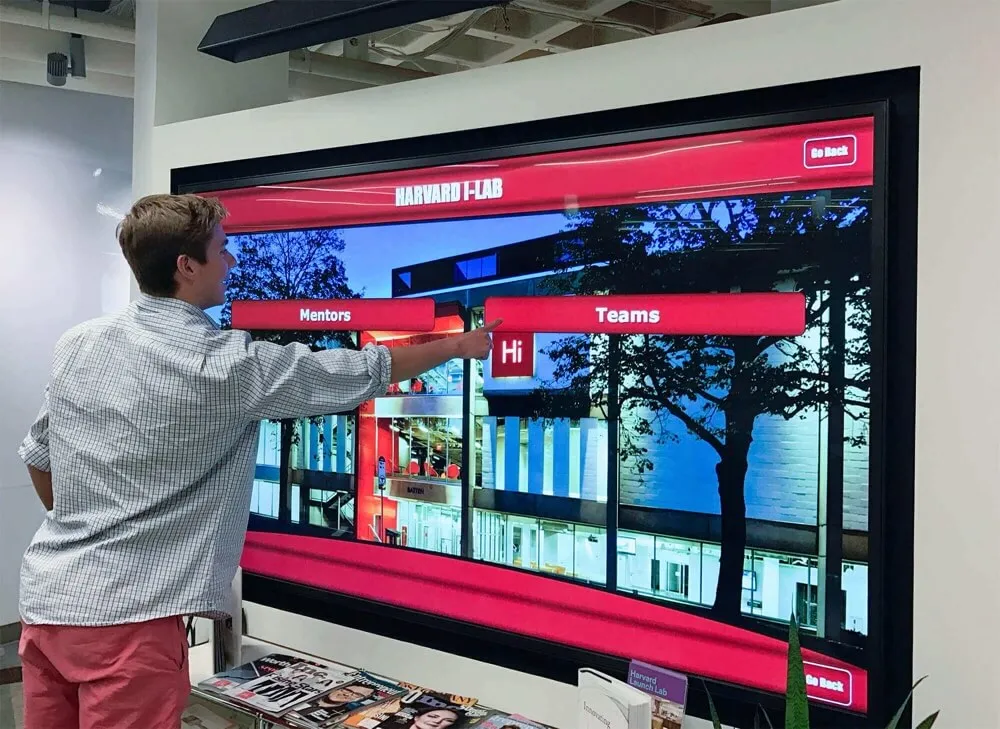
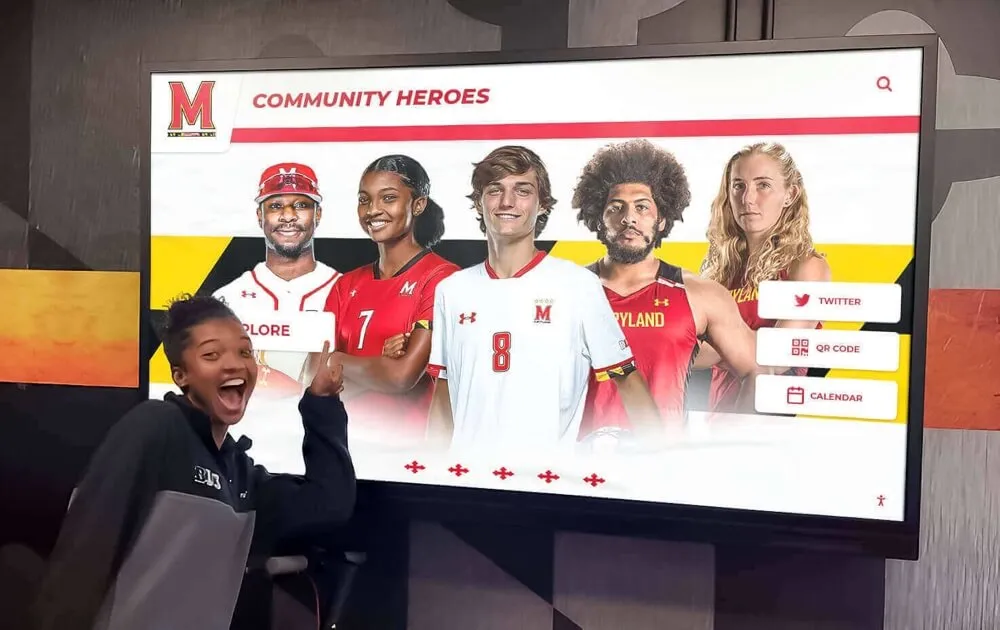
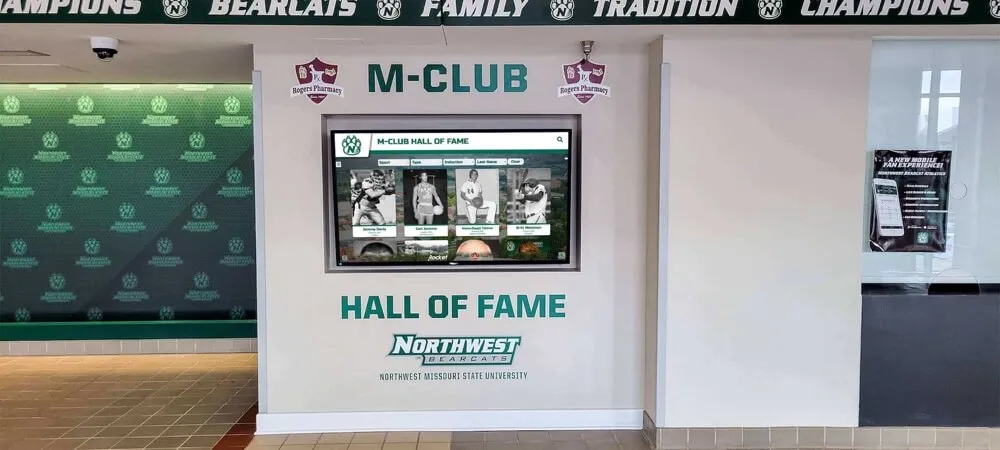
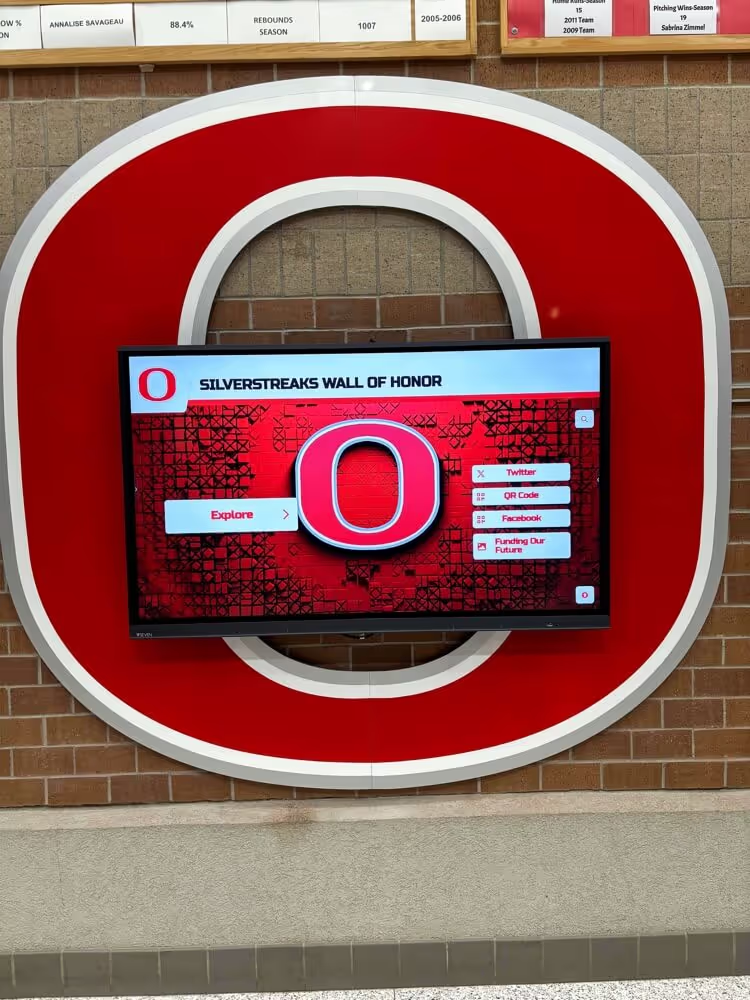
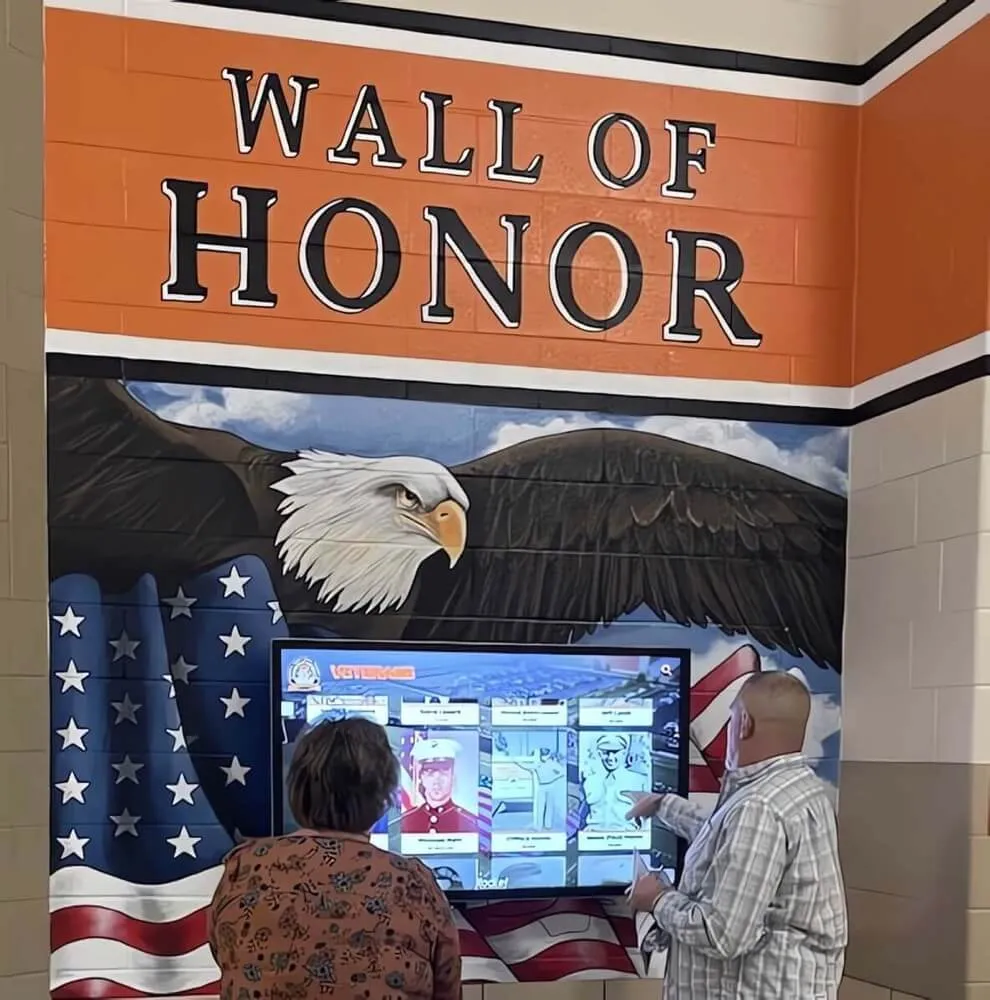
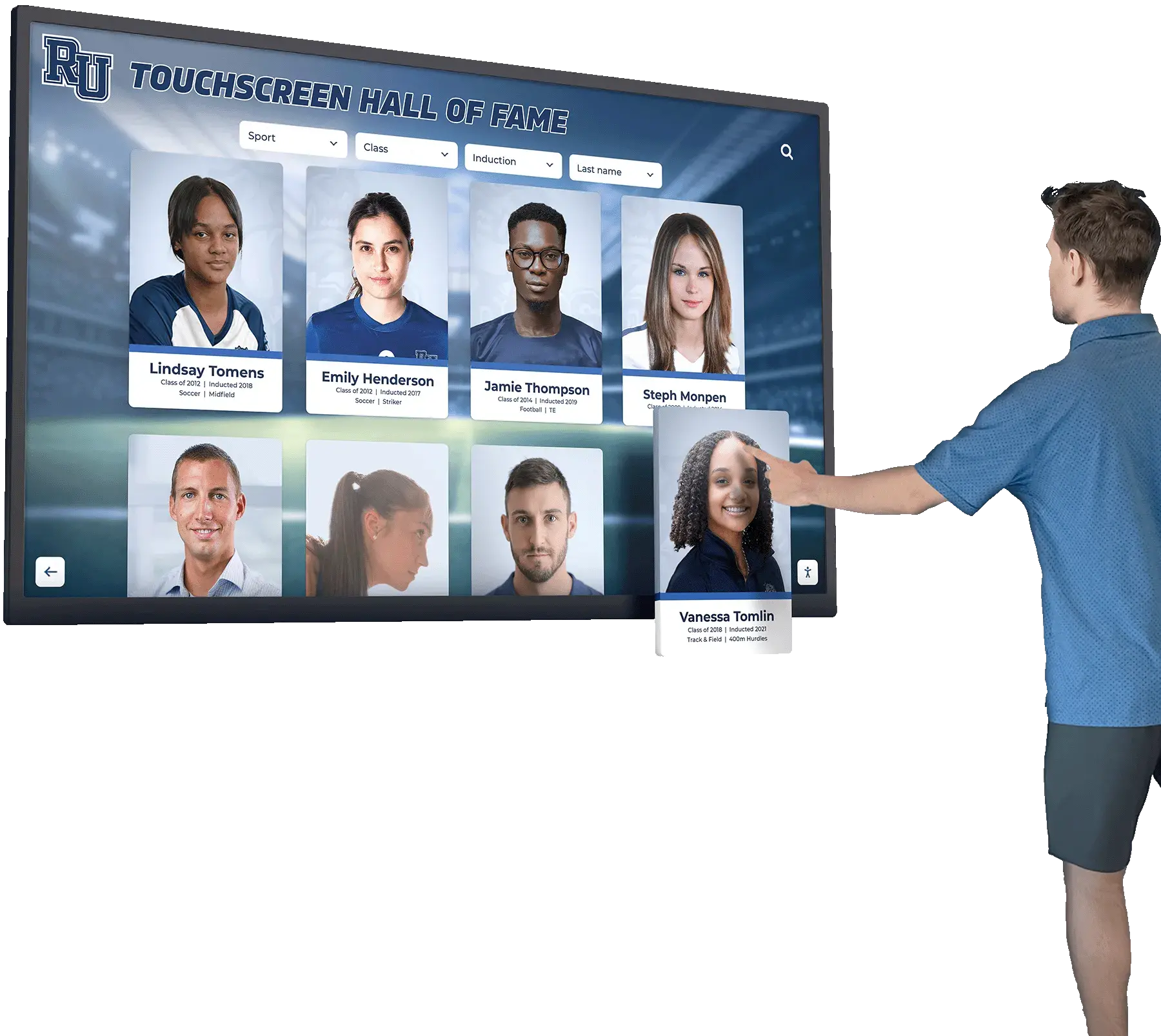
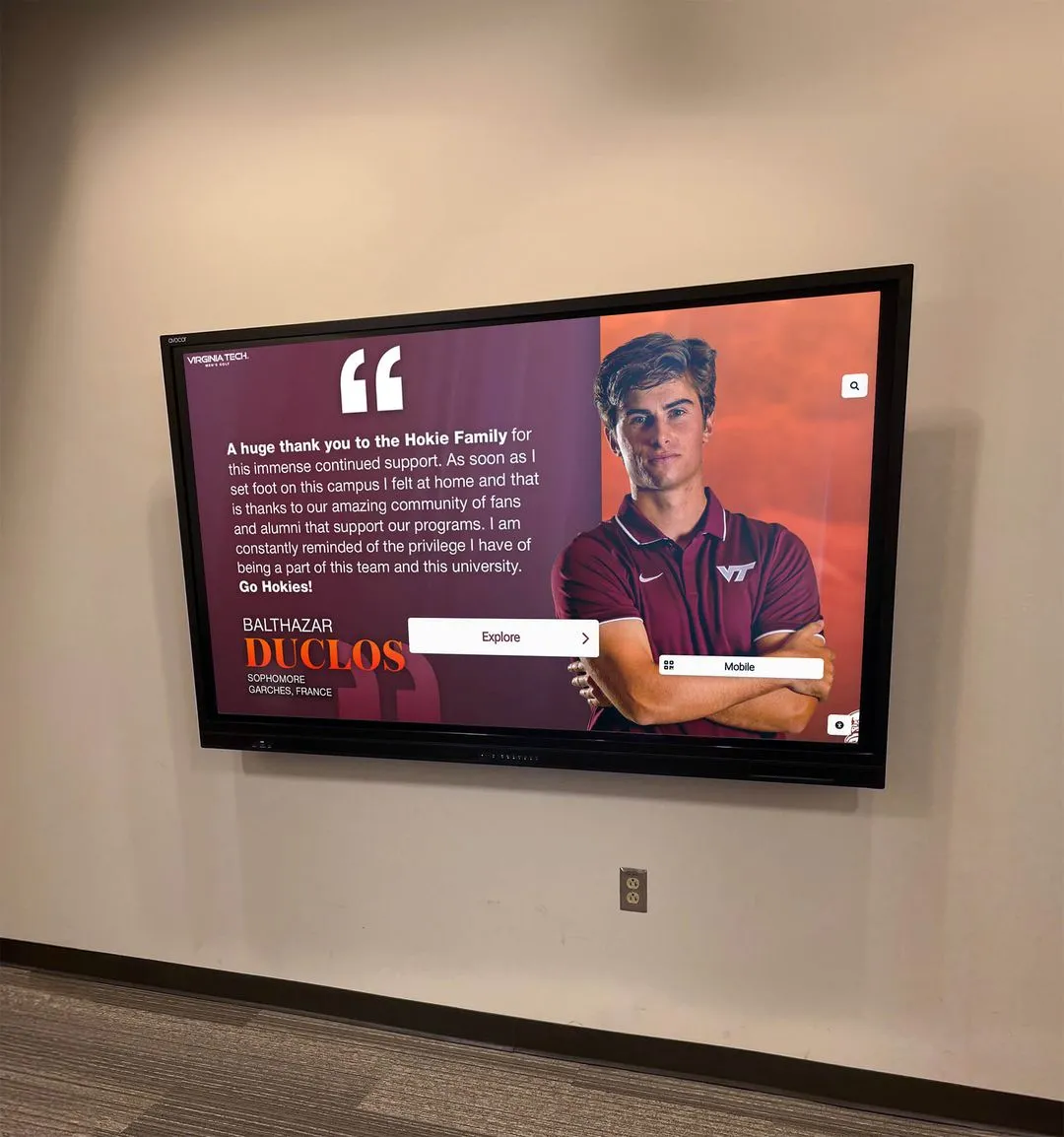
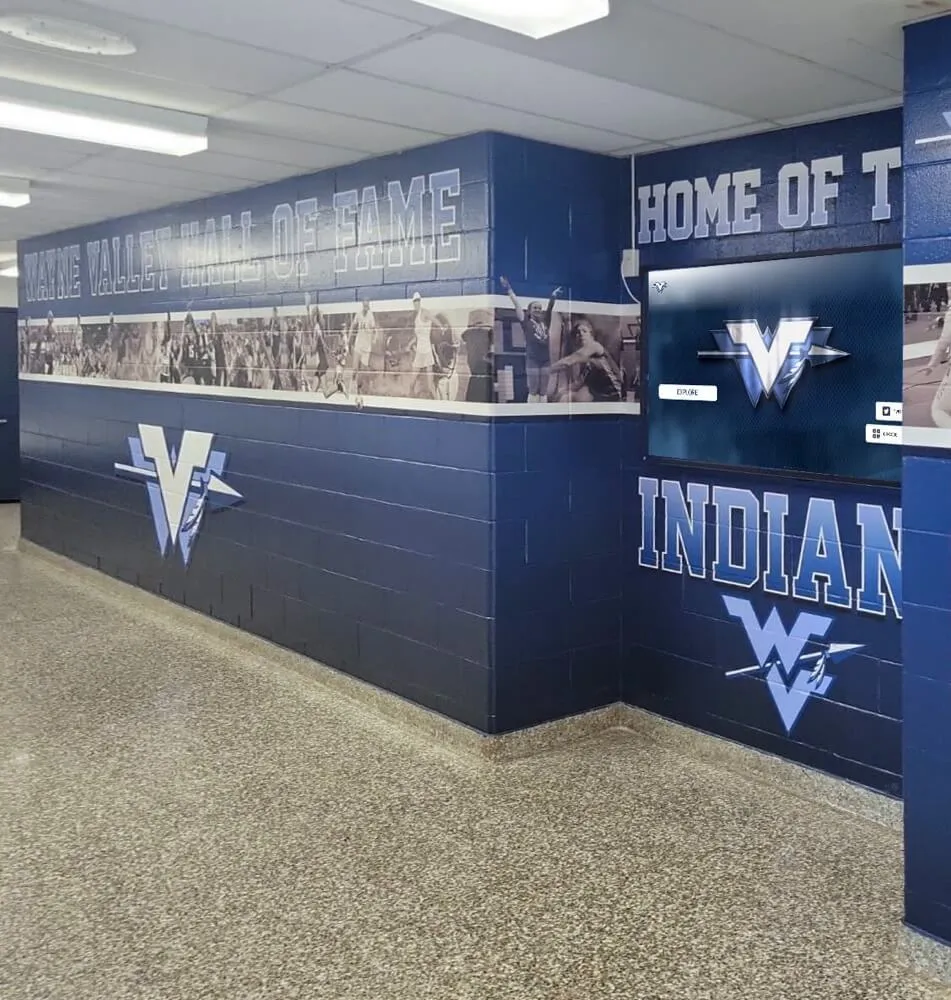
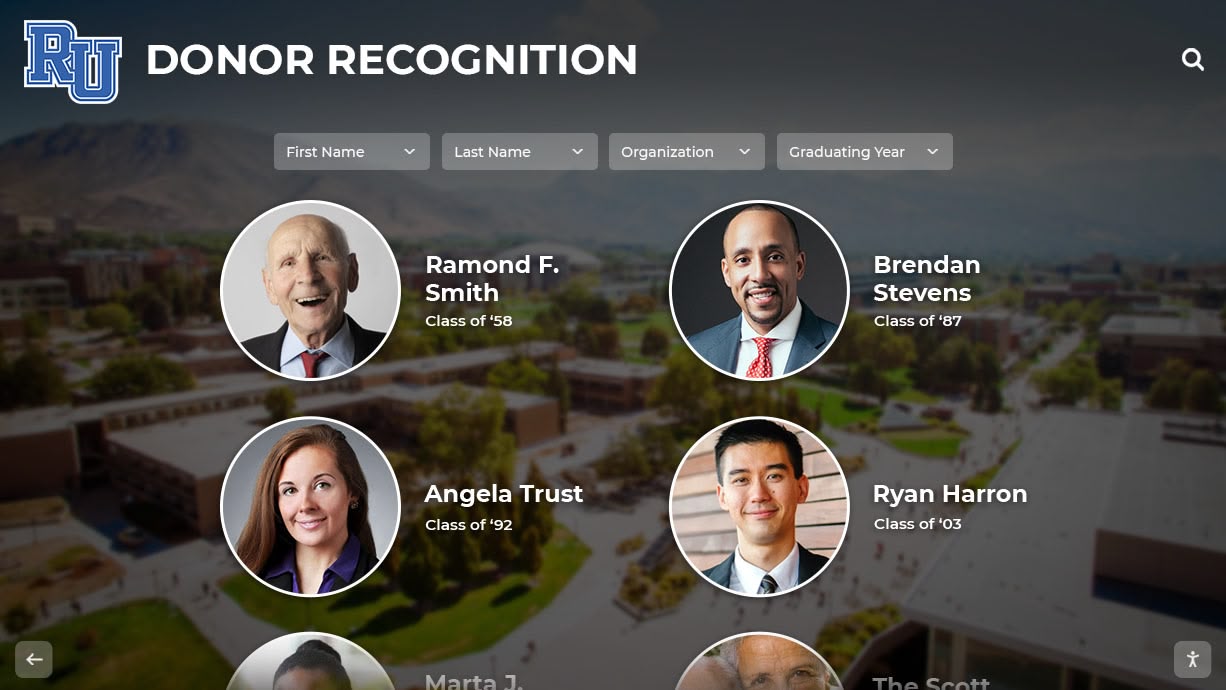
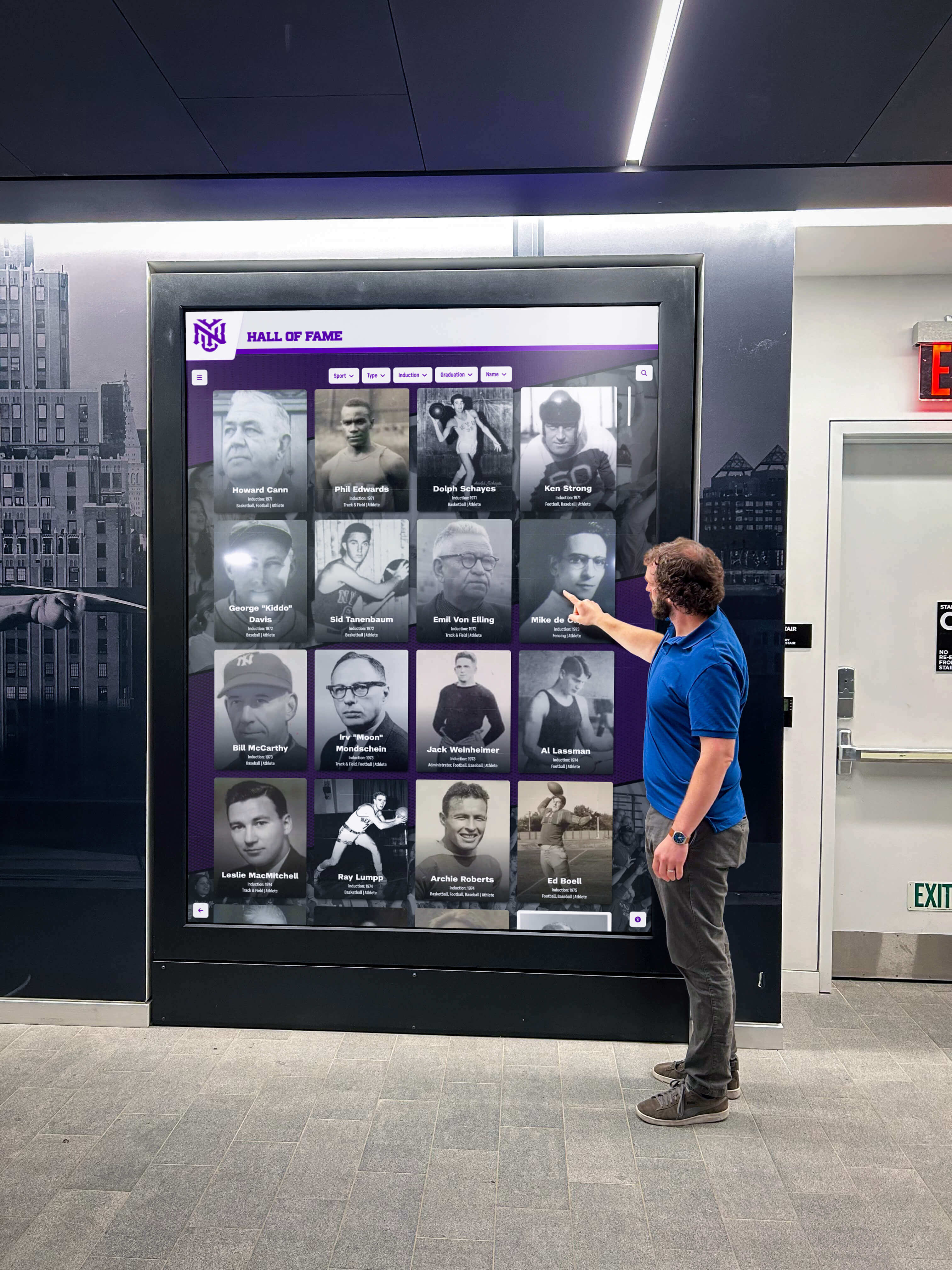
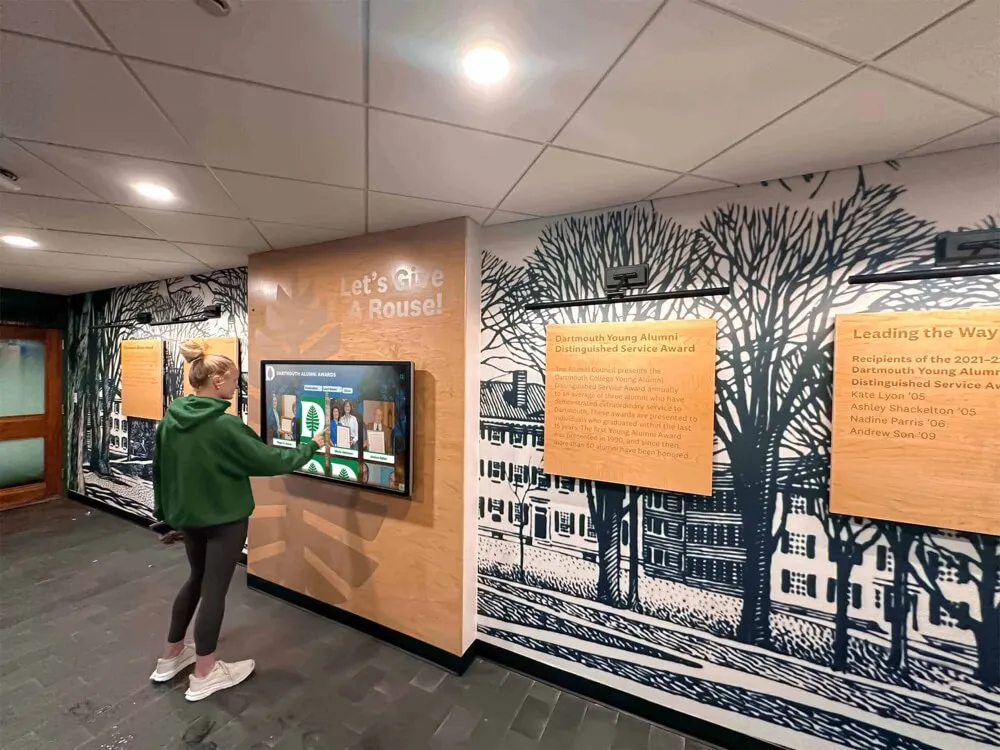
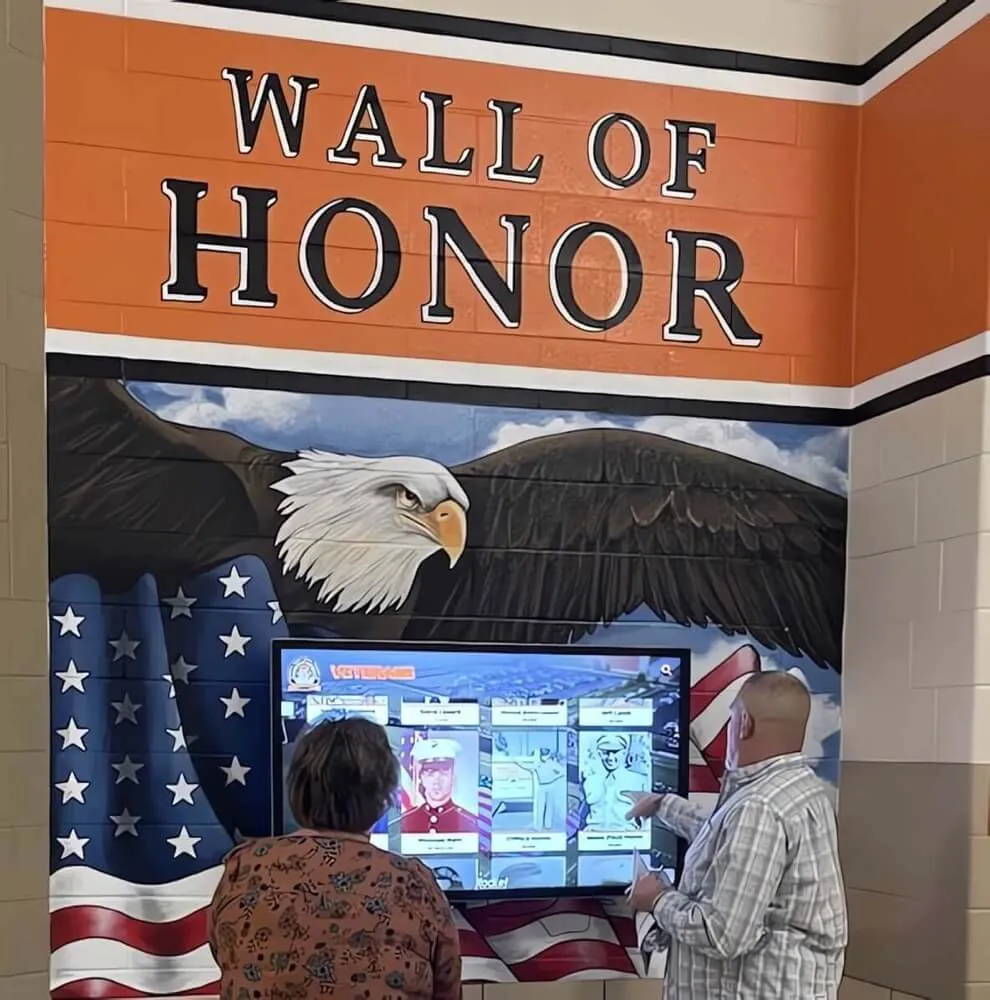
Digital recognition platforms replace or supplement physical plaques with interactive touchscreen displays showcasing donor information dynamically. These systems typically feature large touchscreen monitors mounted prominently in lobbies, hallways, or gathering spaces, running specialized software designed for donor acknowledgment and organizational storytelling.
Core Components:
- Touchscreen Display Hardware: Commercial-grade displays (typically 43"-75" diagonal) designed for continuous operation in public settings
- Recognition Software Platform: Purpose-built applications managing donor content, search functionality, and visual presentation
- Content Management System: Administrative interfaces enabling non-technical staff to add donors, update information, and modify content without vendor assistance
- Mounting and Installation: Professional installation including electrical, network connectivity, and secure mounting hardware
- Optional Web Integration: Many systems include companion websites extending recognition beyond physical displays
Key Advantages Over Traditional Plaques:
Unlimited Recognition Capacity: Space constraints that force traditional recognition programs to exclude lower-level donors or choose between supporters disappear with digital systems. A single touchscreen can showcase thousands of donors across all giving levels without consuming additional wall space as recognition needs grow.
This unlimited capacity enables genuinely comprehensive recognition programs acknowledging every supporter regardless of gift size. Organizations can honor annual fund donors at appropriate prominence levels while still providing leadership donor recognition deserving greater visibility.
Rich Multimedia Storytelling: Traditional plaques limit recognition to names, dates, and brief text. Digital recognition incorporates photos, videos, impact stories, donor testimonials, and interactive content that brings recognition to life and creates emotional connections impossible with static plaques.
Profiles can include donor photos, video messages explaining their philanthropic motivations, image galleries showing them at organizational events, impact visualizations demonstrating what their gifts accomplished, and narrative storytelling connecting their giving to organizational achievements.
Easy Updates and Corrections: Perhaps digital recognition’s most practical advantage lies in update simplicity. Adding new donors, correcting information, updating giving levels, or refreshing content requires simple administrative actions through web-based interfaces rather than ordering, engraving, and mounting new physical plaques.
This ease dramatically reduces ongoing recognition costs while ensuring displays remain current and accurate. Organizations can acknowledge donors immediately after gifts rather than waiting for quarterly plaque orders. Donors upgrading their giving receive recognition updates within days rather than months.
Search and Discovery Features: Touchscreen interfaces enable donors, alumni, and visitors to search recognition databases by name, graduation year, giving society, or other criteria. This discoverability creates engagement opportunities and allows donors to easily find their own recognition and share it with family.
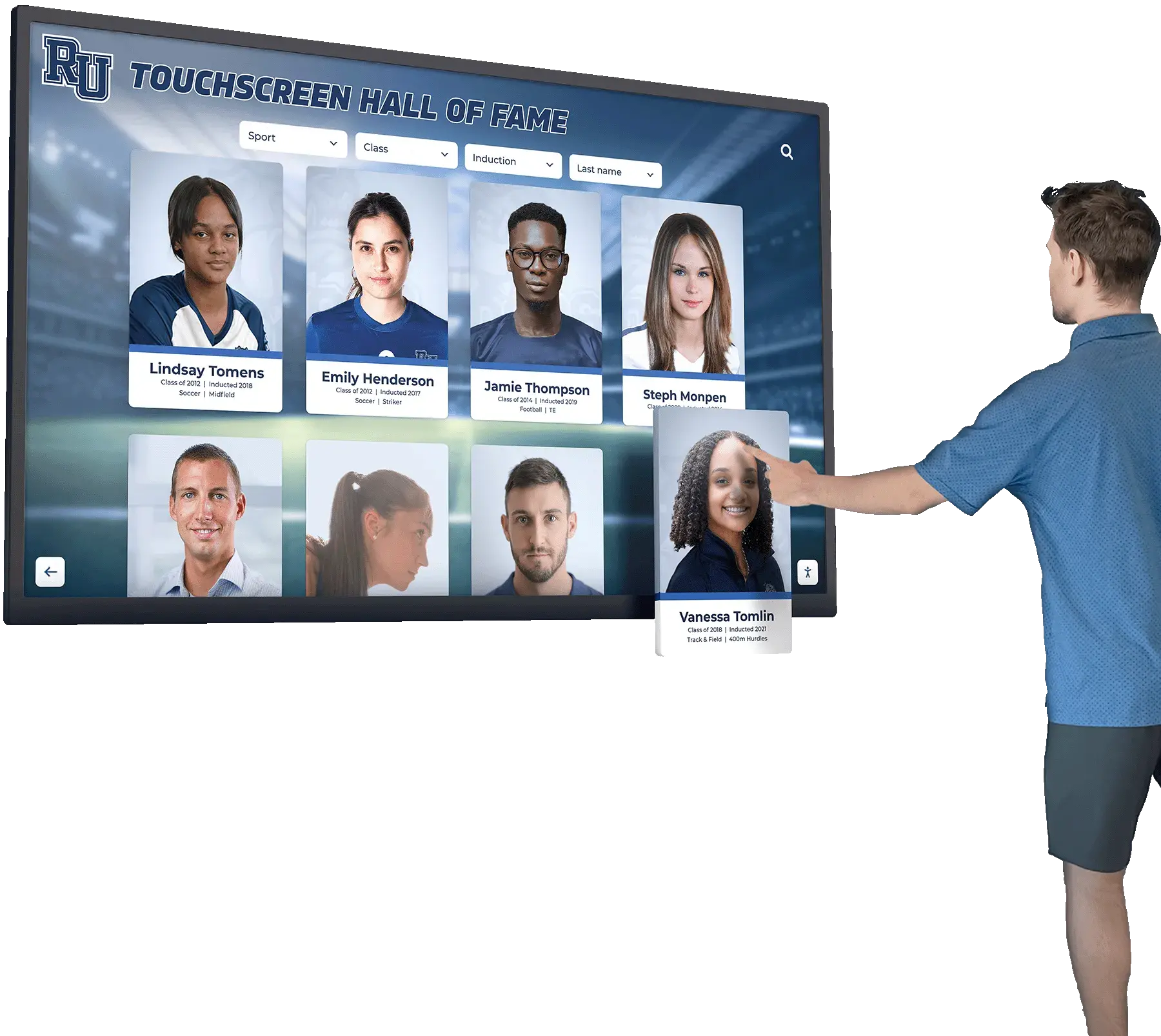
Analytics and Engagement Tracking: Modern digital recognition systems provide detailed analytics showing who views content, how long they engage, which donor profiles attract most interest, and how recognition correlates with subsequent giving behavior. This data enables optimization and demonstrates recognition’s fundraising return on investment.
Flexible Content Organization: Digital platforms organize recognition flexibly—by giving level, by purpose/designation, by year, by donor type (individual, corporate, foundation), or by multiple criteria simultaneously. This flexibility helps visitors understand and navigate recognition meaningfully rather than confronting undifferentiated walls of names.
Types of Digital Recognition Displays
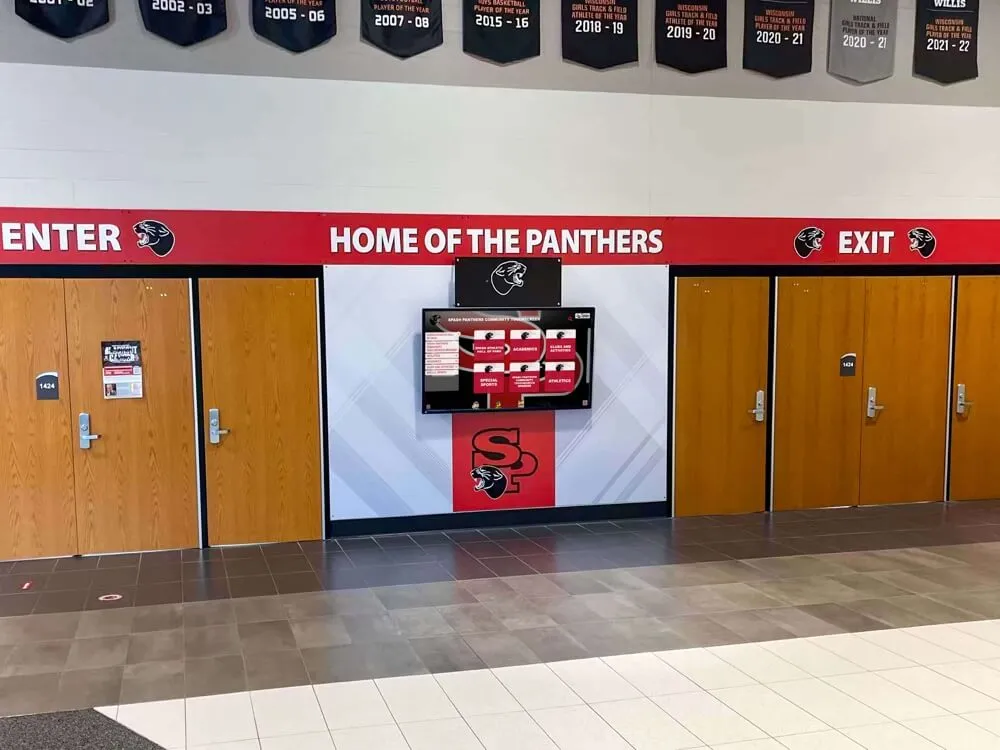
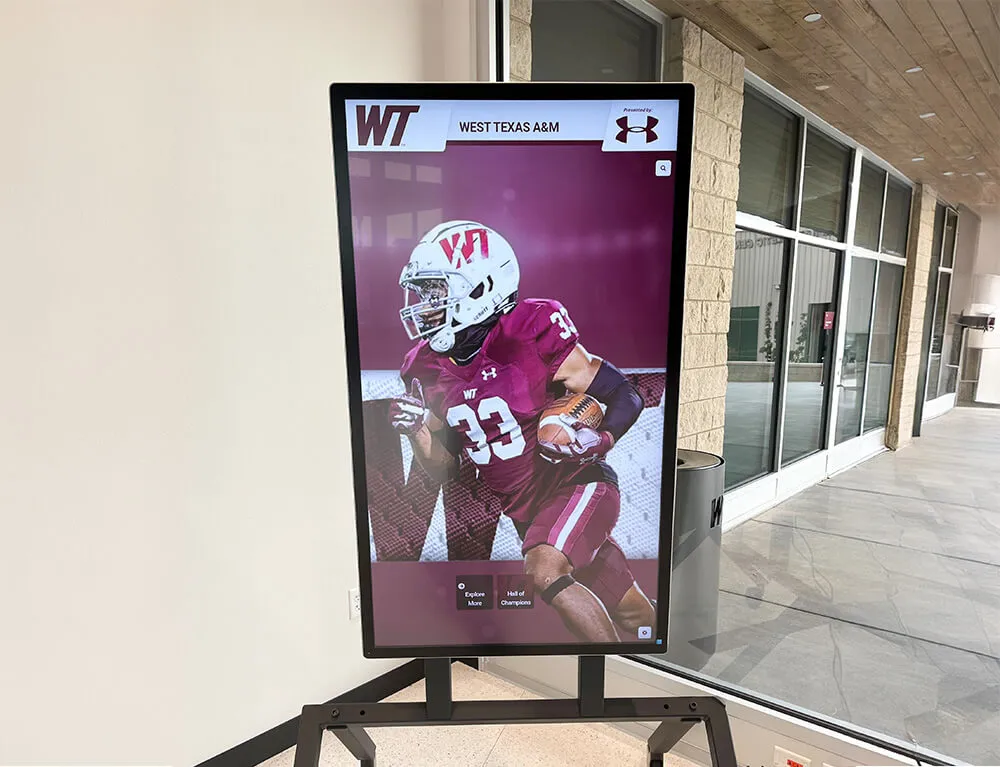
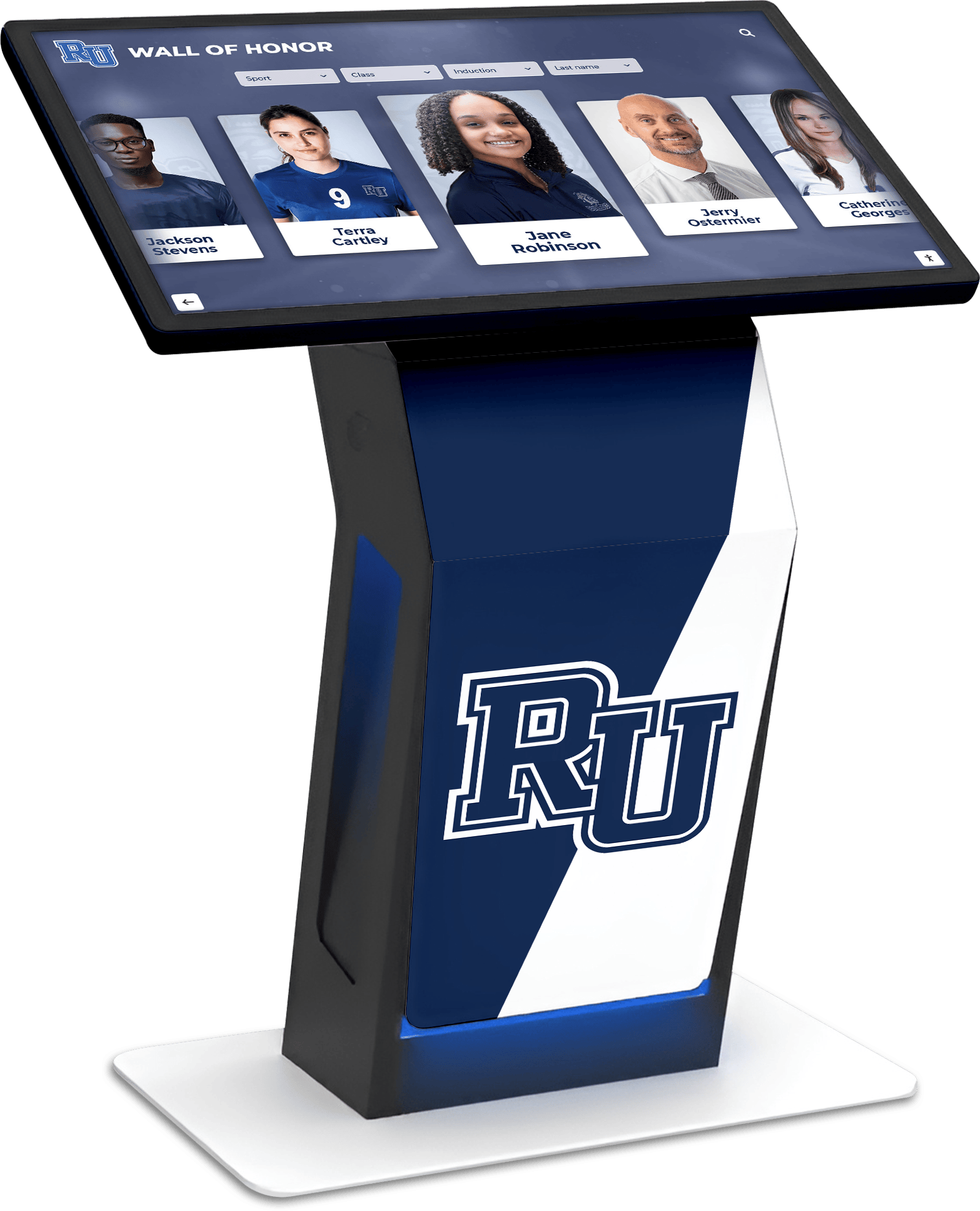
Interactive Touchscreen Kiosks: Freestanding units combining large touchscreens with branded enclosures create distinctive recognition destinations while offering installation flexibility for spaces lacking wall-mounting options. Kiosks work particularly well in open lobby areas or where architectural preservation prevents wall modifications.
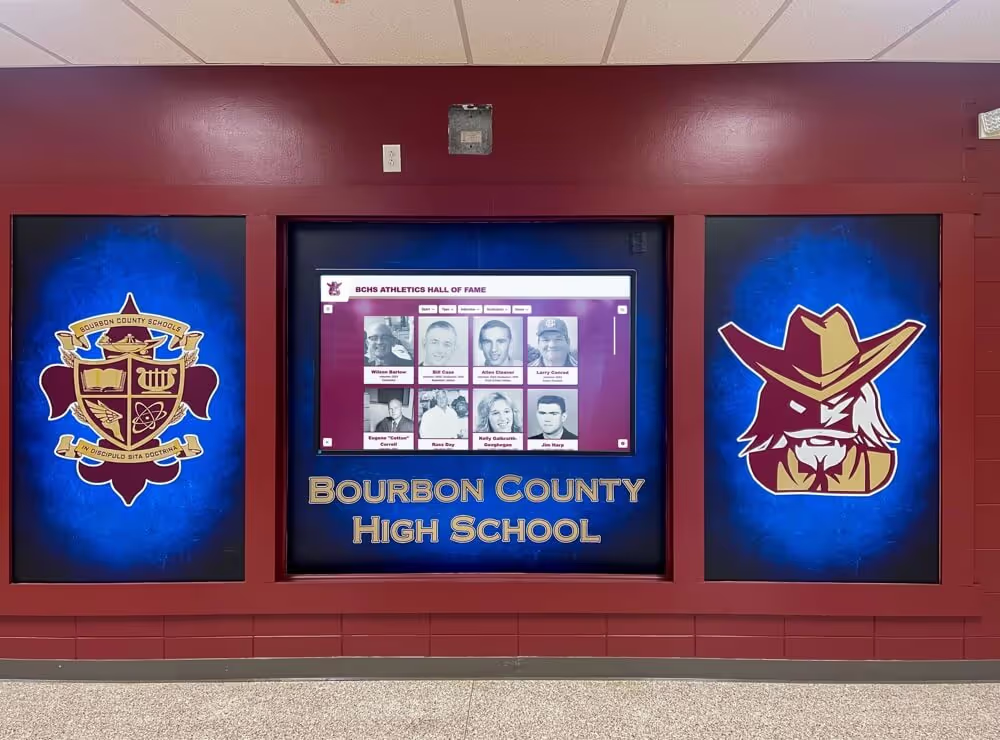
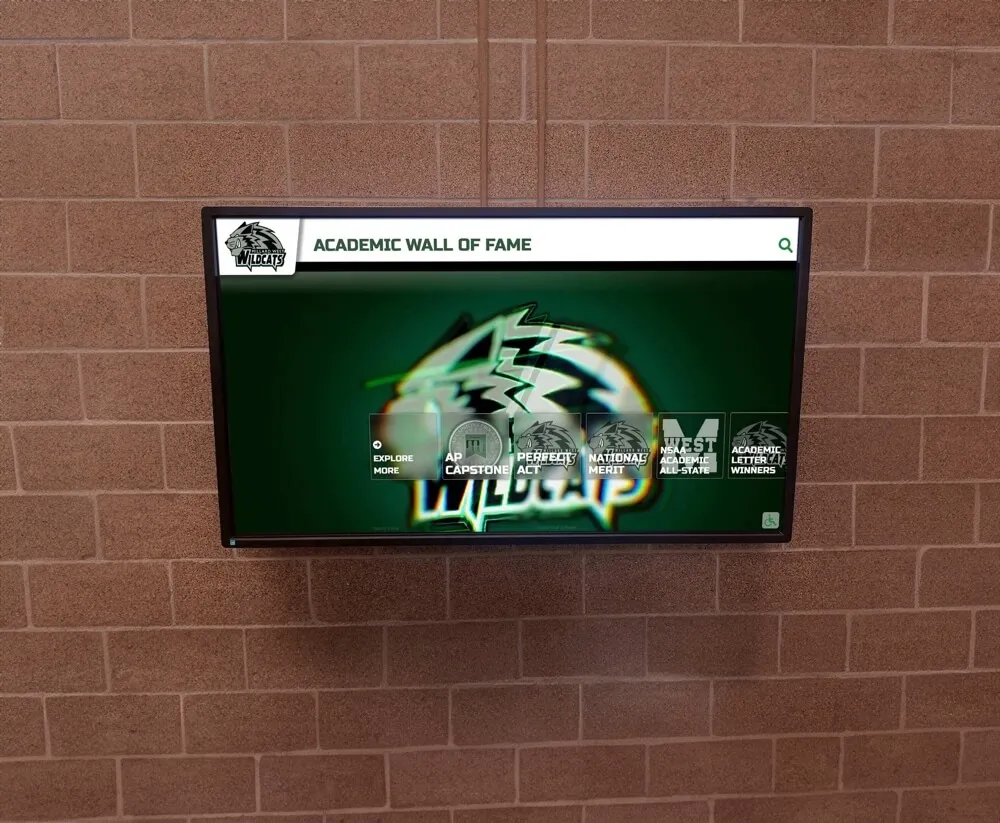
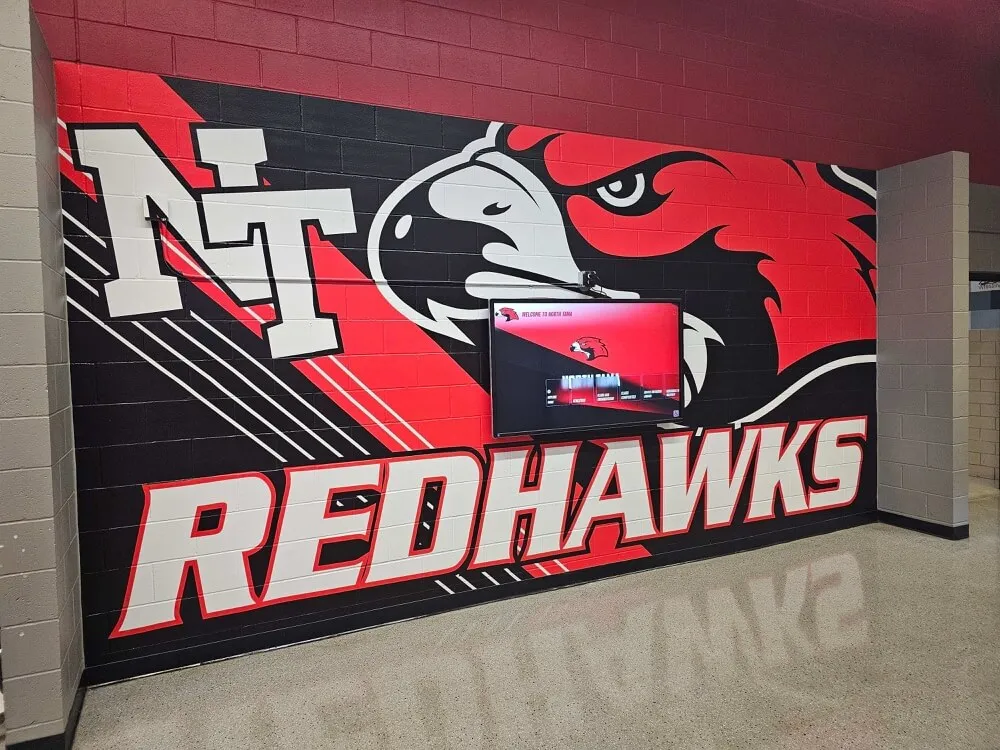
Wall-Mounted Touchscreen Displays: Large displays mounted directly to walls provide slim profiles integrating recognition seamlessly into architectural contexts. Wall-mounted options consume minimal floor space while creating prominent recognition visibility in hallways and lobbies.
Video Wall Recognition: Multiple coordinated displays creating large-format recognition walls deliver dramatic visual impact in spacious lobbies or gathering areas. Video walls enable simultaneous display of multiple donor profiles or creation of impressive visual presentations celebrating donor communities.
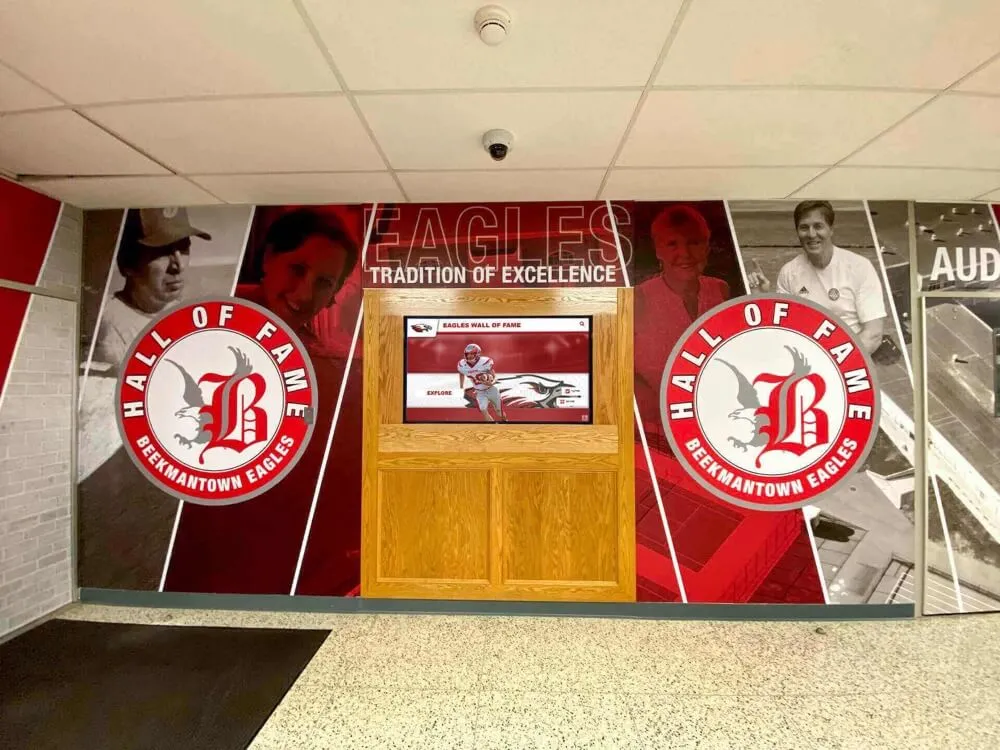
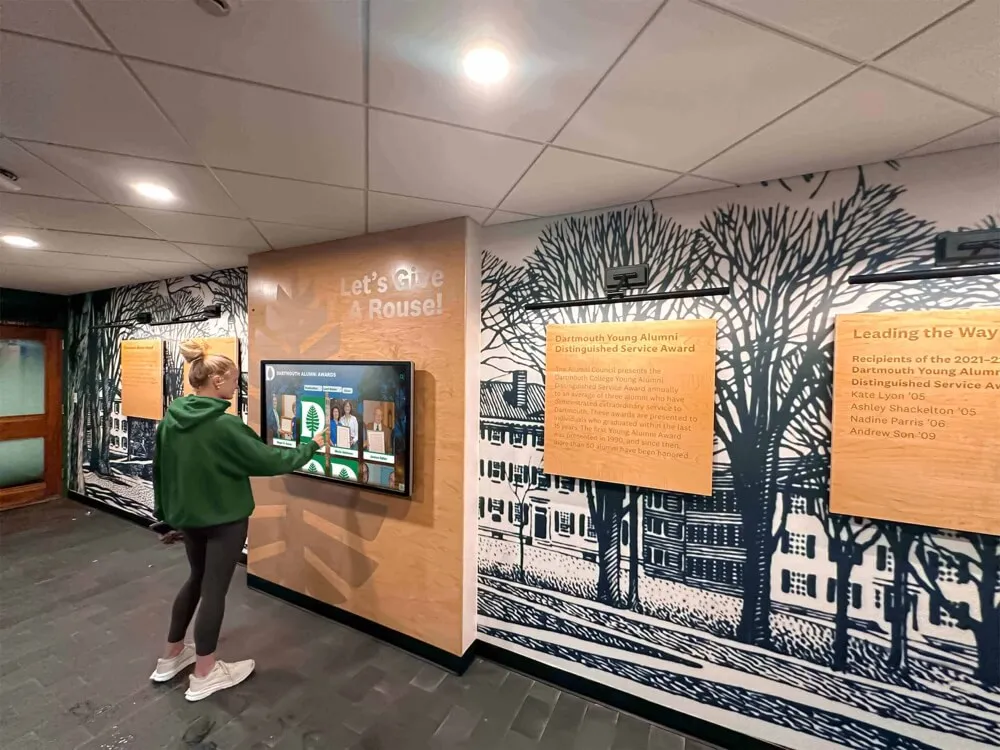
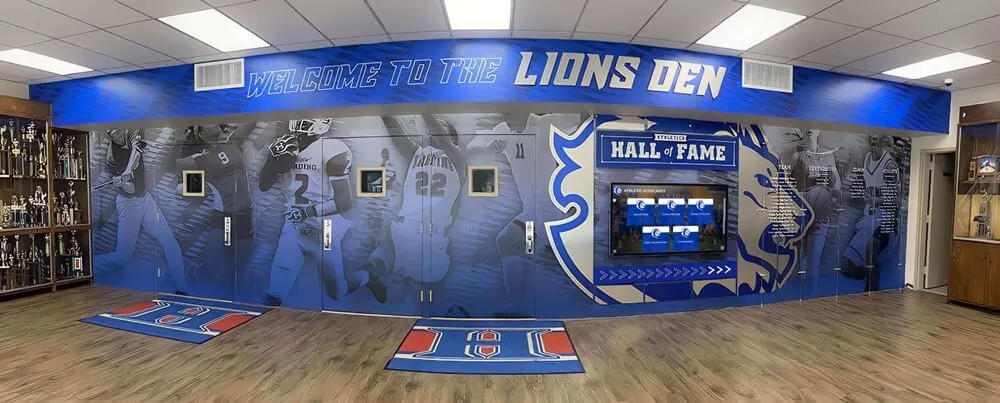
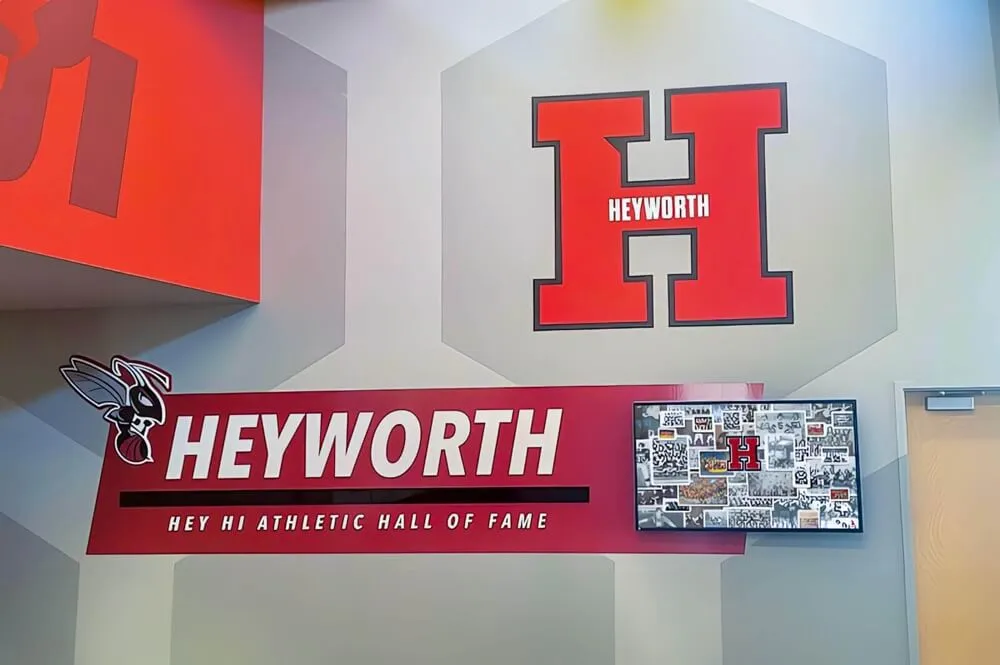
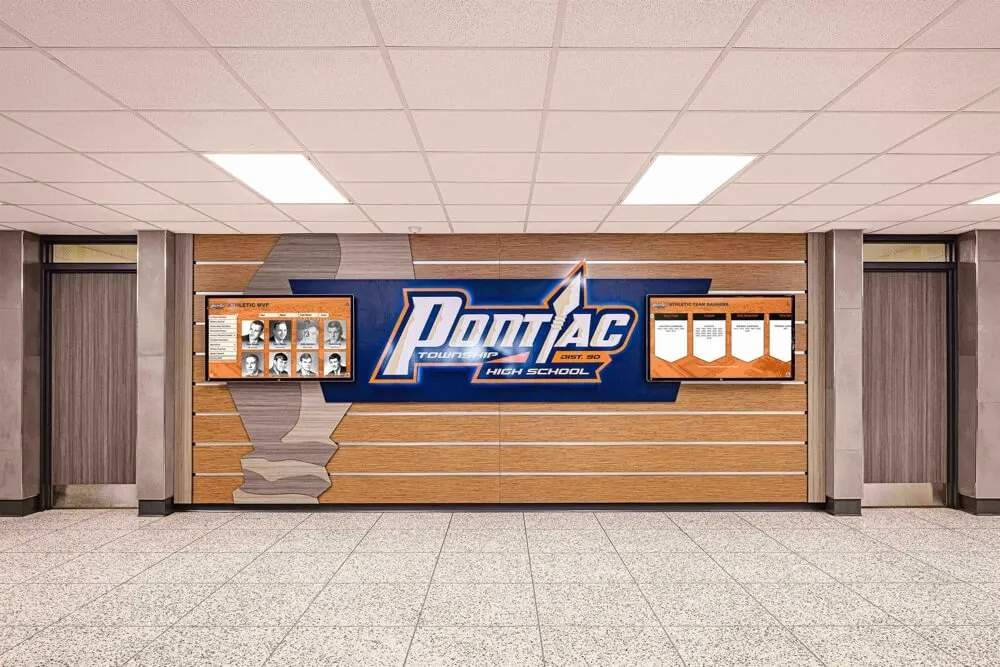
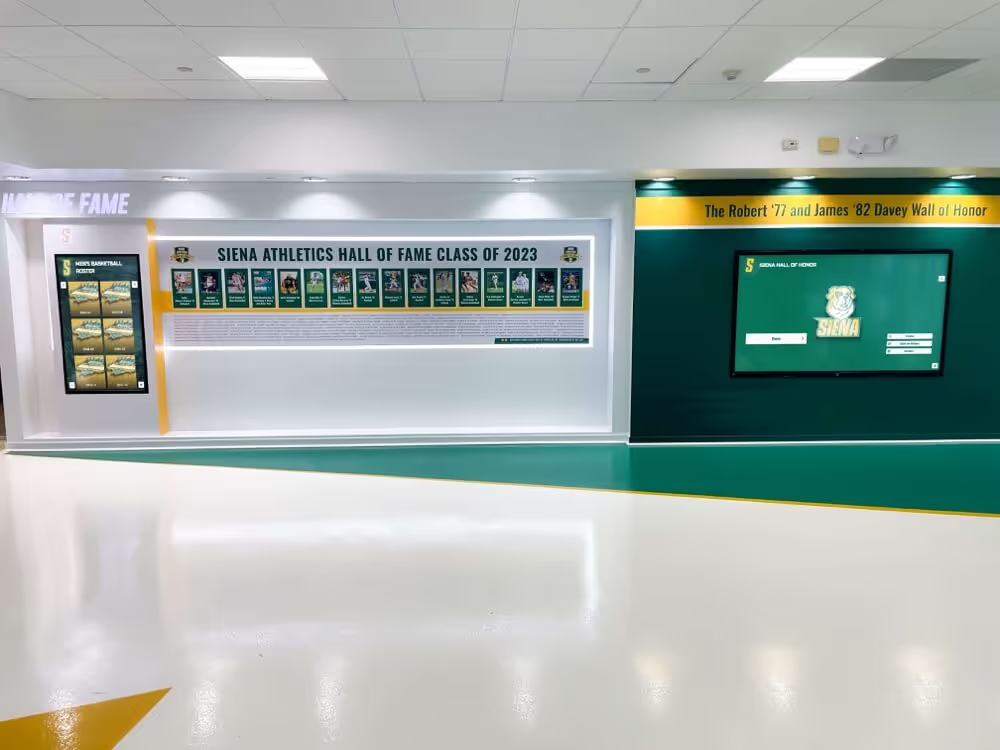
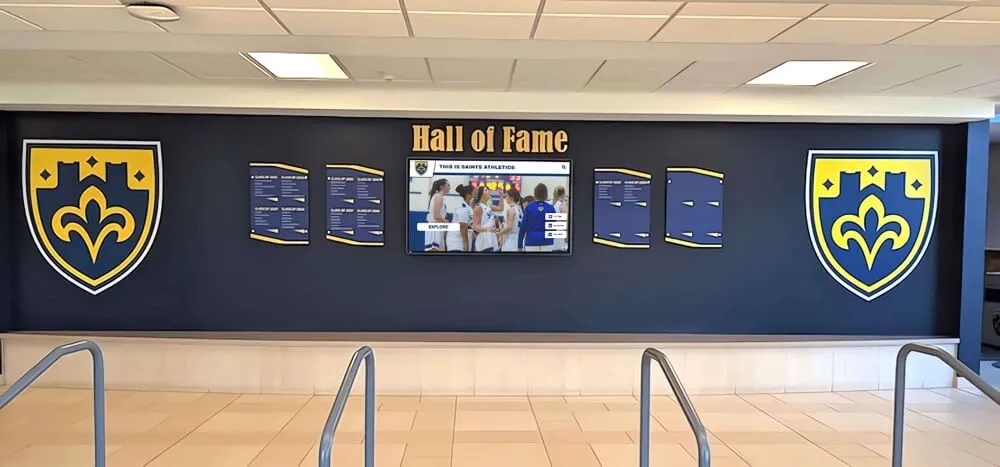
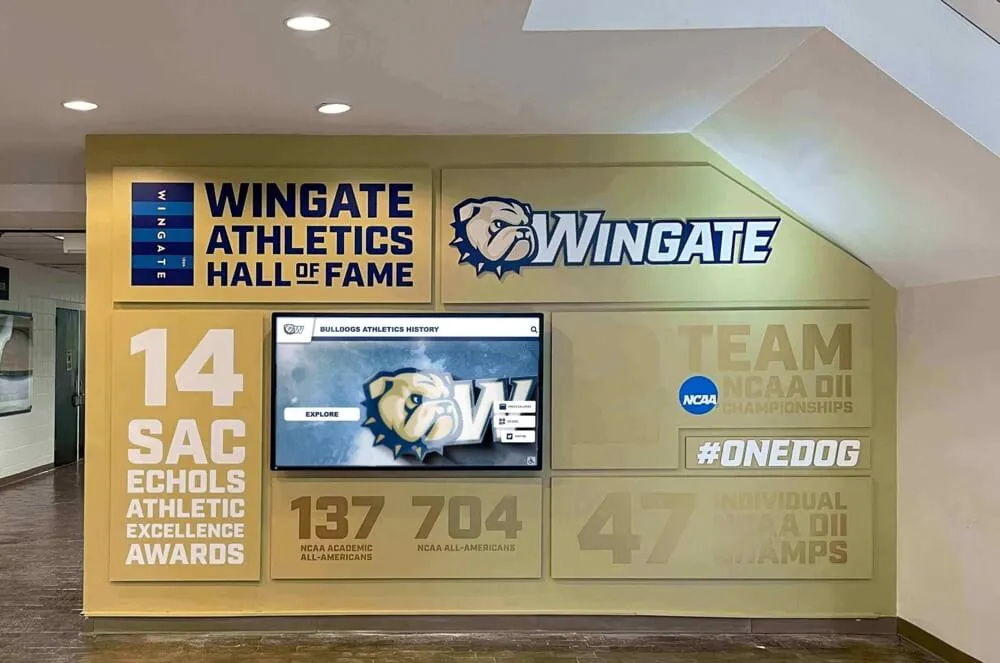
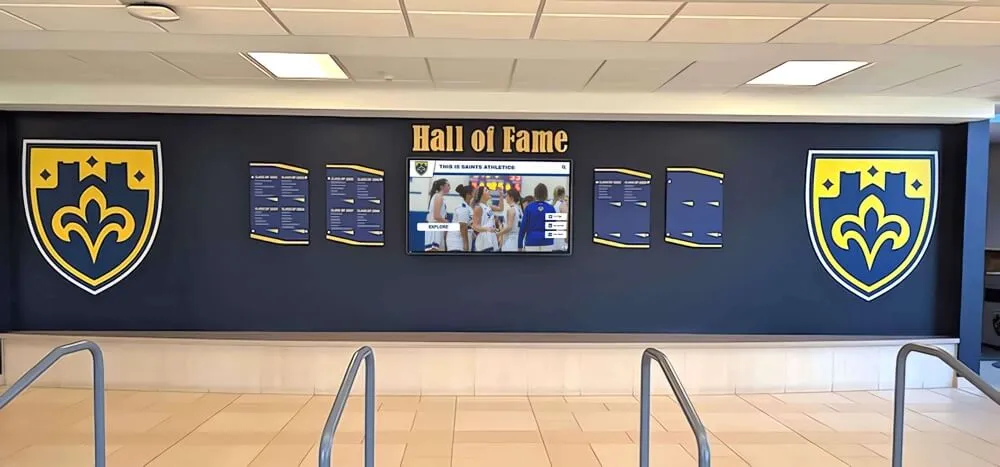
Hybrid Digital-Traditional Installations: Some organizations combine traditional elements with digital technology—using bronze or acrylic design elements framing digital displays, or installing touchscreens within donor wall architecture that includes physical recognition components. Hybrid approaches appeal to traditionalists while capturing digital advantages.
Implementation Considerations for Digital Recognition
Initial Investment Analysis:
Digital recognition requires higher upfront investment than traditional plaque programs:
- Commercial touchscreen hardware: $2,500-$8,000 depending on size and quality
- Recognition software licensing: $1,500-$5,000 annually for platforms with ongoing support
- Installation (electrical, mounting, network): $1,000-$3,000 depending on site conditions
- Content development (initial donor profiles, graphics, setup): $2,000-$10,000 depending on scope
Total initial investment typically ranges $7,000-$25,000 for comprehensive systems, though costs vary based on display size, software capabilities, and content complexity. Many organizations find this investment justified by elimination of ongoing plaque expenses and dramatic improvement in recognition capacity and donor engagement.
Ongoing Costs and Maintenance:
- Software licensing or subscription fees (typically $1,500-$5,000 annually)
- Occasional hardware maintenance or display replacement (plan for replacement after 5-7 years)
- Content management labor (typically absorbed within existing advancement staff responsibilities)
- Network connectivity and minimal electrical costs
Unlike traditional recognition requiring new plaque expenses with each donor addition, digital recognition’s ongoing costs remain stable regardless of how many donors are added, creating increasingly favorable economics as donor bases grow.
Technology Infrastructure Requirements:
Digital displays require basic technology infrastructure:
- Reliable electrical power (standard outlets sufficient for most displays)
- Network connectivity (Wi-Fi or wired Ethernet) for content updates and analytics
- Adequate climate control preventing extreme temperatures that shorten display life
- Physical security preventing tampering or vandalism (particularly important for publicly accessible installations)
Most organizations find existing infrastructure adequate with minimal modifications.
Software Platform Selection Criteria:
Organizations evaluating digital recognition software should prioritize:
- Content Management Simplicity: Non-technical advancement staff should update content confidently without vendor assistance or technical expertise
- Unlimited Donor Capacity: Systems should accommodate recognition growth without per-profile charges or technical limitations
- Design Flexibility: Templates and customization enabling brand alignment while maintaining professional quality
- Search and Navigation: Intuitive interfaces helping visitors discover recognition easily
- Analytics and Reporting: Insights demonstrating recognition engagement and fundraising impact
- Reliability and Support: Established providers with track records supporting educational and nonprofit recognition needs
Solutions like Rocket Alumni Solutions provide purpose-built platforms designed specifically for comprehensive institutional recognition including donor acknowledgment, offering user-friendly content management with proven reliability across hundreds of installations.
Comparing Traditional vs. Digital Recognition
Development professionals evaluating recognition approaches benefit from systematic comparison across key decision criteria.
Recognition Capacity and Scalability
Traditional Plaques: Physical space constraints create absolute limits on how many donors can receive prominent recognition. As donor bases grow, organizations face difficult choices about minimum giving thresholds for permanent recognition or physically expanding recognition into additional wall space. Many traditional programs recognize only major donors, leaving annual fund supporters without permanent acknowledgment.
Digital Recognition: Essentially unlimited capacity enables recognition of every donor regardless of gift size. Organizations can honor thousands of supporters at appropriate prominence levels without consuming additional physical space. Scalability is limited only by content development capacity rather than space availability.
Winner: Digital Recognition — Unlimited capacity enables truly comprehensive recognition programs acknowledging all supporters appropriately.
Update Flexibility and Accuracy
Traditional Plaques: Updates require ordering new plaques, removing outdated ones, and installation—processes taking weeks or months and costing $150+ per change. This complexity causes many organizations to defer necessary updates, resulting in outdated or inaccurate recognition undermining stewardship credibility.
Digital Recognition: Updates occur through administrative interfaces within minutes at zero marginal cost. Advancement staff can add new donors immediately after gifts close, correct information instantly, and update giving levels as donors increase support. This real-time accuracy strengthens stewardship while eliminating update expenses.
Winner: Digital Recognition — Immediate updates at no marginal cost create sustainable accuracy.
Initial Investment Requirements
Traditional Plaques: Lower initial investment required, particularly for modest recognition programs acknowledging limited donors. Individual bronze plaques cost $150-$800 each, with collective recognition walls potentially $5,000-$25,000 depending on size and sophistication.
Digital Recognition: Higher upfront investment ($7,000-$25,000 typically) creates barrier for budget-constrained organizations, though this pays back over time through eliminated plaque expenses and improved fundraising performance.
Winner: Traditional Plaques — Lower initial investment improves accessibility for organizations with limited capital budgets.
Long-Term Cost Effectiveness
Traditional Plaques: While individual plaques cost less than digital systems initially, ongoing expenses accumulate significantly. Organizations adding 50 donors annually at $200 average per plaque spend $10,000 yearly—$50,000 over five years plus mounting labor. Growing donor bases make traditional recognition increasingly expensive over time.
Digital Recognition: Fixed annual software fees ($1,500-$5,000) remain stable regardless of donor growth. Organizations adding hundreds of donors annually incur no marginal recognition costs. Over five-year periods, digital recognition typically delivers superior economics for organizations with growing donor bases.
Winner: Digital Recognition — Fixed costs create increasingly favorable economics as recognition needs grow.
Donor Engagement and Experience
Traditional Plaques: Static recognition limits engagement to brief viewing. Donors see their names but experience limited emotional connection. Searching for specific donors in large plaque installations proves difficult. Photo opportunities are possible but static.
Digital Recognition: Interactive touchscreens create engaging experiences through search functionality, multimedia profiles, impact stories, and dynamic presentation. Donors can easily find themselves and share recognition through photos or direct links. Rich content creates emotional connections strengthening relationships.
Winner: Digital Recognition — Interactive multimedia creates substantially stronger engagement experiences.
Aesthetic Prestige and Tradition
Traditional Plaques: Bronze and quality materials convey timeless prestige and gravitas appropriate for formal institutional contexts. Traditional recognition aligns with established norms and donor expectations, particularly among older generations who highly value physical acknowledgment.
Digital Recognition: Modern technology conveys innovation and forward-thinking but may lack traditional prestige some donors prefer. Screens can appear less permanent or meaningful to donors expecting physical recognition. Design quality varies significantly between implementations.
Winner: Traditional Plaques — Physical materials often convey greater perceived prestige and meet traditional expectations.
Stewardship Impact and Fundraising Performance
Traditional Plaques: Basic acknowledgment fulfills recognition obligations and demonstrates gratitude. Limited storytelling capacity constrains emotional impact. Update challenges often result in outdated information undermining stewardship messages.
Digital Recognition: Comprehensive recognition honoring all donors demonstrates exceptional stewardship. Rich storytelling inspires giving by showing precisely how previous donors are celebrated. Analytics enable optimization. Organizations consistently report improved fundraising performance attributable to digital recognition’s superior stewardship and inspiration.
Winner: Digital Recognition — Superior capacity, currency, and storytelling deliver measurably stronger fundraising results.
Organizations must weigh these factors based on their specific contexts, donor preferences, budgets, and strategic priorities. Many find hybrid approaches combining traditional recognition elements with digital technology deliver optimal results by respecting tradition while capturing modern advantages.
Strategic Decision Framework: Choosing Your Recognition Approach
Rather than declaring one recognition format superior universally, thoughtful development professionals evaluate options systematically based on institutional context, donor characteristics, and strategic priorities.
When Traditional Plaques Make Most Sense
Traditional recognition remains the optimal choice when:
Limited Recognition Scale: Organizations with relatively few donors requiring recognition (under 100) and slow growth find traditional plaques cost-effective without the space constraints that make digital recognition compelling for larger programs.
Highly Traditional Donor Bases: When major donors express clear preferences for physical recognition and view digital alternatives as less meaningful or permanent, traditional approaches better serve stewardship objectives even if organizationally suboptimal.
Historic Preservation Contexts: Buildings with architectural significance or historic designation may restrict digital installations while accommodating traditional plaques designed to complement existing aesthetics.
Budget Constraints with Immediate Needs: Organizations requiring recognition quickly without capital budget for digital investment may implement traditional approaches initially, potentially transitioning later as resources allow.
Risk-Averse Leadership: Institutional cultures uncomfortable with technology or preferring proven traditional approaches may find change management easier starting with familiar recognition formats.

When Digital Recognition Delivers Maximum Value
Digital recognition provides superior return on investment when:
Comprehensive Recognition Goals: Organizations committed to acknowledging all donors across giving levels regardless of gift size require unlimited capacity traditional plaques cannot provide. Digital systems enable genuinely inclusive recognition programs.
Growing Donor Bases: Institutions with expanding donor communities face escalating traditional recognition costs. Digital recognition’s fixed costs create increasingly favorable economics as recognition needs grow.
Active Donor Engagement Programs: Organizations viewing recognition as active donor engagement tool rather than passive acknowledgment benefit from digital platforms’ interactive multimedia capabilities creating ongoing touchpoints with supporters.
Content-Rich Storytelling Priority: Institutions emphasizing donor impact stories, testimonial videos, or comprehensive profile information find digital recognition’s multimedia capabilities align with storytelling strategies traditional plaques cannot support.
Technology-Forward Organizational Culture: Innovative organizations with tech-savvy donor bases and advancement teams comfortable with digital tools maximize digital recognition benefits while avoiding traditionalist resistance.
Long-Term Strategic Perspective: Organizations making decisions with 10+ year planning horizons recognize that digital recognition’s higher initial investment delivers superior lifetime economics, capacity, and performance despite greater upfront costs.
Hybrid Approaches Combining Both Formats
Many organizations implement recognition programs combining traditional and digital elements, capturing advantages of both while mitigating respective limitations:
Digital Primary with Traditional Accent: Digital touchscreens provide comprehensive recognition for all donors while select major donors receive additional traditional plaques acknowledging transformational gifts. This approach offers unlimited capacity with traditional prestige for top supporters.
Traditional Framework with Digital Integration: Physical recognition architecture incorporating organizational branding, giving society designations, and traditional materials frames centrally positioned digital displays. This design respects tradition while capturing digital functionality.
Separate Location Strategies: Major donor recognition through traditional bronze plaques in formal gallery spaces while comprehensive annual fund recognition through digital displays in high-traffic everyday spaces. Location separation serves different donor segments appropriately.
Phased Implementation: Initial traditional recognition installations later supplemented by digital systems as budgets allow and organizations gain confidence with technology. Phased approaches enable organizations to start acknowledgment immediately while planning longer-term digital transitions.
Implementation Best Practices for Either Approach
Regardless of recognition format selected, thoughtful implementation separates programs that strengthen fundraising from those that merely fulfill acknowledgment obligations.
Content Development Excellence
Comprehensive Research: Invest time compiling complete, accurate donor information before installation. Errors undermine stewardship while corrections prove expensive and embarrassing. Verify names, dates, giving levels, and any other included information through multiple sources.
Compelling Storytelling: Move beyond basic names and dates to include meaningful content: donor motivations, impact of their gifts, connections to organizational mission, or brief personal profiles. Even traditional plaques can incorporate thoughtful quotations or dedications enhancing meaning.
Privacy Respect: Establish clear donor privacy policies respecting wishes for anonymity or limited recognition while explaining recognition’s value for inspiring others. Provide recognition level options from full public profiles to anonymous acknowledgment.
Inclusive Language: Ensure recognition content uses appropriate, respectful language for all communities. Consider cultural sensitivities around name presentation, title usage, and honorific preferences.
Installation Quality and Professionalism
Professional Installation Services: Engage experienced installers ensuring proper mounting, leveling, lighting, and finishing. Amateur installation creates poor first impressions undermining recognition value regardless of material quality.
Appropriate Lighting: Invest in dedicated recognition lighting ensuring plaques or displays remain easily readable without glare. Dramatic lighting creates focal points drawing attention while practical lighting enables actual viewing.
Thoughtful Spacing and Organization: Design recognition layouts with adequate spacing preventing cluttered appearance. Group donors logically by giving level, year, designation, or other meaningful categories helping visitors navigate and understand structure.
Accessible Placement: Position recognition where all visitors, including those using wheelchairs or with visual impairments, can access and view content appropriately. ADA compliance requirements apply to recognition displays.
Ongoing Maintenance: Establish cleaning, inspection, and maintenance schedules ensuring recognition remains in excellent condition. Dusty plaques or malfunctioning digital displays suggest poor stewardship rather than gratitude.
Integration with Broader Fundraising Strategy
Effective recognition extends beyond standalone displays to integrate comprehensively with development programs:
Recognition Societies: Create giving level designations with clear thresholds, benefits, and recognition elements. Well-defined societies create natural giving progression paths as donors upgrade support to reach higher recognition tiers.
Campaign Integration: Position recognition as campaign centerpiece rather than afterthought. Organizations implementing new comprehensive digital donor walls can make the recognition project itself a fundraising vehicle by positioning it as honoring all donors—past, present, and future—permanently.
Event Connection: Feature recognition prominently at donor events, using displays as backdrops, conversation starters, and visual reminders of giving community. Donor recognition examples from successful programs demonstrate how visibility during gatherings strengthens both stewardship and solicitation.
Communications Extension: Photograph recognition displays for annual reports, donor newsletters, and stewardship communications. Share digital recognition content through social media, email, and organizational websites extending visibility beyond physical installations.
Prospect Cultivation: Include recognition area tours in major gift prospect visits, demonstrating institutional stewardship commitment while helping prospects envision their own future recognition. This psychological technique strengthens solicitation conversations.
Emerging Trends and Future Considerations
Donor recognition continues evolving as technology advances and donor preferences shift. Forward-thinking organizations consider emerging trends when making recognition investments intended to serve decades of donor stewardship.
Personalization and Customization
Next-generation recognition systems will increasingly personalize content based on viewer identity. When alumni visit campus, displays might automatically highlight their classmates’ contributions. When board members interact with recognition, content could emphasize relevant program areas or donor peer groups. This personalization creates relevance strengthening engagement.
Social Media Integration and Shareability
Digital recognition increasingly incorporates social sharing functionality enabling donors to easily photograph or link their recognition to personal social networks. This amplification extends recognition reach exponentially while creating authenticity-driven marketing as donors essentially endorse organizations through sharing their own acknowledgment.
Analytics-Driven Optimization
Machine learning analysis of recognition engagement patterns will enable sophisticated optimization. Systems will identify which donor profiles attract most attention, which content formats drive longest engagement, which times receive highest traffic, and which recognition viewing correlates with subsequent giving. These insights enable continuous improvement impossible with traditional static displays.
Virtual and Remote Recognition Access
COVID-19 accelerated trends toward virtual engagement continuing post-pandemic. Recognition programs increasingly provide web-based access enabling donors anywhere to view their acknowledgment and share it with families. This remote access proves particularly valuable for geographically dispersed alumni communities or supporters unable to visit facilities regularly.
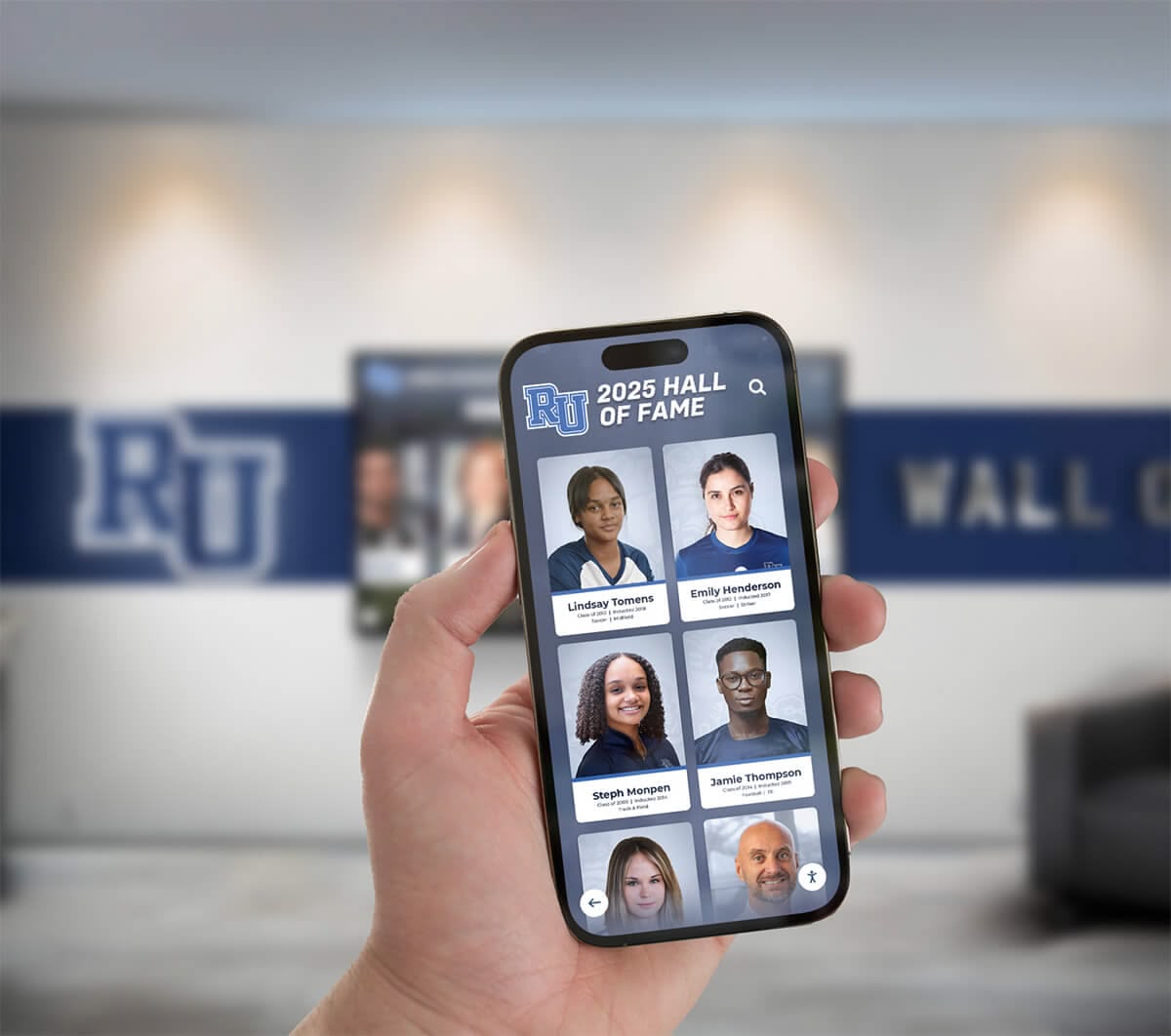
Schools implementing comprehensive digital recognition solutions with web components report significantly improved donor satisfaction and engagement as supporters access recognition conveniently from anywhere.
Sustainability and Environmental Considerations
Growing environmental consciousness influences recognition decisions. Organizations increasingly evaluate recognition materials’ environmental impact, preferring sustainable options or highlighting digital recognition’s elimination of ongoing material consumption associated with continuous plaque production.
Blockchain and NFT Recognition
Emerging blockchain technology may enable entirely new recognition paradigms where donor acknowledgment exists as permanent, decentralized digital records independent of any single institutional display. While speculative currently, cryptocurrency-native donors may value blockchain-verified recognition representing genuine permanence.
Conclusion: Making Recognition Decisions That Honor the Past While Funding the Future
The choice between traditional donor recognition plaques and modern digital alternatives represents more than an aesthetic decision—it determines recognition capacity, update flexibility, long-term costs, donor engagement quality, and ultimately fundraising performance for years or decades to come.
Traditional plaques offer time-tested prestige, lower initial investment, and alignment with donor expectations shaped by generations of physical recognition. These advantages remain meaningful for organizations with limited recognition needs, highly traditional constituencies, or contexts where physical materials deliver optimal stewardship impact.
Digital recognition provides unlimited capacity, effortless updates, rich multimedia storytelling, interactive engagement, and increasingly favorable economics as recognition needs grow. These capabilities enable recognition programs genuinely honoring all donors rather than space-constrained selections, while creating stewardship experiences that demonstrably improve fundraising performance.
The most successful organizations approach recognition strategically rather than defaulting to tradition or chasing technology. They evaluate options systematically based on their donor characteristics, recognition scale, budget realities, and long-term strategic priorities. They recognize that recognition investment returns dividends through improved donor retention, increased giving levels, and major gift inspiration—making thoughtful recognition programs fundraising assets rather than administrative expenses.
Solutions like Rocket Alumni Solutions provide purpose-built digital recognition platforms designed specifically for educational and nonprofit donor stewardship needs. These systems enable comprehensive recognition honoring every supporter while creating engaging experiences that inspire future giving. Organizations implementing digital recognition consistently report improved donor satisfaction, increased fundraising performance, and operational efficiencies that justify initial investment many times over.
Whether implementing traditional bronze plaques, cutting-edge digital displays, or hybrid approaches combining both, excellence lies not in the format but in the commitment to comprehensive, accurate, meaningful acknowledgment that demonstrates genuine gratitude while inspiring continued and increased support.
Your donors invested in your mission because they believe in your impact and trust your stewardship. Recognition serves as visible proof that their trust was warranted—that you remember, appreciate, and celebrate those who enable your work. Make recognition decisions that honor this trust while building fundraising momentum sustaining your mission for generations.
Ready to explore recognition solutions that honor every donor while building the fundraising momentum your organization deserves? Discover how modern recognition technology can transform donor stewardship while creating permanent acknowledgment that inspires giving for decades to come through comprehensive digital recognition platforms designed specifically for schools, nonprofits, and mission-driven organizations committed to excellence in donor relations.