



Key Takeaways
Discover effective ways to display your school's history with digital displays, interactive kiosks, and modern preservation solutions. Complete implementation guide for K-12 and universities.
Why Displaying School History Matters
Before diving into specific methods, it’s essential to understand why investing in school history displays delivers value across multiple dimensions of your educational community.
Strengthening Student Identity and School Pride
When students see tangible evidence of their school’s rich history surrounding them daily, they develop stronger connections to institutional identity. Research consistently shows that students who feel connected to school traditions demonstrate higher engagement levels, improved academic performance, and a stronger sense of belonging.
Historical displays help students understand they’re part of something larger than their immediate experience. Learning about graduates who once walked the same hallways, faced similar challenges, or achieved remarkable things provides perspective and inspiration. Students aren’t just attending school—they’re continuing a legacy of achievement and contributing their own chapter to an ongoing story.
Visible history throughout campus creates conversation starters and teaches lessons about perseverance, excellence, and community values. When a struggling athlete sees records set decades ago, or an aspiring scientist discovers an alumnus who made breakthrough discoveries, those examples become powerful motivators demonstrating that excellence is possible.
Enhancing Alumni Engagement and Giving
Alumni who see their experiences honored and preserved maintain stronger lifelong connections to their alma mater. This emotional connection translates directly to higher reunion attendance, increased volunteer participation, and greater philanthropic support for school initiatives.
Modern history displays—particularly digital solutions—make alumni experiences accessible regardless of geographic distance. Former students who relocated across the country or around the world can explore their school’s historical archives, find photographs they’ve never seen, and reconnect with memories from decades past. This accessibility dramatically increases engagement compared to traditional displays requiring physical campus visits.
Recognition through historical displays demonstrates to alumni that their time at the institution mattered and continues to be valued. When graduates see their championship teams, academic achievements, or extracurricular contributions preserved and celebrated, they feel acknowledged as integral parts of the school’s ongoing story rather than simply former students who moved on.
Improving Recruitment and Community Reputation
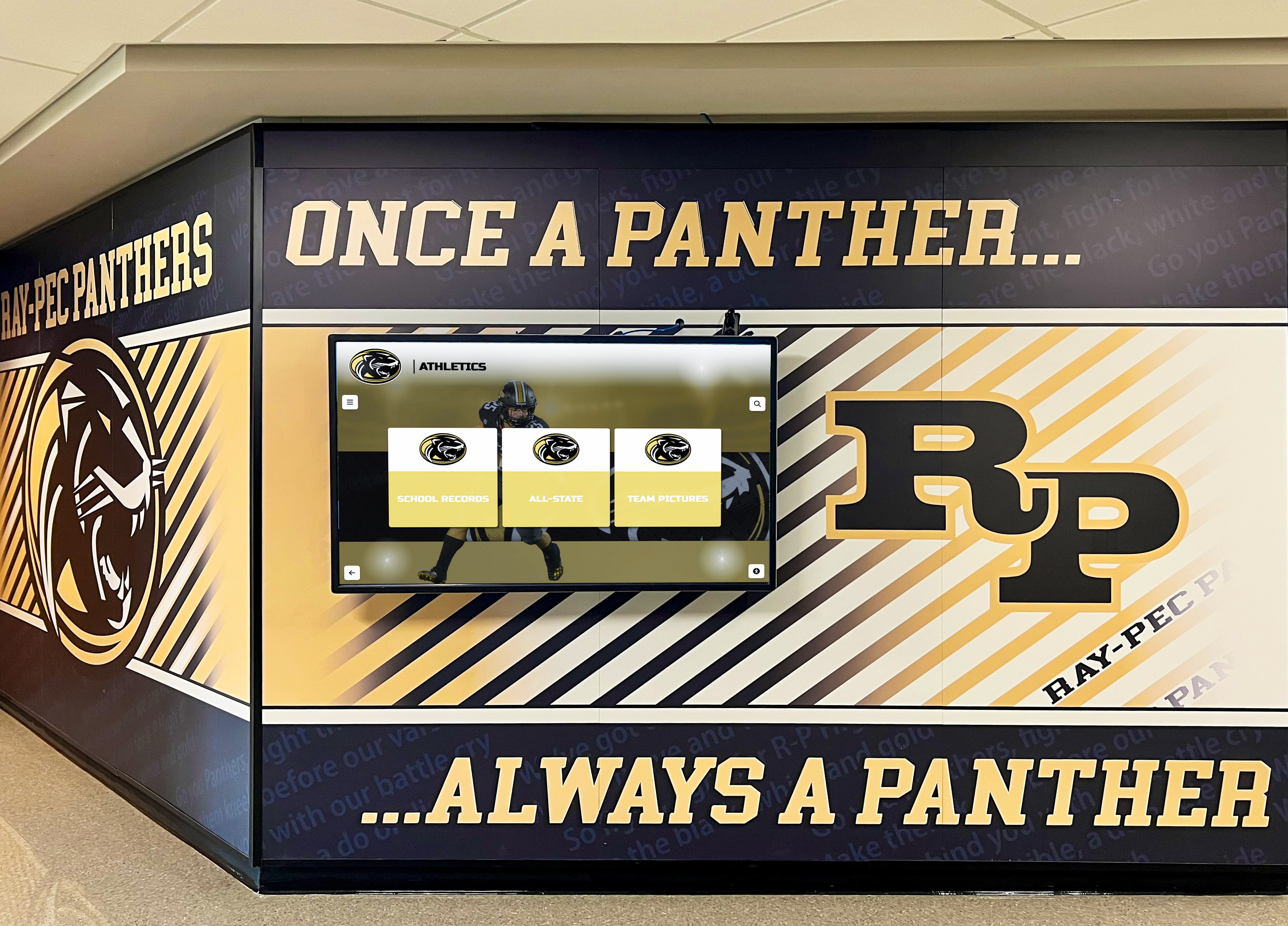
Schools with well-preserved, accessible historical narratives build stronger community reputations. Parents, prospective families, and community members recognize institutions that value their heritage as stable, established organizations worthy of trust and support. Historical preservation demonstrates institutional maturity, continuity, and commitment to excellence across generations.
For schools competing to attract students, compelling history displays provide tangible evidence of institutional quality. Prospective students and families evaluating educational options seek proof that graduates succeed in their chosen fields and lead meaningful lives after graduation. Comprehensive displays showcasing distinguished alumni, championship achievements, and academic excellence provide that evidence convincingly.
Community members frequently serve as invaluable resources for historical documentation. Long-time residents remember stories, possess photographs, or can identify individuals in historical images. Engaging them in history displays strengthens community bonds while enriching historical records beyond what official documentation alone could achieve.
Traditional Methods for Displaying School History
While digital solutions offer significant advantages, understanding traditional display approaches provides context for comprehensive strategies that may combine multiple methods effectively.
Physical Plaques and Memorial Walls
Bronze or brass plaques mounted on dedicated walls create timeless, elegant recognition of school history. Individual nameplates arranged in organized patterns provide permanent acknowledgment of distinguished alumni, championship teams, academic achievers, or historical milestones.
Advantages: Physical plaques offer gravitas and permanence that digital displays cannot fully replicate. They require no power, software updates, or technical maintenance. The tangible, tactile quality creates powerful emotional connections for those seeing their own names or discovering family members honored on historic walls.
Limitations: Space constraints eventually limit expansion as history accumulates. Updating information or correcting errors requires expensive replacement plaques. Environmental exposure causes many markers to tarnish or become illegible over time. Most significantly, plaques provide minimal information—typically just names, dates, and brief descriptions insufficient for meaningful understanding of achievements or historical context.
Trophy Cases and Display Cabinets
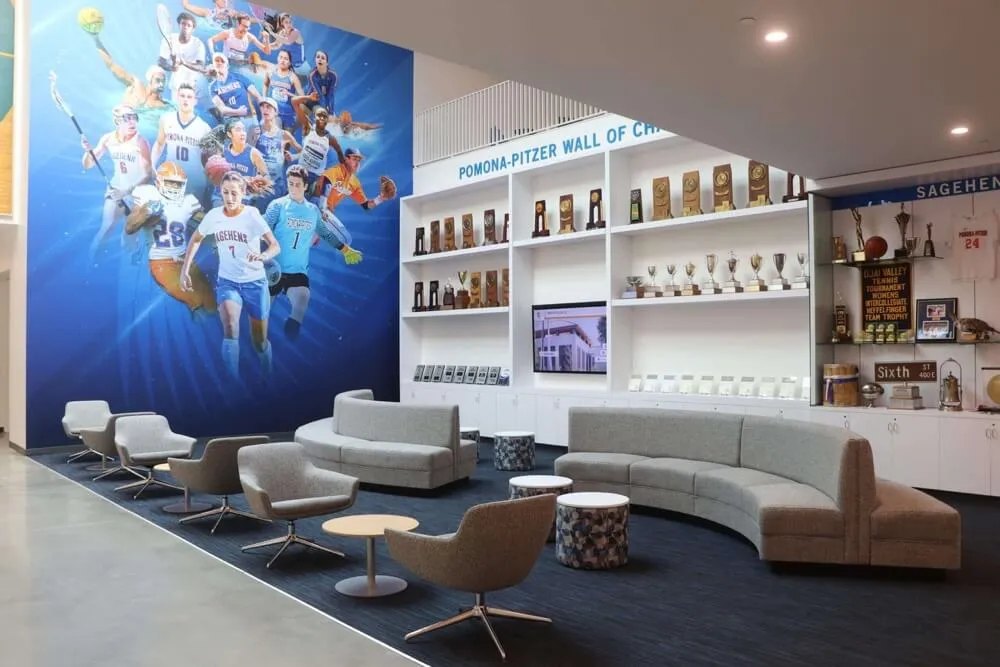
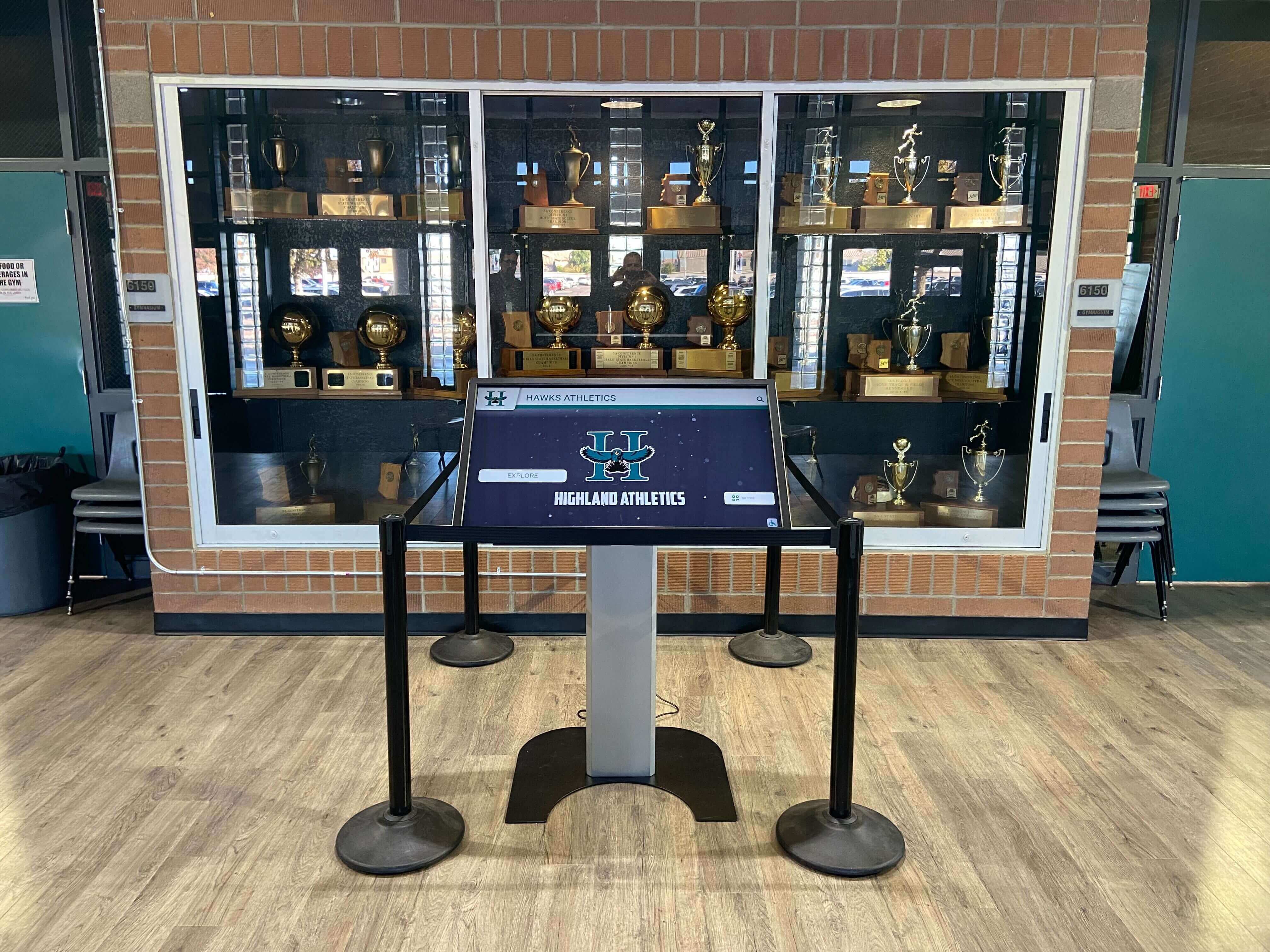
Glass-enclosed cases showcase athletic trophies, academic awards, vintage photographs, and historical artifacts. These three-dimensional displays create impressive visual impact in hallways, gymnasiums, or administrative areas while protecting valuable items from damage.
Advantages: Trophy cases accommodate actual physical objects that tell compelling stories—championship trophies, signed memorabilia, vintage uniforms, or historical documents. They provide depth and variety that flat displays cannot match, particularly when thoughtfully arranged with explanatory text.
Limitations: Display cases require significant space and ongoing maintenance to keep contents clean, organized, and properly lit. Dust accumulation diminishes visual impact. Physical capacity limits what can be shown simultaneously, requiring difficult decisions about what to display versus store. Security concerns exist for valuable historical items, and accessibility may be limited as visitors cannot handle or closely examine protected artifacts.
Historical Photo Displays and Timeline Walls
Framed photographs with accompanying biographical or historical text create more personal connections than simple nameplates. Chronologically arranged images documenting school evolution, significant events, or notable individuals help visitors understand institutional development over time.
Timeline walls showing decades or centuries of school history through photographs, text panels, and visual elements create engaging narratives demonstrating how institutions evolved. These displays work particularly well in main hallways, libraries, or areas where visitors naturally pause to read and observe.
Advantages: Visual storytelling through photographs creates emotional connections that text alone cannot achieve. People naturally engage with images, spending more time examining photo displays than reading plaques. Timelines provide context showing how current traditions, facilities, or programs developed across generations.
Limitations: Maintaining consistent aesthetic quality becomes challenging as displays expand across decades with photographs of varying quality and sizes. Environmental factors cause photographs to fade over time despite protective framing. Physical space constraints limit how many images can be displayed, and updating requires printing, framing, and physical installation. Most significantly, static photo displays cannot accommodate the multimedia elements—videos, interviews, interactive exploration—that digital systems enable.
Yearbook Collections and Archives
Yearbooks represent perhaps the most comprehensive single source of school history, documenting students, activities, events, and institutional evolution year by year. Many schools maintain complete collections spanning their entire history, creating invaluable resources for researchers, alumni, and family historians.
Advantages: Yearbooks provide systematic, annual documentation with photographs, names, activities, and contextual information about each year’s unique character. Complete collections become institutional treasures preserving memories that might otherwise be lost.
Limitations: Physical yearbooks deteriorate over time, particularly heavily-used copies. Accessibility remains severely limited—only those with physical access to collections can research historical information. Alumni who never purchased yearbooks or whose copies were lost have no way to view content from their school years. Digitizing yearbook collections addresses these limitations while preserving original materials, as explored in comprehensive school history preservation programs.
Modern Digital Solutions for Displaying School History
Contemporary digital technology addresses traditional display limitations while creating unprecedented opportunities for comprehensive, accessible, and engaging school history presentation.
Interactive Touchscreen Displays
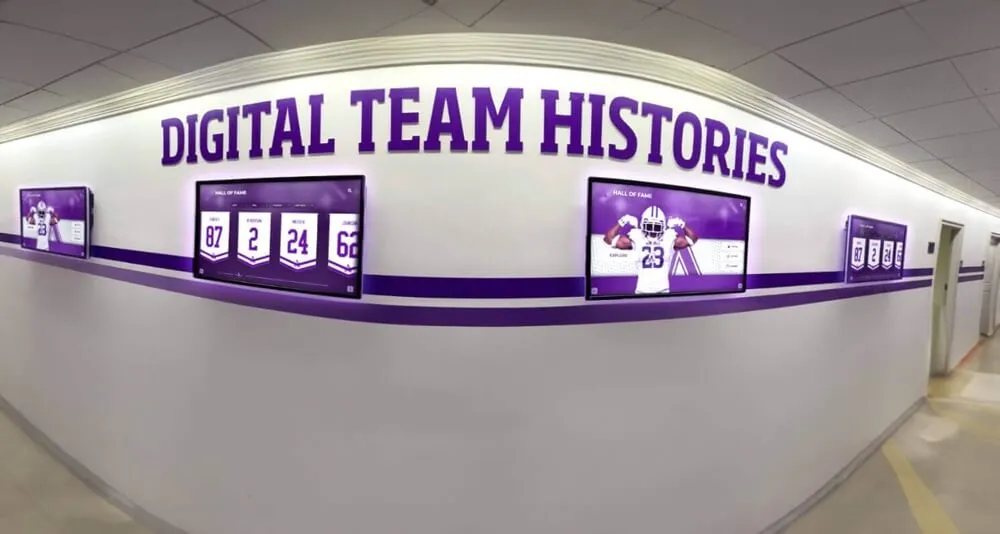
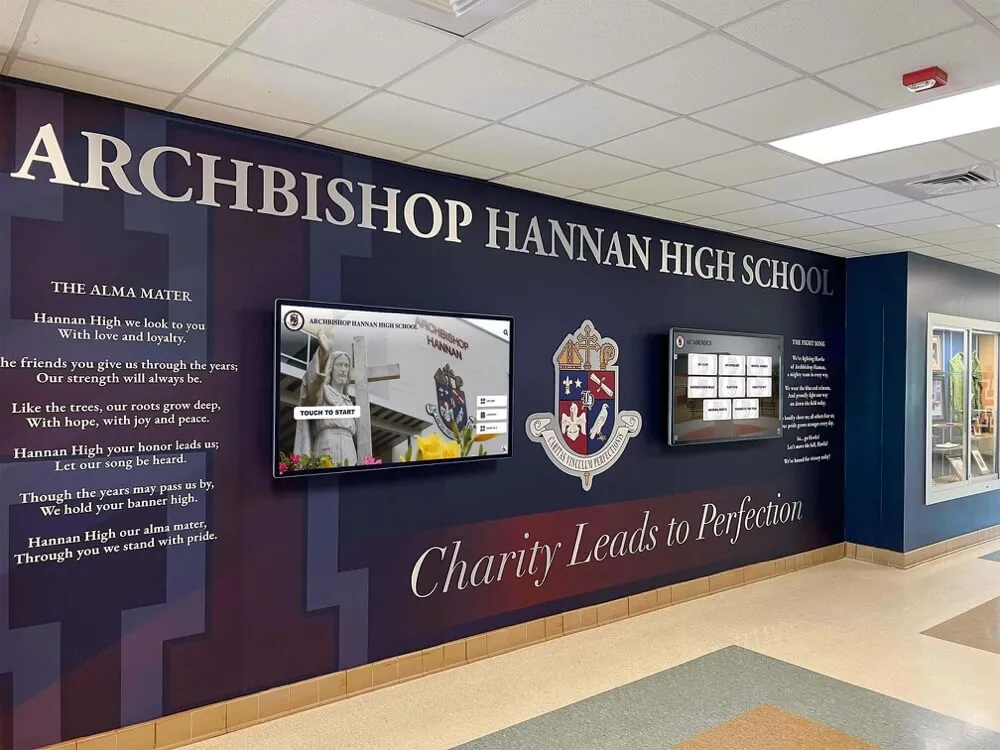
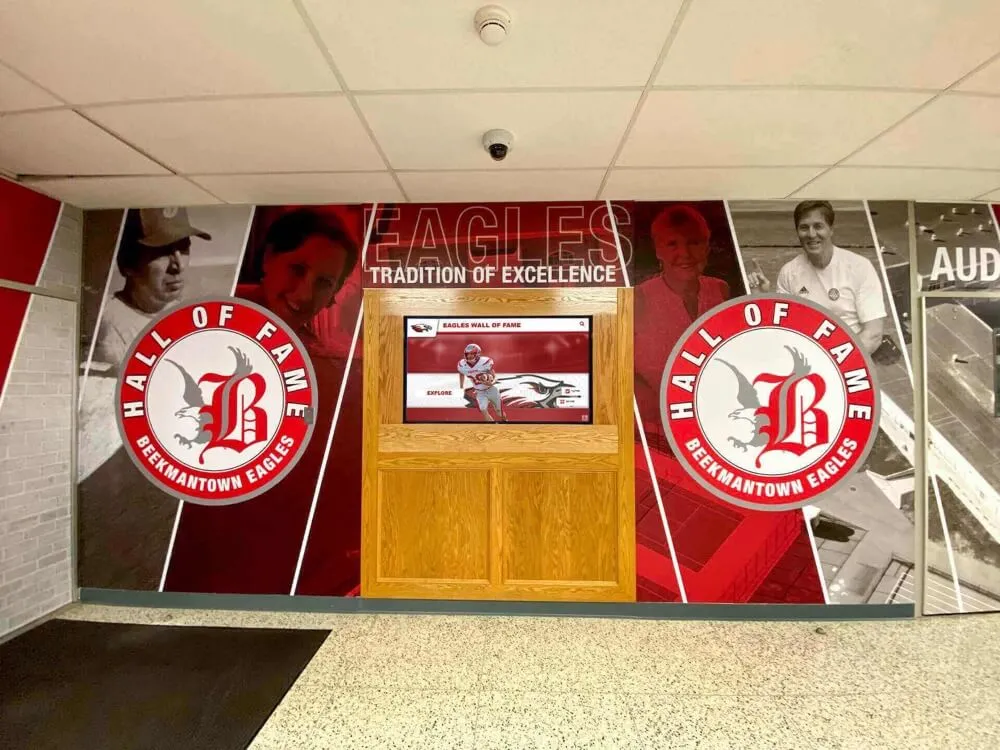
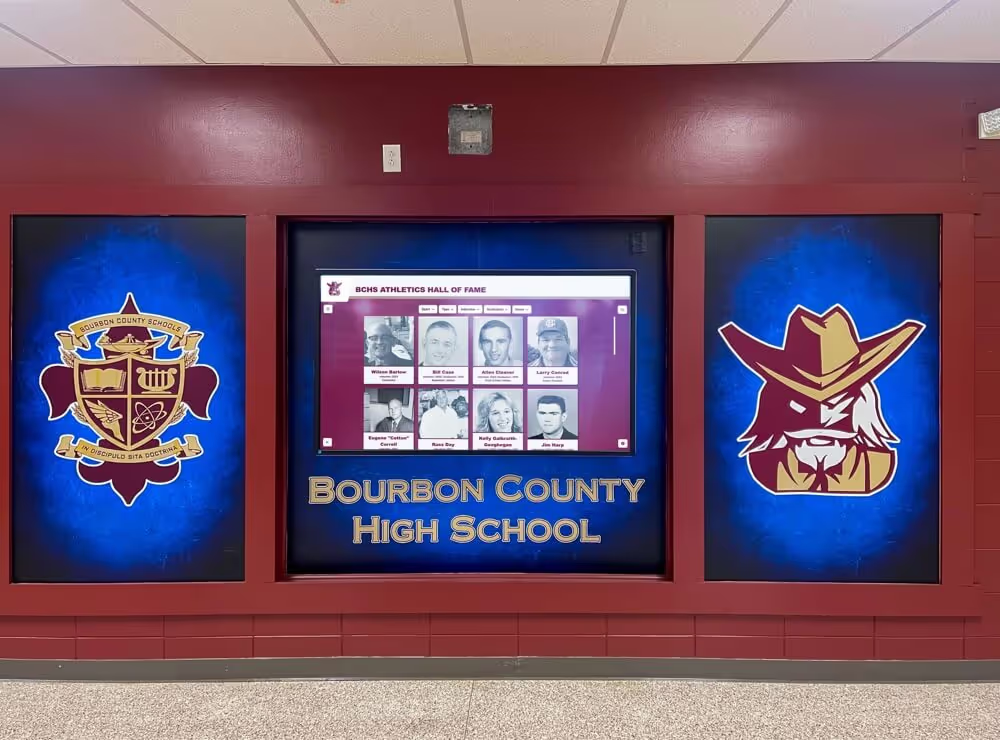
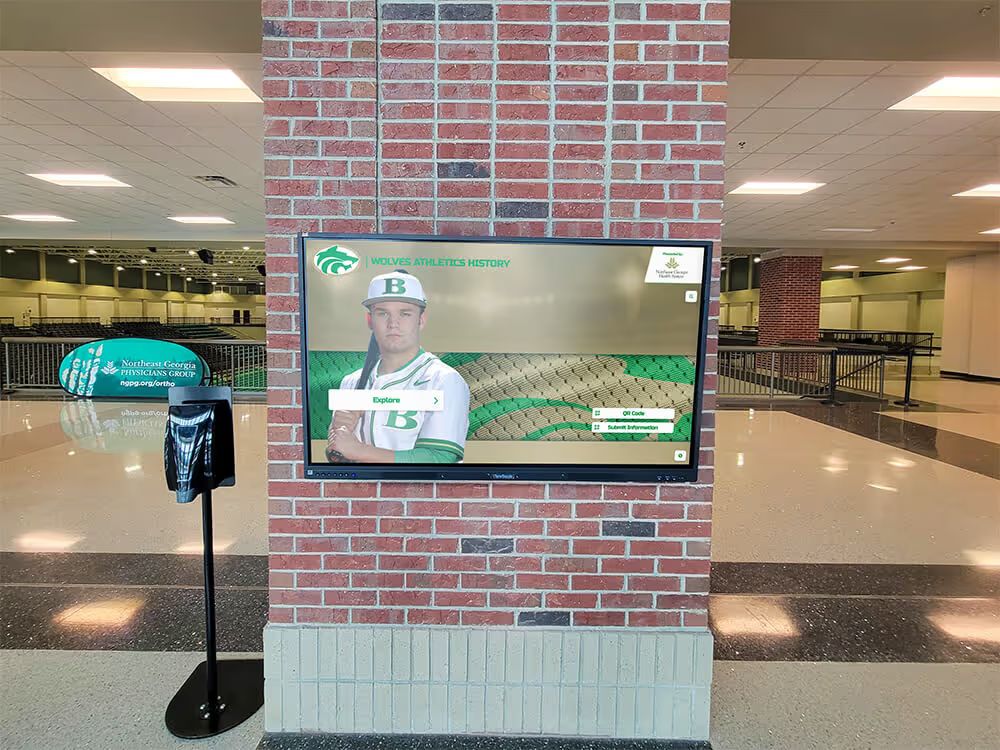
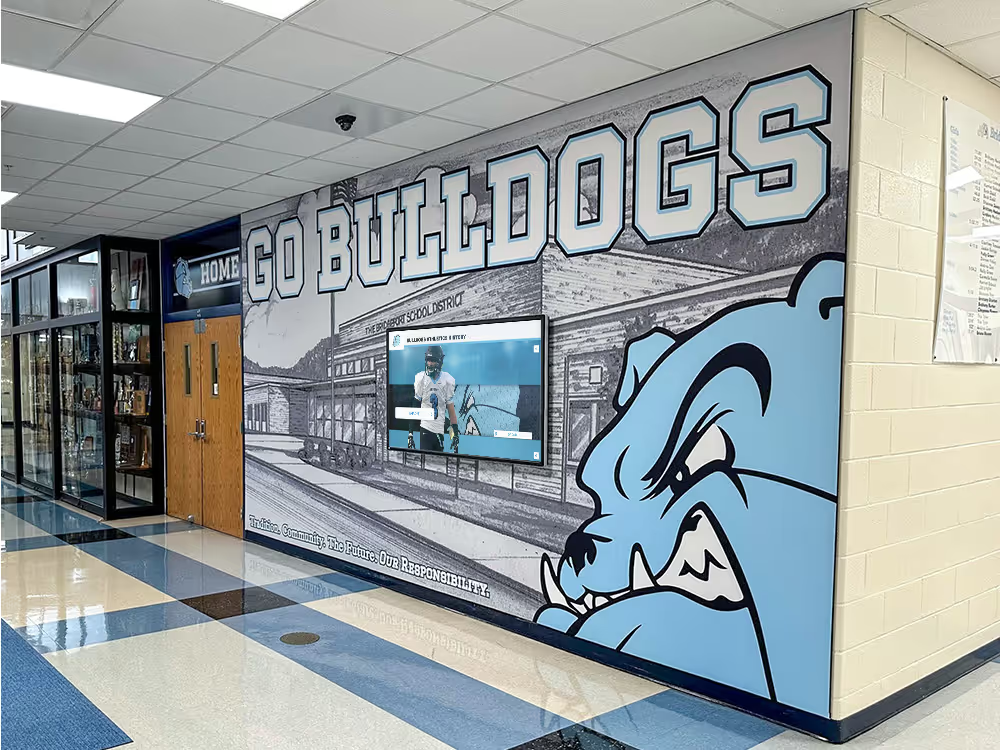
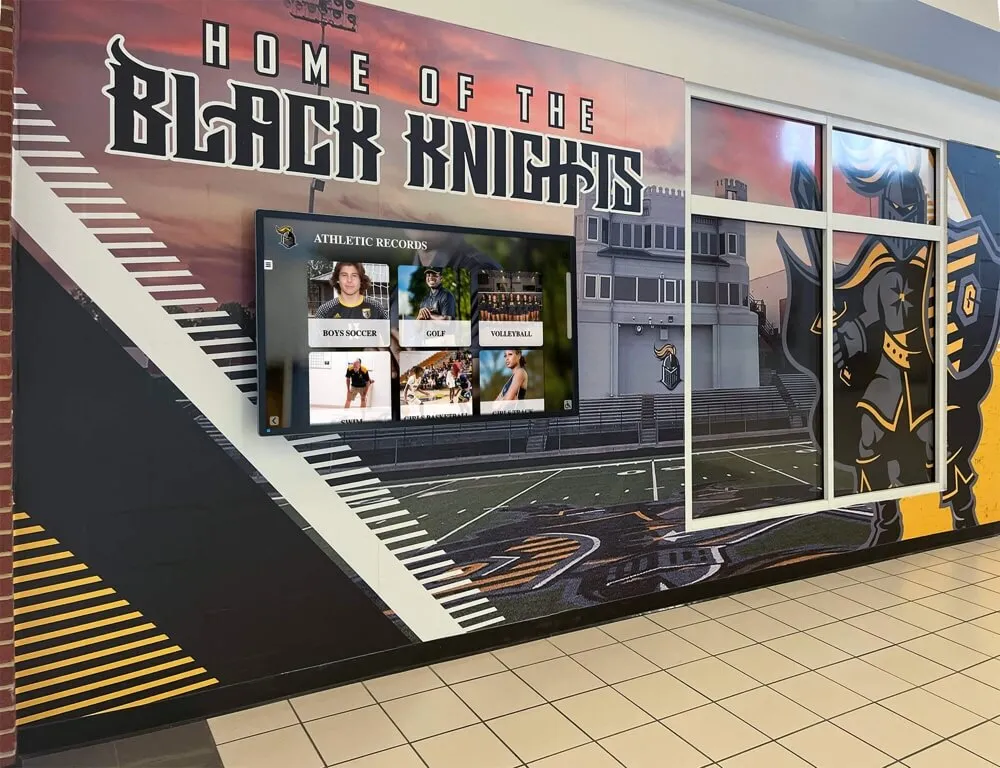
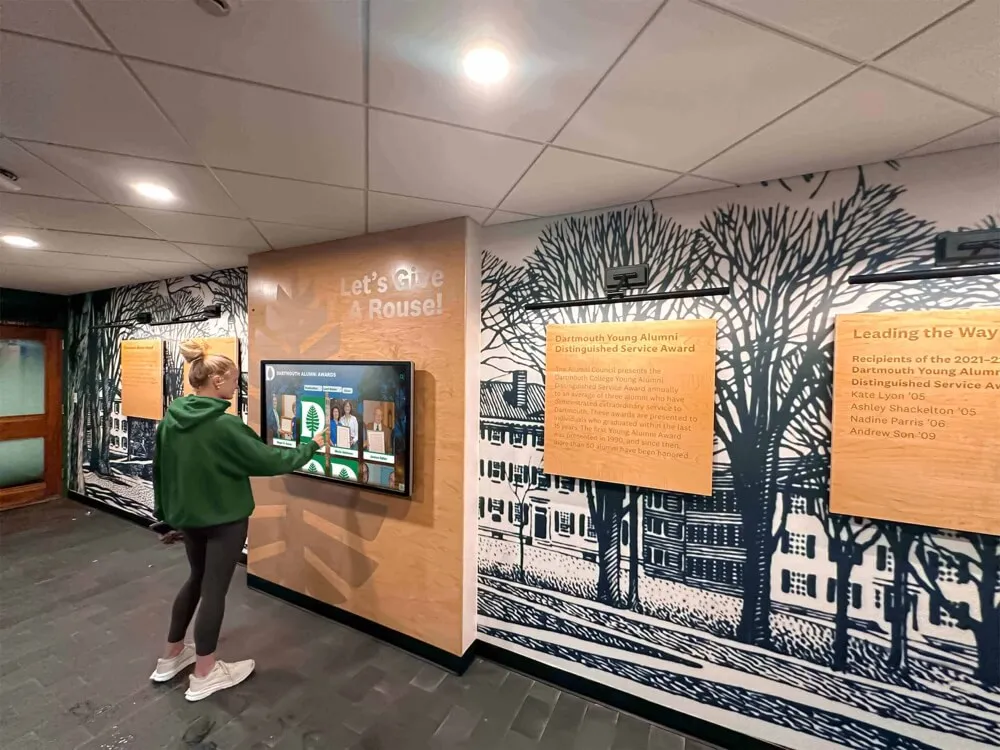
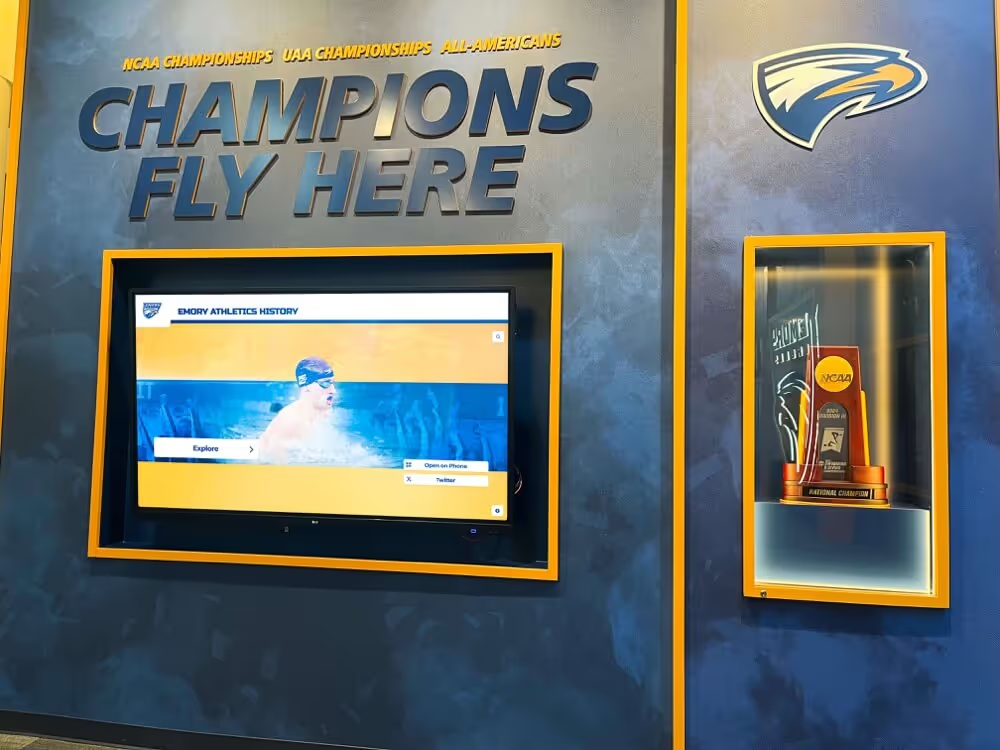
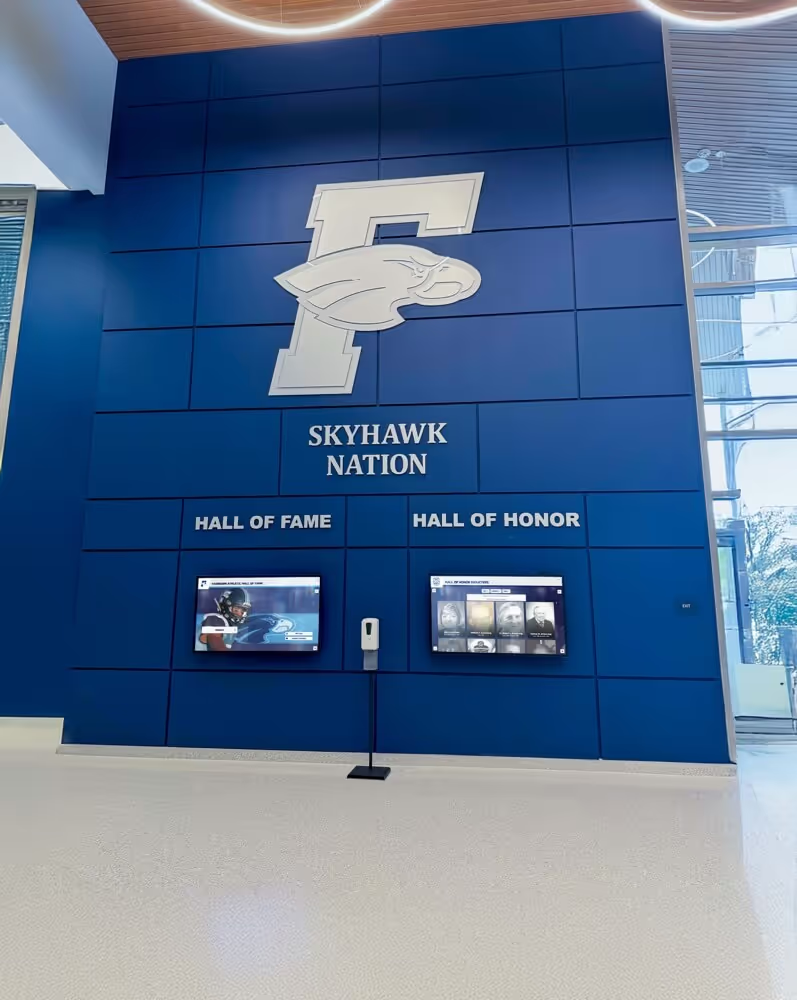
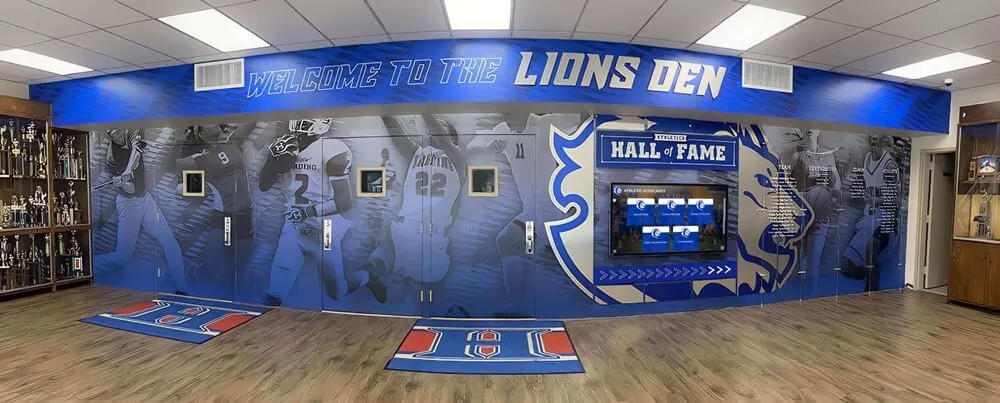
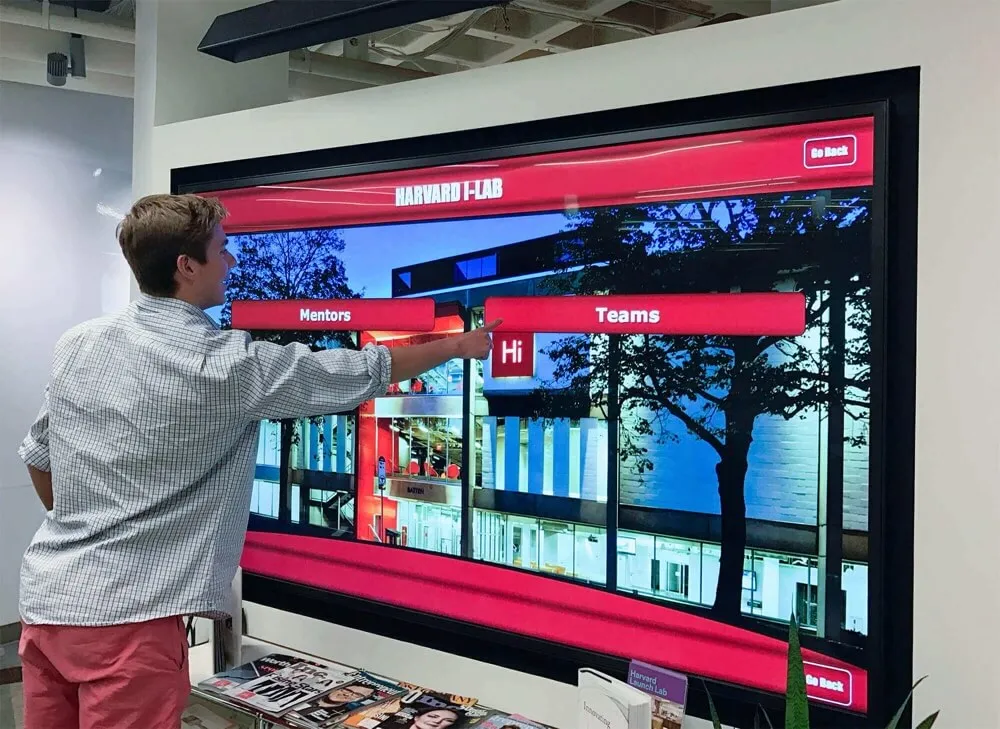
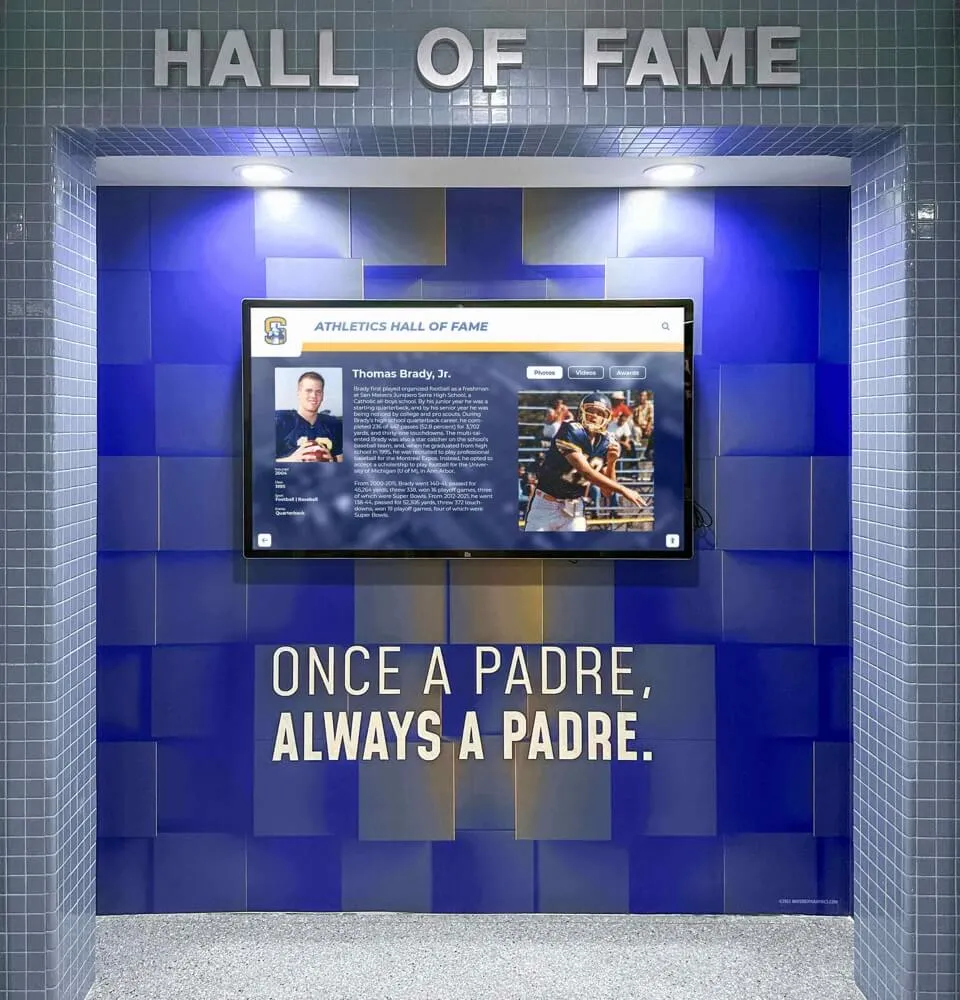
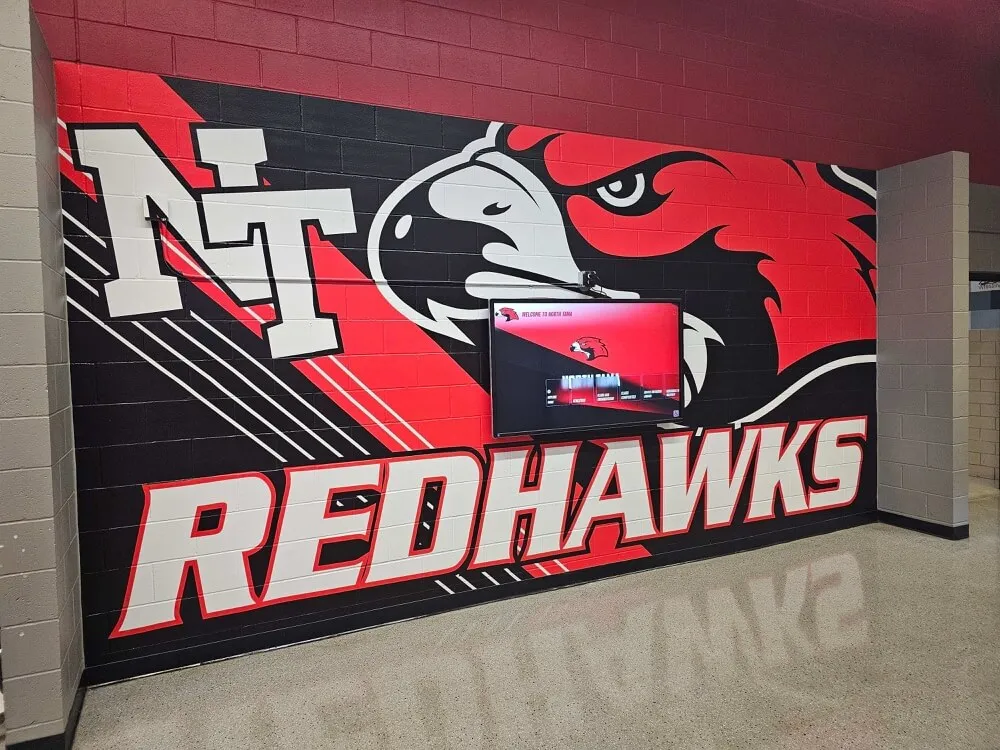
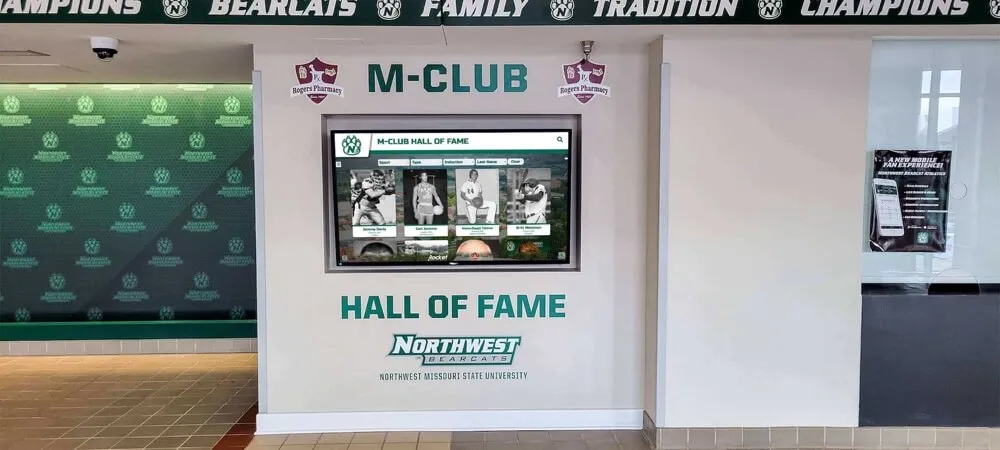
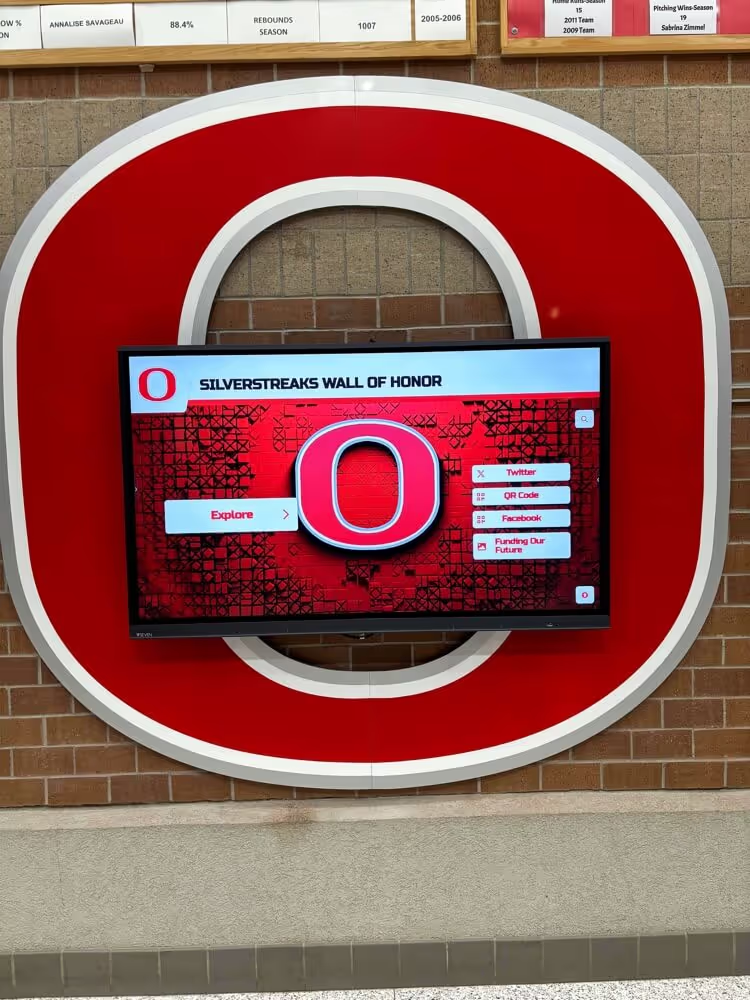
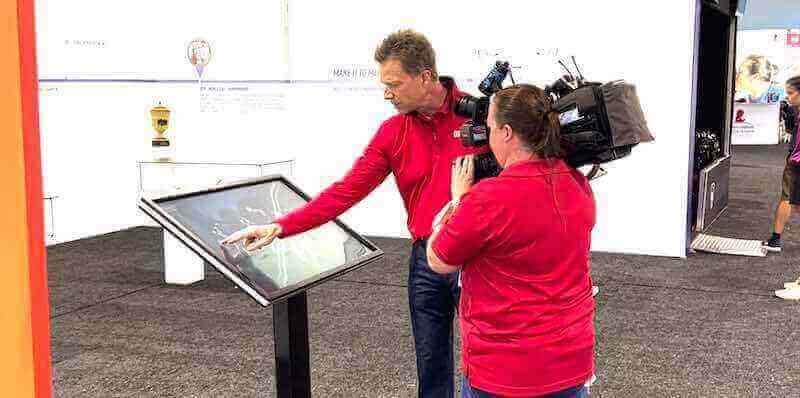
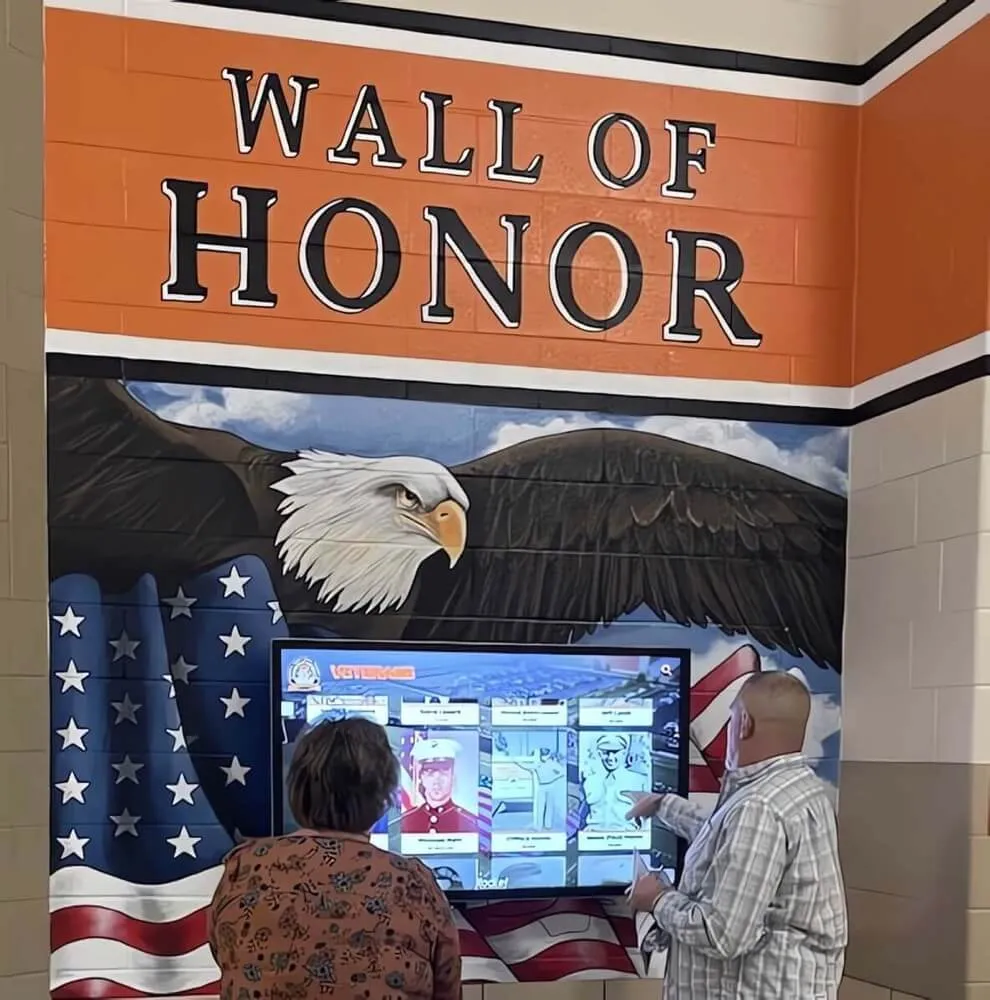
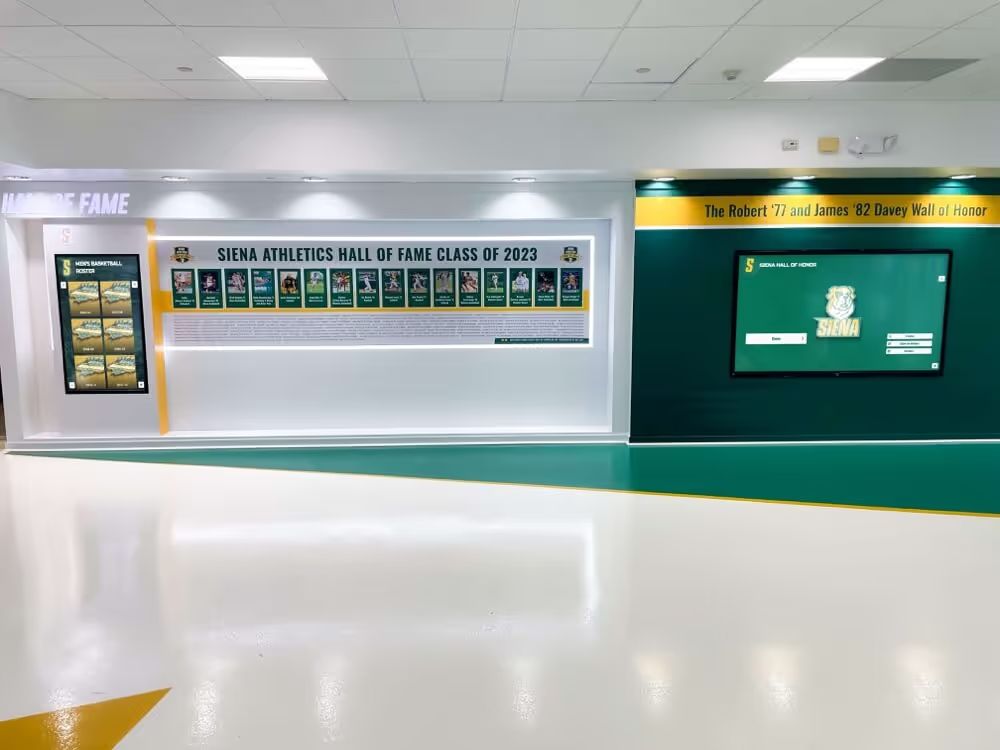
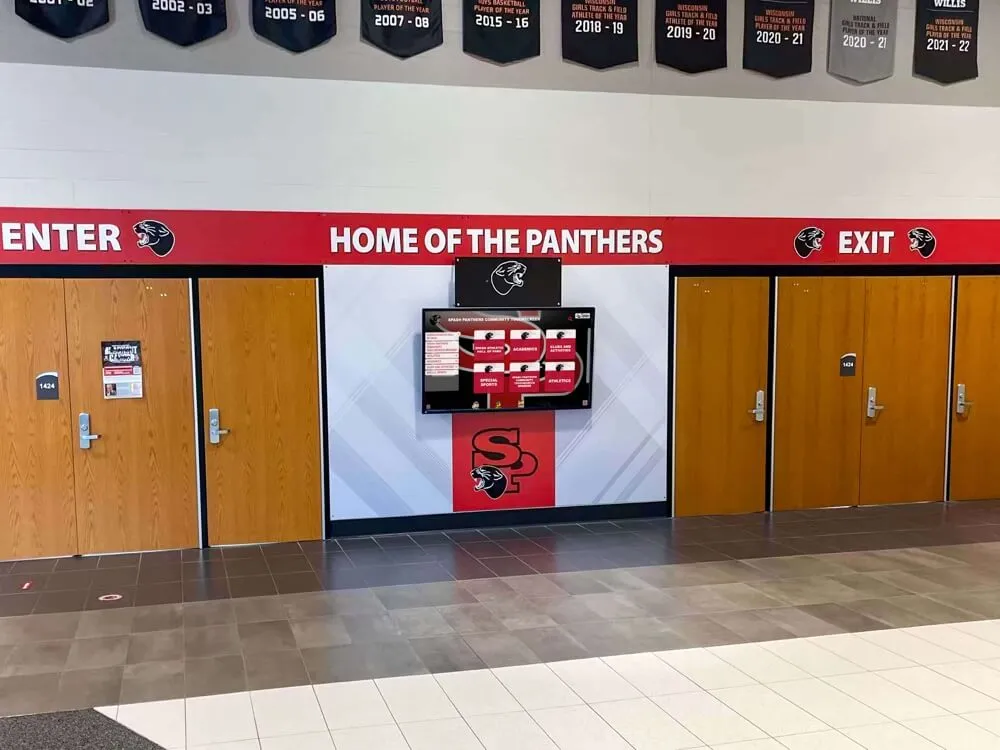
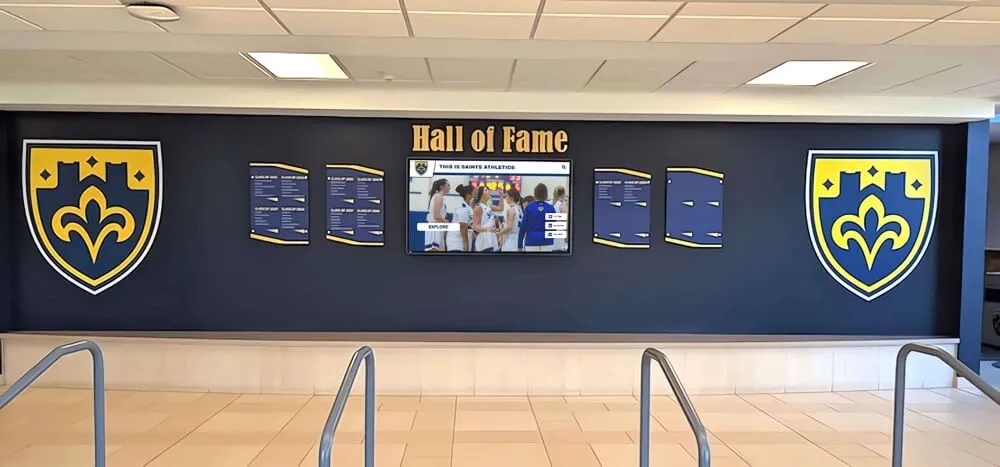
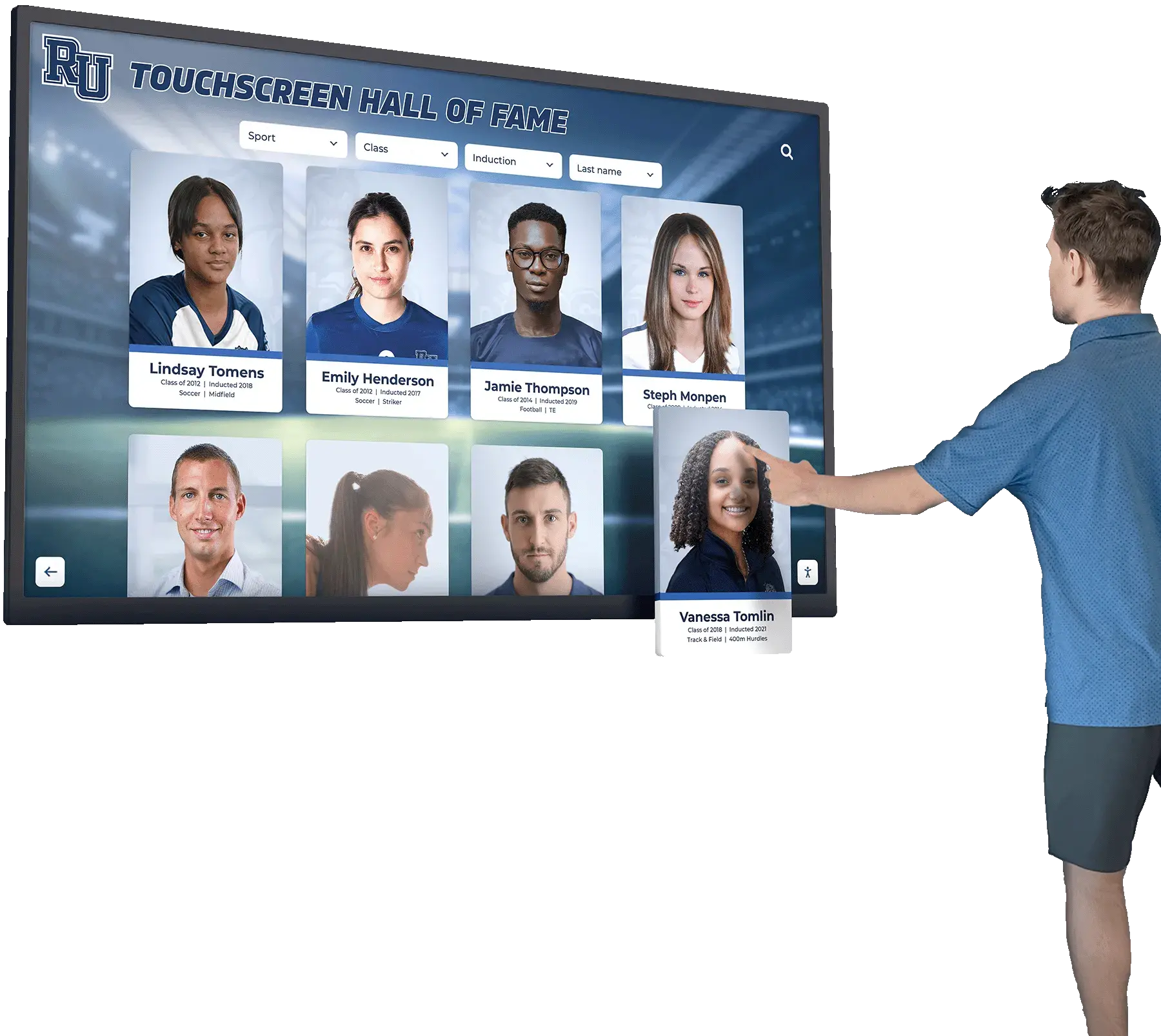
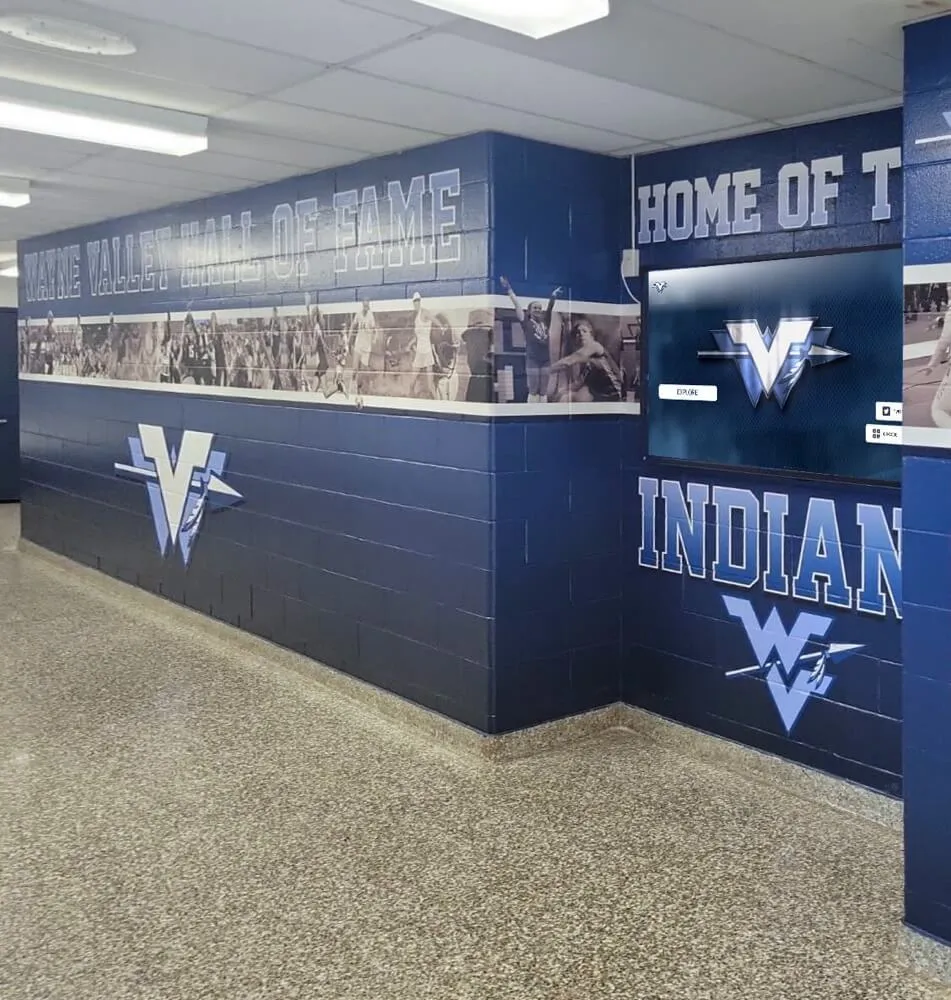
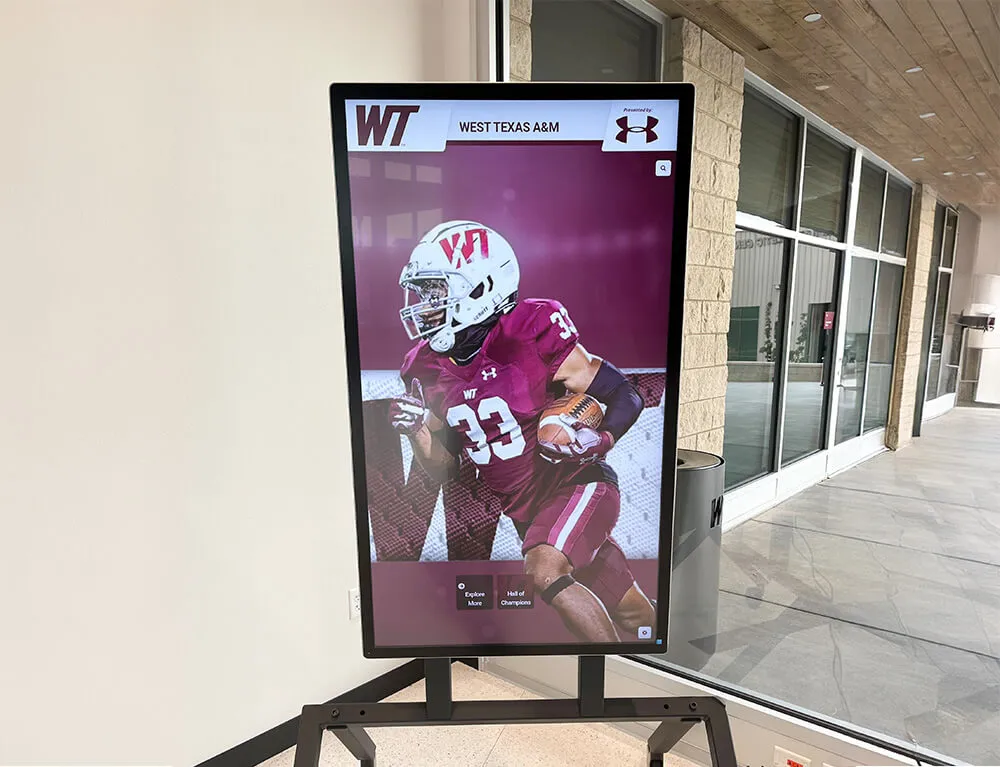
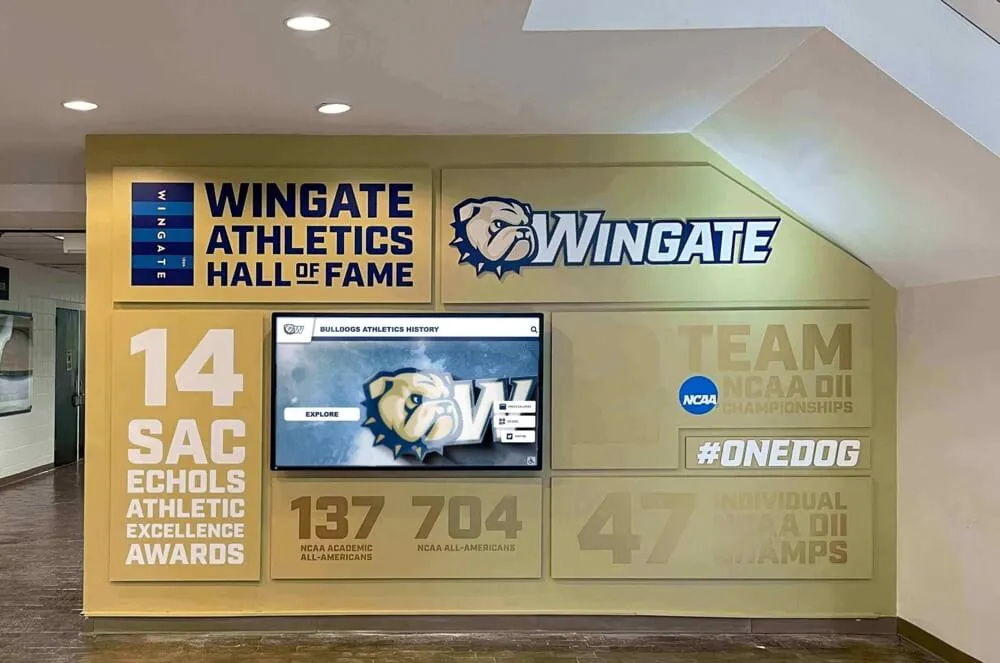
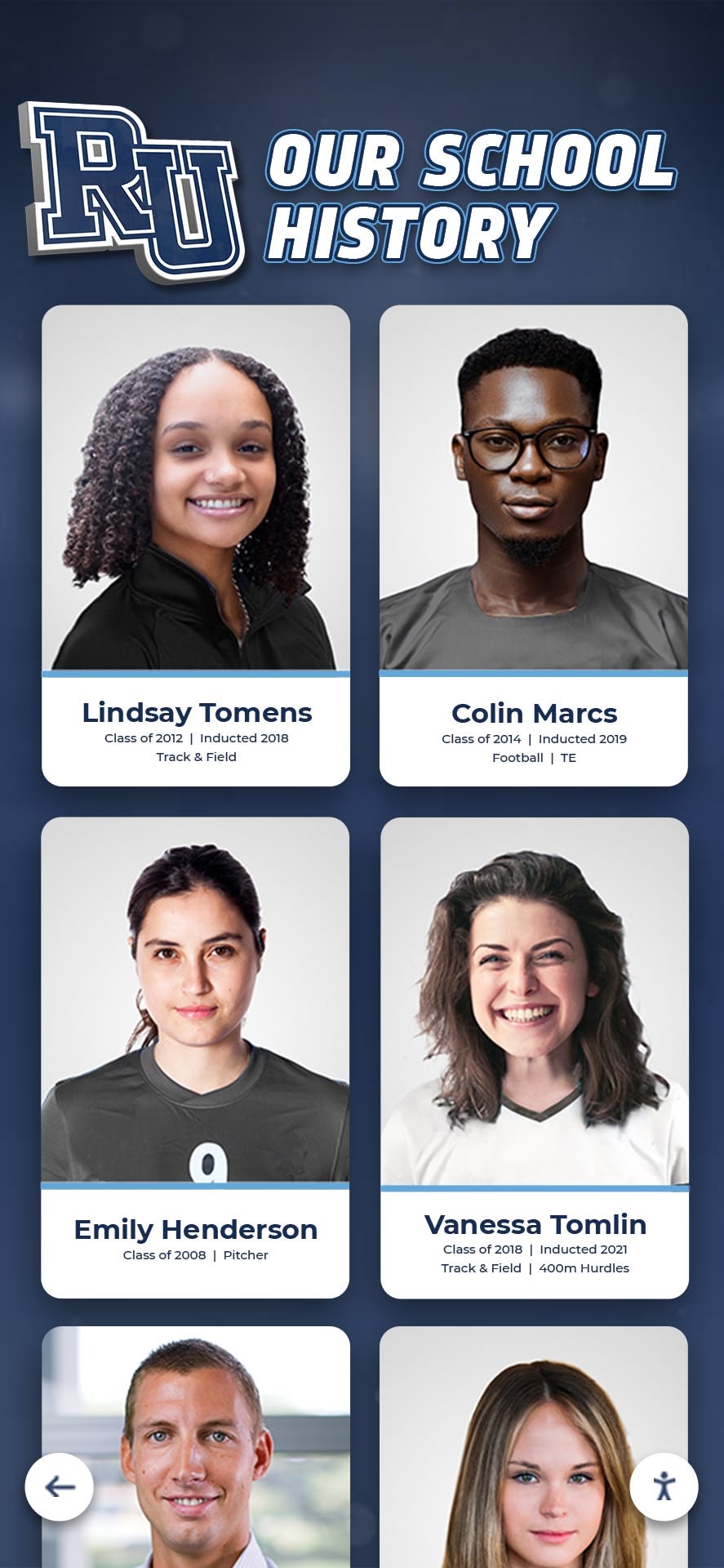
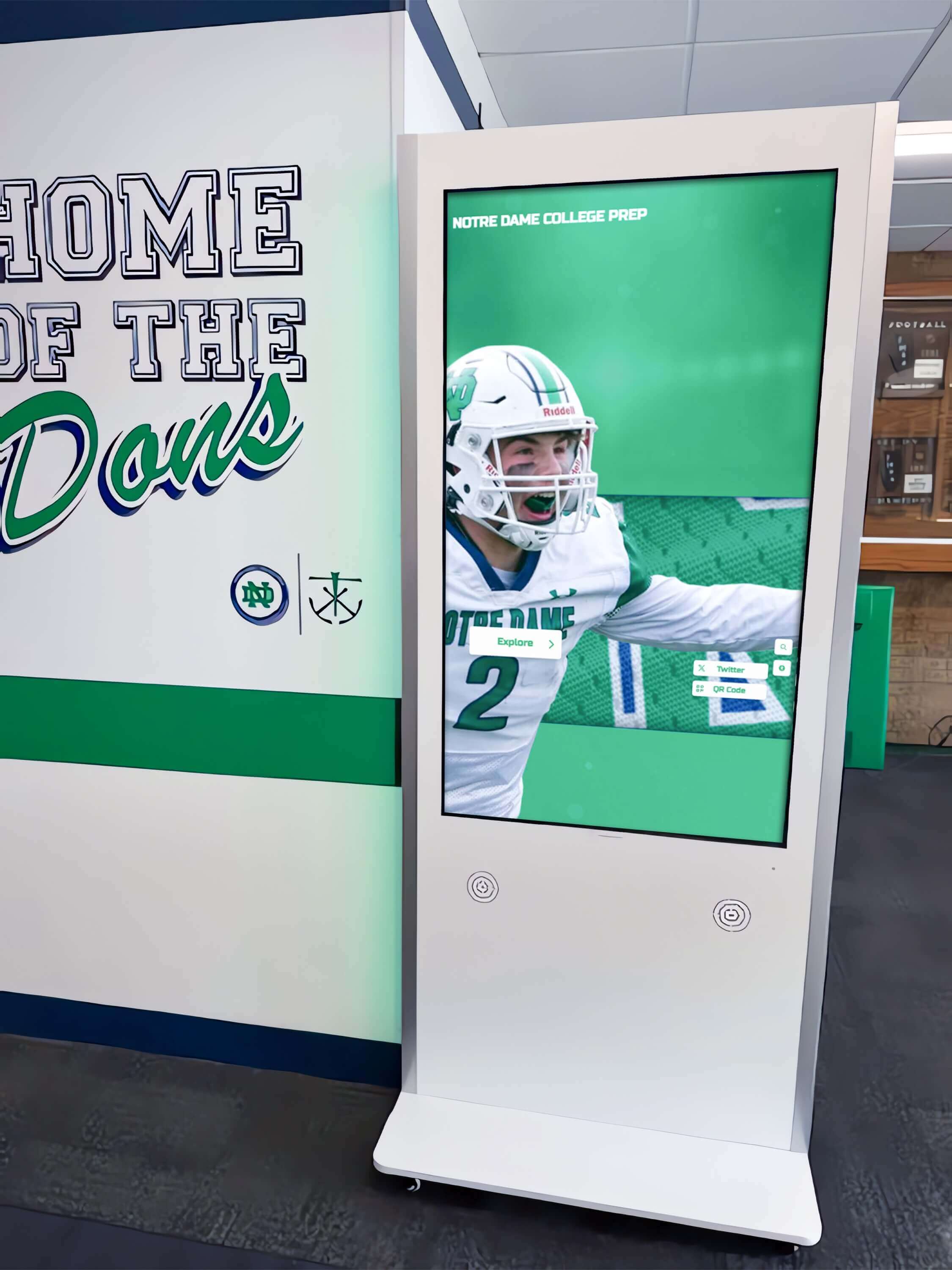
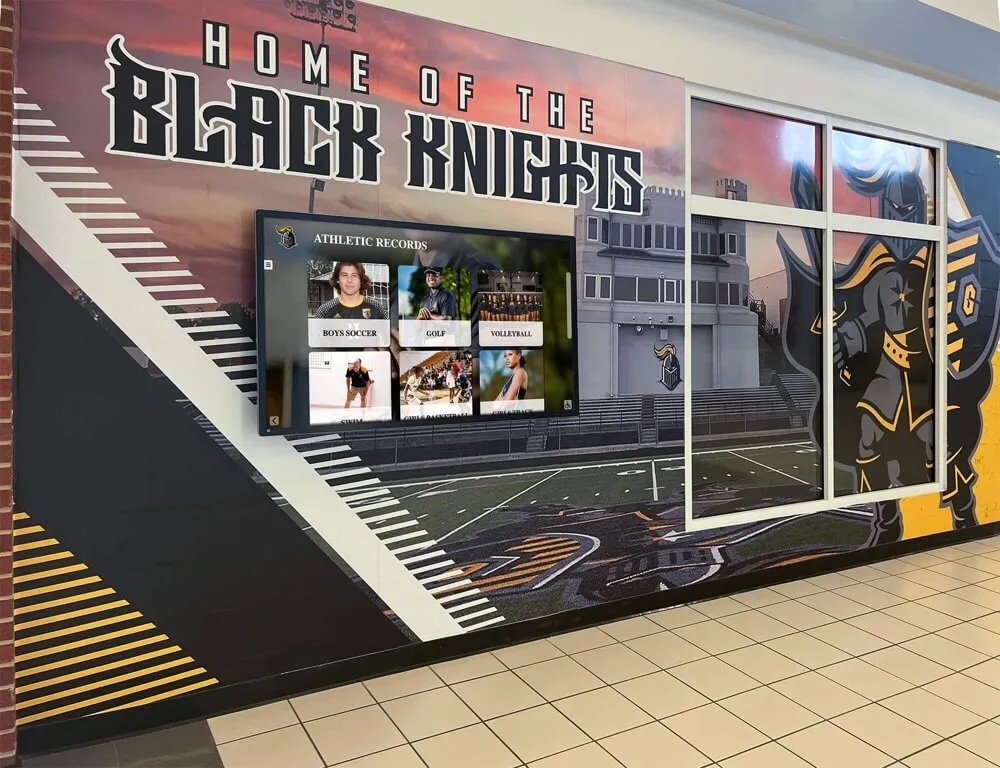
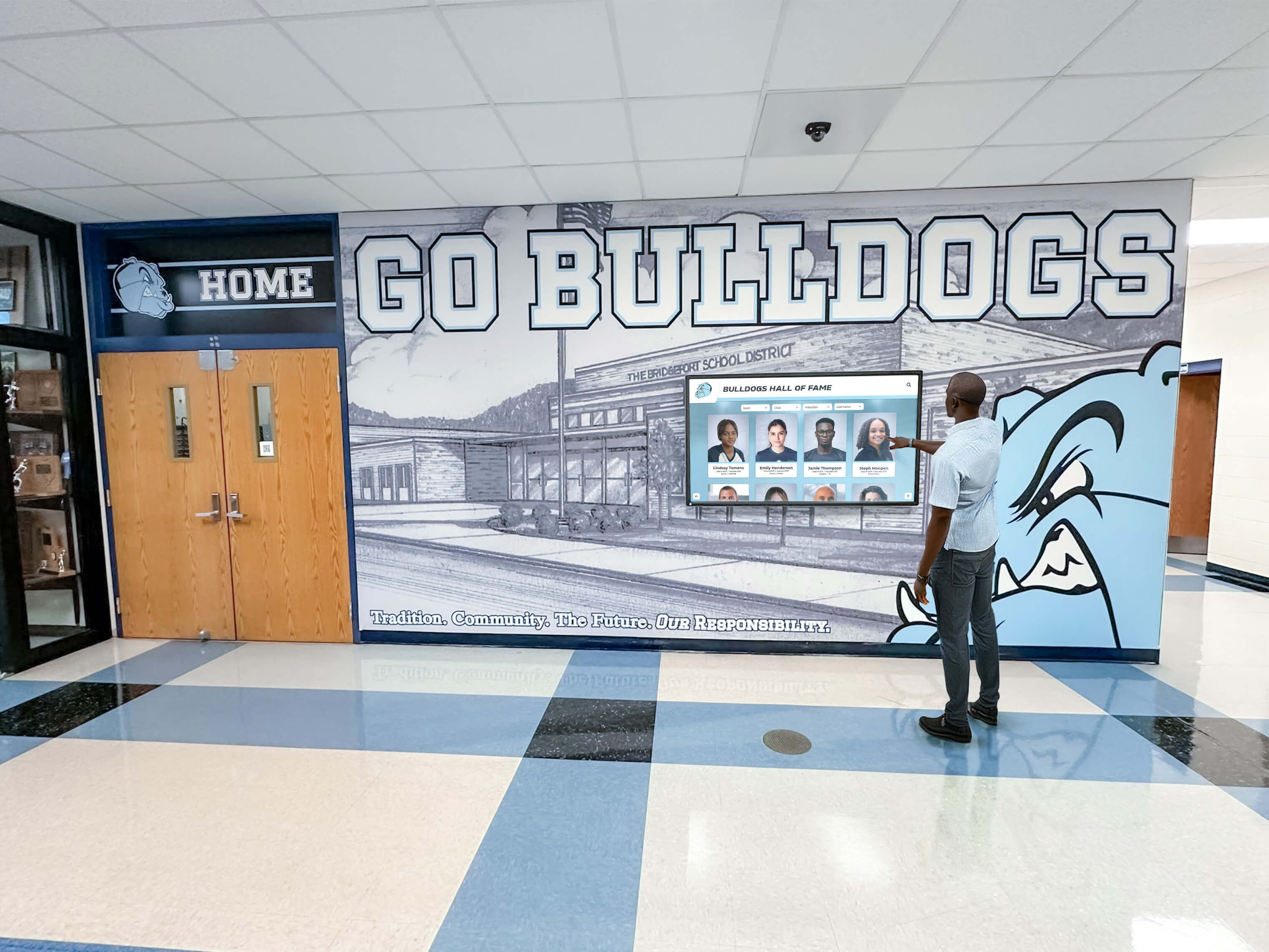
Large touchscreen systems installed in main entrances, libraries, athletic facilities, or common areas allow visitors to actively explore school history through intuitive interfaces. Users can search by name, year, achievement category, or keyword to discover specific individuals or explore historical content matching their interests.
These systems typically feature:
Comprehensive Institutional Timelines showing founding dates, major milestones, facility additions, significant events, and administrative leadership across decades or centuries. Users can scroll through history at their own pace, diving deep into particular eras that interest them.
Searchable Databases enabling visitors to find specific alumni, search for championship teams by year or sport, locate photographs from particular events, or explore records by category. This searchability transforms how people interact with school history, making it instantly accessible rather than requiring physical archive searches.
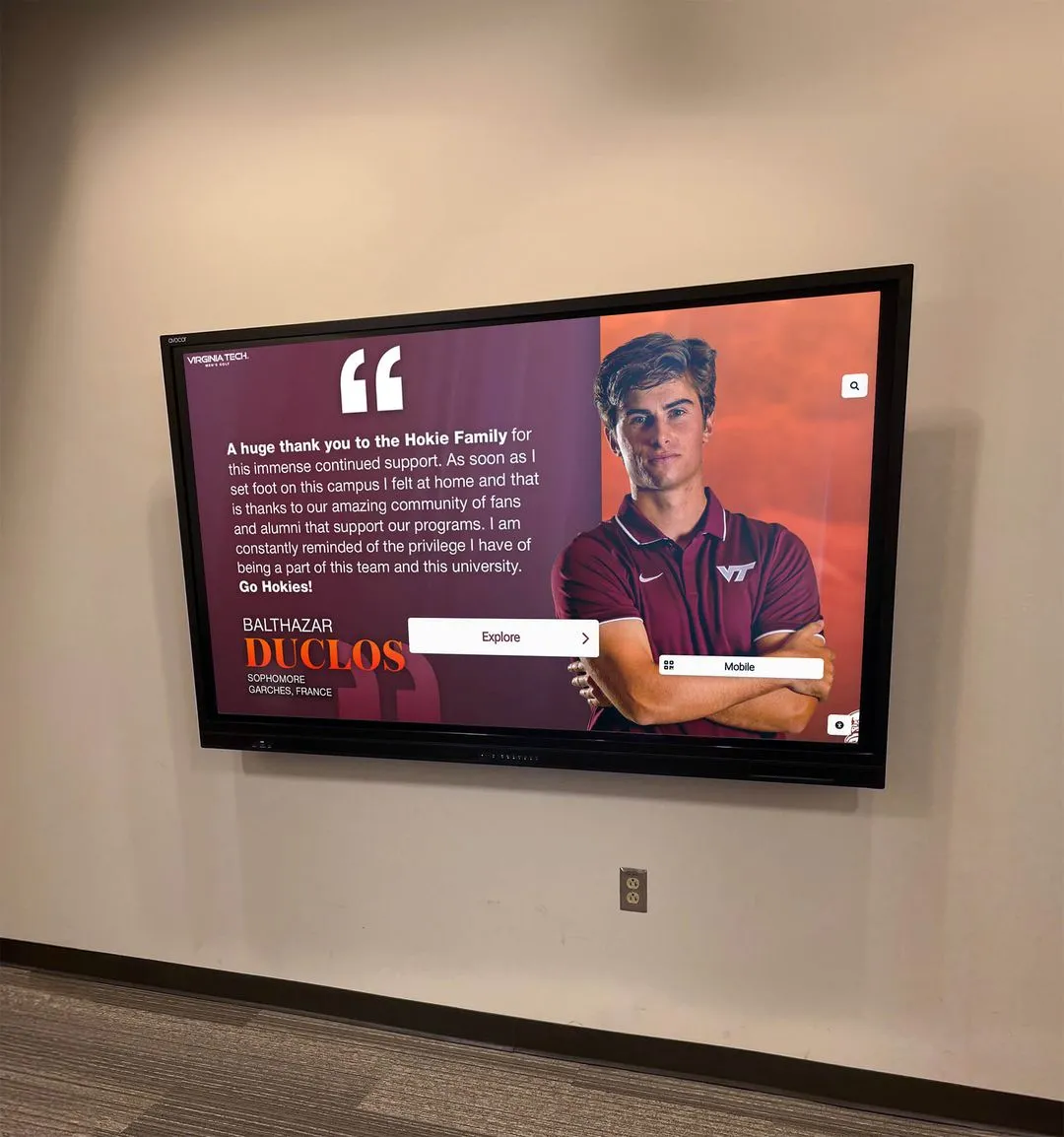
Multimedia Integration including high-resolution photographs, video footage of historical events, audio interviews with alumni or retired educators, and scanned historical documents. These rich media elements bring history to life in ways that static displays cannot achieve, particularly engaging younger audiences accustomed to multimedia experiences.
Unlimited Capacity accommodating thousands of profiles, photographs, and historical entries without physical space constraints. Whether recognizing 100 distinguished alumni or 1,000, the display footprint remains constant while content grows indefinitely.
Instant Updates through cloud-based management systems allowing designated staff to add new historical content, correct information, or create special historical exhibits instantly from any internet-connected device without requiring physical hardware access or technical expertise.
Solutions like those from Rocket Alumni Solutions provide purpose-built platforms specifically designed for educational institutions, combining commercial-grade display hardware with intuitive content management software that non-technical staff can operate independently.
Digital Hallway Displays and Video Walls
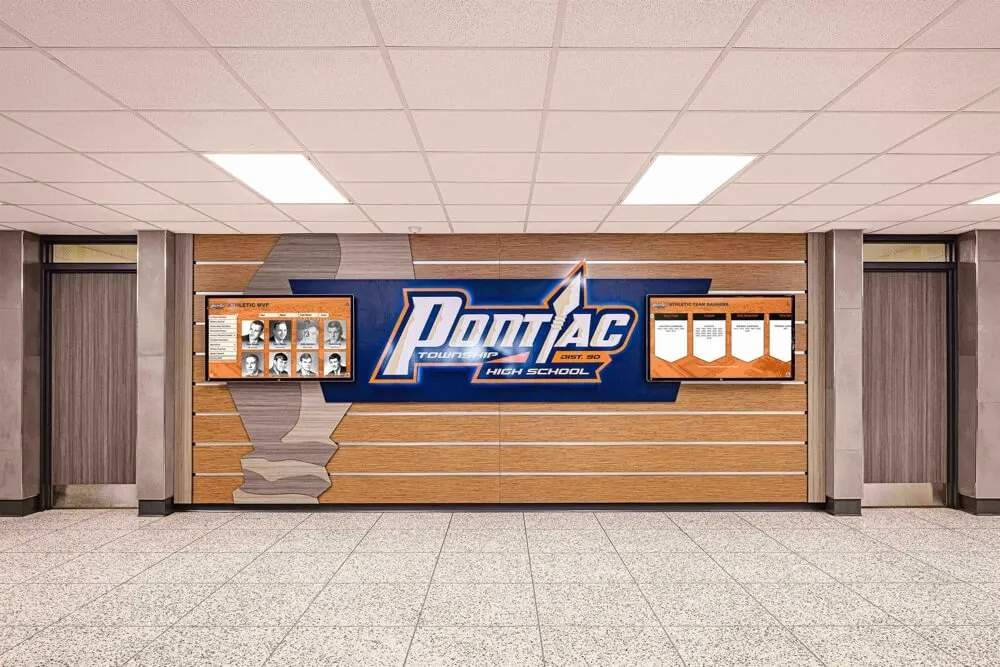
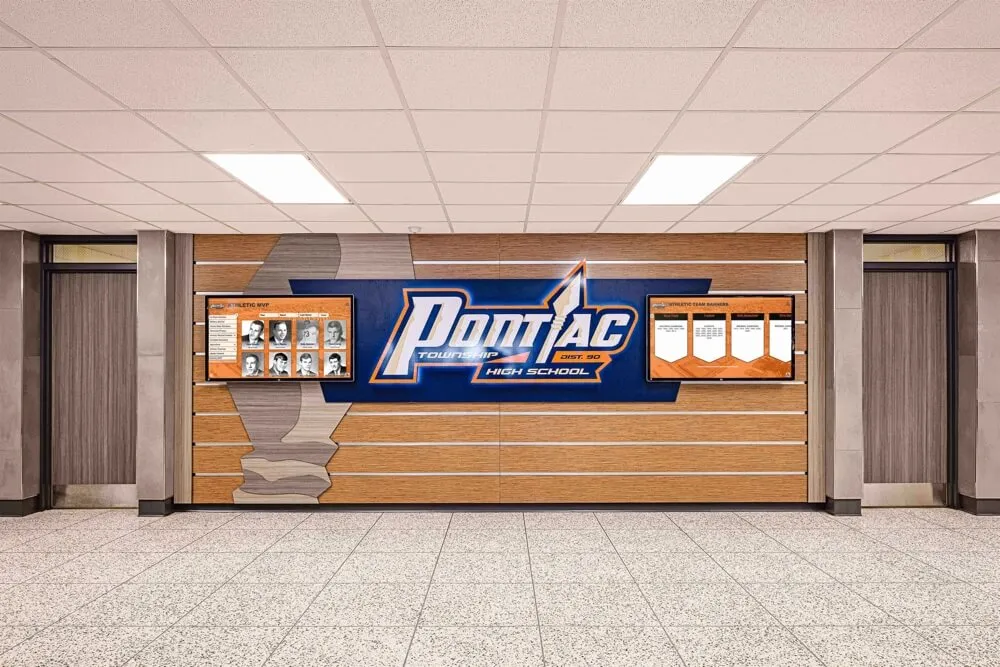
LED screens or LCD displays mounted in hallways, gymnasiums, or common areas showcase rotating historical content reaching students, staff, and visitors throughout the day. These displays can alternate between different historical themes—this week in school history, featured alumni birthdays, championship anniversaries, or vintage photographs from specific decades.
Digital hallway displays excel at creating ambient historical awareness, subtly immersing community members in institutional heritage without requiring active engagement. Even students who don’t deliberately stop to interact with displays absorb historical information through regular exposure while passing through common areas.
Modern displays can integrate with school calendar systems, automatically featuring historically relevant content on appropriate dates—showing championship anniversaries on game days, highlighting distinguished alumni during homecoming week, or displaying graduation photographs as commencement approaches.
Online Heritage Portals and Websites
Dedicated heritage websites extend institutional history access beyond campus boundaries, enabling alumni worldwide to explore school history, contribute their own stories and photographs, and maintain connections regardless of geographic distance.
Essential features of effective heritage portals include:
Searchable Archives allowing visitors to explore yearbooks, photographs, documents, and historical content from any device, anywhere, at any time. This global accessibility dramatically expands who can engage with school history compared to traditional physical archives.
User Contribution Systems enabling alumni and community members to submit their own photographs, share memories related to specific historical events, provide corrections to existing information, or nominate additional content for inclusion. These collaborative features create richer historical documentation than any single institutional effort could achieve while strengthening community engagement.
Social Integration with built-in sharing functionality enabling users to easily post historical photos, alumni profiles, or achievement stories to social media platforms, dramatically extending heritage content reach and creating opportunities for alumni to engage publicly with institutional history.
Personalized Experiences where logged-in alumni see content specifically relevant to their graduation year, activities, or teams. This personalization dramatically increases engagement by highlighting content most meaningful to each individual user rather than requiring manual navigation through decades of historical information.
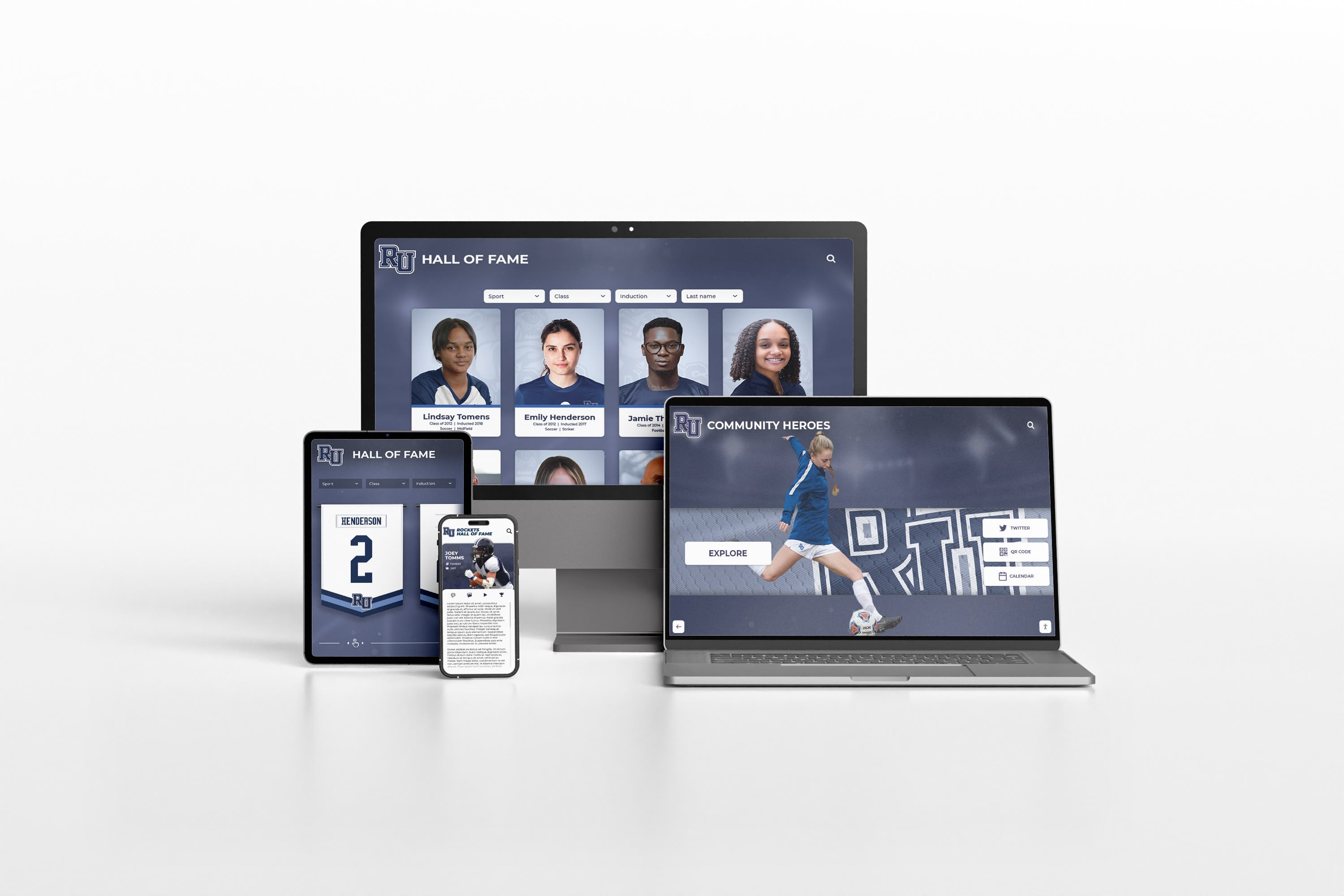
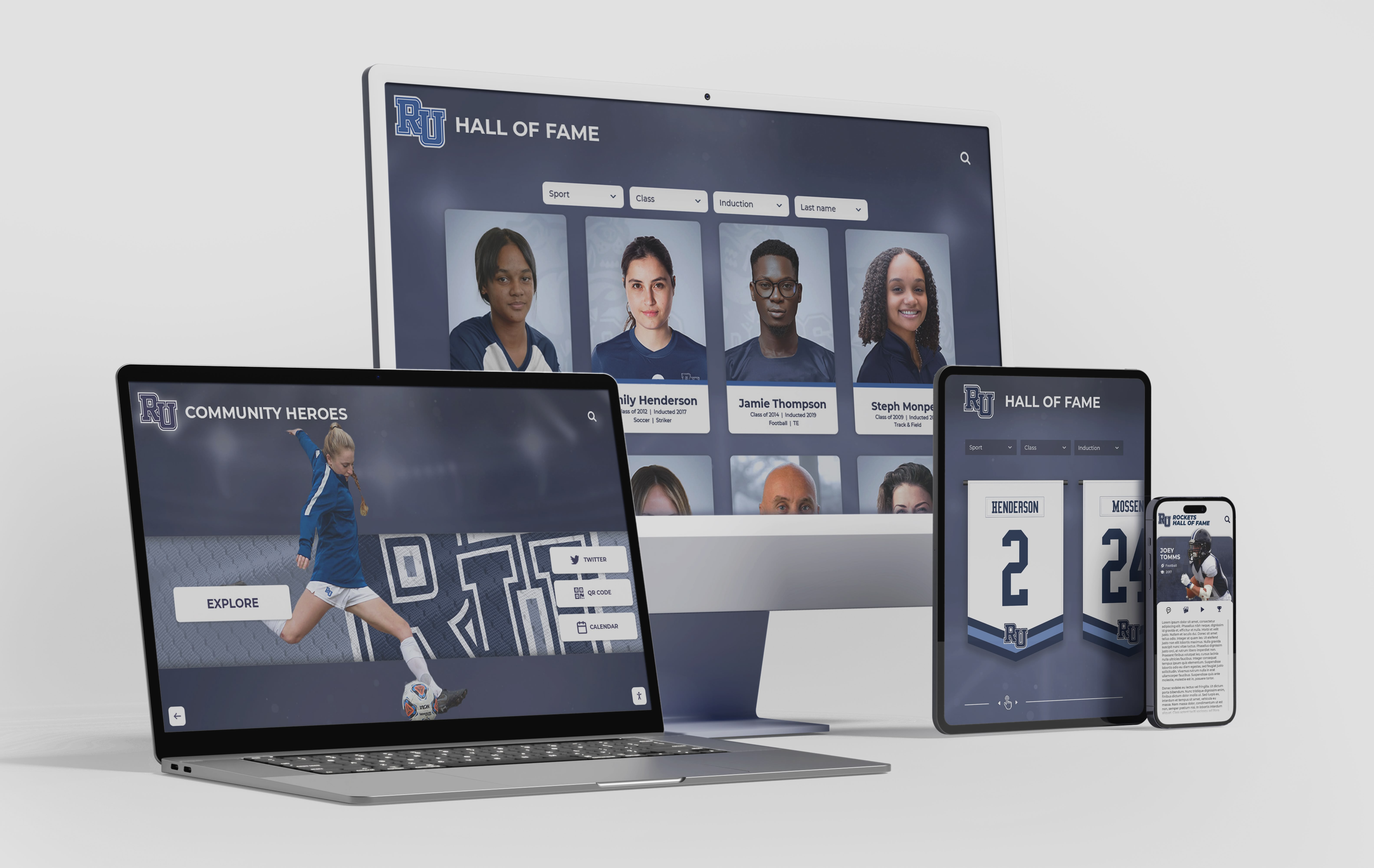
Many schools integrate online heritage portals with digital recognition displays to create comprehensive ecosystems where the same content appears across multiple touchpoints—on-campus displays, websites, and mobile devices—maximizing accessibility without duplicate content management efforts.
Implementing an Effective School History Display Program
Successfully showcasing your school’s history requires strategic planning, thoughtful content development, and sustainable implementation approaches ensuring long-term success.
Phase 1: Historical Audit and Content Gathering
Before implementing any display solution, conduct comprehensive assessment of what historical materials currently exist, how they’re stored and organized, what gaps exist in historical documentation, and what physical condition historical materials are in.
Inventory Existing Materials including yearbook collections (noting missing years), photograph collections (organized or unorganized), trophy and award inventories, athletic records and statistics, academic achievement records, administrative documents and correspondence, alumni association records, and newspaper clippings or media coverage.
Identify Knowledge Holders including longtime faculty or staff members with institutional memory, retiring administrators who can share historical knowledge, active alumni association leaders, local historians or historical society members, and former coaches or activity sponsors who remember stories worth preserving.
Assess Condition and Priorities by evaluating which materials are deteriorating and require urgent preservation, determining what historical gaps most need filling, identifying which time periods or achievements deserve highlighting, and understanding what historical content would most resonate with current students and community members.
This assessment phase prevents investing in display systems without adequate content while identifying preservation priorities that may require immediate attention before materials deteriorate further.
Phase 2: Selecting Display Solutions
Based on your historical audit, available budget, physical space, and institutional goals, determine which display approaches best serve your school’s unique needs. Many institutions find hybrid approaches combining traditional and digital elements create the most effective overall experience.
Consider Your Audience by understanding whether current students will be primary users requiring interactive, engaging interfaces, if alumni visiting campus need ways to find their own histories, whether prospective families tour common areas where displays will influence perception, or if community members regularly access campus for events or activities.
Evaluate Physical Constraints including available wall space in high-traffic areas, electrical requirements for digital systems, lighting conditions that affect display visibility, and security concerns for valuable historical items or expensive equipment.
Budget Appropriately by understanding that traditional plaque installations typically cost $50-150 per individual plaque plus installation, trophy cases range from $2,000-10,000 depending on size and quality, interactive touchscreen systems typically start around $10,000-25,000 including hardware and software, and ongoing costs include content management time, software subscriptions (for digital systems), and periodic updates or maintenance.
Plan for Scalability by selecting solutions that can grow as your historical collection expands. Digital systems offer unlimited capacity advantages while traditional physical displays eventually face space constraints requiring difficult expansion decisions.
Working with specialized providers experienced in educational recognition helps schools navigate options. Solutions specifically designed for schools typically offer better value and functionality than generic digital signage or custom-built systems requiring extensive technical expertise to operate.
Phase 3: Content Development and Digitization
Quality content determines whether history displays become valued community resources or underutilized installations gathering dust. Invest adequate time in content development to ensure compelling, accurate historical narratives.
Digitize Priority Materials starting with complete yearbook scanning from most recent decades working backward, high-resolution photograph scanning with proper archival techniques, document preservation for irreplaceable historical records, and video conversion for historical film footage or recordings before media deteriorates.
Create Searchable Databases by developing comprehensive metadata tagging systems, creating consistent naming conventions for files and records, building searchable indices by name, year, achievement, and category, and implementing quality control processes ensuring accuracy and completeness.
Develop Compelling Narratives rather than simply listing facts by crafting stories about notable individuals with context about their achievements, explaining how traditions or programs evolved over time, documenting challenges the school overcame, and connecting historical examples to current student experiences through relevant themes.
Gather Multimedia Content including video interviews with distinguished alumni sharing memories and advice, audio recordings from historical events or oral history projects, newspaper clippings and media coverage providing contemporary perspectives, and testimonials from community members about institutional impact.
Content development represents the most time-intensive aspect of history display implementation but determines ultimate success. Schools that invest in quality content creation see significantly higher engagement and impact than those rushing to install systems with minimal historical material.
Phase 4: Installation and Launch
Professional installation ensures systems function reliably while creating positive first impressions that determine community reception.
Prepare Physical Spaces by ensuring adequate electrical infrastructure for digital systems, optimizing lighting to enhance visibility without creating glare, arranging furniture or traffic flow to encourage display engagement, and coordinating with maintenance staff for any required modifications.
Install Systems Professionally using experienced installers familiar with educational environments, following manufacturer guidelines for hardware mounting and setup, conducting thorough testing before public launch, and training designated staff on content management and system operation.
Create Launch Events by hosting formal unveiling ceremonies celebrating completion, inviting honored alumni featured prominently in displays, generating media coverage explaining project significance, and organizing campus tours highlighting new historical installations.
Successful launches generate initial excitement and establish displays as valued additions rather than simply new fixtures appearing without explanation or context.
Content Categories for Comprehensive School History Displays
The most engaging history displays organize content into multiple categories allowing different audiences to explore what interests them most.
Distinguished Alumni Recognition
Showcasing graduates who achieved notable distinction after leaving your institution honors individuals while demonstrating institutional quality. Creating effective alumni halls of fame requires establishing clear selection criteria, implementing transparent nomination processes, and developing compelling alumni profiles that tell complete success stories.
Categories might include professional excellence in business, medicine, law, education, or other fields; public service through elected office, military service, or nonprofit leadership; creative achievement in arts, entertainment, writing, or design; athletic success at collegiate or professional levels; or community impact through philanthropy, volunteer service, or advocacy.
Comprehensive alumni profiles should include graduation year and honors received, significant school involvement during attendance, educational path including advanced degrees, career highlights demonstrating distinction, personal reflections on how school experiences influenced success, and advice or messages for current students.
Athletic History and Championships
Sports achievements often represent the most emotionally resonant elements of school history. Comprehensive athletic history displays document team successes across all sports and eras, preserve individual athlete records and achievements, honor coaching legacies, and explain tradition origins.
Organize athletic content by sport, decade, achievement type (championships, records, honors), or individual athlete to enable multiple exploration pathways. Video integration including championship game footage, record-setting performances, athlete interviews, and coach reflections brings athletic history to life in ways trophy cases alone cannot achieve.
Academic Excellence Documentation
Balance athletic recognition by celebrating intellectual achievement and scholarly accomplishment throughout institutional history. Academic heritage programs recognize valedictorians and salutatorians across all graduation classes, National Merit Scholars, academic competition successes, and research achievements.
Consider showcasing different academic pathways—STEM achievers, liberal arts scholars, career and technical education success stories—demonstrating that academic excellence takes many forms and remains accessible to students regardless of their specific interests.
Faculty recognition proves equally important—honoring longtime educators, teaching excellence award recipients, and teachers who made significant contributions to educational practice. These programs demonstrate that institutional excellence stems from both student achievement and educator dedication, as highlighted in teacher appreciation programs.
Historical Traditions and Cultural Heritage
Beyond individual achievement recognition, documenting institutional traditions, cultural practices, and community events creates richer understanding of what makes your school unique. Tradition documentation includes founding stories explaining how and why the school was established, signature annual events that define community character, school songs and cultural practices that create shared experiences, mascot history showing how symbols evolved, and facility histories documenting campus development.
Creating comprehensive tradition documentation often involves oral history interviews with longtime community members who can explain origins and evolution of practices that newer community members may take for granted. These stories provide context transforming routine traditions into meaningful expressions of institutional values.
Significant Events and Milestones
Chronological organization showing institutional evolution across decades or centuries helps visitors understand how schools developed into current forms. Significant events worth documenting include founding dates and circumstances, major facility additions or renovations, administrative leadership changes, curriculum developments or program additions, accreditation achievements, significant challenges overcome, and anniversary celebrations.
Organizing content along interactive timelines lets users explore specific eras in depth or survey entire institutional histories quickly, accommodating different engagement styles and time availability.
Maintaining and Updating History Displays
Creating displays represents only the beginning—sustainable programs require ongoing maintenance and regular content additions ensuring historical narratives remain current and compelling.
Establishing Update Schedules
Designate specific individuals responsible for history display maintenance with clear accountability preventing neglect during busy periods. Establish regular update cycles—quarterly, semesterly, or annually depending on institutional capacity—ensuring continuous content additions.
Create submission processes making it easy for community members to suggest historical content, report errors, or nominate individuals for recognition. Many valuable photographs, documents, or stories emerge when clear channels exist for community contributions.
Quality Control Processes
Implement review procedures ensuring all content additions meet standards for accuracy, completeness, appropriate tone, and professional presentation. Verify facts against multiple sources when possible, particularly for historical information from memory rather than documentation.
Maintain style guides ensuring consistent formatting, writing quality, and visual presentation across all content regardless of when it was added or who created it. Consistency demonstrates respect for all honored individuals and prevents displays from appearing haphazard.
Leveraging Digital Advantages
Digital systems offer significant advantages for ongoing maintenance compared to traditional displays. Content updates happen instantly through software interfaces rather than requiring physical plaque replacement or photo frame modifications. Corrections or enhancements can be made immediately when new information emerges rather than living with errors until budget allows expensive physical updates.
Cloud-based platforms enable remote management where designated staff can update displays from home, offices, or anywhere with internet access rather than requiring physical hardware access. This flexibility dramatically increases how frequently content gets refreshed and improved.
Measuring Success and Impact
Demonstrating history display effectiveness through both quantitative metrics and qualitative assessment helps justify continued investment and identify improvement opportunities.
Engagement Metrics
For Physical Displays: Observe and record foot traffic patterns, duration of visitor engagement, and anecdotal feedback from community members. Schedule periodic observations at different times documenting how many people stop to view displays versus passing without engagement.
For Digital Systems: Modern interactive displays provide detailed analytics including total visitor counts, average session duration, most-viewed content sections, popular search terms, and peak usage times. These metrics reveal what historical content resonates most strongly while identifying unused sections that might benefit from enhancement or repositioning.
For Online Platforms: Track unique visitors, page views, search patterns, user contributions, and social sharing activity. Monitor which alumni profiles or historical content gets shared most frequently on social media, indicating what resonates emotionally with alumni audiences.
Qualitative Impact Assessment
Beyond numbers, successful history programs demonstrate meaningful qualitative impacts through alumni testimonials documenting emotional responses, stories about reconnecting with classmates through heritage platforms, or expressions of renewed connection to institutional identity.
Student inspiration observations reveal whether current students reference historical examples when discussing their own aspirations, express interest in contributing to institutional legacy, or demonstrate awareness of traditions and values rooted in history.
Community pride assessments evaluate whether faculty, staff, and community members express pride in institutional heritage, reference historical examples in current decision-making, or cite heritage programs when discussing institutional strengths with prospective families.
Survey stakeholders periodically about their awareness of history displays, frequency of engagement, satisfaction with content quality and accessibility, and suggestions for enhancement. This feedback guides continuous improvement while demonstrating institutional commitment to stakeholder input.
Overcoming Common Implementation Challenges
Schools implementing history display programs frequently encounter predictable obstacles. Understanding these challenges and proven solutions helps ensure successful implementation.
Challenge: Limited Historical Documentation
Many schools discover comprehensive historical records simply don’t exist—yearbooks from certain decades are missing, early administrative records were never properly preserved, or fire, flood, or neglect destroyed irreplaceable materials.
Solutions: Implement crowdsourced collection campaigns asking alumni and community members to share personal yearbooks, photographs, programs, or memorabilia for scanning and return. Create oral history projects capturing memories of longtime community members before that institutional knowledge is permanently lost, as detailed in comprehensive oral history implementation guides. Focus preservation efforts on what does exist rather than lamenting gaps, while acknowledging incomplete historical records honestly.
Challenge: Budget Constraints
Heritage preservation often struggles for attention and resources when competing against immediate operational needs, academic priorities, or facility maintenance demands.
Solutions: Frame heritage preservation as strategic investment in alumni engagement, recruitment effectiveness, and student belonging rather than optional extra activity. Demonstrate concrete outcomes including increased alumni giving, improved student retention, or enhanced community reputation. Start with manageable pilot projects proving value before seeking major resource commitments. Explore grant opportunities from foundations supporting educational heritage or cultural preservation.
Challenge: Staff Capacity Limitations
Personnel already managing full workloads may lack time or expertise for heritage program management, creating resistance to additional responsibilities.
Solutions: Select technology platforms specifically designed for non-technical users with intuitive interfaces requiring minimal training. Provide adequate professional development time with hands-on practice in low-pressure settings. Offer ongoing support resources including help documentation, video tutorials, and responsive technical assistance. Consider hiring student workers or community volunteers to assist with content digitization, metadata entry, or other time-intensive tasks under professional supervision.
Challenge: Maintaining Long-Term Engagement
Initial excitement about history displays often fades over time as novelty wears off and displays become background features community members stop actively noticing.
Solutions: Rotate featured content regularly so displays always offer something new to discover. Create themed months or weeks highlighting different historical topics—decade spotlights, specific sports, academic achievements, or tradition origins. Coordinate history display content with current school events, featuring historically relevant content during homecoming, graduation, championship games, or other significant occasions. Promote display updates through social media, newsletters, and announcements maintaining awareness that content continually evolves.
The Future of School History Displays
As technology continues evolving, new capabilities create additional opportunities for engaging school history presentation worth considering for future enhancements.
Artificial Intelligence and Personalization
Emerging systems use AI to recommend content based on visitor interests, suggest alumni working in fields related to previous searches, identify connections between current students and relevant alumni mentors, and personalize displays for different audience segments. These intelligent systems make massive historical collections more navigable and personally relevant.
Mobile Integration and Augmented Reality
Companion mobile applications extend recognition beyond fixed displays through campus-wide access allowing students to explore history anywhere on campus, augmented reality overlays adding digital historical information when users point devices at specific locations, and offline access enabling archive exploration without internet connectivity.
Imagine students pointing phones at athletic fields to see championship highlights from that location, or at buildings to learn their history and see photographs of earlier versions. These immersive experiences create powerful connections between physical spaces and institutional history.
Virtual Tours and Remote Access
Virtual reality systems enable remote audiences—prospective students, distant alumni, or interested community members—to experience campus and explore history displays from anywhere in the world. These technologies dramatically expand who can engage with school heritage beyond those able to visit physically.
Getting Started: Action Steps for Your School
Ready to enhance how your school displays its history? Follow these practical steps to begin implementing effective heritage preservation and presentation:
Step 1: Form Heritage Committee - Assemble diverse group including administrators, longtime faculty, librarians, alumni representatives, and community members to guide planning and implementation.
Step 2: Conduct Historical Audit - Inventory existing materials, identify gaps, assess condition, and determine preservation priorities as outlined earlier in this guide.
Step 3: Define Goals and Budget - Clarify what you want history displays to achieve, who primary audiences are, what budget realistically available, and what timeline reasonable for implementation.
Step 4: Research Solutions - Explore both traditional and digital options, request demonstrations from specialized providers, visit schools with exemplary history displays, and evaluate which approaches best fit your unique needs and constraints.
Step 5: Develop Implementation Plan - Create phased approach starting with highest-impact, most feasible initiatives that can demonstrate early success, establish content development workflows, assign clear responsibilities, and set realistic timelines.
Step 6: Begin Content Development - Start digitizing priority materials, gathering stories and multimedia content, developing compelling narratives, and building searchable databases even before display systems are finalized.
Step 7: Install and Launch - Implement chosen display solutions professionally, create launch events generating excitement and awareness, train staff on ongoing management, and communicate completion widely.
Step 8: Maintain and Enhance - Establish regular update cycles, monitor engagement and impact, gather community feedback, and continuously improve based on actual usage patterns.
Conclusion: Honoring the Past, Inspiring the Future
Effectively displaying your school’s history represents far more than aesthetic enhancement or nostalgic indulgence—it’s strategic investment in student inspiration, alumni engagement, community pride, and institutional identity. Schools that thoughtfully showcase their heritage create powerful connections between past excellence and future possibility.
Modern digital solutions from providers like Rocket Alumni Solutions have transformed what’s possible in school history presentation. Interactive touchscreen displays, searchable online archives, and integrated heritage platforms make comprehensive historical preservation accessible and affordable for institutions of all sizes. These systems overcome traditional limitations around space constraints, update flexibility, and multimedia integration while providing analytics demonstrating community engagement.
Whether your school has decades or centuries of history to preserve, the journey toward comprehensive heritage display begins with commitment to honoring the past while embracing contemporary tools ensuring those stories remain alive, accessible, and inspiring. The investments you make today in showcasing school history will influence how future generations understand, value, and build upon the foundation previous generations established.
Every student deserves to understand they’re part of something larger than themselves, connected to generations of accomplishment and positioned to contribute their own chapter to an ongoing story of educational excellence. Effective history displays make those connections visible, tangible, and inspiring—transforming institutional heritage from dusty archives into living narratives that shape school culture and inspire ongoing pursuit of excellence.
Ready to transform how your school displays its history? Explore modern solutions that make comprehensive heritage preservation practical, engaging, and sustainable for decades to come.