



Key Takeaways
Complete guide to digital record boards for athletic programs. Compare features, capabilities, and implementation strategies for modern recognition displays that celebrate athletic achievements and engage communities.
Understanding Digital Record Boards in Athletic Programs
Digital record boards represent specialized recognition technology designed specifically for documenting, displaying, and celebrating athletic achievement within schools, universities, and sports organizations. Unlike generic digital signage adapted for recognition purposes, purpose-built record board systems combine achievement database architecture with interactive interfaces and content management workflows addressing the unique requirements of athletic recognition.
What Makes Record Boards “Digital”
Database-Driven Content Architecture separates digital record boards from simple electronic displays. Rather than manually updating individual screens or slides, comprehensive systems maintain centralized databases containing all athletes, achievements, records, statistics, photos, and biographical information. When records change, administrators update database entries once—changes automatically propagate across all display locations, web interfaces, and connected platforms without redesigning graphics or republishing content.
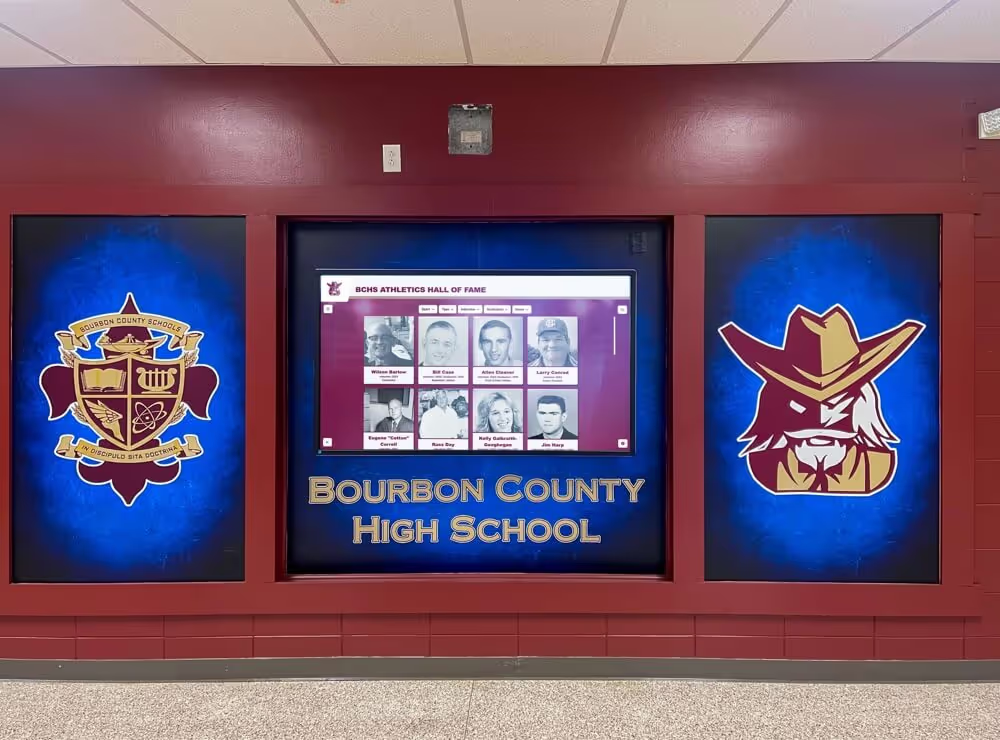
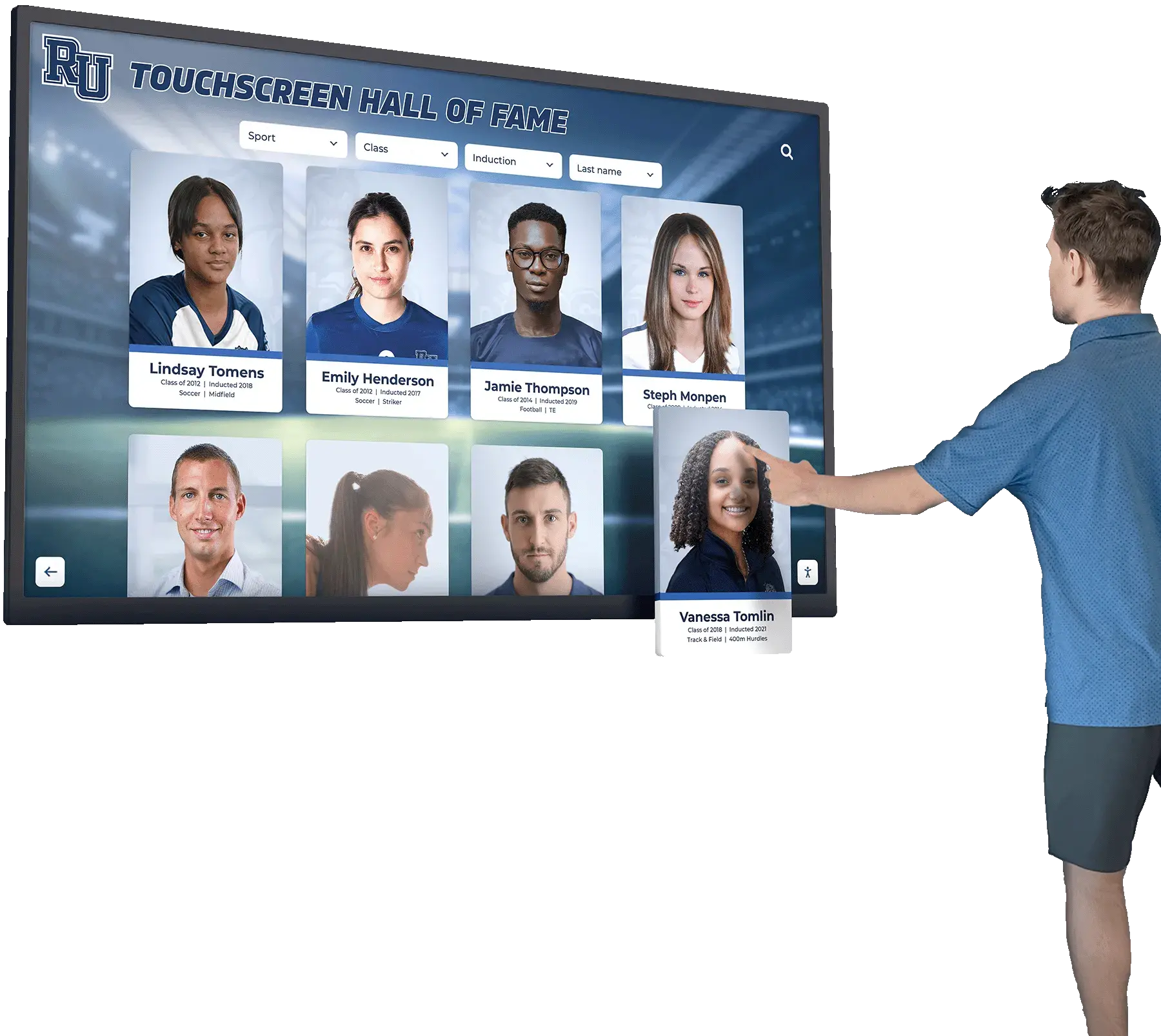
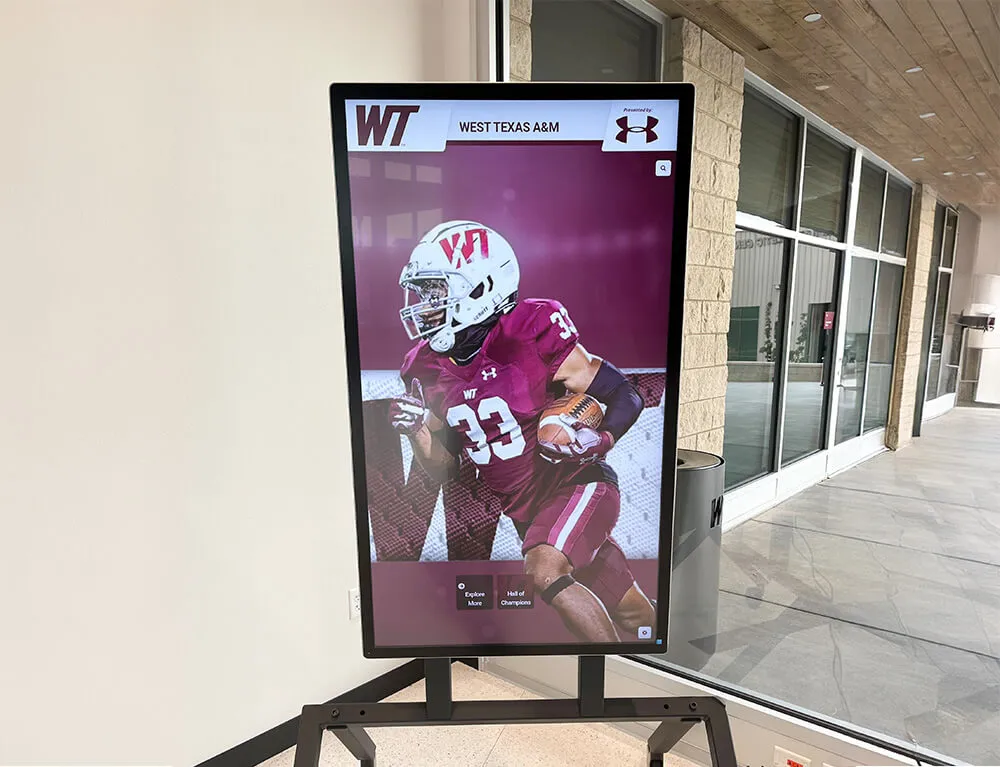
Interactive Exploration Capabilities enable visitors to search historical records, filter achievements by sport or era, compare performances across different periods, view detailed athlete profiles, and discover program history through intuitive touchscreen interfaces. This interactivity transforms passive information consumption into active engagement where visitors control their experience based on personal interests—perhaps examining all track records, comparing basketball scoring leaders across decades, or exploring their graduating class achievements.
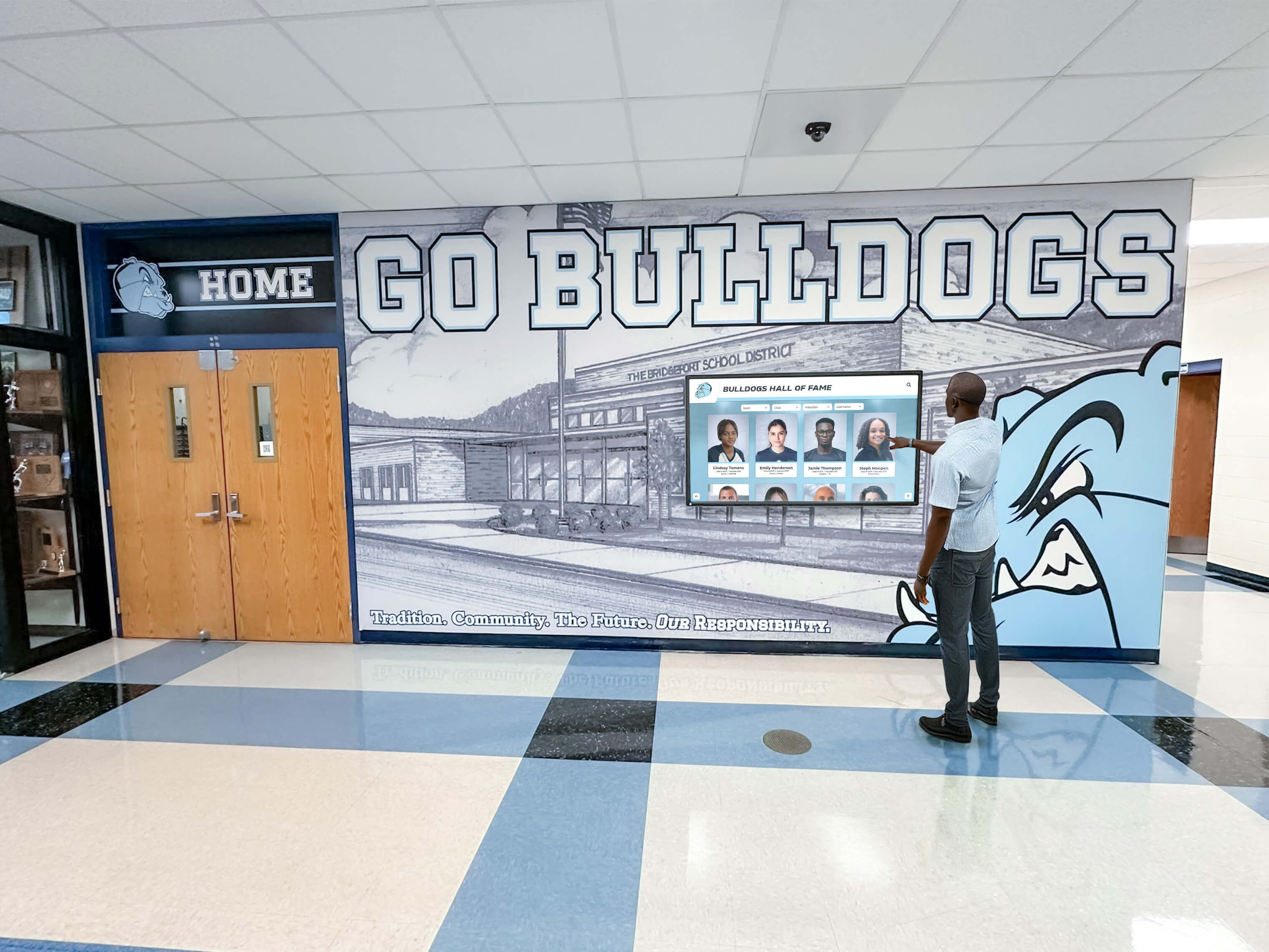
Real-Time Update Management through cloud-based platforms allows coaches, athletic administrators, or designated staff to add new records, update existing achievements, incorporate photos and videos, and publish recognition content from anywhere with internet access. No technical expertise required, no vendor dependencies created, no expensive change orders necessary—authorized personnel manage content independently using intuitive web dashboards similar to social media platforms most already understand.
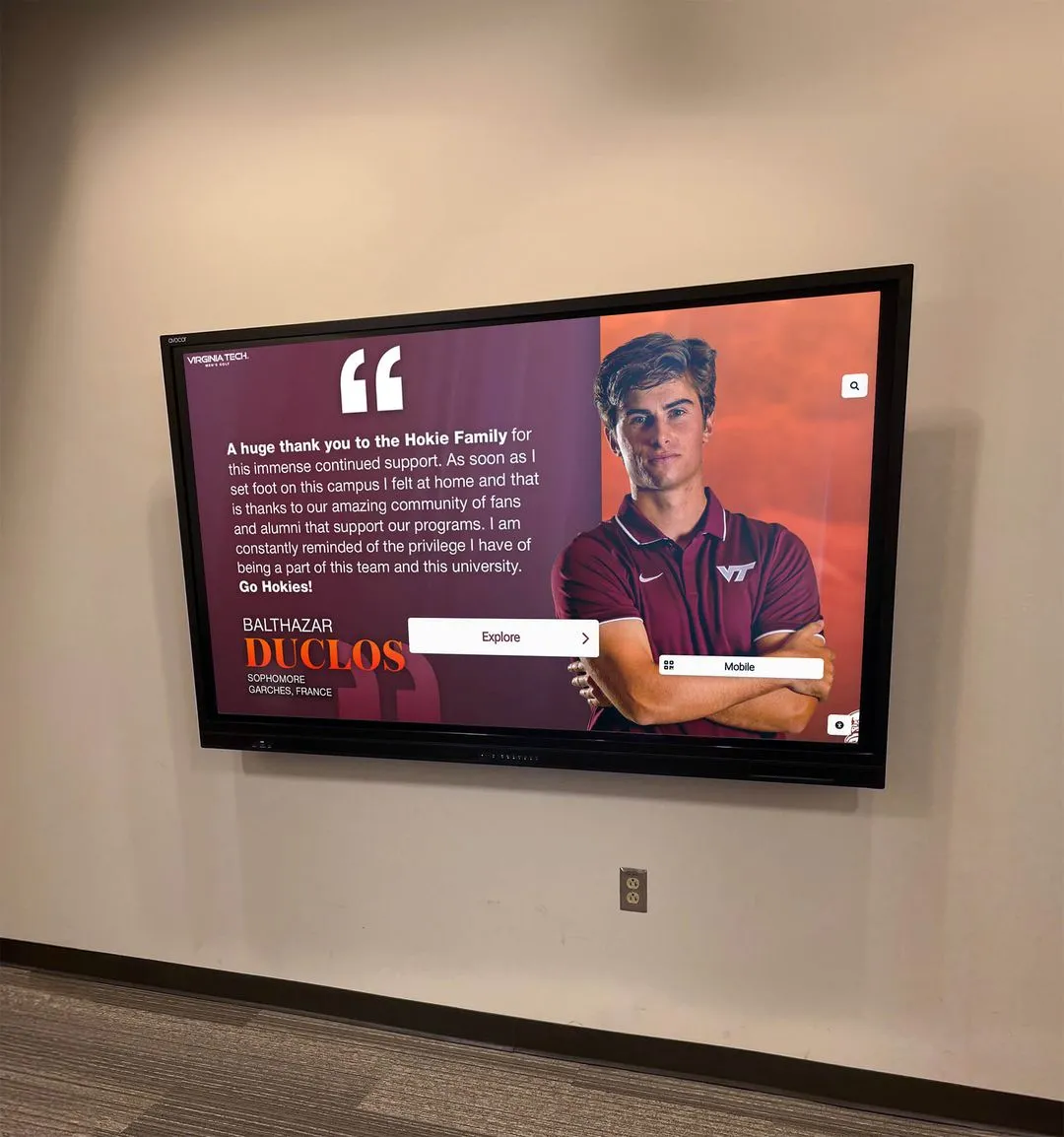
Multimedia Integration enables digital record boards to incorporate elements impossible with traditional painted boards including action photography showing record-breaking moments, video highlights of exceptional performances, detailed statistical breakdowns beyond simple top-three lists, biographical narratives providing achievement context, and links to complete season statistics or related accomplishments throughout athletic careers. These rich media capabilities create significantly more engaging experiences than text-only traditional displays.
Primary Digital Record Board Applications
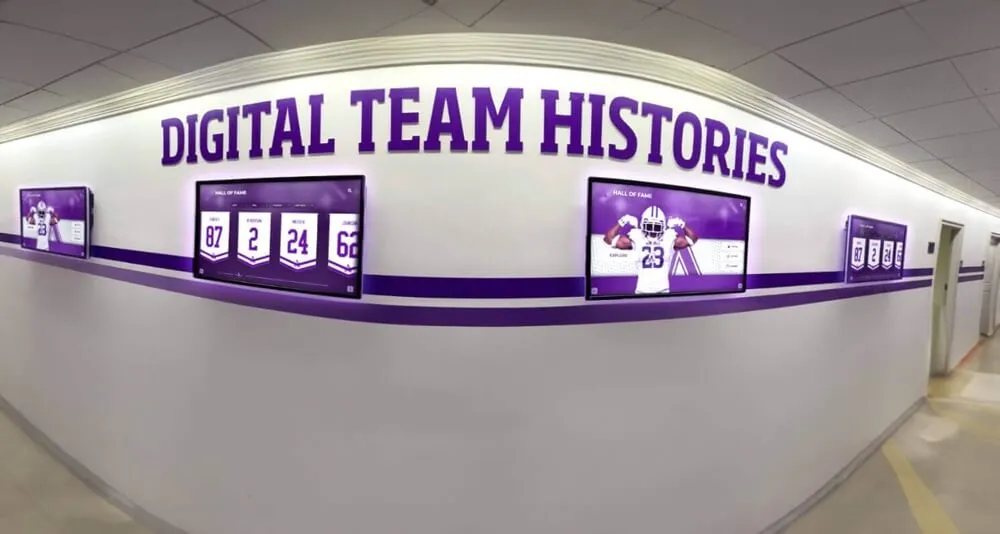
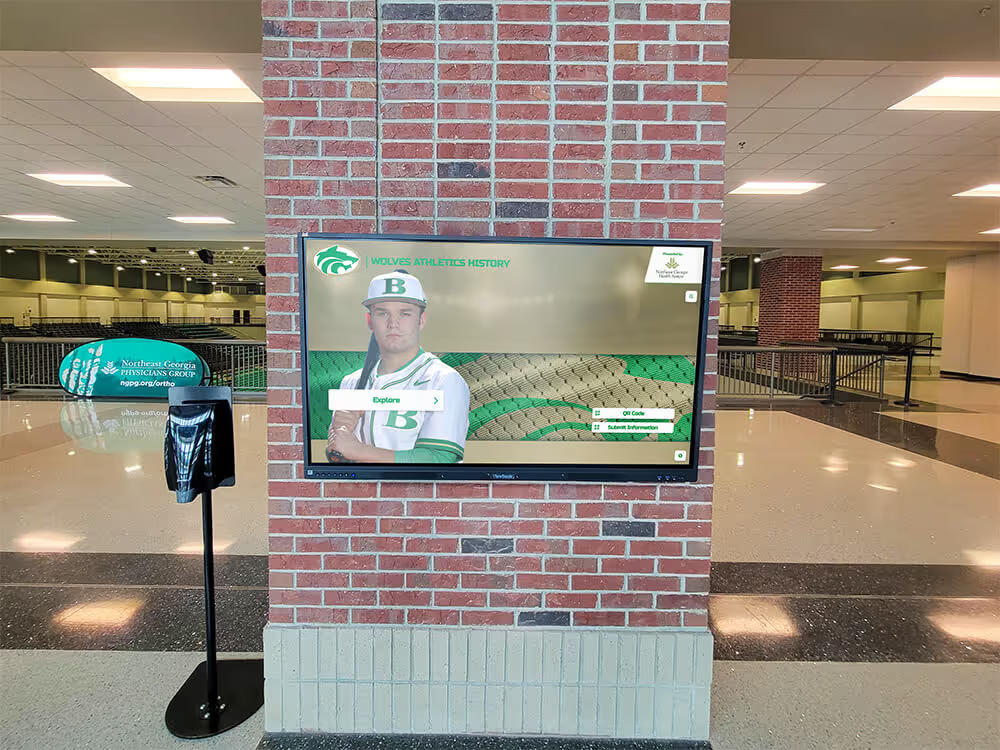
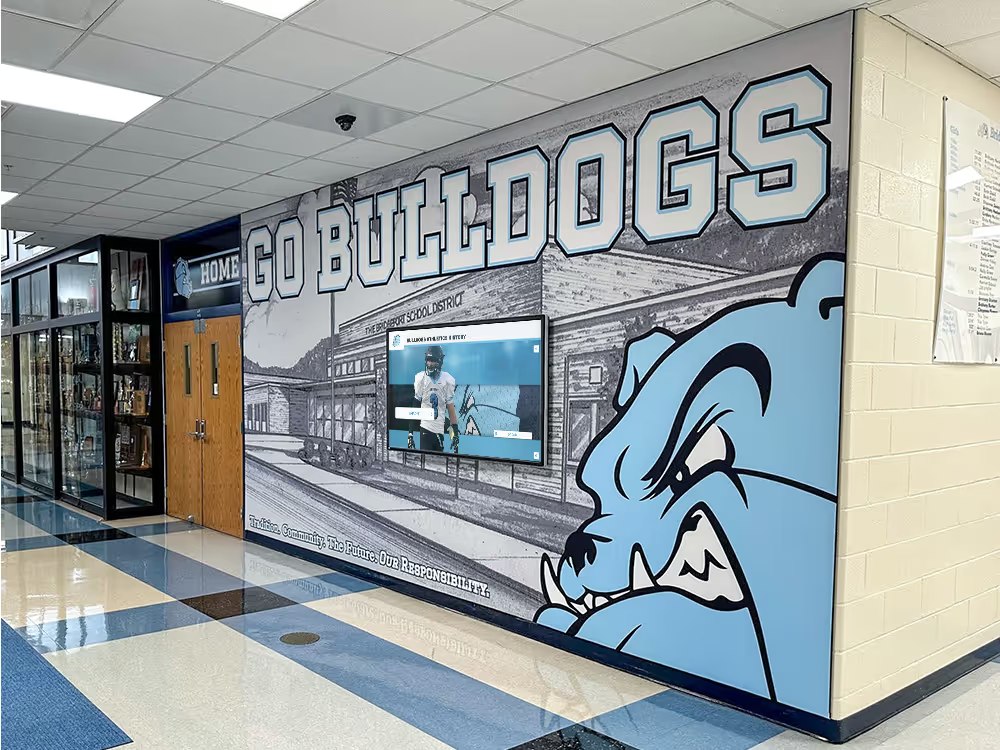
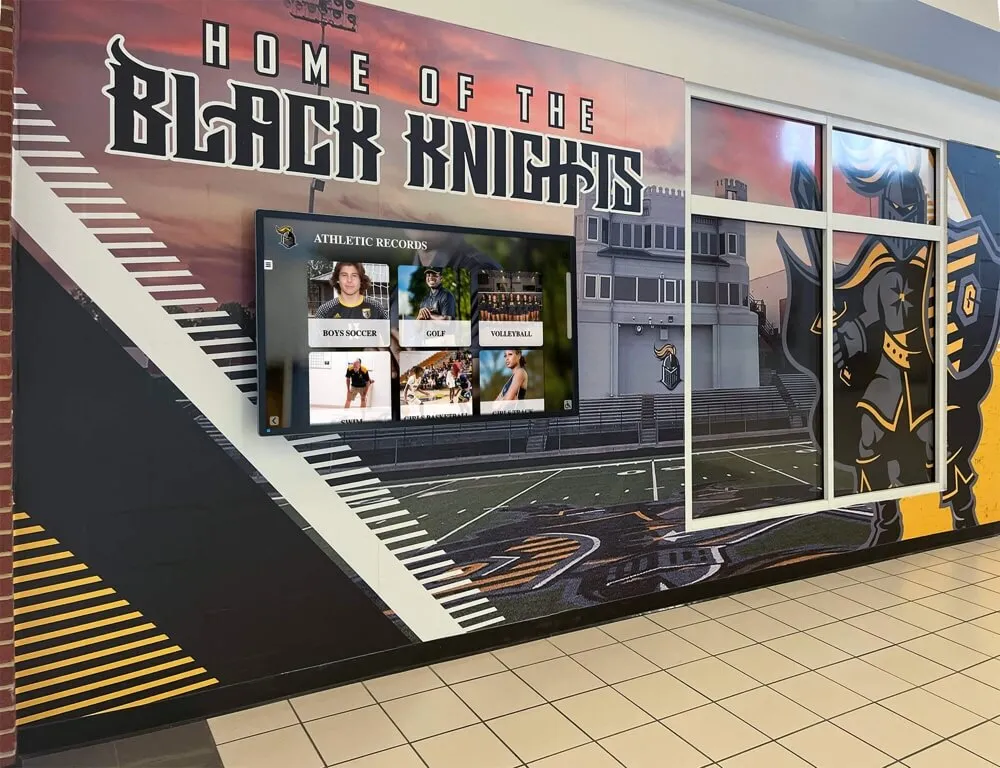
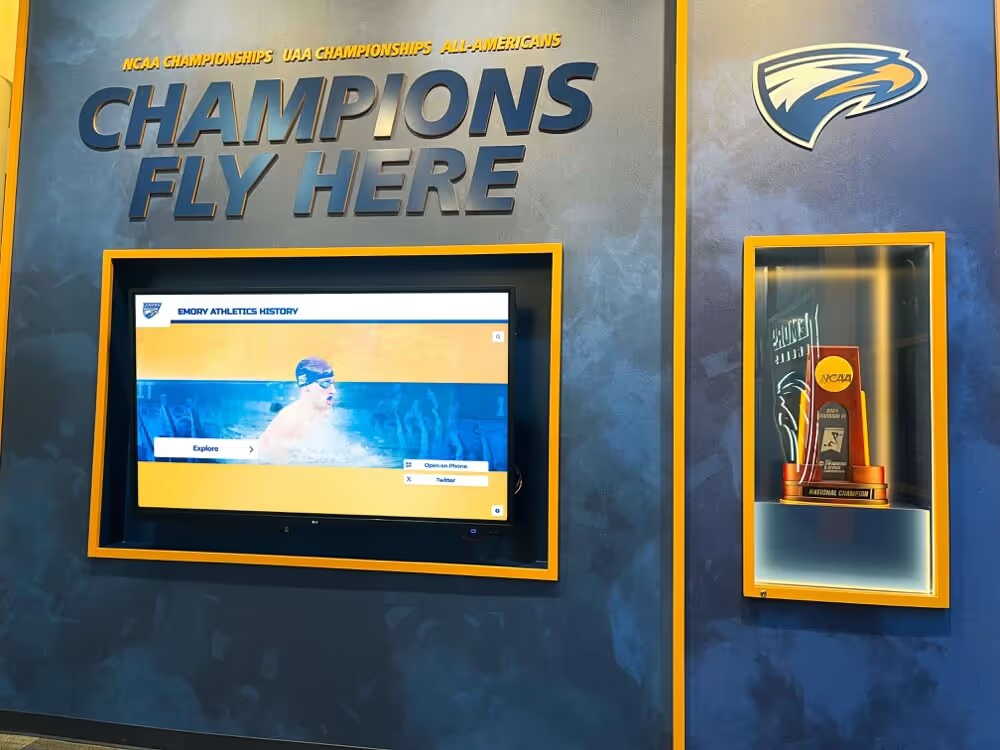
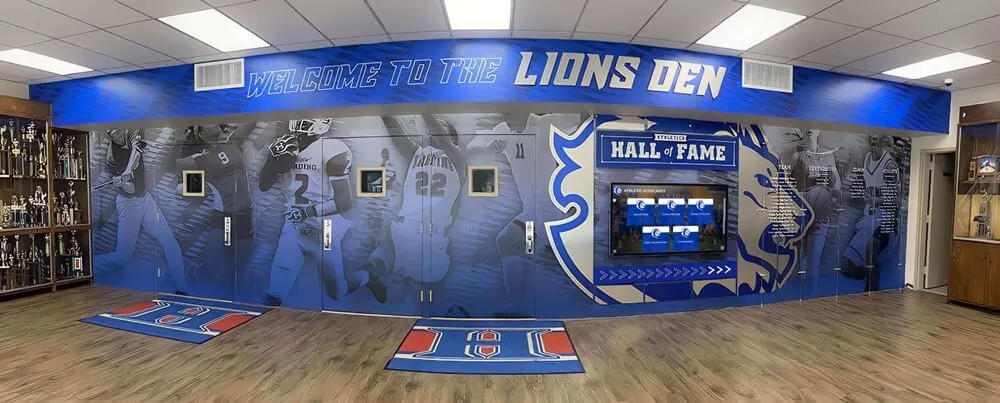
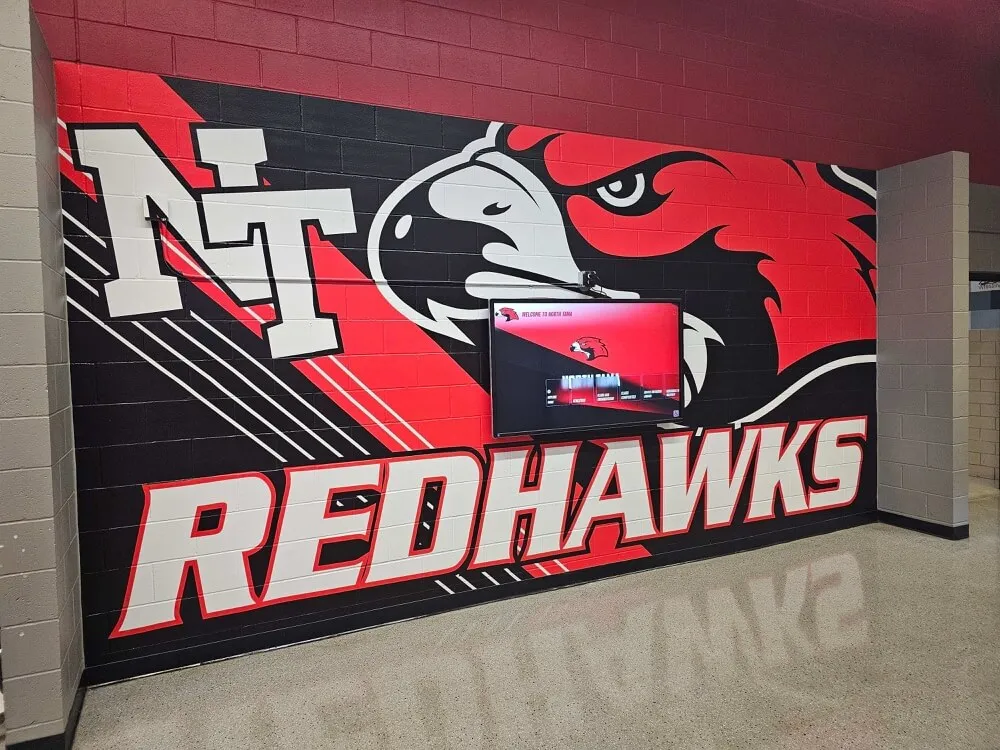
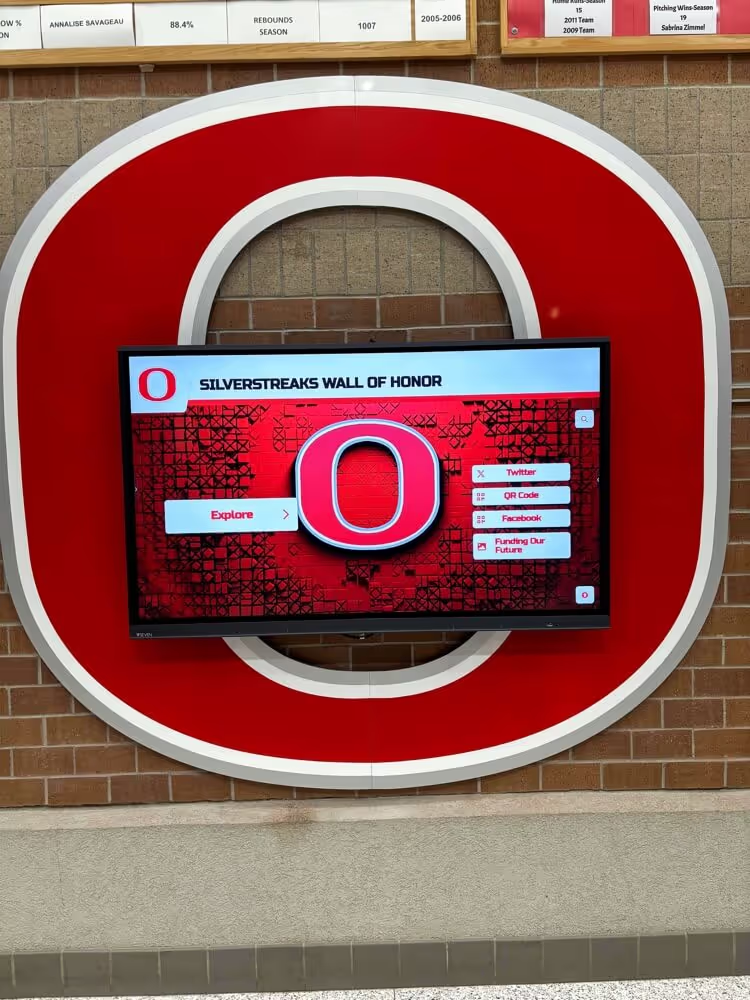
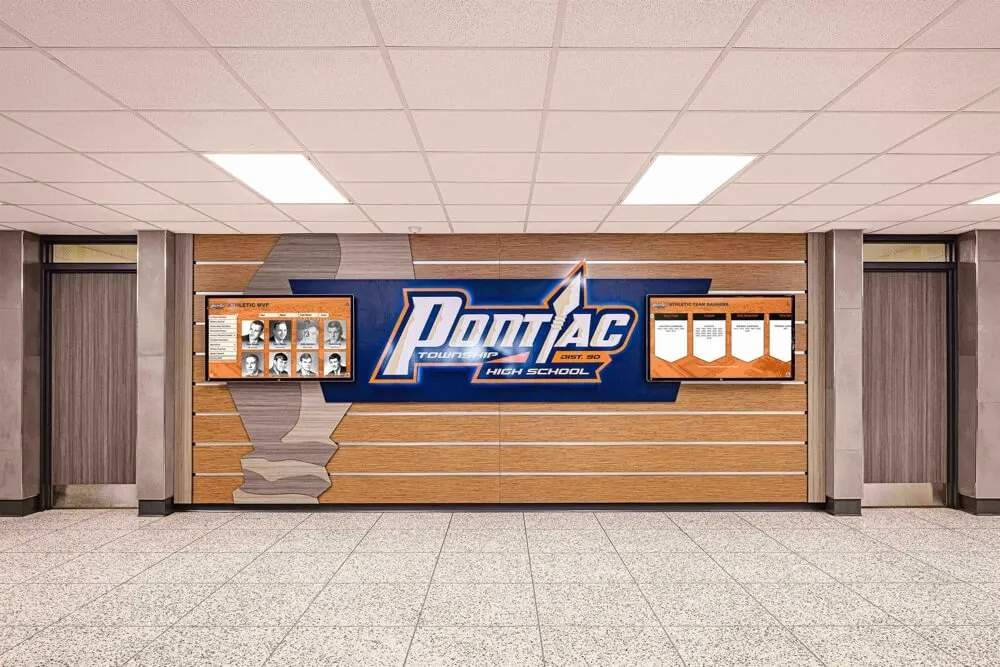
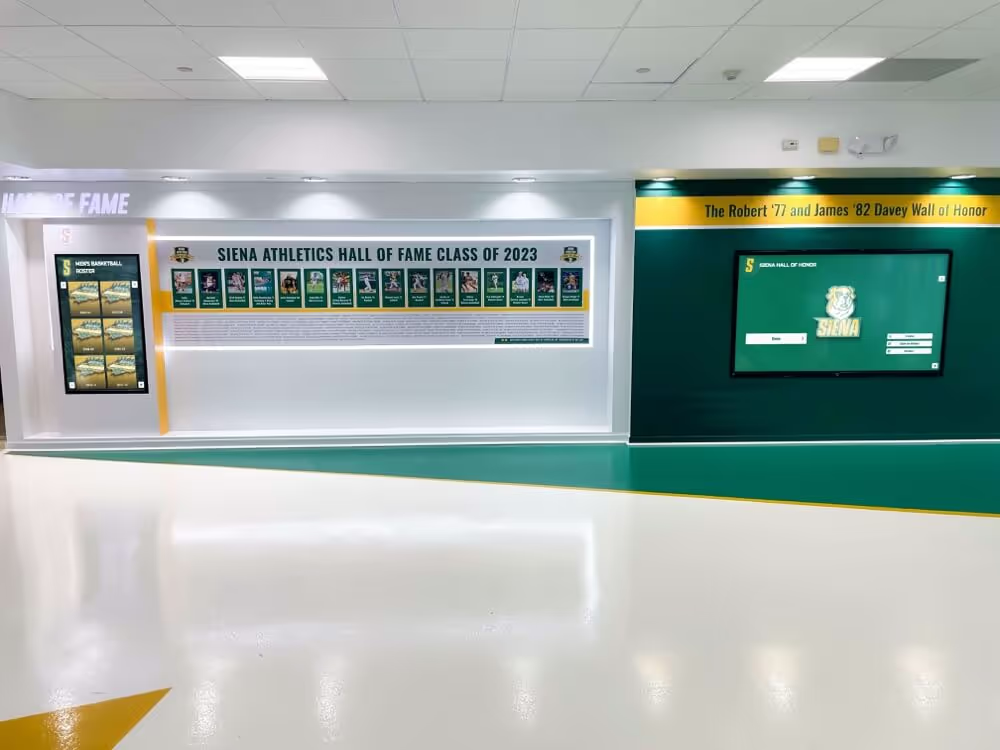
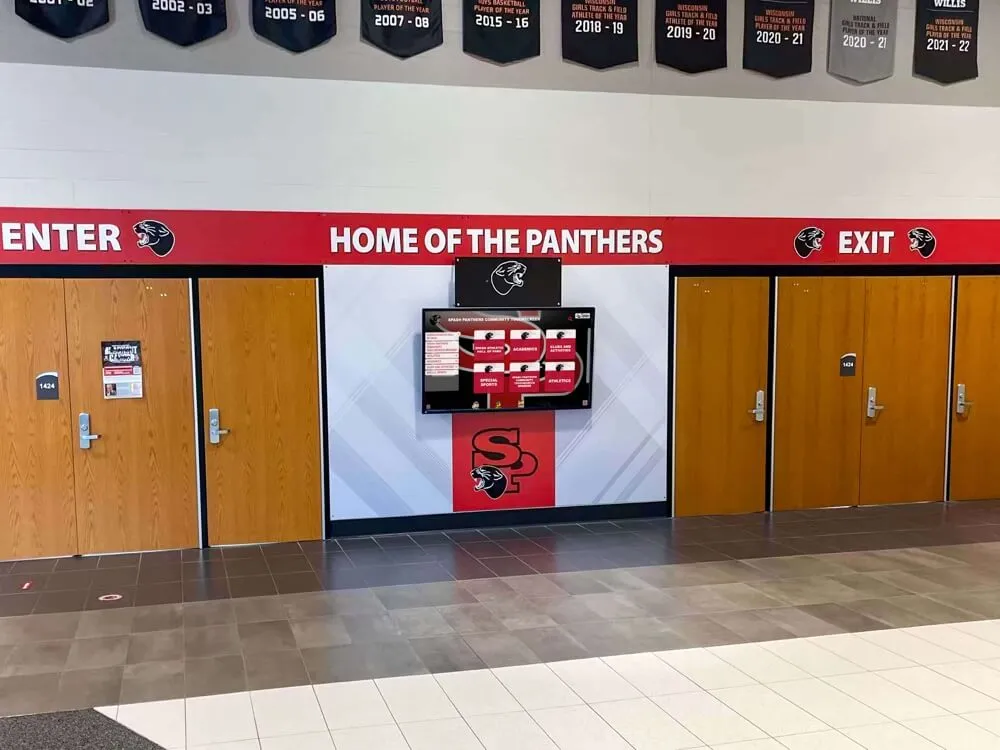
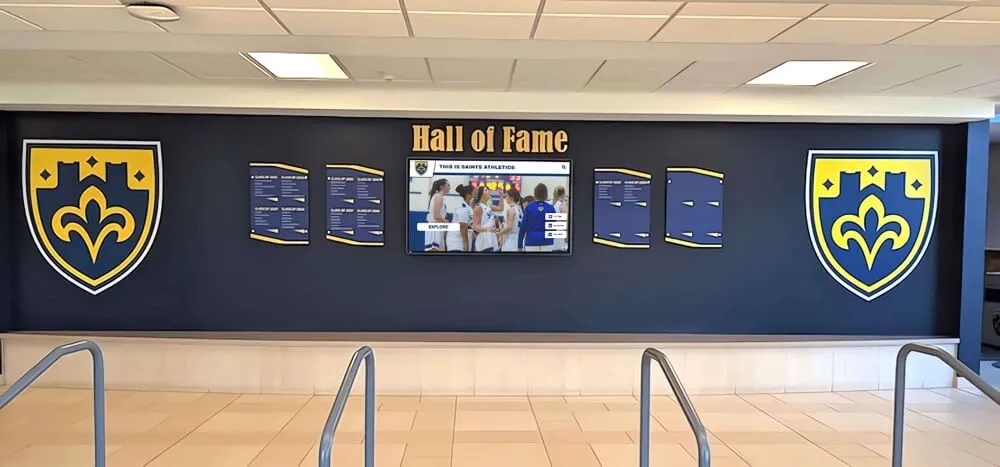
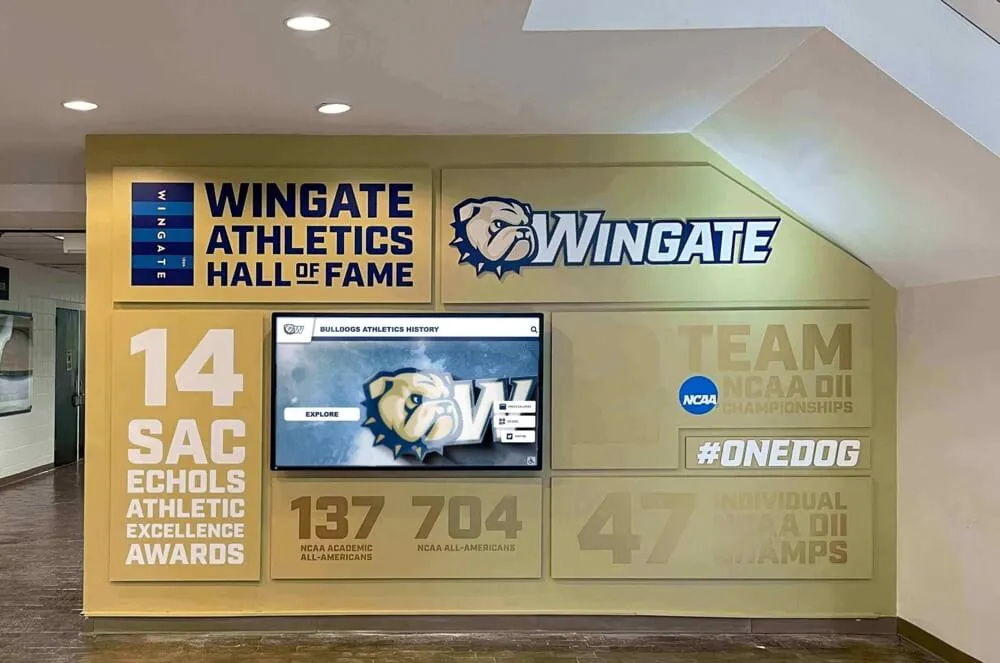
Gymnasium and Field House Installations represent the most visible digital record board deployments, replacing or supplementing traditional painted boards with large-format displays showcasing current records, historical achievements, and championship documentation. These prominent locations ensure maximum visibility among athletes training daily while creating focal points during competitions when visiting teams and spectators view program accomplishments. For comprehensive approaches to athletic history displays, digital solutions provide unprecedented flexibility and depth.
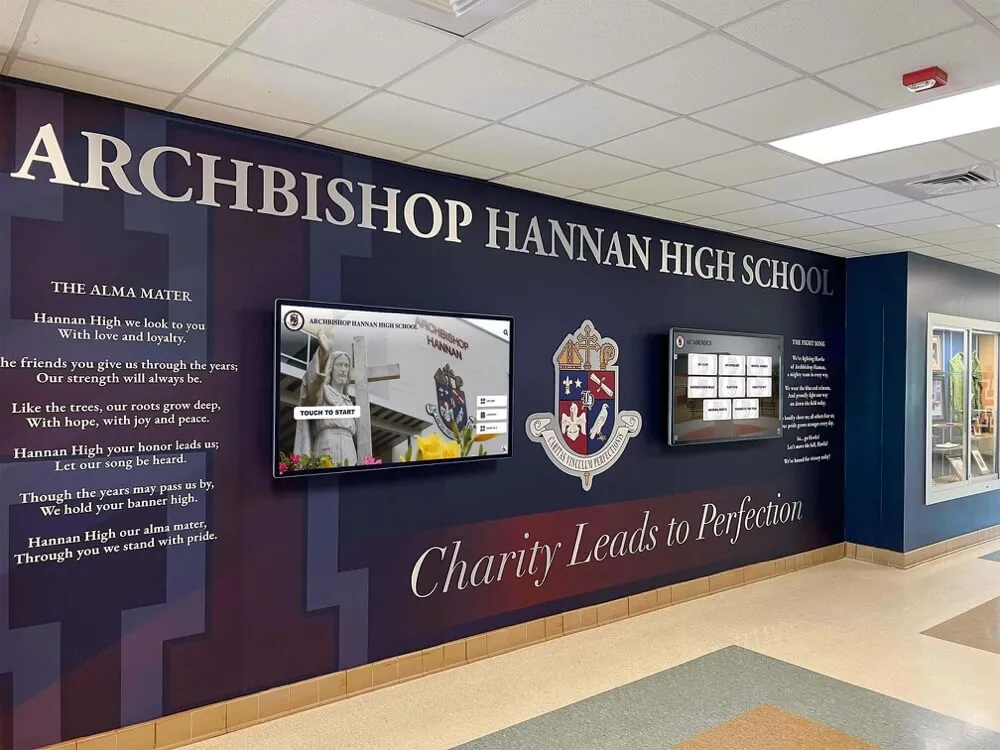
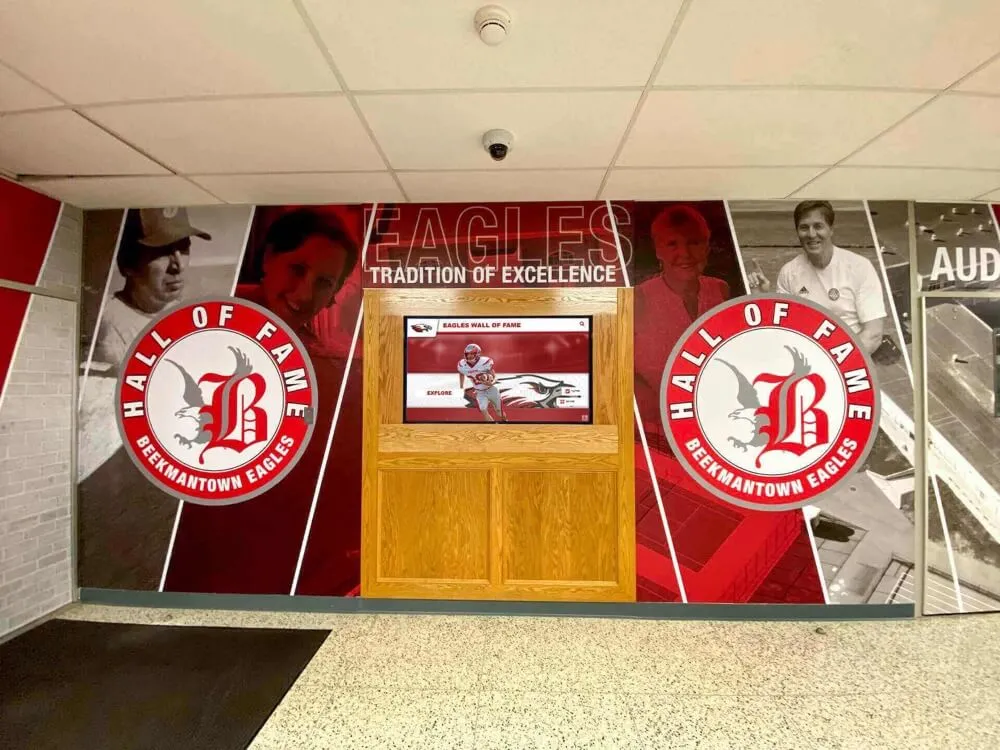
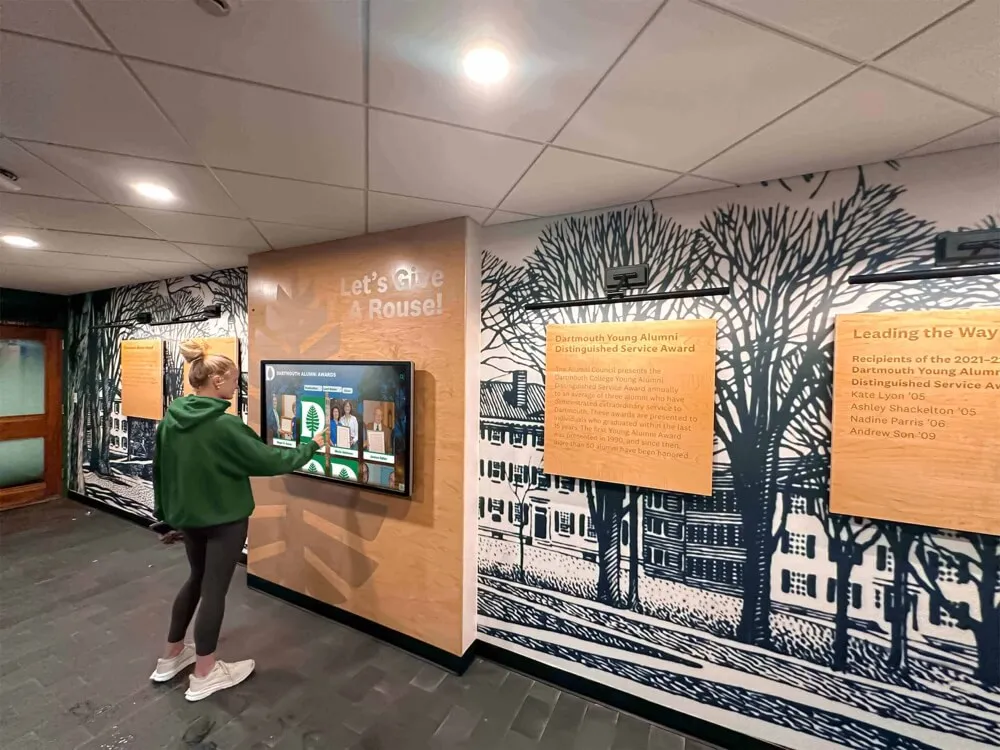
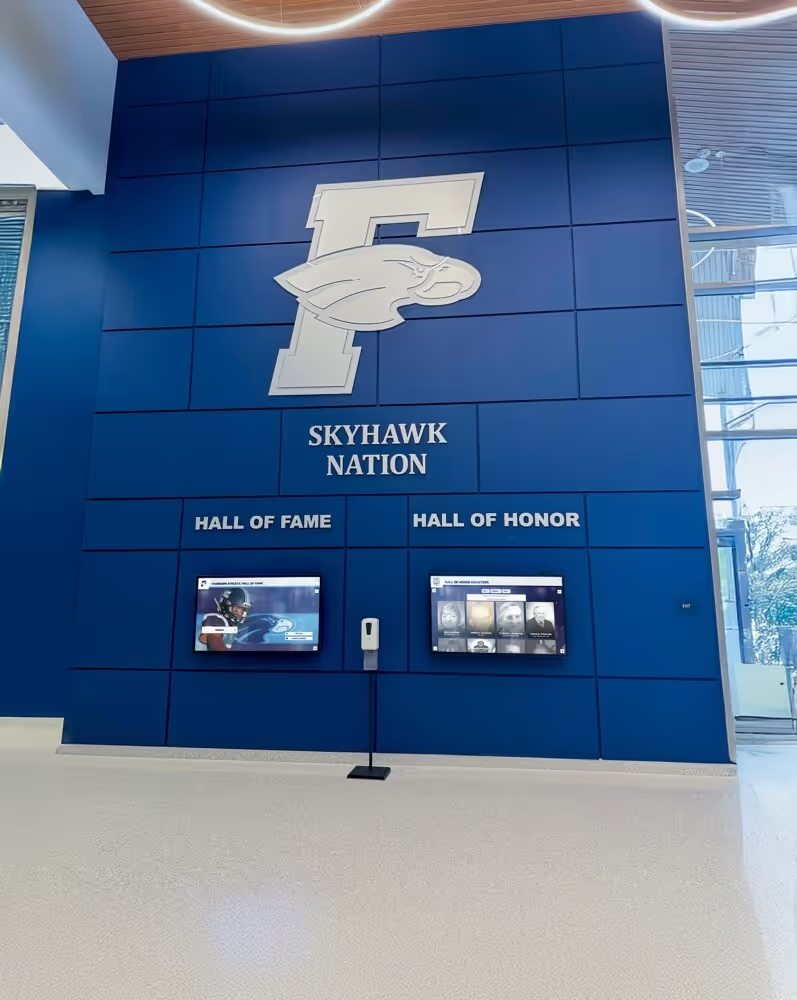
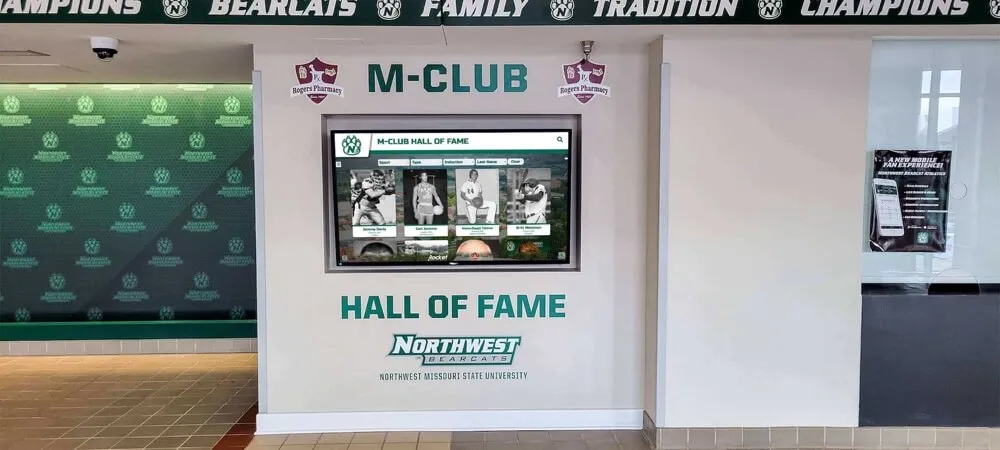
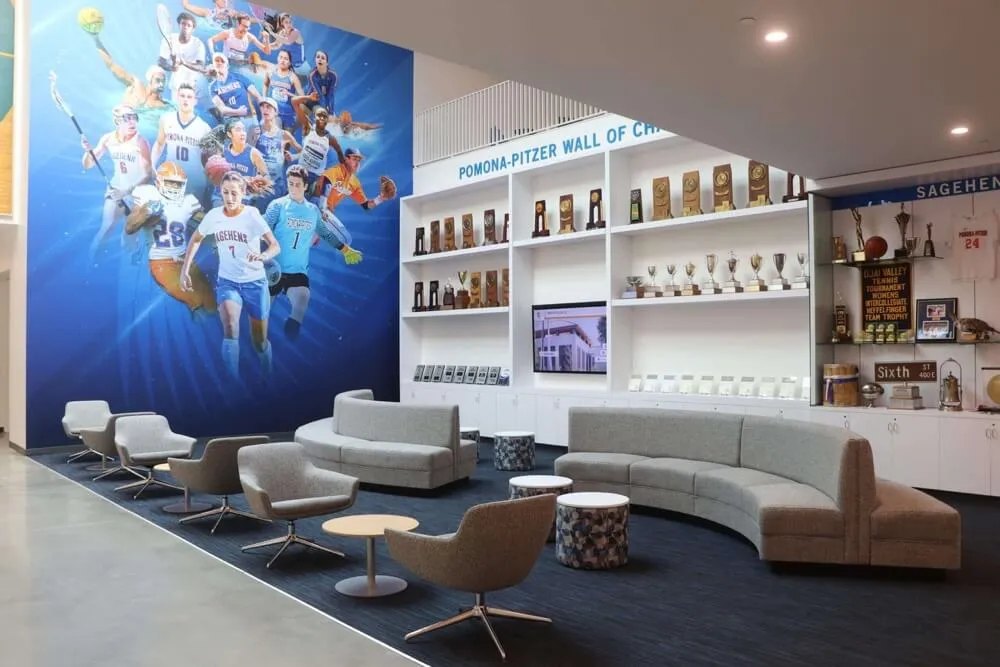
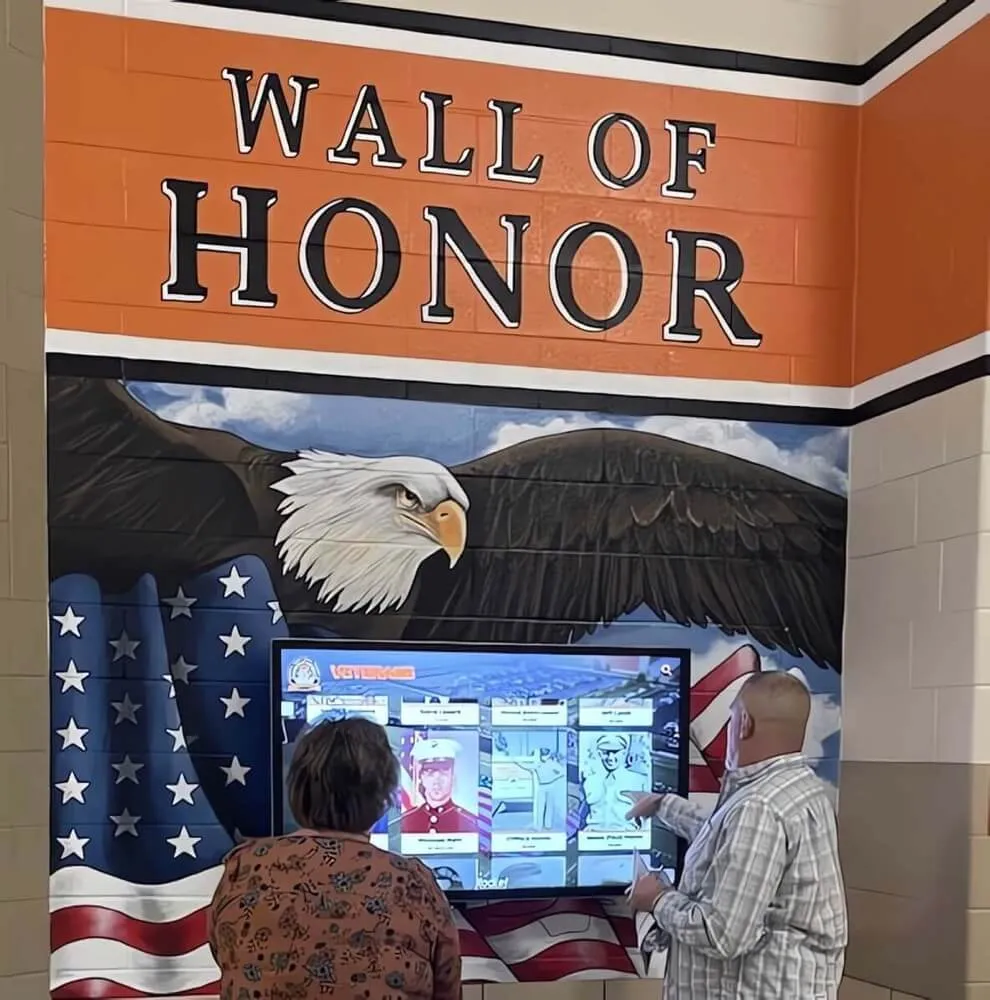
Athletic Lobby Recognition Centers create dedicated spaces where digital record boards serve as primary attraction rather than supplementary displays. Interactive kiosks invite exploration of program history, enable visitors to search for specific athletes or achievements, showcase championship seasons through multimedia presentations, and create memorable experiences connecting prospective athletes, alumni, and community members with athletic tradition. These recognition centers function similarly to museum exhibits—designed for extended engagement rather than quick glance awareness.
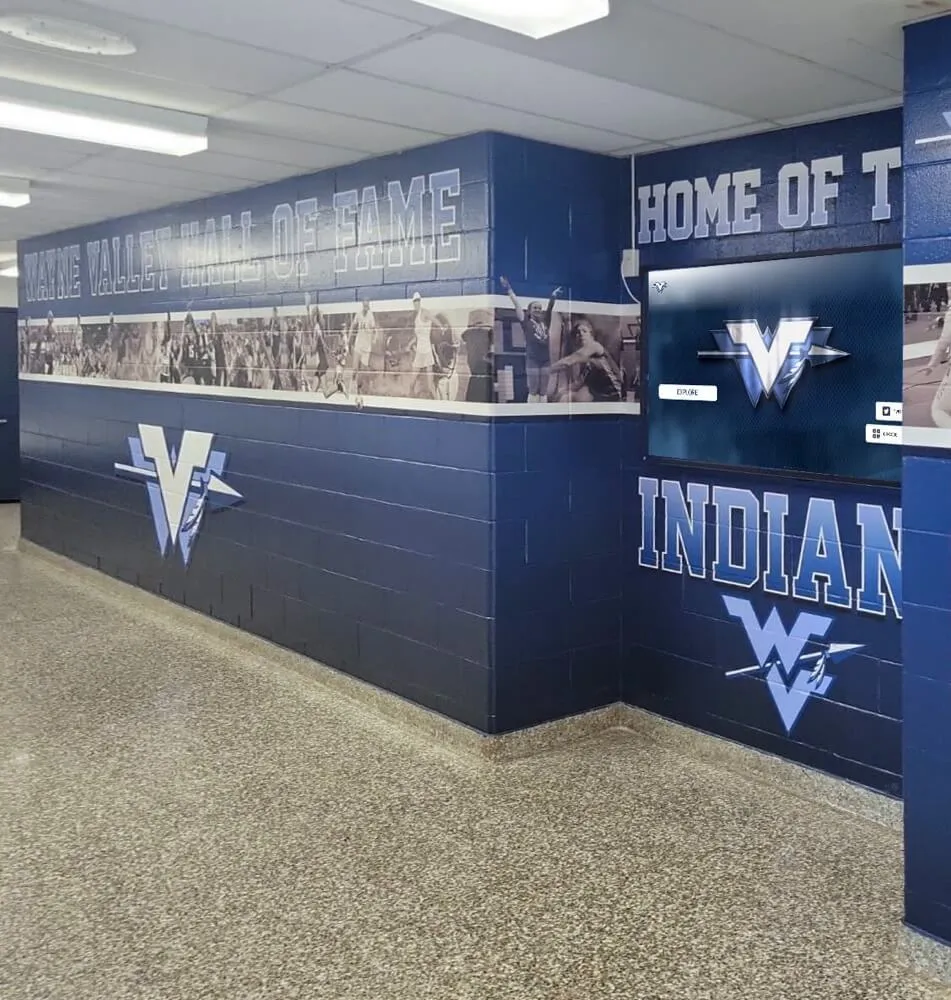
Training Facility Motivation Displays leverage digital record boards within weight rooms, practice facilities, and athletic performance centers where athletes spend significant daily time. Current record displays provide constant motivation targets, historical achievement galleries inspire excellence through example, and prominent recognition celebrates athletes achieving record status. The permanent visibility within spaces athletes occupy regularly makes training facility displays particularly effective at shaping program culture and individual performance targets.
Web-Based Virtual Record Boards extend recognition beyond physical facilities through online platforms accessible to anyone worldwide. Prospective athletes research programs before committing, alumni revisit their achievements remotely, families share accomplishments with extended networks, and community members explore program traditions without campus visits. Web accessibility multiplies recognition reach exponentially compared to location-bound physical displays while serving recruiting objectives by showcasing program quality and achievement culture to prospects evaluating multiple options.
How Digital Record Boards Compare to Traditional Alternatives
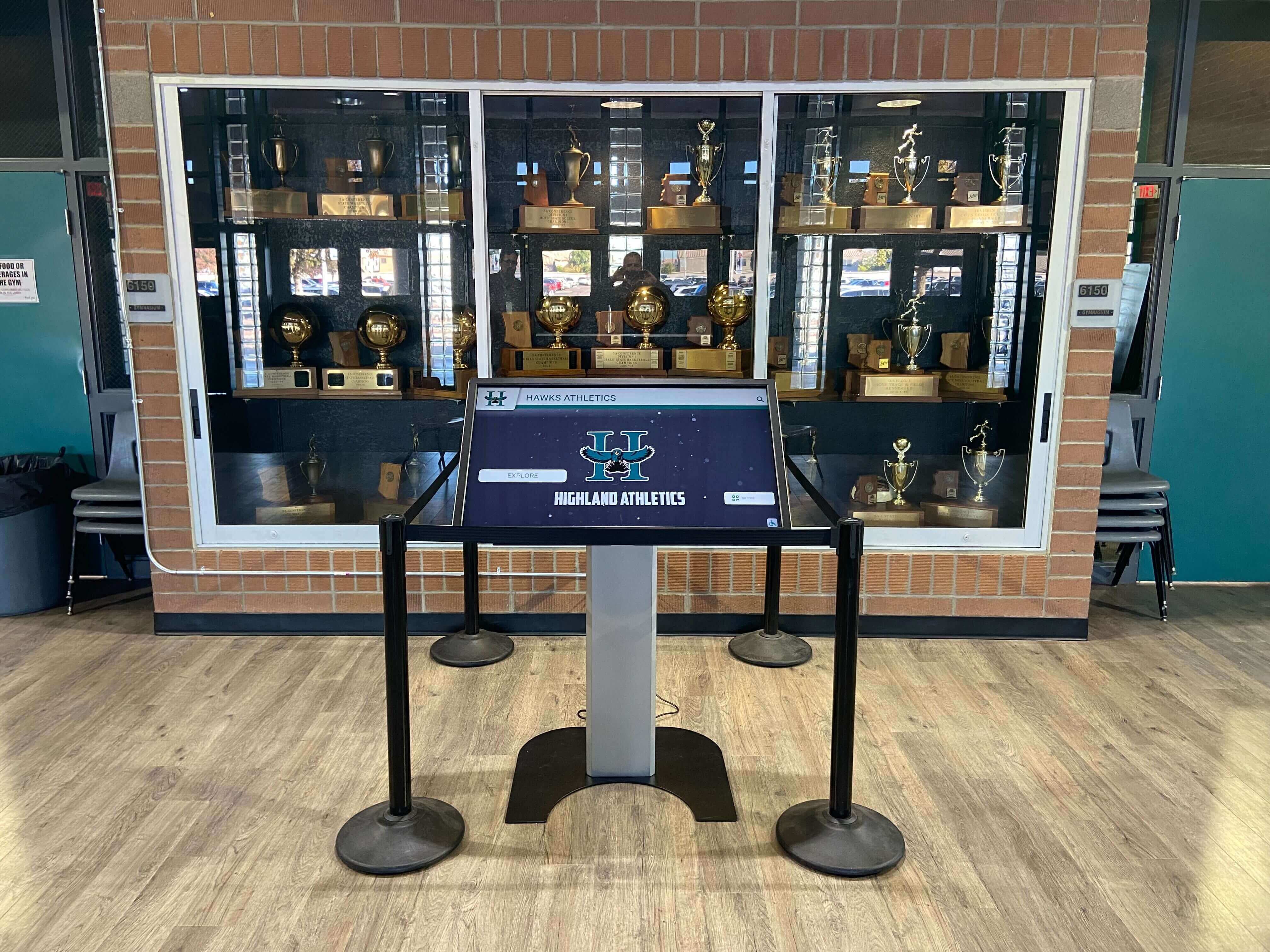
Space Limitations Eliminated represents digital record boards’ most fundamental advantage over traditional painted boards. Physical displays accommodate finite achievement lists—typically top five or top ten performers before running out of wall space. Digital systems store unlimited records across unlimited timeframes, enabling recognition extending back to program founding rather than arbitrary recent-year cutoffs determined by available wall space. Every achievement receives permanent documentation regardless of when it occurred or how many subsequent athletes have since exceeded those marks.
Update Costs and Complexity Reduced dramatically compared to traditional approaches requiring professional painters to update records manually—processes costing hundreds or thousands per update while creating multi-week gaps between record performances and recognition updates. Digital systems enable immediate updates at zero marginal cost beyond minutes of staff time required to enter new information. When records fall during Friday competitions, recognition updates appear by Monday morning rather than waiting weeks for painters to schedule and complete work.
Historical Preservation and Access transforms how programs document achievement. Traditional boards overwrite previous records when new marks established—older achievements disappear permanently rather than preserved as historical context. Digital platforms maintain complete historical records enabling visitors to explore how program records evolved over time, compare athletes across different eras, understand achievement progression, and appreciate the full scope of program excellence rather than just current leaders.
Multimedia Storytelling Capabilities enable significantly richer achievement context than bare statistics allow. Digital platforms incorporate athlete photos showing competitors in action, video highlights demonstrating how records occurred, biographical information providing athlete backgrounds, detailed statistics contextualizing achievements within broader competitive careers, and narrative descriptions explaining achievement significance. These multimedia elements create emotional connections and inspiration that numerical data alone cannot achieve, particularly for younger athletes who benefit from seeing role models who competed in their program previously.
Web Accessibility and Recruiting Value extends recognition reach far beyond facility walls through online platforms that prospective athletes evaluate during recruiting processes. Traditional boards only influence prospects visiting campus—digital web platforms showcase program excellence 24/7 to nationwide audiences including recruits unable to visit personally, college coaches evaluating athletes for opportunities, media covering athletic achievements, and community members supporting programs. This extended reach delivers tangible recruiting advantages by demonstrating program quality and achievement culture through comprehensive recognition rather than requiring prospects to simply trust coach claims.
For athletic directors considering modern recognition approaches, resources about athletic hall of fame implementation provide broader context about comprehensive recognition strategies.
Essential Features in Effective Digital Record Board Systems
When evaluating digital record board platforms, certain capabilities separate professional recognition systems from adapted generic tools or inadequate makeshift solutions.
Content Management and Update Workflows
Intuitive Administrative Interfaces determine whether designated staff can confidently update record boards independently or remain dependent on vendors for every change. Professional systems provide web-based dashboards enabling authorized personnel to add new records, update athlete information, upload photos and videos, manage achievement categories, and publish content changes without technical training or ongoing support requirements. The interface should feel familiar—similar to social media platforms, website content managers, or email systems most school personnel already understand rather than requiring specialized technical knowledge.
Approval and Review Workflows protect content quality when multiple people contribute by routing submissions through designated reviewers before publication. Athletic directors might require coach submissions pass review before appearing publicly, or communications coordinators might verify content accuracy and presentation quality before release. Configurable approval processes ensure accuracy while distributing content creation workload beyond single administrators who become bottlenecks.
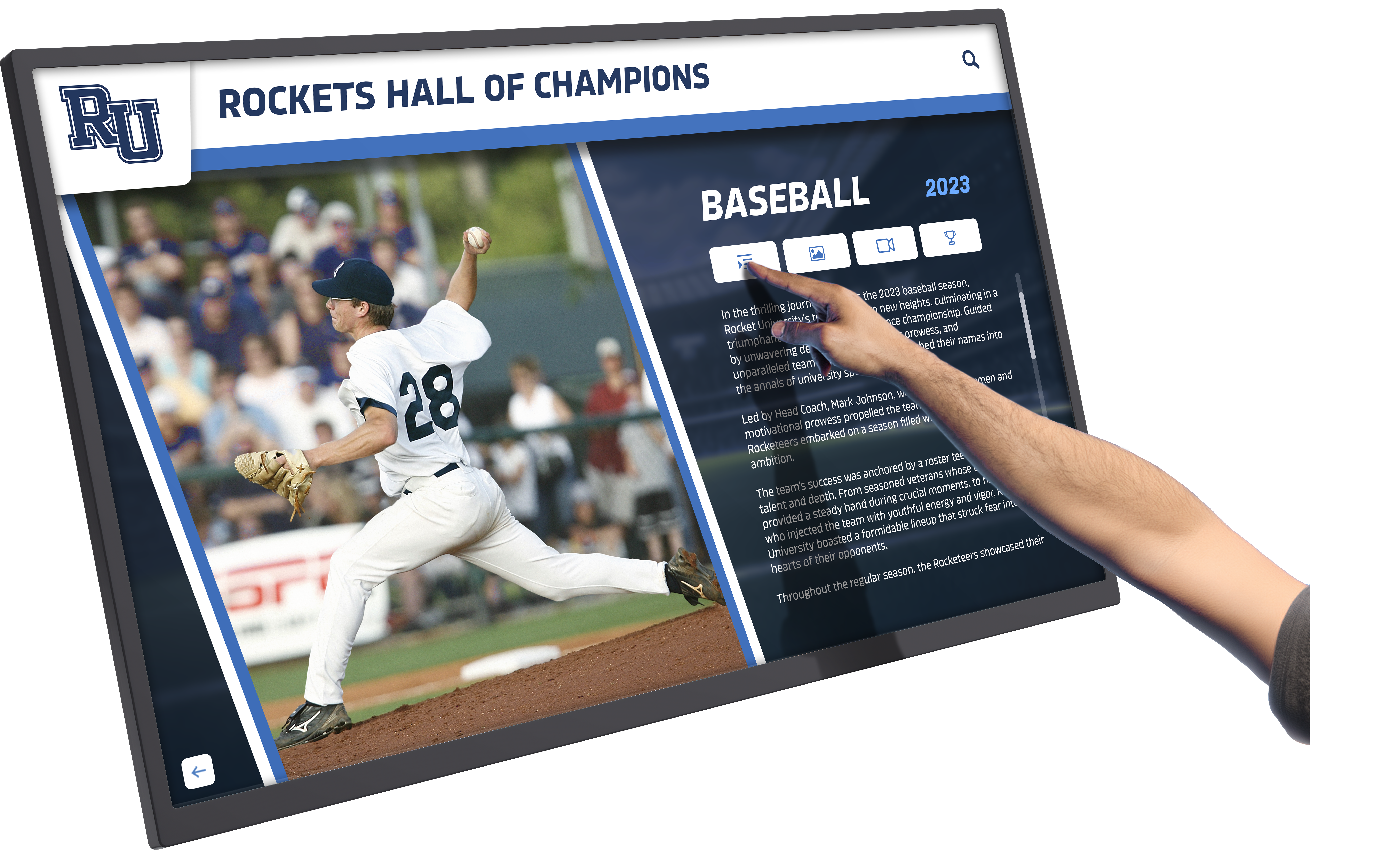
Bulk Import Capabilities matter significantly during initial implementation when schools convert decades of historical records from various formats into digital systems. Platforms supporting bulk data imports via spreadsheets or CSV files enable efficient migration of hundreds or thousands of historical records rather than requiring manual entry of every individual achievement through web forms—difference between weeks and months of implementation labor. Many schools discover historical records scattered across old yearbooks, newspaper clippings, trophy engravings, and paper filing systems—consolidating this dispersed information represents substantial undertaking that efficient import tools dramatically simplify.
Template Systems and Consistency Controls ensure professional presentation quality across content created by different people with varying design sensibilities. Pre-built templates for athlete profiles, record displays, team achievements, and championship documentation provide starting points that maintain visual consistency while enabling customization for sport-specific requirements. Template systems prevent amateur-looking results that undermine recognition objectives even when non-design staff manage content.
Interactive User Experience Design
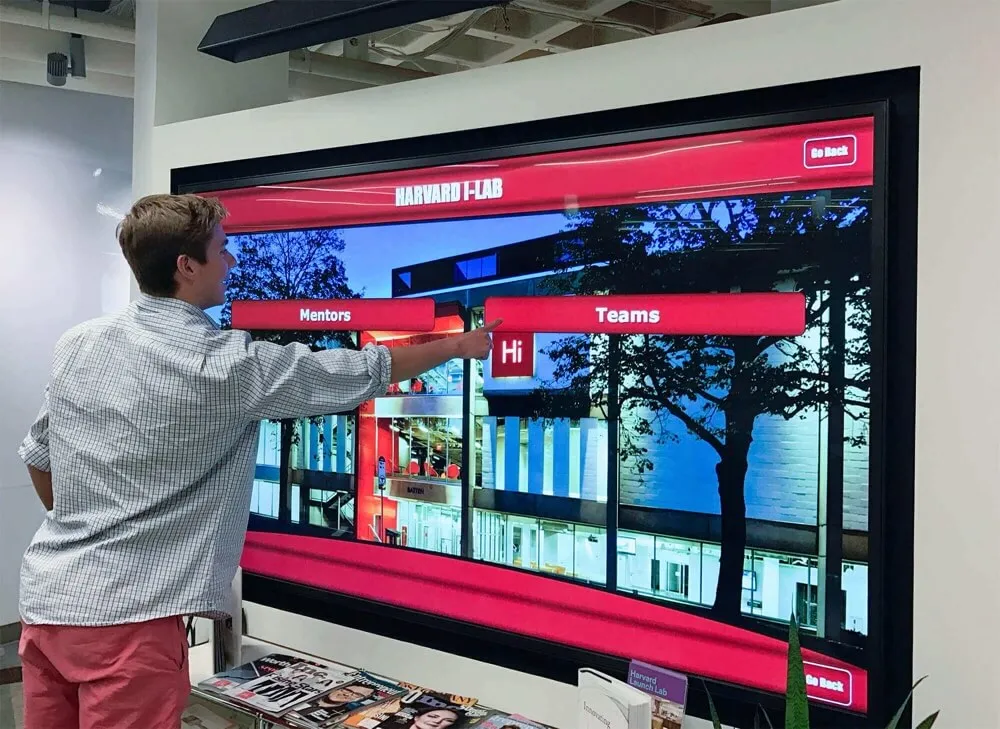
Responsive Touchscreen Interfaces optimized specifically for public kiosk environments create engaging experiences that encourage exploration rather than passive viewing. Large touch targets accommodate various user dexterity levels, intuitive navigation requires minimal instruction, responsive performance prevents frustrating delays, and attract-mode displays automatically demonstrate features for first-time users uncertain how to begin. Poor interface design results in displays visitors ignore because interaction feels confusing or unrewarding—investing in recognition technology then failing to achieve engagement defeats the entire purpose.
Advanced Search and Filtering enables visitors to find specific information within databases containing hundreds or thousands of achievements. Users should easily locate their classmates’ records, examine achievements in favorite sports, view records from specific years, compare performances across different eras, or filter to specific achievement types. Without robust search, digital record boards merely replicate traditional boards’ limitation where viewers only engage with immediately visible content rather than discovering broader program history.
Multimedia Presentation Capabilities integrate photos, videos, detailed statistics, biographical narratives, and achievement documentation within cohesive athlete profiles and record displays. Systems should support high-resolution imagery rendering clearly on large displays, video playback without technical complexity or compatibility issues, statistics tables maintaining readability, and text passages formatted appropriately for screen reading. Effective multimedia integration creates substantially richer storytelling than data-only presentations while remaining technically reliable rather than introducing failure points that leave displays showing error messages.
Mobile Device Integration through QR codes or URL shortcuts enables visitors to continue exploration beyond physical display locations using personal smartphones. After discovering interesting content on touchscreen kiosks, visitors can scan codes linking to expanded web profiles they explore at leisure, share with friends and family via social media, or revisit later from anywhere. This mobile extension multiplies engagement beyond brief kiosk interactions while enabling content sharing that promotes program achievements through visitors’ personal networks.
Understanding interactive touchscreen implementations helps schools evaluate experience design quality across different platform options.
Scalability and System Architecture
Unlimited Record Capacity without artificial constraints or per-achievement pricing represents fundamental requirement for comprehensive recognition programs. Some platforms charge per profile, per inductee, or impose database size limits—costs and restrictions that compound dramatically as recognition expands. Purpose-built systems provide genuinely unlimited capacity within subscription pricing, enabling recognition celebrating every deserving achievement across program history rather than forcing difficult decisions about whose accomplishments receive limited recognition slots.
Multi-Sport and Multi-Category Organization accommodates diverse athletic programs offering numerous sports, multiple competitive levels, various achievement types, and different recognition categories. Systems should logically organize content enabling visitors to explore specific sports of interest while maintaining cohesive overall navigation. Poor organizational architecture results in overwhelming interfaces where visitors cannot easily find desired information within sea of undifferentiated achievements.
Historical Records Management preserves achievement history when current records fall rather than simply overwriting previous marks and losing historical context forever. Comprehensive platforms maintain complete records lineages showing how program standards evolved—recognizing both current record holders and previous athletes whose marks stood for years before being exceeded. This historical depth demonstrates program quality trajectory and honors all achievement rather than implying only current leaders merit recognition.
Cross-Platform Consistency ensures identical content appears across physical touchscreen displays, web-based platforms, mobile interfaces, and any other connected systems through unified database architecture. Updates made once automatically propagate everywhere rather than requiring separate manual updates across disparate systems—difference between efficient content management and ongoing administrative burden creating synchronization failures where different platforms show contradictory information.
For schools managing recognition across multiple athletic programs and facilities, insights about multi-sport hall of fame coordination provide valuable planning perspective.
Comparing Digital Record Board Platform Categories
Understanding how different technology platforms serve record board purposes helps schools select solutions matching specific needs rather than adopting mismatched tools creating disappointment.
Purpose-Built Athletic Recognition Platforms
Specialized Recognition Systems designed specifically for athletic achievement displays deliver capabilities that generic platforms cannot efficiently match. These purpose-built solutions combine database architecture supporting unlimited athlete profiles with sport-specific templates, record tracking functionality, interactive exploration interfaces, and content management workflows addressing unique recognition requirements. Rather than adapting generic tools for recognition purposes, specialized platforms provide features schools actually need without unnecessary complexity or limitations from mismatched original designs.
Advantages of Specialized Platforms include immediate usability without extensive customization, recognition-specific features unavailable in generic tools, proven track records across similar institutions, dedicated support understanding unique program needs, and faster implementation compared to custom development approaches. Schools selecting purpose-built recognition platforms typically achieve operational status within 2-4 weeks versus months required for custom development or extensive generic platform adaptation.
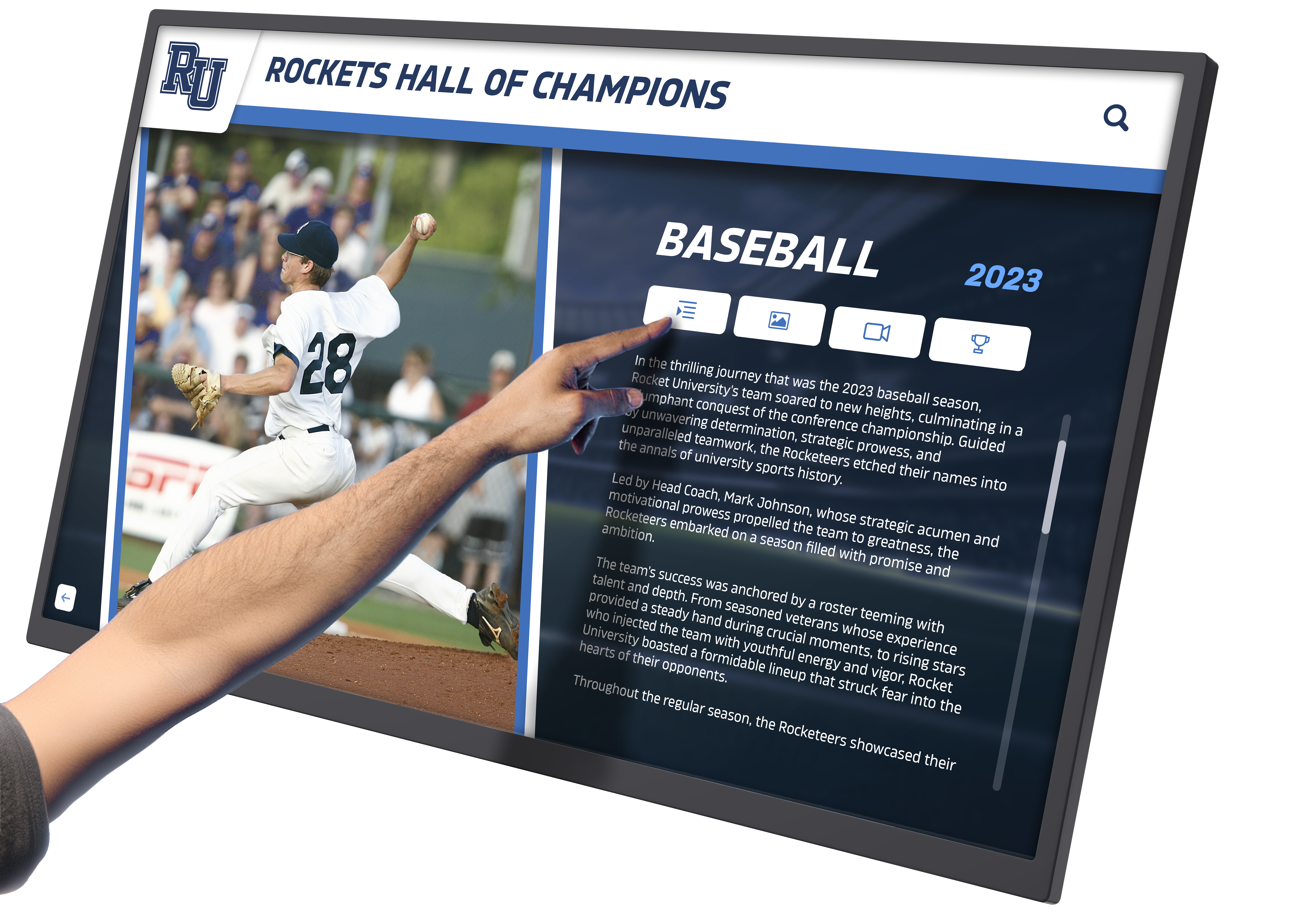
Leading Purpose-Built Solution: Rocket Alumni Solutions represents the most comprehensive athletic recognition platform serving K-12 schools, colleges, and universities nationwide. The system combines physical touchscreen displays with web-accessible record boards managed through unified cloud-based content platforms enabling athletic departments to independently maintain unlimited records without ongoing vendor dependencies or technical expertise requirements. With over 1,000 installations and specialized features including automatic record ranking, championship documentation, alumni athlete tracking, and recruiting-focused presentations, Rocket delivers capabilities specifically matching athletic program needs rather than requiring extensive customization of generic alternatives.
Adapted Digital Signage Systems
Generic Digital Signage Platforms designed primarily for announcements, alerts, and rotating communications can be adapted for record board purposes when recognition represents one application among broader signage needs rather than primary focus. These systems excel at displaying slideshow content, scheduled rotation between multiple information types, and distributed management across numerous screens throughout facilities. They work acceptably for simple record displays but lack database functionality, interactive exploration features, and recognition-specific capabilities that comprehensive record board programs require.
When Digital Signage Works for record boards includes situations where athletic departments already invest in campus-wide digital signage infrastructure for multiple purposes and want to incorporate rotating record highlights among other content. Slideshow presentations cycling through championship photos, current record leaders, and recent achievements provide value when shared with daily announcements and event schedules. Cost-efficiency improves when single platform serves multiple purposes rather than requiring separate systems for signage versus recognition.
Recognition-Specific Limitations include no database or search functionality preventing interactive exploration, generic templates not optimized for athletic record presentation, shallow content depth constraining detailed achievement documentation, minimal multimedia integration compared to purpose-built platforms, and manual update workflows requiring content recreation rather than simple data updates. Schools prioritizing comprehensive interactive record board experiences find digital signage platforms insufficient despite working acceptably for supplementary rotating highlights.
Understanding how digital signage applications differ from interactive recognition systems helps clarify when each approach proves most appropriate.
Custom Development Approaches
Fully Custom Solutions built specifically for individual institutions provide complete design freedom and functionality exactly matching unique requirements—but at significant cost, extended implementation timelines, and ongoing technical maintenance obligations. Schools with substantial technology budgets, dedicated web development resources, and genuinely unique requirements that off-the-shelf platforms cannot accommodate sometimes commission custom record board systems rather than adapting existing solutions.
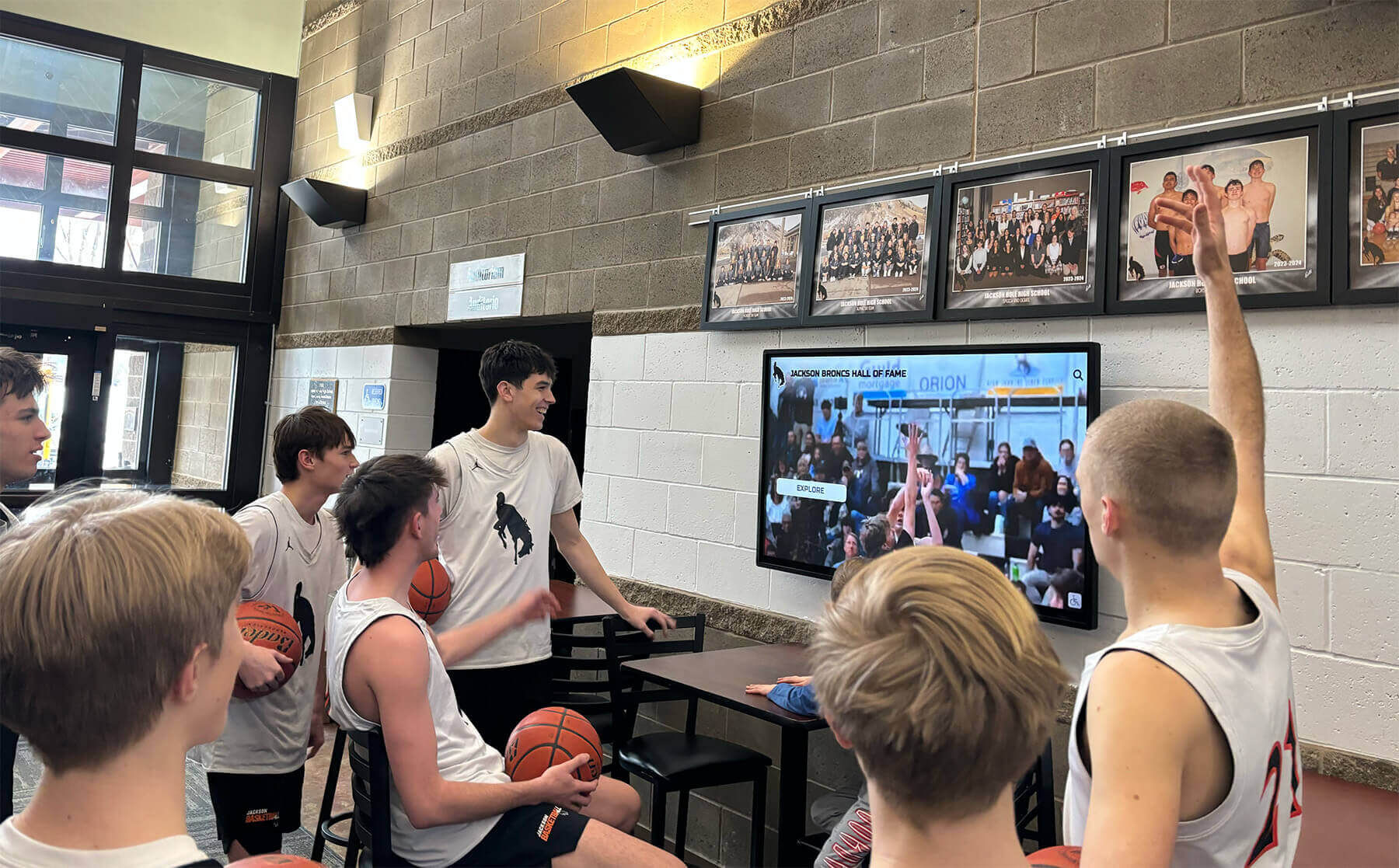
Custom Development Investment typically requires $25,000-$100,000+ for initial development depending on scope and complexity, 4-12 months implementation from requirements definition through launch, ongoing annual maintenance costs of $5,000-$20,000+ for updates and technical support, dedicated project management and oversight throughout development, and risks that final results may not match expectations despite substantial investment. Most schools discover purpose-built recognition platforms provide 90%+ of desired functionality at 20-30% of custom development costs while delivering solutions in weeks rather than months.
Appropriate Custom Development Situations remain rare—primarily limited to major university athletic programs with exceptional scale requirements, complex integration needs connecting deeply with existing systems that off-the-shelf platforms cannot accommodate, or truly unique functionality genuinely unavailable through any existing solution. Before committing to custom development, thorough evaluation of specialized platforms like Rocket Alumni Solutions should confirm that existing solutions truly cannot meet requirements rather than assuming customization necessary without proper investigation.
Budget and Makeshift Alternatives
Low-Cost Slideshow Approaches using consumer displays, basic media players, and simple slideshow software represent minimal-investment options that schools with extremely limited budgets sometimes deploy. These systems can display rotating images or simple statistics presentations but lack virtually all capabilities making digital record boards valuable—no database, no interactivity, no sophisticated content management, minimal multimedia integration, and no web accessibility. While better than nothing, such basic systems rarely deliver meaningful engagement or lasting value.
Social Media and Graphics Tools like Canva or Adobe Creative Suite enable creating professional recognition graphics for announcements and occasional displays but fundamentally cannot create interactive, searchable record board systems. These design tools supplement comprehensive recognition programs by generating promotional content but cannot replace purpose-built platforms for actual record board functionality.
Reality Assessment suggests that schools with genuinely zero budget for professional recognition platforms should focus resources on maintaining quality traditional painted boards rather than deploying inadequate makeshift digital alternatives that undermine rather than enhance recognition objectives. When budgets allow even modest investment, purpose-built platforms deliver exponentially better results than budget alternatives while remaining affordable for most athletic programs.
Implementation Strategies and Best Practices
Successfully deploying digital record boards requires systematic approaches addressing content development, hardware selection, user experience design, and ongoing operations.
Content Strategy and Historical Record Digitization
Comprehensive Achievement Inventory represents essential first step identifying what records and achievements your program will recognize. Most athletic departments discover records scattered across numerous sources including trophy engravings, painted boards, yearbooks, newspaper archives, paper filing systems, and institutional memory of longtime coaches and staff. Systematically inventorying all existing achievement documentation reveals gaps requiring research while establishing scope for digitization efforts.
Prioritized Digitization Planning determines which historical records receive immediate digitization versus staged over time based on importance, availability, and resources. Most schools prioritize current records and recent championship teams initially, then progressively add historical depth as time and resources allow. This phased approach enables faster initial launch showcasing recent achievements while planning systematic historical expansion rather than delaying deployment until every historical record across decades becomes digitized—process potentially requiring years.
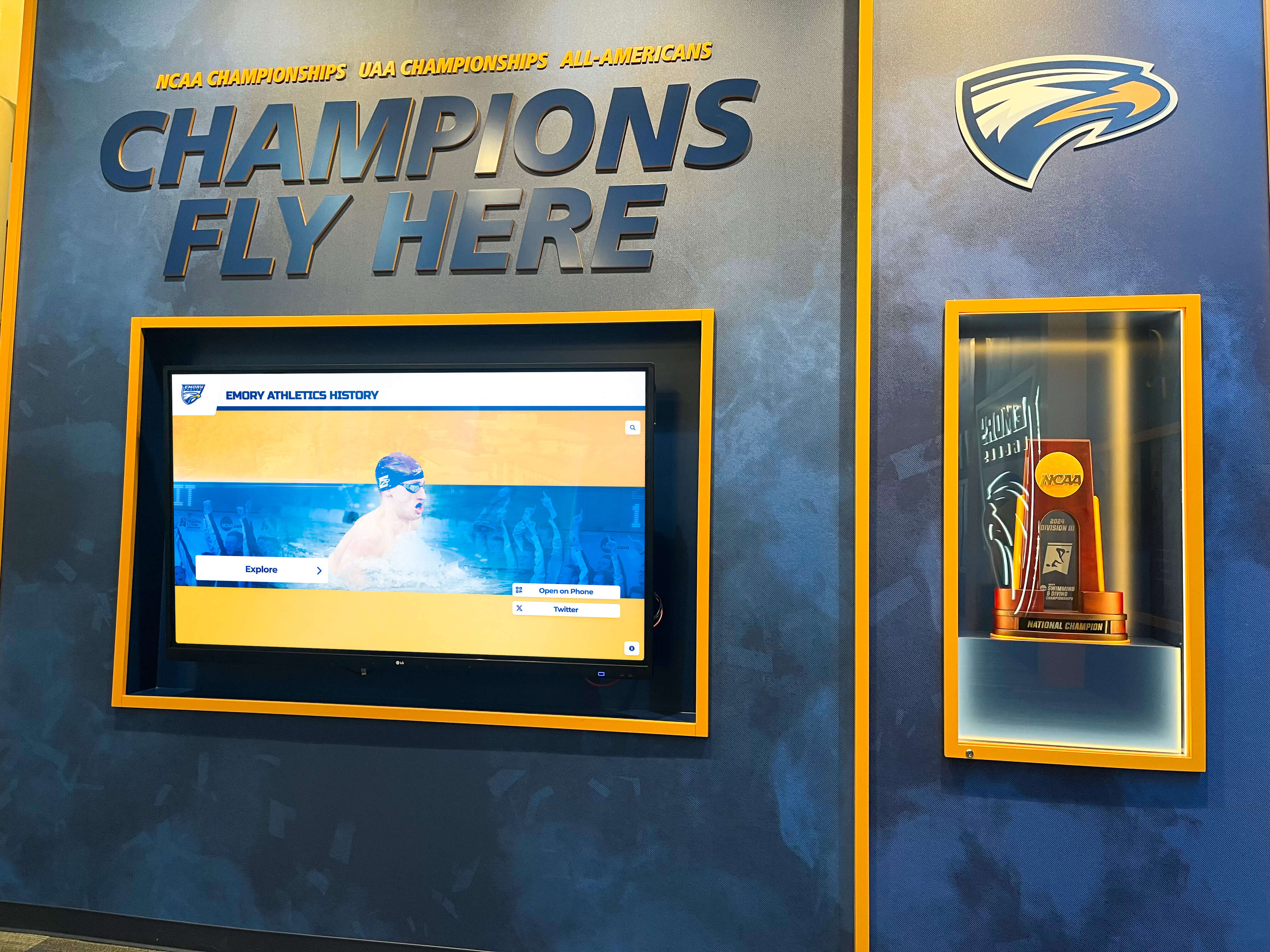
Content Quality Standards defining photo resolution requirements, biographical information depth, statistical documentation, and narrative tone ensure consistent professional presentation across content created by multiple contributors over many years. Written guidelines help coaches and staff understand what information to collect when athletes achieve records, what photo quality proves acceptable for displays, and how much biographical detail to include—preventing haphazard inconsistent results that undermine recognition quality.
Ongoing Content Workflows establish how new records get documented, who reviews content before publication, when updates occur, and how content quality gets maintained long-term. Sustainable workflows distribute content responsibilities appropriately, create accountability for timely updates, and prevent single-point failures where key individuals’ departure causes recognition programs to stagnate. Understanding athletic history documentation approaches helps schools establish effective long-term practices.
Hardware Selection and Installation Planning
Commercial-Grade Display Equipment designed for continuous operation in public spaces delivers reliability that consumer televisions cannot match. Commercial displays feature components rated for 16-24 hour daily operation, extended warranties, consistent panel quality, and specifications supporting professional installations. While initial costs exceed consumer alternatives, commercial equipment typically operates 7-10 years with minimal maintenance versus 2-3 year consumer display lifespans—making commercial investment more cost-effective long-term despite higher purchase prices.
Appropriate Display Sizing based on viewing distances and space characteristics typically ranges from 55" displays for intimate viewing areas to 75"-85" screens for large gyms and lobbies where visitors view from significant distances. Undersized displays fail to attract attention or remain readable from typical viewing positions while oversized screens overwhelm spaces and increase costs unnecessarily. Professional consultation helps determine optimal sizing matching specific installation contexts.
Touchscreen Versus Non-Interactive Displays selection depends on whether installations will support interactive exploration or passive viewing. Interactive touchscreen displays enable search, filtering, and detailed content exploration creating engagement that passive displays cannot achieve—but cost more initially and require different mounting considerations accommodating public touch access. Non-interactive displays work acceptably for rotating highlight content but limit functionality compared to touchscreen interactivity. Most schools implementing comprehensive record board programs choose touchscreen installations for primary recognition locations while using non-interactive displays for supplementary locations showing rotating content.
Professional Installation Services ensure secure mounting, proper cable management, network connectivity, aesthetic integration with surrounding spaces, and operational reliability. Amateur installations frequently create ongoing issues requiring expensive remediation—improper mounting creating safety hazards, visible cable runs detracting from professional appearance, network connectivity problems causing intermittent failures, or placement poorly suited to viewing angles and traffic patterns. Professional installation costs represent small percentage of total investment while preventing problems compromising entire projects.
For comprehensive guidance on display installations, resources about school touchscreen deployment address common planning and technical considerations.
User Experience and Engagement Optimization
Intuitive Interface Design requires minimal learning curve enabling visitors of all ages and technical comfort levels to immediately understand how to interact with digital record boards. Large clear navigation buttons, logical information architecture, responsive touch interactions, and self-explanatory interface elements create accessible experiences. Complex interfaces requiring instruction manuals or staff explanation fail usability tests since most visitors won’t invest effort learning systems before simply walking away.
Attract Mode Programming draws attention to interactive displays through automatically rotating content showcasing platform capabilities and interesting achievements. When nobody actively interacts with touchscreens, attract modes demonstrate features through self-running presentations that catch attention and invite interaction. Without effective attract modes, static inactive screens fail to signal interactivity—visitors assume displays show fixed content rather than understanding they can touch screens to explore.
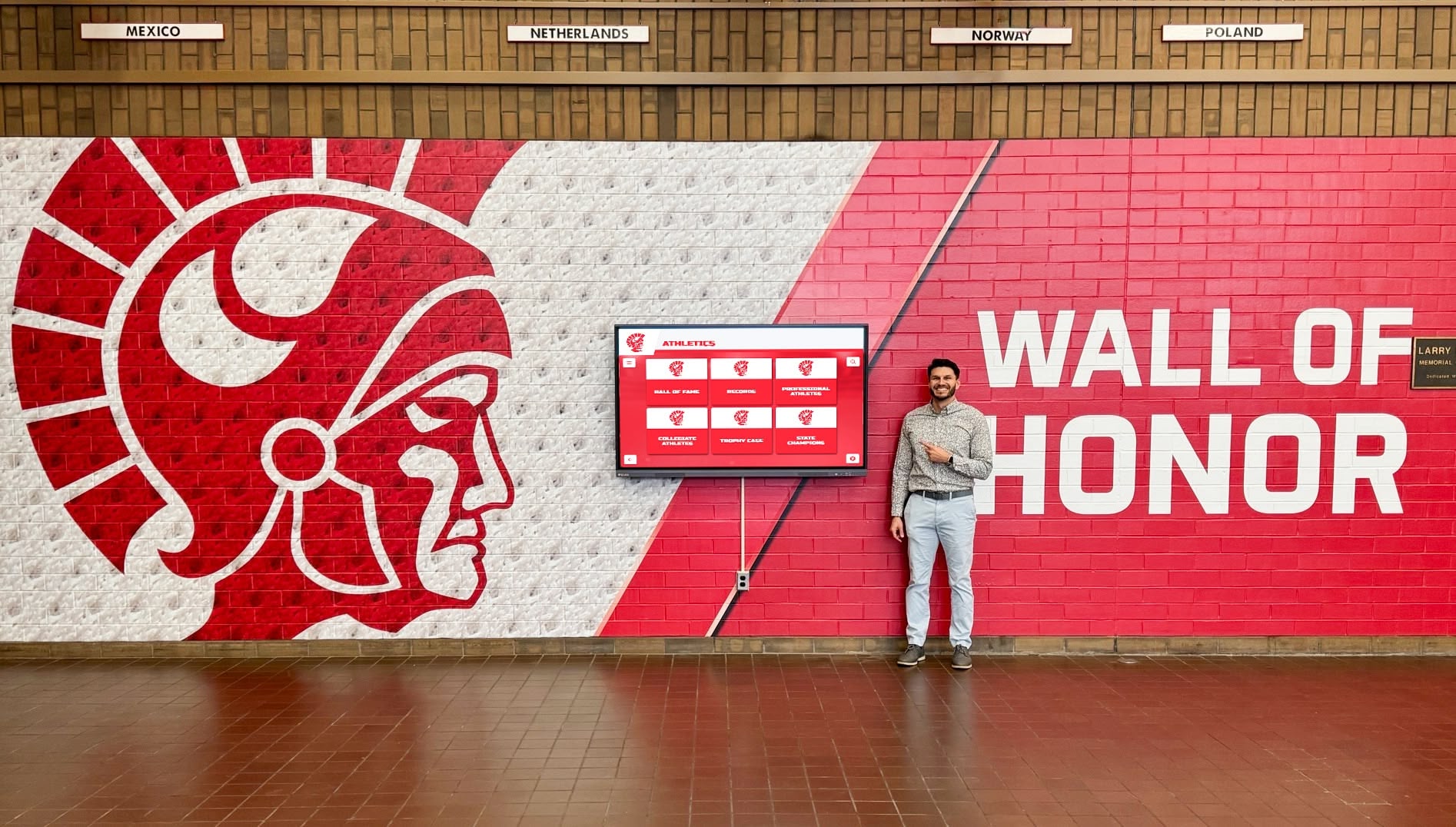
Strategic Physical Placement positions displays where target audiences naturally congregate and have time to engage rather than merely pass briefly. Locations near gym entrances, athletic lobby seating areas, training facility rest spaces, and competition venue concessions create engagement opportunities during natural waiting and gathering moments. Placements in high-traffic corridors where people rush past rarely achieve meaningful engagement despite high visibility.
Mobile Extension Strategies through QR codes linking to web platforms enable visitors to continue exploration beyond brief physical display interactions using personal smartphones. Simple signage inviting visitors to “Scan to explore more” extends engagement while enabling content sharing through social media and messaging—organic promotion amplifying recognition reach through visitors’ personal networks. For comprehensive approaches to digital recognition platforms, mobile integration represents increasingly important capability.
Ongoing Operations and Program Evolution
Regular Content Updates maintaining current records, adding new achievements, incorporating recent photos and videos, and refreshing featured content prevent recognition programs from becoming stale outdated displays that audiences ignore. Establishing routine update schedules—perhaps weekly during active seasons, monthly during off-periods—ensures recognition remains dynamic relevant rather than static historical artifacts. Stale content creates impression that programs lack recent achievement rather than simply failing to update displays.
Analytics and Engagement Measurement through platform analytics revealing which content receives most interaction, how long visitors engage, what search terms people use, and which features prove most popular informs content strategy and program development. Understanding actual usage patterns enables optimizing content focus, improving less-utilized features, and demonstrating program value through engagement metrics supporting budget requests and strategic planning.
Seasonal Content Strategies rotating featured content emphasizing currently competing sports, highlighting recent championships during relevant seasons, and celebrating anniversary achievements on significant dates maintains fresh timely recognition rather than static unchanging presentations. Strategic content curation creates reasons for repeat visits by people who previously explored displays—discovering new featured content on subsequent interactions rather than encountering identical presentations.
Stakeholder Feedback Integration from athletes, coaches, families, alumni, and community members reveals what recognition aspects resonate most effectively, what content people want added, what features require improvement, and how programs can better serve diverse audiences. Regular feedback collection through surveys, informal conversations, suggestion features, and social media monitoring creates continuous improvement cycles enhancing program quality over time.
Measuring Digital Record Board Success and ROI
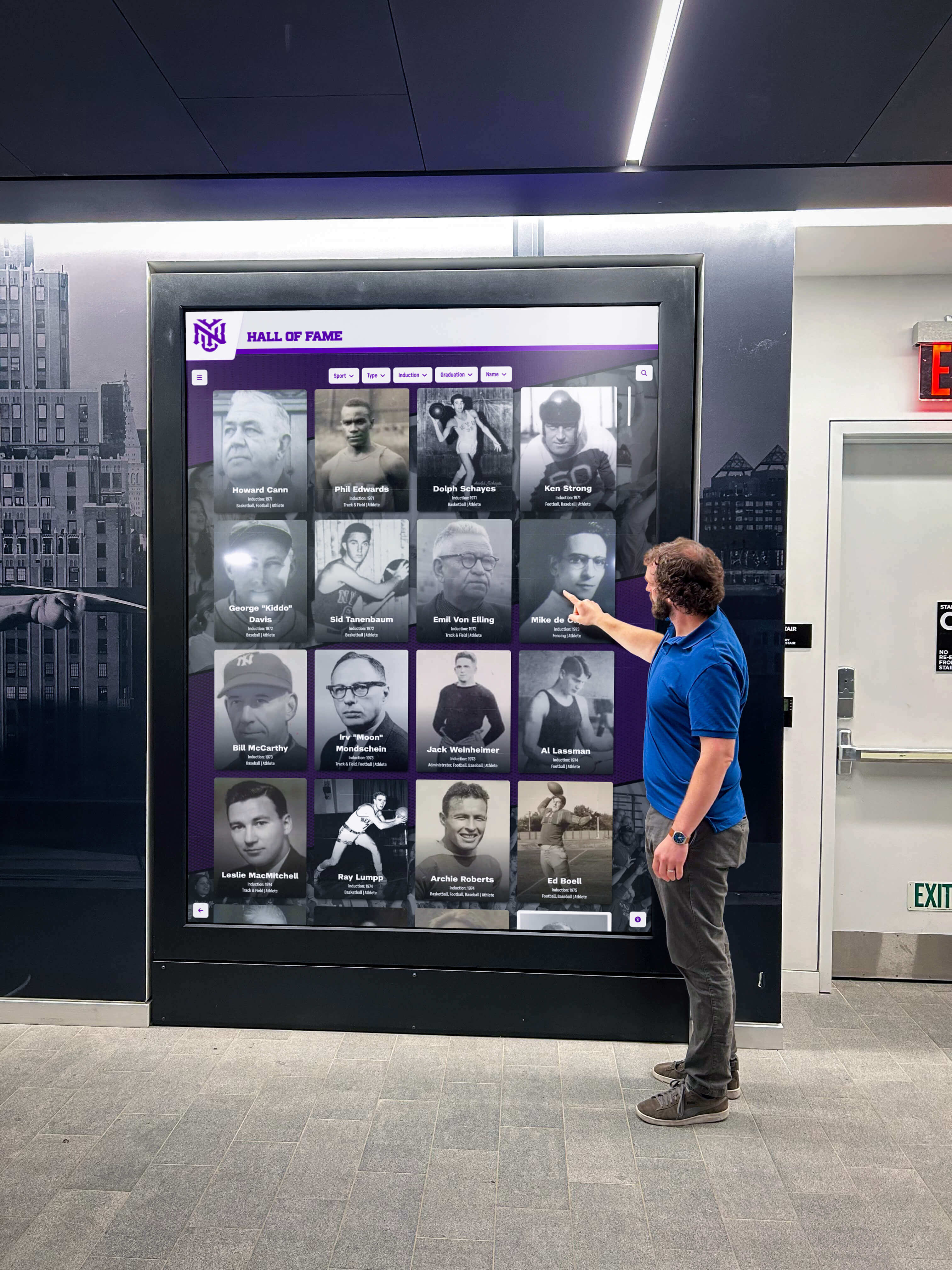
Justifying investments and demonstrating value requires documenting tangible outcomes and cultural impacts that digital record boards create.
Quantitative Metrics and Analytics
Engagement Statistics from platform analytics track total user sessions, unique visitors, average interaction duration, most-viewed profiles, common search queries, and feature utilization rates. These metrics reveal whether installations achieve desired engagement levels or require optimization—highlighting successful content while identifying areas needing improvement. Comparing engagement across different sports, time periods, and content types informs strategic content development decisions.
Web Traffic and Remote Access measures online platform usage extending recognition beyond physical facility boundaries including pageviews, visit duration, geographic distribution, device types, referral sources, and social sharing activity. Strong web engagement demonstrates that recognition reaches far beyond campus visitors—serving recruiting objectives, alumni connections, and community awareness while providing measurable evidence of program reach and impact.
Operational Efficiency Gains comparing administrative time required for digital record updates versus traditional approaches quantifies practical value beyond engagement metrics. Schools typically find that digital updates require minutes versus hours or days for traditional methods while eliminating vendor charges for changes—delivering substantial ongoing cost savings and operational flexibility that accumulate significantly over multi-year timeframes.
Content Growth Tracking documenting recognition database expansion over time including total profiles, achievements documented, multimedia assets added, and historical records digitized demonstrates sustained program development and institutional commitment to comprehensive recognition. Growth metrics prove that platforms serve as living programs actively maintained rather than static one-time projects—evidence supporting continued investment and staff resource allocation.
Qualitative Impacts and Cultural Outcomes
Athlete Motivation and Performance Culture assessment through coach and athlete feedback reveals whether record boards effectively inspire current competitors to pursue achievement and understand program standards. Coaches often report that prominent record displays create healthy competitive motivation driving training intensity and performance targets—particularly when record boards occupy training facility spaces where athletes spend significant daily time seeing achievements they aspire to match or exceed.
Recruiting Advantage Demonstration from prospective athlete feedback, family responses, and successful recruiting outcomes indicates whether recognition effectively showcases program quality and achievement culture during evaluation processes. Athletic directors report that comprehensive digital recognition distinguishes programs during recruiting by demonstrating concrete evidence of program excellence, competitive opportunity, and institutional commitment to celebrating athlete achievement—advantages that complement but extend beyond coach relationships and facilities quality.
Alumni Engagement and Connection measured through alumni event attendance, giving participation, social media interaction, and informal feedback shows whether recognition strengthens institutional bonds among former athletes. Alumni frequently express appreciation for recognition preserving their achievements and enabling them to share program connections with families and friends remotely through web platforms—emotional bonds that translate to sustained program support, financial giving, and positive word-of-mouth promotion.
Community Pride and Institutional Reputation assessed through community member engagement, local media coverage, facility visitor responses, and general institutional perception reveals whether recognition enhances broader organizational standing. Schools implementing professional recognition typically report increased community pride, enhanced institutional reputation, improved facility atmosphere, and stronger stakeholder support—cultural outcomes difficult to quantify precisely but materially valuable nonetheless.
Understanding comprehensive approaches to athletic recognition strategy helps schools establish meaningful success metrics aligned with specific organizational objectives.
Common Implementation Challenges and Solutions
Even well-planned digital record board deployments encounter obstacles requiring strategic problem-solving and stakeholder management.
Historical Content Gaps and Data Quality Issues
Incomplete Historical Records represent universal challenge when schools discover that comprehensive achievement documentation doesn’t exist for earlier program eras—trophy engravings provide minimal information, yearbooks omit statistics, newspaper archives prove difficult to access, and institutional memory becomes unreliable for events decades past. Rather than delaying implementation until achieving complete historical perfection, schools should launch with well-documented recent history while acknowledging gaps and inviting community assistance identifying missing information over time.
Inconsistent Data Quality across different eras and sports creates presentation challenges when some achievements include detailed statistics and photos while others contain only bare names and dates. Establishing minimum viable content standards enables publishing profiles despite incomplete information rather than waiting indefinitely for perfect comprehensive details that may never materialize. Acknowledging data limitations through interface notes maintains credibility while honoring achievements even when complete documentation proves unavailable.
Conflicting Information Sources occasionally surface when different records contradict each other about historical achievements—perhaps yearbooks disagreeing with newspaper accounts, or trophy engravings conflicting with official record books. Establishing verification hierarchies defining which sources take precedence during conflicts prevents endless research loops while maintaining defensible decision-making rationale. When conflicts cannot be definitively resolved, acknowledging uncertainty proves preferable to guessing or arbitrarily selecting preferred sources.
Budget Constraints and Funding Strategies
Initial Investment Requirements sometimes exceed available athletic department budgets requiring creative funding approaches beyond standard operations accounts. Successful strategies include incorporating recognition into larger facility renovation projects, seeking booster club funding specifically for recognition infrastructure, pursuing dedicated donor sponsorships covering implementation costs, applying for education technology grants supporting innovation, and phasing deployment across multiple budget years starting with priority installations.
Ongoing Operational Costs for subscriptions, maintenance, and eventual hardware refresh require sustained budget commitments rather than one-time capital expenditures. Building these recurring costs into regular athletic department budgets prevents programs from becoming unfunded maintenance burdens. Demonstrating tangible value through engagement metrics, operational efficiency, and stakeholder feedback supports continued funding allocation by justifying recognition as strategic investment rather than discretionary luxury.
Hardware Lifecycle Planning addresses eventual display replacement needs since commercial screens operate 7-10 years before requiring refresh. Establishing technology replacement reserves prevents unexpected budget crises when displays eventually fail. Many schools designate small annual allocations building reserves supporting systematic refresh rather than facing large unexpected costs requiring emergency funding requests when equipment fails.
Staff Capacity and Technical Expertise Limitations
Content Management Time Requirements strain busy athletic staff when recognition maintenance becomes perceived as additional burden atop existing responsibilities. Clarifying realistic time expectations during planning, providing adequate training enabling efficient operations, establishing streamlined workflows minimizing unnecessary steps, and distributing responsibilities across multiple people prevents content management from overwhelming single individuals. Many schools discover that well-designed platforms require far less ongoing time than initially feared once staff become comfortable with systems.
Technical Troubleshooting Capabilities limitations sometimes create anxiety about managing technology when IT-averse staff worry about handling technical issues beyond their expertise. Selecting platforms providing comprehensive support, establishing clear escalation processes for issues exceeding staff capabilities, maintaining vendor relationships enabling responsive assistance, and documenting common troubleshooting procedures empower staff to handle routine issues confidently while knowing help remains available for complex problems.
Staff Turnover and Institutional Knowledge preservation prevents recognition programs from suffering when key personnel leave institutions. Comprehensive documentation of workflows, access credentials, content standards, operational procedures, and vendor contacts enables smooth transitions when staff changes occur. Regular refresher training for all authorized users ensures multiple people maintain operational expertise rather than creating single-point dependencies vulnerable to disruption from personnel changes.
Future Trends and Emerging Capabilities

Digital record board technology continues evolving rapidly as technical capabilities expand and user expectations advance, creating new opportunities for enhancing athletic recognition.
Enhanced Multimedia and Interactive Features
Video Integration Expansion will increasingly incorporate game footage, highlight reels, athlete interviews, and championship moments directly within record board interfaces rather than linking externally to separate platforms. As video storage costs decline and streaming bandwidth improves, comprehensive video libraries become practical for even small schools—transforming record boards from primarily text-and-photo displays into rich multimedia storytelling platforms.
Augmented Reality Experiences may eventually enable visitors to view historical athletes superimposed into current spaces through smartphone AR applications, compare their own measurements against record holders through interactive AR overlays, or access expanded content by pointing phone cameras at physical recognition displays triggering digital overlays. While still emerging technology, AR applications will likely become standard recognition features within coming years as smartphone AR capabilities become ubiquitous.
Social Media Integration enabling visitors to instantly share achievements, tag themselves with recognized athletes, post comments and memories, and connect recognition with personal social networks will deepen engagement while organically promoting programs through visitor networks. Direct social sharing creates multiplier effects where single recognition display interaction generates dozens or hundreds of social media impressions amplifying recognition reach exponentially beyond physical installations.
Artificial Intelligence and Automation
Automated Content Generation using AI assistants will help schools create compelling achievement narratives, generate statistical comparisons, identify interesting historical patterns, and maintain comprehensive profiles without extensive manual writing. AI tools can analyze statistics to automatically generate descriptions like “This performance represented the first time any athlete exceeded 1,000 career points in fewer than 50 games” or “This mark stood as program record for 23 years before being broken”—adding contextual richness that time-strapped staff rarely manually create.
Predictive Analytics and Achievement Tracking will enable systems to automatically notify athletic departments when athletes approach record territory based on current season statistics and historical thresholds. Rather than coaches manually tracking whether athletes might break records, automated alerts ensure timely recognition and media opportunities around record-breaking performances—enhancing celebration and publicity while eliminating risk that significant achievements go unrecognized until after seasons conclude.
Personalized User Experiences leveraging AI to customize content presentation based on visitor interaction patterns, preferences, and engagement history will create more relevant experiences increasing connection and satisfaction. Systems might automatically feature sports visitors most frequently explore, suggest related athletes and achievements based on viewing history, or adapt interface complexity to accommodate different user sophistication levels—personalization currently common in consumer digital experiences gradually becoming standard in recognition platforms.
Data Integration and Ecosystem Connectivity
Statistics Platform Integration will enable seamless data flows from athletic management systems directly into recognition platforms, eliminating manual data entry while ensuring accuracy. When season statistics compile in systems like MaxPreps, ScoreStream, or institutional athletic databases, automated connections will identify record performances and populate recognition platforms without manual intervention—dramatically reducing administrative burden while ensuring immediate recognition of achievements.
Recruiting Platform Connections may eventually enable automated presentation packages highlighting relevant athletes and achievements for college recruiters, creating compelling recruiting materials directly from recognition databases. Athletic departments could generate customized presentations featuring specific sport records, championship achievements, and player development examples without manually compiling information from various sources—enhancing recruiting efficiency while ensuring consistent professional presentation.
Alumni Network Integration linking recognition platforms with institutional advancement systems, alumni databases, and engagement platforms will enable more comprehensive profiles connecting athletic achievements with post-graduate accomplishments and current activities. Recognition evolves from purely historical documentation into dynamic connections maintaining relationships between institutions and alumni athletes throughout lives—serving both recognition and advancement objectives simultaneously.
Conclusion: Strategic Decisions for Modern Athletic Recognition
Digital record board technology represents fundamental evolution in how athletic programs document excellence, inspire current athletes, serve recruiting objectives, engage alumni, and strengthen program cultures. The choice between maintaining traditional approaches versus adopting modern digital platforms shapes recognition effectiveness for decades ahead—decisions carrying implications extending well beyond simple display updates.
For athletic programs committed to comprehensive recognition serving multiple strategic objectives, purpose-built digital platforms deliver capabilities that traditional alternatives and adapted generic tools simply cannot match. The combination of unlimited database capacity, interactive exploration, web accessibility, real-time update management, rich multimedia integration, and recognition-specific features creates fundamentally different experiences compared to static painted boards or slideshow presentations.
While initial investments exceed traditional board repainting costs, proper analysis reveals that digital platforms provide superior long-term value through eliminated ongoing update costs, expanded recognition capacity, enhanced engagement effectiveness, recruiting advantages, operational flexibility, and cultural impacts impossible with constrained traditional approaches.
Schools evaluating options should prioritize purpose-built recognition platforms specifically designed for athletic achievement documentation rather than attempting to adapt generic digital signage or commission expensive custom development. Solutions like Rocket Alumni Solutions combine specialized recognition technology with comprehensive implementation support and proven reliability across hundreds of institutions—delivering professional results without requiring technical expertise or creating ongoing vendor dependencies.
The athletic achievements your programs produce deserve recognition technology specifically designed to celebrate excellence appropriately. Strategic investments in comprehensive digital record boards honor athlete dedication while inspiring future generations to pursue similar greatness.
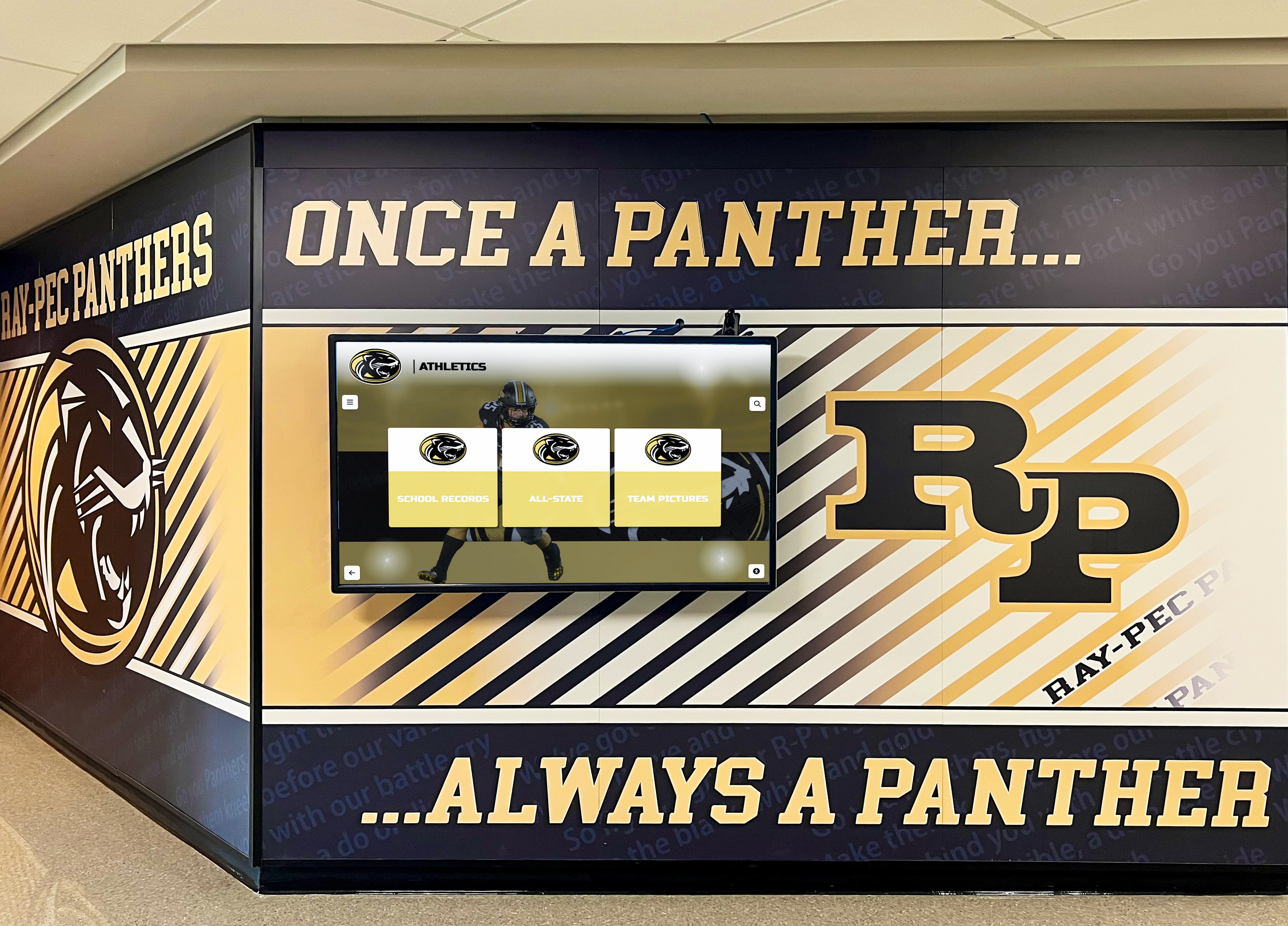
Ready to explore how modern recognition technology transforms athletic achievement celebration? Discover comprehensive solutions specifically designed for athletic programs committed to honoring excellence while building lasting program cultures that inspire current athletes and engage entire communities.
Disclaimer: This comparison is based on publicly available information as of February 2026. All product names and trademarks belong to their respective owners. Comparative statements reflect analysis of available data and may change over time.