



Key Takeaways
Run a digital hall of fame language of parts accessibility audit to identify profile fields—multilingual names, foreign-language quotations, and archival captions—where missing lang attributes cause screen readers to mispronounce content. Step-by-step checklist for school administrators and accessibility teams.
lang="en" attribute on the root HTML element that tells screen readers to apply English pronunciation rules across the entire page. That declaration, required by WCAG 3.1.1, is only the first layer of multilingual accessibility. When an inductee profile contains a Spanish quotation from a coach, a Japanese rendering of an inductee's name, a Latin school motto, or an archival caption originally written in French, each of those passages needs its own language designation under WCAG 3.1.2 (Language of Parts). Without it, a screen reader reads every word on the profile page with English phonetics—mispronouncing the inductee's name, garbling the quotation, and making the archival context unintelligible to visitors who rely on synthesized speech. A digital hall of fame language of parts accessibility audit identifies every profile field where this mismatch exists and provides the markup fixes that restore correct pronunciation for every visitor.
Page Language Versus Language of Parts: The Core Distinction
Every digital hall of fame platform should begin with a correct page-level language declaration:
<html lang="en">
This attribute, governed by WCAG 2.1 Success Criterion 3.1.1 (Language of Page, Level A), tells assistive technology—screen readers, text-to-speech processors, and braille translation tools—which language’s phonetic rules, abbreviation expansions, and number formats to apply to all text on the page by default.
Language of Page is a single attribute on a single element. It is the audit that most accessibility checklists address first, and on a pure-English site with no multilingual content, it is the only language criterion that applies.
WCAG 2.1 Success Criterion 3.1.2 (Language of Parts, Level AA) addresses a different problem: what happens when a page’s content is not uniformly the language declared on the <html> element. It requires that the language of each passage or phrase that differs from the page’s default language can be programmatically determined—meaning a lang attribute at the element level, wrapping the specific text that uses a different language.
The distinction matters for schools because inductee profiles are not uniformly English. A recognition program that has honored athletes and scholars over decades in a diverse community accumulates multilingual content across its profile database:
- An inductee whose legal name is rendered in Japanese characters alongside the English transliteration
- A tribute quotation originally spoken in Spanish by a coach who coached in a bilingual community
- An archival caption from a 1970s yearbook page that was printed in French for a Francophone school population
- A school motto in Latin appearing on every profile page as part of the institutional header
- An award title using French terminology for a fine-arts recognition category
For each of these, the screen reader’s behavior is determined by the nearest ancestor element that carries a lang attribute. Without a specific lang attribute, the screen reader inherits the page-level lang="en" and applies English phonetics to every passage—regardless of what language the text actually contains.
Why Screen Readers Depend on lang Attributes for Correct Pronunciation
Modern screen readers—NVDA, JAWS, VoiceOver, and TalkBack—use text-to-speech synthesis engines that load a pronunciation model per language. When a screen reader encounters a lang attribute, it switches synthesizer voices or pronunciation rules to match the declared language. When no lang attribute is present at the element level, the synthesizer continues with the page default.
The consequences for inductee profiles are concrete. A screen reader reading the name María José González with English phonetics will place stress on the wrong syllables, flatten the accent on "María," and pronounce the "J" in "José" as the English fricative rather than the Spanish approximant. A Spanish-speaking visitor using VoiceOver or NVDA will not recognize the name as rendered. A Japanese name rendered in kanji without a lang="ja" attribute may be read character by character, producing a meaningless sequence of sounds instead of the inductee's name.
For school recognition programs that serve alumni, families, and community members with a range of linguistic backgrounds, these mispronunciations represent a failure in the core purpose of the hall of fame—honoring individuals by name, in a way that every visitor can access correctly.
The issue extends beyond names. When a profile page includes a blockquote of a coach’s remark originally spoken in Spanish, and the screen reader renders it with English vowel rules, the emotional register of the tribute is lost. When an archival caption from a French-language yearbook is read with English phonetics, the historical context it provides becomes incomprehensible to a visitor who recognizes the French text visually but cannot parse the screen reader’s anglicized output.
Schools that invest in digital signage for recognition programs understand that a display’s value is measured by what every visitor takes away from it—not only visitors who interact with it in the default mode. Language of parts compliance is what extends that access to screen reader users who encounter multilingual profile content.
Profile Fields Where Language-of-Parts Failures Most Commonly Appear
Field 1: Inductee Names in Non-Latin Scripts
The most visible language-of-parts failure on recognition platforms occurs when an inductee’s name is stored and displayed in a non-Latin script—Japanese kanji, Korean hangul, Chinese characters, Arabic script, or Devanagari—without a corresponding lang attribute on the element containing that text.
Failing markup:
<!-- Inherits lang="en" from the page — kanji read with English phonetics -->
<h1 class="inductee-name">
  Ichiro Tanaka / 田中一郎
</h1>
Passing markup:
<h1 class="inductee-name">
  Ichiro Tanaka / <span lang="ja">田中一郎</span>
</h1>
The lang="ja" attribute on the <span> instructs the screen reader to switch to a Japanese pronunciation model for the characters within that element. The English transliteration is read with English rules; the kanji rendering is read with Japanese rules.
Field 2: Names with Diacritical Characters
Names that use diacritical characters from Romance languages—French, Spanish, Portuguese, Romanian—present a subtler but equally important language-of-parts issue. The characters é, ñ, ã, ç, and ü can be displayed correctly in any browser, but their phonetic treatment differs significantly between English and the language from which they originate.
Failing markup:
<!-- English synthesizer mispronounces the stressed syllables -->
<span class="inductee-full-name">María José González</span>
Passing markup:
<span class="inductee-full-name" lang="es">María José González</span>
The Spanish pronunciation model treats á with a short open vowel, J as a voiceless velar fricative, and renders the name as a Spanish speaker would recognize it.
Field 3: Coach Quotations and Tribute Text in Non-English Languages
Many inductee profiles include a quotation from a coach, administrator, or teammate—sometimes in the speaker’s native language rather than in translation. Profiles for inductees in communities with significant Spanish-speaking, French-speaking, or Portuguese-speaking populations may include tributes written in those languages as part of honoring the inductee’s cultural context.
Failing markup:
<blockquote class="coach-quote">
  "El trabajo en equipo y la dedicación son las claves del éxito."
  — Coach Roberto Alvarez, 2001–2015
</blockquote>
Passing markup:
<blockquote class="coach-quote" lang="es">
  "El trabajo en equipo y la dedicación son las claves del éxito."
  — Coach Roberto Alvarez, 2001–2015
</blockquote>
If the blockquote also contains an English translation, apply the lang attribute only to the non-English portion:
<p class="coach-quote-container">
<span lang="es">"El trabajo en equipo y la dedicación son las claves del éxito."</span><br>
"Teamwork and dedication are the keys to success." — Coach Roberto Alvarez, 2001–2015
</p>
Field 4: Archival Captions from Non-English Sources
Schools with long recognition histories often incorporate archival materials—yearbook pages, program scans, newspaper clippings—into digital inductee profiles. When those materials originated in a non-English publication, the captions accompanying them may retain the original language of publication.
An archival caption originally in French, appearing below a scanned photograph from a bilingual school’s yearbook, requires a lang="fr" attribute on the caption element:
<figure class="archive-photo">
<img src="/archives/1968-championship-team.jpg" alt="1968 basketball championship team, twelve players in uniform standing with a trophy">
<figcaption lang="fr">L'équipe de basketball championne provinciale, saison 1967-1968. École Sainte-Marie, Montréal.</figcaption>
</figure>
Without the lang="fr" attribute, a screen reader reads the caption with English phonetics. With it, the French synthesizer applies correct French pronunciation, making the archival context audible and meaningful.
Field 5: Latin Mottoes and Award Terminology
School mottoes in Latin appear frequently in hall of fame displays—in institutional headers, on shield or crest graphics that include a text layer, and in award titles that use classical terminology. Latin has its own phonetic rules, distinct from English and from any modern Romance language.
<!-- School motto in institutional header -->
<p class="school-motto" lang="la">Fortis et Liber</p>

<!-- Academic award designation -->
<span class="award-title" lang="la">Summa Cum Laude</span>

<!-- Award title using French terminology -->
<span class="award-name" lang="fr">Prix d'Excellence</span>
Field 6: Bilingual Biographical Passages
Some profiles include a passage of the inductee’s biography that quotes the inductee speaking in their native language, followed by an English translation or paraphrase. The non-English portion of that passage requires a lang attribute on the inline element wrapping it.
<p class="inductee-bio">
When asked about the championship season,
<span lang="pt">González disse: "Foi o momento mais importante da minha carreira atlética."</span>
(González said: "It was the most important moment of my athletic career.")
</p>
How to Run a Language-of-Parts Audit on Inductee Profiles
A language-of-parts audit on inductee profiles proceeds in three phases: inventory, inspection, and screen-reader verification. Allow half a day to cover a representative sample of profiles from a typical recognition database.
Phase 1 — Inventory Non-English Content Across Profile Fields
Before inspecting markup, identify every profile field type that may contain non-English content. Work through the CMS field schema with the platform administrator or content manager:
- Name fields — Does the CMS store a name in original script alongside an English transliteration? Is there a field for a native-language name rendering?
- Quotation fields — Does the profile template include a coach quotation, tribute message, or inductee statement field? Is there a language option or is the field free text?
- Biography fields — Are biography entries free-form rich text where an editor might paste a passage in any language?
- Caption fields — Do archival photo captions carry language context, or are they treated as generic text?
- Award and category fields — Do any award titles use non-English terminology (Latin, French, Spanish)?
- Institutional fields — Does the school motto, mascot name, or institutional tagline appear on profile pages in a language other than English?
Document each field type that can contain non-English content. This inventory drives the audit.
Phase 2 — Inspect Markup for lang Attributes
For each field type identified in the inventory:
- Open an inductee profile that contains non-English content in that field.
- Right-click the non-English text and select Inspect (Chrome, Firefox, Edge) or Inspect Element (Safari).
- In the DevTools Elements panel, locate the element containing the non-English text.
- Look for a
langattribute on the element or any of its ancestors. - If
langis present and matches the language of the content, the field passes. - If
langis absent or inherits the page-levellang="en", the field fails SC 3.1.2.
Record findings in a table:
| Profile Field | Example Content | Language | lang Found? | Closest lang Value | Pass/Fail |
|---|---|---|---|---|---|
| Inductee name (script) | 田中一郎 | Japanese | No | en (inherited) | Fail |
| Coach quotation | “El trabajo en equipo…” | Spanish | No | en (inherited) | Fail |
| Archive caption | “L’équipe de basketball…” | French | No | en (inherited) | Fail |
| School motto | Fortis et Liber | Latin | No | en (inherited) | Fail |
| Award title | Prix d’Excellence | French | No | en (inherited) | Fail |
| English biography | “A dedicated three-sport athlete…” | English | N/A | en (inherited) | Pass |
Phase 3 — Verify With a Screen Reader
Markup inspection confirms whether lang attributes are present; screen reader testing confirms whether the pronunciation improvement is perceptible.
NVDA on Windows (free):
- Open the inductee profile in Firefox or Chrome with NVDA running.
- Navigate to the non-English passage using arrow keys.
- Listen for the pronunciation. A Spanish name should sound Spanish; a Japanese name should sound Japanese.
- If the screen reader reads the passage with English phonetics, the
langattribute is missing or incorrectly set.
VoiceOver on macOS:
- Enable VoiceOver: Command + F5.
- Open the inductee profile in Safari.
- Navigate to the non-English passage using Control + Option + arrow keys.
- Listen for the language switch. VoiceOver audibly changes the synthesizer voice when it crosses a
langboundary—the voice pitch and accent shift to match the declared language.
VoiceOver on iOS:
- Enable VoiceOver in Accessibility settings.
- Open the inductee profile in Safari on an iPhone or iPad.
- Swipe right to navigate through content.
- Listen for voice changes at language boundaries. iOS VoiceOver is particularly responsive to
langattributes and clearly shifts pronunciation models.
Recognition programs that have already completed a digital hall of fame table header accessibility audit for their statistics and records tables will find that the same profile pages carrying those tables also carry the biographical fields most likely to contain non-English passages. Running the language-of-parts audit alongside or immediately after the table header audit covers both criteria in a single review session.
Language-of-Parts Audit Checklist
Use this checklist for every profile field type that may contain non-English content. Each item must pass before the field is considered compliant with WCAG SC 3.1.2.
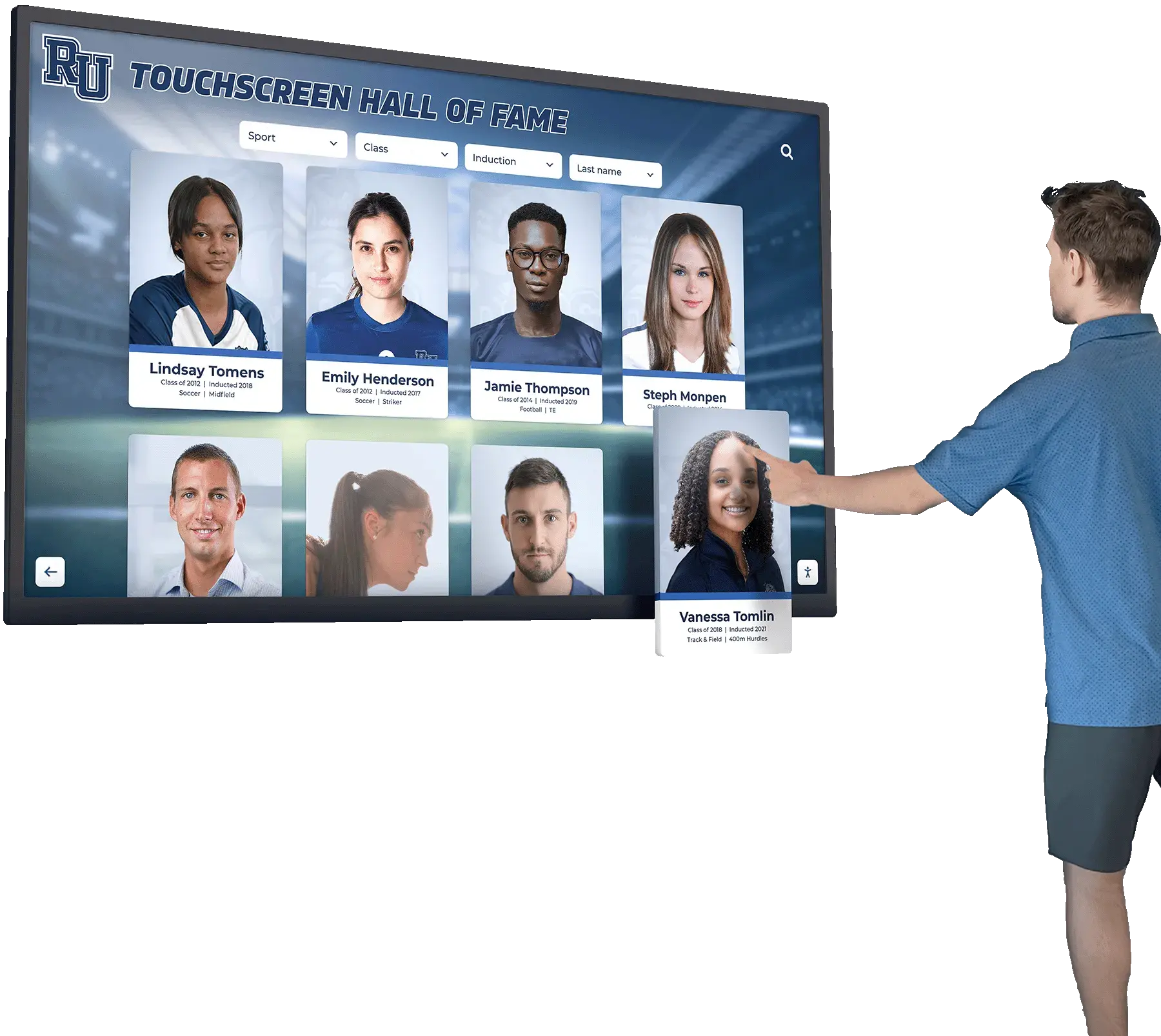
Name Fields
- Inductee names displayed in non-Latin scripts (Japanese, Korean, Chinese, Arabic, etc.) carry a
langattribute matching the script’s language code - Inductee names with diacritical characters from Romance languages (Spanish, French, Portuguese) carry the correct
langattribute when the name’s phonetic rules differ from the page language - Where a name is rendered in both English transliteration and native script, each portion carries the appropriate
langattribute - Automated axe scan reports zero
valid-langviolations on profile name fields
Quotation and Tribute Fields
- Coach quotations in non-English languages carry a
langattribute on the blockquote or enclosing element - Inductee statements quoted in the inductee’s native language carry a
langattribute on the enclosing element or inline span - Mixed-language passages apply
langonly to the non-English portion, not to the full paragraph - The
langvalue matches the actual language of the content, not a related language (e.g.,lang="pt"for Portuguese, notlang="es")
Archival Caption Fields
- Photo captions from non-English yearbooks, programs, or newspapers carry a
langattribute on the<figcaption>element - Archival documents partially digitized in non-English languages carry language annotations at the element level
- Caption fields in the CMS are documented as requiring a
langattribute when editors paste non-English text
Award and Institutional Fields
- School mottoes in Latin carry
lang="la"on the element containing the motto text - Award titles using Latin terminology (e.g., Summa Cum Laude, Magna Cum Laude) carry
lang="la" - Award titles using French terminology (e.g., Prix d’Excellence) carry
lang="fr" - Institutional slogans or taglines in non-English languages appearing on profile pages carry the correct
langattribute
Biography and Narrative Fields
- Free-text biography fields that accept HTML permit
langattributes on inline elements - CMS documentation instructs editors to wrap non-English passages in a
<span lang="[code]">when pasting non-English content - Rich-text editors used for biography fields do not strip
langattributes from permitted tags
Screen-Reader Verification
- NVDA on Windows reads non-English names with the correct language’s pronunciation rules
- VoiceOver on macOS audibly shifts synthesizer voice when navigating across a
langboundary in a mixed-language profile - VoiceOver on iOS correctly pronounces Spanish, French, or Portuguese passages in coach quotations
- Latin mottoes are rendered with Latin phonetics, not English phonetics
- No non-English passage is read with clearly incorrect English phonetics after
langattributes are applied
WCAG Criterion Cross-Reference
- SC 3.1.1 (Language of Page, Level A): the root
<html>element carries alangattribute matching the page’s primary language - SC 3.1.2 (Language of Parts, Level AA): each non-English passage at the element level carries a correct
langattribute - SC 1.3.1 (Info and Relationships, Level A): semantic markup used for headings, quotes, and captions is preserved alongside language annotations
- SC 4.1.1 (Parsing, Level A): all
langattribute values use valid BCP 47 language codes (e.g.,en,es,fr,la,ja,ko,zh)
Valid BCP 47 Language Codes for Common Hall-of-Fame Profile Content
The lang attribute value must be a valid BCP 47 language tag. Using an invalid tag—or a plain-text language name instead of a code—will not trigger the pronunciation switch in a screen reader and may cause a WCAG SC 4.1.1 parsing failure.
| Language | BCP 47 Code | Common Hall-of-Fame Context |
|---|---|---|
| Spanish | es | Coach quotations, inductee names, award descriptions |
| French | fr | Archival captions, award titles (Prix d’Excellence), school mottoes |
| Portuguese | pt | Inductee statements, names from Brazilian or Portuguese-heritage communities |
| Latin | la | School mottoes, academic award designations (Summa Cum Laude) |
| Japanese | ja | Inductee names in kanji, biographical passages |
| Korean | ko | Inductee names in hangul |
| Chinese (Simplified) | zh-Hans | Inductee names, biographical passages for Mandarin-heritage communities |
| Chinese (Traditional) | zh-Hant | Inductee names, biographical passages for Cantonese or Traditional-character communities |
| German | de | School mottoes, award terminology from Germanic-heritage institutions |
| Italian | it | School mottoes, performing arts award titles |
| Arabic | ar | Inductee names, tributes for Arabic-heritage communities |
Regional subtags (e.g., es-MX for Mexican Spanish, pt-BR for Brazilian Portuguese) provide additional precision when the synthesizer supports them, but the two-letter primary tag is sufficient for WCAG compliance when a more specific subtag is not needed.
Remediation Patterns for CMS-Managed Inductee Profile Fields
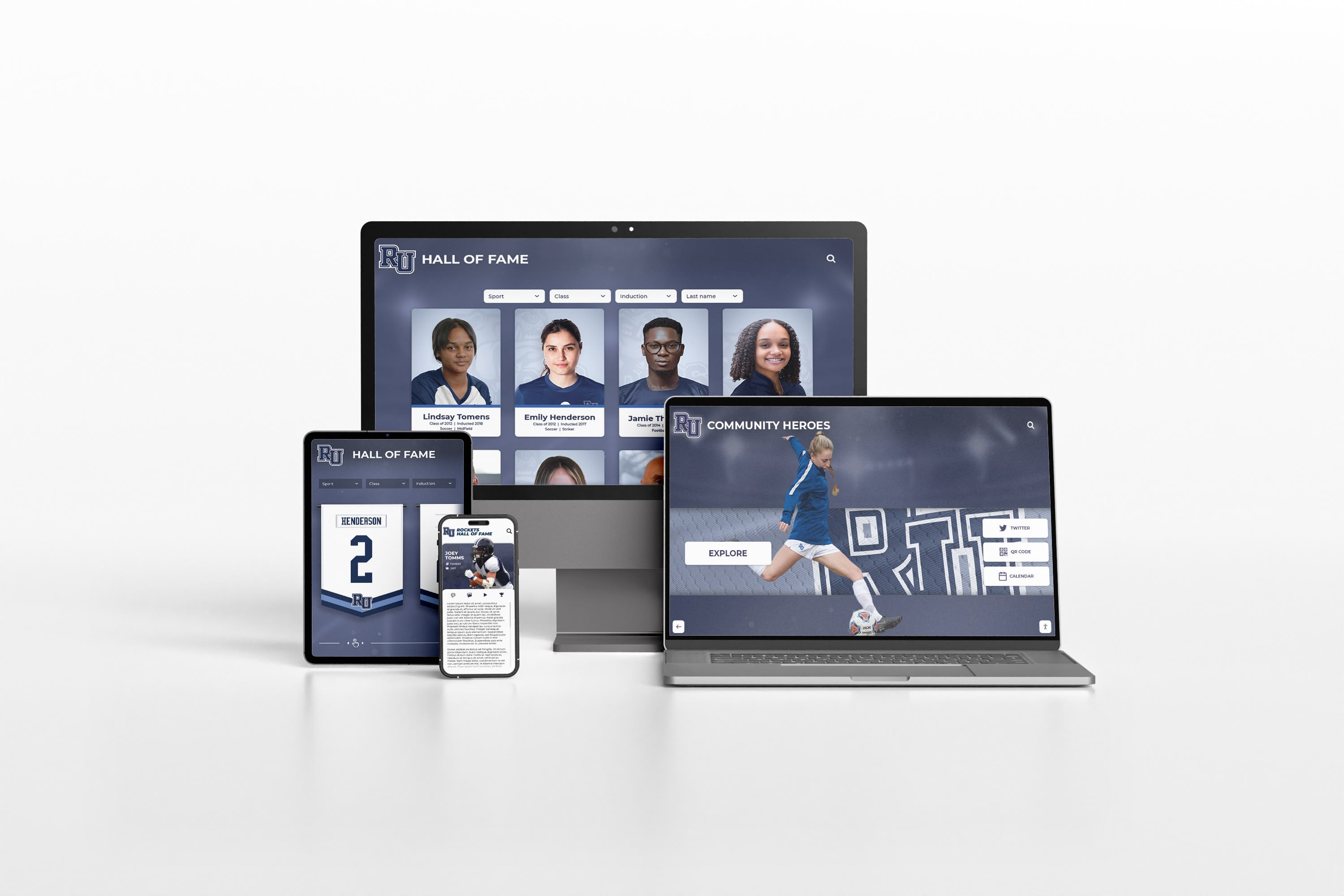
Remediation for language-of-parts failures falls into two categories: markup fixes that can be applied immediately in profiles where the CMS allows HTML in field content, and structural fixes that require the platform vendor to modify the CMS data model or template layer.
Schools managing recognition programs built on platforms with rich-text editors—as described in resources on team-first recognition program management for school athletics—often have access to a raw HTML editing mode in their content management system. That mode provides the immediate path to applying lang attributes to specific passages without waiting for a platform code change.
Remediation Pattern 1: Inline lang Attribute in Rich-Text Fields
When the CMS rich-text editor permits inline HTML, apply lang attributes directly to the affected text:
<!-- Coach quotation in Spanish -->
<blockquote lang="es">"El trabajo en equipo y la dedicación son las claves del éxito."</blockquote>

<!-- Inductee name in Japanese, inline within English sentence -->
<p>Born in Osaka, <span lang="ja">田中一郎</span> (Ichiro Tanaka) joined the university swim program in 1998.</p>

<!-- Latin school motto in institutional header -->
<p class="motto" lang="la">Veritas et Lux</p>
Document in the CMS style guide that editors must apply the inline lang attribute whenever they paste non-English content into a rich-text field. Without this documentation, the fix will be undone as profiles are updated.
Remediation Pattern 2: CMS Language Code Companion Field per Passage Type
For quotation and caption fields where the platform treats content as plain text and strips HTML, request that the platform vendor add a language-code selector field alongside each passage field in the CMS data model:
| CMS Field | Added Companion Field | Template Output |
|---|---|---|
coach_quote (text) | coach_quote_lang (select: en, es, fr, pt, la…) | <blockquote lang="{{coach_quote_lang}}">{{coach_quote}}</blockquote> |
archive_caption (text) | archive_caption_lang (select: en, fr, …) | <figcaption lang="{{archive_caption_lang}}">{{archive_caption}}</figcaption> |
inductee_statement (text) | inductee_statement_lang (select: en, es, …) | <p lang="{{inductee_statement_lang}}">{{inductee_statement}}</p> |
This pattern scales across the entire inductee database without requiring editors to write HTML. The language code defaults to en and is overridden only when the content is in another language.
Remediation Pattern 3: Template-Level lang Attributes for Structural Fields
For fields that always contain content in a specific language—a school motto that is always in Latin, or an award title that is always in French—the platform template can hard-code the lang attribute rather than requiring per-inductee data entry:
<!-- School motto always in Latin — lang hard-coded in template -->
<p class="school-motto" lang="la">{{ site.motto }}</p>

<!-- Award category title always in French — lang hard-coded -->
<span class="award-category" lang="fr">{{ award.title }}</span>
This is the lowest-friction fix for structural fields: the template applies lang once, and every inductee that uses that template field inherits the correct language annotation automatically.
Connecting Language of Parts to the Full Accessibility Picture
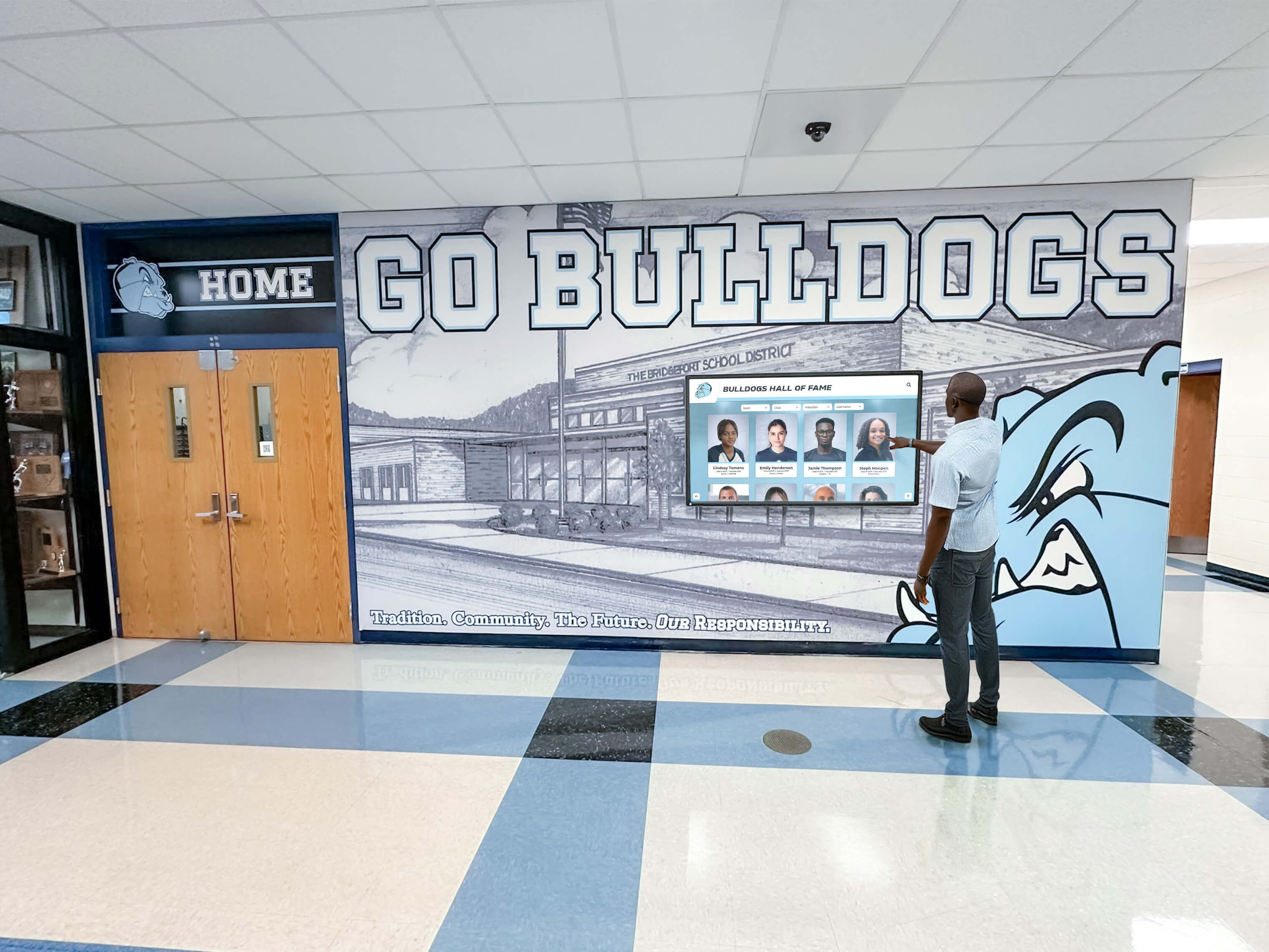
Language of parts operates alongside the other WCAG criteria that govern the content and structure of inductee profiles. A complete profile accessibility review addresses:
Reading order (SC 1.3.2): The programmatic sequence of profile sections—name, sport, achievements, biography, media—matches the visual hierarchy. Schools that have completed a digital hall of fame reading order accessibility audit will find that the same profile fields examined for DOM order are also the fields most likely to contain non-English content requiring lang attributes.
Label in name (SC 2.5.3): Interactive elements on the profile page—share buttons, favorite actions, navigation links—carry accessible names that contain the visible text. A profile that correctly annotates non-English name passages with lang but whose share button fails SC 2.5.3 still presents a barrier to voice-control users. A digital hall of fame label in name audit addresses those controls.
Link purpose (SC 2.4.4): Profile card links and navigation links communicate their destination clearly. A bilingual hall of fame that labels a link in Spanish without the correct lang="es" on the link text may fail both SC 2.4.4 and SC 3.1.2 simultaneously.
For cheerleading programs, academic honor societies, and community service recognition programs—each of which may draw inductees from linguistically diverse backgrounds—the language-of-parts audit is not an edge case. Schools that operate cheerleading hall of fame recognition programs that honor student-athletes from multilingual communities need language-of-parts markup as a baseline, not an enhancement.
Recognition programs that also maintain a JROTC ranks and awards structure alongside athletic and academic honorees will encounter official rank designations and citations that often include Latin or French terminology. Those fields are in scope for the language-of-parts audit in the same way that school mottoes and academic award titles are.
Athletic programs building year-over-year hall of fame traditions—similar to college baseball recruiting profile best practices where a player’s biographical information is carefully structured for a specific audience—demonstrate that how information is presented is as important as what is presented. Language-of-parts markup is the structural layer that ensures a screen reader user receives inductee information in the correct linguistic form, not a phonetically mangled approximation.
Schools operating recognition programs that celebrate unselfish contributors alongside their athletic inductees—as described in resources on teamwork awards for school recognition programs—frequently honor individuals from communities where English is not the first language. Those award descriptions and tribute passages carry the same language-of-parts obligation as any other profile field.
When to Schedule the Language-of-Parts Audit
At initial platform setup, before publishing profiles. Run the audit against the profile template before loading inductee data. A template that hard-codes lang for structural fields (school motto, award titles) and provides language-code companion fields in the CMS prevents the backlog of missing annotations that accumulates when profiles are added without guidance.
When importing archival data. Bulk imports from historical records—physical yearbooks digitized, legacy database exports—are the highest-risk moment for language-of-parts failures. Archival content from bilingual schools or non-English-language publications will enter the database without lang attributes unless the import process includes language annotation. Plan the audit immediately after a bulk import.
After any platform template update. Template changes that affect how profile fields are rendered may introduce or remove lang attributes in structural fields. An update to the school motto section or the award title display requires a spot-check to confirm that previously compliant fields still carry the correct language markup.
Before recognition events that attract multilingual communities. Induction ceremonies, alumni weekends, and community recognition nights are the moments when the broadest range of visitors interacts with the platform—including screen reader users from diverse linguistic backgrounds. A language-of-parts check in the week before a high-attendance event catches any regression before it affects ceremony-day visitors.
Working With Your Platform Vendor on Language-of-Parts Findings
Present language-of-parts findings to the platform vendor in a structured format that separates markup-layer fixes (which may be configurable) from data-model fixes (which require a development cycle):
| Field Type | Example Content | Failure | Recommended Fix | Fix Type |
|---|---|---|---|---|
| Inductee name (script) | 田中一郎 | No lang on name element | Add lang="ja" to <span> wrapping script name | Template or markup |
| Coach quotation | Spanish quotation | No lang on blockquote | Add lang="es" to <blockquote> or add coach_quote_lang CMS field | CMS data model |
| Archive caption | French caption | No lang on figcaption | Add lang="fr" to <figcaption> or add caption_lang CMS field | CMS data model |
| School motto | Latin motto | No lang on motto element | Hard-code lang="la" in the motto template partial | Template |
| Award title | Prix d’Excellence | No lang on award title | Hard-code lang="fr" in the award title template | Template |
Questions to include in the vendor conversation:
- Does the CMS data model include a language code field for quotation, caption, and statement fields, or is language annotation the editor’s responsibility?
- Do profile page templates hard-code
langattributes for structural fields (school motto, award titles) that are always in a specific language? - Does the rich-text editor used for biography fields preserve
langattributes on inline elements, or does it strip them during save? - Is language-of-parts compliance (SC 3.1.2) included in the platform’s accessibility QA checklist?
- What is the process for adding a companion language-code field to an existing CMS content type?
A platform that supports language-code fields in its CMS data model and applies them as lang attributes in the rendered output is one where editors can annotate new profiles without HTML knowledge—reducing both the compliance burden and the risk of regressions as the inductee database grows. Schools evaluating platforms for a recognition program expansion should include SC 3.1.2 support in the vendor evaluation criteria alongside digital signage capabilities for school-wide recognition display.