



Key Takeaways
Compare digital hall of fame displays with traditional trophy cases for school hallways. Weighted decision framework analyzing space, cost, maintenance, and recognition capacity to determine the best solution for your institution.
Why This Decision Matters Now
Schools typically install recognition displays with 10-20 year operational lifespans. Choosing the wrong approach means living with limitations, missed recognition opportunities, and potential replacement costs far sooner than planned. Budget cycles, capital improvement projects, and facility renovations create decision windows that may not reopen for years.
Several factors make this decision more urgent in 2026:
Physical Space Pressures — School hallways cannot expand, yet achievement recognition needs continue growing. Every new championship, record-breaking performance, and distinguished graduate deserves acknowledgment, but physical display capacity remains fixed.
Budget Scrutiny — Educational institutions face intensifying pressure to justify every capital expenditure. Recognition display decisions require clear cost-benefit analysis demonstrating value throughout multi-year operational periods.
Technology Expectations — Students, families, and alumni increasingly expect digital interaction. Static displays feel outdated compared to the dynamic experiences they encounter daily across other aspects of life.
Accessibility Requirements — Federal regulations under the Americans with Disabilities Act mandate that recognition displays provide equivalent access for visitors with disabilities. Traditional trophy cases often fail accessibility standards that digital solutions can meet.
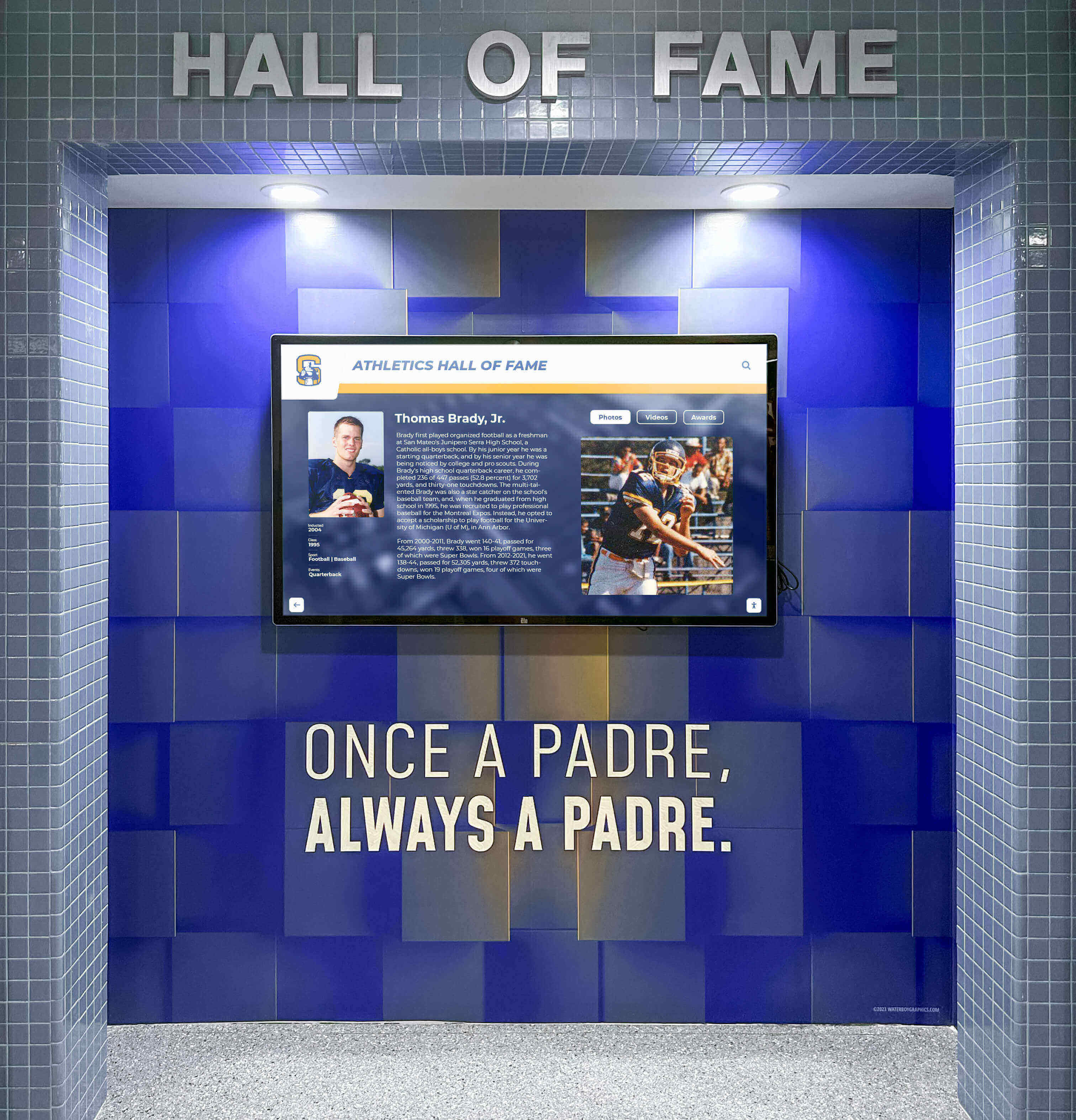
Maintenance Realities — Trophy cases require ongoing cleaning, lighting replacement, content rearrangement, and periodic refurbishment. These operational burdens accumulate over decades of use.
Understanding how digital and traditional approaches perform across these dimensions enables confident decisions aligned with your institution’s priorities, budget constraints, and long-term vision.
Comparison Framework: Weighted Decision Criteria
Objective evaluation requires systematic analysis across factors that determine operational success. Based on typical institutional priorities, the following criteria provide comprehensive comparison frameworks:
1. Recognition Capacity and Scalability (Weight: 25%)
Perhaps the most fundamental difference between digital displays and traditional trophy cases lies in their capacity to recognize achievements.
Traditional Trophy Cases:
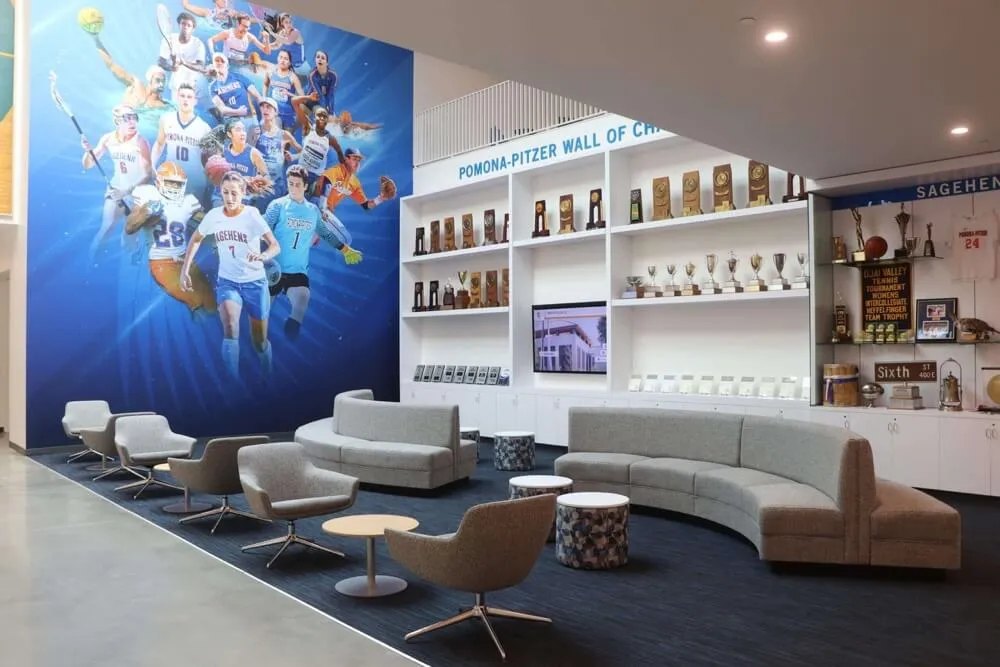
Physical trophy cases offer finite recognition capacity determined by shelf dimensions, case depth, and vertical height. A standard 8-foot-tall by 4-foot-wide trophy case typically accommodates:
- 30-50 trophies depending on size
- 15-25 plaques on back walls
- Limited statistical information on small nameplates
- Minimal biographical context about honorees
As programs add achievements annually, space exhaustion becomes inevitable. Schools face difficult decisions about what to display versus what to store away in closets and basements. Recent championships might displace older achievements that hold equal historical significance. Record-breaking athletes from decades past disappear from view to make room for current honorees.
The digital trophy case approach eliminates these constraints entirely.
Digital Hall of Fame Displays:
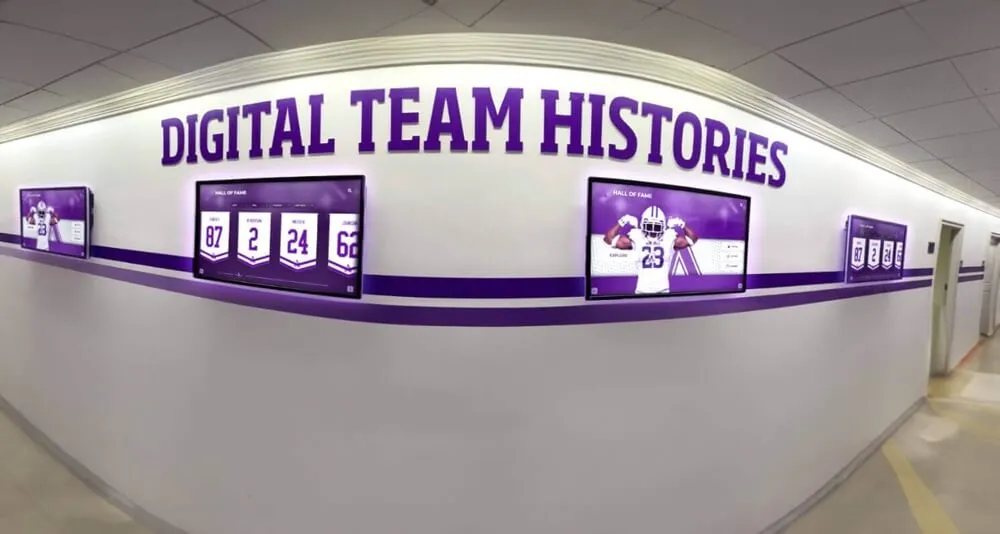
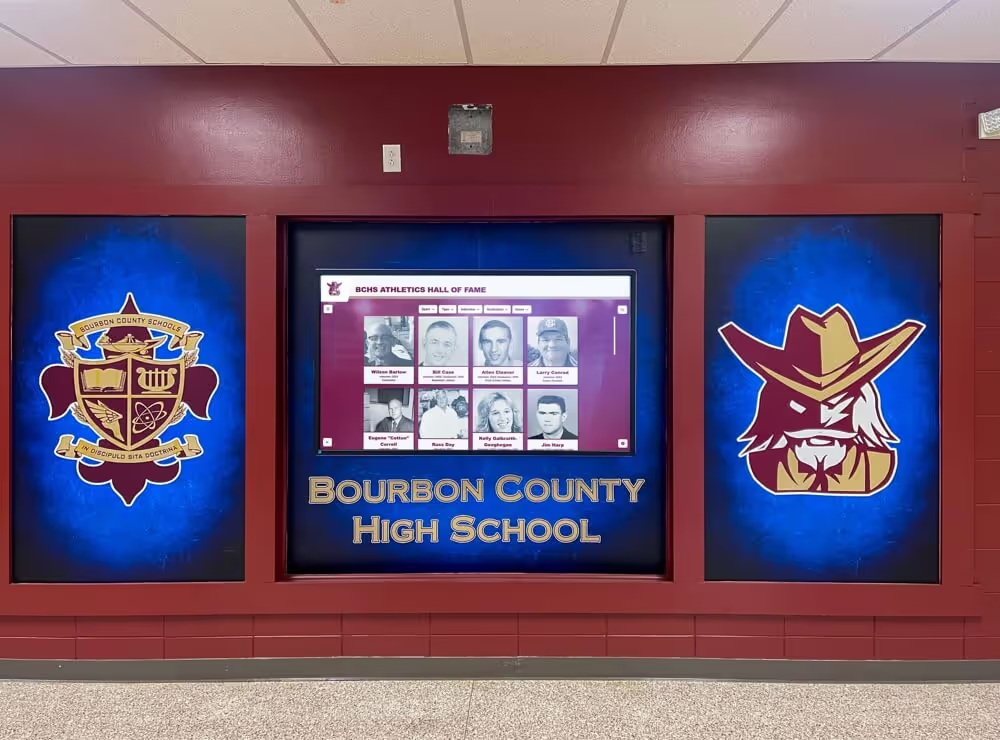
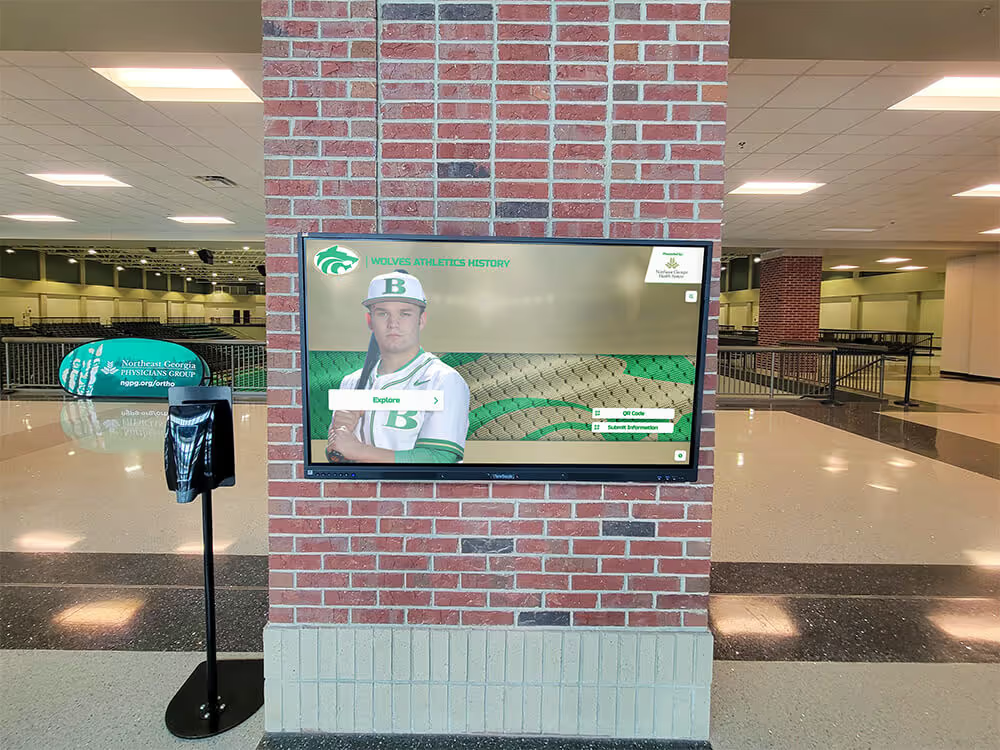
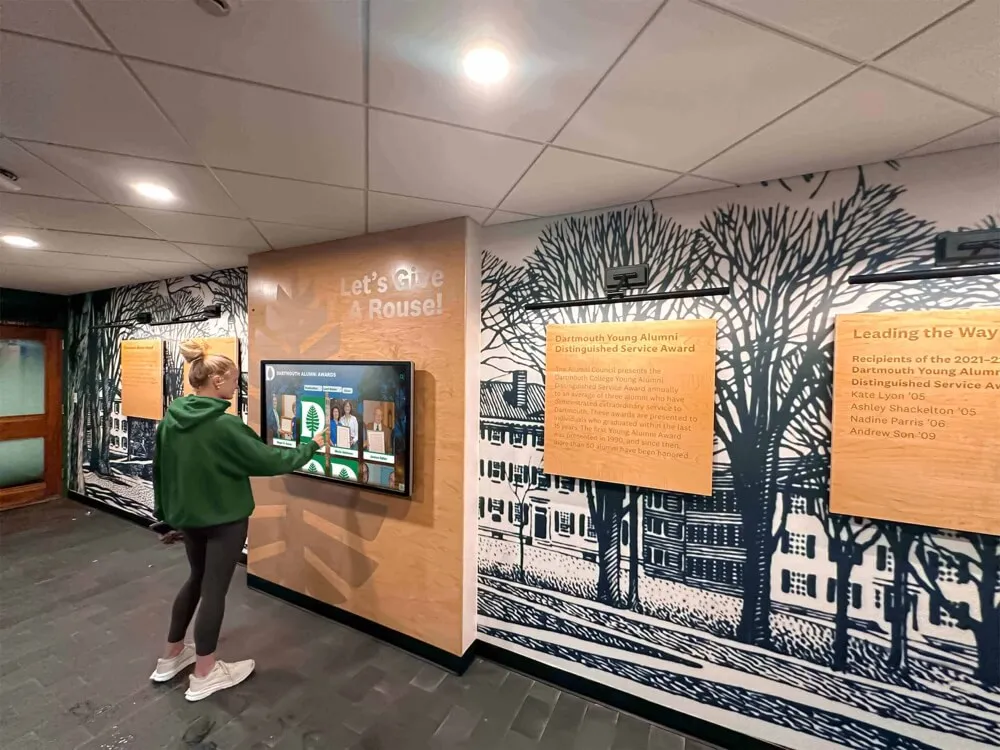
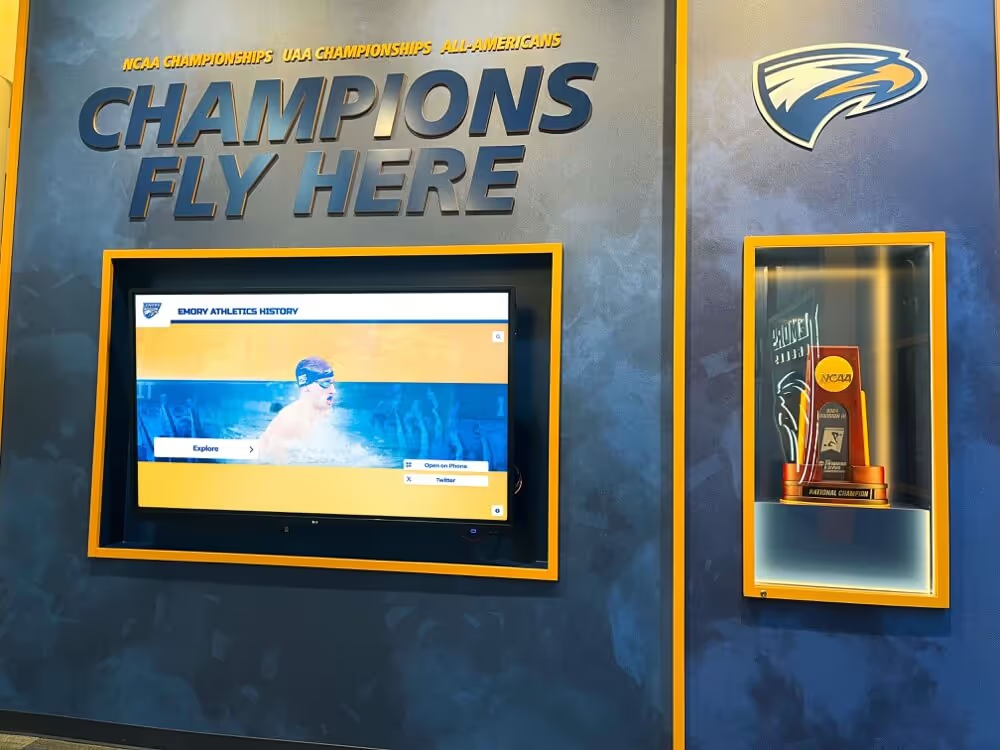
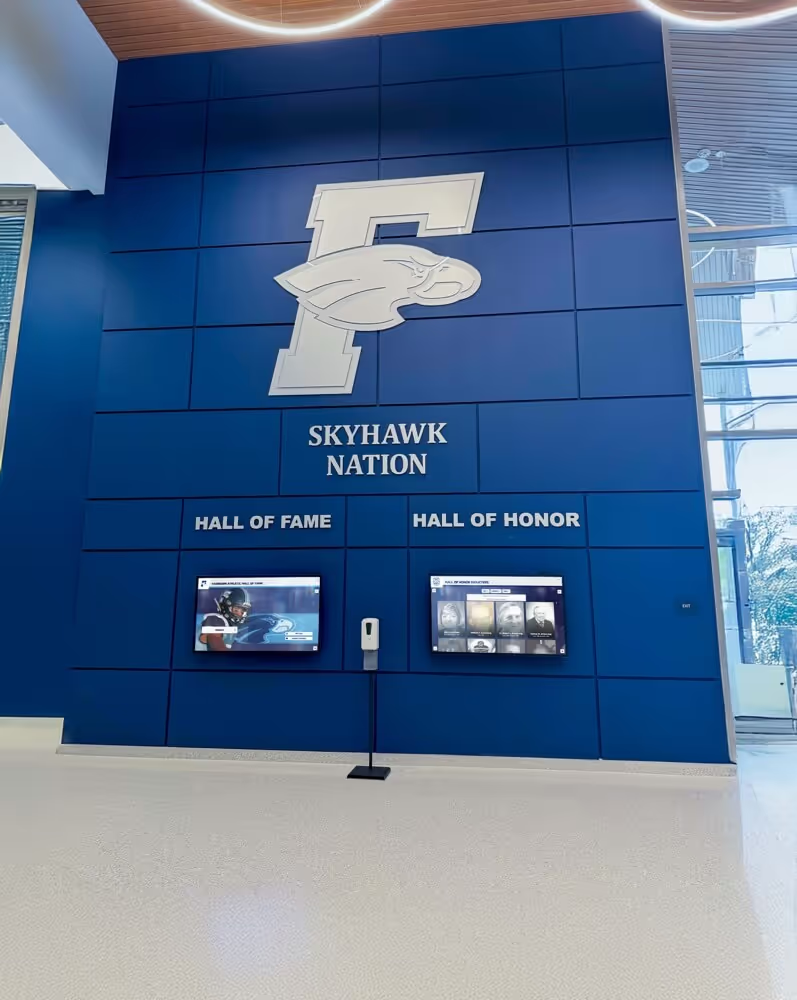
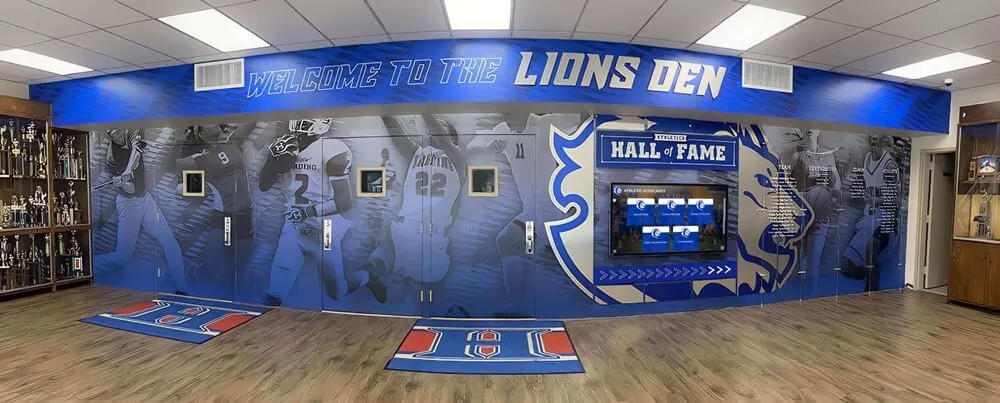
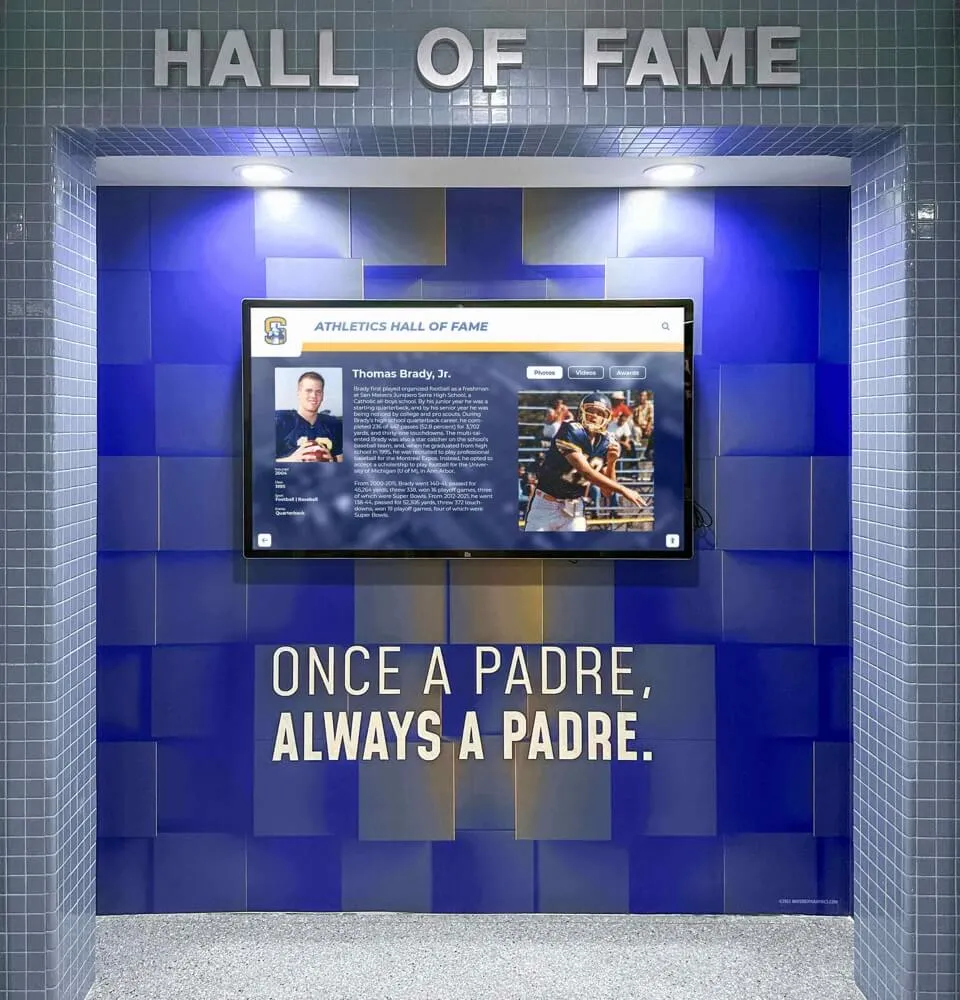
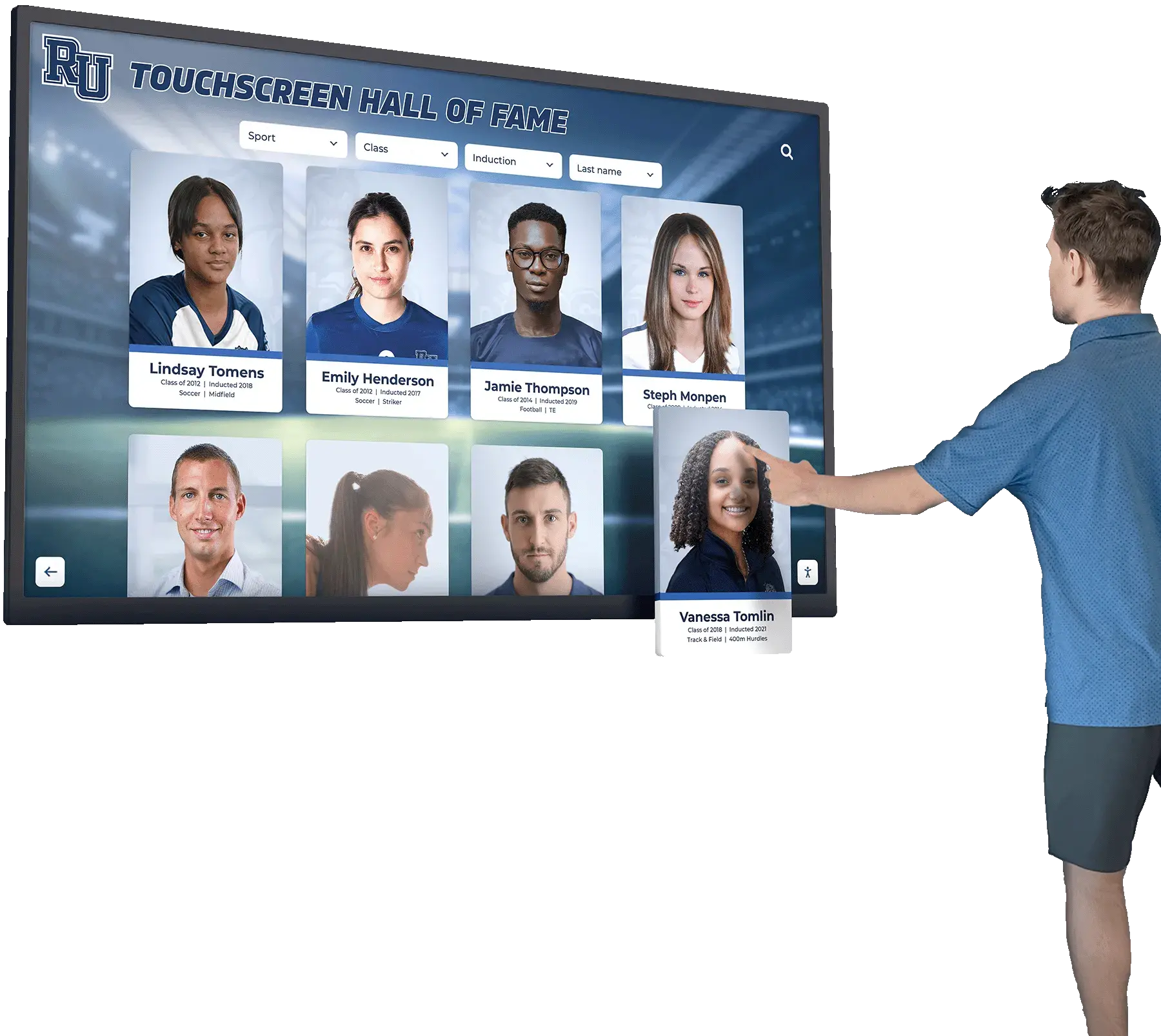
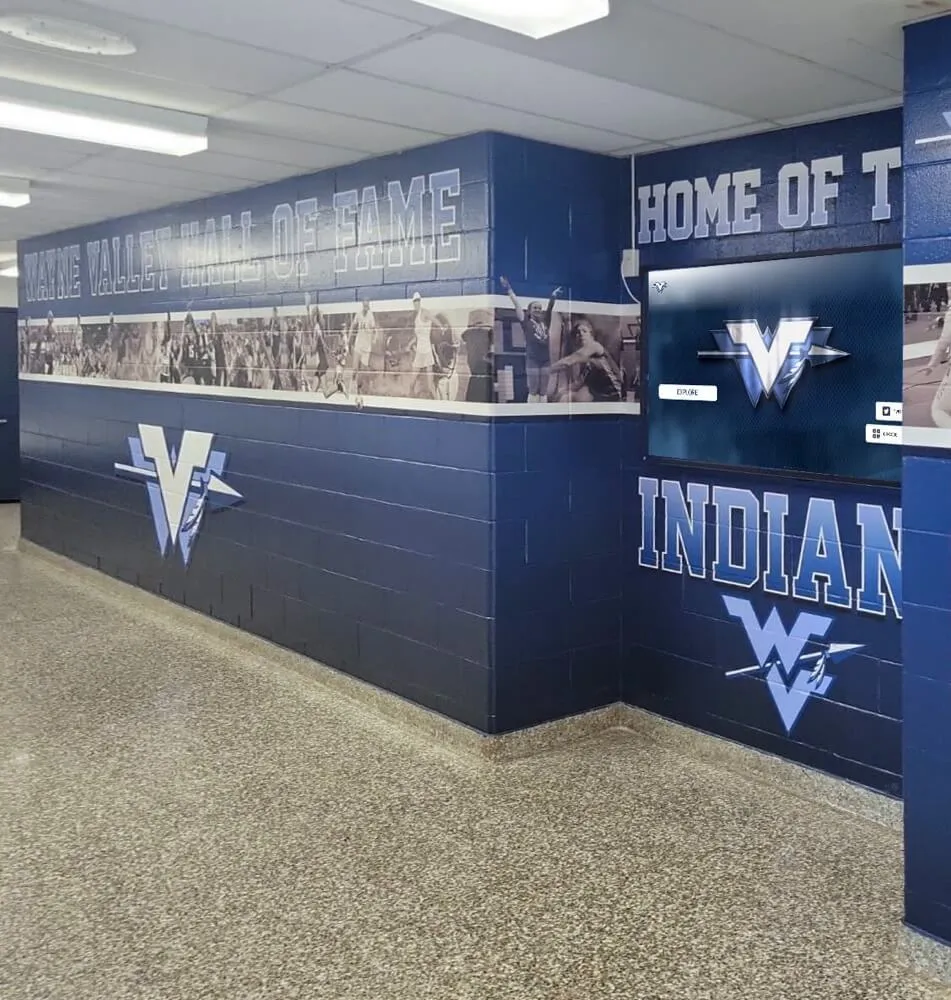
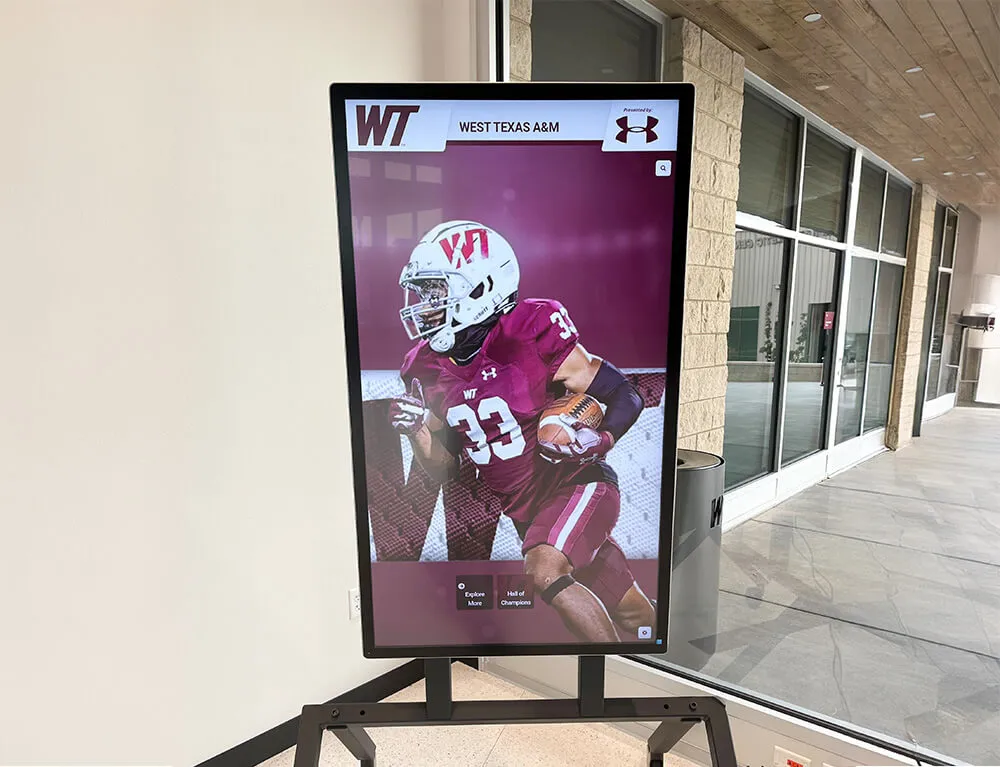
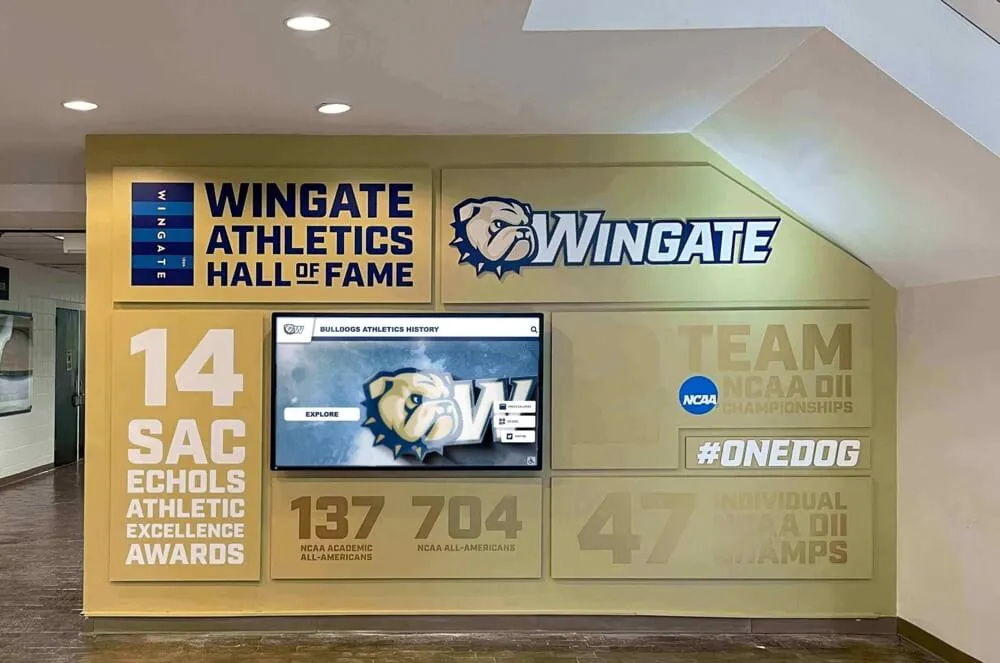
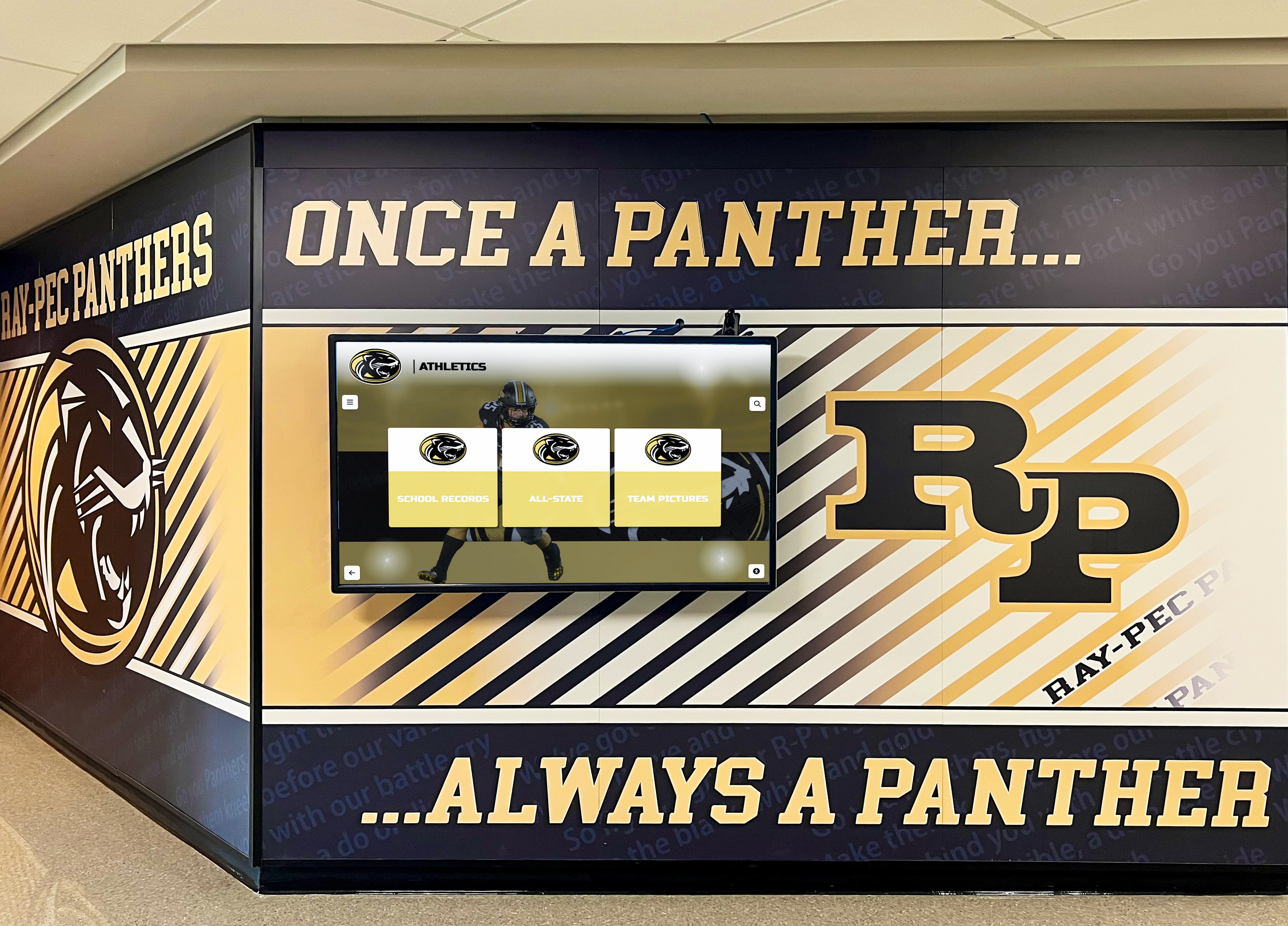
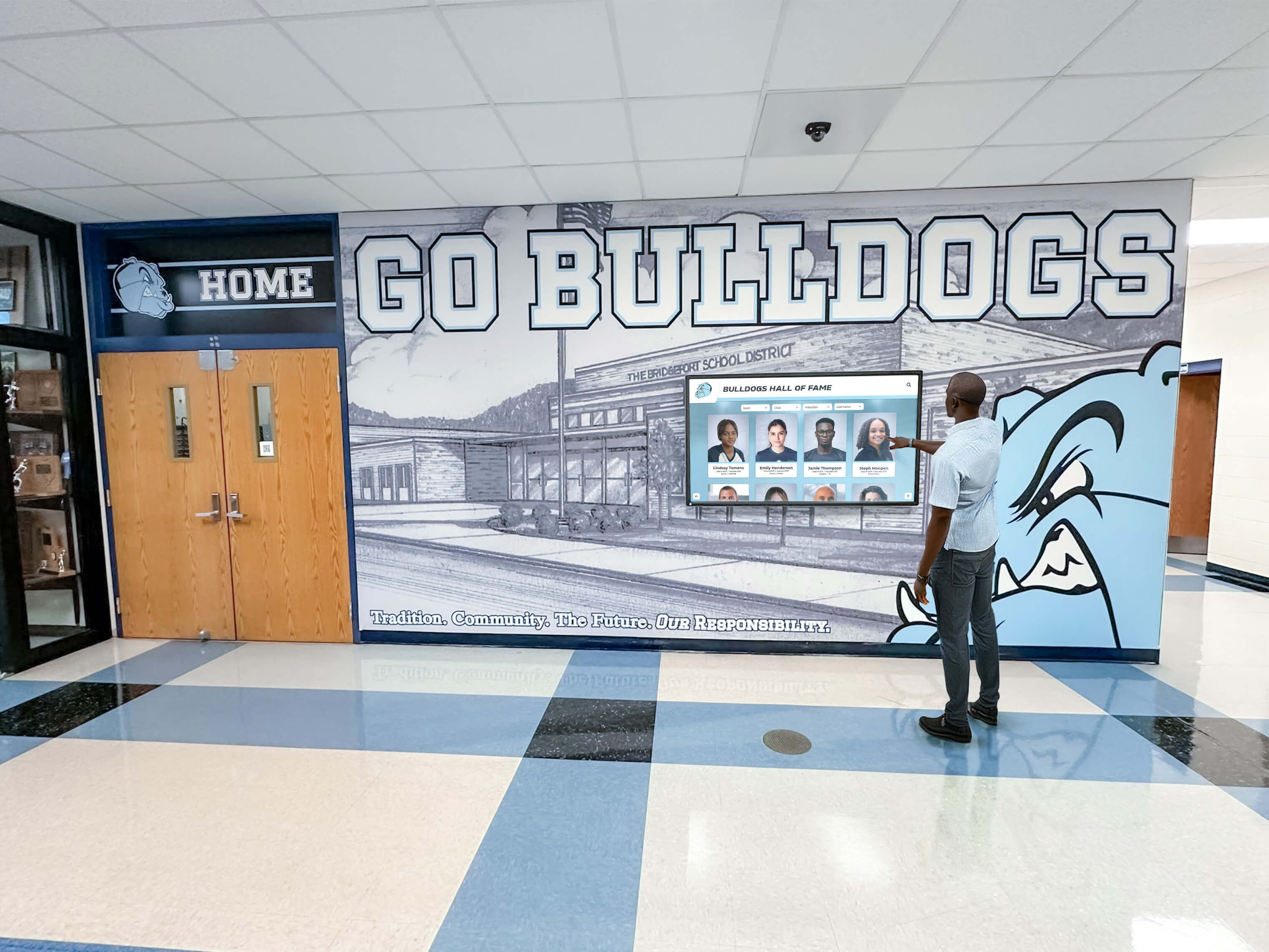
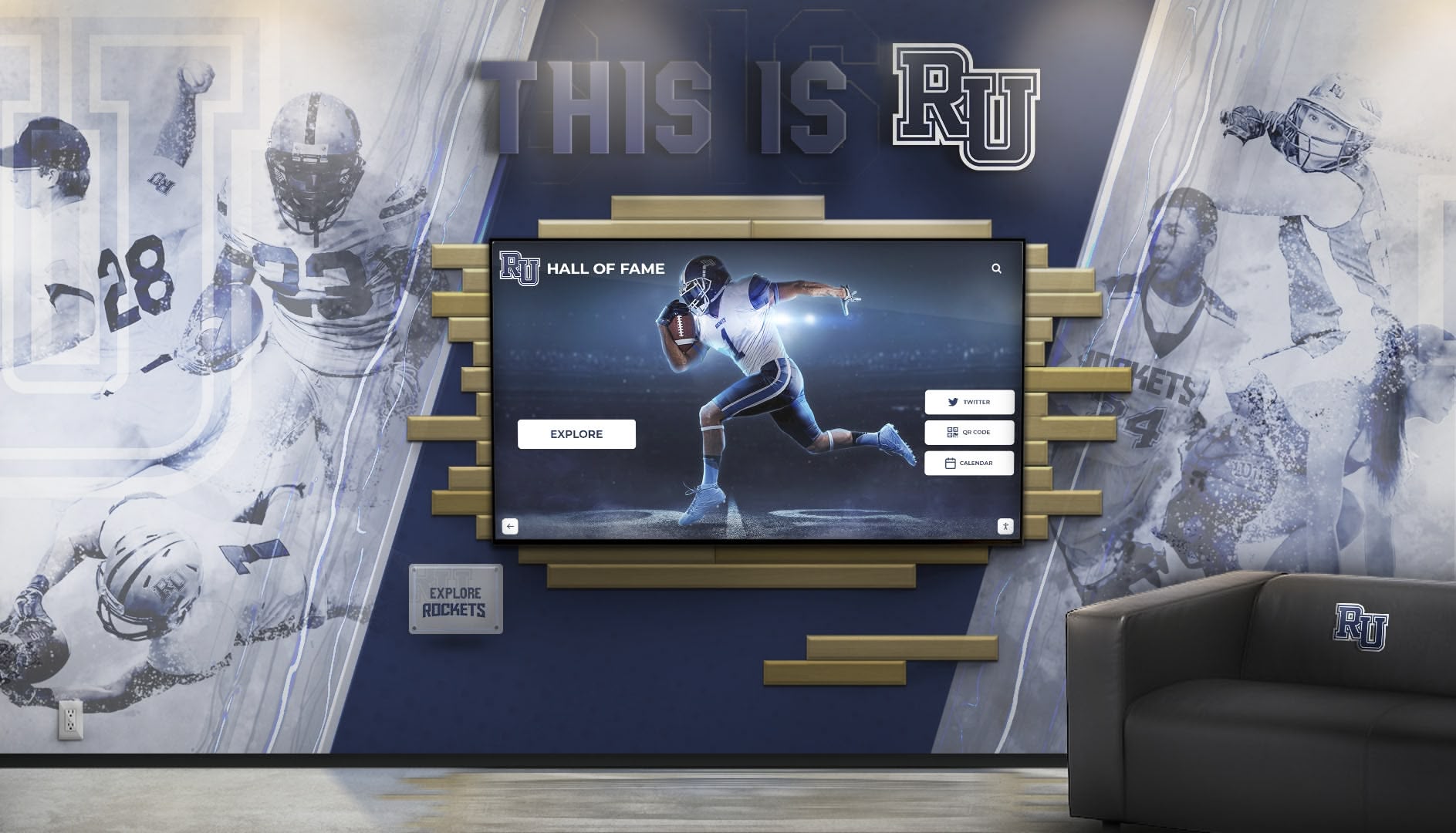
Digital solutions provide essentially unlimited recognition capacity. A single touchscreen display can showcase:
- Thousands of athlete profiles with full biographical information
- Complete team rosters for every championship in school history
- Statistical records across all sports and time periods
- Photo galleries capturing memorable moments
- Video highlights from significant games
- Links to additional online content and social media
Schools implementing digital recognition report the freedom to honor every deserving achievement rather than choosing which accomplishments to exclude. Programs can recognize all-conference selections, academic all-Americans, record breakers, championship teams, hall of fame inductees, and distinguished alumni without spatial constraints.
This unlimited capacity proves particularly valuable for programs with rich histories spanning multiple decades. Rather than condensing 50 years of excellence into one trophy case, digital displays can showcase complete institutional achievement histories.
Capacity Comparison Verdict:
For recognition capacity and scalability, digital displays deliver overwhelming advantages. Traditional trophy cases offer 30-50 recognition spots; digital solutions provide unlimited capacity limited only by content development time rather than physical constraints.
Scoring: Traditional Trophy Cases: 30/100 | Digital Hall of Fame Displays: 95/100
2. Initial Investment and Long-Term Costs (Weight: 20%)
Financial considerations drive many institutional decisions. Accurate comparison requires examining both initial investment and total cost of ownership across expected operational lifespans.
Traditional Trophy Case Costs:
Initial investment for quality trophy cases ranges widely based on size, materials, and customization:
- Basic Cases: $2,000-$4,000 for standard 4’x8’ glass-fronted cabinets
- Custom Cases: $5,000-$15,000 for built-in installations with integrated lighting and branding
- Premium Installations: $20,000-$50,000+ for comprehensive trophy room environments with multiple cases, specialized lighting, and millwork
Beyond initial purchase, ongoing expenses accumulate:
- Ongoing Plaque Fabrication: $75-$300 per plaque for new achievements (5-20 plaques annually = $375-$6,000/year)
- Trophy Engraving: $15-$50 per trophy for personalization
- Maintenance: Glass cleaning, light bulb replacement, lock repairs ($200-$500 annually)
- Periodic Refurbishment: Case refinishing, hardware replacement every 10-15 years ($1,000-$3,000)
- Space Expansion: Additional cases as recognition needs grow ($2,000-$15,000 per case)
Calculate 20-year total cost of ownership:
- Initial case investment: $8,000
- Ongoing plaque fabrication (20 years × $2,000 average): $40,000
- Maintenance and refurbishment: $6,000
- Total 20-Year Cost: $54,000
Digital Hall of Fame Display Costs:
Digital solutions involve different cost structures focused on technology investment:
- Software Platform: Solutions like Rocket Alumni Solutions provide cloud-based platforms from $2,000-$6,000 annually
- Hardware (Optional Physical Display): Commercial-grade touchscreen displays range $3,000-$8,000 for 55-65" screens with mounting
- Implementation: Content migration, training, and setup support: $3,000-$10,000
- Ongoing Maintenance: Software updates, hosting, technical support included in annual subscription
Calculate 20-year total cost of ownership:
- Initial setup (hardware + implementation): $12,000
- Annual platform subscription (20 years × $3,500 average): $70,000
- Total 20-Year Cost: $82,000
Financial Analysis:
At first glance, traditional trophy cases appear less expensive. However, this overlooks critical factors:
Recognition Capacity Value — Digital displays recognize 10-100x more achievements for marginally higher investment. Cost per recognized achievement strongly favors digital approaches.
Flexibility Value — Digital platforms enable instant content updates without ongoing fabrication costs. Adding 100 new profiles to digital displays costs nothing beyond staff time; adding 100 plaques to trophy cases costs $7,500-$30,000.
Opportunity Costs — Trophy cases consume valuable hallway real estate that could serve other purposes. Digital displays maximize space efficiency while providing equivalent or superior recognition capacity.
For schools implementing athletic hall of fame programs, the capacity advantage of digital solutions often justifies the marginal cost difference.
Cost Comparison Verdict:
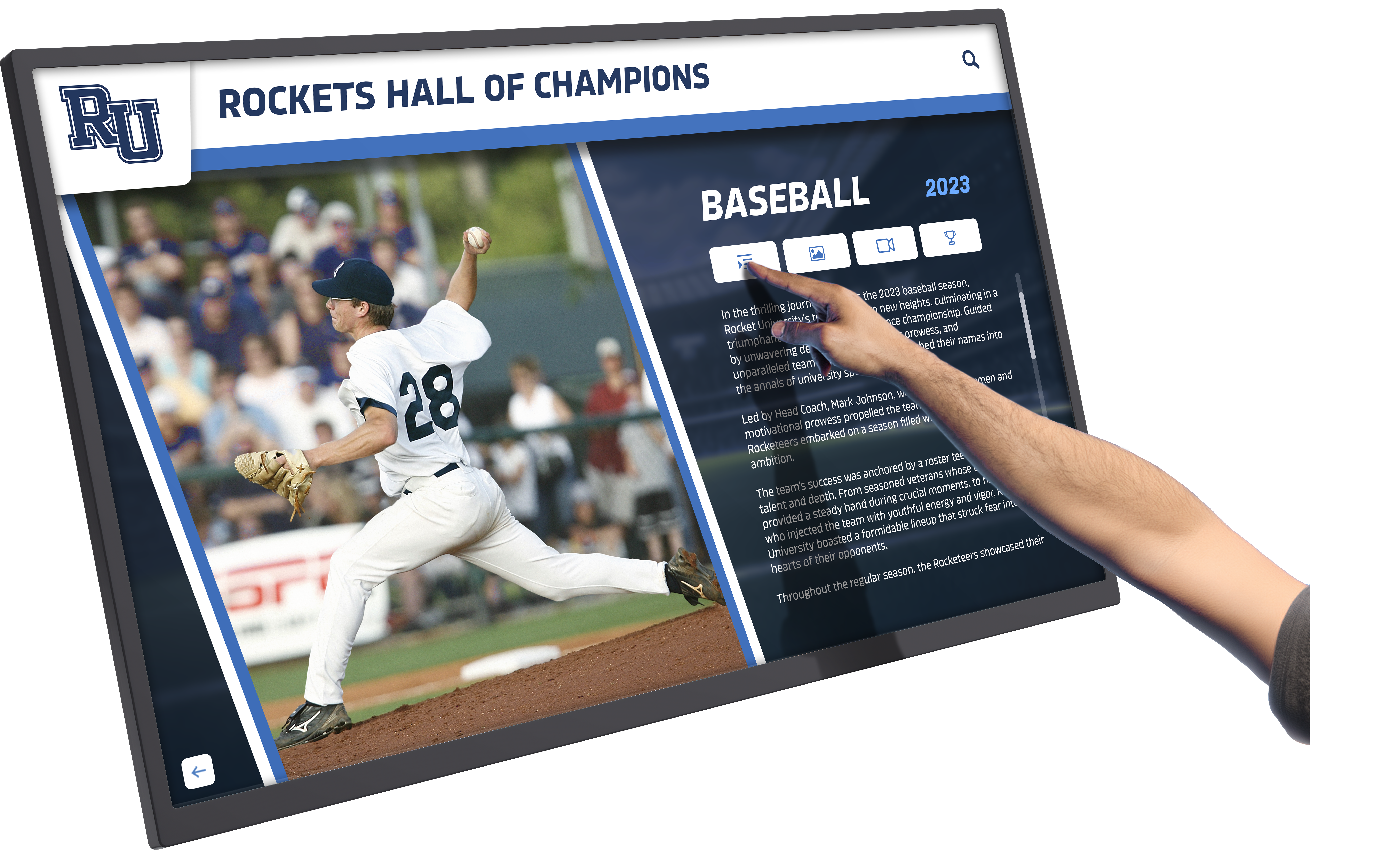
Traditional trophy cases offer lower initial investment but higher per-achievement costs and limited capacity. Digital solutions require higher upfront investment but provide dramatically superior recognition capacity with no incremental costs for additional profiles. For programs prioritizing comprehensive recognition, digital approaches deliver better value despite higher absolute costs.
Scoring: Traditional Trophy Cases: 60/100 | Digital Hall of Fame Displays: 75/100
3. Visitor Engagement and Storytelling (Weight: 20%)
Recognition displays serve two purposes: honoring achievements and engaging visitors. How well does each approach accomplish these goals?
Traditional Trophy Case Engagement:
Physical trophy cases provide tangible connections to accomplishments. Visitors can see actual hardware athletes won, creating authentic connections to school history. However, engagement limitations include:
Passive Observation Only — Visitors look at displays but cannot interact, explore, or discover information beyond what’s immediately visible
Minimal Context — Small plaques provide limited space for biographical information, statistical details, or achievement context
Fixed Organization — Content arrangement remains static. Visitors see whatever the case currently displays rather than exploring based on personal interests
No Multimedia — Trophy cases cannot incorporate video highlights, game footage, or multimedia storytelling that brings achievements to life
Discovery Challenges — Finding specific athletes or achievements requires scanning entire displays. No search or filtering capabilities exist.
Schools report that while trophy cases create impressive visual impact, visitors typically spend 30-90 seconds observing before moving on. Engagement remains superficial rather than exploratory.
Digital Hall of Fame Engagement:
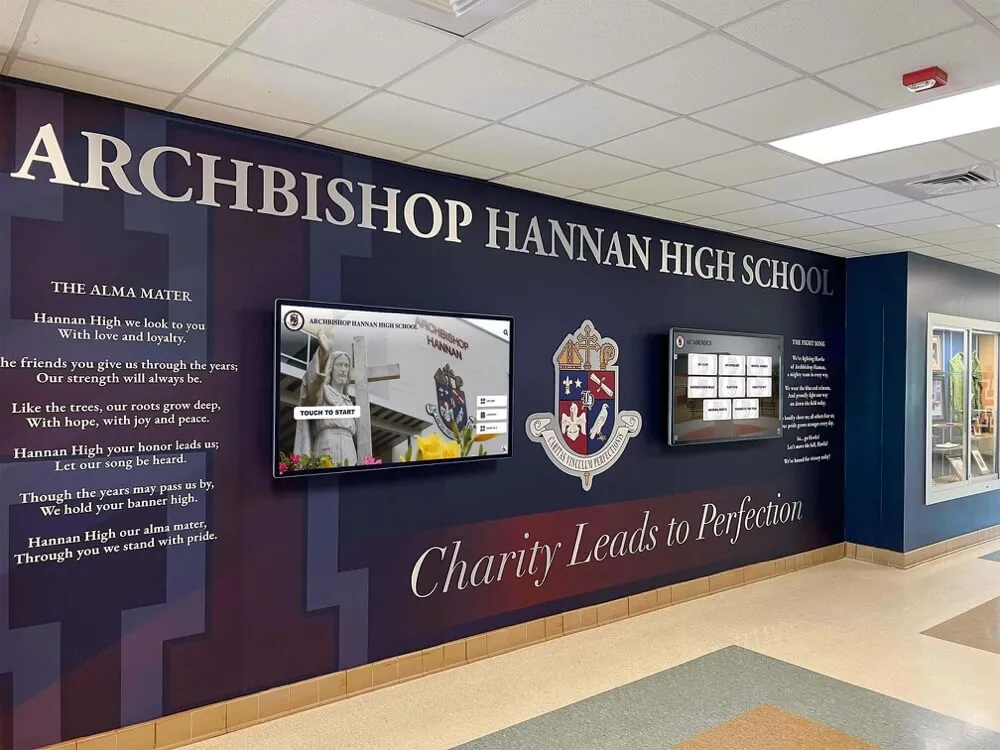
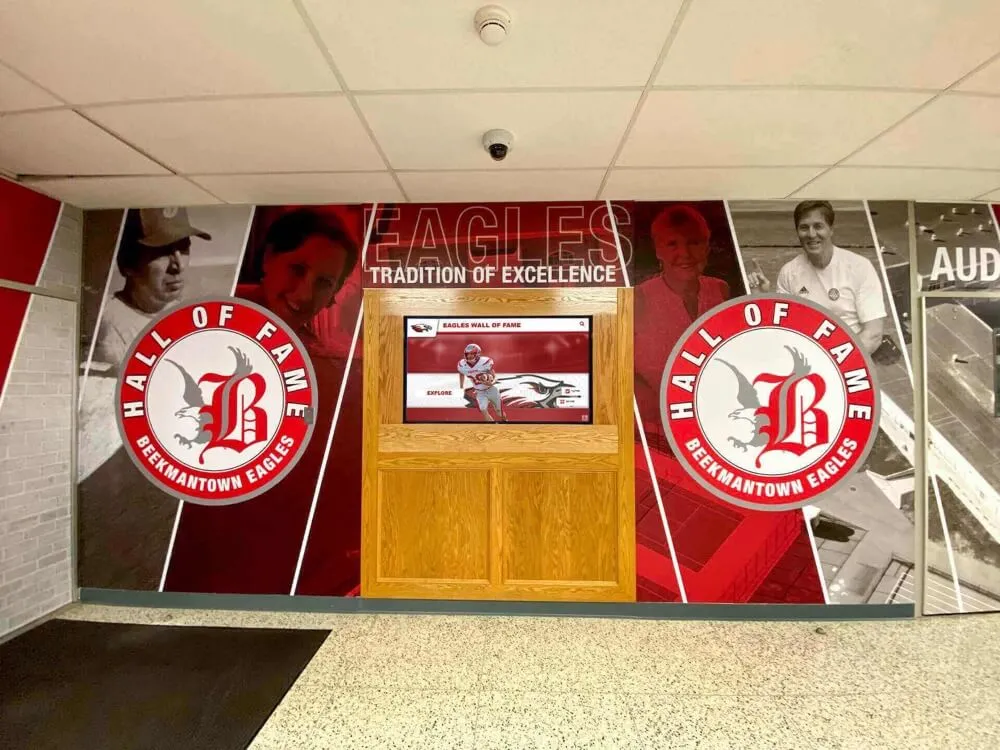
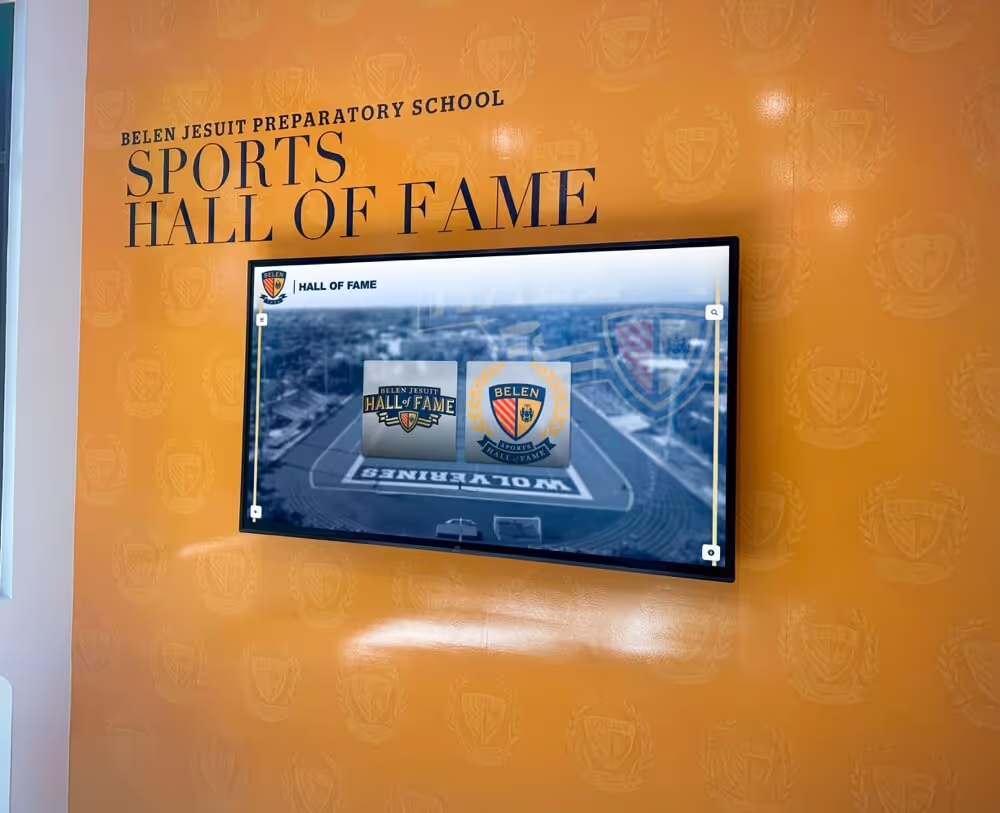
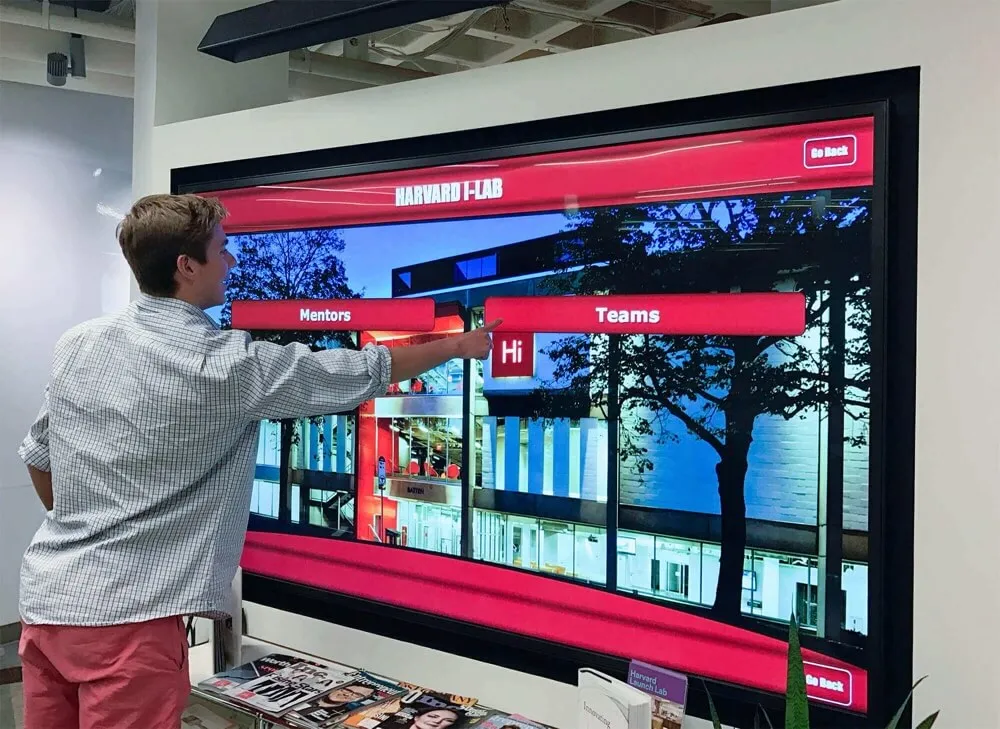
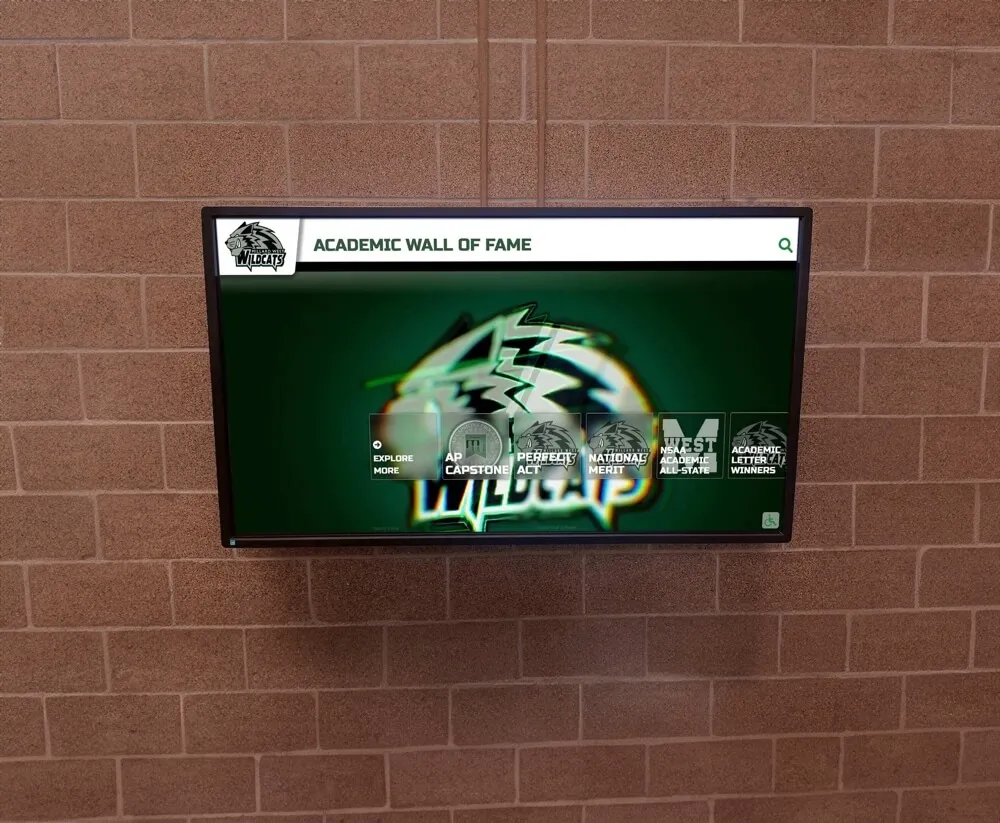
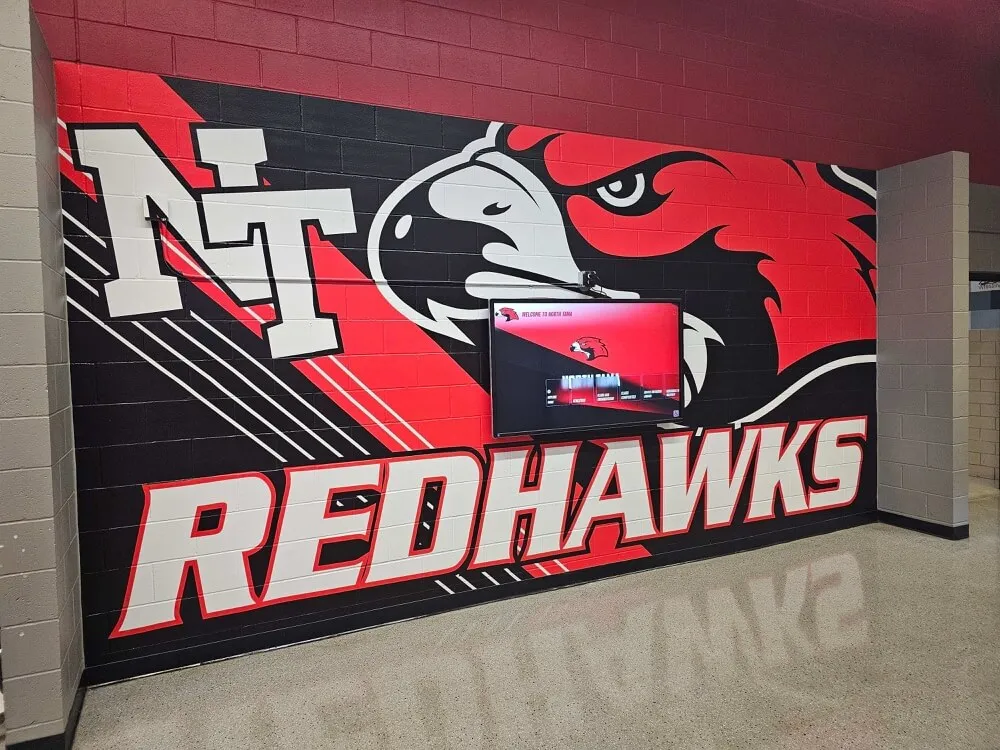
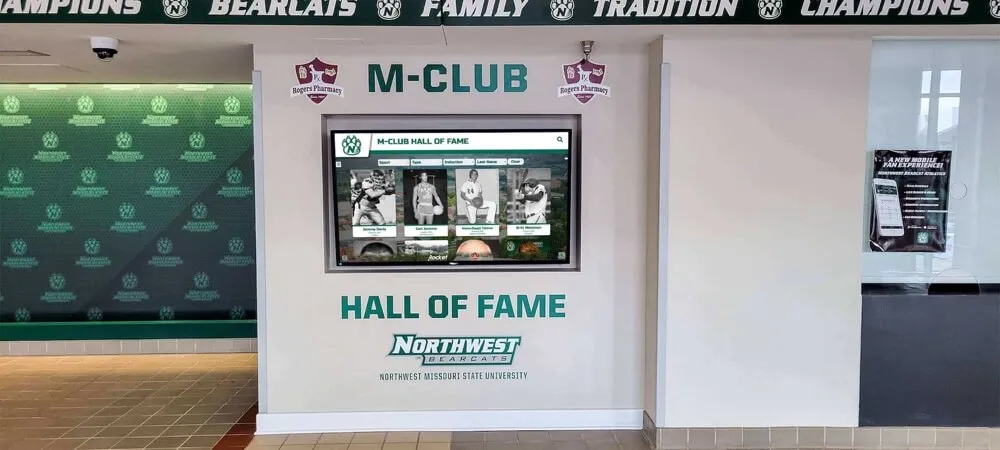
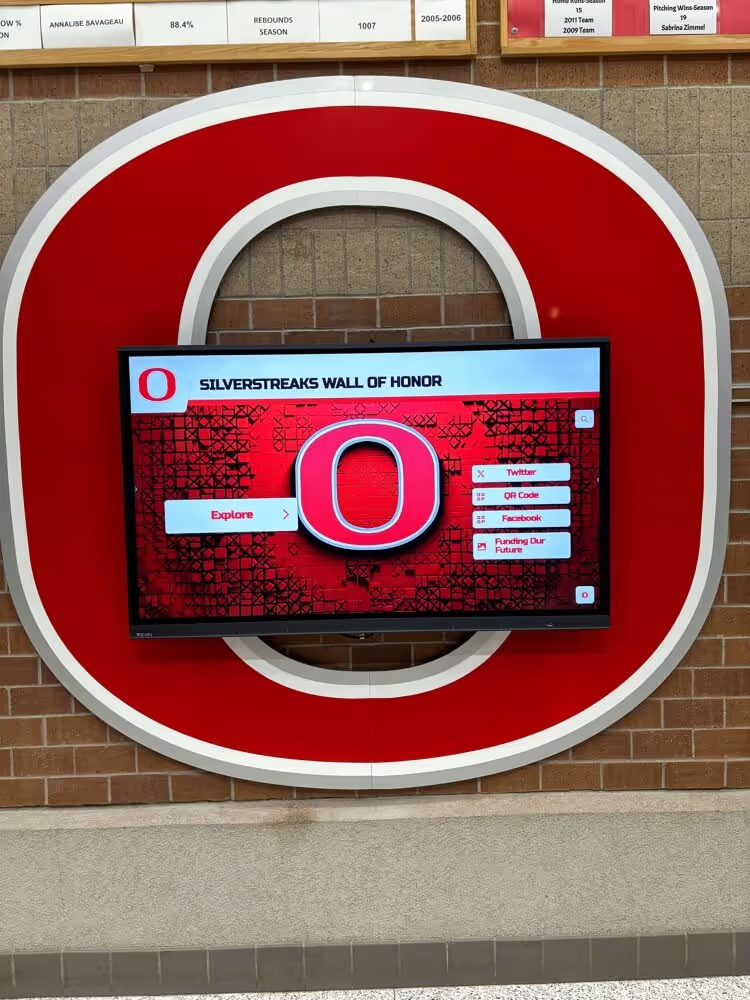
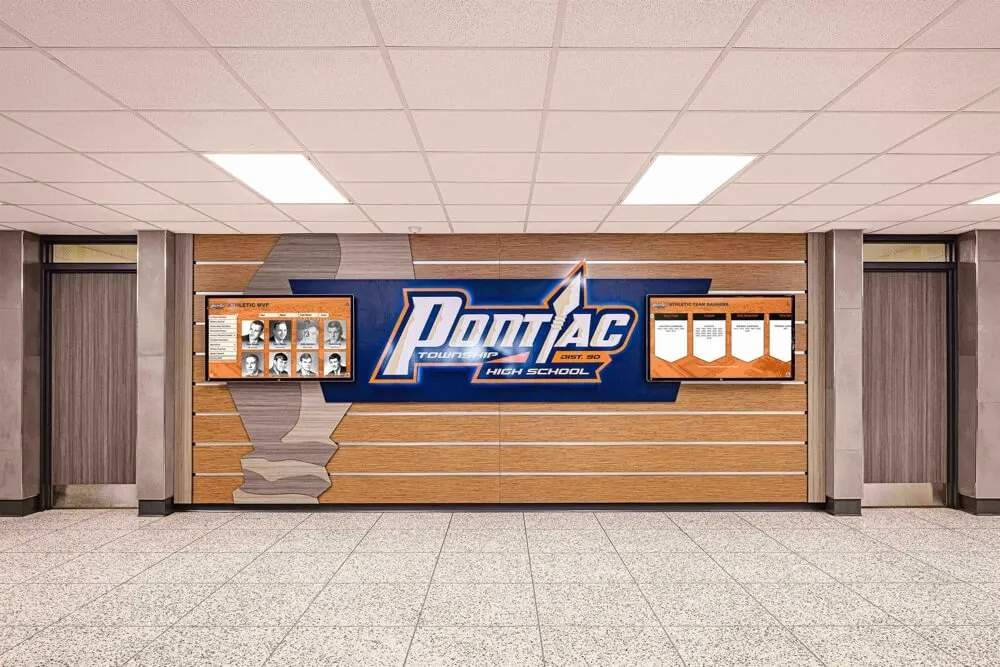
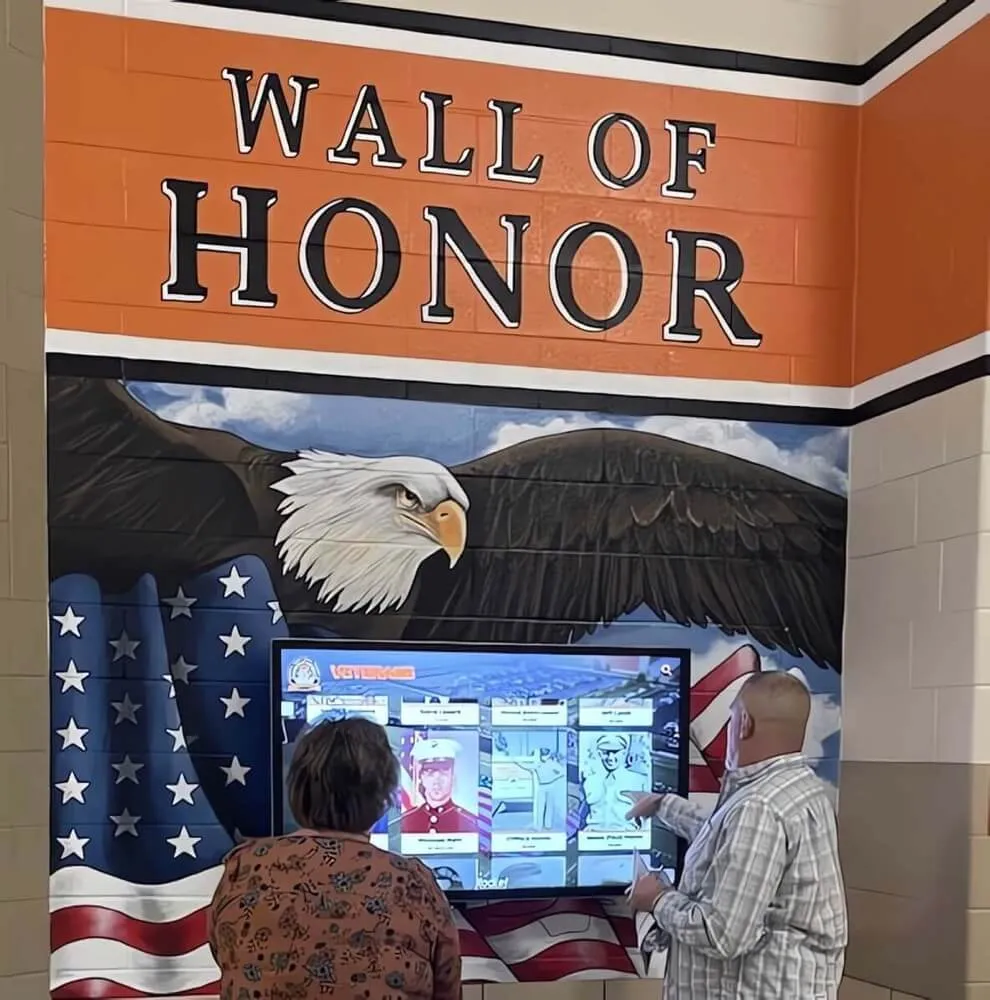
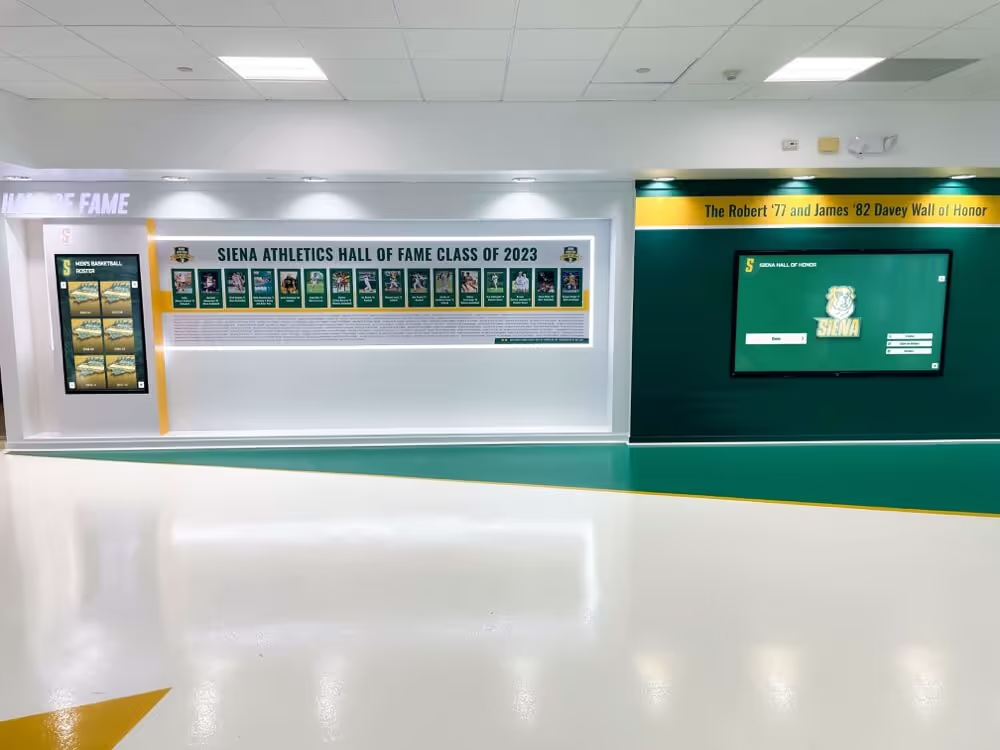
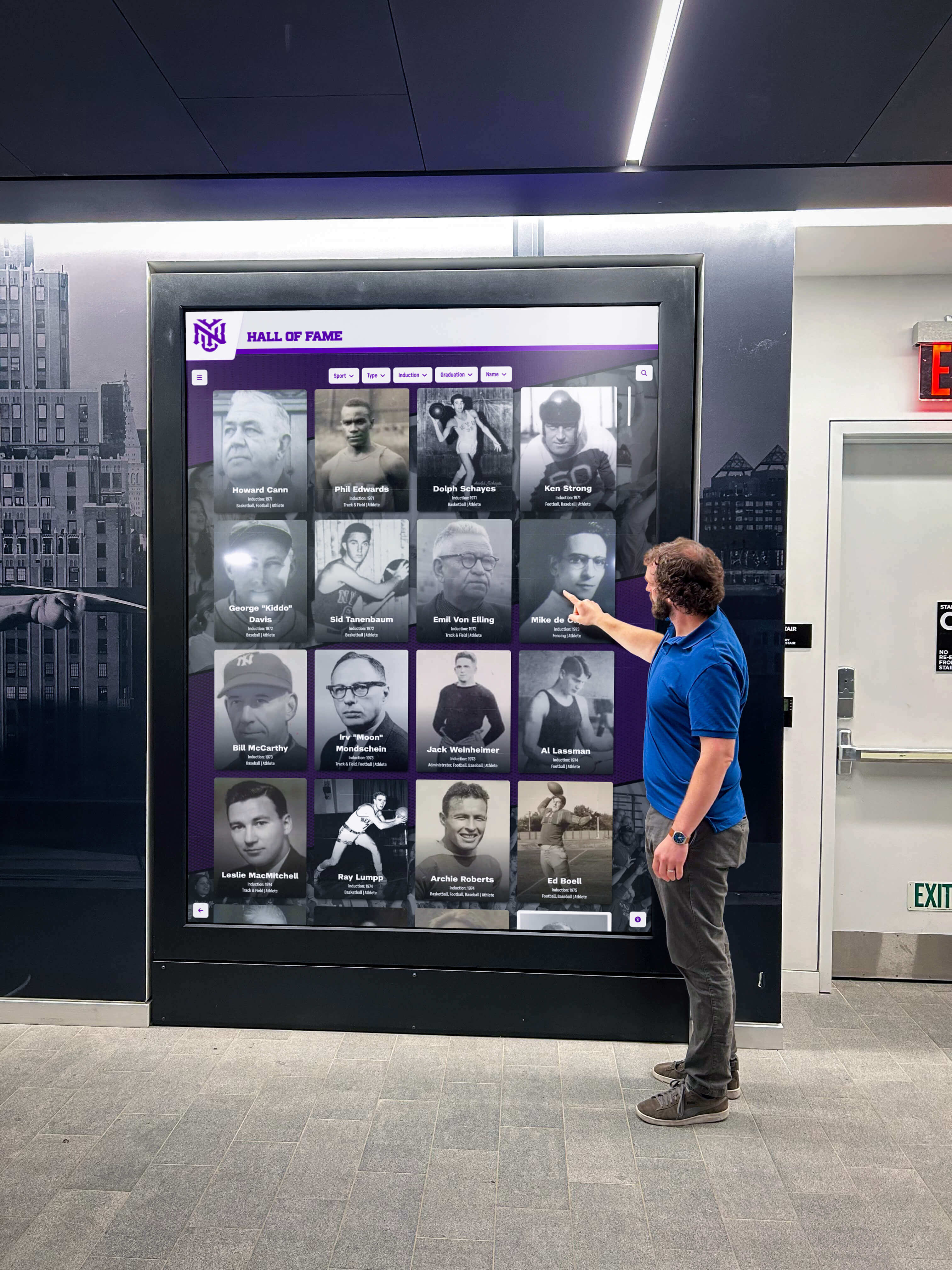
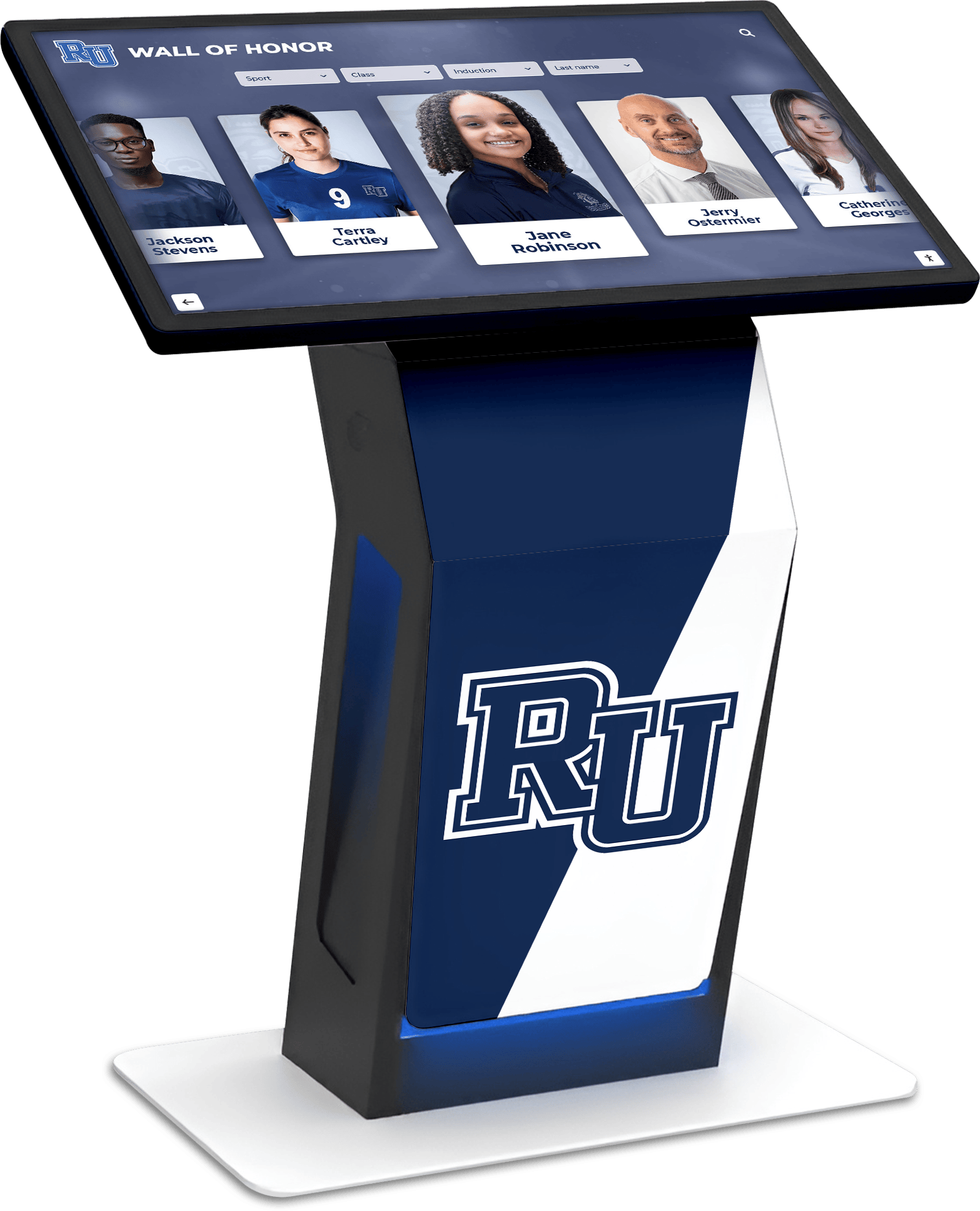
Interactive touchscreen displays transform passive observation into active exploration. Solutions like digital recognition displays enable visitors to:
Search and Filter — Find specific athletes by name, sport, year, or achievement type instantly
Explore Rich Profiles — Access comprehensive biographical information, career statistics, memorable moments, and where honorees are today
Watch Video Content — View game highlights, championship footage, and video interviews that static displays cannot provide
Discover Connections — Explore related achievements, teammates, coaches, and era-specific context
Share Discoveries — QR codes enable visitors to continue exploration on mobile devices and share achievements through social media
Track Records and Statistics — View all-time leaderboards, compare performances across eras, and understand achievement significance within historical context
Schools implementing digital recognition report average engagement times of 3-7 minutes compared to 30-90 seconds with traditional displays. Visitors return repeatedly to explore additional content rather than viewing once and moving on.
The trophy room display capabilities of digital systems enable storytelling depth impossible with physical cases.
Engagement Comparison Verdict:
Traditional trophy cases provide authentic physical artifacts with visual impact but minimal interaction. Digital displays enable deep exploration, multimedia storytelling, and discovery experiences that engage visitors significantly longer and more meaningfully. For schools prioritizing engagement and storytelling depth, digital approaches prove vastly superior.
Scoring: Traditional Trophy Cases: 40/100 | Digital Hall of Fame Displays: 95/100
4. Maintenance Requirements and Operational Burden (Weight: 15%)
Long-term maintenance affects operational sustainability and ongoing staff time requirements.
Traditional Trophy Case Maintenance:
Trophy cases require consistent upkeep:
Regular Cleaning — Glass panels accumulate fingerprints, dust, and smudges requiring weekly cleaning by custodial staff
Lighting Maintenance — Internal lighting bulbs burn out requiring periodic replacement (typically fluorescent or LED systems lasting 5-10 years)
Lock and Hardware — Case locks, hinges, and sliding panels require occasional repair or replacement
Content Rearrangement — Adding new achievements means physically rearranging existing items, accessing locked cases, and updating labels
Physical Deterioration — Wood finishes fade, scratches accumulate on glass, and fixtures require periodic refurbishment
Environmental Concerns — Trophies tarnish, paper materials yellow, and photographs fade without environmental controls
Schools typically assign facilities staff to maintain trophy cases as part of broader custodial duties. However, content updates require administrator access, key management, and physical manipulation of awards and plaques.
Digital Display Maintenance:
Digital recognition platforms require different maintenance approaches:
Software Updates — Cloud-based platforms update automatically without user intervention
Content Updates — Changes happen instantly through web-based content management requiring no physical access
Screen Cleaning — Touchscreens require occasional cleaning similar to trophy case glass (weekly or bi-weekly)
Technical Support — Occasional troubleshooting for connectivity issues or hardware problems (typically managed remotely)
No Physical Manipulation — Content changes never require unlocking cases, moving items, or physical rearrangement
Environmental Independence — Digital content cannot tarnish, fade, or physically deteriorate over time
Schools implementing digital solutions report dramatically reduced maintenance burden. Content managers update profiles from office computers without ever visiting physical displays. Custodial staff clean touchscreens during regular routines without special procedures.
The primary maintenance difference lies in content updates. Traditional approaches require physical access, unlocking cases, purchasing new plaques, and rearranging items—a process taking hours per update. Digital platforms enable updates in minutes from anywhere without physical access requirements.
Maintenance Comparison Verdict:
Both approaches require ongoing attention, but digital solutions eliminate the physical manipulation, fabrication dependencies, and access requirements that make traditional trophy cases operationally burdensome. For schools valuing operational efficiency, digital platforms deliver significant advantages.
Scoring: Traditional Trophy Cases: 50/100 | Digital Hall of Fame Displays: 85/100
5. Accessibility and Compliance (Weight: 10%)
Federal accessibility requirements mandate equivalent access for visitors with disabilities. Compliance affects both legal exposure and inclusive design principles.
Traditional Trophy Case Accessibility:
Physical trophy cases face inherent accessibility challenges:
Visual Dependency — Entire experience depends on visual observation, excluding visually impaired visitors
Height Constraints — Items displayed on upper shelves prove difficult or impossible for wheelchair users to view
No Alternative Access — Unlike digital content, physical displays cannot be adapted for screen readers or assistive technology
Limited Information Density — Small plaques with minimal text provide insufficient context even for visitors without disabilities
No Adjustable Viewing — Fixed installation means visitors cannot adjust positioning, text size, or contrast for better visibility
Schools implementing school digital signage recognize that modern displays must serve all visitors, not just those without disabilities.
Digital Display Accessibility:
Purpose-built digital recognition platforms can achieve WCAG 2.1 AA compliance through:
Screen Reader Compatibility — All content accessible to visually impaired visitors using assistive technology
Keyboard Navigation — Complete functionality available without requiring touchscreen interaction
Adjustable Text Sizing — Content remains functional when visitors enlarge text for improved readability
Color Contrast Standards — Minimum 4.5:1 contrast ratios ensuring visibility for low-vision users
Alternative Input Methods — Support for various interaction approaches accommodating diverse physical abilities
Web Extension — Online halls of fame provide identical content accessible from personal devices with visitors’ own assistive technology
Educational institutions and government entities face strict accessibility mandates. Even organizations without legal requirements should prioritize inclusive design ensuring all visitors can engage with recognition content.
Platforms like Rocket Alumni Solutions undergo third-party accessibility audits validating WCAG 2.1 AA conformance, providing confidence that displays meet federal requirements.
Accessibility Comparison Verdict:
Traditional trophy cases cannot achieve accessibility compliance without supplementary accommodations like printed materials or audio guides. Digital platforms designed with accessibility as foundational architecture meet federal standards while providing superior experiences for all visitors regardless of abilities.
Scoring: Traditional Trophy Cases: 25/100 | Digital Hall of Fame Displays: 90/100
6. Physical Space Utilization (Weight: 10%)
School hallways represent valuable real estate serving multiple purposes. Recognition displays must balance achievement celebration with efficient space utilization.
Traditional Trophy Case Space Requirements:
Physical trophy cases consume significant hallway space:
Depth Requirements — Standard cases project 12-24 inches from walls, creating obstacles in hallways and reducing traffic flow
Expansion Limitations — Adding recognition capacity requires installing additional cases, consuming more hallway space
Fixed Location — Once installed, trophy cases cannot relocate easily without substantial expense
Single-Purpose Use — Trophy cases serve exclusively for recognition, providing no additional functionality
Aesthetic Constraints — Large glass cabinets dominate hallway aesthetics, limiting design flexibility for other purposes
Schools with narrow hallways face particular challenges as trophy cases reduce clearances that must accommodate student traffic, wheelchair accessibility, and emergency egress requirements.
Digital Display Space Efficiency:
Digital recognition optimizes spatial efficiency:
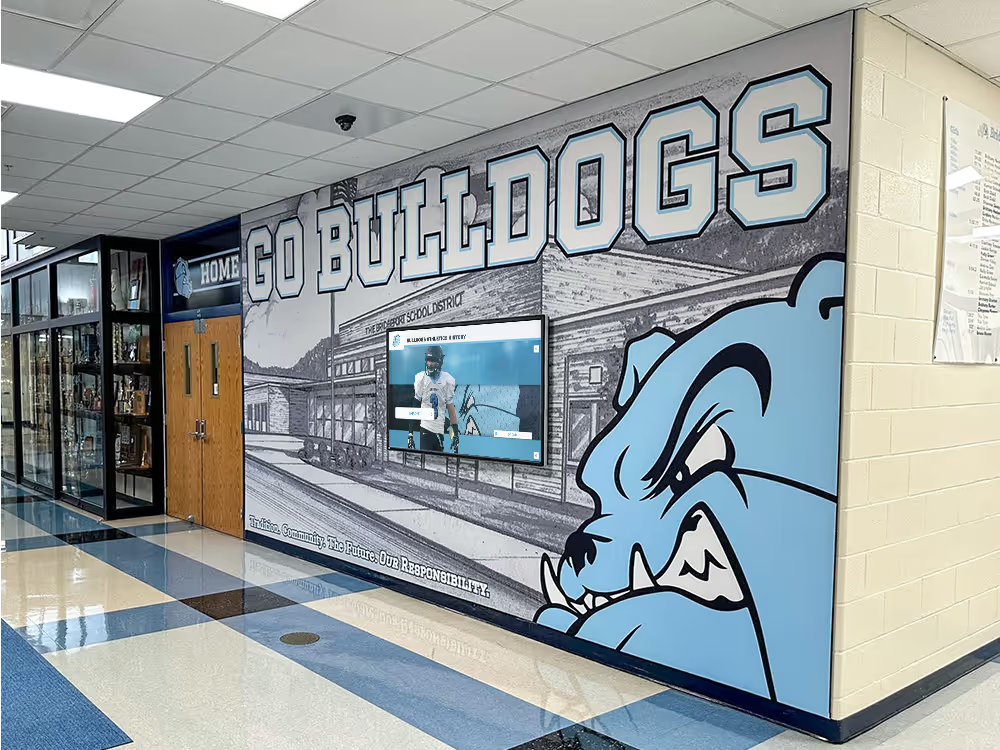
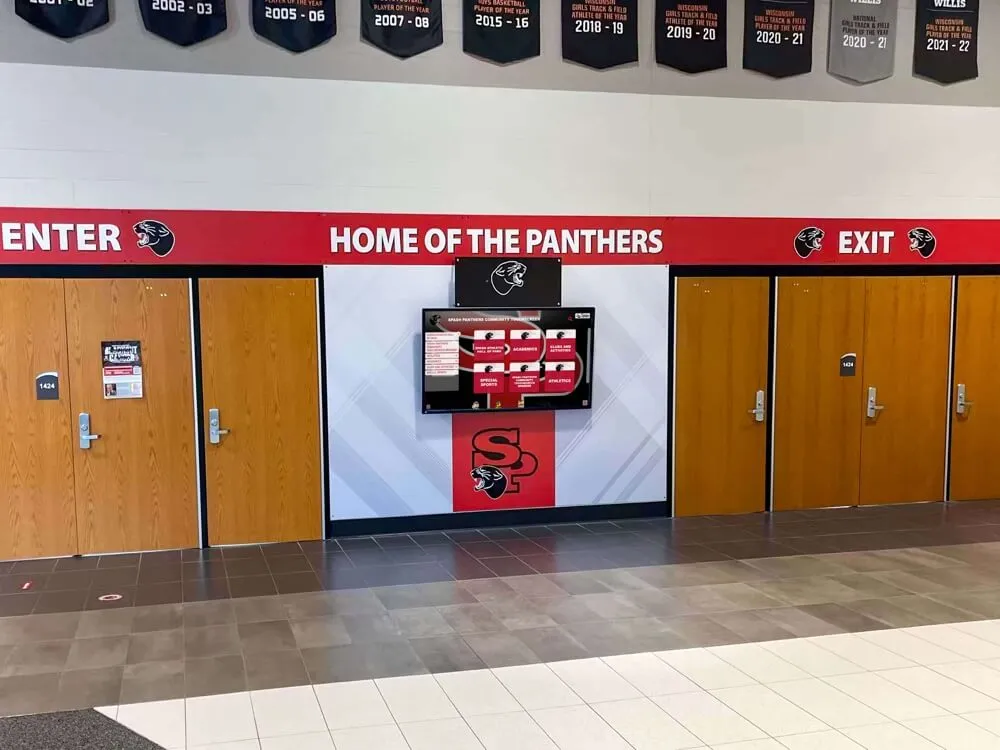
Minimal Profile — Wall-mounted touchscreens project only 2-4 inches from walls, essentially eliminating hallway obstruction
Unlimited Capacity — Single display accommodates thousands of profiles without additional space consumption
Flexible Placement — Digital screens install easily in various locations and relocate as needs change
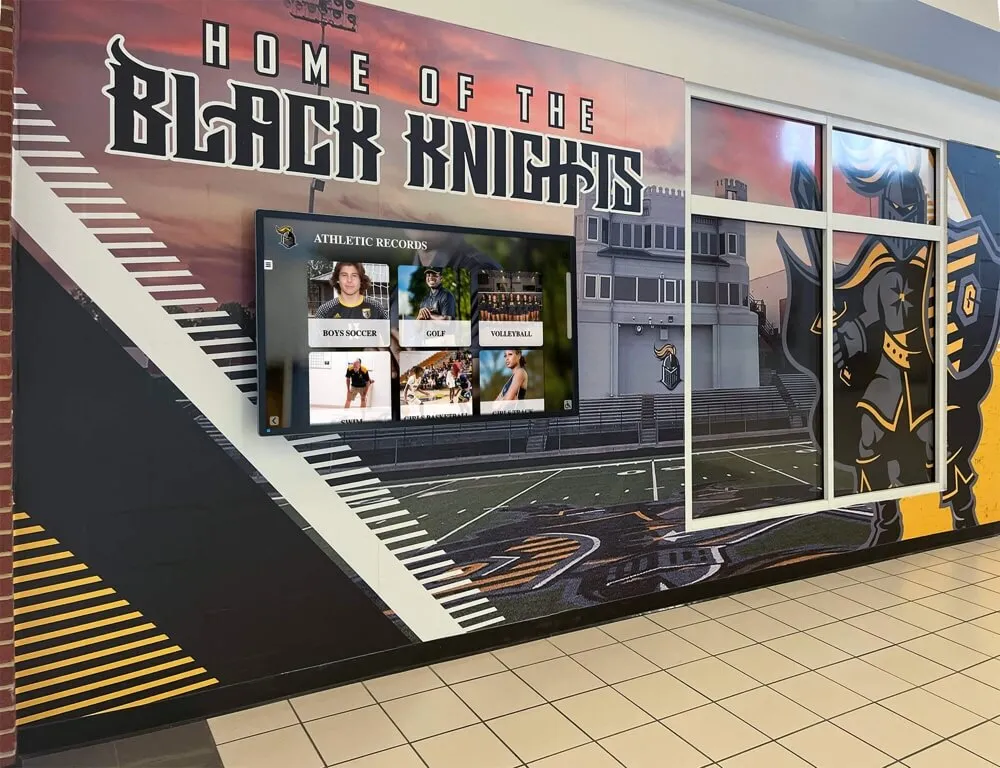
Multi-Function Capability — Same displays can rotate between recognition content, daily announcements, wayfinding, and event information
Architectural Integration — Sleek displays integrate into hallway design without dominating spaces visually
For schools where hallway space remains at premium, digital solutions provide recognition capacity equivalent to 10-20 traditional trophy cases while consuming the floor space of a single wall-mounted screen.
Space Utilization Verdict:
Traditional trophy cases consume substantial hallway space while providing limited recognition capacity. Digital displays maximize spatial efficiency while delivering unlimited recognition potential. For space-constrained schools, digital approaches prove dramatically more efficient.
Scoring: Traditional Trophy Cases: 45/100 | Digital Hall of Fame Displays: 90/100
Comprehensive Scoring Matrix
| Criteria | Weight | Trophy Case Score | Trophy Case Weighted | Digital Display Score | Digital Display Weighted |
|---|---|---|---|---|---|
| Recognition Capacity | 25% | 30/100 | 7.5 | 95/100 | 23.75 |
| Cost & Value | 20% | 60/100 | 12.0 | 75/100 | 15.0 |
| Visitor Engagement | 20% | 40/100 | 8.0 | 95/100 | 19.0 |
| Maintenance Burden | 15% | 50/100 | 7.5 | 85/100 | 12.75 |
| Accessibility | 10% | 25/100 | 2.5 | 90/100 | 9.0 |
| Space Efficiency | 10% | 45/100 | 4.5 | 90/100 | 9.0 |
| TOTAL | 100% | — | 42.0/100 | — | 88.5/100 |
Decision Framework: Which Solution Fits Your Situation?
While digital displays score significantly higher across most evaluation criteria, specific institutional circumstances may justify traditional approaches or hybrid strategies:
Choose Traditional Trophy Cases When:
✅ Preserving Historical Artifacts — Your school values displaying actual trophies and physical awards rather than digital representations
✅ Extremely Limited Budget — Absolutely no funding exists for digital solutions and simple cases represent the only affordable option
✅ Minimal Recognition Volume — Your program honors 10-20 individuals annually with no intention to expand recognition scope
✅ No Technical Infrastructure — Facilities lack network connectivity or staff comfortable managing technology
✅ Cultural Preference — Strong community attachment exists to traditional recognition approaches and stakeholders resist technology
✅ Complementary Strategy — Trophy cases display championship hardware while digital platforms provide comprehensive profile databases
Choose Digital Hall of Fame Displays When:
✅ Comprehensive Recognition Priority — You want to honor every deserving achievement rather than choosing which accomplishments to exclude
✅ Space Constraints — Limited hallway space cannot accommodate additional trophy cases as recognition needs grow
✅ Engagement Goals — You prioritize interactive exploration and deep storytelling beyond passive observation
✅ Operational Efficiency — Staff time limitations make physical maintenance and content updates burdensome
✅ Accessibility Requirements — Federal regulations or institutional values mandate inclusive design serving all visitors
✅ Long-Term Vision — You recognize that recognition needs will grow substantially over coming decades
✅ Web Extension Desire — You want recognition accessible beyond physical locations through online halls of fame
✅ Analytics Interest — Understanding which content engages visitors helps inform recognition strategy
For most schools evaluating these options, digital approaches deliver superior results across dimensions that matter most: recognition capacity, visitor engagement, operational sustainability, and accessibility compliance. The cost differential proves modest compared to dramatically expanded capabilities.
Why Rocket Alumni Solutions Wins for Digital Recognition
Schools selecting digital approaches face platform choice decisions. Purpose-built recognition solutions deliver dramatically better results than adapted generic tools:
Database Architecture — Unlike digital signage platforms designed for rotating announcements, recognition-specific systems handle thousands of detailed profiles with sophisticated search and filtering capabilities
Recognition Templates — Pre-built designs specifically tailored for athletics, academics, alumni, and other recognition categories accelerate implementation while ensuring professional presentation
Dual-Mode Operation — Single platforms power physical touchscreen displays and web-accessible online halls of fame simultaneously, maximizing recognition reach
WCAG 2.1 AA Compliance — Third-party audited accessibility ensuring federal compliance rather than hoping generic platforms meet standards
Unlimited Capacity — No artificial limits on profiles, achievements, photos, or multimedia content constraining recognition program growth
Auto-Ranking Systems — Dynamic organization by statistical performance, achievement date, or custom criteria creating engaging exploration experiences
Professional Implementation — Comprehensive support including content strategy, historical migration, training, and ongoing technical assistance
Proven Reliability — Over 1,000 installations nationwide demonstrating that schools trust the platform for mission-critical recognition
Schools implementing trophy case display solutions discover that platforms specifically designed for recognition deliver superior experiences compared to generic digital signage adapted to purposes it was never meant to serve.
Hybrid Approach: Combining Both Strategies
Some schools implement hybrid solutions capturing advantages of both approaches:
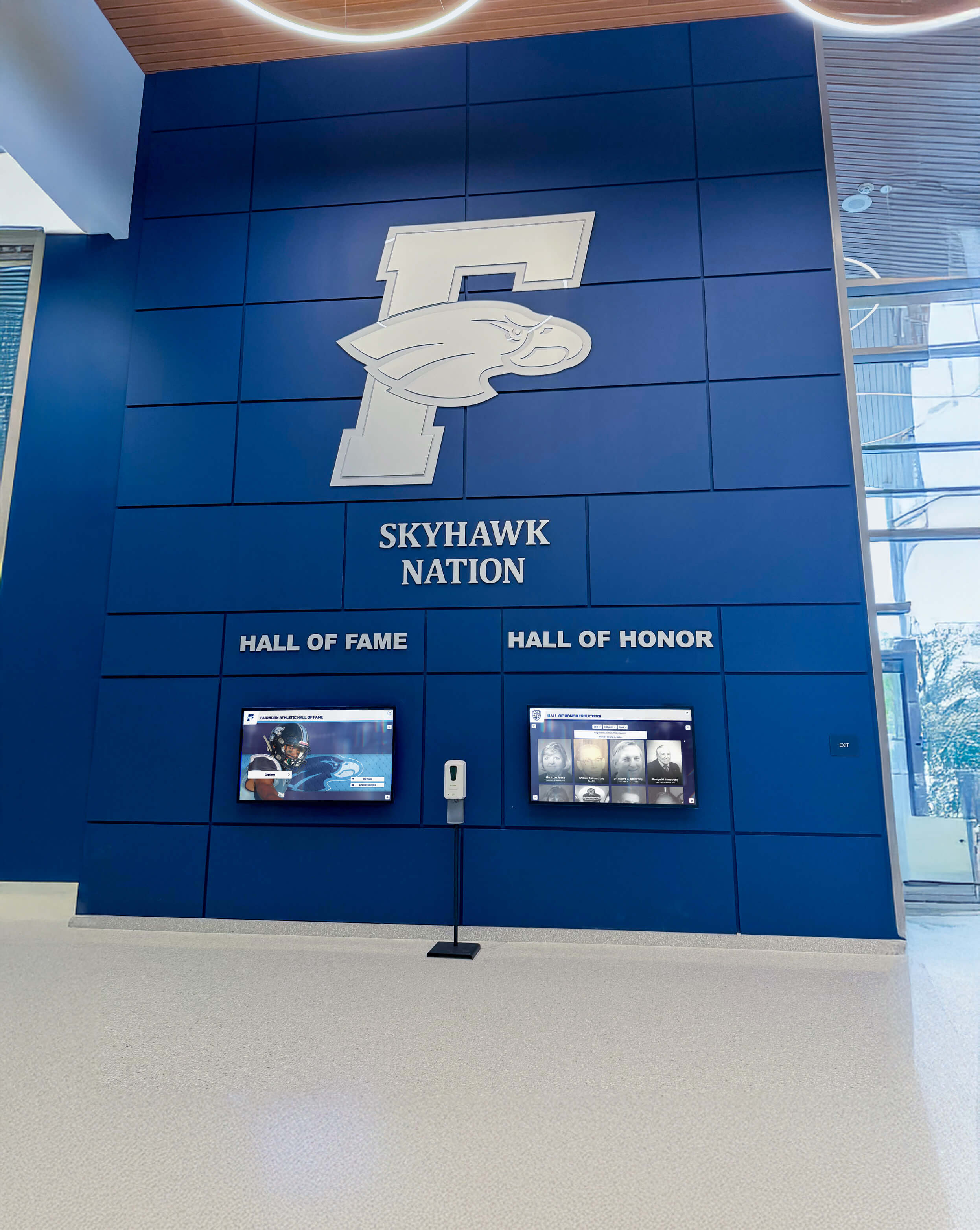
Championship Trophy Display — Physical trophy case showcases championship hardware, state titles, and significant physical awards
Comprehensive Digital Profiles — Interactive touchscreen provides unlimited capacity for individual athlete profiles, team rosters, statistical records, and historical context
Complementary Positioning — Trophy case creates visual anchor while digital display enables deep exploration
Balanced Investment — Allocate modest budget to physical case displaying most impressive hardware while investing majority of resources in digital platform providing comprehensive recognition
This hybrid approach works well for programs with substantial championship hardware worth displaying physically while recognizing that digital platforms better serve comprehensive recognition needs for individual athletes, statistical achievements, and historical documentation.
The key is ensuring that hybrid implementations don’t dilute effectiveness by attempting to make digital displays resemble trophy cases. Let each approach do what it does best rather than compromising both.
Common Mistakes to Avoid
Underestimating Content Development
Whether choosing traditional or digital approaches, creating comprehensive recognition content requires substantial effort. Schools focus on hardware selection while overlooking that developing profiles for hundreds of honorees demands significant time investment.
Budget adequate resources for:
- Historical research identifying past achievements
- Photo digitization from yearbooks and archives
- Biographical information collection from honorees
- Statistical compilation from records and programs
- Content writing maintaining consistent quality
Digital platforms provide tools for managing content, but someone must create it. Plan accordingly or engage professional content migration services.
Neglecting Visitor Experience Testing
Test recognition displays with representative visitors before finalizing designs. Common failures include:
- Navigation patterns that confuse first-time users
- Text too small for comfortable reading from typical viewing distances
- Trophy case arrangements placing important items where they’re difficult to see
- Digital interfaces not matching how visitors actually search for content
Observe where confusion occurs and adjust accordingly. What seems obvious to designers often puzzles actual visitors.
Prioritizing Initial Cost Over Total Value
Choosing the cheapest option often leads to systems that frustrate users, limit program growth, and require expensive replacement within 5-10 years. Proper investment in capable solutions proves more cost-effective long-term than serial replacements of inadequate systems.
Calculate 20-year total cost of ownership including ongoing operational expenses rather than focusing exclusively on initial purchase price.
Ignoring Accessibility Requirements
Federal accessibility standards apply to educational institutions regardless of whether administrators realize it. Non-compliant displays expose schools to legal liability while excluding portions of their community. Ensure any solution meets WCAG 2.1 AA standards or provides equivalent alternative access.
Implementation Best Practices
Regardless of which approach you select, successful implementation requires:
Content Strategy Development
Define Recognition Categories — Determine what achievements your school celebrates (athletic records, championships, academic excellence, service contributions, distinguished alumni)
Establish Selection Criteria — Create clear guidelines ensuring fairness and consistency across time periods and programs
Plan Content Depth — Decide what information profiles should include and establish quality standards maintaining professional presentation
Organize Historical Records — Gather existing achievements from trophy engravings, programs, yearbooks, and archives
Physical Installation Planning
Location Selection — Choose high-traffic areas maximizing visibility and engagement (athletic facility lobbies, main entrances, hallways near existing trophy cases)
Accessibility Compliance — Ensure installations meet ADA requirements for viewing heights, clearances, and alternative access
Network Infrastructure — For digital displays, plan reliable connectivity enabling content updates and remote management
Lighting Considerations — Control ambient lighting to minimize glare on trophy case glass or touchscreen displays
Launch Strategy
Soft Launch Testing — Begin with limited audience identifying issues before major announcement
Grand Opening Event — Unveil displays with ceremony celebrating recognized honorees and demonstrating capabilities
Multi-Channel Promotion — Announce through email, social media, newsletters, and local media generating awareness
Ongoing Engagement — Regularly highlight featured content and announce new additions maintaining sustained interest
Schools implementing digital hall of fame systems benefit from structured rollout strategies generating community excitement and sustainable engagement.
Conclusion: Making Your Recognition Display Decision
The choice between digital hall of fame displays and traditional trophy cases fundamentally depends on institutional priorities, available budget, and long-term vision for recognition programs.
Traditional trophy cases serve well when preserving physical championship hardware, operating under severe budget constraints, or maintaining cultural traditions that stakeholders value deeply. They provide tangible connections to achievements and straightforward implementation requiring minimal technical infrastructure.
Digital hall of fame displays deliver superior results across most evaluation criteria that matter to modern institutions: unlimited recognition capacity, interactive visitor engagement, operational efficiency, accessibility compliance, and spatial optimization. The marginal cost premium over traditional approaches proves modest compared to dramatically expanded capabilities serving recognition programs throughout multi-decade operational lifespans.
For schools evaluating these options, we recommend digital solutions for primary recognition platforms while potentially maintaining limited trophy cases for displaying championship hardware and physical artifacts. This hybrid approach captures the tangible appeal of physical trophies while gaining the unlimited capacity, engagement, and accessibility advantages that digital platforms provide.
The recognition system you select will serve your institution for 10-20 years, shaping how students, families, alumni, and visitors experience your school’s achievement legacy. Choose platforms that honor accomplishments with the professionalism, capacity, and engagement they deserve while supporting sustainable operations throughout extended timeframes.
Ready to explore digital recognition solutions? Discover how platforms like Rocket Alumni Solutions transform how schools celebrate excellence through purpose-built interactive displays. Learn more about academic recognition strategies, explore senior night recognition approaches, or review donor recognition wall concepts that extend beyond athletics.
Your school’s greatest achievements deserve recognition technology that matches their significance. Choose solutions that celebrate excellence while serving your community effectively for decades to come.
Disclaimer: This comparison is based on publicly available information as of February 2026. All product names and trademarks belong to their respective owners. Comparative statements reflect Rocket Alumni Solutions’ interpretation of available data and may change over time. This content was produced by or on behalf of Rocket Alumni Solutions.