



Key Takeaways
Discover the comprehensive benefits students gain from Dean's List recognition, from career advantages to personal growth. Learn how schools can maximize academic achievement celebration through modern digital displays.
Every semester, thousands of college and high school students achieve Dean’s List recognition—yet many don’t fully understand what this honor represents or how it can shape their academic careers and future opportunities. Dean’s List recognition goes far beyond a line on a transcript; it represents a comprehensive set of tangible and intangible benefits that influence everything from scholarship opportunities to career trajectories, from personal confidence to professional networking.
Understanding dean’s list benefits helps students appreciate this recognition’s full value while motivating continued academic excellence. For educational institutions, comprehending these benefits enables more effective recognition programs that maximize student engagement, showcase institutional quality, and create cultures celebrating intellectual achievement as prominently as athletic success.
This comprehensive guide examines what students actually gain from Dean’s List recognition, why these benefits matter for long-term success, and how schools can leverage modern technology to amplify recognition impact beyond traditional certificate presentations.
Understanding Dean’s List Recognition Standards
Before exploring benefits, it’s essential to understand what Dean’s List recognition represents and how institutions establish qualifying criteria.
Typical Dean’s List Requirements
Dean’s List standards vary across institutions, but most colleges and universities follow similar frameworks establishing grade point average thresholds:
President’s List or President’s Honor Roll: Typically reserved for students achieving perfect 4.0 GPA during the recognition period, representing flawless academic performance across all coursework. This highest distinction acknowledges exceptional scholarly excellence.
Dean’s List: Usually requires 3.5 to 3.99 GPA, recognizing strong academic performance that significantly exceeds minimum satisfactory progress standards. Dean’s List students demonstrate consistent excellence across most coursework while maintaining demanding academic loads.
Honor Roll (when distinguished from Dean’s List): Some institutions establish additional tiers recognizing 3.0 to 3.49 GPA, creating more inclusive recognition opportunities while maintaining meaningful distinctions between achievement levels.

Additional Qualification Criteria
Beyond GPA thresholds, most Dean’s List programs establish supplementary requirements ensuring recognition honors substantive achievement:
Minimum Credit Hours: Institutions typically require full-time enrollment status—usually 12-15 credit hours—preventing students from achieving high GPAs through unrealistically light course loads. This ensures Dean’s List recognition honors achievement while managing meaningful academic responsibilities.
Exclusions for Incomplete or Failing Grades: Students receiving incomplete grades, withdrawals, or failing marks during the recognition period typically become ineligible regardless of GPA among completed courses. These policies maintain recognition integrity by ensuring comprehensive performance evaluation.
Enrollment Status Requirements: Most programs limit recognition to degree-seeking students rather than non-degree or transient enrollees, focusing acknowledgment on students pursuing complete educational programs.
Quality Points or Course Level Considerations: Some institutions weight advanced, honors, or upper-division coursework more heavily than introductory classes, rewarding students challenging themselves with rigorous curricula rather than selecting easier pathways to maintain high grades.
Understanding these standards helps students appreciate Dean’s List achievement significance—this recognition validates not just intelligence but sustained effort, effective time management, and consistent excellence across diverse academic challenges.
Academic Benefits of Dean’s List Recognition
Dean’s List achievement delivers substantial academic advantages that extend far beyond the recognition semester, influencing educational trajectories and creating opportunities unavailable to students without distinguished academic records.
Scholarship Eligibility and Retention
Perhaps the most immediate tangible benefit: Dean’s List recognition significantly enhances scholarship opportunities and financial aid access.
Merit-Based Scholarship Qualification: Many competitive scholarships establish Dean’s List achievement as minimum eligibility criteria. Academic organizations, private foundations, and institutional programs frequently require consistent Dean’s List performance when selecting scholarship recipients. Students with Dean’s List recognition access significantly larger pools of scholarship opportunities compared to peers with merely satisfactory academic records.
Scholarship Renewal Requirements: Numerous renewable scholarships require maintaining Dean’s List or Honor Roll status for continued funding. Students achieving Dean’s List naturally satisfy these renewal criteria, protecting valuable financial awards that reduce educational debt burden.
Institutional Academic Scholarships: Colleges and universities often award automatic scholarships to students maintaining specified GPA thresholds. Dean’s List achievement typically qualifies students for these institutional awards, converting academic excellence directly into financial support that makes continued education more affordable.
According to educational research, students receiving merit-based scholarships show higher graduation rates and reduced time-to-degree compared to similar students without scholarship support—making Dean’s List recognition’s scholarship benefits particularly valuable for long-term academic success.
Priority Registration and Academic Privileges
Dean’s List students often receive registration advantages and academic privileges creating competitive advantages throughout educational careers:
Early Registration Access: Many institutions grant Dean’s List students priority registration windows, enabling course selection before general student populations. This seemingly small benefit carries significant practical value: securing preferred class times, accessing limited-enrollment courses, building optimal schedules balancing academic rigor with extracurricular commitments, and avoiding scheduling conflicts that extend time-to-degree.
Honors Program Eligibility: Dean’s List achievement frequently qualifies students for honors college programs, advanced seminars, and specialized academic opportunities providing enriched educational experiences, distinguished credential value, smaller class sizes with enhanced faculty interaction, and intellectually stimulating peer communities.
Research and Teaching Assistantship Opportunities: Faculty selecting undergraduate research assistants or teaching support staff typically prioritize Dean’s List students, creating valuable resume-building experiences, graduate school preparation advantages, faculty mentorship relationships, and sometimes financial compensation or course credit.
For schools seeking to promote these valuable opportunities, academic recognition programs provide comprehensive frameworks celebrating student achievement across multiple dimensions.
Graduate School and Advanced Education Advantages
Students pursuing graduate education, professional schools, or advanced certifications find Dean’s List recognition provides substantial advantages during competitive admissions processes:
Application Strength Enhancement: Graduate admissions committees reviewing hundreds of qualified applicants use academic honors as differentiating factors. Consistent Dean’s List achievement demonstrates sustained excellence rather than sporadic performance, intellectual capability handling rigorous graduate curricula, and commitment to academic excellence throughout undergraduate education.
Letters of Recommendation Quality: Professors writing recommendation letters for Dean’s List students can cite specific recognition achievements, strengthening endorsement credibility. Faculty members naturally remember high-achieving students more favorably, resulting in more enthusiastic and detailed letters supporting graduate applications.
Assistantship and Fellowship Competition: Competitive graduate assistantships and fellowships frequently require distinguished undergraduate academic records. Dean’s List achievement helps applicants meet minimum thresholds while signaling capability for demanding graduate-level academic work.
Career and Professional Benefits
Dean’s List recognition extends beyond academic contexts, delivering substantial career advantages that influence employment opportunities, professional trajectories, and lifetime earning potential.
Resume Enhancement and Employer Perception
In competitive job markets, Dean’s List recognition provides concrete evidence of capability, discipline, and achievement that employers value highly:
Resume Differentiation: Entry-level positions often attract hundreds of applicants with similar educational credentials. Dean’s List recognition differentiates candidates by demonstrating achievement beyond merely completing degree requirements. This distinction proves particularly valuable for students attending less prestigious institutions where school reputation alone provides limited competitive advantage.
Skill Signal Validation: Employers interpret Dean’s List recognition as evidence of valuable professional competencies: intellectual capability managing complex information, time management and organizational skills, consistency and reliability, goal achievement orientation, and ability to meet demanding performance standards.
First-Round Interview Selection: Recruiters screening large applicant pools frequently use academic honors as initial filtering criteria. Dean’s List recognition helps resumes survive automated screening systems and human reviewer initial culling, substantially increasing interview opportunity rates.
Professional Networking and Alumni Connections
Dean’s List achievement creates networking opportunities and community connections delivering ongoing career benefits:
Honor Society Membership: Many honor societies—including discipline-specific organizations and general academic honors groups—establish Dean’s List achievement as membership criteria. These societies provide networking events connecting students with accomplished alumni, exclusive career resources and job postings, leadership development opportunities, and lifelong professional community affiliation.
Alumni Network Access: Distinguished academic records facilitate connections with accomplished alumni who achieved similar recognition during their educational experiences. These shared achievement bonds create natural conversation starting points and mentorship opportunities. Schools implementing comprehensive recognition displays and digital platforms enable students to discover alumni who achieved comparable honors, facilitating meaningful connections.
Professional Conference Opportunities: Academic achievement creates eligibility for conference presentations, research symposiums, and professional gatherings where students build relationships with practitioners, faculty, and peers establishing valuable networks before career launch.
Career Advancement and Promotion Considerations
Dean’s List benefits extend beyond initial employment, influencing career trajectory throughout professional life:
Performance Evaluation Validation: Early-career professionals with strong academic credentials including Dean’s List recognition receive favorable presumptions regarding capability and work ethic. While professional performance ultimately determines advancement, distinguished academic records create positive initial perceptions influencing assignment selection, mentorship opportunities, and promotion consideration timing.
Career Transition Advantages: Professionals changing industries or pursuing new opportunities later in careers may reference Dean’s List achievement as evidence of learning capability, adaptability, and intellectual capacity—particularly valuable when transitioning into fields where applicants lack direct professional experience.
Personal Development and Psychological Benefits
Beyond external advantages, Dean’s List recognition delivers profound personal benefits influencing self-perception, confidence, and psychological wellbeing throughout life.
Enhanced Self-Efficacy and Confidence
Achievement recognition fundamentally shapes how individuals perceive their capabilities and potential:
Academic Self-Concept Development: Students earning Dean’s List recognition internalize identities as capable scholars and strong learners. This academic self-concept influences future academic choices, persistence when facing challenges, and willingness to pursue ambitious educational goals. Research in educational psychology consistently demonstrates that students who see themselves as academically capable achieve higher outcomes than equally intelligent peers lacking that self-perception.
Effort Attribution Understanding: Dean’s List achievement teaches students that sustained effort produces meaningful results. This attribution pattern—recognizing accomplishment stems from dedication rather than innate talent alone—creates psychological resilience supporting continued striving across academic, professional, and personal domains.
Confidence in Future Challenges: Successfully meeting demanding academic standards builds confidence applicable beyond educational contexts. Students who achieved Dean’s List recognition develop realistic confidence that they can meet high standards, master complex skills, and succeed in competitive environments—psychological advantages supporting ambitious goal pursuit throughout life.
Social Recognition and Belonging
Academic recognition creates meaningful social experiences strengthening connections with educational communities:
Peer Acknowledgment: Being recognized for intellectual achievement among classmates validates academic priorities and creates positive social reinforcement. While some students downplay academic success to avoid peer judgment, formal recognition programs celebrate excellence publicly, helping normalize intellectual achievement as desirable rather than something requiring apology.
Family Pride and Support: Dean’s List recognition provides concrete achievements families can celebrate together. These recognitions create opportunities for meaningful conversations about education value, build family pride in student accomplishments, and strengthen family support for continued educational investment.
Institutional Belonging: Recognition programs communicate that institutions notice students and value their efforts. This acknowledgment strengthens emotional connections between students and schools, contributing to institutional belonging that research links to improved persistence, engagement, and overall wellbeing.
For schools implementing comprehensive recognition strategies, solutions like digital recognition displays ensure every Dean’s List student receives appropriate celebration that validates their achievement while inspiring peers.
Motivation for Sustained Excellence
Perhaps most importantly, Dean’s List recognition creates motivational cycles supporting continued high achievement:
Goal Reinforcement: Achieving Dean’s List validates that academic goals are attainable through effort, encouraging continued goal-directed behavior. Students who experience recognition success typically set increasingly ambitious targets, creating upward achievement spirals.
Standard Maintenance Motivation: Once students achieve Dean’s List recognition, they frequently become motivated to maintain that standard. This maintenance motivation prevents complacency while creating consistent excellence patterns that compound over time.
Aspirational Modeling: Dean’s List students serve as achievement models for peers and younger students. Being positioned as exemplars creates social pressure and personal motivation to continue meeting high standards, leveraging recognition as sustainable motivation rather than one-time acknowledgment.

Maximizing Dean’s List Recognition Impact Through Modern Technology
While Dean’s List benefits derive from the achievement itself, how schools recognize and celebrate this accomplishment significantly influences whether students fully realize these advantages. Traditional recognition approaches—brief email notifications, printed certificates, or static honor roll postings—fail to create the visibility and engagement that modern students expect and that maximally benefits educational institutions.
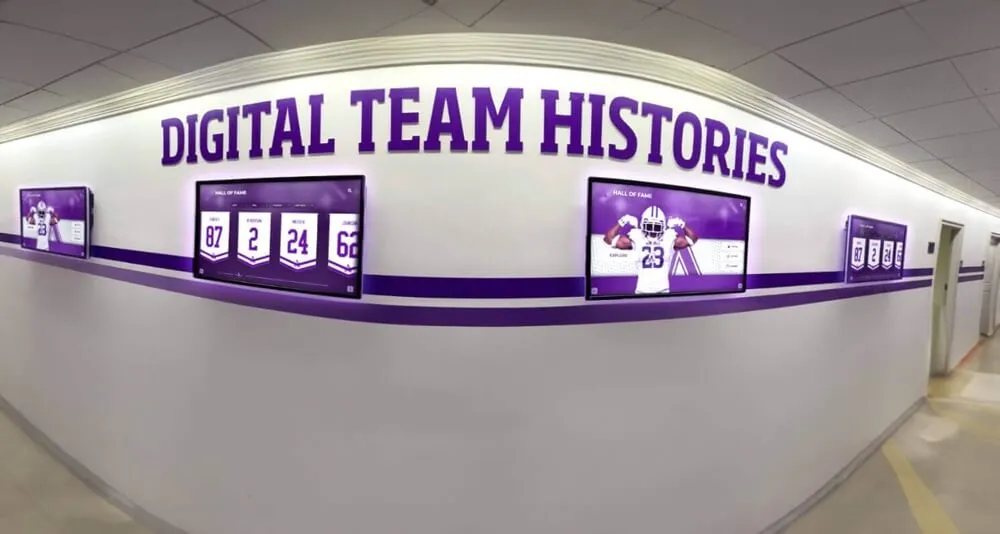
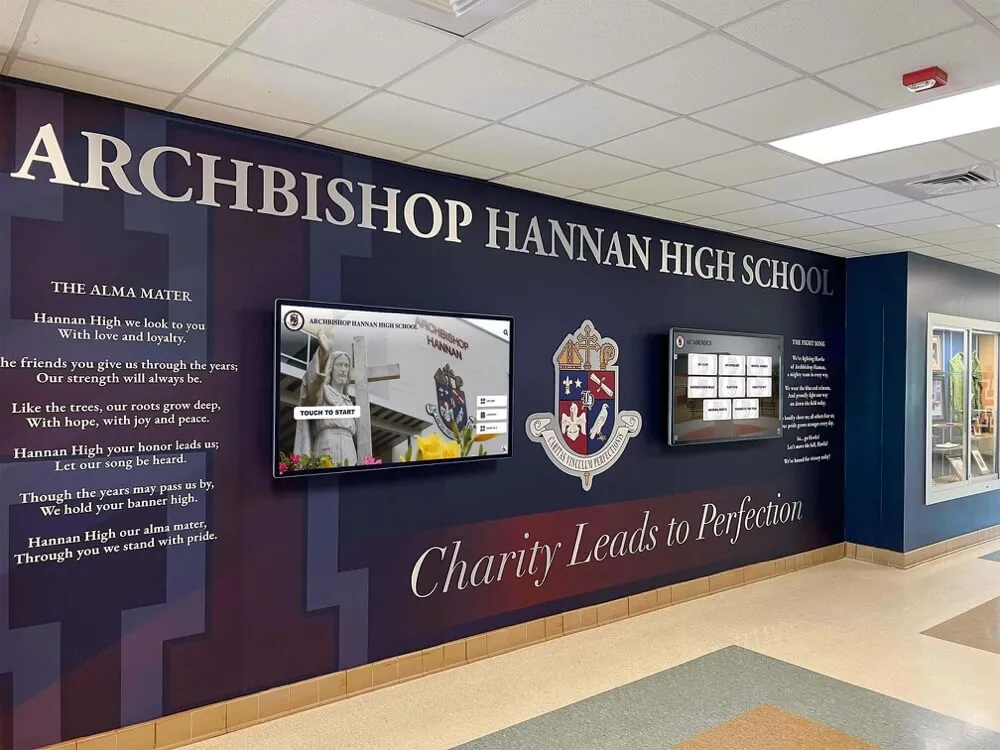
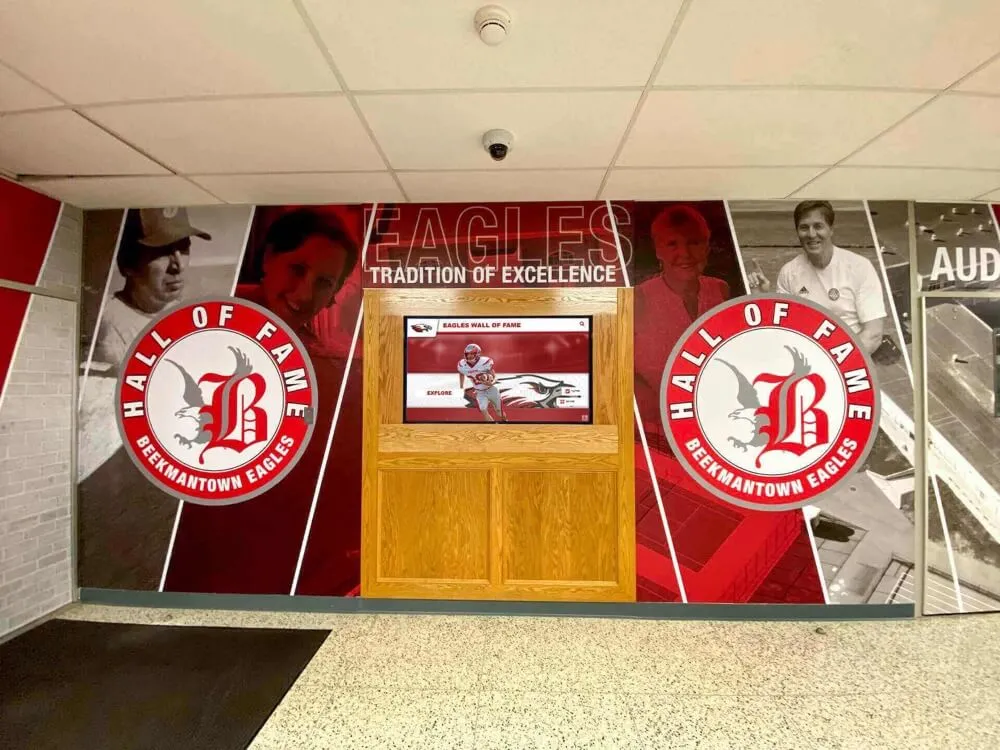
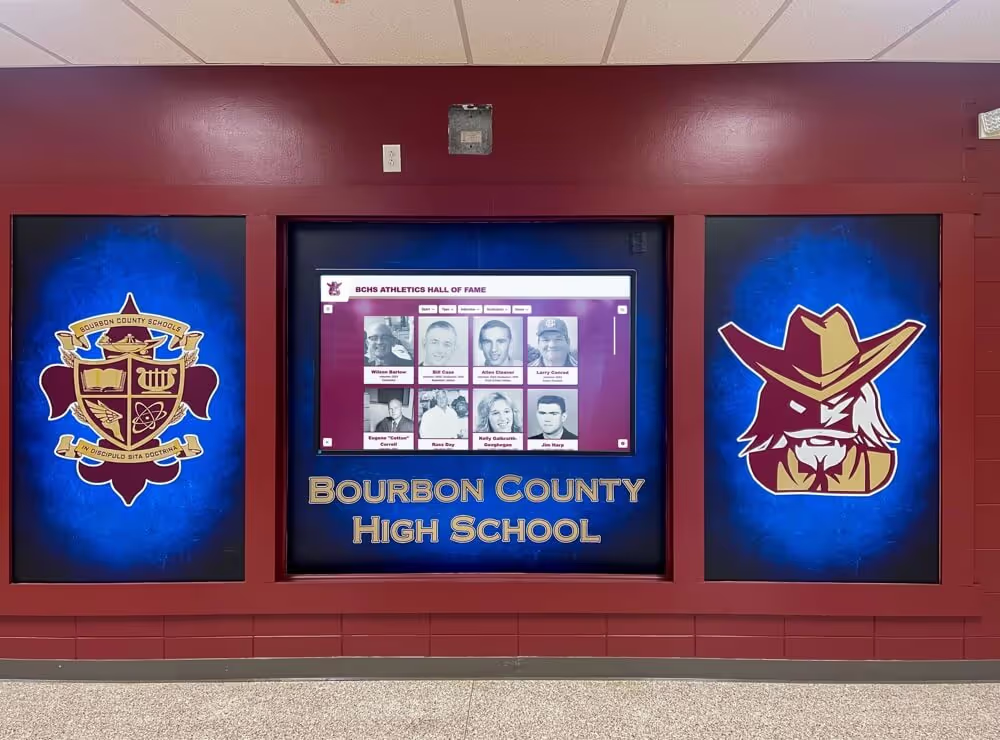
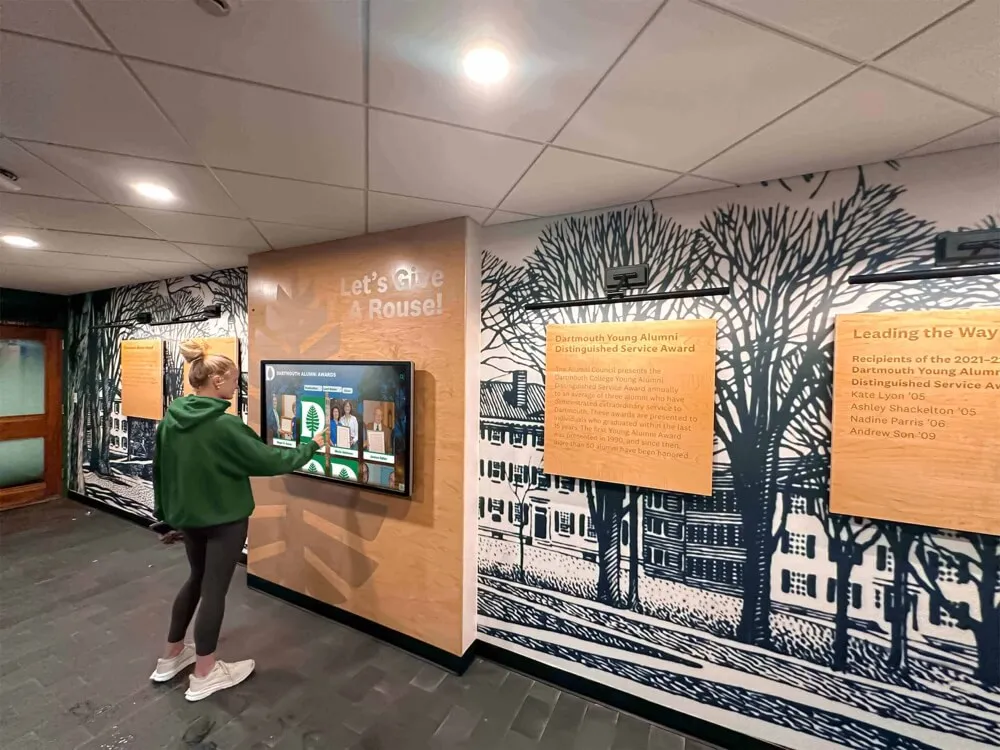
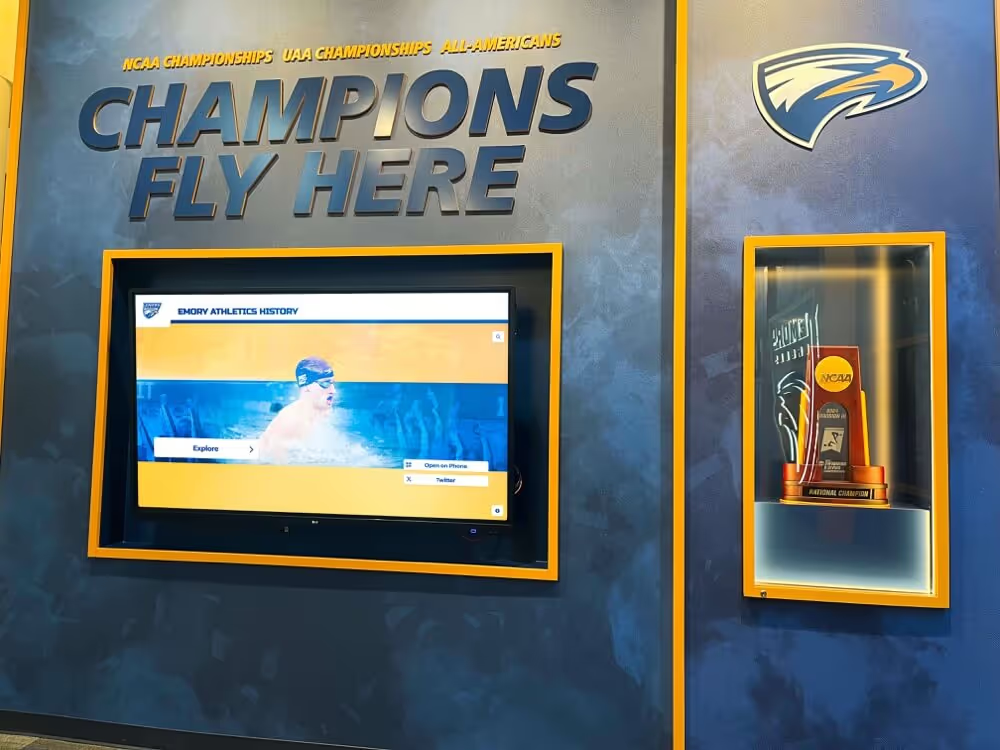
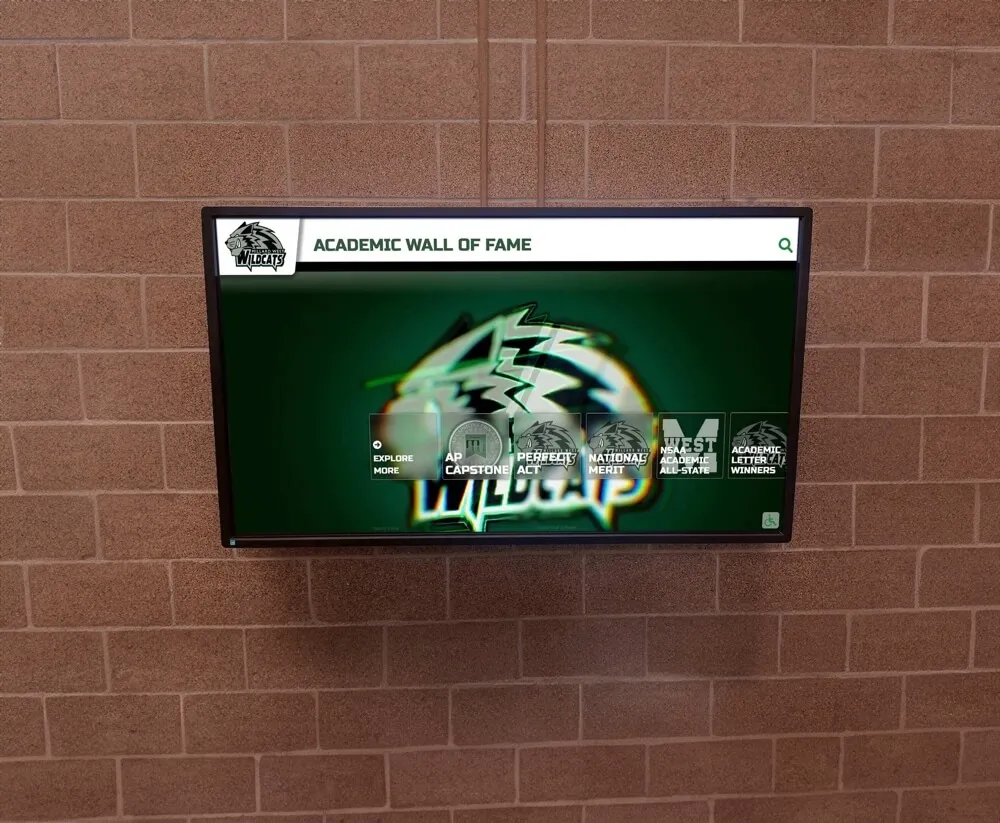
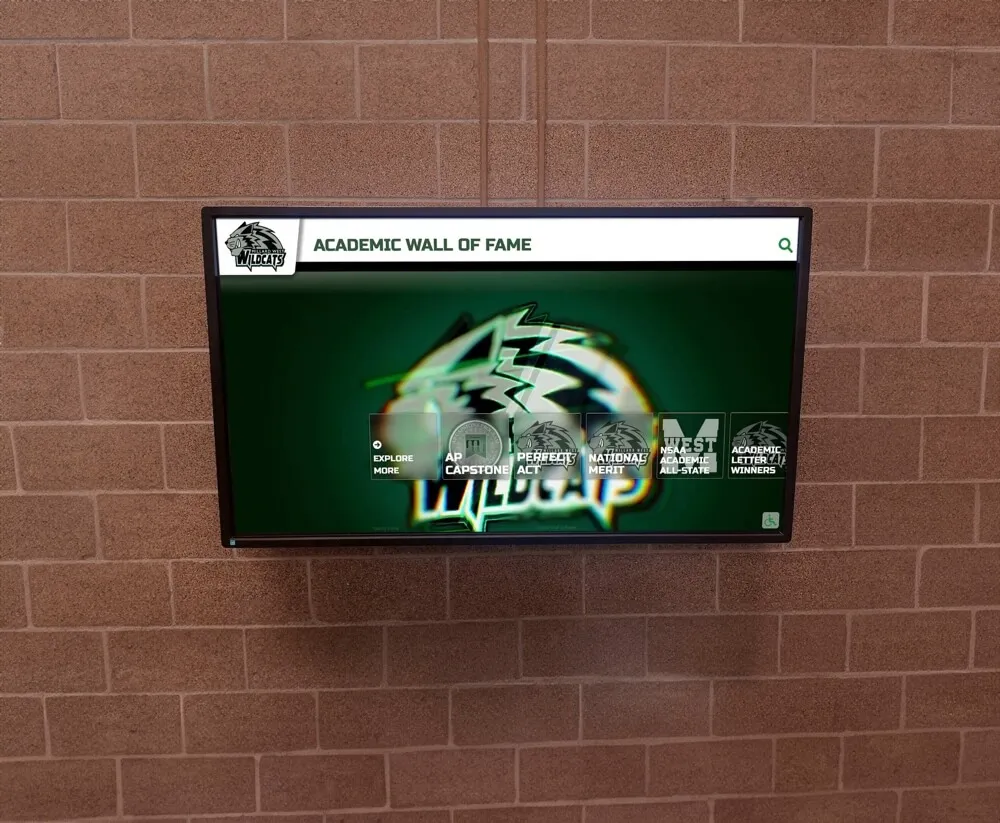
Digital Recognition Displays Transform Celebration
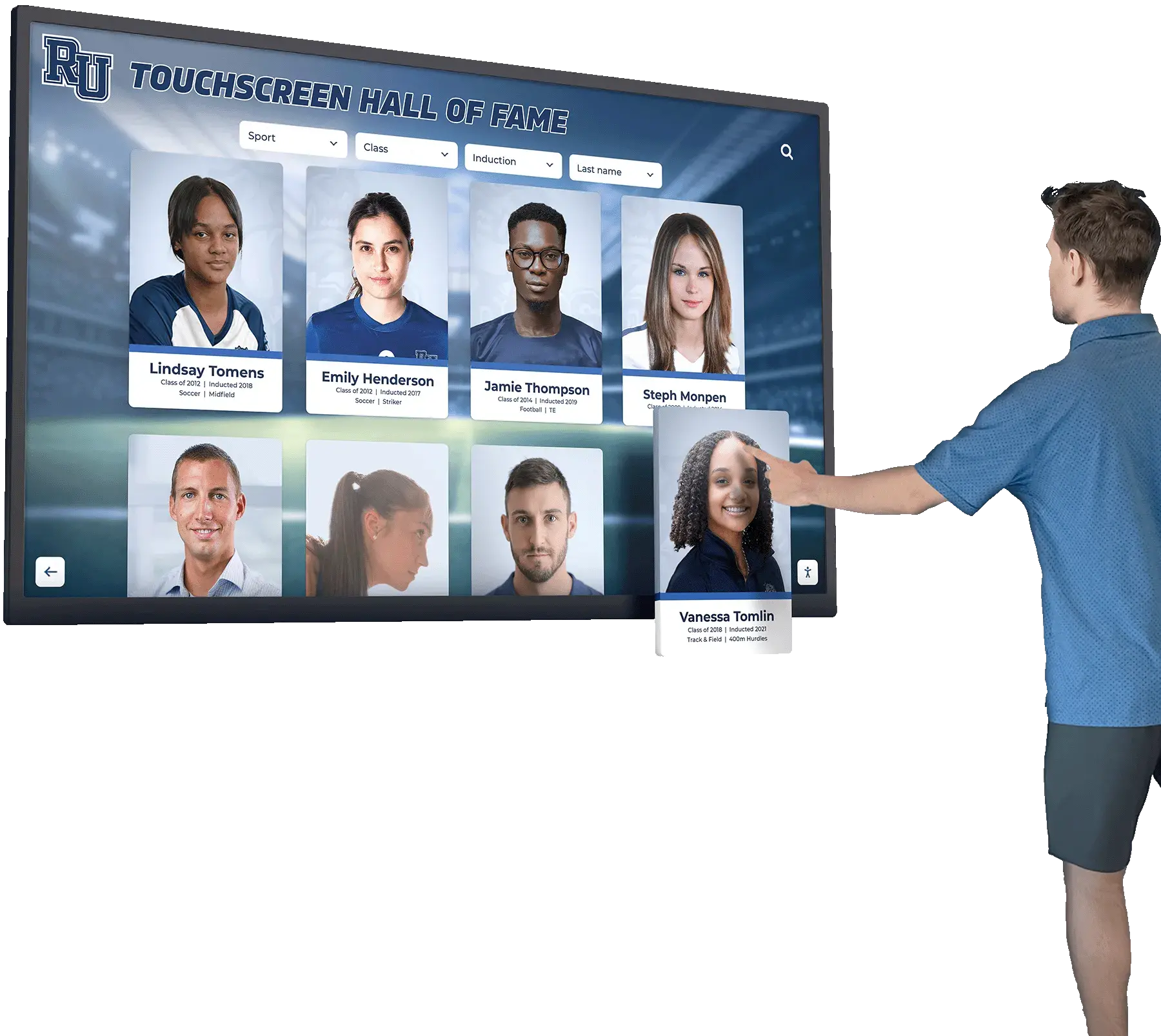
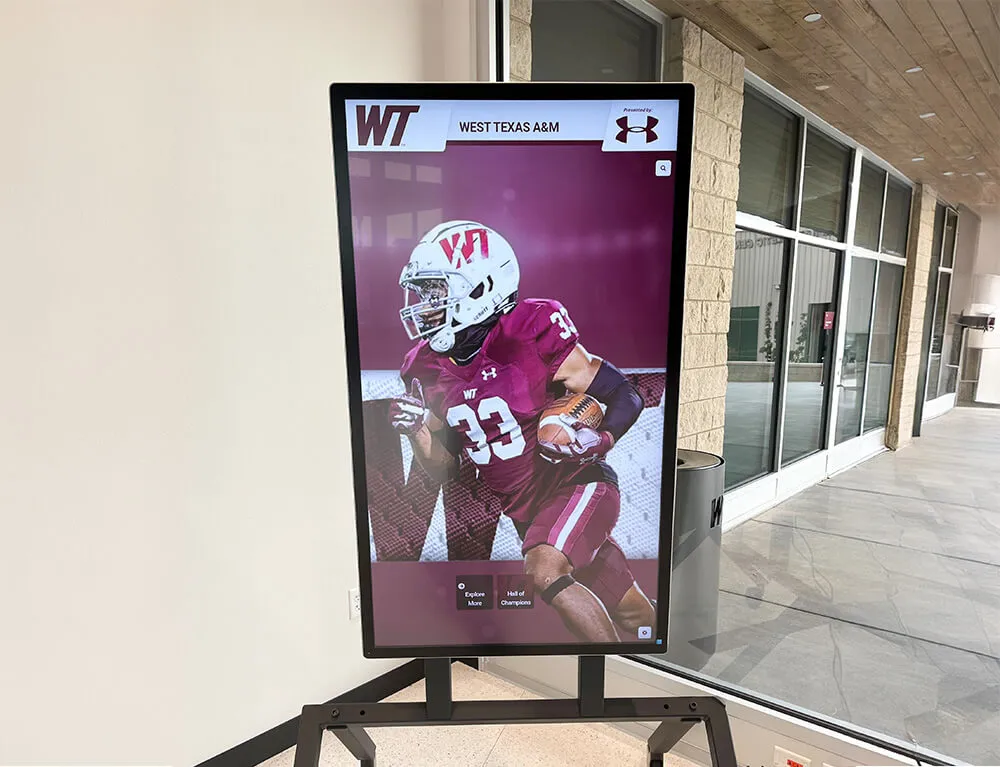
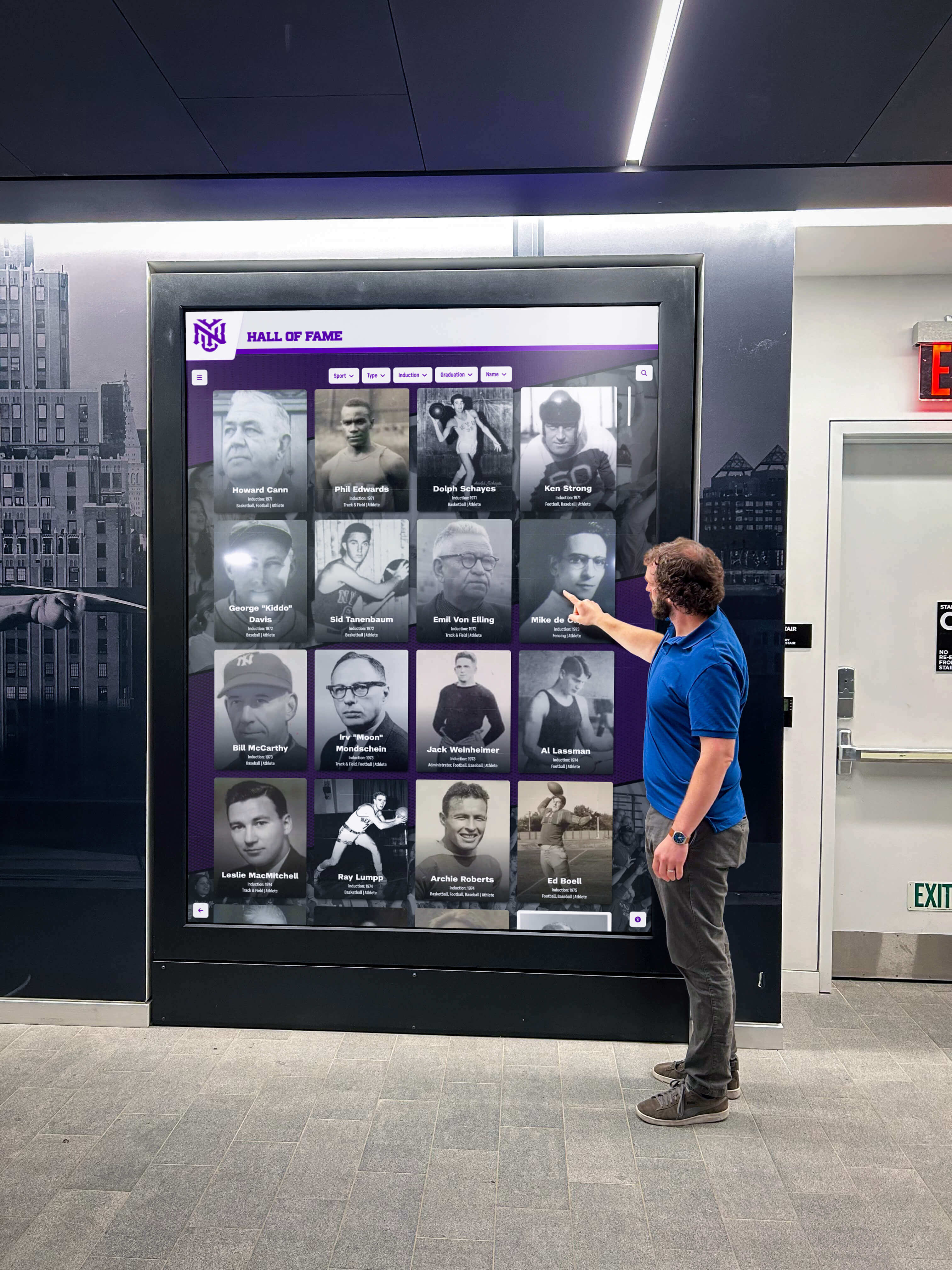
Interactive touchscreen displays and digital recognition platforms fundamentally transform academic achievement celebration in ways traditional approaches cannot match:
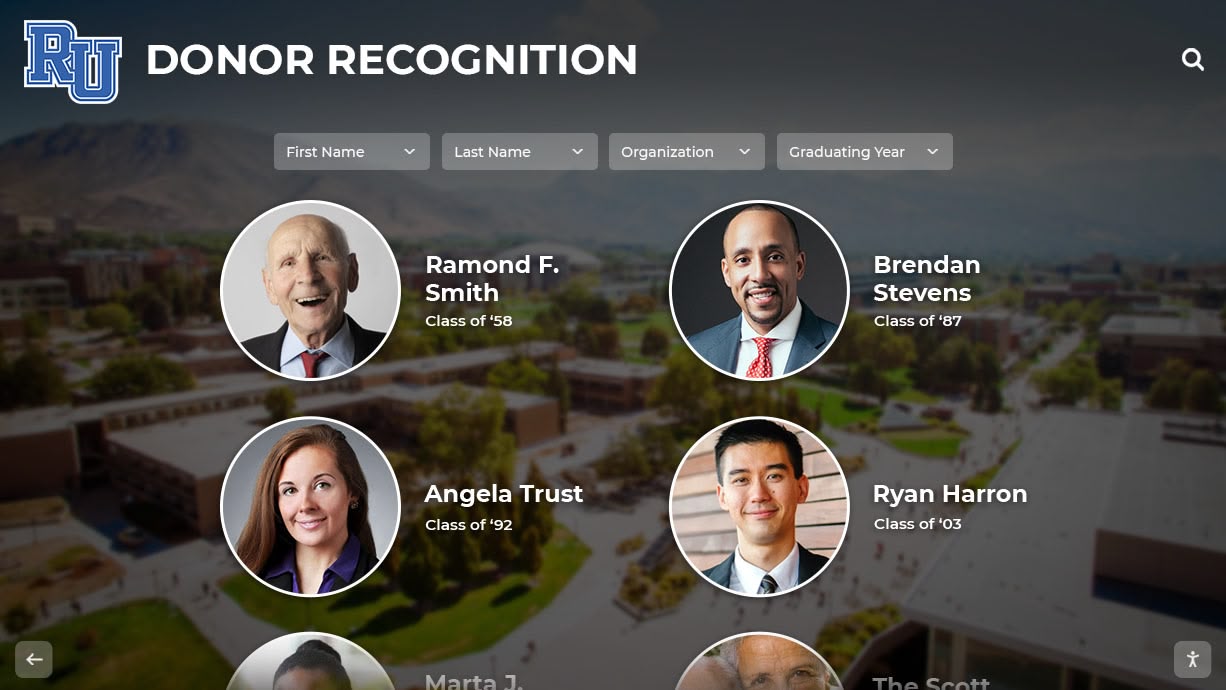
Permanent, Searchable Archives: Digital platforms create permanent documentation allowing current students, alumni, families, and visitors to discover Dean’s List recipients across entire institutional history. Unlike temporary bulletin board postings removed after each semester, digital archives preserve achievement recognition indefinitely while enabling intuitive search by name, year, major, or achievement level.
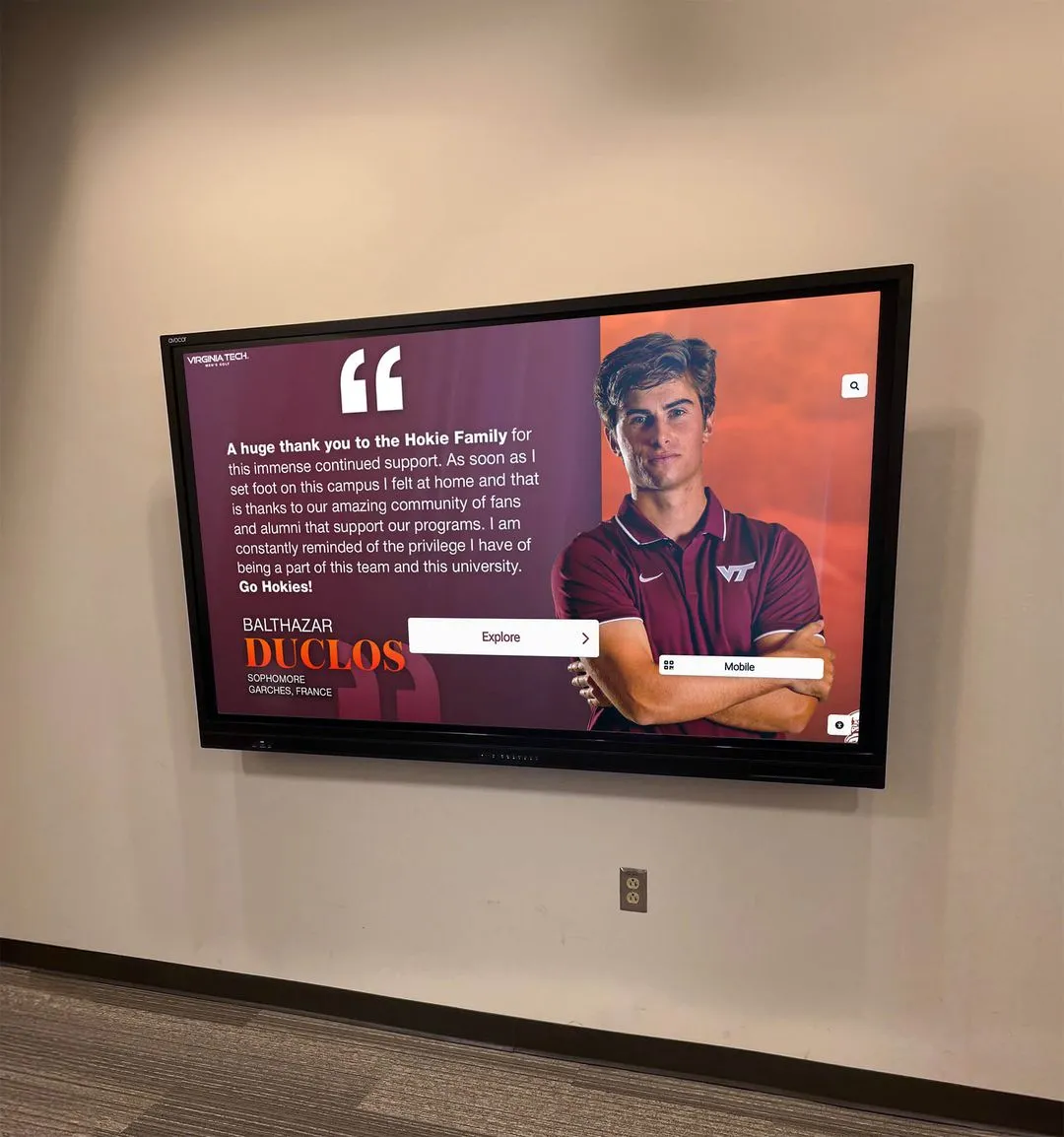
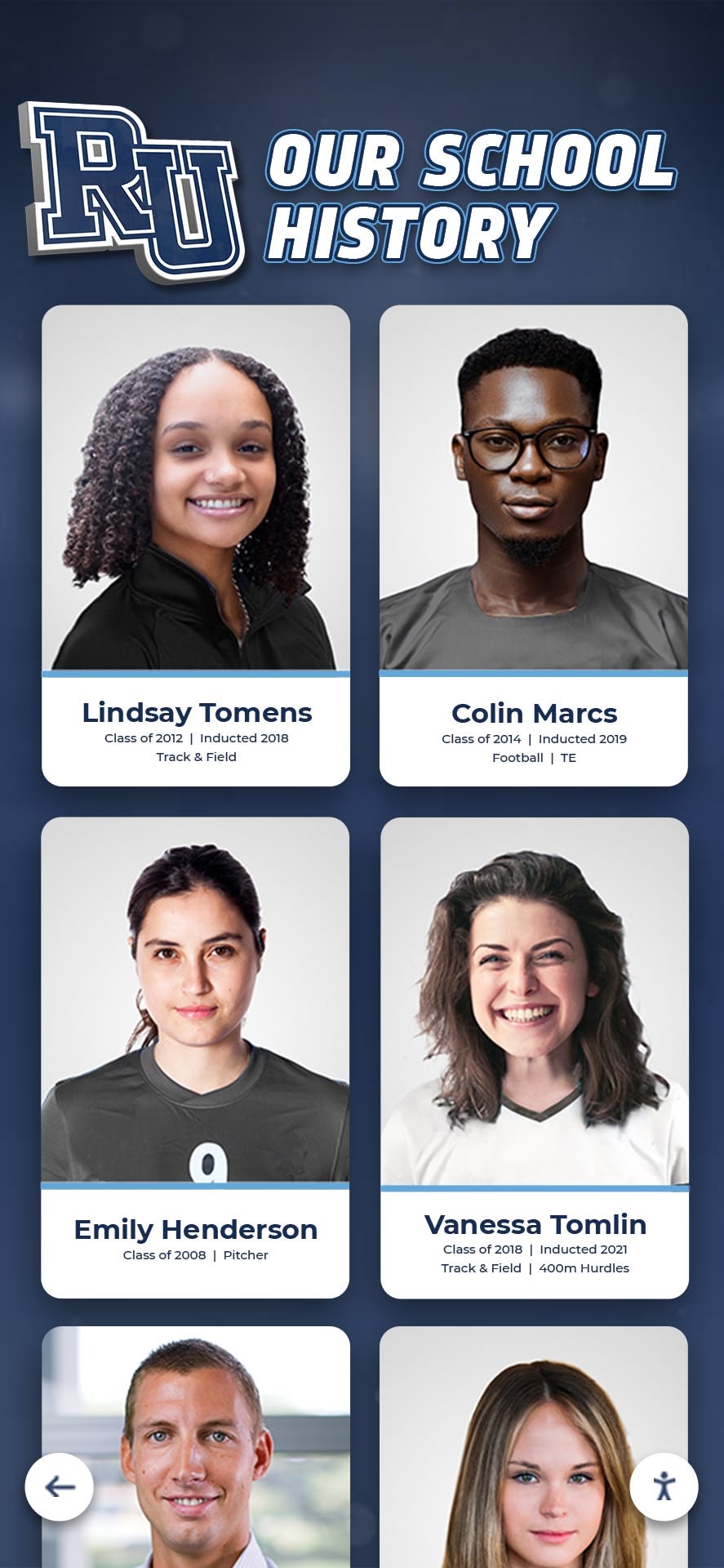
Rich Multimedia Profiles: Rather than simple name listings, digital recognition enables comprehensive student profiles featuring professional photography, detailed achievement descriptions, academic journey narratives, student testimonials and advice for peers, and connections to broader achievement records.
Unlimited Recognition Capacity: Physical plaques and bulletin boards accommodate limited names before exhausting available space. Digital platforms recognize every Dean’s List student across all achievement levels and semesters without constraint—ensuring comprehensive recognition rather than selective acknowledgment limited by physical capacity.
Real-Time Updates and Timely Recognition: Cloud-based content management enables instant updates ensuring Dean’s List recognition appears immediately after grades finalize. This timely acknowledgment maximizes motivational impact while achievement feels fresh and meaningful.
Solutions like Rocket Alumni Solutions provide purpose-built platforms designed specifically for educational recognition, offering intuitive interfaces requiring no technical expertise while creating engaging user experiences that capture attention and inspire continued excellence.
Schools implementing comprehensive digital recognition report significant benefits: increased student engagement with academic programming, enhanced institutional pride and school culture around intellectual achievement, improved prospective family impressions during campus tours, and strengthened alumni connections as graduates return to find their historical achievements.
For institutions comparing different approaches, resources like digital signage content strategies provide frameworks evaluating options and identifying optimal solutions for specific institutional contexts.
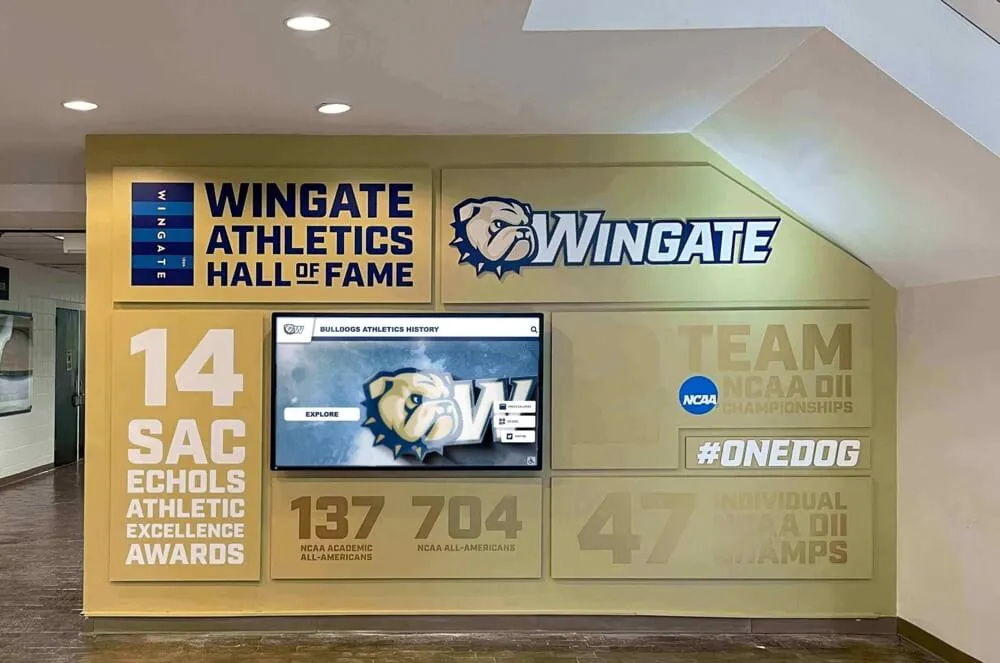
Strategic Display Placement Maximizes Visibility
Technology excellence means little if recognition displays occupy low-traffic locations where community members rarely encounter them. Strategic placement ensures maximum visibility and engagement:
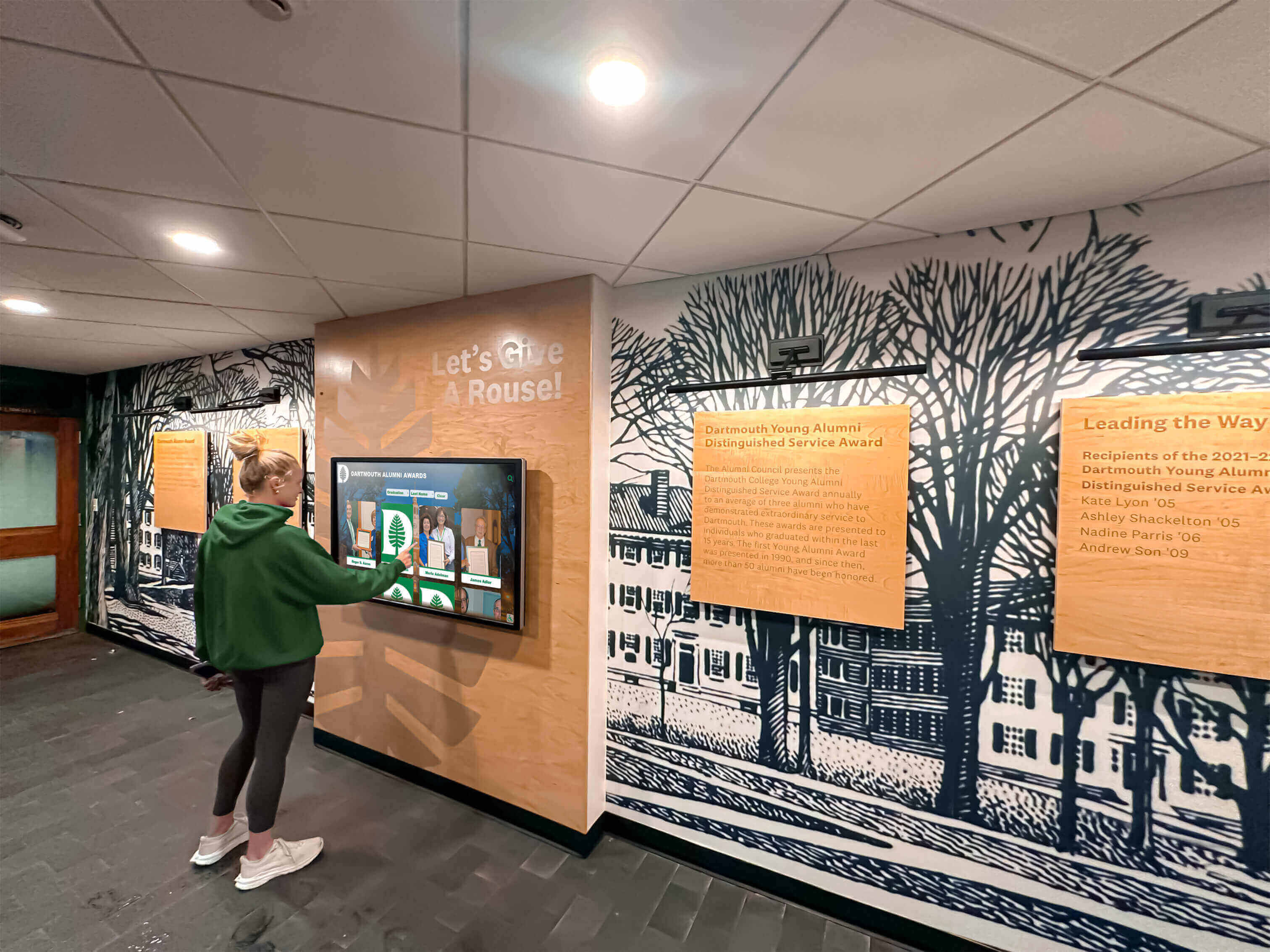
Main Entrance and Lobby Areas: High-traffic locations where prospective students, visiting families, and community members immediately encounter academic excellence evidence. These prominent placements communicate institutional priorities while creating positive first impressions.
Student Circulation Spaces: Cafeterias, common areas, and main hallways where students naturally congregate ensure consistent exposure to Dean’s List recognition. Daily visibility creates sustained motivational impact rather than occasional awareness from infrequently visited locations.
Near Academic Advising and Registration: Placing displays where students conduct academic business creates opportunities for advisors to reference specific students during planning conversations, strengthening connection between recognition and academic planning decisions.
Athletic and Student Life Facilities: Recognition displays in traditionally athletics-focused spaces demonstrate that schools value intellectual achievement equally to physical accomplishment, helping balance campus culture around diverse forms of excellence.
Multi-Channel Recognition Communication
Digital displays provide recognition foundation, but maximum impact requires systematic communication across multiple channels ensuring entire school communities celebrate Dean’s List achievement:
Direct Student and Family Notification: Personal emails congratulating students and informing families when Dean’s List recognition is awarded, formal letters suitable for framing and permanent keeping, social media features (with appropriate permissions) celebrating individual achievements, and text message alerts through school communication systems providing immediate acknowledgment.
Community-Wide Announcements: School newsletter features explaining Dean’s List benefits and highlighting recipients, website recognition pages showcasing current and historical honorees, assembly or convocation acknowledgment during campus gatherings, and local media announcements submitting Dean’s List names to community newspapers.
Integration with Career Services: Career counselor notification enabling targeted outreach for internship opportunities, resume building workshops emphasizing how to effectively feature Dean’s List recognition, and employer relationship leveraging by introducing high-achieving students to recruiting partners.
Schools interested in comprehensive recognition strategies can explore student recognition programs that integrate Dean’s List acknowledgment with broader achievement celebration frameworks.
Creating Cultures That Value Academic Excellence
Dean’s List benefits multiply when institutional cultures genuinely celebrate intellectual achievement rather than treating academic recognition as afterthought compared to athletic success, performing arts accomplishments, or other highly visible activities.
Balancing Recognition Across Achievement Dimensions
Schools build healthy achievement cultures by celebrating excellence across diverse domains:
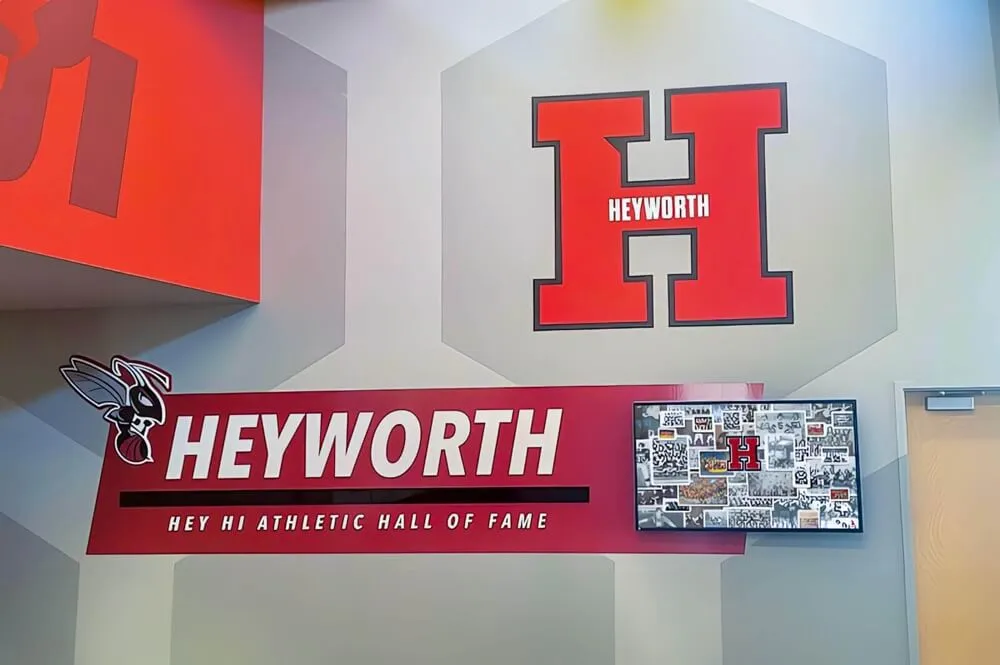
Comparable Visibility: Ensure academic recognition receives display prominence equal to athletic halls of fame, performing arts showcases, or other achievement areas. When trophy cases dominate main entrances while academic recognition occupies obscure hallway corners, students internalize implicit messages about relative value of different accomplishments.
Integrated Recognition Systems: Rather than siloed programs celebrating athletics, academics, arts, and service independently, comprehensive recognition platforms showcase well-rounded student excellence across all dimensions. This integration demonstrates that schools value complete student development rather than narrow excellence in single areas.
Leadership Emphasis: School leaders should reference academic achievement as frequently and enthusiastically as they celebrate athletic victories or artistic performances. When principals, presidents, and other visible leaders consistently highlight Dean’s List students in communications and public remarks, they signal genuine institutional commitment to intellectual excellence.
Creating Aspirational Achievement Pathways
Effective recognition programs don’t simply acknowledge past achievement—they inspire future excellence by making achievement pathways visible and attainable:
Clear Criteria Communication: Students cannot pursue goals they don’t understand. Schools should prominently explain Dean’s List requirements, calculation methods, and qualification criteria ensuring students know exactly what achievement requires and can make informed decisions about academic effort investment.
Progress Tracking and Goal-Setting Tools: Enable students to monitor their progress toward Dean’s List qualification throughout semesters rather than discovering achievement only after grades finalize. Real-time progress awareness maintains motivation while enabling course corrections before final grades determine recognition eligibility.
Success Strategy Resources: Provide concrete guidance helping students achieve Dean’s List recognition: study skill workshops and time management training, tutoring services and academic support resources, peer mentorship connecting current students with previous Dean’s List recipients, and faculty advising about course selection balancing rigor with realistic success probability.
Recognizing Growth and Improvement
While Dean’s List programs appropriately recognize absolute achievement levels, comprehensive systems also acknowledge improvement and growth:
First-Time Dean’s List Recognition: Students earning Dean’s List recognition for the first time deserve special celebration marking milestone achievement. This acknowledgment proves particularly meaningful for students who previously struggled academically, demonstrating that excellence is attainable through dedication and effective strategies.
Sustained Excellence Honors: Students maintaining Dean’s List status across multiple consecutive semesters demonstrate exceptional consistency deserving additional recognition. Some institutions establish special designations (Dean’s List with Distinction, Sustained Excellence Recognition) for students achieving repeated Dean’s List qualification.
Improvement Recognition Categories: Complement Dean’s List programs with recognition for students demonstrating significant GPA improvement even when absolute achievement levels haven’t yet reached Dean’s List thresholds. These parallel recognition categories ensure students making remarkable progress receive acknowledgment motivating continued improvement.
For comprehensive frameworks integrating multiple recognition dimensions, schools can reference academic honor recognition systems designed to celebrate excellence across diverse achievement types and student populations.
Leveraging Dean’s List Recognition for Institutional Advancement
Beyond individual student benefits, Dean’s List recognition serves important institutional purposes supporting enrollment management, reputation building, and advancement initiatives.
Enrollment Marketing and Recruitment
Prospective students and families evaluating school options consider academic culture and intellectual community quality as critical decision factors:
Campus Tour Integration: Train admission ambassadors to highlight Dean’s List recognition displays during campus tours, explaining program criteria and showcasing institutional commitment to academic excellence. These demonstrations provide concrete evidence of thriving academic communities rather than abstract claims about educational quality.
Marketing Materials and Communications: Feature Dean’s List statistics in recruitment materials including number of Dean’s List students each semester, percentage of student body achieving Dean’s List recognition, profiles of high-achieving students and their post-graduation success stories, and institutional resources supporting academic achievement.
Digital Presence and Virtual Tours: Ensure Dean’s List recognition appears prominently in virtual campus tours and website content reaching prospective families unable to visit physically. Online recognition showcases provide 24/7 marketing demonstrating academic excellence to global audiences.
Alumni Relations and Engagement
Dean’s List alumni represent particularly valuable institutional resources for advancement initiatives:
Distinguished Alumni Identification: Dean’s List achievement during student years often predicts professional success and leadership capacity after graduation. Advancement offices can prioritize Dean’s List alumni when identifying potential major donors, volunteer leaders, and institutional advocates.
Networking and Mentorship Programs: Connect current Dean’s List students with alumni who achieved similar recognition during their educational experiences. These shared achievement bonds create natural mentorship foundations while strengthening alumni engagement through meaningful giving-back opportunities.
Reunion and Recognition Events: Host special gatherings celebrating Dean’s List alumni during reunion weekends or homecoming periods. These events honor past achievement while building community among high-achieving graduates, potentially increasing philanthropic support and volunteer engagement.
Fundraising and Donor Cultivation
Academic achievement recognition provides compelling narratives for fundraising initiatives:
Scholarship Impact Storytelling: Feature Dean’s List students who received scholarship support in donor communications, demonstrating how philanthropic investments directly enable academic excellence. These concrete examples prove more compelling than abstract appeals about scholarship importance.
Endowed Recognition Programs: Invite donors to establish named Dean’s List awards or recognition programs creating permanent philanthropic legacy. These opportunities appeal particularly to alumni who value academic achievement and wish to inspire future student excellence.
Corporate Partnership Development: Present Dean’s List programs to corporate partners seeking to identify high-potential early-career talent. Company-sponsored recognition components create mutually beneficial partnerships connecting employers with exceptional students while providing institutional resources supporting expanded recognition programming.
Many schools find that solutions like donor recognition displays can integrate philanthropic and academic achievement celebration, demonstrating institutional gratitude while showcasing student excellence donors help enable.

Addressing Common Questions About Dean’s List Benefits
Students, families, and educators frequently have questions about Dean’s List recognition value and how to maximize benefits:
Does Dean’s List recognition really matter for careers? While professional success ultimately depends on work performance, Dean’s List achievement provides measurable career advantages including resume differentiation in competitive job markets, favorable employer perceptions during candidate evaluation, and networking opportunities through honor societies and alumni connections. These benefits prove particularly valuable during early career stages when professional track records remain limited.
How should students feature Dean’s List recognition on resumes? Include Dean’s List achievement in education sections immediately following degree information: “Bachelor of Science in Biology, XYZ University, May 2025. Dean’s List: Fall 2022, Spring 2023, Fall 2023, Spring 2024, Fall 2024.” This formatting clearly communicates consistent high achievement rather than isolated exceptional semesters. Students can also reference Dean’s List recognition in cover letters when explaining academic qualifications.
Do graduate schools really consider Dean’s List achievement? Graduate admissions committees reviewing hundreds of qualified applicants use academic honors including Dean’s List as meaningful differentiators. While standardized test scores, recommendation letters, and other factors remain important, Dean’s List recognition strengthens applications by demonstrating sustained excellence rather than sporadic performance. This consistent achievement pattern signals capability for demanding graduate curricula.
Should schools recognize Dean’s List students publicly or privately? Research in educational psychology suggests that public recognition creates stronger motivational effects than private acknowledgment alone. Public celebration through digital displays, ceremonies, and communications validates achievement socially while inspiring peers. However, schools should always respect student privacy preferences and obtain appropriate permissions before featuring students in public-facing recognition media.
How can schools afford comprehensive digital recognition systems? Modern digital recognition platforms have become increasingly affordable with options ranging from basic digital signage solutions to comprehensive interactive systems. Many schools find that digital recognition actually reduces long-term costs compared to repeatedly updating physical plaques or printed materials each semester. When evaluating options, schools should consider total cost of ownership including initial hardware, ongoing software subscriptions, content management time, and maintenance requirements rather than focusing exclusively on upfront capital investment.
Conclusion: Maximizing the Value of Academic Achievement Recognition
Dean’s List benefits extend far beyond the recognition semester, delivering advantages that shape scholarship access, career trajectories, graduate education opportunities, professional networks, and personal development in ways that compound throughout life. Students who understand these comprehensive benefits become more motivated to achieve and maintain Dean’s List status, while institutions that recognize these advantages invest appropriately in recognition programs maximizing student and institutional outcomes.
Traditional recognition approaches—brief email notifications, printed certificates stored in desk drawers, or temporary bulletin board postings—fail to create the sustained visibility, engagement, and impact that modern students deserve and contemporary institutions require. Digital recognition platforms transform academic achievement celebration by eliminating space constraints that force selective recognition, enabling rich multimedia content honoring students comprehensively, providing instant updates ensuring timely acknowledgment, creating interactive experiences engaging digital-native students, and extending recognition reach beyond physical campuses through web accessibility.
Schools committed to academic excellence must ensure their recognition practices match the quality of student achievement they celebrate. When Dean’s List recipients receive acknowledgment equal in prominence and professionalism to athletic championships or performing arts triumphs, institutions communicate authentic commitment to intellectual excellence while building cultures where academic achievement becomes aspirational rather than something students downplay to avoid peer judgment.
Your Dean’s List students invested extraordinary effort achieving academic distinction that sets them apart from peers. They deserve recognition that honors their accomplishments permanently, inspires current students pursuing similar excellence, and preserves their legacy within your institution’s proud academic tradition. Modern digital recognition solutions provide the optimal approach to accomplishing these goals while supporting enrollment marketing, alumni engagement, and advancement initiatives that benefit entire institutional communities.
Ready to transform how your school celebrates Dean’s List achievement and academic excellence? Discover how Rocket Alumni Solutions can help you create comprehensive recognition programs that honor every student’s achievements while building thriving cultures of academic excellence that inspire future generations. Your students achieve remarkable things every semester—ensure those achievements receive celebration that maximizes both individual benefits and institutional impact.