



Key Takeaways
Explore the College Football Hall of Fame and learn how schools can create their own halls of fame to recognize local athletic legends and inspire current athletes through modern digital recognition displays.
The roar of 100,000 fans, the crunch of helmets colliding, the electric atmosphere of Saturday afternoon in autumn—college football represents more than just athletic competition. It embodies tradition, school pride, community identity, and generations of athletes who dedicated themselves to excellence on the gridiron. When these athletes achieve greatness, they deserve recognition that preserves their legacies and inspires future generations. The College Football Hall of Fame in Atlanta stands as the sport’s ultimate shrine, but thousands of colleges and universities across America create their own halls of fame honoring local legends whose achievements built athletic programs and inspired entire communities.
Whether you’re exploring the national College Football Hall of Fame, planning to establish a football recognition program at your institution, or seeking modern approaches to celebrate athletic excellence, understanding how effective recognition systems honor achievement provides valuable insights for preserving athletic heritage while motivating current student-athletes pursuing their own places in program history.
The College Football Hall of Fame: Celebrating the Sport’s Greatest Legends
Located in the heart of Atlanta’s sports and entertainment district, the College Football Hall of Fame serves as the definitive repository of college football history, honoring the sport’s most distinguished players and coaches while celebrating the traditions that make college football uniquely captivating.
History and Mission
The National Football Foundation established the College Football Hall of Fame in 1951, with the first class of inductees enshrined that year. Originally housed in New Brunswick, New Jersey, the Hall of Fame moved to Kings Island, Ohio in 1978, then to South Bend, Indiana in 1995, before relocating to its current Atlanta location in 2014.

The 94,256 square-foot Atlanta facility represents a state-of-the-art celebration of college football combining traditional hall of fame recognition with cutting-edge interactive technology. More than 1,000 inductees have been enshrined since inception, representing the pinnacle of achievement across college football’s 150+ year history.
The Hall of Fame’s mission extends beyond static recognition—it actively promotes amateur football while preserving its history through educational programs, youth football initiatives, and extensive archival collections documenting the sport’s evolution from informal campus games in the 1860s to today’s multi-billion dollar enterprise showcasing exceptional athleticism and strategic sophistication.
The Induction Process and Selection Criteria
The College Football Hall of Fame maintains rigorous standards ensuring only truly exceptional careers receive enshrinement:
Eligibility Requirements for Players:
Strict criteria prevent premature induction while ensuring comprehensive career evaluation:
- First Team All-America recognition by an NCAA-recognized selector during their playing career
- Final college game played at least 10 years prior to consideration
- College career must have ended within the past 50 years (players who completed careers more than 50 years ago require special veterans committee consideration)
- Official nomination by their institution
- Exceptional post-college conduct reflecting positively on the game
Only approximately 5.2 million people have played college football, and of those, only 1,027 players have earned Hall of Fame induction—representing less than 0.02% of all who’ve competed. This selectivity underscores the extraordinary distinction enshrinement represents.
Coaches Eligibility:
Coaching induction recognizes sustained excellence and program building:
- At least 10 years of head coaching experience at the college level
- Winning percentage of at least .600
- Final coaching season completed at least three years prior to nomination
- Significant impact on the sport beyond win-loss records
- Continued demonstration of character consistent with hall of fame values
Coaches who built legendary programs, developed innovative strategies, mentored future coaches, and consistently competed at championship levels earn consideration alongside the players they coached to greatness.
The Honors Court Selection Process:
The National Football Foundation’s Honors Court—comprising hall of famers, historians, journalists, and distinguished football figures—evaluates nominees annually through multiple voting rounds. The process involves preliminary screening narrowing the nominee pool, detailed evaluation of finalist credentials, extensive deliberation about comparative excellence across different eras and playing styles, and final balloting requiring substantial super-majority support.
This multi-stage process with high vote thresholds ensures that inductees genuinely represent the sport’s most distinguished contributors rather than merely very good players or coaches who had strong advocacy but lacked truly exceptional achievement.
Notable Inductees and Their Legacies
The College Football Hall of Fame roster reads like a who’s-who of American athletic excellence:
Legendary Running Backs:
- Herschel Walker (Georgia): Heisman Trophy winner whose 1980 freshman season transformed Georgia football
- Barry Sanders (Oklahoma State): Electrifying runner whose single-season records defined offensive excellence
- Archie Griffin (Ohio State): Only two-time Heisman Trophy winner, exemplifying sustained excellence
- Tony Dorsett (Pittsburgh): National champion whose 1976 season established modern rushing standards
Dominant Defensive Players:
- Dick Butkus (Illinois): Middle linebacker who redefined the position’s aggressive physicality
- Ronnie Lott (USC): Hard-hitting safety whose intimidating style influenced defensive backfield play
- Charles Woodson (Michigan): Heisman-winning defensive back demonstrating elite two-way excellence
Coaching Legends:
- Bear Bryant (Alabama): 323 career victories building Alabama’s dynasty across three decades
- Woody Hayes (Ohio State): Five national championships establishing Big Ten dominance
- Joe Paterno (Penn State): 409 career wins and Grand Experiment philosophy emphasizing academic achievement alongside athletic success
- Bobby Bowden (Florida State): Built Florida State from regional program to national powerhouse
These inductees represent not just statistical excellence but transformative impact—athletes and coaches whose achievements elevated programs, defined eras, and inspired generations of subsequent competitors.
Interactive Exhibits and Visitor Experience
The Atlanta facility revolutionized hall of fame experiences by emphasizing interactive engagement over static displays:
The Playing Field:
A 45-yard indoor football field enables visitors to test skills through quarterback challenges throwing at moving targets, field goal kicking competitions, punt and pass accuracy tests, and timed 40-yard dash sprints comparing results against hall of fame inductees and current college athletes.
Quest for the Best:
Interactive touchscreen displays allow visitors to build all-time teams selecting from hall of fame inductees, compare statistical achievements across different eras, explore historic rivalry matchups and championship games, and debate greatest-ever questions through data-driven analysis.
College Football Theater:
Immersive presentations celebrate game day traditions including marching bands, mascots, fight songs, student sections, and the unique pageantry distinguishing college football from professional leagues. The theater experience captures emotional connections that make college football culturally significant beyond pure athletic competition.
Helmet Wall:
All 774 current college football programs display their helmets creating a stunning visual representation of the sport’s geographic breadth and stylistic diversity. Visitors locate their alma maters, trace helmet design evolution, and appreciate the sport’s grassroots presence across American higher education.
These interactive elements transform passive observation into active participation, creating memorable experiences that deepen appreciation for college football’s history and excellence while appealing to younger generations accustomed to hands-on digital engagement.
Why Schools Need Football Hall of Fame Programs
While the national College Football Hall of Fame honors sport-wide legends, institutional halls of fame preserve local program history while delivering significant benefits for schools, athletes, and communities:
Preserving Program Heritage and History
Athletic achievements represent important institutional memory worth documenting systematically:
Preventing Historical Loss:
As decades pass, record-breaking seasons fade from memory, legendary coaches retire and pass away, championship teams graduate and disperse, and program-defining moments risk being forgotten without permanent documentation. Hall of fame programs create authoritative records ensuring outstanding achievements remain part of collective consciousness rather than gradually disappearing as time passes.
Many schools discover archived yearbooks and newspaper clippings revealing remarkable athletes and achievements that current community members have completely forgotten—hall of fame programs rescue these stories from obscurity.
Providing Historical Context:
Recognition programs help current stakeholders understand program trajectory over time. When schools systematically document all-conference selections, state championship appearances, coaching tenures, and milestone achievements, patterns emerge showing program development, competitive eras, and foundational contributors whose work enabled subsequent success.
This historical perspective proves particularly valuable during challenging seasons—when current teams struggle, connection to past excellence reminds communities that programs have overcome adversity before and will again. Resources on preserving athletic program history provide comprehensive frameworks for documentation efforts.
Inspiring Current Student-Athletes
Visible recognition of past excellence powerfully motivates current competitors:
Creating Concrete Aspirational Goals:
When young football players see displays showing that athletes who once wore the same uniform achieved all-state honors, set program records, earned college scholarships, or played professionally, their own aspirations expand. Recognition answers the critical question every athlete asks: “What’s possible for someone like me?”
Abstract encouragement to “work hard” becomes concrete when athletes see specific achievements by specific people who came before them. This transforms vague dreams into measurable objectives athletes pursue through intentional training, film study, weight room dedication, and competitive focus.
Establishing Achievement Standards:
Hall of fame criteria create clear benchmarks for excellence—1,000 career rushing yards, first-team all-conference selection, team captain designation, program records. These standards function as achievement roadmaps guiding athlete development from freshman orientation through senior seasons.
Coaches reinforce connections between current performance and recognition potential: “If you maintain 5 yards per carry this season and next, you’ll threaten the career rushing record. That’s hall of fame territory.” This specificity makes abstract potential concrete and actionable. Learning about football recognition programs and awards helps schools establish meaningful achievement frameworks.
Connecting Athletes to Program Traditions:
When schools systematically recognize past excellence, they create tangible connections between current athletes and program history. Players wear jersey numbers previously worn by hall of famers, compete on fields named after legendary coaches, and represent traditions built over generations.
These connections foster program pride and identity stronger than transient roster compositions. Athletes understand they’re temporary stewards of something larger than themselves—a realization promoting team-first attitudes, respect for program values, and commitment to leaving the program better than they found it.
Strengthening Alumni Engagement
Former athletes who feel valued through hall of fame recognition maintain stronger connections to programs throughout their lives:
Creating Re-Engagement Opportunities:
Hall of fame programs provide natural touchpoints reconnecting alumni with institutions:
- Induction ceremonies bring former athletes back to campus for celebratory events
- Recognition announcements create communication opportunities updating alumni about program developments
- Displays themselves spark conversations when alumni visit for games, reunions, or other events
- Alumni featured in recognition systems share their profiles through social media, extending institutional reach
These connections often translate into increased support beyond mere sentimentality—engaged alumni volunteer as coaches or mentors, promote programs within their networks, provide career connections for current student-athletes, and contribute financially to program needs. Exploring effective alumni engagement strategies helps schools maximize these valuable relationships.
Honoring Contributions Appropriately:
Former student-athletes appreciate institutions that remember their contributions decades after graduation. Hall of fame recognition communicates “Your achievements mattered. Your sacrifices built this program. You’re still part of our community.”
This validation proves particularly meaningful for athletes from non-championship eras or athletes whose achievements might otherwise be overshadowed by more recent success. Comprehensive recognition ensures all deserving contributors receive appropriate honor regardless of when they competed.
Enhancing Recruiting and Building Program Pride
Recognition systems contribute significantly to athletic program culture and community identity:
Recruitment Appeal:
Prospective student-athletes evaluate programs partially based on how institutions honor achievement. During campus visits, impressive hall of fame displays demonstrate program tradition, commitment to excellence, and institutional respect for athletic achievement.
Recruits envision themselves potentially earning similar recognition—a powerful motivator for choosing one program over competitors. Parents particularly appreciate recognition systems suggesting institutions value and remember individual contributions rather than viewing athletes as interchangeable roster positions.
Community Pride and Identity:
Hall of fame programs strengthen community connections to athletic programs by celebrating local heroes rather than distant professional stars, documenting shared history creating collective identity, providing positive stories for media coverage, and generating pride transcending individual seasons’ outcomes.
Communities rally around programs that systematically celebrate achievement rather than moving on immediately after each season ends. Recognition demonstrates that excellence matters and contributions are remembered—institutional commitments that inspire broader support. Schools can leverage building school pride strategies to strengthen these community connections.
Establishing Selection Criteria for Football Hall of Fame Programs
Credible recognition programs require transparent selection criteria ensuring fair, defensible decisions that maintain standards over time:
Defining Achievement Categories
Comprehensive football hall of fame programs recognize diverse contributions:
Player Recognition Categories:
Multiple achievement pathways ensure broad representation:
- All-Conference and All-State Honors: Players earning conference or state recognition whose excellence achieved visibility beyond institutional boundaries
- Statistical Excellence: Career or season record holders in rushing yards, passing yards, touchdowns, tackles, interceptions, or other key metrics
- Championship Contributors: Members of conference championship, state championship, or playoff teams whose collective achievements warrant recognition
- Positional Milestones: Position-specific achievements like 1,000-career rushing yards, 3,000-career passing yards, or 100-career tackles
- Individual Awards: Winners of Most Valuable Player, Offensive/Defensive Player of Year, or similar honors
- Character and Leadership: Team captains, scholar-athletes, and players who exemplified program values alongside athletic achievement
This multi-category approach prevents recognition from becoming purely statistical while ensuring diverse playing styles, positions, and eras receive appropriate consideration. Understanding best practices for showcasing athletic achievement helps schools develop comprehensive criteria.
Coaching Recognition:
Outstanding coaches who built programs deserve recognition alongside players:
- Conference and state championships won
- Career victory milestones (50, 100, 200+ wins)
- Years of service demonstrating sustained program commitment
- Players developed who earned college scholarships or higher recognition
- Coaching awards and professional honors received
- Innovations or strategic contributions advancing program competitiveness
- Mentorship of assistant coaches who became successful head coaches
Contributor Recognition:
Programs benefit from recognizing non-coaching contributors:
- Athletic directors who built program infrastructure
- Boosters whose financial support enabled program development
- Team physicians, trainers, or equipment managers with exceptional service
- Media members who promoted programs and documented history
- Officials, administrators, or community leaders who significantly supported programs
Setting Eligibility Standards
Clear requirements prevent confusion while establishing meaningful thresholds:
Waiting Periods:
Most programs establish minimum years after graduation before eligibility:
- Typical waiting periods range from 5-10 years for players
- Waiting periods allow perspective on complete careers including post-football success
- Extended periods prevent recency bias favoring recent athletes over historical excellence
- Different waiting periods may apply to different recognition categories
- Posthumous recognition exceptions honor deceased individuals immediately
Completion Requirements:
Define what constitutes a complete career deserving consideration:
- Minimum years of participation (typically 2-3 seasons)
- Completion of athletic eligibility at the institution
- Academic standing requirements if programs emphasize scholar-athlete values
- Good standing at time of departure from program
Character Standards:
Many programs explicitly require recognition candidates demonstrate character consistent with institutional values:
- Absence of serious disciplinary issues during enrollment
- Post-graduation conduct reflecting positively on institution
- Sportsmanship demonstrated during competition
- Academic achievement balancing athletics with educational priorities
Character criteria ensure hall of fame honorees represent aspirational role models for current student-athletes rather than merely statistical achievers whose behavior undermined program values.
Developing Nomination and Selection Processes
Structured procedures maintain program credibility and reduce controversy:
Nomination Procedures:
Define who can nominate candidates and how:
- Open nominations allowing coaches, alumni, fans, or community members to submit candidates
- Official nomination forms requesting comprehensive achievement information
- Annual nomination periods with clear deadlines publicized through multiple channels
- Required documentation including statistics, awards, references, and biographical information
- Self-nomination policies (permitted or prohibited based on program preferences)
Standardized nomination processes ensure qualified candidates receive consideration while preventing uninformed nominations that waste selection committee time.
Selection Committee Structure:
Diverse committees resist capture by individual interests while bringing multiple perspectives:
- Athletic directors or senior administrators providing institutional perspective
- Current and former coaches representing program knowledge across different eras
- Previous hall of fame inductees offering honoree perspectives
- Booster club or alumni association representatives connecting to broader stakeholder communities
- Faculty athletic representatives ensuring academic values consideration
- Media members or community figures providing external perspectives
Committee size typically ranges from 7-15 members with staggered multi-year terms ensuring continuity while regularly refreshing perspectives. Larger committees reduce perception of individual bias in selection decisions.
Voting Procedures:
Clear protocols ensure consistent, defensible selections:
- Secret ballots preventing political pressure or retaliation concerns
- Supermajority vote requirements (commonly 2/3 or 3/4 approval) ensuring broad committee support
- Multiple voting rounds progressively narrowing candidate pools
- Documented decision rationales preserving institutional memory
- Conflict of interest policies requiring recusal when committee members have direct relationships with nominees
- Appeals or reconsideration procedures addressing factual errors or egregious oversights
Higher vote thresholds ensure inductees enjoy broad consensus rather than bare majorities that might prompt controversy about selection legitimacy.
Modern Recognition Display Options: Traditional vs. Digital
Schools implementing football hall of fame programs face important decisions about display formats, each offering distinct advantages:
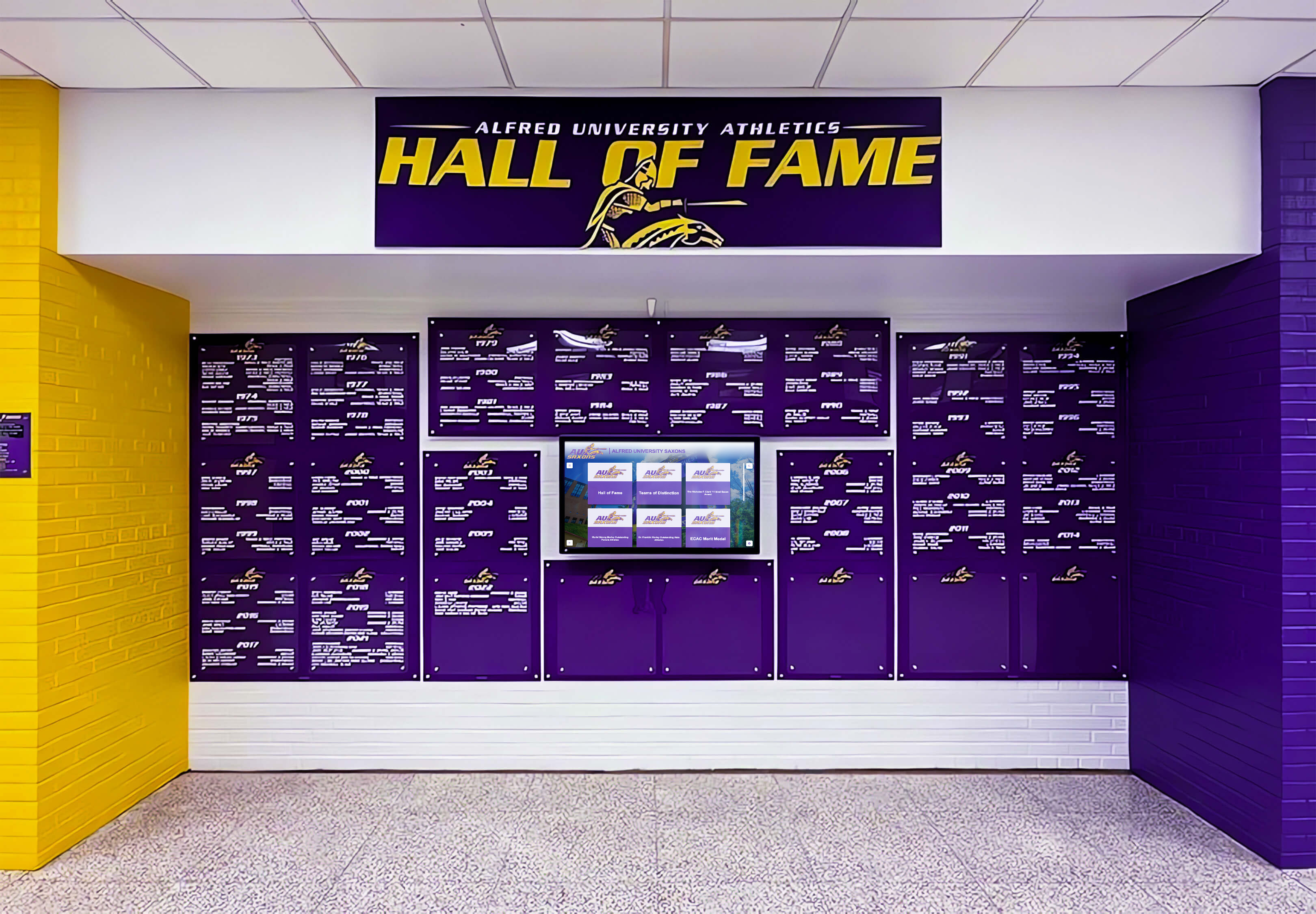
Traditional Physical Displays
Engraved Plaques:
Classic brass or bronze plaques mounted on dedicated walls provide permanent, formal recognition creating impressive visual impact. Traditional plaques work well for institutions valuing permanence and classic aesthetics that match architectural styles.
Advantages:
- Tangible, permanent physical presence creating gravitas
- Traditional aesthetic matching institutional architecture
- No electricity or technology maintenance required
- Immediate visibility without user interaction
Limitations:
- Space constraints eventually limit program growth as walls fill
- Updates or error corrections require expensive plaque replacement
- Very limited information capacity (typically just name, year, achievement)
- Ongoing per-inductee costs accumulating over decades
- Physical deterioration from exposure, requiring eventual replacement
Photo Display Boards:
Framed photographs with biographical text offer more personal connection than simple nameplates, allowing visitors to see inductees’ faces alongside achievement narratives.
Advantages:
- Visual recognition creating stronger personal connections
- More comprehensive biographical information than simple plaques
- Grouped displays creating impressive visual collections
Limitations:
- Maintaining consistent photography quality and styling across decades proves challenging
- Similar space constraints as plaque installations
- Difficult and expensive to update or correct information
- Physical maintenance (glass cleaning, frame repair, UV protection)
- Photos fade and frames deteriorate requiring periodic replacement
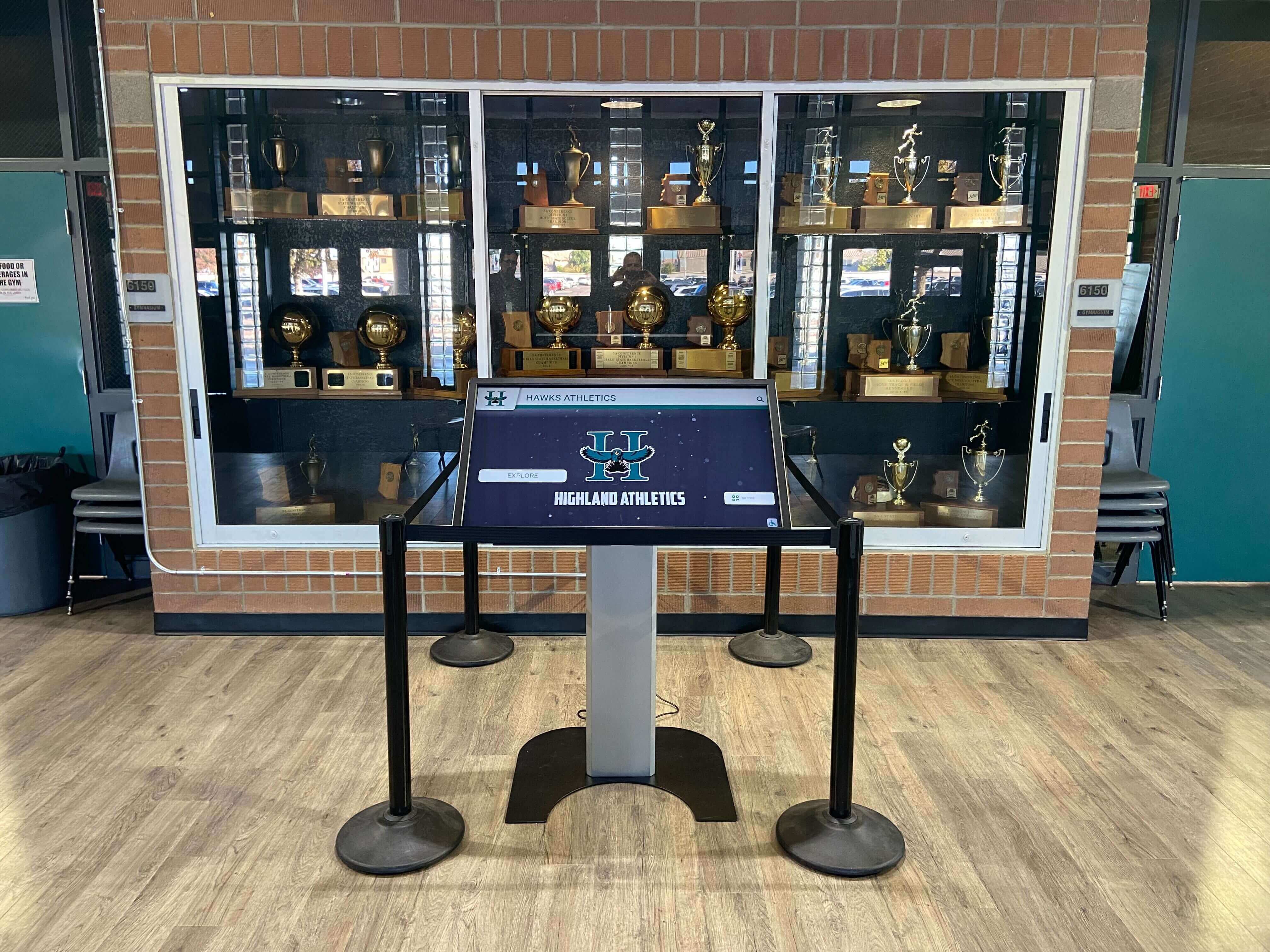
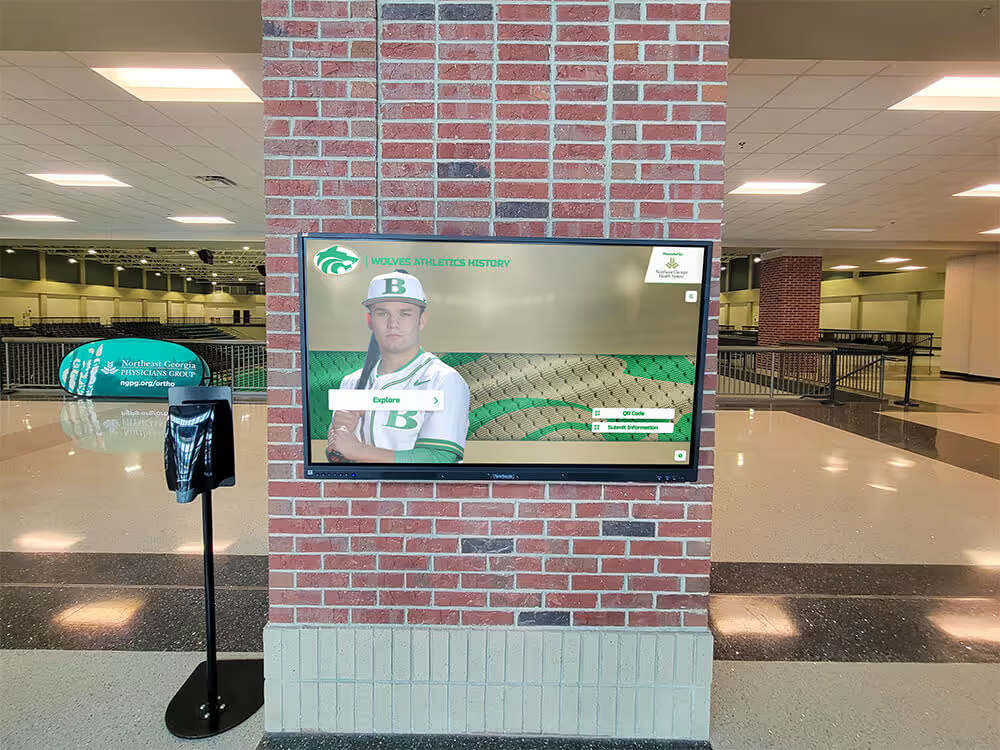
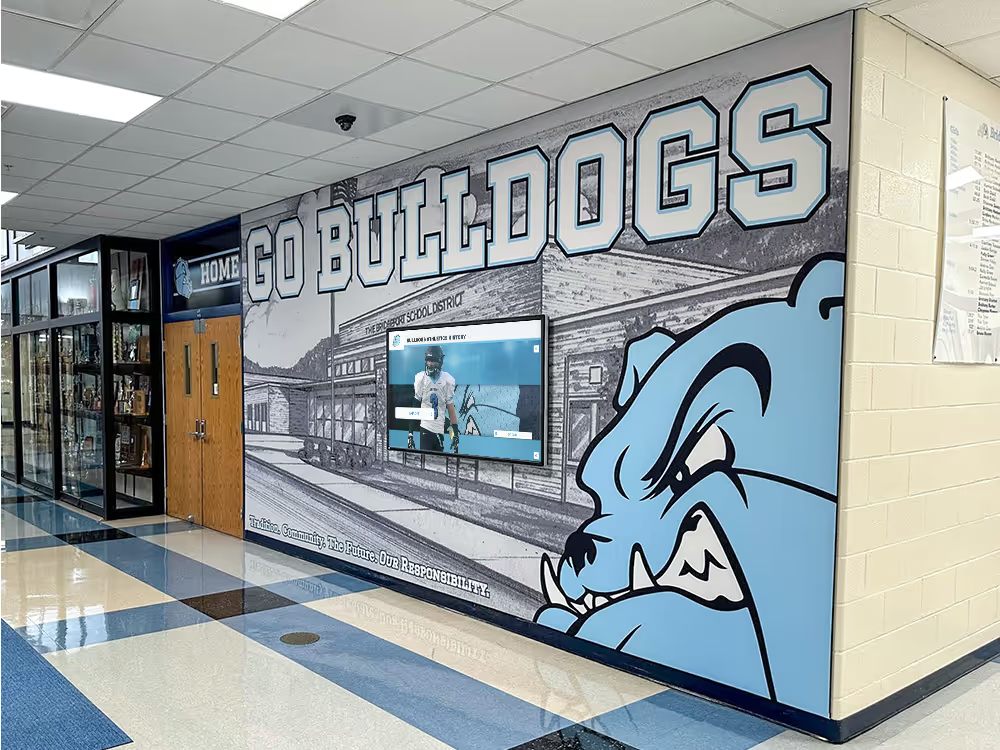
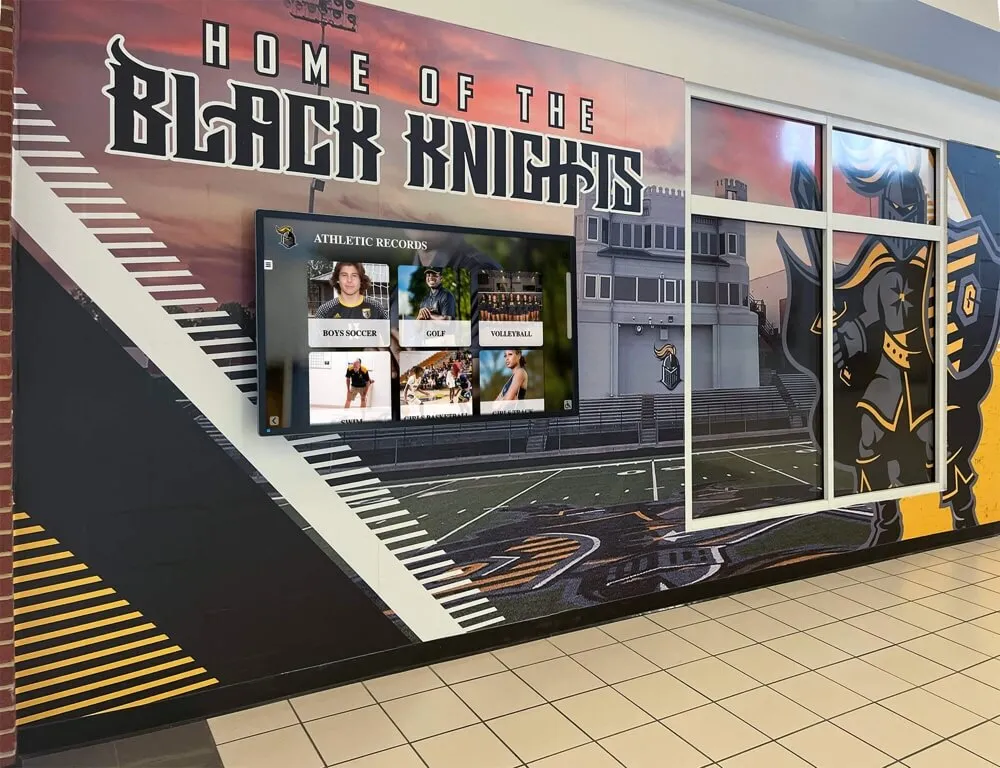
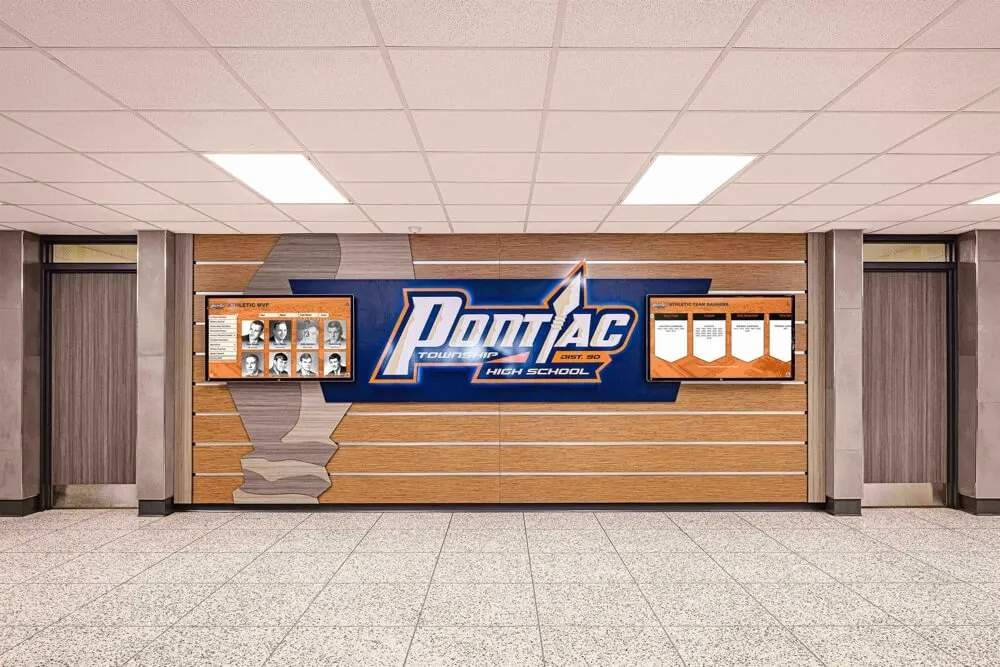
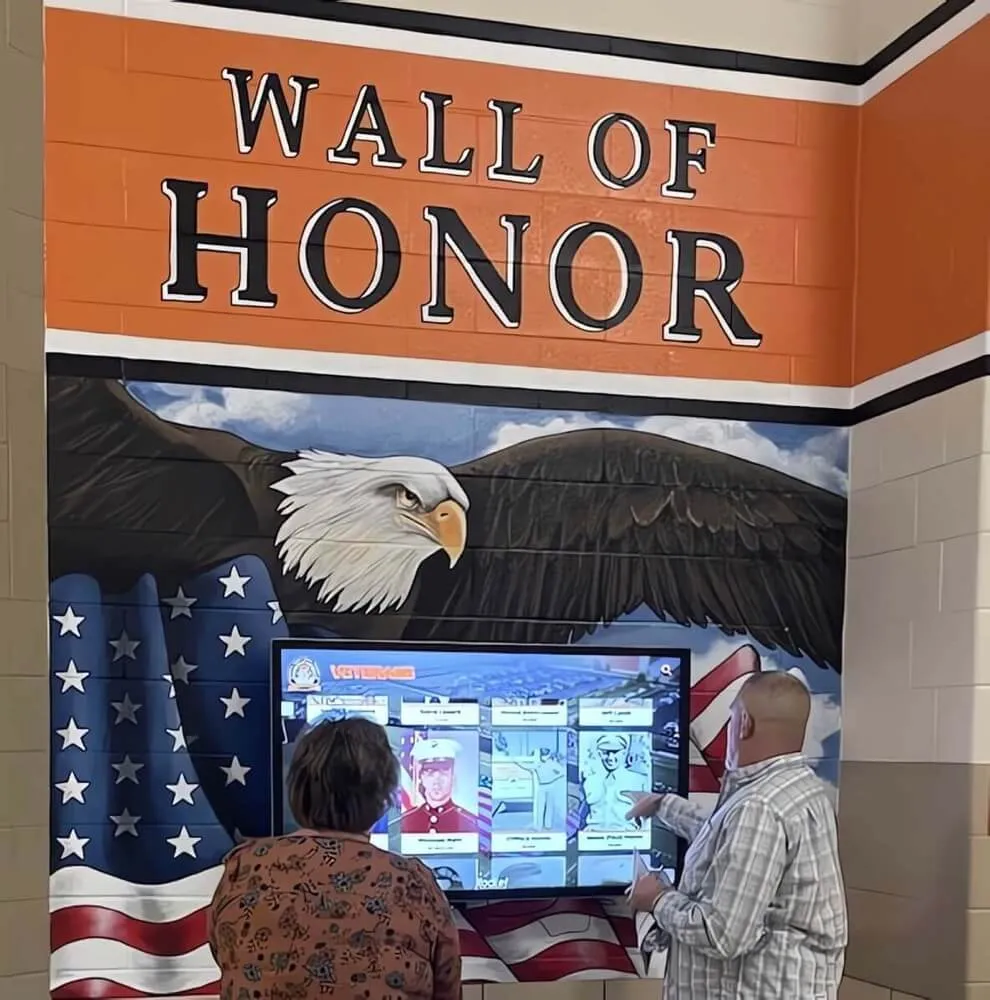
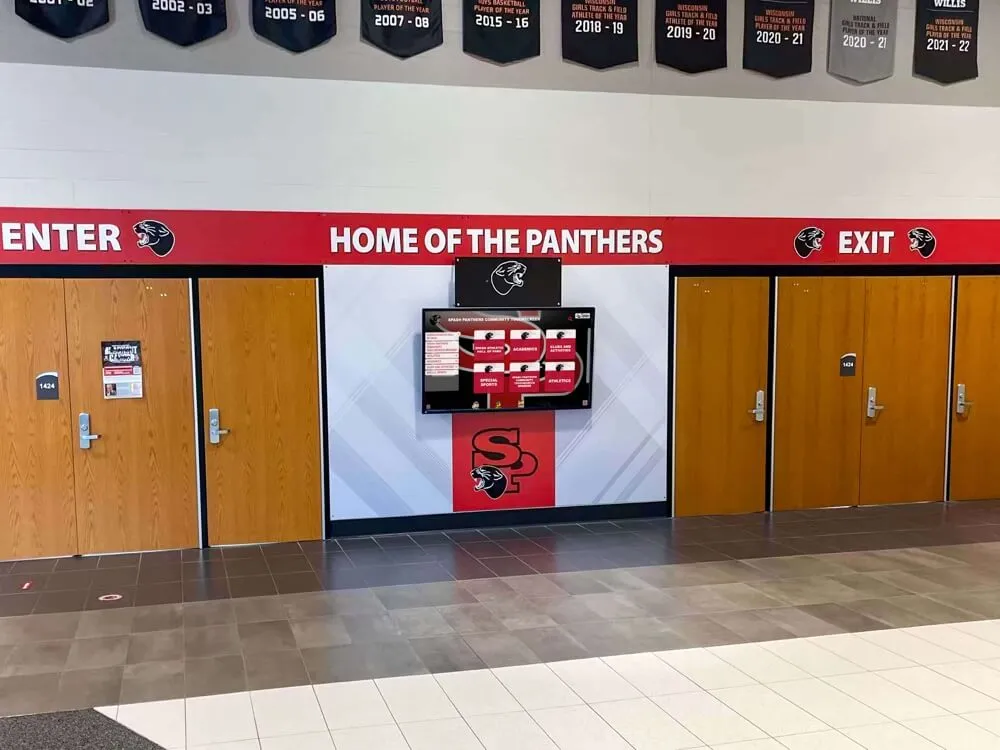
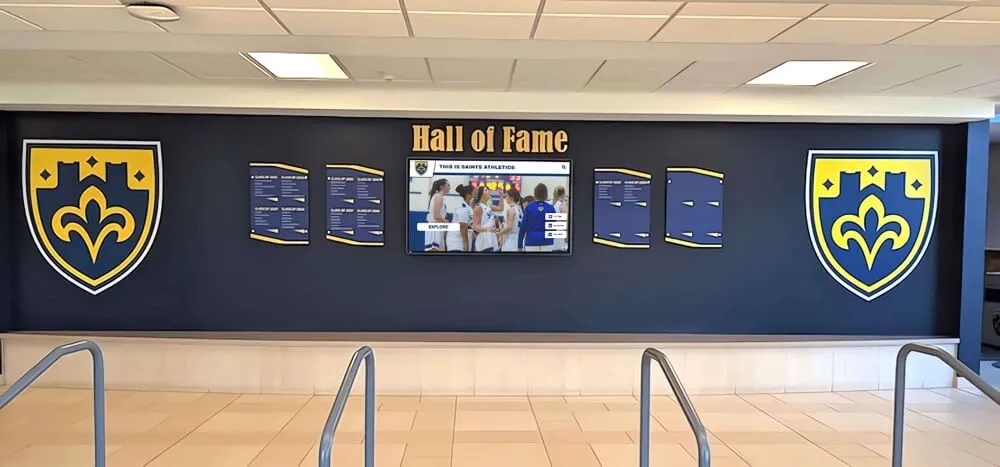
Digital Interactive Recognition Systems
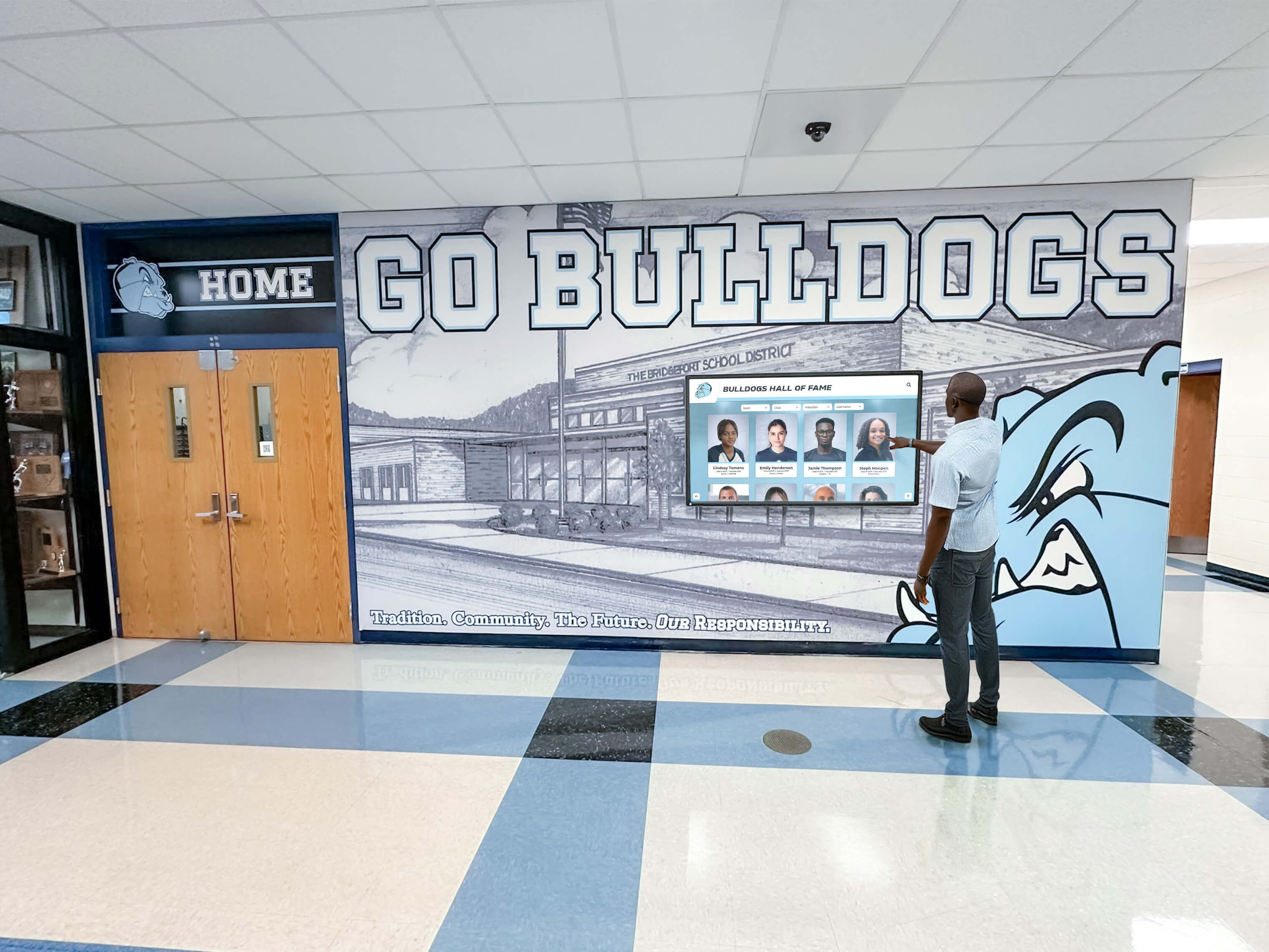
Modern digital platforms overcome traditional limitations while creating enhanced engagement experiences:
Unlimited Recognition Capacity:
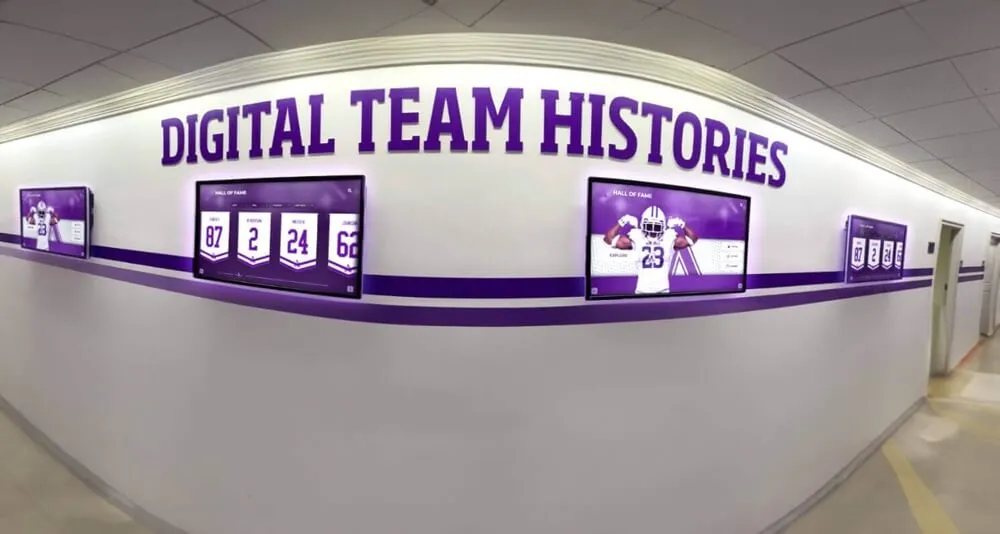
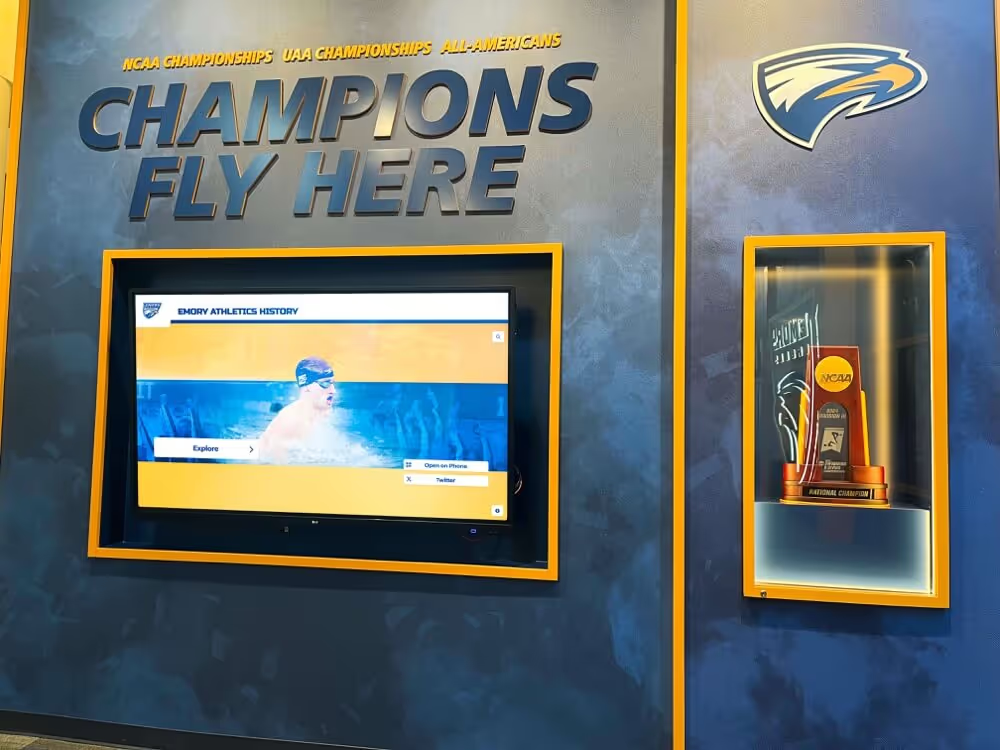
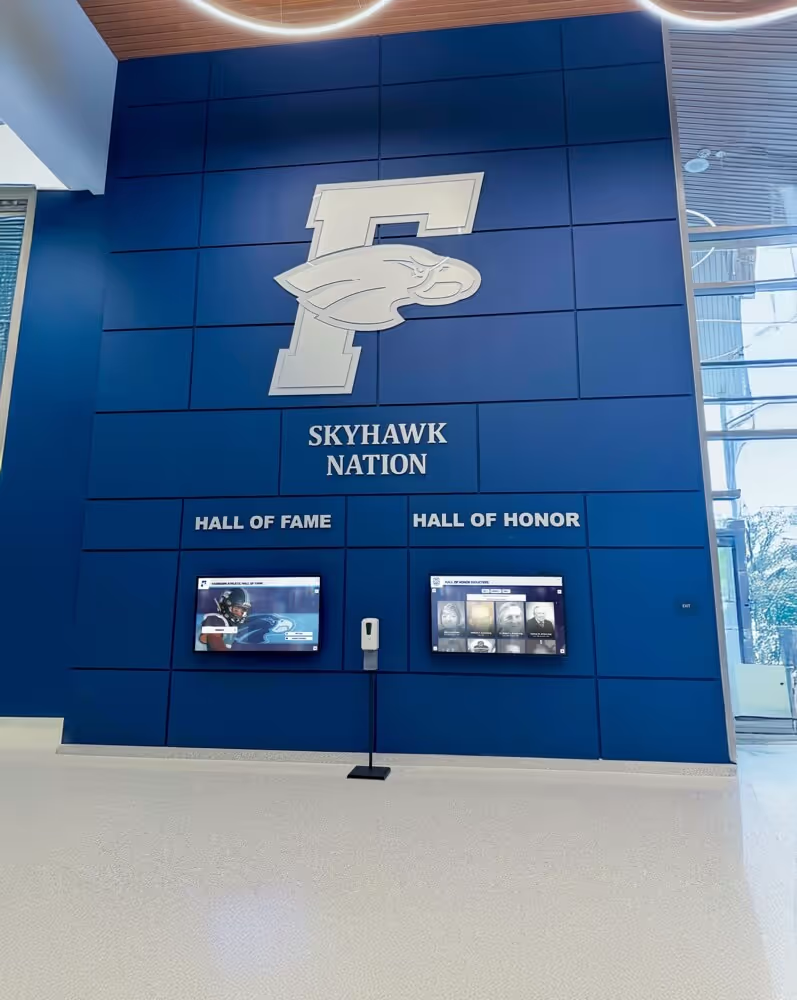
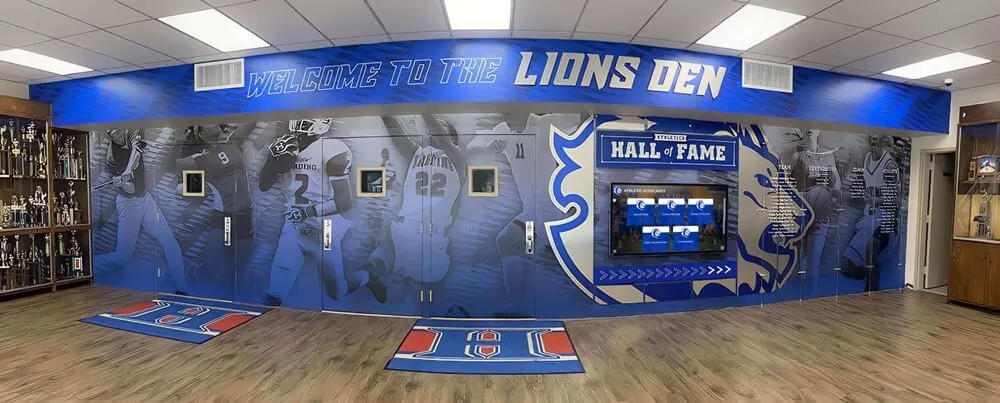
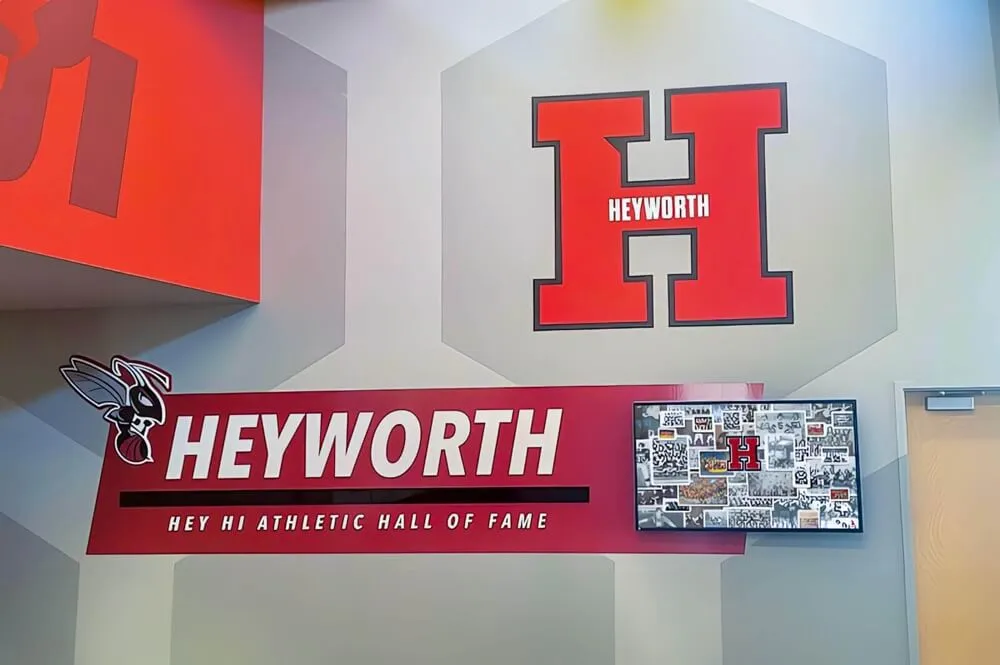
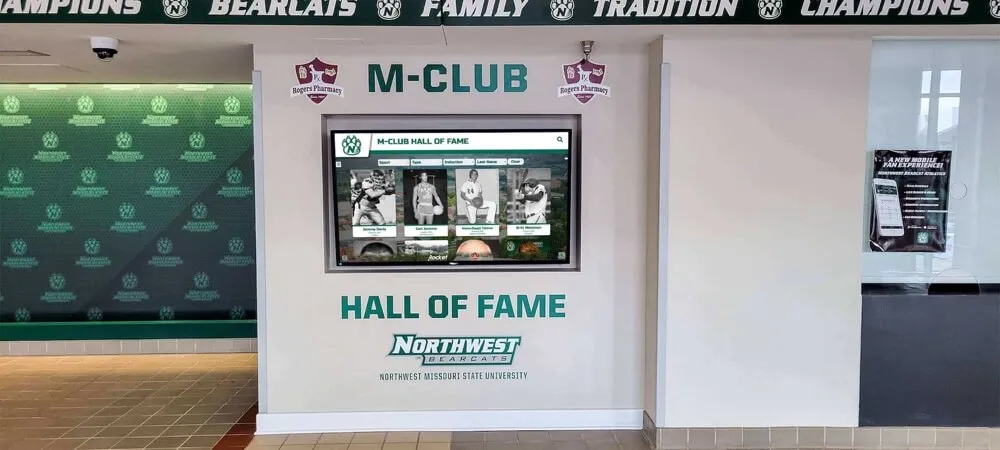
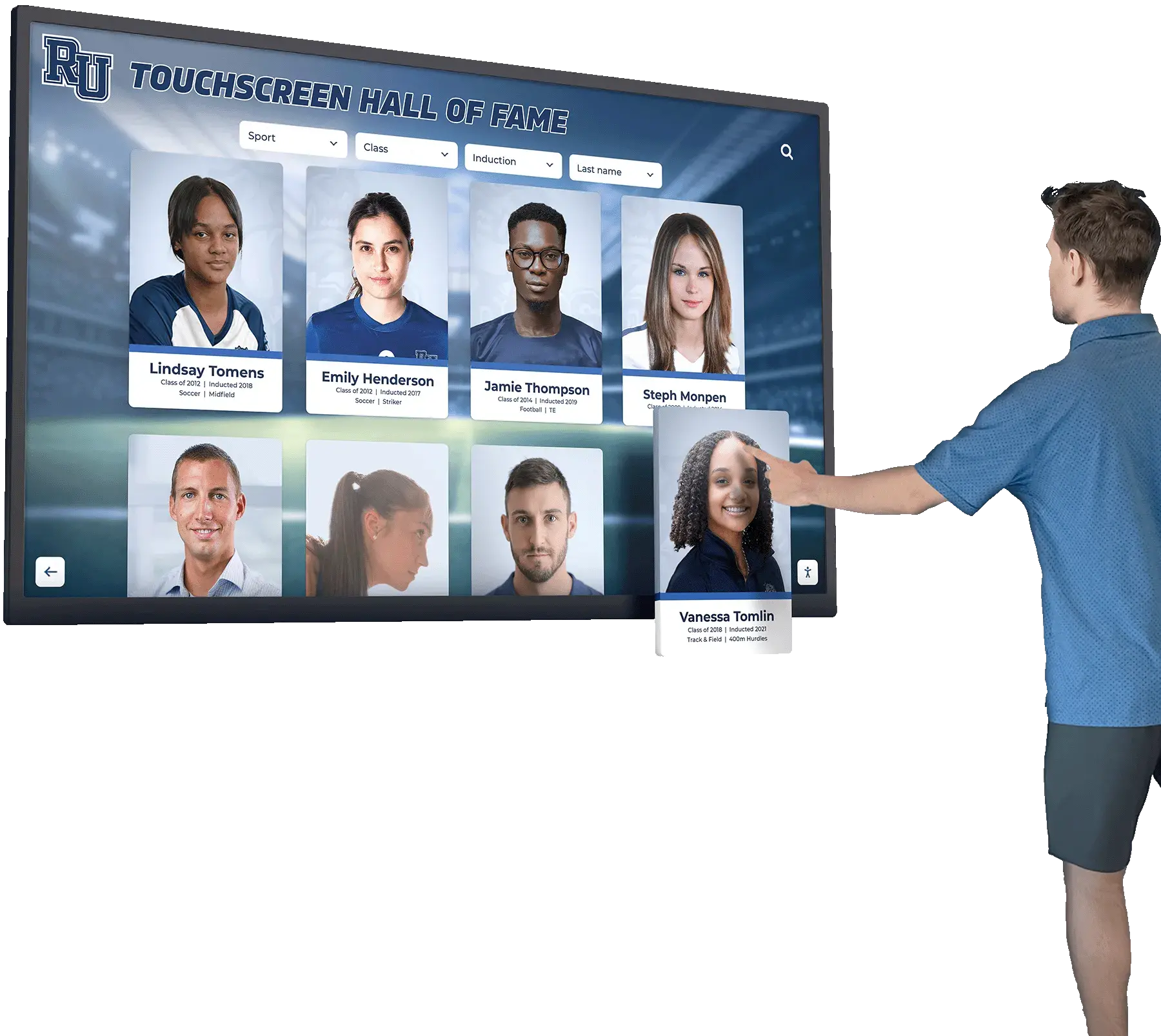
Digital systems accommodate unlimited inductees without physical space constraints. Whether recognizing 50 athletes or 500, the display footprint remains constant. Schools can honor every deserving athlete from program history—state championship players from the 1950s receive equal prominence with last season’s all-conference selections.
This unlimited capacity proves particularly valuable for established programs with decades of excellence. Traditional wall space limits force difficult choices about which worthy candidates to exclude or where to expand displays—digital systems eliminate these constraints entirely.
Instant Content Updates:
When a player breaks a rushing record during Friday night’s game, displays can be updated by Saturday morning. Cloud-based content management systems allow updates from any internet-connected device in minutes rather than the weeks required for physical plaque ordering, fabrication, and installation.
This immediacy enables timely celebration of current achievements while also allowing easy correction of errors, addition of new information as alumni achieve post-football success, and enhancement of existing profiles with newly discovered photos or stories.
Rich Multimedia Content:
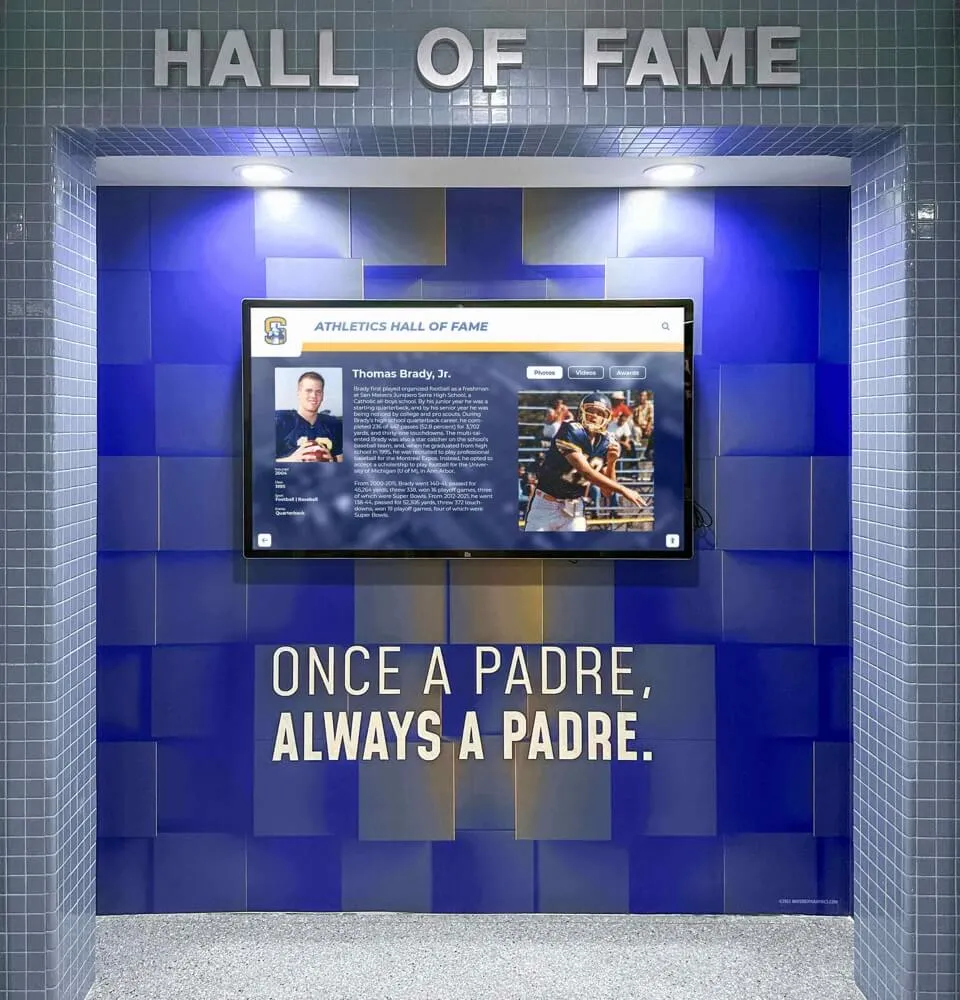
Digital platforms enable comprehensive athlete profiles including:
- Professional photographs and action shots from memorable games
- Career statistics with season-by-season progression and program ranking context
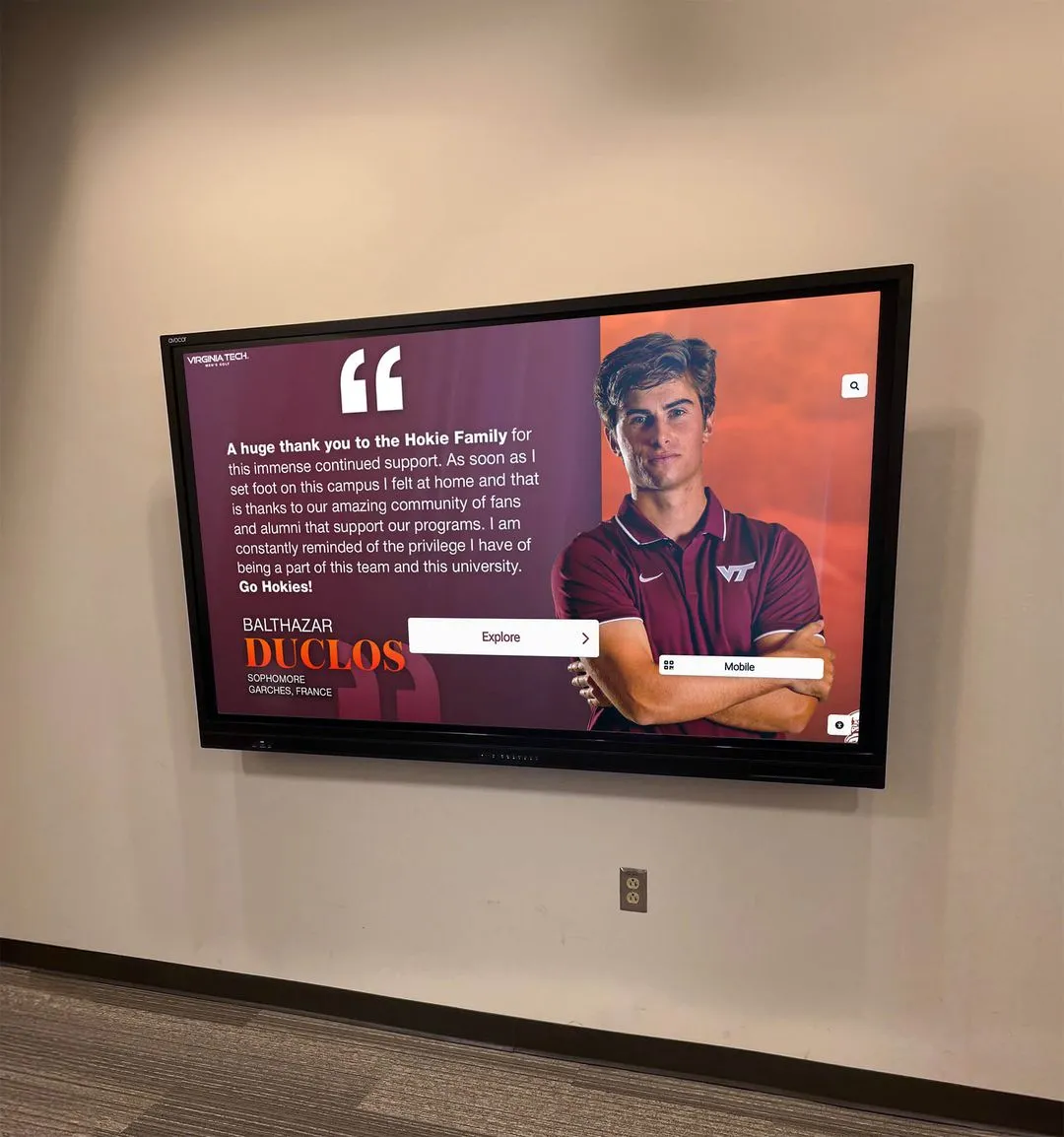
- Video highlights of championship performances, record-breaking plays, and memorable moments
- Written biographical narratives celebrating achievements and personal journeys
- Post-graduation accomplishments including college careers, professional opportunities, and career success
- Audio interviews with athletes reflecting on their playing experience
This depth creates emotional connections impossible with name-and-date plaques. Visitors understand who these athletes were as individuals rather than merely seeing names on walls.
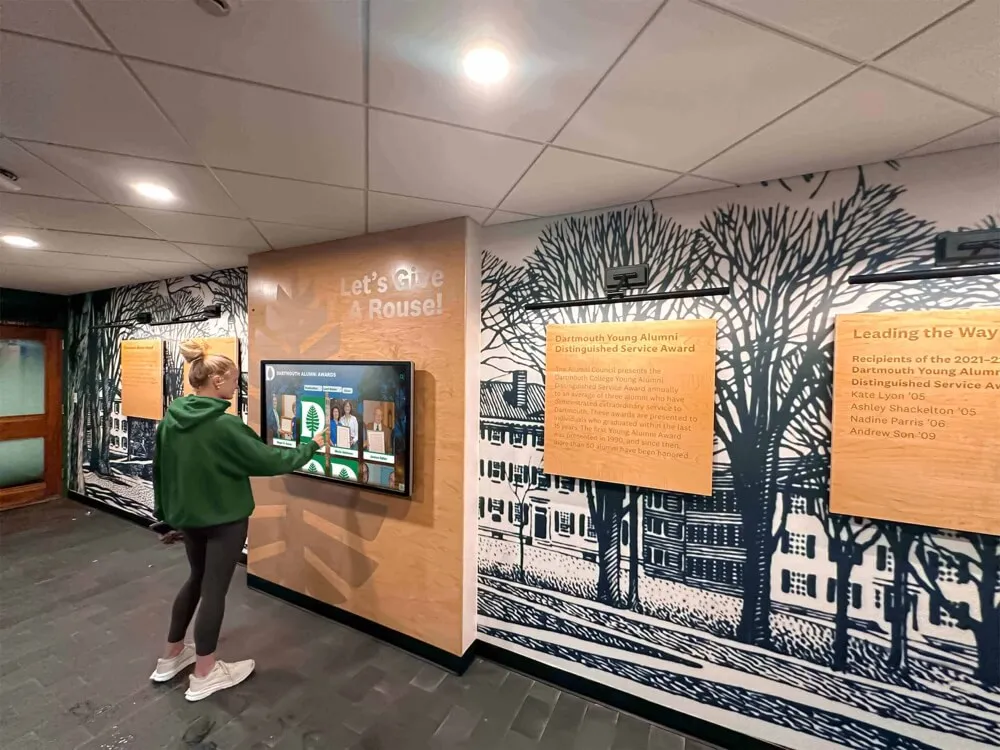
Interactive Touchscreen Exploration:
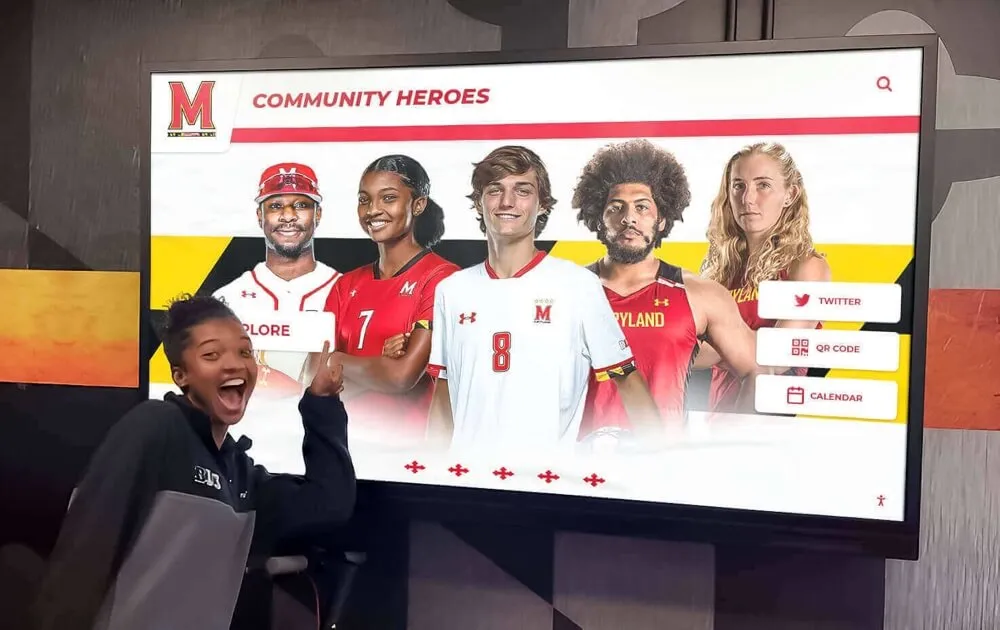
Intuitive interfaces invite active engagement:
- Search functions finding specific athletes or teams by name, year, or achievement
- Filtering by graduation year, position, achievement type, or recognition category
- Photo and video galleries browsing through program history chronologically or thematically
- Statistical leaderboards comparing career and season records across different eras
- Team pages exploring championship seasons with complete rosters and season narratives
- Related content linking teammates, position groups, or era-specific cohorts
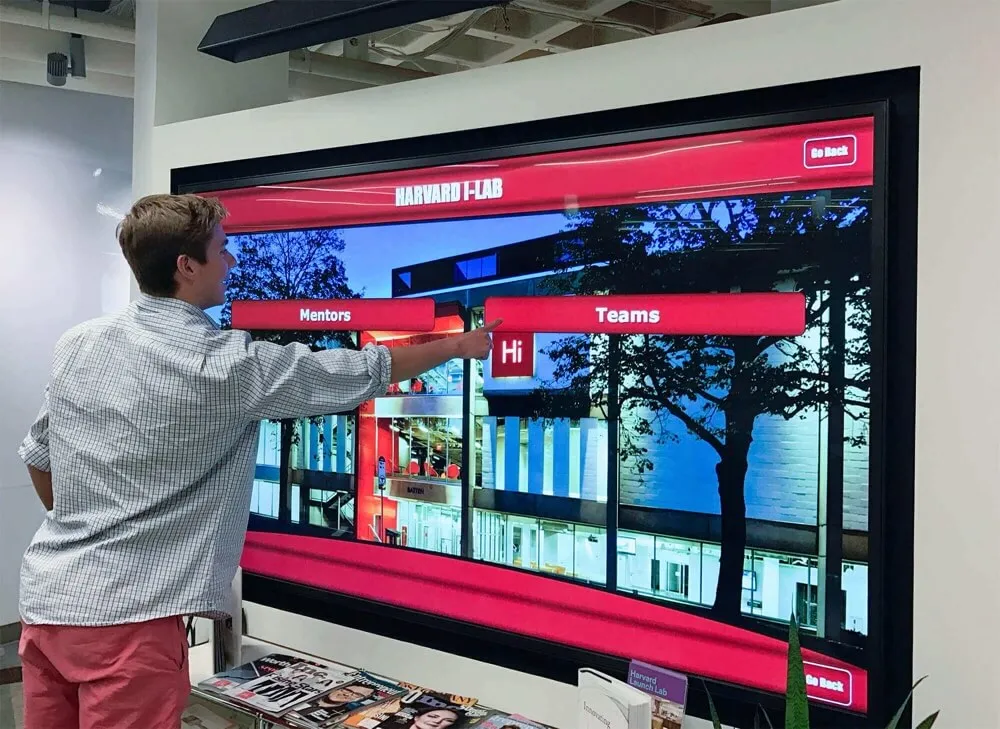
This interactivity transforms passive observation into exploratory discovery—visitors spend significantly more time engaging with digital displays than they would glancing at static plaque walls.
Remote Web Accessibility:
Many digital recognition systems include web-based viewing components allowing athletes to share their profiles through social media while alumni access program information from anywhere. This expanded reach amplifies recognition impact while strengthening connections with geographically dispersed stakeholders.
Parents, grandparents, and extended family members can view athlete profiles from out of state. Alumni living distant from campus remain connected to program developments through regular visits to online hall of fame platforms.
Detailed Analytics:
Digital systems provide valuable data about recognition engagement:
- Total interactions and visitor counts showing display utilization
- Most-viewed athlete profiles indicating which inductees generate greatest interest
- Peak usage times informing display location and event planning decisions
- Search terms revealing what visitors most want to explore
- Session durations indicating engagement depth versus superficial browsing
These insights help schools optimize content, understand what recognition resonates most powerfully, and demonstrate value justifying continued investment.
Lower Long-Term Total Costs:
While digital systems require higher initial investment ($8,000-$20,000 for comprehensive single-display installations), they eliminate ongoing per-inductee costs that accumulate with traditional systems adding 5-10 new inductees annually at $300-500 per plaque.
Most schools achieve cost neutrality within 4-7 years while gaining dramatically superior capabilities. Over 20-30 year timespans, digital systems typically cost significantly less than continuous plaque production while accommodating far more inductees with richer content.
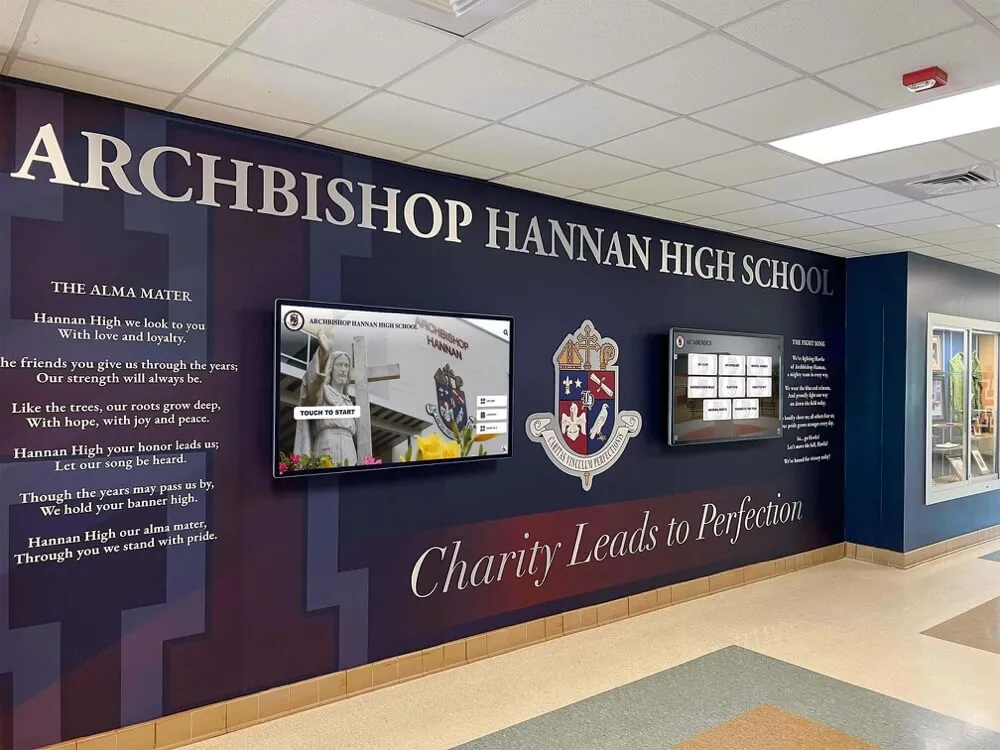
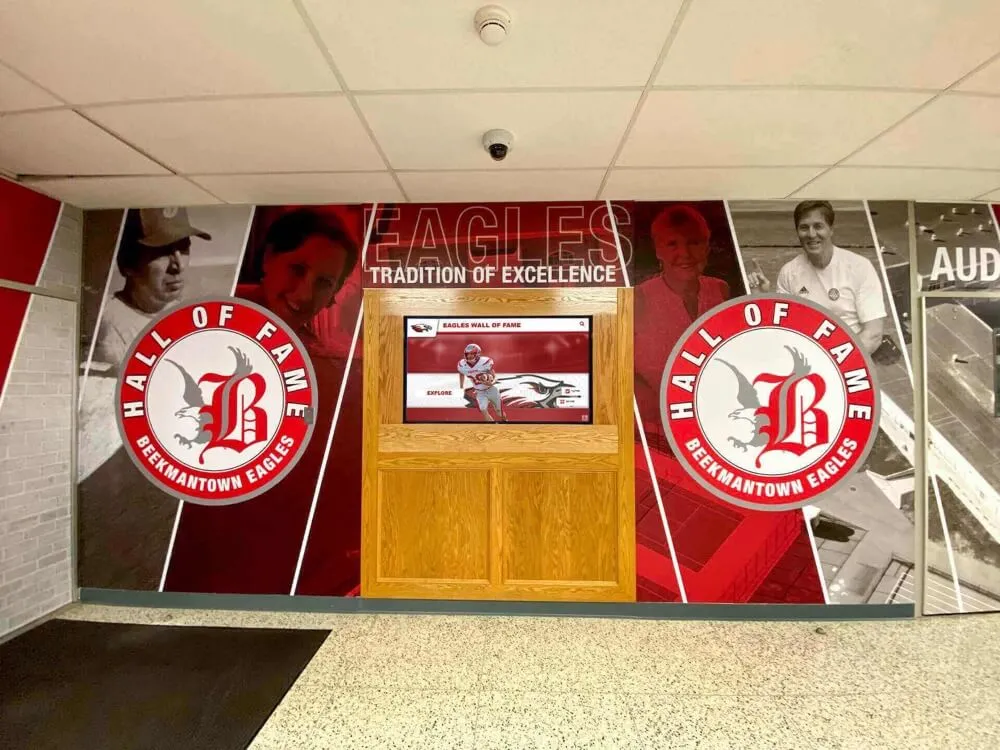
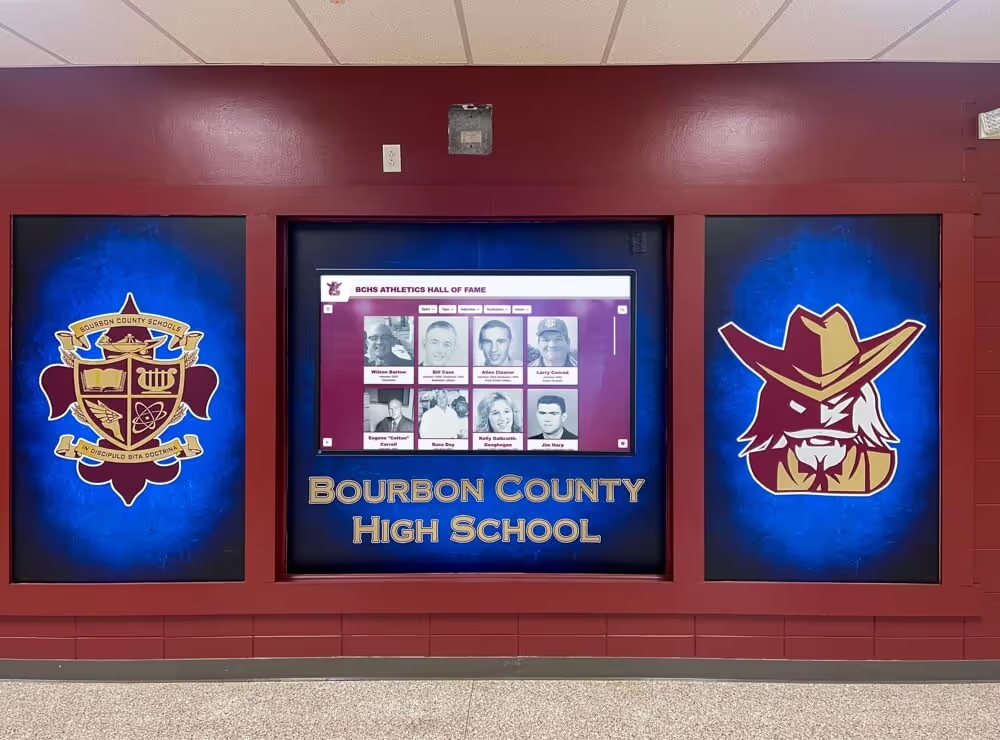
Solutions like those from Rocket Alumni Solutions provide purpose-built platforms designed specifically for school athletic recognition rather than generic digital signage systems requiring extensive customization. These specialized systems deliver intuitive content management, professional templates reflecting school branding, and ongoing support ensuring schools maintain impressive displays without requiring technical expertise. Understanding digital hall of fame maintenance strategies helps schools manage these systems effectively over their operational lifespans.
Implementing Your Football Hall of Fame Program
Successfully launching a football recognition program requires systematic planning addressing multiple implementation dimensions:
Phase 1: Planning and Foundation (Months 1-3)
Define Program Objectives:
Clarify primary purposes guiding subsequent decisions—preserving history, inspiring current athletes, engaging alumni, enhancing recruiting, or building community pride. Clear objectives inform criteria development, format selection, and resource allocation.
Establish Selection Criteria:
Document specific eligibility requirements, achievement thresholds, character standards, and recognition categories based on program objectives and institutional values. Transparent criteria prevent confusion while establishing consistent evaluation frameworks.
Form Selection Committee:
Assemble diverse committees including athletic administrators, coaches, alumni representatives, booster club members, and community stakeholders. Staggered multi-year terms ensure continuity while regularly refreshing perspectives. Establish clear operating procedures including meeting schedules, voting protocols, and conflict of interest policies.
Develop Budget:
Create realistic financial projections including initial investment (displays, content creation, installation) and ongoing operational costs (annual inductions, maintenance, software subscriptions). Identify funding sources from athletic budgets, booster organizations, alumni donations, or dedicated fundraising campaigns.
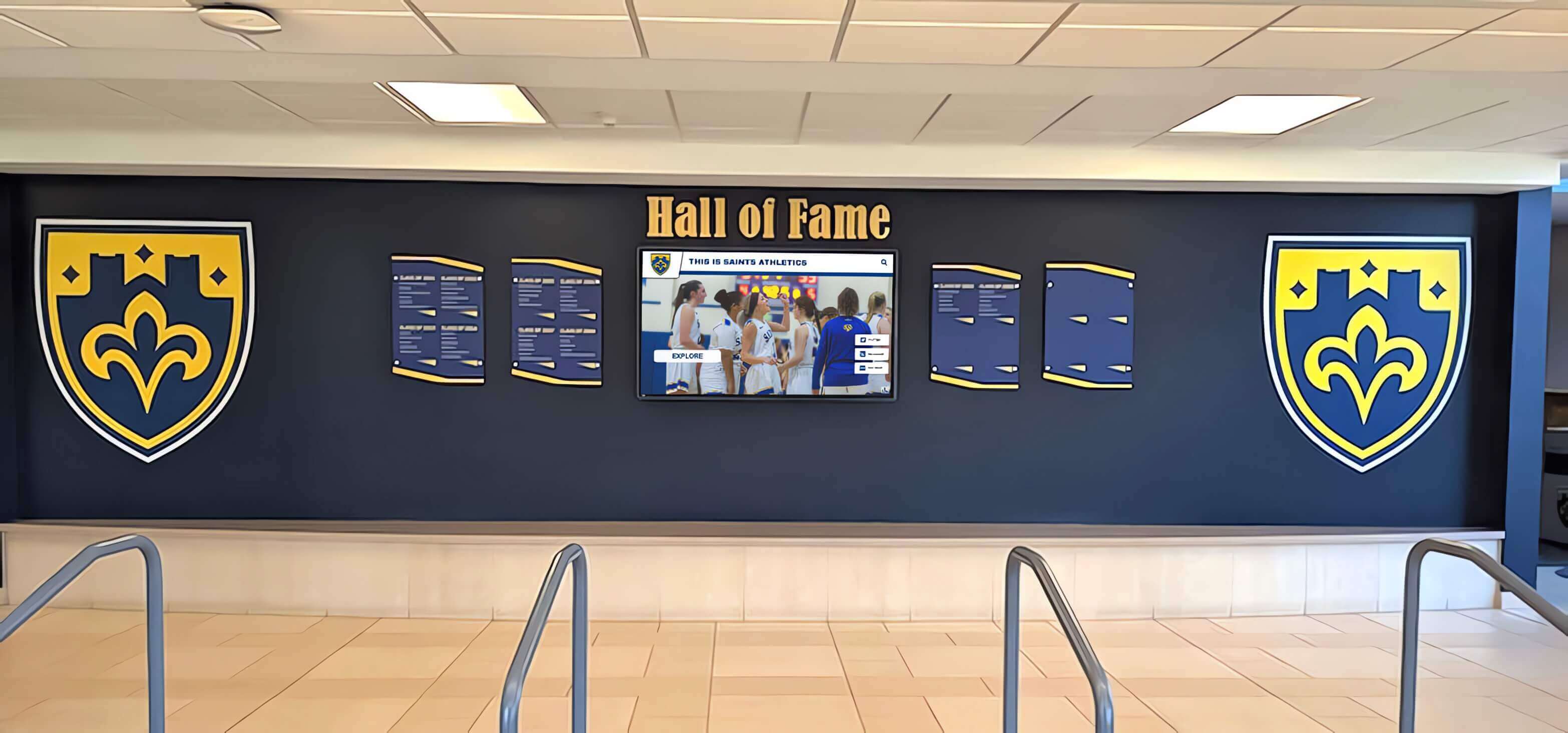
Phase 2: Content Development (Months 3-6)
Select Inaugural Inductees:
Begin with manageable inaugural classes (typically 5-15 inductees) ensuring diverse representation across achievement categories, graduation eras, positions and playing styles, and demonstrable excellence avoiding controversial selections that might undermine program credibility.
Some programs establish large “founding classes” recognizing obvious historical legends all at once, then shift to smaller annual classes. Others prefer consistent annual class sizes from inception.
Gather Information and Historical Assets:
Systematically collect content through:
- Direct outreach to living alumni with detailed questionnaires
- Archival research in yearbooks, newspapers, program records, and team media guides
- Interviews with coaches, teammates, family members, and community members
- Photo collection from institutional archives, personal collections, and media organizations
- Statistical verification from official records and historical documentation
- Video gathering from archived game footage if available
Content quality significantly impacts recognition impact—invest time gathering comprehensive, accurate information rather than settling for minimal biographical details. Schools can explore strategies for capturing institutional history to preserve these valuable stories.
Create Professional Profiles:
Develop comprehensive biographical narratives including career statistics with context showing program rankings, notable performances and memorable games, team achievements during playing years, individual honors and recognition received, post-football accomplishments and current status, and personal reflections or quotes about their football experience.
Professional writing and editing ensure profiles maintain consistent quality and appropriate tone celebrating achievement without hyperbole or insider references that exclude broader audiences.
Phase 3: Display Implementation (Months 6-9)
Select Display Format:
Choose between traditional physical displays, digital interactive systems, or hybrid approaches based on budget availability and long-term cost considerations, space constraints and expansion plans, desired content depth and multimedia capabilities, technical resources for system management, and stakeholder preferences and institutional culture.
Most schools implementing new programs today select digital systems or hybrid physical-digital approaches given digital advantages for growing programs with limited space.
Design and Installation:
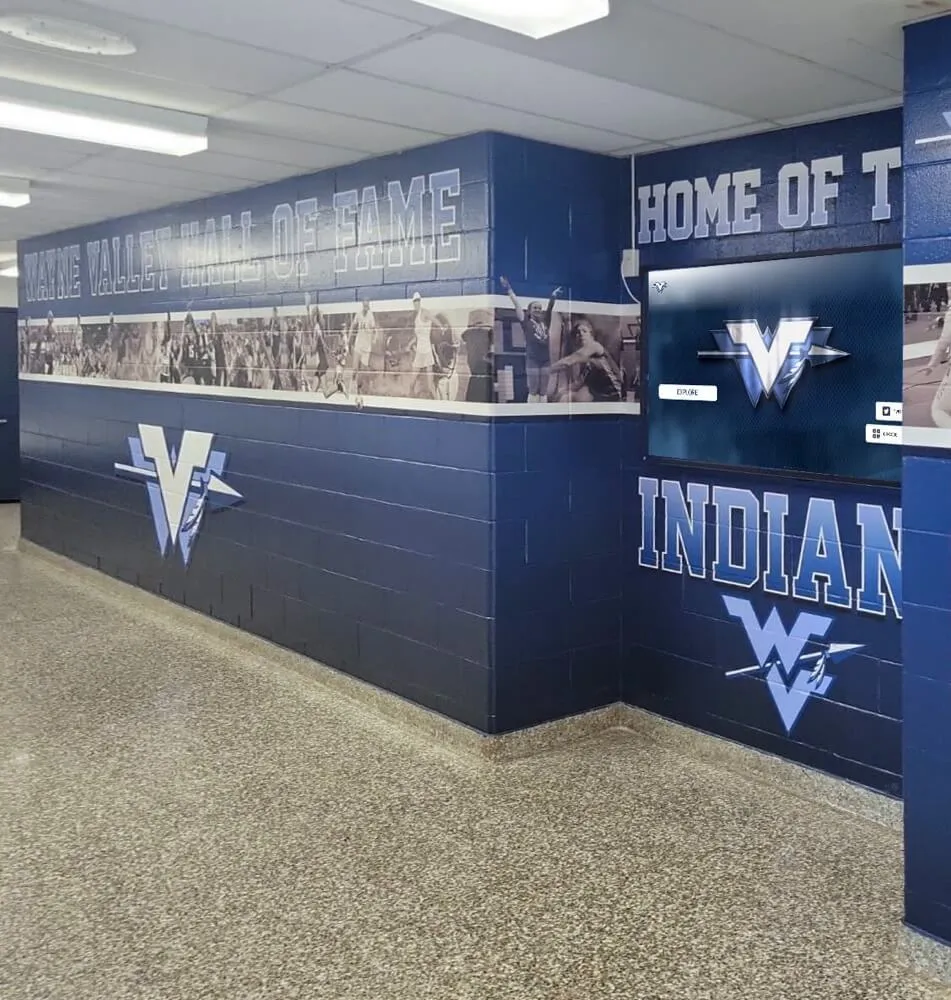
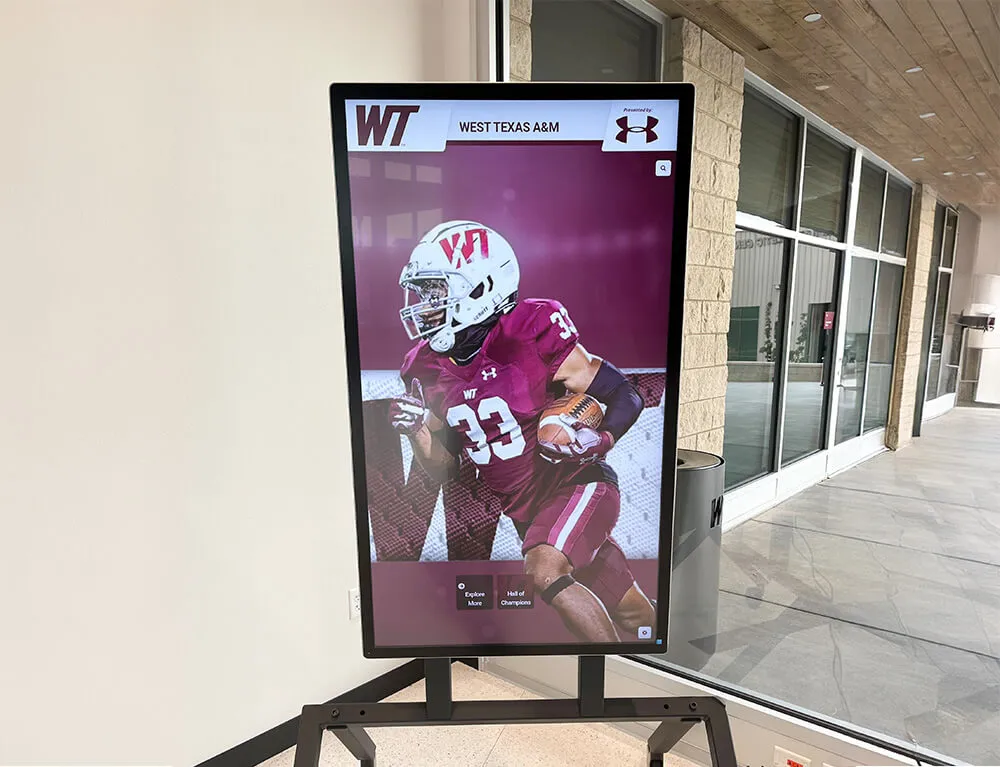
Work with specialized providers or contractors to design displays reflecting institutional branding and aesthetic preferences, select appropriate screen sizes for viewing distances and locations, choose strategic placement in high-traffic visibility locations like main athletic facility entrances, lobbies, or hallways near locker rooms, ensure proper mounting, electrical connectivity, network access, and ADA accessibility compliance, and test thoroughly before public unveiling.
Display location significantly impacts engagement—systems placed in low-traffic areas receive minimal interaction regardless of content quality. Prioritize locations where current athletes, visiting recruits, alumni, and community members naturally congregate.
Content Loading and System Configuration:
Import inductee profiles into content management systems, organize navigation structures and search functionality, configure filtering options by year, position, achievement type, verify all information displays correctly and images render appropriately, establish content update workflows and permissions, and train administrative staff on system operation and content management.
Most modern recognition platforms provide intuitive interfaces enabling non-technical staff to manage content confidently after minimal training.
Phase 4: Launch and Ongoing Operations (Month 9+)
Induction Ceremony:
Create memorable inaugural events celebrating initial inductees through formal programs with speeches from institutional leaders, athletic directors, and committee chairs, individual inductee introductions with biographical highlights read by coaches or special guests, inductee remarks or acceptance speeches, presentation of recognition plaques, certificates, or rings, group photos of inductee class, display unveiling ceremonies, and receptions allowing attendee interaction with inductees and families.
Ceremony quality matters—poorly executed events undermine recognition impact while memorable celebrations enhance program credibility and emotional resonance. Resources on planning athletic banquets provide helpful planning frameworks.
Establish Annual Cycles:
Create predictable rhythms for fall nomination periods with community outreach and publicity, winter selection committee deliberations and voting, spring inductee announcements and profile development, summer preparation and content finalization, and fall induction ceremonies during homecoming, reunions, or major athletic events.
Consistent annual timing builds tradition and stakeholder expectation while distributing workload across calendar year rather than creating compressed implementation periods.
Content Enhancement and Ongoing Management:
Maintain engagement through regular content additions including new annual inductee classes, profile enhancements adding newly discovered photos or information, featured inductee rotations highlighting different honorees periodically, achievement updates as alumni reach new post-football milestones, and multimedia enrichment adding video content or audio interviews to existing profiles.
Recognition programs risk becoming static after initial launch excitement fades—sustained attention ensures programs remain vital, relevant, and engaging rather than becoming outdated historical artifacts. Understanding digital asset management for school districts helps schools avoid common pitfalls in long-term system management.
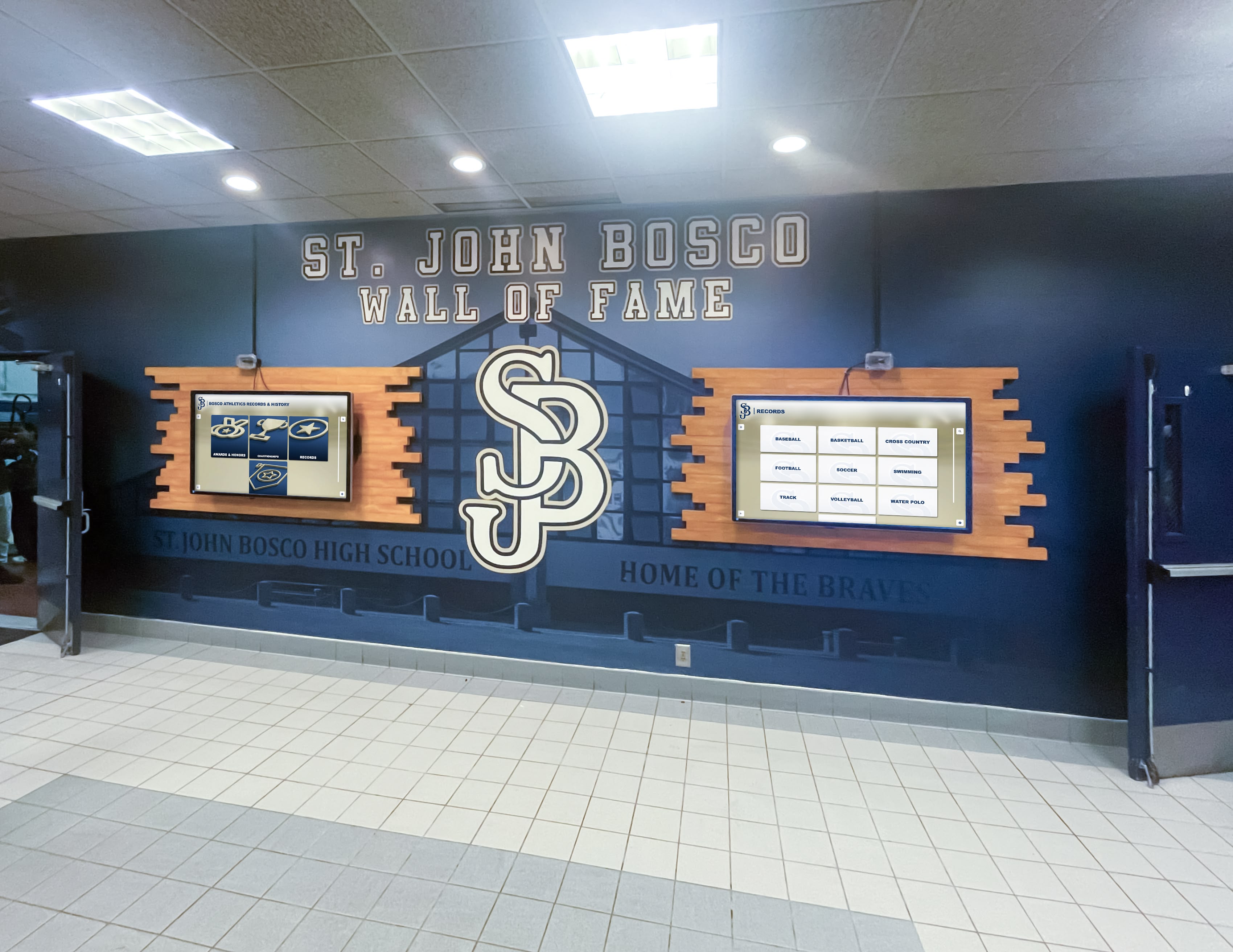
Integrating Football Recognition with Comprehensive Athletic Programs
The most effective recognition systems integrate football halls of fame within broader athletic recognition programs celebrating excellence across all sports:
Multi-Sport Digital Recognition
Comprehensive athletic displays accommodate football halls of fame featuring players, coaches, and teams, recognition for all other sports programs without competing for limited space, championship team celebrations across all sports and eras, all-state and all-conference athletes regardless of sport, academic athlete honors celebrating classroom excellence, leadership and character awards recognizing values, and current season rosters, schedules, and results.
Digital systems excel at multi-sport recognition because unlimited capacity prevents competition for limited space. Every sport receives appropriate recognition without compromising other programs—football hall of famers receive comprehensive profiles alongside basketball legends, wrestling champions, track standouts, and distinguished athletes from every program.
This comprehensive approach communicates that institutions value excellence across all athletic programs rather than privileging revenue sports at the expense of others. Smaller sports programs often feel undervalued when recognition systems emphasize only football and basketball—inclusive recognition strengthens culture across entire athletic departments. Schools can explore multi-sport athletic recognition strategies for balanced program celebration.
Athletic Wall of Honor Displays
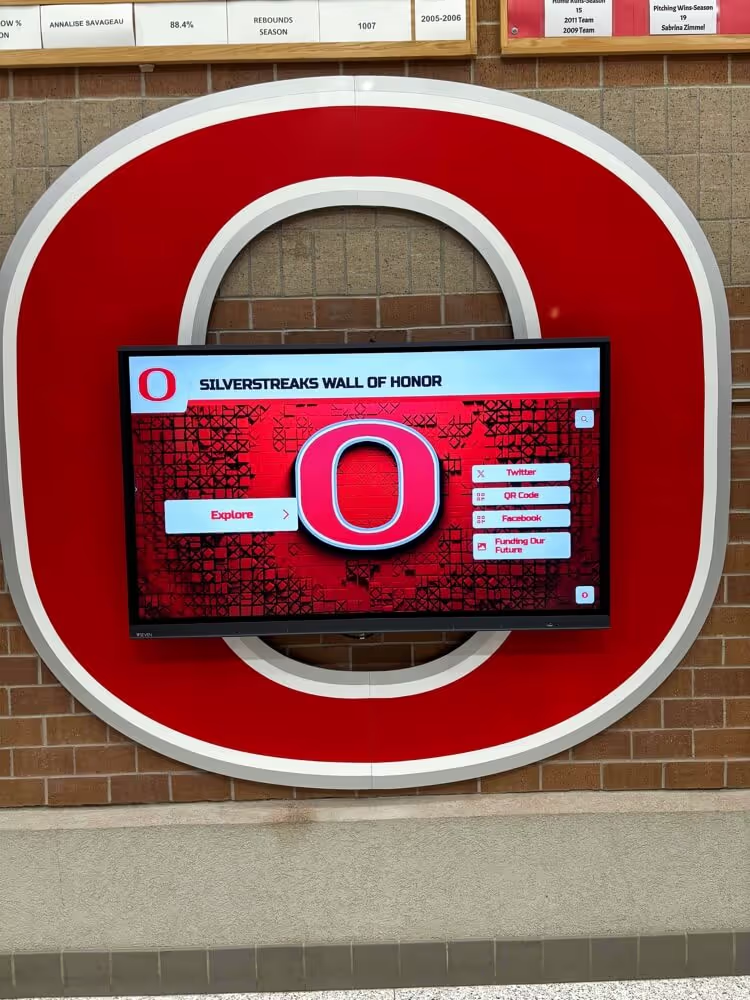
Broader athletic walls of honor complement sport-specific halls of fame by recognizing conference championships across all sports, state tournament and playoff appearances, team academic achievements and scholar-athlete honors, coaching milestones and awards, athletic department award winners, and community service and leadership recognition beyond pure athletic performance.
This comprehensive approach ensures all athletic achievement receives appropriate visibility while maintaining sport-specific recognition for detailed profiles celebrating individual excellence within each program.
Balancing Academic and Athletic Recognition
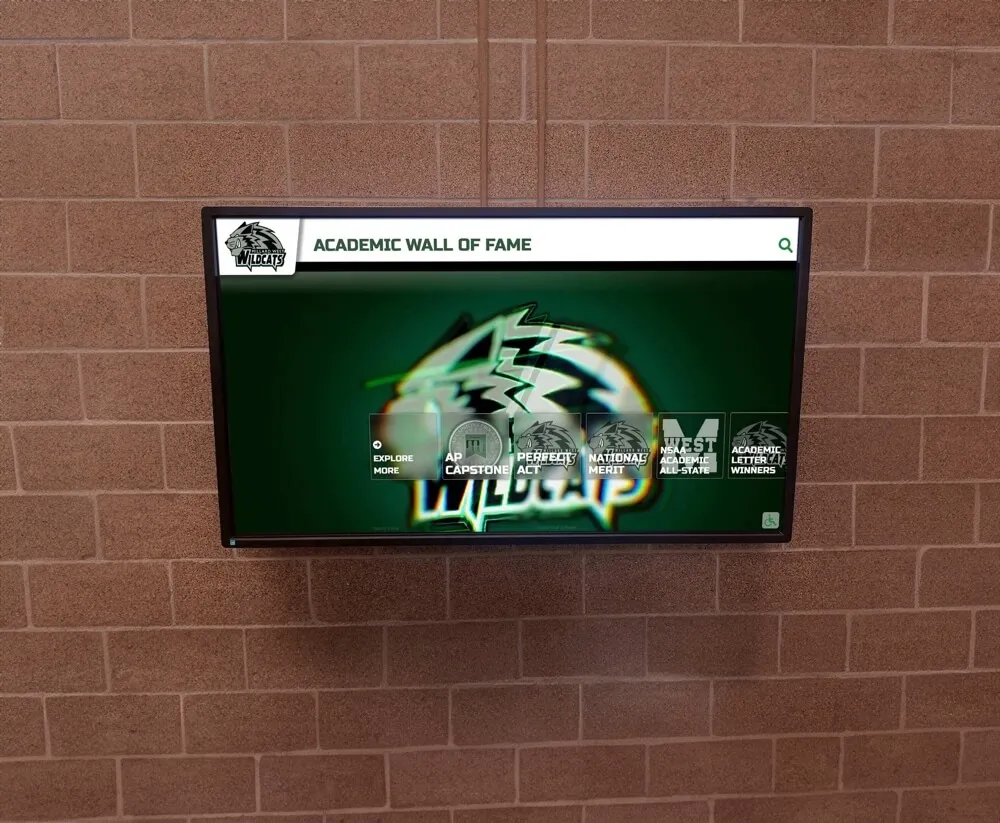
The most holistic programs connect athletic and academic achievement by highlighting athlete grade point averages and academic honors alongside statistics, featuring Academic All-Conference and All-State honors, recognizing post-graduation educational achievements including graduate degrees, celebrating scholar-athlete award winners, and profiling career success in fields beyond sports.
This integrated recognition communicates institutional values emphasizing comprehensive excellence—athletic achievement paired with academic success and strong character—rather than celebrating athletics in isolation from broader educational missions. Exploring approaches to recognizing valedictorians alongside athletes demonstrates commitment to diverse achievement recognition.
Measuring Football Hall of Fame Program Success
Effective recognition programs demonstrate value through both quantitative metrics and qualitative observations:
Quantitative Indicators
Usage Metrics for Digital Systems:
- Number of touchscreen interactions showing display utilization
- Time spent exploring content indicating engagement depth
- Most-viewed athlete profiles revealing which inductees generate greatest interest
- Peak engagement times informing placement and programming decisions
- Web traffic to online hall of fame platforms showing remote engagement
Program Health Indicators:
- Nomination quantity and quality over time
- Ceremony attendance trends
- Inductee participation rates and satisfaction
- Alumni engagement metrics including contact information updates, event attendance, and donation patterns
- Prospective student-athlete interest during recruitment visits
Cost Effectiveness:
- Eliminated traditional plaque update expenses
- Reduced staff time managing recognition compared to physical systems
- Avoided replacement costs for deteriorating physical displays
- Cost per inductee honored over system lifespan
Qualitative Assessment
Student-Athlete Perspectives:
Regular feedback from current football players provides crucial insights about whether displays influence their goal-setting and motivation, how recognition affects program pride and identity, whether athletes feel connected to program traditions and history, and ideas for improving recognition experiences.
Coach Observations:
Coaches notice cultural shifts including whether athletes reference hall of fame members in conversations or use past excellence as motivation, whether players set specific achievement goals related to recognition criteria, how underclassmen engage with program history during facility tours, and whether recognition enhances team identity and commitment during challenging seasons.
Alumni and Community Feedback:
Broader stakeholder perspectives from alumni reactions during campus visits, family comments at induction ceremonies, community awareness of program achievements and traditions, media coverage of hall of fame activities, and booster or donor references to recognition in support decisions provide valuable external validation.
The most important impacts often involve qualitative cultural shifts that resist precise quantification but fundamentally strengthen programs—current athletes feeling connected to program history beyond their own rosters, school community perception of athletics improving through visible achievement celebration, athletes demonstrating pride in representing traditions built over generations, and historical achievements inspiring current teams during challenging seasons.
Conclusion: Celebrating Football Excellence from National Legends to Local Heroes
The College Football Hall of Fame in Atlanta stands as college football’s ultimate shrine, honoring legends whose achievements elevated the sport and inspired millions. From Herschel Walker’s 1980 freshman season to Bear Bryant’s dynasty building to Charles Woodson’s Heisman-winning two-way dominance, these enshrined individuals represent the pinnacle of college football achievement across the sport’s history.
Yet football excellence worthy of recognition extends far beyond national hall of fame inductees. Every college and university with football programs has its own legends—players who set program records, coaches who built competitive traditions, and teams whose championship seasons became defining moments in institutional history. These local heroes deserve recognition that preserves their legacies while inspiring current student-athletes pursuing their own places in program history.
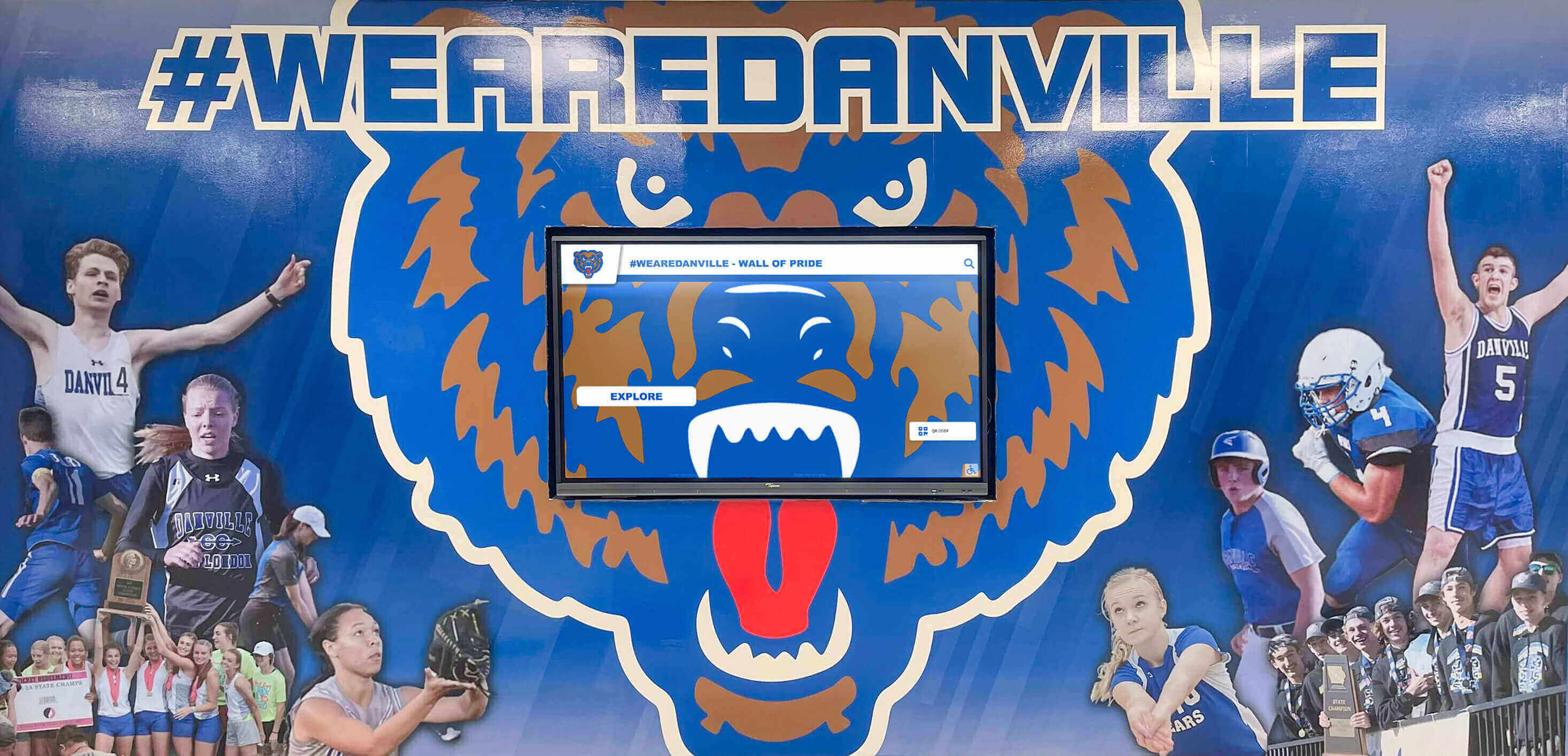
Modern digital recognition systems transform how schools celebrate football excellence. Rather than accepting space-constrained physical displays limiting recognition to a fortunate few while excluding other deserving athletes, digital platforms accommodate comprehensive historical documentation honoring everyone who met program standards. Rich multimedia profiles create emotional connections impossible with simple plaques, interactive exploration engages visitors in program history discovery, and instant updates enable timely celebration of current achievements alongside historical excellence.
For institutions establishing football hall of fame programs or modernizing existing recognition, solutions like those from Rocket Alumni Solutions provide purpose-built platforms specifically designed for athletic recognition rather than generic digital signage requiring extensive customization. These specialized systems deliver intuitive content management enabling non-technical staff to maintain impressive displays confidently, professional templates reflecting institutional branding and athletic department aesthetics, unlimited recognition capacity supporting program growth across decades, and ongoing support ensuring reliable operation and professional appearance over years of continuous use.
Whether honoring national legends at the College Football Hall of Fame in Atlanta or celebrating local heroes who built your program’s traditions, effective recognition systems preserve legacies, inspire current competitors, strengthen alumni connections, and build community pride. Football’s impact extends far beyond statistics and championships—the sport teaches discipline, teamwork, perseverance, and character while creating memories and relationships lasting lifetimes. Comprehensive hall of fame programs ensure these profound contributions receive the lasting recognition they deserve.
Ready to create a modern football hall of fame for your institution? Explore Rocket Alumni Solutions to discover how purpose-built digital recognition platforms transform athletic achievement celebration from space-constrained physical displays into comprehensive interactive experiences that honor program traditions while engaging contemporary audiences through intuitive, professional systems designed specifically for educational institutions.