



Key Takeaways
Discover innovative championship trophy display ideas that transform traditional trophy cases into engaging recognition systems. Learn display strategies, space planning, and modern digital alternatives for showcasing team victories.
Championship trophies represent the pinnacle of athletic achievement, embodying countless hours of practice, teamwork, sacrifice, and competitive excellence. Yet many organizations struggle to display these hard-won symbols effectively. Traditional trophy cases overflow with awards, creating cluttered presentations where individual championships lose visibility and impact. Space constraints force difficult decisions about which achievements to showcase and which to relegate to storage. Important context about championship seasons—the athletes, coaches, and memorable moments that made victory possible—gets reduced to small nameplates that fail to tell complete stories.
This comprehensive guide presents practical championship trophy display ideas for schools, universities, sports organizations, and athletic facilities. Whether you’re working with existing trophy cases, planning new recognition spaces, or considering modern alternatives, these strategies help create displays that honor championship achievements while inspiring current athletes and engaging visitors effectively.
Understanding Championship Trophy Display Challenges
Before exploring specific display solutions, consider the common challenges organizations face when showcasing championship trophies and why traditional approaches often fall short of creating truly effective recognition.
The Trophy Case Capacity Problem
Most organizations accumulate championships faster than they can expand display space. Successful athletic programs may win multiple conference, regional, or state championships annually across different sports. Traditional glass trophy cases, typically 6-8 feet tall and 3-6 feet wide, hold approximately 40-60 trophies depending on size. This capacity seems adequate initially but fills quickly in competitive programs.
The mathematics of trophy accumulation create predictable space crises. A school with 15 sports programs winning an average of one significant championship every other year per sport generates approximately 7-8 trophies annually. Within 5-7 years, standard trophy cases reach capacity, forcing organizations to make difficult decisions about display priorities.
Space constraints lead to several problematic outcomes. Organizations remove older championships to make room for recent victories, inadvertently suggesting past achievements matter less than current ones. Alternatively, they display championships densely, cramming trophies closely together in ways that diminish individual recognition and create visual clutter. Some organizations distribute championships across multiple scattered locations, fragmenting athletic history and reducing the collective impact of comprehensive championship displays.
Context and Storytelling Limitations
Physical trophies alone tell incomplete championship stories. The trophy from a state championship season represents significant achievement but conveys minimal information about how that victory was accomplished. Who were the standout athletes? What was the season record? Were there memorable games or come-from-behind victories? Did the team overcome significant obstacles? What made this particular championship special?
Traditional trophy displays provide limited space for contextual information. Small nameplates typically include only basic details: sport, year, and perhaps championship level. This minimal information fails to capture championship significance or preserve the stories that make victories memorable. Years later, championship trophies become artifacts whose detailed stories have been lost because display formats couldn’t accommodate the context that gives them meaning.
Organizations that want to provide comprehensive championship context face challenging trade-offs. Detailed plaques or display cards consume additional scarce space. Creating companion materials like binders or wall-mounted information boards fragments the recognition experience, requiring viewers to reference multiple sources to understand championship stories fully.
Access and Engagement Barriers
Traditional trophy displays create passive viewing experiences with limited engagement opportunities. Visitors can see trophies through glass but cannot access detailed information, explore related content, or interact with championship history. This passive format fails to leverage human curiosity and the desire for deeper exploration that effective recognition systems should enable.
Physical trophy cases also face practical accessibility challenges. Glass displays create glare problems under certain lighting conditions, making trophies difficult to see clearly. Lower shelves position trophies below comfortable viewing height, particularly for younger visitors or individuals using wheelchairs. Trophy cases in secondary locations—hallways, corridors, or building wings with lower foot traffic—receive minimal visibility compared to main entrances or gathering spaces.
The static nature of physical displays means championship recognition never changes or updates. Information remains fixed from the moment of installation. If details prove incorrect or incomplete, making corrections requires physical access to displays and often professional reinstallation. Physical displays cannot adapt to changing interests, highlight different championships seasonally, or provide personalized experiences based on viewer preferences.
Traditional Trophy Display Strategies
Despite inherent limitations, well-designed traditional trophy displays can showcase championships effectively when space and budget allow for comprehensive implementation. These strategies maximize physical trophy case effectiveness while maintaining professional appearance and championship accessibility.
Strategic Trophy Case Location and Design
Trophy case placement significantly impacts visibility and engagement. The most effective locations place championship recognition where stakeholders naturally gather and wait, creating consistent viewing opportunities rather than requiring deliberate detours to see displays.
High-Traffic Main Entrances: Trophy cases positioned in main building entrances receive maximum visibility from all visitors, communicating athletic excellence immediately upon arrival. Entrance displays signal that championship achievement represents a core institutional value worth featuring prominently.
Gathering Spaces and Lobbies: Athletic facility lobbies, student commons areas, and natural congregation points provide extended viewing opportunities. People waiting in these spaces naturally examine nearby displays, creating engagement that busy corridors cannot support.
Gymnasium and Arena Entrances: Displaying championships at competition venue entrances provides powerful motivation for current athletes while showcasing program excellence to opposing teams and visitors. These locations create direct connections between past championship success and current competitive efforts.
When selecting trophy cases, prioritize designs that maximize visibility while protecting valuable awards. Floor-to-ceiling cases provide maximum capacity and visual impact. Built-in LED lighting illuminates championships while reducing glare that external lighting often creates. Adjustable shelving accommodates various trophy sizes and enables reorganization as collections grow. Lockable cases provide security for valuable awards while allowing visual access.
Organizational Systems for Championship Displays
Thoughtful organization helps viewers navigate championship collections and understand program history. Different organizational approaches serve different communication goals.
Sport-Based Organization: Grouping championships by sport creates clear visual sections showing each program’s competitive success. This approach works well for facilities with strong traditions in specific sports, enabling quick assessment of program strength. Sport-based organization also facilitates updates, as new championships simply join existing sport sections.
Chronological Organization: Arranging trophies by year creates visual timelines showing how championship success evolved. Chronological displays help viewers understand program development patterns, identify particularly successful eras, and see how different sports contributed to overall athletic achievement across time periods.
Achievement Level Organization: Some organizations group championships by competitive level—conference championships in one section, regional championships in another, state or national championships prominently featured. This hierarchy emphasizes the most significant achievements while acknowledging less prominent victories.
Combination Systems: Many effective displays combine organizational approaches. For example, a sport-based primary organization with chronological arrangement within each sport section provides both quick sport identification and historical progression.
Regardless of organizational system, clear labeling helps viewers navigate displays. Section headers identifying sports or time periods guide viewing. Individual championship labels should include sport, year, championship type, and key contributors when space allows. Many organizations find that athletic recognition programs benefit from consistent labeling standards across all recognition types.
Supplementary Display Elements
Enhancing physical trophy cases with companion elements creates more comprehensive championship recognition without requiring additional trophy case space.
Championship Banners: Textile banners hung from gymnasium or arena ceilings acknowledge championships in spaces where teams compete. Banners provide visibility during games and events while preserving trophy case space for physical awards. Banner programs can recognize all championships or reserve display for the most significant achievements.
Photo Displays: Wall-mounted photo collections showing championship team photos, action shots from memorable games, or celebration moments add visual interest and human context to trophy displays. Photos help viewers connect championships to actual athletes and experiences rather than viewing trophies as abstract symbols.
Record Boards: Integrating championship records displays near trophy cases provides additional championship context. Record boards show season records, tournament results, and statistical achievements that accompanied championship victories.
Video Displays: Television screens mounted near trophy cases can play continuous loops of championship game highlights, celebration moments, or documentary-style championship stories. Video content brings static trophy displays to life while requiring no additional floor space.
Modern Championship Display Alternatives
As organizations recognize traditional trophy case limitations, many explore alternative recognition formats that address space constraints, provide richer context, and create more engaging championship experiences. These modern approaches complement or replace traditional displays while often reducing long-term costs.
Digital Interactive Trophy Displays
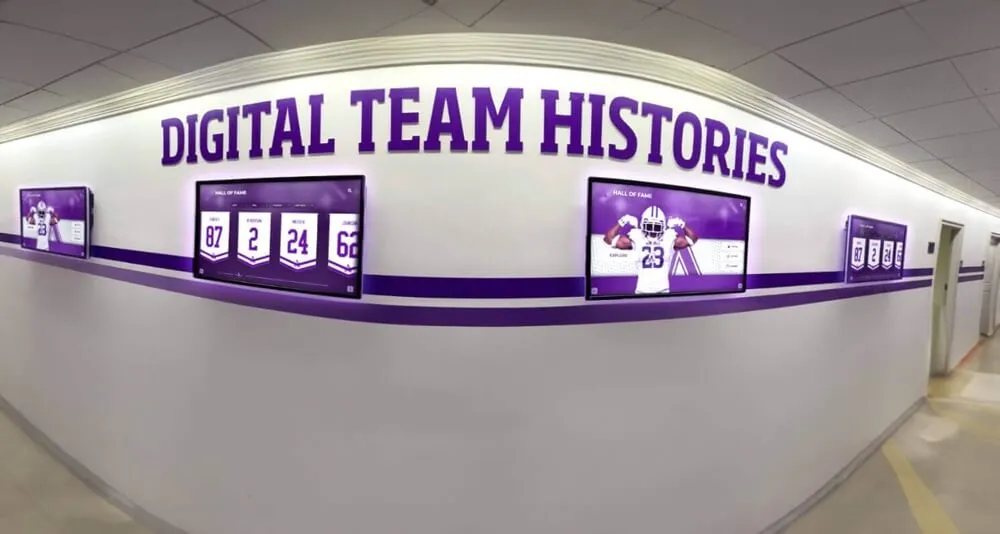
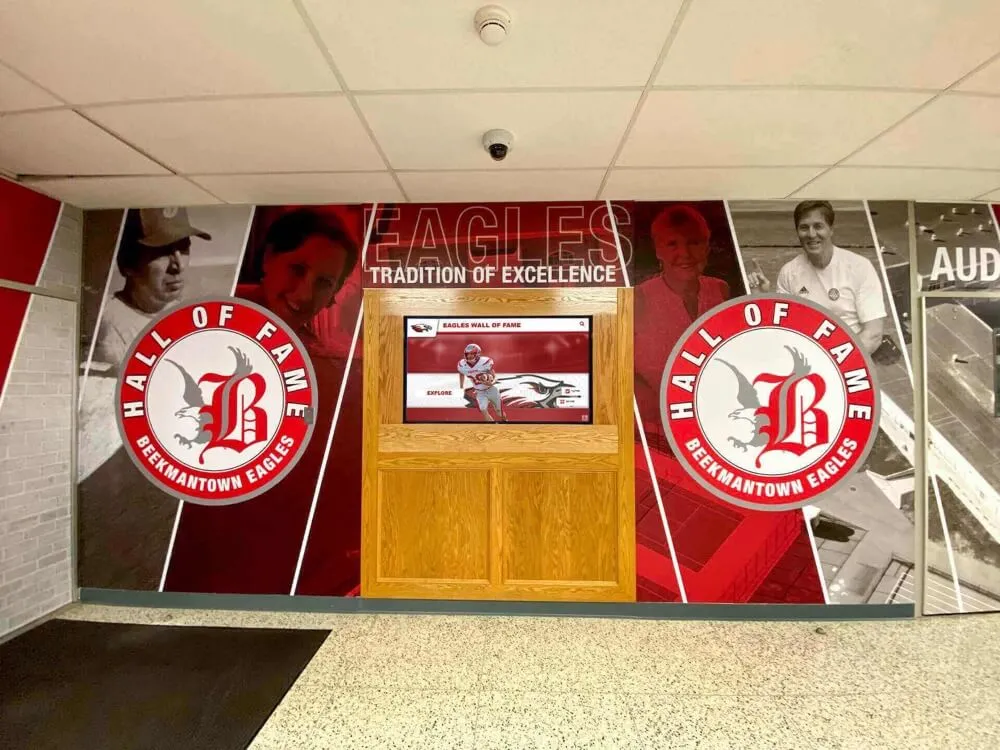
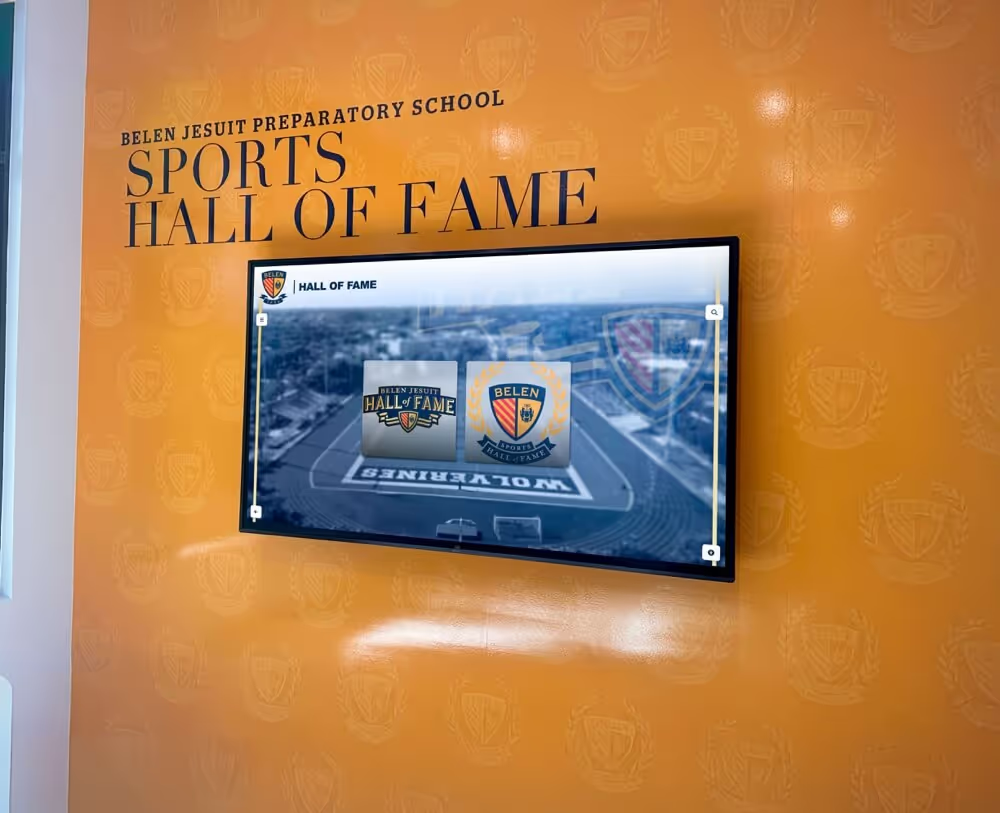
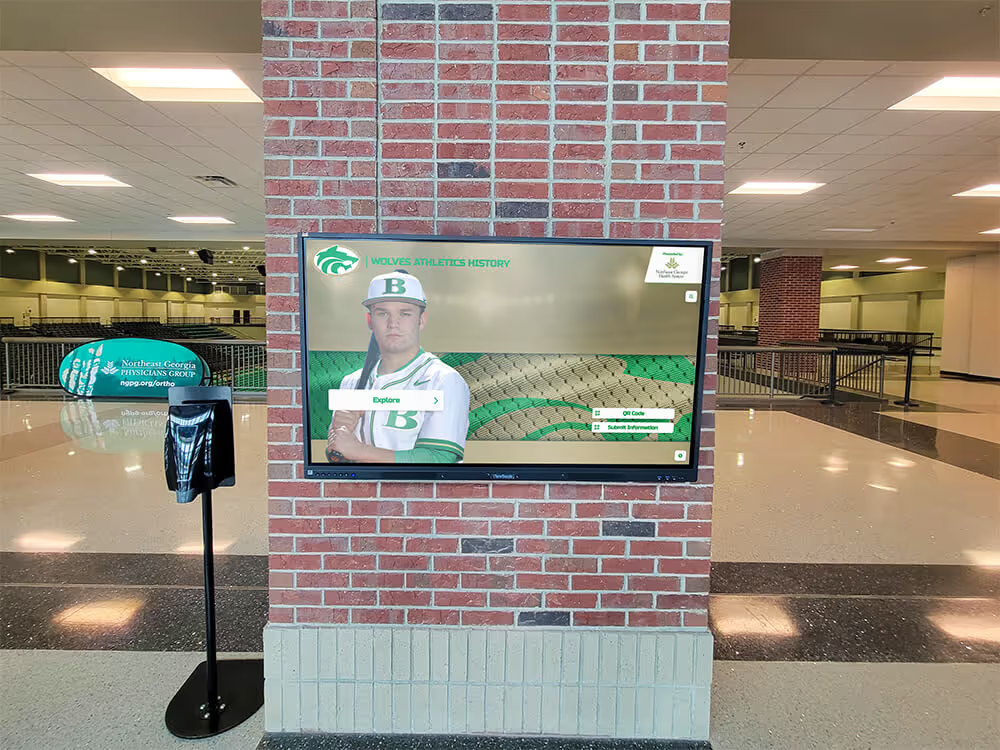
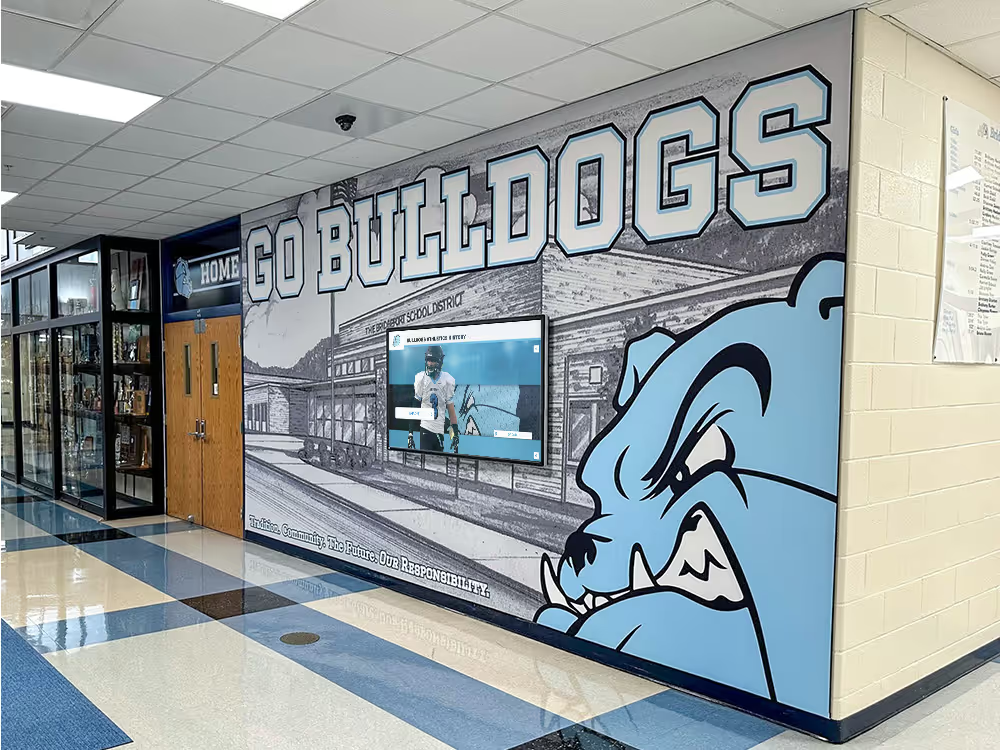
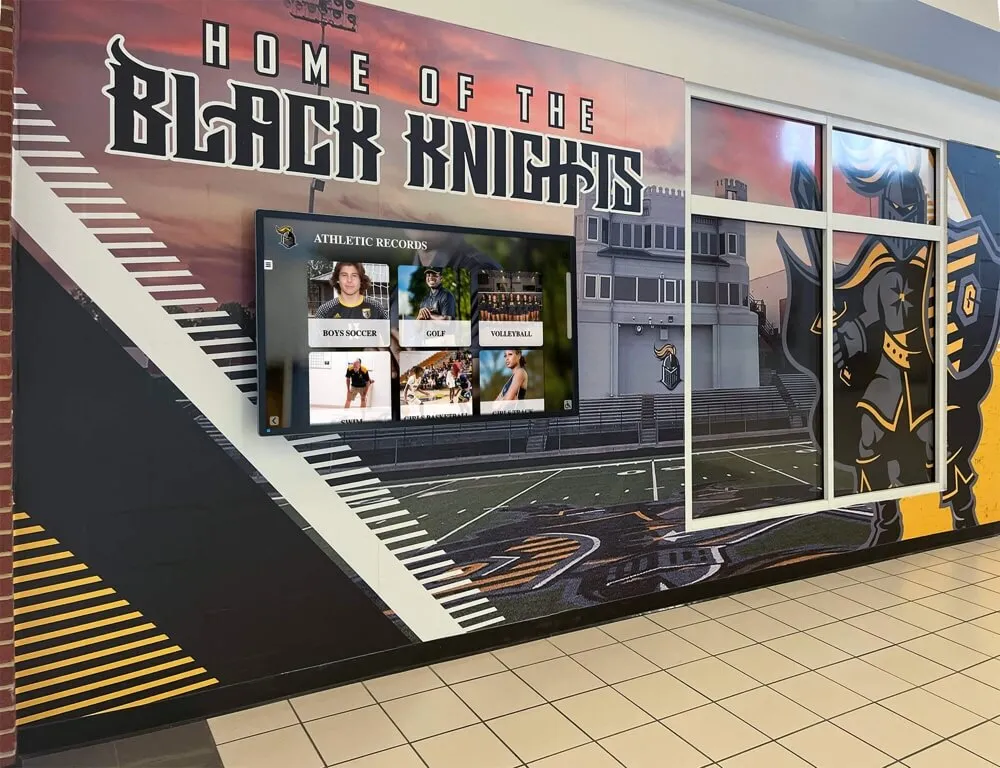
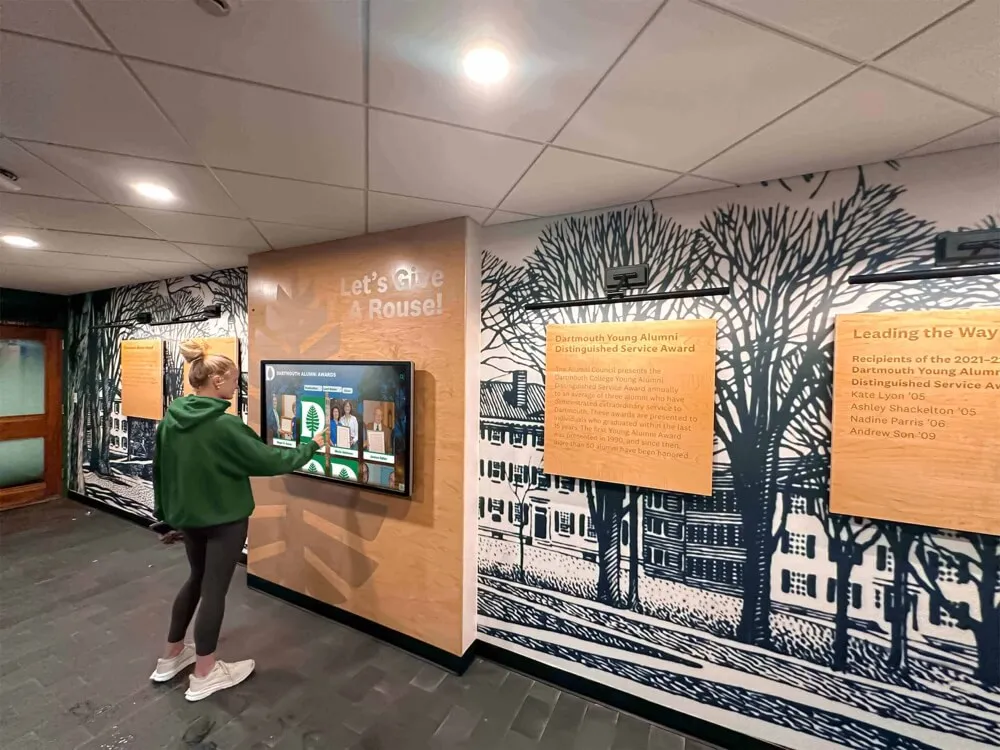
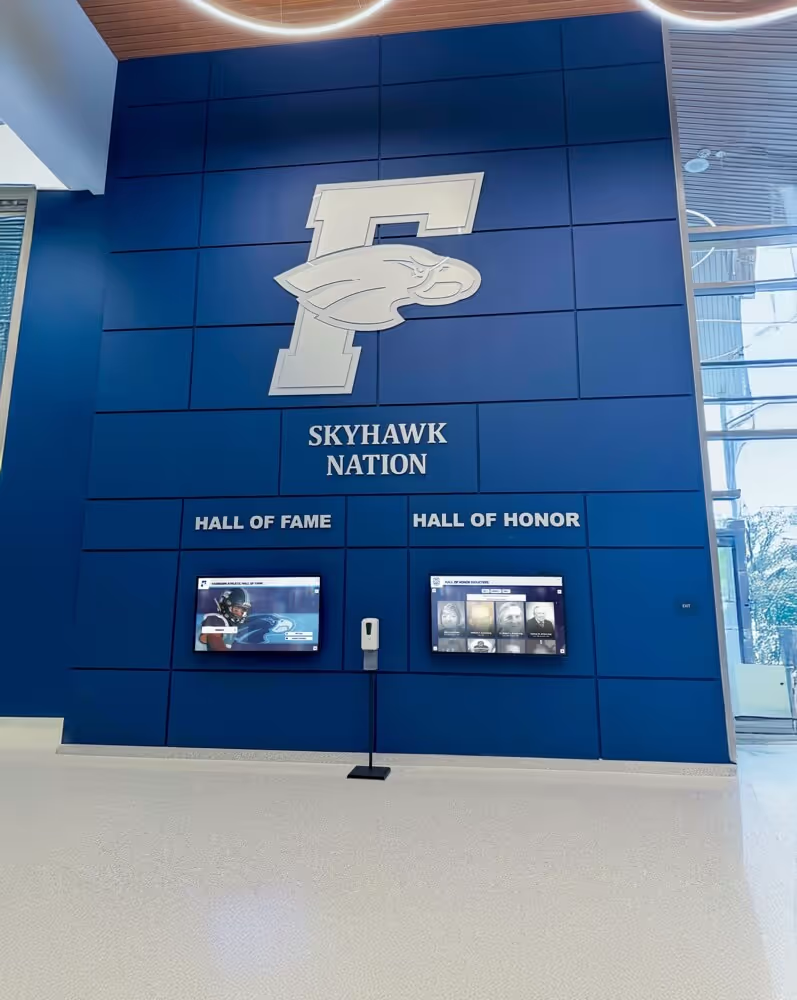
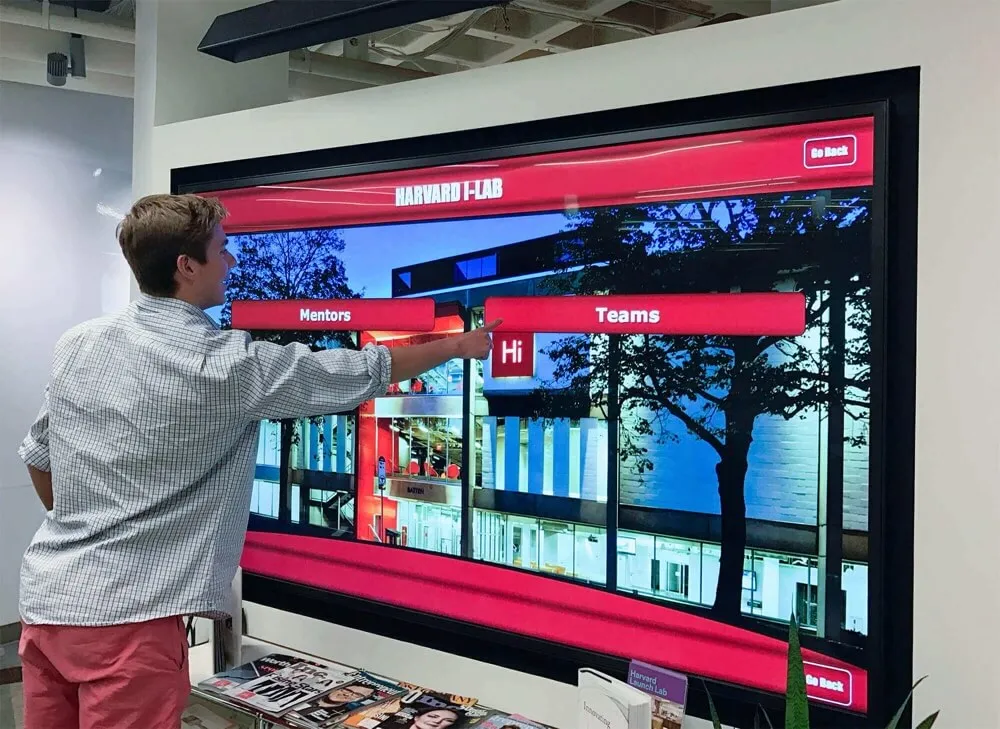
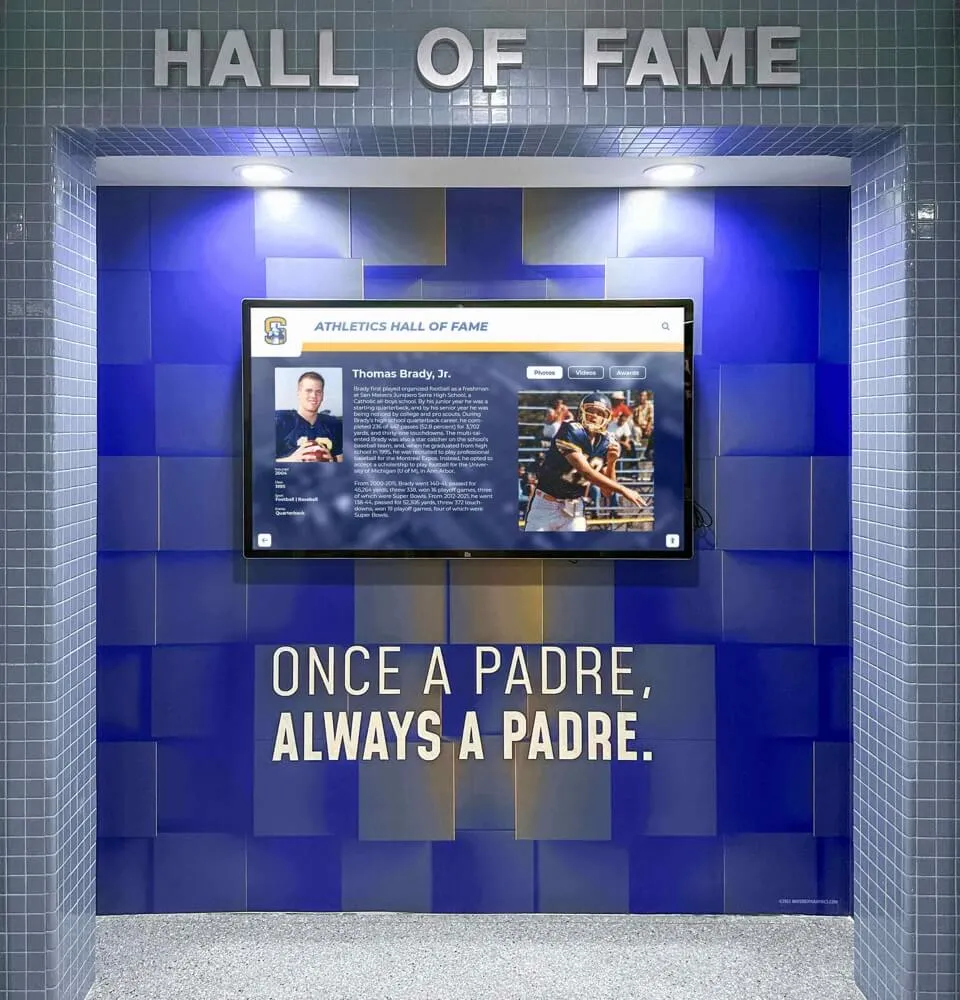
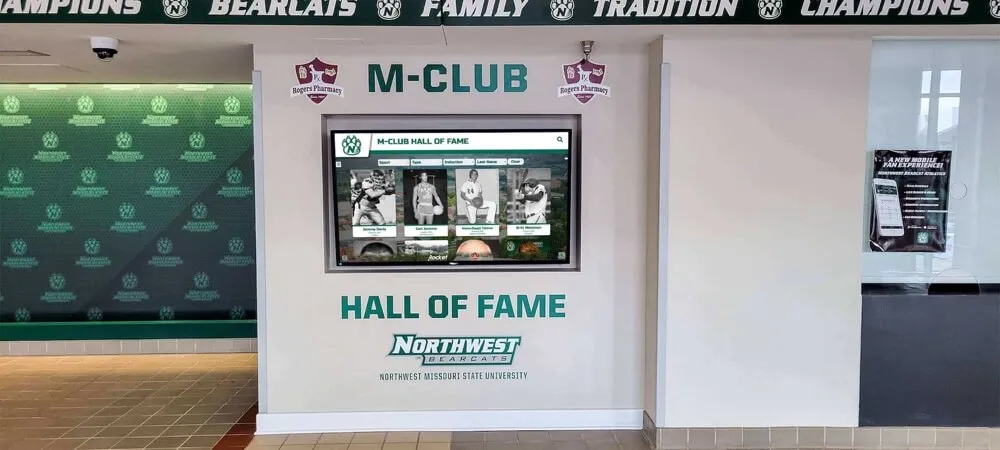
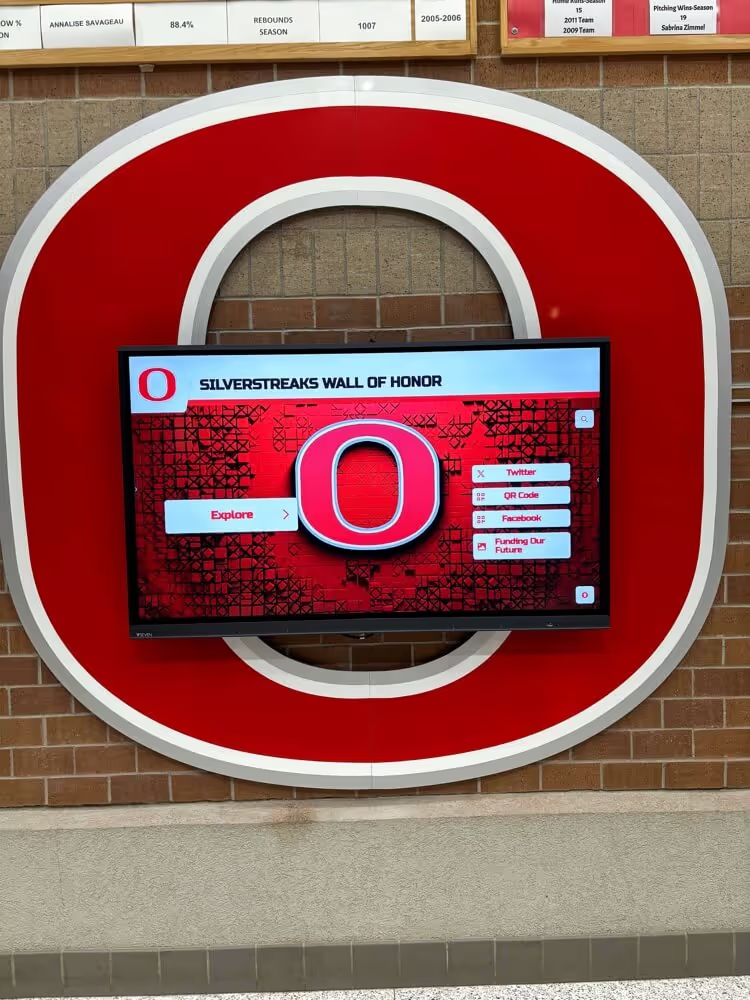
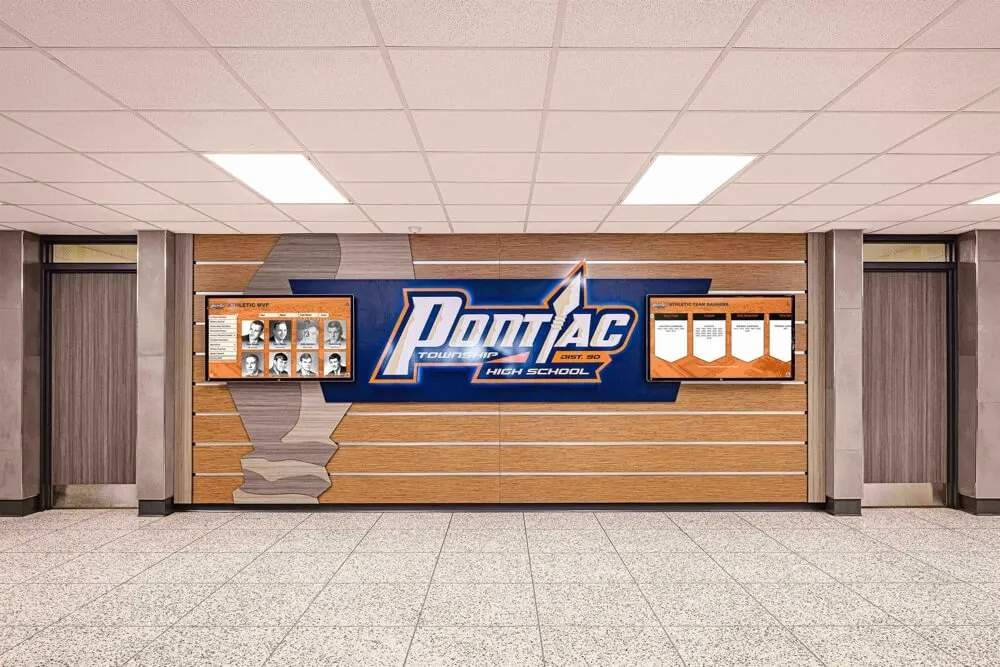
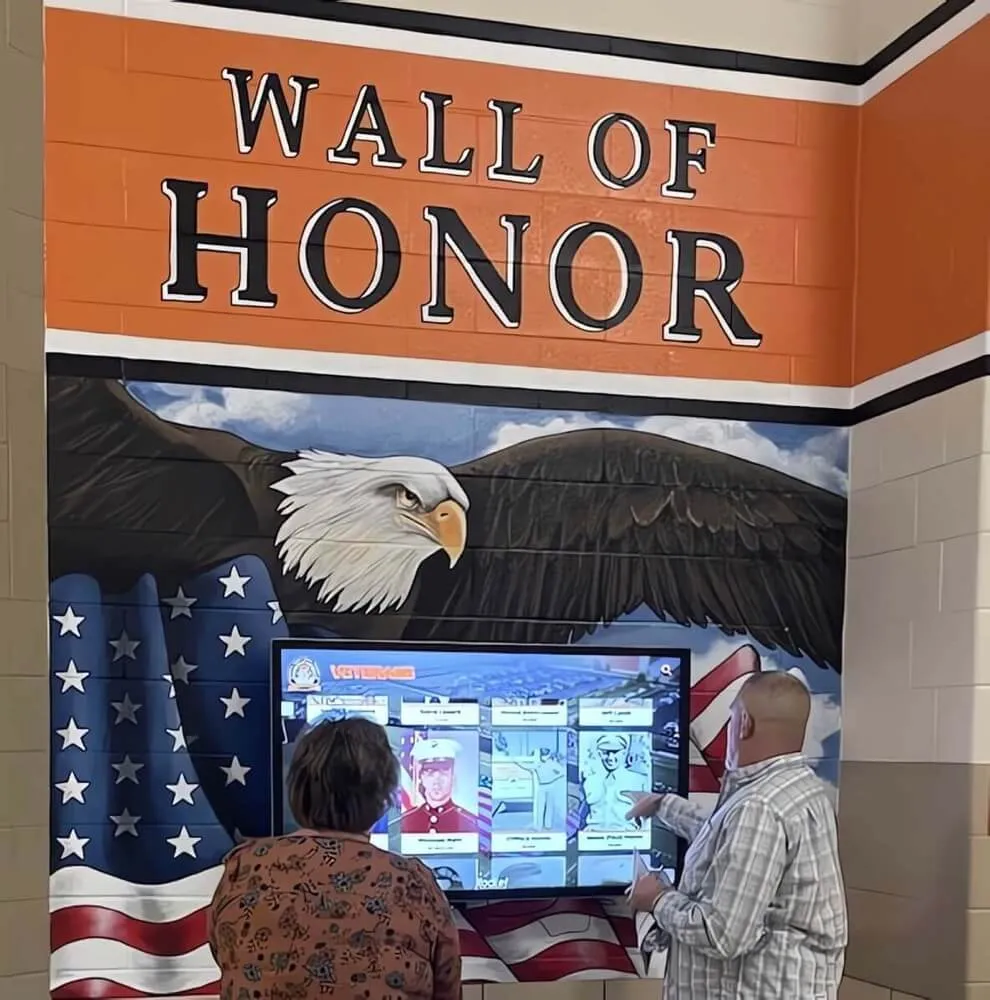
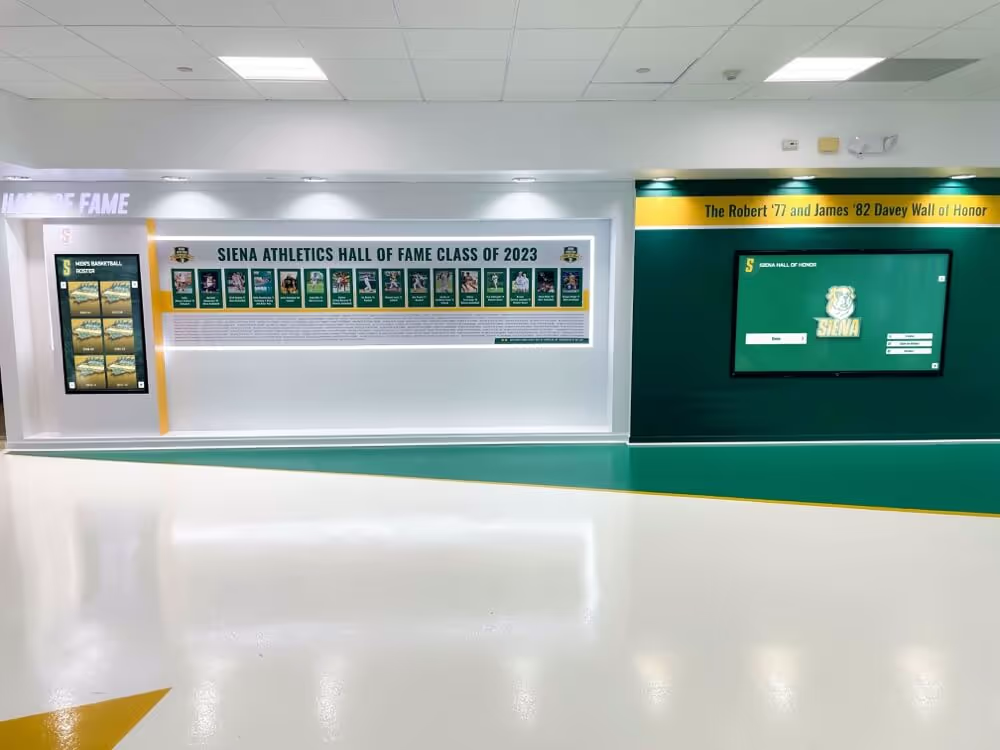
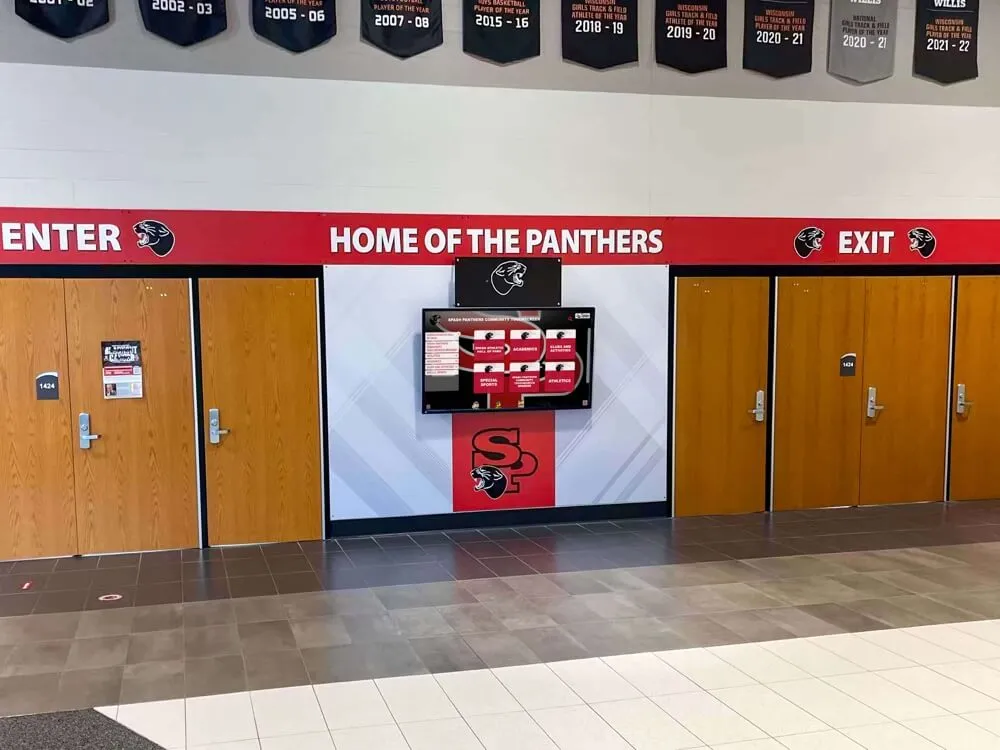
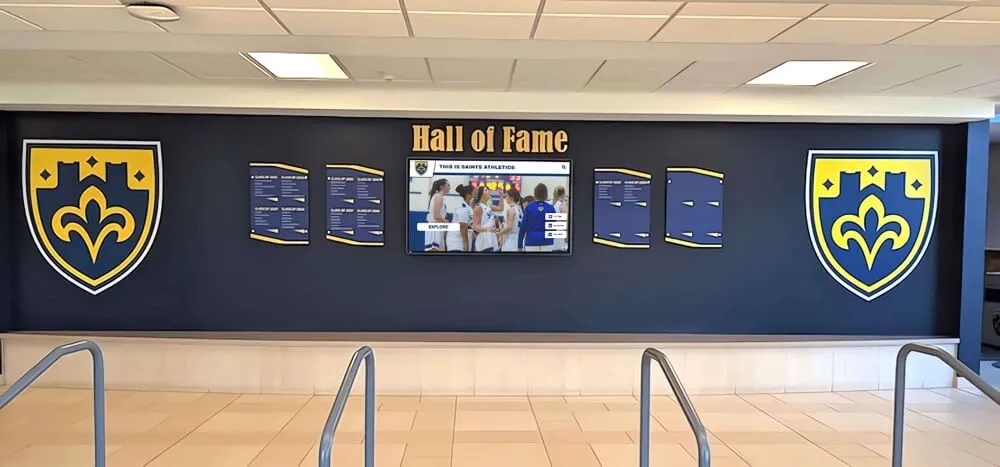
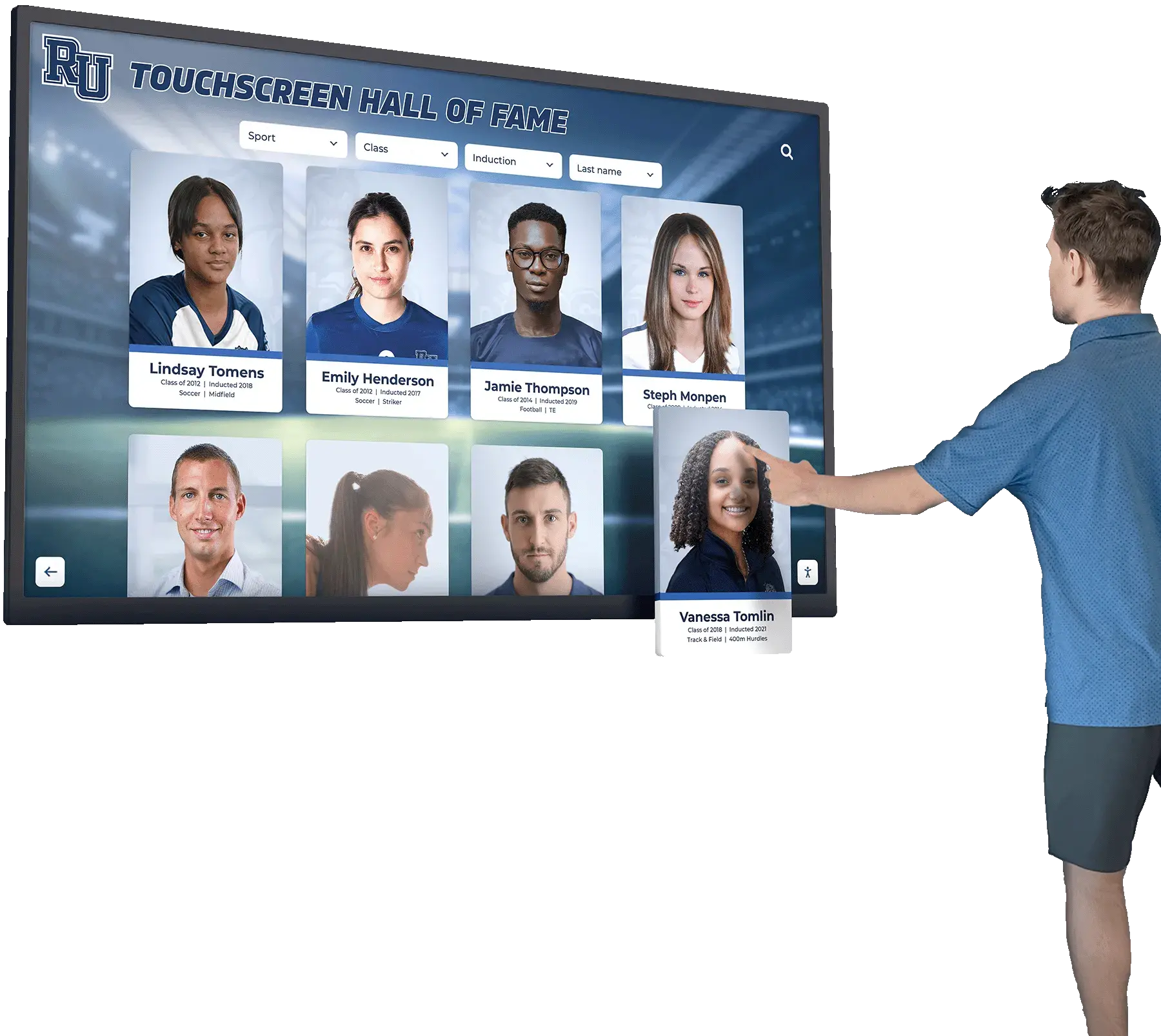
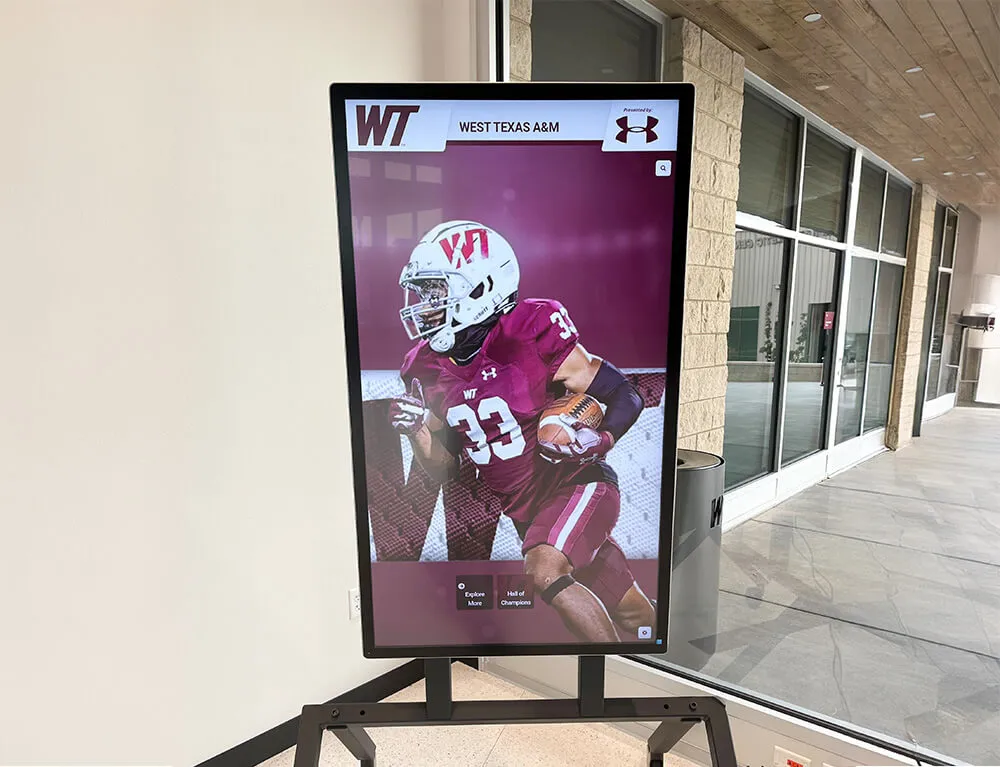
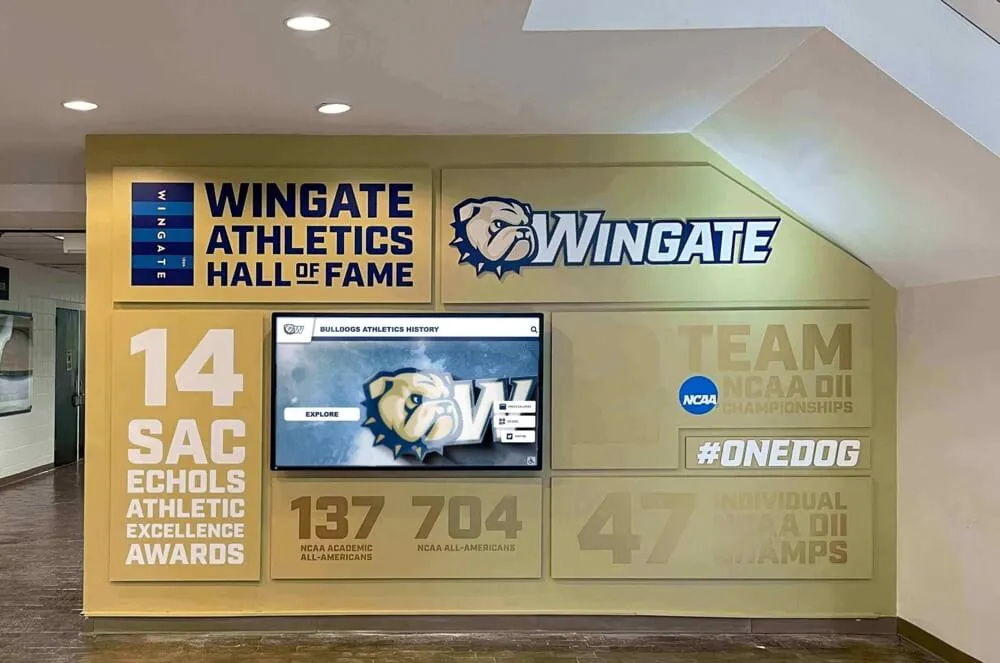
Digital recognition systems transform championship trophy displays from static presentations into dynamic, searchable databases that tell comprehensive championship stories while eliminating physical space limitations. Solutions like Rocket Alumni Solutions provide unlimited championship recognition capacity on touchscreen displays typically occupying just 2-4 feet of wall space.
Digital championship displays offer several significant advantages over traditional trophy cases:
Unlimited Recognition Capacity: Digital systems accommodate every championship an organization earns without requiring additional physical space or display expansion. Organizations can showcase 50 years of championship history or 500 championships with equal ease, eliminating the forced choices between displaying recent victories or preserving historical recognition.
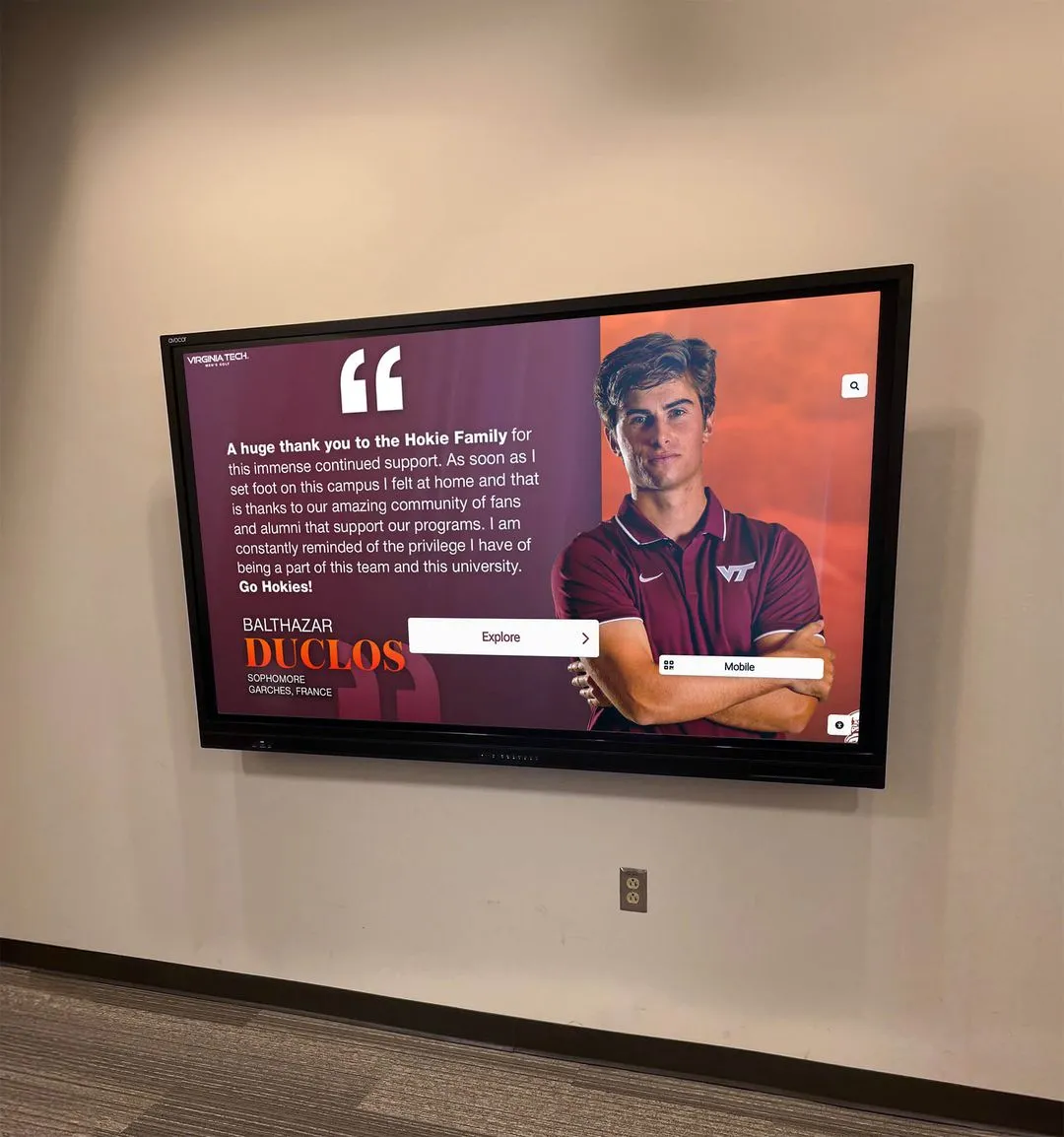
Rich Multimedia Storytelling: Each championship can include comprehensive context impossible in physical displays—full team photos, individual player profiles, season statistics, game highlights videos, newspaper coverage, coach reflections, and detailed season narratives. This rich content preserves championship stories that physical nameplates cannot convey.
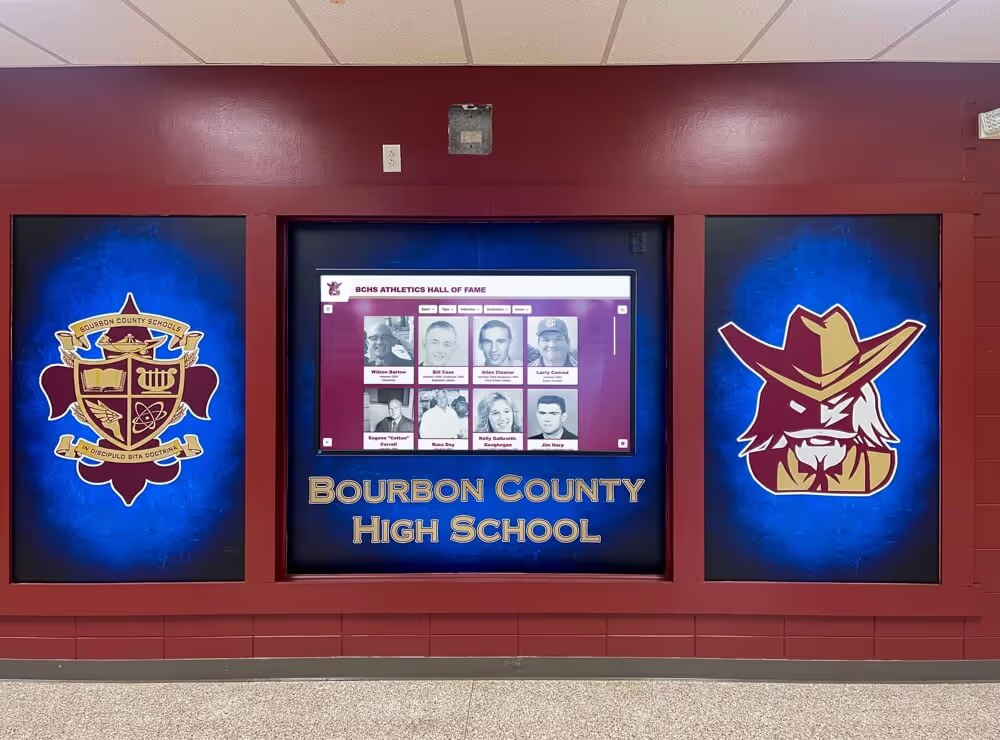
Searchable and Filterable Access: Viewers can search championships by sport, year, coach, or athlete name, immediately accessing specific information of personal interest. This searchability creates personalized exploration experiences where individuals can find connections to their own history or investigate specific programs.
Easy Updates and Corrections: Adding new championships, correcting information, or expanding content requires simple remote updates through web-based content management systems. No physical reinstallation, glass removal, or professional installer visits are needed. Updates deploy instantly across displays.
Enhanced Accessibility: Digital displays eliminate viewing angle problems and glare issues common in glass trophy cases. Content displays at consistent height regardless of championship quantity. Font sizes can adjust for improved readability. Some systems support multiple languages for diverse audiences.
Analytics and Engagement Tracking: Digital systems provide data about which championships receive most interest, popular search terms, and viewing patterns. This information helps organizations understand what stakeholders value and how they interact with athletic history.
Many organizations find that digital trophy case solutions cost less long-term than continuously expanding physical trophy cases while providing superior recognition experiences.
Hybrid Physical and Digital Approaches
Organizations with significant trophy collections and stakeholder attachment to physical displays often benefit from hybrid approaches combining traditional and digital recognition. These systems preserve physical trophy display for the most significant championships while providing comprehensive digital recognition for complete championship history.
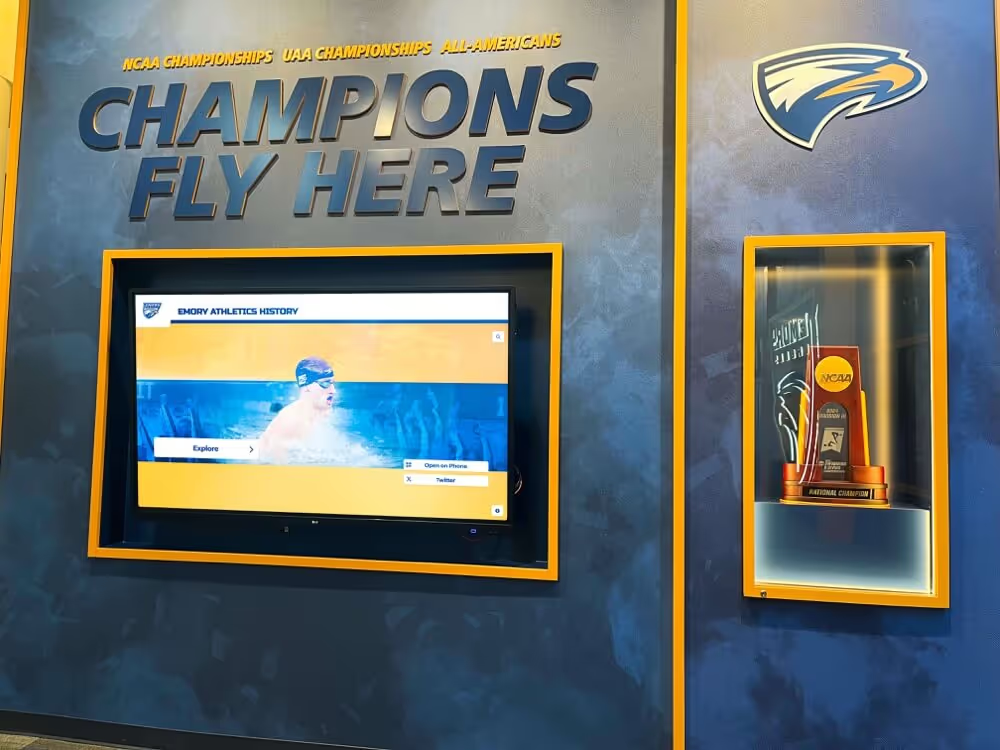
Featured Physical Trophy Displays: Maintain traditional trophy cases showcasing marquee championships—state titles, national championships, or historically significant victories—while transitioning comprehensive championship recognition to digital systems. This approach preserves the visual impact and tangible nature of physical trophies for top achievements while eliminating space constraints for complete championship documentation.
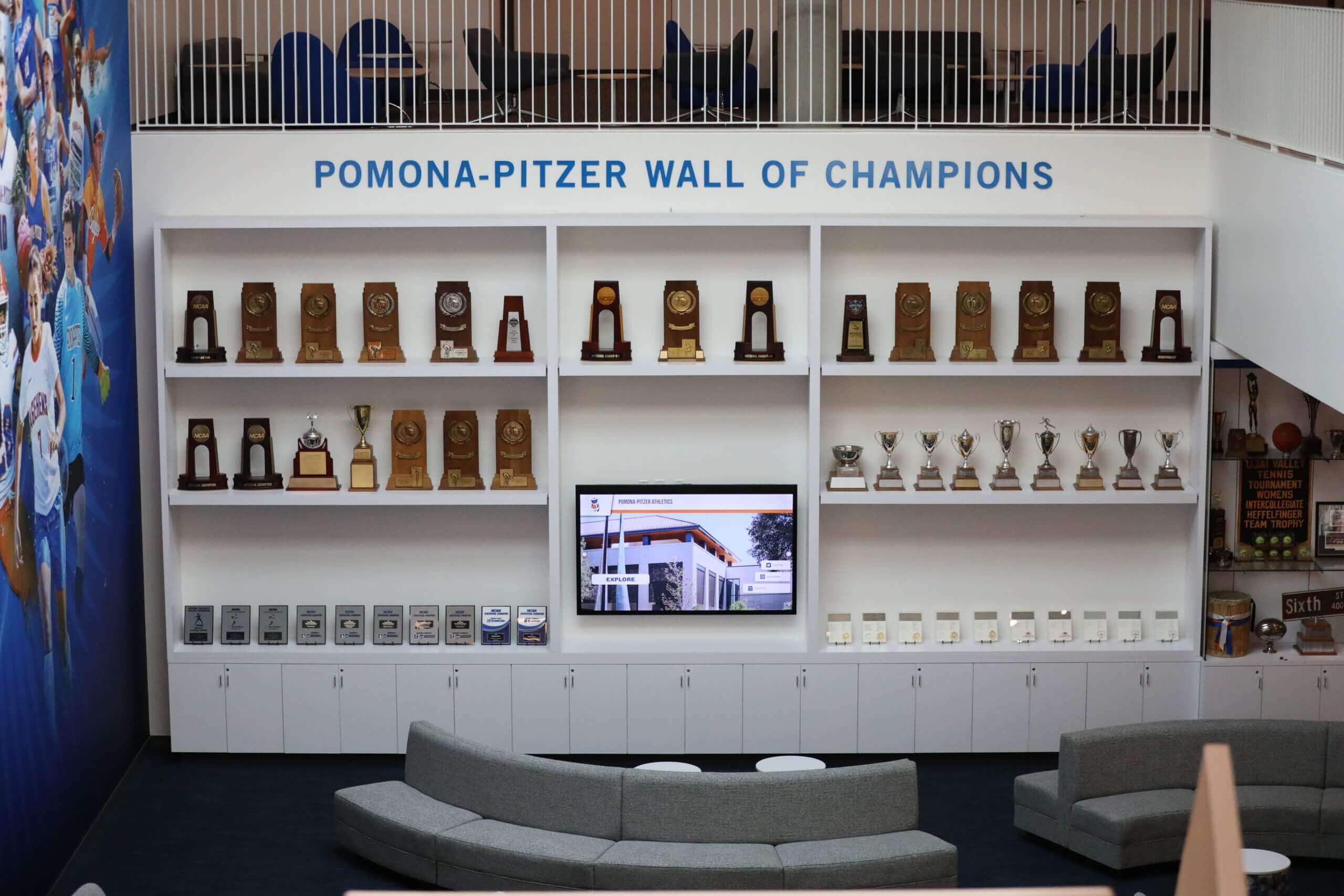
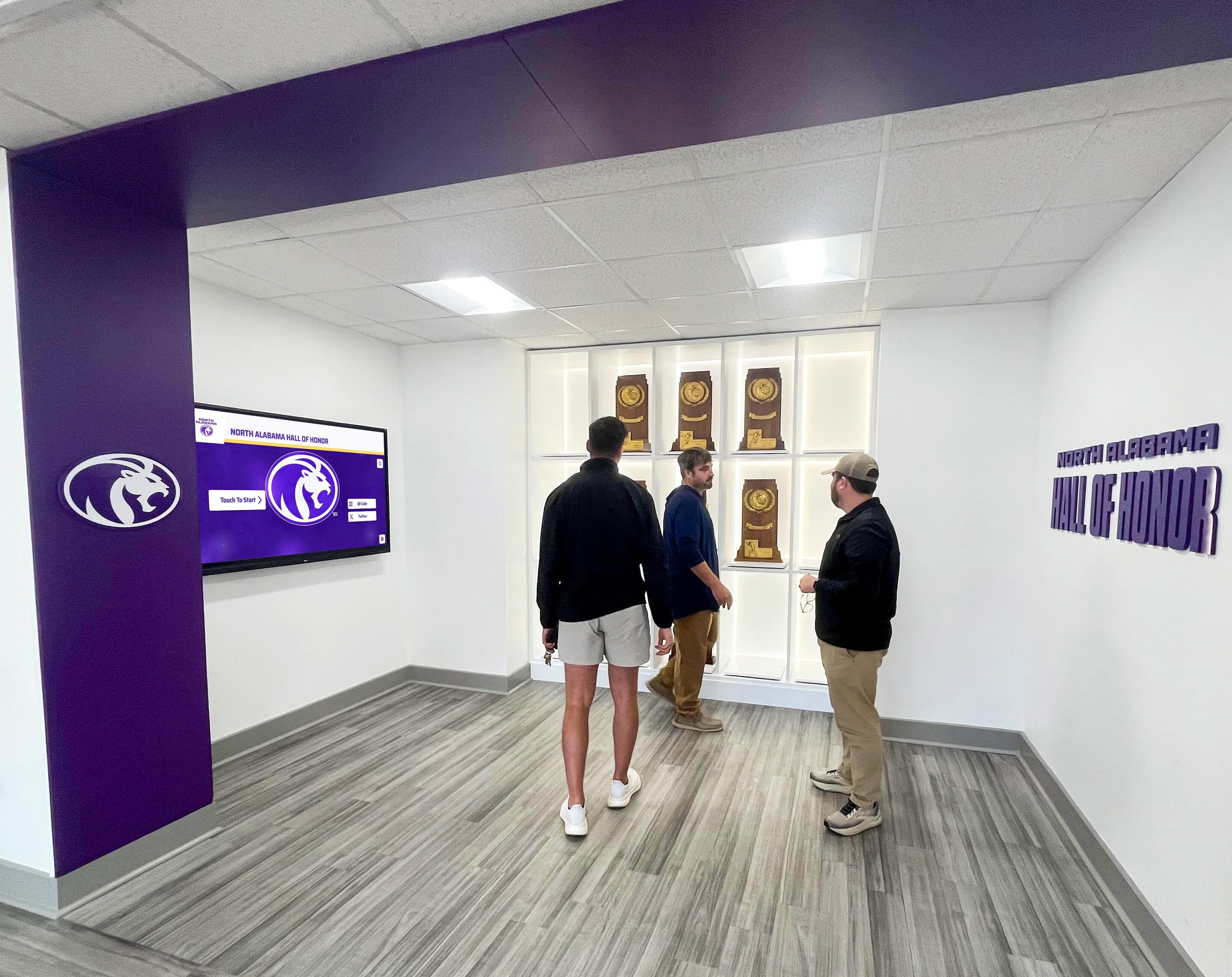
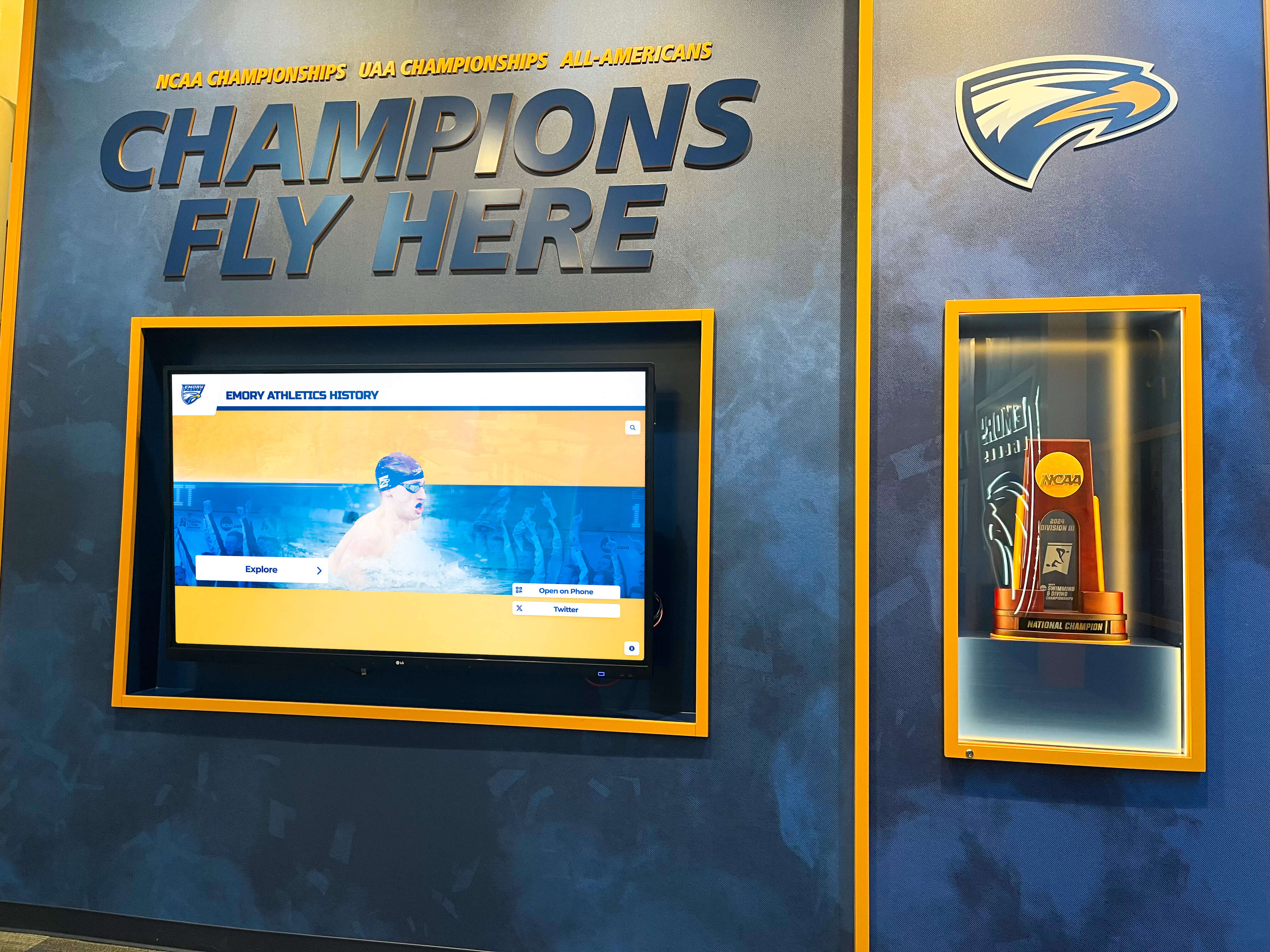
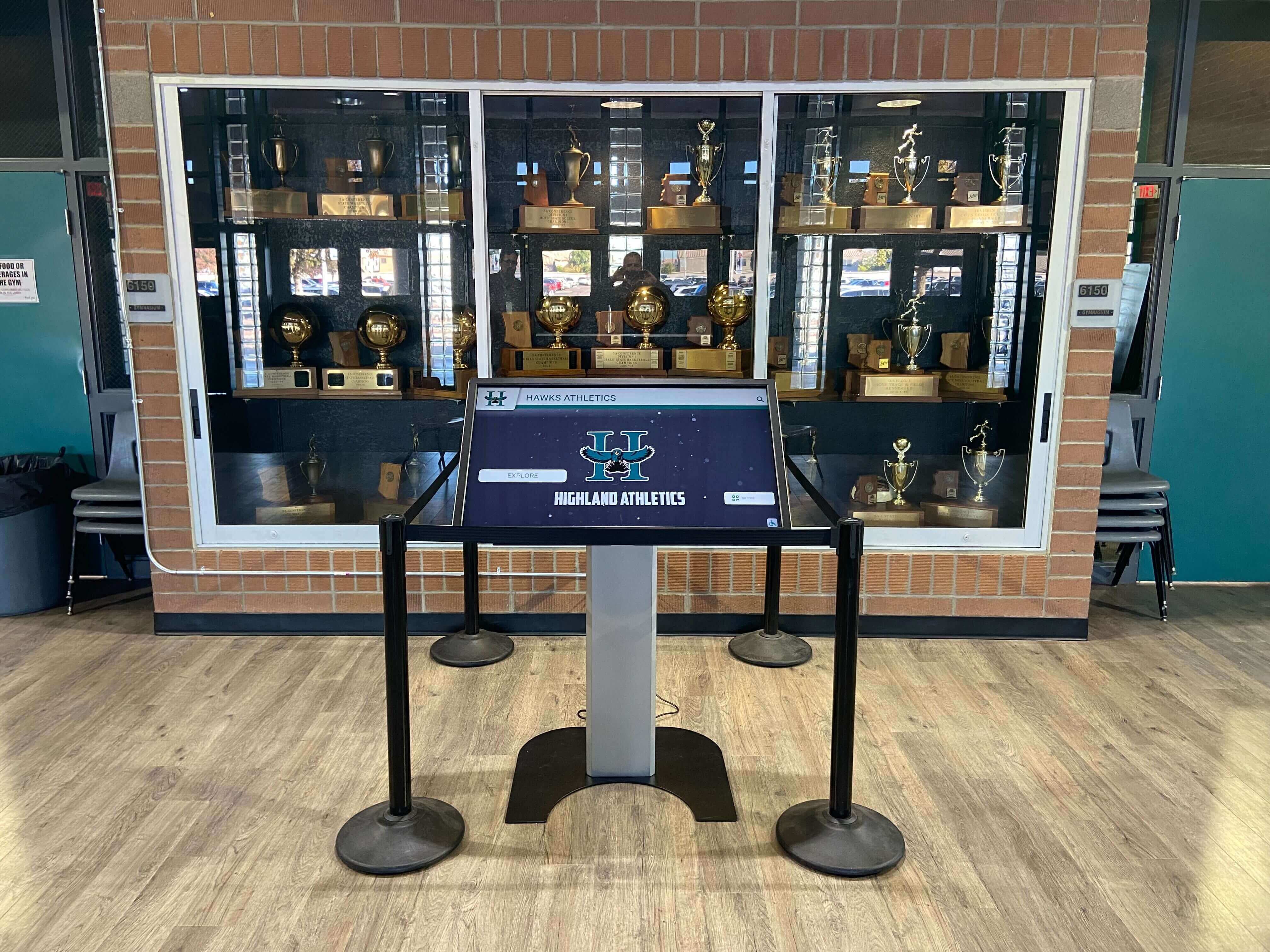
Physical Trophy with Digital Detail: Display physical trophies in cases with adjacent digital screens or QR codes linking to detailed championship content. Viewers can see actual trophies while accessing rich multimedia context through companion digital systems. This combination leverages the symbolic power of physical awards while delivering the comprehensive storytelling that digital systems enable.
Rotating Trophy Displays: Some organizations maintain traditional trophy cases but rotate displayed championships periodically—featuring different sports seasonally, highlighting anniversary championships, or showcasing championships relevant to current events. Digital systems provide permanent access to complete championship history while physical displays create focused attention on rotating featured recognition.
These hybrid models recognize that different stakeholders value different recognition aspects. Traditional supporters may prefer physical trophy preservation, while younger generations expect digital interaction. Hybrid systems serve both preferences while addressing space limitations practically.
Alternative Physical Display Formats
Beyond traditional glass trophy cases, alternative physical display approaches can showcase championships effectively while addressing space and visibility constraints.
Wall-Mounted Shadow Box Displays: Individual shadow boxes mounted directly on walls display championship trophies alongside photos, newspaper clippings, and memorabilia in curated presentations. Shadow boxes provide richer context than standard trophy cases while creating focal points for specific championships. This approach works well for highlighting particularly significant victories in premium display locations.
Open Shelving Systems: Modern architectural shelving systems display trophies without glass barriers, creating accessible, contemporary presentations. Open shelving eliminates glare issues inherent in glass cases while enabling easier reconfiguration. However, open systems provide less security and expose trophies to handling damage or theft in unsupervised spaces.
Championship Trophy Rooms: Organizations with sufficient space sometimes create dedicated championship rooms functioning as athletic museums. These specialized spaces can accommodate extensive trophy collections, memorabilia displays, and interactive elements in ways that hallway trophy cases cannot support. Championship rooms become destinations for tours, recruiting visits, and special events. However, dedicated rooms work only for organizations with available space and resources for purpose-built facilities.
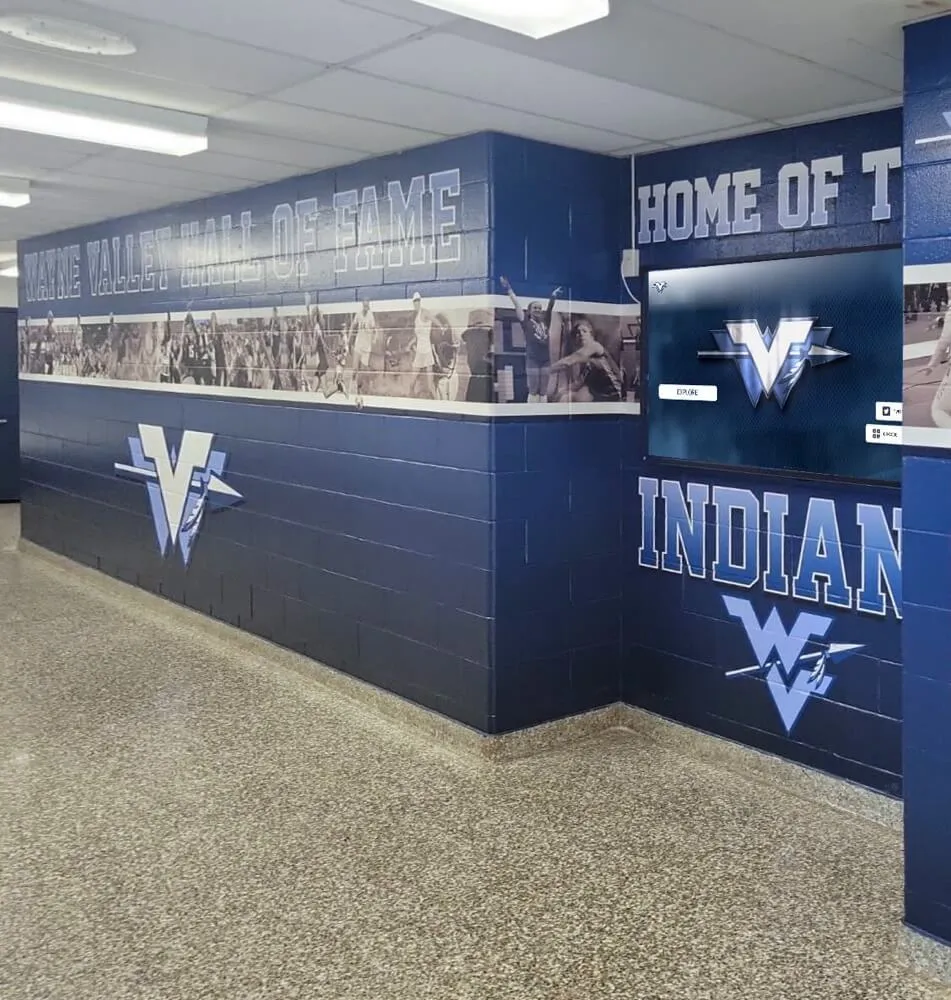
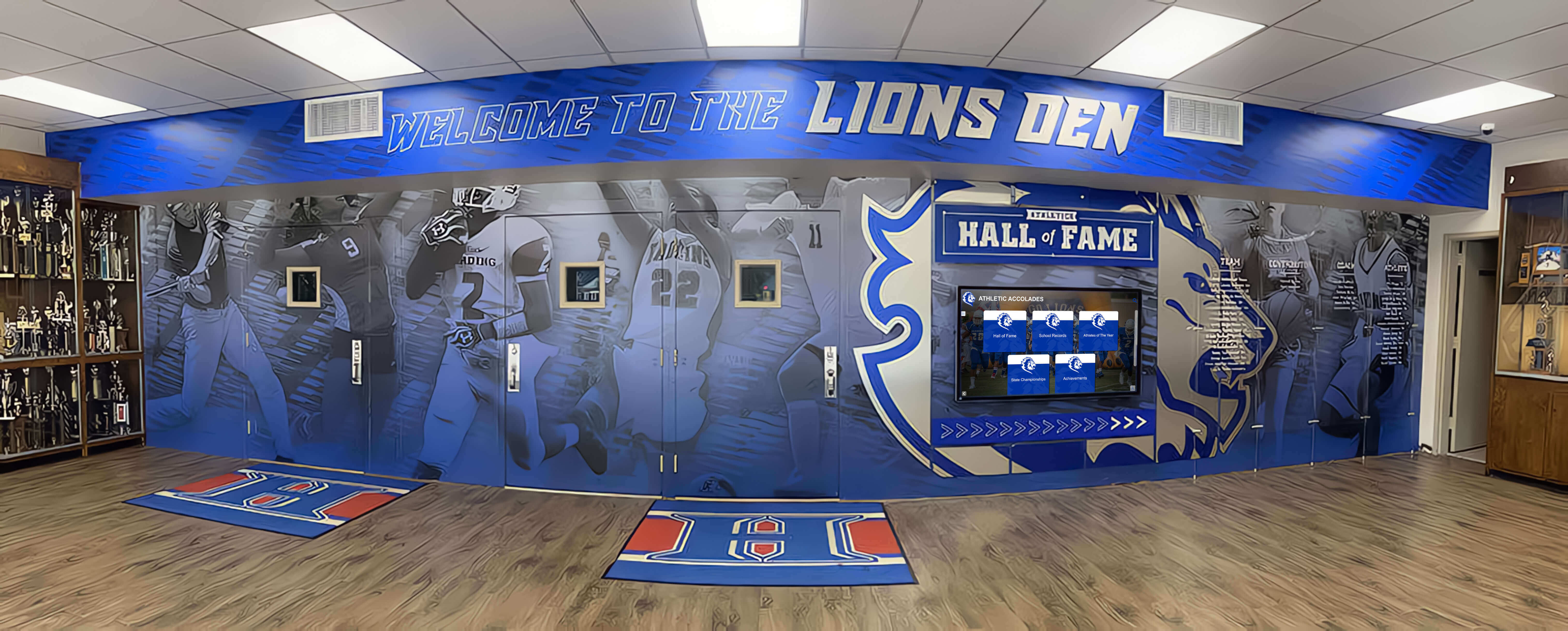
Architectural Integration: Some facility designs integrate championship recognition directly into architectural elements—built-in displays in columns, championship recognition embedded in floors or walls, or trophy displays as room dividers. Architectural integration prevents recognition from feeling like afterthought additions while potentially providing unique visual impact. However, architectural approaches require planning during construction or renovation phases and offer limited flexibility for future changes.
Organizations considering alternatives to traditional trophy cases should evaluate their specific space constraints, championship quantities, stakeholder preferences, and long-term recognition goals. What works for a small school with limited championships differs from solutions appropriate for major universities with extensive competitive histories. Many schools benefit from exploring how interactive kiosk solutions can transform their approach to championship recognition.
Planning Championship Display Implementation
Whether upgrading existing trophy displays or creating new championship recognition systems, careful planning ensures displays serve organizational goals effectively while fitting within practical constraints of budget, space, and maintenance capacity.
Assessing Current Display Effectiveness
Begin by evaluating existing championship displays objectively. Walk through current displays as if seeing them for the first time and consider these assessment questions:
Visibility and Location: Can visitors easily find championship displays? Do displays occupy high-traffic areas or isolated locations requiring deliberate searching? Are trophies clearly visible or obscured by glare, poor lighting, or viewing angle problems?
Information and Context: Do displays provide sufficient information about championships? Can viewers identify the sport, year, and significance of each trophy? Is contextual information about championship seasons available, or do displays show only physical trophies?
Organization and Clarity: Can viewers navigate championship displays easily? Is organizational logic immediately apparent, or does the display feel cluttered and confusing? Do labels help viewers understand what they’re seeing?
Capacity and Space: Do current displays accommodate your full championship collection comfortably, or are trophies crowded together? Is there room for future championships, or is expansion space exhausted? Have you removed older championships due to space limitations?
Maintenance and Updates: Are displays well-maintained with clean glass, functioning lights, and accurate information? How difficult is adding new championships or updating existing information? What does display maintenance cost in time and money?
Engagement and Interest: Do people actually look at championship displays, or do stakeholders walk past without engaging? If you have analytics or can observe informally, do displays create the interest and engagement you desire?
Honest assessment helps identify whether incremental improvements to existing systems make sense or whether more fundamental change would serve championship recognition goals better.
Budget Considerations and Cost Comparison
Championship display budgets vary dramatically based on chosen approaches and organizational scale. Understanding cost structures helps organizations make informed decisions aligned with financial realities.
Traditional Trophy Case Costs:
- Standard 6-foot glass trophy cases: $1,500-4,000 per case
- Custom built-in trophy cases: $3,000-8,000 per case
- Installation and mounting: $300-1,000 per case
- Per-trophy engraved nameplates: $15-40 each
- Annual maintenance (cleaning, lighting, repairs): $200-500
- Future expansion: Repeat initial case costs every 5-10 years as capacity fills
Traditional approaches require lower initial investment but create ongoing costs as programs add championships and exhaust display capacity. Long-term, traditional trophy cases often prove more expensive than perceived, particularly for successful programs continuously requiring expansion.
Digital Display System Costs:
- Touchscreen hardware (display and mounting): $3,000-8,000
- Digital recognition software (annual subscription): $1,200-3,600
- Initial content development: $1,000-3,000
- Installation: $500-1,500
- Annual maintenance: $200-400
- Adding new championships: $0-50 per championship (mostly staff time)
Digital systems require higher initial investment but eliminate future expansion costs and reduce per-championship ongoing expenses dramatically. Organizations can project 10-year total costs to compare approaches realistically. Many find that digital systems cost less over time while providing superior recognition.
Hybrid Approach Costs: Combining physical and digital recognition requires both trophy case and digital system investments but allows for smaller trophy case systems (fewer cases) since digital components provide unlimited additional recognition capacity. Hybrid approaches often represent middle-ground budgets between comprehensive traditional systems and all-digital implementations.
Beyond direct display costs, consider indirect expenses. How much staff time does managing physical trophy cases require? What is the opportunity cost of space devoted to trophy cases that might serve other purposes? What is the value of enhanced championship storytelling and engagement that modern systems enable?
Stakeholder Input and Change Management
Championship displays carry emotional significance for stakeholders who value athletic tradition and institutional history. Changes to championship recognition, particularly moves away from traditional physical displays, require thoughtful stakeholder engagement to build support and address concerns.
Identifying Key Stakeholders: Championship display changes affect multiple groups with different perspectives—athletic directors and coaches who manage current programs, booster clubs and donors who fund athletics, alumni who remember their own competitive experiences, current athletes who seek motivation from past success, and facility administrators managing space and maintenance. Each group brings distinct priorities and concerns requiring consideration.
Addressing Common Concerns: When proposing display changes, anticipate predictable concerns. Stakeholders may worry that removing physical trophies diminishes championship value or disrespects past achievements. They may question whether digital displays have sufficient longevity or wonder what happens to trophies if no longer displayed. They may resist change simply because existing displays represent familiar tradition.
Effective change communication addresses concerns directly. Emphasize that changes aim to honor championships more comprehensively, not reduce recognition. Explain that physical trophies remain preserved even if not all displayed continuously. Demonstrate digital system longevity through examples of institutions using systems successfully for years. When possible, show rather than tell—provide demonstrations or site visits to organizations using modern championship recognition successfully.
Phased Implementation: Rather than replacing entire trophy systems overnight, many organizations implement changes gradually. Start with supplementary digital recognition alongside existing trophy cases, enabling stakeholders to experience new systems before making permanent changes. Use pilot programs with single sports or facilities before expanding institution-wide. Gradual approaches build confidence while allowing refinement based on feedback.
Organizations that find themselves reconsidering their trophy and awards recognition approach often discover that stakeholder concerns diminish significantly once they experience modern recognition systems directly.
Best Practices for Championship Trophy Recognition
Regardless of chosen display format—traditional cases, digital systems, or hybrid approaches—certain principles separate effective championship recognition from mediocre implementations. These best practices help displays achieve maximum impact while serving organizational goals.
Comprehensive Championship Documentation
Championship displays work best when they tell complete stories rather than merely showing trophies or listing winners. Comprehensive documentation requires capturing championship details immediately after victories when information remains fresh and accessible.
Develop systematic processes for documenting championships annually. Designate responsibility for collecting championship information—typically athletic directors, sports information directors, or booster club coordinators. Create standardized templates capturing essential details: official championship name and level, final records and tournament results, team rosters with positions, coaching staff, key statistical leaders, memorable games or defining moments, and championship significance or historical context.
Photograph championship teams professionally with both traditional group photos and candid celebration shots that capture authentic emotion. Record video highlights or compile brief championship recaps. Collect newspaper coverage, programs, and ephemera while readily available. This comprehensive documentation provides rich content for any display format while preserving institutional history that easily disappears without systematic capture.
Organizations that document championships systematically find that creating displays becomes straightforward since required information exists in organized form. Those without systematic documentation struggle to recreate championship stories years later when memories have faded and participants have scattered.
Balancing Historical and Current Recognition
Effective championship displays honor athletic history while celebrating current success. Overemphasis on distant past championships can make programs feel stuck in bygone eras, while focusing exclusively on recent victories dismisses institutional heritage and disconnects current athletes from program traditions.
Create displays that prominently feature recent championships—typically those from the past 5-10 years—ensuring current athletes and families see their achievements recognized. Simultaneously, provide comprehensive access to complete championship history through organized historical sections in traditional displays or searchable databases in digital systems. This balance acknowledges that recent achievements matter most to current stakeholders while preserving complete institutional records for those interested in deeper history.
Some organizations create “featured championship” rotations that regularly highlight historical championships seasonally or on anniversaries. For example, display commemorative content about a 25-year championship anniversary during the relevant sport’s current season. These rotations keep historical championships visible and relevant rather than static background presence.
Connecting Championships to Current Programs
Championship displays serve athletic programs best when they create meaningful connections between past success and current teams. Static historical recognition that feels disconnected from present-day athletics provides less value than displays that actively bridge past and present.
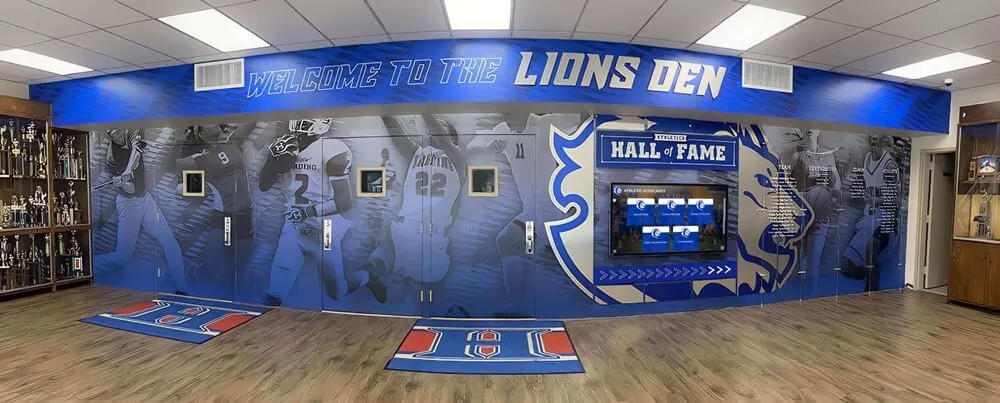
Physical positioning helps create connections. Locate championship displays where current athletes encounter them regularly—locker room entrances, practice facility lobbies, or paths athletes traverse daily. These locations create constant visual reminders of program standards and traditions.
Content connections matter equally. When featuring championships, highlight connections to current programs—note that current head coaches played on championship teams, identify former champions now coaching or mentoring current athletes, or showcase how championship-winning strategies or training approaches continue influencing current programs. These connections help current athletes see themselves as continuing championship traditions rather than viewing past success as irrelevant history.
Some programs create explicit connections through ceremonies or traditions. Championship team reunions during current season games create visual links between past champions and current teams. Awards named for championship team members or coaches honor history while motivating current athletes. Programs that recognize championship anniversaries during relevant seasons connect current athletes to program heritage meaningfully.
Schools and organizations looking to maximize their athletic achievements often benefit from implementing comprehensive youth sports awards programs that start recognition early and build toward championship-level achievements.
Maintaining Championship Trophy Displays
Championship recognition requires ongoing maintenance ensuring displays remain attractive, accurate, and functional. Maintenance approaches vary significantly between traditional and digital systems, with different time and cost implications.
Physical Trophy Case Maintenance
Traditional trophy cases require regular physical maintenance maintaining appearance and functionality:
Regular Cleaning: Glass cases require weekly or biweekly cleaning removing dust, fingerprints, and smudges that diminish visibility. Trophy cleaning—polishing metal, cleaning stone or wood bases, dusting—should occur quarterly or as needed when tarnishing becomes visible. High-traffic displays require more frequent attention than those in protected locations.
Lighting Maintenance: Built-in LED lighting systems generally require minimal maintenance but eventually need bulb replacement or fixture repair. Check lighting quarterly, ensuring even illumination and replacing burned-out bulbs promptly. Adjust lighting angles if glare problems develop or viewing conditions change.
Structural Maintenance: Inspect cases annually for seal deterioration, lock function, hinge issues, or mounting concerns. Address minor problems promptly preventing small issues from becoming major repairs. Consider professional inspection every few years for expensive built-in systems.
Organization and Updates: Adding new championships requires physical access to cases, potential reorganization of existing trophies, and nameplate creation and installation. Budget time and cost for these updates, recognizing that successful programs require frequent additions while unsuccessful programs may update rarely.
Security: Traditional cases face theft or vandalism risks, particularly in unsupervised areas. Ensure locks function properly and limit key distribution. Consider alarm integration for high-value trophy collections in vulnerable locations.
Physical maintenance creates ongoing labor costs that many organizations underestimate when selecting display systems. Schools often find that digital displays for recognition require substantially less maintenance time and cost over multi-year periods.
Digital Display Maintenance
Digital recognition systems require different maintenance focused on content accuracy, software updates, and hardware functionality:
Content Updates: Adding championships requires creating digital content—uploading photos, entering text information, adding videos—through web-based content management systems. This work occurs remotely without physical display access. Updates deploy instantly across all displays. While initial content creation requires effort, updates prove far faster and simpler than physical trophy installation.
Content Accuracy: Review displayed information periodically ensuring accuracy and completeness. Digital systems enable immediate corrections when errors are discovered without physical reinstallation. Encourage stakeholders to report inaccuracies, making clear that corrections are simple and welcome.
Software Updates: Subscription-based digital recognition systems receive regular software updates from providers, typically deploying automatically. These updates add features, improve security, and maintain compatibility with evolving technology. Ensure systems remain connected to internet enabling update delivery.
Hardware Maintenance: Touchscreen displays require basic cleaning—screen wiping weekly or as needed, surrounding area dusting—using appropriate cleaning products that won’t damage screens. Monitor display functionality, reporting problems promptly to hardware providers or IT departments. Most quality commercial touchscreens operate reliably for years with minimal maintenance.
Backup and Data Security: Ensure championship content is backed up regularly. Cloud-based systems typically handle this automatically, but confirm backup policies and understand content recovery procedures. Verify that system security updates install properly protecting against cyber risks.
Digital maintenance requires less physical labor than traditional trophy cases but demands different skill sets—content management, basic IT troubleshooting, and digital asset organization. Many organizations find these maintenance requirements align better with modern staff capabilities than traditional physical display maintenance.
Making the Decision: Traditional vs. Digital Championship Recognition
Schools and organizations evaluating championship display options face fundamental questions about whether traditional trophy cases, digital systems, or hybrid approaches best serve their specific needs, constraints, and goals. No single answer fits all situations, but systematic evaluation of key factors helps clarify appropriate directions.
When Traditional Trophy Cases Make Sense
Physical trophy displays remain appropriate for certain organizations despite inherent limitations:
Limited Championship Quantity: Organizations with modest championship histories—perhaps fewer than 30-40 total championships—can display complete collections in standard trophy cases without space constraints. If championship accumulation rates remain low and capacity concerns aren’t imminent, traditional displays serve adequately.
Strong Stakeholder Preference for Physical Display: Some communities highly value physical trophy display as tradition, and stakeholder resistance to alternatives creates significant change management challenges. When stakeholder sentiment strongly favors traditional displays and organizations lack resources or willingness to navigate change resistance, maintaining existing approaches may prove most practical.
Limited Technical Infrastructure: Organizations without reliable internet connectivity or basic IT support may struggle to implement and maintain digital systems effectively. Traditional displays require no technical infrastructure beyond electrical connections for lighting.
Budget Constraints for Initial Investment: While digital systems often cost less long-term, initial investments exceed basic trophy case costs. Organizations with tight capital budgets but available recurring funds may prefer spreading costs over time through periodic trophy case additions rather than larger upfront digital investments.
Desire for Physical Trophy Preservation: Some organizations prioritize displaying actual physical championship trophies rather than digital representations. If this symbolic value outweighs practical limitations, traditional displays align with organizational priorities.
When Digital Championship Recognition Makes Sense
Digital recognition systems offer compelling advantages for many organizations, particularly those facing specific challenges or seeking enhanced recognition capabilities:
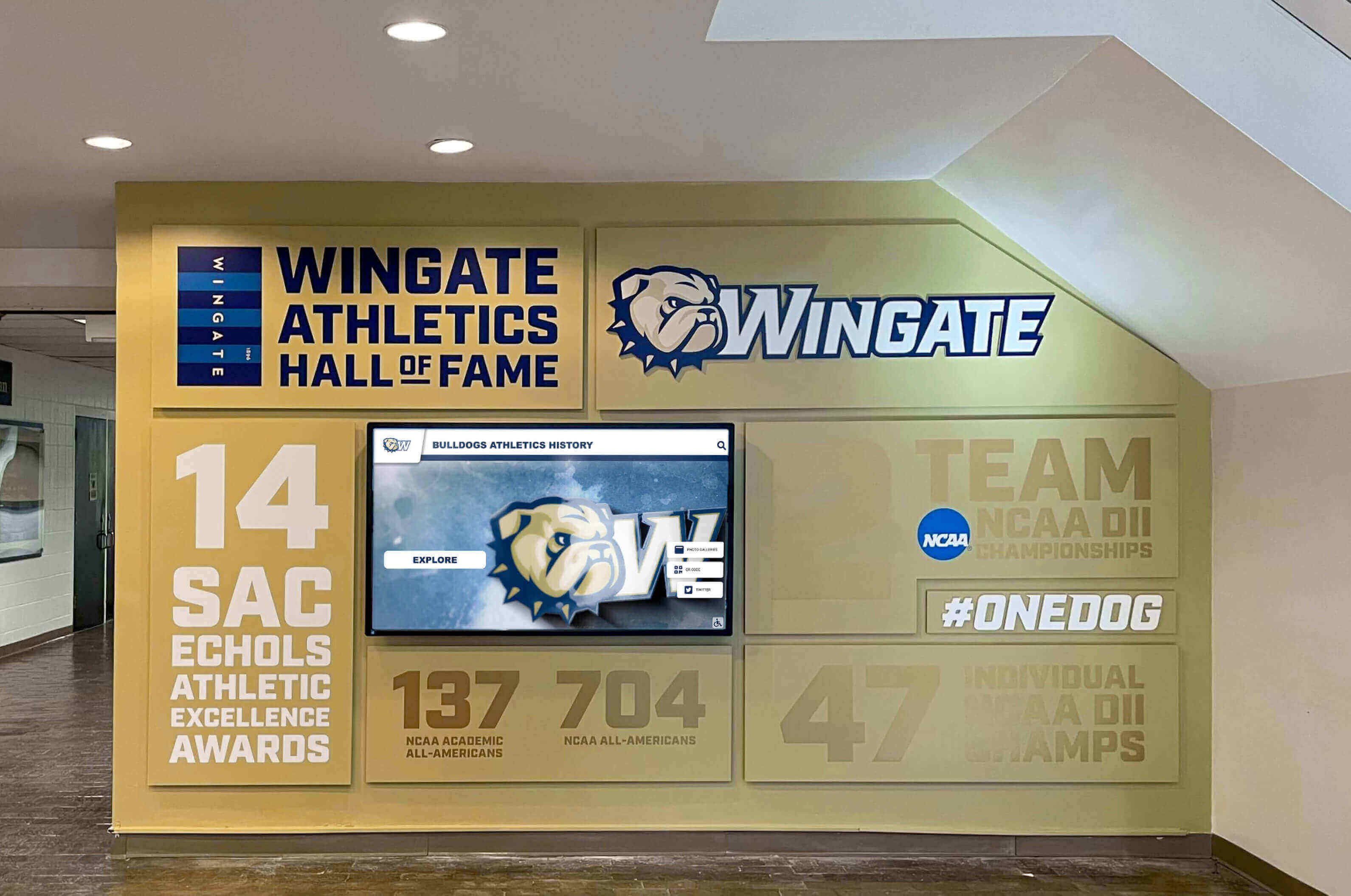
Space Constraints: Organizations where physical space for trophy displays is limited, expensive, or unavailable benefit dramatically from digital systems providing unlimited recognition capacity in minimal physical footprint. This applies to urban schools in space-constrained buildings, organizations with valuable real estate where floor space carries high opportunity costs, or growing programs exhausting available trophy case space.
Comprehensive Championship History: Organizations with extensive championship histories—hundreds of championships across decades—cannot display complete collections physically. Digital systems enable comprehensive recognition that physical displays cannot match while providing searchability making large collections navigable.
Desire for Rich Storytelling: If organizational goals include preserving detailed championship stories, recognizing all contributors comprehensively, or creating engaging multimedia experiences, digital systems provide capabilities that traditional displays cannot deliver. Rich content, video integration, and detailed documentation serve these goals effectively.
Multiple Locations: Organizations with multiple facilities or campuses benefit from digital systems displayable in numerous locations simultaneously without duplicating trophy collections. A single championship database can power displays across an entire school district or multi-campus university.
Long-Term Cost Considerations: Organizations evaluating 10-20 year total costs often find digital systems more economical than continuous trophy case expansion despite higher initial investment. If long-term cost efficiency matters more than initial capital costs, digital systems offer financial advantages.
Modern Stakeholder Expectations: Organizations serving populations that expect digital interaction—younger generations comfortable with touchscreens, remote access, and multimedia content—find digital recognition aligns with stakeholder preferences and engagement patterns.
Many schools discover that modern digital recognition solutions, like those offered by Rocket Alumni Solutions, address multiple challenges simultaneously while positioning championship recognition for long-term success regardless of program growth.
Hybrid Approaches: Combining the Best of Both
For organizations torn between traditional and digital recognition or seeking to honor different stakeholder preferences, hybrid approaches offer middle-ground solutions:
Featured Physical Display with Comprehensive Digital Recognition: Maintain traditional trophy cases for the most prestigious championships—state titles, national championships, or historically significant victories—while implementing digital systems for comprehensive championship coverage. This approach provides the symbolic presence of physical trophies for top achievements while eliminating space constraints through digital recognition of complete championship history.
Sport-Specific Implementation: Some organizations implement digital systems for certain sports while maintaining traditional displays for others. For example, transition high-volume sports like basketball or volleyball to digital recognition while keeping traditional displays for sports with fewer championships. This phased approach enables learning and stakeholder acclimation before full implementation.
Location-Based Strategy: Organizations might maintain traditional trophy displays in primary locations like main building lobbies while implementing digital systems in athletic-specific facilities, team areas, or secondary locations. This strategy honors tradition in flagship spaces while expanding recognition capacity through digital systems where traditional cases aren’t already established.
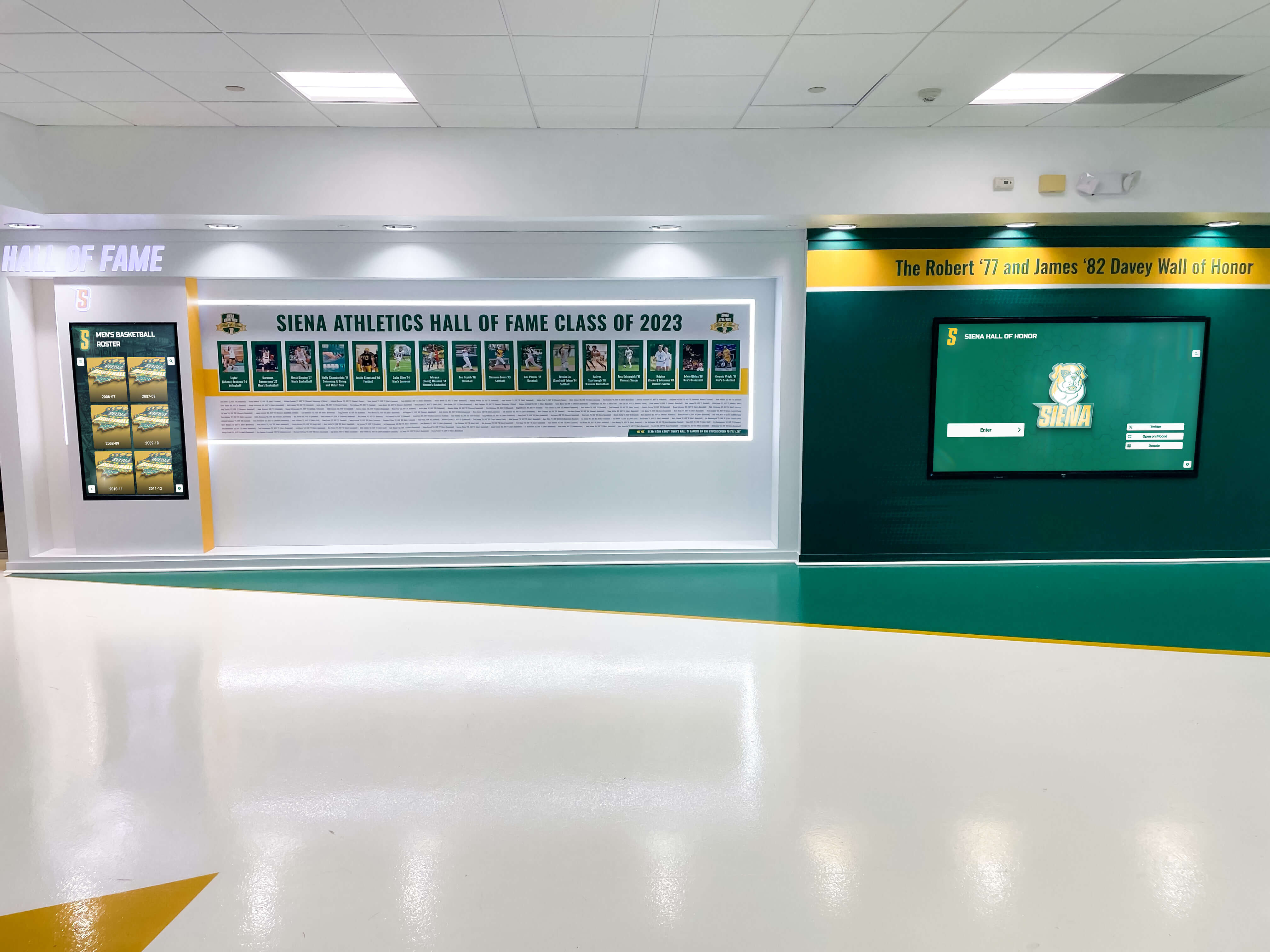
Complementary Systems: Some organizations keep existing trophy cases unchanged while adding adjacent digital displays that provide extended championship information, searchable databases, and multimedia content. Physical trophies and digital content complement each other, serving stakeholders who value different recognition aspects.
Hybrid implementations allow organizations to respect tradition while addressing practical limitations and stakeholder diversity. These middle-ground approaches often generate broader stakeholder support than either-or decisions, though they require managing two recognition systems rather than one.
Conclusion: Creating Championship Recognition That Honors Excellence
Championship trophies represent far more than decorative objects—they embody the dedication, teamwork, and achievement that define excellence in athletics. How organizations display these symbols of success communicates what they value and how they honor those who contribute to athletic achievement. Thoughtful championship display strategies ensure that hard-won victories receive recognition worthy of the effort they represent.
Organizations facing trophy display challenges—overflowing cases, limited space, inadequate championship context—should recognize that these problems reflect success rather than failure. Championship recognition challenges mean programs are winning consistently enough that standard display approaches prove insufficient. This success deserves celebration through recognition systems that scale with achievement rather than constrain it.
Whether choosing traditional trophy cases, transitioning to digital recognition, or implementing hybrid approaches, effective championship displays share common characteristics. They make championships visible in high-traffic locations where stakeholders naturally gather. They provide context that tells championship stories rather than merely listing winners. They connect past achievement to current programs, helping today’s athletes see themselves as inheritors and continuers of championship traditions. They accommodate growth without forcing removal of historical recognition. And they create engagement opportunities that transform passive viewing into active exploration of athletic heritage.
The championship recognition landscape has evolved dramatically with digital technology enabling capabilities impossible with traditional displays. Organizations need not remain constrained by physical trophy case limitations when modern alternatives provide unlimited recognition capacity, comprehensive storytelling, enhanced accessibility, and long-term cost efficiency. Making informed decisions about championship display requires understanding both traditional and modern approaches while honestly assessing specific organizational needs, constraints, and goals.
Most importantly, remember that championship recognition exists to honor achievement, inspire current athletes, and preserve institutional heritage. Whatever display approach serves these goals most effectively in your specific context deserves serious consideration, even when it challenges conventional approaches or requires stakeholder education. Championships earned through exceptional effort deserve recognition systems designed with equal thoughtfulness and commitment to excellence.
Ready to transform how your organization showcases championship success? Explore modern championship recognition solutions that eliminate space constraints while telling richer championship stories than traditional trophy cases ever could.