



Key Takeaways
Complete guide to championship banners for gyms — covering materials, design best practices, placement strategies, and how schools extend physical banner traditions into digital hall-of-fame recognition programs.
Walk into any high school gym with a winning tradition and the first thing your eyes drift toward isn’t the scoreboard — it’s the banners. Rows of rectangular panels climbing toward the rafters, each one a compressed proof of effort: the year, the sport, the title won. Championship banners for gyms are one of the most enduring traditions in school athletics, functioning simultaneously as trophies, timelines, and declarations of institutional identity. This guide covers everything athletic directors and school administrators need to know about selecting, designing, displaying, and digitally extending gym championship banner programs — so that every title run gets the recognition it deserves.
What Championship Banners for Gyms Actually Represent
A championship banner is more than a decorative panel. It is institutional memory made visible. When a current freshman basketball player looks up at the 1987 state championship banner hanging in the same gym where she now practices, the program’s history stops being abstract and becomes something she participates in directly.
That psychological dimension explains why schools invest in banners at all. A single season’s worth of statistics could be stored in a spreadsheet. A trophy can be locked in a case. But a banner hung high above the court turns every practice, every game, and every gym class into an encounter with program tradition. The title run becomes part of the physical space.
Championship banners for gyms also serve a practical communication function. They tell visitors, recruits, and community members — at a glance and without words — that this program has produced results. An opposing team warming up in a gym lined with championship banners receives a different psychological message than one warming up in a bare facility. Recognition, in this sense, is also a form of competitive identity.

Types of Championship Banners Schools Hang in Gyms
Not all gym banners mark the same kind of achievement, and programs that recognize different tiers of success tend to accumulate richer banner collections over time.
State Championship Banners
These are the most prominent and typically the largest banners in any gym. State championships represent peak achievement within a school’s competitive structure. The banner format varies by state association but typically includes the sport, the classification or division, and the year. Some schools use distinct color schemes for different sports; others maintain uniform design across all programs.
Conference and Regional Championship Banners
Conference titles and regional championships represent sustained excellence within a school’s competitive league. Many schools that haven’t yet won a state title have impressive conference banner runs spanning multiple decades. These banners honor consistent excellence rather than one-time peaks and validate year-over-year program strength.
Tournament and Invitational Championships
Prominent holiday tournaments, in-season invitationals, and postseason bracket championships all merit banner consideration for programs with strong traditions in those events. An annual invitational championship banner program can accumulate a striking visual record across thirty or forty years.
Retired Number and Individual Milestone Banners
Many gyms dedicate space to retired jersey numbers, celebrating players whose careers defined an era. Individual milestone banners — recognizing players who scored 1,000 career points, set school records, or earned All-State honors — create a complementary layer of recognition alongside team titles. Schools interested in structured approaches to individual milestone recognition find that these individual banners deepen community connection to athletic history in ways that team titles alone cannot achieve.
Sectional and District Banners
Particularly in states with layered playoff structures, sectional and district championships can be significant achievements worth permanent display. Schools in competitive regions sometimes go years between state titles while accumulating sectional championships that reflect genuine program strength within demanding competitive landscapes.
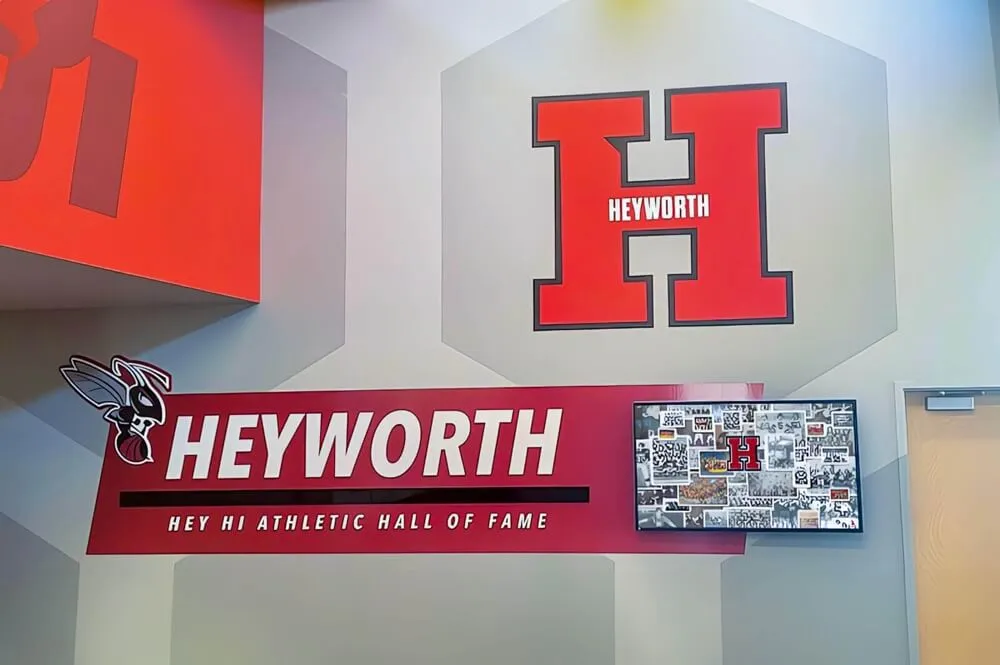
Designing Championship Banners: Materials, Colors, and Layout
Banner quality signals how seriously a school takes its recognition program. A well-executed championship banner conveys institutional pride; a faded, wrinkled, or inconsistently designed banner can undermine the recognition it’s meant to deliver.
Material Choices
Most schools order championship banners in one of three materials:
- Nylon or polyester fabric — lightweight, resistant to humidity and temperature changes typical in gym environments, and printable with vibrant colors. These hang straight without wrinkling and maintain appearance over years of display.
- Vinyl — heavier and more durable than fabric, with excellent print quality. Standard for many banner vendors and generally less expensive for large orders.
- Scrim or mesh — allows air circulation, which matters in older gymnasiums without climate control. The open weave reduces sagging and movement in high-airflow environments.
Design Elements That Work
The most readable championship banners use high-contrast color combinations, limit text to essential information, and incorporate school identity elements — mascots, official colors, logos — consistently across all banners in a collection. Key elements on most championship banners include the school name or mascot, sport, achievement (State Champion, Conference Champion, etc.), classification or division where applicable, and year.
Fonts should be legible from the distance at which banners will be viewed. In a standard high school gymnasium, a banner hanging 20–25 feet high needs larger, bolder typography than one displayed at eye level near an entrance.
Sizing and Proportions
Standard gym championship banners typically run 24" × 36" to 36" × 60" depending on display height and desired visual weight. Schools with ceiling-mounted banner collections often standardize sizes across all sports to create a uniform visual rhythm. New additions that don’t match existing banners in size, style, or color palette disrupt collections that have taken decades to build.
Maintaining Design Consistency Over Time
Athletic directors who inherit a school’s banner program often encounter decade-spanning design inconsistencies — different fonts, different layouts, different material quality — that have accumulated as vendors and staff changed. Establishing and documenting a standard banner template protects design consistency even as leadership turns over. Many schools maintain a banner specification document that travels with the athletic director role as institutional knowledge.
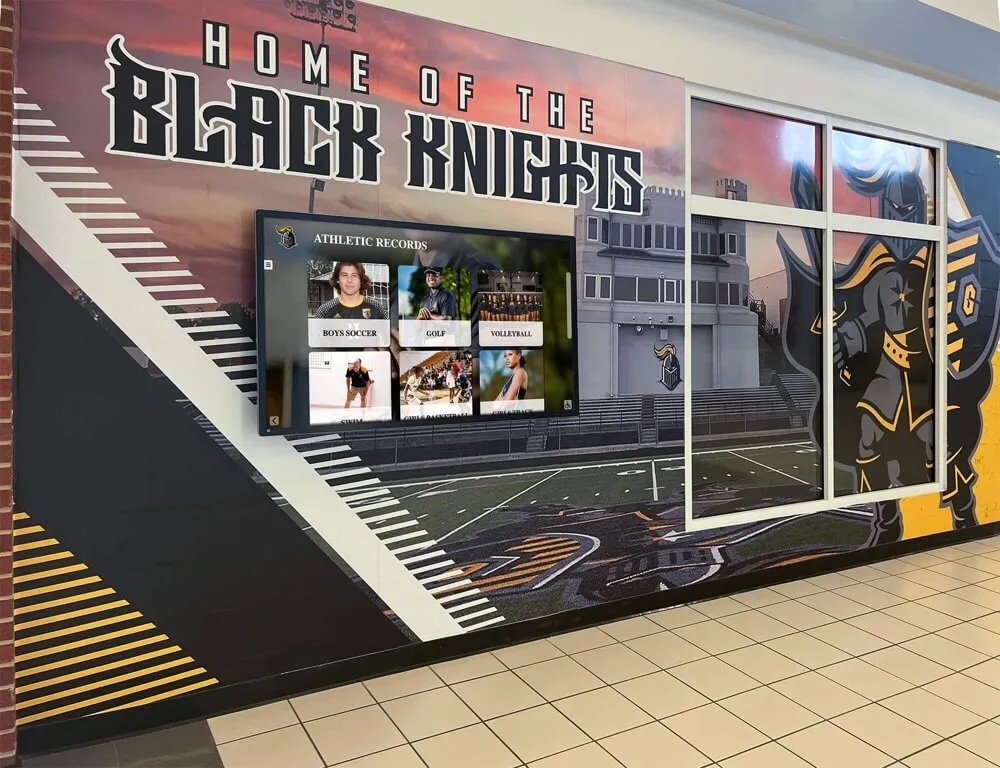
Placement and Display: Getting the Most from Your Gym Banners
Where and how championship banners hang affects both their preservation and their impact on everyone who enters the building.
Rafter and Ceiling Mounting
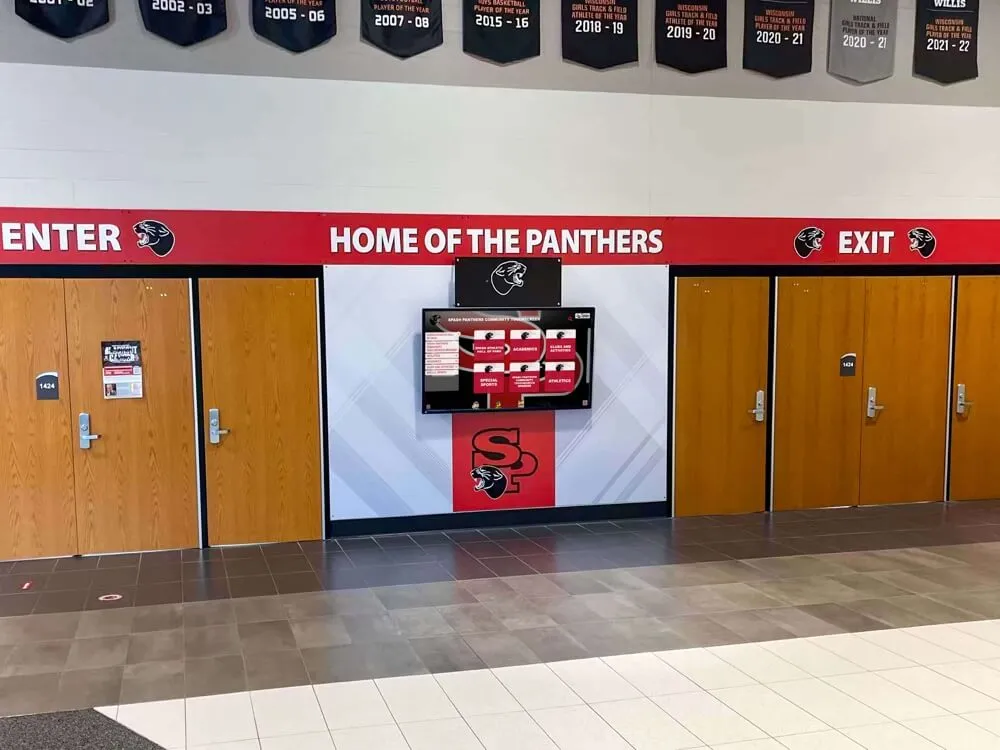
The traditional location for championship banners for gyms is suspended from the rafters or ceiling joists, high above the court. This placement maximizes visibility from anywhere in the gym, creates a dramatic visual effect during games, and keeps banners away from physical contact and potential damage.
Mounting hardware matters. Grommeted banners hung on cable systems allow easy additions without remounting infrastructure each time. Schools adding banners regularly benefit from installing adequate mounting capacity upfront rather than retrofitting hardware each time a new title is won.
Wall-Mounted Displays
Some schools mount championship banners on walls rather than ceilings — particularly in entrance corridors, lobby spaces, or dedicated trophy hallways adjacent to the main gym. Wall mounting allows closer viewing and detailed reading of banner content, which matters for older banners featuring smaller text or more detailed design elements.
The tradeoff is that wall space fills quickly in active programs, requiring periodic reorganization as collections grow. Some schools address this by moving state championship banners to permanent wall display while rotating conference and tournament titles to the ceiling collection.
Environmental Considerations
Gymnasium environments present real challenges for banner longevity. High humidity from athletic activity, temperature fluctuations between seasons, and UV exposure from skylights or gymnasium lighting all accelerate banner degradation. Choosing UV-resistant printing and humidity-tolerant materials upfront extends banner lifespan significantly.
Lighting for Visibility
Championship banners hanging in rafters often receive insufficient ambient lighting to be clearly visible from the floor. Directional spotlights aimed at the banner collection dramatically improve visibility during games and events. This is a relatively low-cost facility upgrade that transforms how visitors experience a school’s championship history, particularly for visitors seeing the gym for the first time during a recruiting visit or community event.
Documenting the Championship Run Behind Every Banner
A championship banner is a summary — one line capturing a season that was actually hundreds of hours of practice, dozens of games, and countless individual moments. The richest athletic recognition programs document the full story behind each banner, preserving photographs, game accounts, roster information, and athlete profiles that give the banner its human dimension.
Developing a systematic approach to digitizing and organizing athletic photo archives for championship seasons is one of the most valuable investments a school can make in its athletic history. When photographs from a 1992 championship team surface thirty years later, those images give context to the banner that no amount of additional text on the banner itself could communicate.
Schools building new championships seasons into the archive should approach photography and documentation systematically from the start. Consistent team portraits, action photography from playoff runs, and post-championship documentation create archival materials that digital recognition programs draw from for decades. The banner on the wall and the photograph in the archive are two halves of the same historical record — one meant to be seen constantly, one meant to be explored.
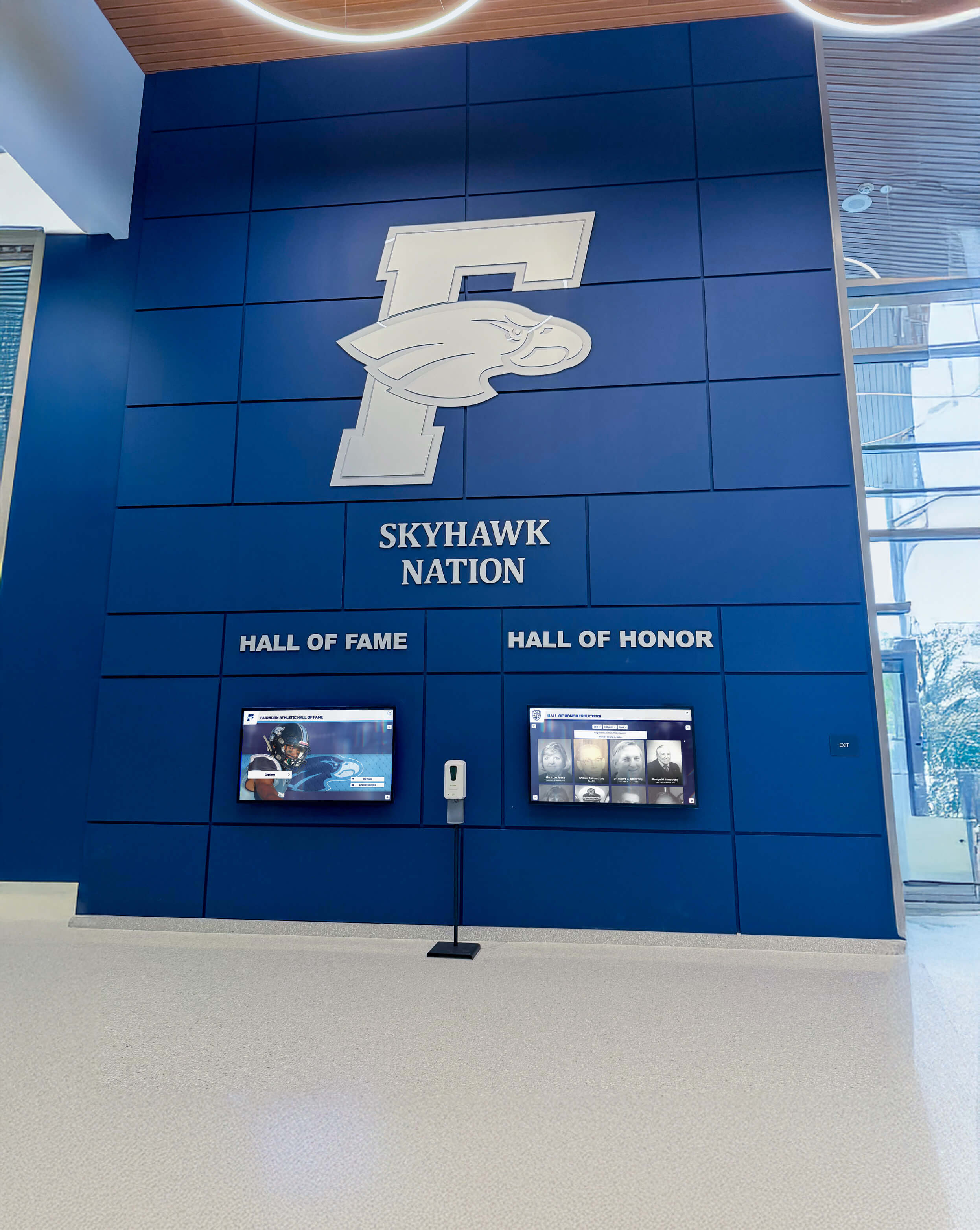
Sport-Specific Considerations for Gym Championship Banners
While basketball dominates many gymnasium banner collections simply due to the sport’s historical prominence in American schools, modern recognition programs accommodate the full range of sports that use gym facilities.
Basketball
Basketball banners are often the most numerous in any gym and set the design template that other sports follow. Separating boys’ and girls’ basketball banner collections — while maintaining consistent visual design — ensures both programs receive equal visibility rather than competing for the same rafter space.
Volleyball
Volleyball programs generate significant championship banner collections in schools where the sport has deep traditions. Volleyball state championships are among the most competitive in multi-classification states, making a banner representing consistent regional success particularly meaningful to communities with strong volleyball cultures.
Wrestling
Wrestling programs frequently use gyms as dual-purpose spaces and display championship banners alongside or separately from basketball collections. Dual meet championship records and individual state champion banners both carry recognized meaning within most wrestling program traditions.
Other Indoor Sports
Swimming, gymnastics, and indoor track programs that use gym-adjacent facilities sometimes display championship banners in those specific venues rather than the main gym. The most comprehensive recognition programs create dedicated banner spaces for each sport’s primary venue, allowing each program’s history to develop its own visual narrative rather than competing for space within a single multi-sport collection.
Connecting Physical Banners to a Digital Hall-of-Fame Program
Championship banners for gyms are the most visible physical component of a school’s athletic legacy, but they are inherently limited in what they can convey. A 24" × 36" banner carries a year and a title. It cannot carry the season record, the full roster, the championship game story, or the coach’s reflection on what that team meant to the program.
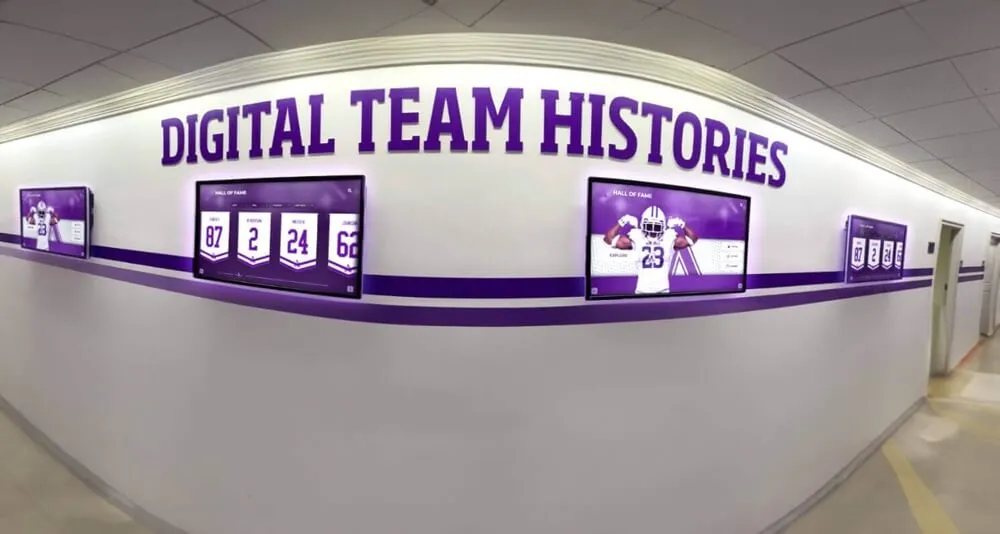
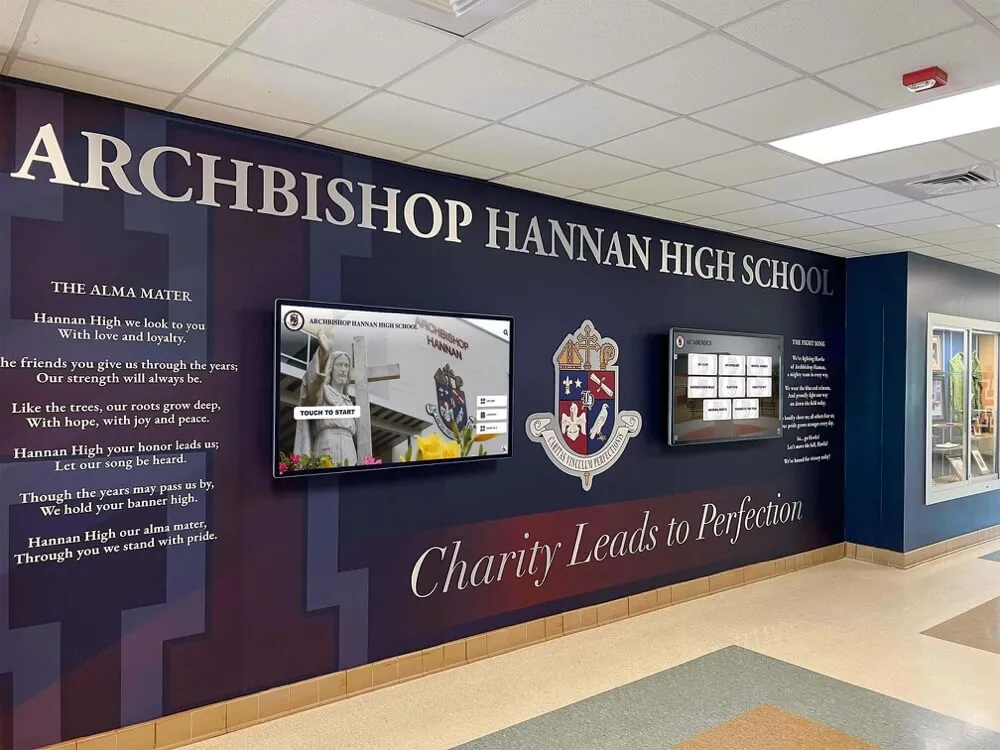
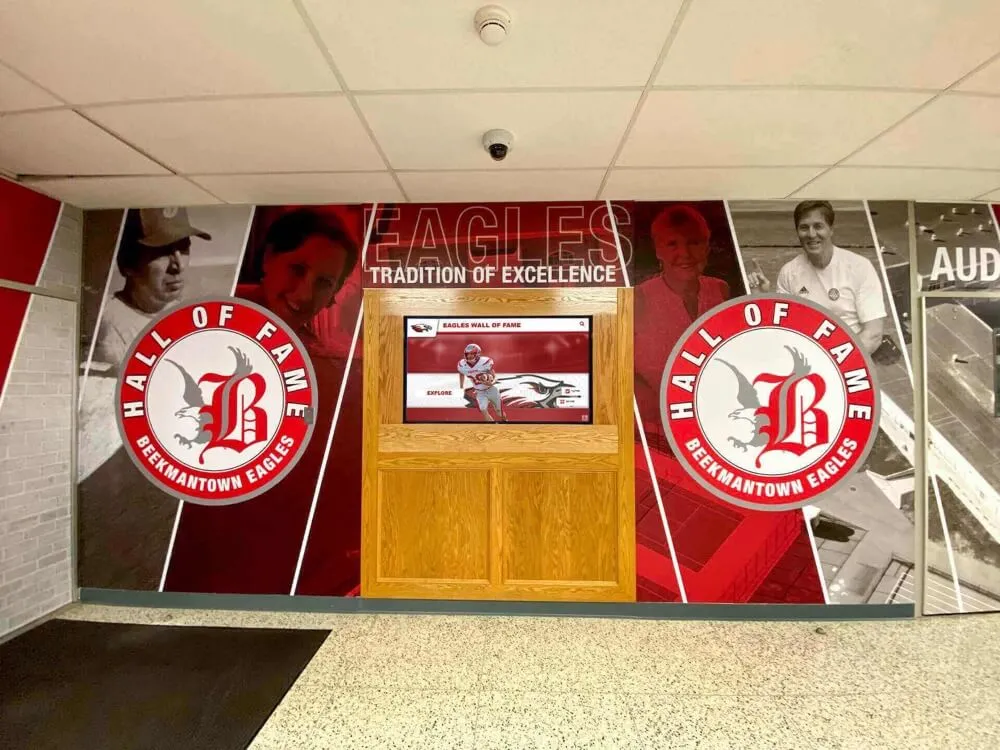
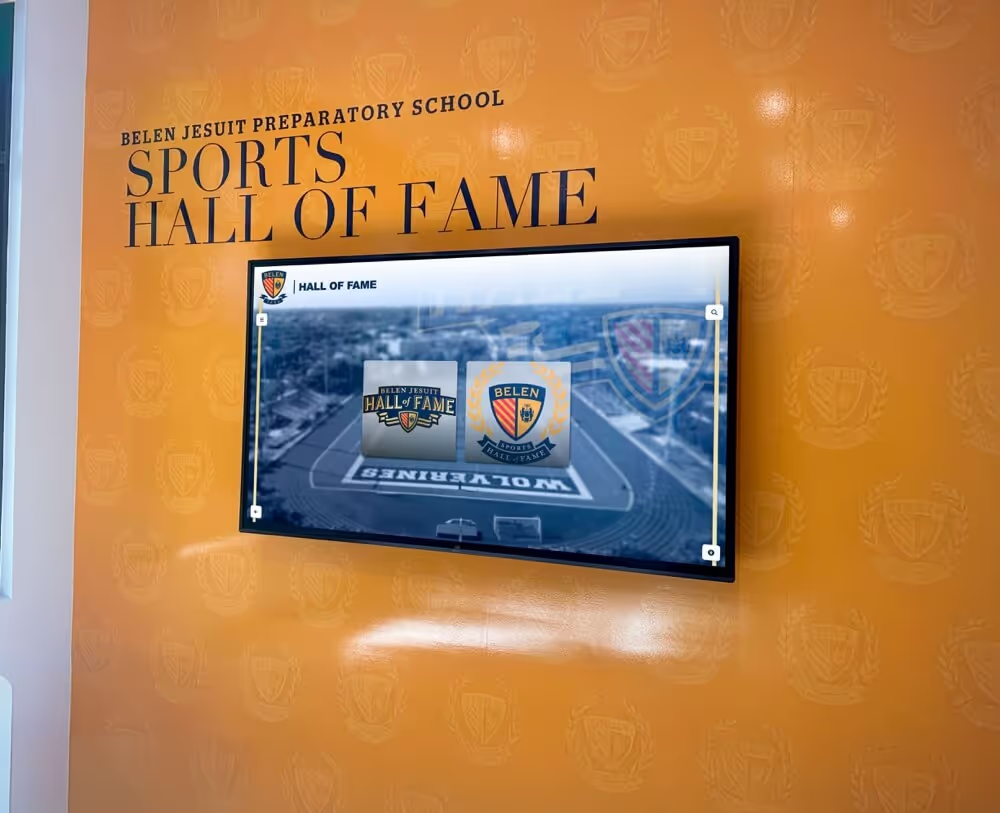
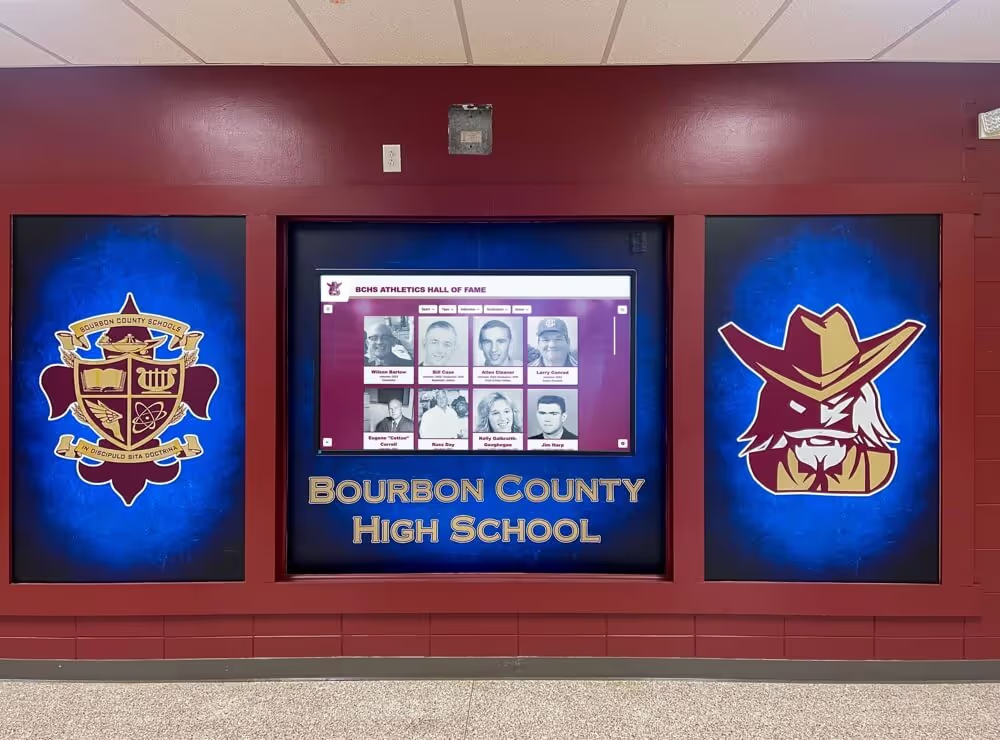
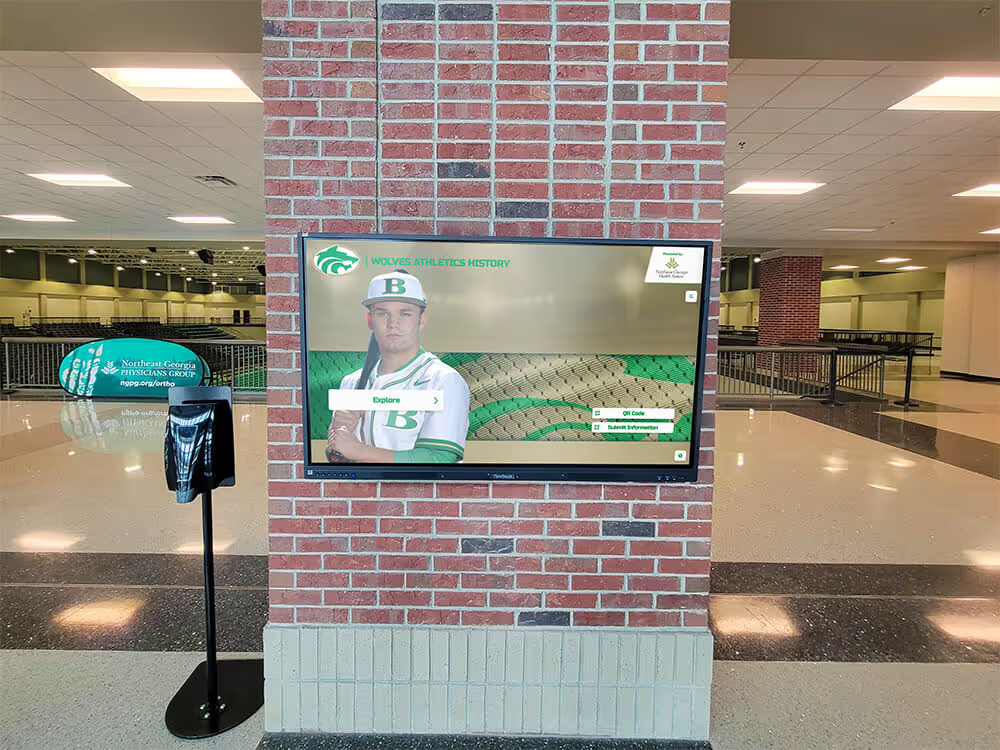
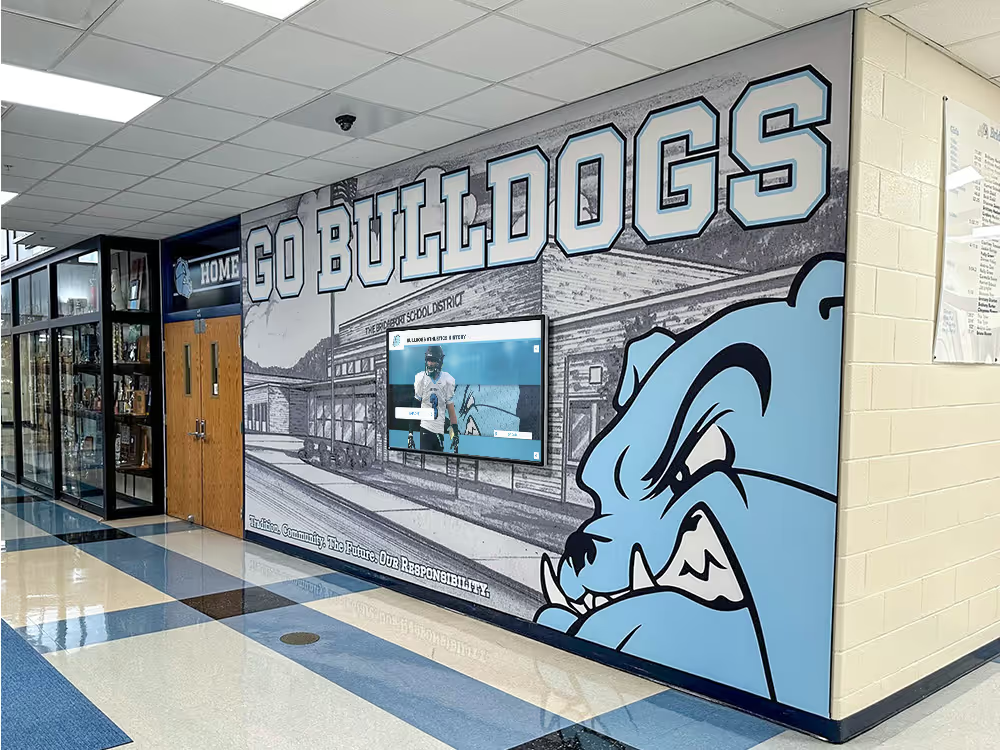
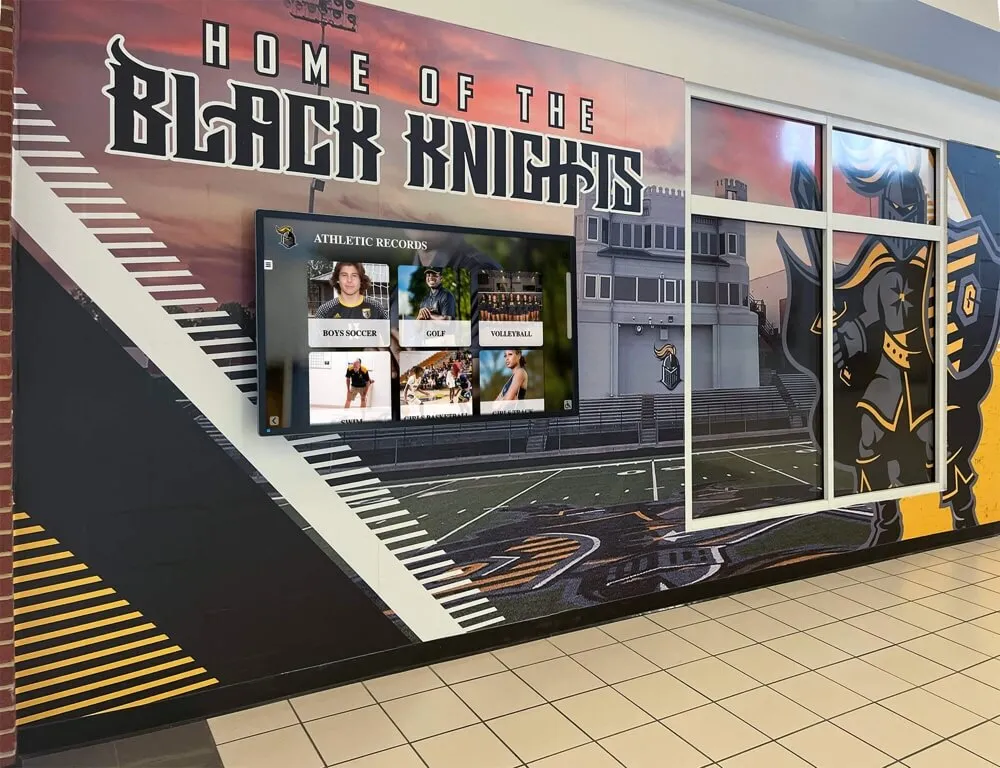
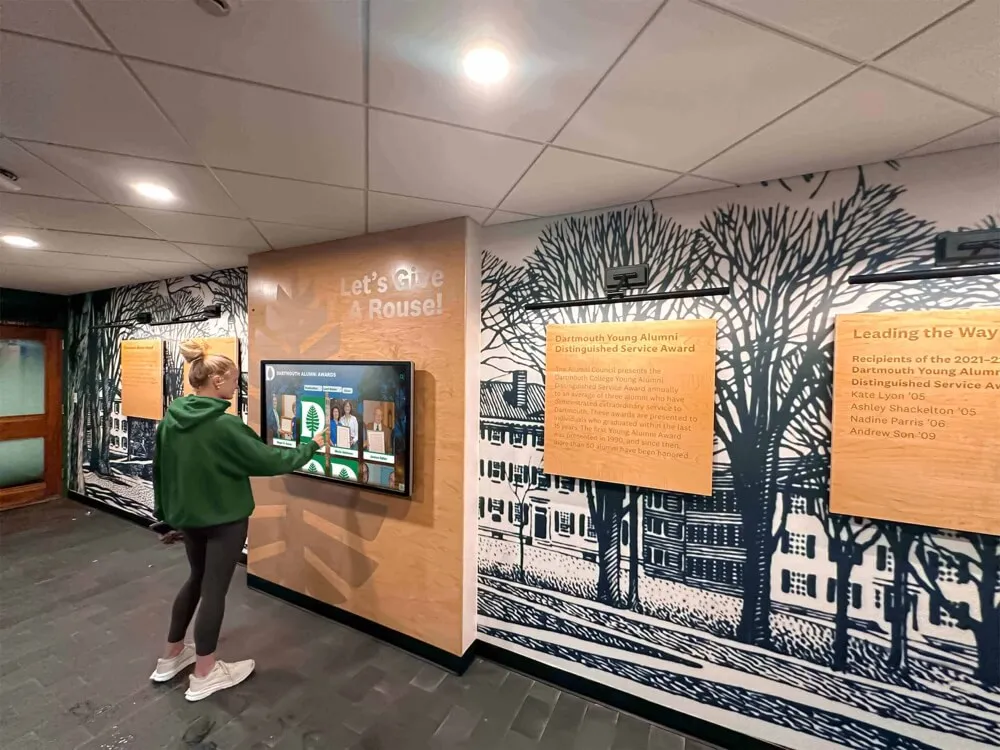
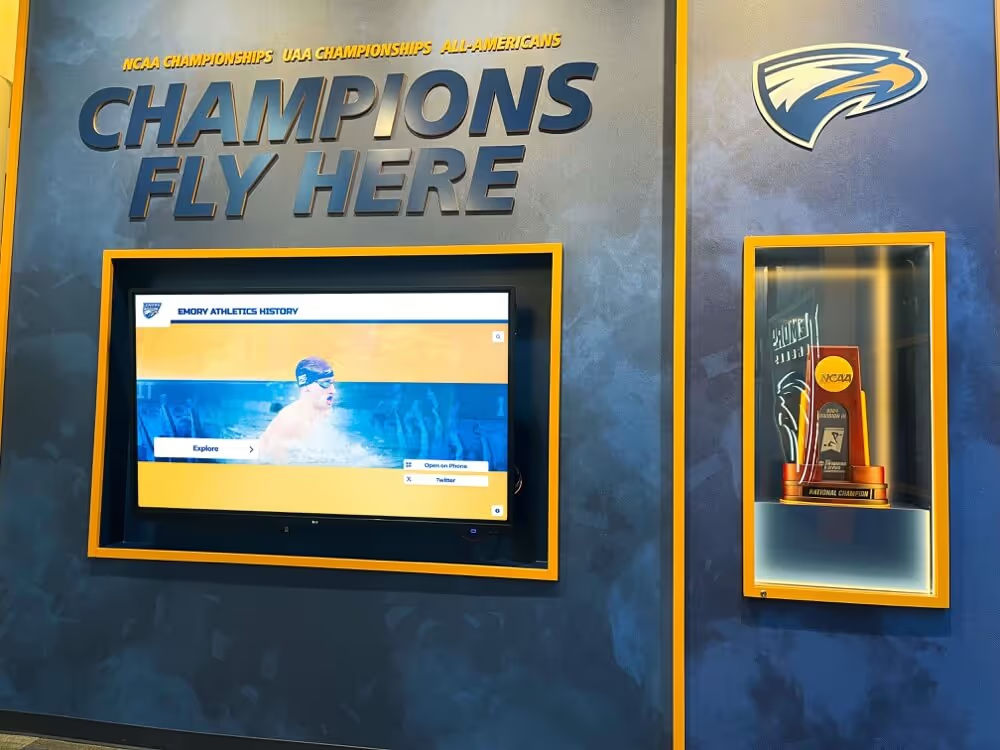
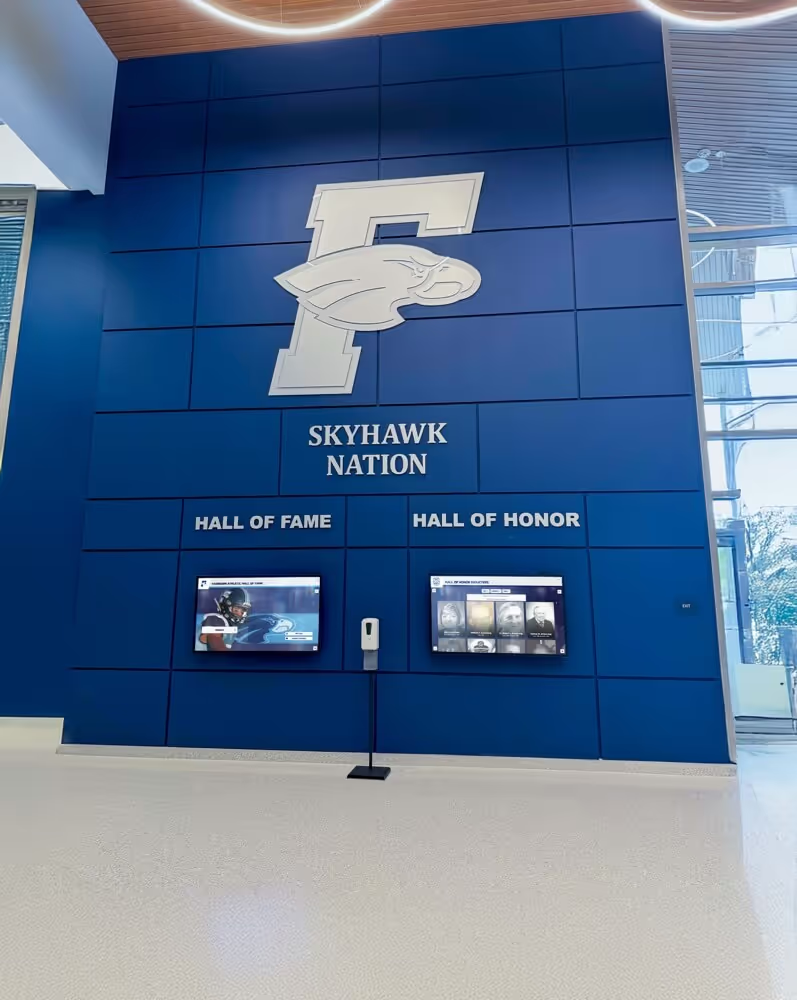
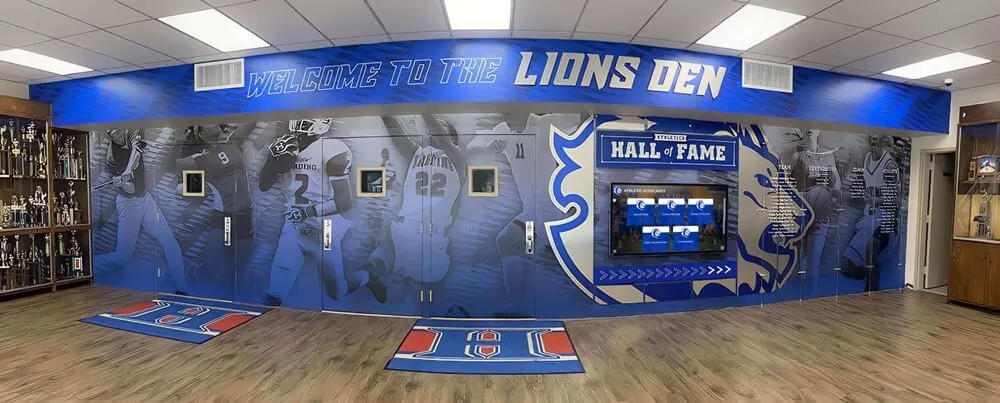
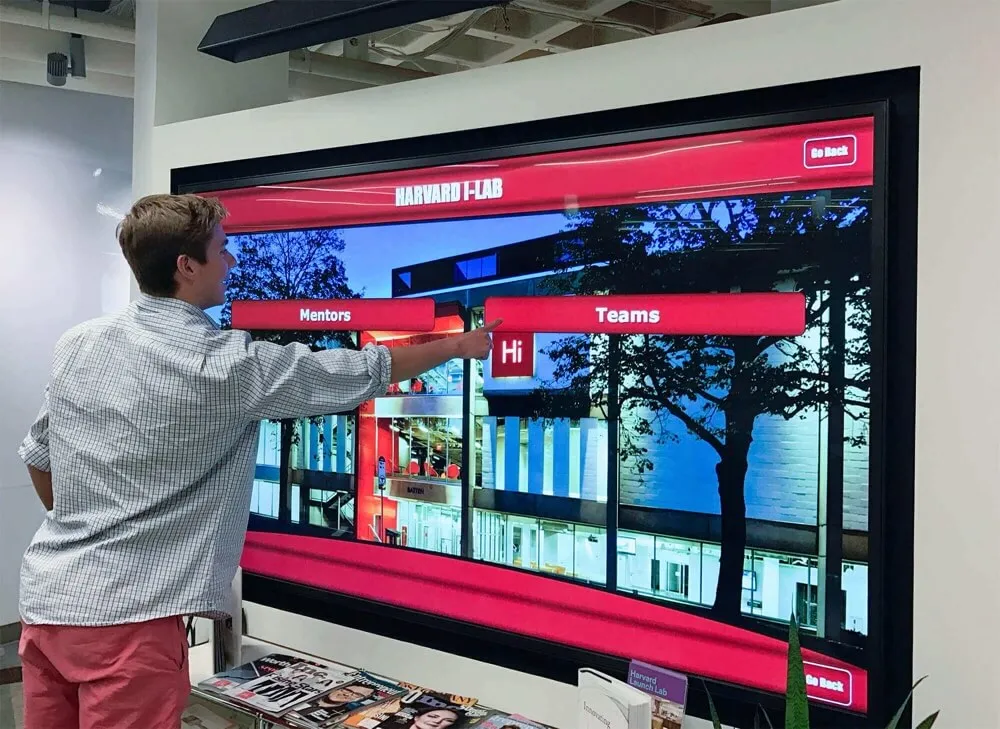
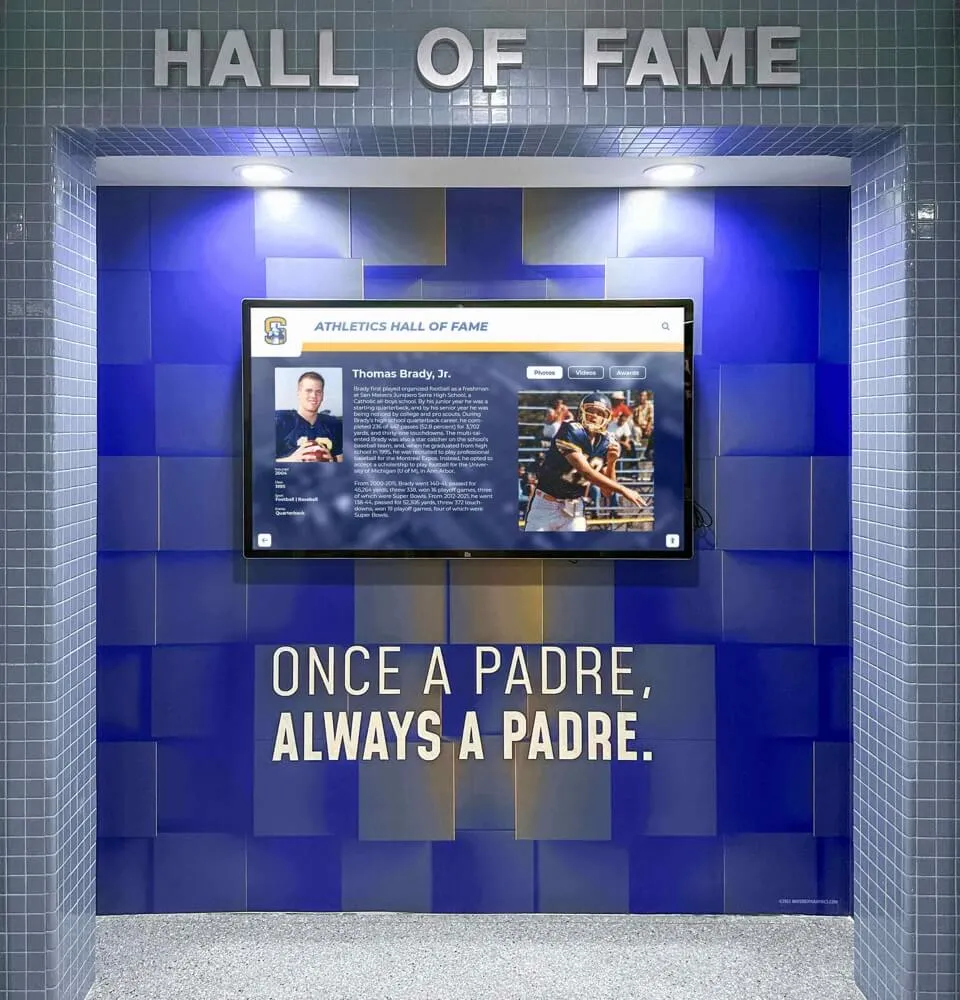
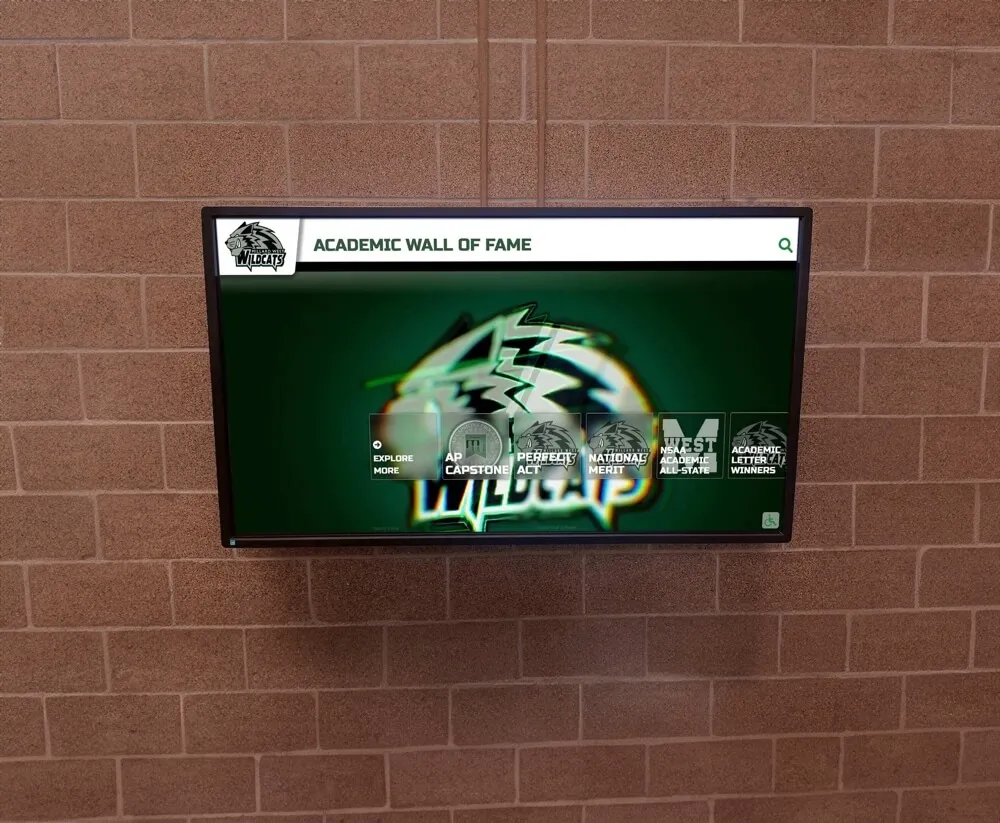
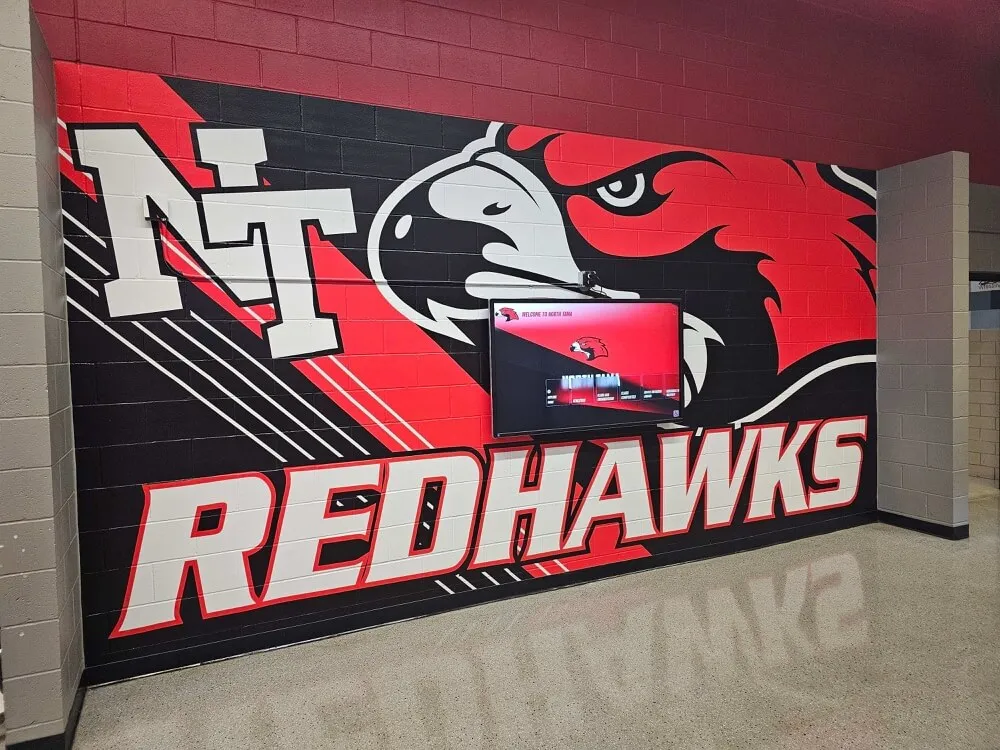
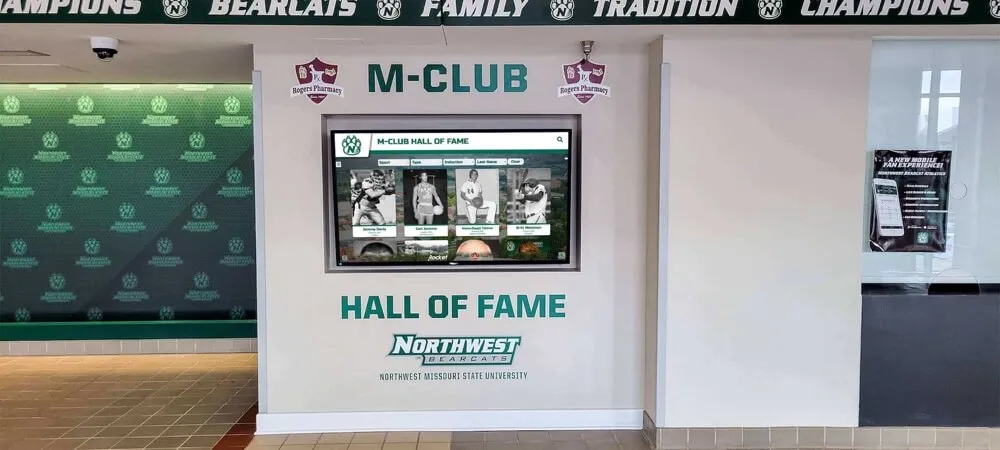
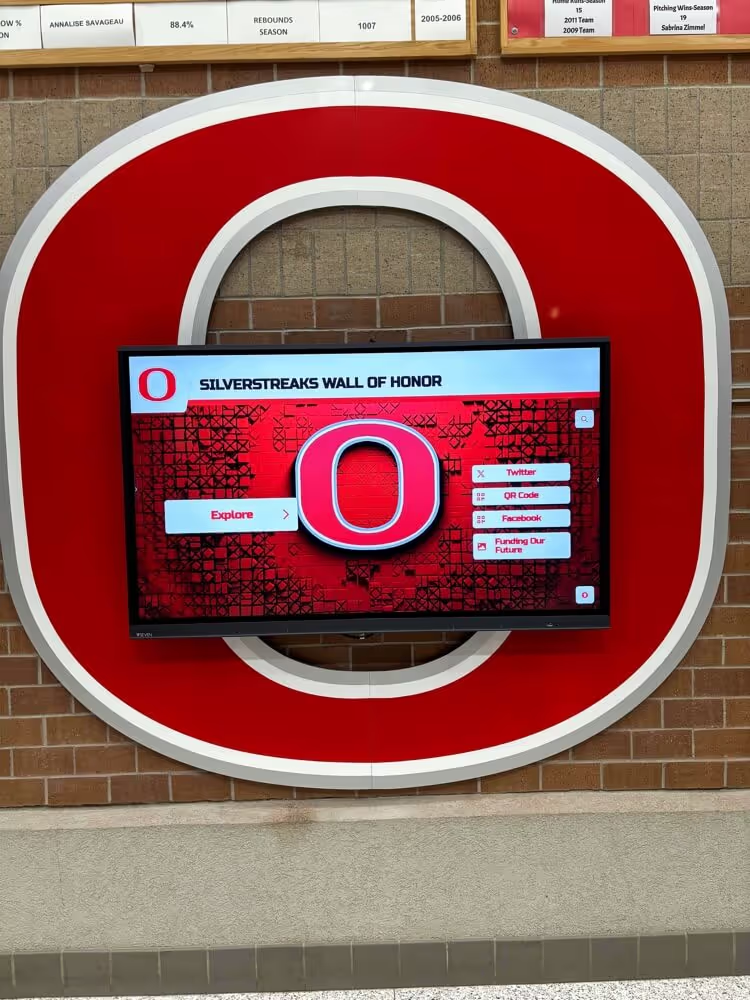
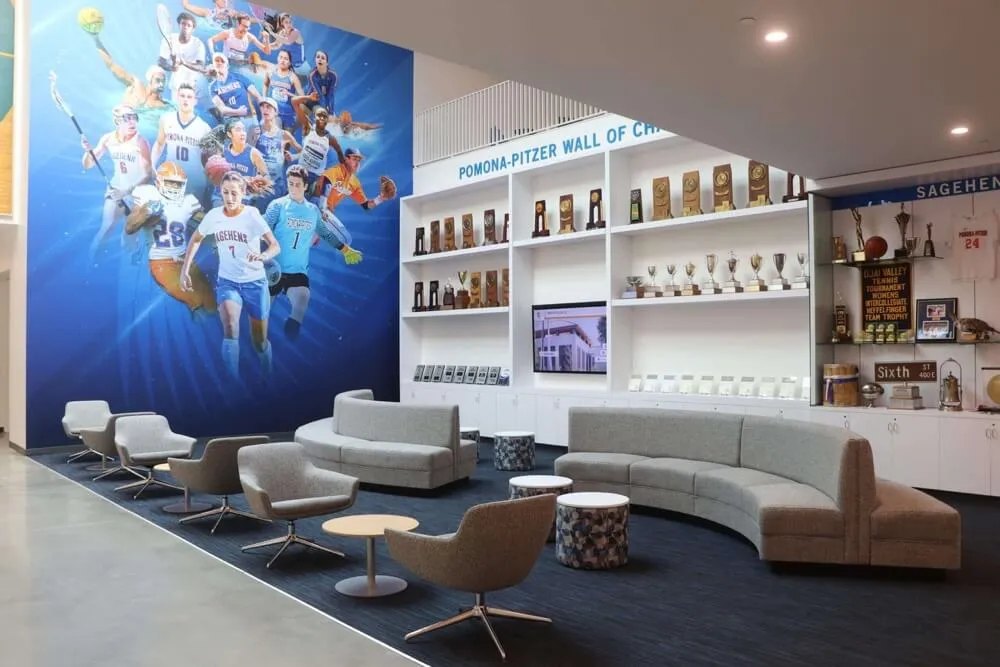
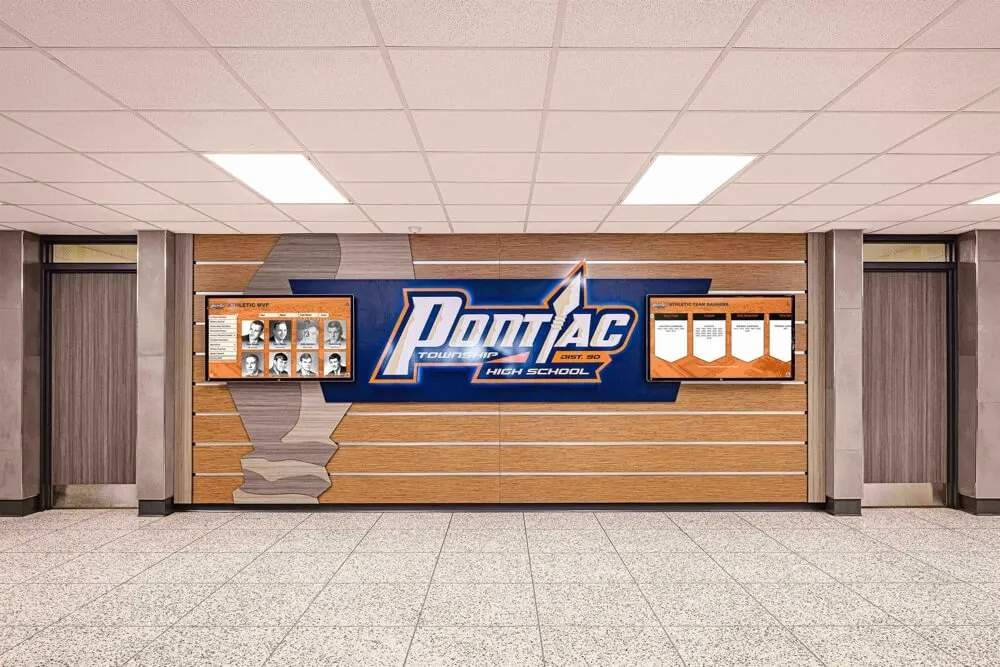
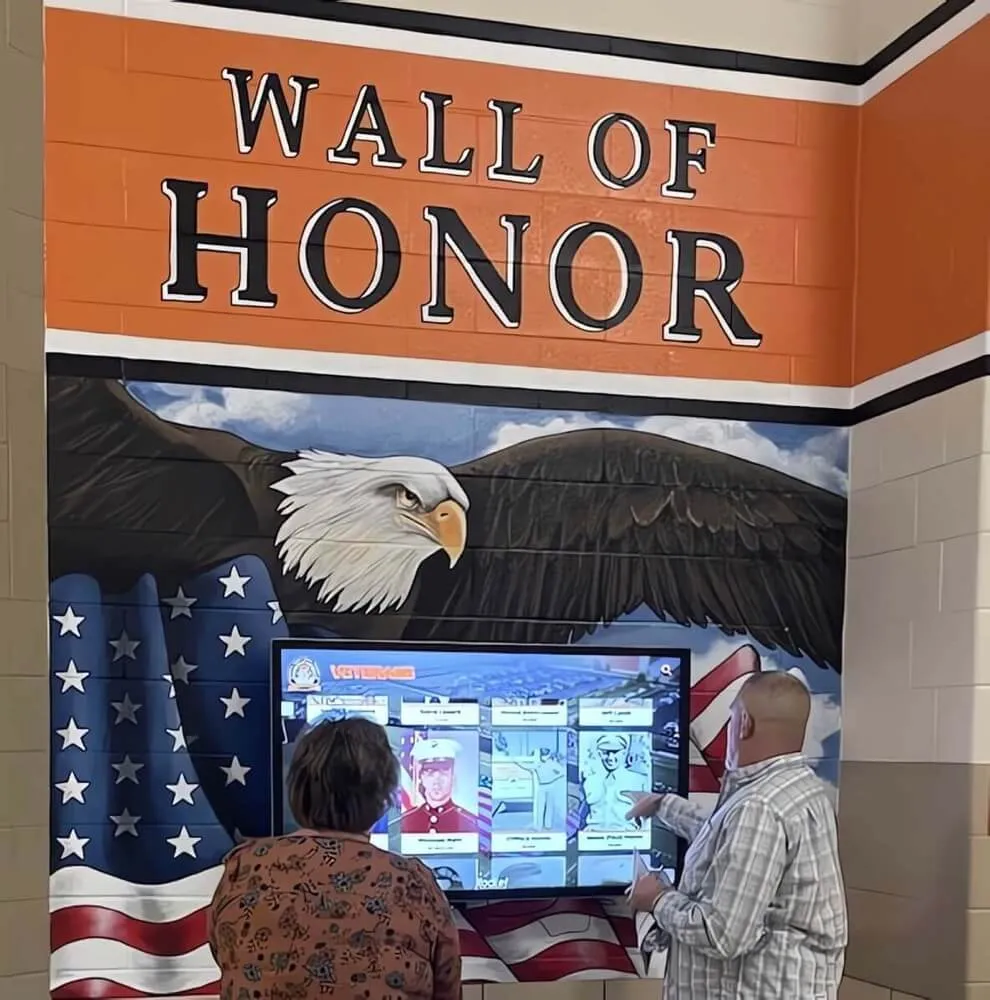
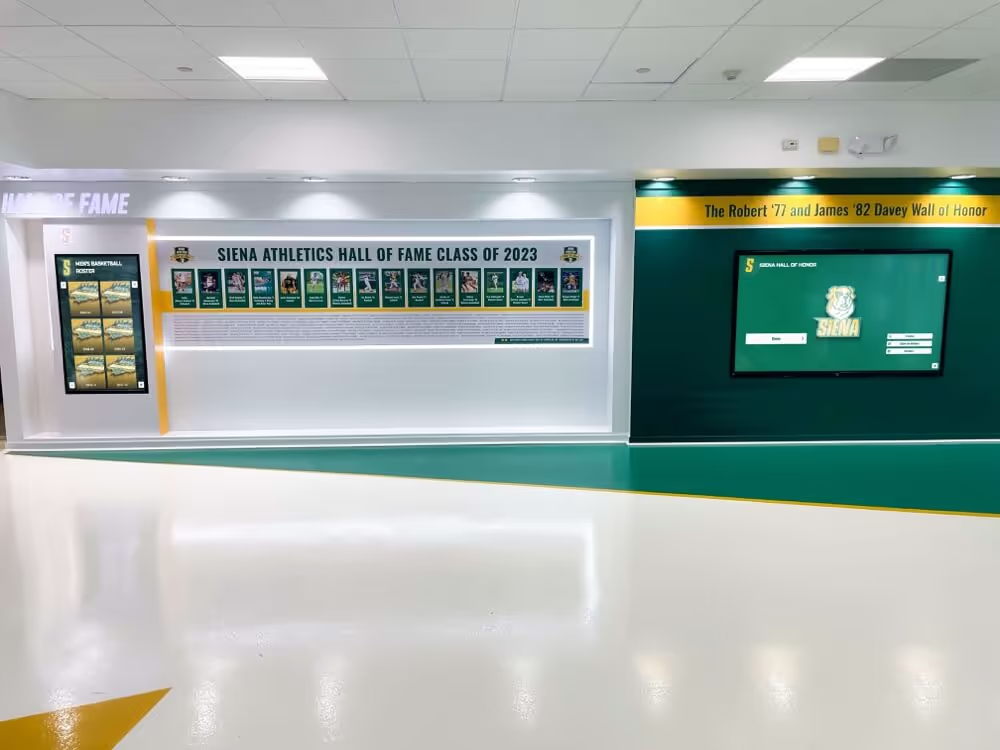
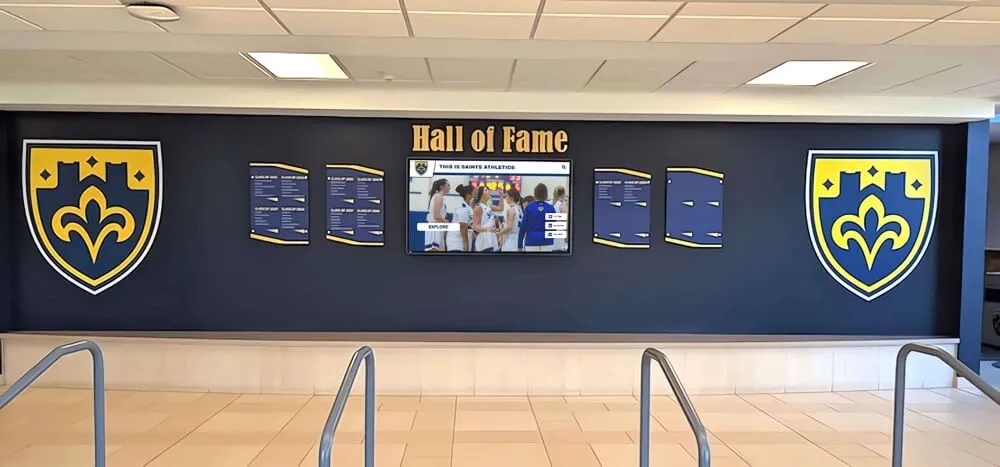
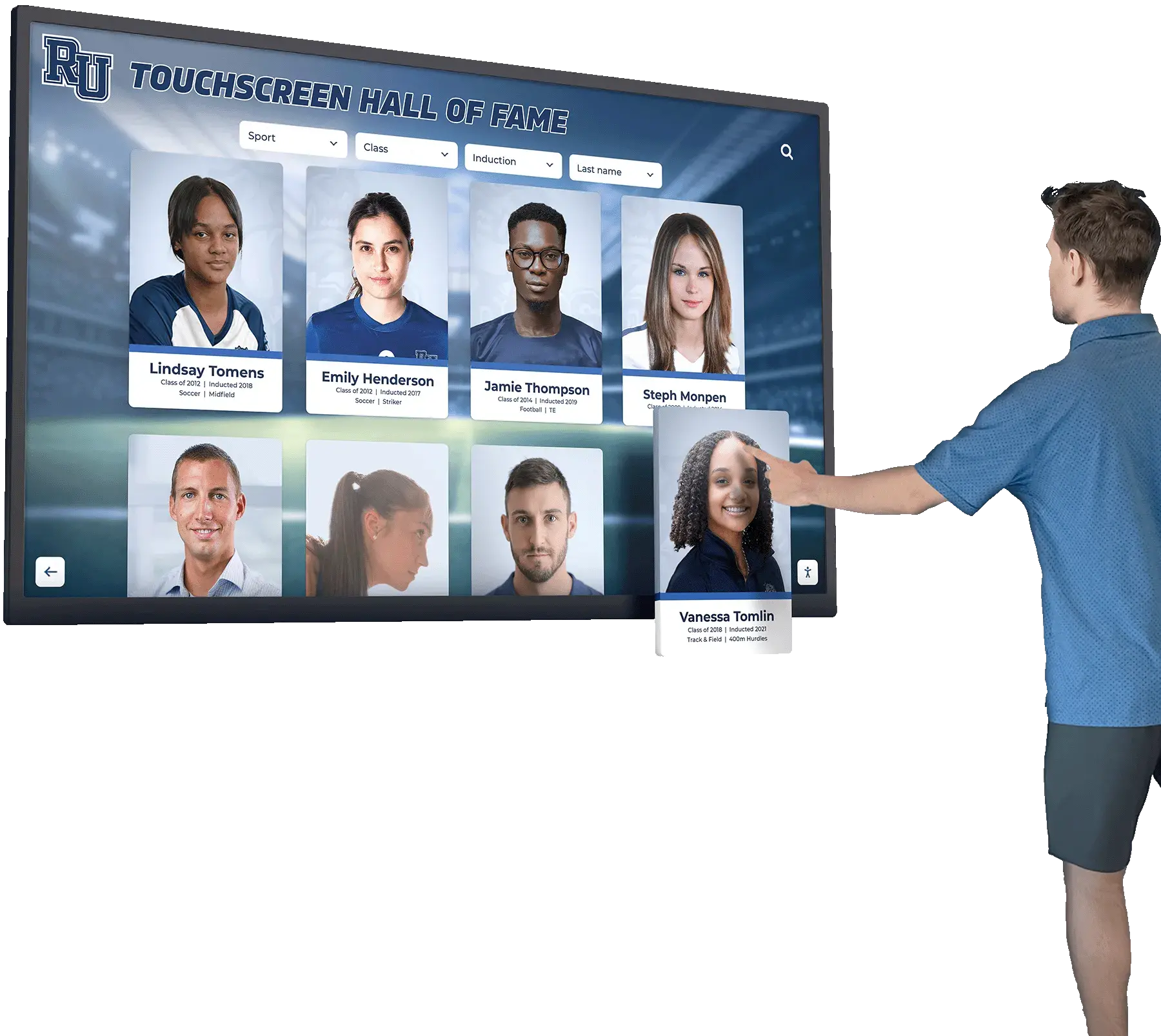
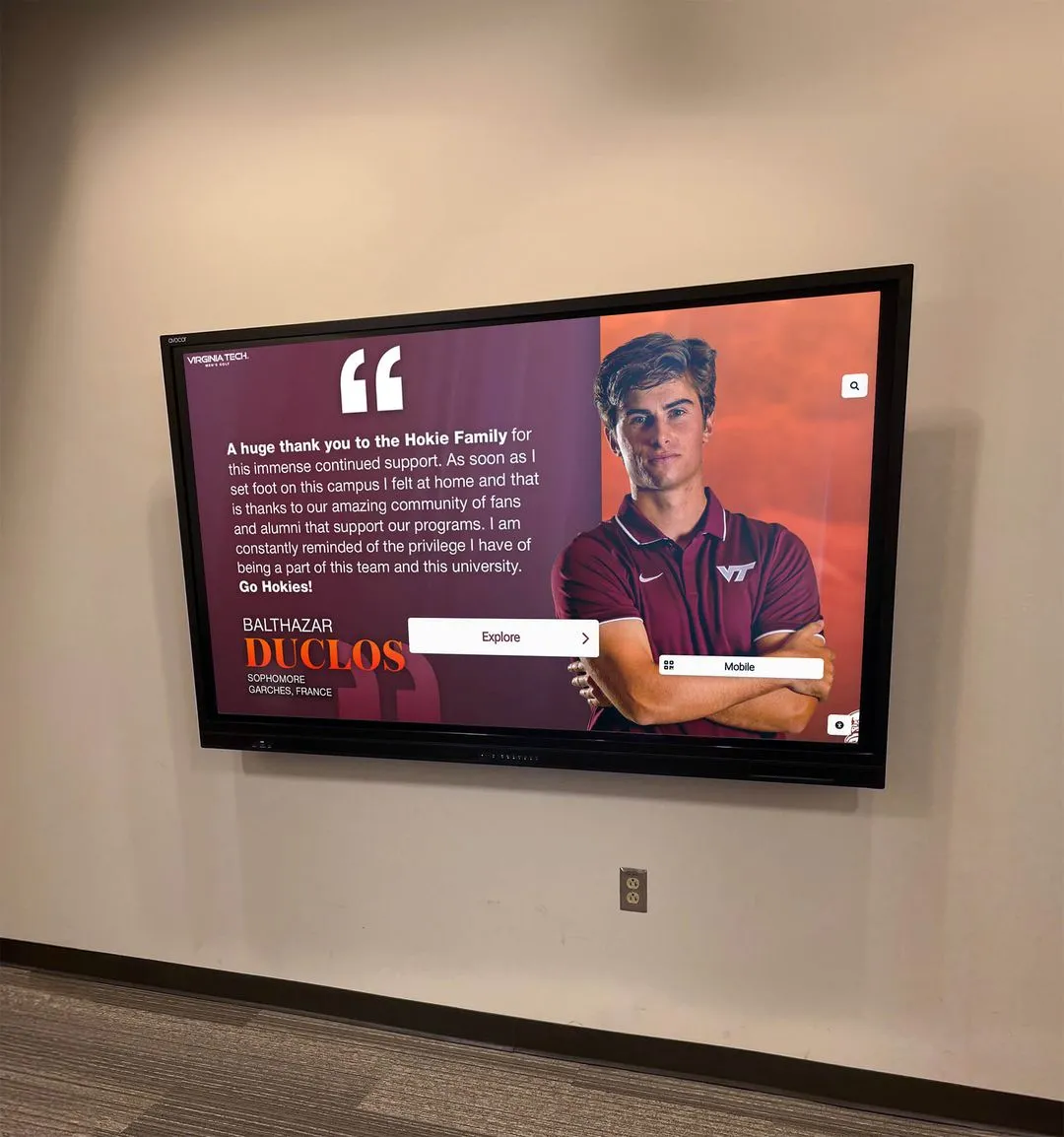
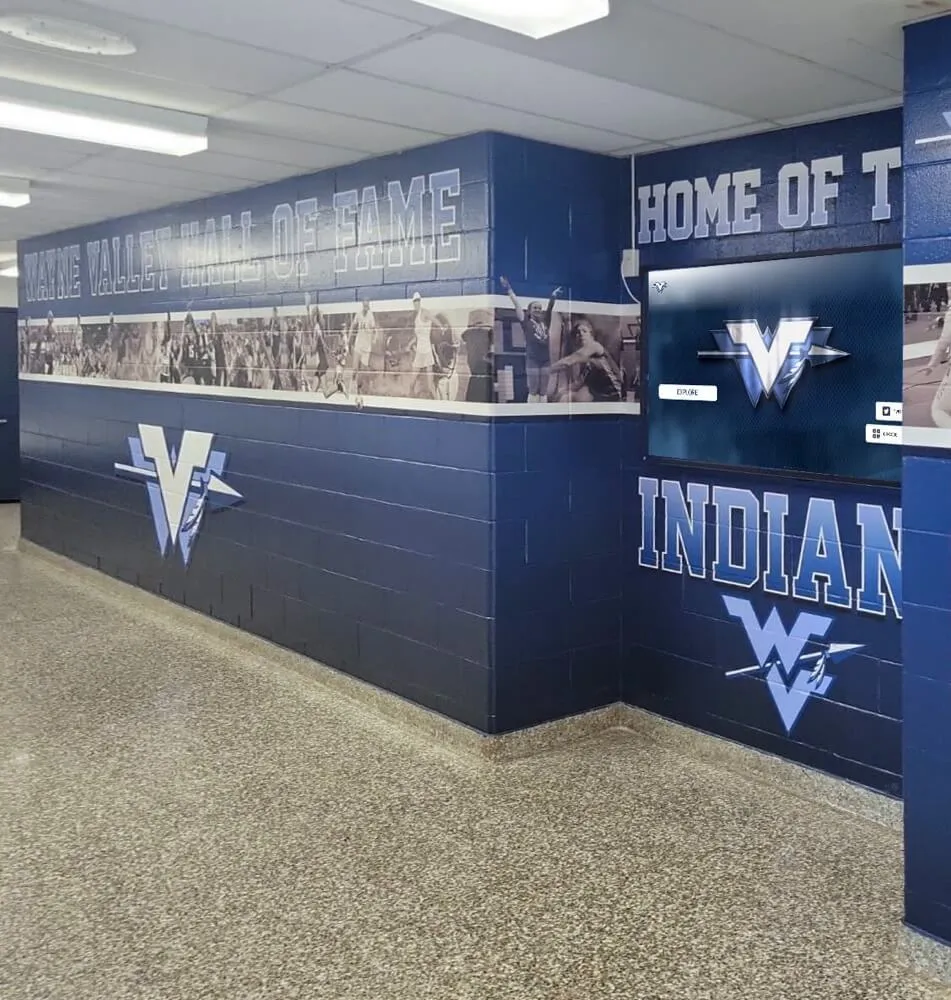
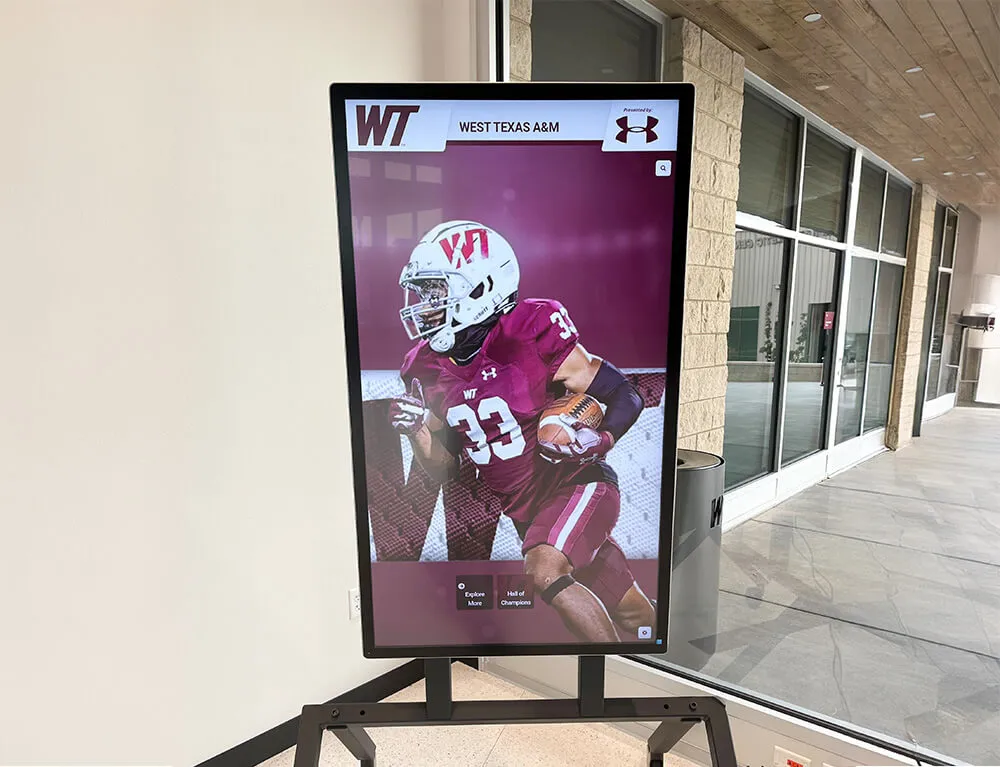
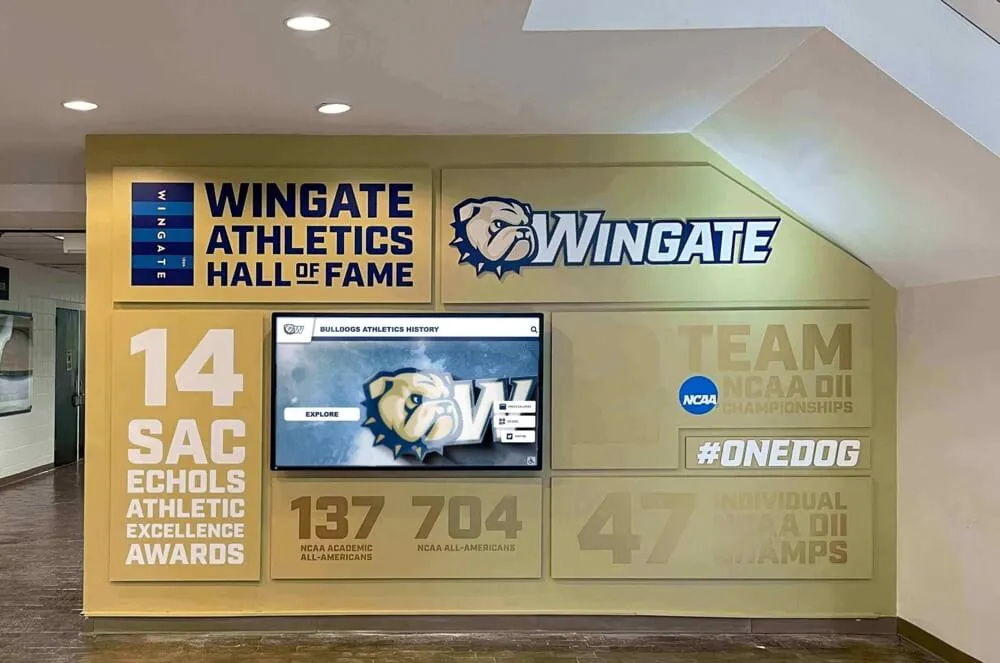
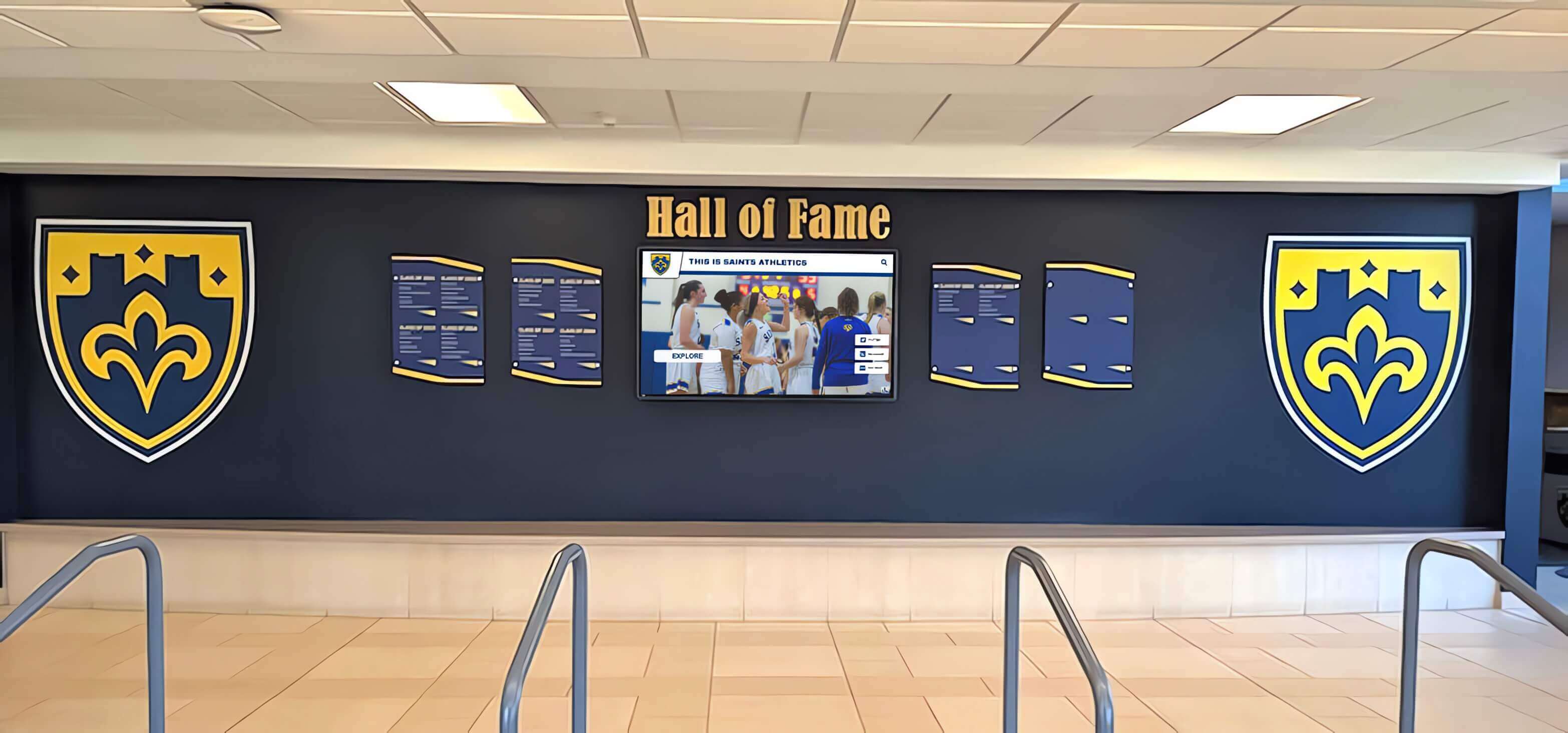
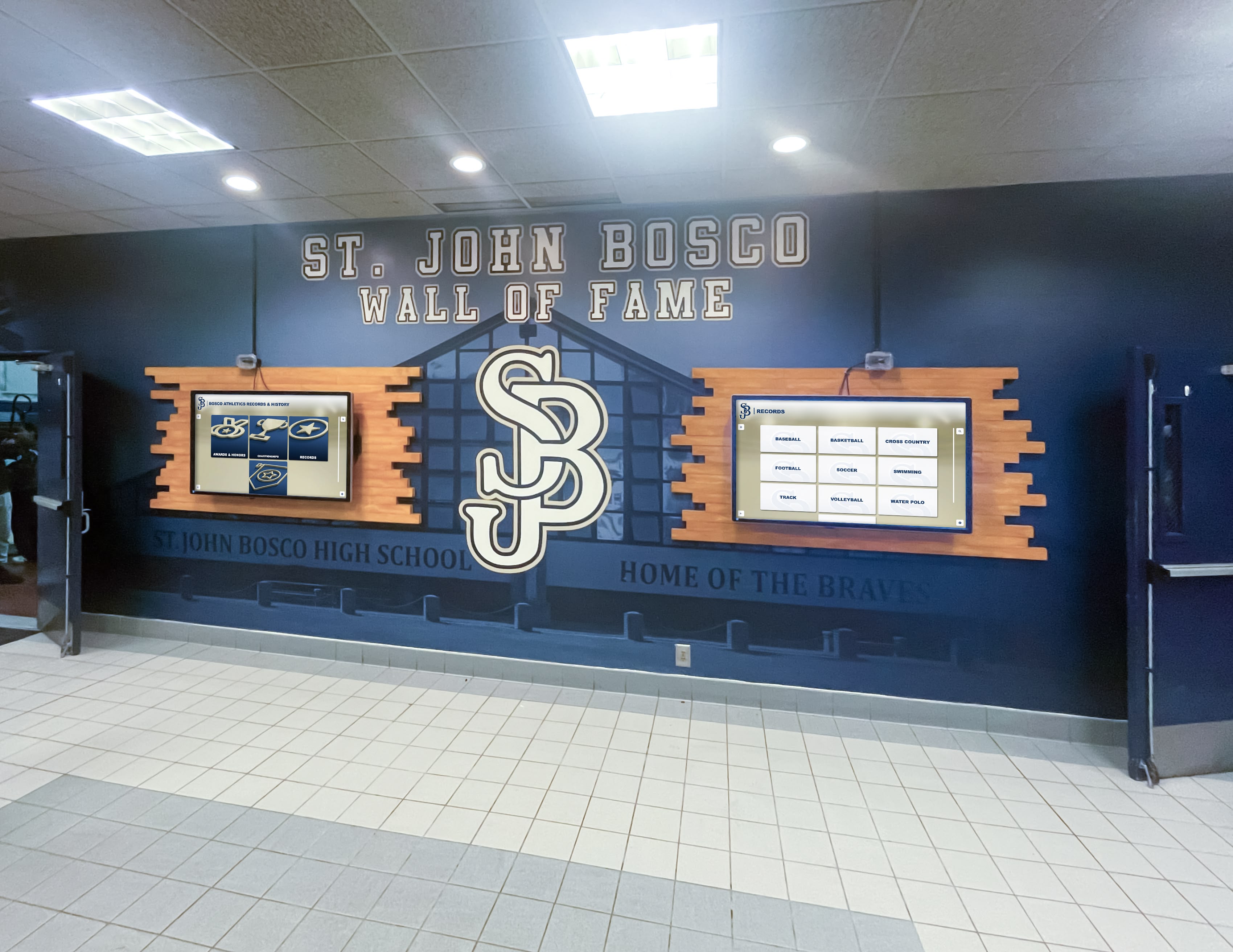
Digital hall-of-fame programs solve this problem by serving as the narrative companion to the physical banner. When a visitor looks up at the 2003 state championship volleyball banner and wants to know more, a touchscreen display in the gym lobby or hallway delivers the complete story: full roster, championship bracket, action photography, player profiles, and coach biography — all immediately accessible without staff involvement.
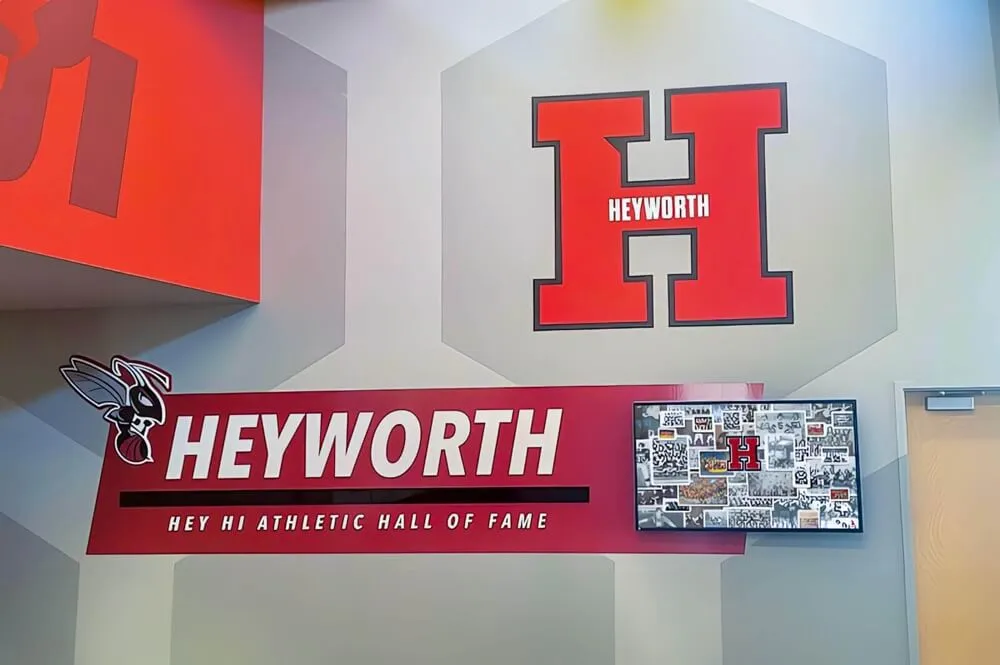
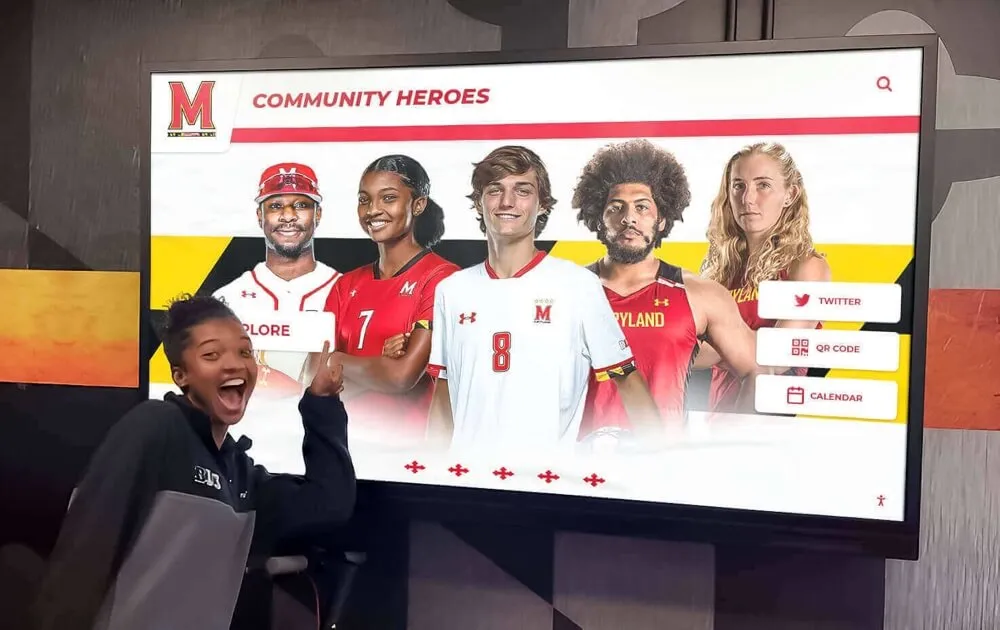
The best approaches to showcasing athletic achievements digitally share a consistent pattern: schools that pair physical displays with digital recognition systems generate greater community engagement with athletic history than those relying on physical displays alone. The combination creates recognition experiences that work at multiple depths — the banner for ambient, constant presence and the digital system for meaningful exploration.
This integration model works because each format plays to its strengths. Physical banners create immediate visual recognition requiring no action from the viewer. Digital systems offer depth, interactivity, and completeness that no amount of signage can replicate. Together, they create recognition programs significantly more powerful than either format delivers independently.
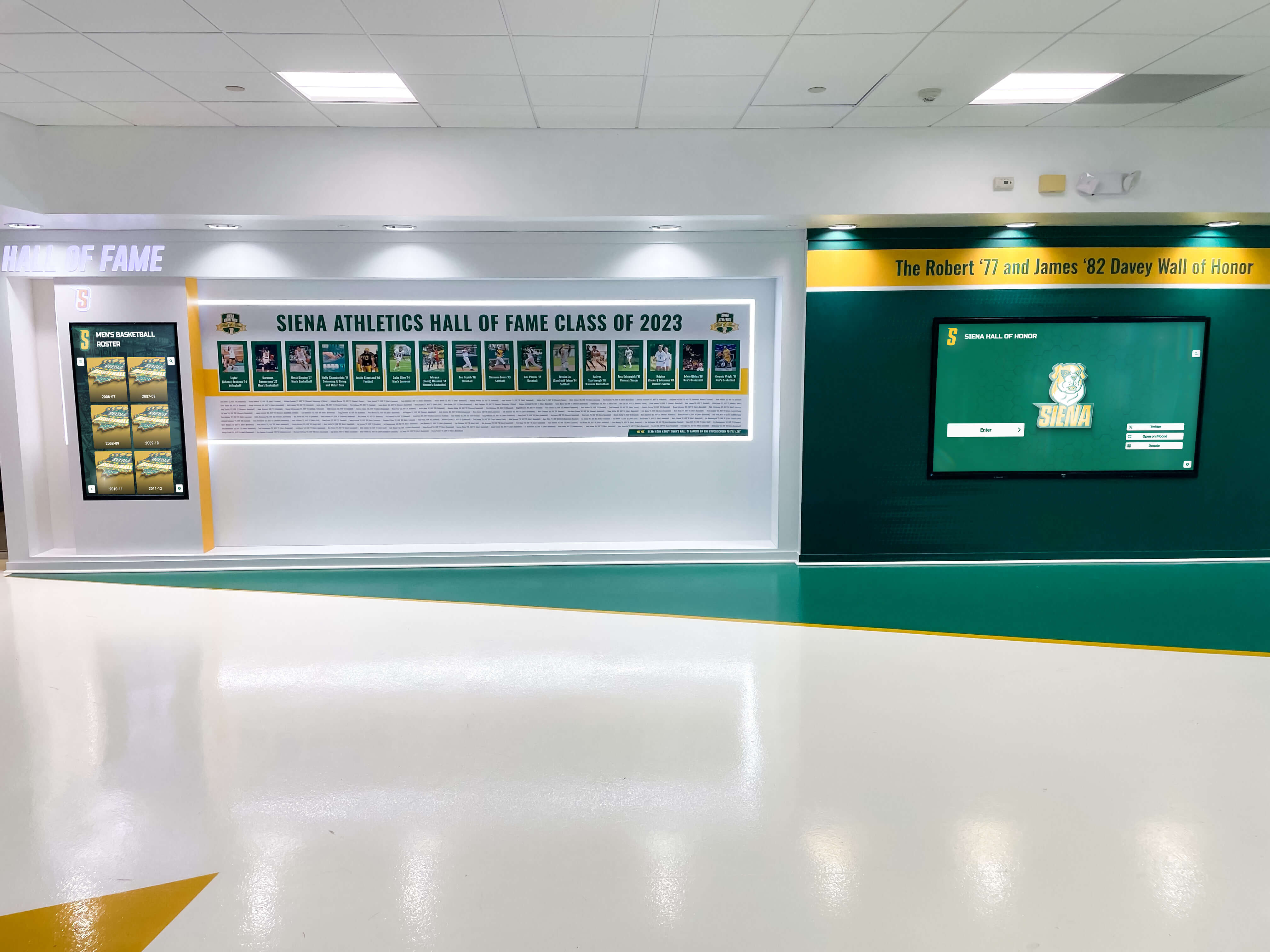
Choosing a Digital Platform to Complement Your Banner Program
For schools ready to extend their championship banner tradition into digital recognition, platform selection is the most consequential decision. Generic digital signage software adapted for athletic recognition typically requires extensive customization, dedicated technical staff, and ongoing vendor involvement that most athletic departments can’t sustain.
Purpose-built platforms like Rocket Alumni Solutions are designed specifically for school and organizational athletic recognition — with content management workflows that don’t require IT expertise, template systems that maintain consistent visual quality across hundreds of inductee profiles, and interactive features that make browsing championship history genuinely engaging for students, alumni, and community members.
Key capabilities to evaluate when selecting a digital companion to your physical banner program include:
Content Depth per Championship
Can the platform support full rosters, season summaries, game highlights, and photo galleries for each championship year? A platform that handles only name lists or basic statistics won’t deliver the narrative depth that makes digital recognition meaningful beyond a searchable spreadsheet.
Update Ease
Championship programs win new titles. Coaches retire. Alumni earn post-graduation distinctions. A platform that makes content updates straightforward without vendor involvement keeps recognition current without creating ongoing administrative burden.
Display Flexibility
Recognition displays live in diverse physical environments — gym lobbies, hallways, trophy rooms, entrance corridors. Platforms supporting multiple display sizes, orientations, and configurations adapt to existing facilities more effectively than those requiring specific hardware configurations.
For schools managing budget conversations around digital recognition investment, understanding turnkey digital hall-of-fame display pricing, content setup, and training requirements provides a useful framework for planning both initial investment and long-term operational costs before entering vendor conversations.
Building an Integrated Athletic Recognition Program
Championship banners for gyms anchor a school’s athletic legacy in physical space, but the most effective recognition programs build outward from that anchor to create comprehensive athletic identity systems that serve the full community.
Sportsmanship and Character Recognition
Championship banners recognize outcomes. Sportsmanship award programs recognize how those outcomes were pursued. Including character and conduct recognition alongside championship displays communicates institutional values — that winning is celebrated, and how a team competes is equally celebrated. This combination produces more holistic athletic cultures than championship-only recognition approaches.
Senior and Milestone Recognition
End-of-year senior recognition programs create natural touchpoints for celebrating individual athletic careers alongside the team championships those careers helped produce. Treating the graduation transition as the beginning of a student-athlete’s status as an alumnus — rather than the end of their relationship with the program — changes how schools approach everything from banner design to long-term archive development. The students celebrated in this year’s banner ceremony become the alumni whose profiles will populate a digital hall of fame twenty years from now.
Alumni Engagement
Championship banners speak directly to alumni returning to the building years or decades after graduating. The program’s recognition footprint — physical banners, digital archives, touchscreen displays — becomes the first encounter returning alumni have with how the school values its history. That encounter shapes alumni engagement, donor relationships, and community advocacy in ways that extend well beyond athletic administration.
Donor and Sponsor Recognition
Many championship programs depend on booster support and community investment. Integrated recognition systems that connect championship acknowledgment with donor recognition — celebrating those who funded facilities, equipment, and program development alongside the athletes those investments supported — create more complete narratives about how athletic excellence actually gets built and sustained.
Starting Your Championship Banner Program Today
Whether your gym has one championship banner or fifty, the same principles apply: recognize achievement consistently, document the stories behind every title, and build recognition systems designed to serve both current students and future alumni.
Physical championship banners establish the visual foundation. Digital programs provide the depth and accessibility that banners alone cannot deliver. Together, they create athletic recognition programs that honor past excellence, inspire current athletes, and connect the institution to its community across generations.
Rocket Alumni Solutions helps schools build the digital half of that partnership — purpose-built platforms for athletic recognition that work alongside your championship banners to give every title run the permanent, accessible, story-complete recognition it deserves.