



Key Takeaways
Master essential boxing footwork drills that improve agility, balance, and coordination for any sport. Learn techniques used by elite athletes across basketball, soccer, tennis, and MMA to gain competitive advantages.
Elite athletes across every sport share a common foundation: exceptional footwork. While boxing footwork drills might seem sport-specific, they’ve become essential cross-training tools for basketball players improving their defensive stance, soccer athletes enhancing change-of-direction speed, tennis competitors strengthening court coverage, and MMA fighters building ring awareness. The principles underlying boxing footwork—balance, weight distribution, explosive movement, and spatial awareness—translate directly to virtually every athletic endeavor, making these drills valuable regardless of your primary sport.
This comprehensive guide explores the boxing footwork drills that coaches across multiple sports incorporate into training programs, why these techniques improve athletic performance beyond the ring, and how to implement them effectively whether you’re a high school athlete looking to gain competitive advantages, a coach seeking proven cross-training methods, or a strength and conditioning specialist building comprehensive development programs.
Why Boxing Footwork Drills Matter for All Athletes
Before diving into specific drills, understanding why boxing footwork translates so effectively to other sports helps athletes approach these exercises with proper intent and coaches communicate their value to multi-sport programs.
The Athletic Foundation Boxing Footwork Builds
Balance and Weight Distribution
Boxing demands constant balance shifts while maintaining readiness to move explosively in any direction. Boxers keep weight distributed on the balls of their feet, knees slightly bent, ready to attack, defend, or create angles instantly. This balanced athletic stance—what boxing coaches call “being on your toes”—directly applies to defensive positions in basketball, ready positions in tennis, and athletic stances in nearly every field or court sport.
Unlike linear running drills that emphasize forward speed, boxing footwork emphasizes multidirectional readiness. Athletes learn to move backward as efficiently as forward, slide laterally without crossing feet or losing balance, and change directions without telegraphing movement—skills that separate good athletes from great ones in competitive situations where reaction time and positional advantage determine outcomes.
Spatial Awareness and Distance Management
Boxers develop exceptional understanding of distance—knowing precisely when they’re in range to attack, when opponents can reach them, and how to control space through footwork rather than just speed. This spatial intelligence translates to basketball players understanding their defensive range, soccer midfielders controlling space between lines, and tennis players positioning themselves optimally for returns.
The concept boxers call “ring generalship”—controlling where action happens through positioning rather than raw athleticism—gives athletes mental frameworks for reading opponents, anticipating movements, and creating advantages through intelligent positioning. Schools that recognize student achievement comprehensively often see these cross-training approaches pay dividends across multiple sports programs.
Explosive Movement Without Wasted Motion
Boxing footwork emphasizes economy of movement—covering maximum distance with minimum steps, changing directions without extra movements that telegraph intent, and accelerating explosively without compromising balance. These efficiency principles directly combat common athletic mistakes like taking too many small steps before moving, crossing feet during lateral movement, or loading up before direction changes.
The discipline required to maintain compact, efficient footwork under fatigue mirrors game situations where maintaining technique during fourth quarters or final sets separates championship teams from also-rans. Training programs that incorporate diverse athletic development approaches often create more complete athletes prepared for the varied demands of competitive seasons.
Performance Benefits Across Multiple Sports
Basketball Applications
Defensive footwork represents the most obvious basketball application, with boxing drills directly improving lateral quickness, the ability to stay in front of ball handlers, and recovering after being beaten off the dribble. The “step-drag” movement boxers use to move laterally without crossing feet becomes the defensive slide that keeps defenders between their assignment and the basket.
Offensive players benefit equally through improved footwork creating separation on drives, enhancing triple-threat positioning, and developing the quick first step that basketball coaches obsess over. The pivoting movements boxers practice translate to post moves, jab steps, and the footwork fundamentals underlying virtually every basketball skill.
Soccer and Football Benefits
Field sport athletes gain multidirectional speed, the ability to change directions without losing momentum, and improved balance when challenged by opponents. Defensive backs using boxing footwork drills improve their backpedal technique and ability to plant-and-drive on routes. Soccer defenders develop better lateral movement to mirror attackers, while attackers improve their ability to create separation through subtle weight shifts and direction changes.

The agility required in boxing footwork builds the fast-twitch muscle recruitment patterns essential for explosive starts, stops, and cuts that define success in invasion sports. Many championship programs incorporate these cross-training elements while celebrating achievements through comprehensive athletic recognition systems that showcase multi-sport excellence.
Tennis and Racquet Sports
Court coverage depends entirely on efficient footwork—getting to balls quickly while maintaining balance for quality shots. Boxing’s emphasis on staying on the balls of your feet, maintaining ready position, and moving in short, explosive bursts directly translates to split-step timing, first-step quickness to balls, and recovery positioning after shots.
The lateral movement patterns boxers practice mirror the side-to-side court coverage tennis requires, while the forward-backward movement translates to approaching the net and recovering to baseline positions. Programs that develop complete athletes often see performance improvements across seemingly unrelated skills.
Essential Boxing Footwork Drills for Athletic Development
These foundational drills require minimal equipment and space while delivering maximum training effect. Coaches can incorporate them into warm-ups, use them as conditioning finishers, or dedicate entire training sessions to footwork development depending on program needs and athlete development phases.
The Basic Stance and Movement Foundation
Before attempting complex footwork patterns, athletes must establish proper boxing stance fundamentals that create the foundation for all subsequent movements.
Orthodox Stance Setup (for right-handed athletes; reverse for left-handed)
Position your left foot forward, right foot back, feet roughly shoulder-width apart at a 45-degree angle to your target. Distribute weight evenly on the balls of both feet with heels lightly touching the ground but not bearing weight. Bend knees slightly, keep chest facing slightly sideways rather than square to the target, and maintain relaxed readiness throughout your body.
The stance should feel balanced and springy—imagine you’re ready to jump in any direction instantly. Common mistakes include standing too square (which limits lateral movement), keeping feet too close together (which compromises balance), or putting too much weight on heels (which slows initial movement).
The Step-Drag Movement Pattern
The fundamental boxing movement maintains stance integrity while moving in any direction. To move forward, push off your back foot while stepping forward with your lead foot, then drag your back foot forward to reestablish your stance width. The key: your feet should return to proper stance width after each movement, never getting too close together or too far apart.
Practice this pattern in all four directions—forward, backward, left, and right—emphasizing that the foot nearest the direction you’re moving initiates the movement while the opposite foot follows to maintain stance. Start slowly, focusing on maintaining balance and stance integrity, then gradually increase speed as the pattern becomes automatic.
Fundamental Footwork Drill Progressions
1. The Boxing Square Drill
Create a square approximately 5-6 feet on each side using cones, tape, or chalk. Starting at one corner in proper boxing stance:
- Move forward along the first side using step-drag footwork
- At the corner, pivot 90 degrees and continue around the square
- Maintain constant movement speed and stance integrity throughout
- Complete the square clockwise, then reverse direction for counterclockwise repetitions
This drill builds the fundamental movement pattern while adding directional changes that challenge balance and coordination. Athletes should focus on smooth transitions at corners without stopping or adjusting feet excessively. Progress the drill by increasing movement speed, adding punch combinations at corners, or incorporating defensive movements like slips or rolls at specific points.
Coaching Cues:
- Keep weight on balls of feet throughout
- Maintain consistent stance width
- Don’t cross feet during lateral movements
- Breathe rhythmically rather than holding breath
2. The Pivot Drill
Pivoting allows athletes to create angles, evade pressure, and reposition quickly—skills that translate across virtually every sport involving an opponent. To practice pivots:
Stand in boxing stance with your lead foot positioned as the pivot point. Keeping the ball of your lead foot planted, rotate your body by pushing off your back foot and swinging it in an arc while your torso rotates. Your lead foot should pivot on its ball while your back foot moves 90-180 degrees around it.
Practice pivot repetitions in both directions—moving your back foot to the right and to the left—while maintaining balance and ready position throughout the movement. Once basic pivots feel comfortable, add directional movement by pivoting then immediately moving forward or backward in your new direction.
Sport-Specific Applications:
- Basketball: Creating space from defenders, establishing post position
- Soccer: Turning with the ball, creating passing angles
- Tennis: Adjusting position for approach shots
- Football: Running backs making cuts, receivers breaking routes
3. Ladder Agility for Boxing Footwork
While agility ladders get overused in sports training, they’re genuinely valuable for building the quick, precise foot placement boxing demands. Focus on boxing-specific patterns rather than generic ladder drills:
In-Out Shuffle: Move laterally along the ladder, placing both feet inside each square then both feet outside, maintaining boxing stance width throughout. This builds the lateral movement pattern essential for defensive positioning.
Forward-Backward Ladder: Move forward through the ladder with quick steps, then immediately backpedal through it, focusing on maintaining balance and avoiding crossing feet during the direction change.
Pivot Ladder: Enter each square, execute a 180-degree pivot, exit the square, then enter the next square forward. This combines pivoting with forward movement, simulating how fighters reposition during combinations.
Complete 3-5 passes through the ladder for each pattern, resting 30-60 seconds between sets to maintain movement quality. The goal is crisp, precise foot placement rather than maximum speed—speed develops naturally once precision becomes automatic.
Advanced Footwork Patterns for Competitive Athletes
Once athletes master fundamental patterns, these advanced drills add complexity, reaction elements, and sport-specific applications that transfer more directly to competitive situations.
4. The Defensive Triangle Drill
This drill develops the backward and lateral movements essential for defensive positioning across multiple sports. Set up three cones in a triangle approximately 6 feet on each side:
Start at the base of the triangle facing the apex. Move backward to the right cone using step-drag footwork, pivot to face the apex, move backward to the left cone, pivot to face the apex, then move forward to your starting position. This creates a continuous triangular movement pattern.
The backward movement develops the often-neglected skill of moving away from pressure while maintaining athletic position—crucial for defensive players in basketball, defensive backs in football, and defenders in soccer. Athletes should focus on staying low and balanced during backward movement rather than standing upright, which compromises reaction ability.
Progression: Add a partner who calls out which direction to move, introducing the reaction element that transforms patterned drills into athletic skill development. Further progression includes adding defensive hand positions, staying low through movements, or incorporating sport-specific actions (defensive slides for basketball, backpedal for football, jockeying for soccer).
5. Shadow Boxing with Movement Emphasis
Shadow boxing represents the ultimate boxing footwork drill because it combines movement with the mental engagement of simulating actual competition. For athletes from other sports, shadow boxing becomes “shadow sports” where footwork patterns get practiced with sport-specific contexts:
Basketball Version: Move through boxing footwork patterns while simulating defensive slides, closeouts, and recovery movements. Add imagined offensive players you’re defending, practicing staying between them and the basket while maintaining proper defensive stance.
Soccer Version: Incorporate boxing footwork while simulating defensive jockeying, showing attackers to weak sides, and recovering defensively after being beaten. Add simulated tackles and clearances while maintaining balance and positioning.
Tennis Version: Practice split-steps, lateral movements to imagined shots, and recovery to ready position while incorporating boxing’s emphasis on staying on your toes and maintaining constant movement readiness.
Shadow work allows athletes to practice perfect repetitions without fatigue from actual competition, building muscle memory for proper technique that holds up under pressure. Schools developing comprehensive athletic programs often celebrate this type of cross-training excellence through modern recognition approaches that showcase athlete dedication.
6. Partner Mirror Drill
This reactive footwork drill develops the ability to match opponent movements—the essence of defensive positioning in virtually every sport. Athletes pair up facing each other at approximately arm’s length distance:
One athlete becomes the leader, moving forward, backward, and laterally using boxing footwork patterns while the partner mirrors these movements. The follower attempts to maintain consistent distance and match movements exactly, staying in proper boxing stance throughout.
Switch roles every 30-60 seconds, completing 3-5 rounds per athlete. This drill builds reactive movement ability, forces athletes to read opponents’ weight shifts and movement cues, and develops the defensive positioning skills that separate elite defenders from average ones.
Coaching Points:
- Maintain proper stance even when moving quickly
- Read weight shifts rather than waiting for feet to move
- Keep consistent distance throughout the drill
- Vary speed and direction unpredictably as the leader
7. Cone Weave with Directional Changes
Set up 5-7 cones in a line spaced approximately 3 feet apart. Starting at one end in boxing stance:
Weave through the cones using lateral step-drag footwork, pivoting 90 degrees at each cone to change the direction you’re facing. The pattern creates constant directional changes while maintaining proper footwork technique throughout.
This drill builds the multidirectional movement and quick pivoting required in sports where opponents force constant repositioning. Basketball defenders navigating screens, soccer midfielders covering ground in transition, and tennis players adjusting to opponents’ shot placement all benefit from this type of multidirectional training.
Progression: Increase movement speed, decrease spacing between cones, add a partner calling out specific movements or combinations at each cone, or incorporate sport-specific actions (chest passes in basketball, touches in soccer, swing motions in tennis) at each cone.
Conditioning-Focused Footwork Circuits
These high-intensity circuits combine footwork skill development with cardiovascular conditioning, making efficient use of limited training time while building the work capacity to maintain technique during competition’s demanding final moments.
8. Tabata Footwork Intervals
The Tabata protocol—20 seconds maximum effort followed by 10 seconds rest, repeated for 8 rounds (4 minutes total)—pairs perfectly with footwork drills:
- Rounds 1-2: Forward-backward step-drag movement
- Rounds 3-4: Lateral step-drag movement
- Rounds 5-6: Pivot combinations (pivot left, pivot right, return to center)
- Rounds 7-8: Free shadow boxing with footwork emphasis
This 4-minute circuit delivers significant cardiovascular stress while forcing athletes to maintain proper technique under fatigue—the exact situation where footwork typically breaks down during competition. Complete 2-3 full Tabata cycles with 2-3 minutes recovery between cycles.
9. Footwork Complex Training
Complex training pairs a strength exercise with a plyometric or speed exercise using similar movement patterns. For footwork development:
Pair 1: Goblet squats (8-10 reps) immediately followed by explosive forward-backward footwork (20 seconds)
Pair 2: Lateral lunges (8-10 reps each side) immediately followed by aggressive lateral footwork (20 seconds)
Pair 3: Romanian deadlifts (8-10 reps) immediately followed by pivot combinations (20 seconds)
The strength exercise potentiates the nervous system, enhancing the quality of the subsequent speed work. Complete 3-4 rounds of each pair, resting 90-120 seconds between rounds to maintain quality. Programs implementing comprehensive athletic development often see improved performance across multiple sports, creating achievements worth celebrating through diverse recognition platforms.
Implementing Boxing Footwork in Multi-Sport Training Programs
Understanding when and how to incorporate these drills into existing training programs determines whether they deliver theoretical benefits or practical performance improvements.
Programming Considerations for Coaches
Training Frequency and Volume
Footwork skill development responds best to frequent exposure with moderate volumes rather than infrequent high-volume sessions. Athletes benefit more from 10-15 minutes of focused footwork practice 4-5 times weekly than from 60-minute footwork sessions once weekly.
Consider incorporating footwork as:
- Warm-up components before practice (5-10 minutes of basic patterns)
- Cool-down technical work after conditioning (10 minutes when athletes are fatigued, building technique under stress)
- Dedicated footwork sessions during off-season development phases (20-30 minutes with greater complexity and intensity)
- Active recovery sessions between intense training days (moderate-paced footwork circuits maintaining movement quality without significant fatigue)

Periodization Across Athletic Seasons
Off-season training represents the ideal time for developing foundational footwork patterns with emphasis on technique, learning new movement patterns, and building comprehensive athletic bases. Athletes have mental bandwidth to learn new skills and physical capacity to handle additional training stress.
Pre-season training should emphasize sport-specific applications, transferring boxing footwork patterns to basketball defensive drills, soccer transition scenarios, or tennis court coverage patterns. Complexity increases while pure technical work decreases.
In-season maintenance focuses on brief, high-quality sessions maintaining footwork crispness without adding fatigue. Five-minute warm-up sequences or 10-minute recovery day circuits keep skills sharp without compromising performance or recovery from competitions.
Age-Appropriate Progressions
Youth athletes (ages 12-14) benefit most from basic patterns practiced with clear coaching feedback. Emphasize fundamental stance, simple directional movements, and building proper habits rather than speed or complexity. Sessions should be shorter (10-15 minutes) with frequent water breaks and variation to maintain engagement.
High school athletes (ages 15-18) can handle greater complexity, intensity, and volume. Introduce advanced drills, reactive elements, and conditioning-focused circuits while continuing to reinforce fundamental technique. These athletes benefit from understanding the “why” behind drills—explaining how specific footwork patterns transfer to their primary sports increases engagement and training quality.
College and elite athletes should emphasize sport-specific applications and high-intensity execution that mirrors competitive demands. Footwork training integrates into comprehensive athletic development programs rather than existing as isolated skill work.
Common Implementation Mistakes to Avoid
Sacrificing Quality for Quantity
The most common mistake coaches make with footwork training involves emphasizing volume or speed before technique becomes automatic. Athletes performing sloppy footwork quickly develop bad habits that transfer to competition—the opposite of the desired training effect.
Establish the rule that technique breaks down signals the end of the set, not a reason to push through additional repetitions with poor form. Quality repetitions build skills; quantity repetitions build fatigue and bad habits.
Neglecting Sport-Specific Transfer
Boxing footwork drills deliver benefits when athletes understand and practice how movements transfer to their primary sports. Coaches should explicitly connect boxing patterns to sport situations: “This lateral movement is exactly how you’ll shadow a cutter in basketball” or “This pivot creates the angle you need when turning with the ball in soccer.”
Without these explicit connections, athletes view footwork as abstract fitness work rather than skill development, reducing engagement and limiting transfer. Schools that help athletes make these connections often see broader development across athletic programs, creating comprehensive excellence worth celebrating.
Inconsistent Coaching Cues
Different coaches using different terminology or emphasizing different aspects of the same drill creates confusion rather than learning. Athletic departments implementing footwork training should establish consistent coaching language—agreeing on terms like “step-drag,” “pivot,” and “ready position” so athletes hear the same cues whether working with basketball coaches, strength coaches, or sport performance specialists.
Create simple coaching cards with drill setups, key coaching points, and common mistakes for each fundamental drill. This ensures consistency across coaching staff and provides resources for athletes practicing independently.
Measuring Progress and Tracking Improvement
Objective assessment helps athletes see progress that motivates continued effort while giving coaches data to evaluate program effectiveness and identify athletes needing additional focus.
Assessment Protocols for Athletic Footwork
Movement Quality Assessment
Create a simple rubric evaluating key technique elements on a 1-5 scale:
- Stance integrity (foot width, weight distribution, knee bend)
- Movement efficiency (minimal extra steps, no crossing feet, smooth transitions)
- Balance maintenance (no stumbling, catching balance, or wide steps for recovery)
- Movement speed while maintaining technique
- Consistency across fatigue (maintaining quality in final repetitions)
Film athletes performing standardized footwork sequences at pre-season, mid-season, and post-season intervals. Score each element using the rubric, creating objective data showing improvement across time while identifying specific technical areas needing attention.
Timed Agility Assessments
While movement quality matters more than pure speed, timed assessments provide concrete feedback athletes find motivating:
L-Drill: Set up cones in an L-shape (5 yards forward, 5 yards right). Starting from a boxing stance, move forward to the first cone, pivot and move laterally to the second cone, then backpedal to the start. Record time while ensuring proper footwork technique throughout.
Box Drill: Using the boxing square setup described earlier, time athletes completing the square in both directions while maintaining proper technique. Disqualify runs where feet cross, balance is lost, or stance integrity breaks down.
Establish baseline times early in training, then retest every 4-6 weeks. Improvement demonstrates transfer of footwork practice to functional athletic ability. Programs that track and celebrate these improvements often maintain higher athlete engagement throughout development phases.
Creating Footwork Development Cultures
The most successful multi-sport athletic programs treat footwork as a fundamental skill deserving the same emphasis as shooting in basketball, passing in soccer, or serving in tennis. This cultural shift requires consistent messaging from coaches across all sports, dedicated training time allocated to footwork development, and visible celebration of athletes demonstrating exceptional footwork fundamentals.
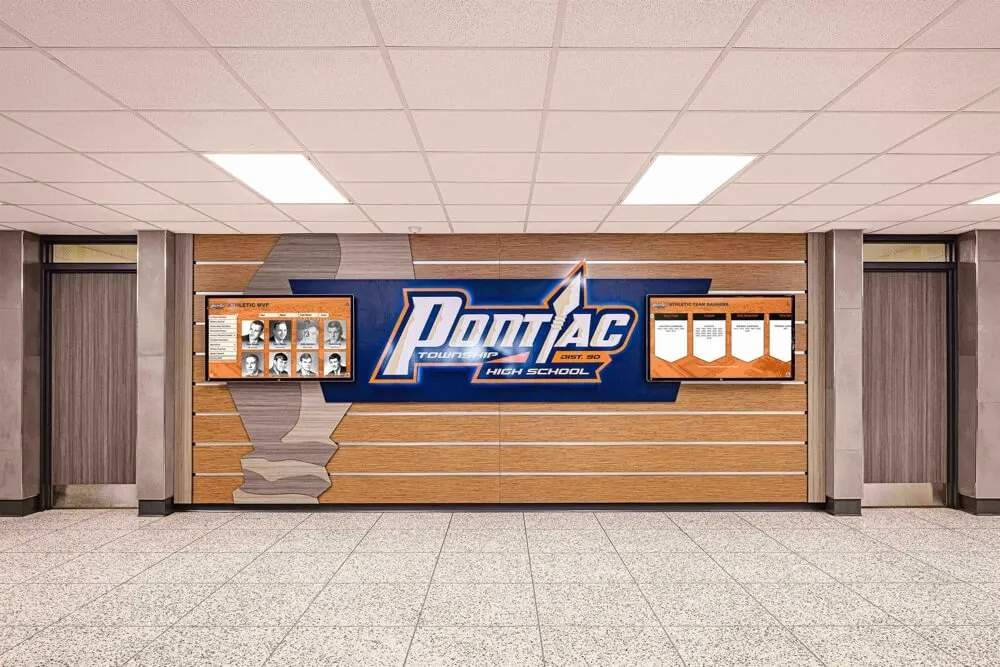
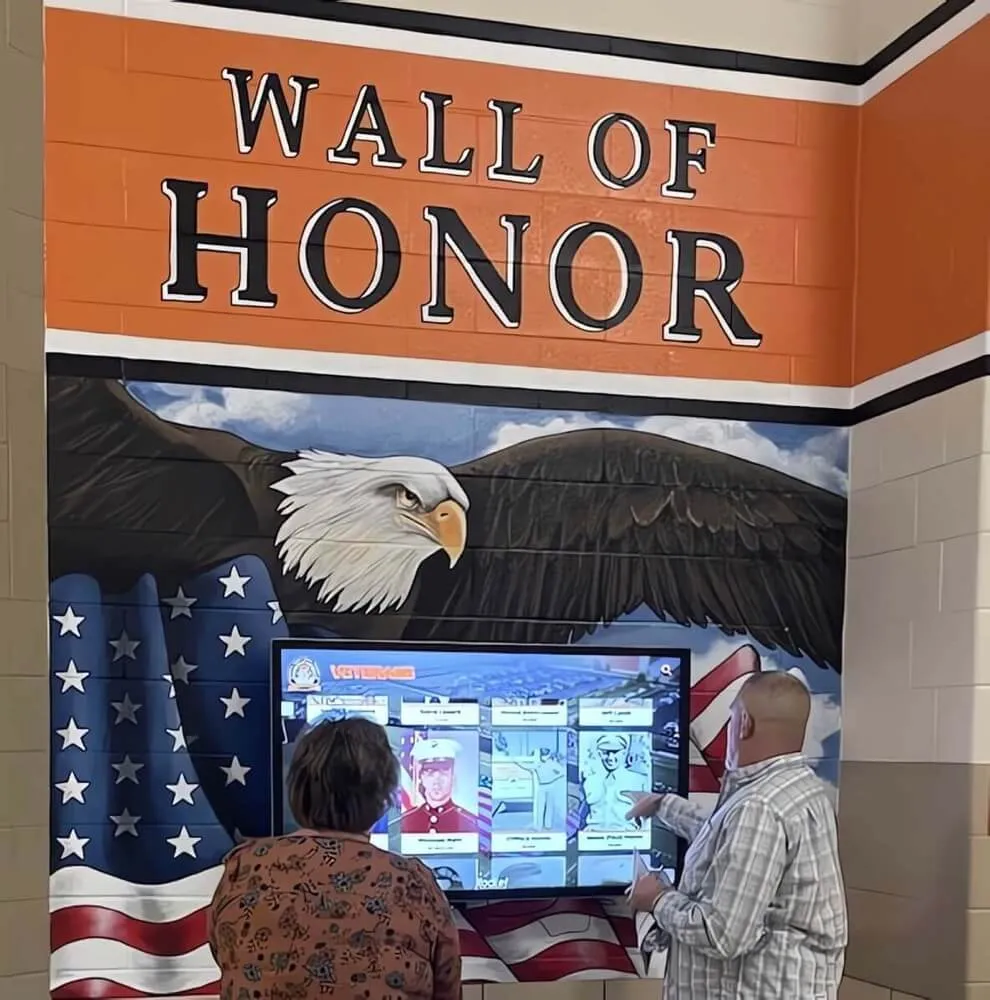
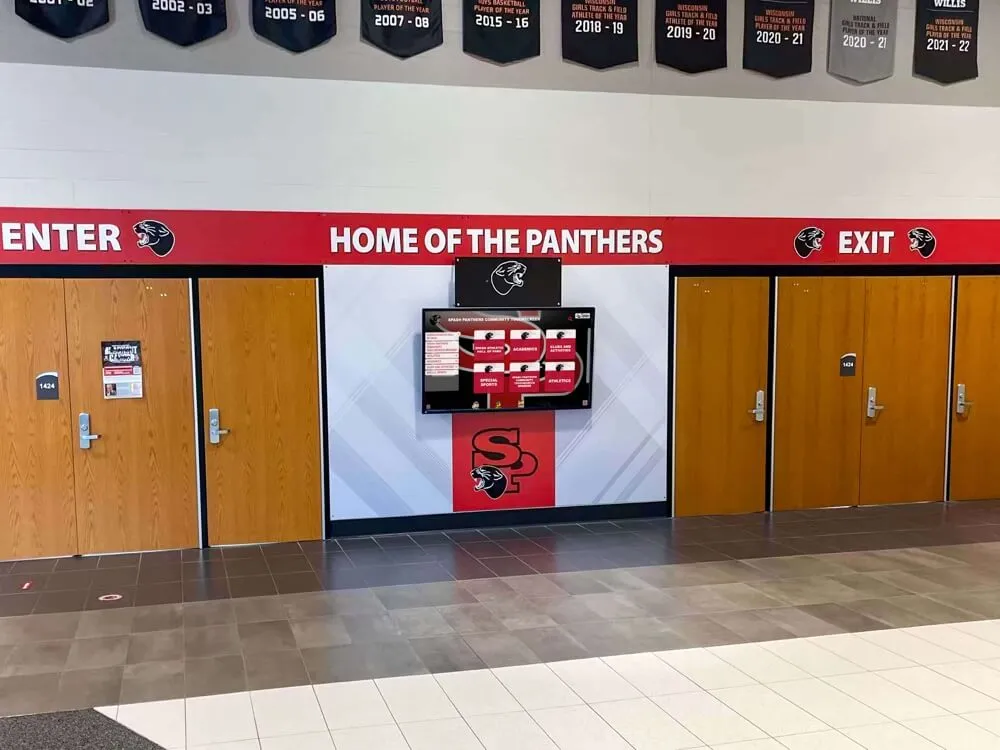
Schools using interactive recognition displays can showcase athletes excelling in cross-training elements alongside sport-specific achievements, reinforcing the message that comprehensive athletic development matters. These recognition systems help build the culture where athletes take pride in mastering fundamentals like footwork that separate good athletes from great ones.
Creating “Footwork Friday” traditions where teams dedicate portions of Friday practices to competitive footwork challenges builds engagement while providing consistent exposure to these essential skills. Simple competitions—who can complete the box drill fastest with perfect technique, mirror drill tournaments, or shadow boxing showcases—make skill development fun while reinforcing technique.
Equipment and Space Requirements
One significant advantage of boxing footwork training is the minimal equipment and space required, making these drills accessible for programs operating with limited budgets or facility constraints.
Essential Equipment
Minimal Setup (Under $50):
- Agility cones (12-20 cones in various colors)
- Chalk or floor tape for marking spaces
- Timer or stopwatch (smartphones work perfectly)
- Agility ladder (optional but valuable, $20-30)
Enhanced Setup (Under $200):
- Heavy-duty agility cones with connector hurdles
- Premium agility ladder with carry bag
- Small markers or dots for precise foot placement drills
- Resistance bands for adding load to footwork patterns
- Jump rope for complementary footwork conditioning
Facility Requirements:
Boxing footwork drills work in virtually any indoor or outdoor flat space. A standard basketball court provides ample room for entire teams to work simultaneously in stations. Hallways work for individual or small-group training. Even 10x10 feet of space accommodates most fundamental footwork drills.
Gyms with limited space can dedicate sections of their facilities to footwork stations during circuit training, rotate groups through available spaces during practice, or incorporate footwork into warm-up sequences before teams move to fields or courts for sport-specific practice.
The accessibility of these drills means every athletic program regardless of budget can implement effective footwork training, creating performance improvements that help athletes reach their potential. Programs that maximize limited resources while achieving results create stories worth sharing through comprehensive recognition platforms showcasing innovative coaching approaches.
Building Complete Athletes Through Cross-Training
Boxing footwork drills represent just one element of comprehensive cross-training that separates elite athletic programs from average ones. The best programs draw training methods from diverse sports, combining elements that complement each other while developing complete athletes prepared for their primary sport’s varied demands.
The Philosophy Behind Multi-Sport Training Methods
Traditional sports training often stays within sport-specific silos—basketball players only doing basketball drills, soccer players only touching soccer balls, tennis players only on courts. This approach misses opportunities to develop fundamental athletic abilities that transfer across sports while creating training monotony that reduces engagement.
Progressive programs incorporate training elements from gymnastics (developing body control), track (building sprint mechanics), swimming (creating shoulder health and conditioning), wrestling (building strength through ranges of motion), and boxing (developing footwork and spatial awareness). Athletes benefit from varied stimuli, novel challenges that rebuild engagement, and comprehensive development addressing weaknesses that sport-specific training might miss.
Schools embracing this comprehensive approach to athletic development often see improvements across multiple sports as better-prepared athletes bring diverse skills to their primary competitions. These programs create cultures where athletes take pride in being complete competitors rather than specialists, developing mindsets that serve them long after athletic careers end.
Celebrating Multi-Sport Excellence and Cross-Training Achievement
Modern athletic recognition extends beyond traditional sport-specific championships to celebrate the comprehensive development that creates truly elite athletes. Programs should consider highlighting athletes who excel in cross-training elements, demonstrate improvement across multiple athletic domains, or bring skills from one sport to enhance performance in another.
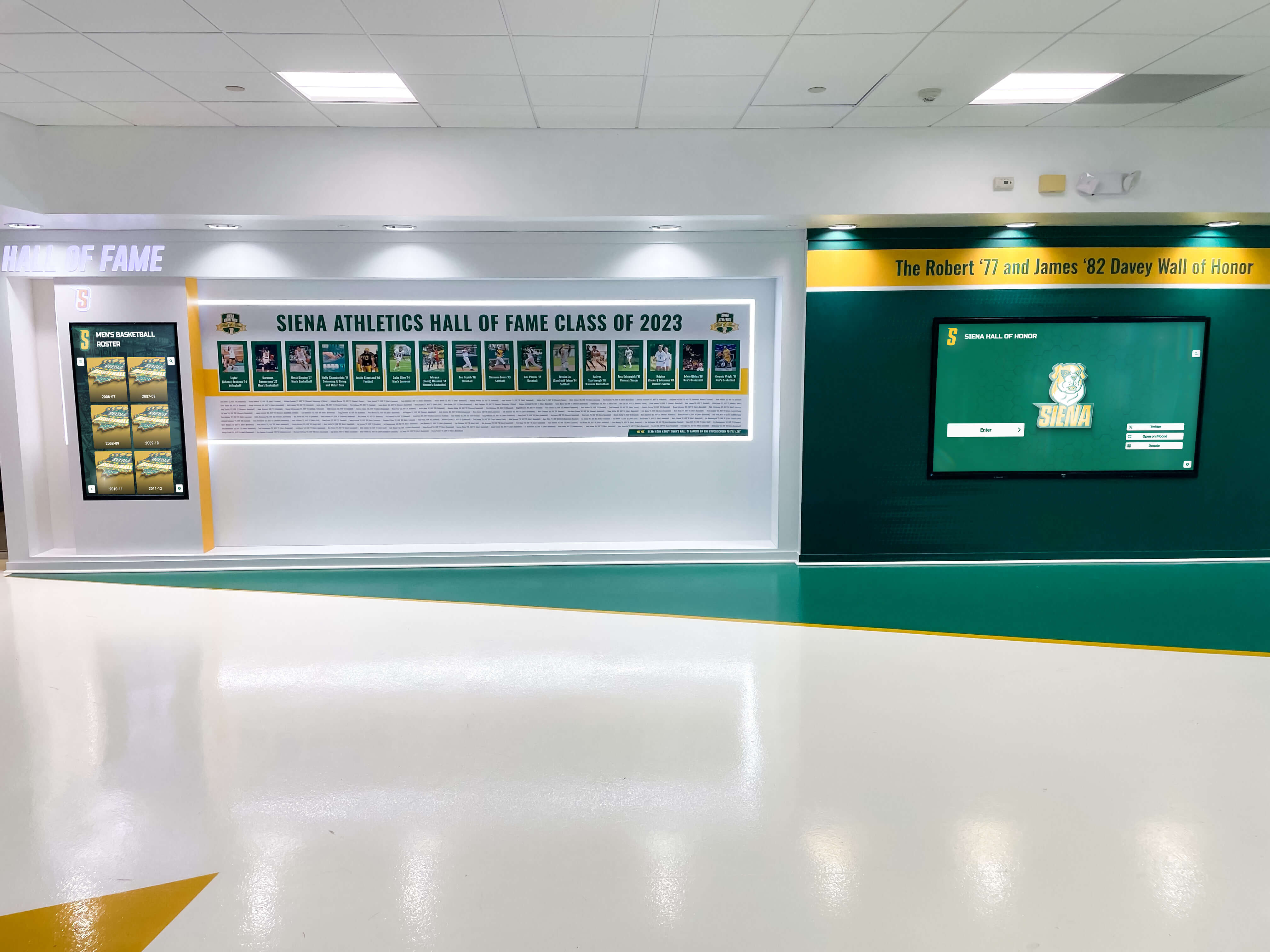
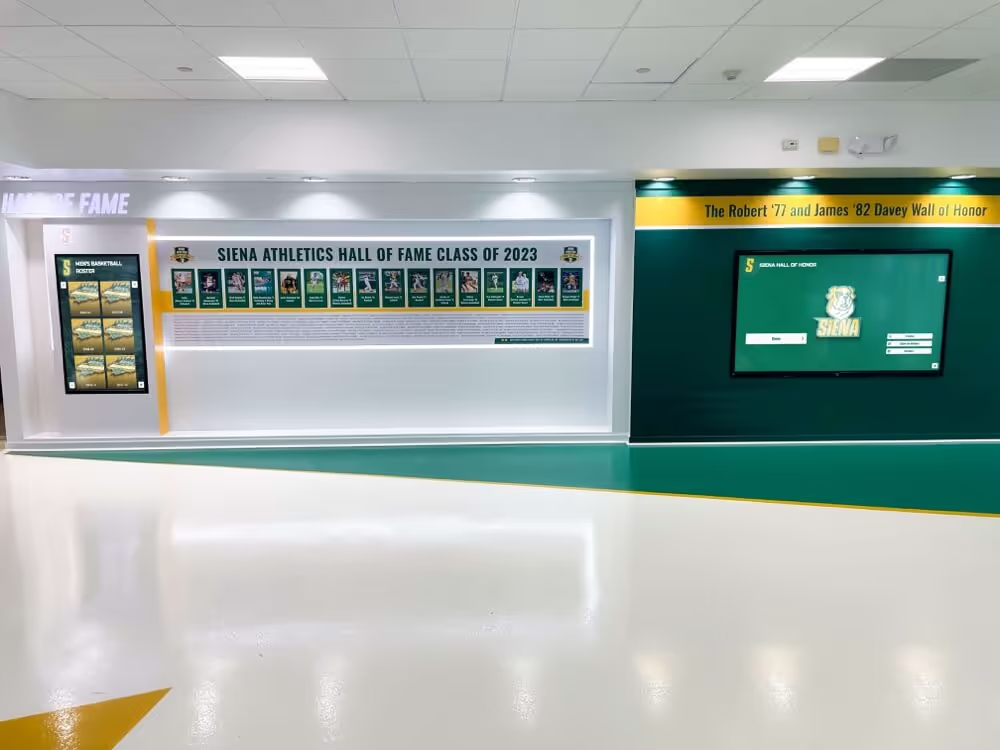
Digital recognition systems allow schools to showcase these broader achievement narratives alongside traditional statistics and championships. Athletes can be recognized for footwork development milestones, cross-training dedication, or bringing basketball defensive skills to their primary sport of soccer. This comprehensive recognition approach reinforces program values while motivating athletes to embrace training elements that might not provide immediate competitive results but build long-term athletic excellence.
Schools and organizations looking to build this type of comprehensive recognition culture benefit from platforms designed specifically for celebrating athletic achievement in all its forms—from championship wins to training dedication to the cross-training excellence that builds complete athletes prepared for success in sport and beyond.
Real-World Applications: Footwork Drills in Action
Understanding how elite programs incorporate boxing footwork into their training provides practical implementation models for coaches at all levels.
High School Basketball Programs
Successful basketball programs often dedicate the first 10 minutes of practice to footwork fundamentals. The step-drag lateral movement drill directly translates to defensive slides, while pivot drills improve post play and triple-threat positioning. Coaches report improved defensive positioning within 3-4 weeks of consistent implementation.
Progressive programs incorporate mirror drills where defensive players shadow offensive movements, building the reactive positioning that keeps defenders in front of ball handlers. The footwork foundation established through boxing drills allows athletes to execute defensive assignments with greater efficiency and less fatigue.
Soccer and Multi-Directional Sports
Soccer programs benefit from boxing footwork’s emphasis on multidirectional movement without crossing feet—essential for defenders jockeying attackers and midfielders covering ground in transition. The backward movement patterns practiced in boxing drills directly apply to defensive retreating while maintaining vision on both ball and assignment.
Attacking players use pivot drills to improve their ability to turn with the ball under pressure, creating space and passing angles through efficient footwork rather than just speed. Athletic recognition systems that celebrate soccer excellence often highlight athletes who master these fundamental skills alongside goal-scoring achievements.
Tennis and Racquet Sports
Tennis coaches incorporate boxing footwork drills to improve court coverage and recovery positioning. The emphasis on staying on the balls of your feet translates directly to the split-step timing that prepares players to move in any direction based on opponent shot selection.
Lateral movement drills improve baseline coverage, while forward-backward patterns enhance approach shot positioning and return to baseline. Athletes report feeling more balanced during direction changes and better positioned to execute quality shots after movement.
Combat Sports and MMA
For athletes actually involved in combat sports, boxing footwork represents fundamental training rather than cross-training. MMA fighters benefit from the ring awareness and distance management boxing footwork develops, skills that transfer directly to octagon positioning and creating angles on opponents.
Wrestling programs incorporate boxing footwork to improve stance fighting and level change setups. The balance and weight distribution principles boxing emphasizes help wrestlers maintain position during hand fighting while remaining ready to shoot takedowns or defend opponent attacks.
Conclusion: Footwork as Foundation for Athletic Excellence
Boxing footwork drills deliver performance benefits far beyond the ring, building the fundamental movement patterns, balance, spatial awareness, and multidirectional speed that separate elite athletes from average competitors across virtually every sport. Basketball players improve defensive positioning, soccer athletes enhance change-of-direction ability, tennis competitors strengthen court coverage, and multi-sport athletes develop comprehensive movement capabilities that translate to whatever competitions they pursue.
The minimal equipment requirements, space efficiency, and proven effectiveness make these drills accessible for programs at every level while delivering results that justify the investment of training time. Coaches implementing progressive footwork development see athletes moving more efficiently, maintaining technique under fatigue, and applying these fundamental skills in sport-specific situations where footwork creates competitive advantages.
Programs that embrace comprehensive athletic development—incorporating training methods from diverse sports, celebrating improvement across multiple domains, and building athletes prepared for varied competitive demands—create cultures of excellence that extend well beyond individual seasons or championships. These approaches develop complete athletes equipped with diverse skills, work ethic, and the fundamental movement quality that serves them throughout athletic careers and beyond.
Ready to build a comprehensive recognition system that celebrates not just championships but the training dedication, cross-training excellence, and fundamental skill development that builds truly elite athletic programs? Rocket Alumni Solutions creates interactive touchscreen displays that showcase your athletes’ achievements across all these dimensions—highlighting footwork improvement milestones alongside sport-specific statistics, celebrating multi-sport excellence, and telling the complete story of your athletic program’s commitment to developing well-rounded competitors. Our recognition platforms help you build the culture where athletes take pride in mastering fundamentals like footwork that separate good programs from great ones, creating engagement that motivates continued excellence while showcasing your comprehensive approach to athletic development for your entire school community.