



Key Takeaways
Comprehensive comparison guide for implementing interactive storytelling technology on campus tours. Discover how admission teams use digital displays, touchscreens, and multimedia to engage prospective students and boost enrollment.
Understanding Interactive Campus Storytelling
Before evaluating specific technology solutions, admissions teams must understand what interactive campus storytelling encompasses and why it creates measurably better prospective student experiences than traditional tour formats alone.
Defining Interactive Storytelling in Admissions Context
Interactive storytelling extends beyond simply displaying information or showing videos. It represents a fundamental shift in how institutions communicate their narratives to prospective students.
Traditional Campus Tour Limitations
Conventional walking tours depend entirely on individual tour guide knowledge, presentation skills, and time constraints. Even excellent guides face challenges including limited time preventing comprehensive coverage of all programs and opportunities, inconsistent messaging as different guides emphasize different aspects, inability to deeply explore specific interests relevant to individual prospects, weather constraints affecting outdoor storytelling effectiveness, and physical access limitations for visitors with mobility challenges.
These limitations mean prospective students often leave campus tours without encountering information most relevant to their specific academic interests, career goals, or personal circumstances.
Interactive Technology Enhancement
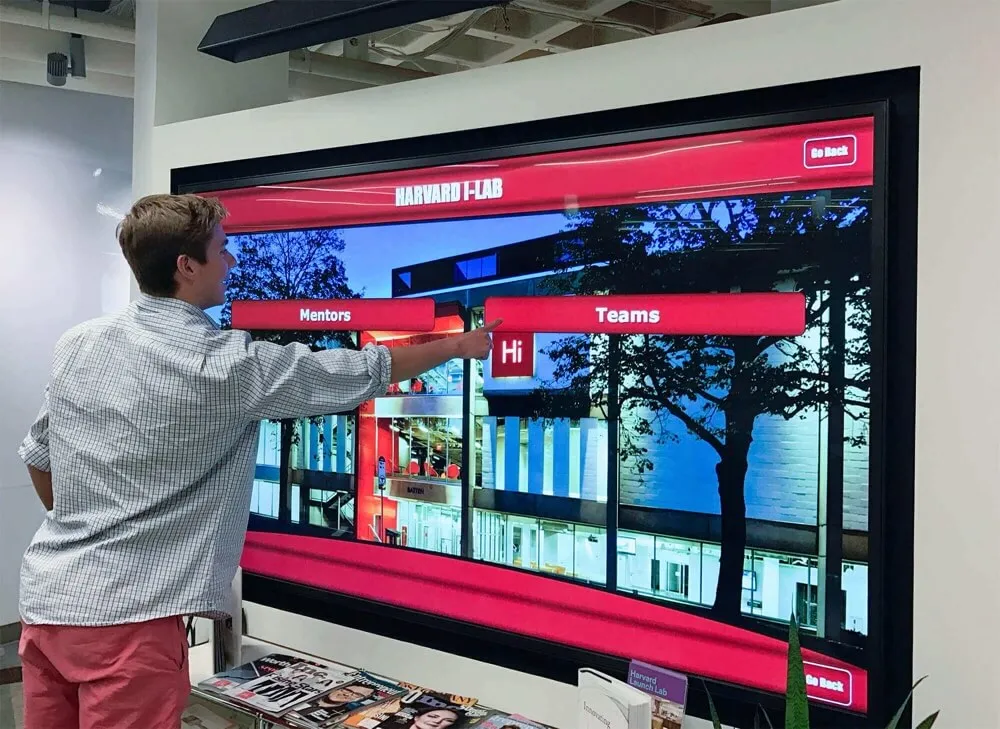
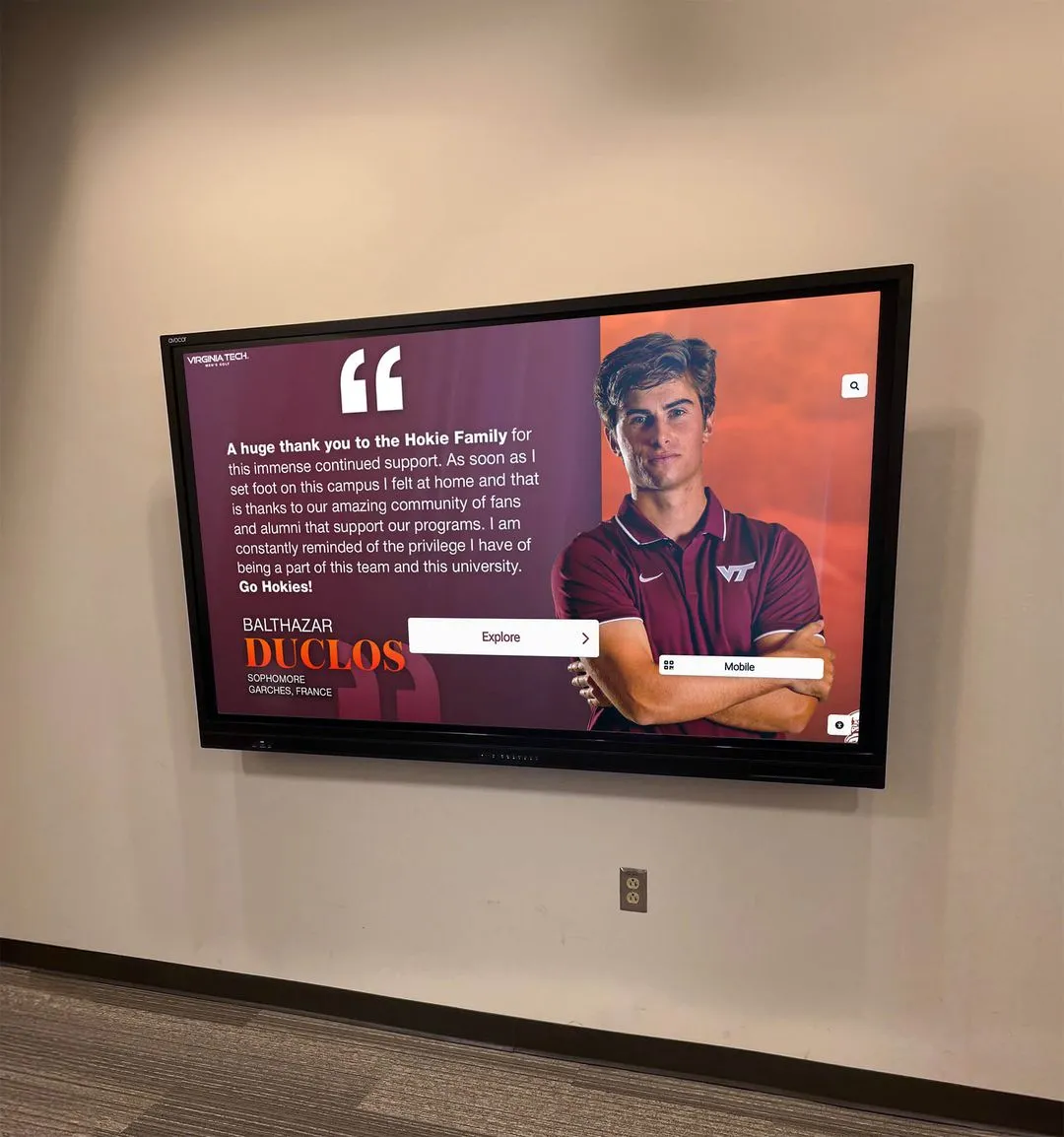
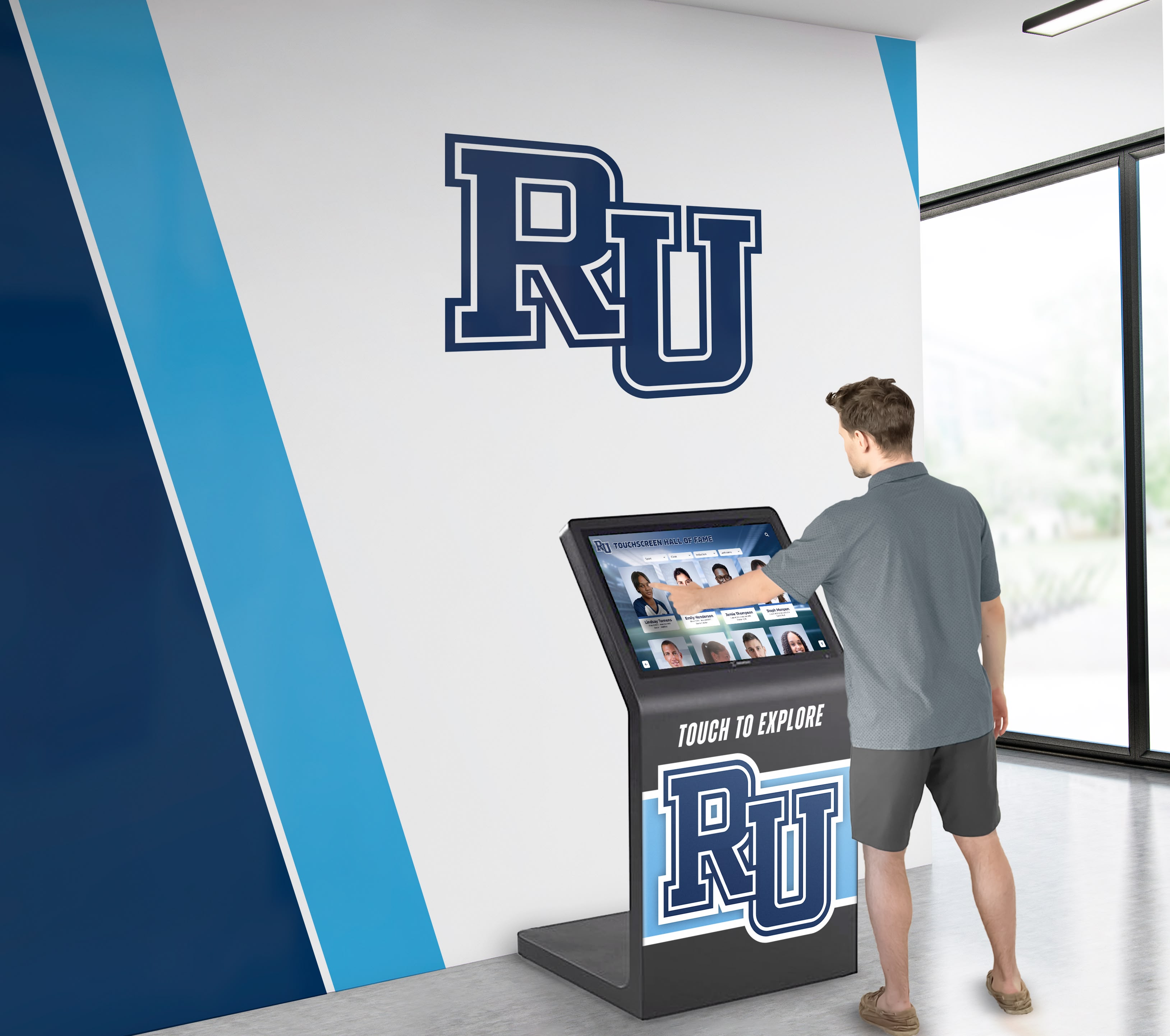
Interactive storytelling systems complement human guides by providing on-demand access to comprehensive institutional information through touchscreen displays in admissions centers and key campus locations, QR codes linking to multimedia content at specific campus landmarks, mobile applications enabling self-guided exploration with rich media, and web-accessible virtual tour components prospective students can explore before or after visits.
According to research from education marketing organizations, institutions implementing interactive tour technology report that prospective students engage with content an average of 12-15 minutes beyond standard tour duration, accessing program-specific information, student testimonials, and facility details impossible to cover comprehensively in traditional tours.
Why Interactive Storytelling Drives Enrollment Success
The shift toward interactive campus experiences reflects broader changes in how prospective students research and evaluate colleges.
Meeting Gen Z Information Consumption Preferences
Today’s prospective students grew up with on-demand access to multimedia content and expect similar experiences when researching major life decisions like college selection. Static brochures and guided commentary feel incomplete compared to interactive exploration enabling deeper investigation of personally relevant topics.
Students increasingly want to discover information at their own pace rather than passively receiving standardized presentations. Interactive systems accommodate this preference while ensuring consistent, accurate information delivery regardless of individual tour guide variations.
Extending Engagement Beyond Visit Duration
Traditional tours end when prospective students leave campus, with information retention declining rapidly afterward. Interactive systems extend engagement substantially through QR codes enabling post-visit content access from home, digital displays accessible during subsequent informal campus visits, web-based virtual components reinforcing physical tour experiences, and shareable content students can discuss with family members and counselors.
This extended engagement keeps institutions top-of-mind during crucial decision-making periods after campus visits conclude.
Supporting Diverse Learning Styles and Accessibility
Not all prospective students absorb information effectively through verbal presentations alone. Interactive storytelling accommodates diverse learning preferences through visual content for students who process information better through images and video, text-based information for students who prefer reading detailed descriptions, audio content including podcasts and interviews for auditory learners, and interactive exploration allowing kinesthetic learners to actively engage rather than passively observe.
Additionally, properly implemented interactive systems improve accessibility for students with hearing impairments through visual content, students with visual impairments through audio descriptions and screen reader compatibility, and students with mobility challenges by bringing comprehensive information to centralized, accessible locations.
Technology Approaches: Comprehensive Comparison
Admissions teams face multiple options when implementing interactive storytelling. Understanding relative advantages and limitations of different approaches enables informed decisions aligned with institutional priorities and resources.
Physical Interactive Displays and Kiosks
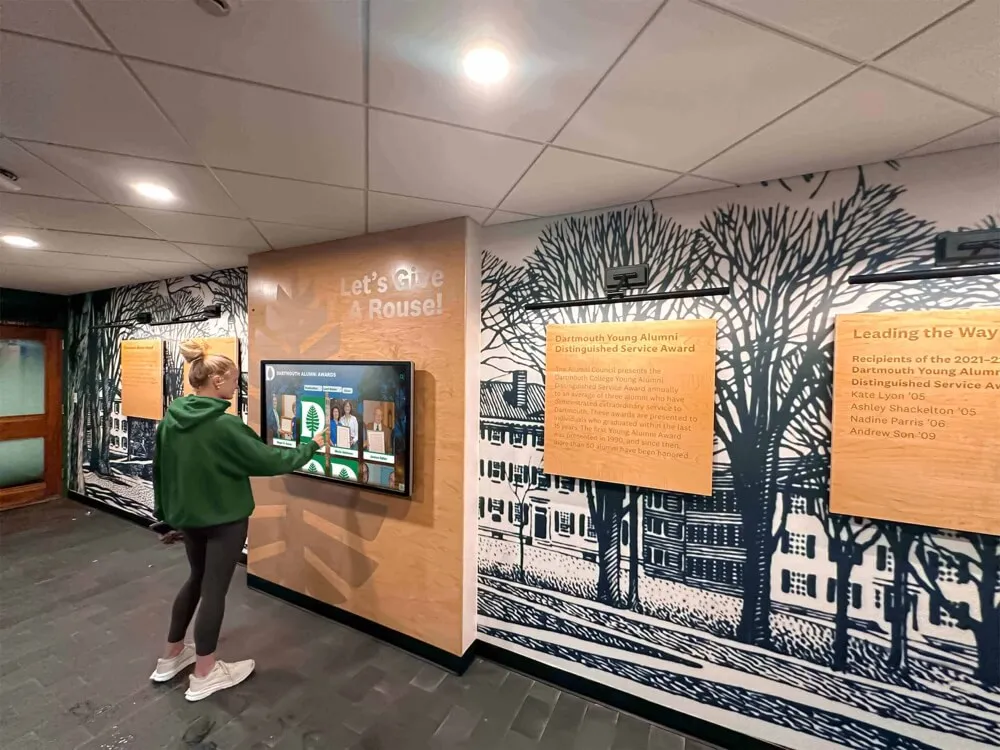
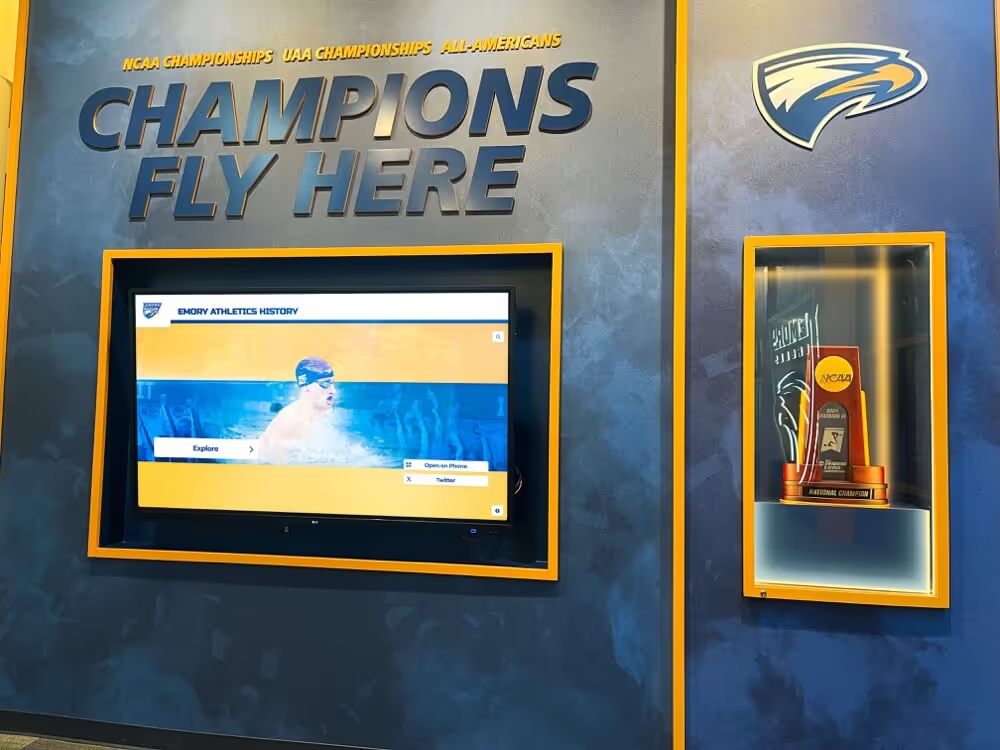
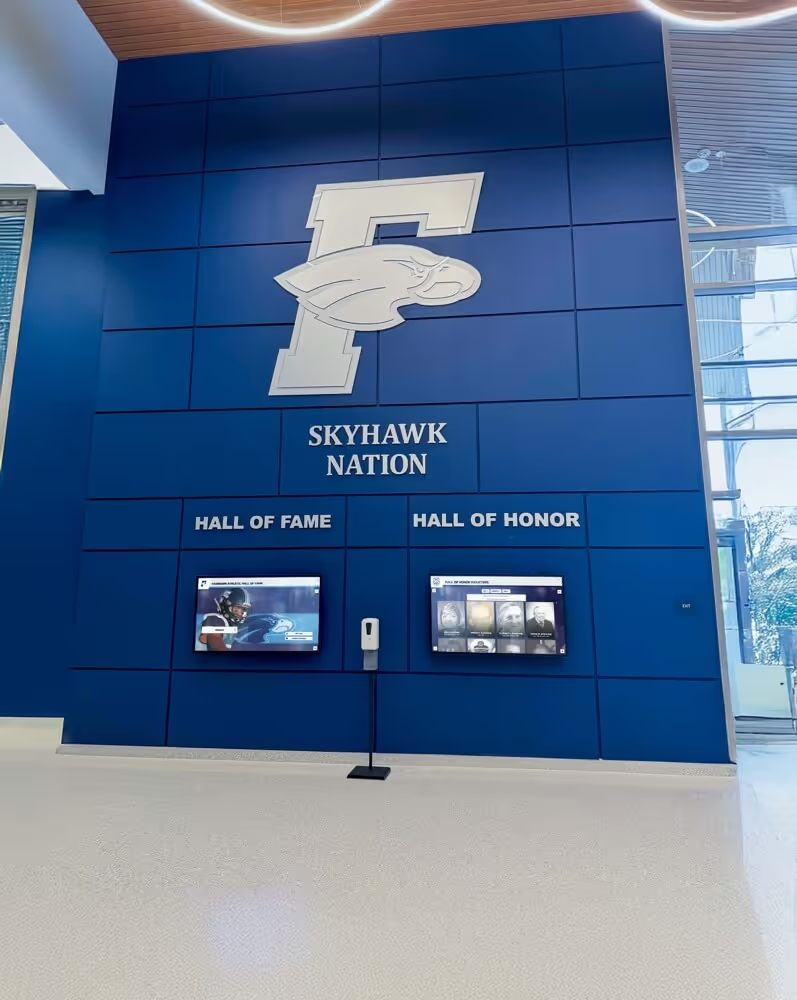
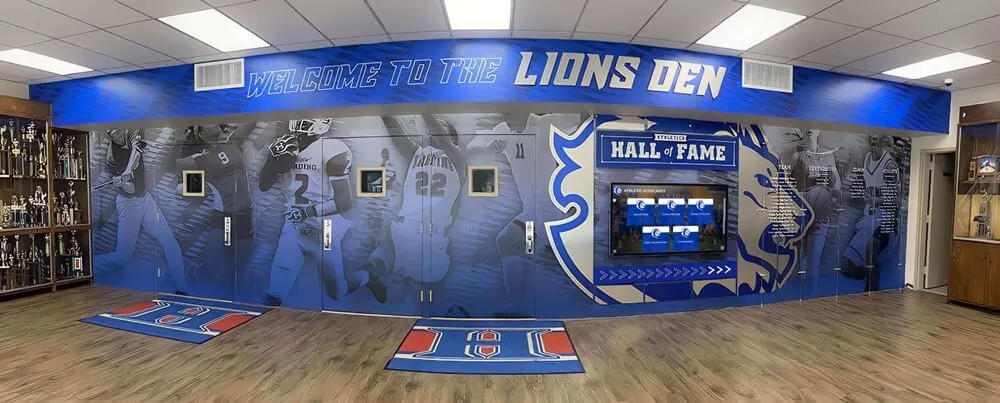
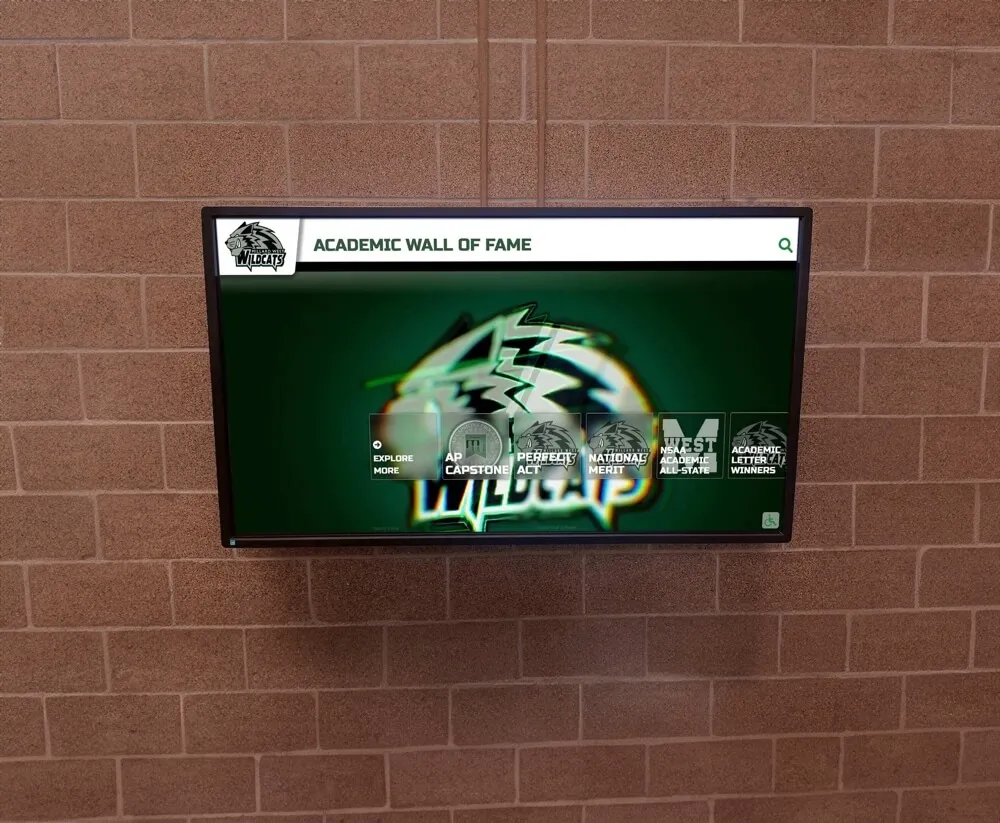
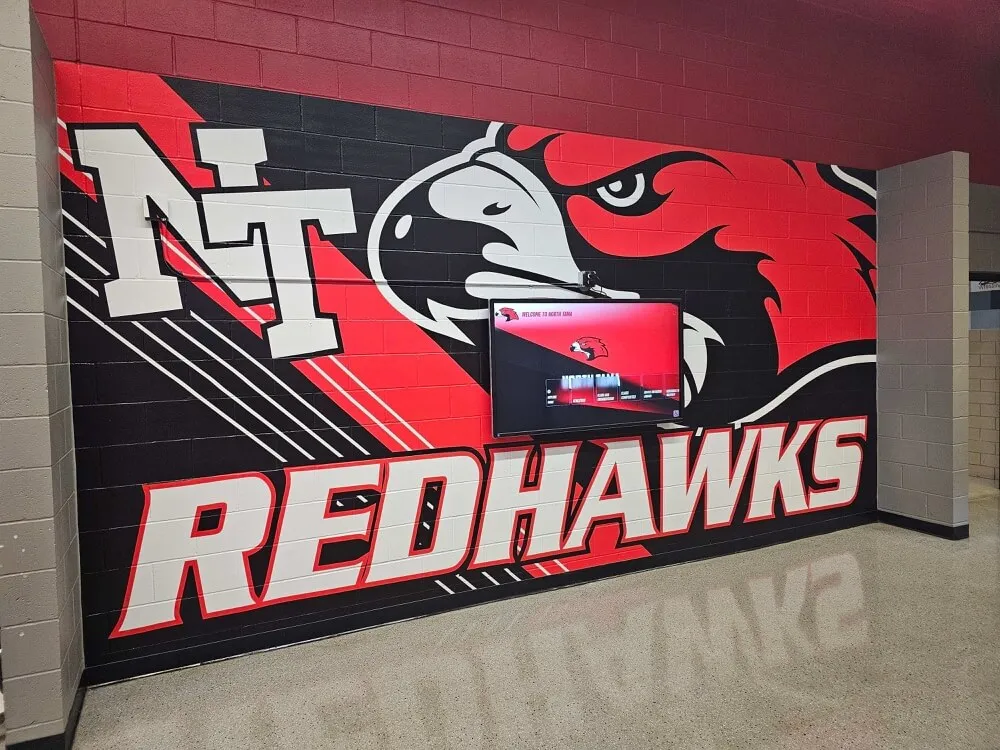
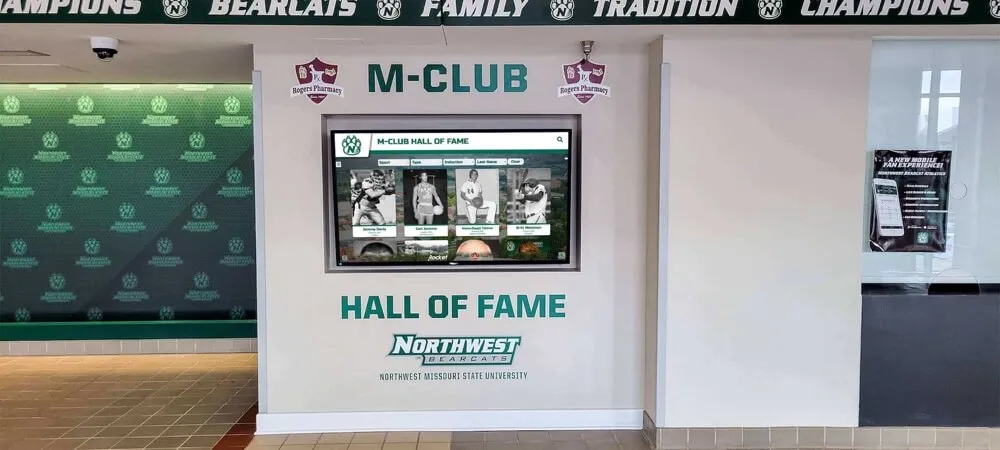
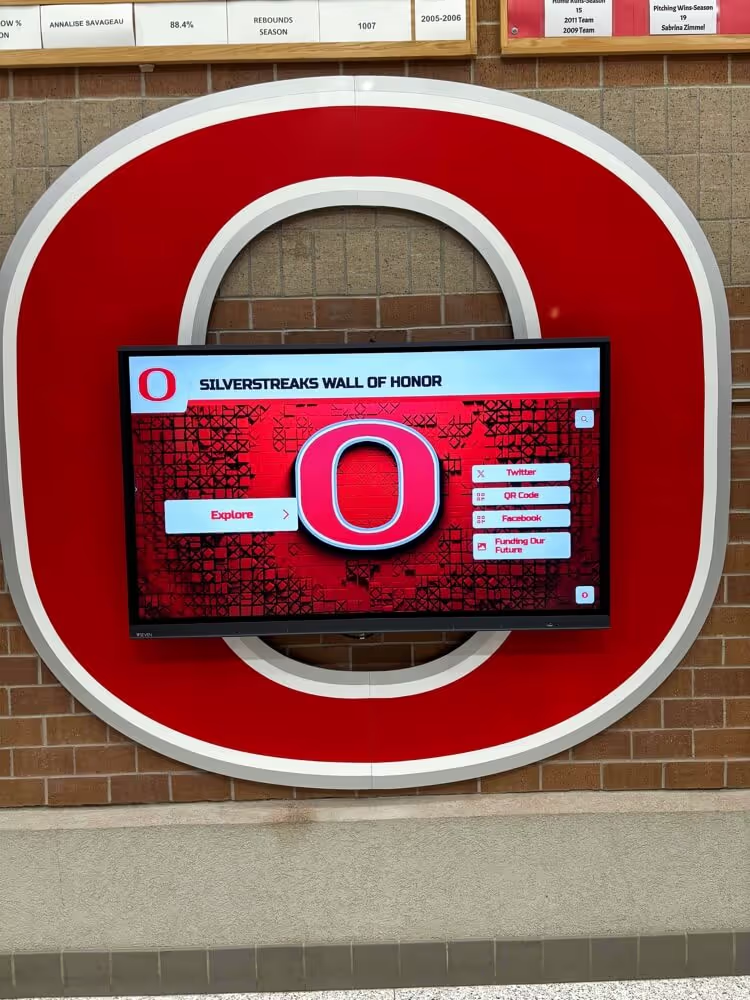
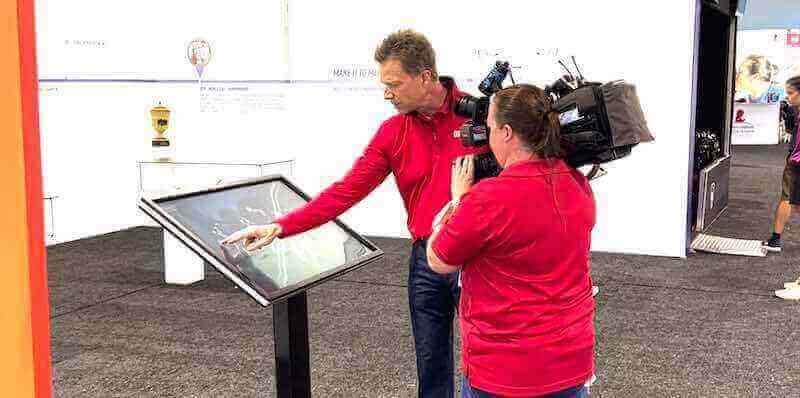
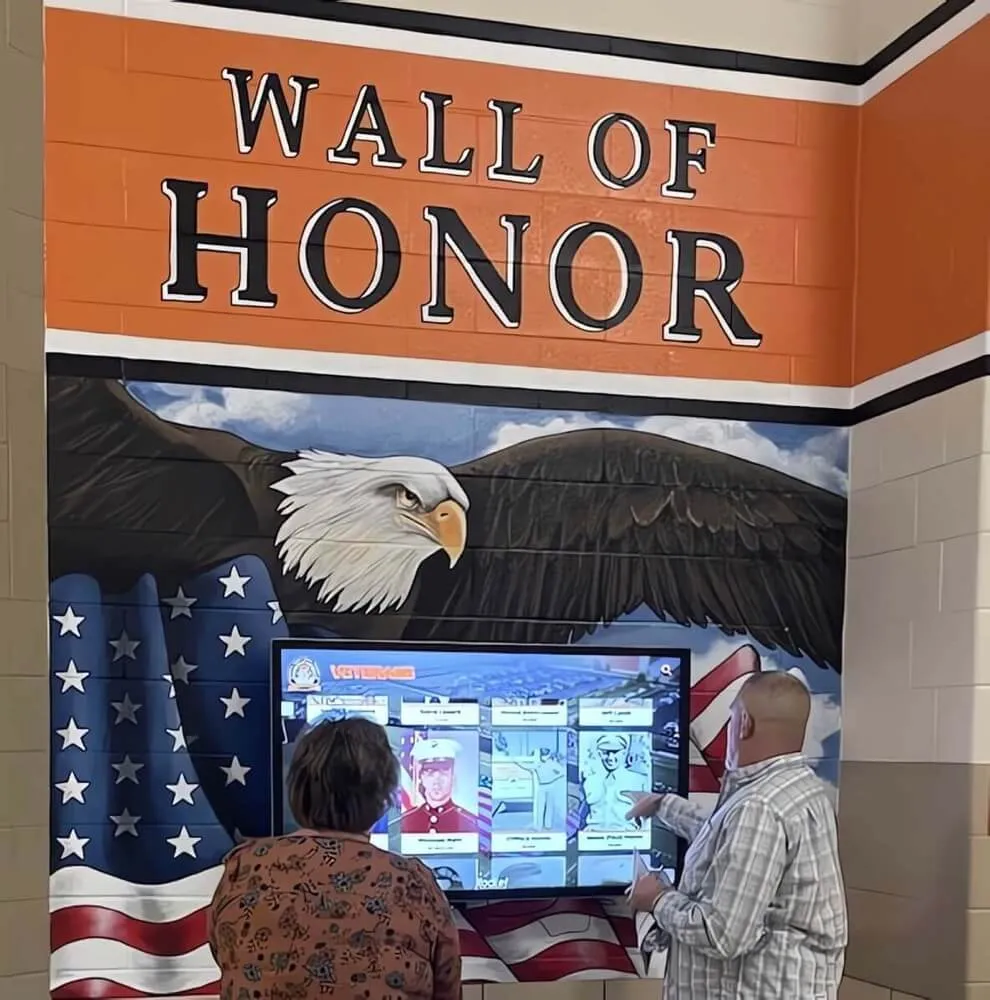
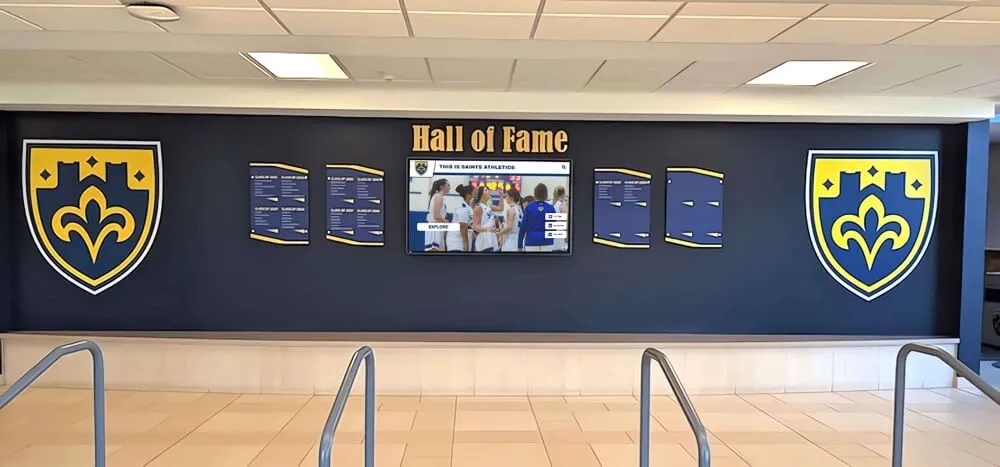
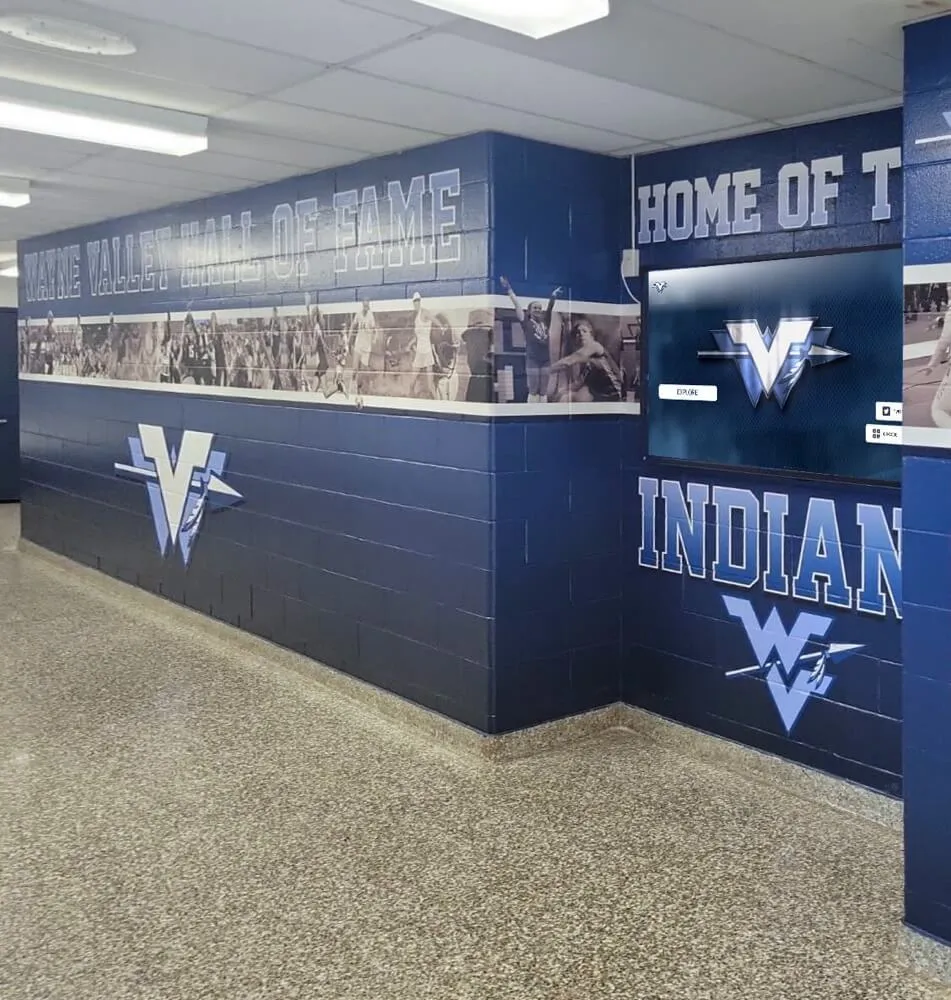
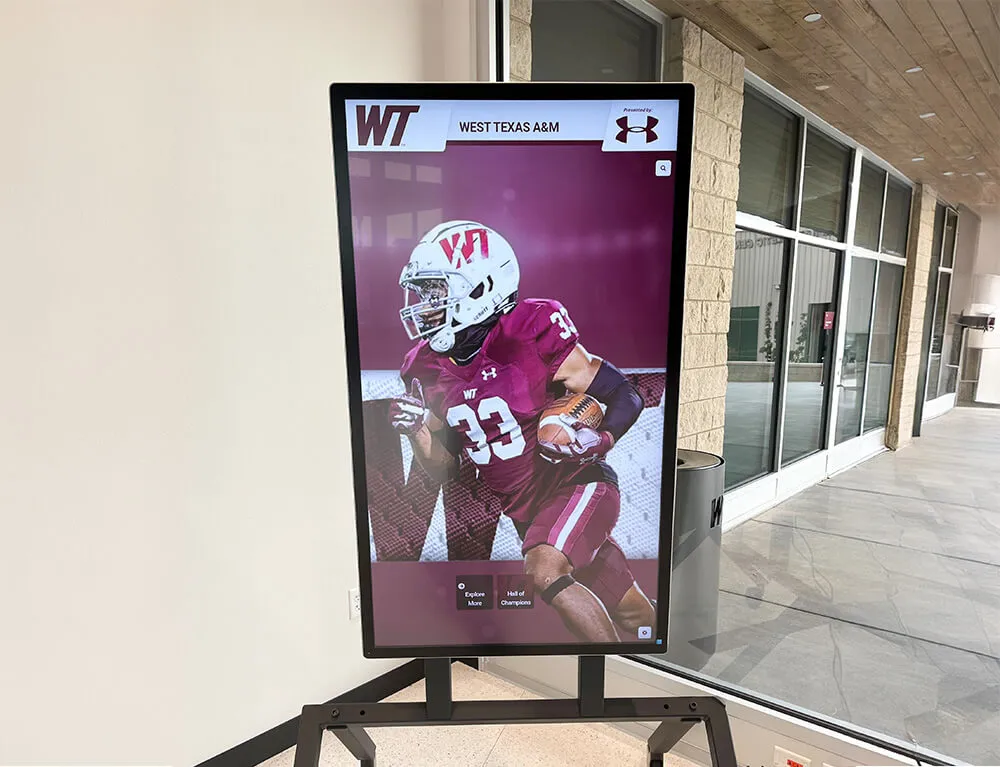
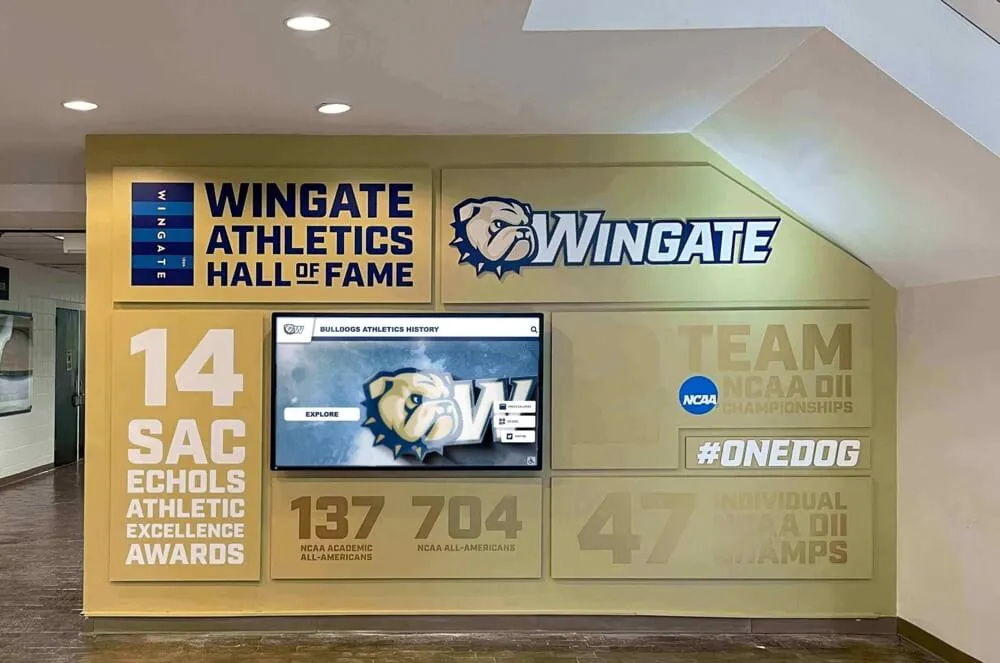
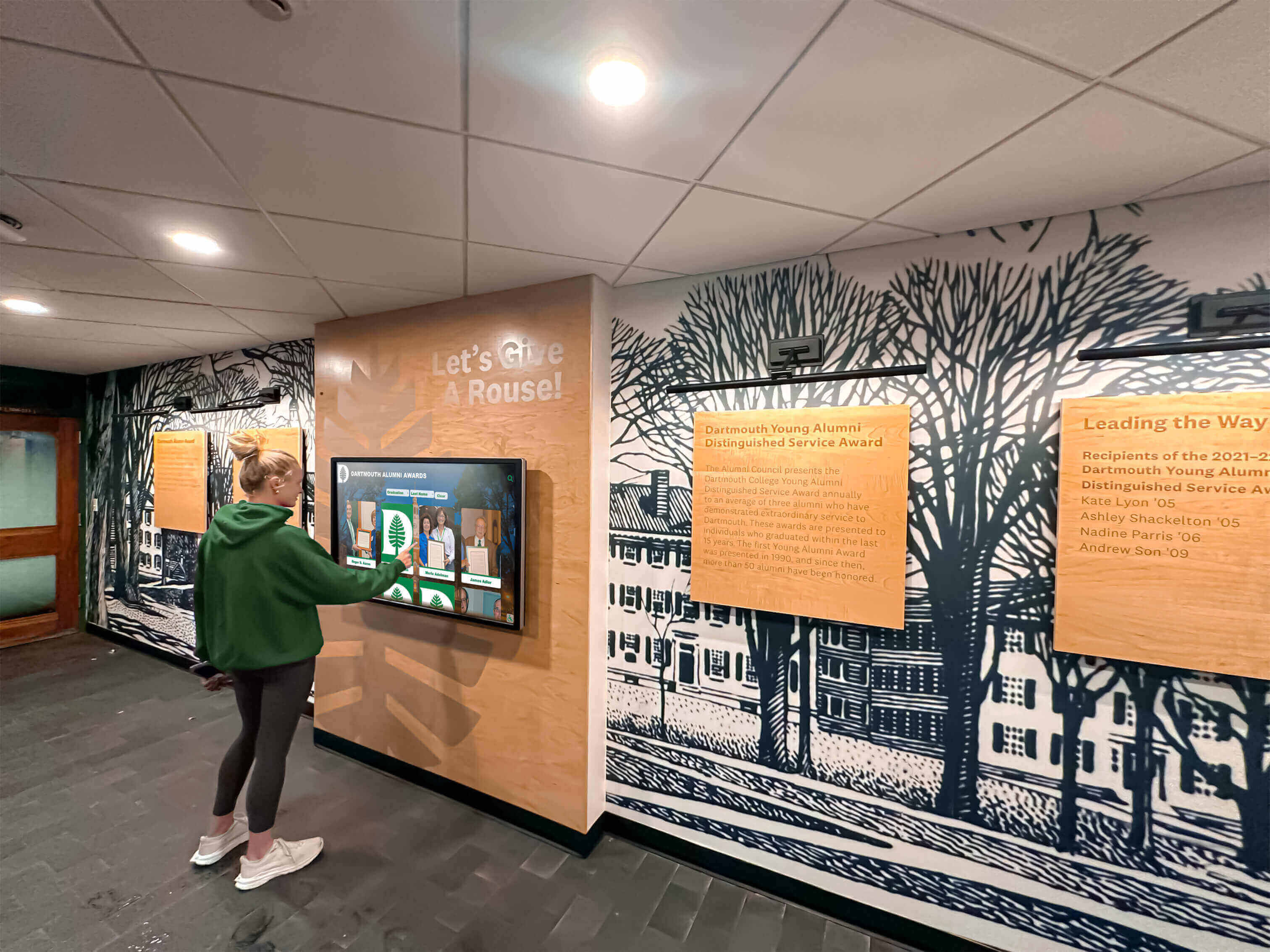
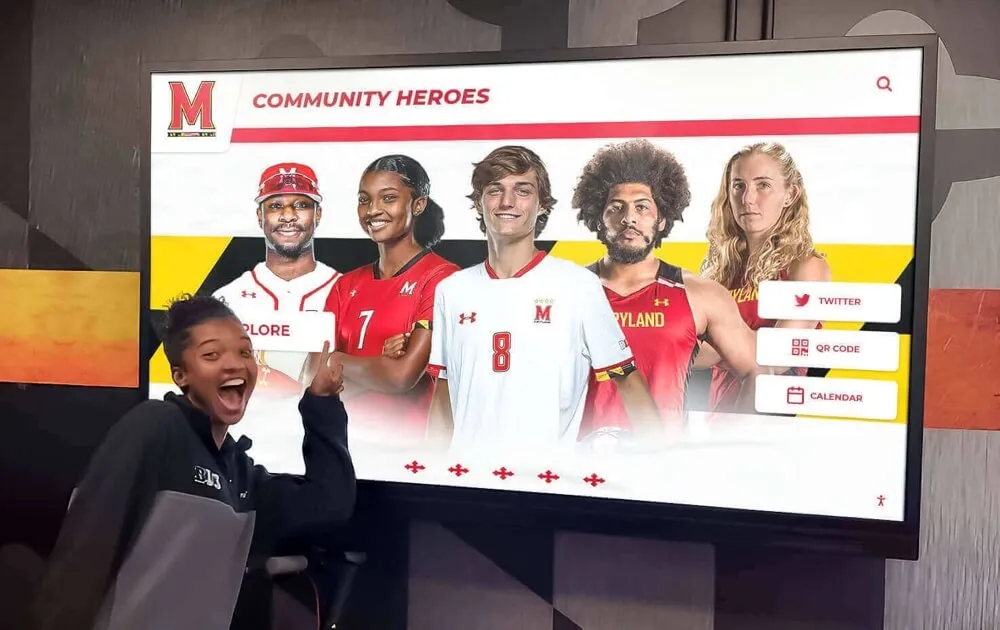
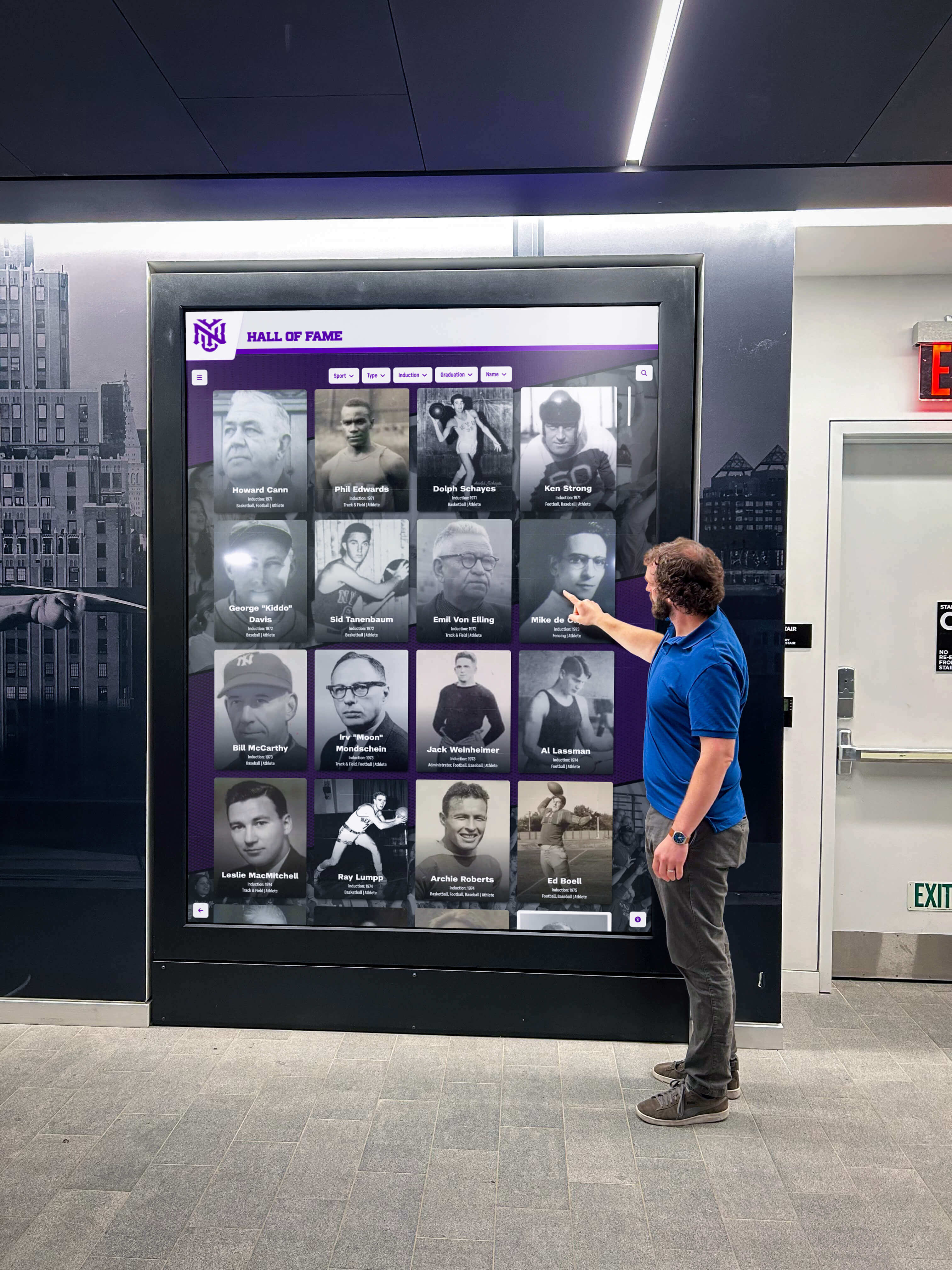
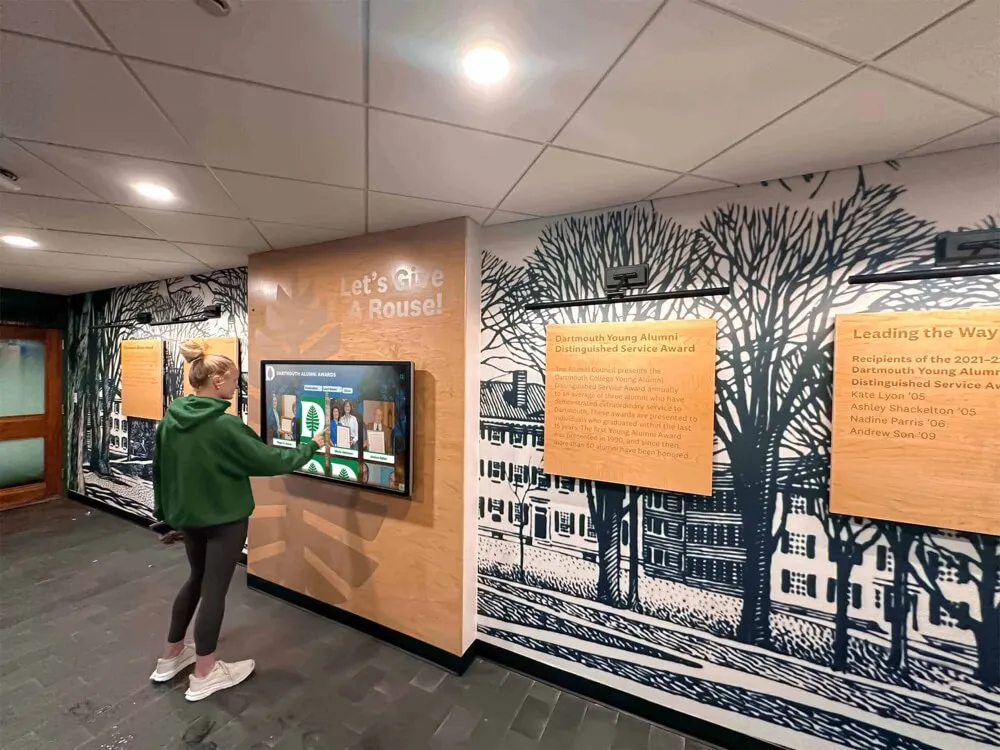
Building-mounted touchscreen systems provide centralized interactive experiences in high-traffic campus locations.
Strategic Placement Opportunities
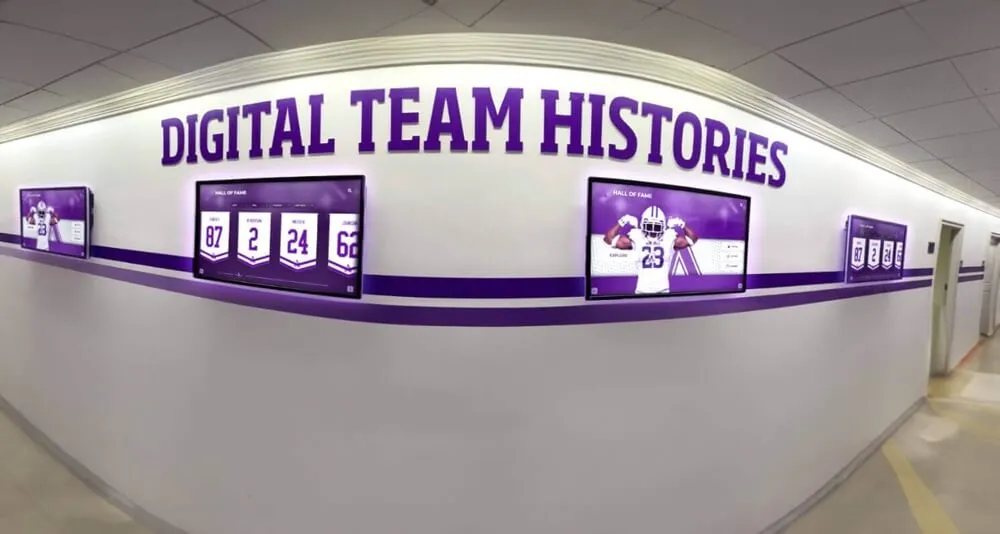
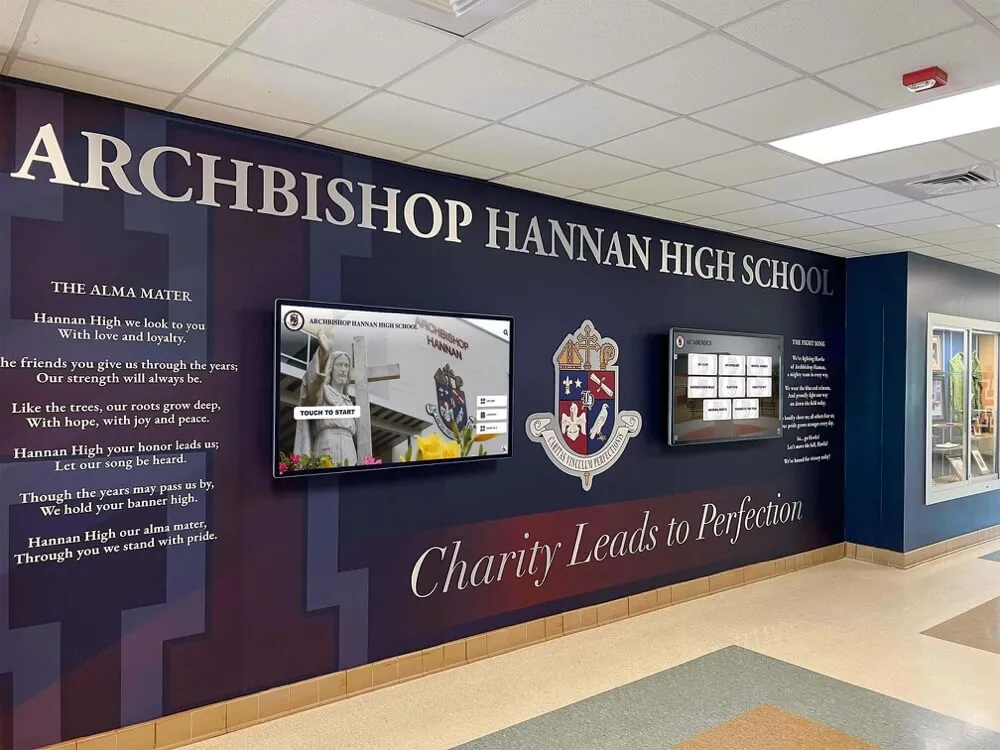
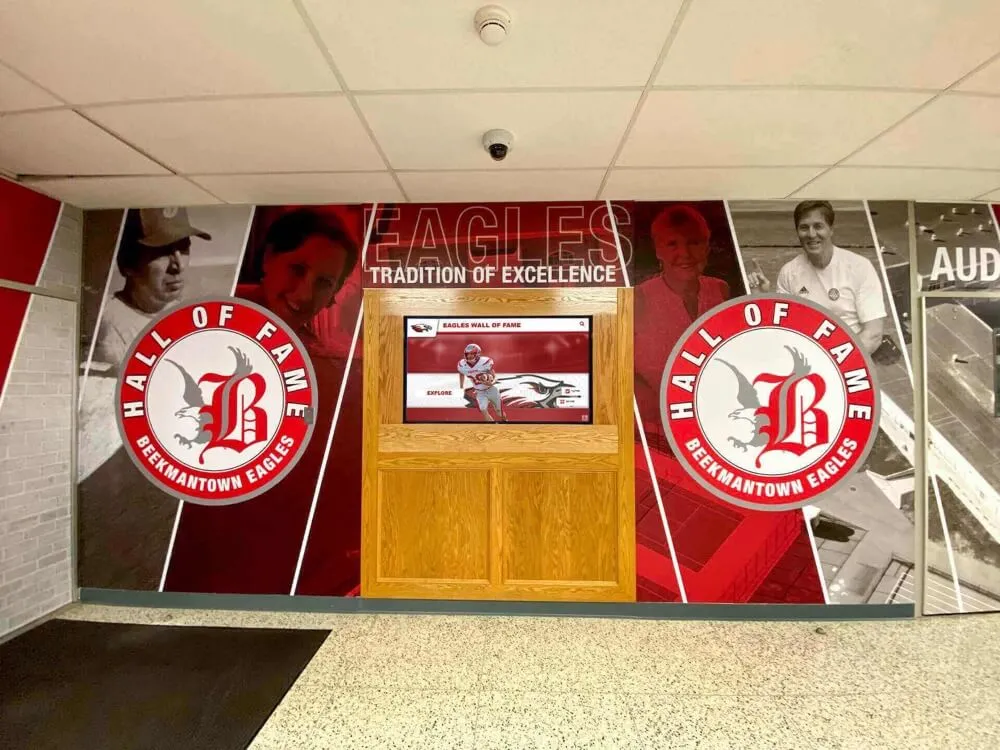
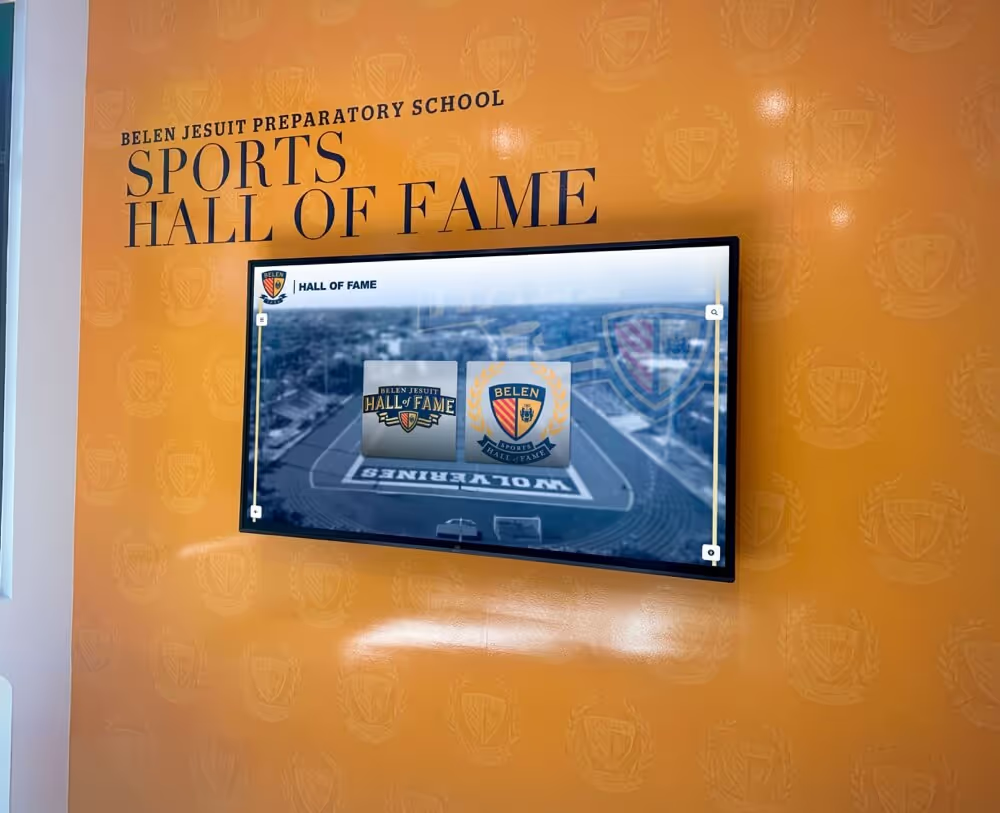
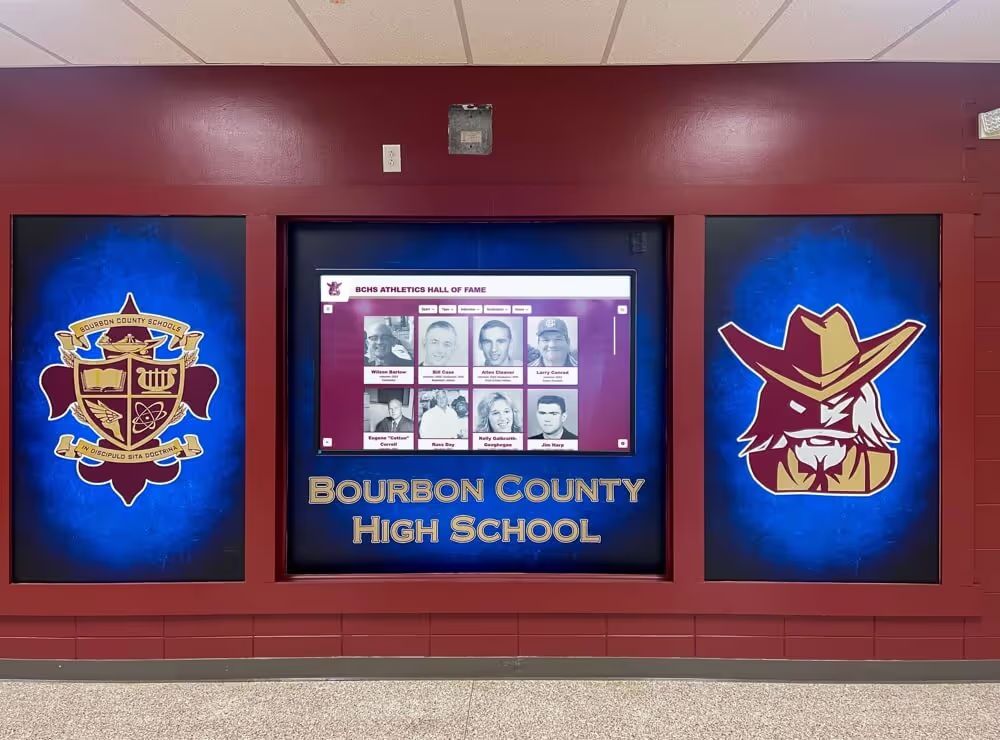
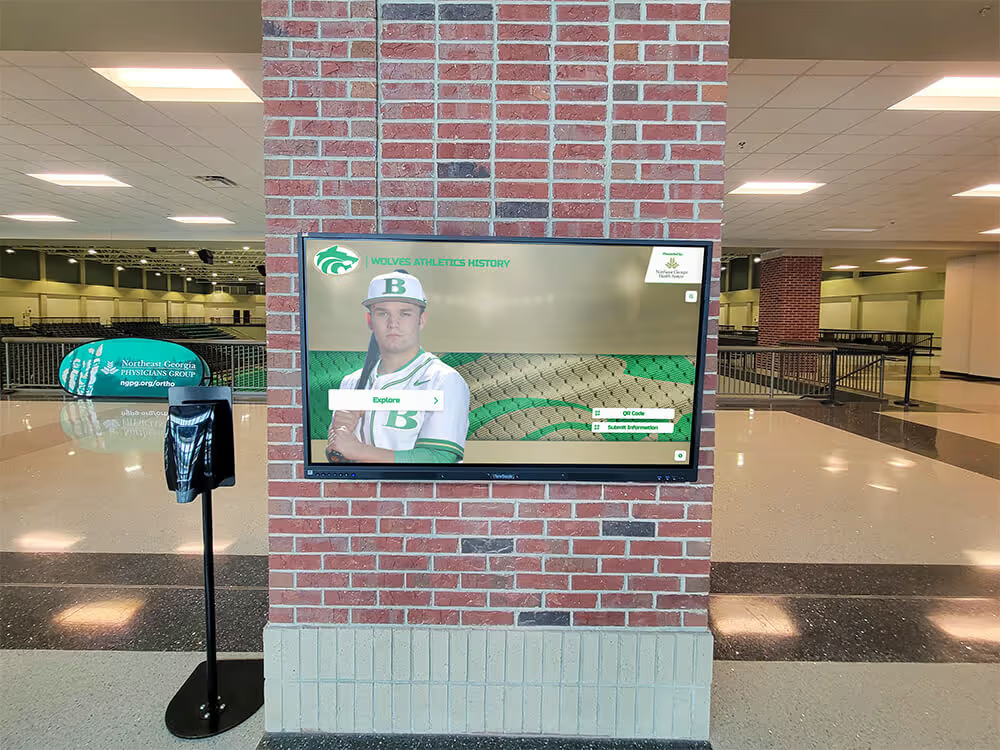
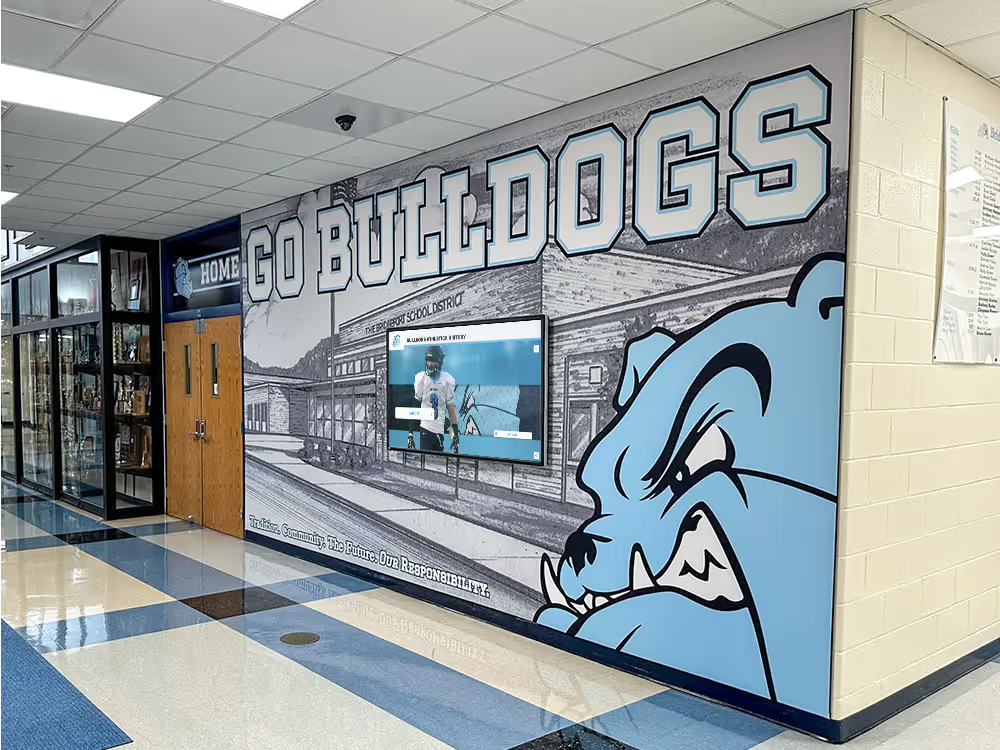
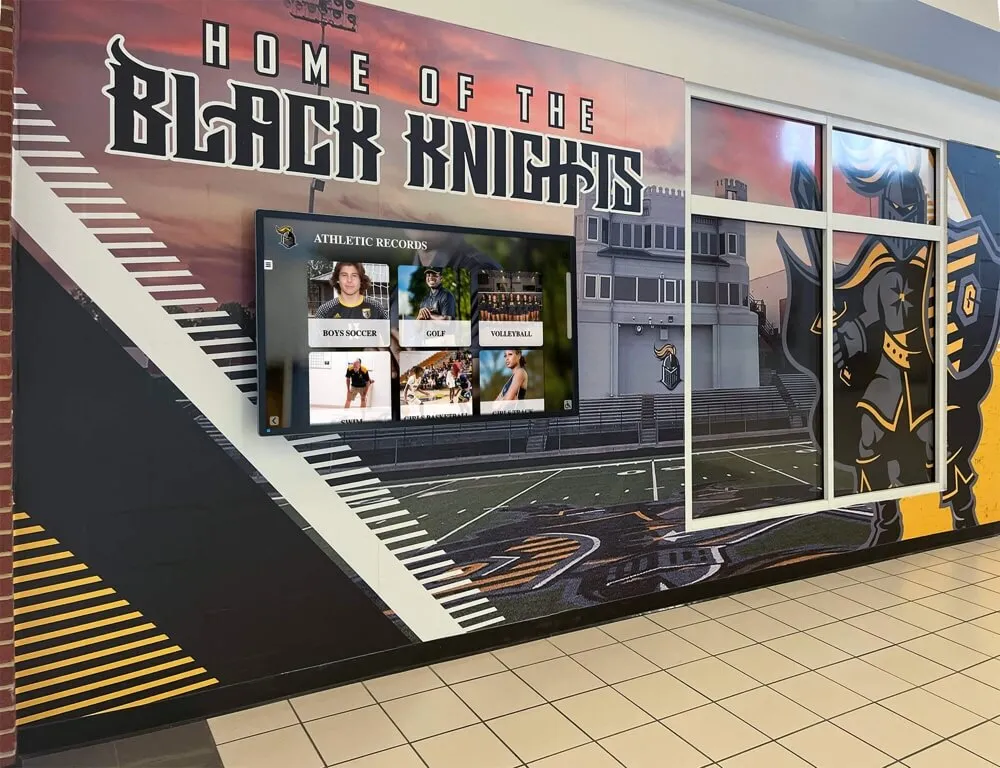
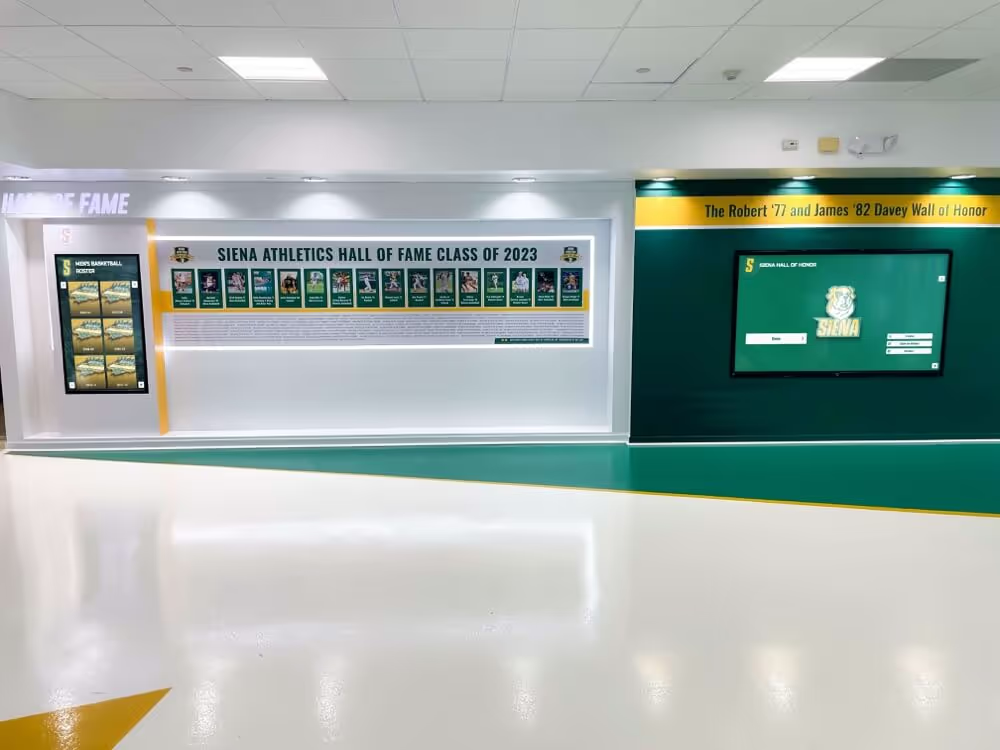
Admissions welcome centers represent optimal locations for comprehensive interactive displays serving as tour starting points, allowing prospective students to explore academic programs before tours begin, and providing waiting area engagement for families arriving early for scheduled visits or information sessions.
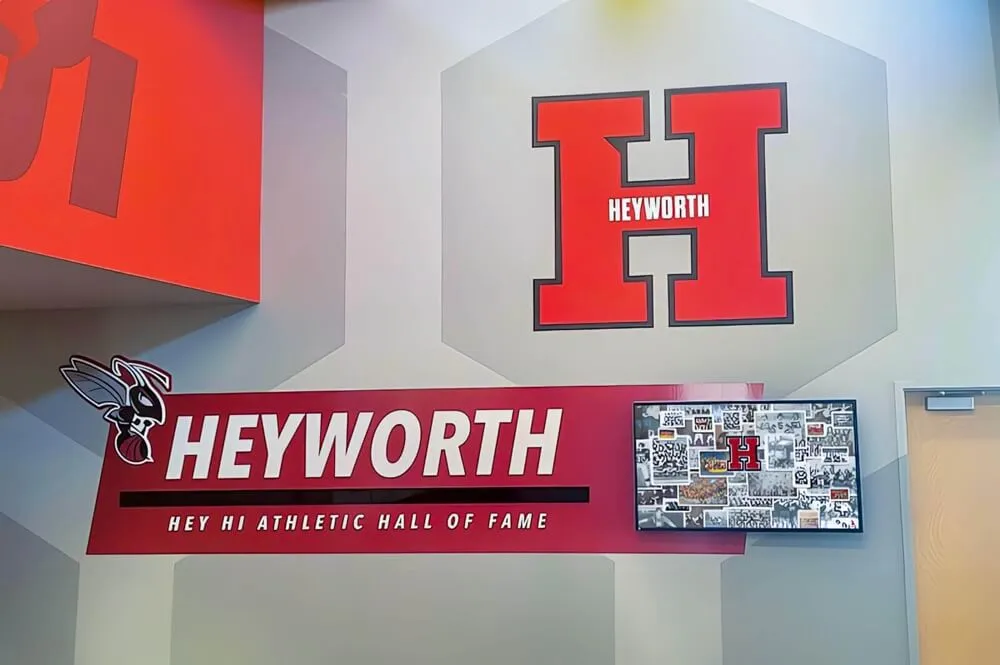
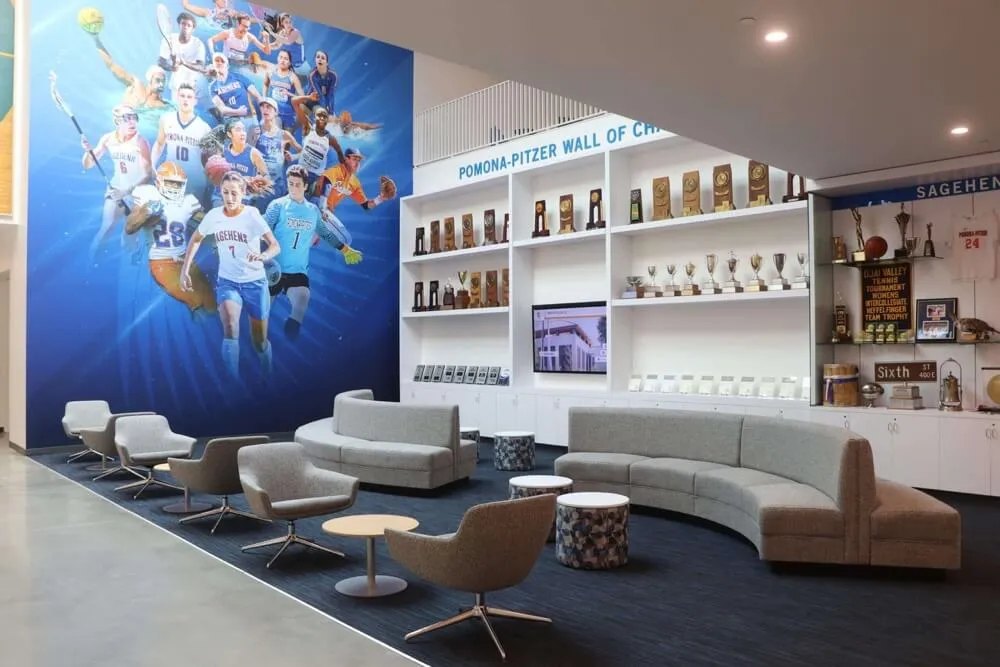
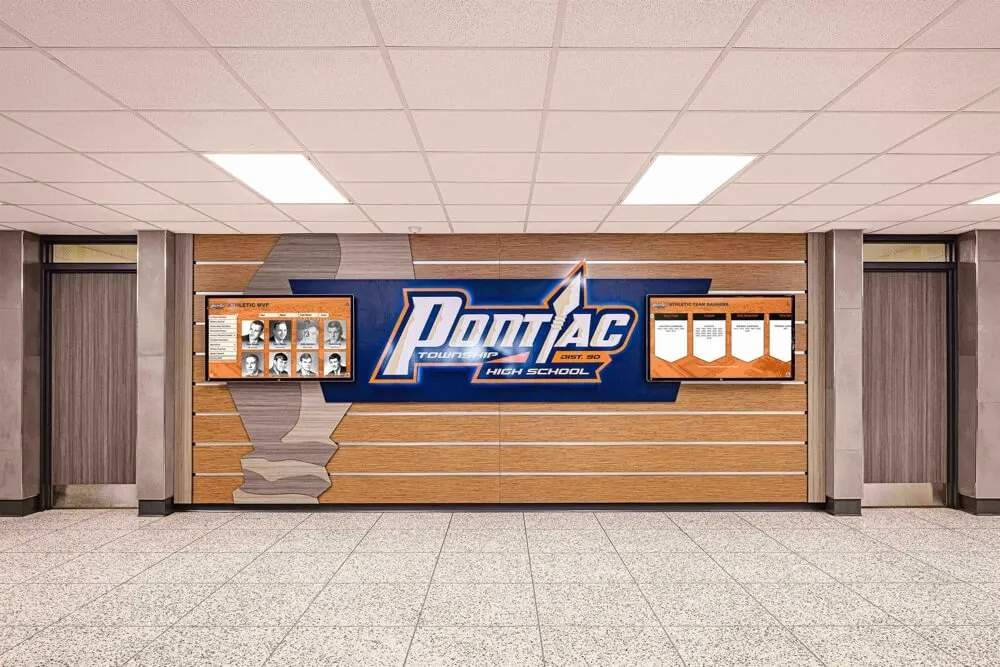
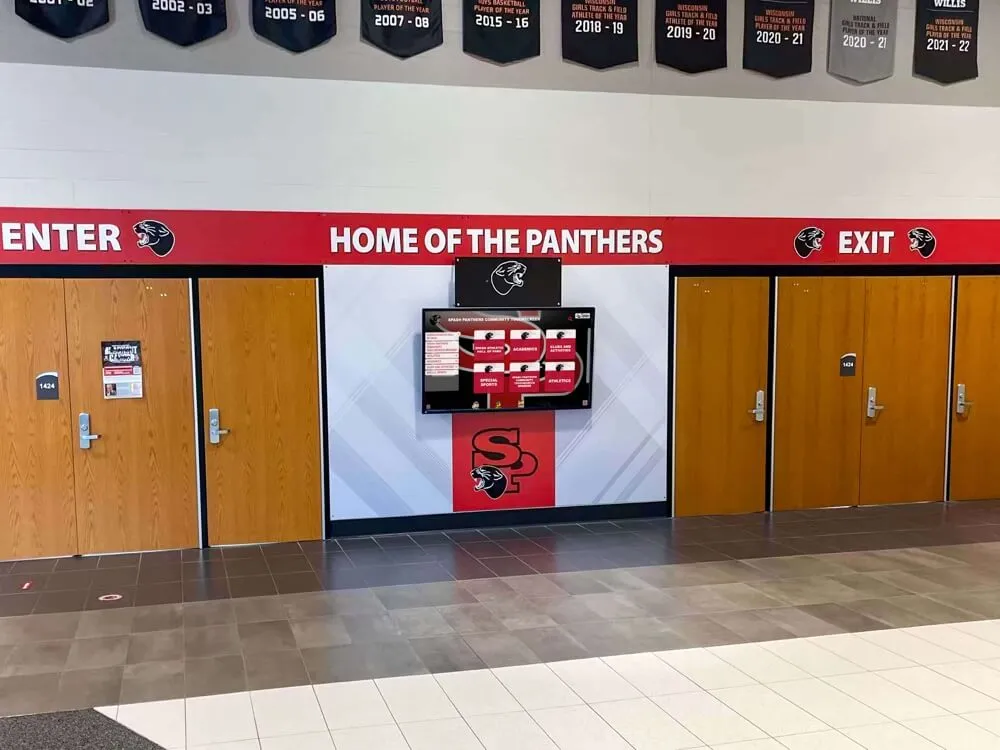
Additional strategic locations include student union or campus center lobbies where prospective students informally visit beyond scheduled tours, academic building entrances for program-specific information about particular schools or departments, residence hall common areas showing authentic student life perspectives, athletic facilities highlighting sports programs and recreation opportunities, and performing arts venues showcasing creative program achievements.
Each location serves different storytelling purposes, collectively creating comprehensive campus narrative coverage impossible through traditional tours alone.
Content Capabilities and Engagement Features
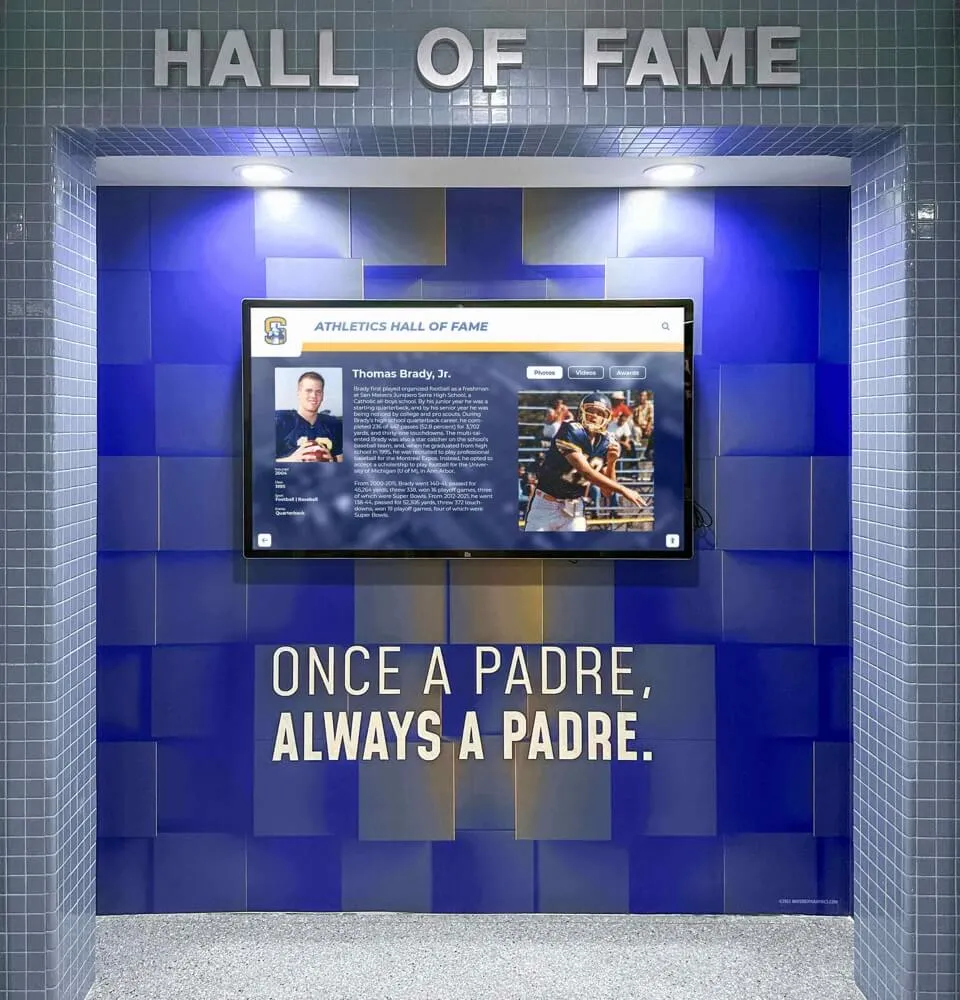
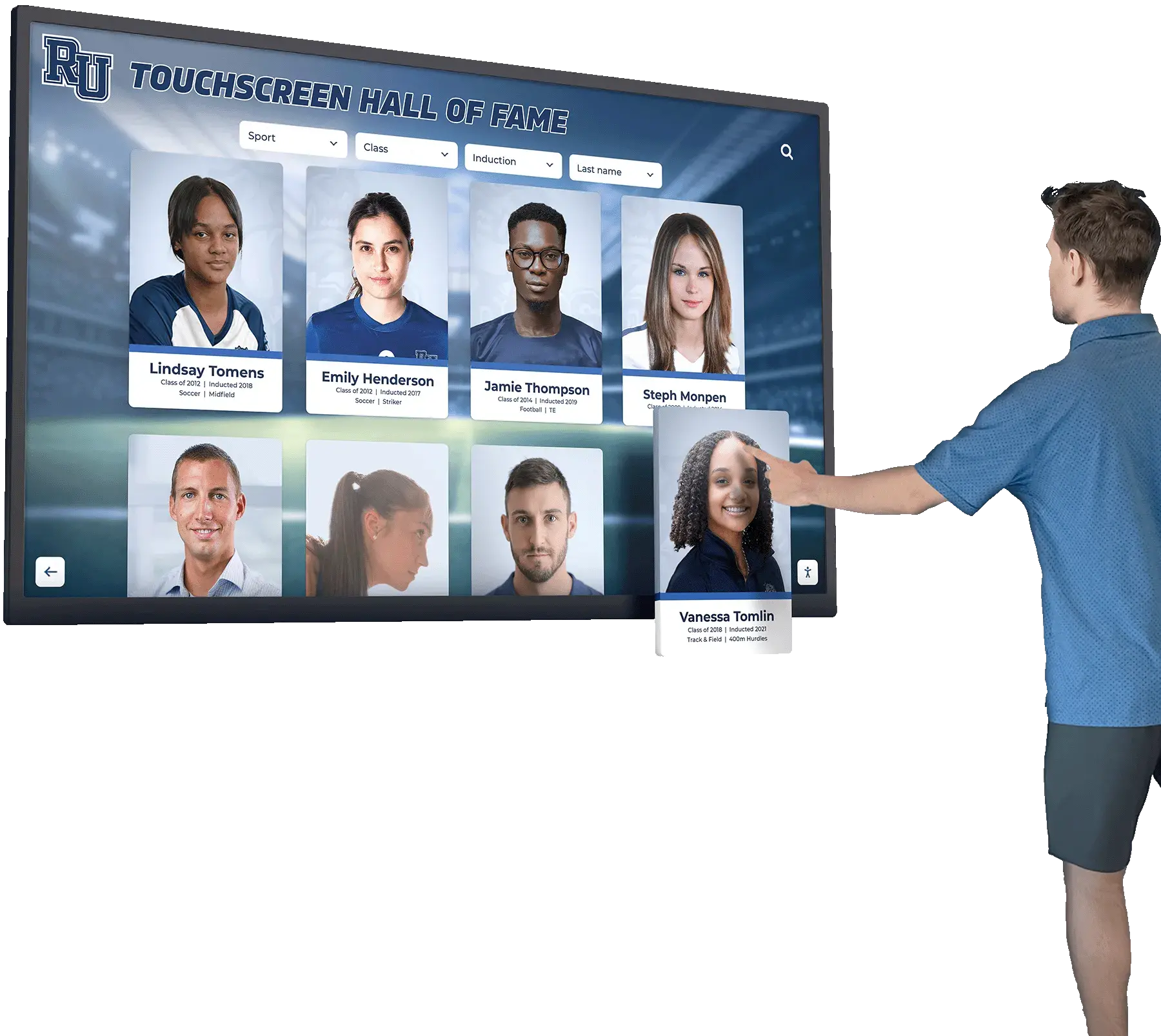
Well-designed interactive displays offer capabilities including comprehensive program information with detailed descriptions of majors, minors, and special academic opportunities, student success stories through video interviews with current students and recent alumni, faculty research spotlights demonstrating academic excellence and mentorship opportunities, virtual facility tours providing detailed looks inside specialized laboratories, studios, and spaces, outcomes data showing career placement rates and graduate school admissions by program, and financial aid information helping families understand costs and scholarship opportunities.
Solutions like those from Rocket Alumni Solutions enable institutions to maintain these displays through intuitive content management systems that admissions staff can update without requiring IT support, ensuring information remains current throughout recruitment cycles.
Investment Considerations
Physical interactive displays involve specific cost structures including commercial-grade touchscreen hardware typically ranging $3,000-8,000 per display depending on size and specifications, professional installation including mounting, power, and network connectivity, content development creating videos, graphics, and interactive experiences, and platform subscription or licensing for content management and analytics.
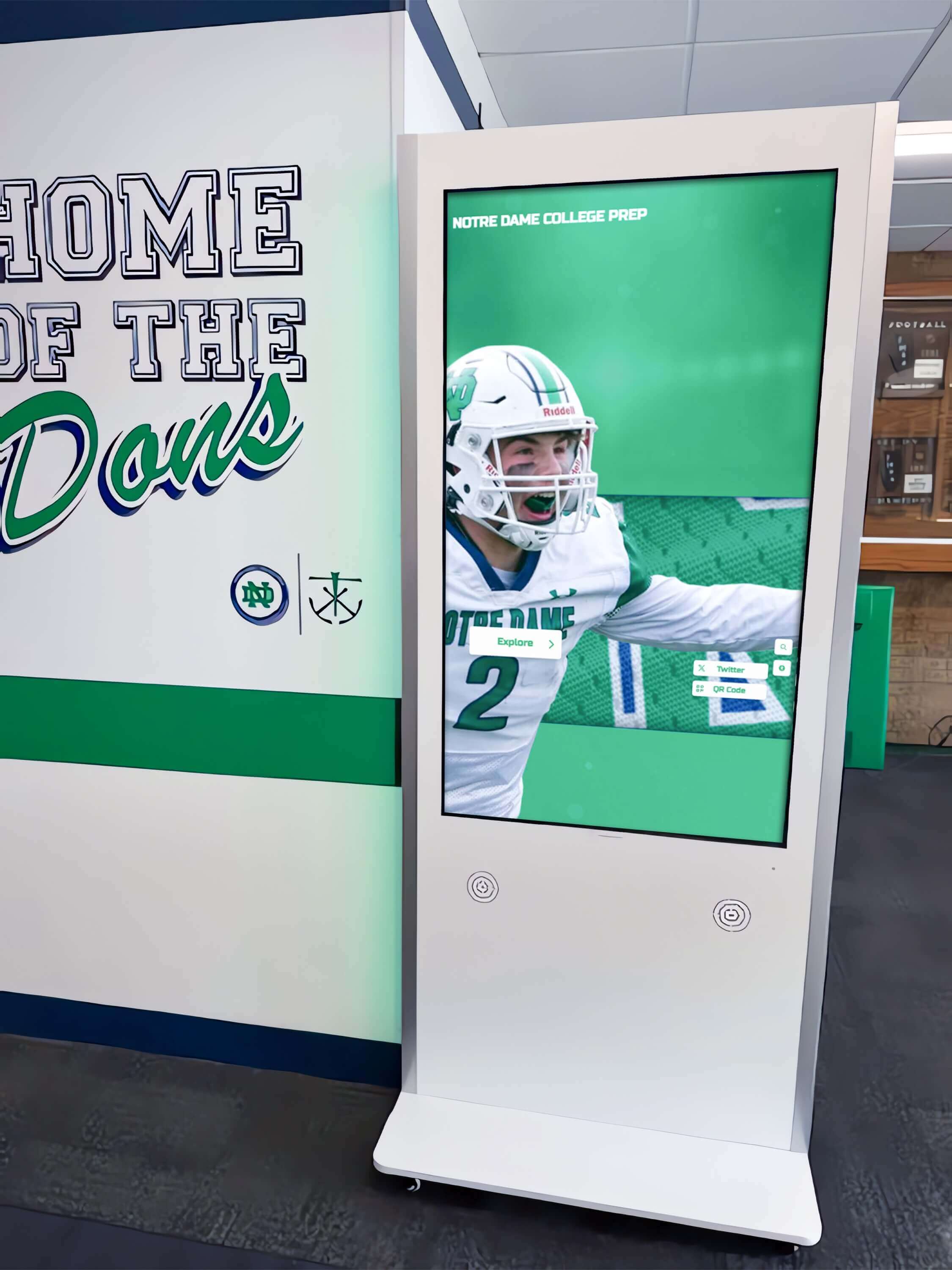
Institutions typically implement these systems in phases, starting with admissions centers before expanding to additional campus locations based on demonstrated value and available budget.
QR Code-Enhanced Physical Tours
QR code strategies represent lower-cost approaches enabling smartphone-based content access throughout campus.
Implementation Simplicity and Flexibility
QR codes offer remarkable deployment flexibility through weatherproof plaques or signs at specific campus landmarks, temporary signage for special recruitment events or programs, integration into existing campus maps and tour route materials, and dynamic codes updated remotely to reflect seasonal programming or new content.
This flexibility enables rapid deployment without extensive infrastructure investment, making QR approaches particularly attractive for institutions with limited technology budgets or those testing interactive concepts before committing to larger investments.
Content Delivery and User Experience
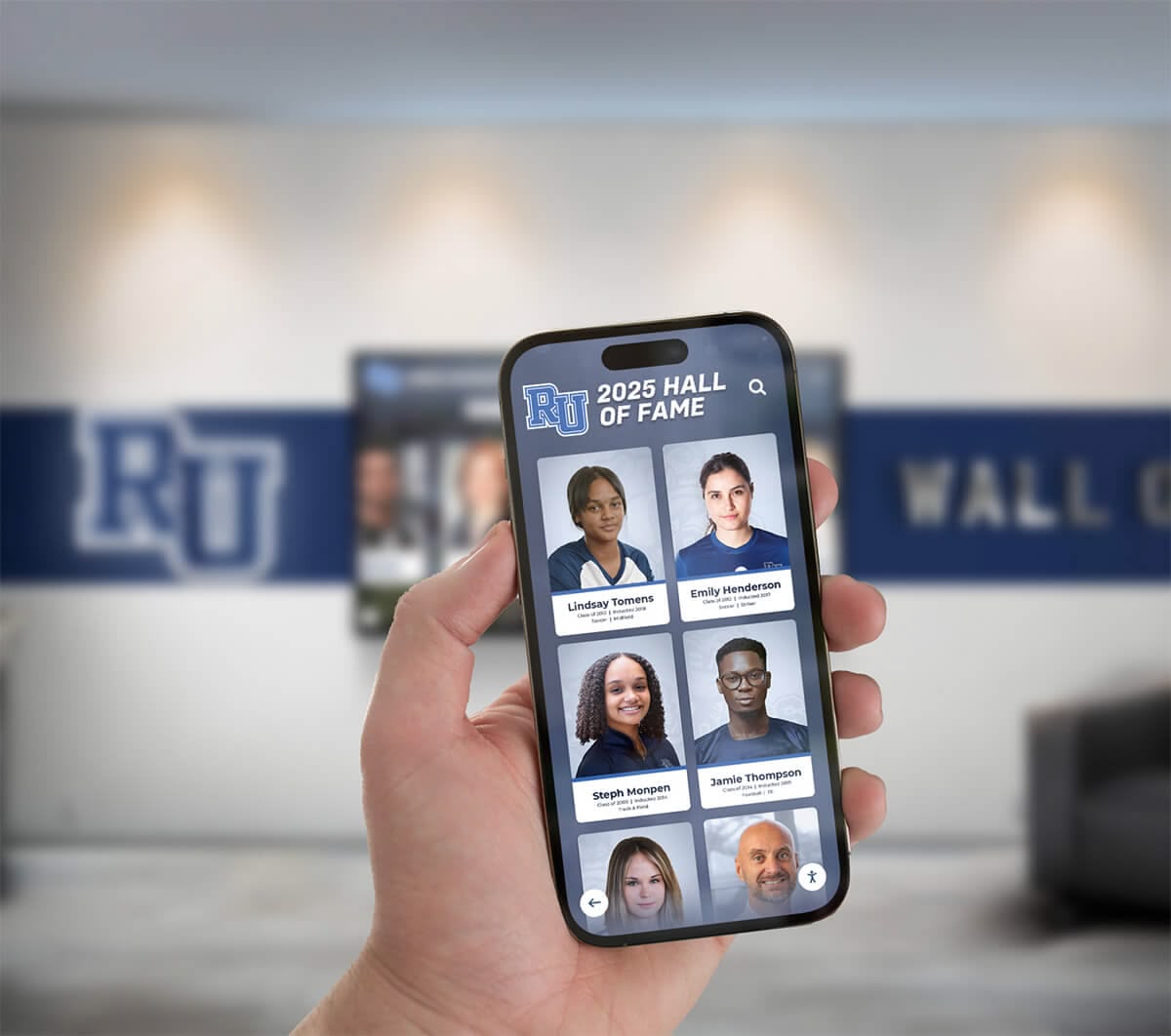
When prospective students scan QR codes, they access mobile-optimized content including short video tours of specific facilities or programs, downloadable program information and contact details for academic departments, photo galleries showing student life and campus activities, podcast episodes featuring student and faculty voices, and links to virtual reality experiences or 360-degree facility views.
The challenge with QR-based approaches lies in ensuring consistent user adoption—prospective students must actively scan codes rather than passively observing, and content must deliver sufficient value to motivate scanning multiple codes throughout tours.
Cost-Benefit Analysis for QR Systems
QR implementations involve modest upfront costs including physical signage design and production, content development for linked materials, mobile-responsive web hosting, and analytics platforms tracking scan rates and engagement.
However, QR approaches provide limited capabilities compared to centralized displays including inability to serve as gathering points for tour groups, reduced engagement from visitors who don’t consistently scan codes, dependency on visitor smartphone battery life and data connectivity, and limited ability to showcase institutional sophistication through physical presence.
Many institutions implement hybrid approaches combining centralized interactive displays in key locations with supplementary QR codes at specific sites throughout campus, capturing benefits of both strategies.
Mobile Applications and Virtual Tour Platforms
Comprehensive mobile applications and virtual tour platforms create portable campus exploration experiences.
Native Mobile Apps vs. Web-Based Solutions
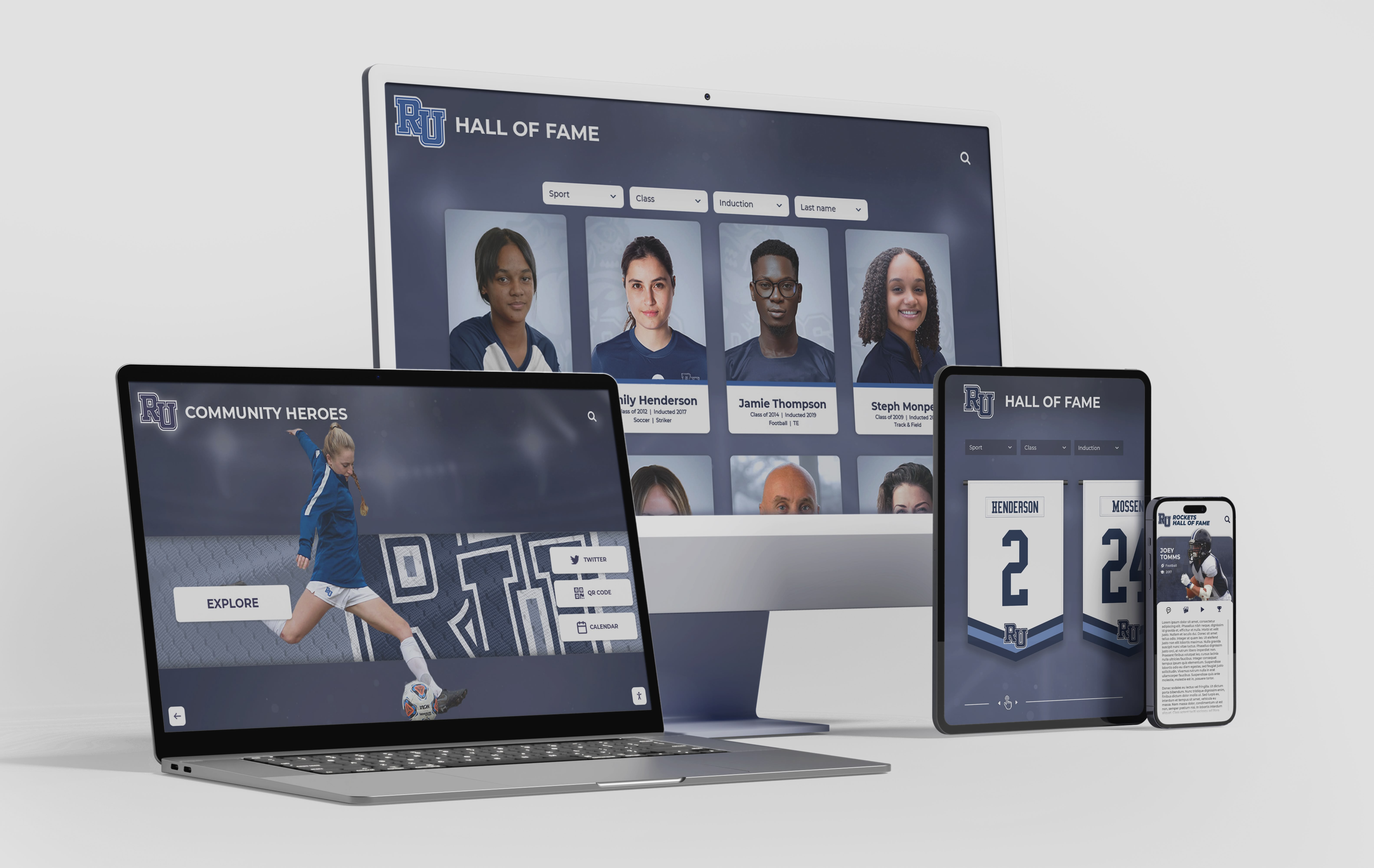
Institutions must choose between custom native mobile applications requiring downloads from app stores versus responsive web applications accessible through standard browsers without installation.
Native apps offer advantages including offline functionality preserving access without constant connectivity, push notification capabilities for recruitment communications, and integration with device features like cameras for augmented reality experiences.
However, native apps face challenges including development costs substantially exceeding web solutions, user reluctance to download apps for single-institution research, ongoing maintenance requirements for iOS and Android versions, and app store approval processes delaying updates.
Web-based virtual tours typically prove more practical for most institutions, offering cross-platform compatibility without downloads, simplified content updates through standard content management systems, lower development and maintenance costs, and immediate access without installation friction.
Integration with In-Person Tour Experiences
The most effective mobile and virtual solutions complement rather than replace physical campus visits through pre-visit exploration enabling prospective students to research campus before arrival, during-visit enhancement providing additional context and multimedia beyond guide commentary, and post-visit reinforcement allowing students to review information and share with family.
According to research, prospective students who engage with virtual tour content before campus visits ask more specific questions during physical tours and report higher satisfaction with overall campus visit experiences, suggesting virtual and physical approaches create synergistic value.
Investment Requirements and Technical Considerations
Mobile and virtual tour platforms involve development costs for initial design and implementation, ongoing hosting and content management expenses, video production for virtual tour content, photography including 360-degree imaging for immersive experiences, and potential integration with existing CRM and admissions systems for lead tracking.
Institutions should evaluate whether to develop custom solutions or implement third-party platforms specifically designed for higher education virtual tours, weighing customization benefits against development complexity and costs.
Decision Framework: Choosing Interactive Storytelling Solutions
With multiple technology approaches available, admissions leaders need structured decision processes ensuring selected solutions align with institutional priorities, audiences, and resources.
Critical Selection Criteria
Evaluate potential interactive storytelling solutions against specific institutional needs and constraints.
Audience-Specific Requirements
Different prospective student segments have varying needs influencing optimal technology choices. Traditional undergraduate prospects typically respond well to comprehensive displays in admissions centers and campus landmarks, while adult and graduate prospects often prefer accessible web-based virtual content enabling research without campus travel, and transfer students may prioritize program-specific information over general campus overviews.
Understanding your primary recruitment audiences determines which technology approaches deliver highest value.
Content Management and Update Frequency
Solutions requiring specialized IT skills for content updates create bottlenecks preventing timely information maintenance. Prioritize platforms offering intuitive content management enabling admissions staff to update information, add new student testimonials, refresh outcomes data, and publish time-sensitive announcements without technical assistance.
Institutions with frequent content changes—such as those highlighting rotating student achievements or seasonal programming—particularly benefit from flexible content management capabilities.
Analytics and Recruitment Intelligence
Interactive systems should provide insights about prospective student interests and engagement patterns including which academic programs receive most attention indicating strong prospect interest, geographic origins of virtual tour visitors informing recruitment travel priorities, content duration metrics showing which storytelling formats engage most effectively, and conversion tracking linking campus visit engagement to eventual applications and enrollment.
These analytics transform interactive storytelling from communication tools into recruitment intelligence platforms informing broader enrollment strategy.
Accessibility and Inclusive Design
Evaluate solutions against WCAG 2.1 AA accessibility standards ensuring touchscreen displays accommodate various heights and mobility levels, web content includes proper screen reader support, video content provides closed captioning, and color contrasts meet visibility standards for users with visual impairments.
Institutions implementing campus directory systems and recognition displays often find that accessibility features benefiting prospective students with disabilities improve usability for all visitors.
Comparing Traditional vs. Digital Storytelling Approaches
Understanding how interactive solutions compare to conventional tour methods helps justify technology investments.
Traditional Tour Guide Only
Pure guided tours without technology enhancement provide personal connection through direct student guide interaction, flexibility to adjust presentations based on group interests, and authenticity of peer perspectives from current students.
However, limitations include inconsistent messaging varying by individual guide, time constraints preventing comprehensive coverage, difficulty scaling to accommodate larger visitor volumes, and inability to provide program-specific depth for diverse academic interests.
Enhanced Tours with Interactive Technology
Technology-augmented tours preserve personal guide benefits while addressing traditional limitations through consistent core messaging across all visits, on-demand access to detailed program information beyond tour scope, scalability supporting higher visitor volumes without proportional guide resource increases, and extended engagement continuing after physical tours conclude.
Research from admissions professionals indicates that institutions implementing interactive storytelling technology see improvements in prospective student engagement duration, information retention measured through post-visit surveys, and conversion rates from campus visits to applications—though specific results vary based on implementation quality and institutional contexts.
Budget Allocation and Phased Implementation
Most institutions implement interactive storytelling through staged approaches rather than comprehensive simultaneous deployment.
Phase 1: Admissions Center Foundation
Initial implementations typically focus on single comprehensive interactive display in admissions welcome center, content development for core academic programs and student life, training for admissions staff on system operation and content management, and baseline analytics implementation tracking engagement patterns.
This foundational phase establishes institutional capability while demonstrating value before broader investment.
Phase 2: Key Location Expansion
Based on Phase 1 success, institutions typically expand to displays in major academic buildings showcasing specific schools or colleges, student center locations reaching drop-in visitors beyond scheduled tours, and residence life areas highlighting authentic student experiences.
Expansion phases also typically involve content enhancements including increased student video testimonials, virtual facility tours of specialized spaces, and outcomes data by academic program.
Phase 3: Comprehensive Campus Integration
Mature implementations create campus-wide storytelling ecosystems through athletic facility displays highlighting sports programs, performing arts venue content showcasing creative programs, QR code integration at outdoor landmarks and building exteriors, mobile optimization enabling self-guided exploration, and integration with social media and digital marketing campaigns.
Phased implementation spreads costs across multiple budget cycles while enabling learning and optimization at each stage.
Content Strategy for Interactive Campus Storytelling
Technology platforms provide delivery mechanisms, but compelling content determines actual effectiveness. Strategic content development ensures interactive systems drive genuine enrollment impact.
Essential Content Components
Comprehensive interactive storytelling requires diverse content types serving different informational needs.
Academic Program Depth
Prospective students need detailed understanding of academic offerings including specific major and minor program descriptions, faculty expertise and research areas, unique program features distinguishing your institution from competitors, learning outcomes and skills development, and sample four-year curricular pathways showing course sequences.
This depth proves particularly valuable for students with clear academic interests who need more information than general campus tours provide.
Authentic Student Voices
First-person student perspectives create emotional connections and credibility through video interviews with current students from diverse backgrounds and programs, written testimonials addressing common prospective student questions and concerns, day-in-the-life content showing typical student experiences, and student organization highlights demonstrating extracurricular engagement opportunities.
Authenticity matters more than production polish—prospective students respond to genuine peer perspectives rather than overly scripted marketing messages.
Outcomes and Career Success
Families increasingly prioritize post-graduation outcomes when evaluating colleges. Provide transparent data including career placement rates by program, graduate school admission statistics, notable alumni achievements and career paths, employer partnerships and internship opportunities, and average starting salaries where available and appropriate.
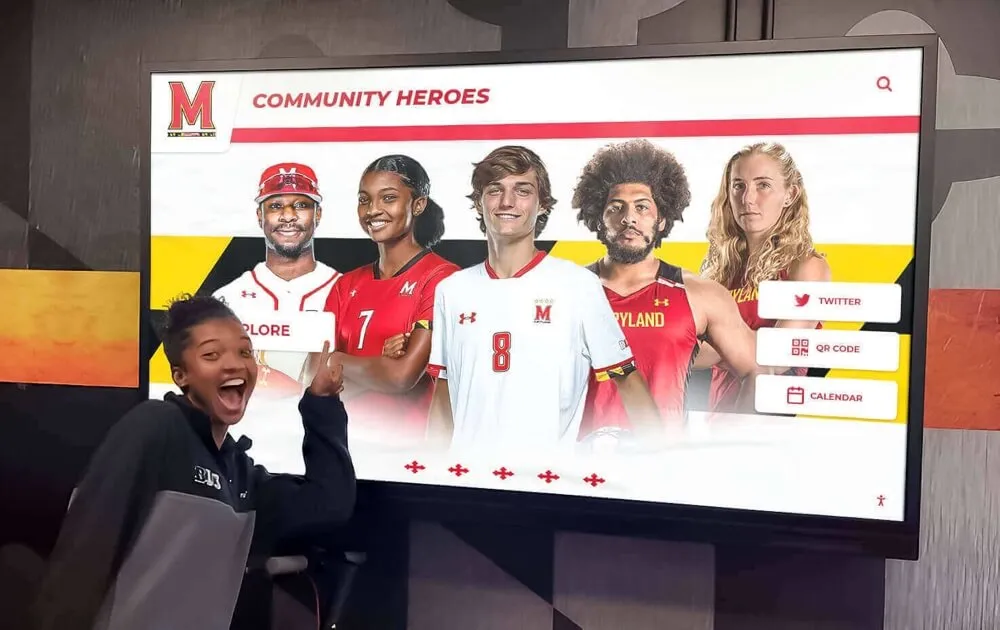
Schools implementing academic recognition displays find that showcasing distinguished alumni and student achievements effectively demonstrates institutional impact on student success trajectories.
Campus Life and Community
Beyond academics, prospective students want understanding of daily campus experience through residence life and housing options, dining services and meal plan information, recreation and wellness facilities and programs, student organizations and leadership opportunities, campus traditions and signature events, and local community context and off-campus opportunities.
Interactive platforms allow much deeper exploration of these topics than traditional tours accommodate.
Content Production and Maintenance
Effective interactive storytelling requires systematic content development and ongoing maintenance.
Video Production Approaches
Video represents the most engaging content format but requires appropriate production strategy. Institutions typically choose between professional video production services delivering high-quality footage and editing but at substantial cost, internal communications staff production offering cost-effectiveness but requiring equipment and expertise, or student-produced content providing authenticity but with variable quality.
Many institutions implement hybrid approaches using professional production for cornerstone content while supplementing with student-produced testimonials emphasizing authenticity over polish.
Content Refresh Cycles
Interactive systems require regular content updates maintaining accuracy and relevance through quarterly reviews ensuring basic information remains current, annual major updates refreshing student testimonials and outcomes data, and immediate updates when significant changes occur to programs or facilities.
Institutions implementing digital hall of fame platforms report that content management simplicity directly correlates with update frequency—systems requiring technical expertise for updates inevitably become stale as admissions staff lack time for complex content publishing.
Quality Standards and Brand Consistency
While content should span various production levels, maintain minimum standards including accurate information verified by appropriate departments, appropriate representation showing diverse students and programs, brand-aligned visual presentation and messaging, closed captioning for accessibility on all video content, and mobile-optimized formatting ensuring usability across devices.
Measuring Impact and Optimizing Performance
Data-informed management ensures interactive storytelling investments deliver measurable enrollment results.
Key Performance Indicators
Track metrics demonstrating how interactive systems affect recruitment outcomes.
Engagement Metrics
Monitor direct system usage including number of prospective students interacting with displays during campus visits, average engagement duration per user, most-viewed content categories and programs, virtual tour visitor counts and geographic origins, and return visitor rates indicating sustained interest.
These quantitative measures provide objective evidence about system reach and content effectiveness.
Behavioral Impact Measures
Assess how interactive engagement influences prospective student actions including application rates from students who engaged with interactive systems during visits, yield rates from admitted students who visited campus and used interactive tools, program-specific inquiry rates following content exposure, and event registration rates for admitted student days or specialized program visits.
Connecting interactive system engagement to downstream enrollment behaviors demonstrates tangible return on investment.
Qualitative Feedback
Complement quantitative metrics with direct input through post-visit surveys asking about interactive system value, focus groups with prospective students and families, tour guide feedback about how interactive tools support their presentations, and admissions counselor insights about how systems affect prospect conversations.
Schools using campus recognition technology find that qualitative feedback often reveals unexpected system benefits beyond initial implementation objectives, informing ongoing optimization.
Continuous Improvement Strategies
Use performance data to enhance interactive storytelling effectiveness over time through content optimization focusing resources on most-engaged topics, underperforming content review identifying material requiring refresh or replacement, user experience testing ensuring intuitive navigation and interaction, and technology updates implementing new features and capabilities.
Regular optimization ensures systems remain effective recruitment tools rather than becoming stale installations that prospective students ignore.
Implementation Best Practices from Leading Institutions
Successful interactive storytelling implementations share common characteristics regardless of specific technology approaches.
Cross-Functional Implementation Teams
Effective projects involve stakeholders beyond admissions including IT providing technical infrastructure and support, communications developing video and visual content, faculty contributing program-specific academic content, current students sharing authentic perspectives, and enrollment management ensuring alignment with recruitment strategy.
Siloed implementations limited to single departments often produce technically functional but strategically weak results failing to serve comprehensive recruitment needs.
Pilot Testing Before Full Deployment
Rather than immediately implementing comprehensive campus-wide systems, successful institutions typically pilot approaches through single-display test installations in admissions centers, limited content scope focusing on 3-5 major programs, feedback collection from early prospective student users, and iterative refinement based on actual usage patterns.
Pilot phases identify unexpected challenges and optimization opportunities before committing to broader investments, reducing risk of expensive deployments that fail to meet user needs.
Staff Training and Change Management
Technology alone cannot improve campus tour experiences—admissions teams must understand and embrace interactive tools through comprehensive training on system operation and content management, development of updated tour scripts integrating technology components, establishment of content update responsibilities and schedules, and ongoing professional development as systems evolve.
Institutions implementing interactive recognition displays emphasize that staff comfort with technology directly predicts system effectiveness, making training investment as important as hardware acquisition.
Integration with Broader Recruitment Marketing
Interactive campus storytelling proves most effective when integrated within comprehensive enrollment marketing including social media content amplifying interactive system highlights, recruitment email campaigns linking to virtual tour content, admissions counselor talking points referencing interactive resources, and event promotion using interactive displays for admitted student programs.
Isolated interactive systems disconnected from broader marketing strategies deliver minimal recruitment value regardless of technical sophistication.
Conclusion: Transforming Campus Visits Through Interactive Storytelling
Campus tours remain critically important enrollment influences, but traditional guided-only approaches no longer suffice for prospective students expecting rich, personalized, on-demand information access aligned with their digital-native preferences. Interactive storytelling technology empowers admissions teams to deliver dramatically enhanced campus experiences that engage visitors more deeply, accommodate diverse learning styles and information needs, extend influence beyond visit duration, and provide measurable recruitment intelligence informing broader enrollment strategy.
Institutions implementing interactive campus storytelling systems share common success factors including clear strategy aligned with specific recruitment objectives and priority audiences, appropriate technology selection matching institutional resources and technical capabilities, compelling content emphasizing authentic student voices and transparent outcomes information, systematic measurement tracking engagement and correlating with enrollment behaviors, and continuous optimization based on performance data and stakeholder feedback.
The most successful approaches typically combine centralized interactive displays in admissions centers and strategic campus locations, supplementary QR codes enabling smartphone-based exploration throughout campus, robust web-based virtual tour components accessible before and after physical visits, and integration with broader recruitment marketing campaigns and communications.
While interactive storytelling technology requires meaningful investment, forward-thinking institutions recognize these systems as strategic enrollment infrastructure generating returns through increased yield rates from campus visitors, enhanced prospective student and family satisfaction, improved recruitment efficiency enabling better service to higher visitor volumes, and competitive differentiation in increasingly crowded higher education marketplace.
Every prospective student deserves comprehensive, engaging information access enabling informed college selection decisions. Every admissions team deserves tools supporting their recruitment mission through technology enhancing rather than replacing personal connection and authentic storytelling. Modern interactive platforms make both outcomes achievable within realistic institutional resources and constraints.
Ready to transform your campus tours with interactive storytelling technology that prospective students remember and that drives measurable enrollment results? Explore comprehensive interactive display solutions designed specifically for higher education admissions teams committed to creating exceptional prospective student experiences that convert campus visits into enrollment decisions.