



Key Takeaways
Compare physical boards, static digital signage, and interactive touchscreen displays for showcasing state championship brackets. Decision framework for athletic directors choosing recognition solutions that celebrate tournament success.
Intent: compare
Why State Championship Bracket Displays Matter
Before evaluating display technologies, understanding the strategic value of showcasing tournament brackets clarifies evaluation priorities and what successful implementation looks like for athletic programs.
The Power of Tournament Journey Recognition
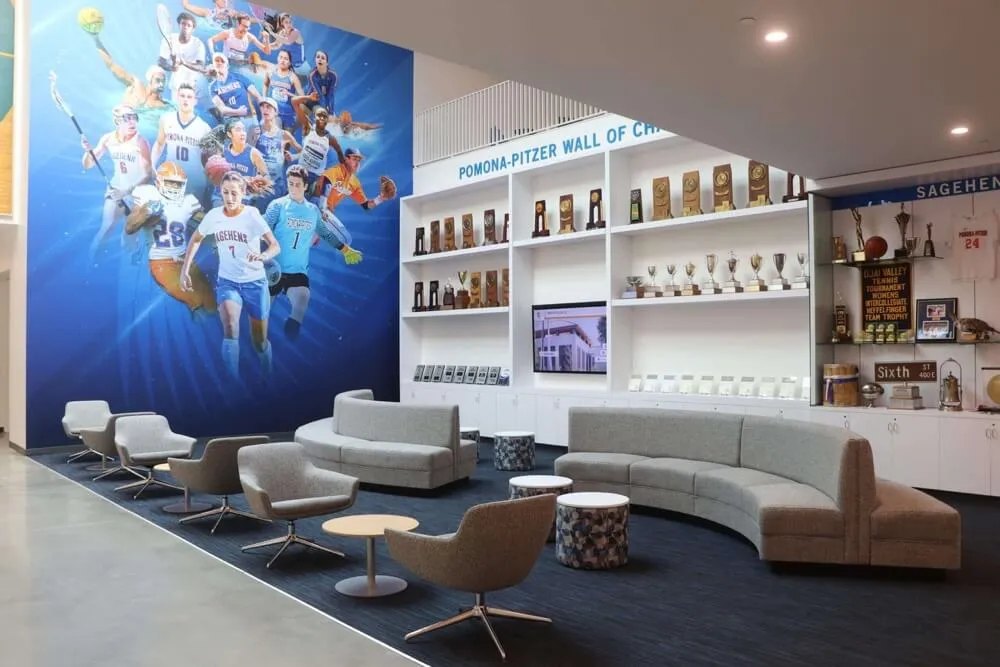
State championship runs represent pinnacle achievements in high school athletics, but traditional trophy case displays often reduce these complex tournament journeys to simple plaques stating “State Champions 2023.” This approach misses opportunities to tell the complete story.
Championship bracket displays address this gap by:
Preserving Complete Tournament Narratives: Every game matters in tournament play. Bracket displays show the full journey—who teams defeated, scores from each round, upsets overcome, and the progression from regional qualifiers through championship finals.
Building Competitive Context: When current athletes see that the 2019 championship team defeated three ranked opponents in succession, they understand the magnitude of that achievement better than a simple trophy communicates.
Creating Inspirational Reference Points: Athletes preparing for their own tournament runs can study historical bracket progressions, understanding what level of competition they’ll face and drawing inspiration from teams that successfully navigated similar challenges.
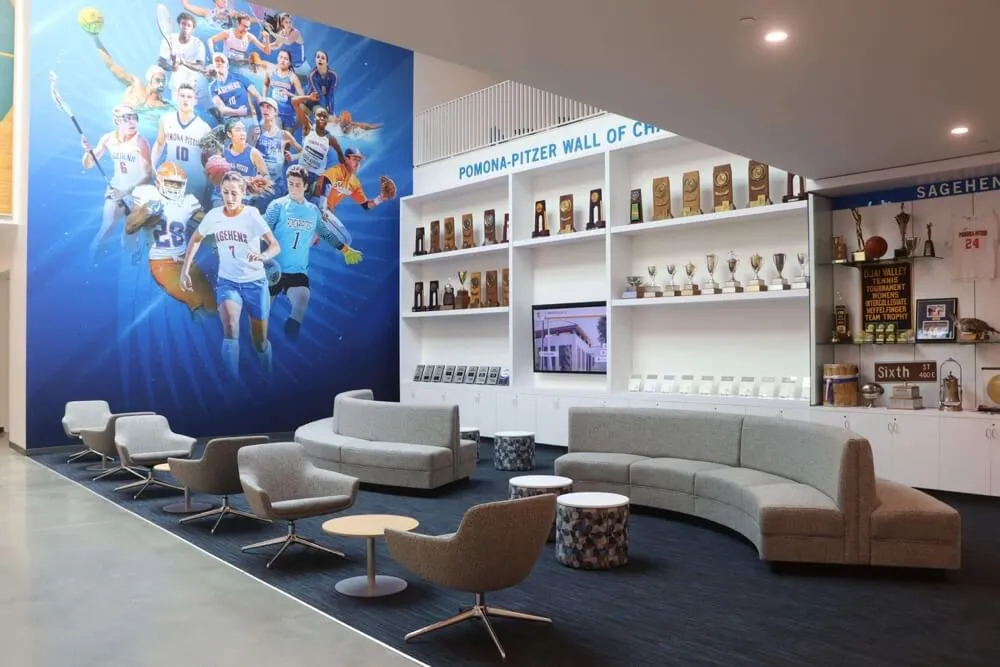
Honoring Every Contributor: Bracket displays can showcase complete rosters including players who didn’t start but contributed to tournament success, ensuring comprehensive recognition rather than highlighting only star performers.
Strengthening Athletic Culture: Visible celebration of tournament achievements reinforces that the institution builds programs reaching state-level competition, creating pride and motivation among current athletes while attracting prospective student-athletes.
What Makes Bracket Displays Effective
Not all display approaches deliver equal impact. Effective state championship bracket displays share common characteristics:
- Clarity: Tournament progression is immediately understandable without requiring extensive explanation
- Completeness: All rounds are represented with sufficient detail to tell the full story
- Accessibility: Located where athletes, students, and visitors encounter them regularly
- Scalability: Can accommodate multiple sports and multiple championship years without becoming cluttered
- Durability: Maintain professional appearance over years without frequent replacement needs
- Engagement: Presentation captures attention and invites deeper exploration of tournament details
The comparison that follows evaluates platforms against these effectiveness criteria while considering practical factors including cost, maintenance requirements, update complexity, physical space constraints, and scalability as programs add new championship achievements.
Understanding Display Solution Categories
Three primary approaches dominate the state championship bracket display market, each with distinct advantages and limitations determining fit for different athletic program contexts.
Physical Bracket Boards
Description: Printed or engraved boards displaying tournament brackets with team names, scores, and progression paths, typically mounted in trophy cases, athletic hallways, or gymnasium walls.
Typical Implementation: Schools create physical boards for each championship season, featuring bracket trees showing tournament progression from first round through finals, often including team photos and championship game details.
Primary Advantages:
- Tangible permanent presence requiring no electricity or technical infrastructure
- Familiar format that athletes and fans intuitively understand
- Low initial costs for basic printed/mounted displays
- No technical expertise required for creation or maintenance
- Traditional aesthetic that matches existing trophy cases and recognition walls
Core Limitations:
- Fixed physical space constraints limiting how many championships can be displayed
- High cumulative costs as schools add championships across multiple sports over years
- Static content—cannot easily add details, photos, or context after initial creation
- Manual update process requiring removal and replacement for any corrections
- Limited detail depth due to space constraints on physical boards
- Challenging to display brackets from multiple sports without overwhelming available wall space
- No ability to show video highlights, extended rosters, or supplementary tournament context
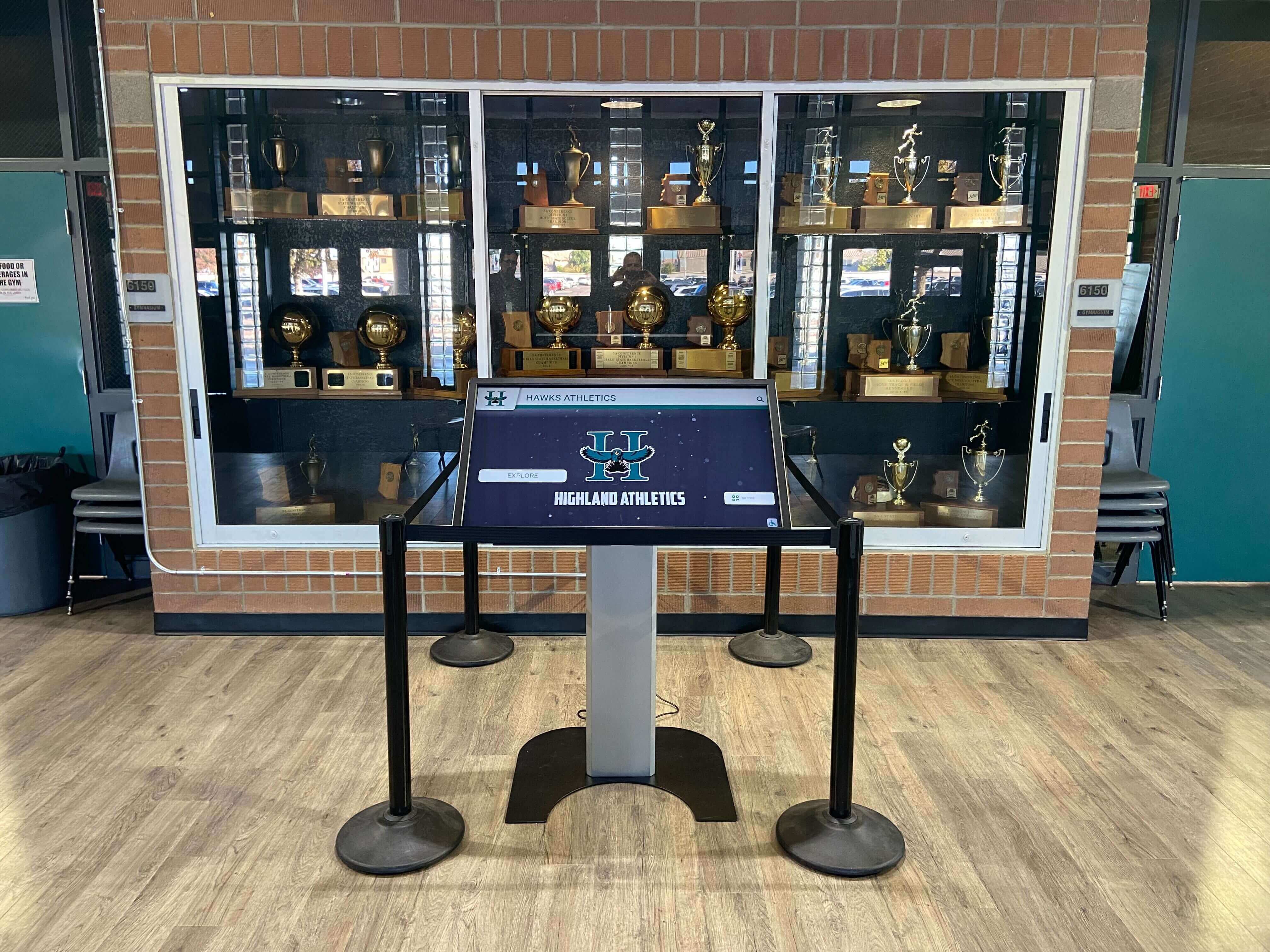
Static Digital Signage
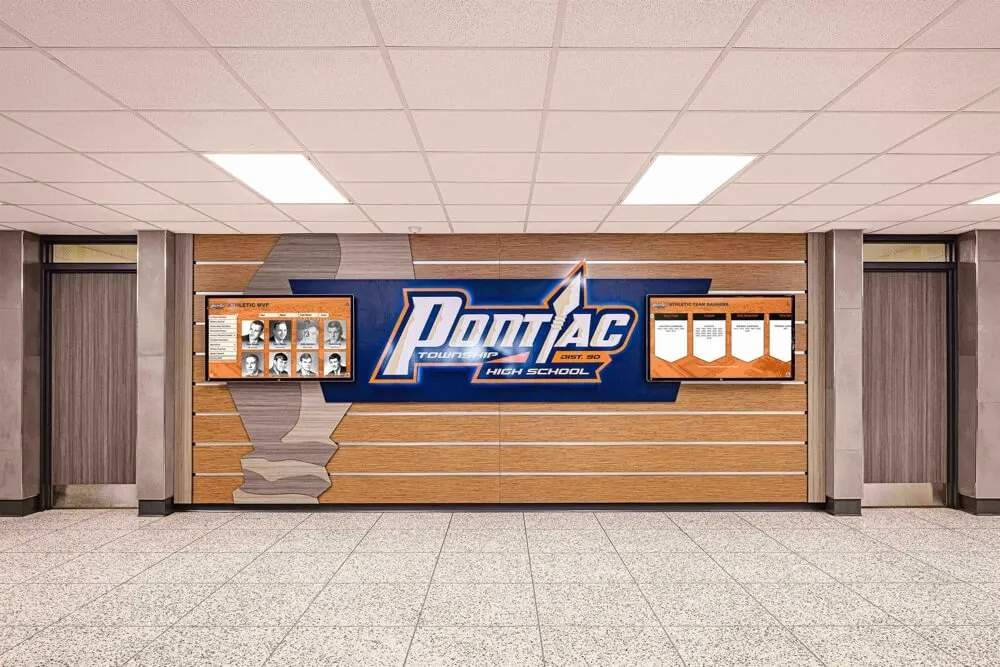
Description: Television screens or digital displays showing championship bracket images, slideshow presentations cycling through tournament progressions, or video montages of championship achievements.
Typical Implementation: Mounted displays in athletic facilities or hallways showing rotating content of championship brackets, game highlights, and team photos managed through digital signage software.
Primary Advantages:
- Unlimited digital storage eliminates physical space constraints
- Easy content updates through software rather than physical board replacement
- Multimedia capabilities supporting bracket displays, action photos, highlight videos, and game statistics
- Professional presentation with consistent branding and visual appeal
- Lower long-term costs compared to creating physical boards for each new championship
- Flexibility to showcase multiple sports and multiple championship years without additional hardware
Core Limitations:
- Passive viewing only—visitors cannot control content or explore specific tournament details at their own pace
- Cycling content means viewers might miss championships of interest if not present during display window
- Limited detail depth in slideshow formats designed for brief viewing
- No interactive exploration of specific games, rosters, or supplementary information
- Generic digital signage platforms lack sports recognition-specific features
- Content competes for screen time across multiple championships, limiting depth shown for each tournament
- Viewers cannot search for specific seasons, sports, or tournament details
Interactive Touchscreen Recognition Platforms
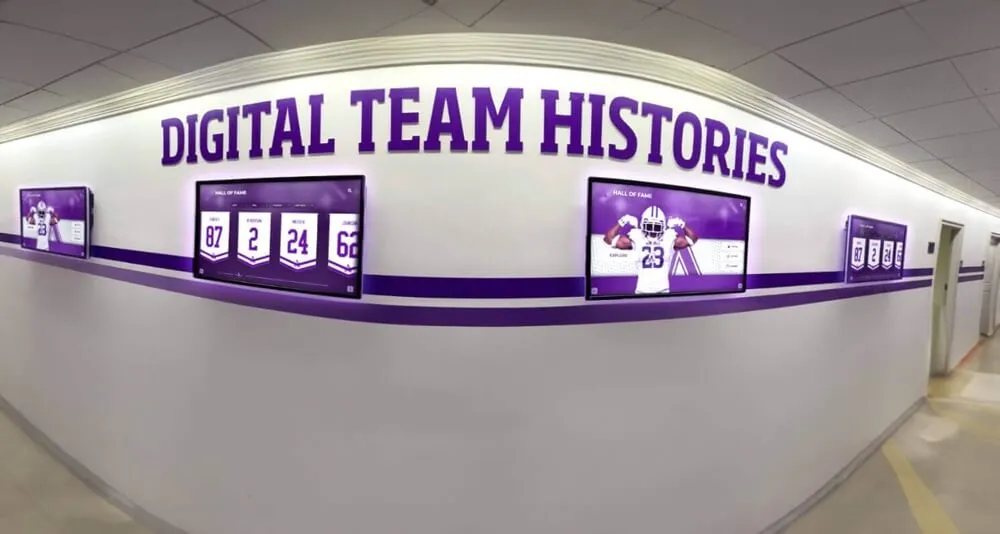
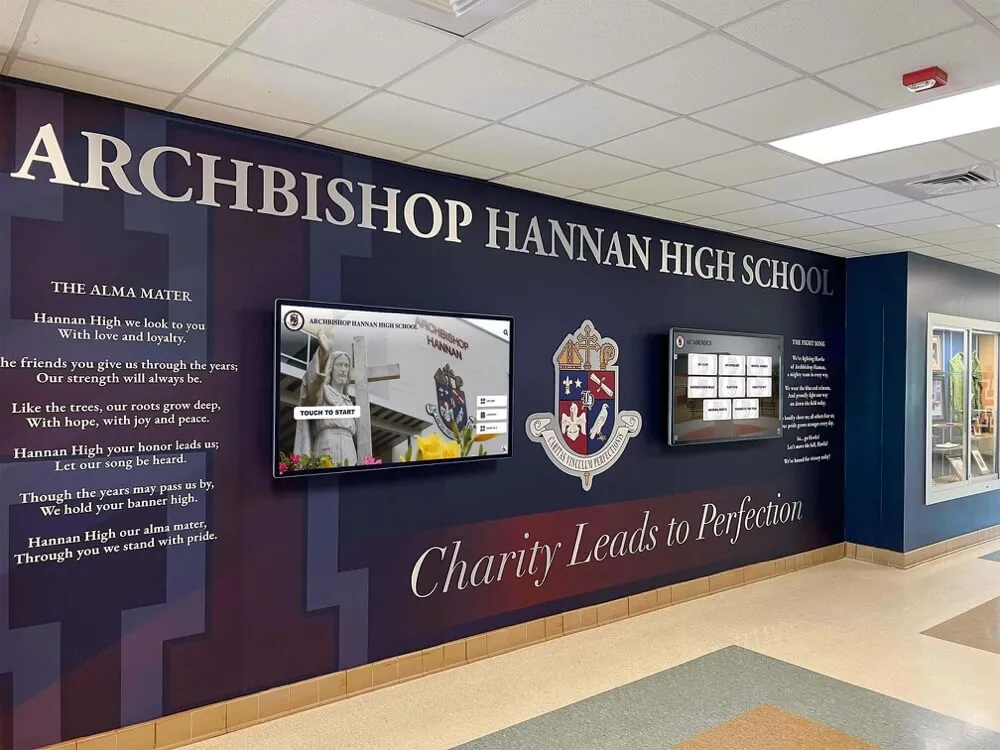
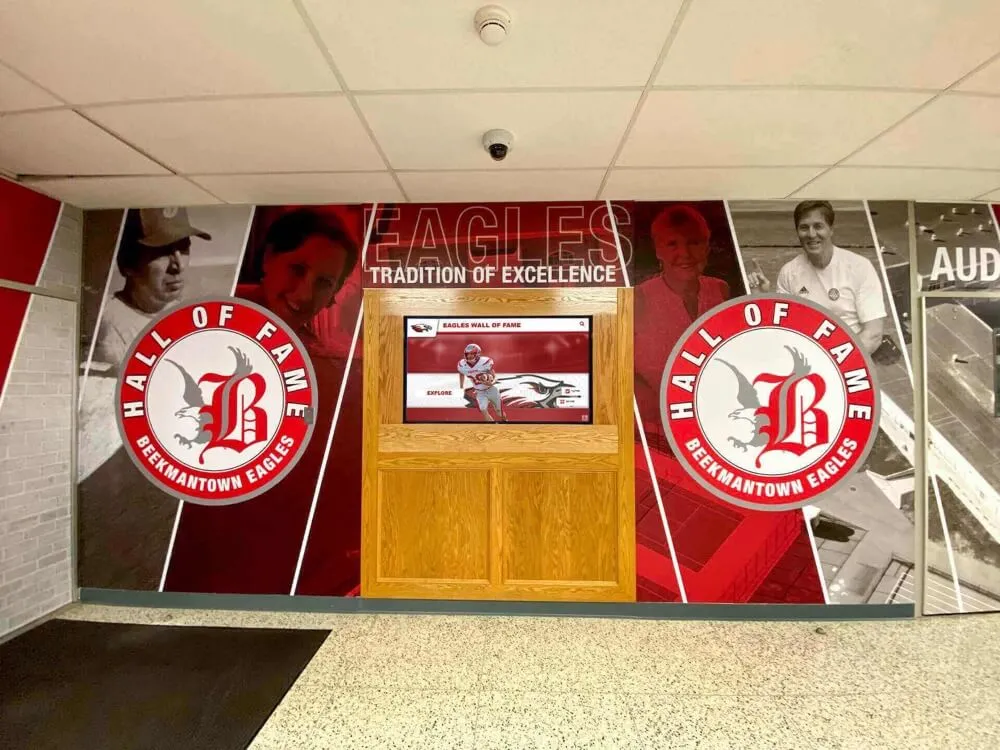
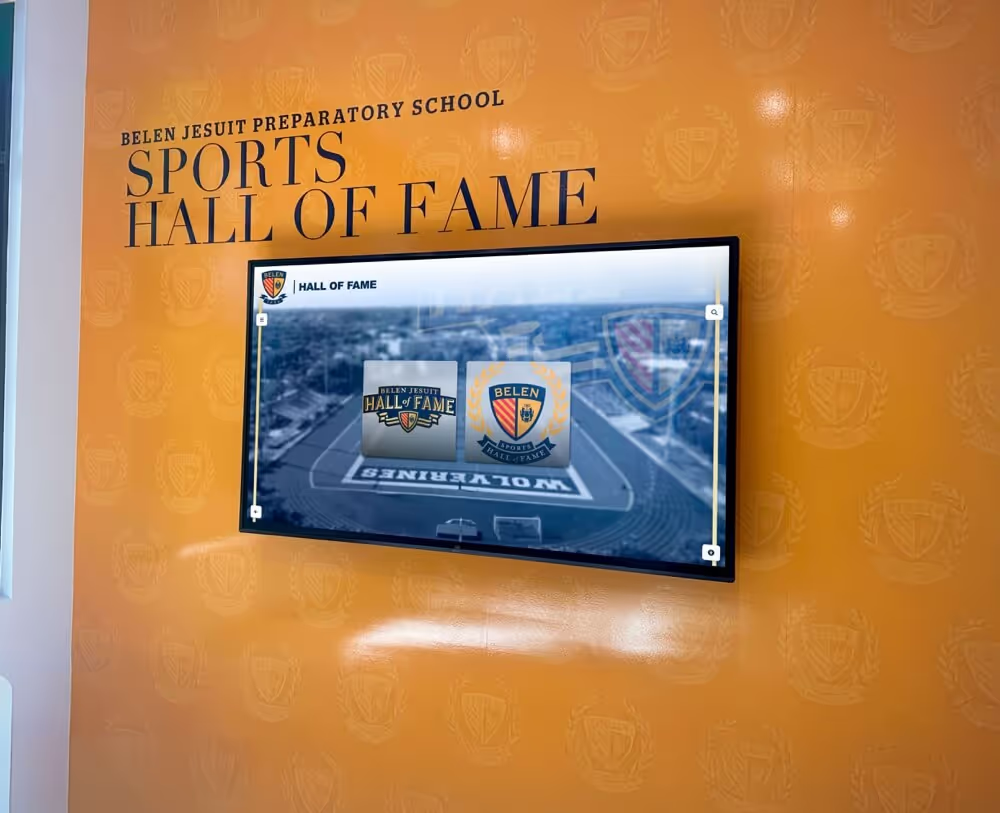
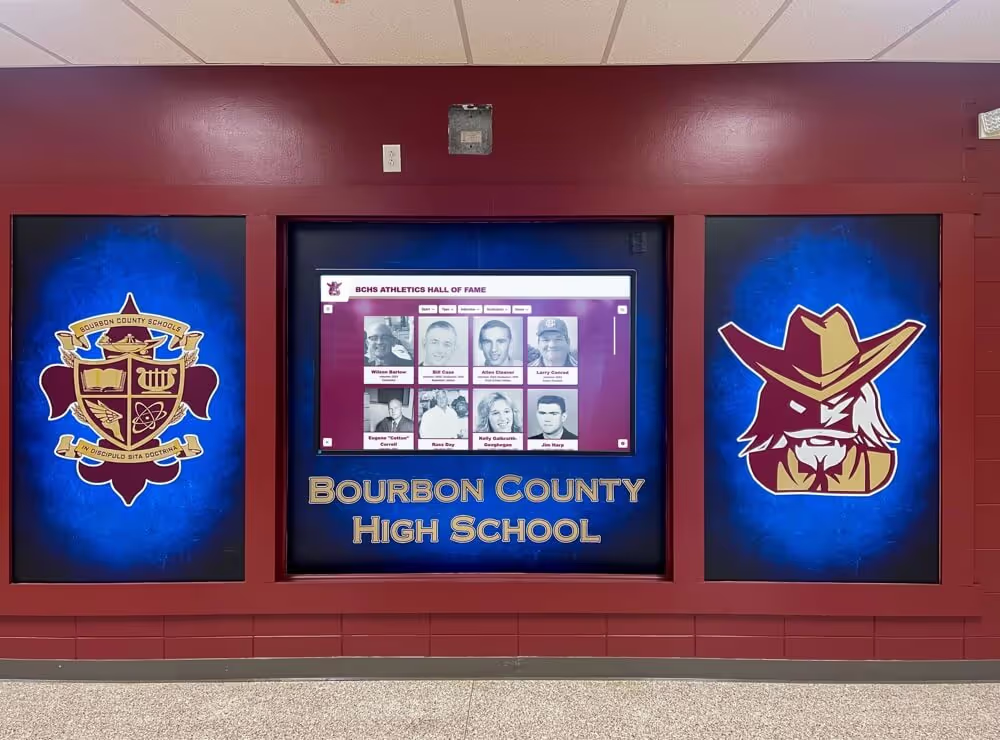
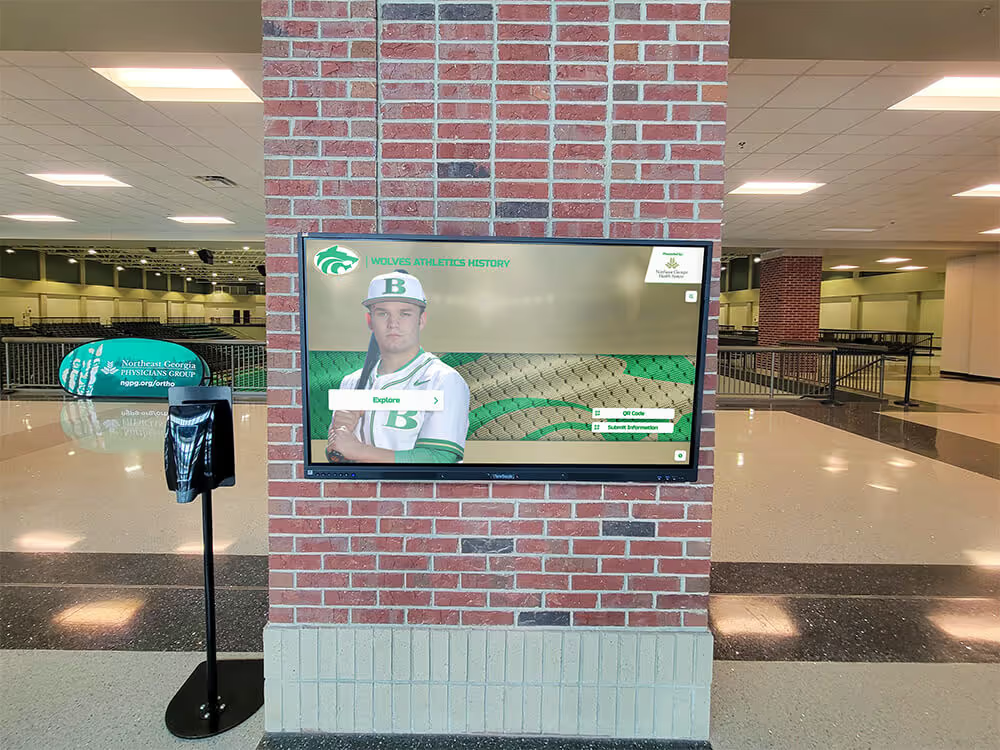
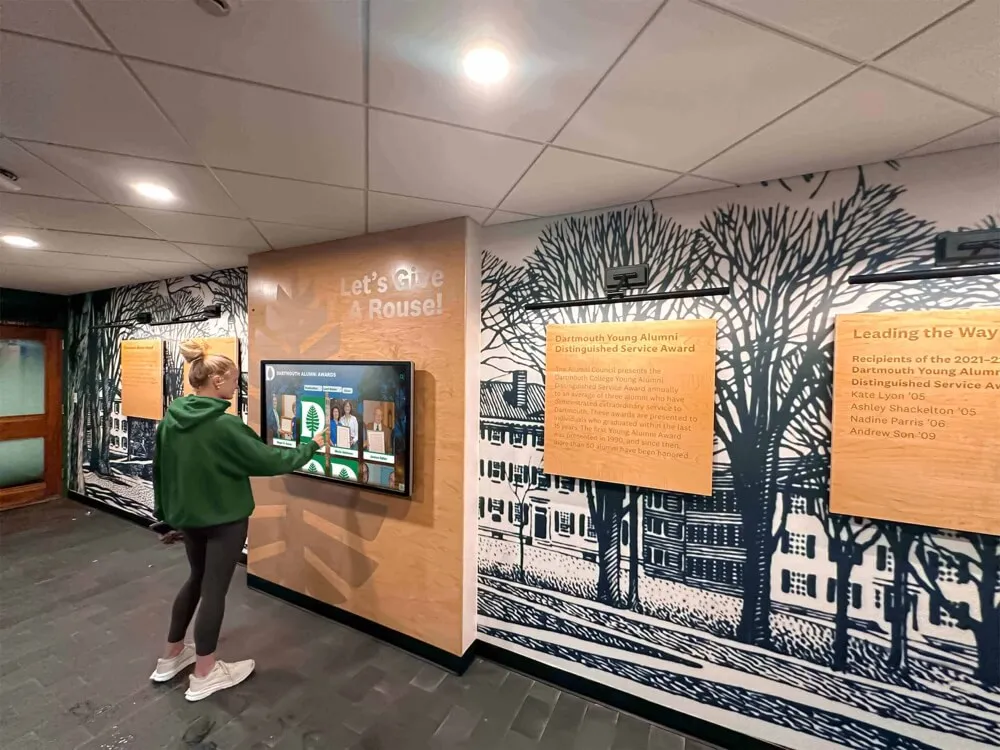
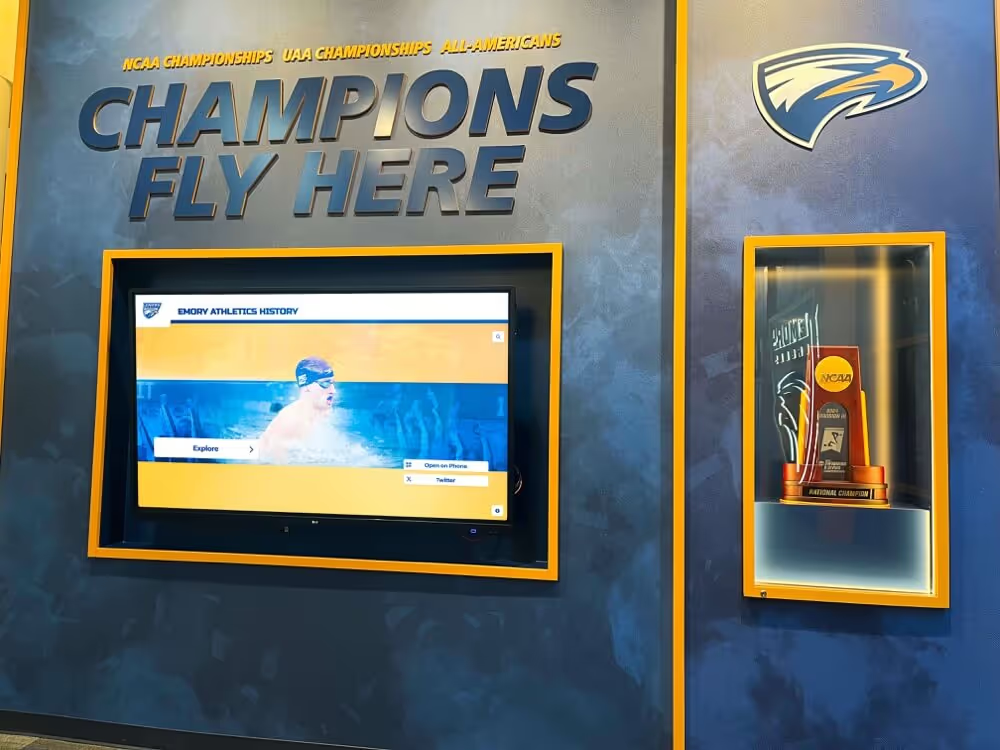
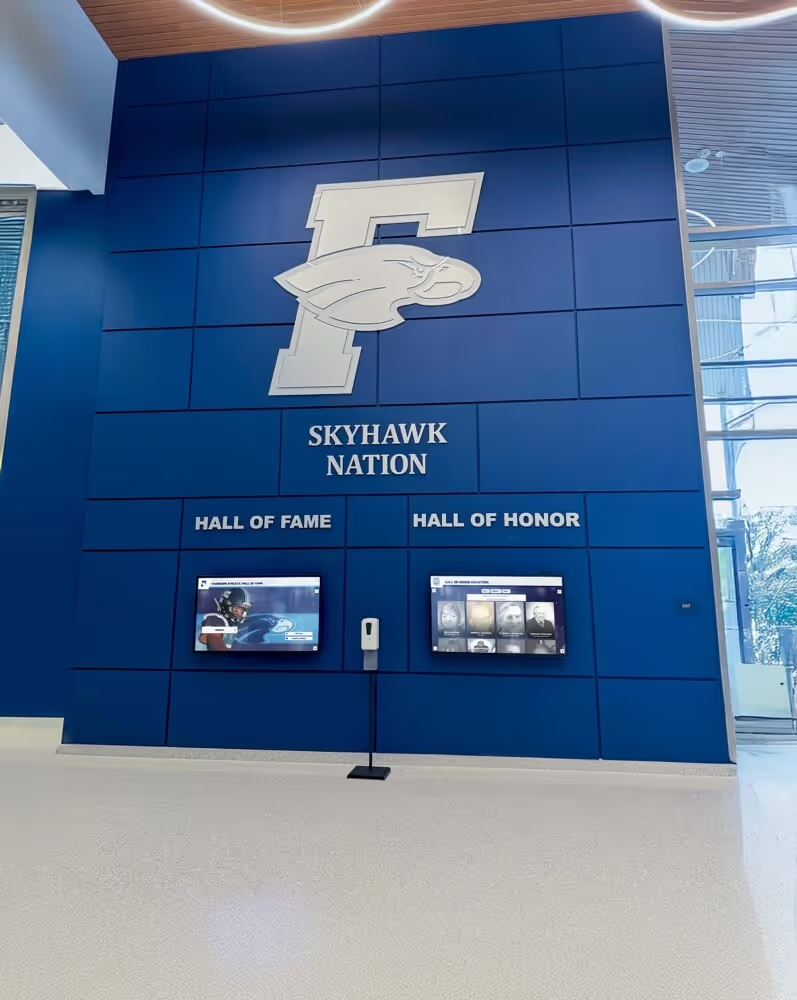
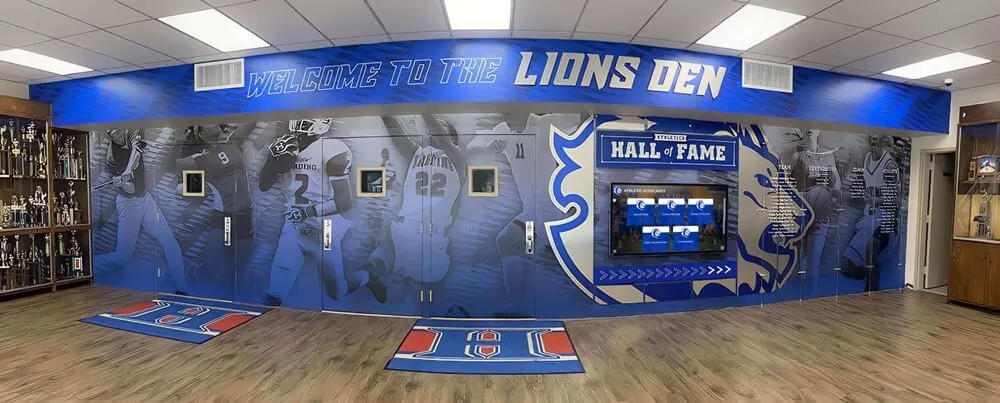
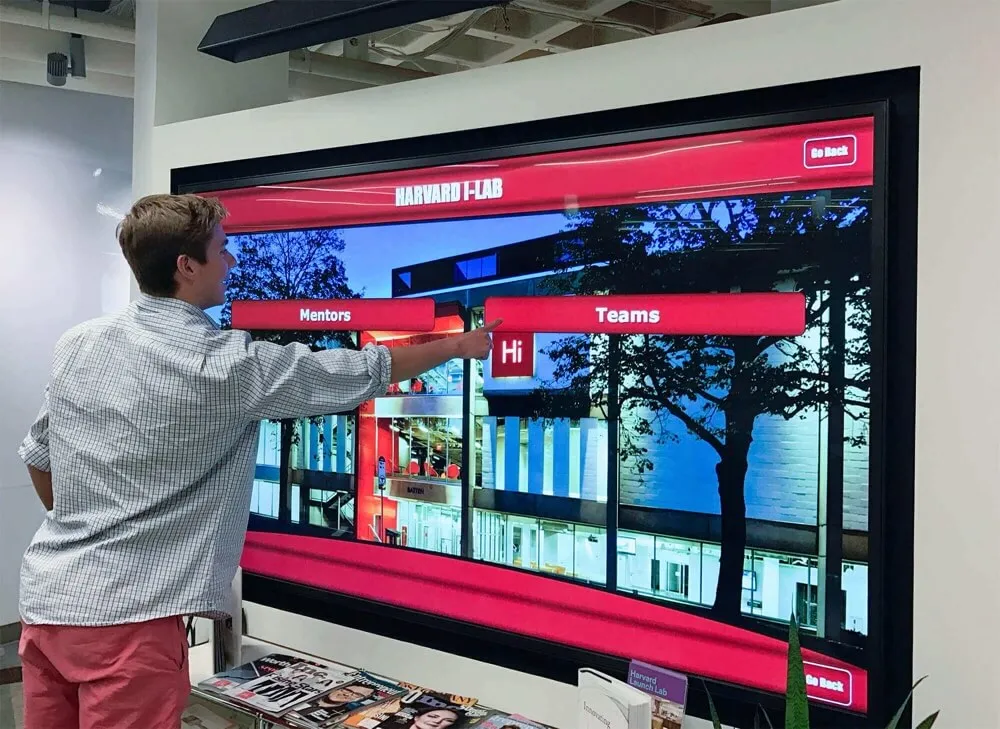
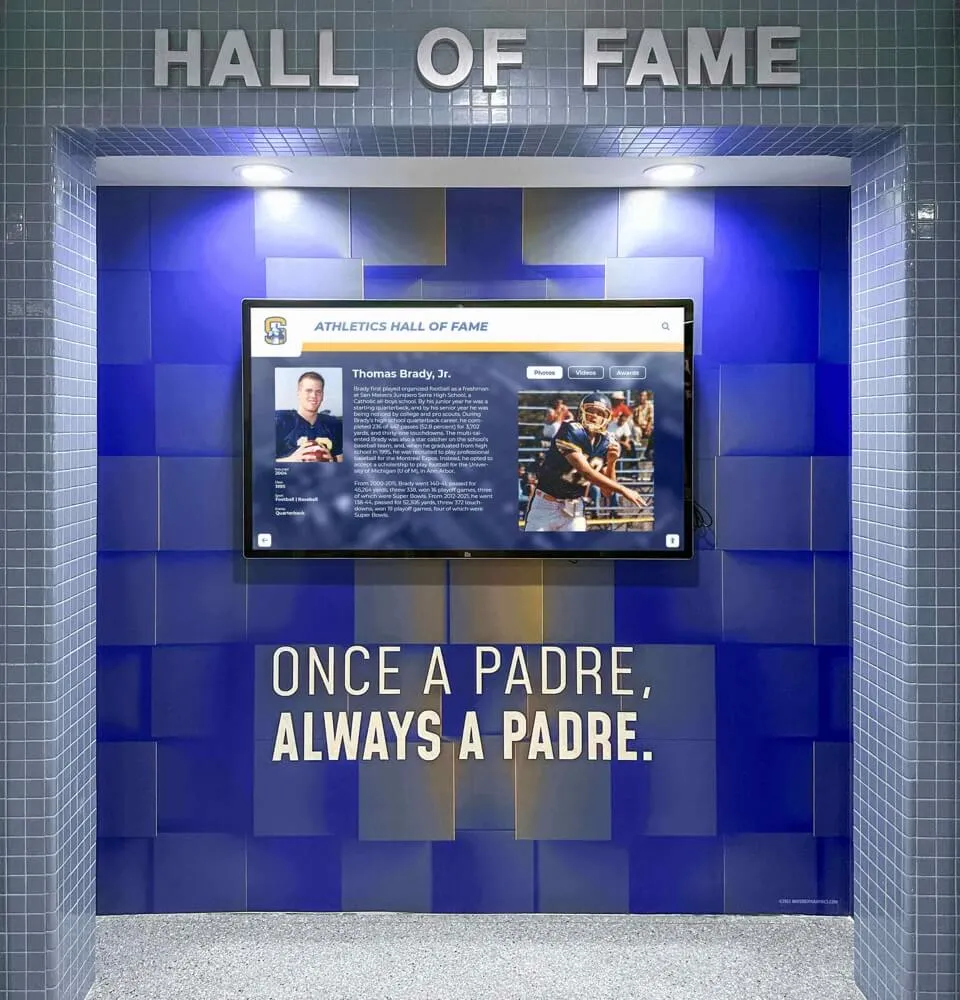
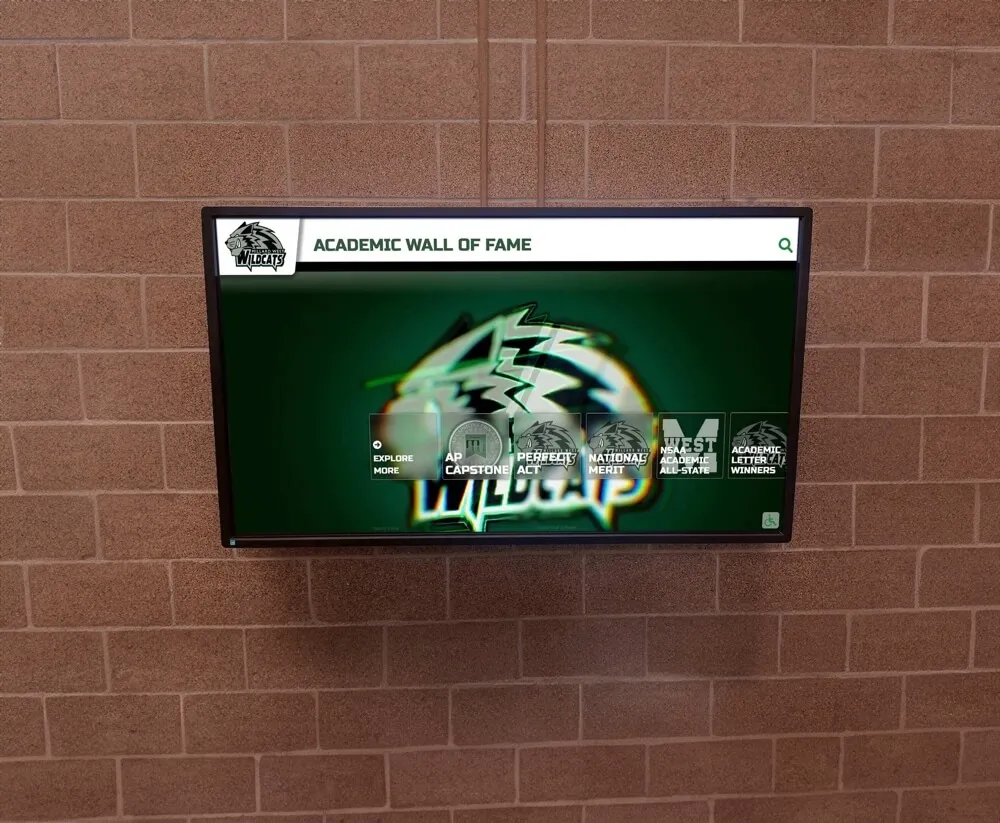
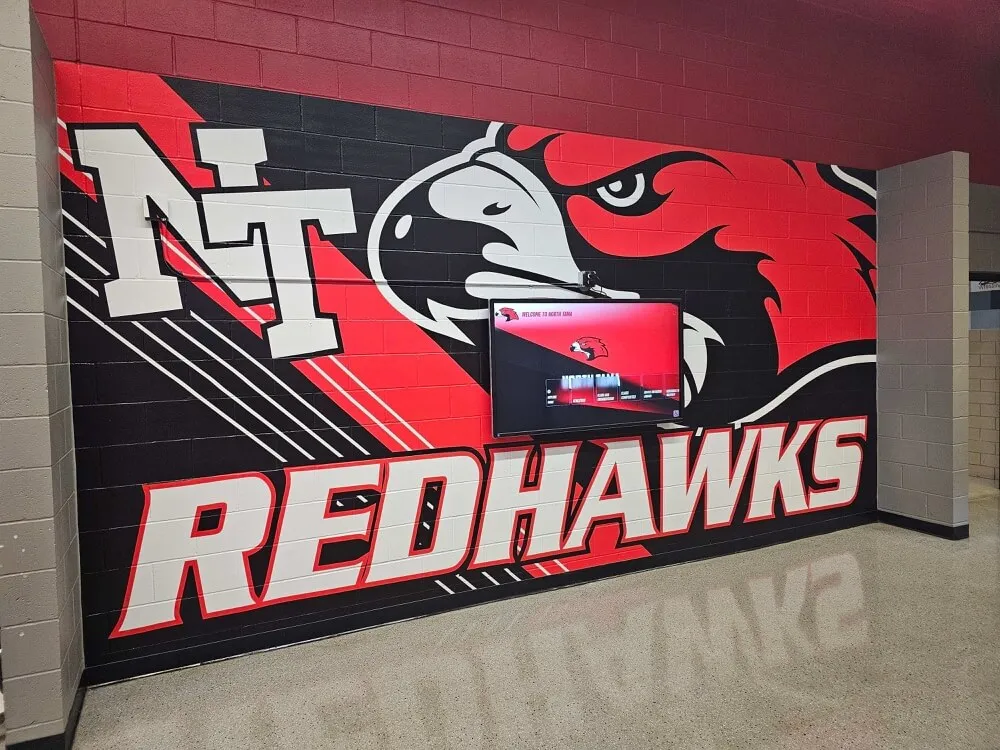
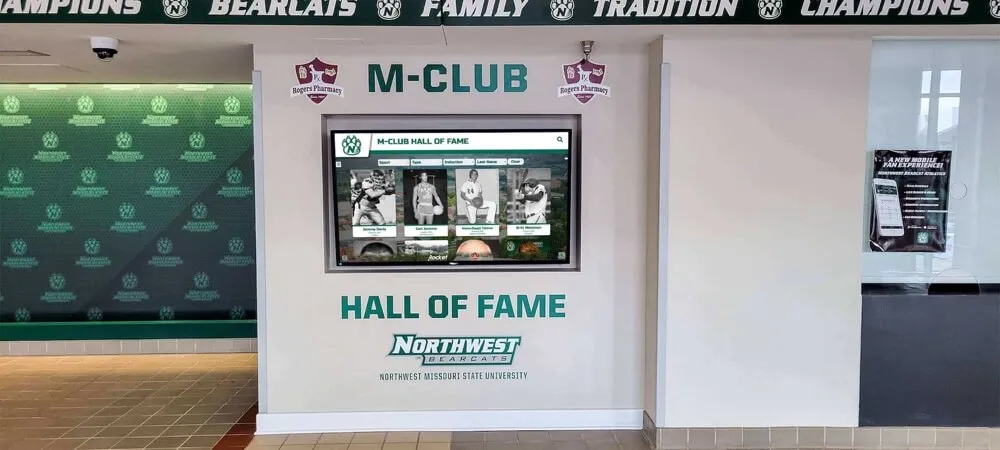
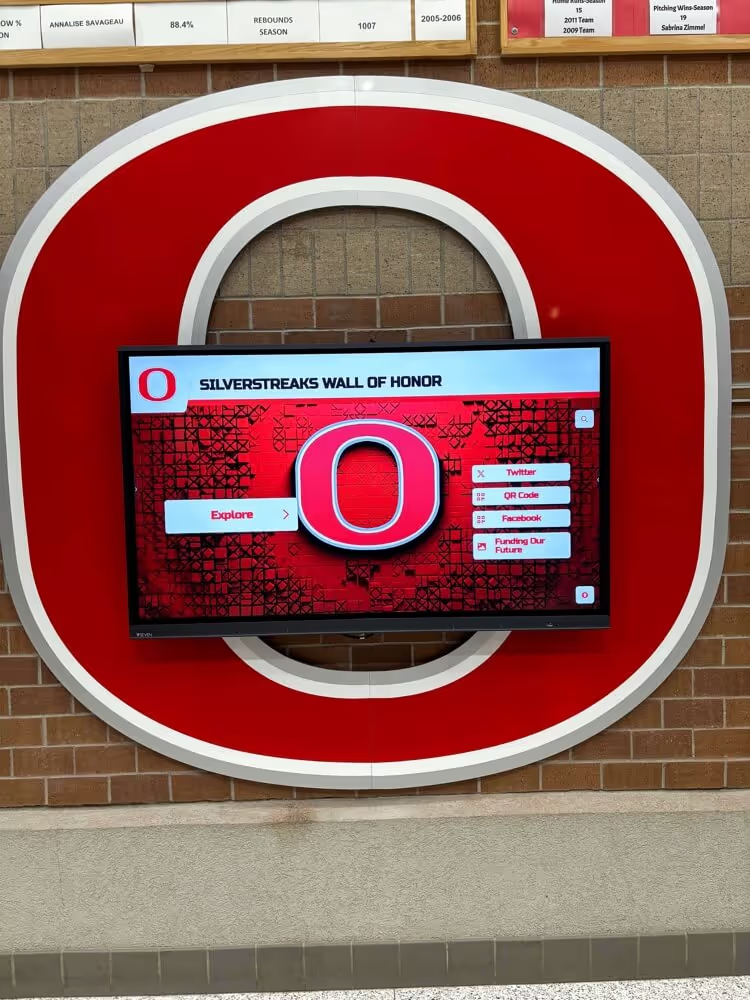
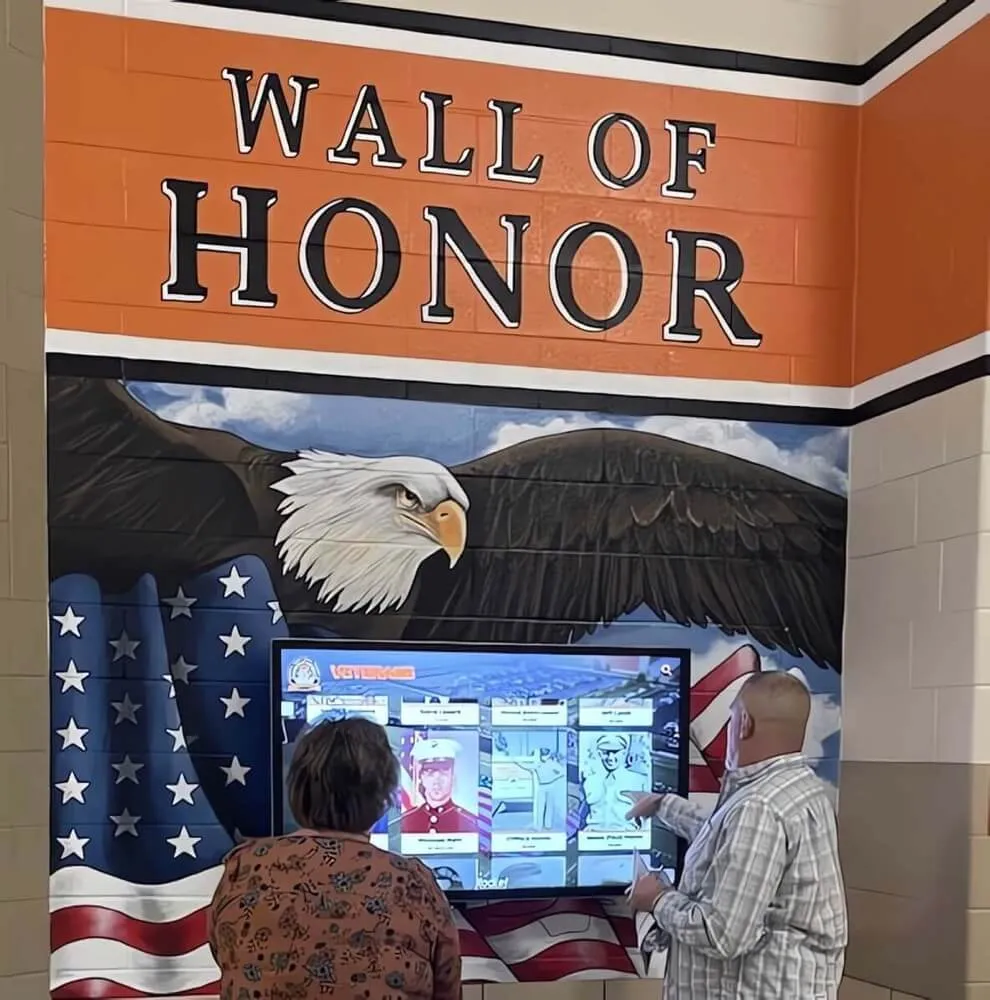
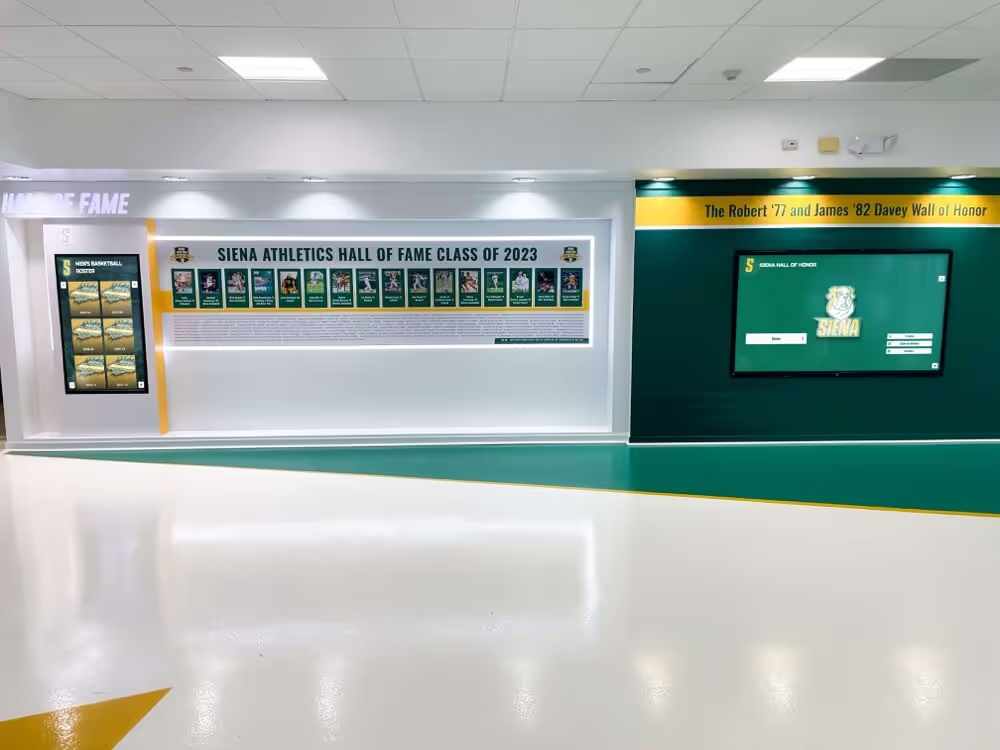
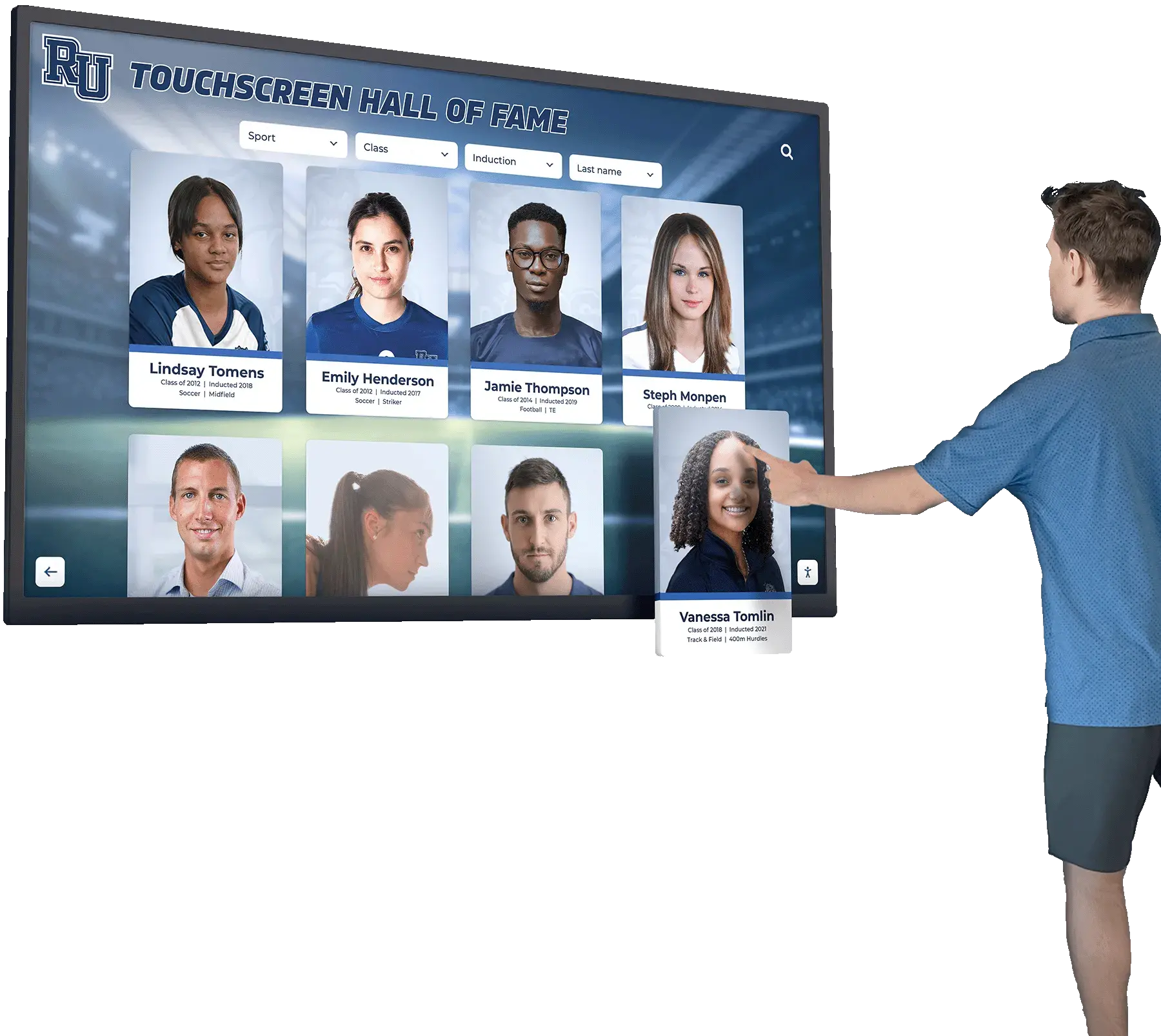
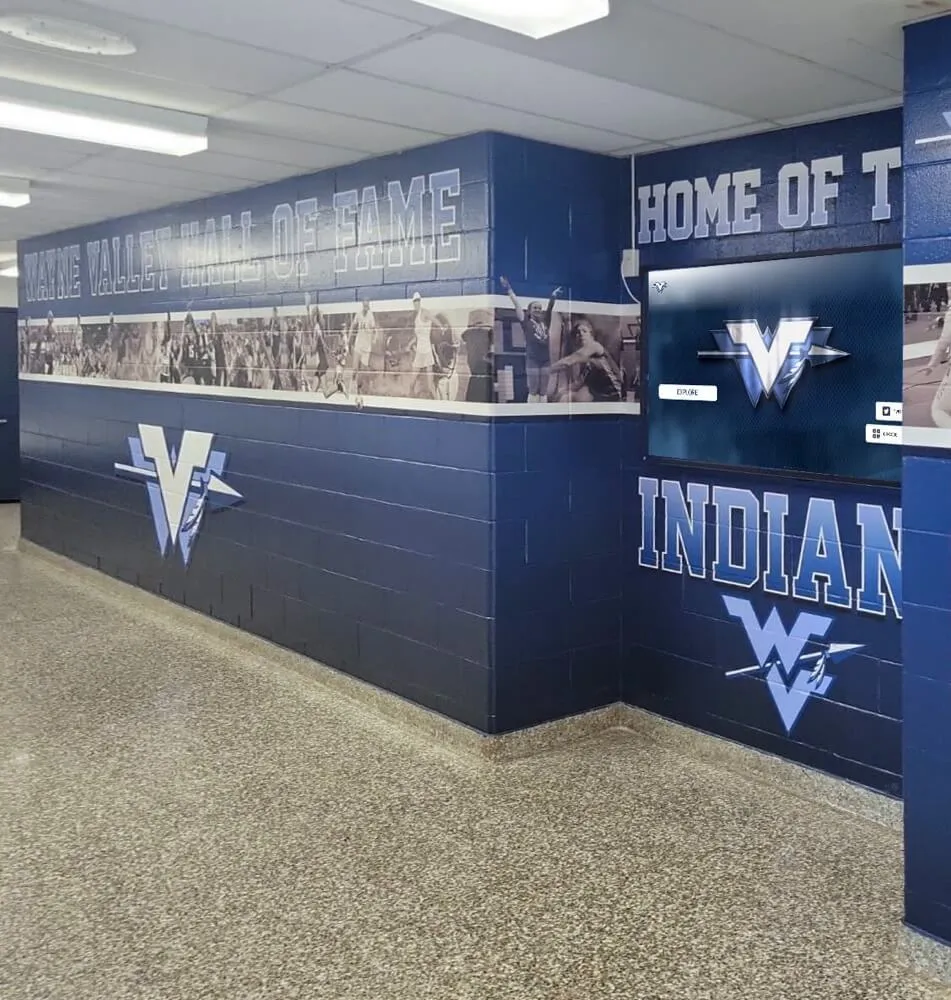
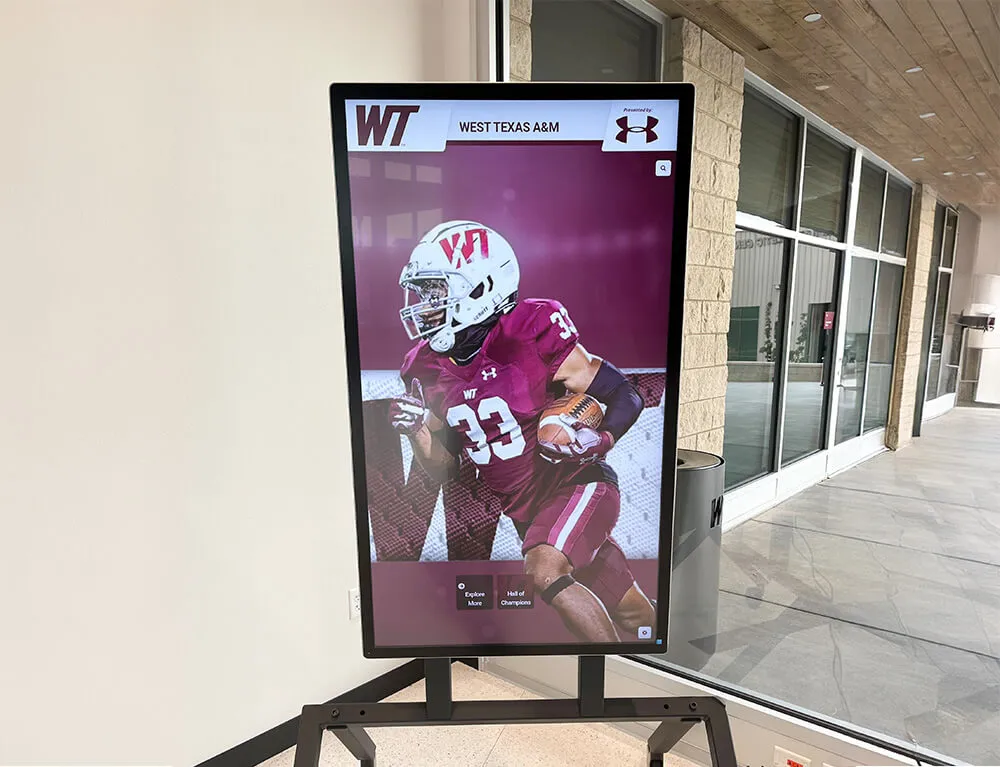
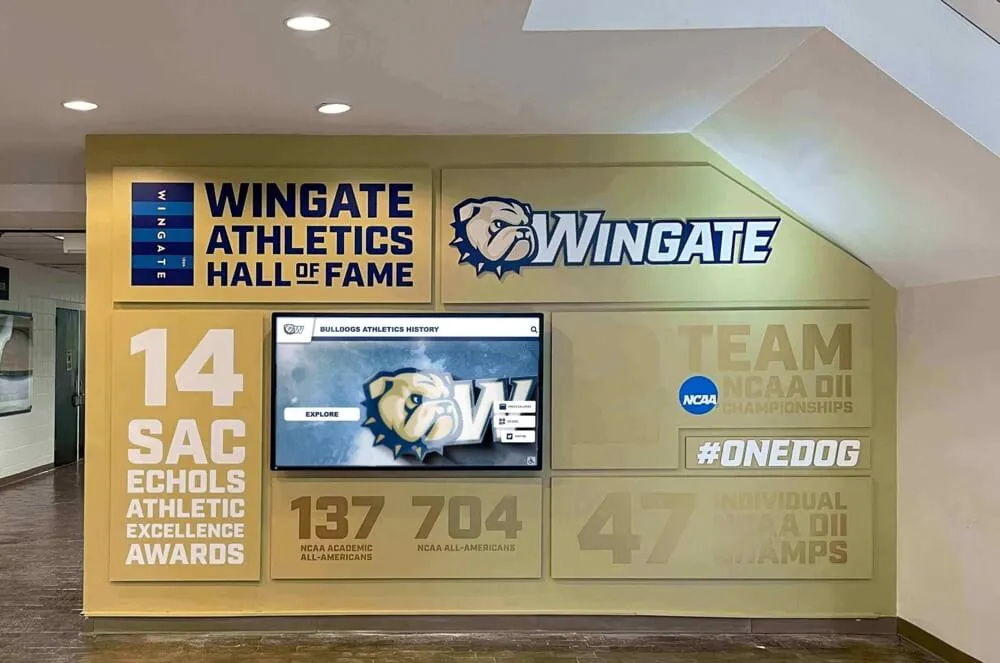
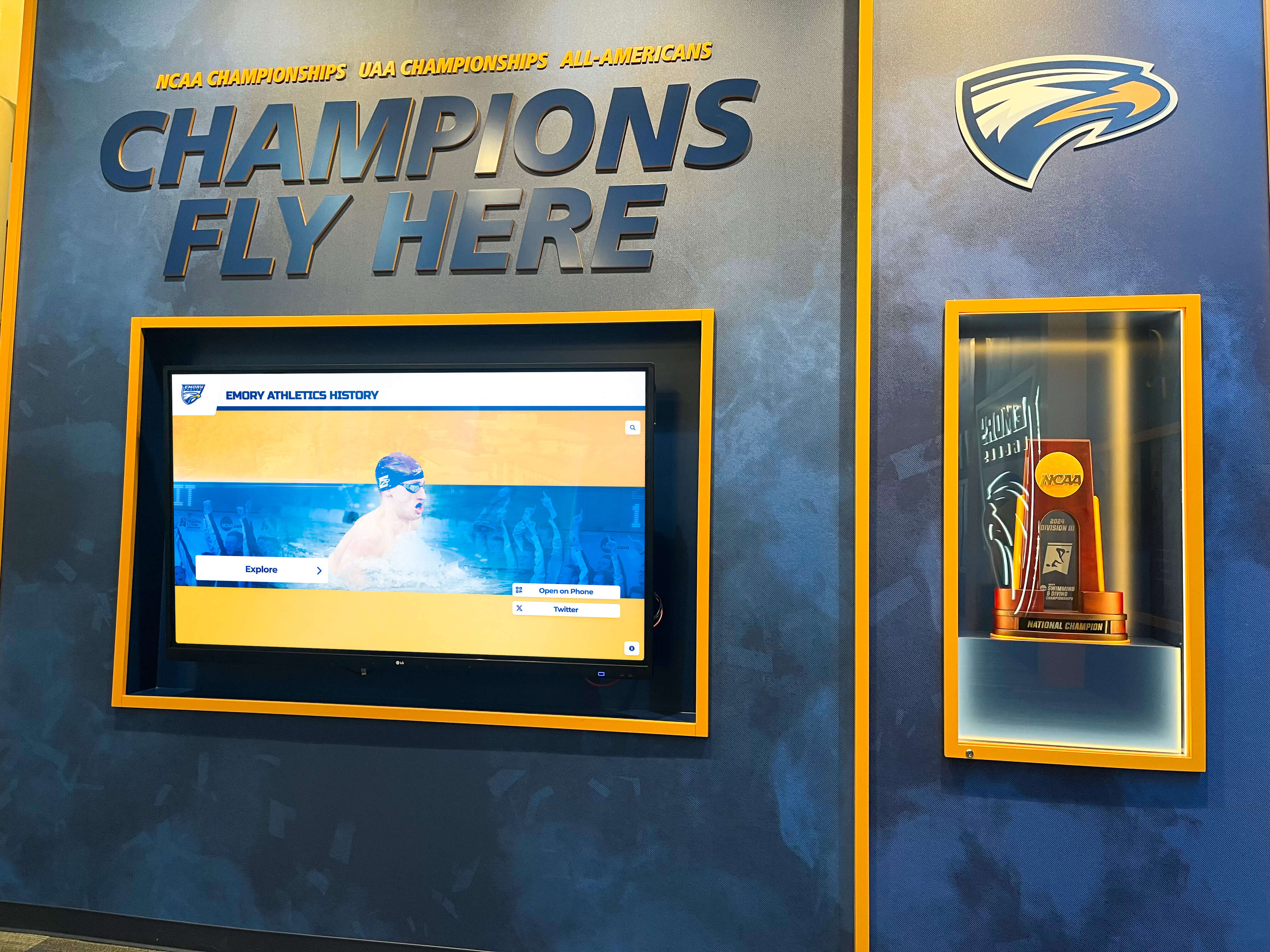
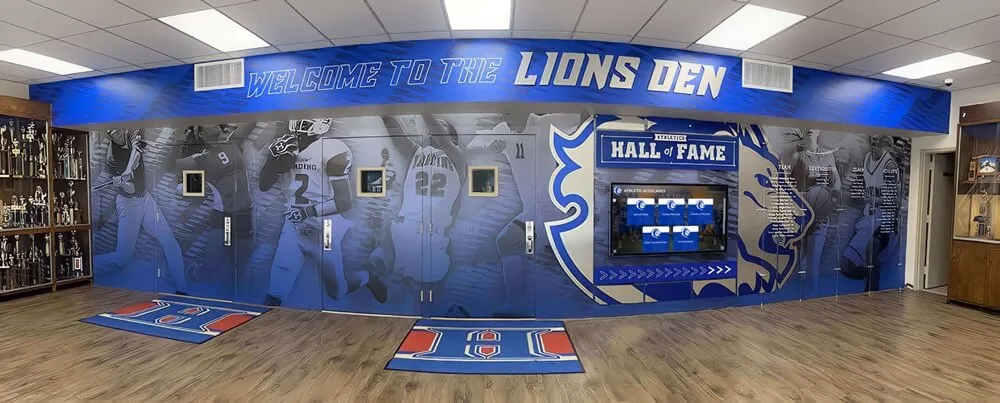
Description: Interactive kiosk displays allowing users to actively explore championship brackets, select specific tournaments, view detailed game results, access complete rosters, and discover supplementary content including photos and highlights.
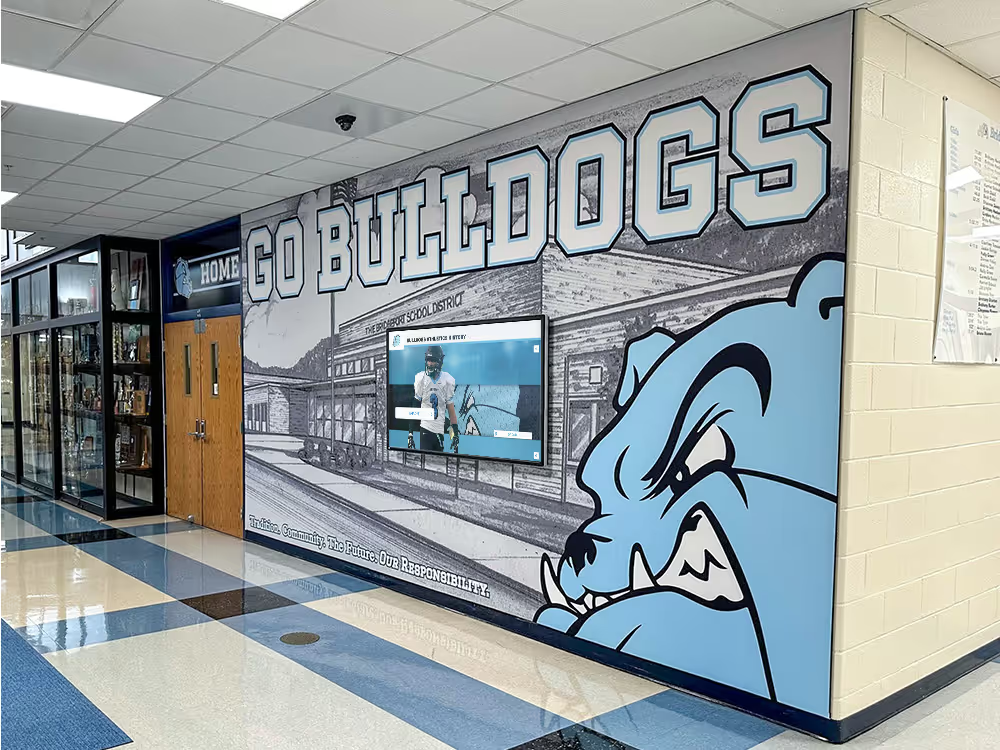
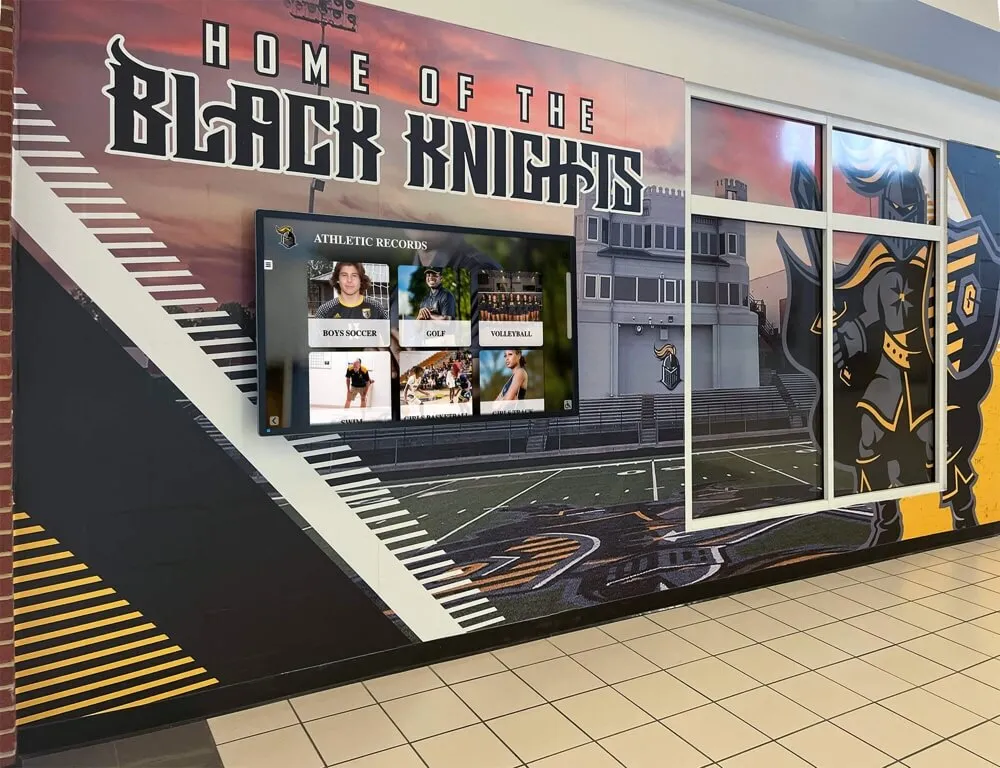
Typical Implementation: Touchscreen displays in athletic facility common areas running specialized sports recognition software designed for showcasing tournament achievements with intuitive navigation and comprehensive content depth.
Primary Advantages:
- User-directed exploration enabling viewers to select tournaments of interest rather than waiting for slideshow cycles
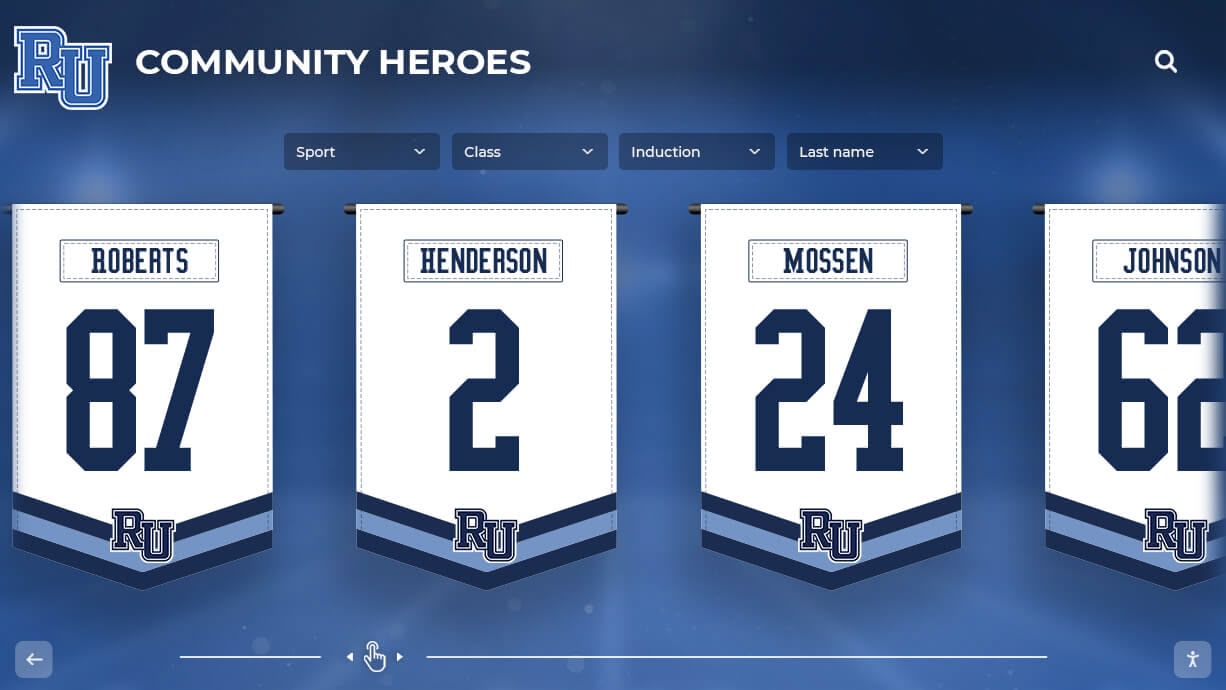
- Unlimited detail depth—comprehensive bracket displays, complete rosters, game summaries, highlight videos, and contextual information
- Infinite scalability accommodating decades of championships across all sports without space constraints
- Search and filter capabilities allowing users to find specific sports, seasons, or tournament details instantly
- Engagement analytics showing which content resonates and how visitors interact with tournament history
- Modern user experience aligned with how current students expect to discover and interact with information
- Integration capabilities connecting to existing athletic databases, statistics systems, and media libraries
- Multiple users can bookmark or share content to personal devices for continued engagement
Core Limitations:
- Higher initial investment for hardware and specialized recognition software platforms
- Technical infrastructure requirements including power, network connectivity, and occasional maintenance
- Content management requires staff time to input comprehensive tournament data and media
- Platform selection critically important as capabilities vary dramatically between generic kiosks and purpose-built sports recognition solutions
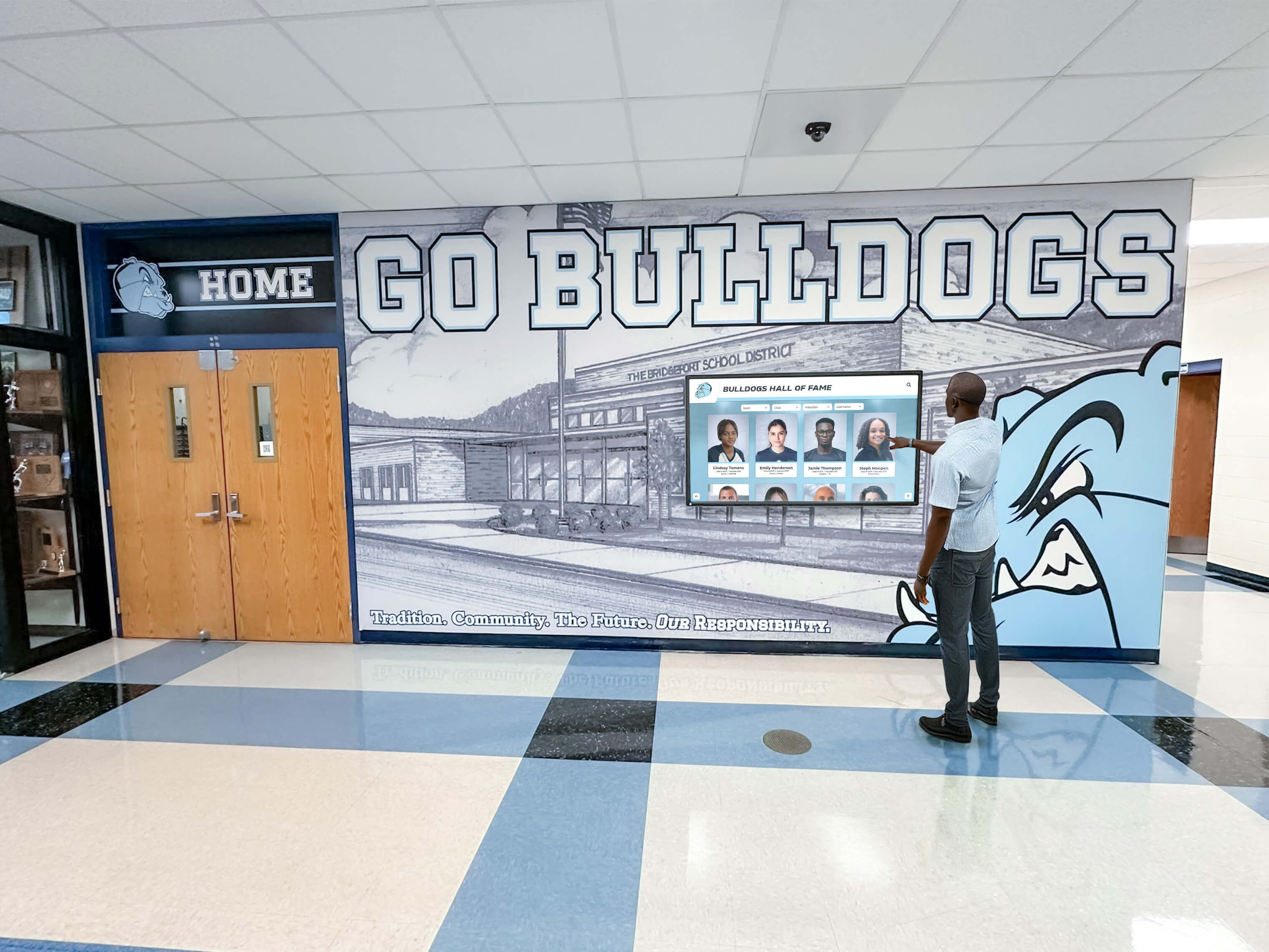
Comparison Framework: Evaluation Criteria and Weighting
Systematic comparison requires clear evaluation criteria with defined weights reflecting relative importance for athletic departments implementing championship bracket displays.
Criteria Definition and Scoring Methodology
Athletic Engagement Effectiveness (30% Weight)
Definition: How effectively the solution captures athlete, student, and visitor attention while enabling meaningful interaction with championship tournament history.
Scoring Factors:
- Ability to discover specific tournaments and championship details of interest
- Content depth supporting comprehensive understanding of tournament journeys
- Interactive capabilities enabling exploration versus passive viewing
- Presentation quality that honors achievement magnitude appropriately
- Evidence of actual usage and engagement from target audiences
Content Scalability (25% Weight)
Definition: The solution’s capacity to accommodate growing championship history across multiple sports without requiring system replacement or encountering hard limits.
Scoring Factors:
- Number of championship brackets supported without performance degradation
- Ease of adding new tournaments as programs achieve additional championships
- Storage capacity for multimedia content including photos, videos, and detailed statistics
- Multi-sport accommodation without different sports competing for limited space
- Performance consistency as championship archives grow over decades
Content Management Complexity (20% Weight)
Definition: Staff effort required to maintain current championship information including new tournament additions, statistical updates, and media enhancements.
Scoring Factors:
- Intuitive interfaces enabling athletic staff to manage content without technical training
- Time required to add new championship brackets with complete tournament details
- Ability to import data from existing statistical systems or bracket files
- Workflow features supporting content review before public display
- Ongoing maintenance burden for keeping historical content accurate and accessible
Total Cost of Ownership (15% Weight)
Definition: Complete investment required over ten years including initial costs, ongoing maintenance, content updates, hardware replacement, and staff time.
Scoring Factors:
- Initial investment for materials, hardware, software, installation, and content creation
- Annual recurring costs for software licensing, maintenance contracts, or material replacements
- Staff time costs for content management and system maintenance
- Expected replacement cycles considering championship additions over time
- Hidden costs including physical space, network infrastructure, or technical support
Implementation Speed (5% Weight)
Definition: Timeline from selection decision to fully operational championship bracket display with initial content launched and accessible to community.
Scoring Factors:
- Procurement and delivery timeframes for required materials or hardware
- Installation complexity and scheduling coordination with athletic facilities
- Content creation effort for initial championship bracket archives
- Training requirements before staff can manage systems independently
- Technical setup including software configuration and network integration
Durability and Reliability (5% Weight)
Definition: Solution longevity, resistance to wear in high-traffic athletic environments, and confidence that displays will operate consistently without frequent issues.
Scoring Factors:
- Physical durability in athletic facility environments with heavy student traffic
- System reliability track record and uptime statistics
- Vendor support quality, responsiveness, and issue resolution effectiveness
- Resistance to damage, vandalism, or environmental factors affecting athletic spaces
- Platform stability and long-term vendor commitment to product maintenance
Platform-by-Platform Scoring
The comparison table below scores each solution category against evaluation criteria using a 10-point scale, then calculates weighted totals reflecting relative importance.
| Evaluation Criteria | Weight | Physical Boards | Static Digital | Interactive Touchscreen |
|---|---|---|---|---|
| Athletic Engagement | 30% | 5/10 Visible but limited detail depth | 6/10 Multimedia but passive viewing | 10/10 User-directed exploration, unlimited depth |
| Content Scalability | 25% | 3/10 Severe physical space constraints | 8/10 Digital storage eliminates space limits | 10/10 Unlimited championships without degradation |
| Content Management | 20% | 4/10 Physical creation and mounting required | 7/10 Software updates but generic tools | 9/10 Purpose-built CMS for sports content |
| Total Cost (10 years) | 15% | 5/10 Low initial but high cumulative for multiple championships | 7/10 Moderate investment, lower ongoing costs | 8/10 Higher initial but lowest per-championship costs at scale |
| Implementation Speed | 5% | 7/10 Quick creation and mounting | 6/10 Hardware procurement and signage setup | 6/10 Specialized platforms streamline deployment |
| Durability & Reliability | 5% | 8/10 No technical dependencies, physical durability | 6/10 Hardware maintenance, generic platform support | 8/10 Commercial-grade hardware, specialized vendor support |
| WEIGHTED TOTAL SCORE | 4.7/10 | 7.0/10 | 9.4/10 | |
Scoring Analysis and Interpretation
Physical Boards (4.7/10): Traditional physical bracket displays score adequately for single championship recognition but struggle with criteria that matter most for growing athletic programs—engagement depth and scalability. While tangible presence provides permanence, space constraints create hard limits as programs accumulate championships. Schools with one or two total state championships might find physical boards sufficient, but multi-sport programs achieving regular tournament success quickly encounter limitations requiring alternative approaches.
Static Digital Signage (7.0/10): Digital displays represent meaningful improvement over physical boards, particularly for scalability and multimedia capabilities. Programs can showcase unlimited championships with professional presentation quality. However, passive viewing without user control limits engagement effectiveness. Athletic directors seeking straightforward digital upgrades find static displays adequate, but those prioritizing deep engagement with tournament history discover limitations when users cannot explore specific brackets of interest.
Interactive Touchscreen Platforms (9.4/10): Purpose-built interactive recognition platforms score highest across most criteria, particularly athletic engagement and scalability. Higher initial investment is offset by superior capabilities, unlimited growth accommodation, and dramatically lower long-term per-championship costs. Athletic programs serious about comprehensive championship recognition and sustained multi-sport success consistently select interactive solutions as the only approach that scales effectively without constant replacement.
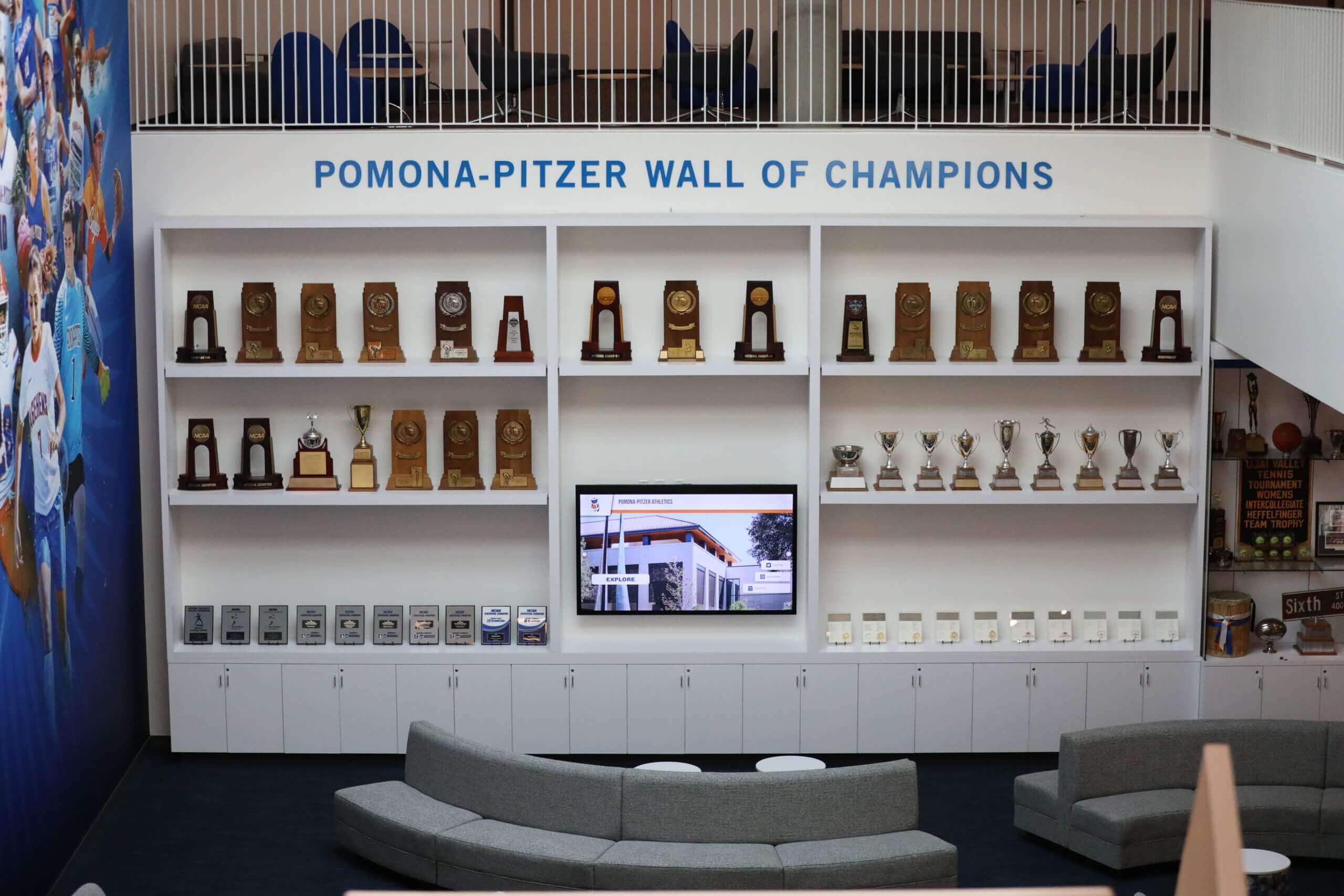
Deal-Breaker Checklist: Critical Elimination Factors
Certain factors should eliminate solutions from consideration regardless of other attributes. Evaluation committees should apply this deal-breaker checklist before detailed scoring:
Multi-Sport Championship Programs
Deal-Breaker: If your athletic department offers 10+ sports with regular state tournament participation, eliminate physical boards. Space constraints make comprehensive multi-sport recognition impossible without overwhelming available wall space.
Applies To: Physical bracket boards in schools with diverse athletic programs achieving multiple championships annually
Long-Term Growth Expectations
Deal-Breaker: If your program expects to accumulate 20+ state championship appearances over the next decade across all sports, eliminate solutions requiring physical space for each addition. Continuous expansion needs demand unlimited scalability.
Applies To: Physical boards and solutions with hard capacity limits when sustained tournament success is expected
Detail Depth Requirements
Deal-Breaker: If your athletic department wants to showcase complete tournament narratives including game-by-game statistics, full rosters, highlight videos, and contextual stories rather than basic bracket trees, eliminate passive viewing solutions.
Applies To: Physical boards and static digital signage when comprehensive tournament storytelling represents the primary objective
Content Management Resources
Deal-Breaker: If your athletic department lacks dedicated staff time for manually creating physical boards or managing multiple separate displays for each championship, eliminate solutions requiring extensive per-tournament manual work.
Applies To: Physical boards when championships are added multiple times per year across different sports
Budget Constraints with Scale Requirements
Deal-Breaker: If your athletic program expects to display 15+ championships but total budget is constrained under $3,000 over ten years, only basic physical boards remain financially viable despite severe scalability limitations.
Applies To: Interactive touchscreen platforms and premium display solutions when budget and scale create impossible combinations
ADA Accessibility Requirements
Deal-Breaker: If your institution requires WCAG 2.1 AA accessibility compliance for student-facing athletic content, eliminate solutions without documented accessibility conformance and third-party audits.
Applies To: Platforms lacking accessibility documentation, particularly important for public schools and institutions receiving federal funding
For comprehensive guidance on implementing recognition systems that highlight multiple achievement types, see approaches to state championship trophy case displays.
Why Interactive Touchscreen Solutions Win Most Scenarios
When athletic directors apply the scoring framework and deal-breaker checklist, interactive touchscreen recognition platforms consistently emerge as optimal solutions for most high school contexts with sustained tournament success.
User-Directed Exploration Transforms Engagement
The fundamental advantage of interactive platforms versus passive alternatives centers on user control enabling deep engagement with specific championships of interest:
Physical Board Limitation: Viewers can only see what’s physically displayed. A parent attending a basketball game wanting to see the 2015 girls soccer championship bracket has no way to access that information if it’s not among the limited boards mounted in the gymnasium. Space constraints force difficult choices about which championships warrant permanent display.
Static Digital Limitation: While cycling through more championships than physical space allows, viewers cannot control what appears. An athlete with five minutes before practice cannot search for their sport’s championship history—they see whatever happens to be displaying during their brief window, likely missing content of primary interest.
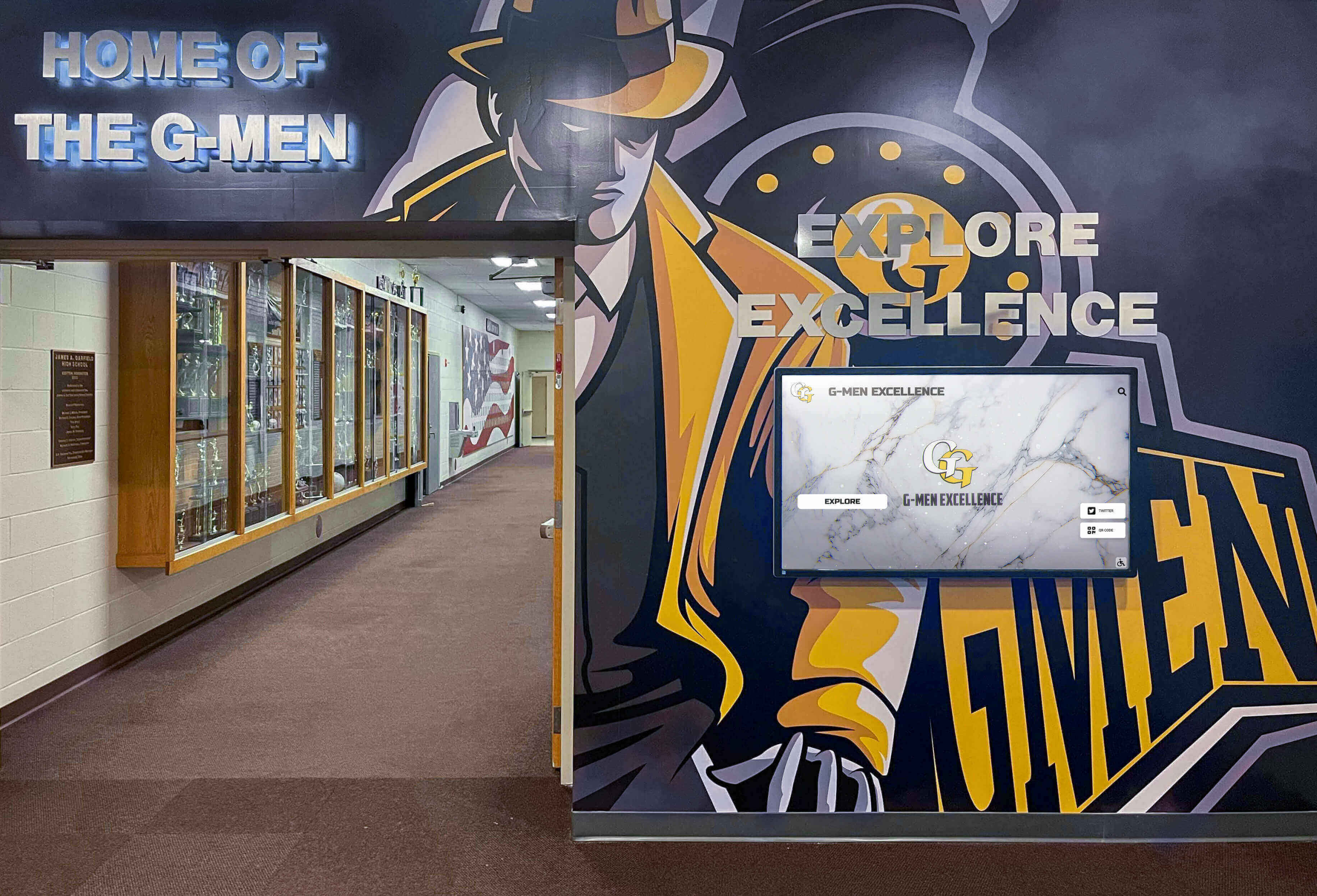
Interactive Touchscreen Advantage: Users search by sport, year, or tournament type, instantly accessing any championship in the archive. The basketball player searches “boys basketball state tournament” and discovers every championship appearance in school history, exploring detailed brackets, game statistics, and team rosters at their own pace. Alumni visiting campus can find their specific championship year, relive tournament progression, and share specific content with former teammates via personal devices.
This user-directed exploration capability makes interactive platforms dramatically more effective for athletic recognition objectives. Research on state championship recognition programs confirms that interactive access increases community engagement substantially compared to passive viewing.
Unlimited Scalability Without Compromising Detail
Space constraints and content depth compete directly in physical and hybrid approaches:
Physical Space Economics: Each championship requires wall space. When recognition areas fill, athletic departments face impossible choices—remove older championships to display recent ones, expand into additional space (often unavailable), or stop comprehensively recognizing achievements. These constraints force prioritization based on space availability rather than achievement merit, creating perception that certain sports or seasons matter more than others.
Digital Advantage: Interactive platforms store unlimited championships without performance impact. Adding the 50th state tournament bracket takes identical effort as adding the 5th. No physical expansion required, no difficult prioritization decisions based on space limitations, and comprehensive recognition of all sports and all seasons without artificial constraints suggesting hierarchy of importance.
Detail Depth at Scale: Physical boards must balance bracket clarity with space efficiency, limiting detail shown for each tournament. Interactive platforms show high-level bracket overviews allowing users to tap individual games for complete statistics, roster details, game summaries, and media content—unlimited depth without cluttering initial displays.
This scalability proves critical for programs expecting long-term tournament success. A school implementing championship displays today might showcase 5 state tournament appearances initially but could easily have 30+ appearances across all sports ten years later. Only digital solutions accommodate this growth without complete system replacement or removing older championships to make room for new achievements.
Lower Long-Term Costs at Athletic Program Scale
Initial cost comparisons mislead without considering long-term total ownership across multiple championships and sports:
Physical Board Economics: Assume $400 per championship for professional design, printing, framing, and installation. Initial display of 3 championships costs $1,200—seemingly economical. However, adding 2 championships annually (realistic for multi-sport programs) costs $800/year, reaching $9,200 over ten years. Space constraints likely forced removal of older boards, meaning some championships aren’t even displayed despite incurring creation costs.
Interactive Touchscreen Economics: Assume $12,000 initial investment ($7,000 hardware, $5,000 software and installation) plus $1,800 annual maintenance. Ten-year total: $30,000. Per-championship cost with 23 total tournaments: $1,304. However, the platform accommodates 200+ championships without additional cost, driving per-championship costs to $150 at scale—dramatically lower than physical alternatives while maintaining all content perpetually accessible.
Cost Crossover: Interactive platforms achieve cost parity with physical boards around 20-25 championships, after which every additional championship costs nothing versus $400+ for physical approaches. Athletic programs expecting sustained multi-sport tournament success achieve superior ROI with interactive solutions despite higher initial investment.
For comparison of display solutions across athletic recognition needs, see comprehensive analysis of state championship banner alternatives.
Purpose-Built Features for Tournament Recognition
Generic solutions lack capabilities that specialized sports recognition platforms provide:
Tournament-Specific Data Models: Platforms designed for athletic recognition include bracket visualization tools, game statistics fields, roster management, playoff seeding displays, and tournament progression maps—versus generic content management requiring custom configuration for each championship.
Automatic Bracket Organization: Content automatically organizes by sport, season, tournament level (sectional, regional, state), and championship outcome without manual categorization work. Users filter championships by these dimensions instantly.
Multi-Format Support: Display capabilities accommodate various tournament formats including single elimination, double elimination, pool play advancement, and hybrid formats used across different sports and divisions.
Statistical Integration: Advanced platforms import game statistics from existing athletic management systems, automatically populating bracket displays with scores, individual performances, and team statistics without manual data entry.
Media Library Integration: Seamless connection to photo archives and video libraries allows tournament displays to include action photos, highlight clips, championship celebration footage, and supplementary content enriching basic bracket information.
Mobile Access: Users can scan QR codes to continue exploring championship content on personal devices, sharing specific tournaments via social media or with family members who couldn’t attend in person, extending recognition reach beyond physical display locations.
These specialized features mean athletic departments achieve better recognition outcomes with less effort using purpose-built platforms versus attempting to adapt generic alternatives that weren’t designed for comprehensive tournament history showcase.
Decision Framework: Matching Solutions to Athletic Program Contexts
Different athletic program situations require different optimal solutions. Use this framework to determine best fit for your specific context:
Choose Physical Bracket Boards If:
- Single Championship Programs: Schools with one or two total state championships needing simple recognition
- Extremely Limited Budgets: Total available budget under $2,000 with no prospect for increases
- No Growth Expectations: Athletic programs not expecting additional state tournament appearances
- Zero Technical Capacity: No staff comfortable managing digital systems and no budget for vendor support
- Supplementary Recognition: Physical boards complement comprehensive digital systems for high-visibility individual championship celebration
Warning: Schools often start with physical boards intending to upgrade later but discover conversion challenges. Content migration costs, managing dual systems during transitions, and explaining why some championships appear in premium formats while others remain basic complicate eventual digital adoption. If any possibility exists for digital implementation, starting digital often proves more efficient than two-phase approaches.
Choose Static Digital Signage If:
- Existing Digital Infrastructure: Athletic facilities already operate digital signage with available capacity for championship content
- Limited Interaction Needs: Primary objective is general awareness and celebration versus deep tournament exploration
- Budget Constraints: Budget permits digital investment but not specialized interactive platforms
- Passive Viewing Contexts: Display locations where extended interaction is unrealistic (narrow hallways, areas where viewers pass quickly)
- Interim Solutions: Bridging approach while evaluating interactive platforms for future implementation when budget permits
Consideration: Static digital represents meaningful upgrade from physical boards but significant engagement gap versus interactive platforms. Athletic directors selecting static digital should understand they accept limited user exploration in exchange for lower investment—reasonable for basic championship awareness but insufficient for comprehensive tournament recognition that engages community deeply with athletic history.
Choose Interactive Touchscreen Platforms If:
- Multi-Sport Programs: Athletic departments offering numerous sports with regular state tournament participation
- Sustained Success: Programs achieving multiple championships across different sports over time
- Comprehensive Recognition: Desire to showcase complete tournament narratives with game details, statistics, rosters, and media
- Long-Term Investment: Viewing championship recognition as permanent institutional infrastructure worth appropriate investment
- Engagement Priority: Success defined by community actually exploring and engaging with tournament history rather than passive viewing
- Scalability Requirements: Expectation that championship archives will grow substantially over next decade
- Modern Expectations: Recognition that current athletes and families expect interactive digital experiences aligned with how they access sports content elsewhere
Best Practice: Athletic departments selecting interactive platforms should budget adequately for both hardware and specialized sports recognition software. Generic touchscreen hardware with improvised content yields poor results compared to purpose-built platforms designed specifically for athletic achievement showcase applications.
For strategic approaches to showcasing athletic achievements across multiple recognition contexts, explore playoff and championship recognition programs.
Implementation Considerations for Interactive Platform Success
Athletic departments selecting interactive touchscreen solutions—the highest-scoring category—benefit from understanding critical success factors that maximize ROI and community engagement.
Strategic Location Selection in Athletic Facilities
Platform capabilities mean nothing if athletes, students, and visitors don’t encounter displays during normal facility use:
Traffic Pattern Analysis: Study movement patterns in athletic facilities identifying where athletes, students, parents, and visitors naturally gather. Optimal locations include main entrance lobbies to gymnasiums or field houses, locker room hallway areas where teams gather before events, athletic training facility waiting areas, and concession stand or common areas where families congregate during events.
Dwell Time Consideration: Interactive exploration of championship tournaments requires 3-7 minutes for meaningful engagement. Locations where community members naturally gather with available time work better than narrow transitional spaces where people pass quickly between other destinations.
Event Timing Strategy: Position displays where early-arriving fans can explore championship history while waiting for events to begin, where athletes can discover program legacy during downtime, and where alumni returning for games naturally encounter recognition of their own championship seasons.
Visibility Without Obstruction: Mount displays prominently but not where viewing groups would obstruct facility traffic flow. Alcove installations, wide hallway placements, or dedicated recognition corners work well. Avoid narrow corridors where groups exploring displays would block passage to locker rooms or competition areas.
Content Creation and Archive Migration Strategy
Empty displays provide no value—content creation requires systematic approaches balancing comprehensiveness with implementation speed:
Prioritized Championship Staging: Rather than attempting to input all historical championships simultaneously, implement phased approach starting with most recent 5-10 years of championships, then systematically adding older tournament archives quarterly. This manageable pacing prevents overwhelming staff while steadily building comprehensive historical records.
Standardized Data Collection: Develop consistent tournament data templates requesting bracket structure, game scores, team rosters, individual statistics, tournament seeding, and championship game summaries. Standardization streamlines content entry and ensures complete information across all championships regardless of when or by whom they were added.
Alumni Engagement for Historical Content: Leverage championship team reunions and alumni events to collect historical tournament information including brackets, rosters, photos, and stories from participants. Former athletes often preserve materials that athletic departments lack, making alumni partnership essential for comprehensive historical archives.
Statistical System Integration: For recent championships, export data directly from existing athletic statistics platforms (MaxPreps, GoFan, etc.) rather than manually re-entering information already captured in other systems. Most recognition platforms support data import reducing manual work substantially.
Media Asset Organization: Before platform launch, organize existing championship photos and videos into consistent folder structures by sport and season. This preparation accelerates content population and ensures media enriches tournament displays rather than requiring extensive searching during implementation.
Engagement Promotion and Launch Strategy
Excellent platforms require promotion ensuring athletes, students, and community know displays exist and understand how to use them:
Championship Game Launch Events: Coordinate platform launches with current season championship games or tournaments where maximum numbers of athletes, students, parents, and community members attend. Live demonstrations during pre-game periods showing how to explore historical tournaments create immediate awareness and model usage.
Athletic Team Integration: Incorporate display exploration into team activities—coaches can assign players to research previous championship teams in their sport, understanding tournament progression and drawing inspiration from historical success. This structured usage builds familiarity while strengthening connection to program legacy.
Social Media Promotion: Feature specific championships from displays in athletic department social media, highlighting anniversaries of historic tournament victories and directing community to explore complete brackets and details on campus displays. This cross-channel promotion drives awareness and actual facility visits.
Parent and Alumni Communication: Include display information in athletic booster communications, alumni newsletters, and parent update emails. Many older community members specifically want to see their own championship seasons—targeted communication to these audiences drives early adoption and word-of-mouth promotion.
Ongoing Content Freshness: Continuously add new championships immediately after tournament completion while moments are fresh and community excitement is highest. Regular content additions give athletes and families reasons for repeat visits discovering newly featured tournaments.
Conclusion: Making Informed Championship Display Decisions
State championship bracket displays represent strategic investments in athletic culture, program pride, and institutional legacy. The optimal solution depends on specific program contexts, but systematic evaluation using the frameworks in this guide ensures decisions align with objectives, budget realities, and long-term recognition program expectations.
Key Decision Factors:
Athletic departments prioritizing comprehensive multi-sport championship recognition—backed by evaluation committees applying the weighted scoring framework presented here—consistently select interactive touchscreen recognition platforms despite higher initial investment. The combination of user-directed exploration, unlimited scalability accommodating decades of tournament success, purpose-built sports features, and dramatically lower long-term per-championship costs at scale make interactive solutions optimal for most programs with sustained tournament participation.
However, athletic departments with single championships, severely constrained budgets, no growth expectations, or zero technical capacity might reasonably select physical boards or static digital displays understanding they accept significant engagement and scalability limitations in exchange for lower investment and simpler management.
The critical success factor is avoiding mismatches between solution capabilities and program objectives. Programs expecting to showcase decades of multi-sport tournament success cannot achieve objectives with space-constrained physical solutions regardless of cost savings. Conversely, single-sport programs with one championship might find interactive platforms exceed immediate requirements—though forward-thinking athletic directors recognize that today’s single championship could become tomorrow’s sustained tournament success.
Apply the scoring framework, deal-breaker checklist, and decision framework systematically rather than relying solely on initial cost comparisons or limiting recognition based on current budget rather than program trajectory. Athletic departments making evidence-based decisions using these tools consistently implement solutions delivering sustained value, strong community engagement, and positive ROI measured across complete ownership lifecycles and realistic championship accumulation expectations.
Ready to Implement Championship Bracket Recognition?
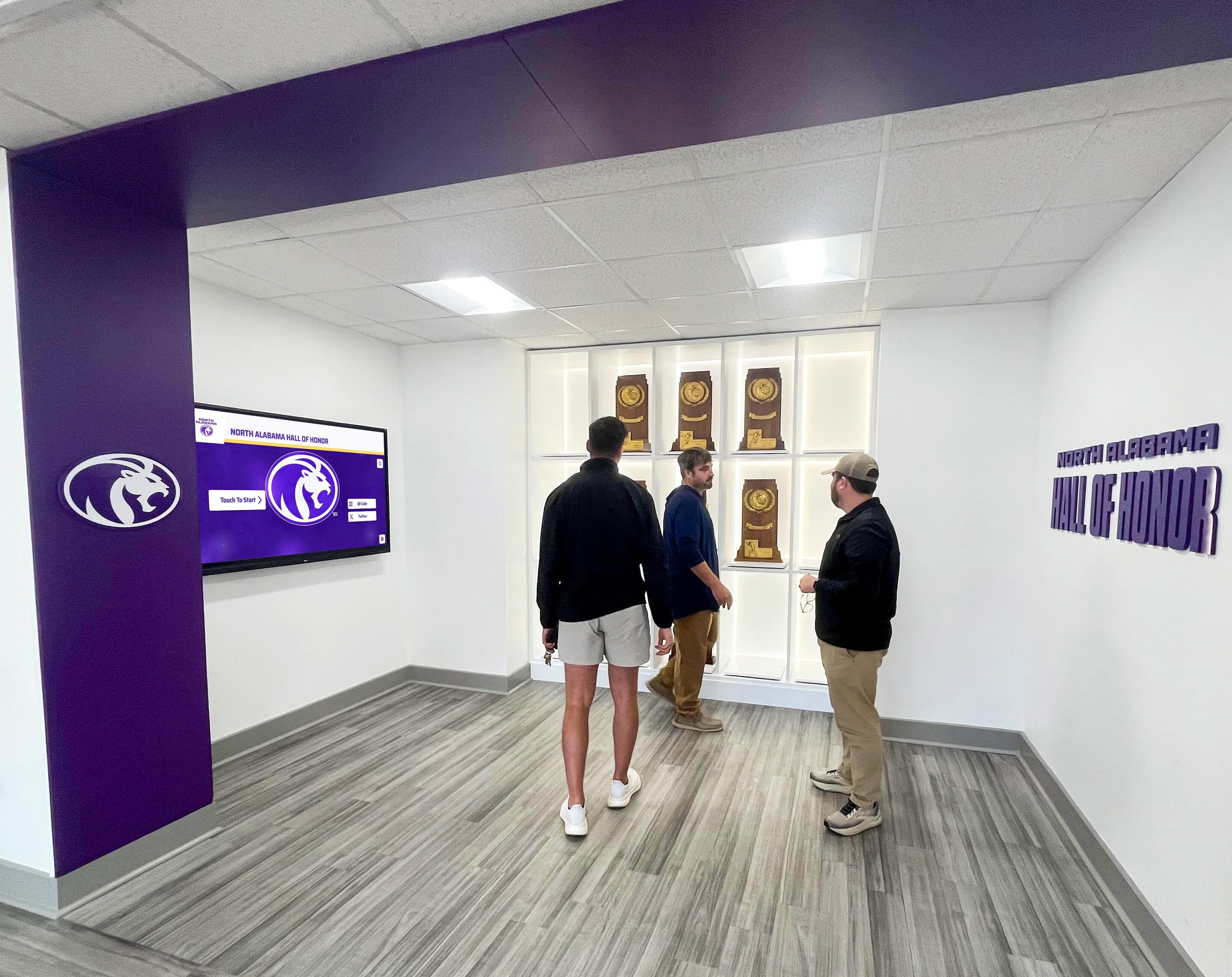
Explore how modern interactive recognition platforms can transform your athletic program’s championship displays from space-constrained physical boards into comprehensive, engaging digital experiences that honor every tournament journey, celebrate all sports equally, and connect current athletes with program legacy in ways that inspire sustained excellence.
Solutions like Rocket Alumni Solutions provide purpose-built platforms designed specifically for showcasing athletic achievements including state championship tournaments, with intuitive bracket displays, unlimited scalability, and professional presentation quality that reflects the magnitude of tournament success while accommodating decades of future championships without requiring system replacement.
For personalized guidance evaluating platform options for your specific athletic program needs, explore Rocket Alumni Solutions to see how athletic departments nationwide use interactive touchscreen technology to celebrate tournament achievements effectively, inspire current athletes through comprehensive championship history, and build recognition programs that strengthen athletic culture for generations while scaling seamlessly as programs add new tournament successes.
Disclaimer: This comparison is based on publicly available information as of December 2025. All product names and trademarks belong to their respective owners. Comparative statements reflect Rocket Alumni Solutions’ interpretation of available data and may change over time. This content was produced by or on behalf of Rocket Alumni Solutions.