



Key Takeaways
Master basketball referee signals with this comprehensive visual guide. Learn what every official hand signal means, from fouls to violations, with clear explanations for players, coaches, and fans.
Why Basketball Referee Signals Matter
Basketball officiating relies on standardized hand signals because verbal communication alone cannot effectively manage the fast-paced environment of competitive basketball, where crowd noise, gymnasium acoustics, and multiple simultaneous conversations make spoken explanations difficult to hear and understand.
The Communication Challenge in Basketball
Unlike sports with natural breaks between plays, basketball flows continuously with possession changes, player substitutions, and scoring happening in rapid succession. Officials must communicate decisions instantly to:
- Scorekeepers and Timers: Accurate recordkeeping requires immediate, clear signals about fouls, violations, and scoring
- Coaches: Bench personnel need to understand calls affecting strategy, substitution patterns, and timeout management
- Players: Athletes must know what violations occurred to adjust their play and avoid repeated mistakes
- Spectators: Fans deserve to understand referee decisions affecting game outcomes and their team’s performance
Standardized hand signals create a universal visual language that transcends noise barriers, language differences, and distance across the court. A traveling violation signal looks identical whether called in a quiet elementary school gym or during a sold-out college arena with deafening crowd noise.
The Evolution of Basketball Referee Signals
Dr. James Naismith’s original 13 rules of basketball in 1891 made no mention of standardized officiating signals—early games relied entirely on verbal communication and written scorekeeping. As basketball grew from a YMCA recreation activity into organized competitive sport, the need for consistent, visible officiating communication became apparent.
The National Basketball Association (NBA), established in 1946, and the National Collegiate Athletic Association (NCAA) developed standardized signal systems during the sport’s rapid expansion through the 1950s and 1960s. High school basketball adopted these standards through the National Federation of State High School Associations (NFHS), creating consistent officiating language across all competitive levels.
Today, basketball referee signals remain remarkably consistent from youth leagues through professional competition, with only minor variations in specific situations. This consistency means players learning proper basketball fundamentals including hoop height and rules at young ages develop signal literacy that serves them throughout their basketball careers.
Foul Signals: Understanding Personal and Team Fouls
Personal fouls represent the most common referee signals you’ll see during basketball games. Officials use a two-part communication system: first signaling the type of foul committed, then indicating which player committed the violation.
Common Personal Foul Signals
Blocking Foul:
- Signal: Both hands on hips with elbows extended outward
- Meaning: Defensive player established illegal position and contact occurred
- Context: Called when a defender moves into an offensive player’s path without establishing legal guarding position
- Common Scenario: Defender slides over late as ball-handler drives to basket
Charging Foul:
- Signal: One or both arms making a pushing motion away from body
- Meaning: Offensive player initiated contact against defender in legal guarding position
- Context: Offensive player crashes into stationary defender who established position before contact
- Common Scenario: Driver lowers shoulder and runs through defender positioned outside restricted area
Hand Check Foul:
- Signal: Official strikes wrist of one hand with other hand in a chopping motion
- Meaning: Defender used hands to impede offensive player’s movement
- Context: Called when defender places or keeps hand on ball-handler to slow or redirect movement
- Common Scenario: Defender places hand on ball-handler’s hip during drive
Holding Foul:
- Signal: Grasping one wrist with opposite hand
- Meaning: Player grabbed or held opponent to impede movement
- Context: Physical restraint preventing normal player motion
- Common Scenario: Defender grabs offensive player’s arm or jersey on cuts or screens
Pushing Foul:
- Signal: Pushing motion with both hands extended forward
- Meaning: Player used extended arm(s) to push opponent
- Context: Creating space or preventing movement through pushing contact
- Common Scenario: Post player pushing defender to establish position or offensive player clearing space
Illegal Use of Hands:
- Signal: Striking downward motion with edge of hand against other palm
- Meaning: Defender made illegal contact with hands on offensive player
- Context: Hand contact that affects offensive player’s speed, quickness, balance, or rhythm
- Common Scenario: Defender slaps down on ball-handler’s arm during shot attempt
Over the Back:
- Signal: Raising one arm straight up while placing other hand on raised elbow
- Meaning: Player reached over opponent’s back to secure rebound
- Context: Rebounding situation where player climbs over opponent from behind
- Common Scenario: Player jumps from behind opponent and makes contact while pursuing rebound
Reporting Fouls to the Scorer’s Table
After signaling the foul type, officials follow a standardized sequence to report the violation to scorekeepers:
Step 1 - Indicate Fouling Player: The official points directly at the player who committed the foul, making eye contact and often verbally stating the jersey number to ensure clear identification.
Step 2 - Signal Jersey Number: Officials communicate jersey numbers using a standardized finger system:
- Fingers on one hand for single-digit numbers (hold up corresponding number of fingers)
- Two-hand signals for double-digit numbers (first hand shows tens digit, second hand shows ones digit)
- Special positions for specific numbers (closed fist for zero, specific combinations for numbers above 55)
Step 3 - Signal Foul Count: The official raises one to five fingers to indicate how many personal fouls the player has accumulated. This critical information helps coaches manage substitution patterns and players understand their foul situation.
This standardized reporting sequence ensures accurate scorekeeping and helps athletic training programs track player participation and injury risk management related to foul trouble.
Violation Signals: Rules Infractions Without Contact
Violations differ from fouls because they involve rule infractions without illegal physical contact. The opposing team receives possession after violations, but no personal fouls are assessed to individual players.
Traveling Violation
Signal:
- Officials rotate both fists around each other in a circular rolling motion in front of their body
- One of basketball’s most recognizable signals
- Movement mimics old-fashioned bicycle pedaling or rolling motion
What Constitutes Traveling: A player in possession of the basketball moves illegally by:
- Taking more than two steps without dribbling the ball
- Moving the established pivot foot before releasing the ball on a dribble or pass
- Falling to the floor while holding the ball without being fouled
- Taking steps after picking up the dribble (gathering steps must be legal)
Common Traveling Scenarios:
- Post player receives entry pass and takes three steps before shooting
- Ball-handler picks up dribble and shuffles feet looking for passing option
- Player loses balance, falls down while holding ball
- Driver takes excessive gathering steps on layup attempt
Double Dribble Violation
Signal:
- Official raises both hands with palms down and alternately moves hands up and down in a patting or dribbling motion
- Clear visual representation of dribbling action
What Constitutes Double Dribble:
- Player dribbles, picks up the ball with one or both hands, then dribbles again
- Player simultaneously uses both hands to dribble (both hands touching ball during dribble)
Common Double Dribble Scenarios:
- Player dribbles, stops to survey options, then attempts to dribble again
- Young player learning to dribble uses both hands together
- Player bobbles pass reception, making it appear like picking up then resuming dribble
Carrying/Palming Violation
Signal:
- Official turns palm upward and makes rotating/scooping motion with hand
- Motion represents turning hand under basketball during dribble
What Constitutes Carrying: Player allows hand to go underneath the basketball during dribble, bringing ball momentarily to rest before continuing dribbling motion—essentially creating brief pause in dribble.
Why It’s Called: Carrying violations typically occur when skilled ball-handlers use change-of-pace dribbles or hesitation moves. Referees must judge whether hand position created illegal advantage. Different officiating crews and competitive levels enforce this violation with varying strictness.
Three-Second Violation
Signal:
- Official extends arm upward showing three fingers
- Clear numerical indication of specific violation
What Constitutes Three-Seconds: Offensive player remains in the painted free-throw lane (key/restricted area) for more than three consecutive seconds while their team controls the ball in the frontcourt.
Important Exceptions:
- Count stops if offensive player actively attempts to leave the lane
- Count resets if shot attempt occurs
- Count doesn’t apply during rebounding situations
- Different rules apply at different levels (NBA has defensive three-second rule; college/high school do not)
Five-Second Violation
Signal:
- Official extends arm upward showing five fingers
- May wave fingers back and forth to indicate counting action
Common Five-Second Situations:
Closely Guarded:
- Player holding ball while closely guarded (within six feet) for five seconds without passing, shooting, or dribbling
- Applies to holding situation, not dribbling in high school rules
- Different enforcement at different levels
Throw-In:
- Team fails to inbound ball within five seconds after receiving throw-in privileges
- Common after made baskets under defensive pressure
Free Throw:
- Shooter fails to attempt free throw within five seconds of receiving ball from official
- Rarely called as shooters typically work quickly
Ten-Second Violation (Backcourt)
Signal:
- Official extends both arms upward showing all ten fingers (both hands fully extended)
- Alternatively, official may make sweeping motion from backcourt to frontcourt
What Constitutes Ten-Seconds: Team with possession fails to advance ball from backcourt to frontcourt within ten seconds after gaining possession. Designed to prevent stalling tactics and maintain game pace.
Key Coaching Point: Teams facing defensive pressure often practice advancing ball quickly to avoid this violation. Understanding this rule helps explain why guards sometimes seem rushed crossing half-court during pressure defense.
Backcourt Violation
Signal:
- Official points toward backcourt with sweeping arm motion
- Directional signal indicates illegal ball movement direction
What Constitutes Backcourt: After establishing frontcourt possession, team causes ball to return to backcourt through:
- Player with possession stepping back across midcourt line
- Ball being passed or deflected to backcourt and touched by offensive team
- Ball touching player who has established backcourt position
Strategic Context: This violation prevents teams from relieving pressure by retreating to backcourt. Players must maintain court awareness to avoid stepping back across midcourt while making plays.
Scoring and Game Administration Signals
Officials use specific signals to communicate scoring decisions and game management actions to scorekeepers and spectators.
Successful Field Goal Signals
Two-Point Field Goal:
- Signal: Official raises one or two fingers (pointing downward or held at shoulder height)
- Indicates basket counts for two points
- Most common scoring signal in basketball
Three-Point Field Goal:
- Signal: Official extends arm upward with three fingers extended
- May pump arm three times for emphasis
- Often followed by sweeping arm motion indicating shooter was behind arc
Three-Point Attempt:
- Signal: Before shot attempt, official may extend arm with three fingers to indicate shooter is attempting three-point shot
- Helps scorekeepers anticipate potential three-point score
- Prevents confusion on close calls near three-point line
Shot Clock and Time Violations
Shot Clock Violation:
- Signal: Official touches shoulders with both hands making crossing motion
- Indicates team failed to attempt shot within allowed time (24 seconds in NBA, 30 seconds in college, varies by level)
- Results in turnover and possession change
Shot Clock Reset:
- Signal: Official makes circular motion with index finger above head
- Indicates shot clock should reset (after certain fouls, violations, or rebound situations)
- Helps timekeeper maintain accurate clock
Start Clock/Stop Clock:
- Signal: Official makes slashing downward motion to start clock
- Open palm raised to stop clock
- Critical for accurate timekeeping during games
Timeout and Substitution Signals
Timeout:
- Signal: Official forms “T” with both hands (one hand vertical, other horizontal across top)
- Universal signal recognized across all basketball levels
- May point toward bench requesting timeout after forming “T”
Substitution:
- Signal: Official crosses arms in front of chest with closed fists
- Brings substitutes onto court during dead ball situations
- Different from timeout signal through arm position
60-Second vs. 30-Second Timeouts: At levels distinguishing timeout lengths, officials may hold up fingers after timeout signal to indicate duration. Implementation varies by basketball level and organization.
Technical Foul and Unsportsmanlike Conduct Signals
Technical fouls address unsportsmanlike behavior, rules violations without contact, and administrative infractions. These penalties affect team fouls and provide free throw opportunities.
Technical Foul Signal
Signal:
- Official forms “T” with both hands (similar to timeout but held above head rather than chest level)
- Alternative: One hand forms “T” against open palm of other hand
- Clear indication of technical foul called
Common Technical Foul Situations:
Unsportsmanlike Conduct:
- Excessive arguing or disrespectful communication toward officials
- Taunting opponents after successful plays
- Inappropriate language or gestures
- Crossing boundaries of acceptable competitive behavior
Bench Violations:
- Coach leaving designated coaching box
- Players or bench personnel standing during active play without proper reason
- Too many players on court during play
- Bench personnel entering court without permission
Administrative Technicals:
- Illegal uniform or equipment violations
- Delay of game after warning
- Hanging on rim without safety justification (excessive celebration)
Consequences: Technical fouls result in free throws for opposing team (typically two shots) plus possession in most rule sets. Multiple technical fouls on same person result in ejection.
Flagrant Foul Signals
Signal:
- Official makes closed-fist striking motion (indicating violent contact)
- Often followed by pointing at player and indicating severity
- At some levels, may form triangle above head with hands
Flagrant Foul Categories:
Flagrant 1 (Excessive Contact):
- Contact judged excessive but not necessarily intentional
- Free throws awarded plus possession
- Player remains in game
Flagrant 2 (Intentional and Excessive):
- Contact deemed both intentional and excessive
- Free throws awarded plus possession
- Automatic ejection from game
Understanding these serious violations helps players maintain composure and avoid actions that cross from competitive physicality into dangerous or unsportsmanlike territory. Strong booster clubs and support systems often emphasize sportsmanship alongside competitive excellence.

Instant Replay and Review Signals
Modern basketball at higher competitive levels incorporates video review for specific situations. Officials use standardized signals to communicate replay situations and decisions.
Replay Review Signal
Signal:
- Official makes rectangular shape with hands (forming TV/monitor screen)
- Alternative: Pointing to eyes then making review gesture
- Indicates play will be reviewed using video replay
Reviewable Situations (varies by level):
Timing Issues:
- Whether shot was released before time expired
- Precise time remaining for clock adjustments
- Whether foul occurred before shot clock expiration
Boundary Decisions:
- Who touched ball last before going out of bounds
- Whether player stepped out of bounds before shot
- Whether shot was two-point or three-point attempt
Flagrant Foul Review:
- Upgrading or downgrading foul severity
- Determining ejection necessity
- Assessing unsportsmanlike conduct
Court Storming/Altercation Review:
- Identifying participants in altercations
- Determining appropriate penalties
- Reviewing escalation sequence
Review Outcome Signals
After completing replay review, officials signal the decision:
- Original call stands (repeat initial signal)
- Original call reversed (signal new decision)
- Clock adjustment (indicate time to be placed on clock)
How Referee Signals Connect to Basketball Excellence
Understanding referee signals represents just one component of basketball literacy—the broader knowledge base that separates casual participants from students of the game who compete at higher levels and eventually earn recognition for athletic achievement.
Rules Knowledge and Competitive Advantage
Players who thoroughly understand referee signals gain competitive advantages:
Faster Adjustments: Recognizing violations immediately allows players to adjust techniques before patterns develop. A player who understands they’re being called for carrying violations can modify their dribble technique during game action rather than accumulating turnovers through repeated violations.
Strategic Awareness: Coaches can make better real-time decisions when they instantly understand referee calls. Recognizing that a player just committed their fourth foul enables immediate substitution decisions that prevent costly fifth fouls during critical game moments.
Mental Composure: Understanding why calls are made reduces frustration and emotional reactions. Players who know they legitimately traveled are less likely to argue or lose focus compared to players confused about violations.
Film Study Efficiency: When reviewing game footage, signal literacy helps players and coaches quickly identify specific situations without requiring audio or lengthy review. Coaches studying opponent tendencies can rapidly identify which violations specific players commit frequently.
Building Basketball IQ Through Rules Literacy
The pathway from youth basketball through high school competition, potential all-state recognition, and potentially college athletics requires comprehensive basketball knowledge extending beyond physical skills:
Progressive Learning:
- Youth players: Master basic violations (traveling, double dribble, out of bounds)
- Middle school players: Understand common fouls (blocking, charging, hand check)
- High school players: Recognize all standard signals plus strategic implications
- Advanced players: Anticipate officiating tendencies and adjust to different crews
Coaching Responsibility: Effective coaches teach referee signals systematically as part of basketball education. Teams that understand officiating language commit fewer violations, argue less with referees, and maintain better composure during competition—factors contributing to sustained success and championship opportunities.
Building Championship Culture: Programs consistently competing for championships emphasize rules knowledge as fundamental discipline. When practicing drills to improve fundamentals like rebounding, elite programs simultaneously teach legal techniques that avoid over-the-back violations and pushing fouls.
Teaching Referee Signals to Youth Players
Introducing basketball referee signals to young players requires age-appropriate methods that make learning engaging rather than overwhelming.
Starting With Essential Signals
First Signals to Teach (Ages 7-10):
Rather than introducing all signals simultaneously, focus on violations and fouls young players most commonly commit:
- Traveling - Most visible violation for beginning players learning footwork
- Double Dribble - Common as players develop ball-handling skills
- Out of Bounds - Fundamental boundary awareness
- Foul - Basic understanding that contact has rules
Teaching Method: Demonstrate each signal, explain the violation it represents, then have players practice recognizing signals during controlled scrimmages where coaches deliberately call specific violations to reinforce signal recognition.
Progressive Signal Education
Intermediate Players (Ages 11-14):
Expand signal knowledge to include:
- Different foul types (blocking, charging, holding, pushing)
- Time violations (three seconds, five seconds, ten seconds)
- Scoring signals (two-point vs. three-point baskets)
- Timeout and substitution signals
Advanced Players (Ages 15+):
Complete signal literacy including:
- Technical foul recognition and consequences
- Replay review situations
- Foul reporting sequence (jersey numbers, foul counts)
- Strategic implications of different violations and fouls
Making Signal Learning Interactive
Game-Based Learning Activities:
Signal Charades: Players take turns demonstrating referee signals while teammates guess which violation or foul is being signaled. Makes learning fun while reinforcing recognition.
Film Study Sessions: Watch recorded games with sound muted and have players identify referee signals, explaining what each call means. Develops real-game recognition skills.
Mock Officiating: Have players take turns officiating practice scrimmages using proper signals. Provides perspective on officiating challenges while reinforcing signal knowledge.
Signal Flashcards: Create visual aids showing each signal with explanation. Quick review tool before games or during practice transitions.
Referee Signals Across Different Basketball Levels
While basketball referee signals remain largely consistent across competitive levels, some variations and emphasis differences exist between youth, high school, college, and professional basketball.
Youth and Recreational Basketball
Simplified Enforcement: Youth leagues often emphasize teaching over strict enforcement. Referees may:
- Explain violations verbally while signaling
- Warning players before calling technical fouls for minor infractions
- Allowing brief instruction during dead balls
- Focusing primarily on safety-related fouls
Modified Rules: Some youth leagues modify standard rules, affecting signals:
- No three-point line at youngest levels
- Modified lane violation rules
- Simplified timeout procedures
- Adjusted free throw distances
High School Basketball (NFHS Rules)
Standardized Signal System: The National Federation of State High School Associations maintains official signal standards used across all 50 states, creating consistency in:
- Foul reporting procedures
- Violation signals
- Scoring communication
- Game administration
Educational Focus: High school officiating balances competitive fairness with educational responsibility. Officials often:
- Briefly explain unusual calls to players when appropriate
- Work with coaches on proper coaching box boundaries
- Enforce sportsmanship standards consistently
- Prepare players for higher levels through proper signal usage
College Basketball (NCAA Rules)
Increased Precision: College officiating demands precise signal execution and communication:
- Faster foul reporting sequences
- More stringent technical foul enforcement
- Replay review integration
- Detailed timeout administration
Visible Communication: College officials often work in three-person crews with sophisticated positioning systems. Signals must be immediately visible to multiple table officials, media, and large venues.
Professional Basketball (NBA/WNBA)
Refined Signal System: Professional basketball maintains standard signals while adding:
- Sophisticated replay review procedures
- Detailed foul type distinctions
- Advanced clock management signals
- Luxury of multiple replay angles and review centers
Performance Evaluation: Professional officials are evaluated on signal clarity, consistency, and accuracy. Every signal appears on replay and social media scrutiny, demanding excellence in visual communication.
Common Signal Mistakes and Confusion Points
Even experienced basketball fans sometimes misinterpret referee signals or confuse similar-looking gestures. Understanding common confusion points improves signal literacy.
Timeout vs. Technical Foul
The Confusion: Both signals involve forming a “T” with the hands, leading to occasional spectator confusion about whether coach requested timeout or received technical foul.
The Distinction:
- Timeout: “T” formed at chest/waist level, official often points toward bench that called timeout
- Technical Foul: “T” formed above head, often followed by pointing at person receiving technical and free throw indication
Context Clues: Game situation helps interpret ambiguous signals—timeouts typically occur during dead balls when team wants to stop play, while technical fouls follow confrontational situations or rule violations.
Blocking vs. Charging Fouls
The Confusion: The block/charge decision represents one of basketball’s most controversial calls, partly because fans don’t always understand which signal indicates which decision.
The Distinction:
- Blocking Foul: Both hands on hips (indicates defensive foul)
- Charging Foul: Pushing motion with hands (indicates offensive foul)
Why It Matters: These opposite decisions dramatically affect game outcomes—blocking fouls give offensive team free throws or possession, while charging fouls give defensive team possession and saddle offensive player with foul. Understanding which signal means which clarifies controversial calls.
Three-Second vs. Three-Point Signals
The Confusion: Both signals involve three fingers extended upward, causing occasional confusion.
The Distinction:
- Three-Second Violation: Arm raised briefly showing three fingers (violation call)
- Three-Point Field Goal: Arm extended upward pumping three times or held extended (scoring celebration)
Context Clues: Three-second violations occur during active play with ball in frontcourt, while three-point signals follow successful basket attempts.
Celebrating Basketball Excellence Through Recognition Displays
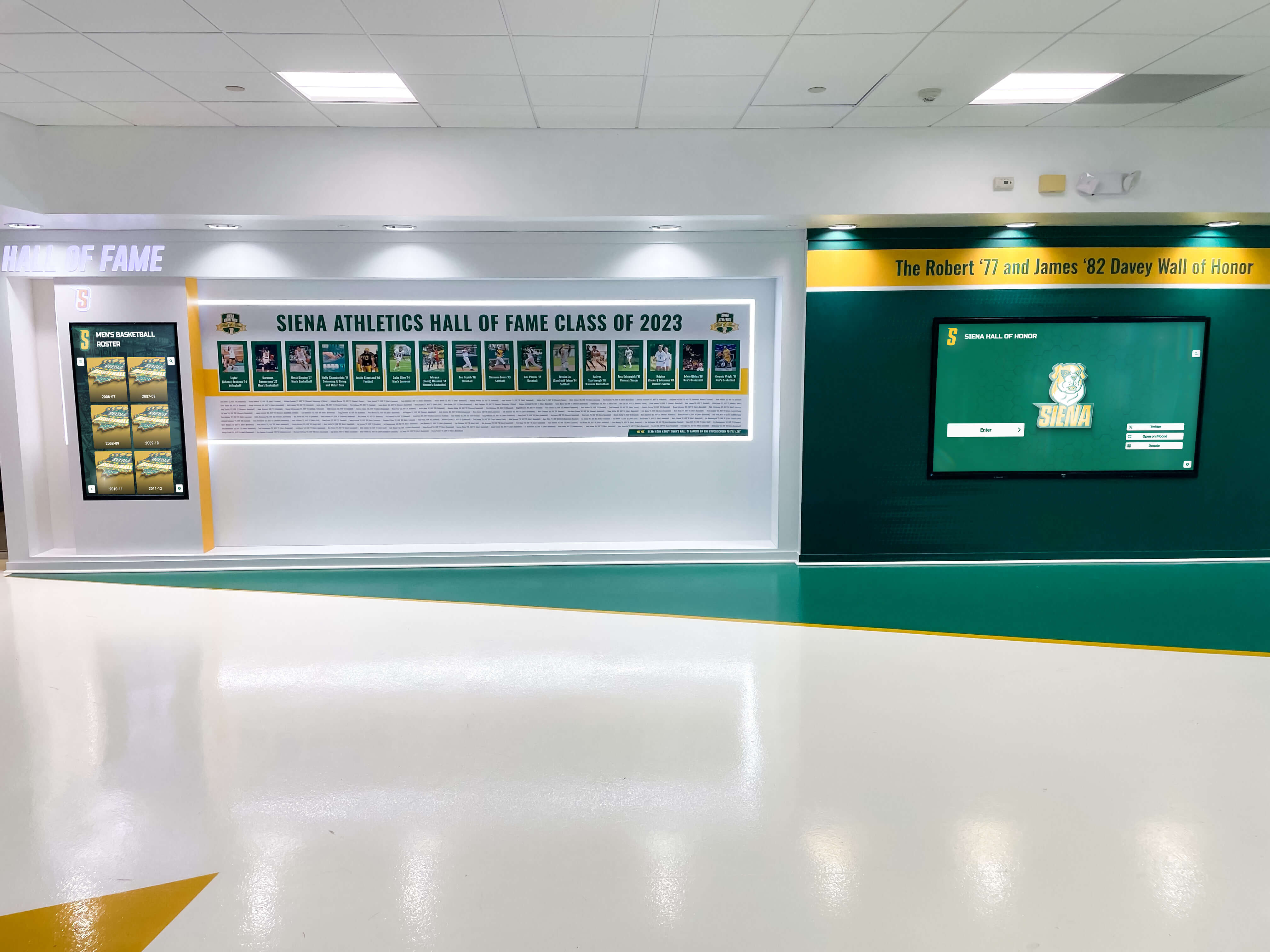
Players who master basketball fundamentals including rules knowledge, develop elite skills, and demonstrate sustained excellence throughout their careers earn recognition that extends beyond individual games into lasting legacy through hall of fame honors and achievement displays.
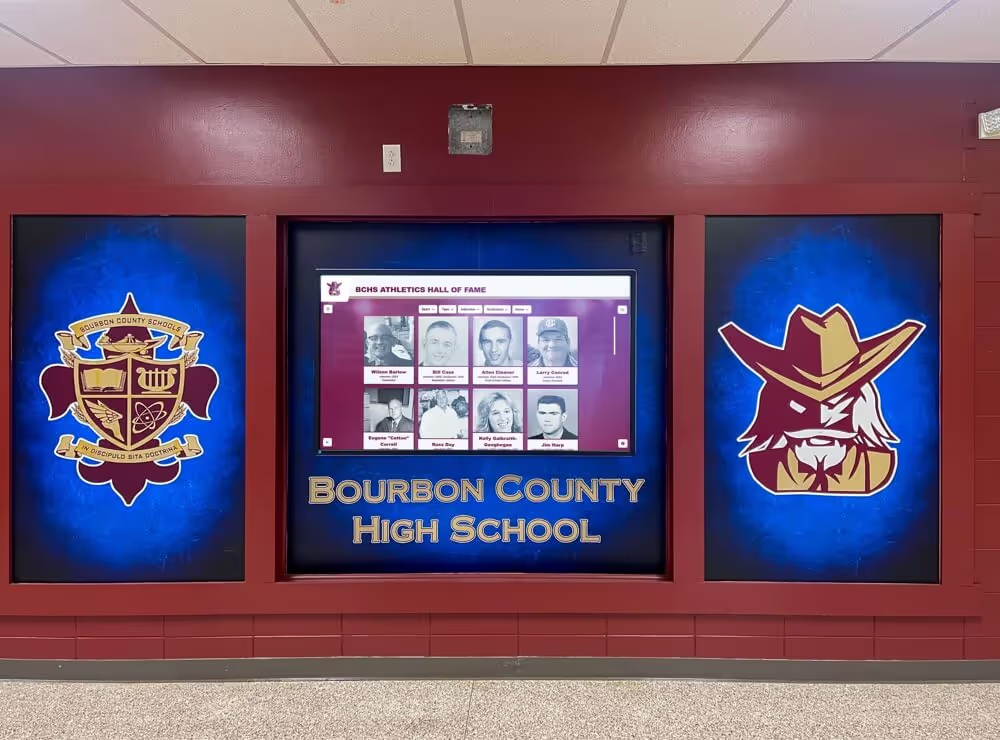
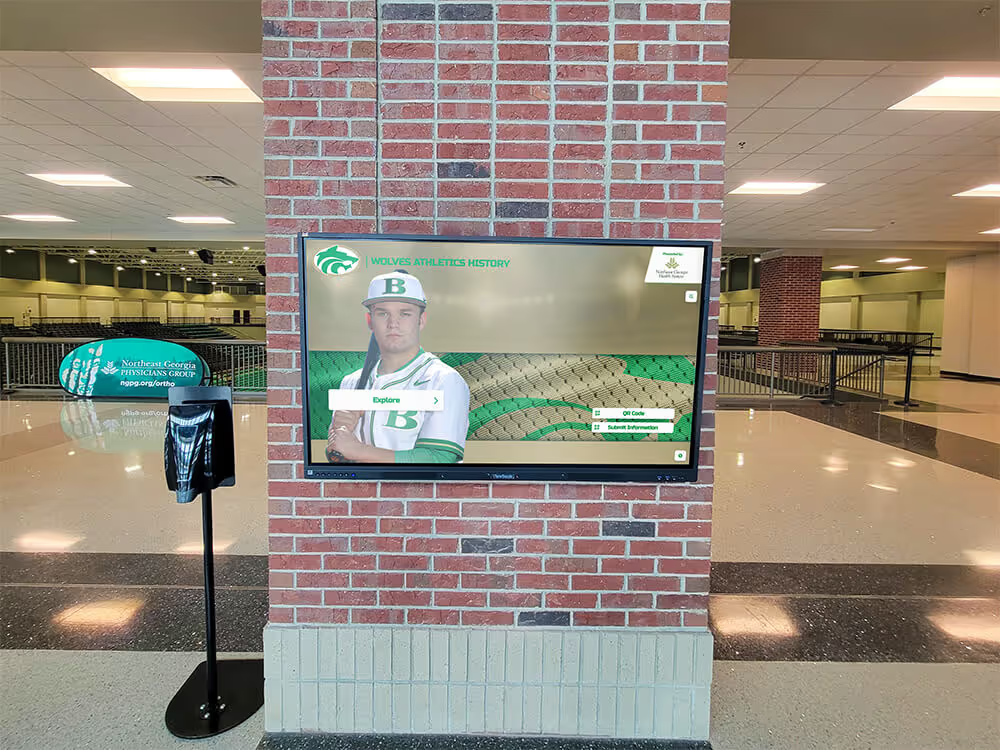
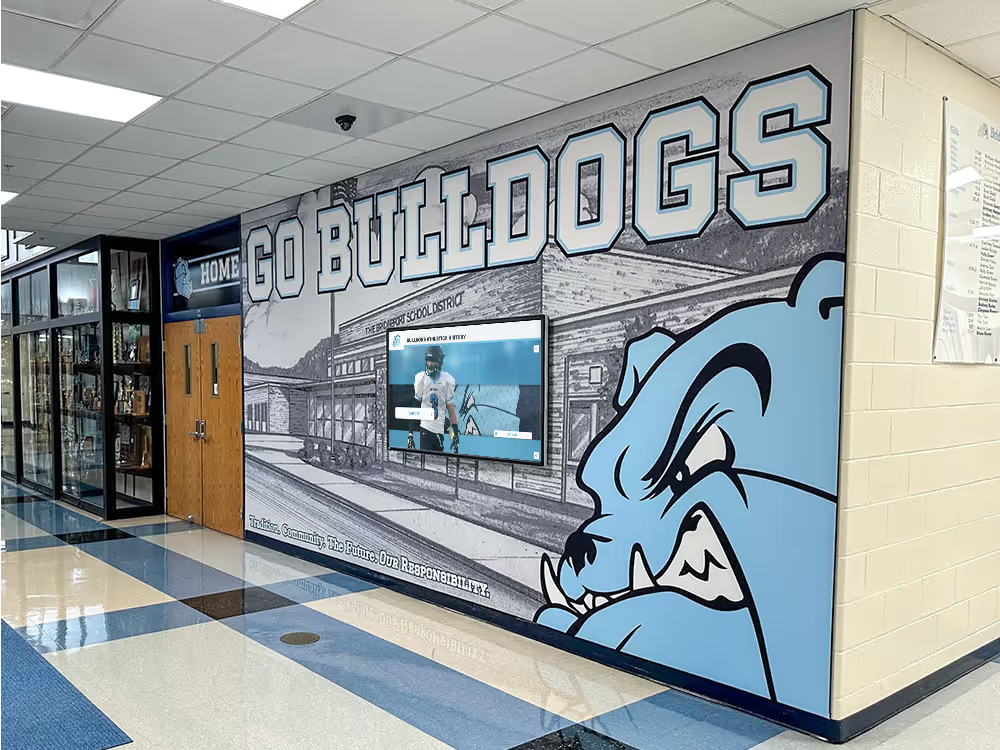
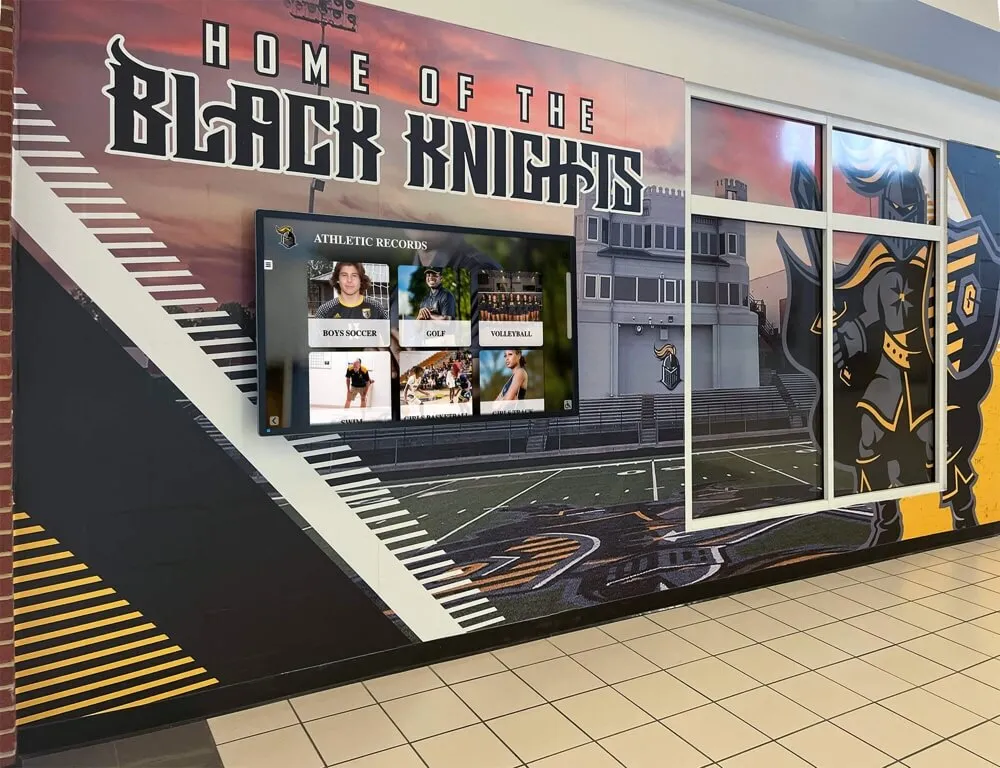
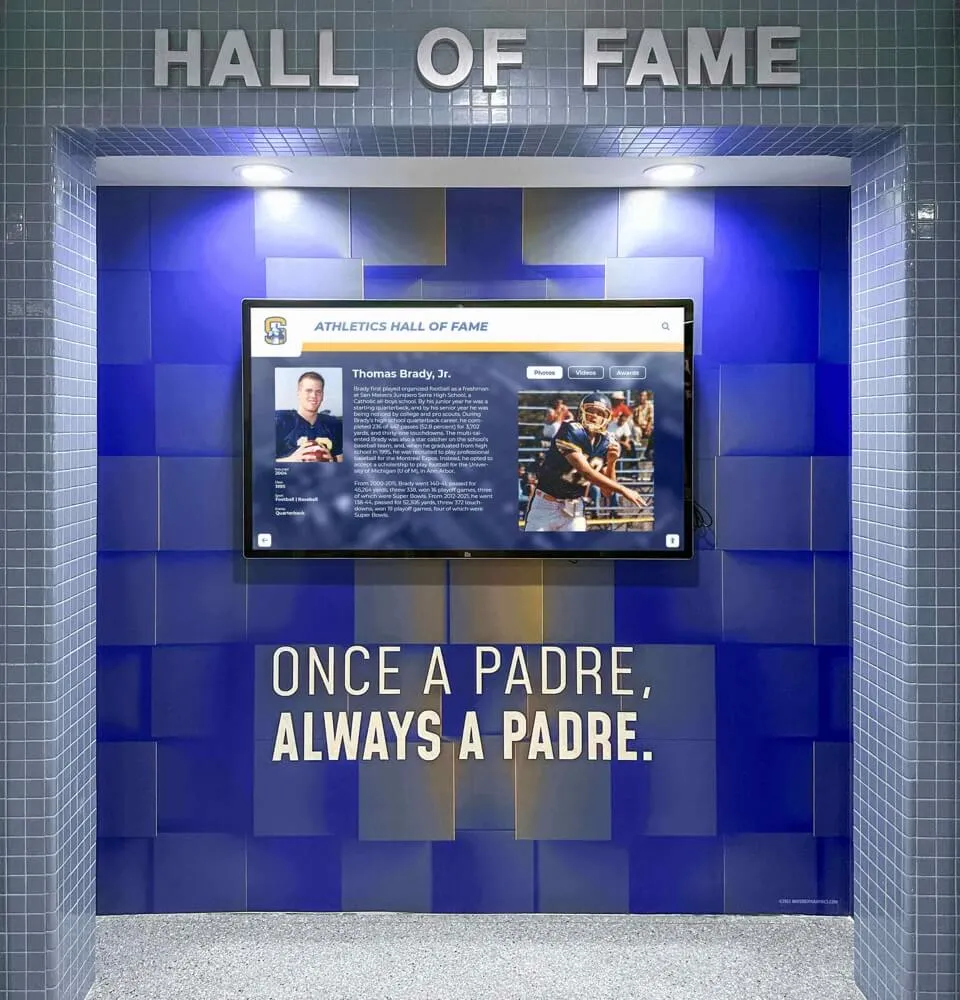
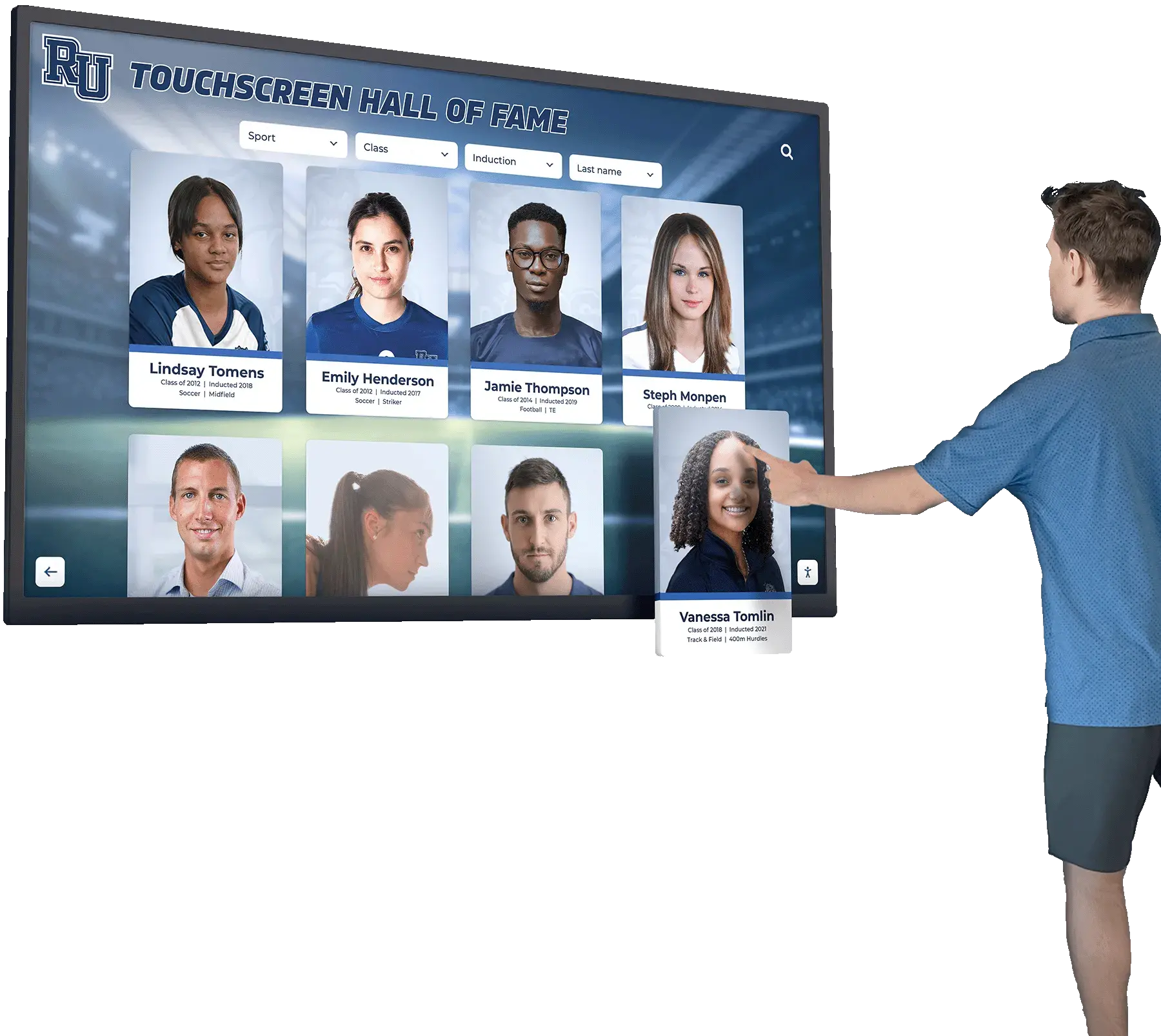
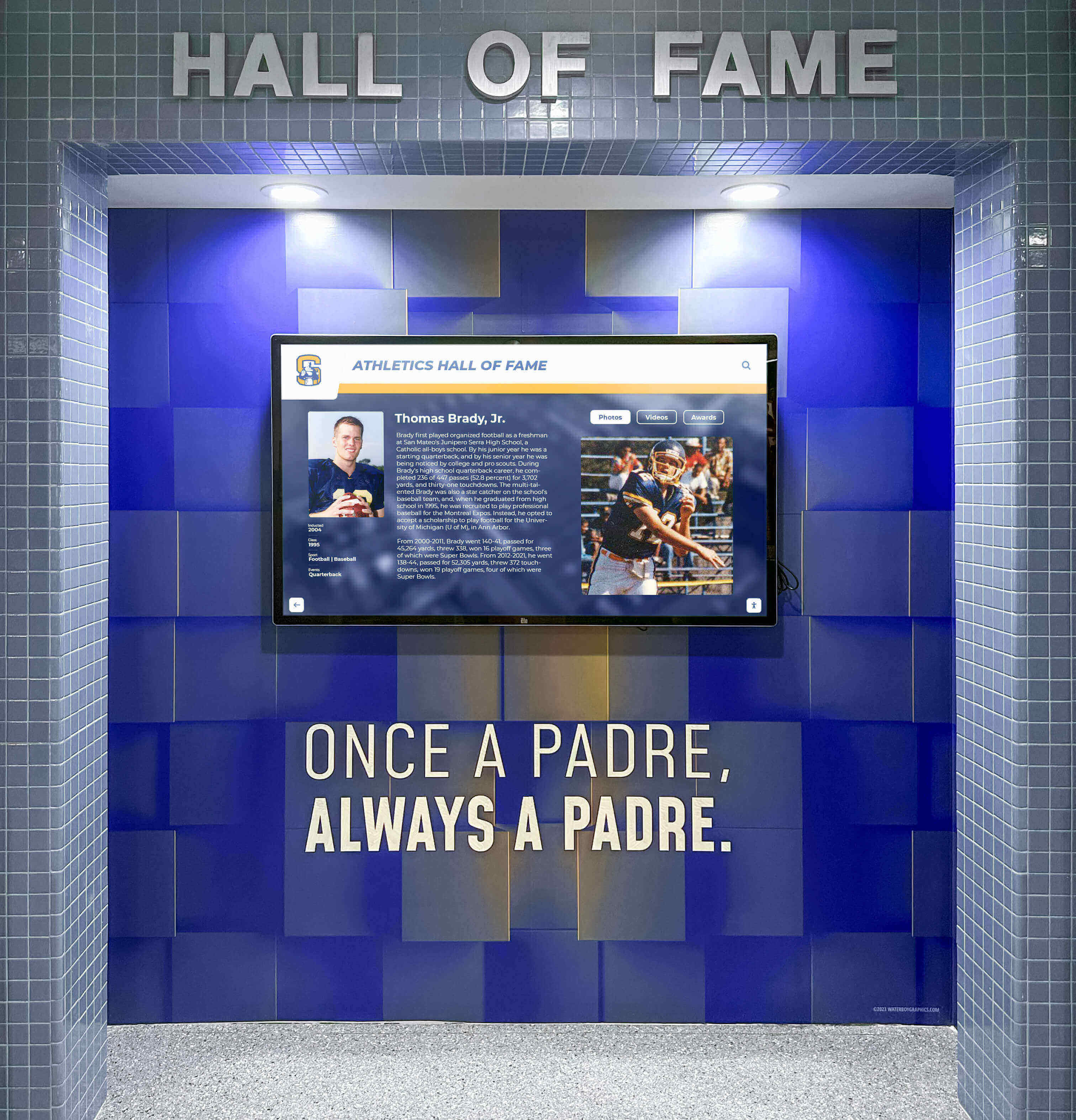
Modern schools preserve basketball achievements through interactive digital displays that showcase student-athlete excellence in dynamic formats that traditional plaques cannot match. These systems enable:
Real-Time Recognition: Student-athletes who achieve milestones like 1,000 career points, single-game scoring records, or championship victories receive immediate recognition rather than waiting months or years for traditional display updates.
Comprehensive Achievement Documentation: Digital platforms showcase complete statistics, career highlights, championship teams, and individual honors in searchable formats that preserve basketball program history comprehensively.
Inspirational Visibility: When current players see tangible evidence of previous athletes’ excellence—complete with statistics, photos, and achievement details—they develop specific, measurable goals rather than vague aspirations about basketball success.
Community Connection: Alumni who contributed to basketball program excellence maintain connections to current teams through visible recognition that validates their legacy and encourages continued support through mentorship, attendance, and philanthropic engagement.
Building Excellence Through Team Recognition Systems
Successful basketball programs recognize that individual excellence emerges from team cultures emphasizing:
Fundamental Mastery: Programs teaching proper techniques—from legal footwork that avoids traveling violations to defensive positioning that draws charging fouls rather than blocking fouls—build foundations for sustained competitive success.
Rules Literacy: Teams understanding referee signals commit fewer violations, maintain better composure, and execute strategies more effectively because players make decisions based on comprehensive basketball knowledge.
Competitive Character: Excellence requires balancing intense competition with sportsmanship standards that avoid technical fouls and maintain program reputation. Athletes learning this balance during high school basketball often apply these character lessons throughout their lives.
Legacy Consciousness: When programs showcase previous teams’ championships and individual achievements prominently, current athletes understand they’re competing not just for seasonal success but for lasting recognition among program legends.
Conclusion: Mastering the Visual Language of Basketball
Basketball referee signals represent far more than arbitrary hand gestures—they constitute a sophisticated visual language enabling fair, efficient, and transparent game administration across millions of basketball games played annually from elementary school gymnasiums to professional arenas. Understanding these signals enhances your basketball experience whether you’re competing for championships, coaching future athletes, supporting your child’s team, or enjoying the sport as a dedicated fan.
Players who invest time learning referee signals gain competitive advantages through better adjustments, reduced violations, and improved composure. Coaches who teach signal literacy build more disciplined teams that execute strategies effectively and maintain focus during crucial moments. Fans who understand officiating signals engage more deeply with games, appreciating the complexity beyond simple basket-making and developing informed perspectives on controversial calls.
As you continue your basketball journey—whether pursuing excellence that leads to hall of fame recognition, developing young athletes, or simply enjoying the sport’s artistry—comprehensive rules knowledge including referee signal literacy serves as foundation for deeper appreciation and higher performance. The visual language officials use connects all basketball participants across competitive levels and decades of the sport’s evolution, creating shared understanding that preserves basketball’s integrity while celebrating achievement at every level.
Ready to celebrate your basketball program’s excellence with professional recognition displays that honor championship teams, individual achievement, and program history in engaging digital formats? Discover how Rocket Alumni Solutions creates interactive touchscreen displays that transform static trophy cases into dynamic celebration platforms inspiring current athletes while preserving your program’s legacy for future generations.