



Key Takeaways
Complete guide to baseball diamond dimensions across all levels—youth, high school, college, and MLB. Essential specifications for base paths, pitching distances, outfield measurements, and field renovation planning.
Planning a baseball field renovation, marking new base paths, or simply answering a player’s question about the exact distance to first base? Understanding precise baseball diamond dimensions proves essential for facilities managers, athletic directors, coaches, booster clubs, and anyone involved in baseball field construction or maintenance. Yet field specifications vary significantly across different playing levels—a youth league diamond differs substantially from a high school field, which differs again from college and professional dimensions.
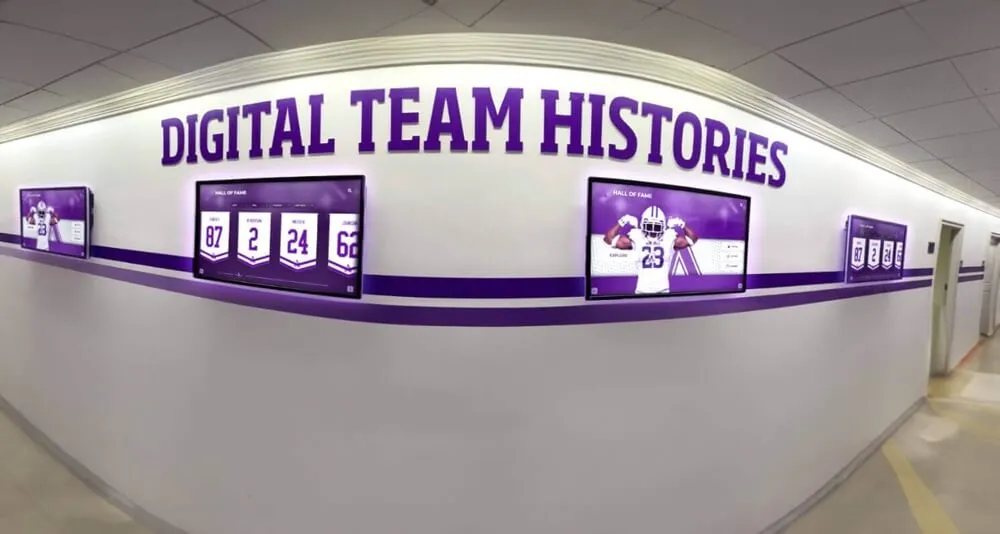
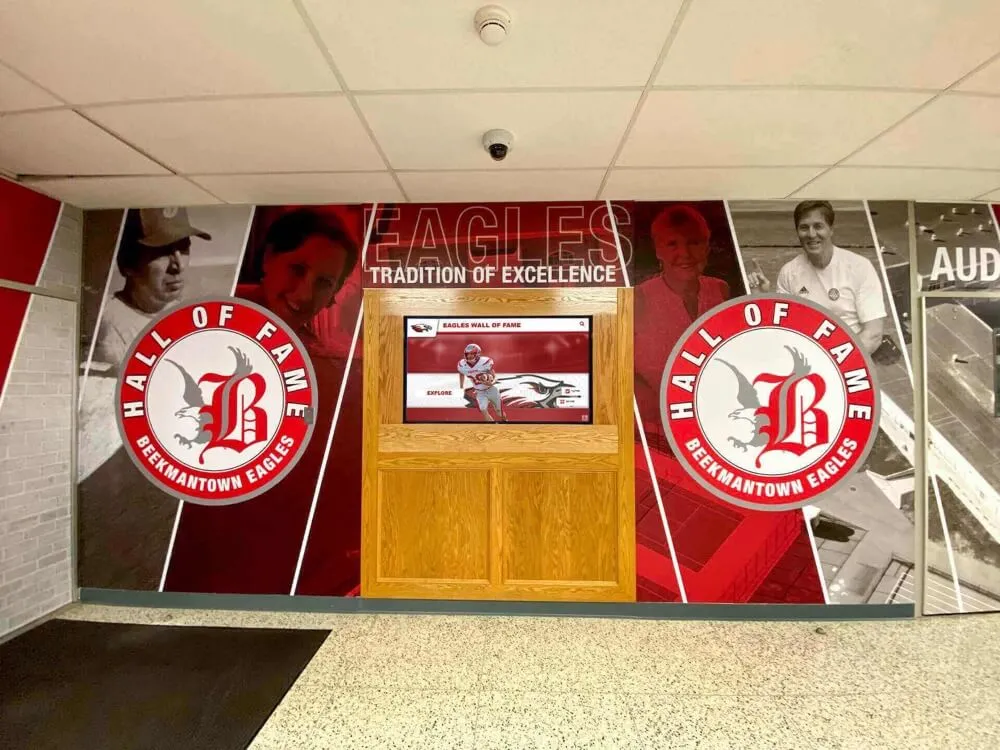
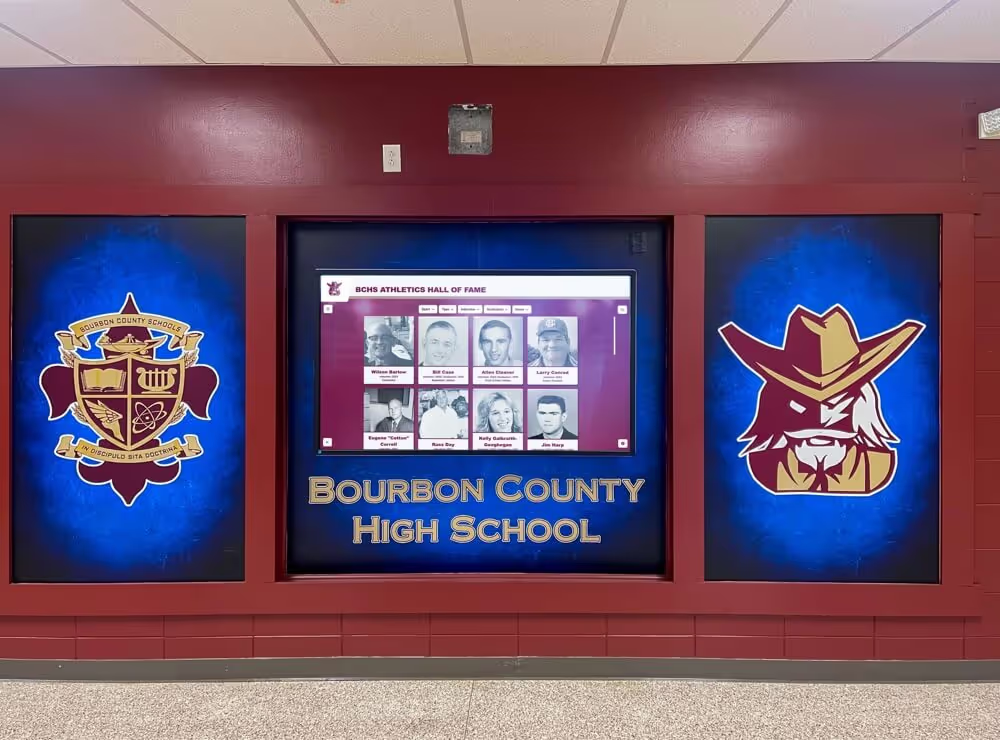
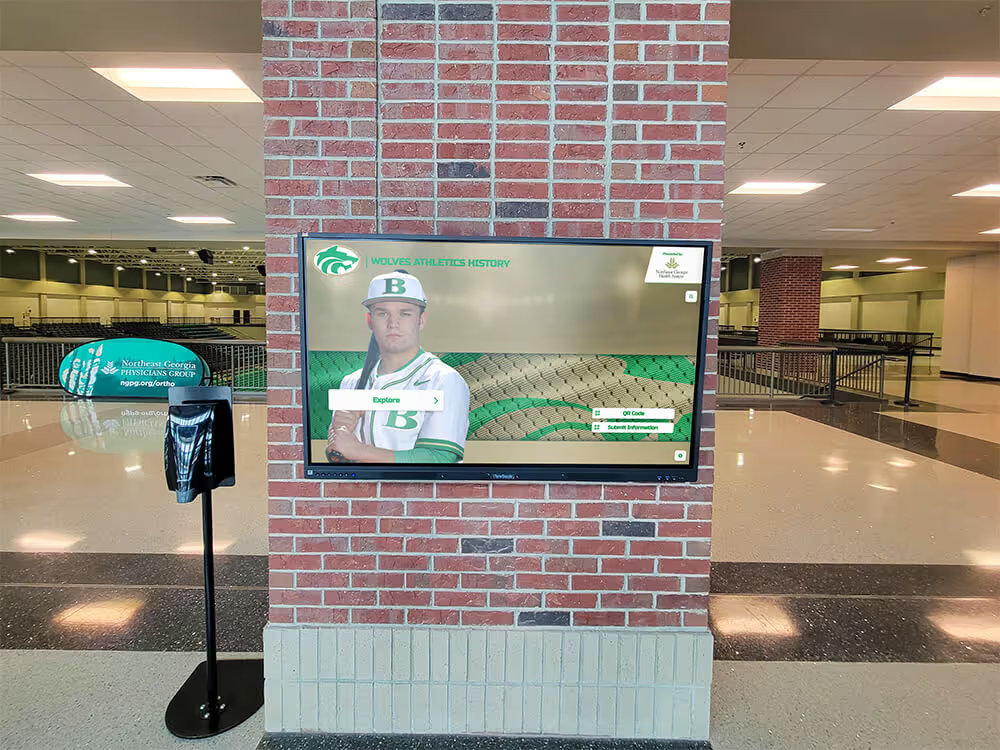
This comprehensive guide details exact baseball diamond dimensions for every competitive level, explains the reasoning behind measurement standards, provides practical guidance for field marking and renovation, and explores how modern recognition displays at baseball facilities celebrate player achievements in the same space where those accomplishments occurred.
Understanding Baseball Diamond Fundamentals
Before examining specific dimensions, understanding baseball field terminology and measurement conventions ensures accurate communication about field specifications.
The Baseball Diamond Shape
Despite the name “diamond,” a baseball field is actually a square rotated 45 degrees, creating the familiar diamond appearance when viewed from behind home plate. The four bases—home plate, first base, second base, and third base—form the corners of this square, with the distance between consecutive bases called the “base path.”
Home Plate Specifications: Home plate differs from the other bases in shape. Rather than a square cushion, home plate is a five-sided slab, 17 inches wide at the front edge (facing the pitcher) and tapering to a point at the back. This distinctive shape provides umpires clear visual reference for calling balls and strikes while defining the width of the strike zone.
Base Specifications: First, second, and third bases are square cushions, traditionally 15 inches per side in professional baseball. Youth leagues may use slightly smaller bases for proportionality to player size. Bases are positioned so the 90-degree corner of each base touches the theoretical corner point of the diamond square.
The Infield vs. Outfield: The infield comprises the dirt area including the diamond, base paths, and pitcher’s mound. The outfield extends from the outer edge of the infield dirt to the outfield fence. The infield-outfield boundary is typically marked by the “grass line” on natural grass fields or color change on artificial surfaces.

Standard Measurement Reference Points
Baseball field measurements use specific reference points ensuring consistency:
Base Path Distance: The official base path distance measures from the rear corner of home plate to the center of second base, and from the center of first base to the center of third base. Each base path segment (home to first, first to second, second to third, third to home) measures the same distance, forming a perfect square.
Pitching Distance: The pitching distance measures from the rear point of home plate to the front center of the pitching rubber. The pitching rubber is a rectangular slab positioned on top of the pitcher’s mound at a specified distance and height.
Foul Lines: The first and third base foul lines extend from the rear corners of home plate through the outer edges of first and third bases, continuing to the outfield fence. These lines define fair territory—balls landing on the line are considered fair, not foul.
Youth Baseball Diamond Dimensions
Youth baseball organizations use modified dimensions accommodating developing players’ physical capabilities while maintaining proper geometric relationships between field elements.
Little League Baseball Dimensions (Ages 9-12)
Little League represents the most widely recognized youth baseball organization, with specific field requirements:
Base Path Distance: 60 feet Pitching Distance: 46 feet Home Run Fence Distance: 200 feet minimum (recommended 225-250 feet) Base Size: 15 inches square Pitcher’s Mound Height: 6 inches
These dimensions allow youth players to develop proper baseball fundamentals—base-running speed, throwing accuracy, hitting power—without requiring physical capabilities beyond their developmental stage. The shorter pitching distance enables consistent strike-throwing while the reduced base paths accommodate developing running speed.
Tee Ball and Coach Pitch Modifications: Younger divisions (ages 4-8) often use even smaller dimensions:
- Base paths: 50 feet
- Pitching distance: 38-42 feet (when applicable)
- No raised mound in many leagues
Travel Baseball and Select Teams (Ages 13-14)
Intermediate youth divisions bridge the gap between Little League and high school dimensions:
Base Path Distance: 70-80 feet (varies by organization) Pitching Distance: 50-54 feet Outfield Fence: 250-300 feet Pitcher’s Mound Height: 8-10 inches
These transitional dimensions help players adjust gradually to full regulation size rather than making dramatic jumps from youth to high school fields. Organizations like Pony Baseball, Babe Ruth League, and various travel ball associations use these intermediate specifications.
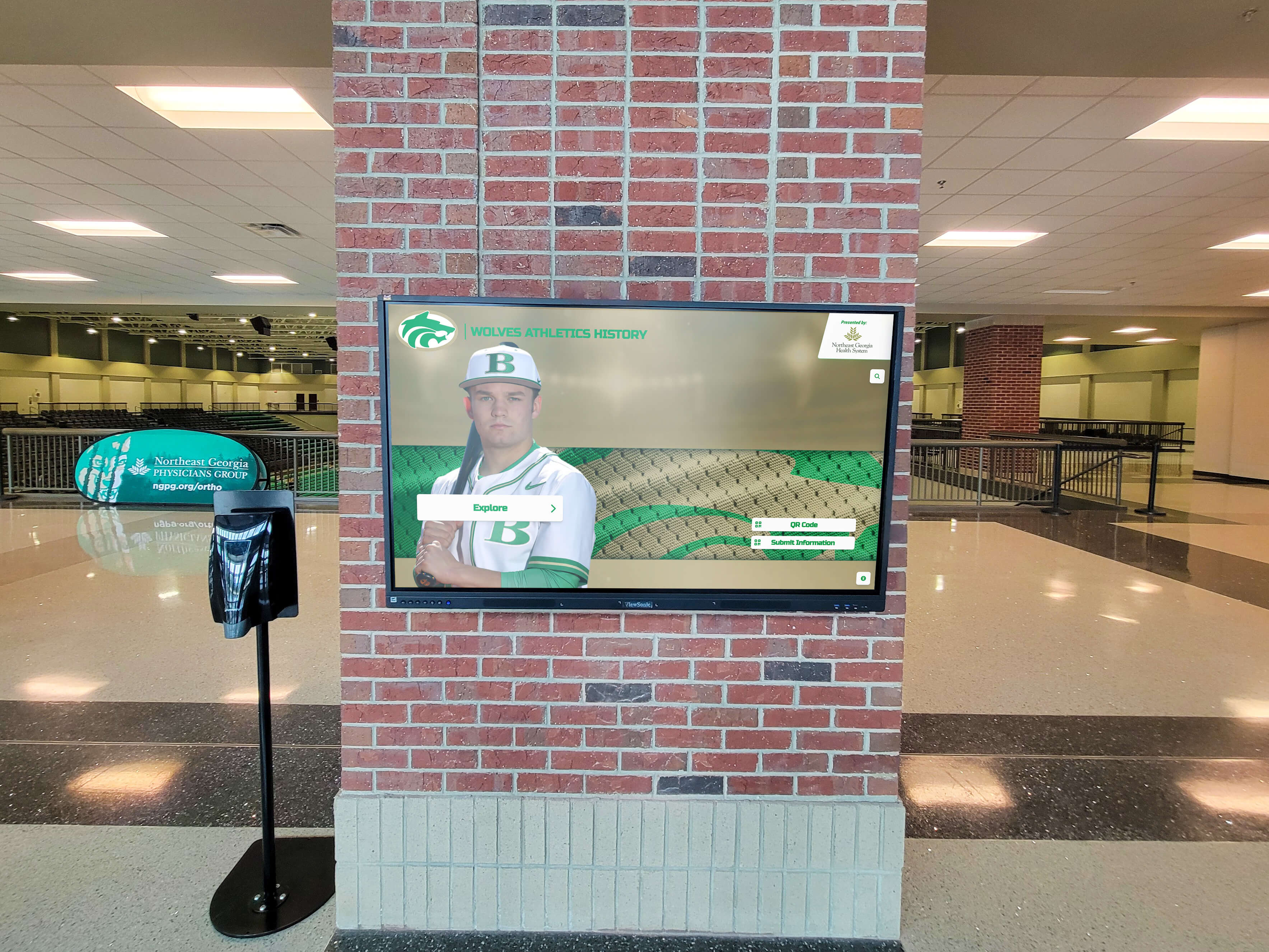
Schools planning baseball facility improvements often coordinate field dimensions with comprehensive recognition displays that celebrate batting achievements, pitching records, and team championships in the same facility where players pursue those milestones.
High School Baseball Diamond Dimensions
High school baseball fields follow standardized dimensions established by the National Federation of State High School Associations (NFHS), though some variation occurs based on available space and facility age.
NFHS Official Specifications
Base Path Distance: 90 feet Pitching Distance: 60 feet, 6 inches Home Run Fence Distance: Varies (typically 300-330 feet minimum) Base Size: 15 inches square Pitcher’s Mound Height: 10 inches Mound Diameter: 18 feet
High school dimensions match professional baseball specifications for the infield, allowing players to develop skills on regulation-size fields they’ll encounter in college and professional baseball.
Outfield Dimension Variations
While infield dimensions remain standardized, high school outfield dimensions vary significantly based on:
Available Land Area: Schools with limited property may have shorter outfield fences (280-300 feet) while schools with ample space extend fences to 330-370 feet or more.
Field Symmetry: Traditional fields feature symmetric dimensions—equal distances down the left and right field lines with deeper center field (example: 330-360-330). However, many fields have asymmetric layouts accommodating property boundaries, existing structures, or terrain features.
Fence Height: Outfield fence heights typically range from 4-8 feet, with taller fences (8-12 feet) sometimes used to prevent frequent home runs on fields with shorter distances.
High School Field Marking Specifications
Proper field marking requires precision:
Foul Lines: Lines should be 2-4 inches wide, marked with chalk (temporary) or paint (semi-permanent). Professional-grade field paint lasts longer and provides cleaner lines.
Batter’s Boxes: Two batter’s boxes (left and right side of home plate) measure 4 feet by 6 feet, positioned 6 inches from home plate.
Catcher’s Box: The area behind home plate measures 43 inches wide and 8 feet long, providing the designated area for catchers.
Coaching Boxes: First and third base coaching boxes measure 4 feet by 8 feet, positioned 15 feet from the base lines.
Athletic directors managing comprehensive baseball programs often implement digital record tracking systems that document individual achievements, team records, and championship seasons visible throughout athletic facilities.

College Baseball Diamond Dimensions
NCAA baseball uses identical infield dimensions to professional baseball while maintaining some flexibility in outfield specifications.
NCAA Official Requirements
Base Path Distance: 90 feet Pitching Distance: 60 feet, 6 inches Outfield Fence Distance: 320 feet minimum (325 feet recommended) Base Size: 15 inches square (changing to 18 inches in recent rules) Pitcher’s Mound Height: 10 inches Mound Diameter: 18 feet
NCAA Division I programs typically feature premium facilities with symmetric outfield dimensions around 330-400 feet and state-of-the-art field surfaces, lighting, and amenities.
Recent Dimensional Changes
Larger Bases (2023 Rule Change): MLB and NCAA recently adopted 18-inch square bases (increased from 15 inches) to improve player safety by reducing collision risk during slides and providing more landing area. This change effectively reduces base path distance by 4.5 inches on each segment—a meaningful difference for stolen base attempts and infield plays.
Mound Distance Experiments: Some collegiate summer leagues and independent leagues have experimented with slightly increased pitching distances (61 feet) to reduce pitcher dominance, though NCAA maintains the traditional 60'6" specification.
College Field Premium Features
Top college programs feature sophisticated field infrastructure:
Drainage Systems: Advanced sub-surface drainage prevents rainouts and accelerates field recovery after weather events.
Bermuda Grass Hybrids: Warm-climate schools use specialized turfgrass varieties providing superior durability and appearance.
Underground Irrigation: In-ground sprinkler systems ensure consistent field conditions throughout seasons.
Sunken Dugouts: Many college fields feature below-grade dugouts improving sightlines for spectators.
Premium Warning Tracks: Crushed brick or synthetic warning tracks provide consistent surface alerting outfielders to fence proximity.
College programs celebrating baseball tradition often feature comprehensive historical displays documenting program evolution, championship seasons, and legendary players in facilities adjacent to fields where current athletes compete.
Professional Baseball Diamond Dimensions
Major League Baseball establishes official field specifications, though individual ballparks retain unique characteristics creating distinct playing environments.
MLB Official Specifications
Base Path Distance: 90 feet Pitching Distance: 60 feet, 6 inches Minimum Outfield Distance: 325 feet (foul lines), 400 feet (center field) Base Size: 18 inches square (as of 2023) Pitcher’s Mound Height: 10 inches Mound Diameter: 18 feet
The Origin of 60 Feet, 6 Inches
Baseball’s pitching distance has a curious history. The original distance was 45 feet in the 1880s. When moved to its current distance in 1893, the intended measurement was 60 feet. However, a surveyor misread “60’ 0"” as “60’ 6"”, and the error became the permanent standard—a measurement oddity that persists over 130 years later.
Outfield Dimension Variations in MLB
Unlike the standardized infield, MLB ballparks feature distinctive outfield configurations:
Fenway Park (Boston Red Sox):
- Left Field: 310 feet
- Center Field: 390 feet
- Right Field: 302 feet
- Features: 37-foot Green Monster in left field
Yankee Stadium (New York Yankees):
- Left Field: 318 feet
- Center Field: 408 feet
- Right Field: 314 feet
Coors Field (Colorado Rockies):
- Left Field: 347 feet
- Center Field: 415 feet
- Right Field: 350 feet
These variations significantly impact playing strategy, roster construction, and home field advantage—shorter fences favor power hitters while deeper outfields favor pitching and defensive-oriented teams.
Foul Territory Variations
MLB ballparks also differ dramatically in foul territory area—the space between foul lines and stands:
Large Foul Territory: Oakland Coliseum features extensive foul ground, giving defenses more opportunity to catch foul pop-ups and reducing batting averages.
Minimal Foul Territory: Newer ballparks like Chase Field and Minute Maid Park position seating close to playing areas, reducing foul territory and favoring hitters.
Professional teams celebrating franchise history often implement interactive recognition displays in stadium concourses where fans explore player achievements, historical moments, and championship seasons during games.

Practical Field Renovation and Construction Guidance
Understanding specifications helps facilities managers and booster clubs planning field construction or renovation projects.
Field Layout and Measurement Process
Establishing Home Plate: Begin by determining home plate location based on field orientation. Ideal orientation positions home plate in the southwest corner so afternoon sun affects neither batter nor pitcher directly. The exact compass heading varies by latitude, but generally ranges from 240-270 degrees (west-southwest).
Measuring Base Paths: Using the Pythagorean theorem, calculate the distance from home to second base (diagonal of the square). For 90-foot base paths, the home-to-second distance is approximately 127 feet, 3 3/8 inches. Mark this diagonal first, then measure perpendicular 90-foot segments to establish first and third base locations.
Surveying Accuracy: Professional field construction uses laser surveying equipment ensuring measurements accurate within 1/4 inch. For school projects, quality measuring tapes and careful technique achieve acceptable accuracy.
Permanent Markers: Install permanent in-ground markers at base locations allowing consistent field preparation. These markers (typically metal stakes or buried magnets) remain when bases are removed, ensuring exact repositioning.
Pitcher’s Mound Construction
The pitcher’s mound requires careful construction maintaining proper height, slope, and playing surface:
Mound Height Regulation: The pitching rubber must be exactly 10 inches above home plate level. Survey from home plate to ensure accuracy.
Mound Slope: The mound slopes gradually from the rubber toward home plate, then more steeply on the back and sides. The front slope should be approximately 1 inch per foot for the first 6 feet in front of the rubber.
Mound Composition: Quality mounds use specialized clay (not regular infield mix) providing proper firmness, drainage, and durability. Professional-grade mound clay maintains consistency through seasons while preventing erosion.
Landing Area: The area immediately in front of the rubber (where pitchers land during delivery) requires particular attention, as this surface experiences the most wear and must remain level and firm for pitcher safety and performance.
Infield Surface Specifications
Skinned Infield Size: The dirt area of the infield varies by preference and level. High school fields typically use 60-70 foot radius arcs from home plate and second base defining the grass line. Some fields use 90-foot arcs creating larger dirt areas.
Infield Mix Composition: Quality infield mix contains specific ratios of sand, silt, and clay providing proper drainage, firmness, and playability. Professional consultants can test existing soil and recommend amendments.
Grass Selection: Infield grass selection depends on climate. Warm-season grasses (Bermuda, Zoysia) work best in southern climates while cool-season varieties (Kentucky Bluegrass, Perennial Ryegrass) suit northern regions.
Outfield Considerations
Fence Selection: Outfield fences range from simple chain-link to padded permanent structures. Consider:
- Safety: Padded fencing reduces injury risk
- Visibility: Dark green or black fencing improves ball visibility
- Advertising: Many programs offset costs through fence advertising space
- Height: Taller fences reduce home runs on smaller fields
Warning Track: Standard warning tracks extend 10-15 feet from the fence, providing different surface texture (typically crushed brick or dirt) alerting fielders to fence proximity.
Outfield Grading: Ensure outfield slopes gently away from the infield (minimum 1-2% grade) providing proper drainage. Flat or reverse-sloped outfields create standing water and unplayable conditions.
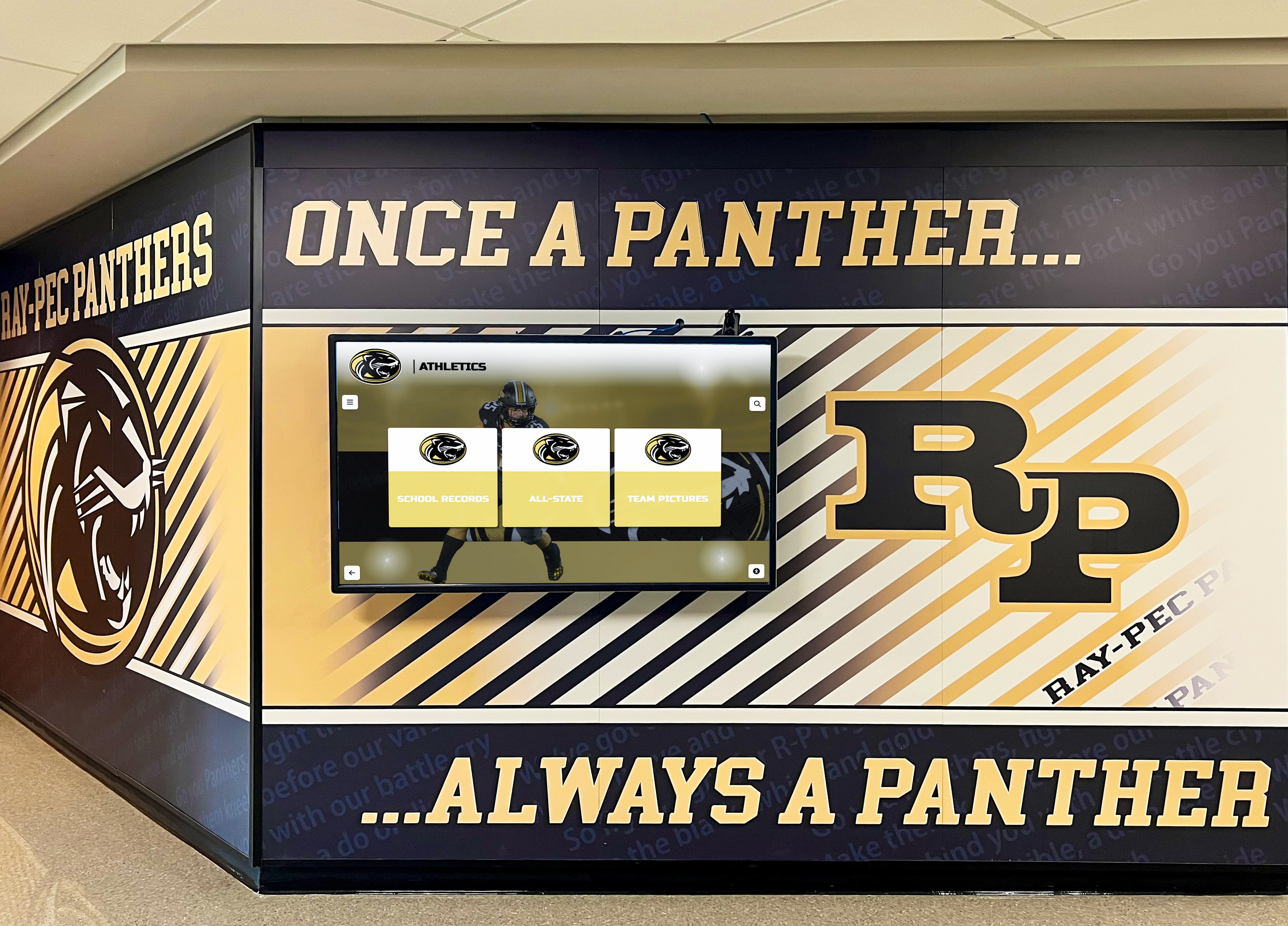
Schools planning major athletic facility renovations often coordinate field improvements with digital recognition installations celebrating athletes and acknowledging donors who funded improvements.
Field Signage and Recognition Displays
Modern baseball facilities integrate recognition elements celebrating player achievements and program history directly into field environments.
Traditional Field Signage
Outfield Distance Markers: Distance markers on outfield fences inform players and spectators of fence distance from home plate. Standard placement includes markers at regular intervals (every 10-20 feet) along fences.
Championship Banners: Outfield fences or stadium structures display championship banners acknowledging conference titles, state championships, and tournament appearances.
Retired Numbers: Programs honor exceptional players by retiring jersey numbers—displaying those numbers on outfield fences, stadium facades, or designated recognition areas.
Scoreboard Recognition: Manual or electronic scoreboards often include sections acknowledging major program achievements, record holders, or hall of fame inductees.
Modern Digital Recognition Solutions
Contemporary facilities increasingly integrate interactive digital displays providing dynamic, updatable recognition:
Record Board Displays: Digital systems showcase current record holders across multiple categories—career batting average, season home runs, single-game strikeouts—with player photos, statistics, and achievement dates. Unlike painted boards requiring periodic repainting, digital displays update instantly when records fall.
Donor Recognition: Facilities funded through booster clubs and capital campaigns incorporate donor acknowledgment displays near field entrances or in stadium concourses, recognizing individuals and businesses supporting field construction or renovation.
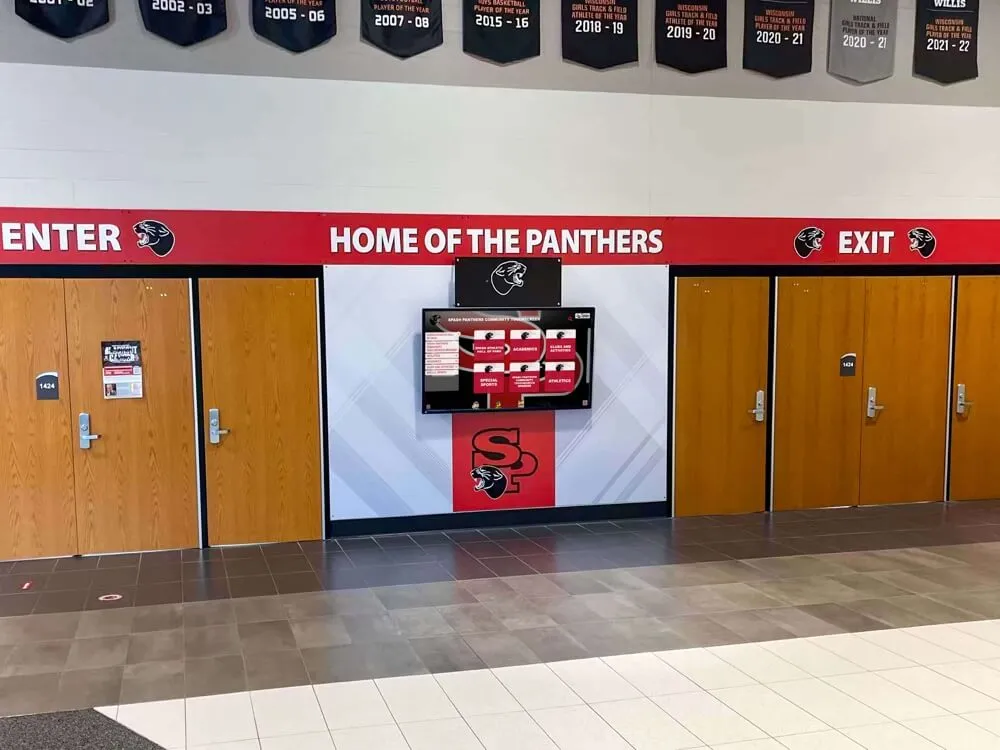
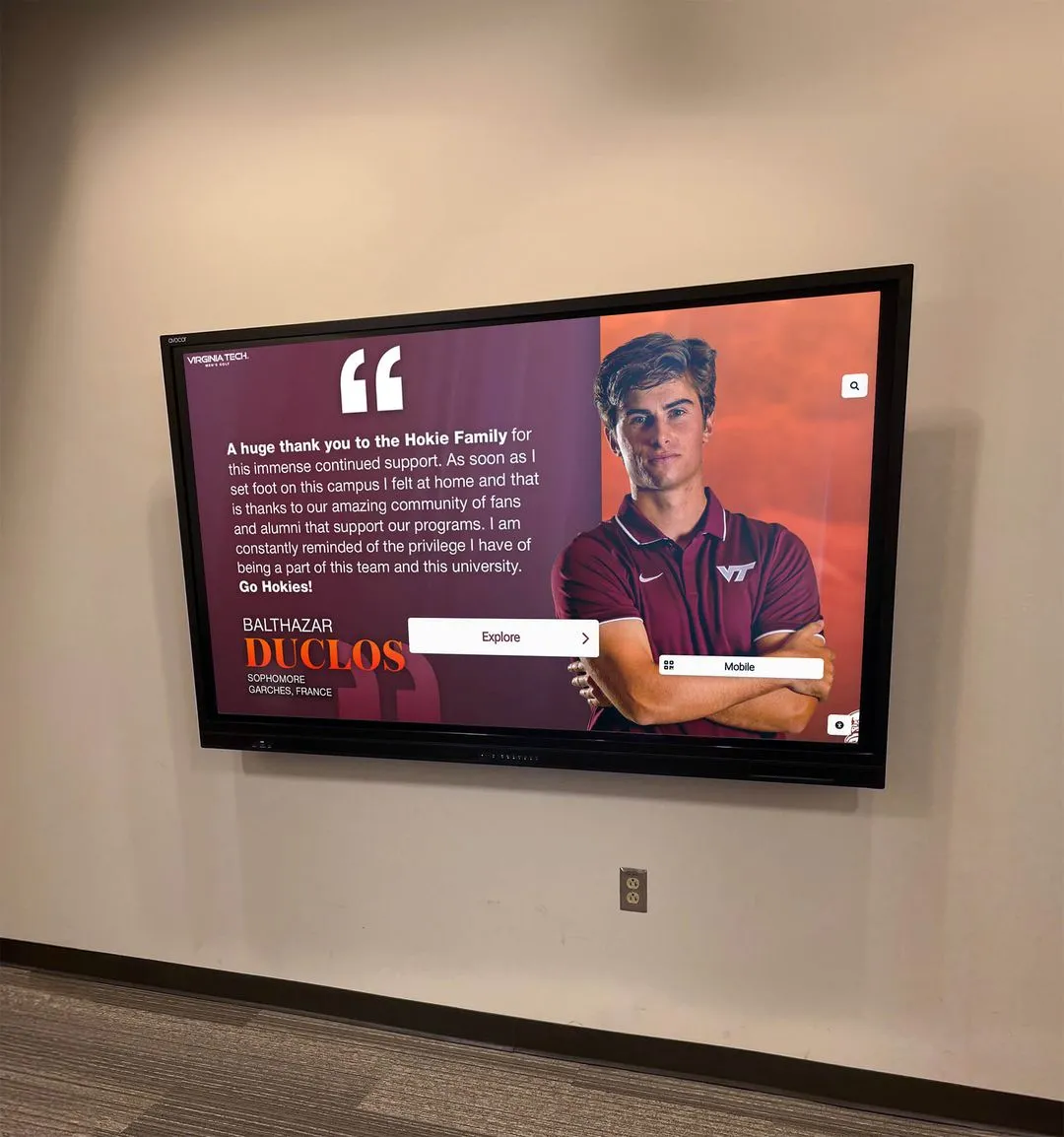
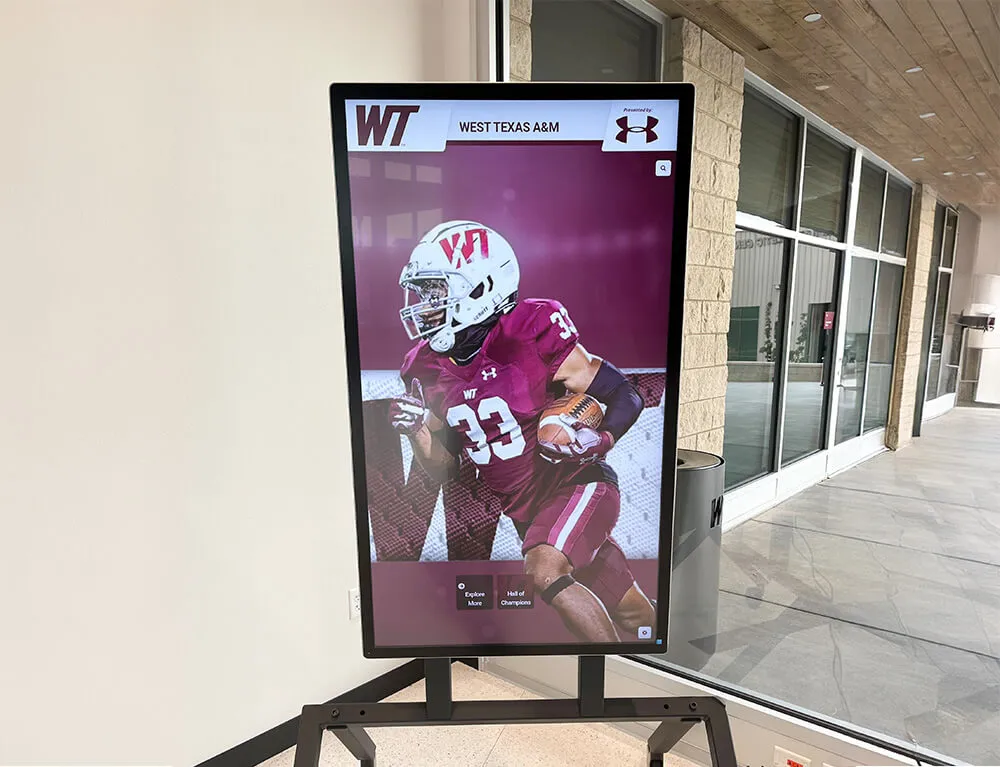
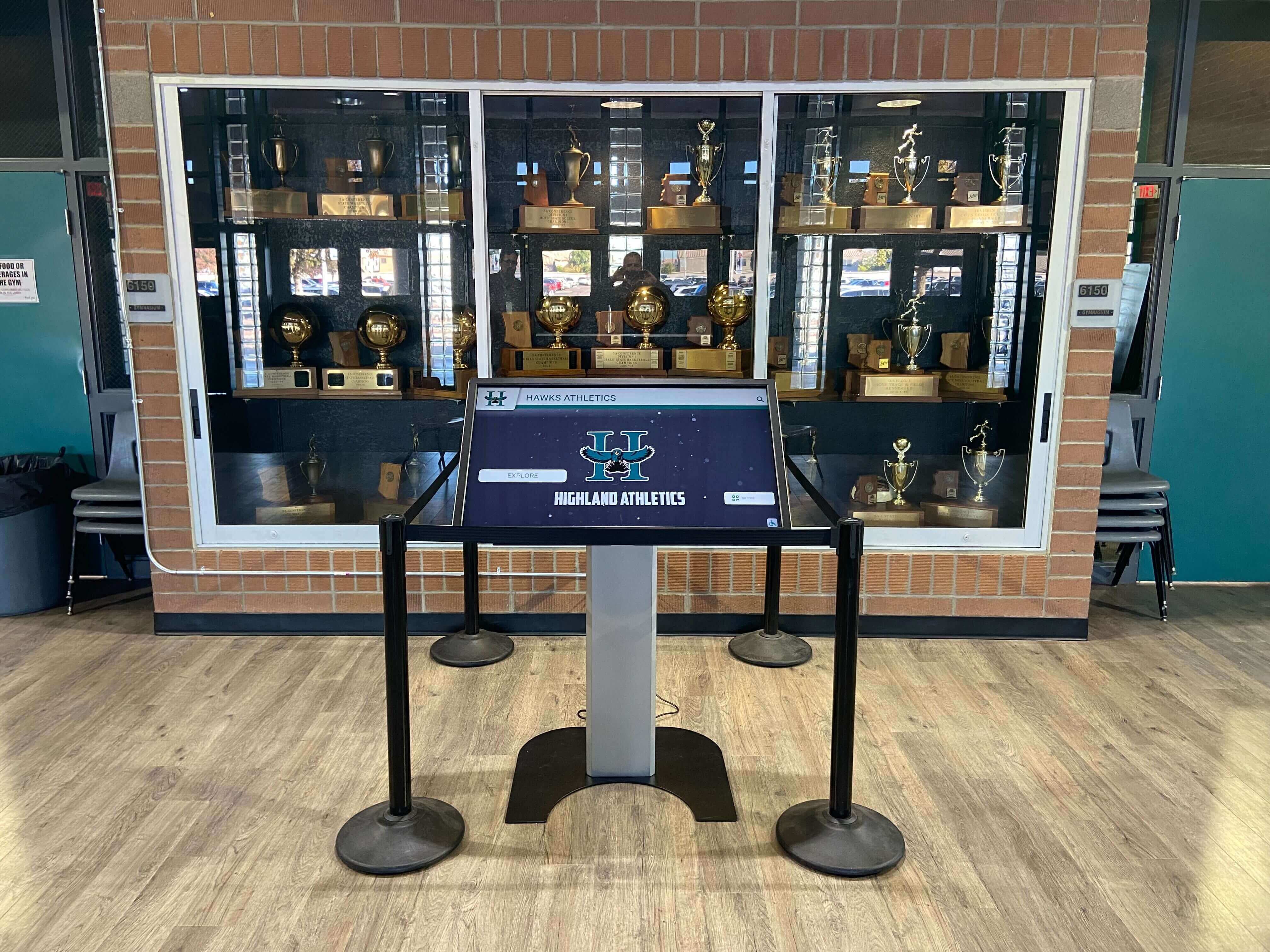
Interactive Kiosks: Touchscreen kiosks installed in stadium lobbies or concourses allow visitors to explore comprehensive program history—searching individual players, browsing season statistics, viewing historical photos, or watching highlight videos. These systems preserve institutional memory while engaging current players, families, and community members.
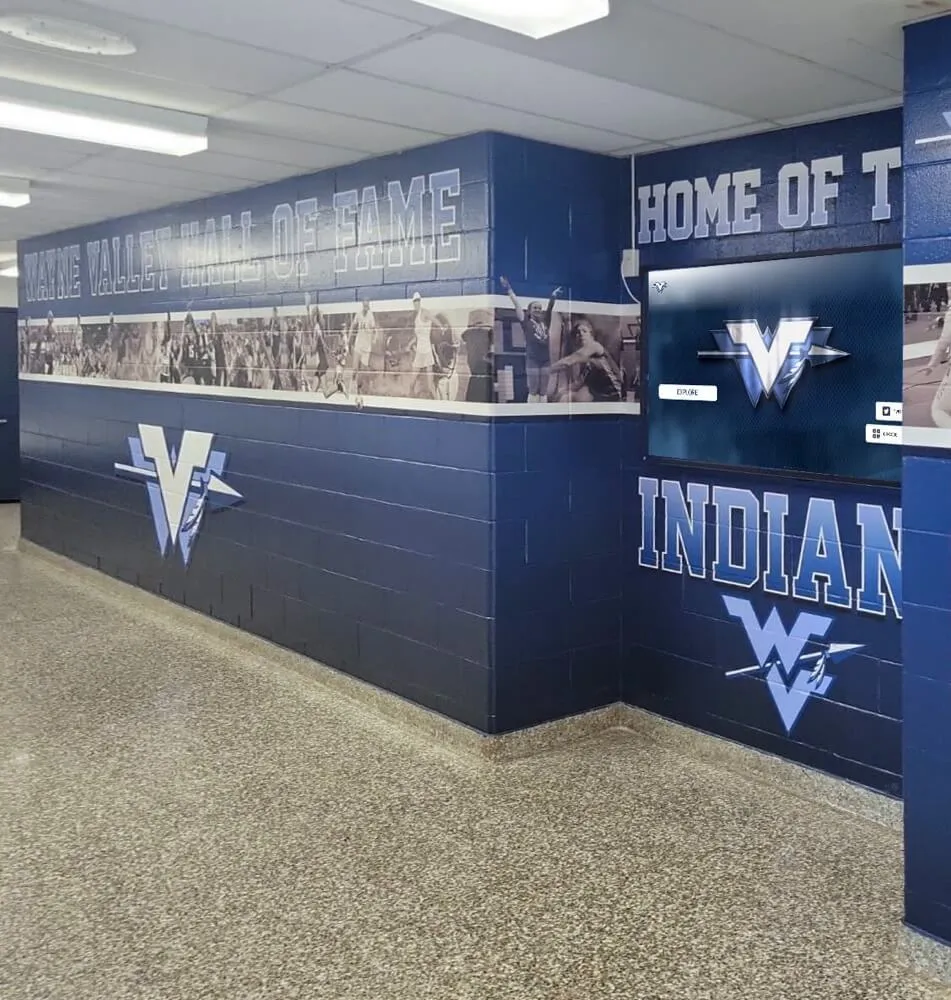
Hall of Fame Integration: Comprehensive athletic facilities feature dedicated hall of fame areas near baseball fields or in athletic complexes where inductees receive permanent recognition through professional displays documenting careers and contributions.
The Strategic Value of Field-Adjacent Recognition
Positioning recognition displays near baseball fields creates powerful connections:
Inspiration During Competition: When players see record holders acknowledged on outfield fences or in stadium displays, those visible achievements inspire performance. Current players understand that exceptional performances earn lasting recognition in the same facility where they compete.
Family Engagement: Parents and families attending games naturally engage with recognition displays—exploring team history, locating relatives who played previously, or learning about program traditions. This engagement strengthens community connection to baseball programs.
Alumni Connection: Returning alumni seek their names in program records and displays. Quality recognition systems help alumni maintain identity connection to schools and programs, strengthening long-term engagement essential for fundraising and program support.
Recruiting Impact: Prospective players and families evaluating programs notice professional recognition systems. Visible investment in honoring player achievement signals program quality and commitment to celebrating individual excellence alongside team success.
Programs implementing comprehensive athletic recognition often adopt integrated display systems spanning multiple sports, creating unified institutional approaches to celebrating student-athlete achievement.

Maintenance Standards for Different Playing Levels
Proper field maintenance ensures player safety, optimal playing conditions, and field longevity regardless of dimensional specifications.
Daily Maintenance Tasks
Pre-Game Preparation:
- Drag and level infield surface
- Water infield to proper moisture content
- Edge infield grass lines
- Chalk or paint foul lines and batter’s boxes
- Replace bases with clean, secure bases
- Inspect mound for proper height and firmness
- Remove debris from playing surface
Post-Game Procedures:
- Repair divots and holes
- Rake high-traffic areas
- Cover mound and home plate area (if applicable)
- Remove bases (some programs)
- Lock equipment and secure facility
Weekly Maintenance Needs
Mound Maintenance:
- Rebuild landing area with fresh clay
- Verify rubber height
- Repair erosion on front slope
- Pack and firm playing surface
Infield Care:
- Deep drag and level entire infield
- Add infield mix to low areas
- Edge and trim grass lines
- Repair lip between grass and dirt
Outfield Maintenance:
- Mow at appropriate height (typically 2-3 inches)
- Edge warning track
- Inspect fence for damage
- Maintain irrigation systems
Seasonal Renovation Projects
Spring Preparation:
- Rototill and grade infield
- Add fresh infield mix as needed
- Rebuild mound completely
- Aerate and overseed grass areas
- Inspect and repair drainage systems
- Paint permanent field markings
- Inspect and repair fences
Post-Season Renovation:
- Deep aeration of grass areas
- Fertilization and overseeding
- Major infield work (leveling, adding materials)
- Equipment maintenance and storage
- Facility inspection and repairs
Schools managing multiple athletic facilities often implement comprehensive tracking systems documenting maintenance schedules, facility improvements, and long-term renovation planning across all sports programs.
Multi-Purpose Field Considerations
Many schools and communities build multi-purpose fields accommodating baseball and softball on the same property, requiring careful planning addressing different dimensional requirements.
Baseball/Softball Shared Facilities
Overlapping Infields: Some facilities position baseball and softball infields adjacent or overlapping, sharing outfield space. This approach requires:
- Separate pitcher’s mounds at different distances
- Two sets of bases at different spacing
- Careful scheduling preventing conflicts
- Additional maintenance addressing higher usage
Convertible Fields: Larger properties may accommodate full-size independent baseball and softball fields sharing only outfield fencing or parking facilities.
Youth Multi-Age Facilities: Properties serving multiple age groups may include several diamonds at different dimensions:
- Tee ball/coach pitch fields (50-foot bases)
- Little League regulation (60-foot bases)
- Youth transition fields (70-80 foot bases)
- High school regulation (90-foot bases)
Strategic property layout allows fields to share outfield space, fencing, and parking while providing appropriate dimensions for each age group.
Artificial Turf Considerations
Artificial turf systems offer advantages for high-use facilities but involve significant upfront costs and specific considerations:
Dimensional Flexibility: Turf installations can incorporate multiple base path configurations with color-coded or subtly marked base locations supporting different age groups on the same surface.
Maintenance Reduction: Quality turf eliminates mowing, watering, aerating, and many traditional maintenance tasks, though specialized cleaning, grooming, and infill management remain necessary.
Playability: Modern turf systems provide excellent playability in various weather conditions, reducing rainouts and extending seasons in regions with unpredictable weather.
Cost Analysis: Initial turf installation costs $500,000-$1,000,000+ for baseball fields depending on size and quality. However, reduced maintenance costs and increased field availability may justify investment for high-use facilities.
Athletic directors evaluating major facility investments often consider how recognition technology integration complements physical infrastructure improvements, creating comprehensive facility environments celebrating athletic achievement.
Accessibility and Inclusive Field Design
Modern baseball facility planning incorporates accessibility ensuring all community members can enjoy baseball regardless of physical abilities.
ADA Compliance Requirements
Accessible Routes: Facilities must provide accessible pathways from parking areas to spectator seating, concessions, restrooms, and other public areas. These routes require:
- Minimum 36-inch width (48 inches preferred)
- Maximum 1:12 slope (8.33% grade)
- Firm, stable, slip-resistant surface
- Adequate turning radius at intersections
Spectator Seating: Bleachers and seating areas must include designated accessible seating with companion seating, dispersed throughout seating areas providing various viewing angles and price points.
Accessible Dugouts: While player areas have some exemptions, consider accessibility allowing players with disabilities full participation. Ramped dugout access and sufficient space for wheelchairs or mobility devices demonstrate commitment to inclusion.
Restroom and Concession Access: All public amenities must meet ADA specifications for accessible facilities.
Miracle League and Challenger Fields
Communities increasingly build specialized baseball facilities designed specifically for players with disabilities:
Miracle League Specifications:
- Completely flat, smooth rubber surface (no grass or dirt)
- 60-foot base paths (typically)
- Wheelchair-accessible dugouts
- Safety fencing protecting dugout areas
- Accessible routes throughout facility
These specialized fields enable players with various physical and cognitive disabilities to experience baseball in supportive, accessible environments. Many communities build Miracle League fields adjacent to traditional baseball complexes, fostering inclusive community spaces.
Technology Integration in Modern Baseball Fields
Contemporary baseball facilities incorporate various technologies enhancing player development, fan experience, and facility management.
Training and Development Technology
Pitch Tracking Systems: Radar and camera-based systems measure pitch velocity, spin rate, movement, and location—providing objective feedback for pitcher development.
Swing Analysis Technology: High-speed cameras and motion sensors analyze batting mechanics, providing data-driven insights for hitting instruction.
Video Systems: Cameras positioned behind home plate and in outfield locations capture games and practices for film study and highlight compilation.
Fan Experience Technology
Electronic Scoreboards: Modern LED scoreboards display real-time statistics, video replays, player profiles, and entertainment content between innings.
Wi-Fi Connectivity: Many facilities provide wireless internet enabling spectators to access real-time statistics, order concessions via apps, or share experiences on social media.
Mobile Ticketing: Digital ticketing systems streamline admission, reduce fraud, and provide attendance data for program evaluation.
Live Streaming: Camera systems and streaming technology allow remote viewing—important for college recruiting, sharing with distant family members, and building program following.
Programs implementing comprehensive technology strategies often integrate multiple recognition and communication platforms creating unified approaches to athlete celebration, program marketing, and community engagement.
Conclusion: Building Better Baseball Facilities
Understanding precise baseball diamond dimensions represents just the foundation of quality baseball facility planning and management. Whether marking bases for youth tee ball fields, renovating aging high school diamonds, or constructing state-of-the-art college facilities, accurate dimensional knowledge ensures safe, regulation-compliant fields where players develop skills transferable across competitive levels.
The specifications detailed in this guide—60-foot base paths for Little League, 90-foot regulation paths for high school and beyond, 60'6" pitching distances, and varied outfield configurations—provide the technical framework for field construction and renovation. Yet exceptional baseball facilities extend beyond mere measurements, incorporating proper drainage, quality playing surfaces, appropriate maintenance, accessible design, and integrated recognition systems celebrating player achievement.
Modern baseball programs increasingly recognize that physical field infrastructure and player recognition exist as complementary investments—quality playing surfaces enable athletic excellence while sophisticated recognition systems document and celebrate those achievements, inspiring current players through visible acknowledgment of past excellence. When families and communities see comprehensive programs celebrating baseball tradition through both maintained facilities and professional recognition displays, they understand institutional commitment to baseball extending beyond seasonal competition to lasting program building.
The baseball field dimensions you implement, the maintenance standards you uphold, the accessibility features you incorporate, and the recognition systems you install collectively communicate program values and priorities. They demonstrate whether baseball represents a tolerated activity occupying property or a celebrated tradition worthy of proper investment. They signal to players, families, and communities whether achieving excellence in your program earns lasting recognition or fades into forgotten history when seasons conclude.
Whether you’re a facilities manager measuring base paths for the first time, an athletic director planning major field renovation, a booster club organizing fundraising for field improvements, or a coach simply wanting to understand the technical specifications of the space where your team competes, precise dimensional knowledge empowers better decision-making. Combined with proper maintenance, thoughtful facility design, and comprehensive recognition of player achievement, accurate field specifications provide the foundation for baseball programs where players develop skills, create memories, and build traditions lasting far beyond individual seasons.
Ready to complement your quality baseball facilities with recognition systems celebrating player achievements, acknowledging facility donors, and documenting program history? Modern digital platforms provide professional, interactive solutions transforming static acknowledgment into engaging experiences that inspire current athletes while preserving program legacy for future generations.
Explore comprehensive baseball recognition solutions that honor athletic excellence through intuitive, updateable displays perfectly suited for baseball facilities at every competitive level.