



Key Takeaways
Complete guide to implementing awards touchscreen displays for wrestling programs. Learn how to showcase All-State wrestlers, All-Americans, Wrestlers of the Week, schedules, and announcements with digital recognition technology.
Wrestling programs face unique recognition challenges. Unlike team sports where championship banners and roster plaques accommodate most recognition needs, wrestling requires tracking individual achievements across multiple weight classes, documenting qualification pathways from conference through state and national competitions, honoring All-State and All-American wrestlers while distinguishing achievement levels, maintaining comprehensive records spanning decades of program history, and communicating current schedules and operational information to athletes and families. Traditional plaque walls quickly reach capacity limitations while offering minimal statistical context, becoming expensive to maintain with ongoing fabrication costs, providing no flexibility for schedule updates or announcements, and failing to capture the detailed performance tracking wrestling programs require.
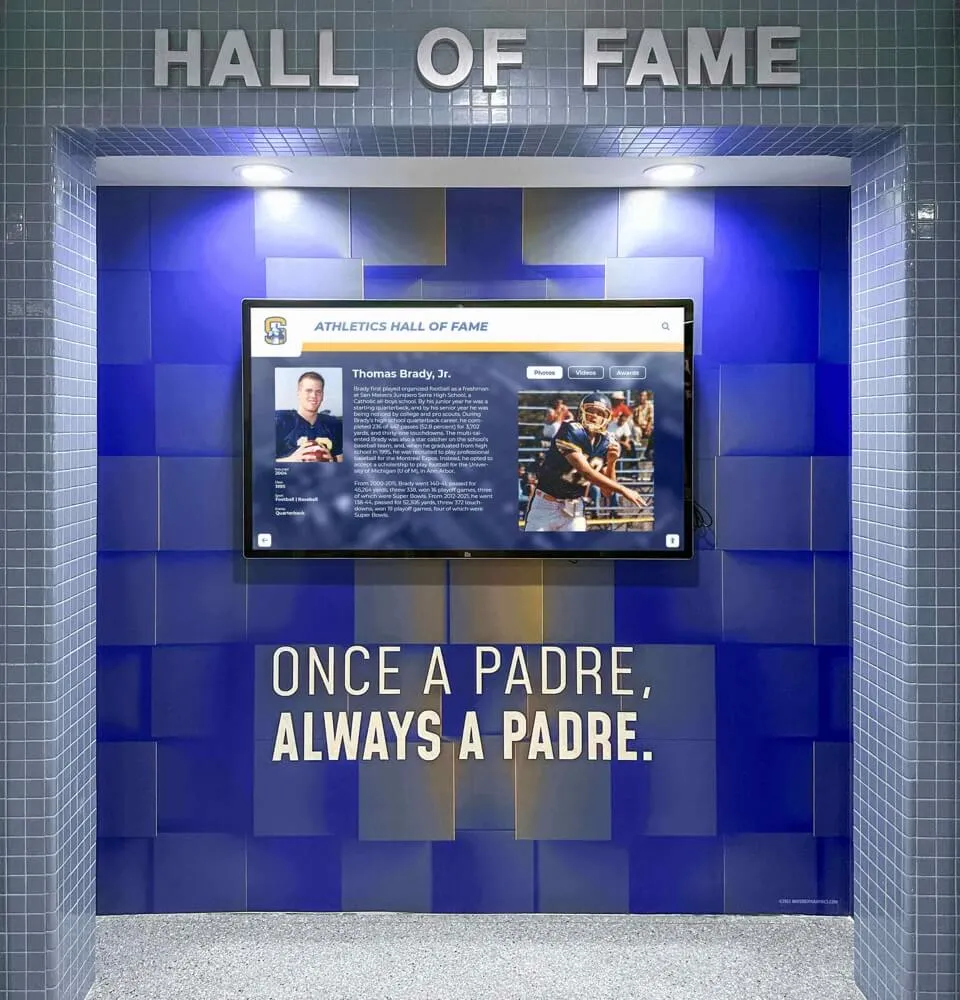
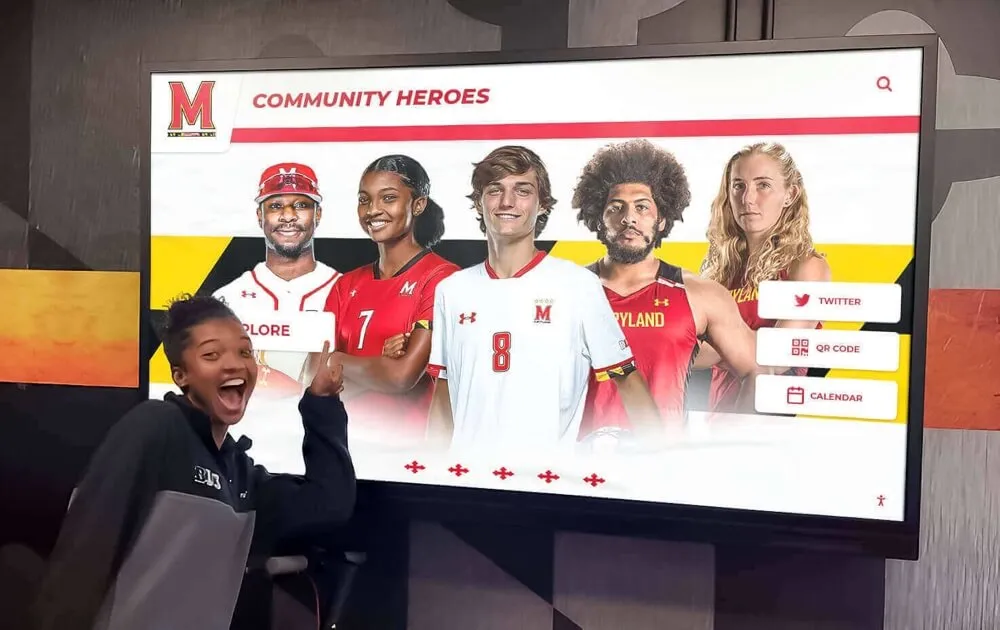
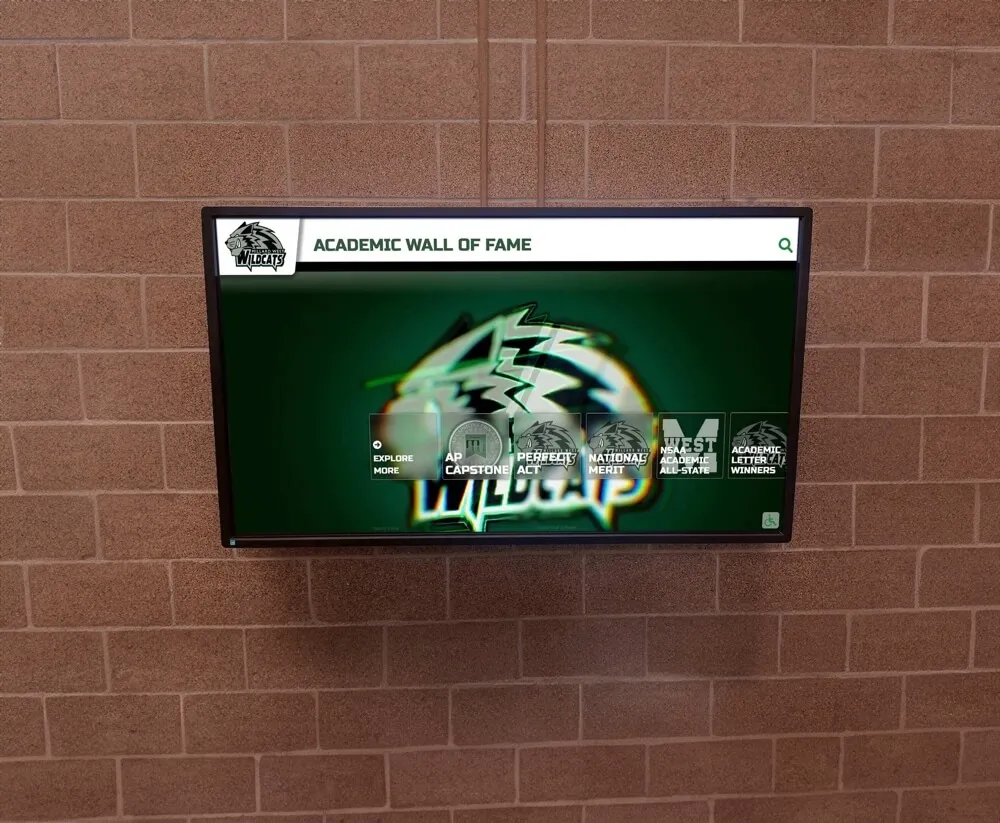
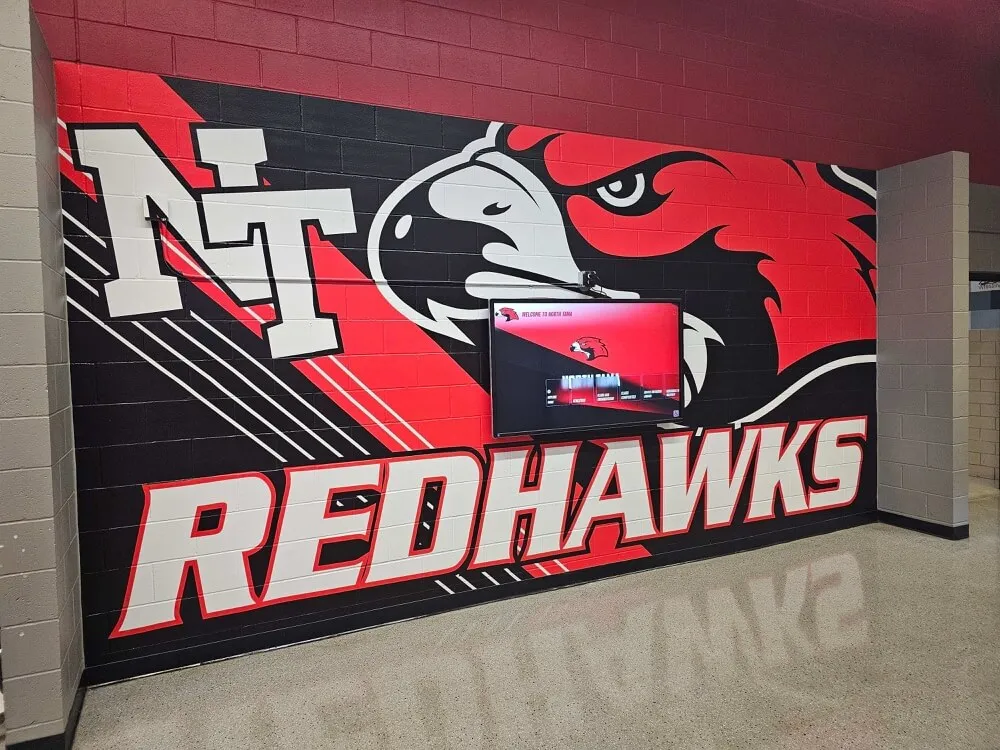
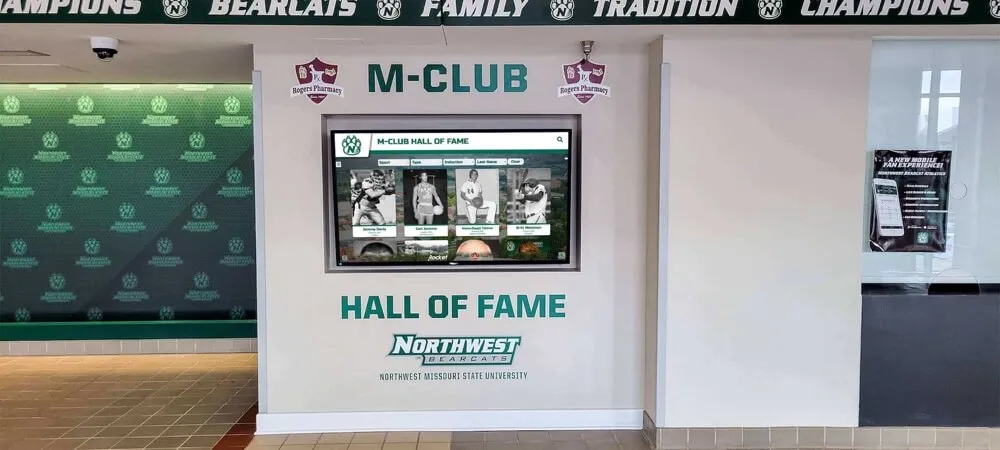
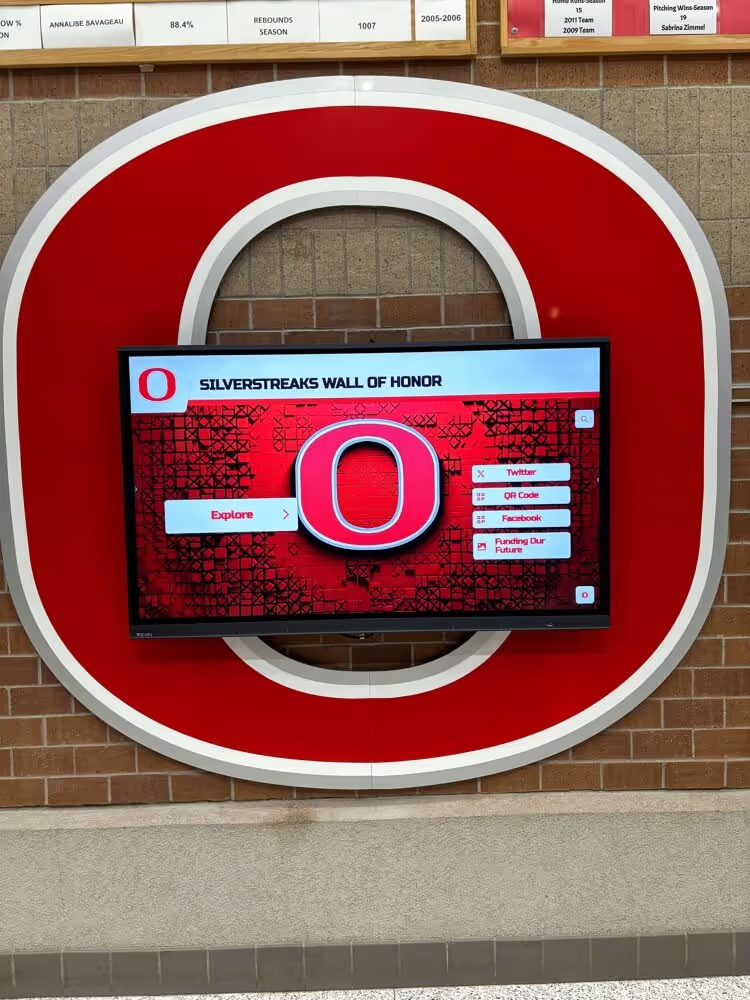
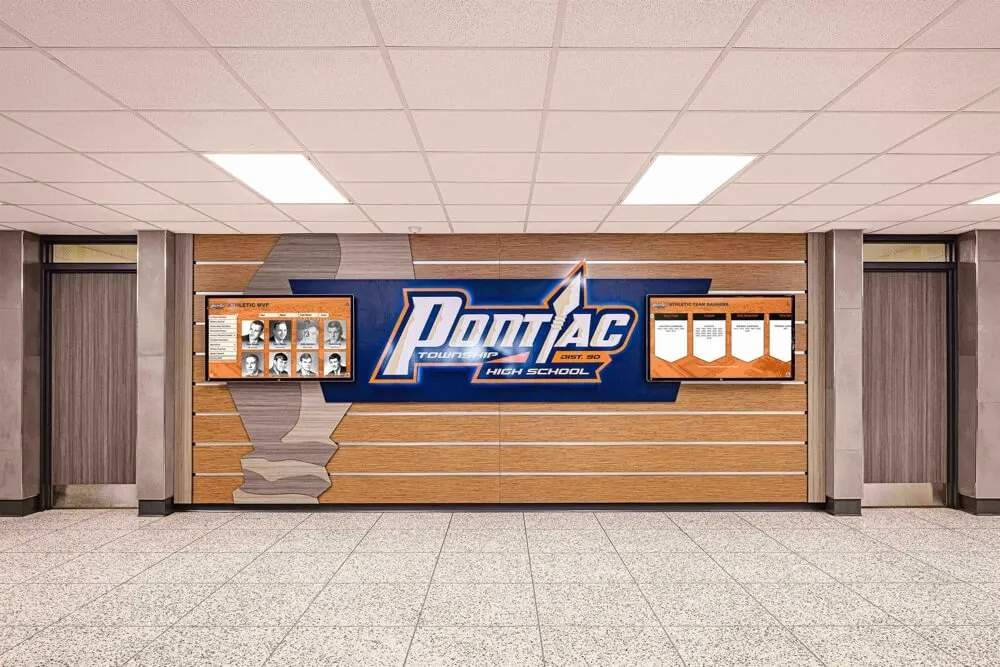
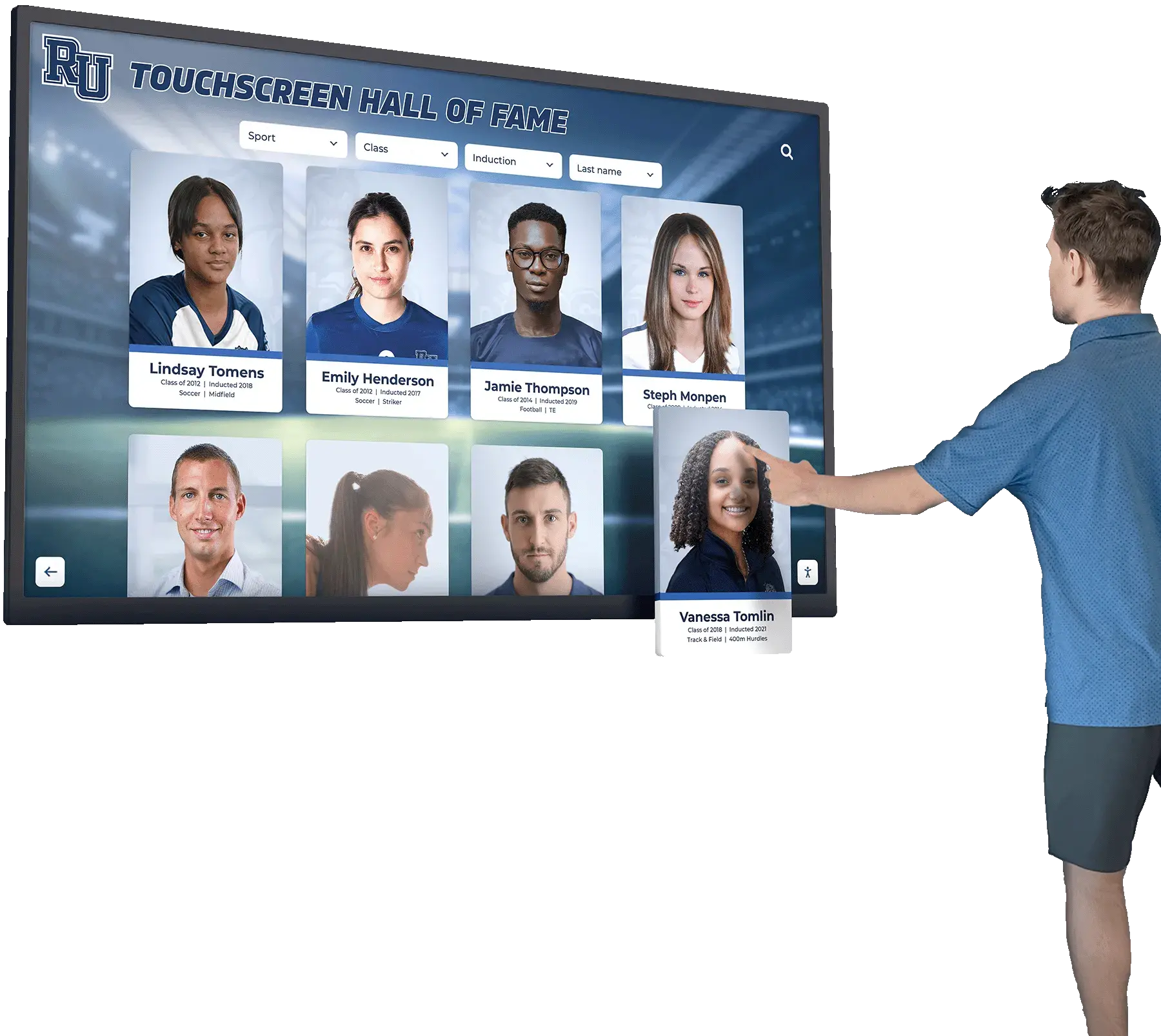
Awards touchscreen displays transform wrestling recognition by eliminating capacity constraints through unlimited digital storage, enabling automatic performance ranking and record tracking across weight classes, integrating historical Hall of Fame content with current season information, supporting multimedia recognition including photos, videos, and detailed statistics, providing searchable databases where anyone can instantly find specific wrestlers, and extending recognition beyond physical facilities through web and mobile access. For wrestling programs seeking comprehensive solutions that honor tradition while serving current operational needs, purpose-built touchscreen systems deliver capabilities traditional approaches cannot match.
This guide examines how wrestling programs implement awards touchscreens effectively, evaluates essential features for wrestling-specific recognition needs, provides cost comparisons against traditional recognition approaches, and demonstrates how integrated digital systems serve both historical preservation and current program management simultaneously.
Understanding Wrestling Program Recognition Requirements
Wrestling programs require more complex recognition infrastructure than most sports due to individual weight class competition, multiple achievement tiers from conference through national levels, and detailed statistical tracking spanning decades. Effective touchscreen systems must accommodate these specific needs rather than forcing wrestling recognition into generic athletic display templates.
Weight Class-Based Recognition Architecture
Weight class structure fundamentally shapes wrestling recognition organization:
Historical Weight Class Variations:
Wrestling weight classes have changed significantly across competitive eras, requiring recognition systems that accommodate multiple classification structures. High school wrestling used different weight classes in the 1970s-1980s than current configurations, with some eras featuring 12 weight classes while others used 13 or 14 divisions. College wrestling similarly evolved weight class structures across decades. Effective touchscreen systems must organize records and recognition by era-appropriate weight classes rather than attempting to force historical achievements into modern classifications that didn’t exist when records were set.
Cross-Weight Class Recognition Challenges:
Some wrestlers competed at multiple weights throughout careers or across different seasons. Recognition systems need flexibility showing career achievements that span different weight classes without creating artificial constraints requiring wrestlers to be associated with only single classifications. Similarly, pound-for-pound or overall program contribution recognition must transcend weight-specific achievement frameworks.
Automatic Weight Class Leaderboards:
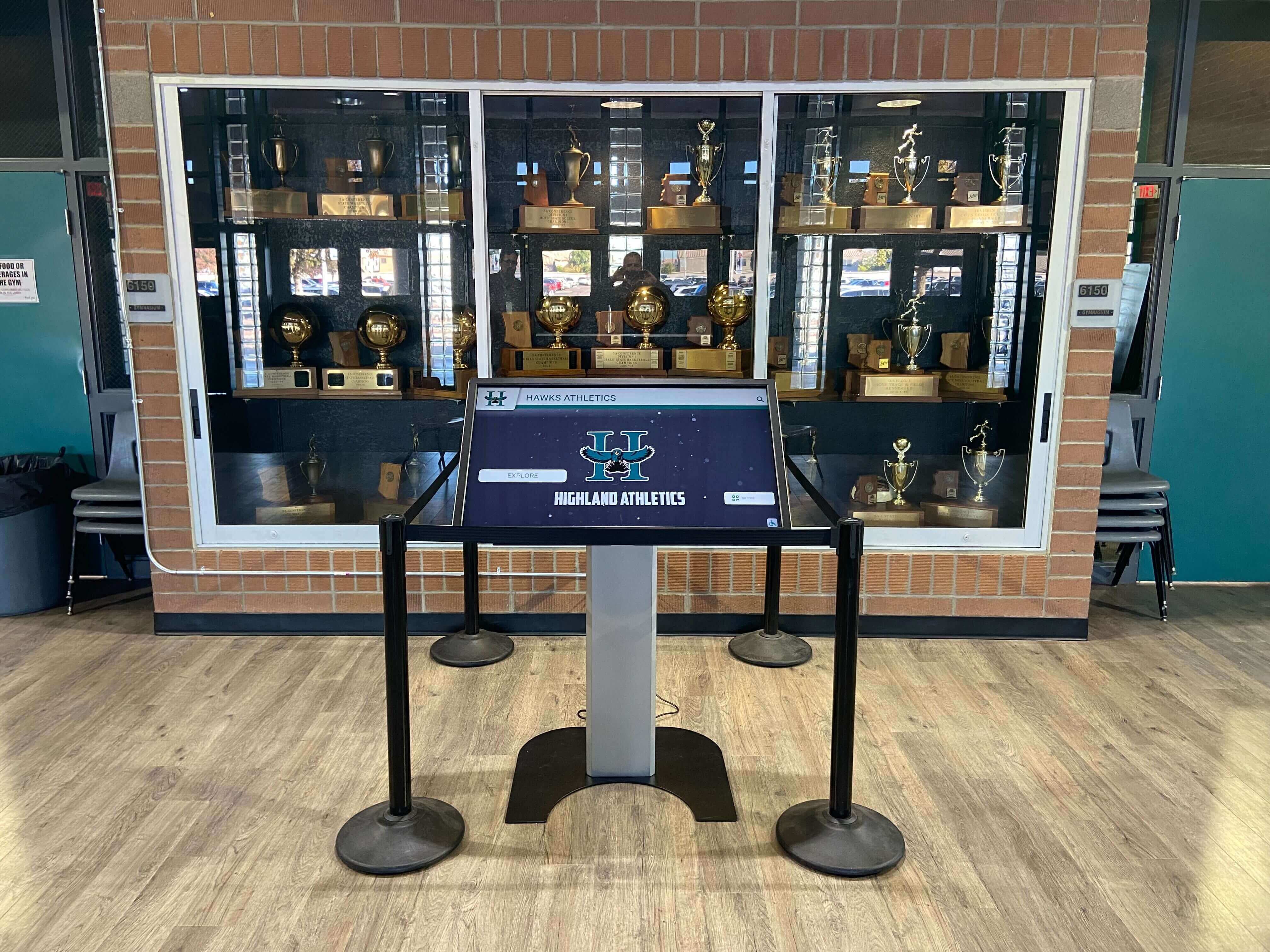
Purpose-built wrestling touchscreen platforms automatically generate leaderboards for each weight class across program history. When coaches add new wrestler profiles or season results, systems identify top performers by win percentage, total wins, pin count, tournament placements, and other wrestling-specific metrics within each weight class. This automatic ranking eliminates manual spreadsheet maintenance while ensuring accuracy as programs add decades of historical data.
Multi-Tier Achievement Recognition Structures
Wrestling features more achievement levels than most sports, requiring careful hierarchy organization:
Conference, Sectional, and District Recognition:
The pathway to state championships involves multiple qualification stages varying by state athletic association structure. Some states use district-sectional-state progressions while others employ regional-sectional-state formats. Wrestling touchscreens should accommodate whatever qualification structure applies to your program, recognizing wrestlers who achieved conference championships, qualified for sectionals, advanced to state tournaments, or earned podium placements at each level. This multi-tier recognition honors wrestlers who progressed through competitive achievement levels even if they didn’t ultimately reach state championship status.
State Tournament Achievement Levels:
State tournament recognition encompasses multiple accomplishment tiers. State qualifiers demonstrated excellence reaching the tournament, state placers earned podium finishes, state finalists competed for championships, and state champions achieved the highest level of high school wrestling success. Recognition systems should clearly distinguish these achievement levels while honoring all accomplishments appropriately. Historical state tournament brackets showing progression paths provide compelling context for championship achievements. For programs looking to display tournament structures effectively, comprehensive state championship bracket displays demonstrate how digital systems showcase competitive progression.
All-State Selection Recognition:
All-State wrestling teams typically recognize top performers at each weight class based on season performance, tournament results, or coach nominations. Wrestling touchscreens should showcase All-State selections organized by year and weight class, with detailed statistics and season achievements supporting selection. Historical All-State rosters preserved digitally create permanent records that often get lost when traditional programs rely solely on physical certificates or newspaper clippings.
All-American Recognition:

Wrestlers earning All-American status through national tournaments represent the pinnacle of high school or collegiate wrestling achievement. Touchscreen recognition should prominently feature All-Americans with tournament placement details, weight class information, and career statistics demonstrating the excellence required for national recognition. Many programs create dedicated All-American sections within broader Hall of Fame displays, emphasizing the exceptional nature of national-level achievement.
Statistical and Record Tracking Complexity
Wrestling generates more nuanced statistics than many sports, requiring sophisticated data management:
Career Statistics Management:
Comprehensive wrestler profiles should include career win-loss records with winning percentages, pin counts and pin percentage rates, technical fall victories, major decision counts, decision wins versus bonus point victories, takedown and reversal statistics when available, season-by-season statistical progression, and career match counts. Purpose-built platforms manage these statistics through structured data fields rather than requiring manual text entry for each athlete, ensuring consistency while enabling automatic calculation of percentages and rankings.
For schools evaluating comprehensive approaches to athletic record tracking and display, understanding sport-specific statistical requirements helps identify which platforms truly support wrestling’s unique needs versus generic systems requiring extensive customization.
Record Categories Requiring Tracking:
Wrestling programs should track records including most career wins overall and by weight class, highest career winning percentage minimum match requirements, most pins in career and single season, fastest pin time and average pin time leaders, most technical falls and major decisions, longest winning streaks active and historical, tournament championship counts conference through state, undefeated season achievements, and four-year varsity participation records. Digital systems with automatic ranking capabilities identify record holders across these categories without manual spreadsheet management, updating leaderboards immediately when new performances are added.
Historical Era Contextualization:
Wrestling competition evolved significantly across decades, with rule changes, weight class modifications, and competitive environment variations making direct cross-era record comparisons challenging. Effective recognition systems provide historical context helping visitors understand achievement within appropriate competitive frameworks. A 30-win season in a smaller classification or less competitive era may represent comparable excellence to a 40-win season in different circumstances. Commentary fields, era groupings, or decade-based leaderboards help visitors appreciate achievements appropriately regardless of when they occurred.
Essential Features for Wrestling Awards Touchscreens
Not all touchscreen platforms serve wrestling-specific needs equally. Purpose-built athletic recognition systems designed with wrestling requirements in mind deliver capabilities generic digital signage cannot match.
Automatic Ranking and Record Identification
Manual record-keeping becomes unsustainable as programs add decades of wrestler data across multiple weight classes:
How Automatic Ranking Works:
When coaches or administrators add wrestler profiles including season records, match results, and career statistics, purpose-built platforms like Rocket Alumni Solutions automatically sort all wrestlers by relevant performance metrics. The system identifies career win leaders overall and by weight class, calculates winning percentages across all wrestlers with minimum match thresholds, ranks wrestlers by pin counts and pin percentages, and determines fastest pin times and most bonus-point victories. As new wrestlers are added or historical data is uploaded, rankings update automatically without manual recalculation or spreadsheet management.
Record Holder Identification and Highlighting:
Systems automatically identify when newly added performances break existing school records. If a wrestler achieves 45 career wins and the previous record was 42, the platform flags the new record, updates relevant leaderboards, and can automatically highlight the achievement on display home screens. This automatic record identification ensures recognition remains current while eliminating risk of overlooking significant achievements buried in manual data entry processes.
Comparison with Manual Spreadsheet Approaches:
Traditional record-keeping requires athletic directors or wrestling coaches to maintain spreadsheets tracking career statistics, manually sort performances to identify leaders, recalculate rankings whenever historical data is added, and update physical displays or printed materials when records change. This manual approach consumes hours annually while introducing transcription errors and calculation mistakes. Purpose-built digital platforms eliminate this burden through automatic ranking that processes changes immediately and accurately.
For wrestling programs exploring comprehensive record management, understanding differences between generic digital signage versus purpose-built athletic platforms helps identify which solutions truly deliver automatic ranking versus requiring continued manual management.
Weight Class Organization and Navigation
Wrestling-specific touchscreen interfaces must organize content by weight class while enabling cross-weight browsing:
Dedicated Weight Class Views:
Users should be able to select any weight class and view all Hall of Fame inductees, All-State selections, record holders, and historical statistics specific to that weight classification. Within 103-pound weight class views, visitors might explore the career statistics of every wrestler who competed at that weight, see who holds the weight-class records for wins or pins, view All-State wrestlers from that weight across different years, and discover championship tournament results at that weight class. This weight-specific organization matches how wrestling communities naturally think about program history.
Multi-Weight Career Recognition:
Some wrestlers competed at different weights across seasons or achieved recognition at multiple weight classes. Effective platforms show wrestlers in all relevant weight class contexts while maintaining unified career statistics and biographical information. A wrestler who competed at 160 pounds as a junior and 171 pounds as a senior should appear in both weight class historical views with appropriate seasonal context, while overall career recognition encompasses achievements across both weights.
Era-Based Weight Class Adaptations:
Historical weight classes differed from modern classifications. Recognition systems should organize historical wrestlers using era-appropriate weight classes rather than forcing them into modern classifications that didn’t exist during their competitive years. Displays might show “Historical Weight Classes” alongside “Current Weight Classes” sections, or provide decade-based weight class groupings reflecting when wrestlers competed. This historical accuracy prevents confusion while honoring wrestlers within appropriate competitive contexts.
Wrestler of the Week Recognition and Updates
Weekly recognition keeps displays current and relevant for active wrestlers and families:
Streamlined Weekly Updates:
Coaches should be able to add Wrestler of the Week selections through simple web-based forms requiring minimal time investment. After each dual meet or tournament, coaches log into content management dashboards, select the week’s honoree from current roster lists, enter performance highlights including opponent, result, and notable statistics, upload a photo if not already in the system, and publish the recognition with changes appearing immediately on touchscreens and any integrated web platforms. This process should require less than five minutes, making weekly updates realistic rather than burdensome.
Historical Weekly Recognition Archives:
Unlike traditional bulletin board postings that get replaced weekly and discarded, digital systems preserve every Wrestler of the Week selection in searchable archives. Parents can access their wrestler’s weekly honors years later, alumni can explore their own high school weekly recognitions decades after graduation, and programs can identify wrestlers who earned multiple weekly honors demonstrating consistent excellence. This permanent archiving transforms ephemeral weekly recognition into lasting program history.
Social Sharing and Family Engagement:
When weekly honors are published on touchscreens, integrated web platforms enable automatic sharing to program social media accounts and provide direct links families can share across personal networks. Parents text recognition links to extended family, wrestlers share weekly honors with teammates and friends, and program achievements gain visibility beyond people physically visiting facilities. This social amplification multiplies recognition impact while building community pride and program awareness.
Schedule and Announcement Integration
Wrestling touchscreens become more valuable when serving both historical and current operational functions:
Current Season Schedule Display:
Display home screens should show upcoming dual meets with date, time, opponent, and location information, tournament schedules including format and team entries, practice schedule changes or cancellations, weigh-in times and procedures, parent meeting or fundraiser announcements, and season countdown timers to major tournaments or championships. This current information makes touchscreens daily-use tools for wrestlers and families rather than purely historical installations consulted occasionally.
Automatic Result Updates:
After dual meets or tournaments, coaches can quickly enter team results and individual wrestler performances through the same content management interfaces used for other recognition. Results appear immediately on touchscreen schedule displays, transitioning from “Upcoming” to “Results” with final scores and notable performances highlighted. This real-time updating keeps displays current while eliminating separate channels for communicating results to program communities.
Integration with School Communications:
Purpose-built platforms often integrate with school communication systems, allowing wrestling announcements published to touchscreens to simultaneously distribute via email lists, mobile apps, or school websites. This integration eliminates duplicate work managing multiple communication channels while ensuring consistent messaging across all platforms families use.
For programs interested in broader digital signage content strategies for athletic facilities, understanding how operational information complements historical recognition helps maximize touchscreen utility and engagement.
Multimedia Content Support for Wrestling Recognition
Rich multimedia transforms basic wrestler listings into compelling recognition experiences:
Action Photography Integration:
Wrestling photos should capture competitive action—takedowns, escapes, pins, and celebration moments—rather than just headshots. Touchscreen profiles can include multiple photos per wrestler showing different matches, tournament moments, award ceremonies, and team settings. This visual richness creates emotional connection impossible with text-only plaque recognition.
Match Highlight Video Embedding:
For significant achievements like state championship matches or record-breaking performances, embedding highlight videos directly into wrestler profiles creates powerful recognition. Families can watch championship matches years later, prospective wrestlers can explore program history through compelling video content, and coaches can demonstrate program excellence during recruiting. Video hosting through YouTube or Vimeo integrates easily into purpose-built platforms without requiring wrestling programs to manage complex video infrastructure.
Tournament Bracket Displays:
State tournament brackets showing progression paths from early rounds through championship matches provide compelling visual context for tournament achievements. Touchscreens can display historical tournament brackets with school wrestlers highlighted, enabling visitors to see competitive pathways to championships and understand the sequence of victories required for state titles. Interactive bracket displays where users can explore match results and statistics at each tournament round create engaging experiences beyond static plaque listings.
Implementation Strategies for Wrestling Programs
Successfully deploying wrestling touchscreens requires thoughtful planning addressing content development, physical installation, and ongoing management.
Content Development and Historical Data Collection
Building comprehensive wrestler databases represents the most time-intensive implementation phase:
Prioritizing Historical Eras:
Wrestling programs with decades of history cannot realistically digitize complete records simultaneously. Consider phased approaches starting with recent eras where records and photos are readily available, typically the last 10-15 years. Once recent-era content establishes foundation, systematically expand backward through program history decade by decade, prioritizing Hall of Fame inductees and championship wrestlers when comprehensive data for all wrestlers isn’t available, and engaging alumni in historical data collection efforts.
Data Collection Strategies:
Efficient data collection involves reviewing existing media guides or program histories compiled by coaches, scanning yearbooks for roster information and season records, accessing state athletic association archives for tournament results, contacting alumni through social media or reunion events for statistical information and photos, digitizing physical plaque or trophy information already displayed, and reviewing newspaper archives for historical match results and recognition. Many wrestling programs discover community members who maintained personal records or collections willing to share when programs undertake digitization efforts. Understanding best practices for digitizing school athletic archives helps programs approach historical data collection systematically.
Photo Collection and Quality Standards:
Wrestling action photos create more compelling recognition than standard headshots, but quality matters for professional displays. Set minimum resolution standards of 1200x800 pixels for photos appearing on large touchscreens, prioritize horizontal orientation photos that display better on landscape displays, establish consistent photo editing ensuring similar exposure and color across different eras, and create naming conventions enabling easy photo management as libraries grow. Many wrestling photographers or local newspapers may provide archival photos for recognition purposes when contacted.
Establishing Consistent Data Entry Standards:
As multiple people contribute content, establish standards for wrestler name formatting using full legal names versus nicknames, weight class designation reflecting era-appropriate classifications, season record formatting such as wins-losses or wins-losses-draws, statistics inclusion deciding minimum required data fields, and achievement descriptions using consistent terminology and abbreviation standards. Documentation of these standards prevents inconsistency issues as different coaches or administrators manage content over years.
Physical Installation Planning and Placement
Strategic placement maximizes touchscreen visibility and engagement:
Optimal Wrestling Facility Locations:
Wrestling touchscreens should be positioned where wrestlers, families, and visitors naturally congregate—wrestling room entrances visible to wrestlers before and after practice, gymnasium lobby areas where fans gather before dual meets, athletic facility main hallways with high daily traffic, trophy case areas integrating digital and physical recognition, and near spectator seating at competition venues when permanent installations are possible. Placement near weigh-in areas where wrestlers and families spend time before competitions also creates natural engagement opportunities.
Mounting Considerations for Wrestling Environments:
Wrestling facilities often feature distinctive architectural elements requiring thoughtful mounting. Concrete block walls common in wrestling rooms may need specialized anchoring, protective enclosures may be necessary if displays are near mat areas where equipment could cause damage, viewing height should accommodate both standing adults and seated spectators, and ambient lighting evaluation ensures screen visibility given fluorescent lighting common in gymnasiums. Working with vendors experienced in athletic facility installations prevents mounting challenges discovered too late in implementation processes.

Infrastructure Requirements Assessment:
Before purchasing equipment, verify electrical outlets near planned mounting locations with adequate amperage, network connectivity via ethernet or strong WiFi signals at display locations, and physical space allowing adequate viewing distances and viewer positioning without blocking hallways or doorways. Some schools discover infrastructure limitations requiring electrical or networking work only after equipment purchase, creating implementation delays and unexpected costs.
Ongoing Content Management Workflows
Sustainable wrestling recognition requires efficient processes for maintaining current content:
Assigning Content Management Responsibilities:
Clearly designate who manages different content types—head coach or athletic director responsibility for Wrestler of the Week updates, coaching staff management of current season rosters and schedules, athletic administrator oversight of Hall of Fame inductee additions and All-State wrestler recognition, and student managers or assistants who can help with routine schedule updates and announcement posting. Written role documentation prevents confusion while ensuring content doesn’t become outdated due to unclear ownership.
Establishing Update Frequency Expectations:
Set realistic expectations for different content categories. Weekly updates for Wrestler of the Week selections and schedule adjustments, seasonal updates for tournament results and team recognitions, annual updates for new Hall of Fame inductees and All-State selections, and periodic updates for historical data collection expanding program archives. Over-ambitious update commitments lead to abandonment when daily operational demands prevent sustained effort, so start with achievable frequency increasing as processes mature.
Leveraging Bulk Import and Template Tools:
Purpose-built platforms provide bulk import capabilities enabling efficient data entry. Rather than manually creating individual profiles for 30-year historical roster, export rosters from existing spreadsheets or databases into CSV files, use bulk import tools to create all profiles simultaneously, and then systematically enhance imported profiles with photos and additional detail over time. This approach quickly establishes foundational content libraries enabling launches with comprehensive coverage that improves progressively rather than remaining sparse indefinitely while pursuing impossible perfection.
For wrestling programs evaluating long-term content management approaches, understanding differences between full-service and DIY touchscreen management helps determine whether internal management or vendor-supported approaches better fit your program’s technical capacity and time availability.
Comparing Wrestling Touchscreen Platforms and Vendors
Wrestling programs evaluating touchscreen systems should understand critical differences between purpose-built athletic recognition platforms and generic alternatives.
Purpose-Built Wrestling Recognition Platforms
Specialized platforms designed for athletic recognition offer wrestling-specific features:
Wrestling-Specific Advantages:
Purpose-built platforms like Rocket Alumni Solutions include automatic record ranking across weight classes without manual spreadsheet management, sport-specific templates designed for wrestling achievement hierarchies, content structures accommodating conference through national recognition tiers, statistical fields and calculations designed for wrestling metrics, bulk import tools enabling efficient historical roster digitization, and integrated web access extending recognition beyond physical displays. These specialized capabilities reflect deep understanding of wrestling program needs impossible for vendors treating sports recognition as minor product variations.
Comparison with Generic Digital Signage:
Generic digital signage systems can display wrestling content but lack features making recognition comprehensive and sustainable. Generic platforms require manual graphic design for every wrestler profile rather than data-driven templates, provide no automatic ranking or record identification capabilities, offer no weight class organizational structures or statistical tracking, demand graphic design skills for every content update rather than simple form-based data entry, and typically lack integrated web platforms extending recognition beyond physical displays. Athletic directors attempting to use generic signage for wrestling recognition often discover unsustainable content creation burdens or sparse recognition failing to demonstrate investment value.
Wrestling Platform Feature Comparison
| Feature Category | Purpose-Built Platform (Rocket) | Generic Digital Signage | Traditional Plaques |
|---|---|---|---|
| Weight Class Organization | Automatic weight-based views and filtering | Manual categorization required | Physical grouping only |
| Automatic Record Ranking | Built-in across all metrics | Not available | Manual calculation required |
| Wrestler of the Week | Quick web-based updates, automatic display | Requires new graphic design weekly | Bulletin board posting only |
| Content Update Process | Simple form-based data entry | Graphic design for each update | Physical fabrication and installation |
| Recognition Capacity | Unlimited digital storage | Unlimited digital storage | Constrained by physical space |
| Statistical Tracking | Structured fields with auto-calculation | Text-only, no calculations | Minimal statistics possible |
| Schedule Integration | Built-in schedule management | Possible with custom slides | Not applicable |
| Web/Mobile Access | Integrated responsive web platform | Typically not included | Not applicable |
Cost Analysis for Wrestling Recognition Systems
Understanding total cost of ownership across system lifespans enables informed investment decisions:
Purpose-Built Touchscreen System (5-Year Total):
Initial costs include commercial-grade 55-65" display hardware at $3,000-5,000, mounting hardware and installation at $800-1,500, purpose-built wrestling platform software at $2,000-4,000, and initial content development of 50-100 historical wrestlers at $2,000-4,000 for staff time. Ongoing costs include annual software subscription and hosting at $1,200-2,400 per year times four additional years totaling $4,800-9,600, plus ongoing content management time of 3-5 hours monthly times $40-60 per hour times 60 months totaling $7,200-18,000. Total five-year cost ranges from $19,800-$42,100 depending on content depth and staff time allocation.
Traditional Plaque-Based Recognition (5-Year Total):
Costs include quality plaques at $250-400 each times 50 wrestlers over five years totaling $12,500-20,000, installation coordination and wall mounting at $150-300 per installation times 10 installations totaling $1,500-3,000, display renovation or reorganization every 3-5 years at $2,000-4,000, and staff time managing physical recognition at 2-3 hours monthly times $40-60 per hour times 60 months totaling $4,800-10,800. Total five-year cost ranges from $20,800-$37,800 with ongoing per-wrestler costs perpetually.
Key Cost Considerations:
Purpose-built touchscreen systems require higher initial investment but eliminate ongoing per-wrestler fabrication costs that traditional recognition accumulates perpetually. For wrestling programs planning to recognize 10+ wrestlers annually, touchscreen investments typically achieve cost parity with traditional approaches within 3-5 years while providing dramatically greater recognition capacity, easier content updates, and integrated current season information traditional plaques cannot accommodate. Schools evaluating comprehensive financial comparisons can explore detailed analysis in guides to athletic recognition display costs and ROI.
Best Practices for Wrestling Hall of Fame Excellence
Learning from successful wrestling program implementations helps avoid common pitfalls:
Balancing Historical Recognition with Current Relevance
Wrestling touchscreens should honor tradition while serving present needs:
Creating Dynamic Home Screens:
Rather than forcing visitors to navigate menus immediately, effective touchscreens display rotating home content featuring this week’s Wrestler of the Week recognition, upcoming dual meet or tournament schedule, recent match results and team performance, historical “on this day” wrestling achievements from program archives, and featured Hall of Fame inductee spotlights rotating monthly. This dynamic content creates immediate engagement while demonstrating the touchscreen shows current information rather than purely historical content visitors might assume is static.
Encouraging Current Wrestler Engagement:
When touchscreens show information relevant to current wrestlers daily, they engage with historical content discovering program traditions and record holders. Current wrestlers naturally explore how their statistics compare to historical records, research older wrestlers who competed at their weight classes, and share weekly recognition with family and friends through social media. This current engagement creates connection to program history that separate historical displays often fail to generate.
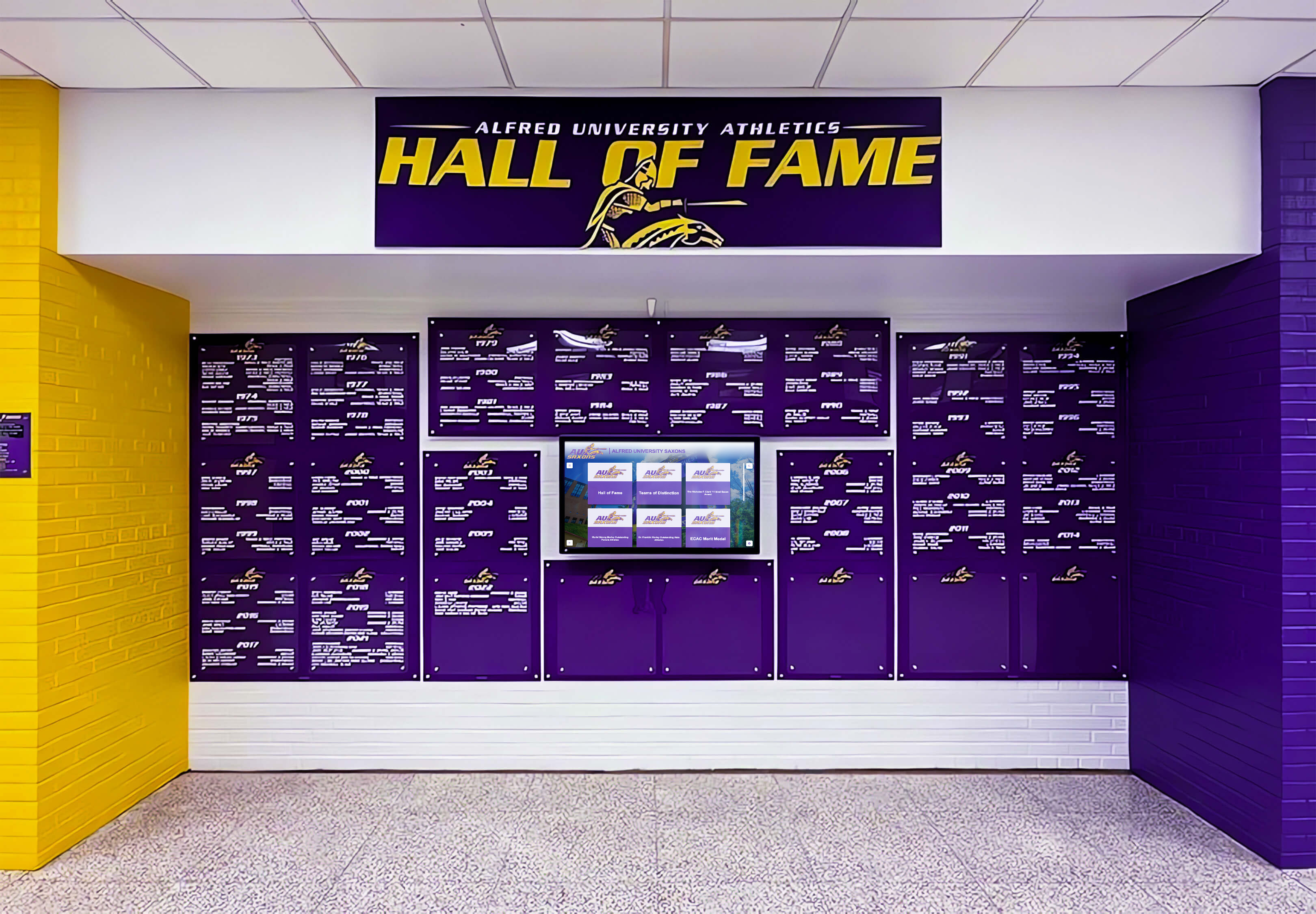
Establishing Recognition Criteria and Selection Processes
Clear standards prevent controversy while ensuring worthy wrestlers receive recognition:
Hall of Fame Selection Criteria:
Wrestling Hall of Fame standards typically require state tournament qualification at minimum with strong consideration for placers and champions, multiple All-State selections demonstrating sustained excellence, exceptional career records such as 100+ career wins or 75%+ winning percentage, significant program records that endure across eras, post-graduation success including college wrestling participation or significant achievements, and character requirements ensuring honorees represent positive role models. Written criteria and selection committee processes similar to broader athletic hall of fame programs ensure credible recognition. For guidance on establishing effective selection frameworks, wrestling programs can adapt strategies from comprehensive athletic hall of fame administration guides.
All-State and All-American Recognition Standards:
These recognitions typically follow external organization standards rather than internal selection. Wrestling touchscreens should clearly indicate the governing organization providing All-State recognition such as coaches association selections or state athletic association designations, tournament performance requirements for All-American status, and year-specific criteria that may have changed across eras. Clear documentation prevents questions about selection basis while educating visitors about wrestling achievement hierarchies.
Wrestler of the Week Selection Approach:
Weekly recognition should follow consistent standards such as dual meet MVP performance based on match result and competitive impact, tournament outstanding wrestler awards or exceptional placement, achievement of significant personal milestones like 100th career win, demonstration of exceptional sportsmanship or leadership, or consistent practice performance and improvement when competition results don’t dictate selection. Rotating recognition across weight classes and different achievement types ensures all wrestlers have realistic opportunities for weekly honor rather than concentration on a few elite competitors.
Integrating Physical and Digital Wrestling Recognition
Hybrid approaches often serve programs better than purely digital installations:
Complementary Physical Display Elements:
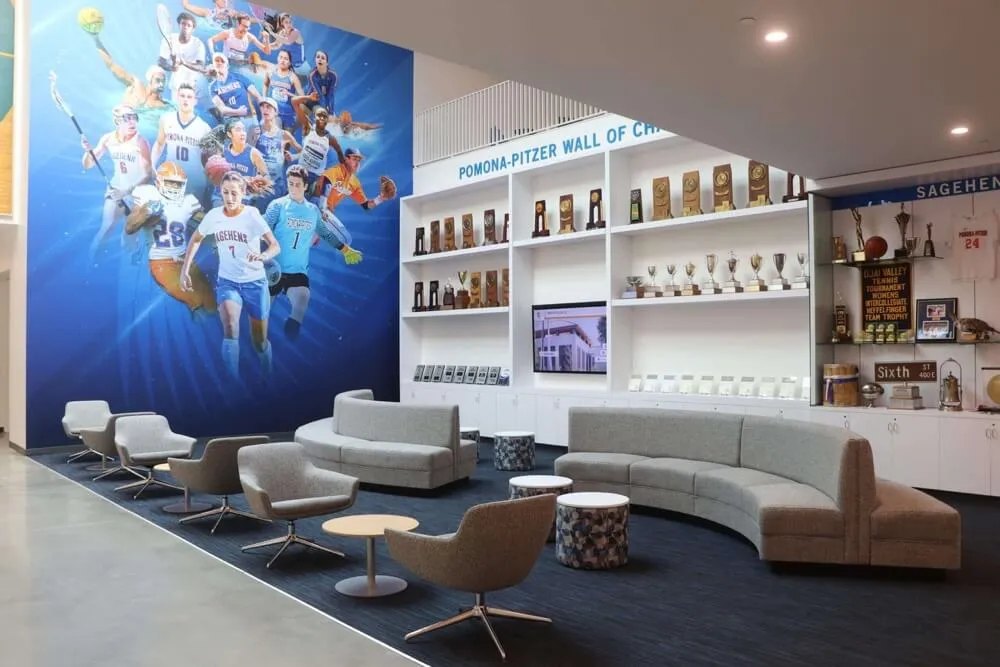
Wrestling programs might combine physical championship banners for team titles and conference championships with digital touchscreens providing individual wrestler recognition, traditional trophy cases showcasing physical awards and memorabilia with QR codes linking to touchscreen content for biographical depth, physical plaque installations honoring Hall of Fame inductees in prestigious main lobby locations with digital displays in wrestling facilities providing comprehensive career information, and physical weight class record boards showing top-three performances with touchscreen access to complete historical rankings. This layered approach preserves traditional recognition aesthetics while gaining digital capacity and update flexibility.
QR Code Integration for Extended Engagement:
Physical displays can include QR codes enabling smartphone access to extended content not feasible on physical plaques. Hall of Fame physical plaques might include QR codes linking to comprehensive career statistics, photo galleries, and match videos. Current season roster boards could include QR codes for each wrestler linking to season statistics, schedule information, and weekly recognition history. This QR integration extends physical recognition reach while accommodating family members who want deeper information than physical displays allow.
Leveraging Touchscreens for Recruiting and Program Promotion
Wrestling recognition displays serve strategic purposes beyond honoring past athletes:
Recruiting Visit Showcase:
When prospective wrestlers and families visit programs, touchscreen displays demonstrate program history and tradition in compelling ways traditional plaques cannot match. Prospective wrestlers can explore successful wrestlers who competed at their target weight class, view progression pathways from freshman through senior years for past athletes, see evidence of state tournament success and All-State recognition, and understand program records and achievement standards. This exploration creates recruiting advantages over programs with limited recognition or less compelling presentation.
Social Media Content Generation:
Wrestling touchscreens connected to web platforms enable continuous content for program social media channels. Weekly Wrestler of the Week announcements with photos and statistics become automatic social posts, Hall of Fame inductee features provide high-quality historical content, record-breaking performance announcements generate excitement and engagement, and All-State wrestler recognitions celebrate program excellence broadly. This social amplification multiplies recognition visibility far beyond people physically visiting wrestling facilities.
For wrestling programs interested in broader strategies for building school athletic pride through recognition, understanding how touchscreens contribute to institutional culture and community engagement helps justify investments through strategic value beyond pure recognition.
Overcoming Common Implementation Challenges
Wrestling programs frequently encounter predictable obstacles during touchscreen implementation:
Managing Incomplete Historical Records
Most wrestling programs lack comprehensive records for older eras:
Accepting Imperfect Historical Coverage:
Programs should resist delaying launches while pursuing complete historical records that may be impossible to compile. Launch with excellent coverage of recent eras where data is available, clearly mark historical sections as “partial records” or “ongoing research” setting appropriate visitor expectations, systematically add historical content over months and years as information surfaces, and engage alumni community in historical data collection through announcements and reunion events. Better to launch with strong 15-year history expanding backward than delay indefinitely pursuing 50-year perfection that may never materialize.
Prioritizing Most Significant Historical Achievements:
When comprehensive data doesn’t exist, focus historical content on most notable achievements that matter most to program legacy. Ensure all state champions appear in recognition regardless of era, prioritize All-State wrestlers and state place-winners from older eras, include Hall of Fame inductees with whatever biographical information is available, and document program milestones like first championship or notable team seasons. This achievement-focused approach ensures most important program history appears even when complete rosters or season records don’t exist.
Handling Technical Infrastructure Limitations
Some schools face network or facility constraints complicating installations:
Network Connectivity Solutions:
Schools with inadequate WiFi in wrestling facilities can install ethernet connections specifically for touchscreen displays, use cellular hotspot devices if ethernet installation is cost-prohibitive, employ local content caching reducing bandwidth requirements for displays, or position touchscreens in alternative locations with better network access if primary wrestling room location isn’t feasible. Most vendors can help identify solutions during pre-purchase facility assessments preventing discovery of insurmountable obstacles after equipment purchase.
Electrical and Mounting Challenges:
Wrestling facilities built decades ago may lack convenient outlets near optimal display locations. Solutions include working with electricians to add dedicated circuits for touchscreen power, using cord management solutions to route power from existing outlets when safe and code-compliant, selecting kiosk-style freestanding displays rather than wall mounts when wall surfaces are unsuitable, or identifying alternative mounting locations meeting technical requirements even if not originally preferred. Facility assessment before purchasing equipment prevents expensive surprises.
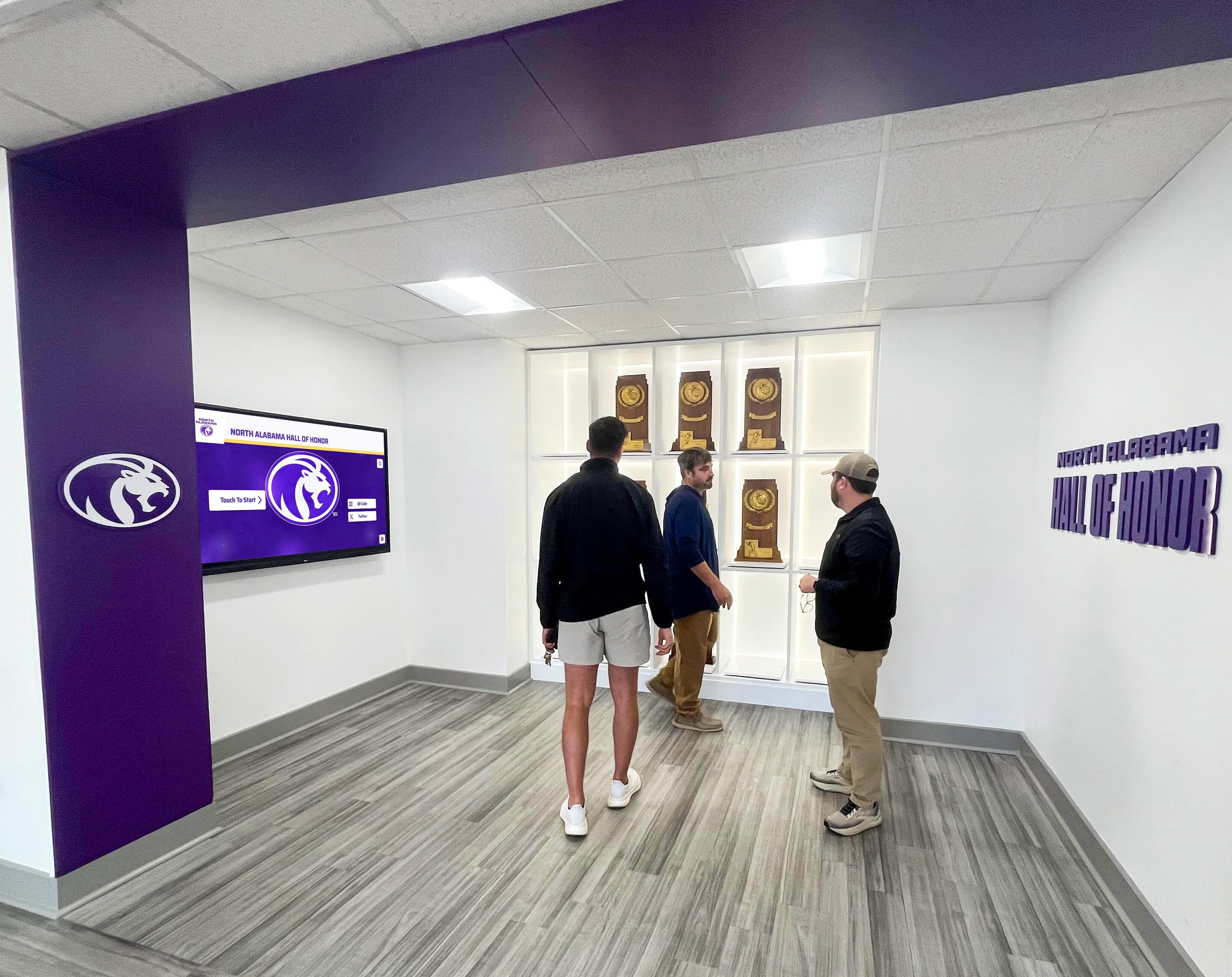
Sustaining Content Updates After Initial Implementation
Many programs successfully launch touchscreens but struggle maintaining current content:
Reducing Content Management Burden:
Choose platforms with genuinely intuitive interfaces requiring minimal training and no technical expertise, establish simple update templates reducing decisions needed for routine additions, assign specific responsibilities preventing diffusion of accountability, set realistic update frequency expectations matched to available time, leverage student managers or journalism classes for routine content work, and use bulk import tools rather than individual manual entry when adding multiple wrestlers simultaneously. Understanding that easy content management fundamentally determines long-term success, prioritize platform usability over features during vendor selection.
Building Sustainable Workflows:
Integrate touchscreen updates into existing coaching workflows rather than treating as separate additional tasks. When coaches already track weekly Wrestler of the Week selections for other purposes, add touchscreen publishing as one additional distribution channel requiring minimal extra effort. When season schedules are finalized, publish to touchscreens simultaneously with other communication channels. When state tournament results are documented, add to touchscreens as part of season-end record-keeping already occurring. This integration prevents touchscreen management from becoming separate burden abandoned when time is scarce.
Conclusion: Transforming Wrestling Recognition Through Purpose-Built Technology
Wrestling programs require recognition systems accommodating individual weight class competition, multi-tier achievement hierarchies from conference through national levels, comprehensive statistical tracking spanning decades, and integration of historical honor with current operational information. Traditional plaque-based recognition reaches capacity limitations while offering minimal statistical context or current season utility, creating expensive ongoing fabrication costs and administrative burden managing physical displays.
Purpose-built awards touchscreens designed specifically for wrestling recognition eliminate capacity constraints through unlimited digital storage, automate performance ranking and record identification across weight classes, integrate Hall of Fame inductees with current Wrestler of the Week selections and schedules, support rich multimedia including photos, videos, and detailed statistics, and extend recognition beyond physical facilities through integrated web and mobile access.
Wrestling programs implementing touchscreen systems successfully prioritize platforms designed for athletic recognition rather than generic digital signage, develop phased content strategies establishing strong foundation while systematically expanding historical coverage, establish clear recognition criteria and selection processes ensuring credibility, leverage displays for both historical honor and current program operations maximizing utility, and create sustainable content management workflows preventing abandonment after initial implementation enthusiasm.
When evaluating touchscreen systems, wrestling coaches and administrators should assess automatic ranking capabilities eliminating manual record management, weight class organizational structures reflecting wrestling-specific needs, content management interfaces enabling quick updates without technical expertise, integration of historical recognition with current schedules and announcements, total cost of ownership across five-year horizons rather than initial sticker prices, and vendor specialization in athletic recognition rather than generic digital signage.
For wrestling programs serious about comprehensive recognition honoring tradition while serving current wrestlers and families effectively, purpose-built touchscreen platforms like Rocket Alumni Solutions deliver wrestling-specific capabilities, automatic record management, and sustainable content workflows that generic alternatives cannot match. The right touchscreen implementation transforms wrestling recognition from limited physical displays into dynamic systems celebrating achievement comprehensively while building program pride and community engagement.
Ready to explore how purpose-built wrestling recognition platforms can transform your program’s ability to honor All-State wrestlers, All-Americans, Hall of Fame inductees, and current athletes while managing schedules and announcements effectively? Talk to our team about comprehensive wrestling touchscreen solutions designed specifically for programs seeking professional recognition systems that honor wrestling traditions while serving modern operational needs.