



Key Takeaways
A practical guide to athletic department roles and responsibilities for school leaders. Understand every position on your staff, how they work together, and how to build a culture of recognition that motivates athletes and community.
Running a school athletic department requires more than a love of competition. It takes a coordinated team of professionals, each holding specific responsibilities that collectively keep programs compliant, competitive, and culturally meaningful for the students they serve. Whether you are a principal building your athletic staff from scratch, a new athletic director mapping out your team, or a board member trying to understand how the department functions, this guide breaks down every significant athletic department role, explains what each position owns, and shows how strong departmental structure creates the foundation for recognition programs that genuinely motivate athletes.
Why Organizational Clarity Matters in Athletic Departments
Athletic departments are among the most operationally complex units in any school. On any given afternoon, facilities need to be unlocked and set up, officials need confirmation, transportation needs coordinating, injured athletes need evaluation, and eligibility documentation needs reviewing—all simultaneously, for potentially a dozen different sports.
When role definitions are vague or overlapping, small operational failures accumulate: coaches who don’t know who handles equipment orders, athletes who aren’t sure which staff member can clear them to play, or parents who call the principal’s office with complaints that should go to the AD. Tight role clarity prevents those friction points and allows each staff member to develop genuine expertise rather than spread attention across undefined territory.
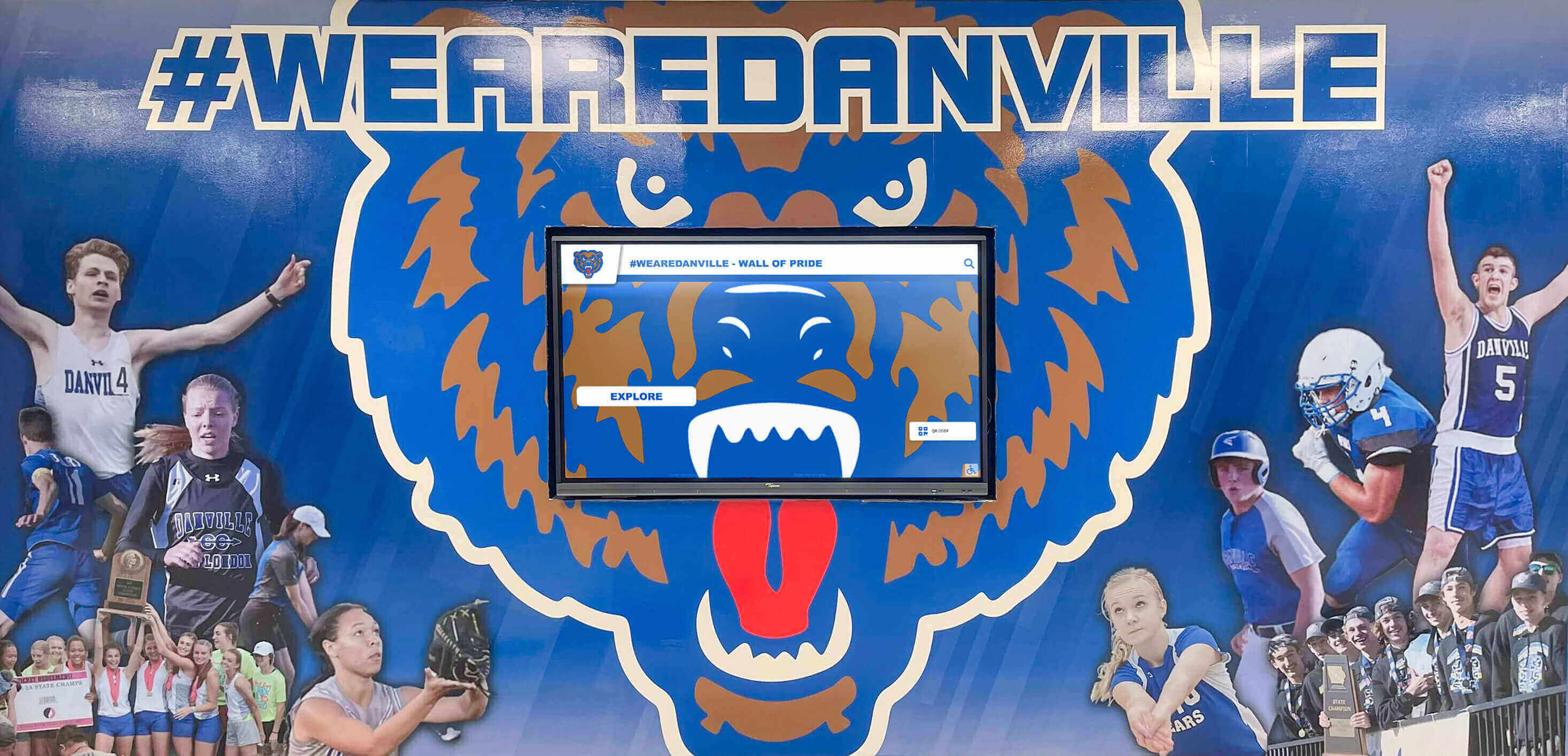
Beyond operational efficiency, organizational clarity directly shapes program culture. When every staff member understands their responsibilities and how their role connects to the student-athlete experience, departments develop the professional identity that attracts and retains the best coaches and administrators.
Core Athletic Department Roles
Athletic Director
The athletic director is the chief administrator of the entire athletic program and the role from which all departmental decisions ultimately flow. ADs report to the principal or superintendent, represent the athletic department in district and state athletic association meetings, and carry personal accountability for compliance, budget management, Title IX equity, and the overall health of every sport under their umbrella.
Primary responsibilities include:
- Hiring, evaluating, and terminating coaching staff
- Developing and managing the departmental budget across all sports
- Scheduling facilities, officials, and transportation for all contests
- Monitoring and certifying student-athlete academic eligibility
- Ensuring compliance with state athletic association regulations and federal equity requirements
- Building relationships with booster clubs, community organizations, and alumni
- Overseeing student-athlete safety protocols including concussion management policies
- Planning and executing recognition programs—awards banquets, hall of fame inductions, record boards, and seasonal celebrations
The AD is also the cultural leader of the athletic department. The standards they model in how they communicate with coaches, treat athletes, and engage the community set the tone for every program operating beneath them. Departments led by ADs who invest in recognition and program history tend to develop stronger alumni engagement and community support—an observation explored in depth through resources like this complete guide to athletic hall of fame programs for school administrators.
Assistant Athletic Director
Mid-size and larger schools often employ one or more assistant athletic directors (AADs) who share operational duties with the AD and specialize in specific departmental functions. Common specializations include:
- Compliance and Eligibility — managing academic and transfer eligibility verification, maintaining athlete academic records, coordinating with registrars, and staying current on state association rule changes
- Facilities and Events — overseeing setup, maintenance contracts, staff scheduling for home events, and coordination with the physical plant or facilities department
- Communications and Marketing — managing athletic department social media, event programs, press releases, and recognition content for digital platforms
The AAD role provides critical depth for ADs who otherwise carry unsustainable administrative loads. It also creates a natural succession pipeline—assistant athletic directors who develop strong departmental knowledge make compelling internal candidates when the AD role opens.
Head Coaches
Head coaches are the most visible faces of individual sport programs and the staff members who most directly shape the student-athlete experience. Each head coach holds full programmatic responsibility for their sport, operating within the standards and resources established by the AD.
Core head coach responsibilities include:
- Designing and executing practice plans aligned with athlete development goals
- Game-day preparation including opponent scouting, lineup decisions, and in-game adjustments
- Player recruitment at the collegiate level; player retention and program promotion at the high school level
- Managing assistant coaches and volunteer staff within the program
- Communicating proactively with families about athlete progress, playing time, and program expectations
- Maintaining equipment inventory and submitting budget requests to the AD
- Enforcing team rules, academic standards, and behavioral expectations consistent with school policy
- Participating in end-of-season evaluations with the AD
Head coaches who excel in both competitive results and athlete development create the program histories that eventually populate halls of fame and record boards. Understanding what committees look for when recognizing coaches and athletes is worth reviewing—athletic hall of fame nomination criteria offers a detailed breakdown of how selection committees evaluate candidates across different achievement dimensions.
Assistant Coaches
Assistant coaches support head coaches in day-to-day program operations and typically specialize in position coaching, individual skill development, or specific responsibilities like video review, strength training coordination, or junior varsity program oversight. At smaller schools, assistants are often volunteers—parent volunteers, former athletes, or community members—whose engagement must be carefully managed by both the head coach and AD.
Clear expectations for assistant coaches prevent scope creep and parent-coach conflicts. ADs who establish written role descriptions for assistants, even volunteer assistants, find that clarity prevents most interpersonal friction points before they start.
Athletic Trainer and Sports Medicine Staff
The certified athletic trainer (ATC) is the most safety-critical hire in any athletic department that sponsors contact sports. ATCs provide first response evaluation for injuries during practices and competitions, perform return-to-play assessments, coordinate referrals to team physicians and specialists, maintain injury documentation, and manage concussion protocols under state law.
The position requires state licensure (in most states) and national certification through the Board of Certification. Schools treating the ATC role as optional often face significant liability exposure when injuries occur without documented professional evaluation.
Beyond injury management, athletic trainers contribute to team culture by building trusted relationships with athletes who sometimes disclose mental health concerns or personal problems they won’t share with coaches. Many athletic directors consider the ATC role one of the most important investments they make in student-athlete wellness.
Athletic Secretary and Administrative Support
The athletic secretary—sometimes titled athletic office manager or administrative coordinator—serves as the operational nerve center of the athletic department’s daily function. This role manages:
- Contest scheduling databases and calendar maintenance
- Transportation requests and confirmation communications with bus companies
- Eligibility paperwork collection and routing to coaches
- Home event logistics coordination including official assignments and site setup
- Budget tracking and purchase order processing
- Communication routing between the AD, coaches, families, and school administration
In departments where the athletic secretary role is well-defined and filled by an experienced professional, athletic directors reclaim hours of daily time previously lost to administrative tasks. In departments where the role is understaffed or undefined, ADs frequently report spending more time managing paperwork than leading their staff.
Facilities Manager / Equipment Manager
Larger programs employ dedicated facilities or equipment staff who manage uniform inventory, equipment purchasing and repair, storage organization, launder schedules, and facility setup and breakdown for home events. At smaller schools, these responsibilities fall to a combination of the AD, athletic secretary, and coaching staff on a shared basis.
Establishing clear ownership of equipment management—even informally—prevents the chronic problem of missing gear, duplicate purchases, and poorly organized storage that slows programs down every season.
Booster Club Liaison
The booster club liaison role may sit within the athletic department as a staff position or be filled by an active community volunteer. Regardless of the structure, the athletic department needs a clearly designated point of contact for booster club communication who manages:
- Fundraising coordination and approval through school compliance channels
- Volunteer management for home events
- Booster recognition programs including donor walls and sponsorship signage
- Communication between the booster organization and athletic department leadership
ADs who treat booster engagement as a formal programmatic function—rather than an informal relationship managed through whichever coach happens to attend the booster meeting—develop more sustainable, productive fundraising partnerships. Resources on topics like basketball senior night ideas illustrate how intentional booster engagement creates recognition moments that strengthen community support year over year.
Building the Right Staffing Structure for Your School
Athletic department staffing follows no universal template. A 3A high school with 12 sports and 400 student-athletes needs an entirely different structure than a 6A school sponsoring 30 programs across three campuses, and different still from a community college managing NJCAA compliance alongside competitive varsity sports.
The most practical approach to staffing structure design starts with an honest audit of current workload distribution:
- Which responsibilities are currently falling through gaps?
- Where is the AD spending time that could be owned by another role?
- Which roles are shared across staff members in ways that create accountability confusion?
- Where do parents, coaches, or athletes regularly report confusion about who to contact?
Audit results consistently surface the same patterns: compliance and eligibility paperwork concentration in the AD’s office, administrative communication bottlenecks, and facilities coordination gaps before home events. Those audit findings become the hiring prioritization roadmap.
Title IX and Equity Responsibilities Across Roles
Title IX equity compliance is not a single role’s responsibility—it is distributed accountability that runs through every athletic department position. The AD holds primary compliance ownership, but head coaches own equity in practice when it comes to facility scheduling requests, equipment budget parity, and promotion of their programs. For a practical framework, reviewing a high school athletics equity checklist helps staff understand how individual role decisions aggregate into departmental equity posture.
Facility schedulers, booster club liaisons, and facilities managers must understand that assigning better time slots, cleaner locker rooms, or superior equipment consistently to one gender creates documented equity violations regardless of intent. Making equity awareness part of each role’s standard training prevents problems before external reviews surface them.
How Athletic Department Roles Connect to Recognition Culture
One of the most underappreciated dimensions of athletic department role clarity is how it enables sustainable recognition programs. When departments lack clear ownership of recognition responsibilities, halls of fame go years without updates, record boards become outdated, trophy cases overflow without organization, and alumni engagement atrophies.
Strong recognition programs assign specific ownership at the role level:
- AD: Governs hall of fame selection criteria, induction ceremonies, and digital recognition strategy
- Assistant AD or designated coordinator: Manages content updates for digital displays, record boards, and trophy cases
- Head coaches: Nominate athletes and programs for recognition, submit seasonal achievement data
- Athletic secretary: Coordinates ceremony logistics, maintains inductee records, routes nomination paperwork
- Booster club liaison: Manages donor recognition and sponsorship acknowledgments within facilities
This distributed ownership model prevents recognition from becoming a single overwhelmed person’s side project and transforms it into a genuine departmental function. Schools that treat recognition as a formal responsibility—with dedicated staff time and budget—develop athletic cultures that attract better coaches, retain alumni engagement, and generate stronger community support than schools where recognition is handled informally.
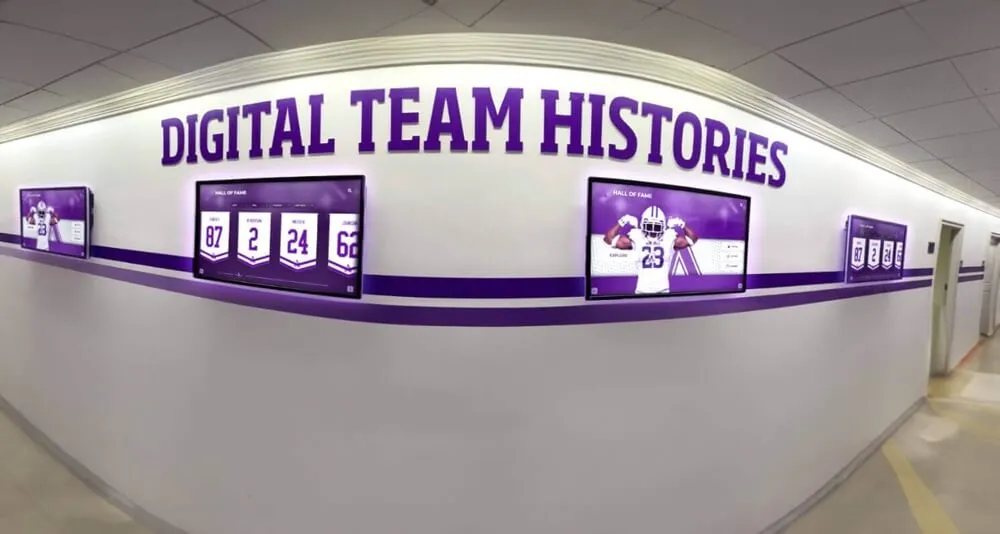
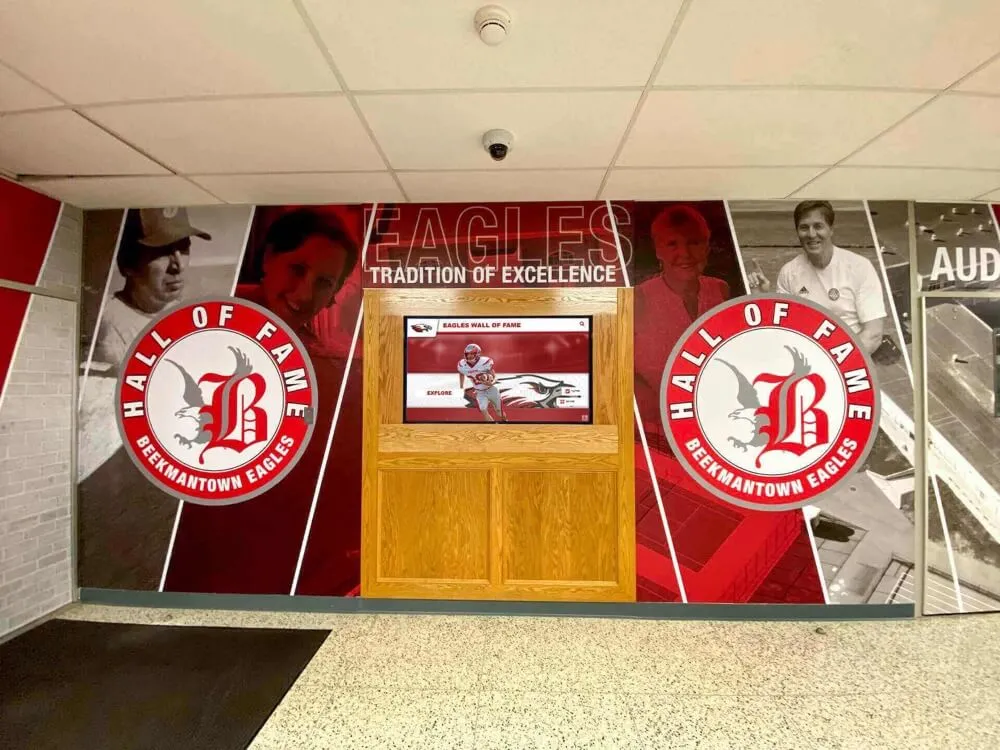
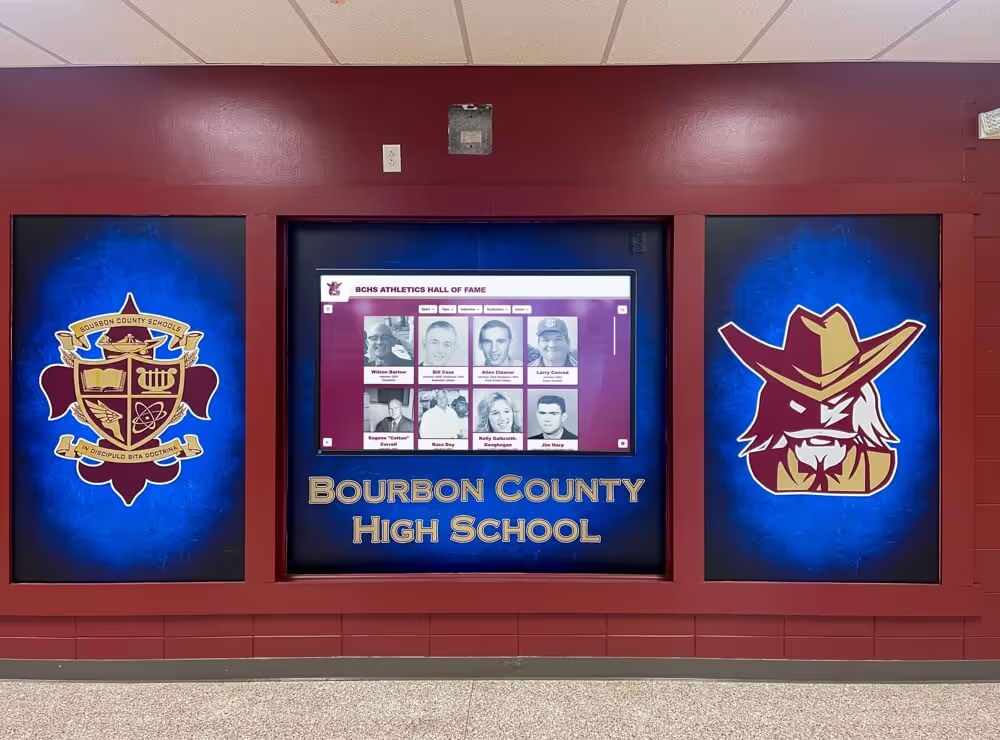
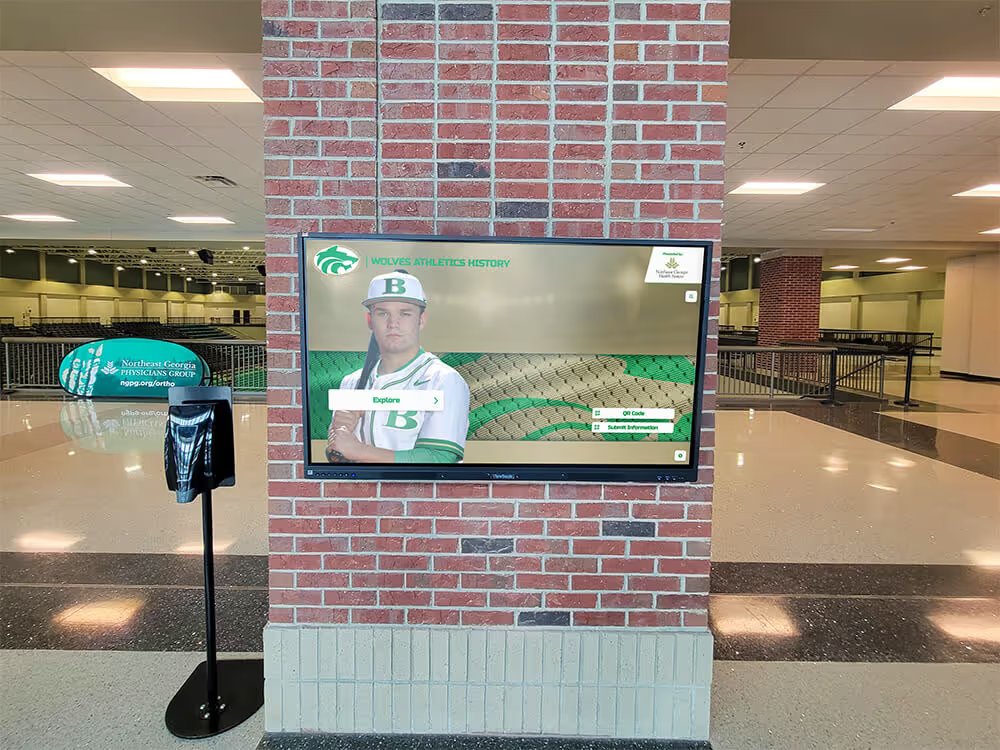
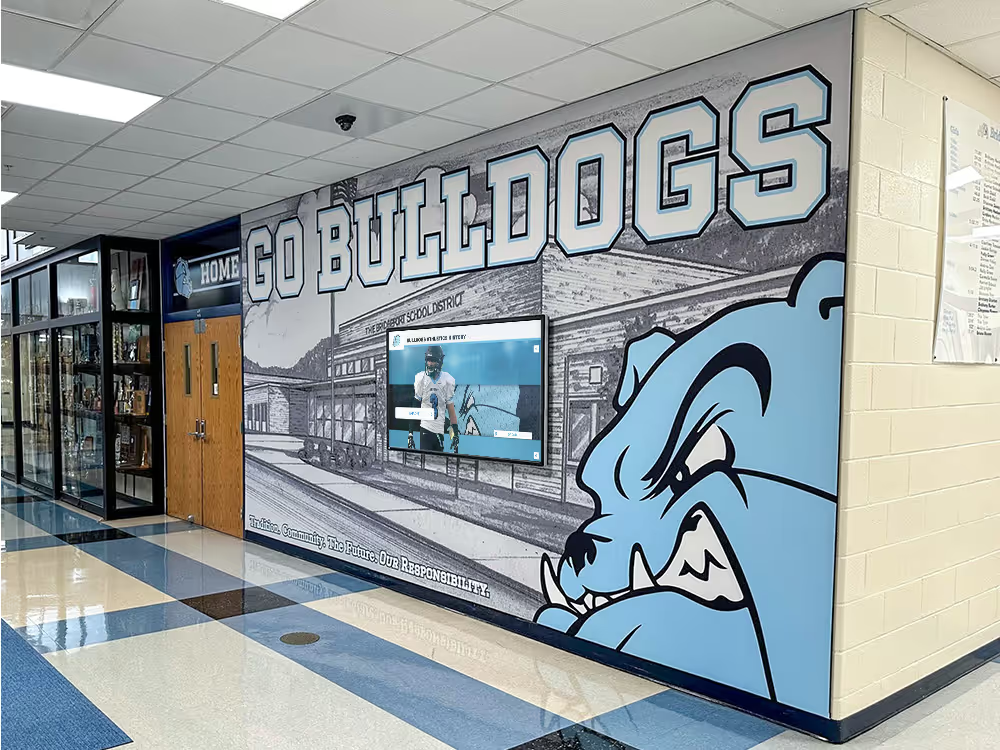
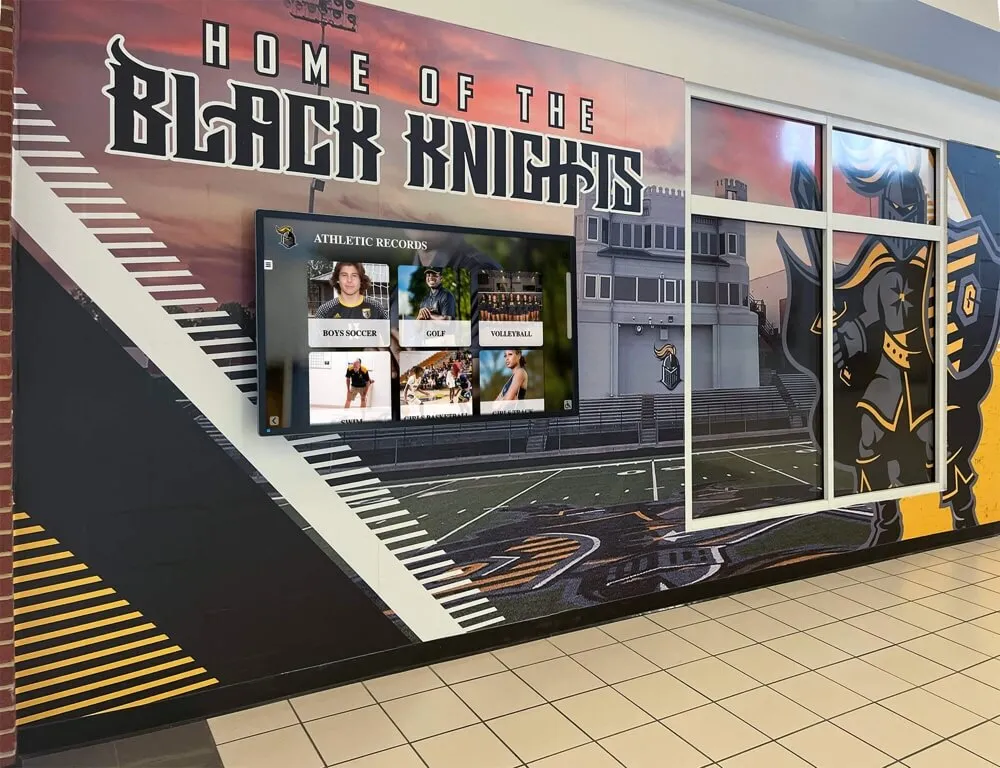
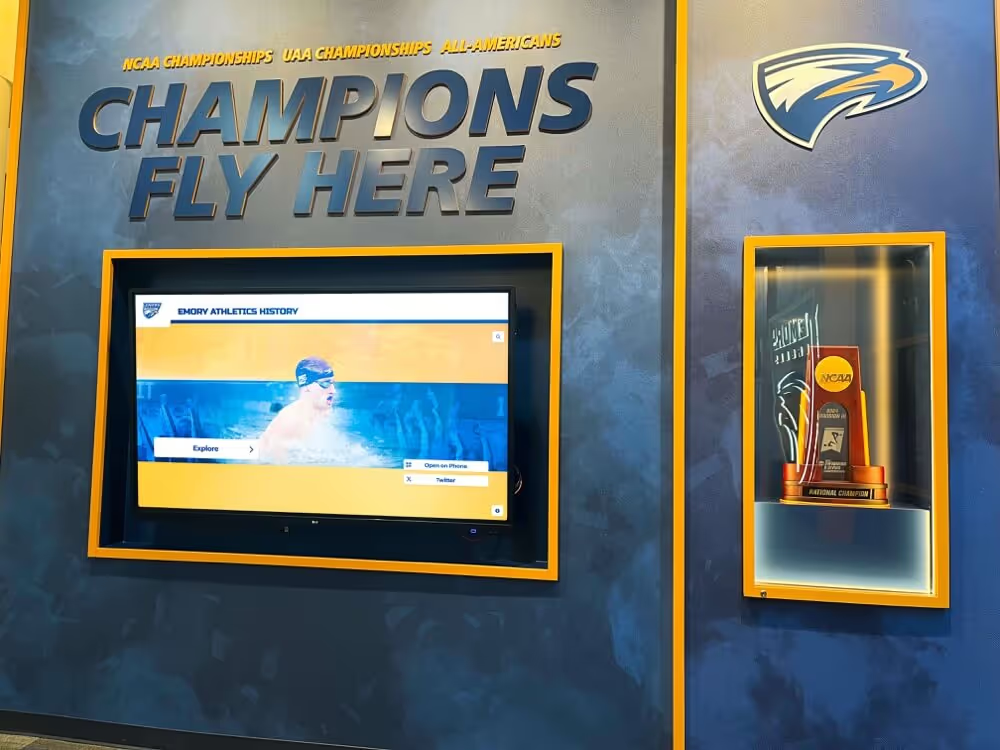
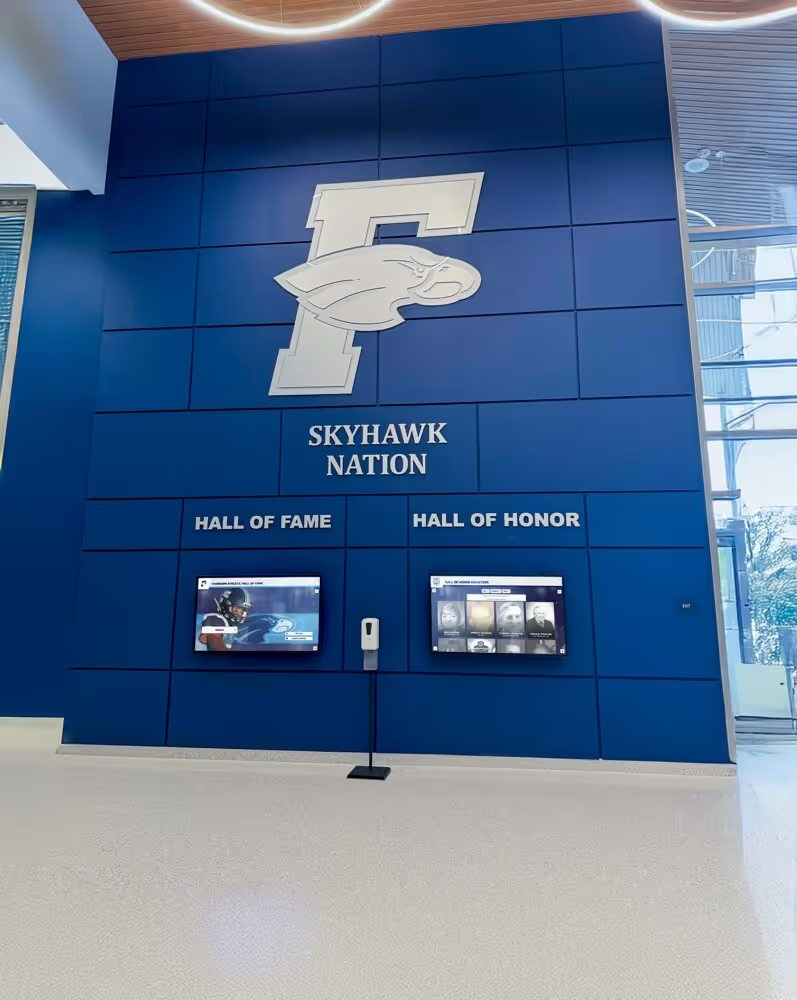
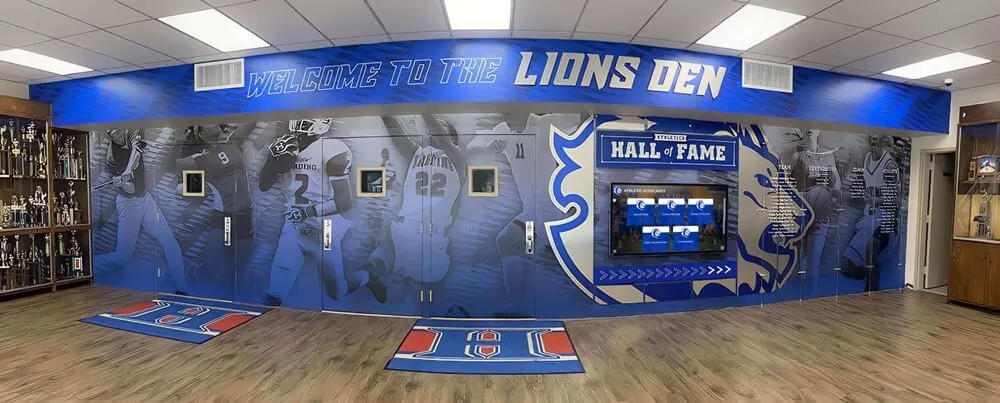
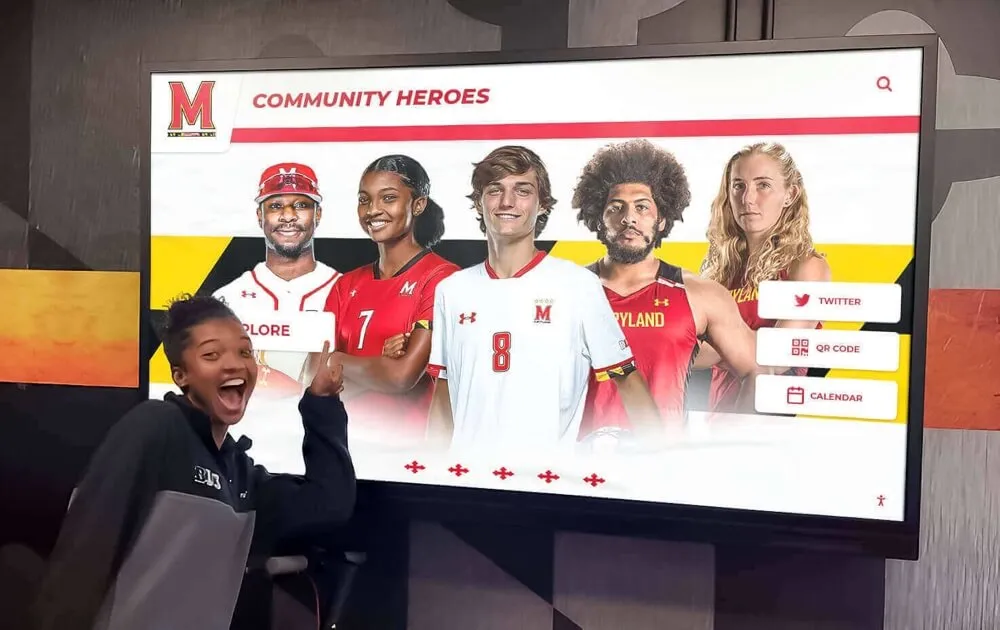
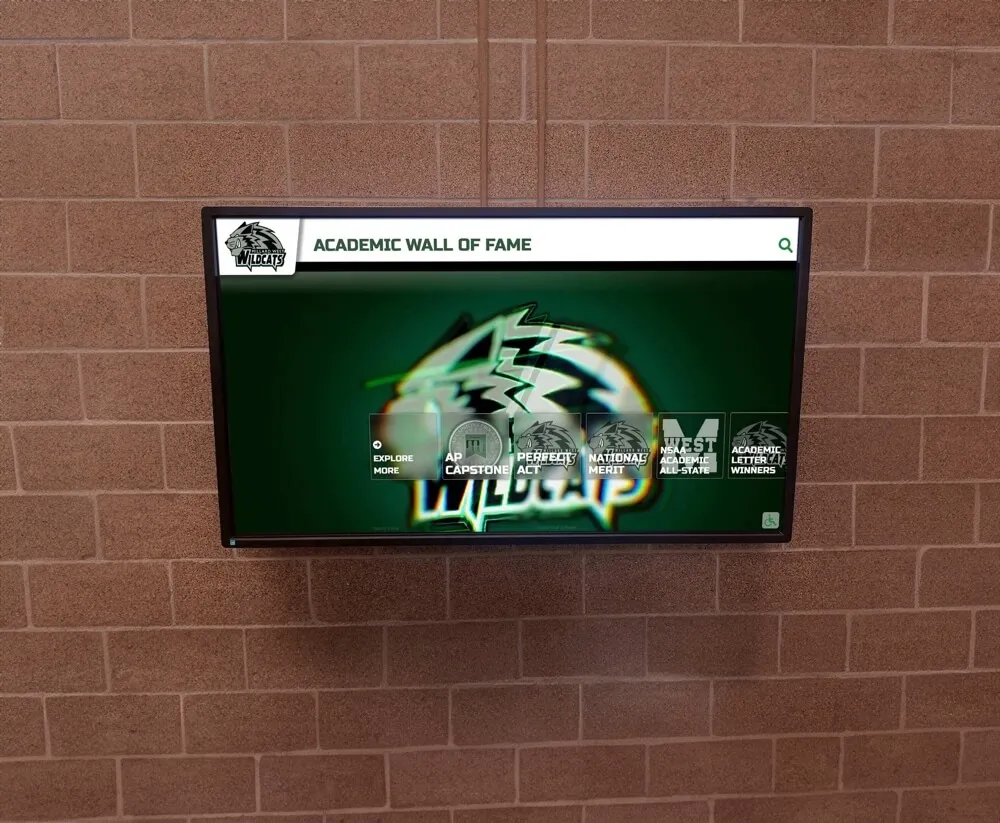
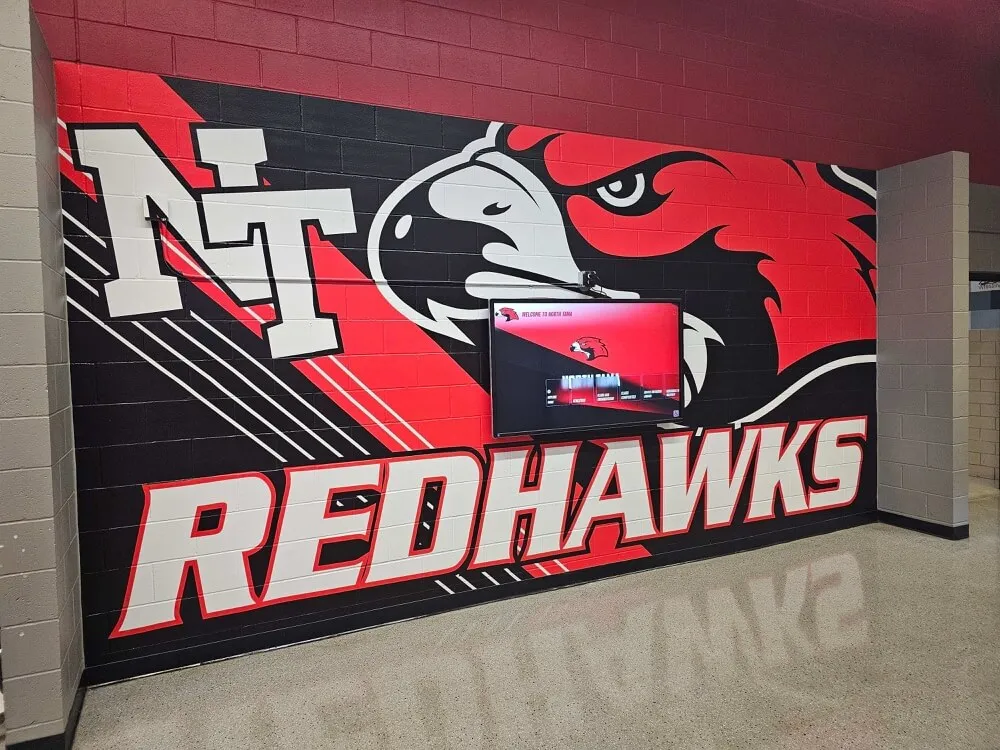
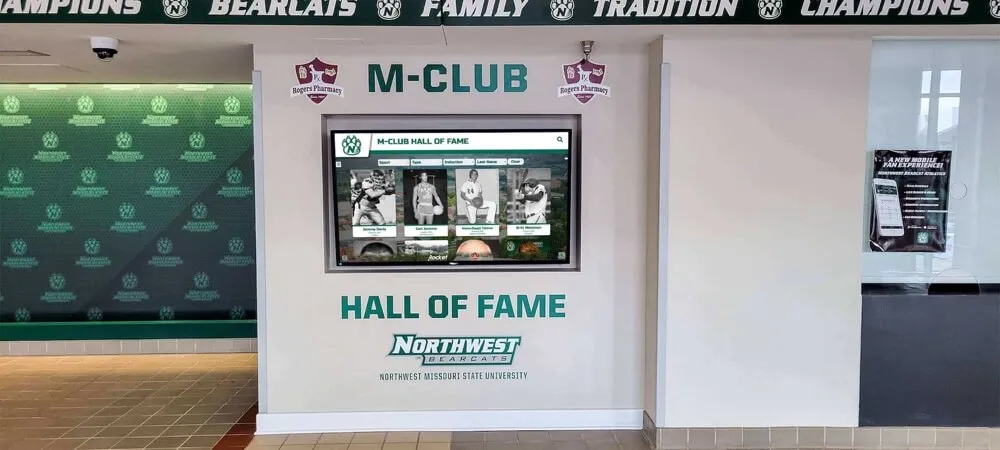
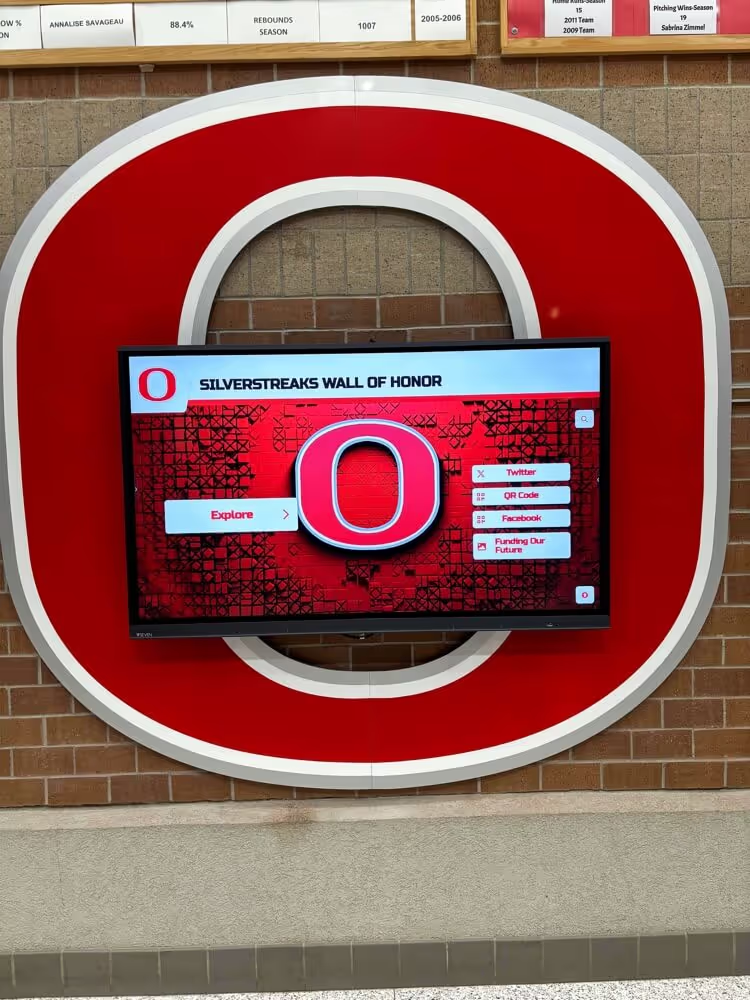
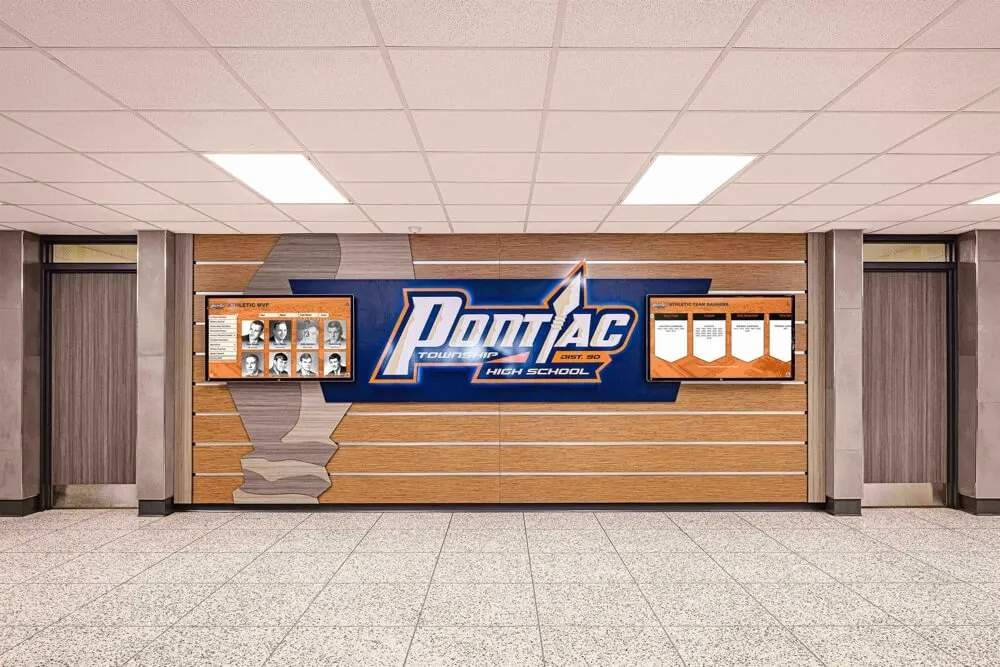
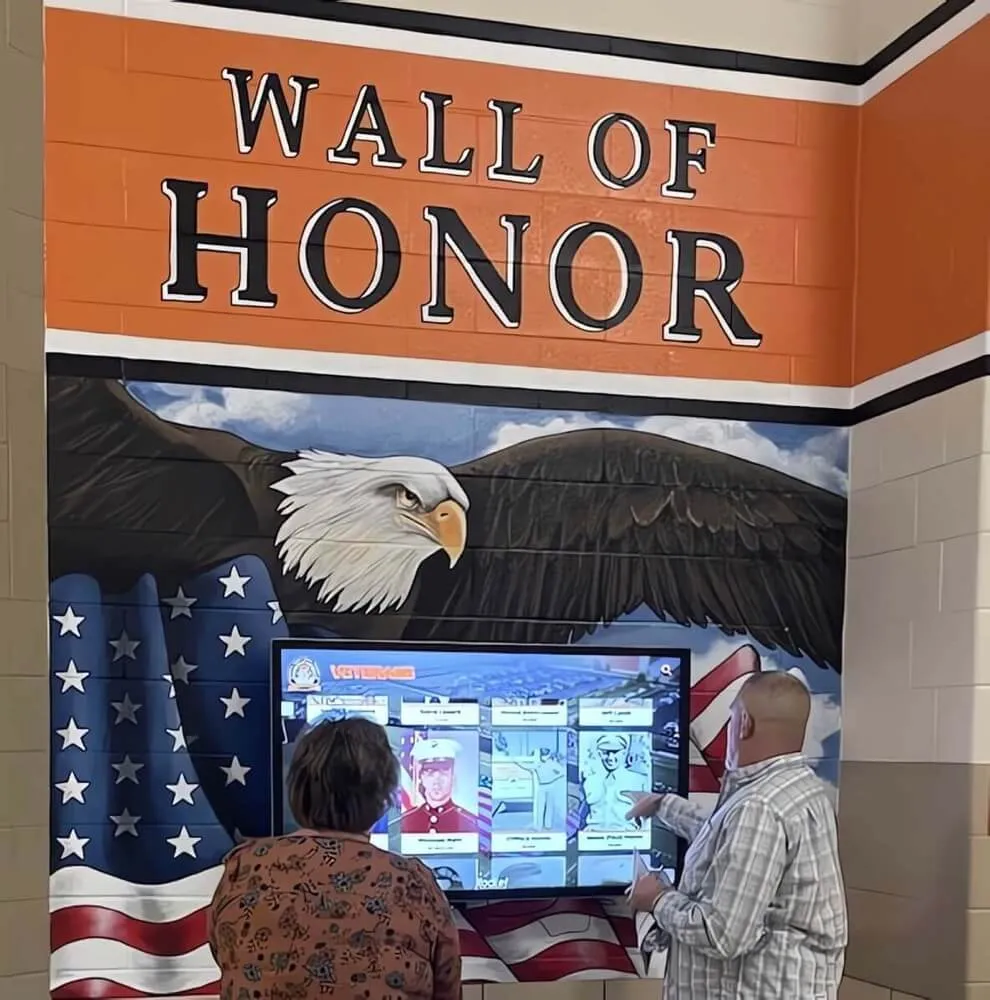
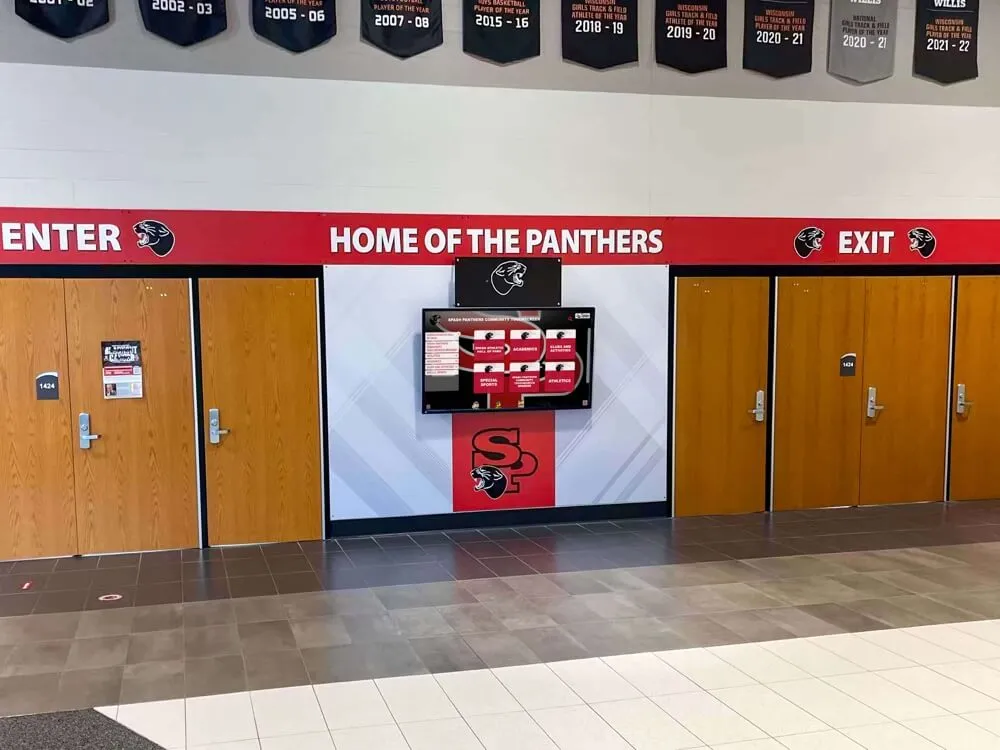
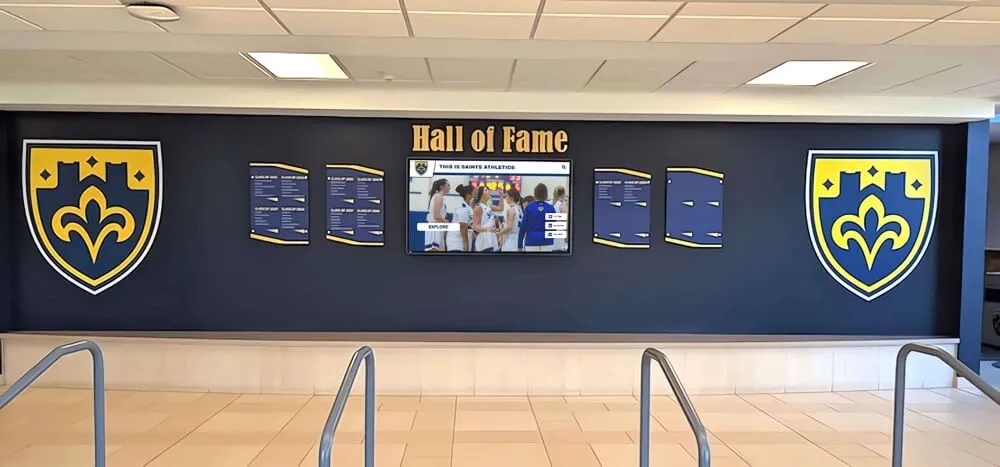
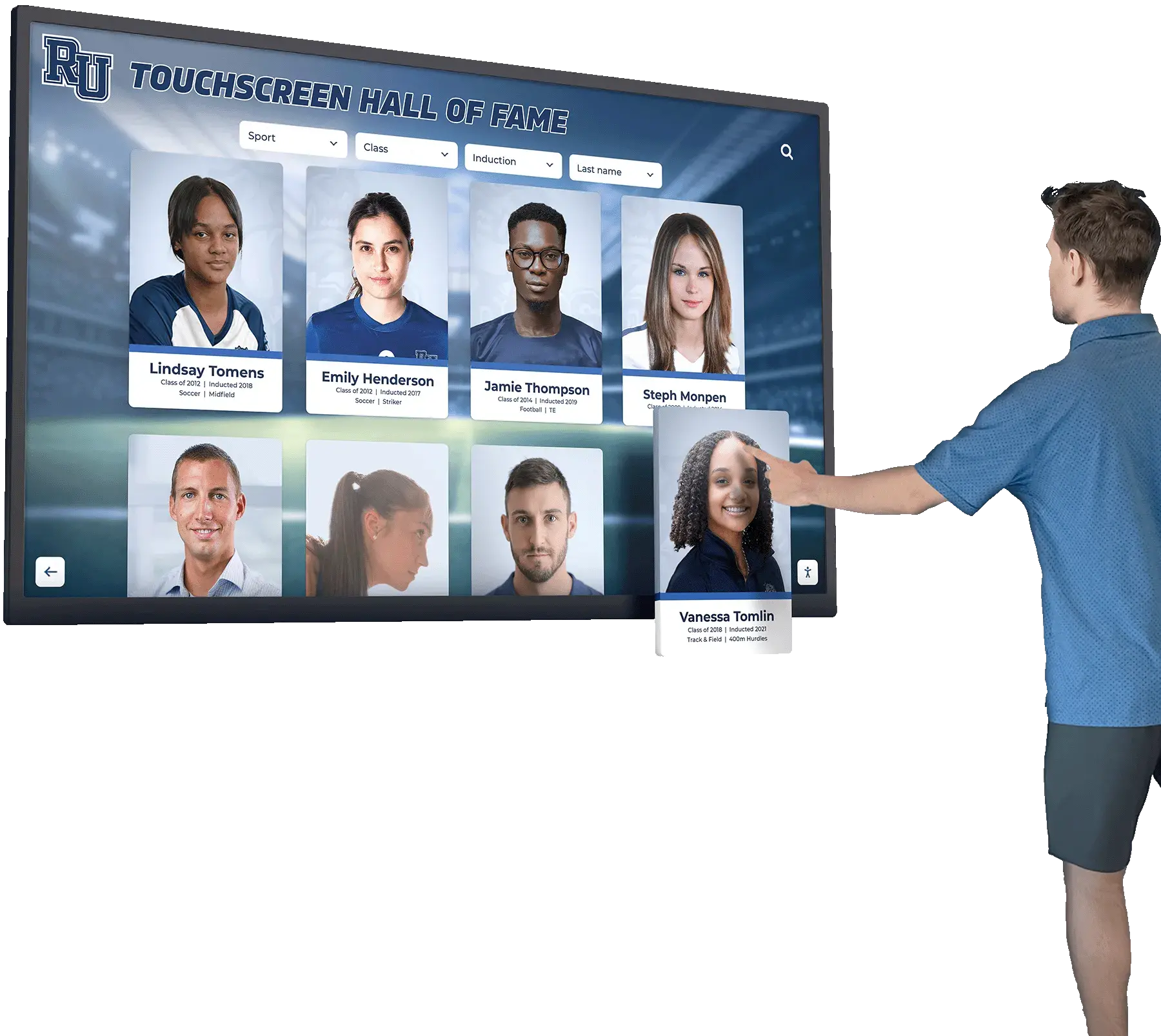
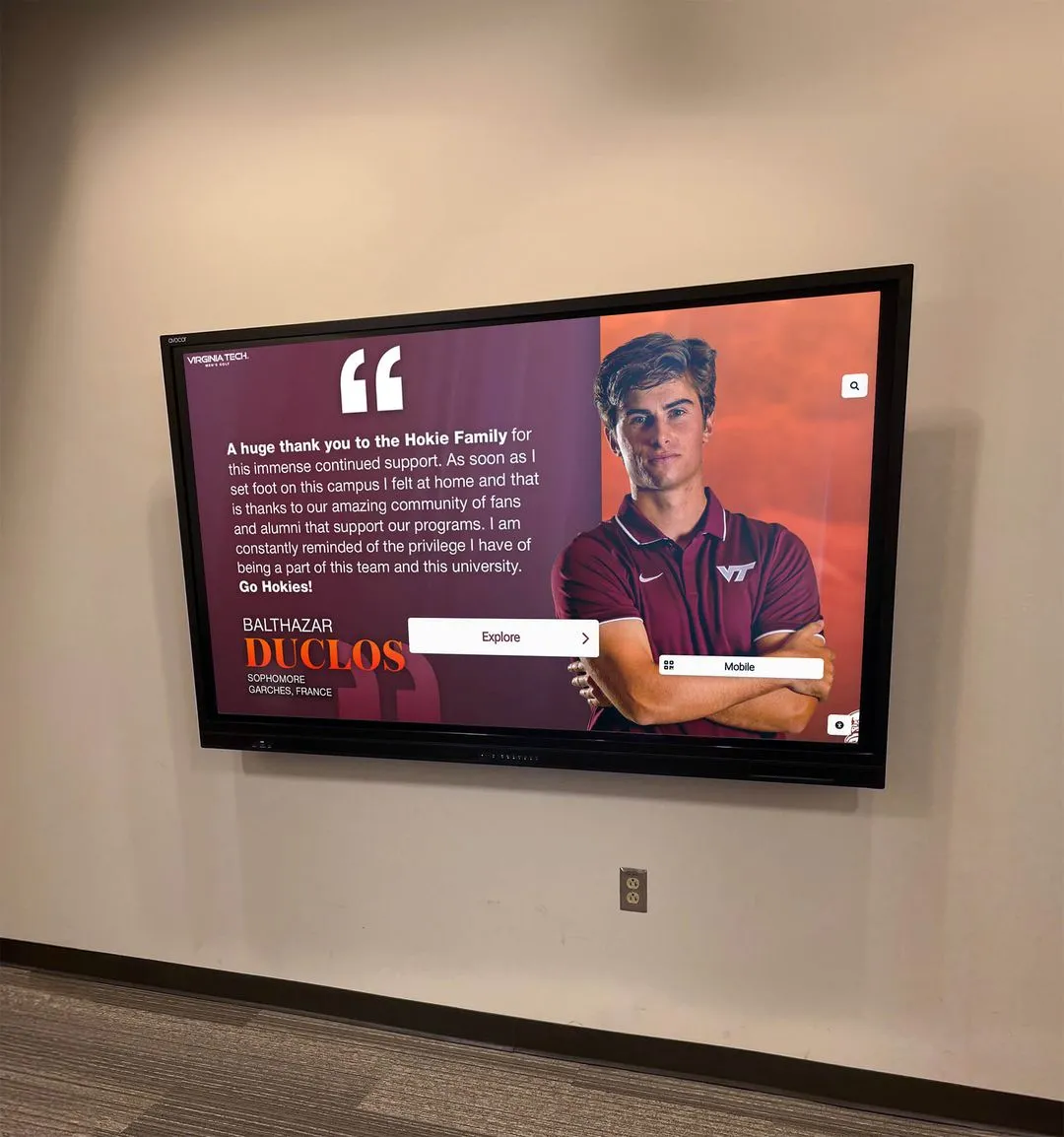
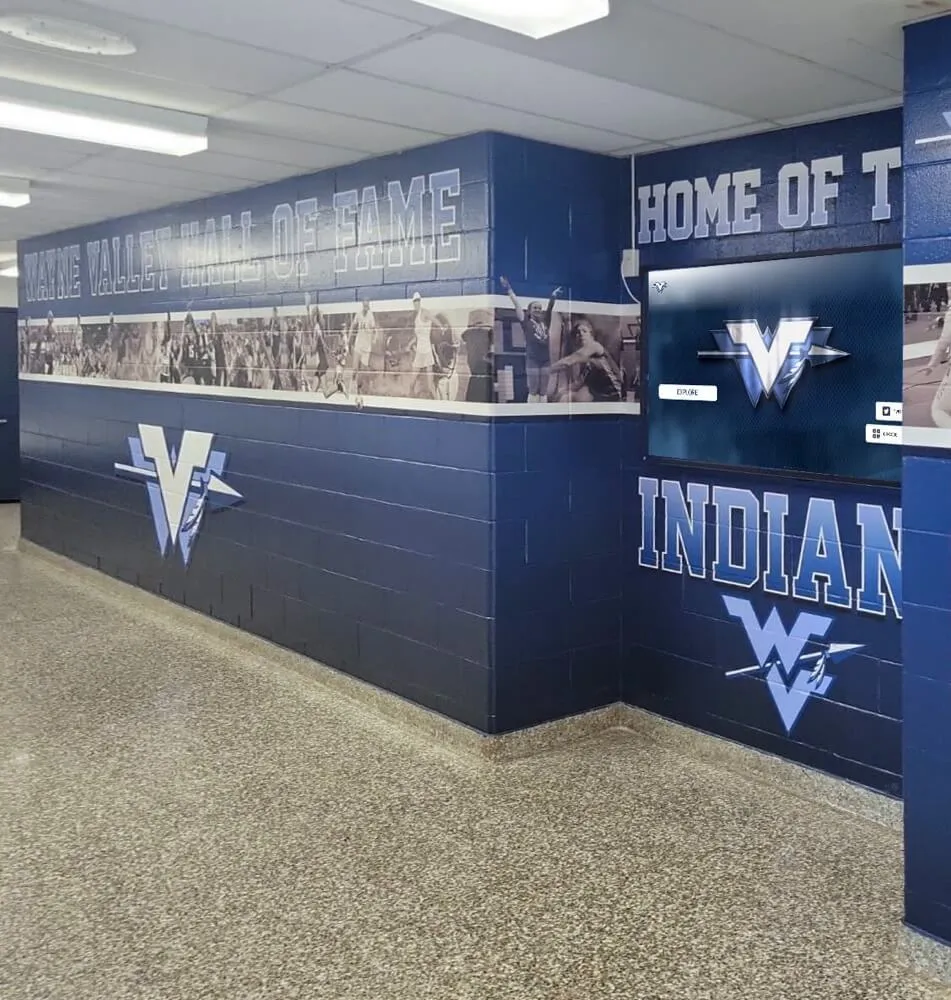
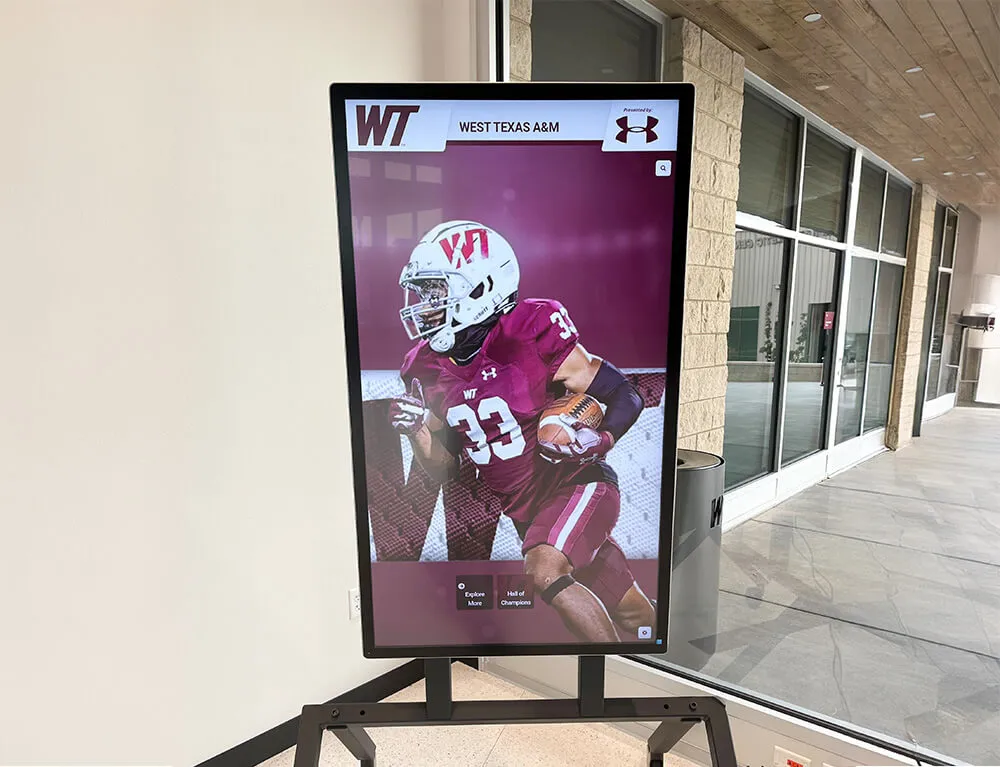
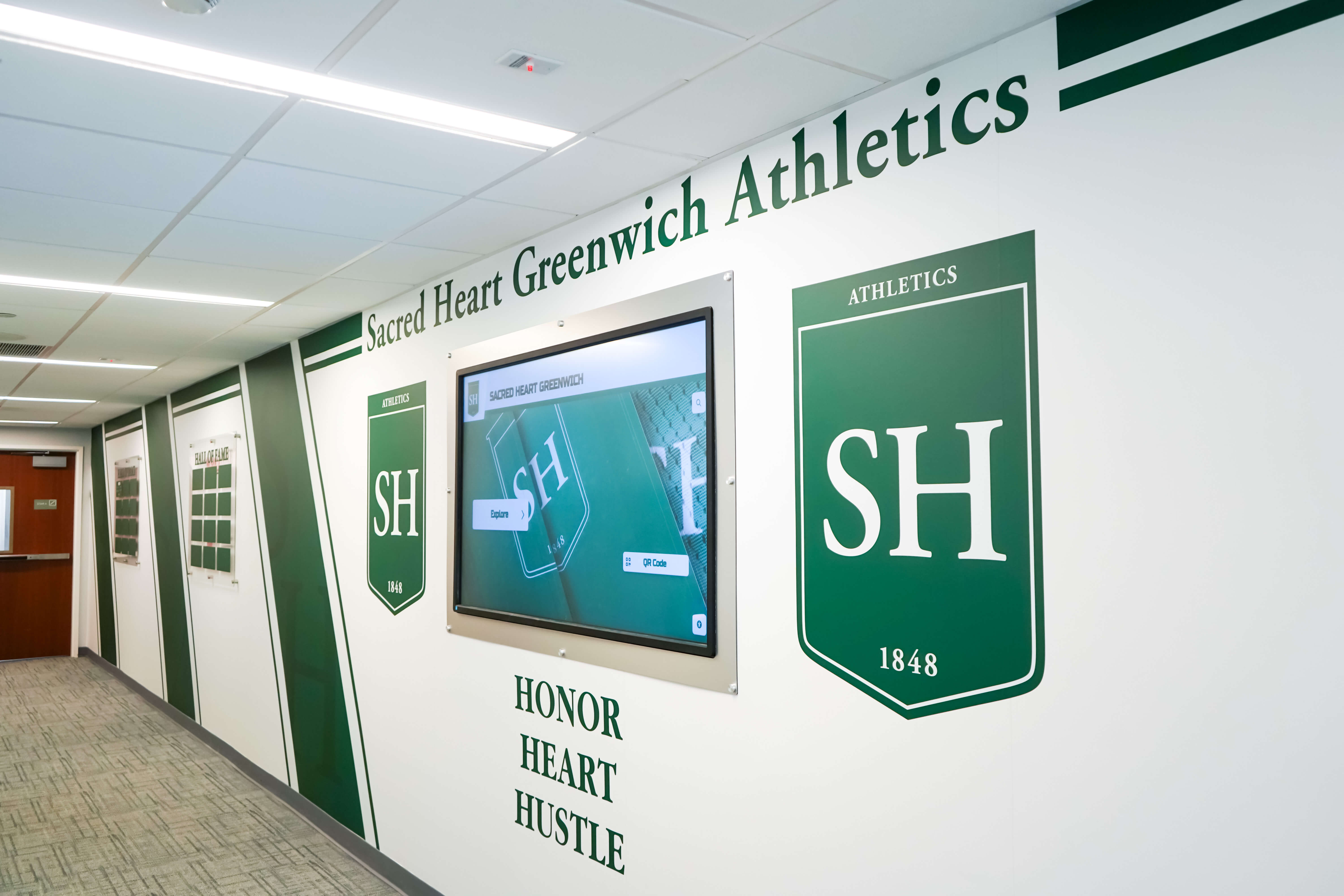
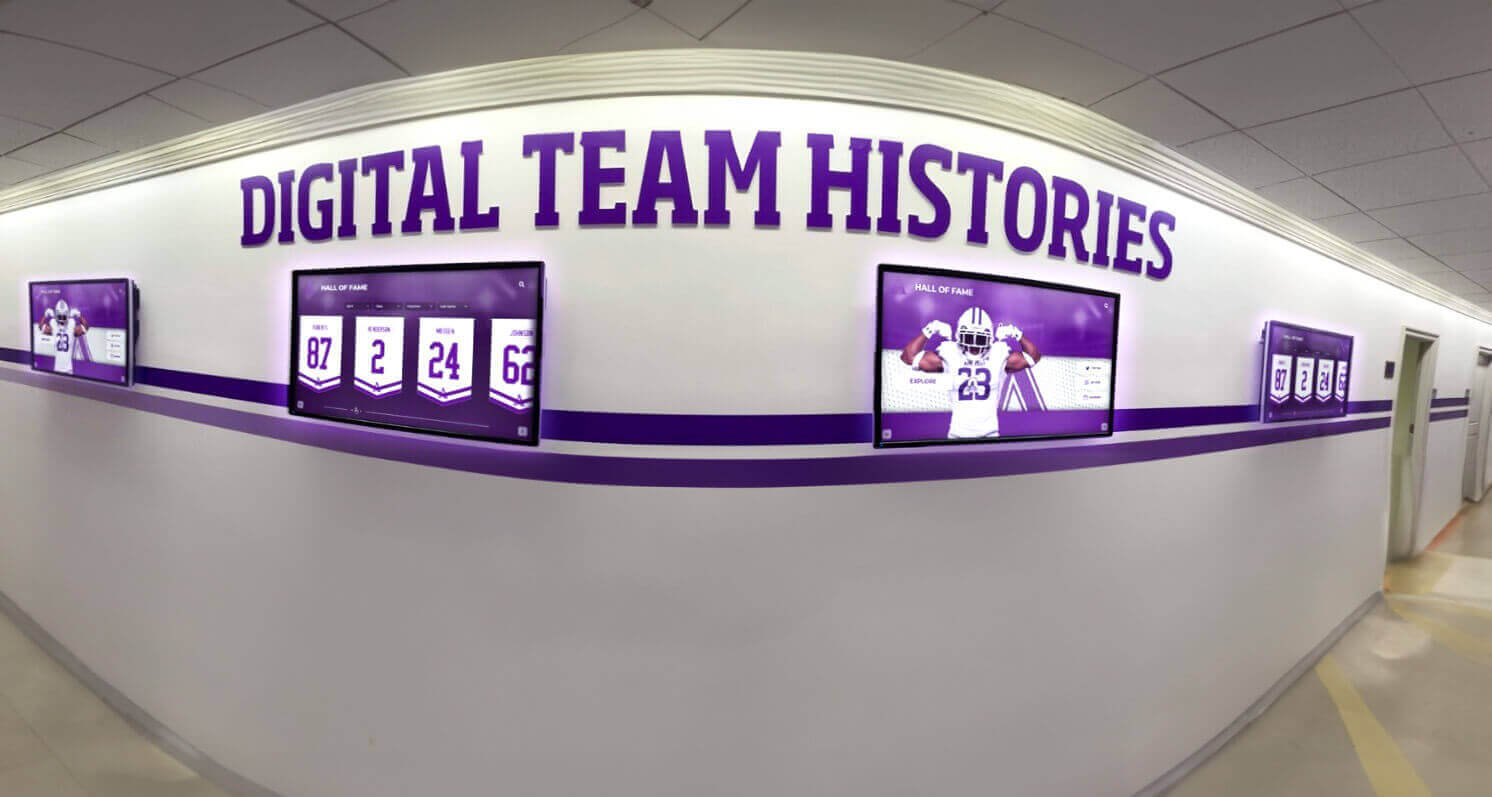
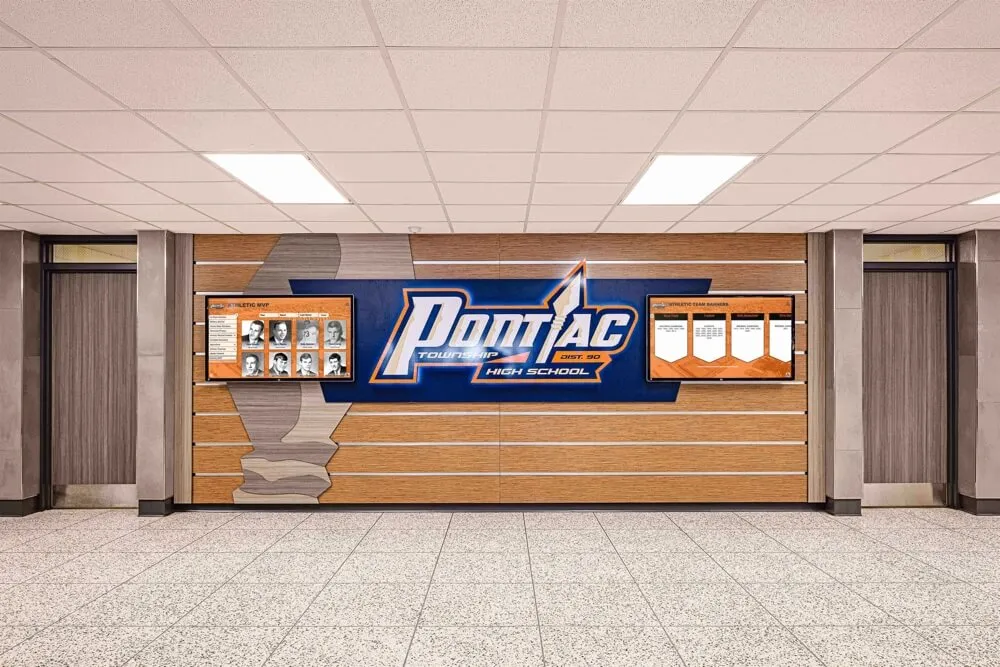
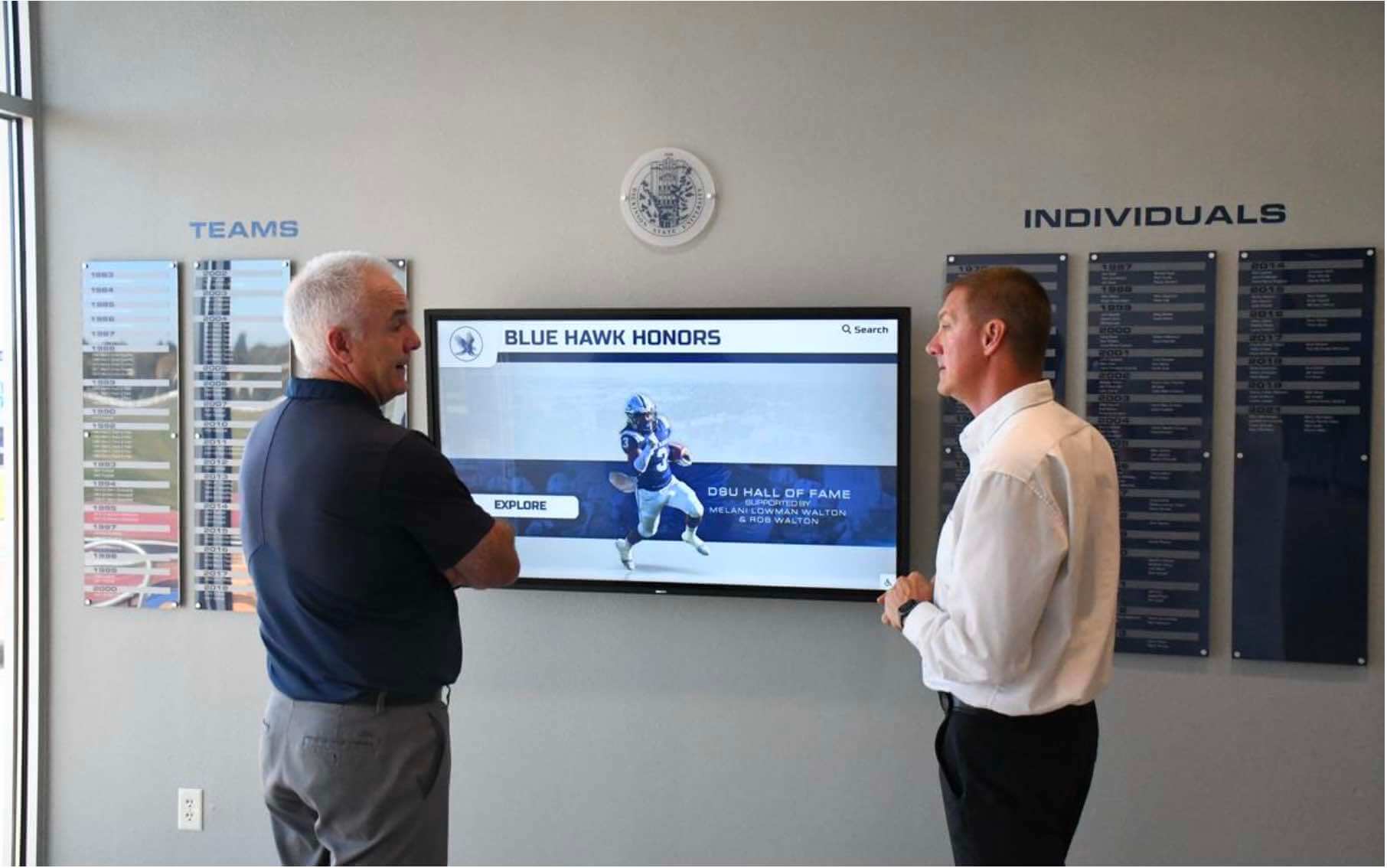
Modern athletic departments increasingly use digital display systems to make recognition visible and accessible beyond annual banquet nights. Interactive touchscreen installations allow visitors to explore program history, browse hall of fame inductees by sport and year, and connect historical achievement to current athletes in ways static plaques cannot. Understanding the full range of options—from interactive touchscreen buyers guides to large trophy case display strategies—helps ADs make informed decisions about recognition infrastructure investments.

The shift toward digital recognition also supports the long-term sustainability of school recognition programs by eliminating the ongoing fabrication and installation costs that make traditional plaque-based systems expensive to maintain at scale. Schools that have modernized their recognition infrastructure report stronger alumni giving conversations, since digital displays make honoring donor relationships visible to the entire athletic community year-round.
Administrators evaluating recognition system upgrades benefit from exploring how programs across different school sizes and budget levels have approached student-athlete scholarship recognition and alumni engagement through modern display technology.
Putting It All Together: Structuring for Success
The most effective athletic departments share a common characteristic: every role, from the AD to the volunteer assistant coach, understands exactly what they own, who they report to, and how their work connects to the broader mission of the program. That clarity is not the result of complicated organizational charts—it is the result of deliberate conversations, written role descriptions, and leaders who hold the structure accountable consistently.
For school leaders building or rebuilding their athletic departments, the practical starting point is role documentation: written descriptions for each position currently on staff, followed by an honest gap analysis between current coverage and operational needs. The gaps become the staffing roadmap. The overlaps become the coaching conversations.
Building recognition culture into role definitions from the start—rather than treating it as an afterthought—creates athletic departments that generate genuine pride, stronger alumni relationships, and the community identity that makes athletic programs matter beyond their win-loss records.
Ready to modernize how your athletic department recognizes and celebrates achievement? Rocket Alumni Solutions helps schools and universities build interactive touchscreen halls of fame, digital record boards, and recognition displays that honor your program’s history and inspire the next generation of student-athletes. Explore how schools across the country are transforming their athletic facilities into year-round recognition experiences.