



Key Takeaways
Compare traditional vs digital solutions for showcasing alumni advice, career guidance, and mentorship. Decision framework for schools choosing recognition displays that share alumni wisdom with students.
Intent: compare
Why Alumni Advice Matters: Context for This Comparison
Before evaluating display solutions, understanding the strategic value of sharing alumni advice helps clarify evaluation priorities and what success looks like.
The Career Guidance Gap in Schools
Many students navigate career decisions without sufficient exposure to diverse professional paths and real-world insights from those who have walked similar journeys. According to research on career development, students benefit significantly from authentic testimonials about career trajectories, challenges overcome, and practical advice from graduates who attended their same institution.
Alumni advice programs address this gap by:
Creating Tangible Career Models: When students encounter alumni working in fields they’re considering, abstract career aspirations become concrete possibilities with visible pathways from classroom to profession.
Providing Authentic Insights: Unlike generic career guidance materials, alumni share institution-specific perspectives about how their education prepared them, which experiences mattered most, and what they wish they had known during their student years.
Building Mentorship Connections: Effective alumni advice displays create starting points for mentorship relationships, allowing students to identify graduates in their fields of interest and potentially connect for deeper guidance.
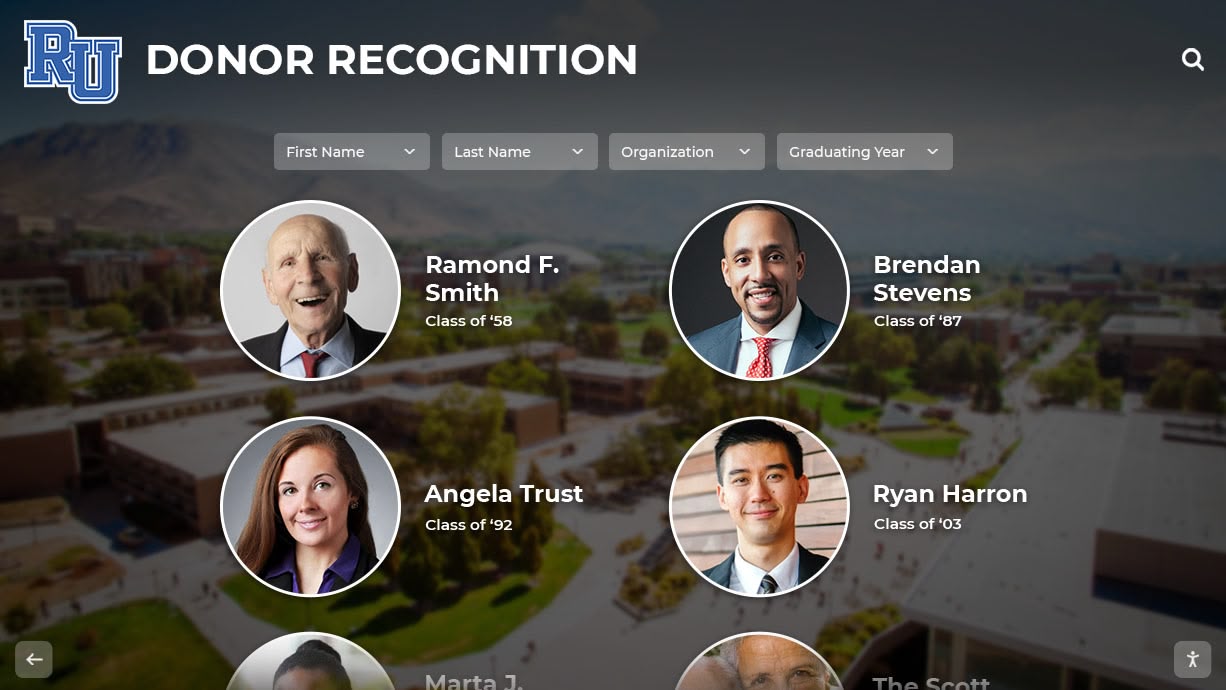
Strengthening Institutional Identity: Visible celebration of alumni success reinforces that the institution produces graduates who achieve meaningful accomplishments, building pride and motivation among current students.
What Makes Alumni Advice Displays Effective
Not all recognition approaches deliver equal impact. Effective alumni advice displays share common characteristics:
- Accessibility: Located where students encounter them regularly during daily campus routines
- Discoverability: Students can find alumni relevant to their interests without exhaustive searching
- Depth: Sufficient detail to provide meaningful insights beyond surface-level accomplishments
- Currency: Current information reflecting alumni’s recent experiences and updated career advice
- Engagement: Interactive elements or compelling presentation that captures student attention
The display solution comparison that follows evaluates platforms against these effectiveness criteria while considering practical implementation factors including cost, maintenance requirements, content management complexity, and scalability as alumni populations grow.
Understanding Display Solution Categories
Three primary approaches dominate the alumni advice display market, each with distinct advantages and limitations that determine fit for different school contexts.
Traditional Printed Materials
Description: Physical printed profiles displayed on bulletin boards, hallway displays, or mounted frames featuring alumni photos, biographical information, and career advice quotes.
Typical Implementation: Schools create printed profiles periodically (annually or quarterly), mounting new materials in designated hallway locations or dedicated recognition spaces.
Primary Advantages:
- Low initial investment requiring only printing and mounting materials
- No technical requirements or digital infrastructure dependencies
- Familiar format that schools have implemented successfully for decades
- Tangible presence that doesn’t require electricity or network connectivity
Core Limitations:
- Fixed physical space constraints limiting number of alumni featured simultaneously
- High ongoing costs for printing new materials as additional alumni are added
- Manual update processes requiring physical replacement when information changes
- Limited content depth due to space constraints on printed materials
- No interactive search or discovery beyond what students happen to encounter
- Challenging to maintain current information as alumni careers evolve
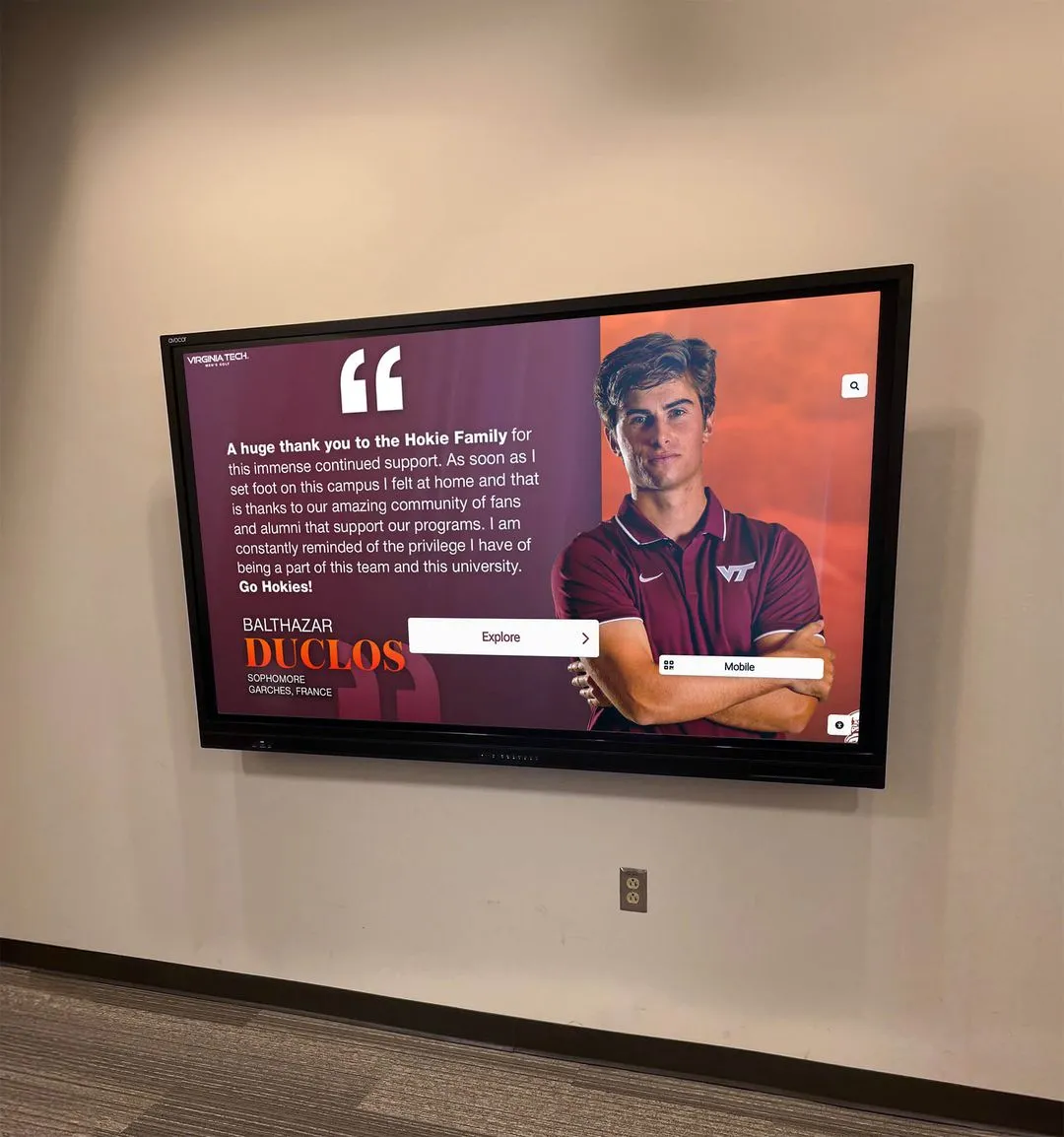
Static Digital Displays
Description: Television screens or digital signage monitors displaying slideshow presentations of alumni profiles, typically cycling through featured graduates on timed intervals.
Typical Implementation: Mounted displays in hallways or common areas showing rotating content managed through digital signage software platforms.
Primary Advantages:
- Unlimited digital capacity for storing alumni profiles without physical space constraints
- Easy content updates through software rather than physical replacement
- Multimedia capabilities supporting photos, videos, and formatted text
- Professional presentation quality with consistent visual branding
- Lower long-term costs compared to continuous printing of physical materials
Core Limitations:
- Passive viewing only—students cannot control what information appears or search for specific alumni
- Timing limitations mean students might miss relevant alumni if not present when specific profiles display
- No way to explore additional details beyond what brief slideshow presentations include
- Limited engagement as students cannot interact with content or discover alumni matching their interests
- Generic digital signage platforms lack recognition-specific features optimizing alumni showcase
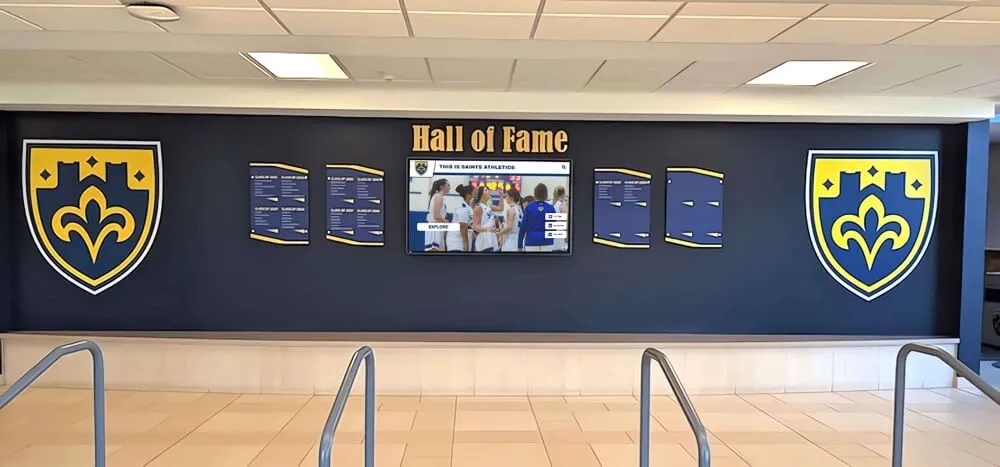
Interactive Touchscreen Recognition Platforms
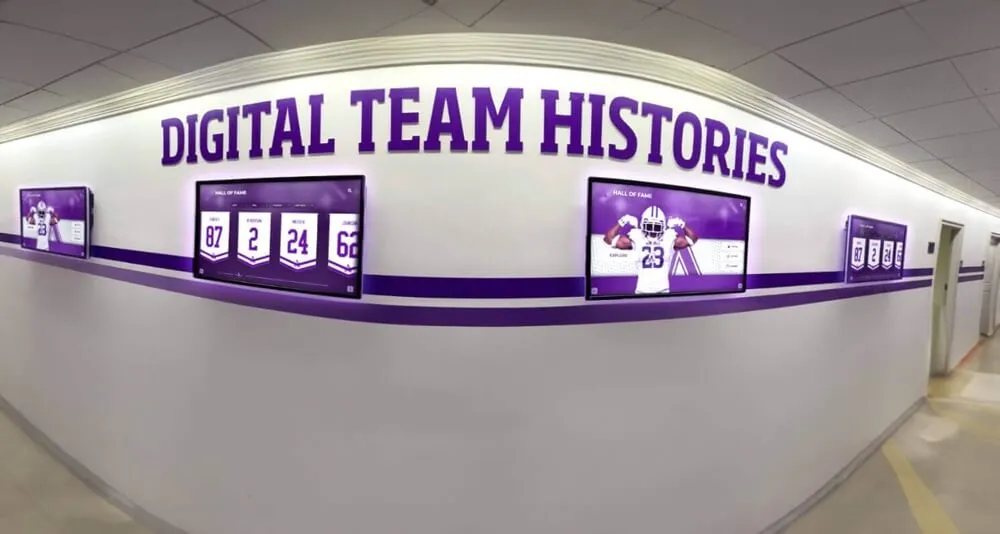
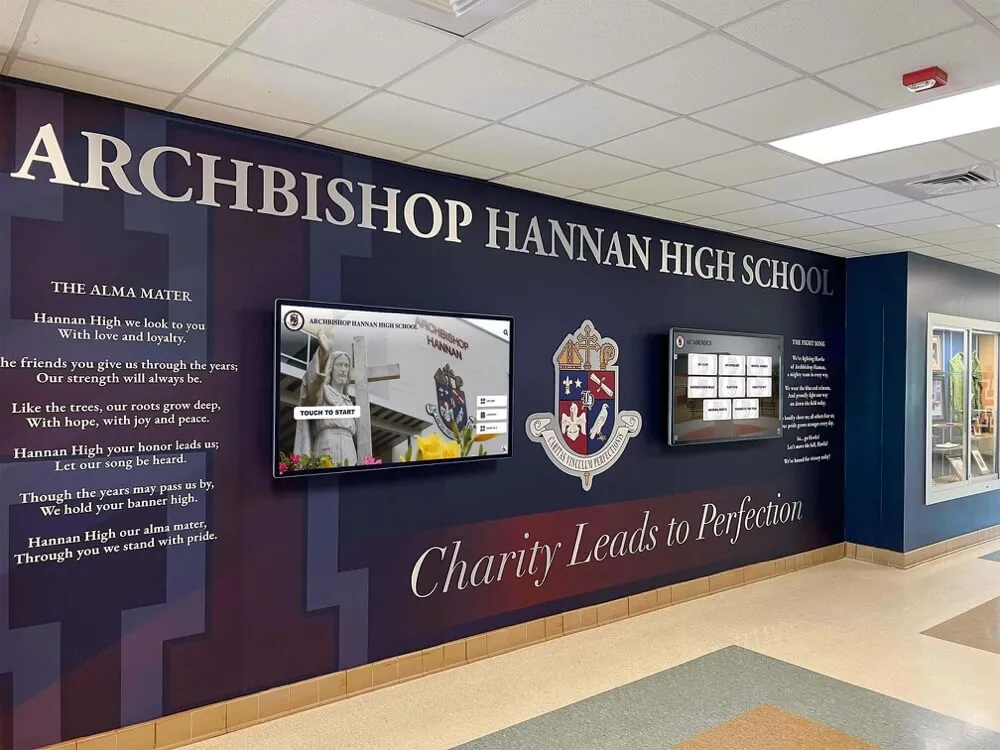
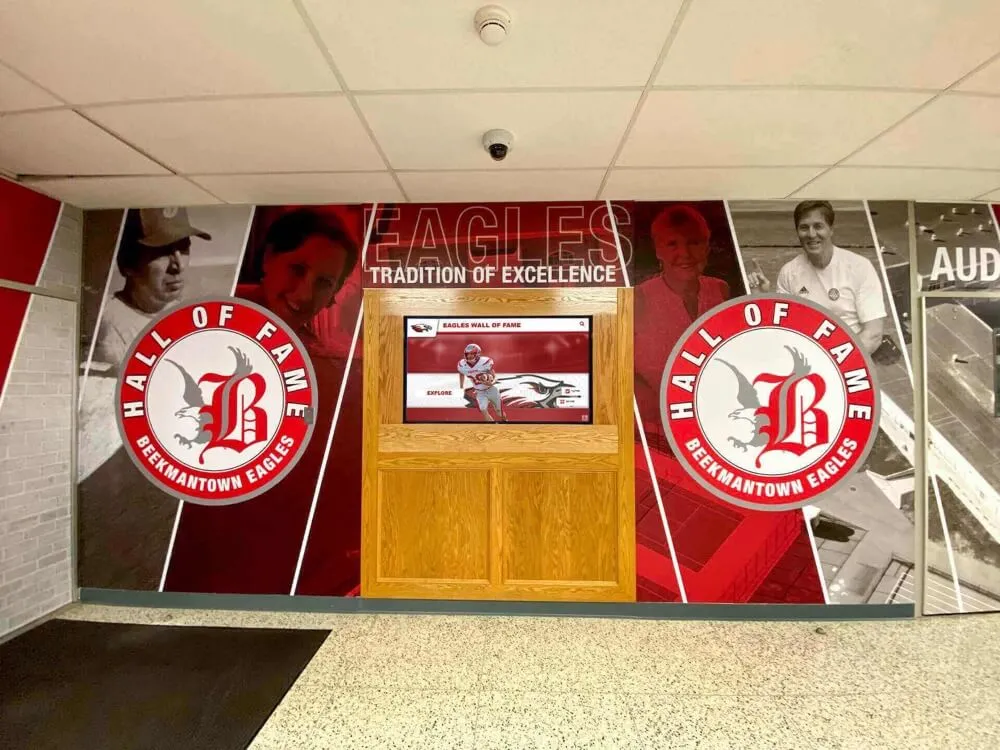
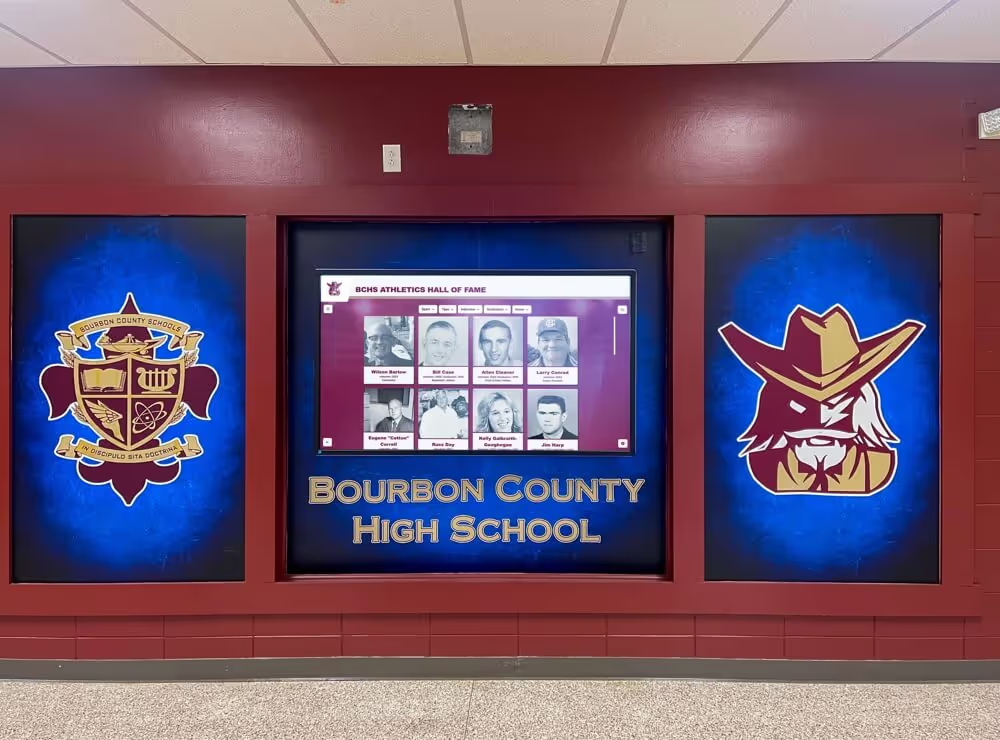
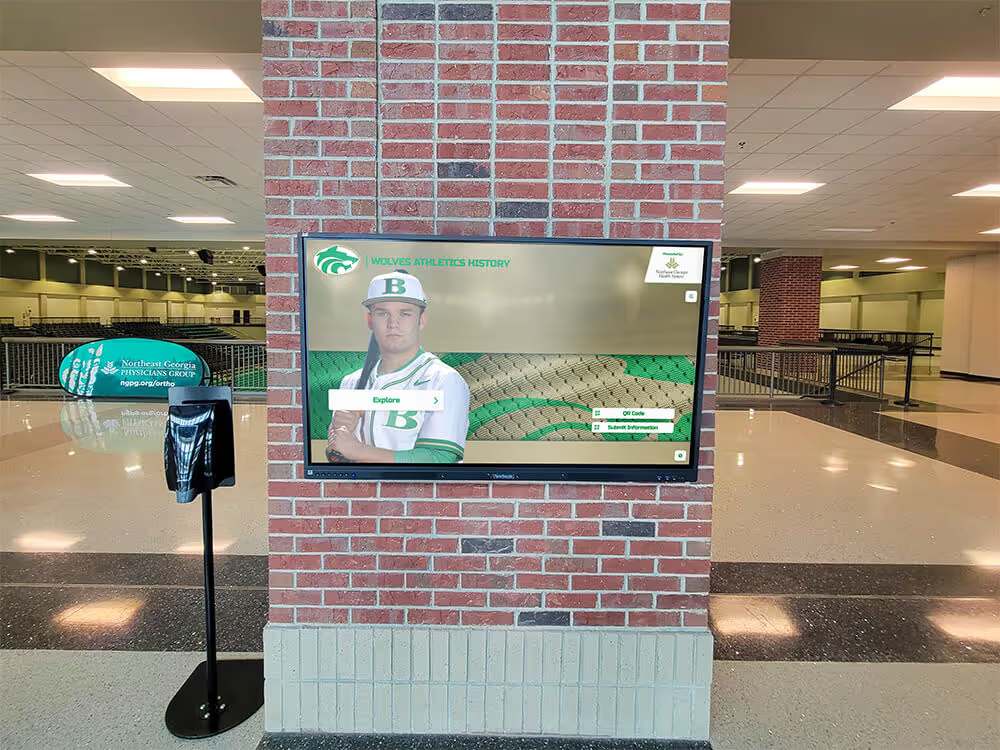
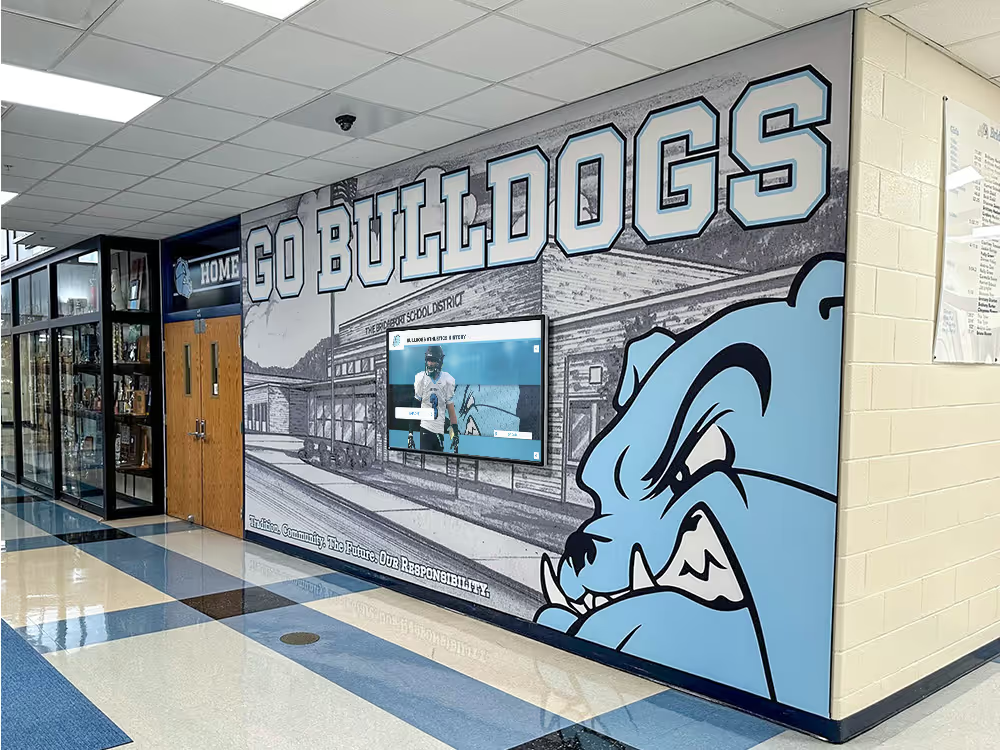
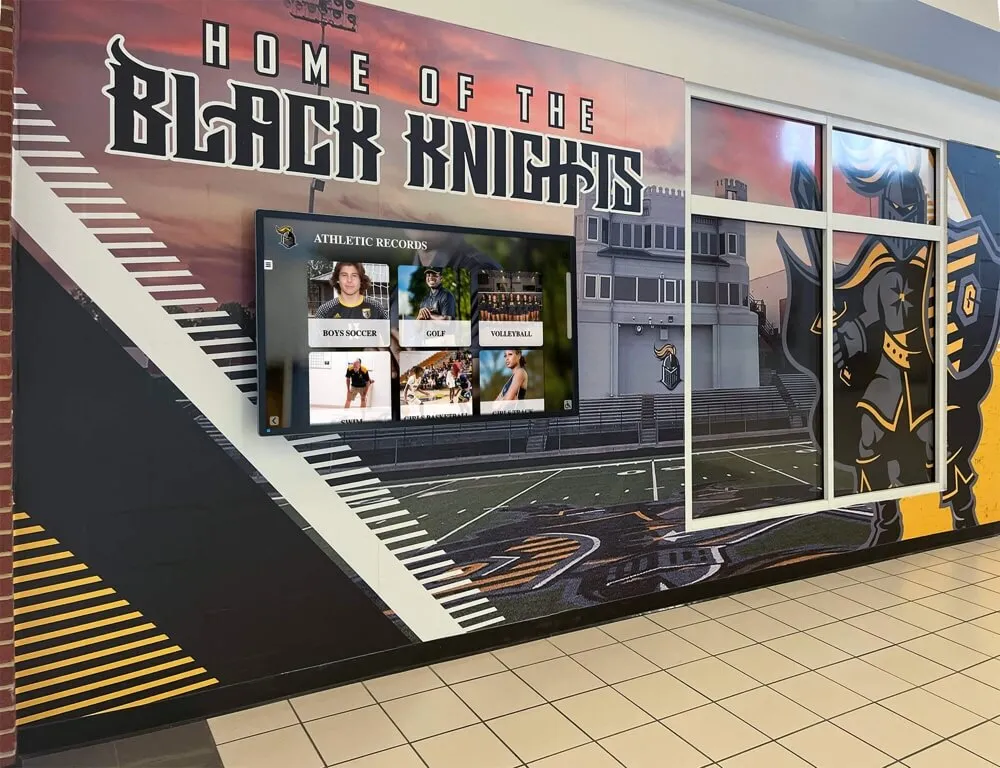
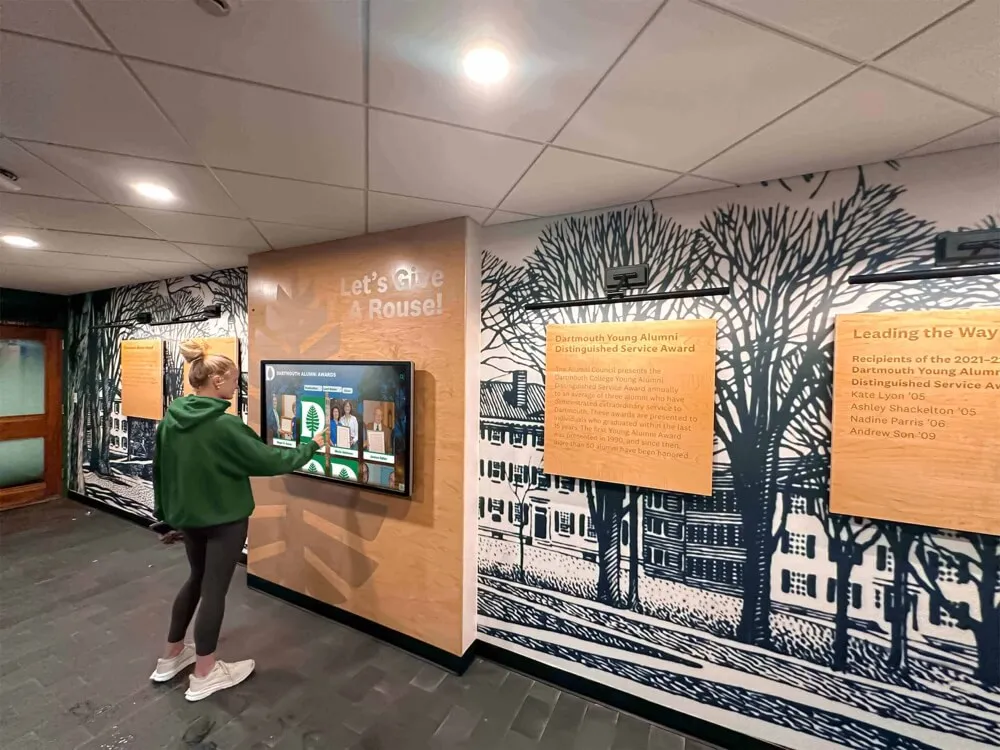
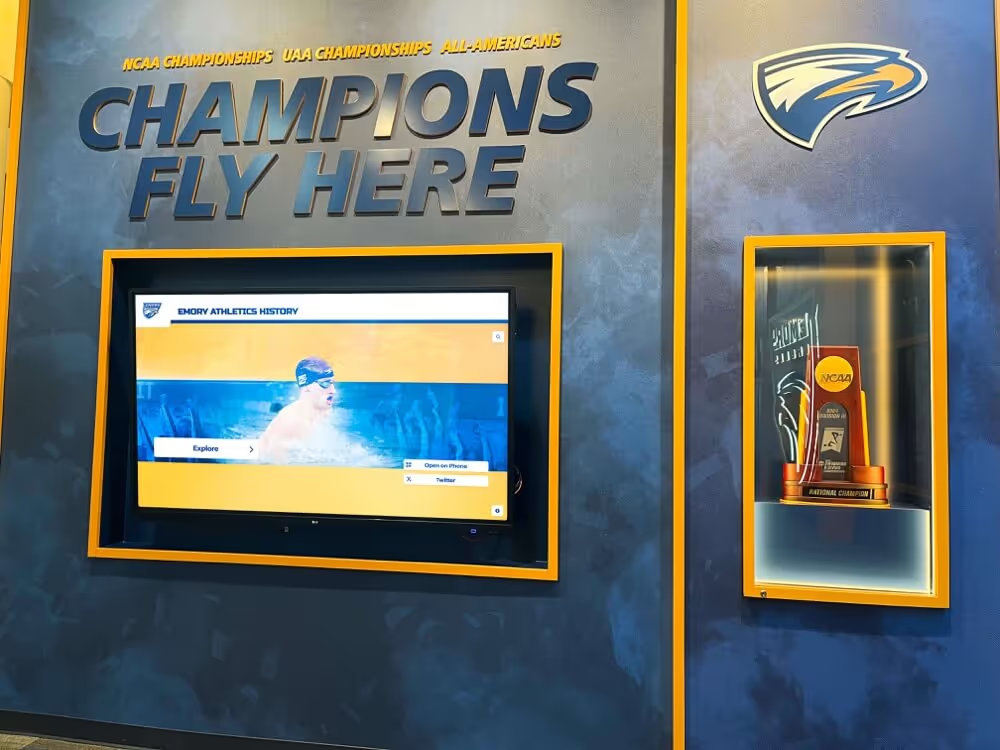
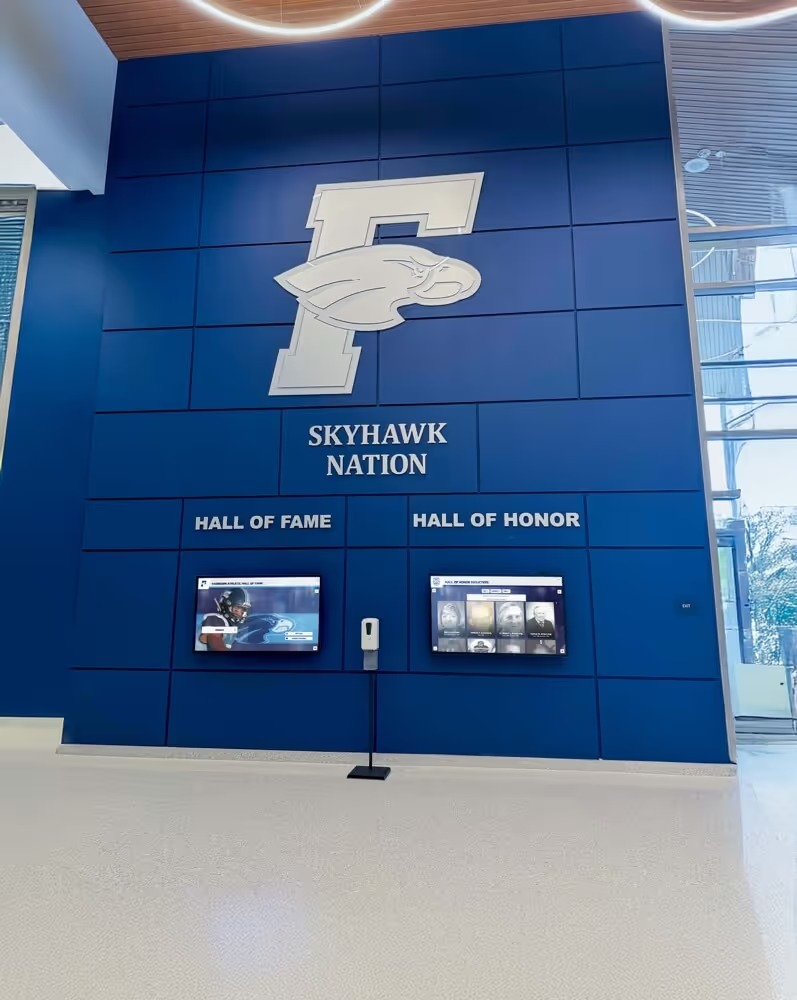
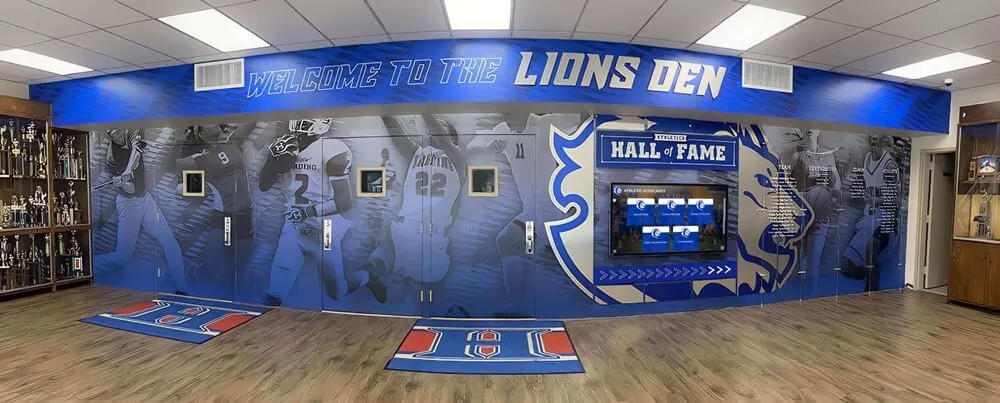
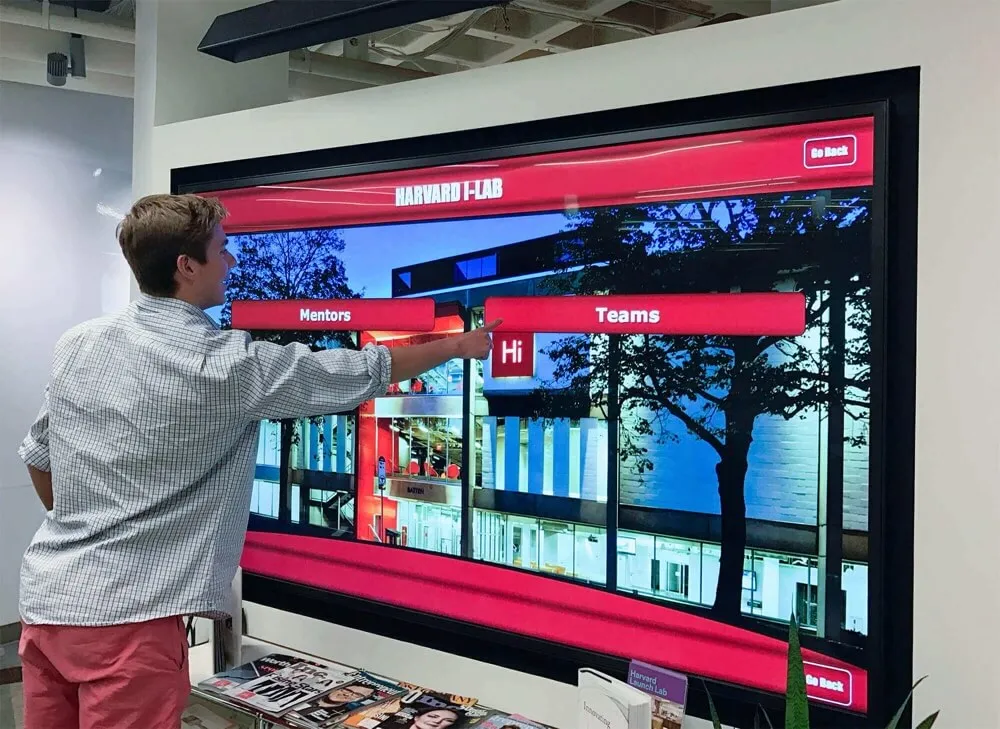
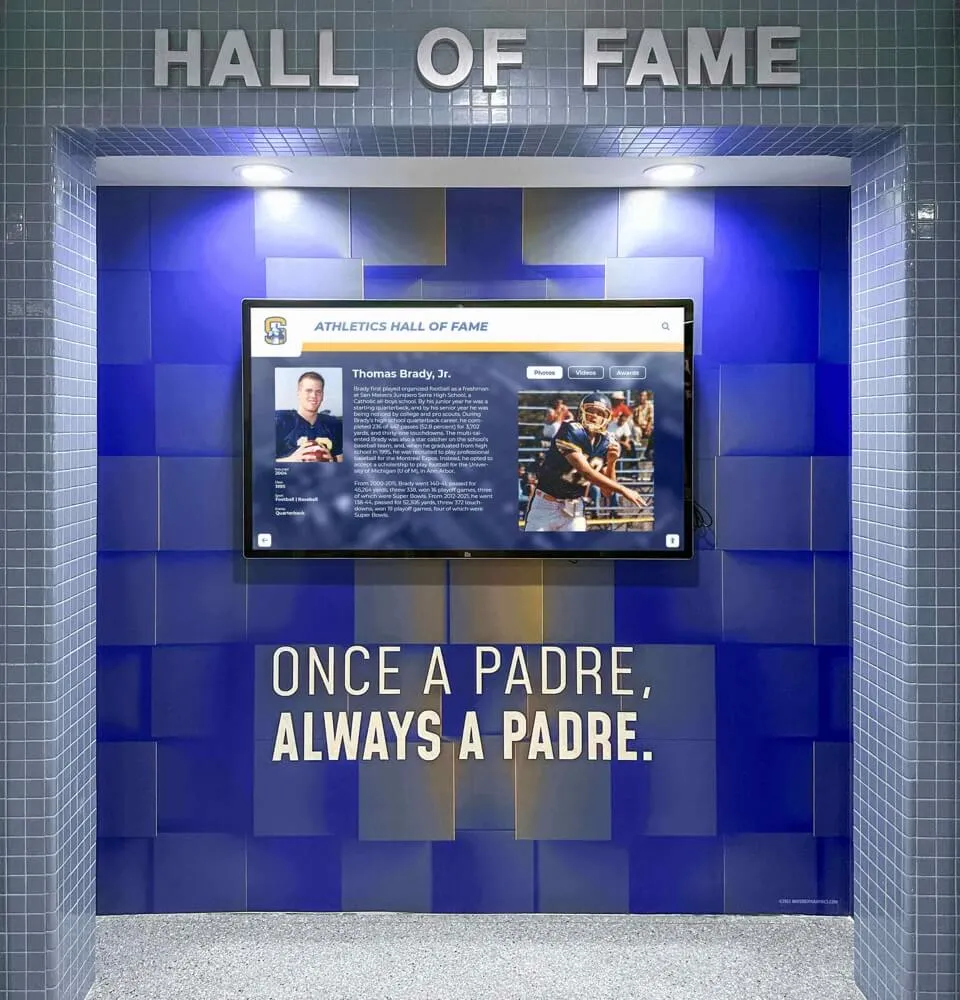
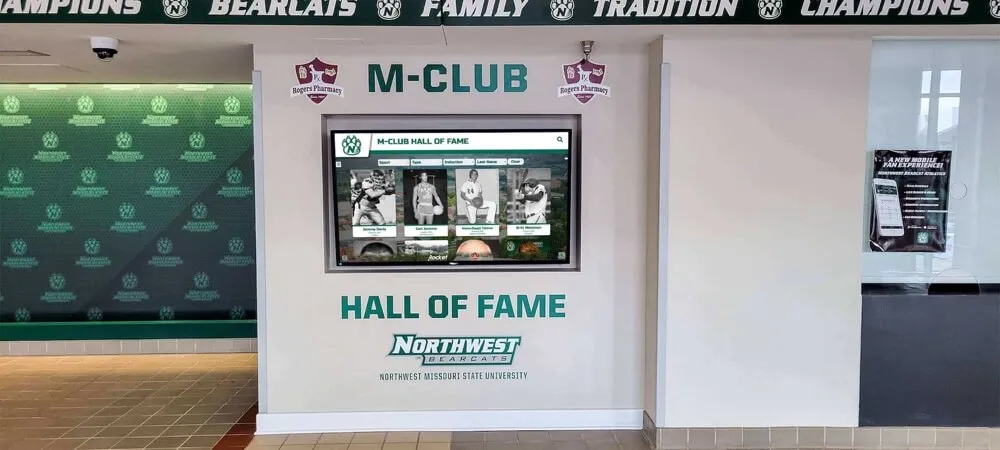
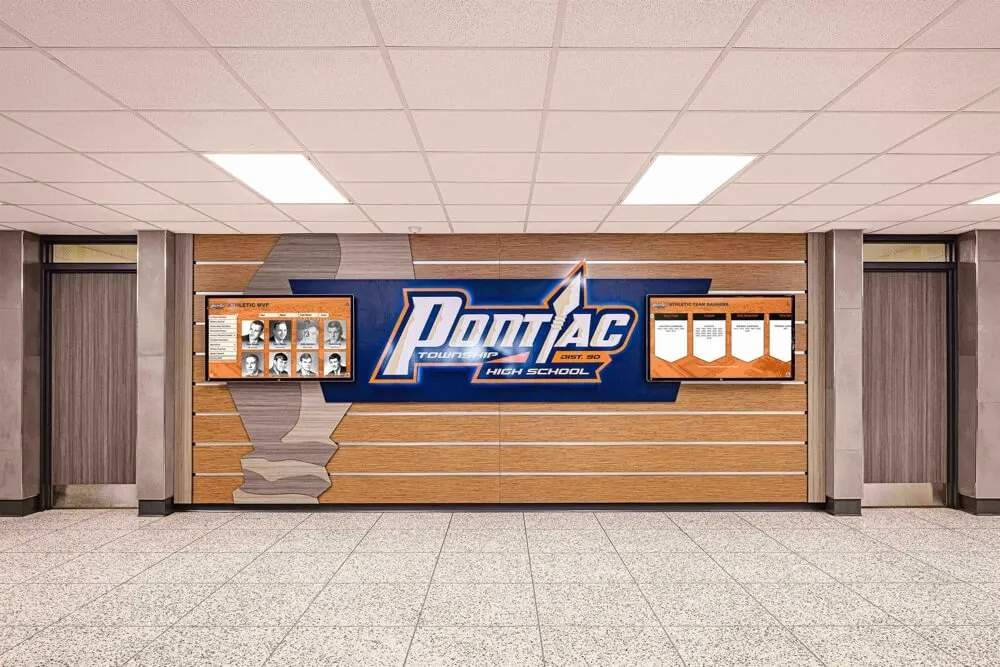
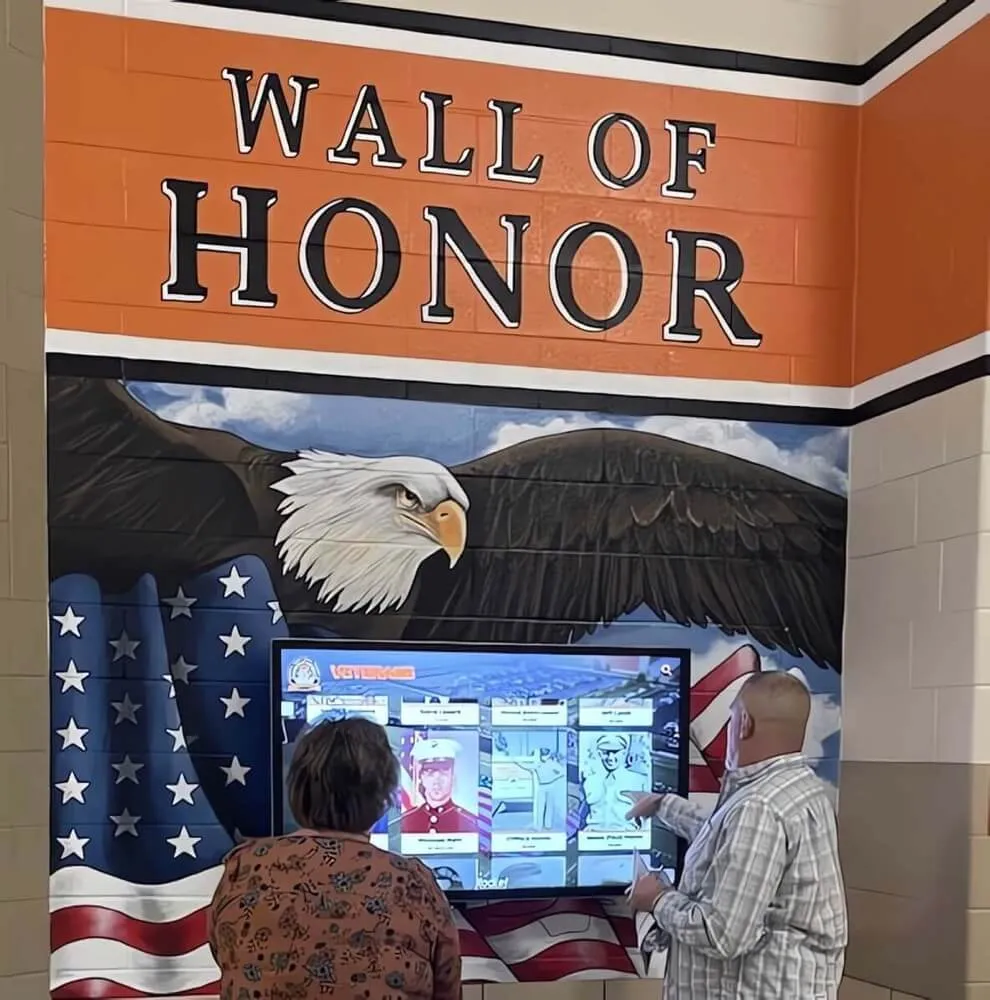
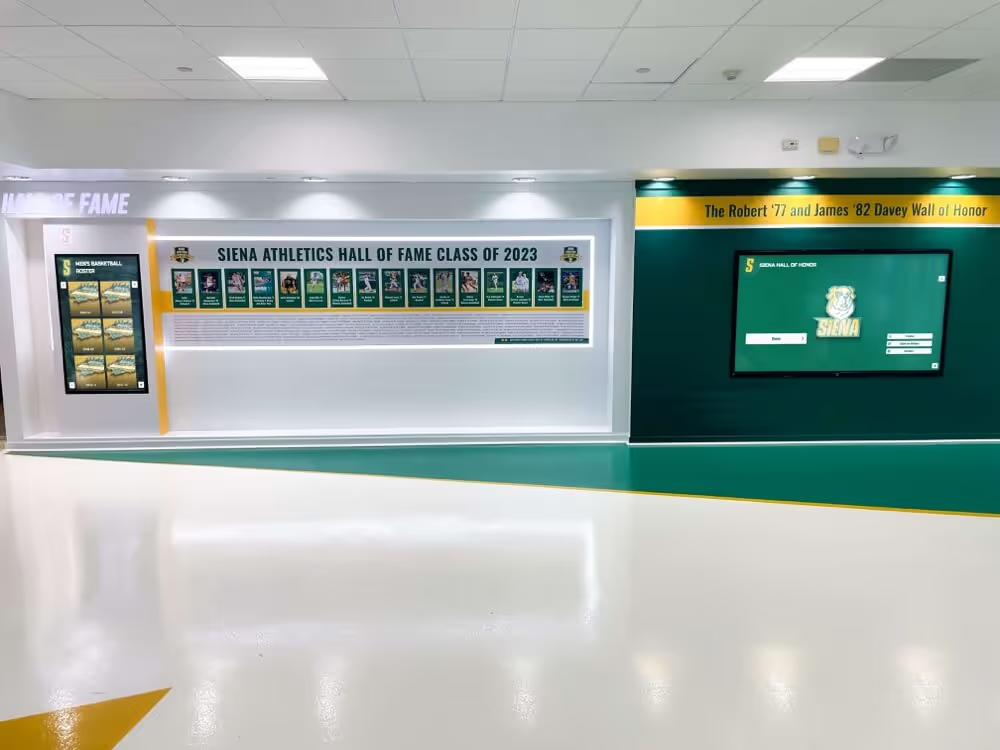
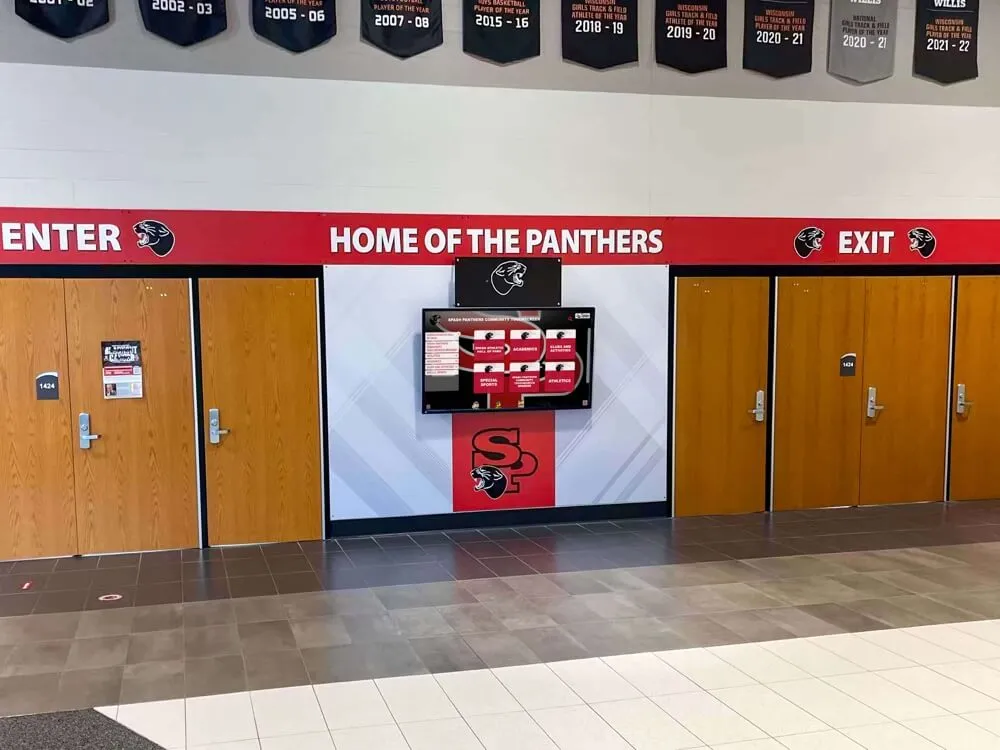
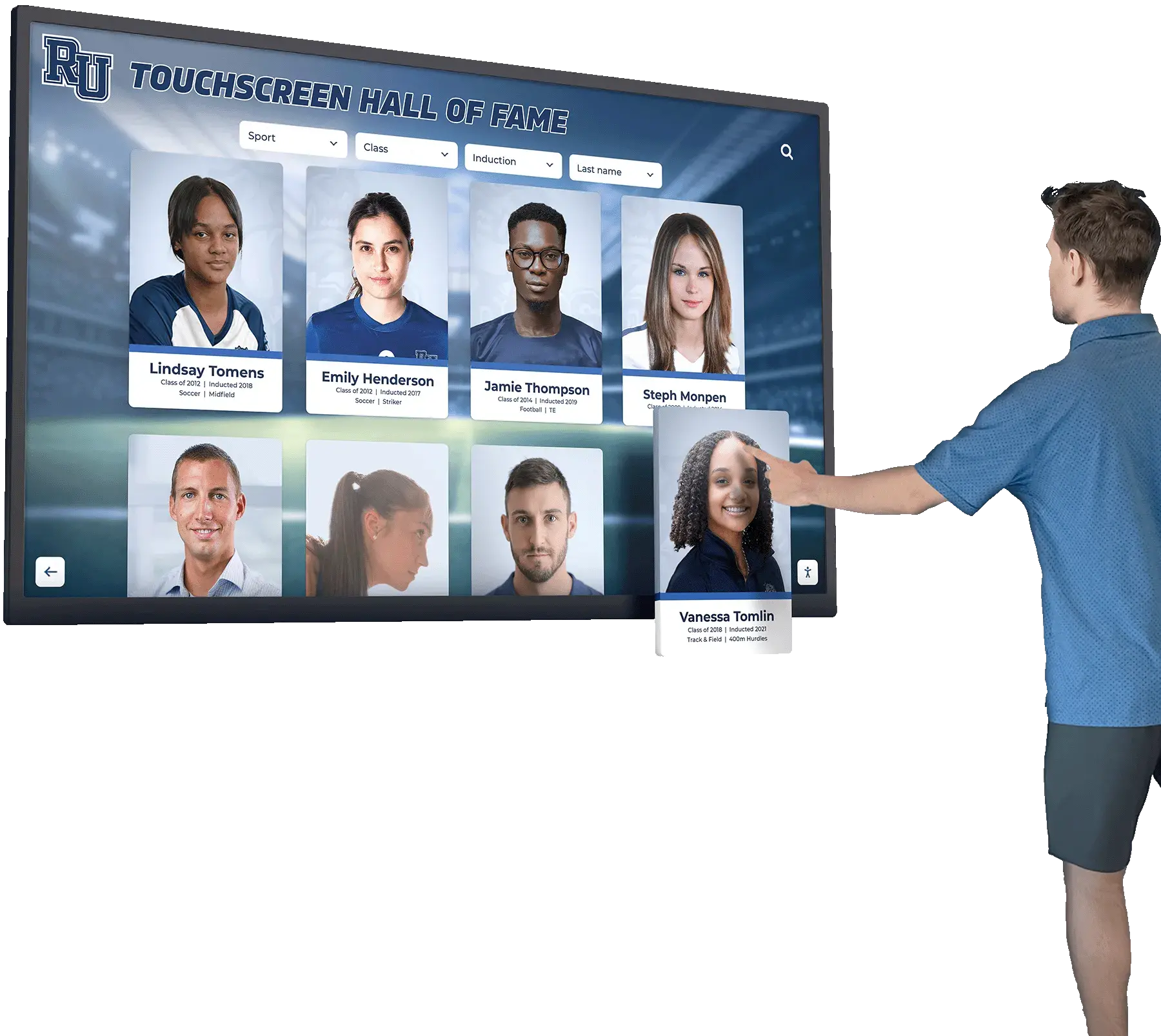
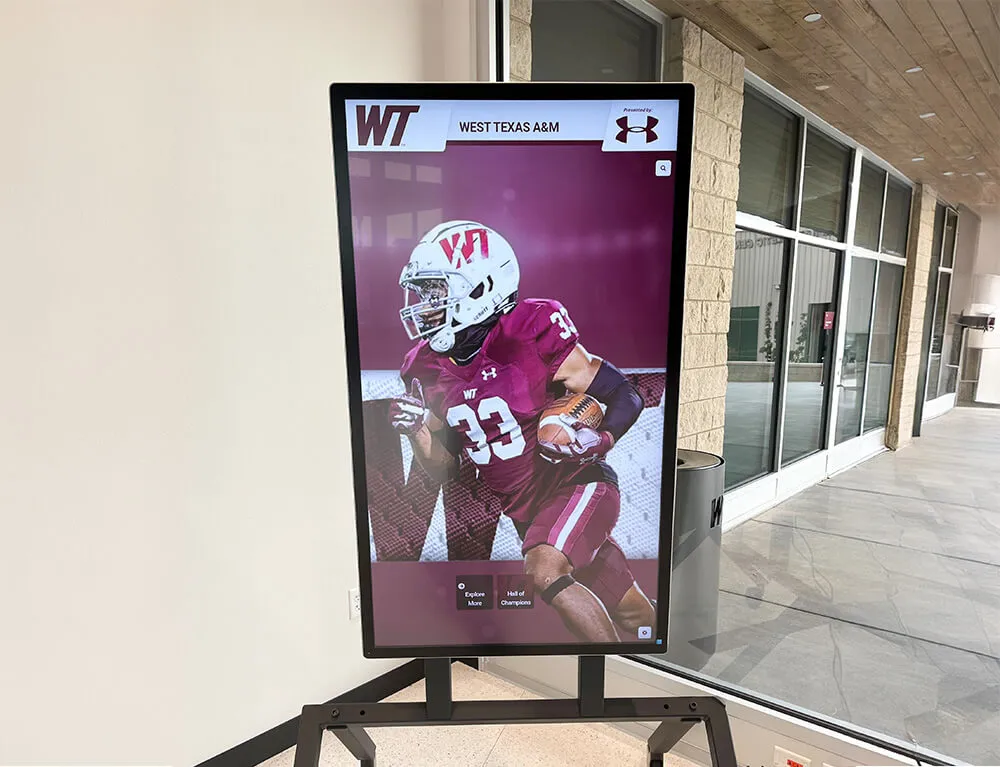
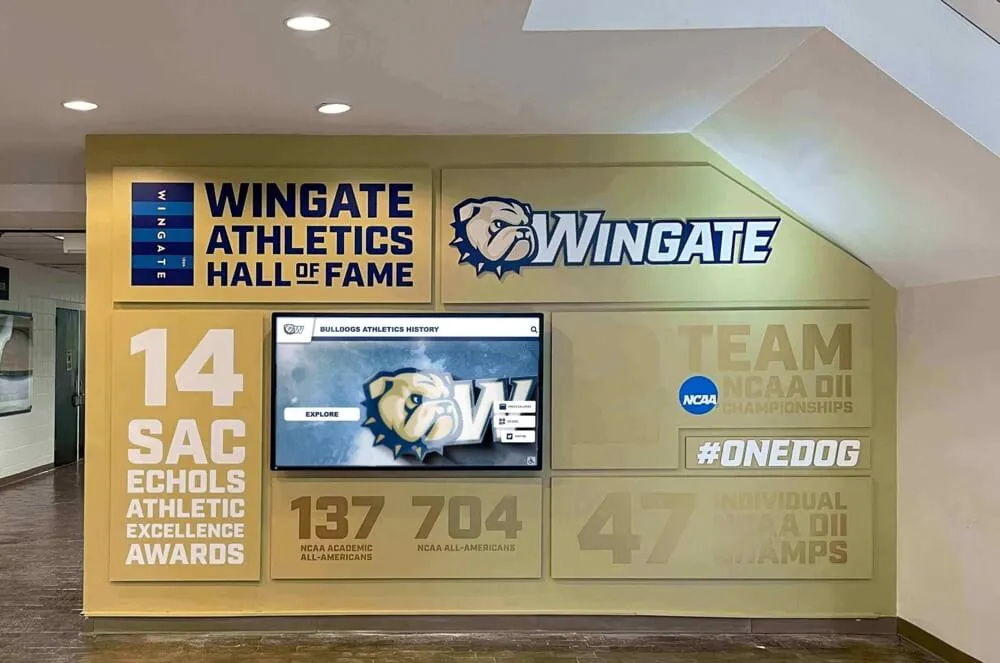
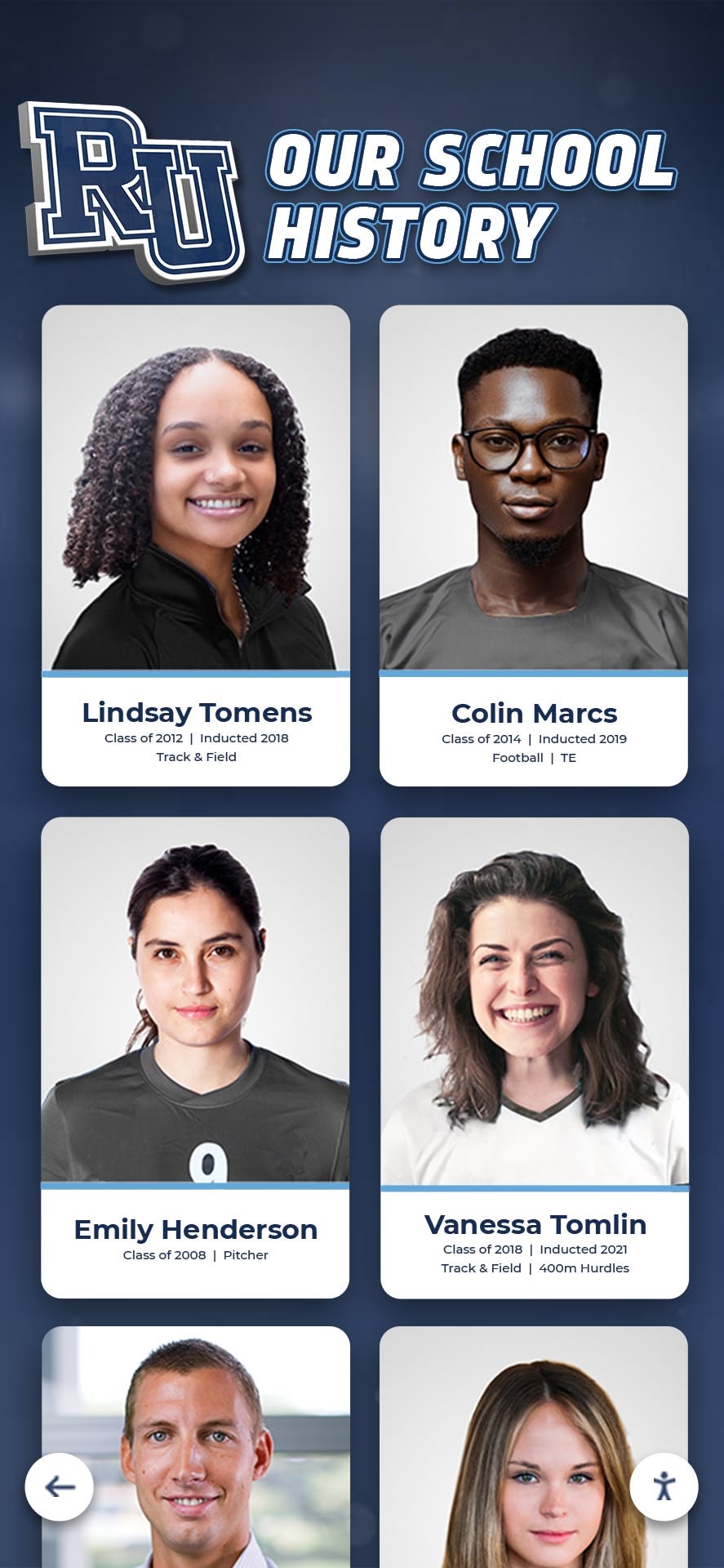
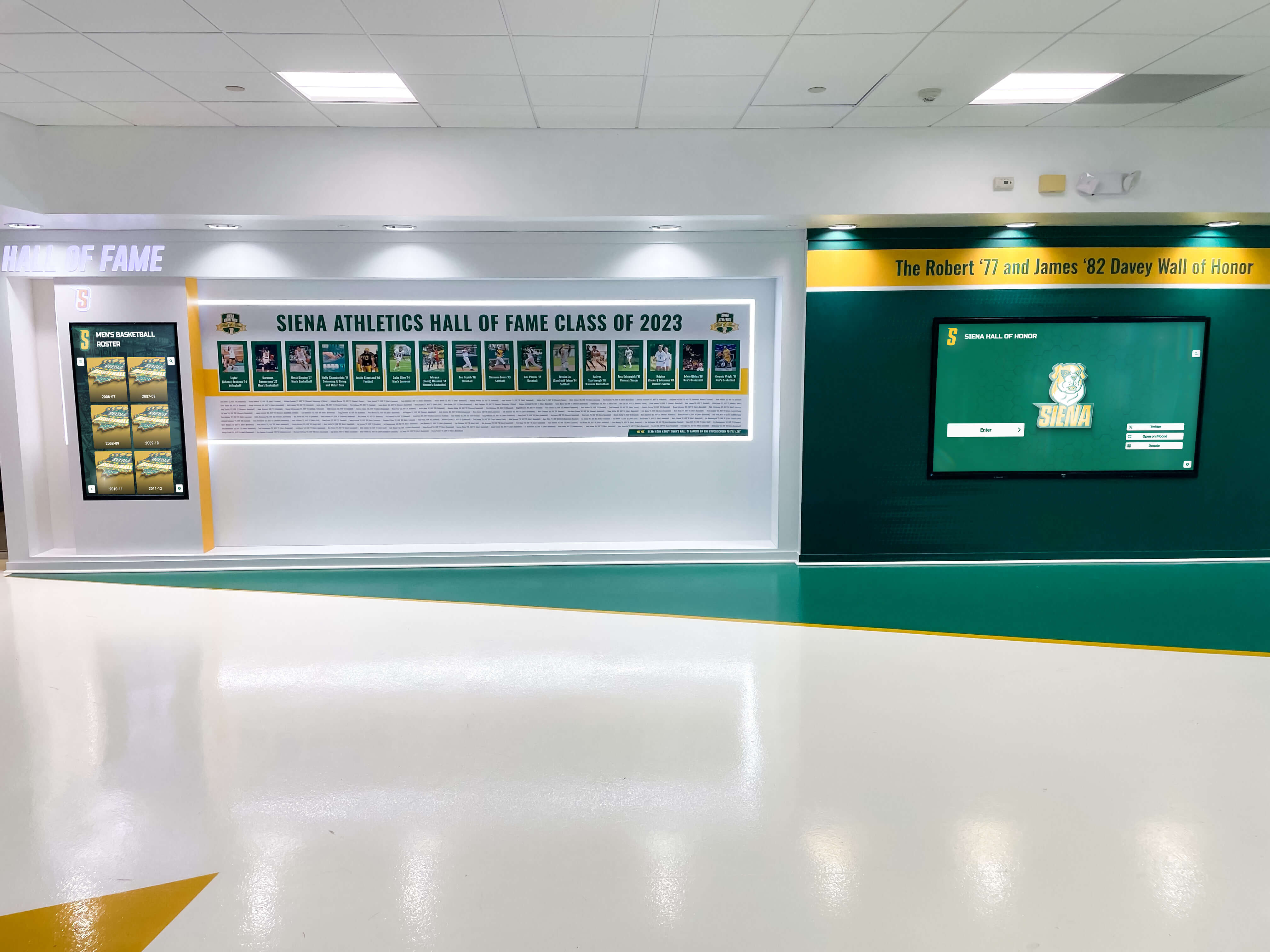
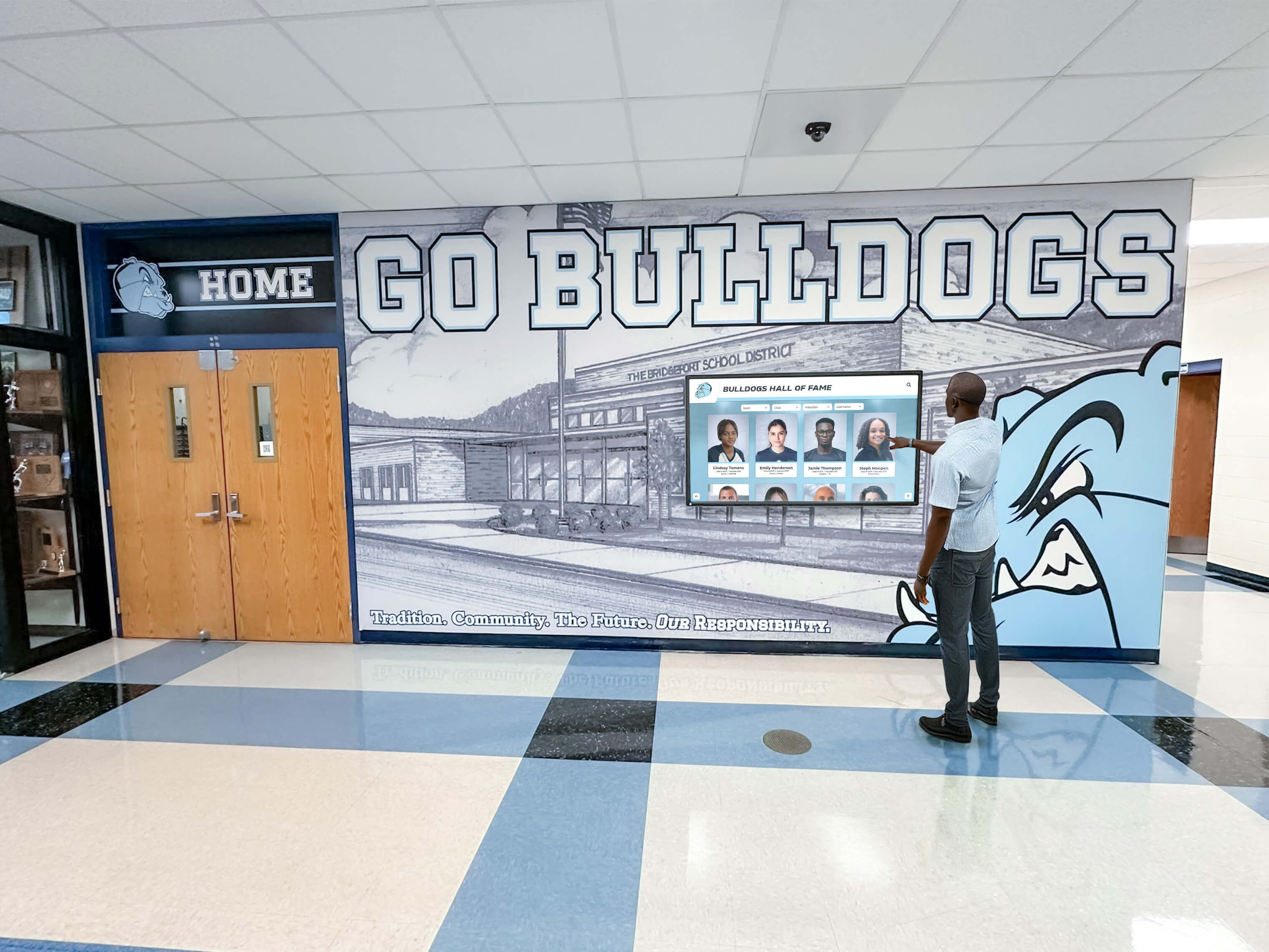
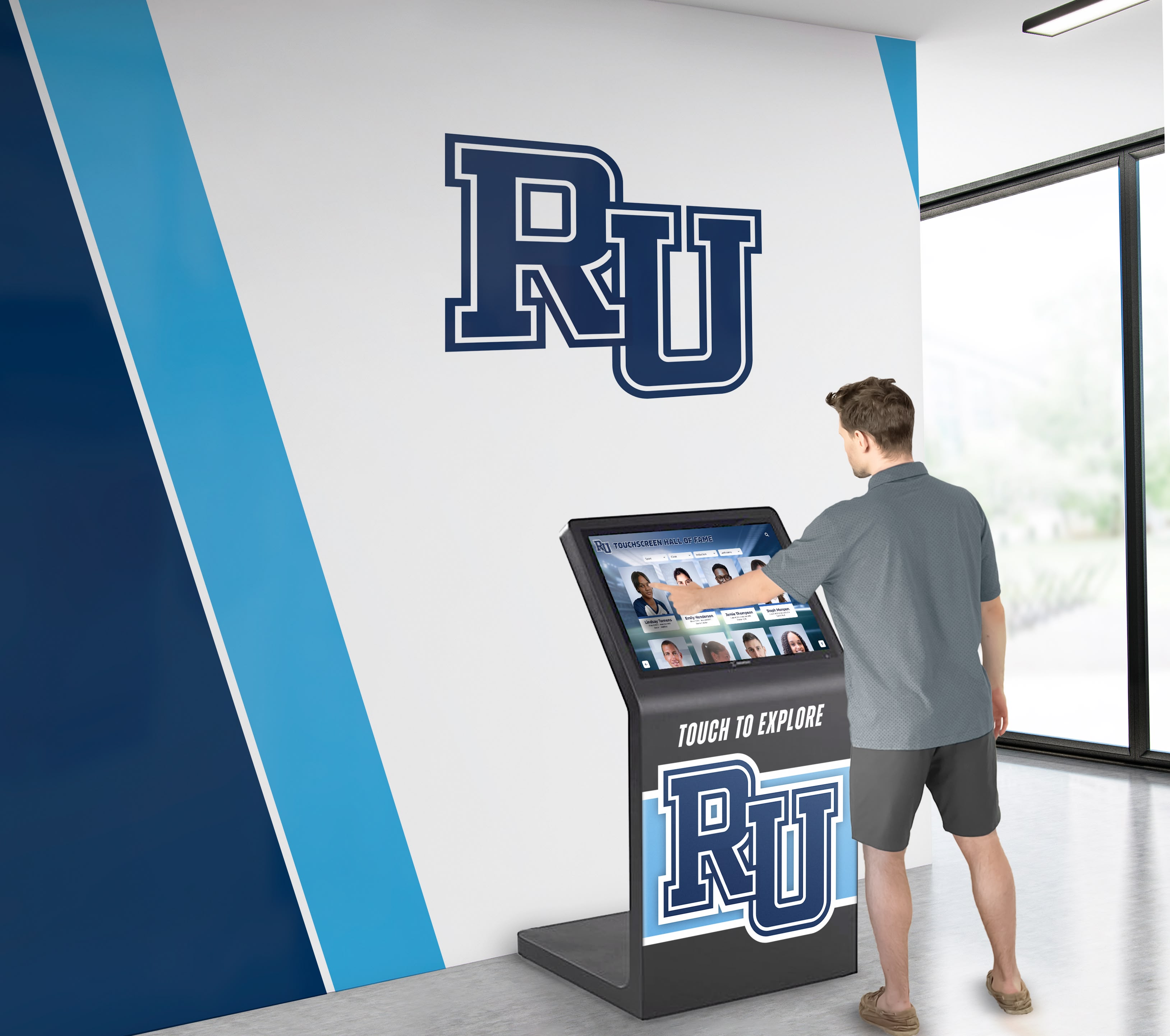
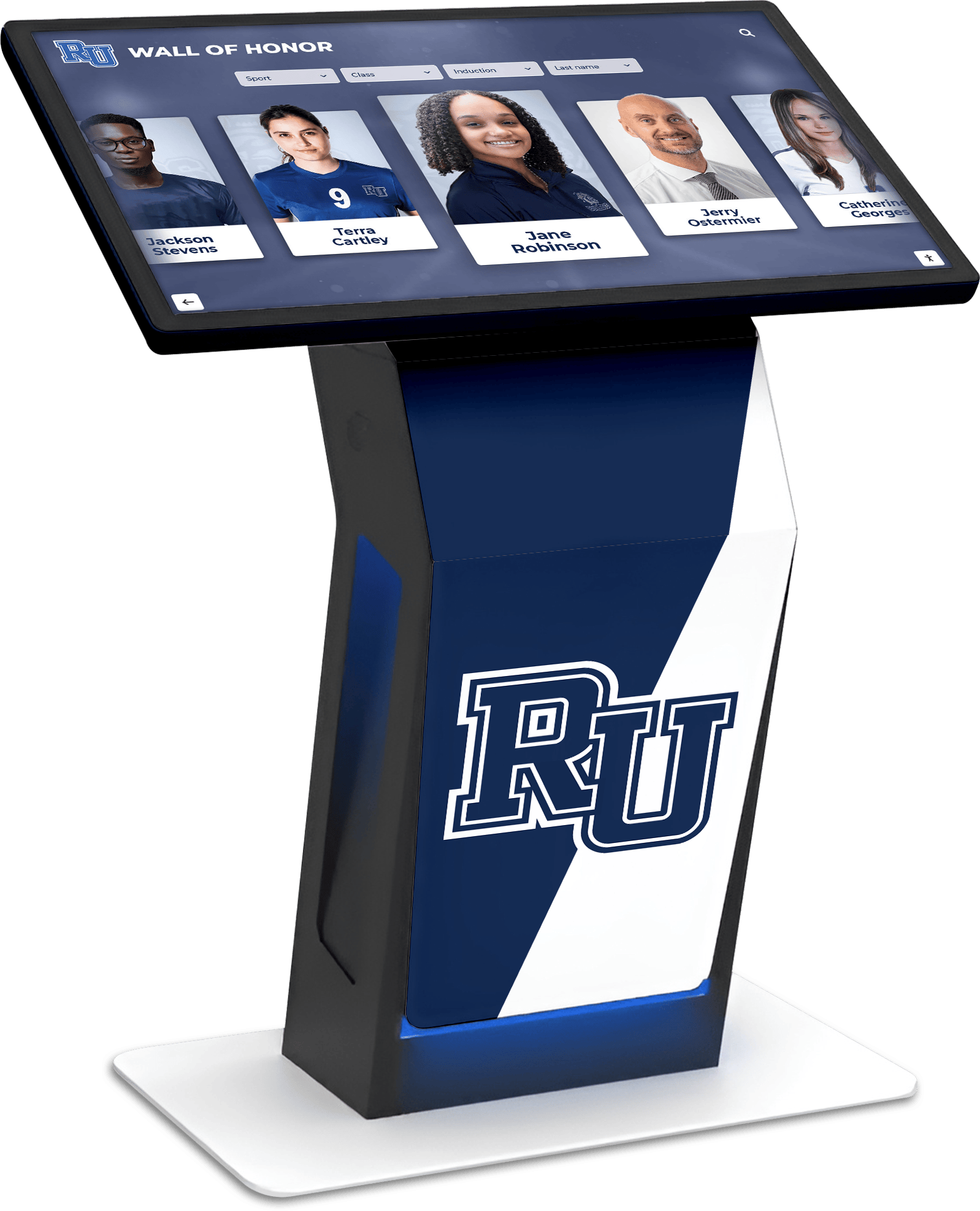
Description: Interactive kiosk displays allowing students to actively search, filter, and explore comprehensive alumni profiles including career advice, educational backgrounds, accomplishments, and personal insights.
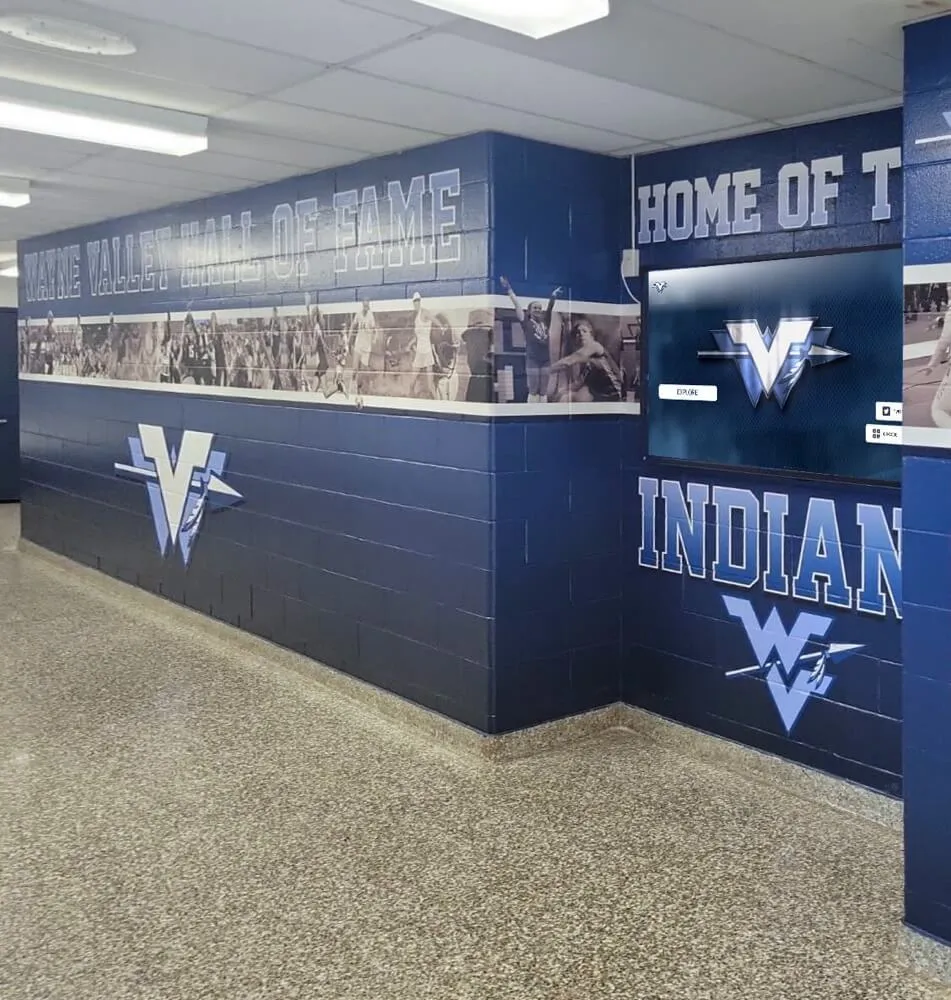
Typical Implementation: Touchscreen displays in high-traffic campus locations running specialized recognition software designed specifically for showcasing alumni achievements and advice.
Primary Advantages:
- Student-directed discovery enabling searches by career field, graduation year, major, or keyword
- Comprehensive profile depth including extended career advice, video interviews, and detailed biographical content
- Unlimited scalability accommodating hundreds or thousands of alumni without space constraints
- Engagement analytics showing which content resonates and how students explore advice
- Modern user experience aligned with how students expect to discover and interact with information
- Integration capabilities connecting to existing alumni databases and CMS platforms
Core Limitations:
- Higher initial investment for hardware and specialized software platforms
- Technical infrastructure requirements including power, network connectivity, and occasional maintenance
- Content management requires staff time to input and maintain comprehensive alumni profiles
- Platform selection critically important as capabilities vary dramatically between vendors
Solutions like digital recognition displays specifically address schools’ alumni showcase needs with features purpose-built for career guidance and mentorship programs.
Comparison Framework: Evaluation Criteria and Weighting
Systematic comparison requires clear evaluation criteria with defined weights reflecting relative importance for schools implementing alumni advice displays.
Criteria Definition and Scoring Methodology
Student Engagement Effectiveness (30% Weight)
Definition: How effectively the solution captures student attention and enables meaningful interaction with alumni advice content.
Scoring Factors:
- Ability to discover alumni relevant to individual student interests
- Depth of content supporting substantive career guidance
- Interactive capabilities enabling exploration versus passive viewing
- Modern presentation quality aligned with student expectations
- Analytics demonstrating actual student usage and engagement
Content Scalability (20% Weight)
Definition: The solution’s capacity to grow with expanding alumni advice programs without requiring complete system replacement or encountering hard limits.
Scoring Factors:
- Number of alumni profiles supported without performance degradation
- Ease of adding new alumni as programs expand over time
- Storage capacity for multimedia content including photos and videos
- Geographic distribution if multiple campus locations need identical content
- Performance consistency as content libraries grow substantially
Content Management Ease (20% Weight)
Definition: Staff effort required to maintain current, accurate alumni information including updates, additions, and corrections.
Scoring Factors:
- Intuitive interfaces enabling non-technical staff to manage content confidently
- Time required to add new alumni profiles or update existing information
- Ability to bulk import data from existing alumni databases
- Workflow features supporting content review and approval processes
- Training requirements for staff managing ongoing content maintenance
Total Cost of Ownership (15% Weight)
Definition: Complete investment required over five years including initial costs, ongoing maintenance, content updates, and necessary replacements.
Scoring Factors:
- Initial investment for hardware, software, installation, and content creation
- Annual recurring costs for software licensing, maintenance, or content management support
- Staff time costs for ongoing content maintenance and system management
- Expected replacement cycles for hardware components
- Hidden costs like network infrastructure, technical support, or troubleshooting
Implementation Speed (10% Weight)
Definition: Timeline from decision to fully operational alumni advice display with initial content launched and accessible to students.
Scoring Factors:
- Procurement and delivery timeframes for required hardware
- Installation complexity and scheduling coordination
- Content creation or migration effort for initial alumni profiles
- Training requirements before staff can manage systems independently
- Technical setup including software configuration and integration
Support and Reliability (5% Weight)
Definition: Vendor or platform support quality, system reliability, and confidence that solutions will operate consistently without frequent issues disrupting student access.
Scoring Factors:
- Technical support availability, responsiveness, and resolution effectiveness
- System uptime and reliability track record
- Troubleshooting resources including documentation and user communities
- Vendor stability and long-term platform commitment
- Update cadence and feature enhancement trajectory
Platform-by-Platform Scoring
The comparison table below scores each solution category against evaluation criteria using a 10-point scale, then calculates weighted totals reflecting relative importance.
| Evaluation Criteria | Weight | Printed Materials | Static Digital | Interactive Touchscreen |
|---|---|---|---|---|
| Student Engagement | 30% | 3/10 Passive, limited content, no discovery | 5/10 Visual appeal but no interaction | 9/10 Student-directed exploration, comprehensive content |
| Content Scalability | 20% | 2/10 Severe physical space constraints | 8/10 Digital storage eliminates space limits | 10/10 Unlimited alumni with no degradation |
| Content Management | 20% | 4/10 Manual physical replacement required | 7/10 Software updates but generic tools | 9/10 Purpose-built CMS for alumni content |
| Total Cost (5 years) | 15% | 6/10 Low initial but high cumulative printing | 7/10 Moderate investment, lower ongoing | 8/10 Higher initial but lowest per-alumni costs at scale |
| Implementation Speed | 10% | 8/10 Quick printing and mounting | 6/10 Hardware procurement and digital signage setup | 7/10 Specialized platforms streamline deployment |
| Support & Reliability | 5% | 9/10 No technical dependencies | 6/10 Generic signage platform support | 9/10 Specialized recognition platform vendors |
| WEIGHTED TOTAL SCORE | 4.1/10 | 6.6/10 | 8.9/10 | |
Scoring Analysis and Interpretation
Printed Materials (4.1/10): Traditional printed approaches score poorly on criteria that matter most—student engagement and scalability. While implementation is straightforward and costs appear low initially, physical space constraints create hard limits on alumni representation. Schools with small alumni advice programs might find printed materials sufficient, but growing programs quickly encounter limitations requiring alternative approaches.
Static Digital Displays (6.6/10): Digital signage represents meaningful improvement over printed materials, particularly for scalability and content management. However, passive viewing without student-directed discovery limits engagement effectiveness. Schools seeking simple digital upgrades from printed materials find static displays adequate, but those prioritizing student interaction and career guidance impact discover limitations.
Interactive Touchscreen Platforms (8.9/10): Purpose-built interactive recognition platforms score highest across most criteria, particularly student engagement and scalability. Higher initial investment is offset by superior capabilities and lower long-term per-alumni costs at scale. Schools serious about maximizing impact from alumni advice programs consistently select interactive solutions.
Deal-Breaker Checklist: Critical Factors
Certain factors should eliminate solutions from consideration regardless of other attributes. Evaluation committees should apply this deal-breaker checklist before detailed scoring:
Physical Space Constraints
Deal-Breaker: If your school has limited physical space for recognition displays and expects alumni advice programs to grow significantly, eliminate printed materials. Hard space limits create future bottlenecks requiring complete system replacement.
Applies To: Printed materials in programs expecting to feature 50+ alumni or adding 10+ annually
Student Engagement Priorities
Deal-Breaker: If your primary objective is enabling students to discover alumni advice relevant to their specific career interests, eliminate solutions without interactive search capabilities. Passive viewing cannot deliver targeted career guidance at scale.
Applies To: Static digital displays and printed materials when targeted career guidance represents the primary goal
Content Management Resources
Deal-Breaker: If your school lacks staff time for frequent manual content updates and printing logistics, eliminate printed materials. Physical replacement workflows consume staff hours that digital alternatives eliminate.
Applies To: Printed materials when content updates are expected quarterly or more frequently
ADA Compliance Requirements
Deal-Breaker: If your institution requires WCAG 2.1 AA accessibility compliance for student-facing content, eliminate solutions without third-party accessibility audits and conformance documentation.
Applies To: Platforms lacking documented accessibility compliance, particularly important for public institutions and organizations receiving federal funding
Budget Constraints with Scale Requirements
Deal-Breaker: If your alumni advice program expects to feature 100+ alumni but total budget is constrained to under $5,000 over five years, only printed materials remain viable despite severe limitations.
Applies To: Interactive touchscreen platforms when combined budget and scale requirements eliminate feasibility
For guidance on implementing comprehensive digital recognition programs, see our complete guide.
Why Interactive Touchscreen Solutions Win Most Scenarios
When evaluation committees apply the scoring framework and deal-breaker checklist, interactive touchscreen recognition platforms consistently emerge as optimal solutions for most school contexts.
Student-Directed Discovery Transforms Engagement
The fundamental advantage of interactive platforms versus passive alternatives centers on student control:
Printed Materials Limitation: Students only encounter alumni advice that happens to be physically displayed at moments they pass by. No mechanism exists for students interested in specific careers to discover relevant alumni. A student interested in engineering might never encounter the three engineering alumni featured if those profiles are positioned in different hallways.
Static Digital Limitation: While digital signage cycles through more alumni than physical space allows, students still cannot control what appears. A student with five minutes between classes cannot search for alumni in their field—they see whatever happens to be displaying during their brief window.
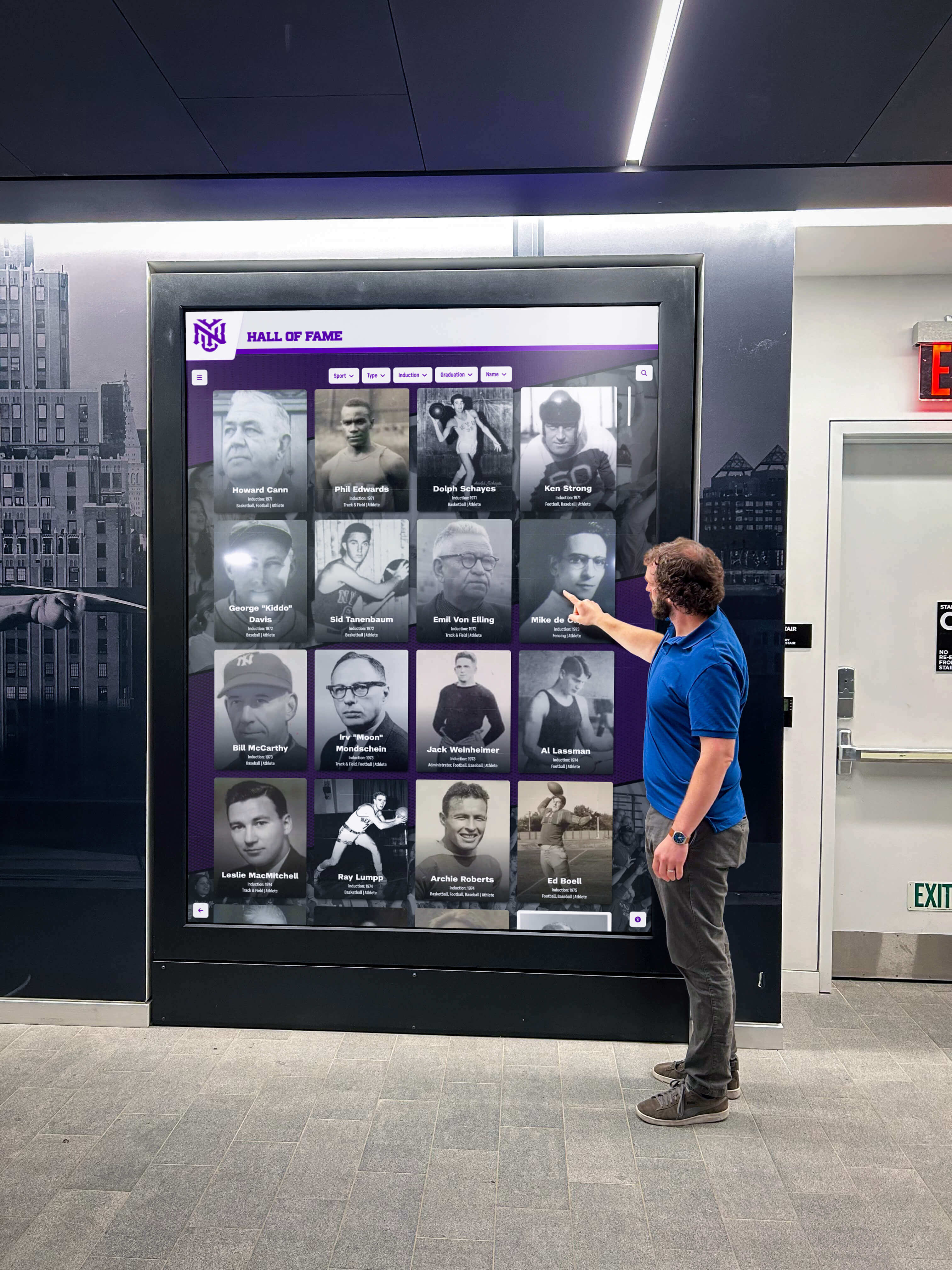
Interactive Touchscreen Advantage: Students search by career field, major, graduation decade, or keywords, instantly accessing alumni matching their interests. The engineering-interested student searches “engineering careers” and discovers all engineering alumni in seconds, exploring comprehensive profiles with detailed career advice, challenges overcome, and mentorship opportunities.
This student-directed discovery capability makes interactive platforms dramatically more effective for career guidance objectives. Research on alumni engagement programs confirms that interactive access increases student utilization substantially compared to passive viewing.
Unlimited Scalability Without Degradation
Space constraints plague physical and hybrid approaches:
Physical Space Economics: Each additional alumni profile in printed materials requires physical space. When recognition walls fill, schools face difficult choices—remove older alumni to feature newer graduates, expand into additional wall space (often unavailable), or stop growing programs. These constraints force schools to prioritize certain alumni over others based purely on space rather than merit.
Digital Advantage: Interactive platforms store hundreds or thousands of alumni profiles without performance impact. Adding the 500th alumni takes identical effort as adding the 50th. No physical expansion required, no difficult prioritization decisions based on space availability, and comprehensive representation of diverse career paths without artificial limits.
This scalability proves critical for programs expecting long-term growth. A school implementing alumni advice displays today might feature 30 alumni initially but could easily have 200+ alumni five years later as programs mature and more graduates participate. Only digital solutions accommodate this growth without complete system replacement.
Lower Long-Term Costs at Meaningful Scale
Initial cost comparisons mislead without considering long-term total ownership:
Printed Materials: Assume $50 per alumni for professional printing, mounting, and materials. Initial display of 20 alumni costs $1,000—seemingly economical. However, adding 10 alumni annually costs $500/year, reaching $3,500 over five years. By year 10, cumulative investment exceeds $6,000 for 70 total alumni—and space constraints likely forced removal of earlier profiles.
Interactive Touchscreen: Assume $8,000 initial investment ($5,000 hardware, $3,000 software/installation) plus $1,500 annual software maintenance. Five-year total: $15,500. Per-alumni cost with 70 profiles: $221. However, the platform accommodates 500+ alumni without additional cost, driving per-alumni costs to $31 at scale—far lower than printed alternatives.
Cost Crossover: Interactive platforms achieve cost parity with printed materials around 60-80 alumni profiles, after which every additional alumni costs nothing versus $50+ for printed approaches. Schools expecting substantial programs achieve better ROI with interactive solutions despite higher initial investment.
Purpose-Built Features for Alumni Recognition
Generic solutions lack capabilities that specialized recognition platforms provide:
Recognition-Specific Content Models: Platforms designed for alumni showcase include fields for graduation year, major, career field, accomplishments, advice, and mentorship availability—versus generic content management requiring custom configuration.
Automatic Organization: Content automatically organizes by decade, career field, or achievement type without manual categorization work.
Search Optimization: Intelligent search understands queries like “business majors from 1990s” or “alumni working in healthcare”—functionality generic digital signage platforms lack.
Career Pathway Features: Advanced platforms support career journey timelines showing progression from graduation through current positions, helping students understand realistic career development.
Mentorship Integration: Platforms can flag alumni available for mentorship and provide contact mechanisms, facilitating connections that generic displays cannot support.
These specialized features mean schools achieve better outcomes with less effort using purpose-built recognition platforms versus attempting to adapt generic alternatives.
For comparison of digital recognition platforms available to schools, see our comprehensive buyer’s guide.
Decision Framework: Matching Solutions to School Contexts
Different school situations require different optimal solutions. Use this framework to determine best fit for your specific context:
Choose Printed Materials If:
- Pilot Programs: Testing alumni advice concepts before committing to permanent infrastructure
- Extremely Limited Budgets: Total available budget under $2,000 with no prospect for increases
- Small Stable Programs: Fewer than 20 alumni with no growth expected
- Zero Technical Capacity: No staff comfortable managing any digital system and no vendor support budget
- Temporary Installations: Recognition displays for specific events rather than permanent implementation
Warning: Schools often start with printed materials intending to upgrade later but discover conversion costs (migrating content, managing dual systems during transition) complicate eventual migration to digital solutions. If any possibility exists for digital implementation, starting digital often proves more efficient than two-phase approaches.
Choose Static Digital Displays If:
- Existing Digital Signage: School already operates digital signage with available capacity for alumni content
- Limited Interaction Needs: Primary objective is general awareness versus targeted career guidance discovery
- Budget Constraints: Budget permits digital investment but not specialized interactive platforms
- Passive Viewing Context: Display locations where extended interaction is unrealistic (narrow hallways with heavy traffic)
- Interim Solutions: Bridging solution while evaluating interactive platforms for future implementation
Consideration: Static digital represents meaningful upgrade from printed materials but significant engagement gap versus interactive platforms. Schools selecting static digital should understand they’re accepting limited student engagement in exchange for lower investment—not optimal for career guidance objectives but reasonable for general alumni awareness.
Choose Interactive Touchscreen Platforms If:
- Career Guidance Priority: Primary objective is connecting students with relevant alumni advice for informed career decisions
- Growing Programs: Expectation that alumni participation will expand substantially over 5-10 years
- Student Engagement Focus: Success defined by actual student usage and meaningful interaction with content
- Long-Term Investment: Viewing alumni advice displays as permanent institutional infrastructure worth appropriate investment
- Comprehensive Representation: Desire to feature diverse alumni across many career fields, graduation decades, and achievement types without space constraints forcing difficult prioritization
- Modern Student Expectations: Recognition that current students expect interactive digital experiences aligned with how they access information elsewhere
Best Practice: Schools selecting interactive platforms should budget adequately for both hardware and specialized recognition software. Generic touchscreen hardware with improvised content yields poor results compared to purpose-built recognition platforms designed specifically for alumni showcase applications.
Institutions can explore approaches to displaying school history and alumni achievements through various digital methods.
Implementation Considerations for Interactive Platform Success
Schools selecting interactive touchscreen solutions—the highest-scoring category—benefit from understanding critical success factors that maximize ROI and student engagement.
Strategic Location Selection
Platform capabilities mean nothing if students don’t encounter displays during normal campus routines:
High-Traffic Analysis: Conduct foot traffic studies identifying locations where students pass regularly between classes, during lunch periods, or waiting for activities. Optimal locations include main entrance lobbies, cafeteria areas, athletic facility common areas, and outside libraries or student centers.
Dwell Time Consideration: Interactive exploration requires 2-5 minutes. Locations where students naturally gather with time (waiting for events, lunch periods, between classes) work better than narrow transitional spaces where students pass quickly.
Visibility Without Obstruction: Position displays prominently but not where they obstruct traffic flow. Corner installations, alcove placements, or along wide hallways work well. Avoid narrow corridors or areas where groups exploring displays would block passage.
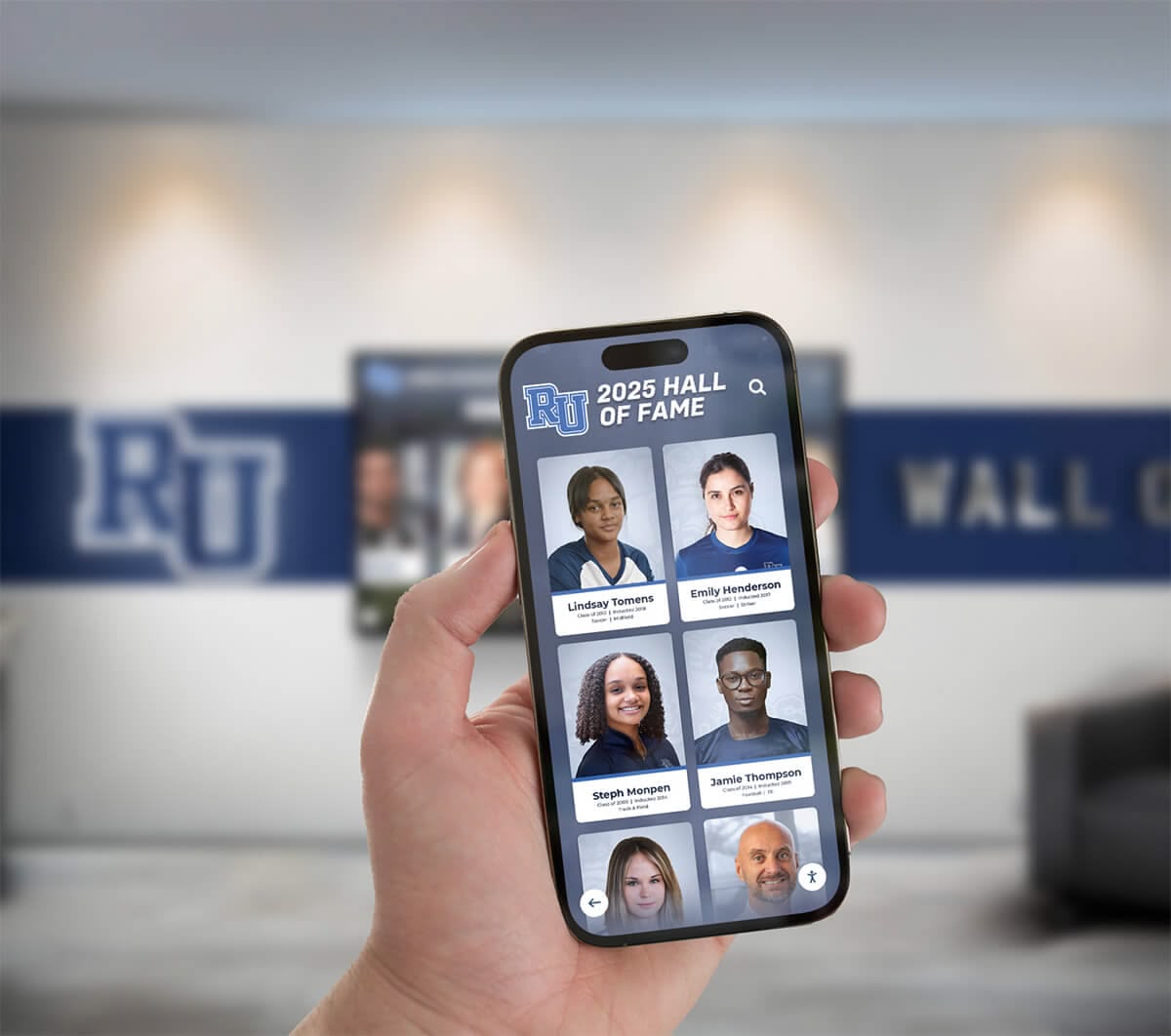
Accessibility: Ensure displays are reachable by students of all abilities, mounted at appropriate heights and in spaces accommodating wheelchair access and various physical needs.
Content Creation and Migration Strategy
Empty displays provide no value—content creation requires systematic approaches:
Phased Alumni Outreach: Rather than attempting to collect comprehensive information from all alumni simultaneously, implement phased outreach focusing on 20-30 alumni quarterly. This manageable approach prevents overwhelming staff while steadily building content libraries.
Standardized Questionnaires: Develop consistent alumni questionnaires requesting career trajectory, current position, educational background, key accomplishments, advice for current students, memorable school experiences, and mentorship availability. Standardization streamlines content entry and ensures complete information.
Video Interview Programs: For high-profile alumni or those with particularly valuable career insights, consider short 3-5 minute video interviews providing richer engagement than text alone. Video doesn’t need professional production quality—authentic alumni voices matter more than polish.
Student Involvement: Engage journalism or communications students in alumni interview projects, creating learning opportunities while generating content for recognition platforms.
Historical Content Migration: For schools with existing alumni files, databases, or printed materials, budget time for content migration or consider professional services that many recognition platform vendors offer for batch content creation.
For strategies on connecting students with alumni mentors, see our guide to discovery programs.
Engagement Promotion and Program Launch
Even excellent platforms require promotion ensuring students know displays exist and understand how to use them:
Launch Events: Coordinate platform launches with high-visibility events like homecoming, alumni weekends, or career days where both students and alumni are present. Live demonstrations showing how students search for career advice create awareness and model usage.
Curriculum Integration: Partner with counselors and career advisors incorporating display exploration into career planning activities. Assignments asking students to research specific career paths using alumni profiles create structured usage building familiarity.
Social Media Promotion: Feature alumni from displays in school social media, directing students to explore full profiles on campus touchscreens. This cross-channel promotion drives both awareness and actual usage.
Student Ambassador Programs: Train student ambassadors who can demonstrate displays to peers, answer questions, and encourage exploration. Peer promotion often proves more effective than administrative announcements.
Ongoing Content Freshness: Regularly add new alumni profiles and update existing content maintaining relevance and giving students reasons for repeat visits discovering newly featured alumni.
Conclusion: Making Informed Decisions
Alumni advice displays represent strategic investments in student career development and institutional culture. The optimal solution depends on specific school contexts, but systematic evaluation using the frameworks in this guide ensures decisions align with objectives, constraints, and long-term program expectations.
Key Decision Factors:
Schools prioritizing student engagement and career guidance effectiveness—backed by evaluation committees applying the weighted scoring framework presented here—consistently select interactive touchscreen recognition platforms despite higher initial investment. The combination of student-directed discovery, unlimited scalability, purpose-built features, and long-term cost advantages at meaningful scale make interactive solutions optimal for most contexts.
However, schools with severely constrained budgets, very small alumni programs with no growth expectations, or zero technical capacity might reasonably select printed materials or static digital displays understanding they accept significant engagement limitations in exchange for lower investment and simpler management.
The critical success factor is avoiding mismatches between solution capabilities and program objectives. Schools expecting to deliver meaningful career guidance through alumni advice cannot achieve objectives with passive viewing solutions regardless of cost savings. Conversely, schools simply seeking general alumni awareness might find interactive platforms exceed requirements.
Apply the scoring framework, deal-breaker checklist, and decision framework systematically rather than relying solely on initial cost comparisons or vendor claims. Schools making evidence-based decisions using these tools consistently implement solutions delivering sustained value, strong student engagement, and positive ROI measured across complete ownership lifecycles.
Ready to Implement Alumni Advice Recognition?
Explore how modern interactive recognition platforms can transform your school’s alumni advice program from limited printed materials into comprehensive, engaging digital experiences that connect students with career guidance when they need it most.
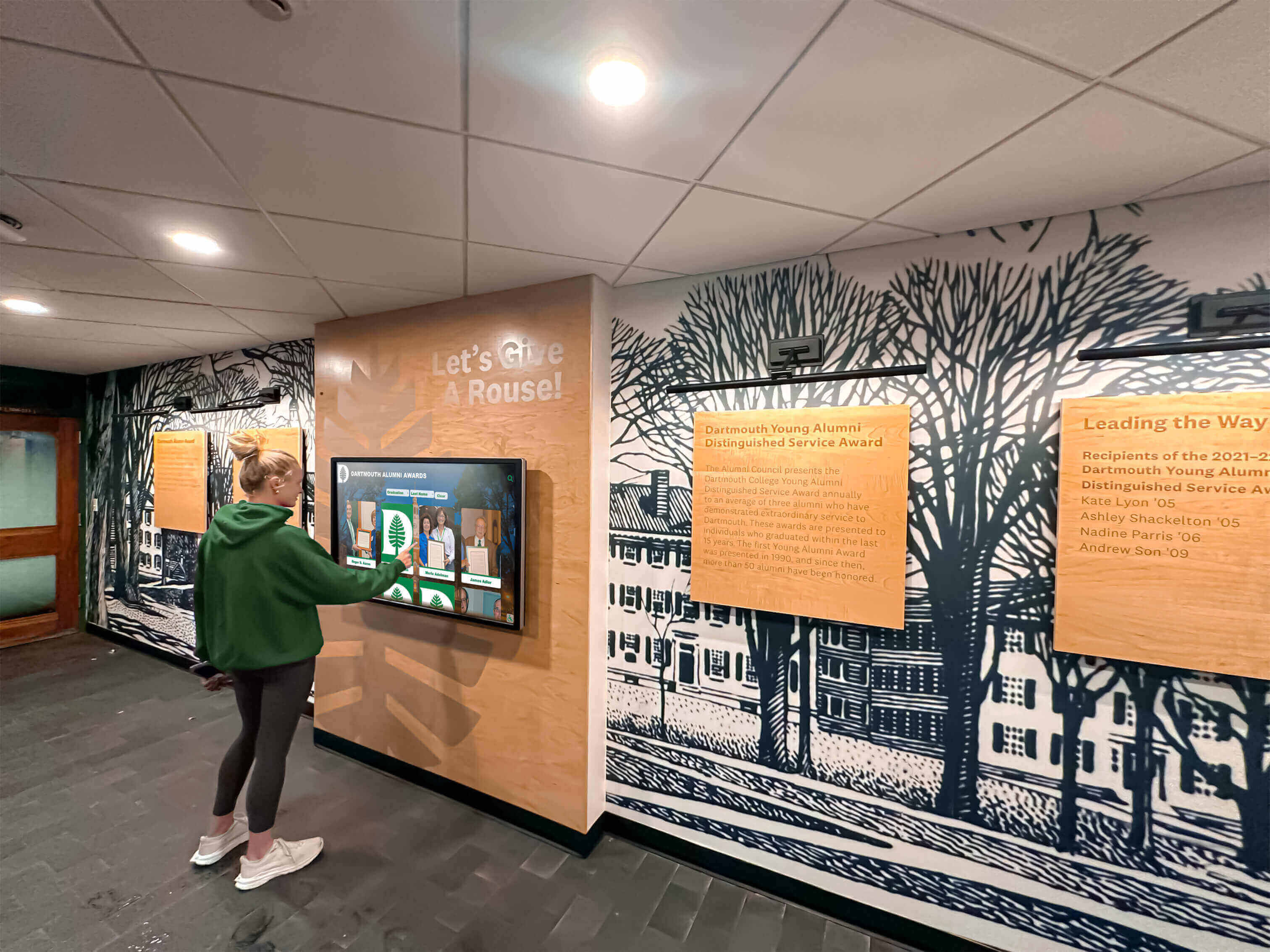
Solutions like Rocket Alumni Solutions provide purpose-built platforms designed specifically for showcasing alumni achievements and career advice with student-friendly interfaces, unlimited scalability, and professional presentation quality that reflects the importance of alumni wisdom.
For personalized guidance comparing platform options for your specific requirements, explore Rocket Alumni Solutions to see how schools nationwide use interactive touchscreen technology to share alumni advice effectively, inspire current students through authentic success stories, and build recognition programs that strengthen community connections for generations.
Disclaimer: This comparison is based on publicly available information as of December 2025. All product names and trademarks belong to their respective owners. Comparative statements reflect Rocket Alumni Solutions’ interpretation of available data and may change over time. This content was produced by or on behalf of Rocket Alumni Solutions.