



Key Takeaways
Discover how high schools recognize and display academic honors — from honor roll and National Honor Society to digital walls of fame that celebrate top students all year long.
Walk through almost any high school lobby in America and you’ll likely see championship banners, trophy cases packed with athletic hardware, and murals celebrating state-title teams. What you’re less likely to see — displayed with the same permanence and pride — is a celebration of the students who earned 4.0 GPAs, made the High Honor Roll every semester, or were inducted into the National Honor Society. Academic honors in high school represent some of the most meaningful achievements a student can earn, yet many schools still relegate them to a printed sheet on a bulletin board that gets taken down when the next quarter begins.
This guide explores the full spectrum of academic honors programs in high school, how schools recognize top students through ceremonies and formal designations, and how forward-thinking schools are using modern display technology to give academic achievement the lasting visibility it deserves.
What Counts as Academic Honors in High School?
“Academic honors” is a broad term that covers a range of formal recognitions tied to academic achievement. Understanding each category helps schools build comprehensive programs that celebrate diverse forms of scholarly excellence.
Honor Roll Programs
Honor Roll is the most universal form of academic honors in high school. Most schools operate tiered systems:
- Honor Roll: 3.0–3.49 GPA each marking period
- High Honor Roll: 3.5–3.74 GPA each marking period
- Highest Honor Roll / Principal’s List: 3.75 GPA or above
Some schools also publish a Perfect 4.0 List to recognize students who earned all A grades during a specific quarter or semester. Tiered honor roll systems ensure that multiple levels of achievement receive recognition — a student who narrowly misses the top tier still earns meaningful acknowledgment rather than being excluded entirely.
Schools with weighted GPA scales (which award extra points for AP, honors, or dual-enrollment courses) face additional decisions about whether honor roll criteria use weighted or unweighted calculations. Both approaches have merit; what matters most is communicating the criteria clearly so students understand exactly what they’re working toward.
National Honor Society
The National Honor Society (NHS) is the most recognized academic honor organization in American high schools, with chapters in more than 23,000 schools nationwide. Unlike Honor Roll — which is automatic when a GPA threshold is met — NHS selection is holistic. Eligible juniors and seniors must meet:
- A minimum cumulative GPA (most chapters require 3.5 on a 4.0 scale)
- Documented community service hours
- Demonstrated leadership in school or community organizations
- Faculty endorsement affirming strong character
NHS membership signals to colleges that a student isn’t just academically capable — they’re also engaged, service-oriented, and respected by teachers. Students who serve as NHS officers (president, vice president, secretary) earn an additional distinction that carries significant weight in selective admissions. For student recognition award categories that include NHS induction among the most prestigious a school can offer, dedicated ceremony planning is essential.

AP Scholar and National Merit Recognition
Two national programs recognize students who achieve exceptional results on standardized assessments:
Advanced Placement (AP) Scholar Awards from the College Board recognize students based on performance across multiple AP exams:
- AP Scholar: Scores of 3 or higher on three or more AP exams
- AP Scholar with Honor: Average score of 3.25 or higher across all AP exams, with scores of 3+ on four or more exams
- AP Scholar with Distinction: Average score of 3.5 or higher across all AP exams, with scores of 3+ on five or more exams
National Merit Scholarship recognition begins with PSAT/NMSQT performance in junior year. Students who score in approximately the top 1% of test-takers in their state become Commended Students or Semifinalists, with top Semifinalists advancing to Finalist and Scholar status. Learning how schools recognize and celebrate National Merit Scholars provides a useful model for elevating any externally validated academic achievement.
Presidential Awards and Federal Recognition Programs
The Presidential Academic Fitness Award recognizes students who meet specific academic and fitness standards — a federal honor that schools can present with significant ceremony. Though the program has gone through various iterations over the years, it represents one of the few academic honors with direct White House recognition, making it a powerful item for school recognition displays.
Graduation Honors and Cumulative Distinctions
At the end of a student’s high school career, cumulative GPA distinctions mark sustained excellence:
- Summa Cum Laude: Highest honors, typically 3.9–4.0 cumulative GPA
- Magna Cum Laude: High honors, typically 3.7–3.89 cumulative GPA
- Cum Laude: Honors, typically 3.5–3.69 cumulative GPA
- Valedictorian: Student with the highest cumulative GPA in the graduating class
- Salutatorian: Student with the second-highest cumulative GPA
These culminating honors appear on graduation programs, diplomas, and transcripts — but schools that wait until graduation to acknowledge academic achievement miss four years of motivational opportunity.
Subject-Specific and Departmental Awards
Beyond GPA-based recognition, most high schools present subject-specific awards honoring exceptional achievement in particular disciplines:
- Mathematics Excellence Award
- English / Language Arts Scholar Recognition
- STEM Achievement Distinction
- World Language Proficiency Award
- Science Research and Inquiry Excellence
- Humanities Scholar Recognition
Departmental awards give students who may not rank at the top of their class overall a pathway to meaningful recognition for genuine expertise in a specific field. They also enable teachers to honor students who show exceptional intellectual curiosity, classroom leadership, or analytical depth that pure GPA metrics might not fully capture.

How High Schools Formally Recognize Honor Students
Earning academic honors is one thing — how schools communicate and celebrate that recognition shapes whether it actually motivates students and builds school culture.
Academic Awards Ceremonies and Honors Nights
A dedicated Academic Honors Night or awards ceremony gives recognition the formal weight it deserves. Effective ceremonies include:
- Opening remarks from school leadership about the value of academic achievement
- Individual acknowledgment of each award recipient with specific achievement details (not just names)
- Invitations extended to families so recognition becomes a shared celebration
- Student speakers who share what earning academic honors meant to them
- Faculty acknowledgment of teachers who inspired student achievement
Honors Night puts academic recognition on equal ceremonial footing with athletic banquets and performing arts showcases — a signal to students that the school genuinely values intellectual achievement. A structured school recognition calendar helps ensure academic ceremonies don’t get squeezed out by other school events.
Graduation Ceremony Recognition
Many schools work academic distinctions into graduation ceremonies through:
- Graduation honor cords distinguishing cum laude, magna cum laude, and summa cum laude graduates
- Separate medallions or stoles for NHS members, valedictorians, and AP Scholars
- Printed graduation programs listing all honor graduates with their specific distinctions
- Special seating or processional positioning for top academic honorees
These visible markers during graduation communicate to the entire assembled community — families, younger students present, and community members — that academic excellence is something the school celebrates publicly.
Announcements, Newsletters, and Social Media
Effective recognition doesn’t stop at the ceremony door. Schools that maximize the impact of academic honors use multiple communication channels:
- Morning announcements or weekly video broadcasts celebrating honor roll recipients by name
- School newsletters featuring academic honorees with brief profiles
- Social media posts (with appropriate permissions) spotlighting individual honor students
- Email notifications to families when students earn honor roll or receive academic distinctions
Multi-channel communication extends recognition beyond the walls of any one ceremony and ensures that students’ achievements reach their families, extended networks, and community members who care about school success.
Displaying Academic Honors in School Spaces
Physical and digital displays transform academic honors from momentary acknowledgments into permanent community assets.
Traditional Academic Honor Boards and Plaques
The most common traditional displays include:
Printed Honor Roll Lists: Typically posted on bulletin boards each quarter or semester, these lists identify all honor roll recipients by name and tier. Simple and inexpensive, they provide current-period visibility but are removed when the next quarter’s list goes up, leaving no permanent record.
Plaque-Based Honor Walls: Some schools invest in engraved plaques recognizing NHS members, valedictorians, or cumulative honor recipients. These create permanent recognition in hallways or dedicated recognition areas, but physical plaques are expensive to update, difficult to expand, and quickly become outdated as new cohorts graduate.
Trophy Cases and Display Cases: Schools occasionally dedicate sections of trophy cases to academic recognition — certificates, NHS induction materials, and academic competition trophies. These spaces are valuable but often compete with athletic memorabilia for prominence, and their capacity is limited.
The core limitation of all traditional approaches: physical space runs out. A school where 200 students earn honor roll every semester cannot display all 200 names with any meaningful detail on a standard bulletin board.

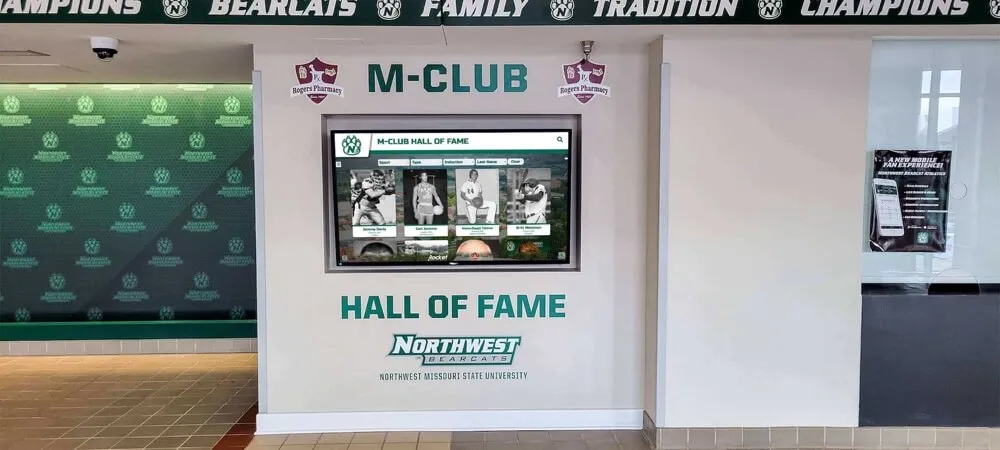
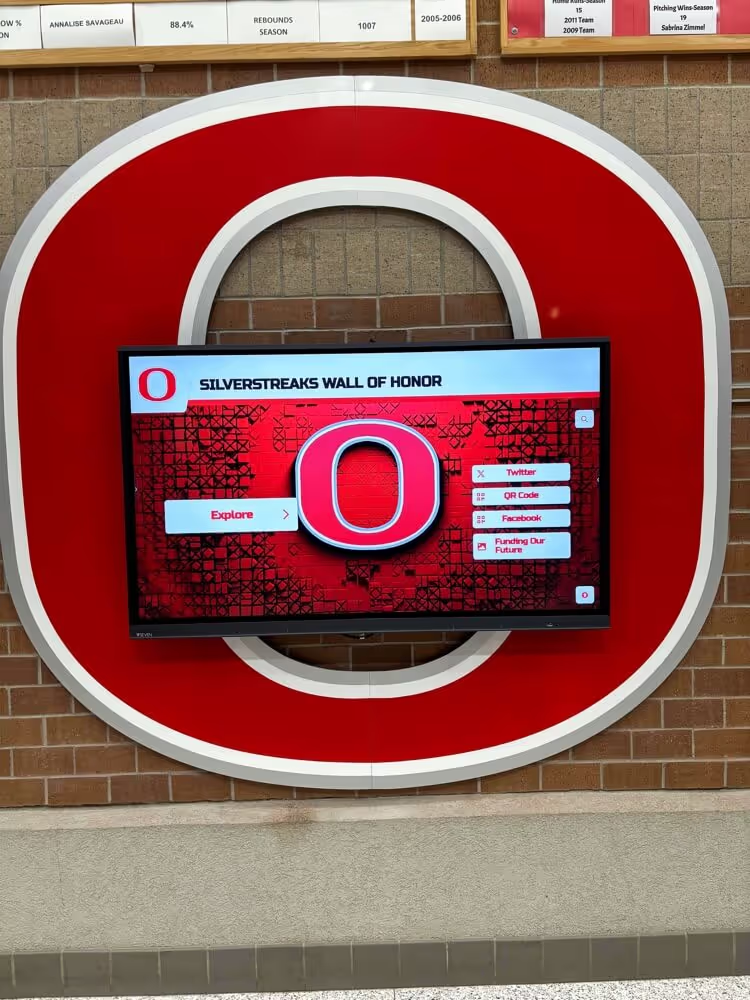
Digital Academic Recognition Displays
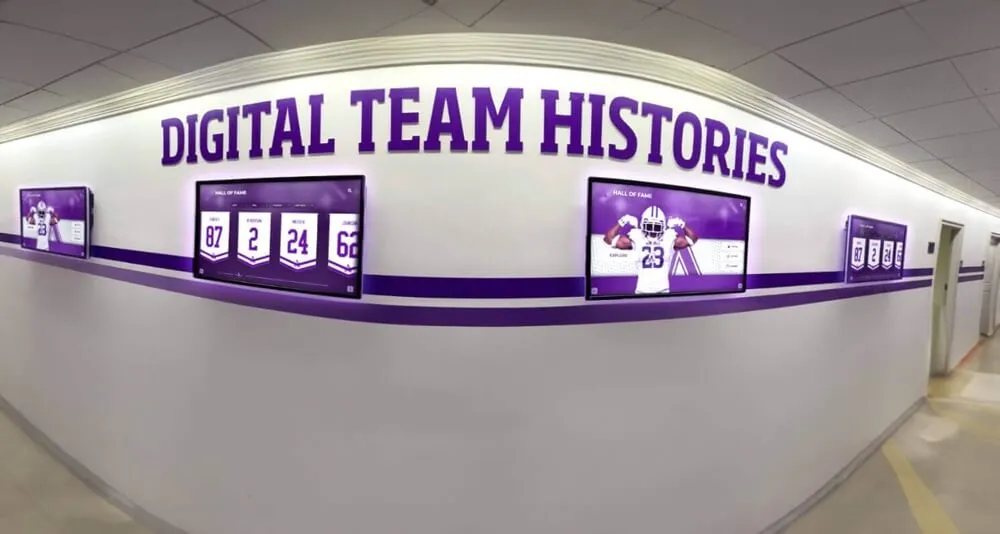
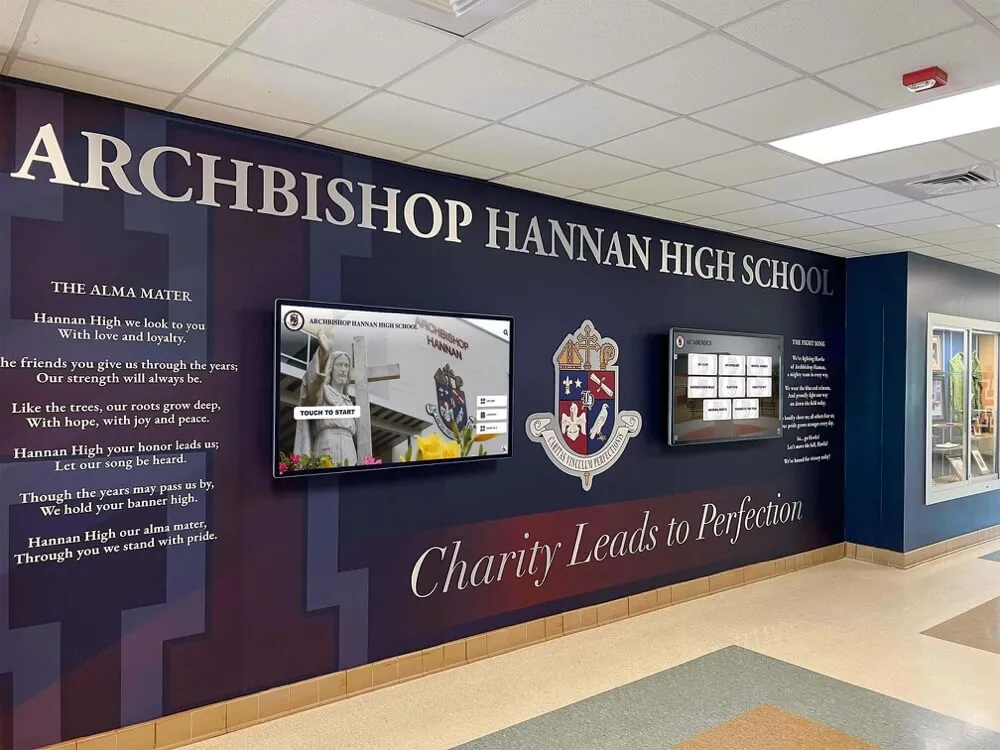
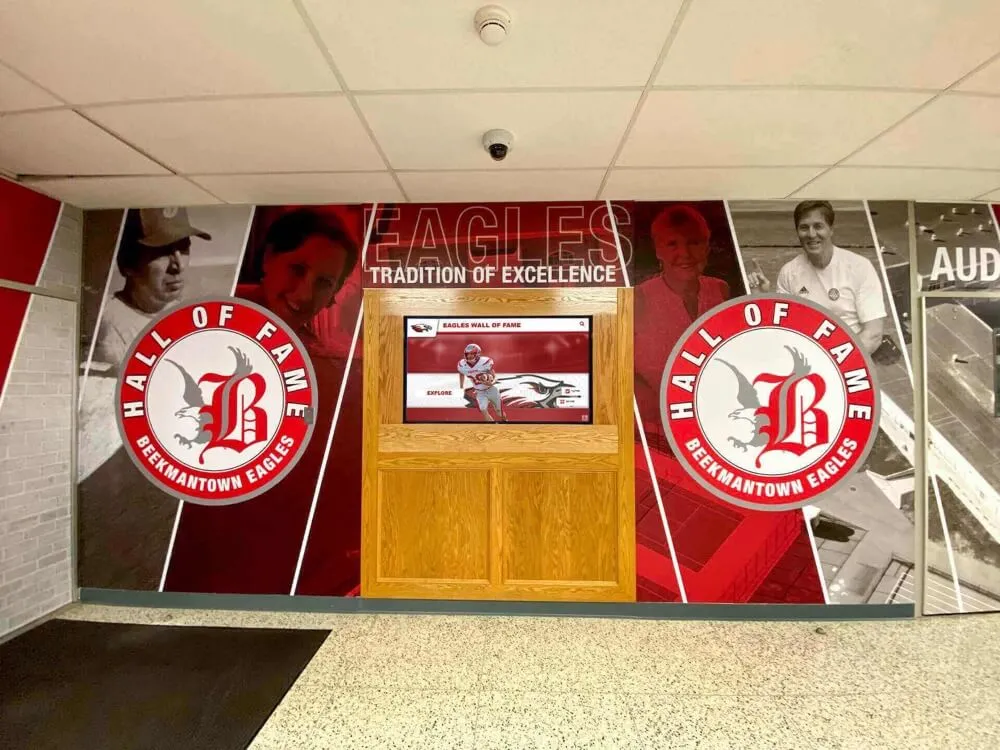
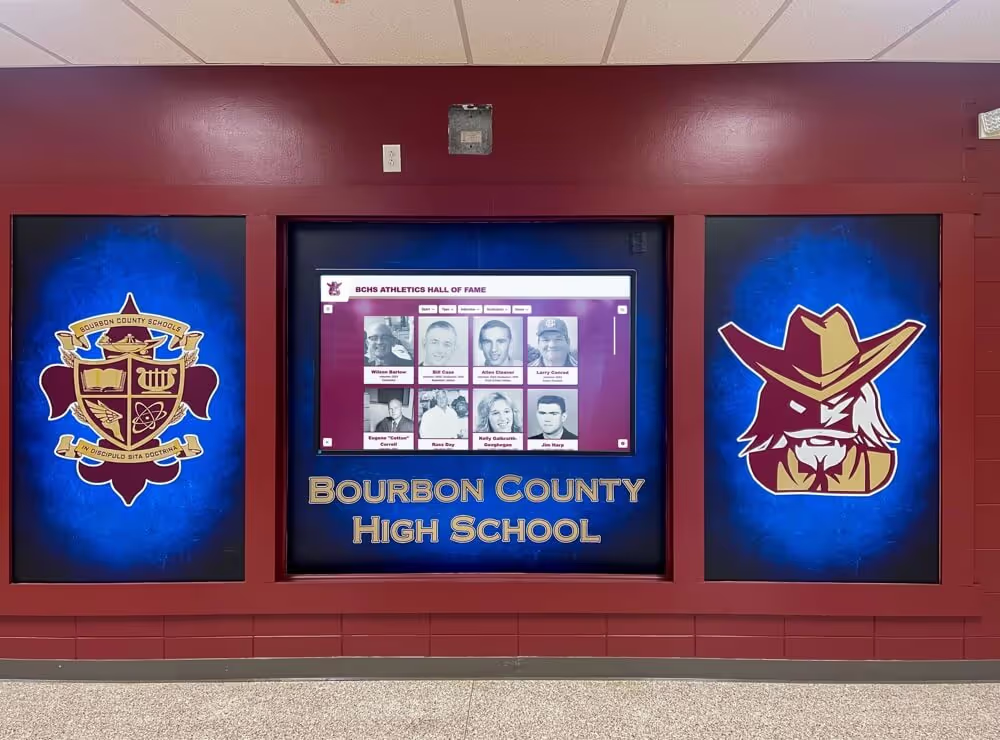
Digital recognition systems solve the capacity and permanence problems that limit traditional approaches. Schools using digital displays for academic honors can:
Recognize every student at every tier. A digital platform has no physical space limit. Every honor roll recipient — High Honor Roll, Honor Roll, and Honorable Mention — can be included with equal prominence. No student is left off because the board ran out of room.
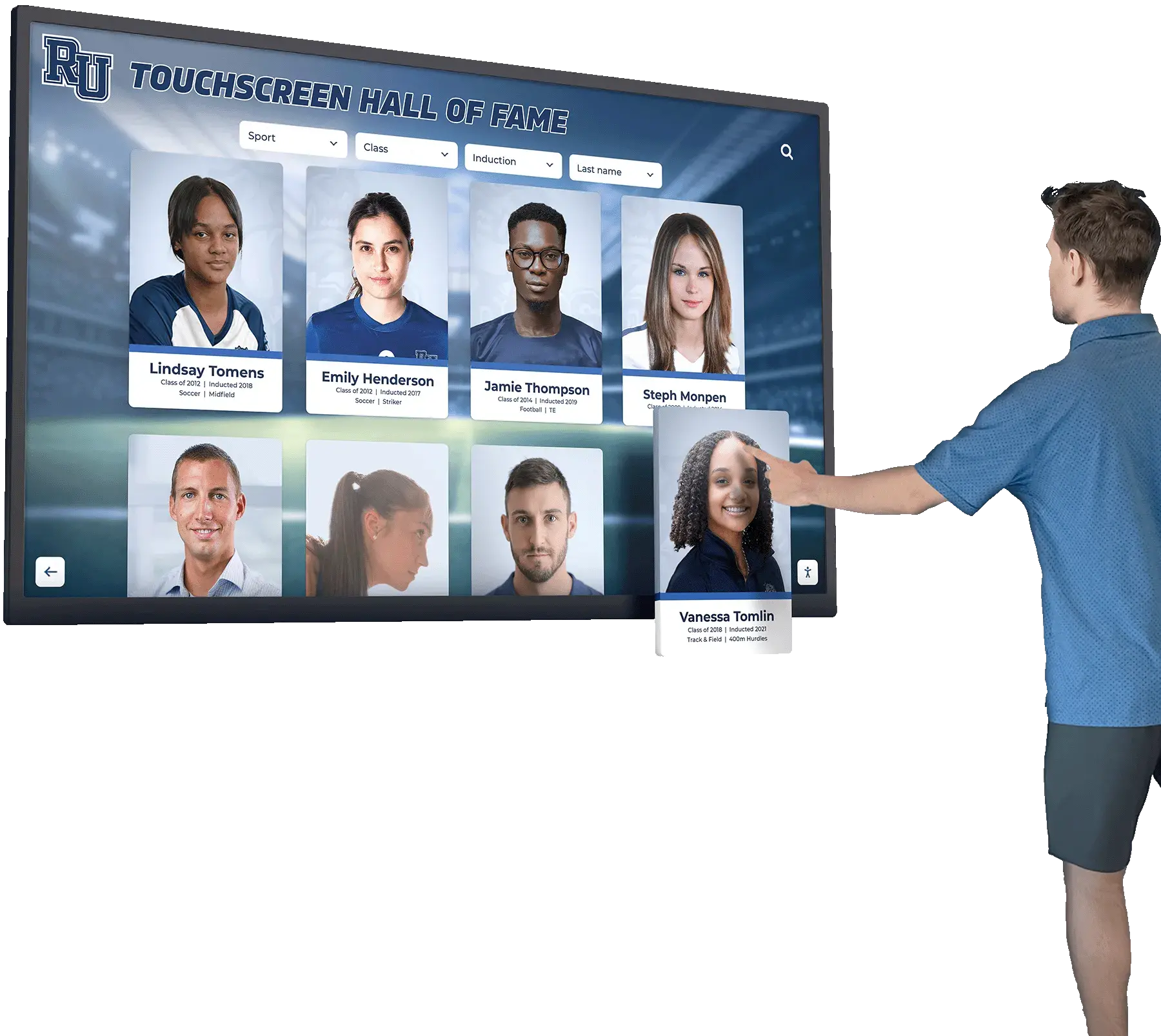
Include rich profile information. Rather than just a name and GPA tier, digital profiles can feature student photos, specific achievement details (courses excelled in, competition results, NHS service hours), multi-year recognition histories, and quotes from students about their academic journeys.
Update seamlessly each semester. Cloud-based content management means that when honor roll lists are finalized after grade submission, displays can be updated within days rather than requiring weeks of physical work to reprint and remount lists.
Preserve permanent archives. Every student who earned academic honors in the past five years — or fifteen years — remains accessible in a searchable archive. This creates institutional memory that printed lists and removed bulletin board postings simply cannot provide.
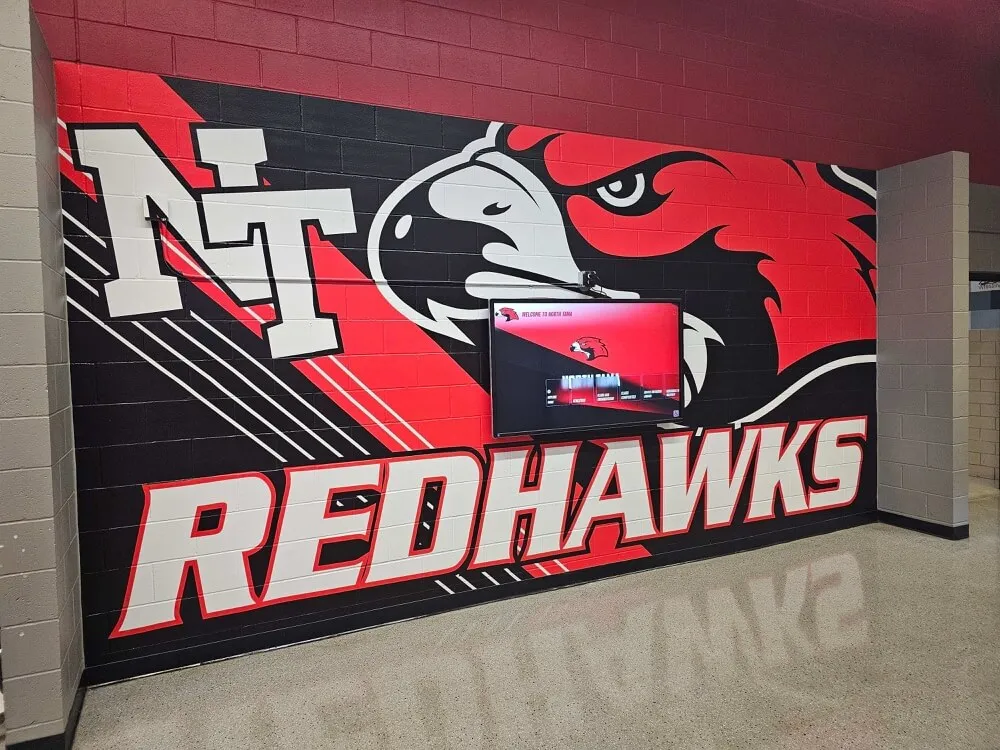
For schools exploring what’s possible, the range of display ideas for school screens and kiosks goes well beyond static name lists — including student spotlight rotations, achievement milestone celebrations, and scrolling recognition feeds that keep honor content visible throughout the day.
Placement: Where to Put Academic Recognition Displays
Location determines whether recognition displays actually build culture or become wallpaper. High-impact placement options include:
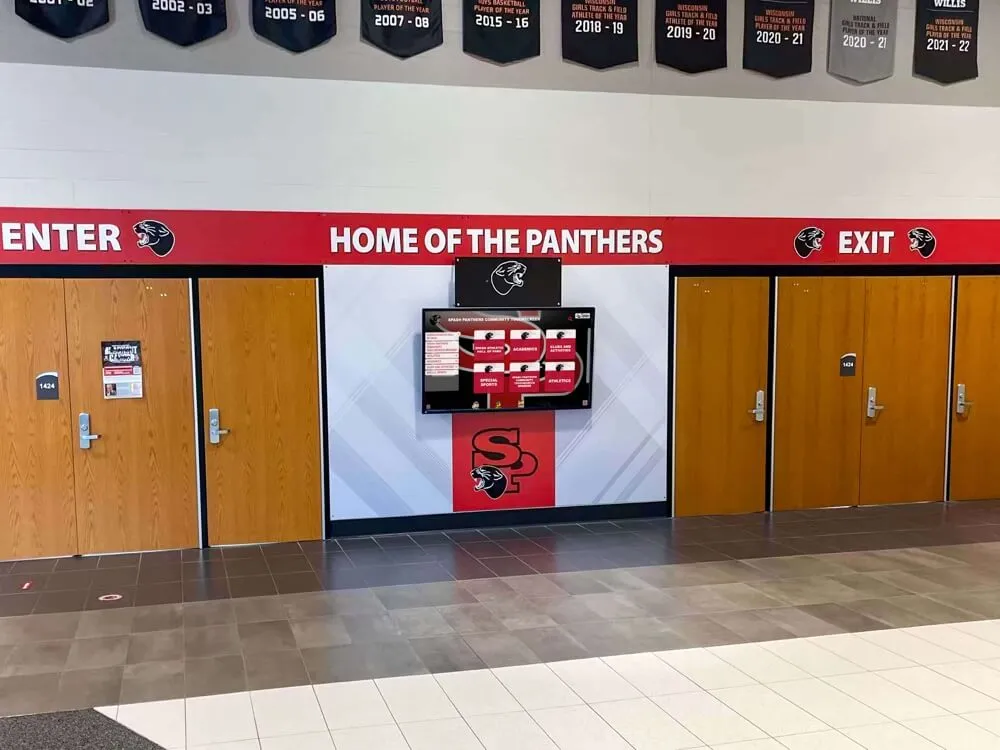
Main Lobby / Front Entrance: The first thing students, families, visitors, and prospective families see when they enter the building. Academic recognition in the lobby signals institutional values immediately — that this school prizes scholarship alongside athletics.
Main Hallways and Student Circulation Areas: Hallways where students pass multiple times daily ensure consistent exposure to academic recognition. Students who see honor roll recipients every day internalize the message that academic excellence is normal and celebrated here.
Cafeteria and Common Areas: Spaces where students gather socially are prime locations for recognition displays that spark peer conversations about academic achievement.
Near Counseling and Administration Offices: Placement near where families meet with school staff creates natural opportunities for counselors to reference specific students’ achievements during college planning conversations.
Building an Academic Hall of Fame Alongside Athletic Recognition
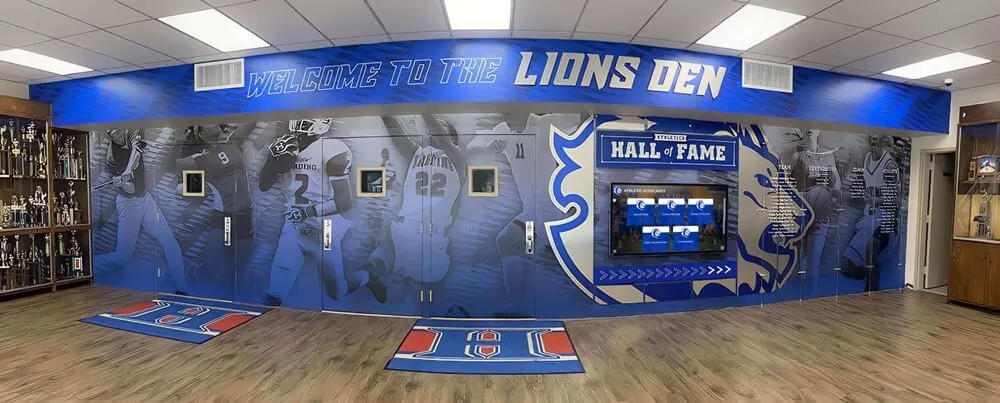
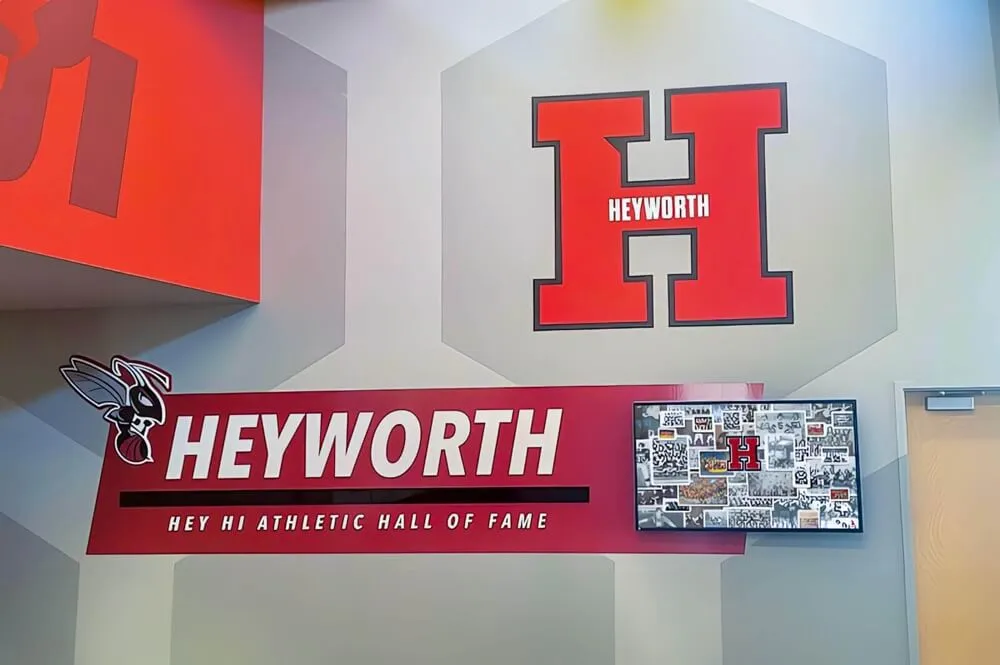
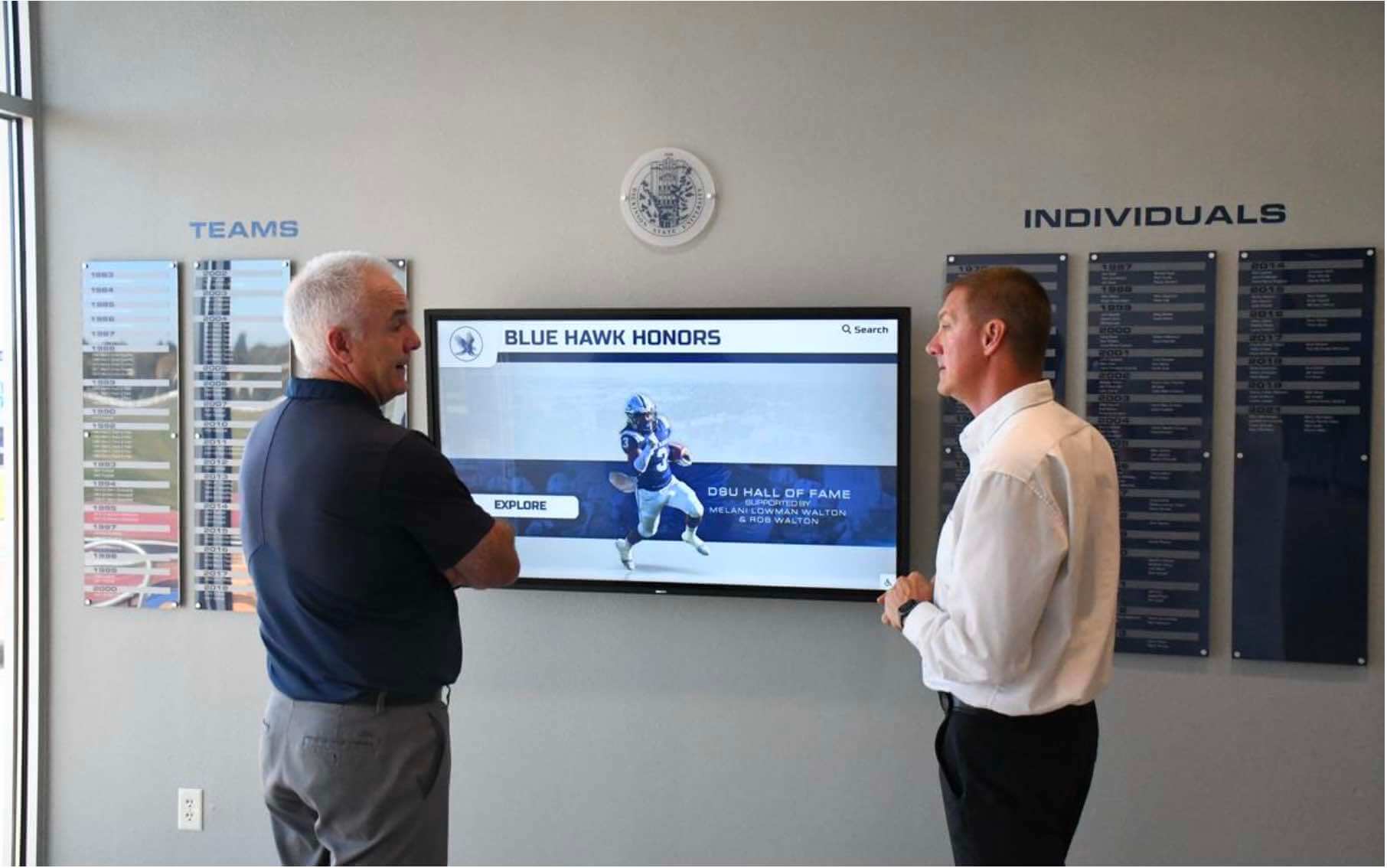
Many schools have well-established walls of fame for athletics — displaying championship banners, retired jersey numbers, and inducted alumni athletes. Extending this framework to academic achievement creates a more complete picture of what the school values and who it celebrates.
What an Academic Wall of Fame Can Include
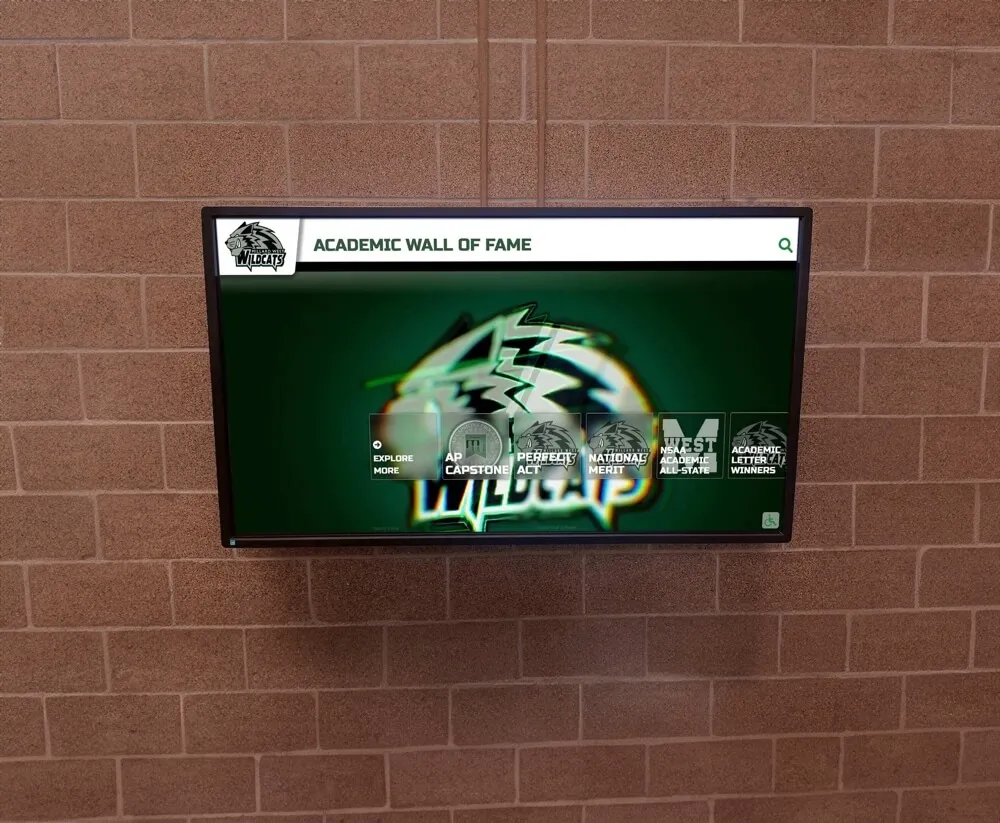
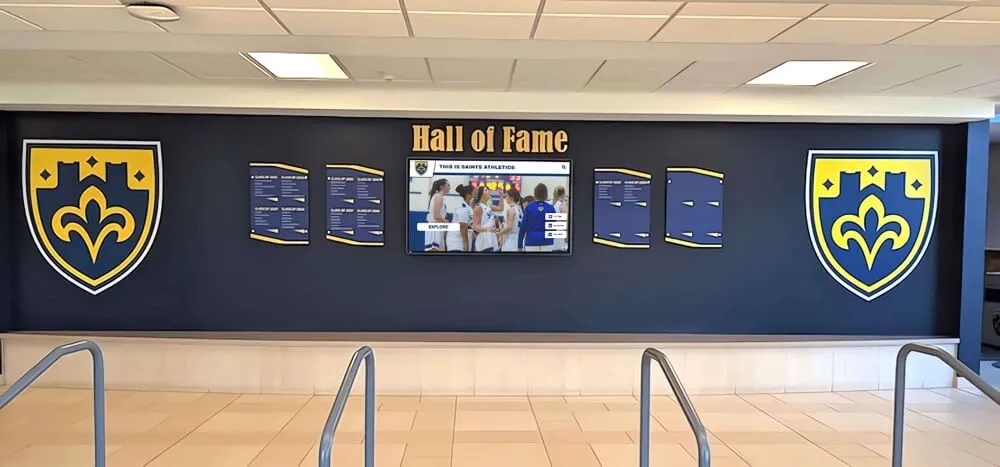
An academic wall of fame doesn’t need to be a separate installation — it can be a dedicated section within a broader recognition display that encompasses athletics, arts, and academics together. Content for an academic section might include:
- Honor Roll Hall of Fame: Students who earned honor roll status every semester of their high school career
- NHS Member Gallery: Photos and brief profiles of every NHS inductee going back as far as records allow
- Valedictorian Archive: A permanent record of every graduating class valedictorian and salutatorian
- AP Scholar Wall: Students who earned AP Scholar, AP Scholar with Honor, or AP Scholar with Distinction
- Academic Competition Champions: State-level math competition winners, National History Day finalists, Science Olympiad champions, and similar competitive academic achievers
- National Merit and Presidential Award Recipients: External honors validated by organizations beyond the school itself
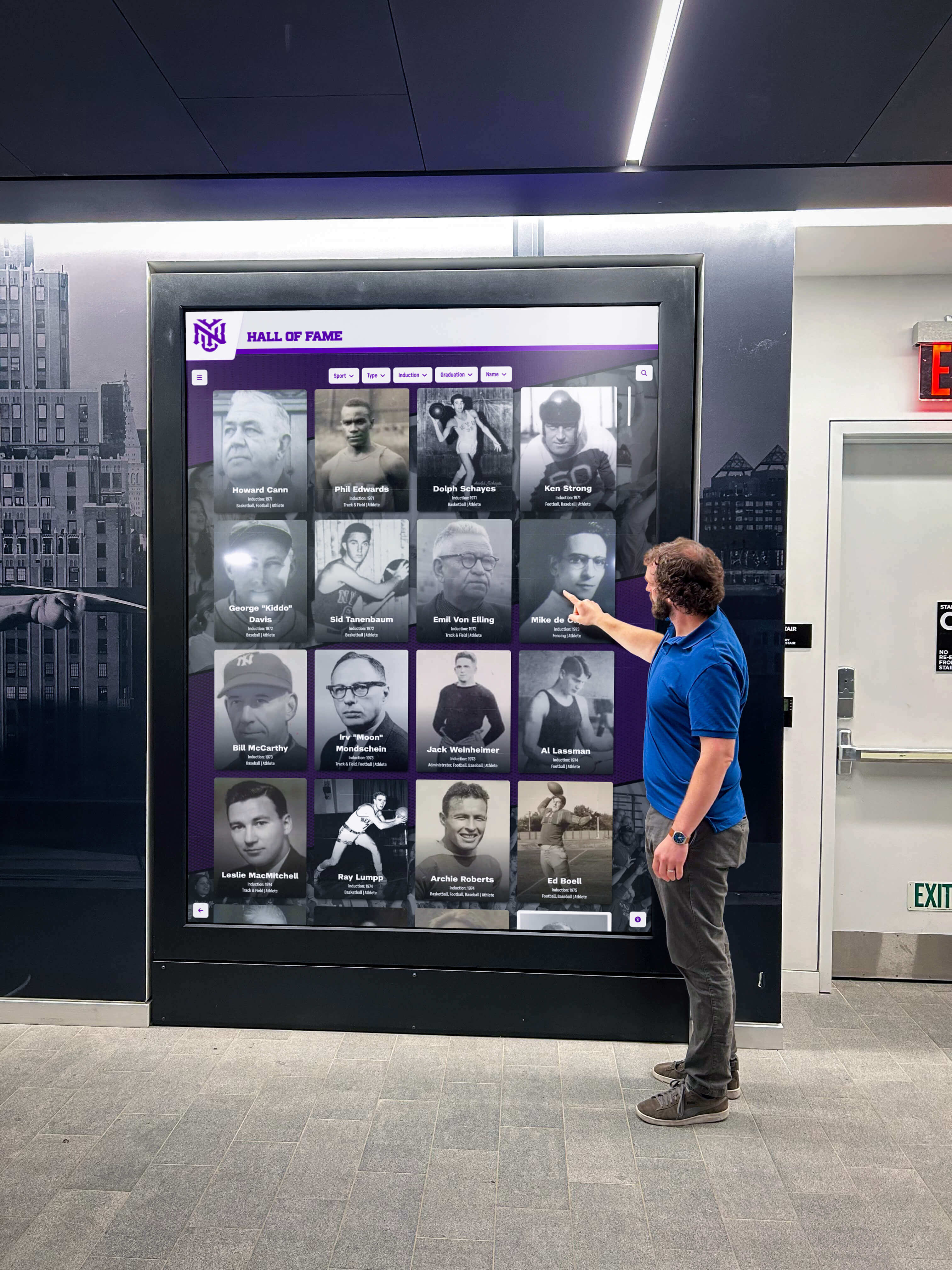
This depth of content makes academic recognition displays genuinely interesting to explore — not just a static list of names, but a living record of intellectual achievement across graduating classes. Connecting those honored students to alumni mentorship opportunities adds another dimension: current honor students can find alumni who earned the same distinctions and connect with them as mentors and models for future success.
Integrating Academic and Athletic Recognition
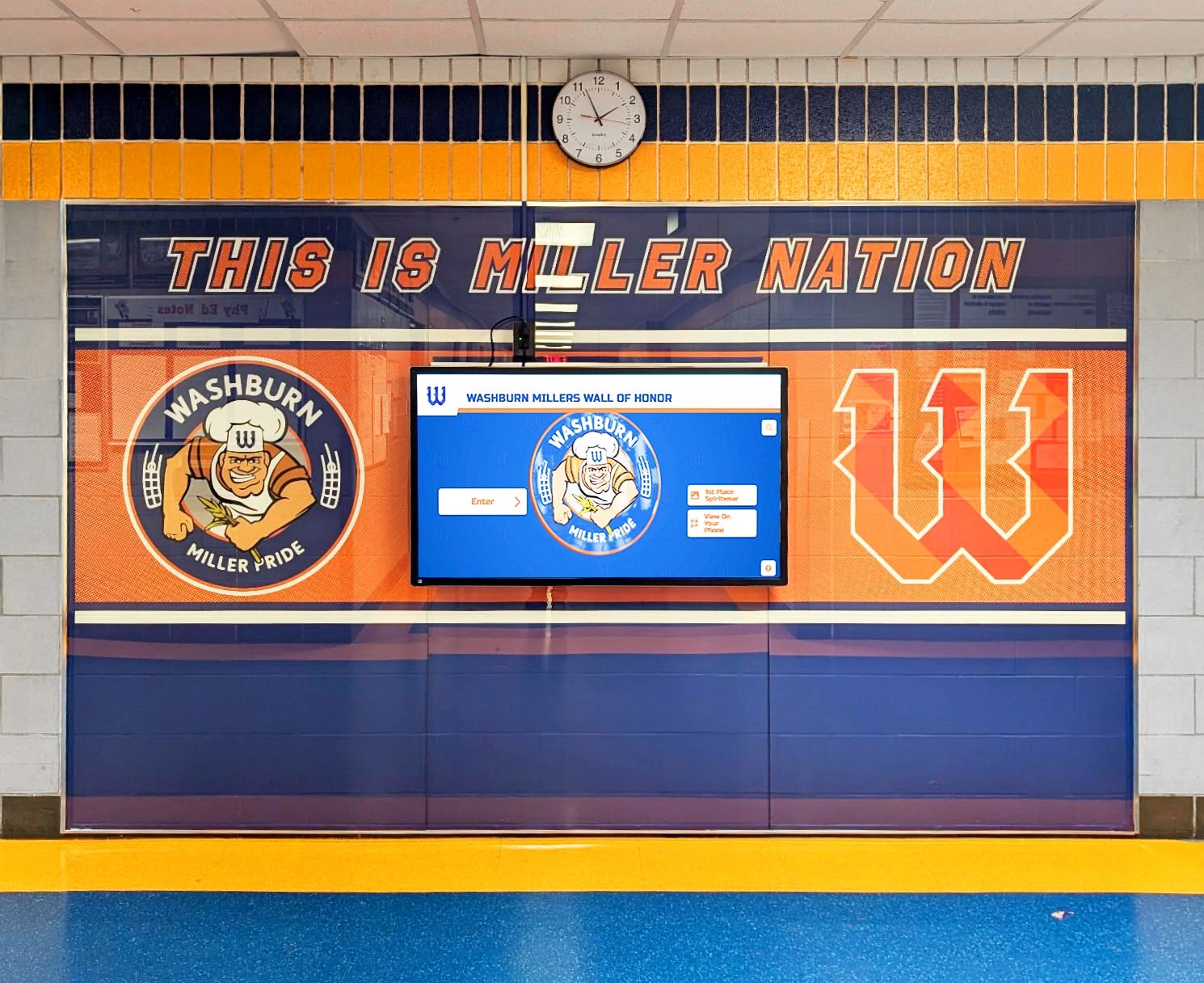
Siloed recognition systems — one display for athletics, one for academics — inadvertently communicate that the school treats these as separate and unequal domains. Integrated digital platforms that showcase academic honors, athletic achievements, performing arts recognition, and alumni accomplishments together send a more complete message: this school celebrates excellence in all its forms.
Purpose-built platforms designed for school recognition — like those offered by Rocket Alumni Solutions — are specifically architected for this kind of comprehensive, cross-domain recognition. Understanding why purpose-built recognition platforms outperform generic digital signage comes down to the content management workflow, the student profile structure, and the searchability features that general-purpose digital signage systems simply weren’t designed to provide.
Connecting Academic Honorees to Alumni
One underutilized dimension of academic recognition displays is their potential to connect current students with alumni who earned similar distinctions. A touchscreen display showing that a prominent local professional or successful alum was also an NHS officer or three-year honor roll recipient does something certificates and bulletin boards cannot: it makes academic achievement feel aspirational and consequential rather than just a quarterly administrative exercise.
Schools that have invested in digital alumni recognition systems find that bridging the gap between current student achievements and alumni outcomes creates powerful cultural messaging — proof that academic honors in high school are early markers of the kind of excellence that continues well beyond graduation.
The Cultural Argument for Prominent Academic Recognition
There’s a straightforward logic to why schools invest heavily in athletic trophy cases, championship banners, and retiring jersey numbers: visible recognition of athletic achievement builds team pride, motivates student-athletes, and creates community identity. Every dollar spent on a well-designed athletic recognition wall pays dividends in school culture and community engagement.
The same logic applies — perhaps even more powerfully — to academic honors. When students see that their school permanently celebrates every student who maintained a High Honor Roll designation, not just the ones who played in the state championship game, the implicit message shifts. Academic achievement becomes something the school is proud of, something worth displaying, something worth striving for.
Schools that have made this shift report meaningful impacts: increased enrollment in AP courses, higher percentages of students earning honor roll recognition semester over semester, and stronger engagement from families who feel their children’s academic accomplishments are genuinely valued. Academic recognition that builds school pride doesn’t just celebrate individuals — it shapes the identity of the institution and influences what students aspire to become.
There’s also a practical benefit for admissions and enrollment. Prospective families touring a high school that features a prominent, well-maintained academic recognition wall receive immediate evidence of academic culture. Interactive campus storytelling that boosts admissions consistently highlights academic achievement displays as among the most effective tools for communicating institutional priorities to families who are evaluating schools.
Practical Steps for Schools Ready to Elevate Academic Honors
If your school is ready to move beyond printed honor roll lists and toward recognition that genuinely matches the achievement it celebrates, here’s a practical framework:
1. Audit your current recognition. Walk through your building with fresh eyes. Where is academic recognition currently displayed? Is it prominent? Is it current? Does it include all tiers of honorees, or only a select few?
2. Define your recognition categories. Map out every academic honor your school awards — from quarterly honor roll through NHS induction, AP Scholar designations, graduation distinctions, and subject-specific awards. Each category is a content module for your display system.
3. Gather historical records. Decades of academic honorees may exist only in yearbooks and old printed lists. Digitizing those records — even going back ten or fifteen years — adds depth and institutional memory to any display you build.
4. Choose a display platform and location. Decide whether you’re starting with a dedicated academic recognition kiosk, integrating academic content into an existing broader recognition display, or building a new comprehensive wall of fame. Location should maximize daily visibility for students and first-impression impact for visitors.
5. Establish a content update workflow. The most effective displays stay current. Build a clear process: who submits honor roll data after each grading period, who approves content, who updates the display. Systems that require minimal technical skill to update stay current; systems that require IT intervention get stale.
6. Celebrate the launch. When a new academic recognition display goes live, make it an event. Invite honor students and their families. Feature the display in school communications. Let students know their achievements will now be permanently visible in a place of honor.
Conclusion
Academic honors in high school represent genuine intellectual achievement — the result of sustained effort, disciplined study, and commitment to excellence that students invest across multiple years of their education. Honor Roll, National Honor Society, AP Scholar, National Merit recognition, and the full spectrum of academic distinctions deserve recognition systems that match that investment: permanent, prominent, and compelling enough to inspire the students who will earn those honors in the future.
Digital recognition platforms give schools the tools to close the gap between how they celebrate athletic achievement and how they celebrate academic excellence. Every student who earned honor roll status for four consecutive years, every NHS inductee who logged hundreds of service hours alongside a demanding course load, every valedictorian who devoted their high school career to scholarly excellence — they deserve to be remembered in a place of permanent honor, not on a bulletin board that gets replaced next quarter.
Ready to build an academic recognition display that gives your top students the visibility they’ve earned? Explore Rocket Alumni Solutions to see how schools are using interactive touchscreen displays to celebrate academic honors alongside athletic and alumni achievement — creating recognition cultures where excellence in every form is valued, visible, and permanent.