



Key Takeaways
Comprehensive guide to implementing Academic All-Americans award displays using modern digital technology. Learn selection criteria, recognition best practices, and comparison of digital vs traditional display solutions for celebrating scholar-athletes.
Understanding Academic All-American Recognition Programs
Before implementing recognition displays, schools must understand what Academic All-American designation represents across various governing bodies and why these honors merit comprehensive celebration.
Defining Academic All-American Standards Across Organizations
Academic All-American programs exist across multiple levels of collegiate athletics, each with specific criteria defining eligibility and achievement thresholds.
NCAA Division I, II, and III Programs
The College Sports Communicators (formerly CoSIDA) administers the most widely recognized Academic All-America program across all NCAA divisions. Student-athletes must meet several stringent requirements: maintaining minimum 3.50 cumulative GPA on a 4.0 scale, completing at least one full academic year at their institution, and being varsity starters or key reserves with significant participation in their sport.
These standards ensure recognition honors genuine achievement rather than perfunctory acknowledgment. Student-athletes cannot simply maintain adequate grades while contributing minimally to their teams; they must demonstrate excellence in both academics and athletics simultaneously.
Junior College and Community College Recognition
The National Junior College Athletic Association (NJCAA) administers similar Academic All-American programs for two-year institutions. NJCAA Academic All-Americans typically must maintain 3.60 or higher GPA while demonstrating athletic distinction, recognizing that community college student-athletes often balance athletic and academic commitments with additional responsibilities like employment and family obligations.
NAIA Academic All-American Standards
The National Association of Intercollegiate Athletics (NAIA) maintains separate Academic All-America programs with comparable rigor. NAIA student-athletes qualifying for these honors must achieve 3.5 GPA or higher and demonstrate substantial athletic participation, with selection determined through comprehensive review processes considering both statistical achievement and qualitative assessment.
High School Scholar-Athlete Recognition
While “Academic All-American” designation traditionally applies to collegiate athletics, many high schools implement parallel recognition programs honoring student-athletes who achieve specific academic and athletic thresholds. These programs often require minimum GPA standards (commonly 3.5 or higher) combined with varsity letter status or equivalent athletic achievement markers.
Why Academic All-American Recognition Matters
Academic All-American recognition carries significance extending far beyond individual honor, creating value for athletes, institutions, and broader athletic communities.
Demonstrating Institutional Values and Priorities
How schools recognize Academic All-Americans communicates organizational priorities more powerfully than mission statements or aspirational language. When institutions invest resources in comprehensive recognition systems celebrating academic achievement alongside athletic success, they demonstrate authentic commitment to holistic student development rather than simply paying lip service to “student-athlete” ideals.
According to research from the NCAA, institutions with strong academic support systems and visible recognition of scholar-athletes report better graduation rates, improved student-athlete satisfaction, and stronger academic performance across athletic departments. Recognition becomes both celebration of achievement and reinforcement of institutional culture.
Inspiring Current and Future Student-Athletes
Visible Academic All-American recognition creates aspirational targets for current student-athletes and prospective recruits. When athletes regularly encounter displays showcasing Academic All-Americans from their programs, abstract goals like “excel academically” transform into concrete objectives with clear pathways and proof that peers from their institution achieved similar success.
This inspiration proves particularly valuable during challenging academic periods when student-athletes question whether maintaining high academic standards while competing remains achievable. Recognition serves as tangible evidence that other athletes navigated similar challenges successfully, providing motivation during difficult moments.
Supporting Recruitment and Program Reputation
Prospective student-athletes and their families increasingly prioritize academic support and graduation rates when evaluating programs. Comprehensive Academic All-American displays provide immediate, credible evidence that institutions successfully support student-athletes in achieving academic excellence, not just athletic performance.
For programs competing to recruit high-achieving student-athletes who value academic preparation alongside athletic development, visible recognition differentiates institutions that genuinely support academic success from those offering only perfunctory academic support services.
Establishing Comprehensive Recognition Program Frameworks
Effective Academic All-American recognition requires systematic approaches ensuring all deserving athletes receive appropriate acknowledgment while maintaining sustainable operations across years and leadership changes.
Defining Recognition Criteria and Eligibility Standards
Clear criteria prevent confusion while ensuring recognition programs honor genuine achievement appropriately.
Standardized vs. Institutional-Specific Criteria
Schools must decide whether to recognize only formally designated Academic All-Americans from established programs like College Sports Communicators or create broader institutional recognition including additional categories.
Formal Designations Only: Some institutions limit recognition to official Academic All-American designations from recognized governing bodies. This approach maintains exclusivity and prestige, ensuring honored athletes achieved externally validated standards rather than internal recognition that may lack credibility beyond the institution.
Expanded Institutional Recognition: Alternatively, schools may establish comprehensive scholar-athlete recognition systems acknowledging various achievement levels including formal Academic All-Americans, institutional scholar-athlete honors for athletes meeting specific GPA thresholds, sport-specific academic excellence recognition, and academic improvement awards for athletes demonstrating substantial grade point advancement.
This broader approach creates multiple recognition pathways while maintaining clear hierarchies distinguishing external Academic All-American designation as highest achievement.
Multi-Year vs. Annual Recognition
Determining how to recognize athletes who earn Academic All-American status multiple times requires careful consideration. Should repeat honorees receive new profile entries each year or have existing profiles updated to reflect cumulative achievements? Digital platforms excel at managing these nuances through consolidated profiles showing complete recognition histories across athletes’ careers while also enabling annual class features highlighting each year’s new Academic All-Americans.
Integration with Existing Recognition Programs
Academic All-American displays prove most effective when integrated within comprehensive athletic recognition programs celebrating diverse forms of achievement.
Comprehensive Scholar-Athlete Recognition Ecosystems
Position Academic All-American recognition alongside complementary categories including athletic hall of fame inductees showcasing career excellence, championship teams documenting competitive success, record holders and statistical achievement leaders, community service and character award recipients, coaching achievements and program milestones, and alumni career accomplishments demonstrating long-term impact.
This comprehensive approach shows that excellence takes multiple forms while positioning Academic All-American recognition as one prestigious pathway among several to lasting institutional recognition.
Balancing Academic and Athletic Achievement Visibility
Many athletic departments struggle to give academic achievement equal prominence to competitive success. Trophy cases prominently display championship hardware while Academic All-American recognition receives minimal acknowledgment through small plaques in administrative corridors where students rarely visit.
Thoughtful recognition systems address this imbalance through strategic placement in high-traffic areas where athletes, families, and recruits regularly pass, visual prominence matching championship and competitive recognition, and integrated digital platforms showcasing complete athlete profiles including both academic and athletic achievements rather than separating categories artificially.
Traditional vs. Digital Recognition: Comprehensive Comparison
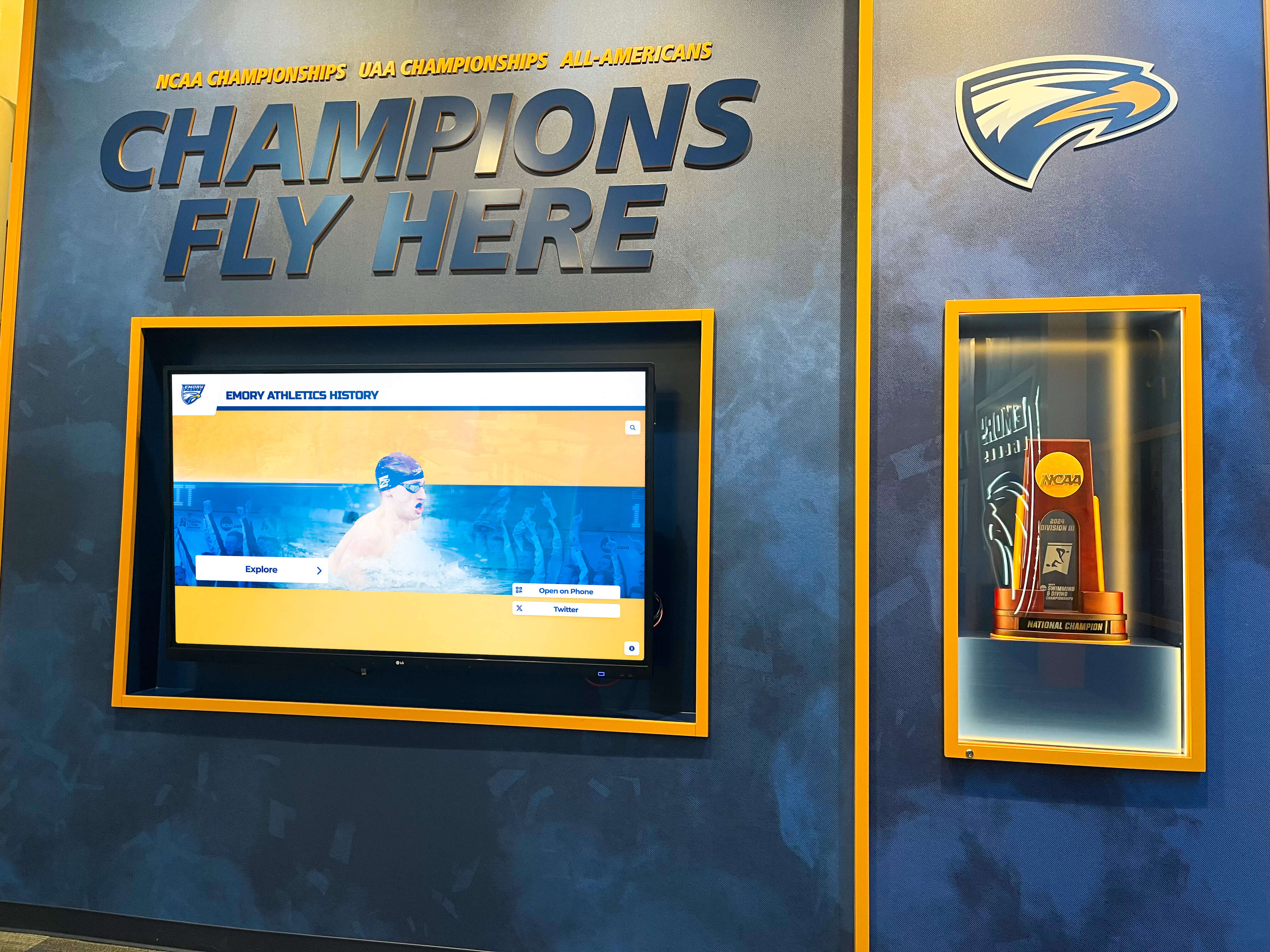
Schools implementing or upgrading Academic All-American recognition face fundamental decisions about delivery platforms. Understanding relative advantages of traditional and digital approaches enables informed choices aligned with institutional priorities and resources.
Traditional Recognition: Plaques, Cases, and Physical Displays
Physical recognition maintains certain advantages that digital solutions cannot fully replicate.
Tangible Permanence and Gravitas
Physical plaques, engraved nameplates, and trophy case displays carry psychological weight that digital recognition may lack. Athletes touching their engraved names or photographing themselves beside physical plaques experience recognition differently than viewing digital profiles. For some individuals and communities, tangible physical presence communicates lasting permanence that digital content cannot fully convey.
No Technology Dependence or Maintenance
Once installed, physical recognition requires minimal ongoing maintenance beyond occasional cleaning and hardware replacement if damaged. Schools avoid subscription fees, software updates, content management systems, or technological troubleshooting. For institutions with limited IT resources or technology expertise, this simplicity offers genuine appeal.
Limitations of Traditional Recognition
However, traditional approaches face significant constraints limiting effectiveness as programs grow and expectations evolve.
Fixed Capacity and Space Constraints
Physical displays accommodate finite numbers of honorees before exhausting available space. As programs produce Academic All-Americans annually, wall space fills until institutions face difficult choices: remove older recognition to accommodate new honorees, expand displays requiring construction and expense, or stop recognizing new achievements appropriately.
Many institutions find themselves constrained by physical spaces limiting how comprehensively they can honor all deserving Academic All-Americans while maintaining aesthetically appropriate displays.
Static Content with Limited Context
Traditional plaques typically include minimal information—name, year, sport, perhaps GPA. This brevity prevents sharing fuller achievement stories including academic majors and career aspirations, specific athletic accomplishments during honored years, quotes from athletes reflecting on their experiences, post-graduation achievements and career paths, or photographs and multimedia bringing honorees to life.
Without this context, recognition feels generic rather than celebrating unique individuals whose specific stories might inspire current student-athletes facing similar challenges or pursuing similar paths.
Expensive and Time-Consuming Updates
Adding names to existing physical displays typically requires professional services including engraving or fabrication work, installation requiring facilities personnel or contractors, and multi-week lead times from recognition announcement to physical display. This process creates substantial delays between achievement and recognition visibility while generating recurring costs each recognition cycle.
Digital Recognition Systems: Modern Alternative Approaches
Digital recognition platforms address traditional limitations while introducing new capabilities enhancing engagement and accessibility.
Unlimited Scalability Without Space Constraints
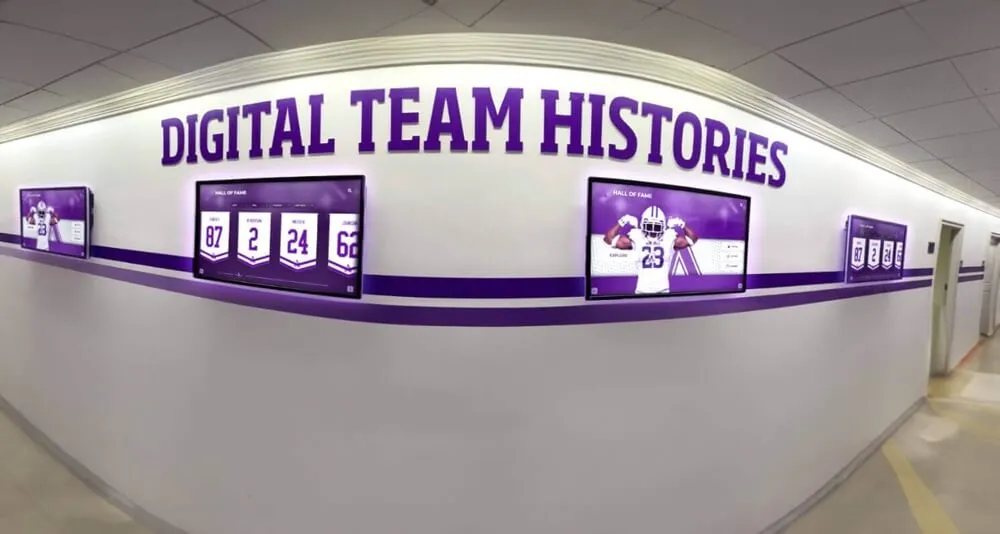
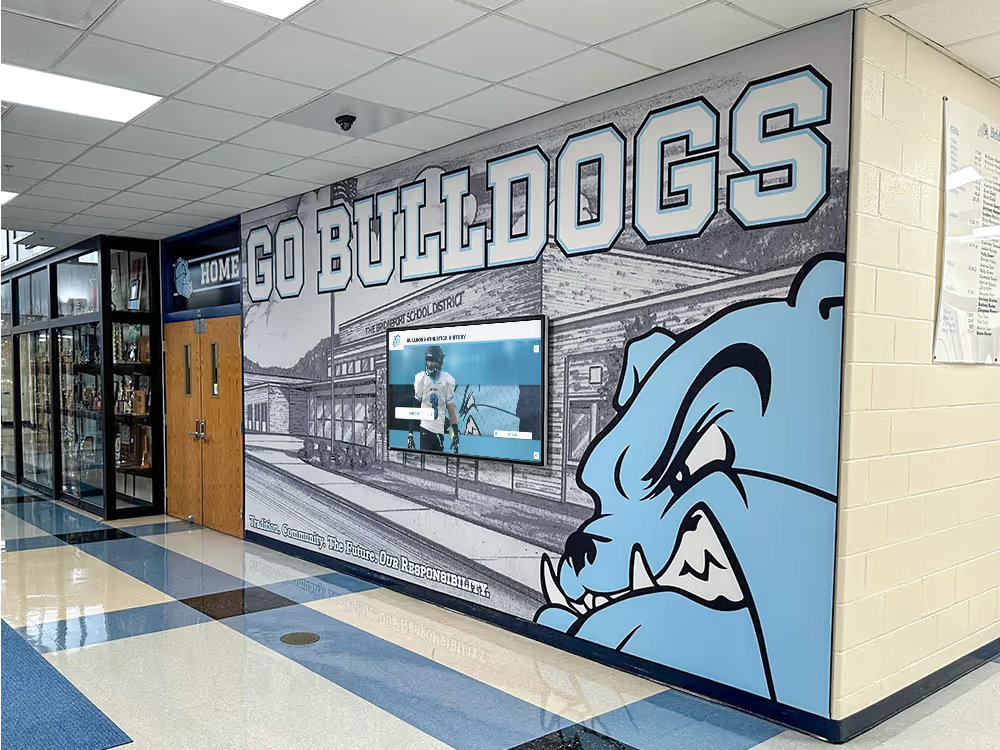
Digital systems eliminate physical capacity limitations entirely. Schools can recognize every Academic All-American in institutional history—from current recipients back through decades—within single displays. Adding new honorees requires no hardware expansion or physical construction; content updates accommodate unlimited growth.
This scalability proves particularly valuable for institutions with established athletic traditions producing multiple Academic All-Americans annually across numerous sports. Digital platforms accommodate this volume effortlessly while maintaining fast performance and excellent user experiences.

Rich Multimedia Storytelling and Comprehensive Profiles
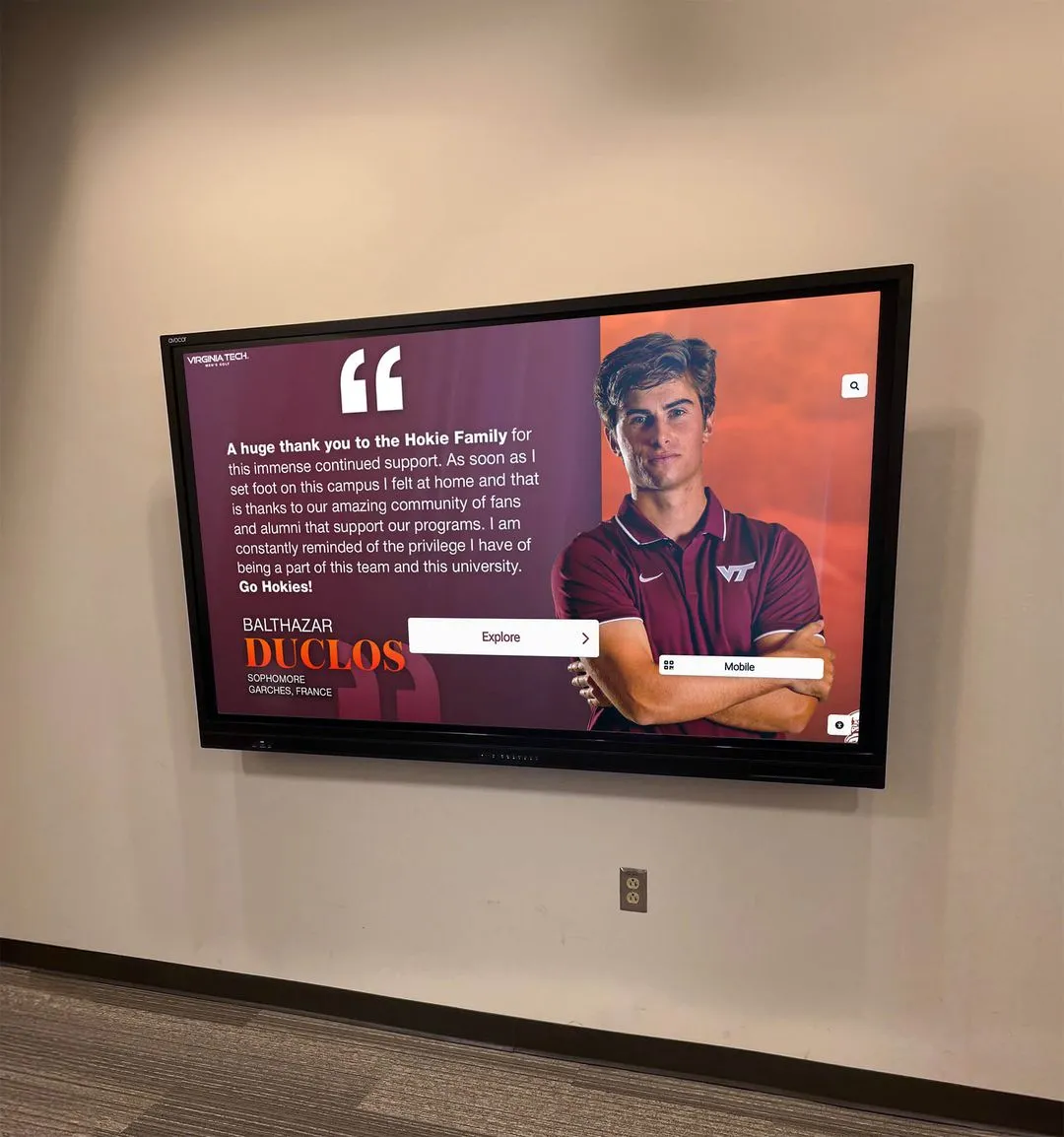
Digital platforms transform recognition from brief name listings into compelling narratives. Academic All-American profiles can include professional photography from competition and academic events, video interviews discussing balancing athletics and academics, complete academic and athletic profiles including majors, GPAs, and statistics, personal reflections about support systems and challenges overcome, information about post-graduation paths including graduate school and careers, and connections to teammates, coaches, and related recognition.
According to research, 63% of people report that digital signage catches their attention compared to 30% for traditional signs, suggesting digital recognition creates stronger engagement than static displays—particularly among younger audiences accustomed to interactive digital experiences.
Instant Updates and Real-Time Recognition
When student-athletes earn Academic All-American designation—typically announced in spring or summer—athletic communications staff can publish comprehensive profiles immediately through cloud-based content management systems. No waiting for engraving completion or installation scheduling; recognition appears instantly, allowing timely celebration while achievement remains fresh and relevant.
Interactive Discovery and Engagement
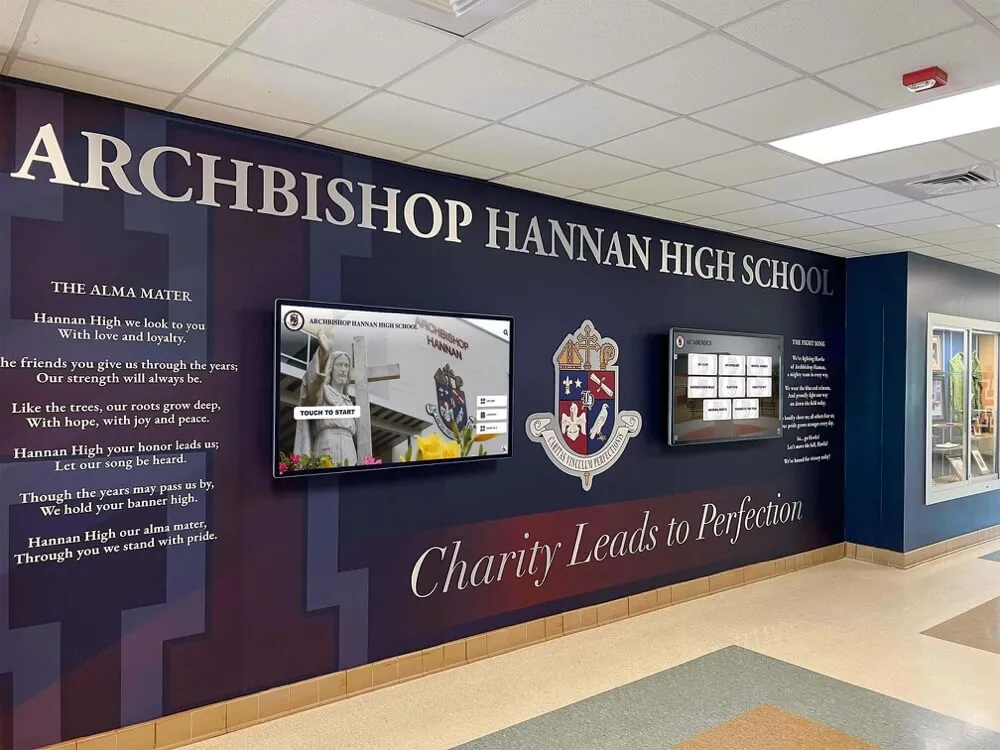
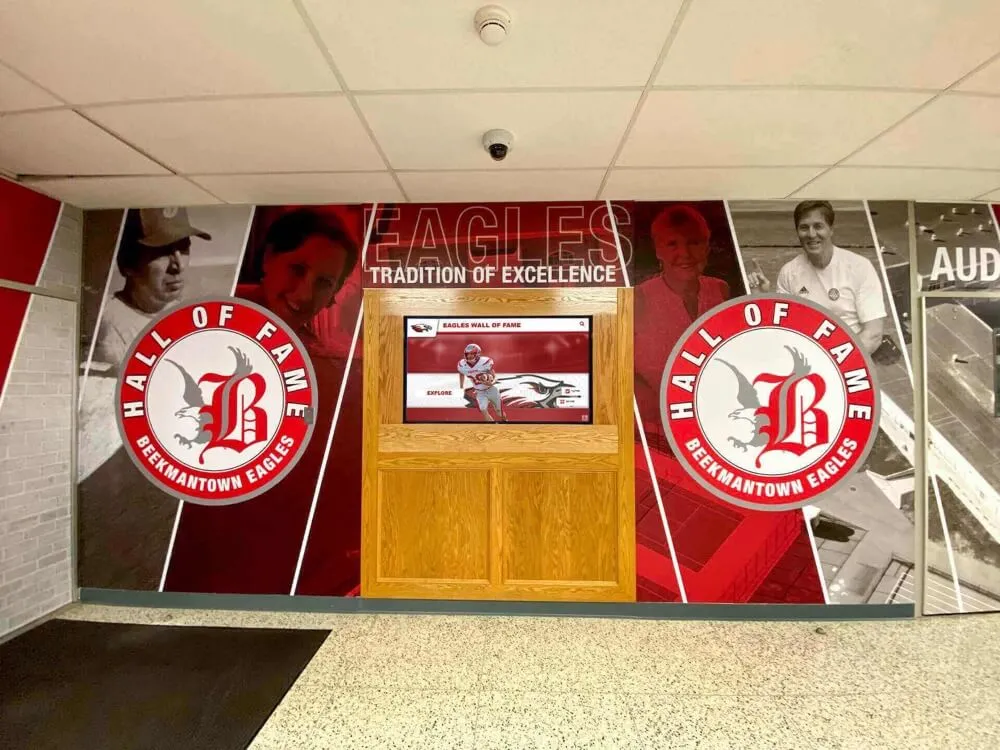
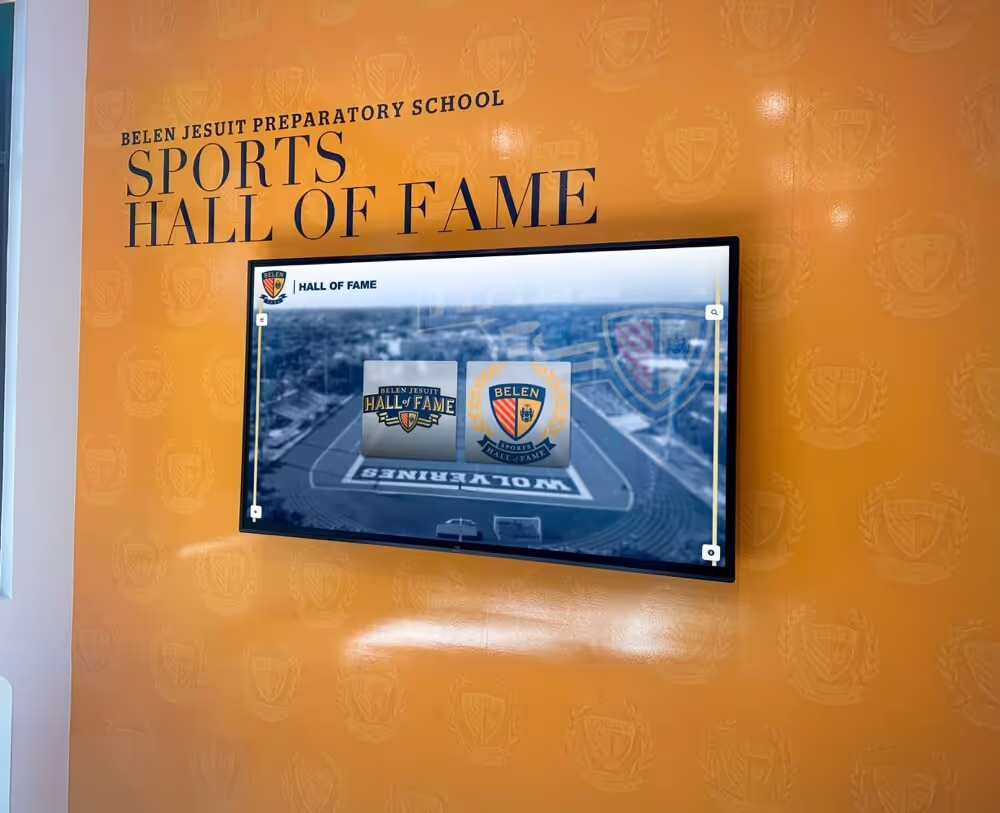
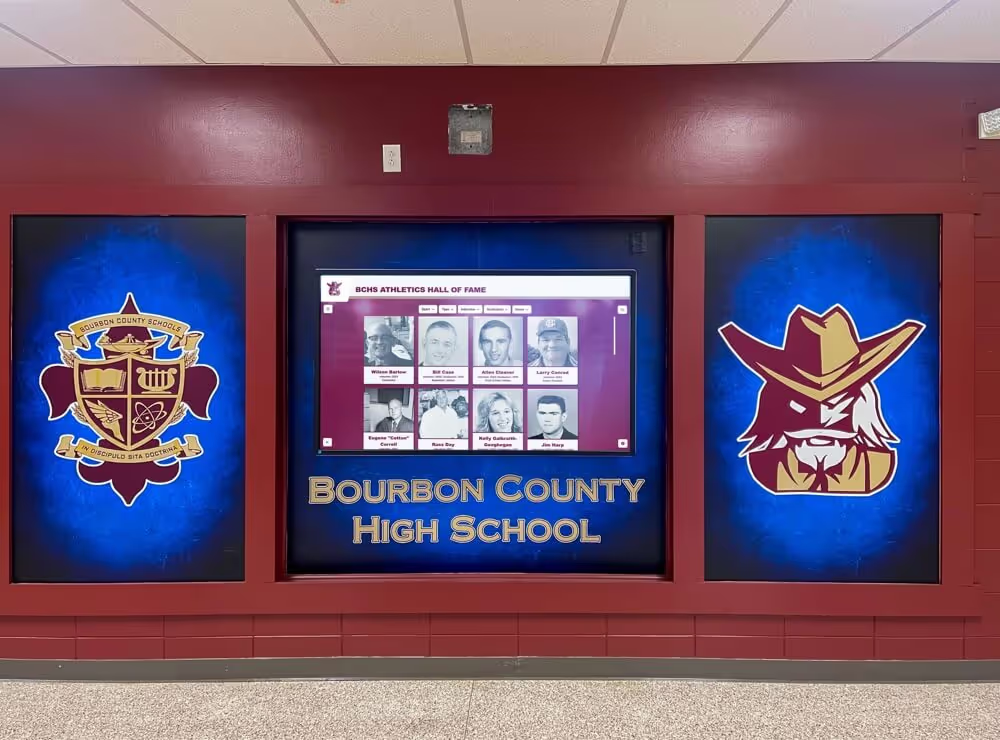
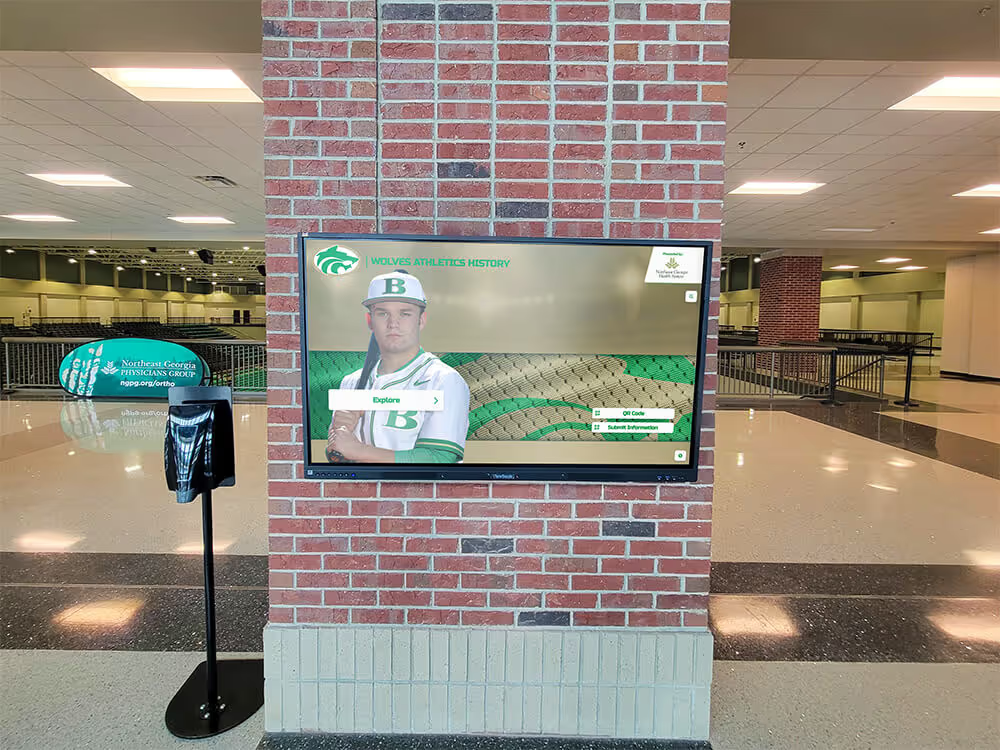
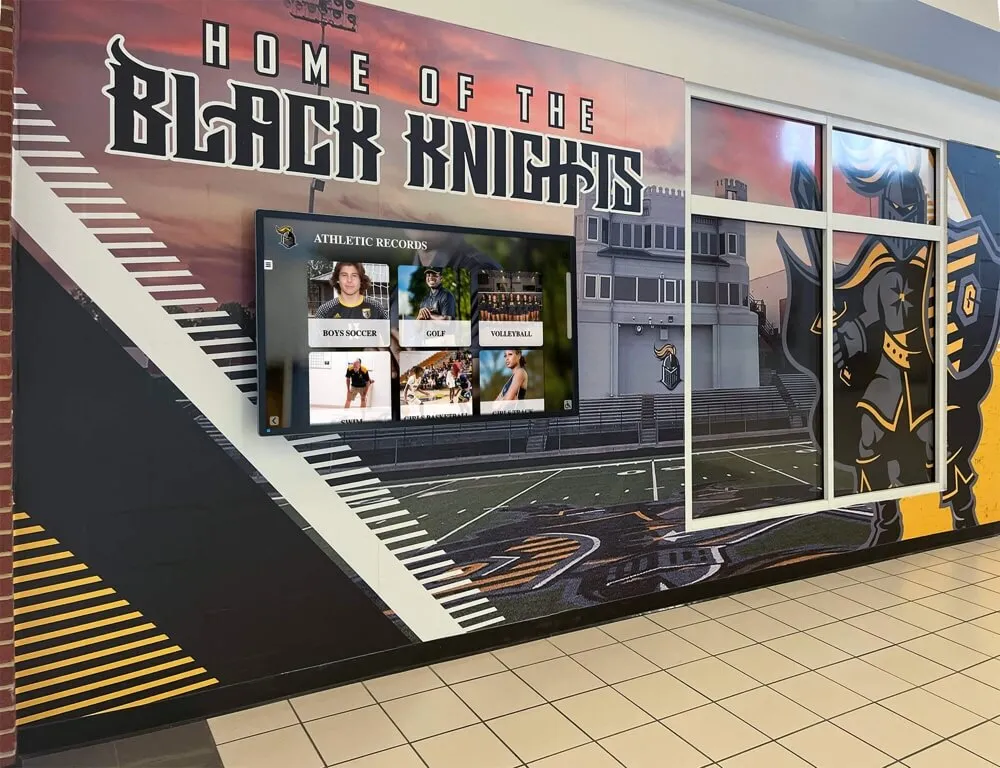
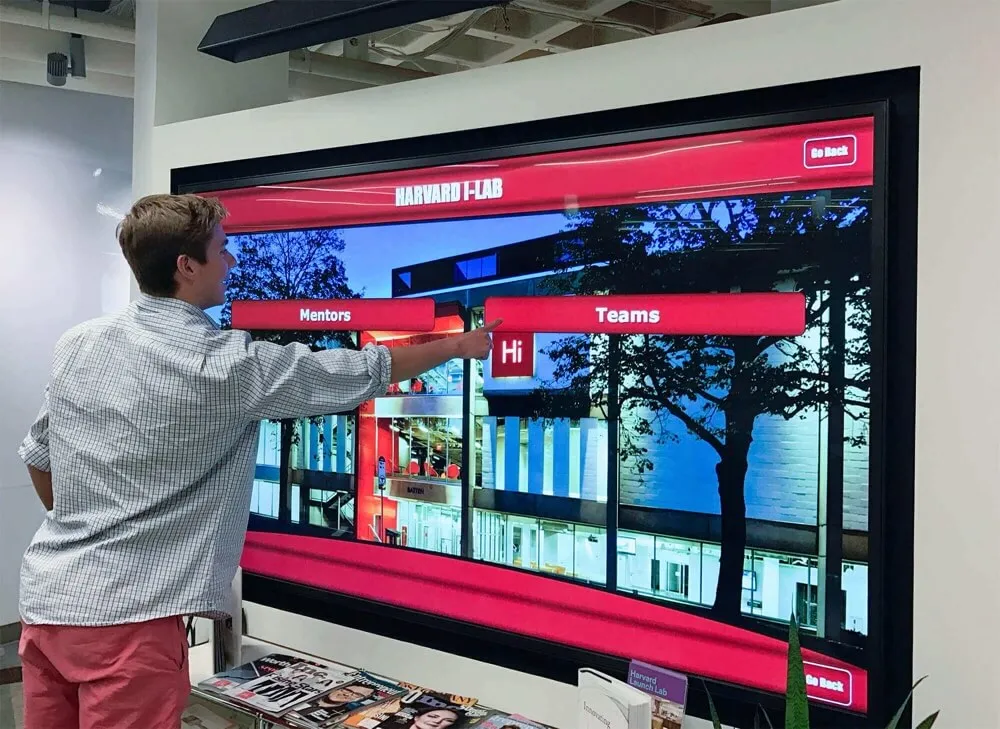
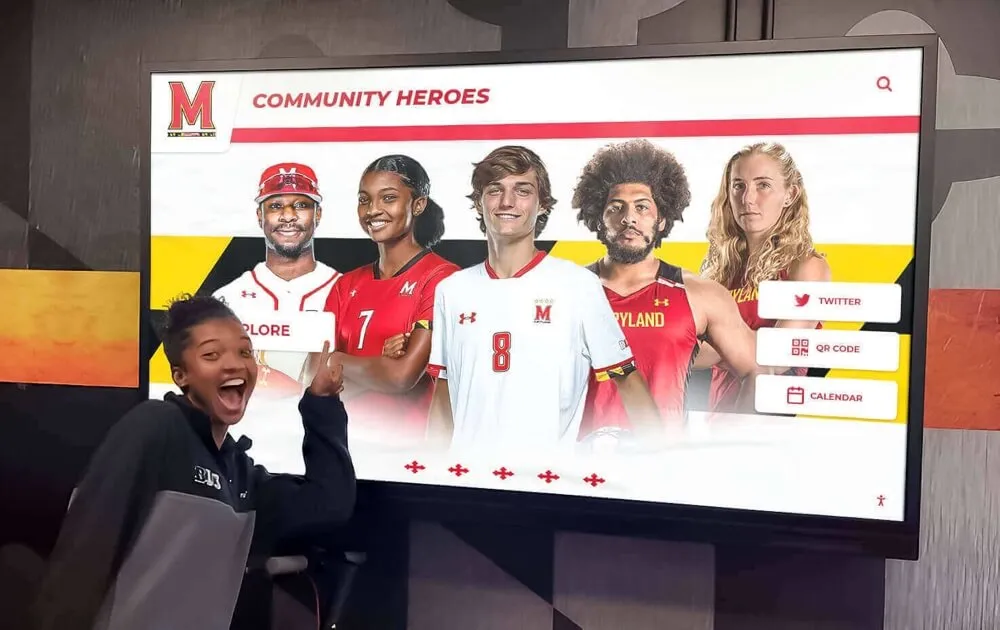
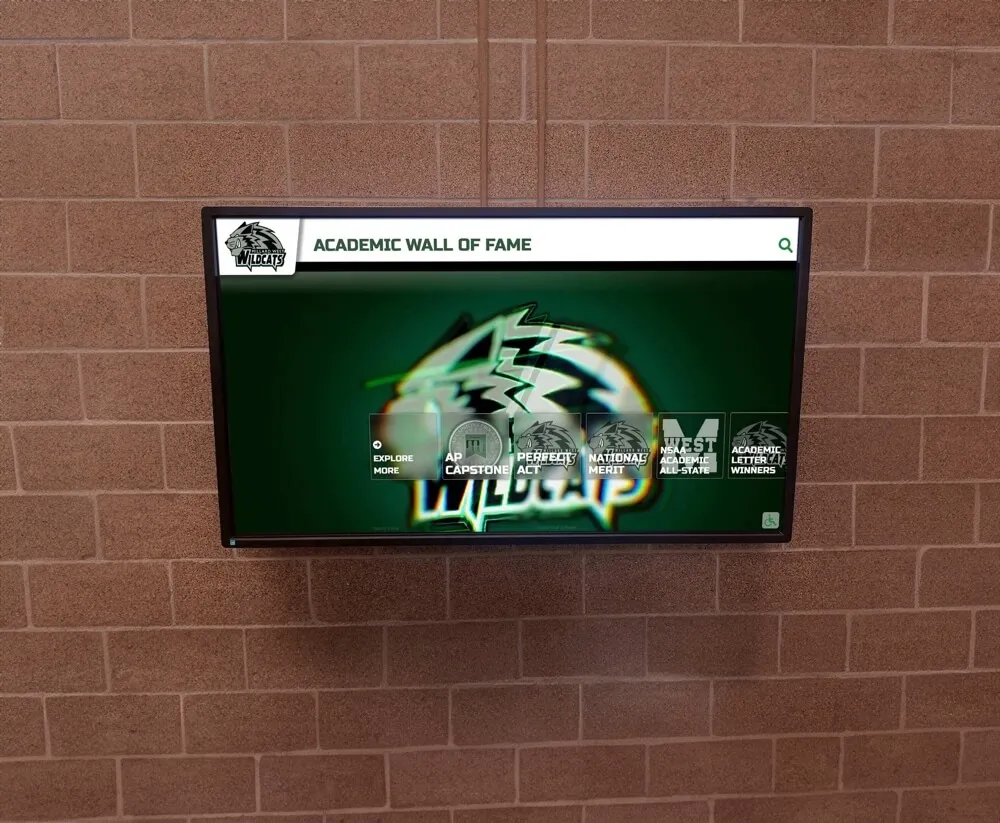
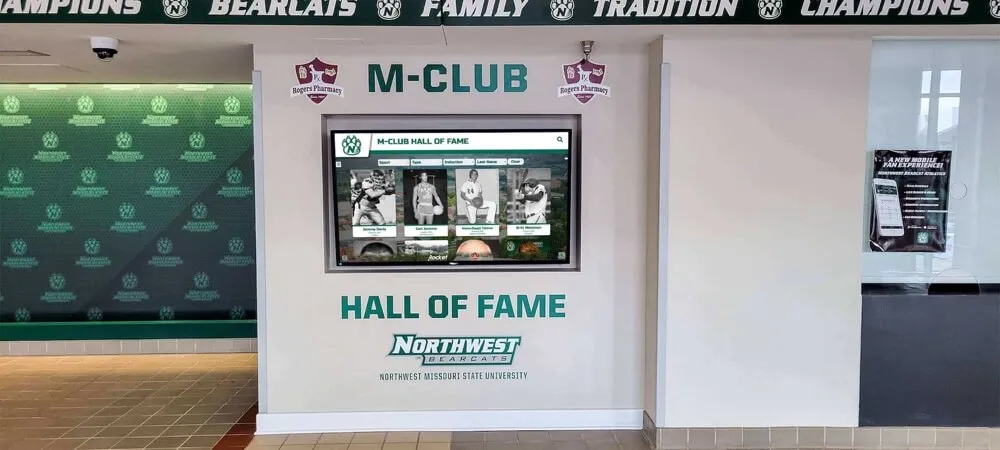
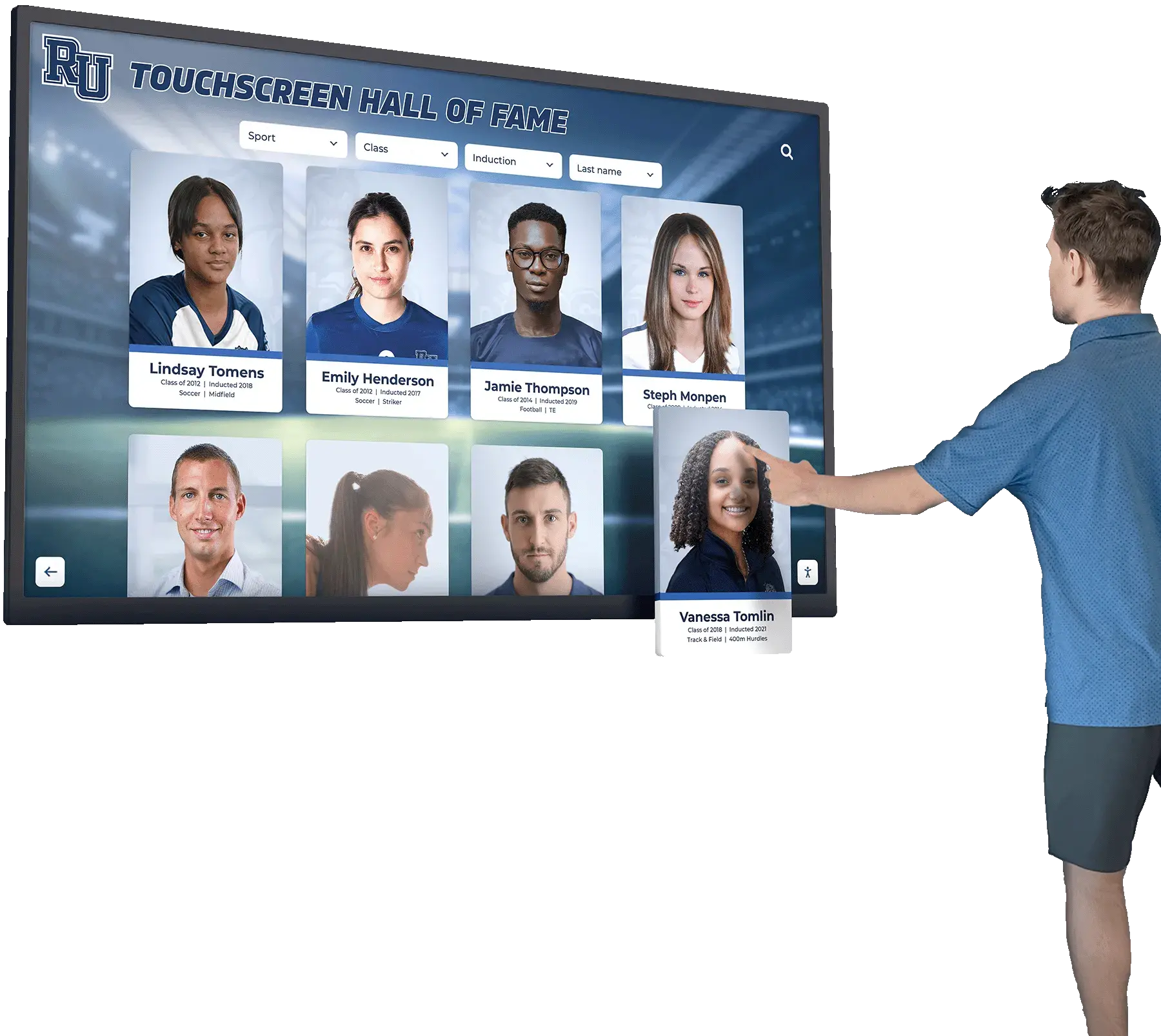
Touchscreen interfaces enable active exploration rather than passive viewing. Users can search by athlete name to find specific individuals, browse by sport to explore program-specific achievements, filter by year or era to understand program history chronologically, view academic majors to see fields of study pursued by scholar-athletes, or discover post-graduation paths showing where Academic All-Americans pursued careers.
This interactivity increases engagement duration substantially. Users typically spend several minutes exploring well-designed digital recognition compared to brief glances at static trophy cases, creating deeper connections with content and stronger impacts on motivation and understanding.
Schools implementing modern digital hall of fame systems report significantly improved engagement metrics compared to traditional static displays, particularly among current student-athletes and prospective recruits.
Web Accessibility Extending Beyond Physical Locations
Digital recognition platforms extend beyond building-mounted displays through responsive websites accessible from any device, mobile companion apps providing portable access, social media integration enabling easy sharing, and QR codes linking physical spaces to expanded digital content.
This accessibility multiplies engagement exponentially beyond in-person facility visitors, allowing alumni Academic All-Americans to view recognition from anywhere globally, prospective student-athletes to explore academic achievement before campus visits, families to share recognition with extended networks, and media to access information for feature stories or coverage.
Cost-Benefit Analysis: Making Informed Recognition Investments
Understanding true total costs over multi-year periods enables accurate comparison between recognition approaches.
Traditional Recognition Costs
Initial installation typically involves significant upfront investment including design and fabrication of displays or trophy cases, professional installation and mounting, and engraving or initial name placement. Ongoing annual costs include engraving new names ($50-200+ per name depending on complexity), periodic display expansion when space fills ($2,000-10,000+ for additions), and maintenance or repairs addressing wear and damage.
Over 10-year periods, these recurring costs often exceed initial installation expenses, particularly for programs consistently producing multiple Academic All-Americans annually.
Digital Recognition Investment
Digital implementation involves different cost structures including hardware (commercial-grade touchscreen display typically $3,000-8,000), professional installation with mounting and connectivity ($1,000-3,000), and platform subscription or licensing (typically $1,000-4,000 annually depending on features). Ongoing costs include annual platform fees, periodic content updates (though dramatically less expensive than physical engraving), and eventual hardware refresh cycles (typically 7-10 years).
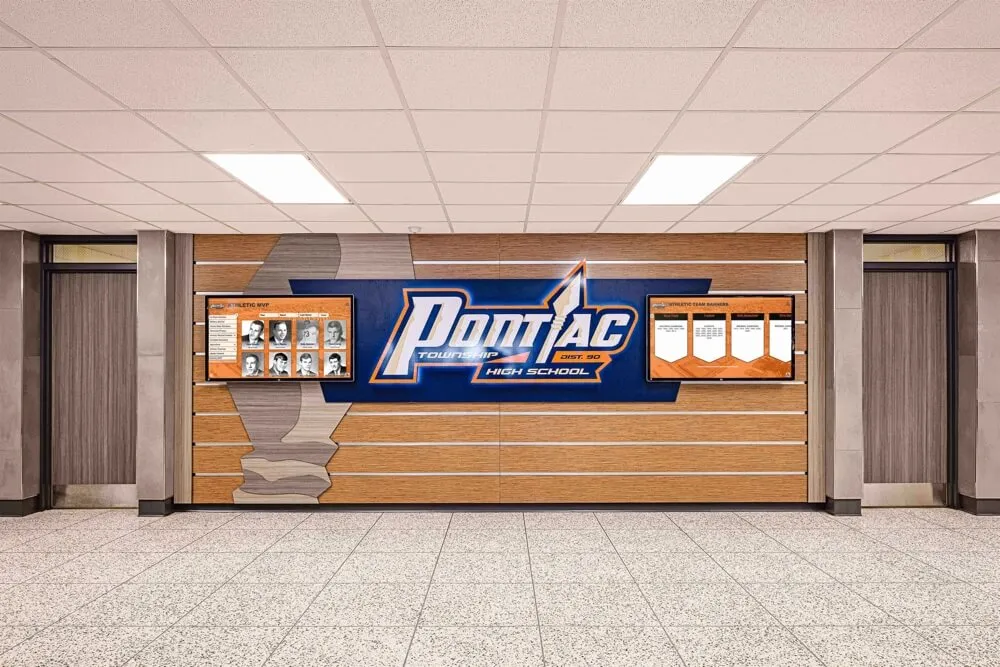
While digital systems require higher initial investment, total cost of ownership over 10+ years often proves comparable or favorable compared to traditional approaches—particularly when accounting for unlimited scalability, comprehensive storytelling capabilities, and extended web accessibility that traditional displays cannot provide.
Solutions like those from Rocket Alumni Solutions provide purpose-built platforms specifically designed for educational and athletic recognition, offering intuitive content management that non-technical staff can operate successfully while delivering engaging user experiences proven effective across diverse institutional contexts.
Content Development for Academic All-American Profiles
Recognition effectiveness depends heavily on profile quality. Compelling content tells complete stories rather than presenting minimal information.
Essential Profile Components for Scholar-Athletes
Comprehensive profiles should include specific information creating complete pictures of achievement, academic journeys, and athletic careers.
Core Recognition Information
Document fundamental details establishing recognition credibility including athlete name and graduation year, specific Academic All-American designation (first team, second team, etc.), sport and position, year(s) of recognition, and governing body granting designation (CoSIDA, NAIA, etc.).
Academic Achievement Details
Beyond basic GPA acknowledgment, provide meaningful academic context including specific GPA and class ranking, academic major and minor fields of study, academic honors beyond Academic All-American (Dean’s List, honor societies, etc.), relevant academic projects, research, or thesis work, and post-graduation educational pursuits including graduate programs.
This additional context demonstrates that Academic All-American recognition reflects sustained academic excellence across rigorous coursework rather than maintaining minimum qualifying standards, showing current student-athletes concrete examples of how scholar-athletes pursued challenging academic programs while competing athletically.
Athletic Career Highlights
Balance academic focus with appropriate athletic achievement recognition including career statistics and performance highlights, team accomplishments and championships during athlete’s tenure, individual athletic honors and recognition, position on team and leadership roles, and coach testimonials about athletic dedication and impact.
This balance reinforces that Academic All-Americans excel athletically while achieving academic distinction, not simply maintaining adequate grades while contributing minimally to teams.
Personal Narratives and Reflections
First-person content creates authentic connections including reflections on balancing athletic and academic commitments, specific strategies that helped maintain academic excellence, memorable professors, courses, or academic experiences, advice for current student-athletes pursuing similar paths, and gratitude toward coaches, academic advisors, or support systems.
Personal narratives humanize extraordinary achievement, making Academic All-Americans relatable rather than impossibly talented individuals beyond normal student-athletes’ reach. When current athletes read about Academic All-Americans facing similar time management challenges and succeeding through specific strategies, recognition becomes powerfully motivational rather than simply intimidating.
Post-Graduation Paths and Career Outcomes
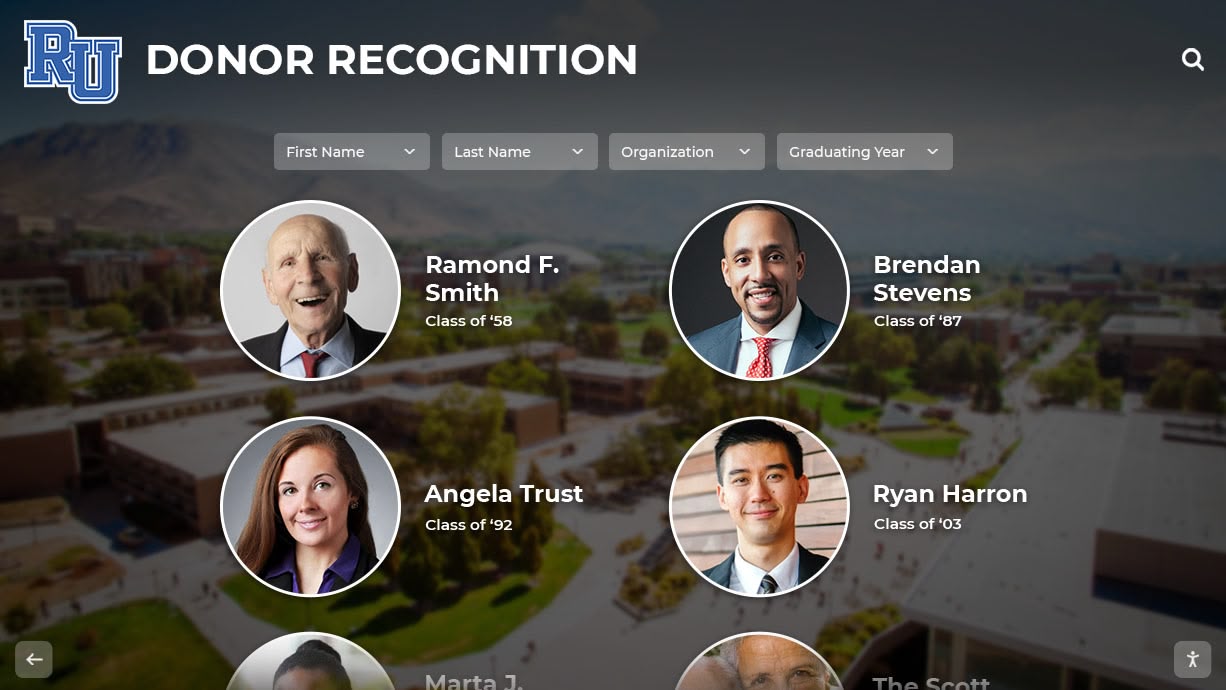
Follow-up content documenting careers and lives after athletics provides valuable perspective including graduate programs and advanced degrees pursued, career fields and specific positions, continued involvement with institution or sport, family and personal life context (when appropriate and with permission), and reflections on how student-athlete experience shaped professional success.
This long-term perspective demonstrates that skills developed balancing athletics and academics—time management, discipline, goal-setting, resilience—create lasting value extending far beyond college years, helping current student-athletes understand genuine benefits of scholar-athlete development.
Writing Compelling Recognition Content
Effective profile writing balances formality appropriate for honoring distinguished achievements with accessibility engaging diverse audiences.
Active Voice and Specific Examples
Use action verbs and engaging syntax rather than passive bureaucratic language. “Jennifer pioneered undergraduate research in biochemistry while earning All-Conference honors as starting goalkeeper” engages more effectively than “undergraduate research was conducted by Jennifer while playing soccer.” Dynamic writing makes achievements come alive rather than reading like résumé bullet points.
Avoid general statements like “excellent student-athlete” or “strong academic performance.” Instead provide concrete specifics: “maintained 3.92 GPA in mechanical engineering while recording 1,200 career points” or “balanced 18-credit courseloads including advanced calculus and physics while practicing 20+ hours weekly and competing in NCAA tournaments.”
Story Arcs Demonstrating Growth
The most engaging profiles present narratives showing progression from freshman adjustment through challenges overcome to distinguished achievement. How did early struggles with time management transform into efficient study systems? What specific support from coaches or academic advisors proved most valuable? How did athletic discipline translate to academic perseverance?
Story structure creates emotional engagement helping audiences connect with Academic All-Americans as real people rather than impressive achievement lists, making recognition more memorable and motivational.
Implementing Effective Academic All-American Recognition Programs
Successful implementation requires systematic approaches ensuring programs serve multiple stakeholder needs while remaining sustainable with realistic resources.
Strategic Placement and Visibility Optimization
Recognition location dramatically affects visibility and engagement.
High-Traffic Athletic Facility Locations
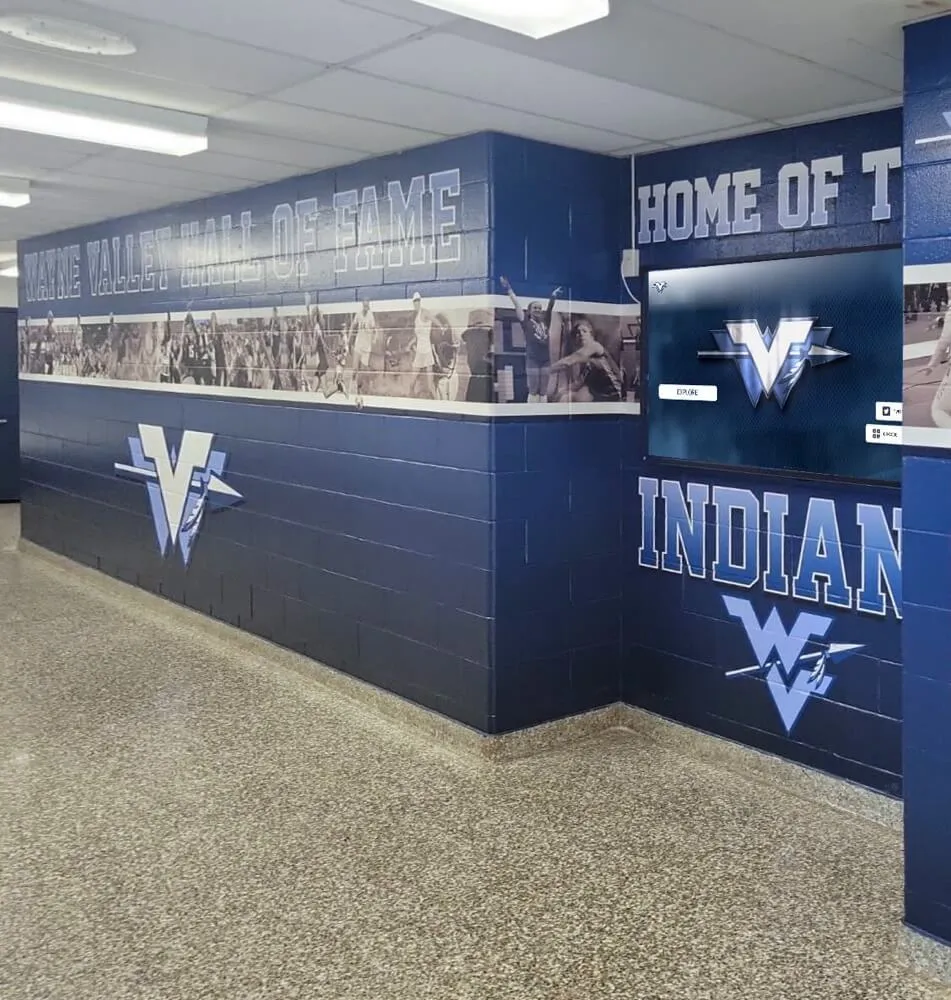
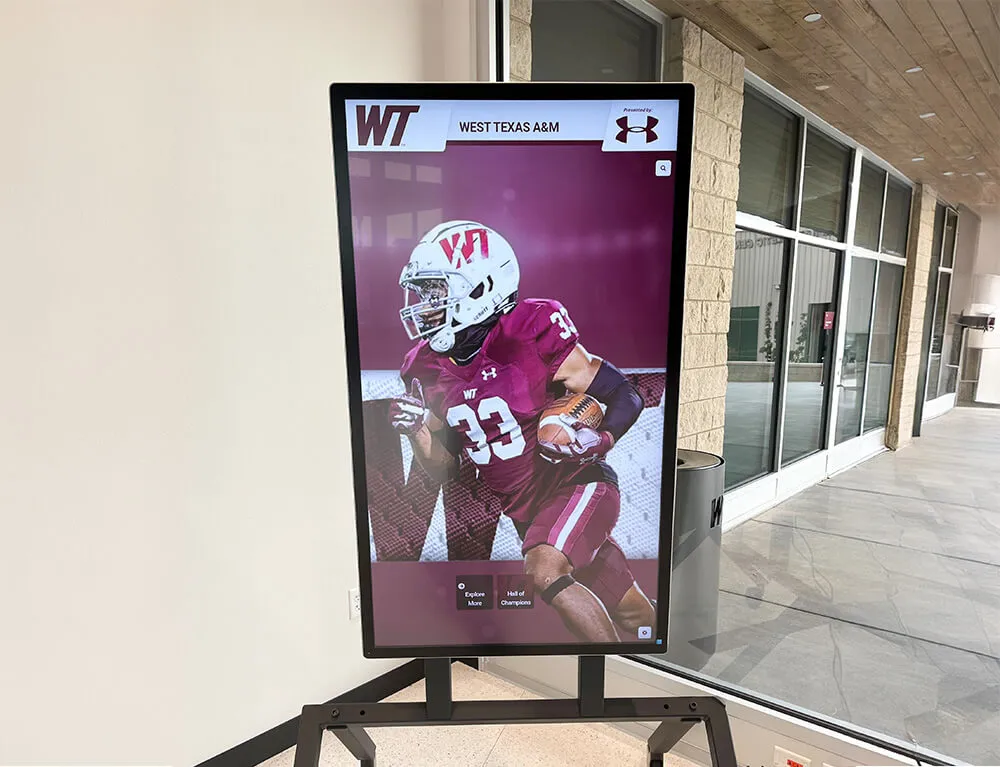
Position displays in areas where student-athletes, families, and recruits regularly pass including athletic center main entrances and lobbies, weight room or training facility entry areas, locker room corridors or team meeting spaces, and athletic administration or academic support areas.
These placements ensure current student-athletes encounter Academic All-American recognition regularly throughout training and preparation, maintaining consistent visibility rather than treating recognition as occasional special display.
Academic Building Integration
Consider recognition placement in academic spaces demonstrating institutional commitment to scholar-athlete achievement including library or student center locations frequented by general student population, academic advising or tutoring center areas, and collaborative spaces between athletic and academic departments.
This integration communicates that Academic All-American recognition belongs in academic contexts, not just athletic facilities, validating that scholarly achievement merits equal prominence to competitive success.
Strategic Display Positioning for Maximum Engagement
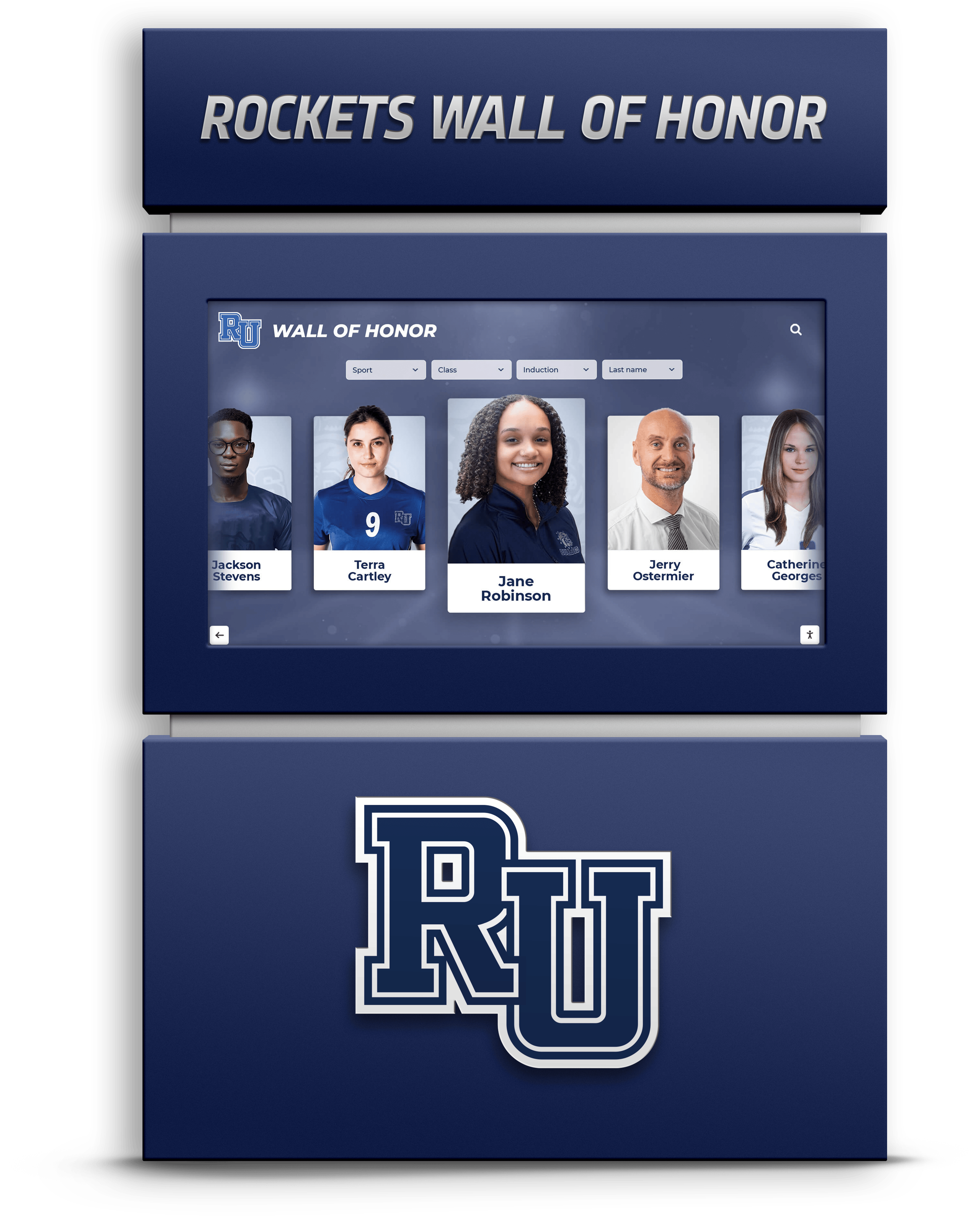
Thoughtful positioning considers technical and practical factors including viewing angles ensuring comfortable interaction without awkward positions, appropriate height for standing interaction (typically 40-48 inches to screen center), adequate surrounding space allowing multiple simultaneous users, environmental factors like lighting (avoiding glare), reliable power and network connectivity, and accessibility compliance meeting ADA requirements.
Schools implementing honor roll recognition displays find that strategic placement decisions significantly impact engagement rates and user satisfaction, making careful positioning essential for recognition effectiveness.
Annual Recognition Cycles and Ongoing Maintenance
Establishing predictable cycles ensures timely recognition while maintaining program sustainability.
Post-Season Recognition Workflow
Academic All-American designations typically arrive during late spring or summer following athletic seasons. Schools should implement systematic processes including immediate congratulatory communication to honored student-athletes, profile development gathering information and media within 2-4 weeks, display or platform updates publishing new recognition within 1 month of announcement, public relations and social media celebration amplifying recognition, and formal recognition ceremonies or presentations during appropriate athletic events.
This structured approach ensures timely recognition demonstrating organizational commitment while maintaining consistent quality across all honorees rather than rushed last-minute additions lacking appropriate celebration.
Content Quality Standards and Review
Maintain consistent profile quality through editorial review ensuring accuracy, appropriateness, and compelling presentation including fact verification confirming GPAs, achievements, and details, writing quality review ensuring engaging, error-free content, photograph standards requiring professional-quality images, privacy compliance confirming appropriate permissions, and brand consistency maintaining institutional voice and presentation standards.
Quality control prevents embarrassing errors while ensuring all Academic All-Americans receive recognition reflecting achievement significance appropriately.
Platform Maintenance and Technology Updates
Digital recognition systems require ongoing technical attention including software updates applying platform improvements and security patches, content backup ensuring recognition data remains protected, hardware maintenance addressing any technical issues promptly, and accessibility auditing confirming displays remain usable for all audiences.
Partner with recognition providers offering comprehensive support services ensuring platforms remain operational and effective without requiring substantial internal IT resources.
Measuring Recognition Program Success and Impact
Data-informed management ensures programs continuously improve based on actual outcomes rather than assumptions.
Quantitative Engagement Metrics
Monitor objective measures demonstrating program reach including number of student-athletes recognized annually and cumulative totals, engagement analytics for digital displays showing usage patterns and popular content, website visits and profile views for web-accessible recognition, social media reach and sharing of recognition content, and facility visitor interactions with recognition displays.
These quantitative measures provide objective evidence about recognition visibility and engagement levels, informing decisions about content strategy, platform optimization, and resource allocation.
Qualitative Impact Assessment
Complement quantitative data with insights about program effects including student-athlete surveys about Academic All-American recognition awareness and motivational impact, coaching staff feedback about program influence on academic culture, prospective recruit responses during visits and decision processes, parent and family satisfaction with recognition experience, and anecdotal examples of students inspired by recognition to pursue academic excellence.
Qualitative assessment captures recognition impacts that quantitative metrics cannot measure, providing fuller understanding of how programs affect attitudes, motivation, and institutional culture.
Continuous Program Improvement
Use assessment data to make evidence-based enhancements including content strategy optimization based on engagement patterns, technical improvements addressing usability issues or feature requests, recognition ceremony refinement increasing celebration impact, communication enhancement reaching broader audiences effectively, and integration improvements connecting recognition with academic support initiatives.
Schools implementing comprehensive academic recognition programs find that systematic assessment and iterative improvement create increasingly effective recognition systems that better serve institutional objectives while maintaining manageable resource requirements.
Building Comprehensive Scholar-Athlete Recognition Ecosystems
Academic All-American recognition proves most powerful when positioned within broader scholar-athlete support and recognition frameworks.
Integration with Academic Support Services
Connect recognition with developmental programs supporting student-athlete academic success including academic advising specifically addressing scholar-athlete needs, tutoring and supplemental instruction programs, study skills and time management workshops, career planning and graduate school preparation, and faculty mentor programs connecting student-athletes with academic department resources.
This integration demonstrates that institutions support pathways toward Academic All-American achievement rather than simply celebrating those who reach these heights through individual determination alone.
Leveraging Recognition for Program Enhancement
Use Academic All-American recognition strategically to advance broader program objectives including recruitment messaging highlighting institutional commitment to academic excellence, donor relations demonstrating balanced investment in comprehensive student-athlete development, media relations showcasing positive aspects of college athletics, accreditation and assessment evidence documenting educational effectiveness, and internal culture building reinforcing that athletics enhances rather than compromises academics.
Recognition becomes more than celebration; it transforms into strategic asset advancing multiple organizational priorities simultaneously.
Alumni Engagement and Ongoing Connection
Maintain relationships with Academic All-Americans beyond graduation through alumni profile updates documenting career achievements, periodic feature stories highlighting notable accomplishments, reunion events bringing scholar-athletes together, mentorship programs connecting current student-athletes with successful alumni, and donor cultivation encouraging support for future scholar-athletes.
These ongoing connections demonstrate lasting institutional commitment while creating valuable networks supporting current student-athletes through peer mentorship and career guidance.
Conclusion: Celebrating the Complete Student-Athlete
Academic All-American recognition represents strategic investment in athletic program culture, student inspiration, and institutional identity. When thoughtfully designed and consistently maintained, these programs honor extraordinary individual achievement while strengthening collective commitment to holistic student-athlete development.
The most successful Academic All-American recognition programs share common characteristics including clear criteria celebrating achievement appropriately, compelling storytelling bringing accomplishments to life through rich content, strategic visibility ensuring recognition reaches intended audiences, sustainable processes maintaining recognition across years and leadership changes, meaningful integration with academic support services and broader athletic recognition, and continuous improvement based on assessment and stakeholder feedback.
Modern digital recognition solutions provide capabilities transforming how institutions honor Academic All-Americans through unlimited capacity accommodating all distinguished scholar-athletes without space constraints, rich multimedia creating engaging narratives that inspire and motivate, instant updates eliminating delays between achievement and recognition, interactive discovery enabling personalized exploration, web accessibility extending engagement far beyond facility visitors, and analytics informing ongoing optimization and improvement.
Beyond immediate recognition purposes, effective Academic All-American programs create lasting benefits including inspiring current student-athletes through tangible role models, strengthening overall athletic department culture emphasizing balanced excellence, supporting recruitment through demonstrated commitment to academics, preserving institutional history documenting scholar-athlete traditions, enhancing stakeholder pride among students, families, alumni, and donors, and validating that athletic programs contribute positively to educational missions.
Every Academic All-American deserves recognition honoring their achievement appropriately. Every current student-athlete deserves inspiration from those who balanced athletic competition and academic excellence successfully. Every institution deserves tools that make comprehensive, sustainable recognition achievable within realistic resource constraints.
Modern recognition platforms like those from Rocket Alumni Solutions make world-class Academic All-American recognition accessible for athletic programs of all sizes, ensuring distinguished scholar-athletes receive celebration matching the significance of their remarkable achievements while building athletic cultures where academic excellence receives authentic priority.
Ready to create an Academic All-American recognition program that honors your distinguished scholar-athletes while strengthening athletic department culture? Explore comprehensive recognition solutions designed specifically for athletic programs committed to celebrating the complete student-athlete and demonstrating that excellence knows no boundaries between competition and classroom.