



Key Takeaways
Discover 120 creative content ideas for digital signage screens and interactive kiosks. Complete guide for schools, businesses, and organizations seeking engaging display content.
Why Digital Signage Content Strategy Matters More Than Hardware Selection
Organizations typically focus purchasing decisions on screen size, resolution, and mounting options while overlooking that content determines whether displays succeed or become ignored background fixtures. The most sophisticated touchscreen kiosk delivers zero value when displaying outdated announcements or repetitive loops that audiences learn to ignore.
Content Drives Engagement Metrics
Analytics from thousands of installations reveal that content quality—not screen size or placement—determines engagement rates. Screens displaying fresh, relevant content generate 300% more interaction than displays showing static announcements. Visitors spend an average of 47 seconds with interactive content versus 4 seconds glancing at announcement slides.
Sustainable Content Operations Require Planning
The most common digital signage failure pattern involves initial enthusiasm creating extensive launch content, followed by gradual content stagnation as the novelty fades and no one owns ongoing content responsibilities. Organizations implementing structured content calendars with assigned responsibilities maintain engagement levels throughout multi-year deployments.
Content Variety Prevents Audience Fatigue
Displays showing identical content for weeks train audiences to ignore them. Rotating content across multiple categories—alternating between recognition, information, entertainment, and promotion—keeps displays fresh and maintains attention. The 120 ideas in this guide enable content rotation strategies preventing the staleness that plagues many installations.
Recognition and Achievement Content (Ideas 1-25)
Recognition content generates the highest engagement rates because people seek personal connections. Visitors stop to find themselves, family members, or acquaintances—creating interaction that passive announcements cannot match.
Hall of Fame and Historical Recognition
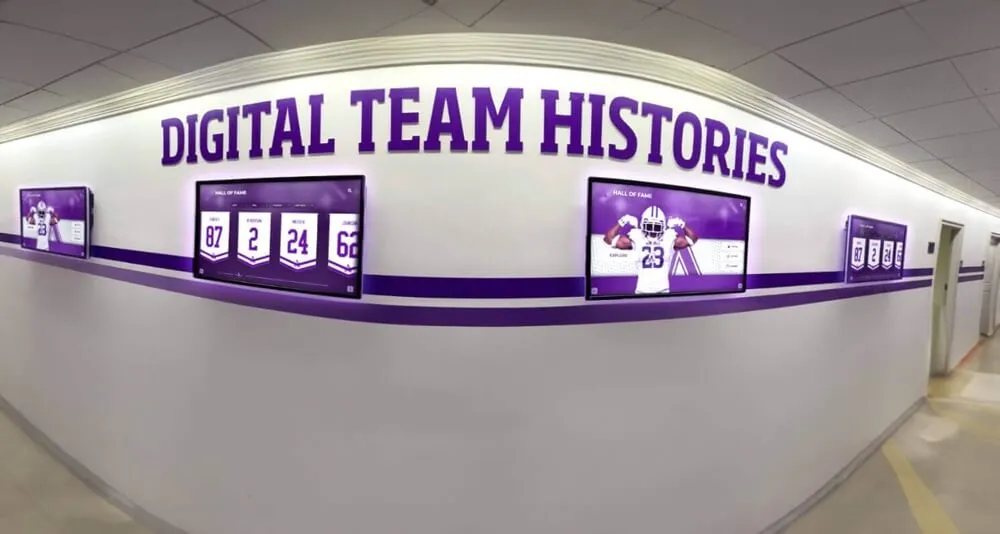
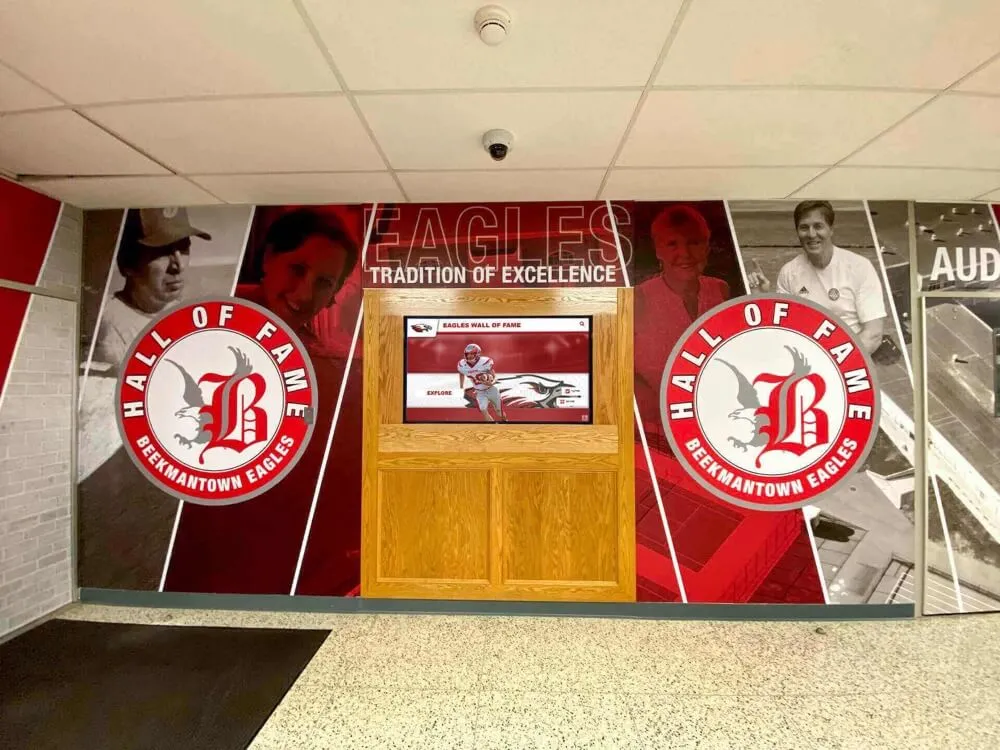
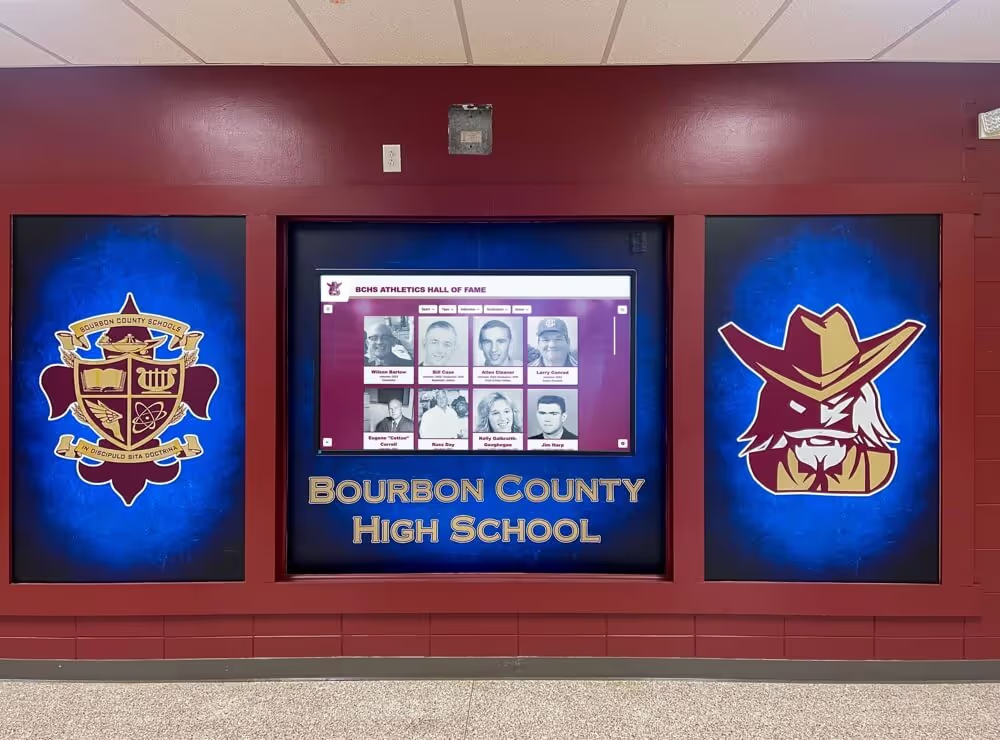
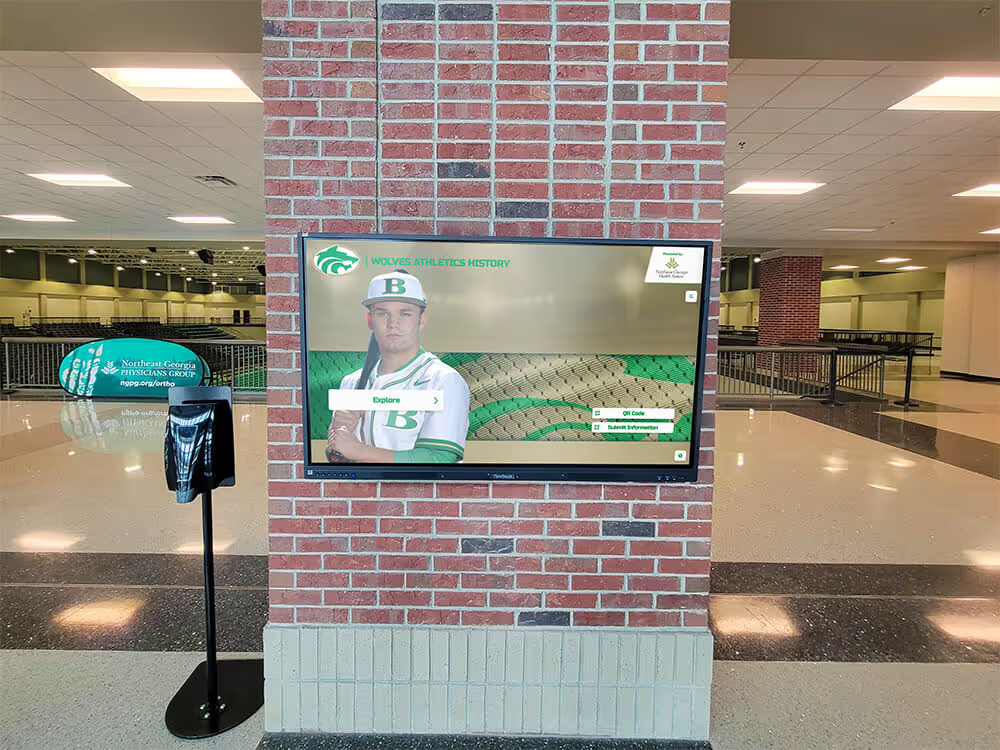
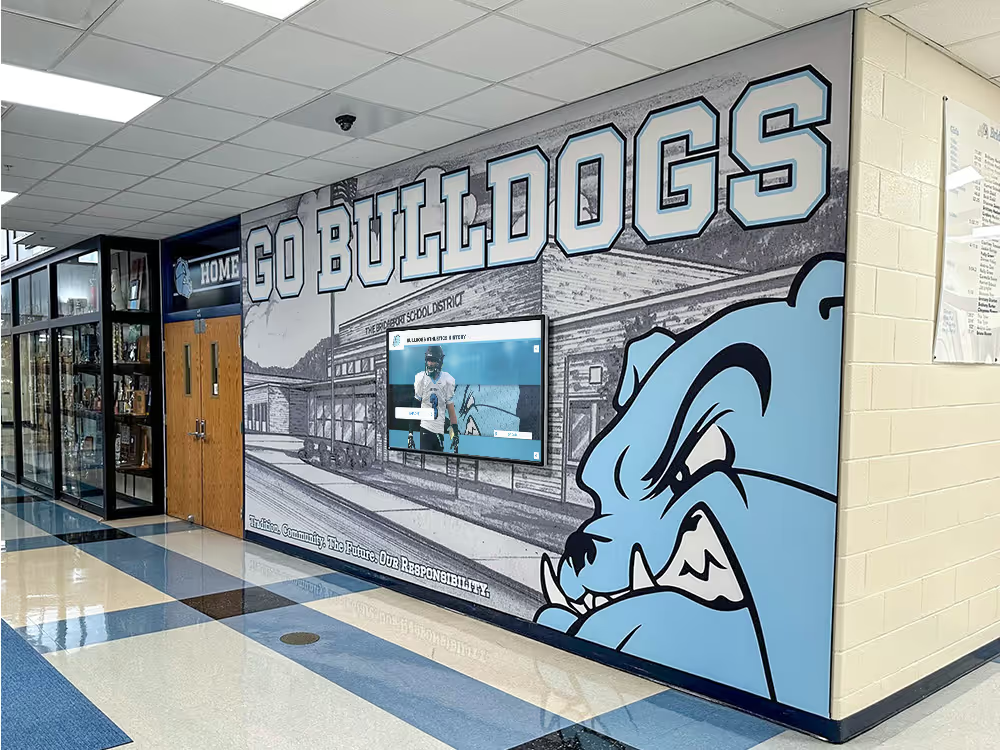
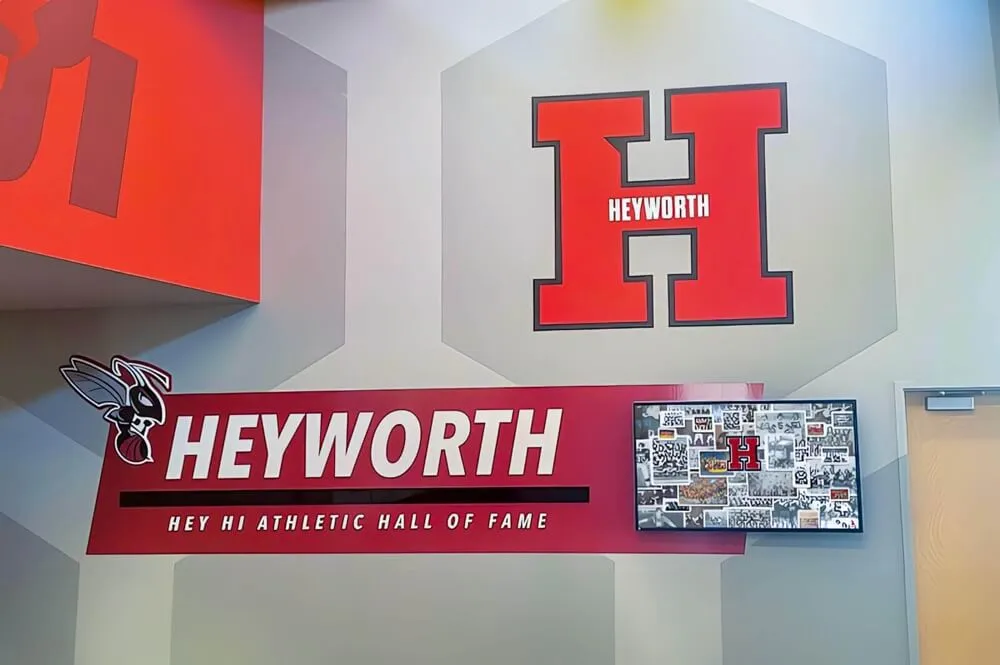
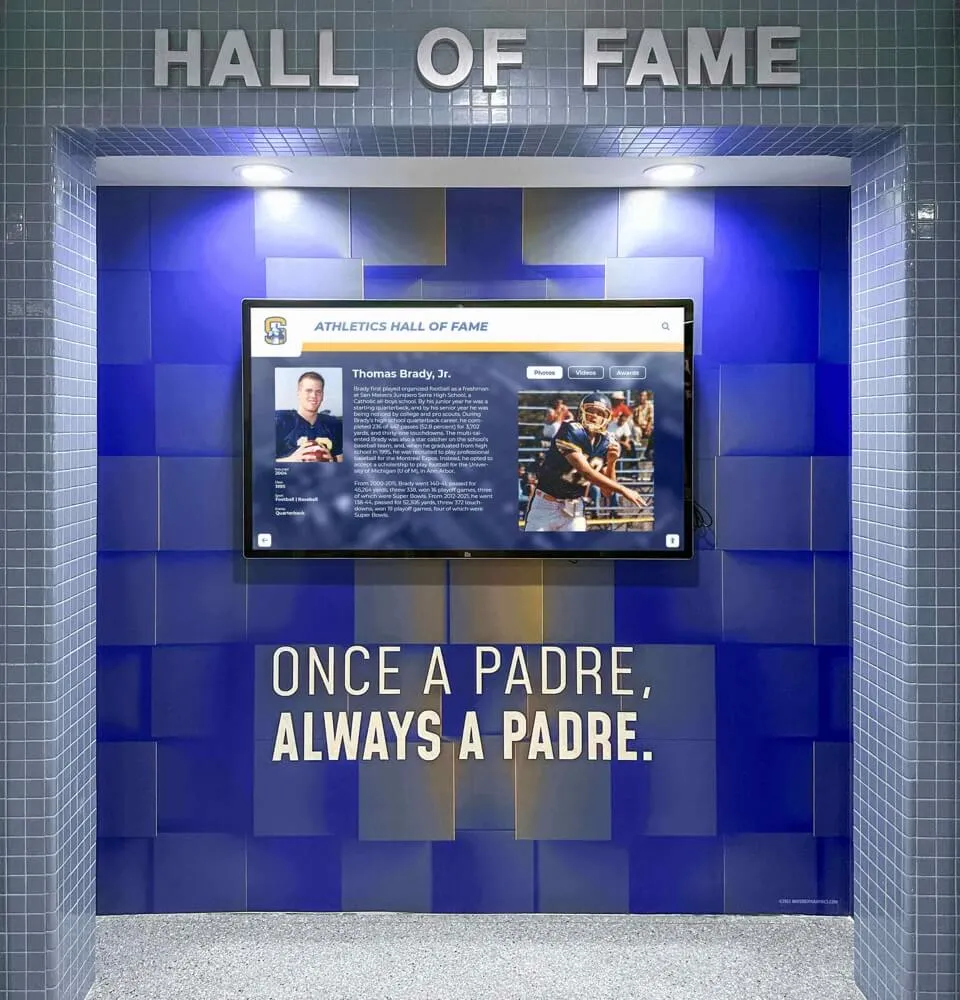
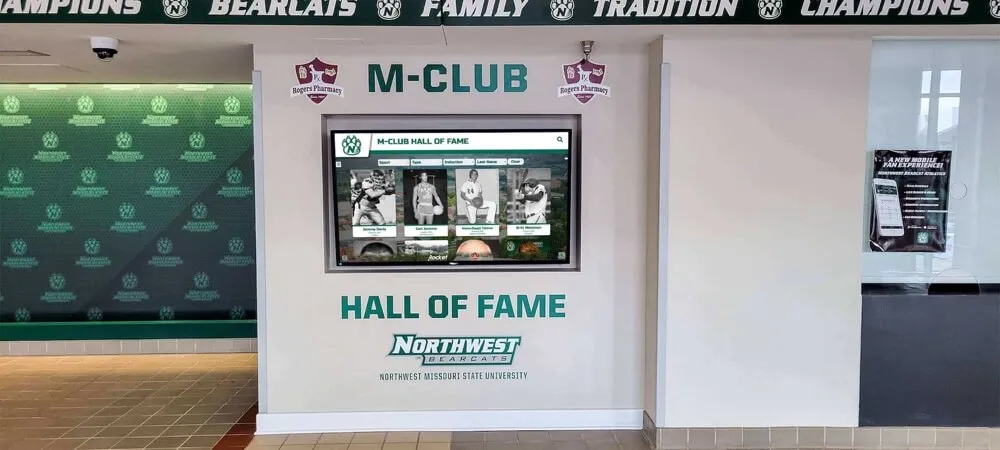
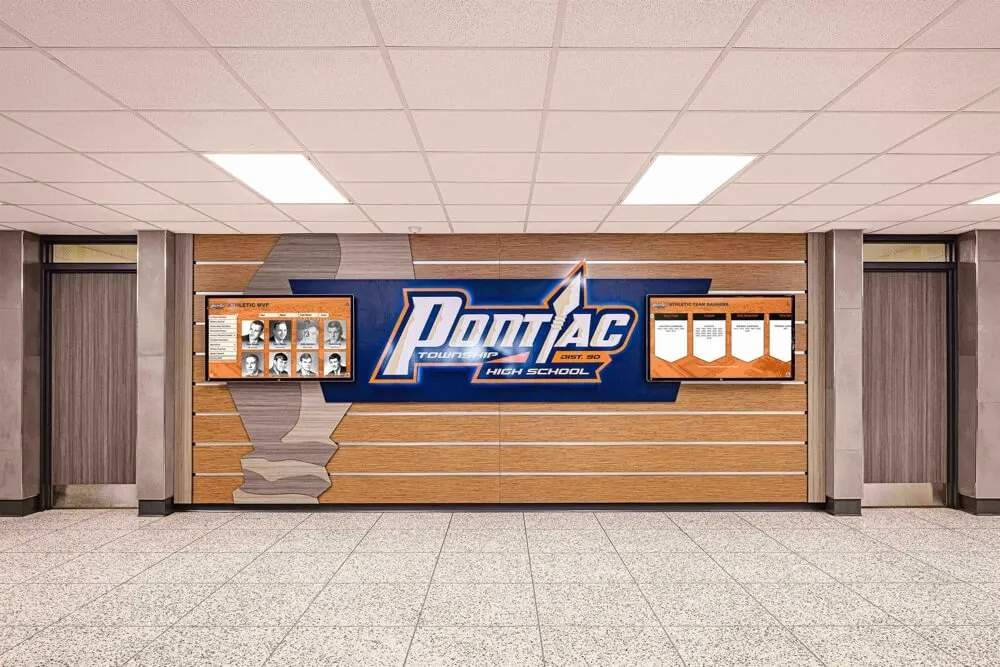
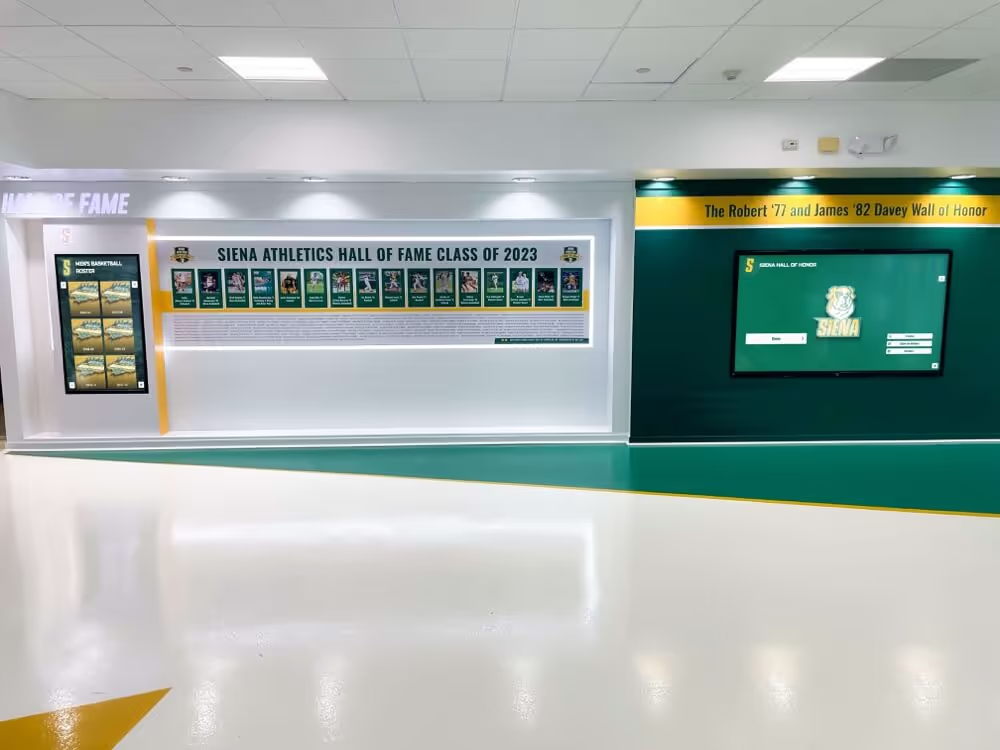
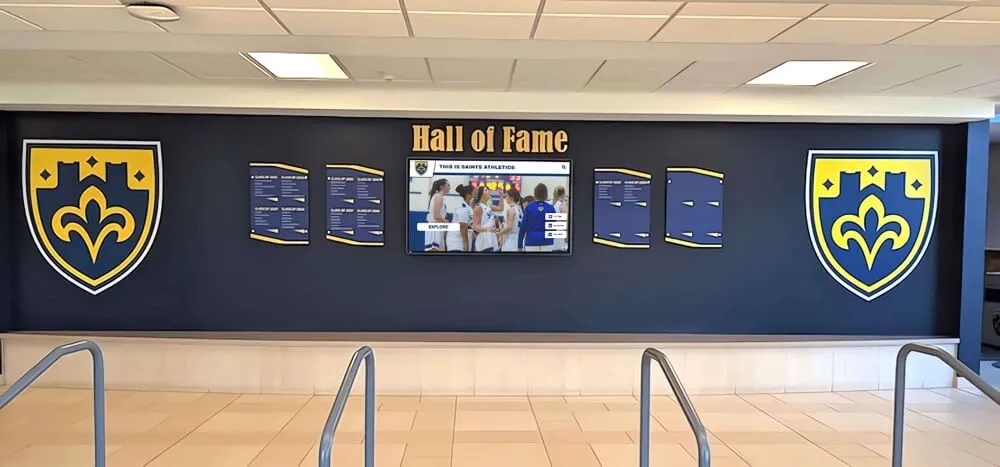
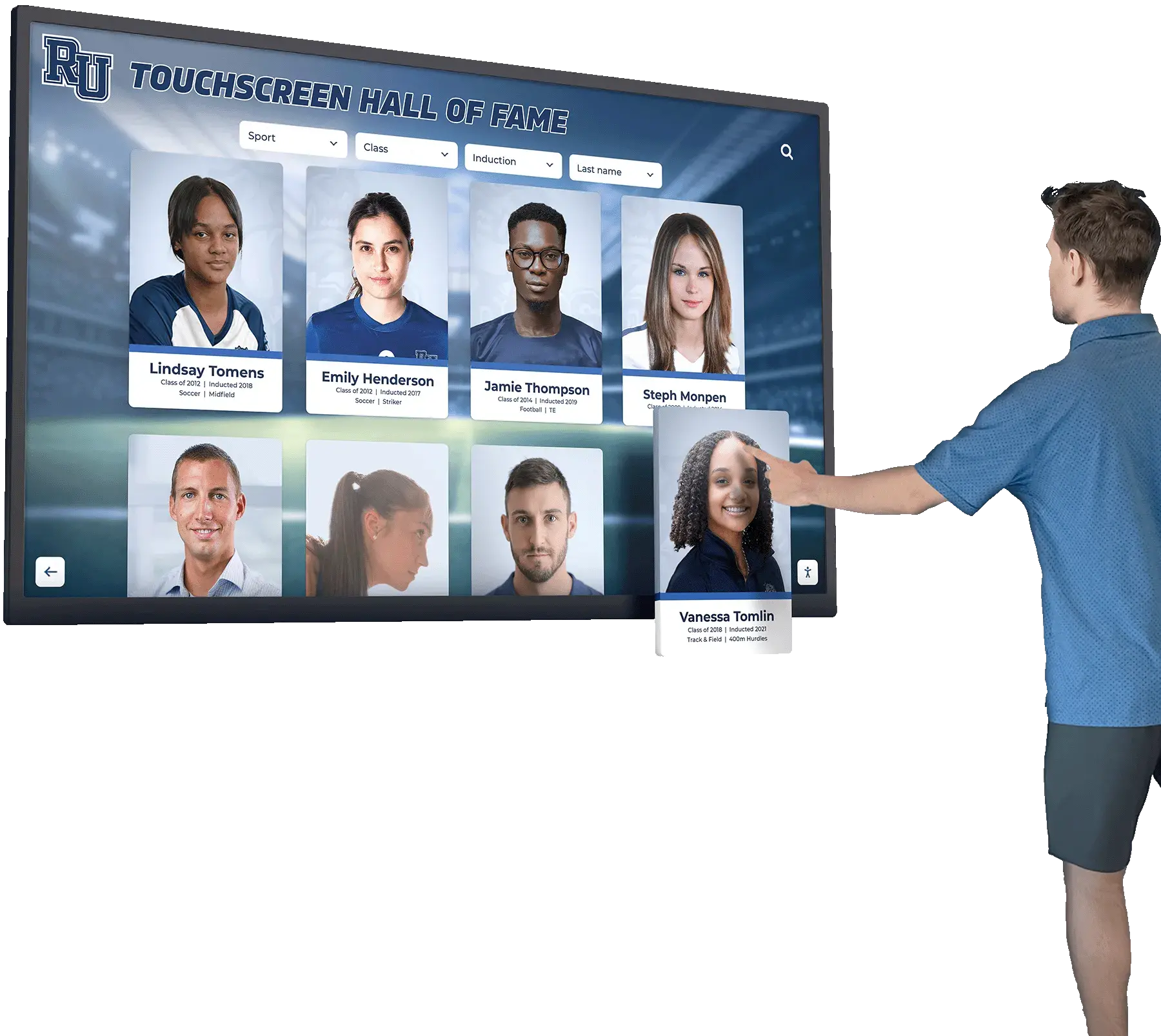
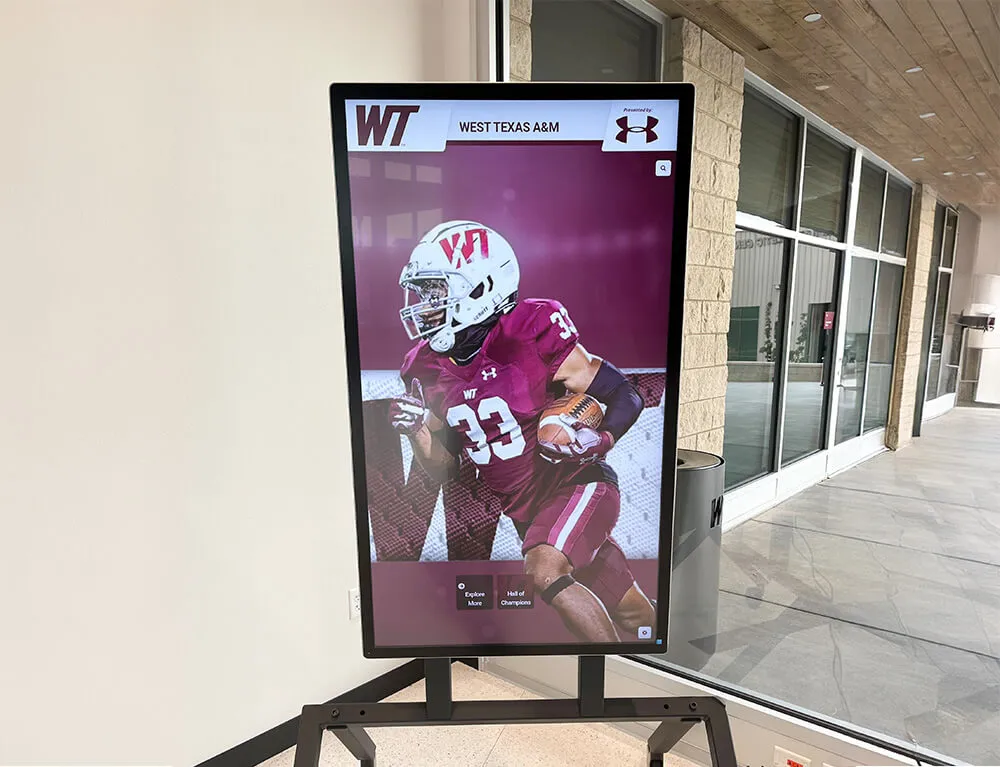
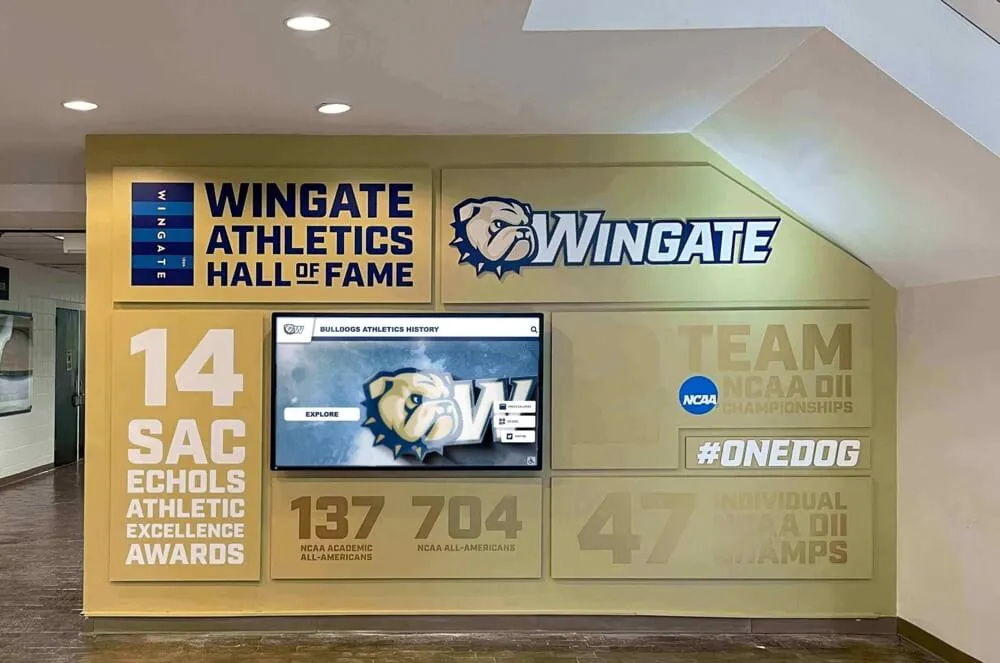
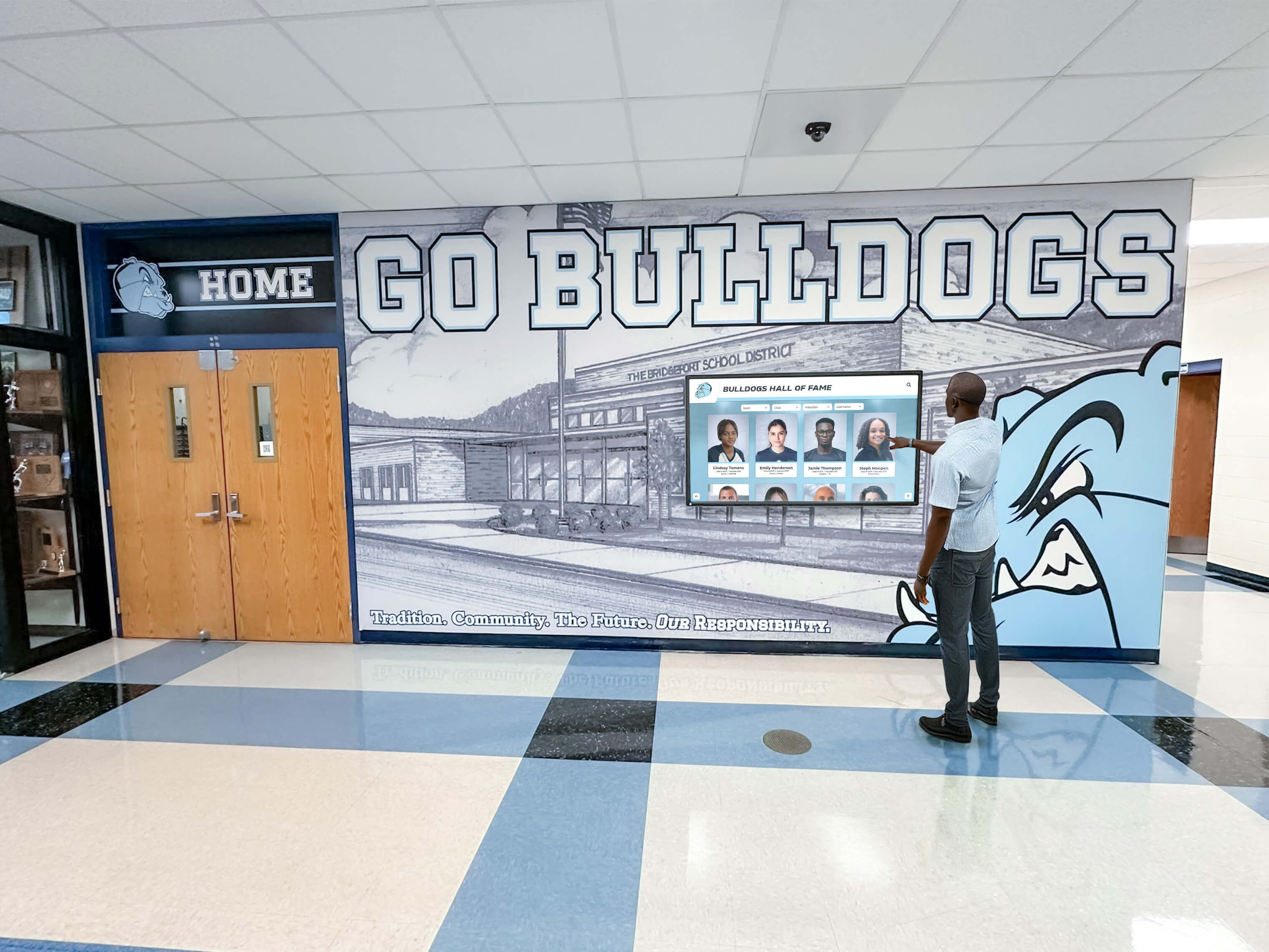
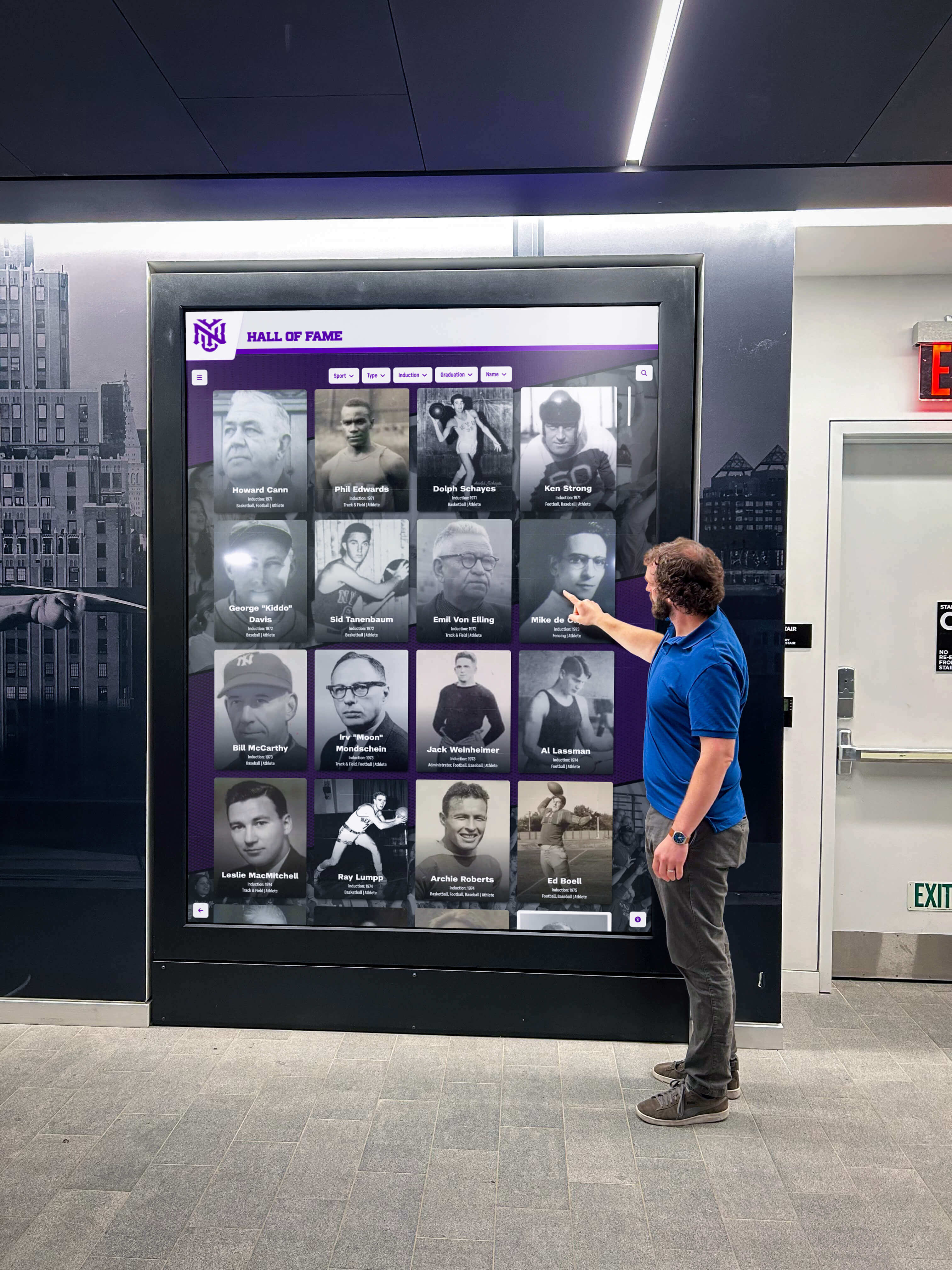
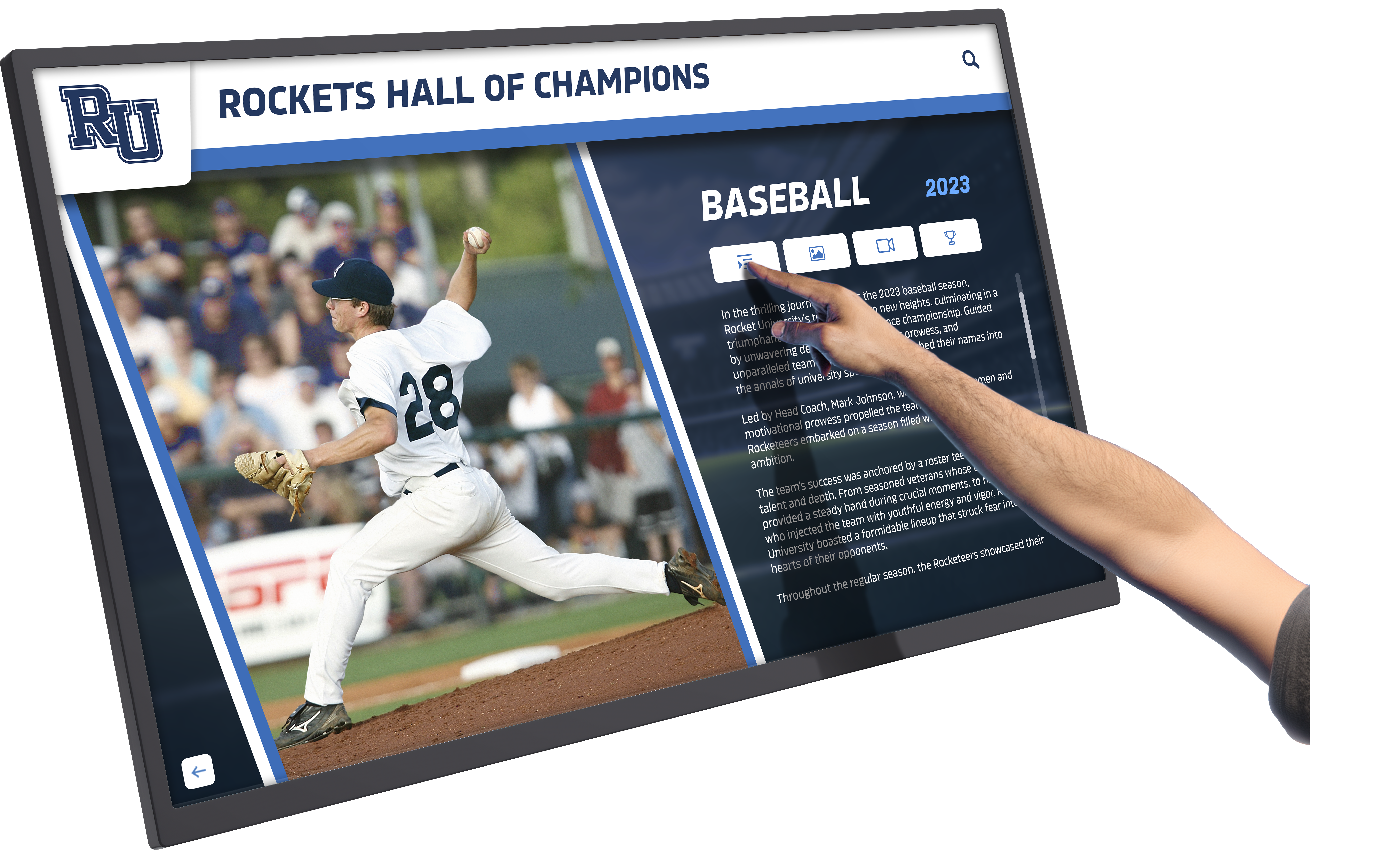
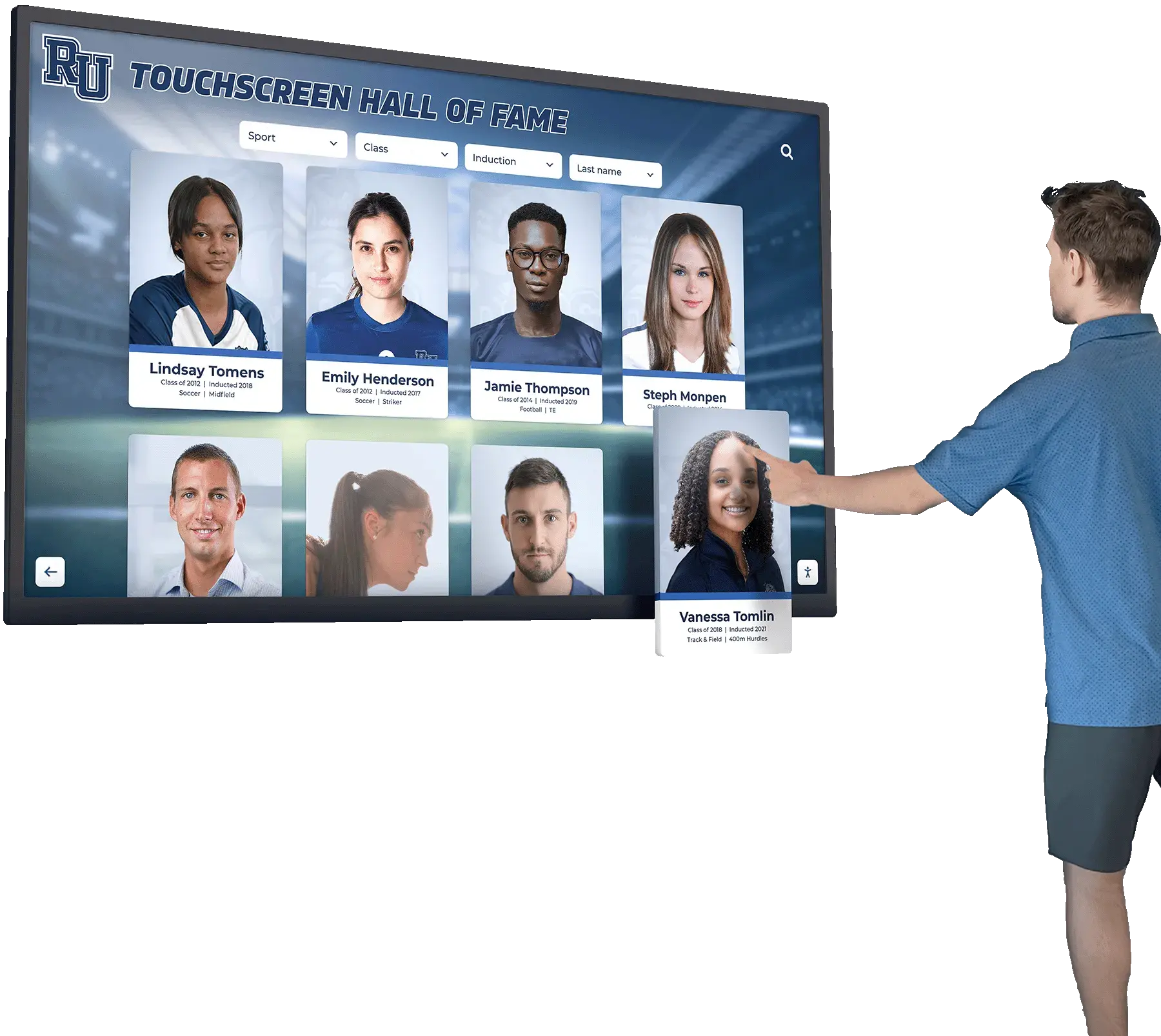
- Athletic Hall of Fame Profiles — Interactive databases of inducted athletes with photos, statistics, achievements, and biographical narratives
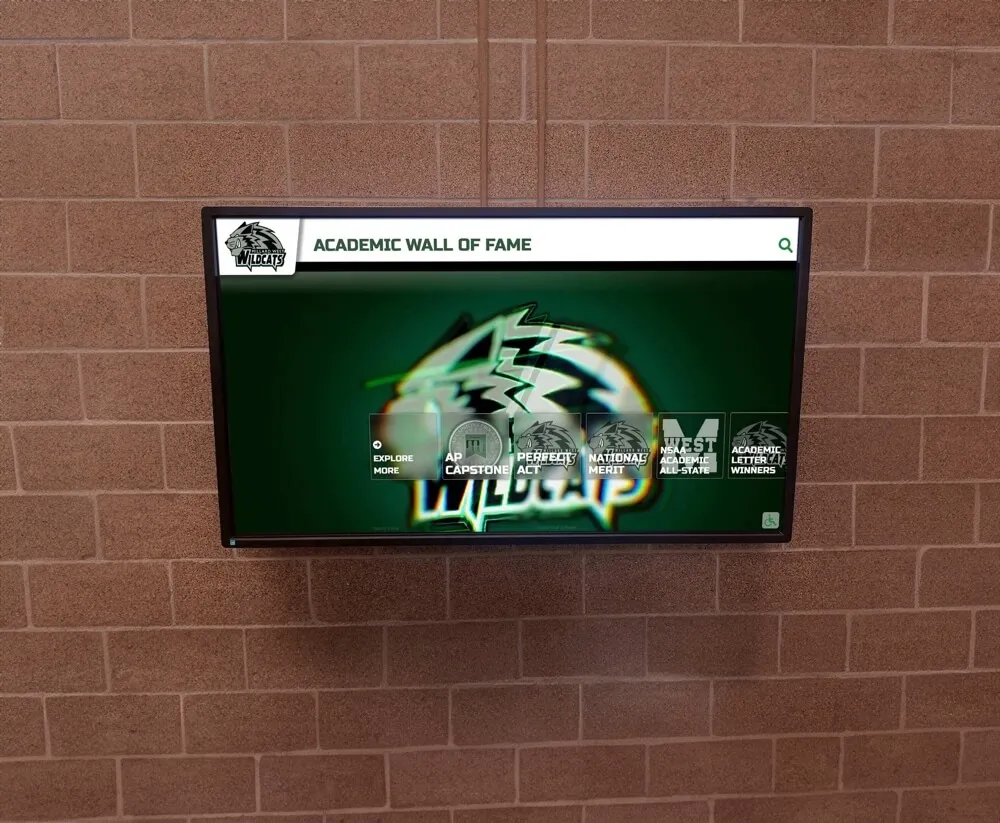
- Academic Achievement Archives — Honor roll students, valedictorians, scholarship recipients, and academic award winners across decades
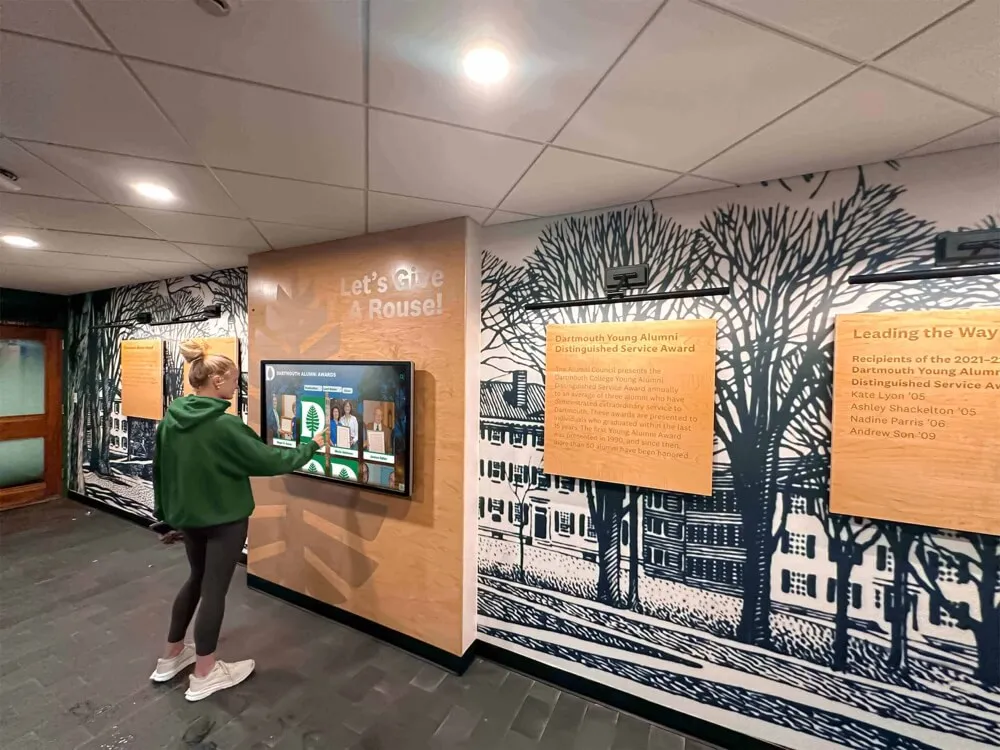
- Distinguished Alumni Showcases — Where-are-they-now profiles highlighting successful graduates and their career paths
- Faculty and Staff Recognition — Years of service awards, teaching excellence honors, and retirement celebrations
- Donor Recognition Walls — Digital displays acknowledging contributions with giving level tiers and donor stories
- Historical Timeline Displays — Interactive institutional history from founding through present with photos and milestone narratives
- Championship Team Galleries — State, regional, and conference championship teams with roster details and season highlights
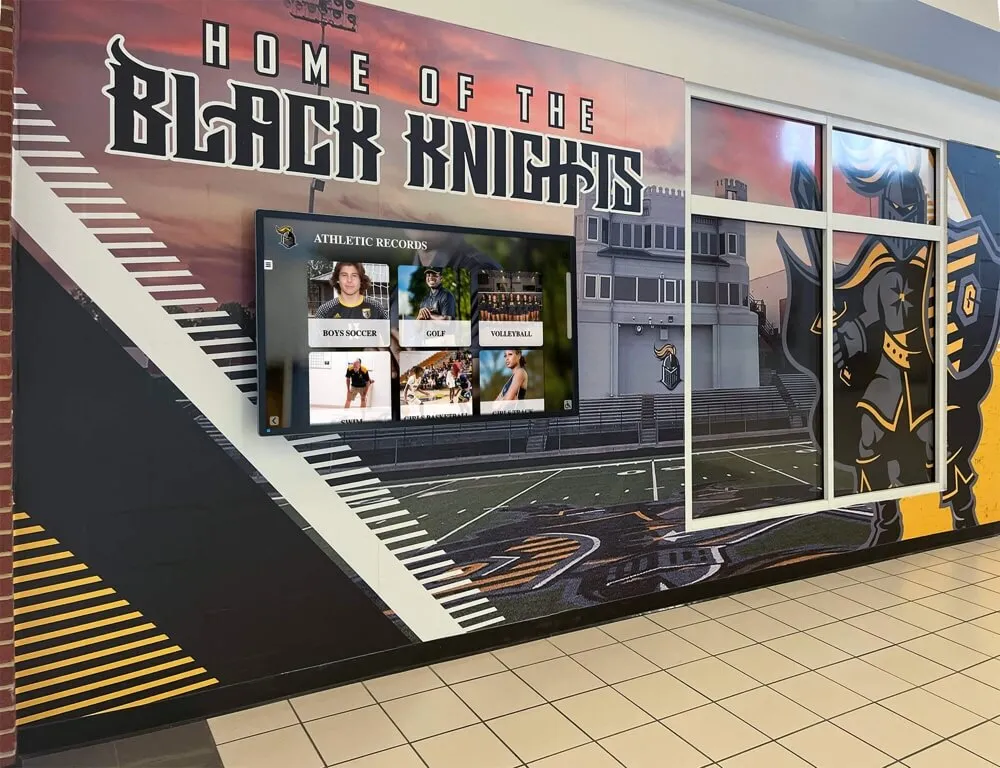
- Record Holder Boards — Athletic records with holder names, performance details, and year achieved
- Arts Program Showcases — Theatre productions, musical performances, and visual arts exhibitions with participant credits
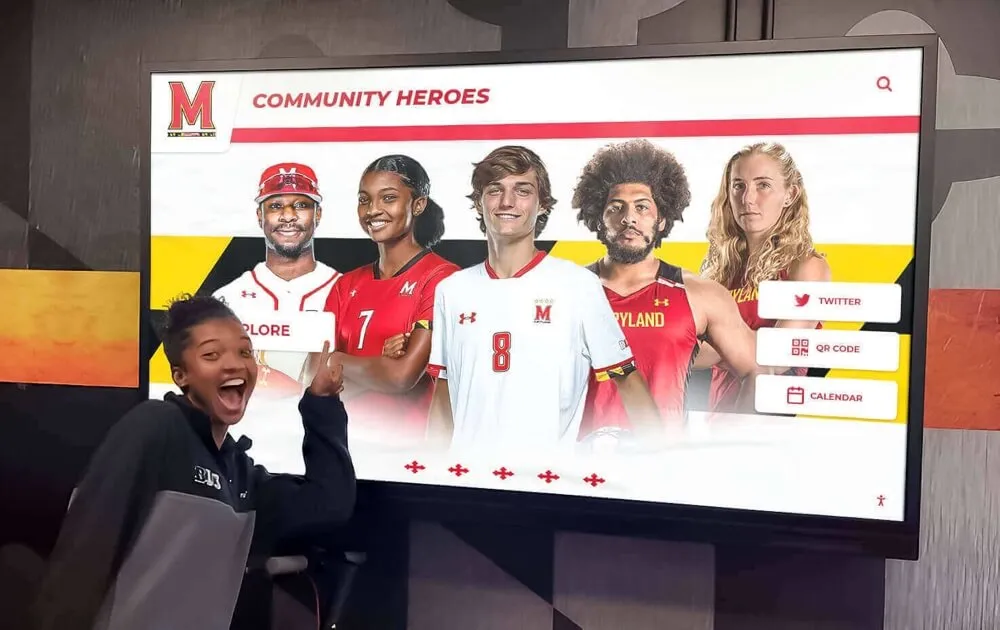
- Community Service Leaders — Students, staff, and alumni making significant volunteer contributions
Organizations implementing comprehensive recognition programs benefit from platforms supporting digital athletic achievement displays with unlimited capacity.
Current Recognition Content
- Student of the Month Features — Rotating spotlights on outstanding current students with accomplishments and photos
- Employee Recognition Programs — Celebrating milestone anniversaries, exceptional performance, and peer-nominated excellence
- Perfect Attendance Recognition — Current year students or employees maintaining excellent attendance records
- Honor Roll Displays — Current semester academic achievement lists with photos when possible
- Athlete of the Week Spotlights — Rotating highlights of current student-athletes with performance statistics
- New Inductee Announcements — Upcoming hall of fame ceremonies with honoree previews
- Scholarship Recipient Boards — Current year scholarship awards with recipient names, amounts, and criteria
- Competition Winners — Academic competitions, science fairs, debate tournaments, and skill competitions
- Arts Performance Credits — Current production cast lists, concert performers, and exhibition artists
- Milestone Achievements — 1,000-point scorers, perfect SAT scores, state qualifiers, and other significant accomplishments
Legacy and Memorial Recognition
- Memorial Tributes — Honoring deceased faculty, students, alumni, or community members with photos and remembrances
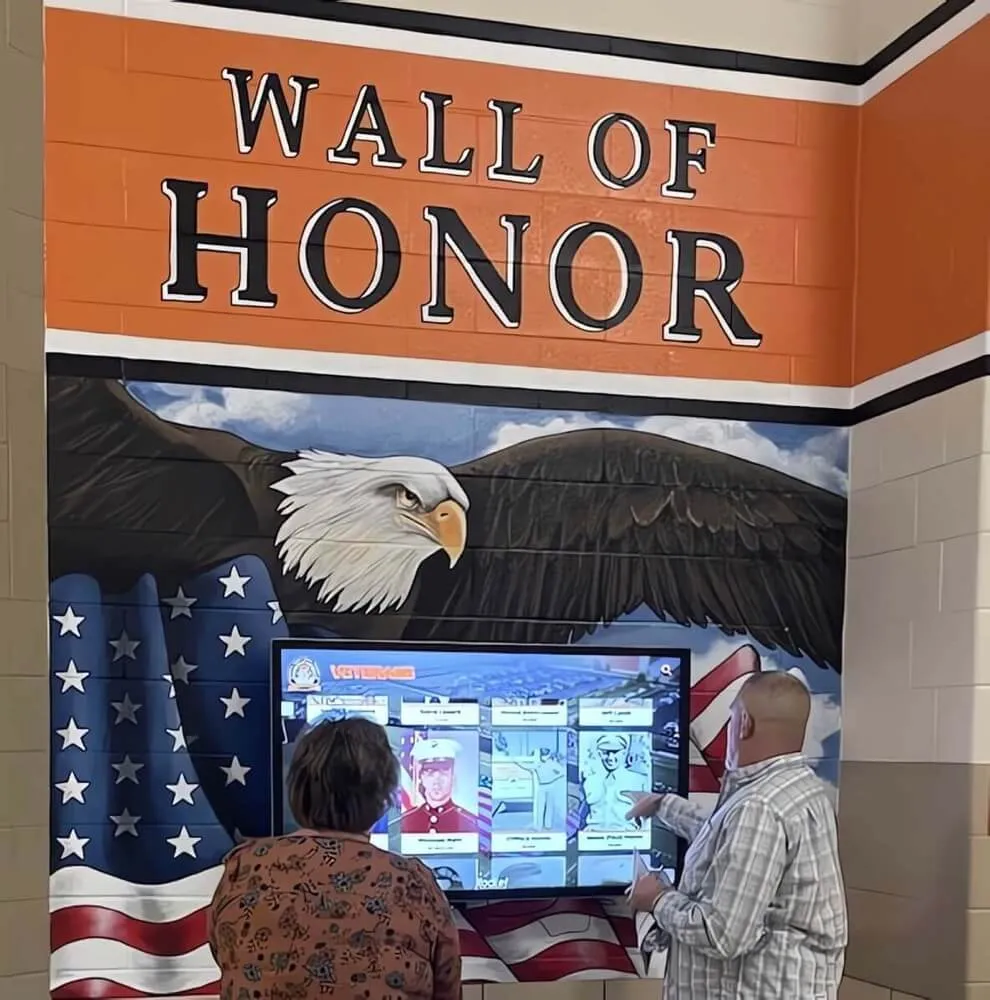
- Military Service Honor Rolls — Veterans from institutional community with service branch, years, and rank
- Founding Members and Pioneers — Individuals instrumental in establishing programs or institutions
- Retired Number Displays — Athletic jerseys retired to honor exceptional careers with achievement details
- Legacy Family Recognition — Multi-generational families with continued institutional connection
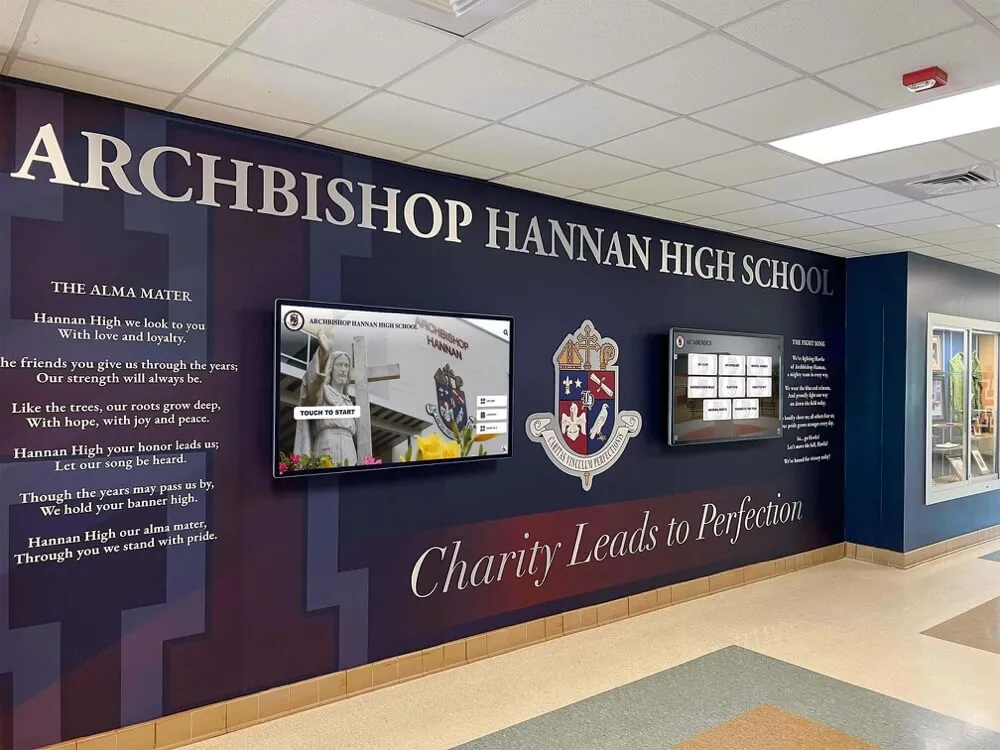
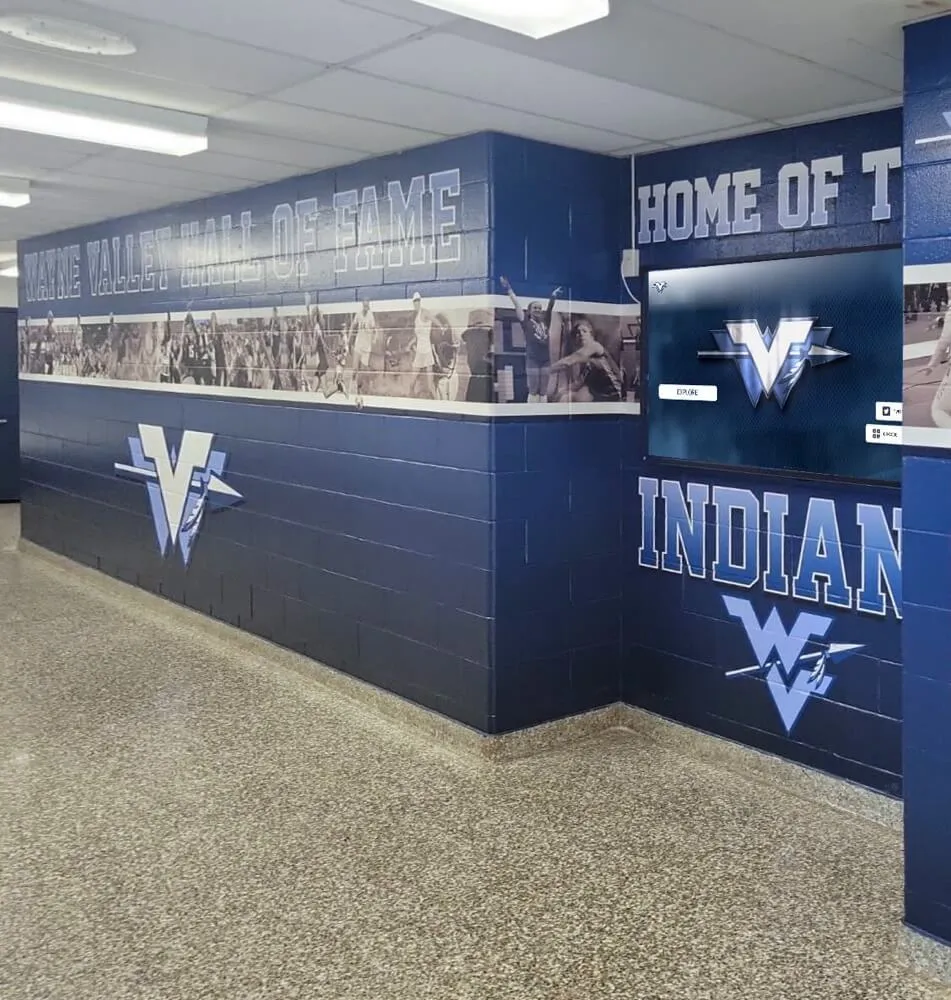
Educational institutions frequently use these recognition approaches within school lobby interactive displays that transform common spaces.
Wayfinding and Directory Content (Ideas 26-40)
Wayfinding content provides immediate practical value to visitors while reducing staff time answering repetitive location questions.
Campus and Facility Navigation
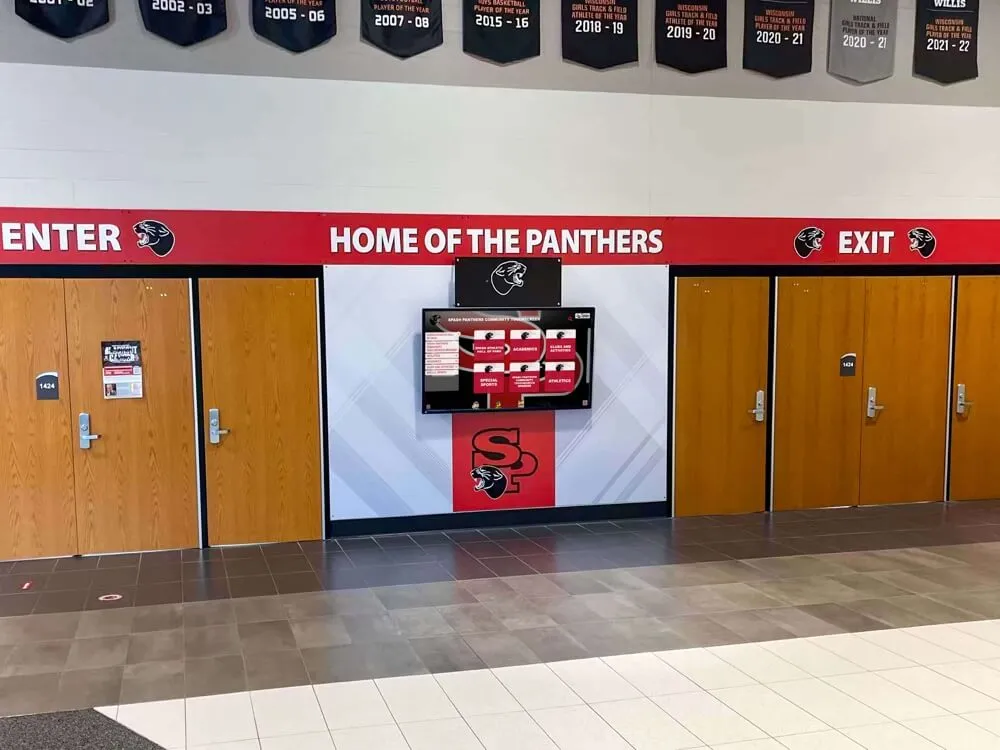
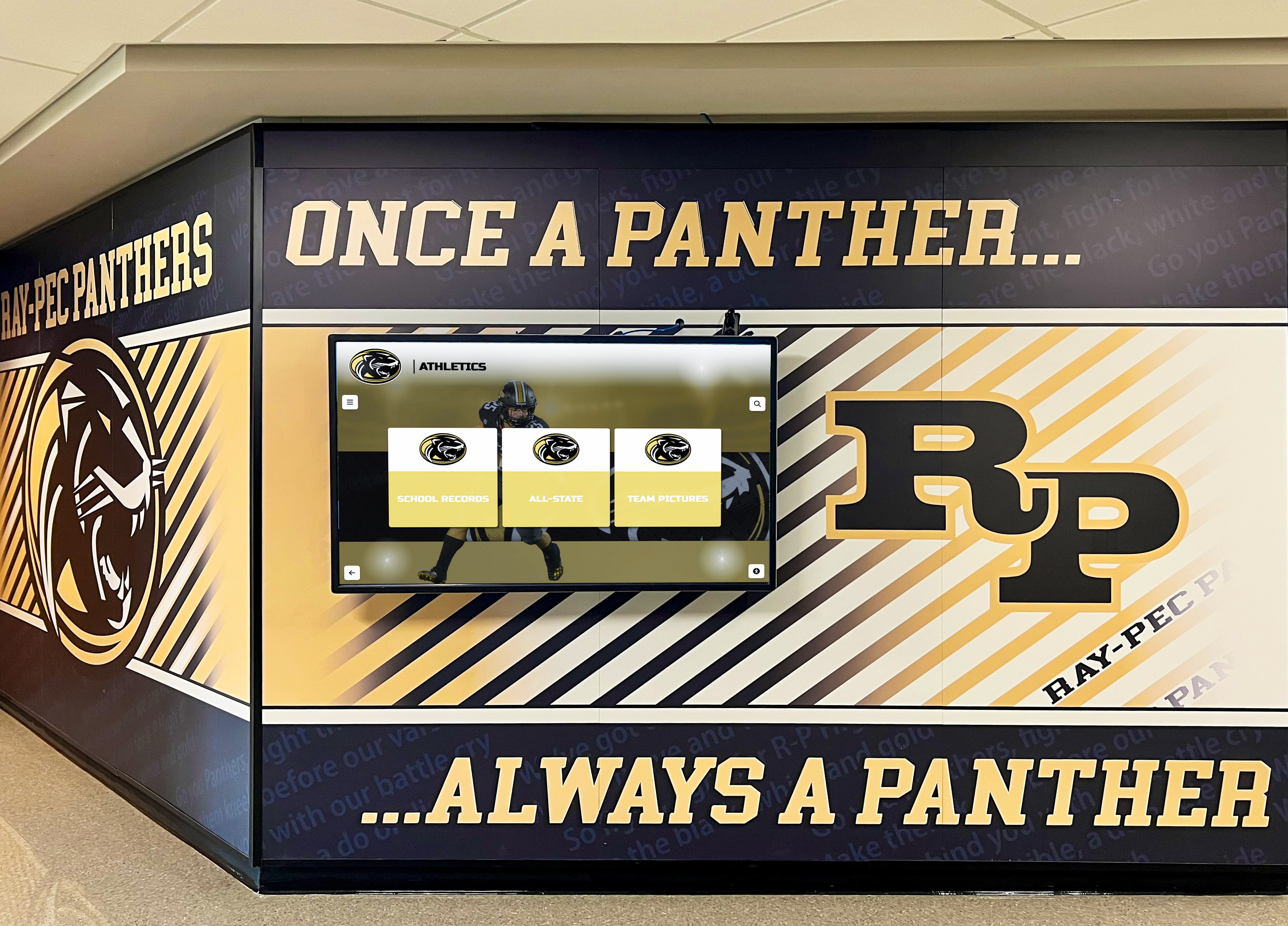
- Interactive Building Maps — Touchscreen floor plans with searchable room numbers and department locations
- Campus Navigation Guides — Multi-building campus maps with walking paths and parking information
- Department Directories — Staff names, positions, office locations, and contact information
- Event Location Guides — Directions to athletic fields, performance venues, meeting rooms, and event spaces
- Visitor Parking Information — Available parking areas with real-time capacity when integrated with parking systems
- Accessible Route Guides — ADA-compliant pathways, elevator locations, and accessible entrances
- Restroom Location Maps — Nearest facilities including accessible and family restrooms
- Emergency Exit Routes — Evacuation paths and assembly points for various building locations
- Construction and Detour Information — Temporary route changes during facility improvements
- Public Transportation Connections — Bus stops, routes, and schedule information for transit users
Resource Location Information
- Library Resource Guides — Locations of book sections, study spaces, computer labs, and special collections
- Dining Services Locations — Cafeterias, vending areas, and catering services with hours and menu links
- Support Services Directory — Counseling, health services, IT help desk, and administrative office locations
- Athletic Facility Guide — Gymnasium, weight room, training room, and field locations with access requirements
- Outdoor Space Directory — Parks, gardens, recreational areas, and outdoor event spaces
Organizations seeking comprehensive navigation solutions can explore campus directory touchscreen systems designed specifically for multi-building complexes.
Event and Calendar Content (Ideas 41-60)
Event content remains current and provides practical information audiences actively seek, generating consistent engagement.
Upcoming Events and Schedules
- Athletic Event Calendars — Game schedules with dates, times, opponents, and locations
- Performing Arts Event Listings — Concert, play, and recital schedules with ticket information
- Academic Calendar Highlights — Important dates including registration deadlines, exam periods, and breaks
- Community Event Announcements — Local events, festivals, and activities relevant to institutional audience
- Professional Development Opportunities — Training sessions, workshops, and continuing education offerings
- Club and Organization Meetings — Student organization meeting schedules and membership information
- Conference and Symposium Schedules — Academic or professional conferences hosted on campus
- Exhibition Opening Announcements — Art galleries, museum displays, and special collections
- Fundraising Event Promotion — Galas, auctions, giving days, and campaign milestones
- Open House and Tour Dates — Prospective student visits, alumni reunions, and public facility tours
Real-Time Event Information
- Today’s Event Schedules — Current day activities with locations and times
- Live Event Updates — Real-time game scores, performance updates, or event status changes
- Weather-Related Event Changes — Postponements, cancellations, or venue changes due to conditions
- Event Check-In Information — QR codes or instructions for contactless registration
- Capacity and Availability Notices — Real-time event space availability for popular sessions
- Speaker and Performer Profiles — Biographical information about guest presenters or artists
- Event Countdown Timers — Days/hours until major institutional events building anticipation
- Session Room Assignments — Conference or meeting room schedules for multi-session events
- Event Parking Directions — Specific parking recommendations for large attendance events
- Post-Event Photo Galleries — Recent event highlights maintaining momentum for future participation
Schools implementing athletic recognition programs often integrate game schedules with end-of-season awards displays for comprehensive athletic content.
Educational and Informational Content (Ideas 61-80)
Educational content demonstrates organizational expertise while providing genuine value that audiences appreciate.
Academic and Learning Resources
- Quick Reference Guides — Formulas, definitions, or key concepts relevant to institutional focus
- Study Tips and Techniques — Research-based strategies for effective learning and test preparation
- College Preparation Resources — Application timelines, financial aid information, and campus visit schedules
- Career Exploration Tools — Industry overviews, salary information, and educational pathway guidance
- Library Resource Tutorials — How to access databases, citation tools, and research services
- Technology Training Modules — Short tutorials on commonly used software or systems
- Health and Wellness Tips — Nutrition information, exercise guidance, and mental health resources
- Financial Literacy Content — Budgeting basics, student loan management, and investment concepts
- Time Management Tools — Planning strategies, productivity techniques, and organizational systems
- Subject-Specific Deep Dives — Rotating detailed explorations of curriculum topics
Historical and Cultural Information
- This Day in History — Significant events from institutional or community history occurring on current date
- Alumni Spotlight Series — Detailed profiles of notable graduates with career journey narratives
- Local History Features — Community heritage, historical landmarks, and cultural significance
- Diversity and Inclusion Education — Heritage months, cultural celebrations, and educational content
- Scientific Discoveries and Innovations — Breakthroughs from institutional research or related to curricula
- Literature and Arts Highlights — Author profiles, artwork analysis, or musical composition backgrounds
- Environmental and Sustainability Information — Institutional initiatives, conservation tips, and impact data
- Social Issue Awareness — Educational content on relevant topics appropriate to institutional mission
- Etymology and Word Origins — Daily vocabulary building with interesting word histories
- Inspirational Quotes with Context — Meaningful quotations with biographical information about speakers
Organizations implementing museum-quality educational displays benefit from interactive museum display technologies that improve learning experiences.
Announcements and Communications (Ideas 81-95)
While announcements shouldn’t dominate displays, strategic communication content serves important operational purposes.
Daily Operations and Updates
- Morning Announcements — Daily bulletins with schedule changes, reminders, and time-sensitive information
- Menu and Dining Information — Cafeteria menus, special meal offerings, and allergen alerts
- Transportation Updates — Bus schedules, route changes, and arrival/departure times
- Facility Hours and Closures — Library, gym, office, and service hours including holiday schedules
- Safety and Security Notices — Non-emergency security information, safety reminders, and prevention tips
- Policy Reminders — Important institutional policies presented periodically
- Deadline Alerts — Registration, payment, application, or submission deadlines
- Lost and Found Notifications — High-value or frequently sought items awaiting claim
- Maintenance Schedules — Planned service disruptions or facility improvements affecting access
- Volunteer Opportunity Postings — Current needs for event support, mentoring, or service projects
Emergency and Critical Communications
- Weather Alerts — Severe weather warnings with safety instructions
- Emergency Notifications — Critical safety information during incidents
- Delayed Opening or Closure Announcements — Weather-related schedule changes
- Campus-Wide Emergency Instructions — Shelter-in-place, evacuation, or lockdown procedures
- Public Health Announcements — Disease prevention, outbreak information, or wellness campaigns
Interactive Engagement Content (Ideas 96-110)
Interactive content transforms passive viewing into active participation, dramatically increasing engagement duration and recall.
Gamification and Interactive Features
- Trivia Questions — Institution-specific or general knowledge questions with answer reveals
- Photo Scavenger Hunt Clues — Location-based challenges encouraging facility exploration
- Polls and Surveys — Opinion gathering on relevant topics with real-time result displays
- “Guess Who” Alumni Games — Baby photos or early career images of notable alumni
- Virtual Tours — Interactive exploration of facilities unavailable or distant from kiosk location
- Before and After Comparisons — Historical facility photos compared to current views
- Interactive Timelines — Touch-explorable institutional history with expandable detail points
- 360-Degree Virtual Spaces — Panoramic views of significant locations
- Achievement Comparison Tools — Compare athletic records, academic metrics, or program data across eras
- Digital Guestbook — Visitor messages, well-wishes, or memory sharing
Social Media and User-Generated Content
- Social Media Feeds — Curated institutional social media content from multiple platforms
- Hashtag Campaigns — Encouraging visitors to share content using specific tags with display integration
- Photo Contest Displays — Showcasing entries in institutional photo competitions
- Video Submission Showcases — Student or community-created video content
- QR Code Content Extensions — Launching detailed mobile content from kiosk prompts
Schools creating comprehensive engagement systems often implement alumni mentorship and discovery displays connecting current students with graduate networks.
Promotional and Development Content (Ideas 111-120)
Strategic promotional content advances institutional goals without appearing overly commercial when balanced with value-providing content.
Advancement and Fundraising
- Campaign Progress Displays — Fundraising goal thermometers showing real-time giving progress
- Giving Impact Stories — How donations created specific improvements or opportunities
- Named Facility Recognition — Acknowledging major donors whose contributions funded spaces
- Planned Giving Information — Legacy giving options and estate planning resources
- Scholarship Opportunity Listings — Available scholarships with eligibility criteria and application information
Recruitment and Admissions
- Program Highlight Reels — Showcasing academic programs, activities, or opportunities
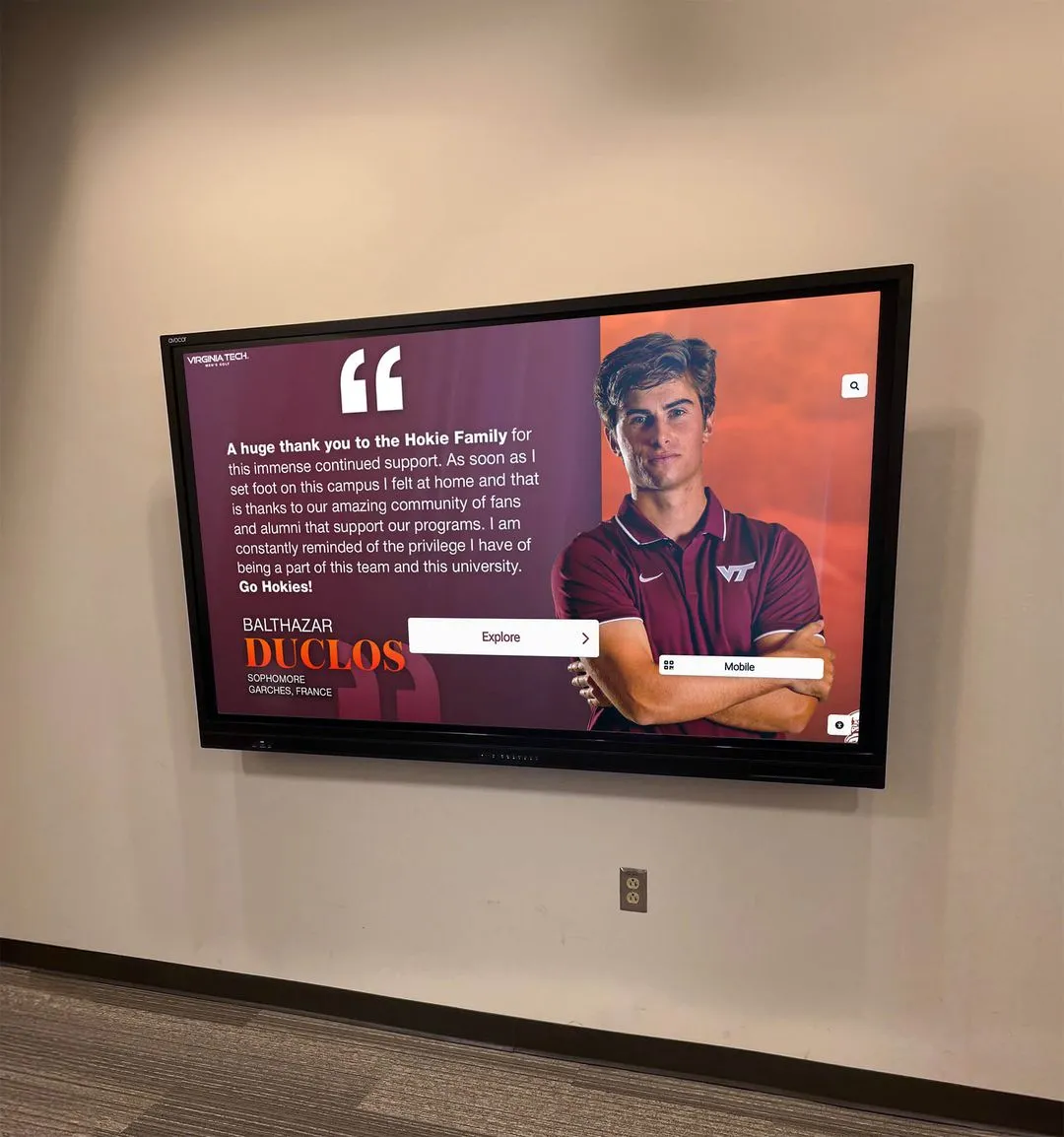
- Student Testimonial Videos — Current student perspectives on institutional experiences
- Admissions Process Guides — Step-by-step application assistance and timeline information
- Virtual Campus Tour Teasers — Highlights encouraging full virtual or in-person tours
- Success Statistics — Graduation rates, college acceptance data, career placement numbers, or program outcomes
Many advancement offices coordinate donor recognition with broader campus communications through booster club and donor recognition systems that acknowledge contributions while promoting continued support.
Content Strategy Framework: Making 120 Ideas Manageable
Having 120 content options creates value only when paired with implementation frameworks preventing content chaos or staff overwhelm.
Establishing Content Rotation Schedules
Monthly Rotation Calendar — Assign specific content categories to weeks or months creating predictable variety. For example, Week 1 emphasizes recognition content, Week 2 focuses on upcoming events, Week 3 highlights educational resources, and Week 4 features interactive engagement. This structure maintains freshness while simplifying planning.
Seasonal Content Strategies — Align content with academic calendars, athletic seasons, or organizational cycles. Fall content emphasizes new student integration, winter showcases holiday traditions and achievements, spring highlights academic accomplishments, and summer focuses on alumni engagement and facilities.
Event-Driven Content Triggers — Major events trigger relevant content series. Homecoming activates alumni recognition content, standardized testing periods surface study resources, fundraising campaigns emphasize giving impact stories, and graduation approaches highlight senior accomplishments.
Assigning Content Ownership and Responsibilities
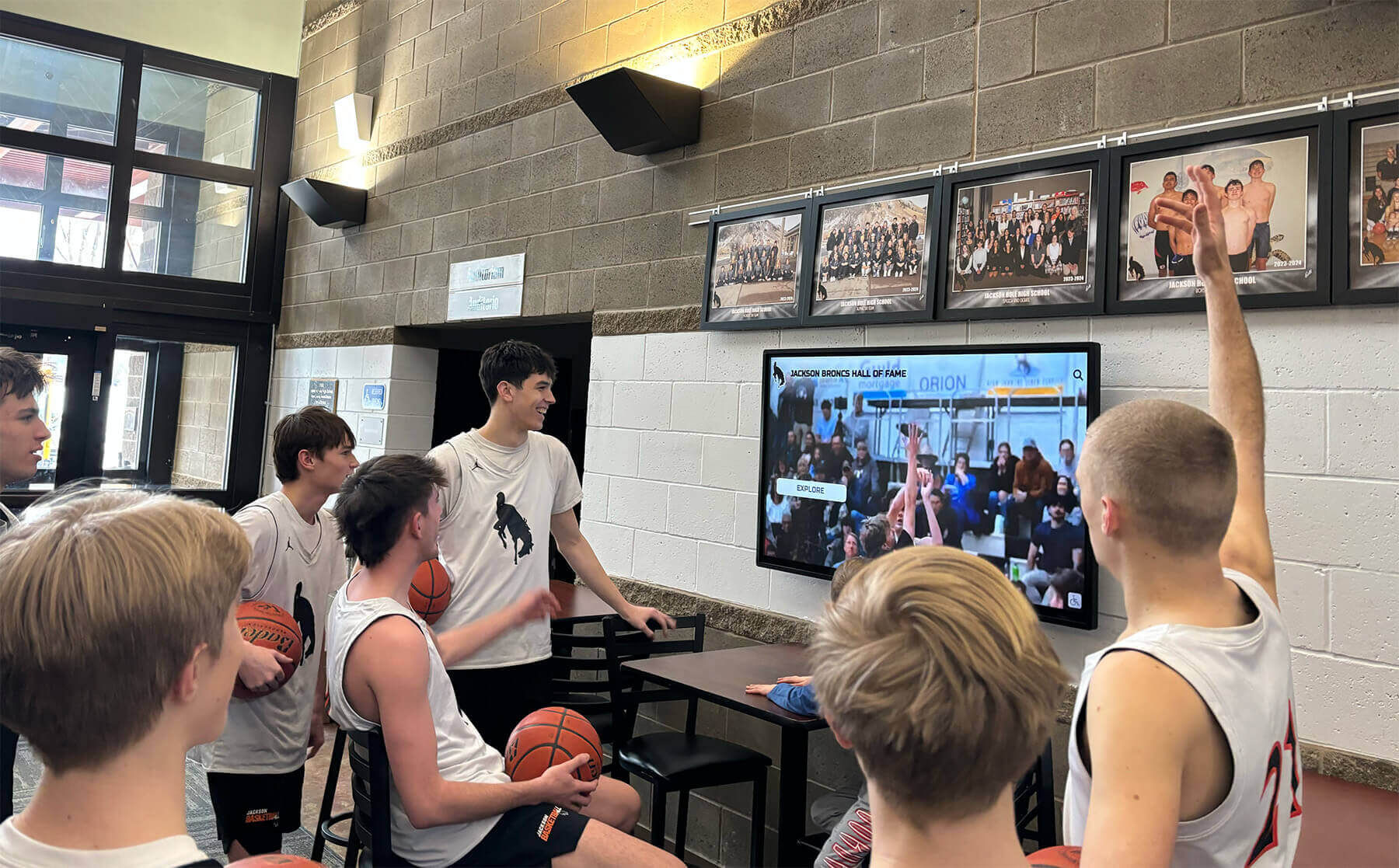
Distributed Content Creation — Rather than centralizing all content responsibility with one overwhelmed staff member, distribute ownership across departments. Athletic departments own sports content, counseling provides wellness resources, advancement creates donor recognition, and student activities submit event information.
Template-Based Content Submission — Provide standardized templates enabling non-technical staff to submit content in consistent formats. Templates ensure quality control while empowering distributed content creation preventing administrative bottlenecks.
Content Approval Workflows — Implement review processes ensuring quality and appropriateness before publication. Tiered approval based on content sensitivity—routine announcements auto-publish while major institutional statements require administrative review.
Measuring Content Performance
Analytics-Informed Content Decisions — Track which content generates engagement through touchscreen interaction logs, dwell time measurement, or QR code scanning rates. Double down on high-performing content categories while rethinking approaches generating minimal interest.
Audience Feedback Mechanisms — Create channels for visitors to request content, report issues, or provide suggestions. Simple feedback forms or QR codes launching short surveys inform continuous improvement.
Regular Content Audits — Quarterly reviews identify stale content requiring updates, successful content deserving expansion, and gaps where new content categories might add value.
Organizations managing multiple displays across distributed locations benefit from cloud-based digital signage software enabling centralized content management with location-specific customization.
Technology Considerations for Content Delivery
Content strategies succeed only when matched to appropriate technology platforms supporting intended experiences.
Content Management System Requirements
User-Friendly Interfaces — Non-technical staff must update content independently. Cloud-based dashboards with intuitive controls prevent IT dependency bottlenecks that stall content freshness.
Multi-User Collaboration — Multiple staff members contribute content simultaneously without conflicts. Role-based permissions ensure appropriate access levels across distributed teams.
Template Systems — Pre-designed layouts maintaining visual consistency while accelerating content creation. Templates prevent design inconsistency that undermines professional appearance.
Media Library Management — Organized storage for photos, videos, and documents with search and tagging capabilities supporting content reuse across different contexts.
Scheduling Capabilities — Time-based content scheduling automates rotation eliminating manual intervention for predictable content changes.
Display Hardware Considerations
Touchscreen versus Passive Displays — Interactive content requires touchscreen hardware supporting gesture-based navigation. Passive displays work for view-only content but cannot support engagement features.
Network Connectivity — Cloud-based content management requires reliable network connections. Offline capability during connectivity interruptions prevents blank screens.
Display Size and Resolution — Content design must match hardware specifications. Text-heavy content requires larger screens or closer viewing distances than image-dominant approaches.
Schools evaluating technology options benefit from comparisons like platform functionality assessments examining content management capabilities across different systems.
Common Content Strategy Mistakes to Avoid
Learning from common pitfalls prevents wasting resources on ineffective approaches.
Treating Digital Signage as Print Bulletins — Simply digitizing printed announcements wastes digital display potential. Digital content should incorporate motion, interactivity, and multimedia that print cannot deliver.
Neglecting Content Lifecycle Planning — Installing displays without ongoing content plans creates stagnation within months. Sustainable success requires documented content responsibilities, schedules, and workflows.
Overloading Screens with Text — Dense text paragraphs don’t work on digital displays viewed from distance or in passing. Prioritize visual content with minimal text supporting rather than dominating messages.
Ignoring Accessibility Requirements — Content must remain accessible to visitors with disabilities. Adequate color contrast, readable text sizes, and screen reader compatibility aren’t optional for many institutions.
Setting Unrealistic Update Frequencies — Promising daily content updates without staffing to support them guarantees failure. Start with sustainable weekly or monthly update schedules, expanding frequency only after proving operational capability.
Failing to Measure Effectiveness — Without analytics tracking engagement, organizations cannot identify successful content or justify continued investment. Implement measurement from deployment start rather than retrofitting later.
Conclusion: From Installation to Impact
Digital signage screens and interactive kiosks represent significant institutional investments that deliver returns only through thoughtful content strategies. Hardware purchases create opportunities, but sustained content execution determines whether displays become valued communication channels or ignored decorations.
The 120 content ideas in this guide provide starting frameworks for organizations at any stage—from planning initial deployments through refreshing mature programs experiencing audience fatigue. Success requires moving beyond installation checklists to embrace content operations as ongoing strategic priorities deserving dedicated resources, clear ownership, and continuous improvement.
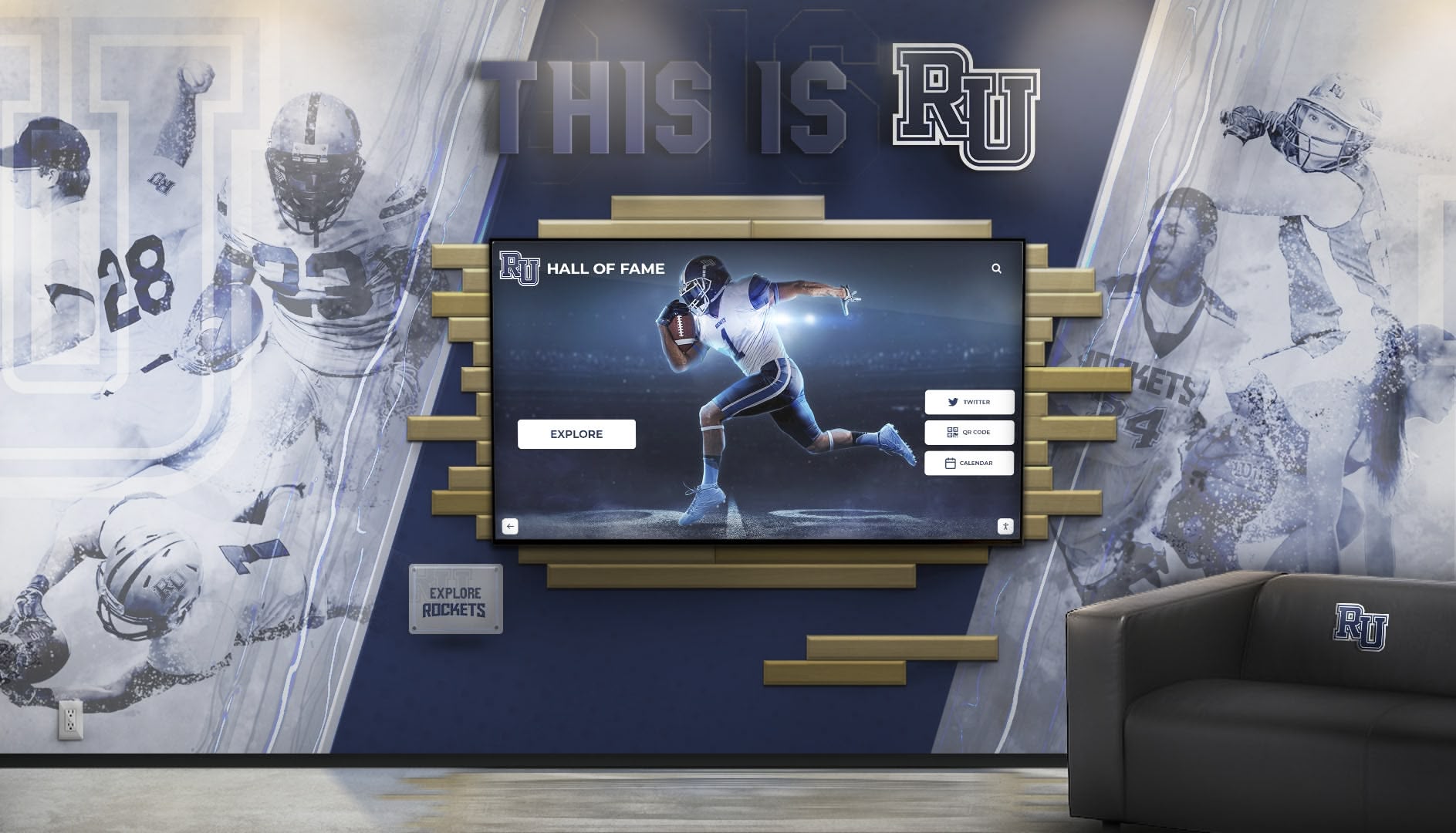
Organizations implementing recognition content within broader signage strategies discover that database-driven platforms like Rocket Alumni Solutions deliver superior results compared to adapted slideshow systems. Purpose-built recognition software supports the deep, searchable content that generates sustained engagement while simplifying content management through intuitive cloud-based interfaces.
Your digital displays deserve content worthy of the investment. Select technology platforms supporting diverse content types, establish sustainable content workflows with distributed ownership, implement rotation strategies preventing staleness, and measure engagement informing continuous improvement. Turn static screens into active communication tools that audiences regularly use rather than passively ignore.
Ready to implement comprehensive digital signage content strategies? Explore how Rocket Alumni Solutions powers recognition content within broader digital display ecosystems, combining interactive touchscreen experiences with intuitive content management enabling sustainable operations across educational institutions, businesses, and organizations nationwide.