



Key Takeaways
Comprehensive guide to recognizing 1,000 points scorers in high school basketball. Discover modern digital display solutions, recognition ceremonies, and lasting ways to honor this elite scoring achievement.
Understanding the 1,000 Points Milestone
The 1,000-point mark stands as one of basketball’s most prestigious individual achievements at the high school level, requiring sustained excellence over multiple seasons and demonstrating consistency, durability, and scoring prowess.
What Makes 1,000 Points So Difficult
Achieving 1,000 career points demands more than just talent—it requires years of commitment, discipline, and the ability to perform under pressure game after game, season after season.
The Mathematics of Excellence:
To reach 1,000 points over a typical four-year high school career with 25 games per season requires averaging approximately 10 points per game. While this might seem modest, sustaining this production level requires:
Starting-level playing time across multiple seasons, maintaining scoring consistency against varying defensive strategies and competition levels, avoiding significant injuries that could derail progress toward the milestone, continuing development as defenses focus more attention on proven scorers, and balancing individual scoring with team offensive needs and shared possession opportunities.
According to discussions on SoutheasternOhioPreps.com, most schools’ gyms with 1,000-point scorer banners “don’t have very many at all, with records going back to at least the 20’s and 30’s,” emphasizing the achievement’s rarity even across nearly a century of competition.
Three-Year Path to 1,000:
Players who achieve the milestone in three years face even more demanding production requirements:
Averaging 13-14 points per game across three varsity seasons, typically requiring immediate freshman or sophomore varsity impact, maintaining elite production without a senior season to accumulate additional points, demonstrating exceptional talent and maturity to score consistently at younger ages, and often reaching the milestone during their junior season when many peers are still developing.
Complete Skill Set Required:
Scoring 1,000 points demands comprehensive basketball excellence:
- Multiple Scoring Methods: Success from inside the paint, mid-range, three-point range, and free throw line
- Physical Durability: Maintaining health through demanding practice schedules and competitive seasons
- Mental Toughness: Performing consistently despite defensive attention and pressure situations
- Team Context: Contributing to winning basketball while accumulating individual statistics
- Academic Eligibility: Maintaining classroom success alongside athletic commitments
- Character Development: Demonstrating leadership and sportsmanship worthy of lasting recognition
Historical Context and State Recognition Systems
Many state basketball associations maintain official lists tracking 1,000-point scorers, documenting this rare achievement across decades of competition.
Indiana’s Comprehensive Tracking:
The Indiana Basketball Coaches Association provides an excellent example of systematic milestone tracking. According to their Career 1000 Points database:
The boys’ list began at the end of the 1979-80 season with an initial compilation including 357 players from historical records, the current boys’ list contains 4,086 players spanning more than four decades of basketball, the girls’ list contains 2,431 players, demonstrating the achievement’s rarity in girls’ basketball as well, and these numbers represent only players from one state, highlighting how elite this achievement truly is.
When you consider that Indiana has approximately 400 high schools with basketball programs, averaging about 10 1,000-point scorers per school over 45 years means roughly one player reaches this milestone every 4-5 years at each school—a true generational achievement.
State-by-State Recognition Approaches:
Different states employ various tracking methods:
Some states maintain centralized databases through athletic associations or coaches organizations, others rely on individual schools to track and report milestone achievers, several states publish annual updates recognizing newly minted 1,000-point scorers, and many states include 1,000-point achievement in broader all-time records databases alongside other statistical milestones.
Understanding your state’s tracking system helps schools ensure their 1,000-point scorers receive appropriate recognition at both school and state levels.
Traditional Recognition Methods and Their Limitations
High schools have long celebrated 1,000-point scorers through various traditional approaches, but these methods often present significant limitations affecting recognition quality and sustainability.
Gymnasium Banners and Wall Recognition
The most common traditional recognition involves hanging banners in gymnasiums displaying 1,000-point scorers’ names and achievement years.
Space Constraints:
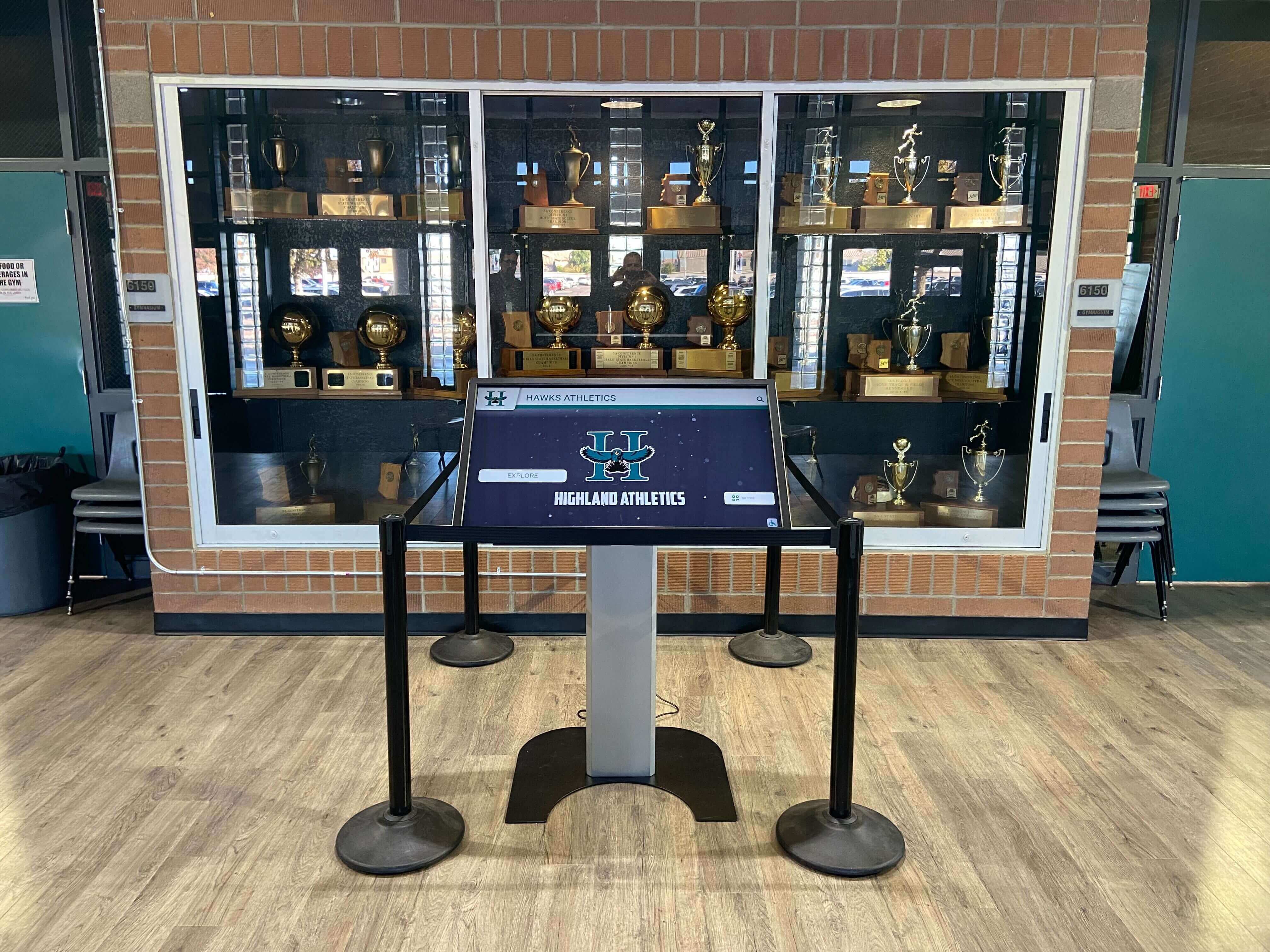
Physical gymnasium walls offer finite space for recognition displays. As programs accumulate 1,000-point scorers across decades, schools face challenging decisions about how to manage limited wall space. Some gymnasiums become cluttered with dozens of banners competing for visual attention, while others must remove historical recognition to make room for recent achievements. Schools with strong basketball traditions and multiple 1,000-point scorers per decade particularly struggle with space limitations.
Athletic directors from successful programs report that trophy case capacity planning becomes increasingly difficult as achievements accumulate, forcing difficult prioritization decisions about which accomplishments receive prominent physical recognition.
Time Delays in Recognition:
Traditional banner production creates frustrating delays between achievement and recognition:
After a player scores their 1,000th point, schools must design and order custom banners—typically requiring 2-4 weeks for design finalization and administrative approval, 4-8 weeks for manufacturer production and shipping, and 1-2 weeks for scheduling installation and hanging the banner.
Impact of Recognition Delays:
These 2-4 month timelines create several problems:
Senior athletes may graduate before seeing their recognition displayed in the gymnasium, the achievement loses immediacy and excitement as time passes without visible recognition, media attention and community celebration fade during extended waiting periods, younger players witness delayed rather than immediate recognition of achievement, and families experience diminished satisfaction when recognition arrives months after the milestone moment.
Maintenance and Deterioration:
Physical banners face ongoing challenges:
Fabric banners fade from exposure to natural light and gymnasium lighting over years, banners accumulate dust and dirt in high-ceiling gymnasium environments requiring periodic cleaning, equipment during practices and games occasionally damages banners, replacement costs add up when banners deteriorate and require reproduction, and updating or correcting information on physical banners proves nearly impossible once hung.
Trophy Case Plaques and Physical Recognition
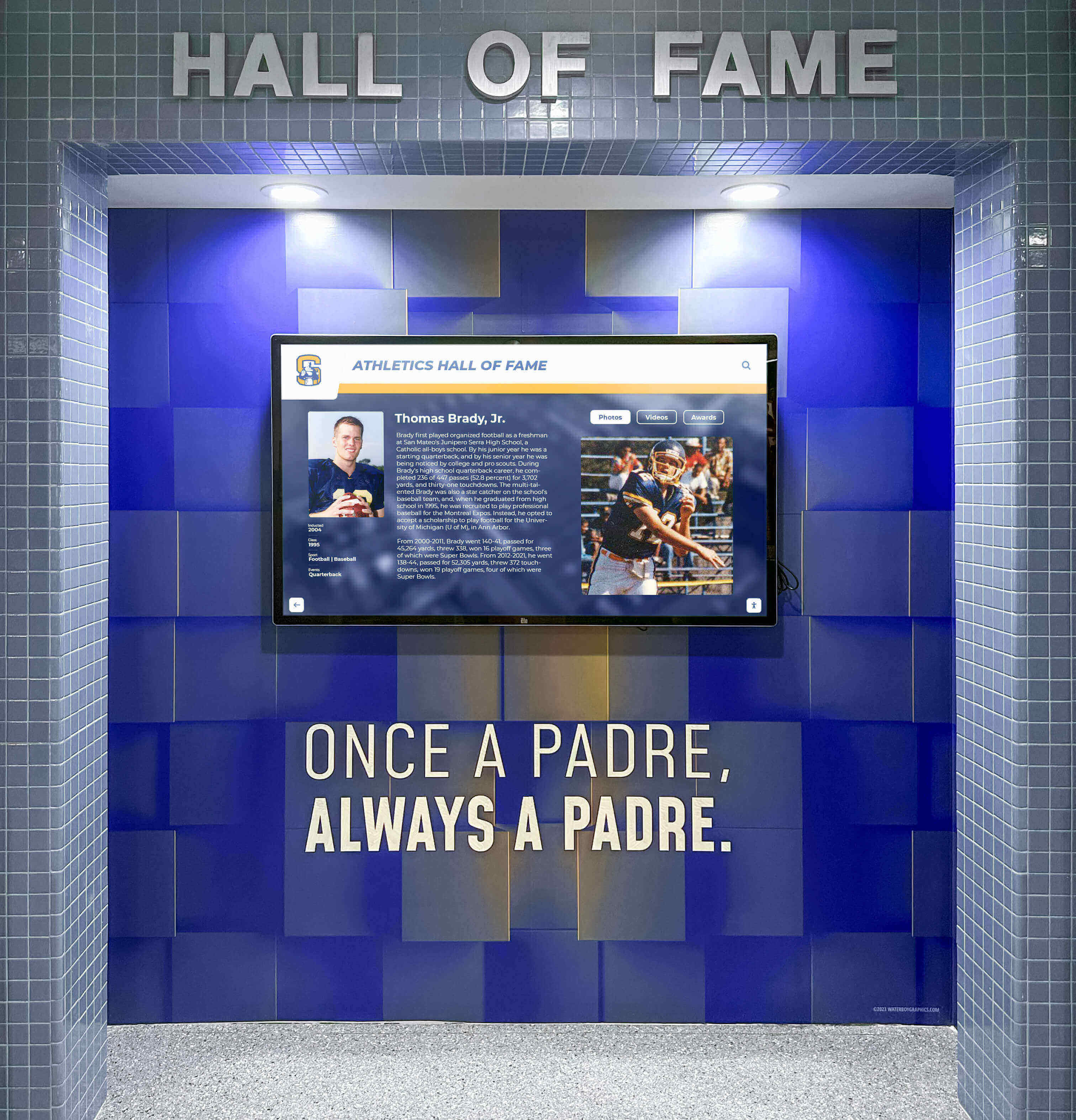
Some schools recognize 1,000-point scorers through plaques displayed in trophy cases or on dedicated walls.
Limited Information Capacity:
Physical plaques typically include only basic information:
Player name and graduation year, total career points scored, years of varsity participation, and perhaps a small photograph if space allows.
This minimal information fails to tell the complete story of the achievement—the journey to 1,000 points, memorable games and performances, statistical breakdowns by season, team success during the player’s career, post-high school path and continued basketball involvement, and personal reflections on achieving the milestone.
Accessibility and Engagement Issues:
Trophy case recognition presents several accessibility challenges:
Glass reflections make viewing difficult from certain angles and in various lighting conditions, physical location in specific hallways or lobbies limits who regularly sees the recognition, no search or filtering capability exists for finding specific players among many plaques, remote access for alumni and community members proves impossible, and static displays offer no interactive engagement or deeper exploration opportunities.
Cost Per Recognition:
Custom plaques typically cost $50-150 each, and while this seems modest for individual recognition, costs accumulate significantly over time. A school producing one 1,000-point scorer every few years spends $500-1,500 per decade on plaques alone, not including trophy case expansion or renovation as space fills.
Space Competition:
Trophy cases must accommodate:
- Team championship trophies across all sports
- Conference and district titles
- Individual athletic awards and honors
- Academic achievement recognition
- State qualification and placement awards
- Historical memorabilia and artifacts
Adding individual plaques for 1,000-point scorers competes with other worthy recognition for severely limited space.
Modern Digital Recognition Displays
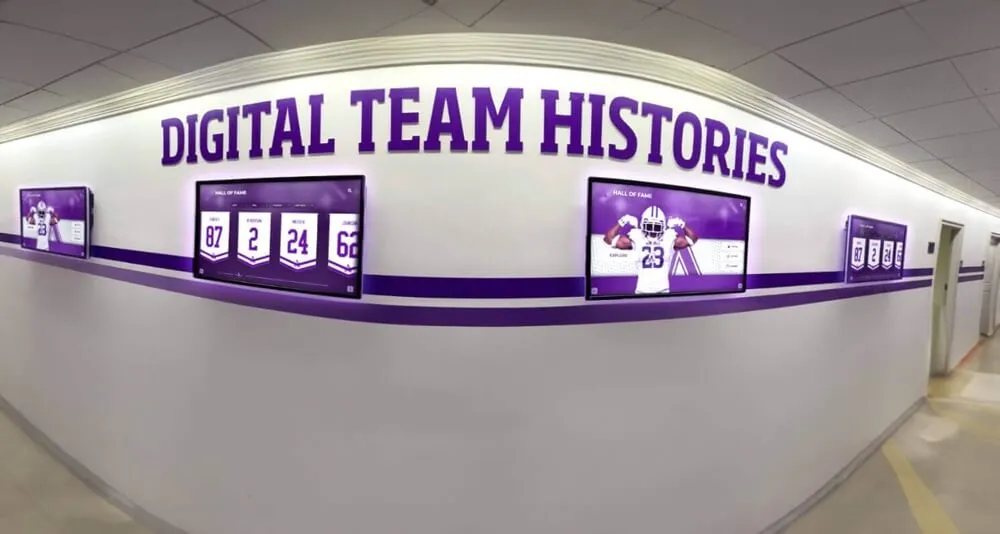
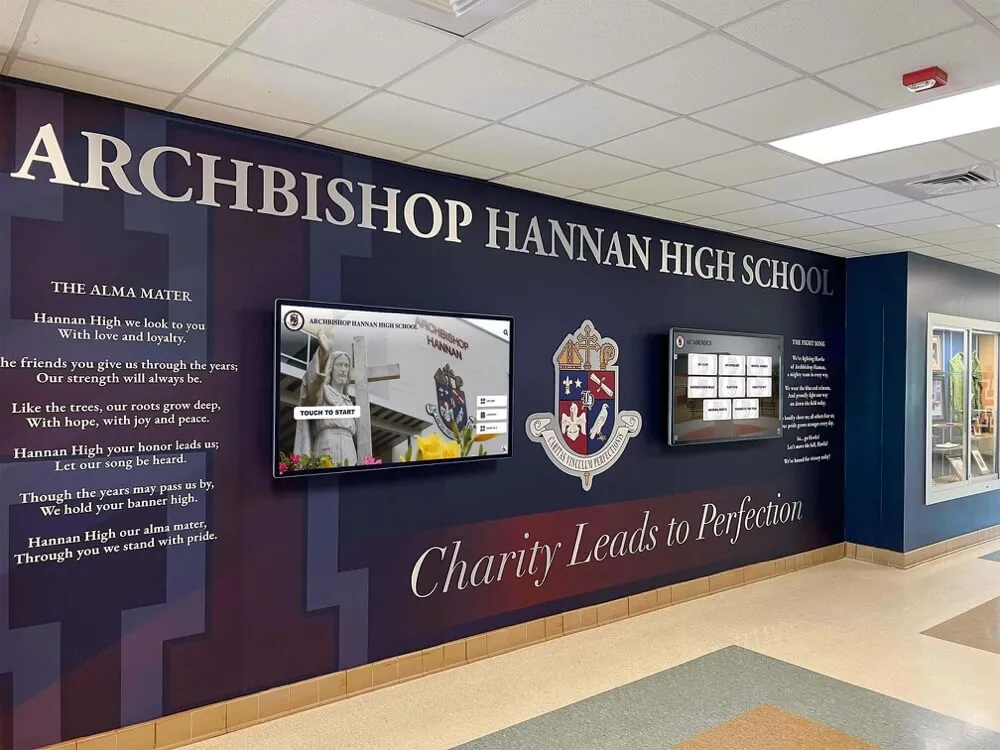
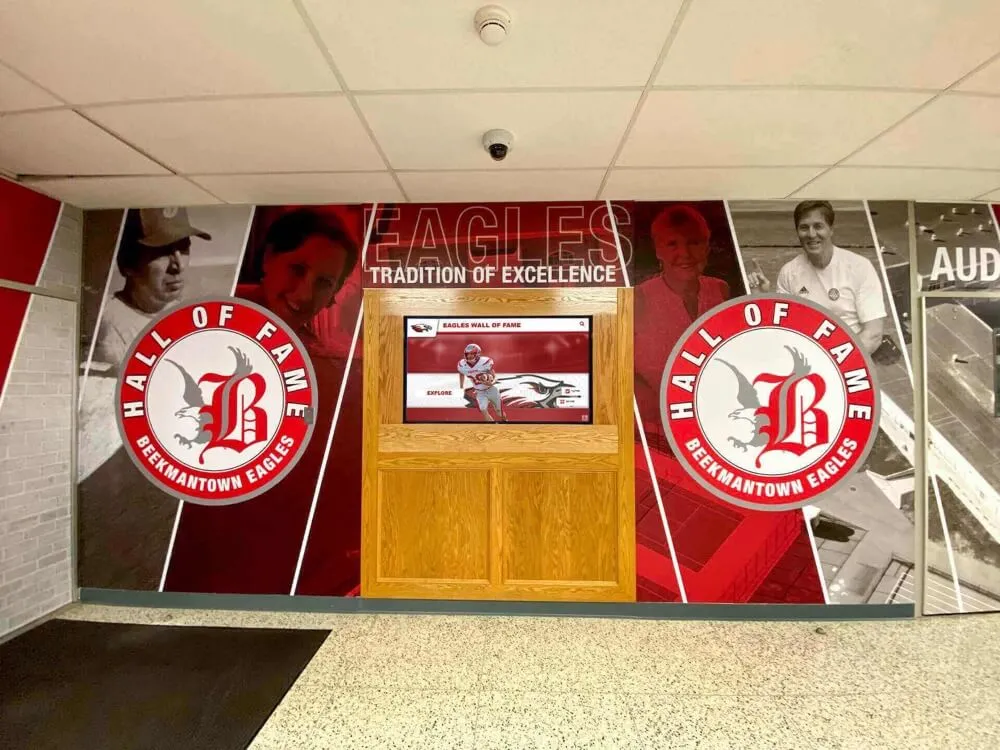
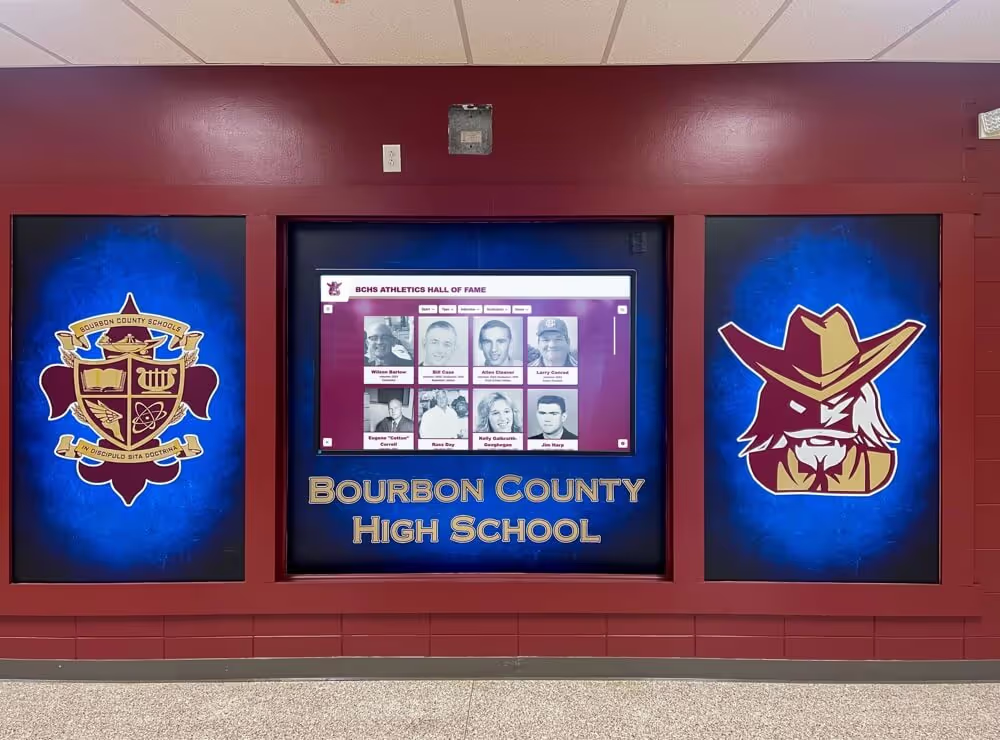
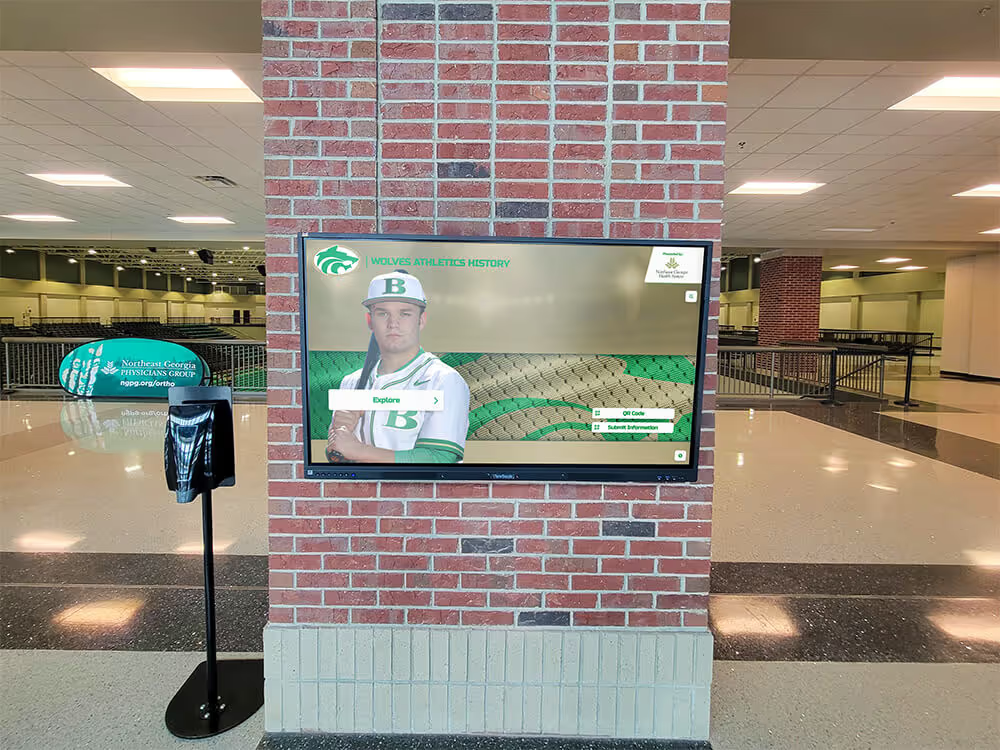
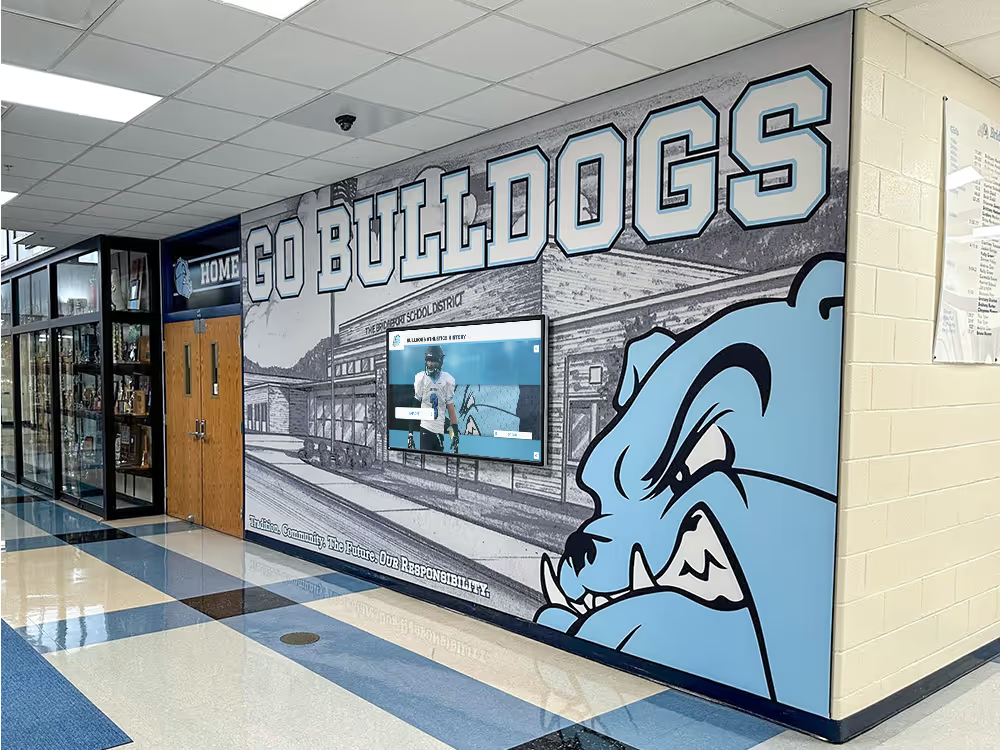
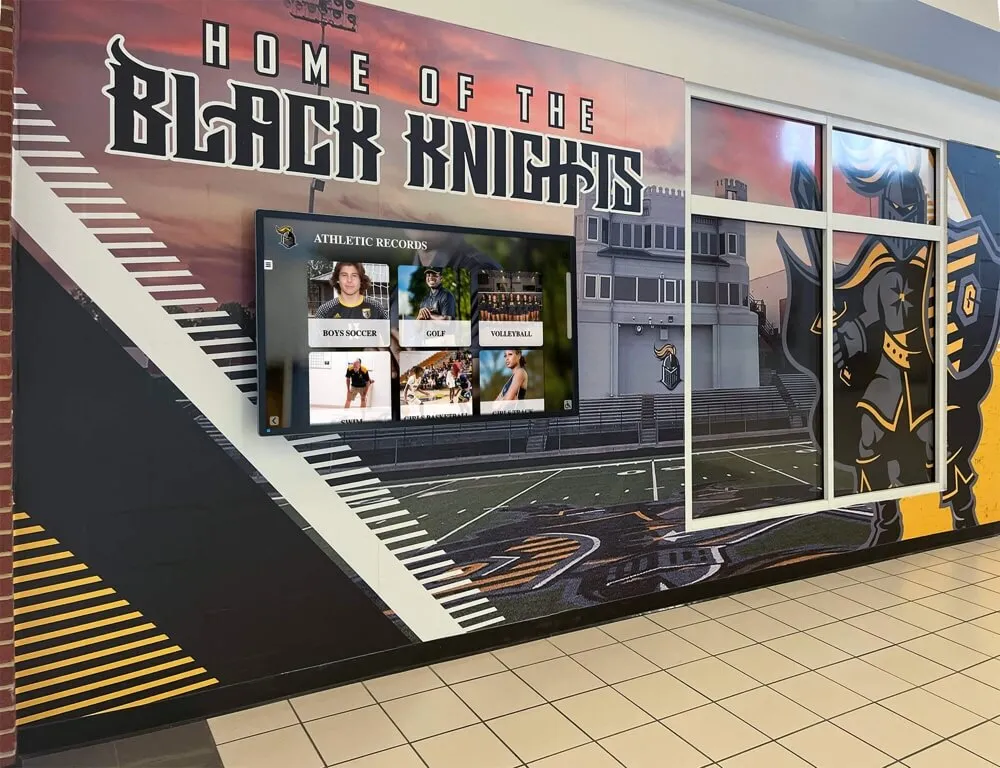
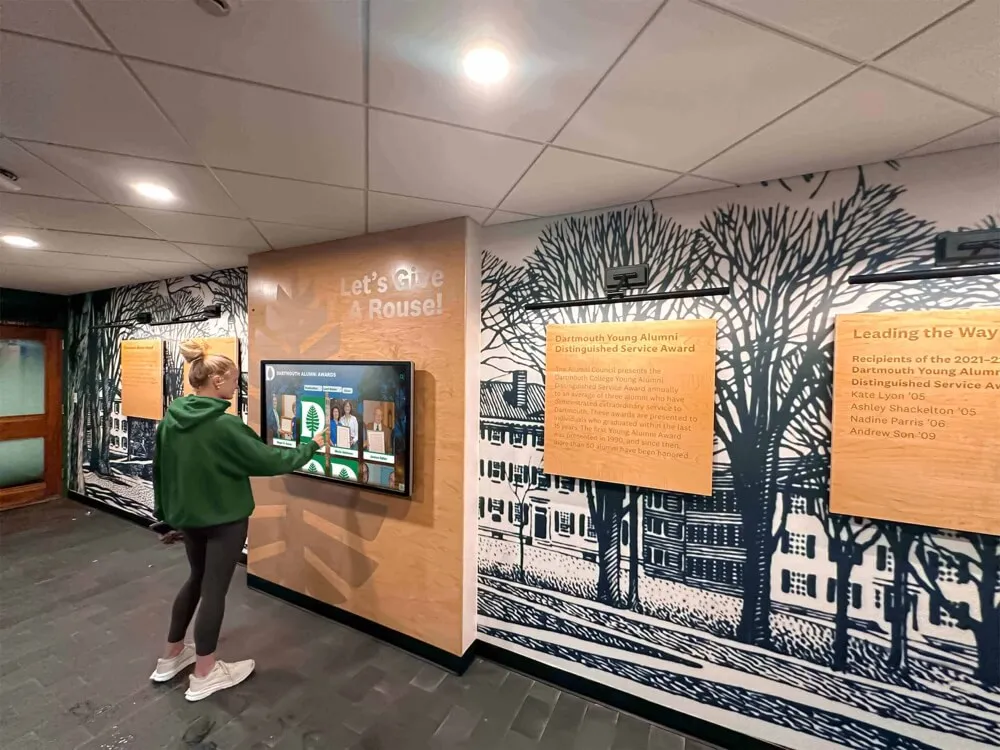
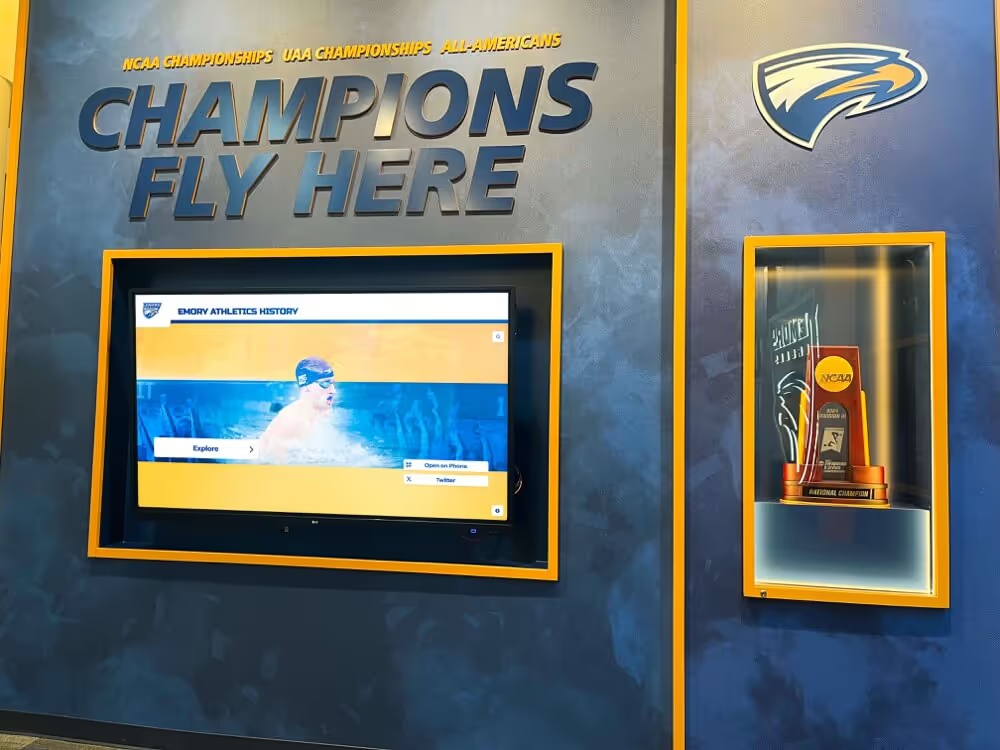
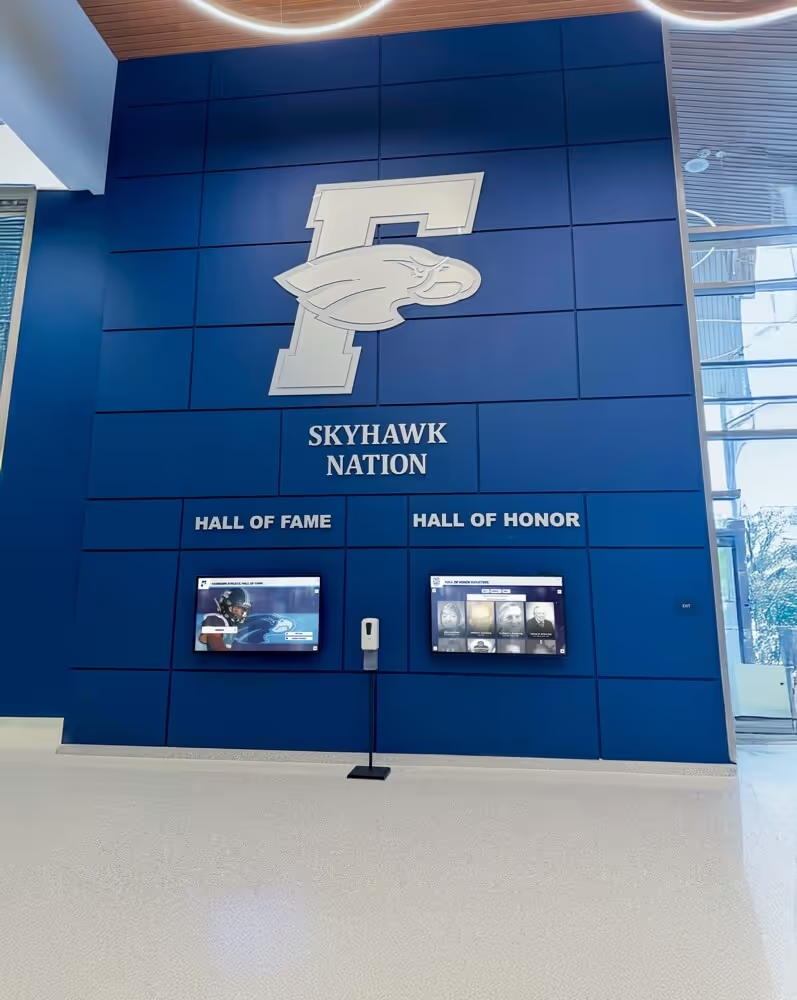
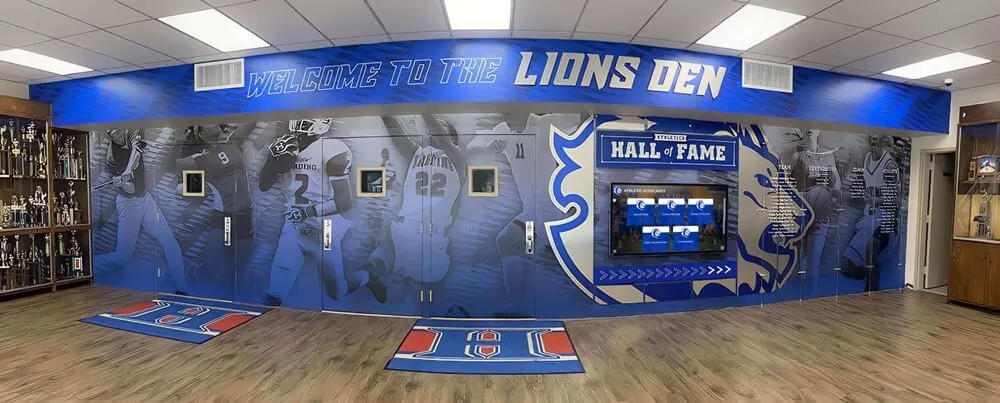
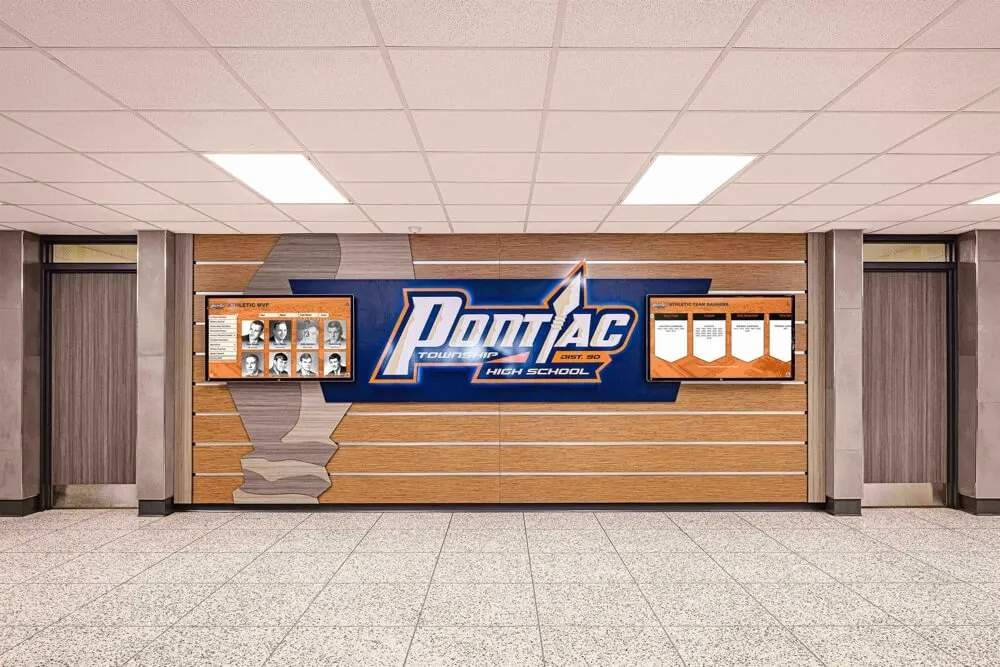
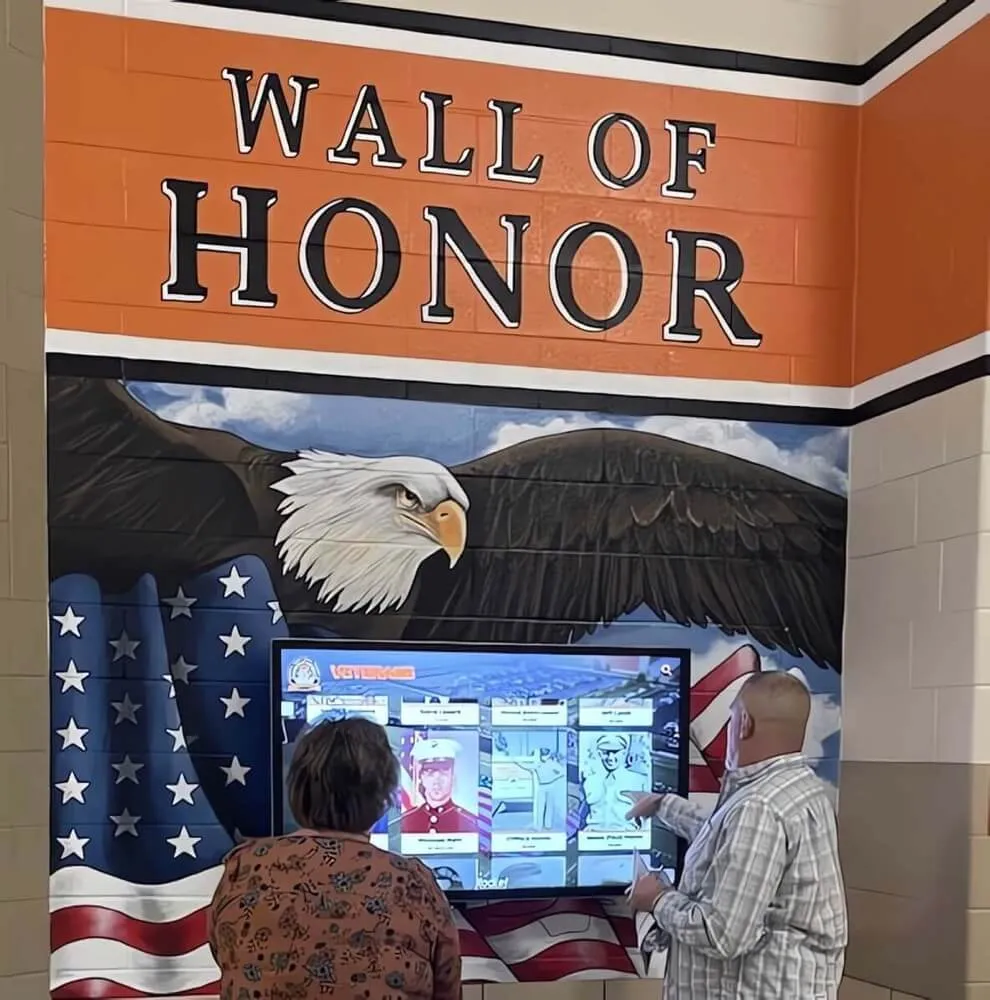
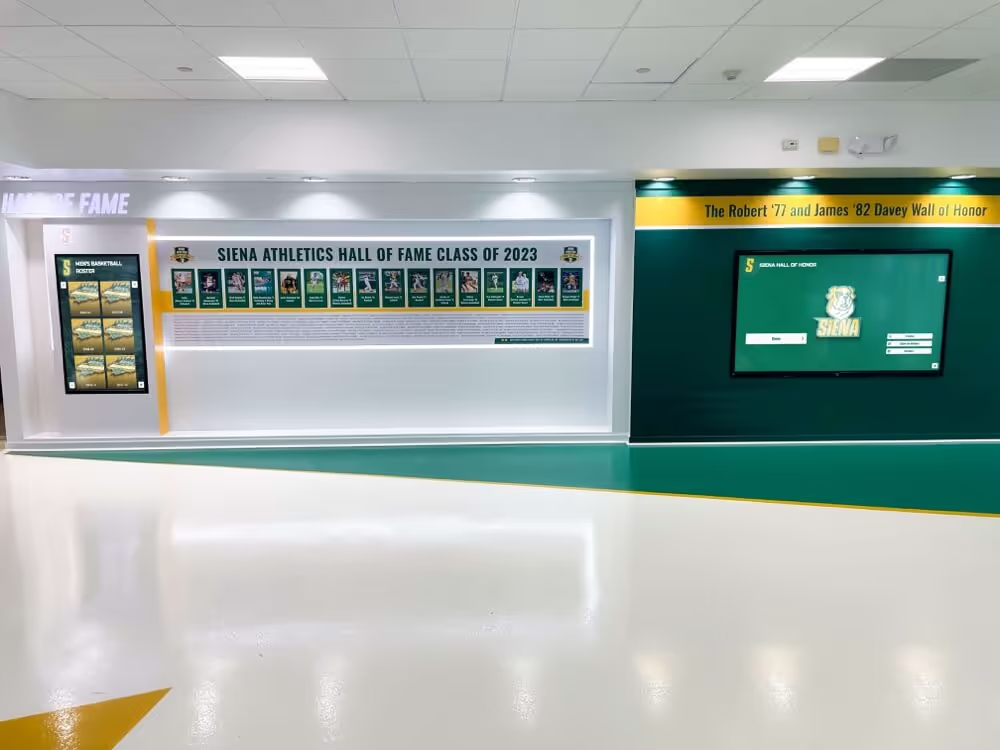
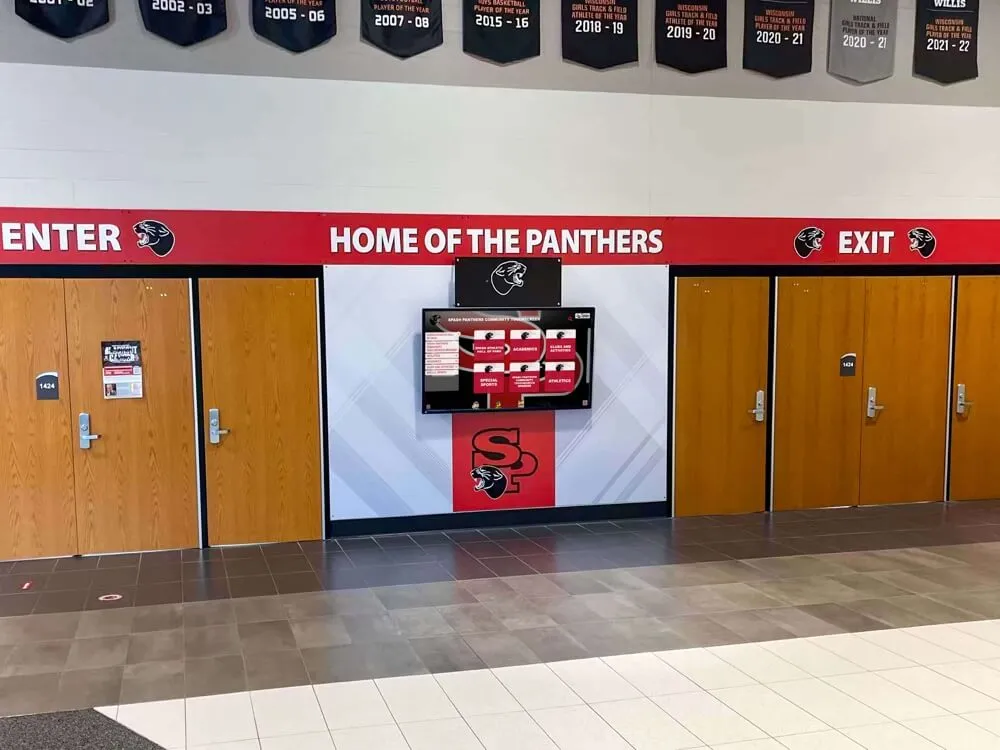
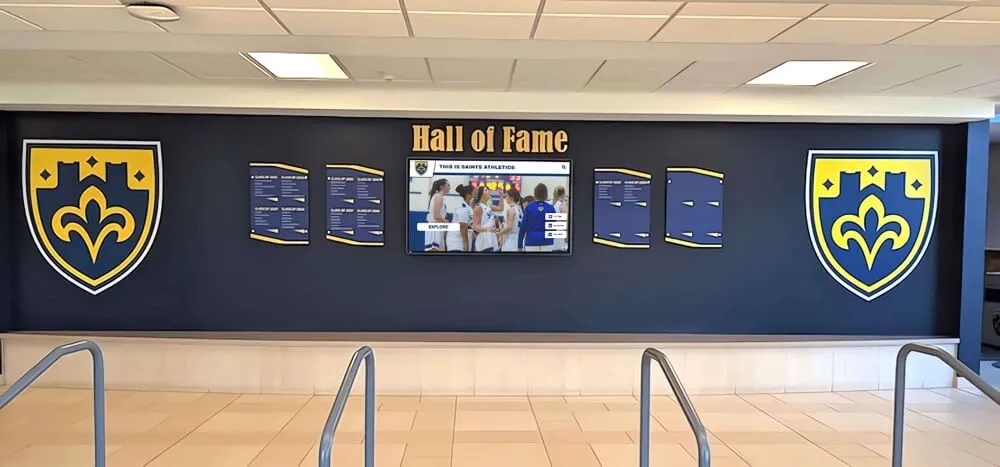
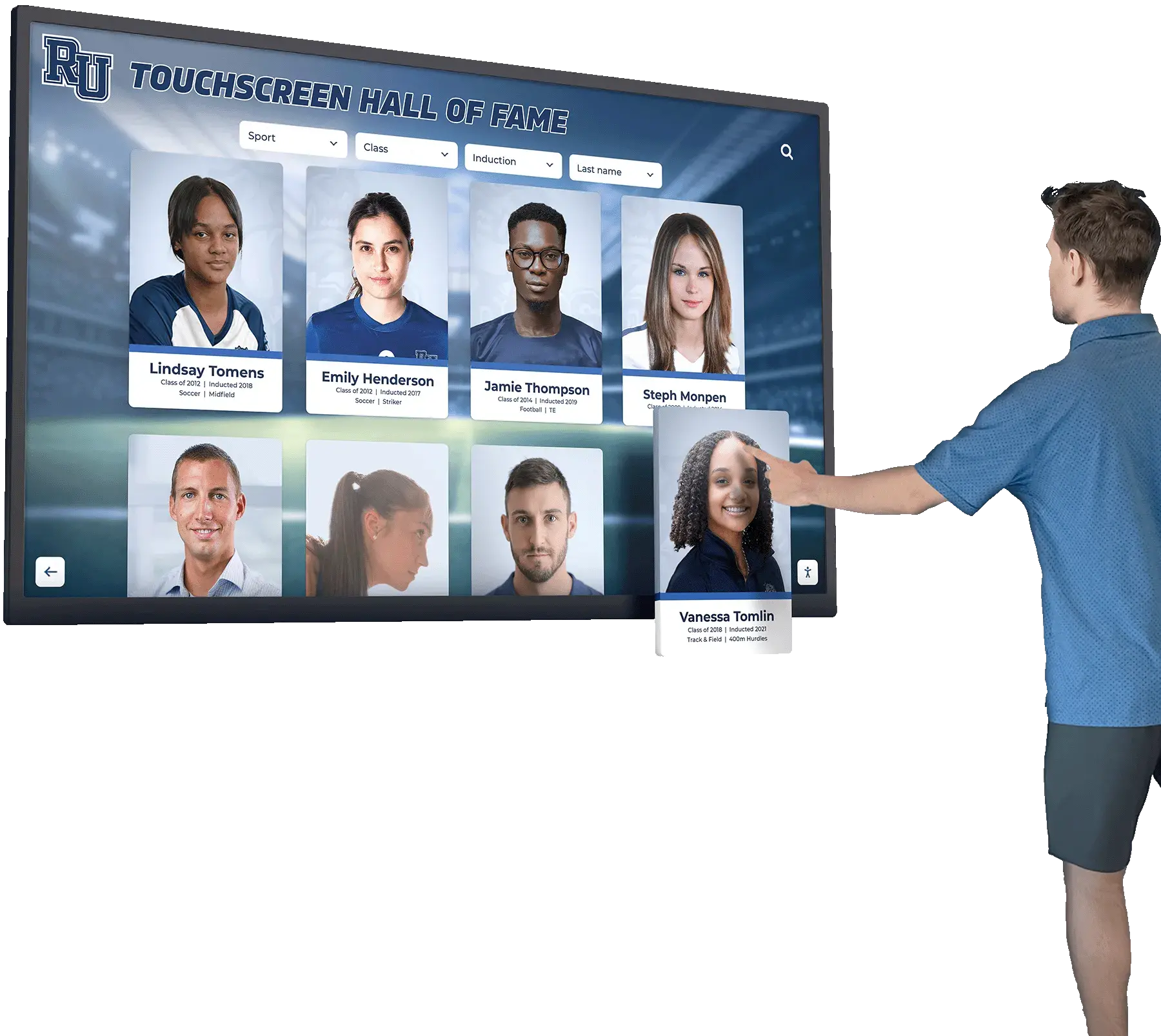
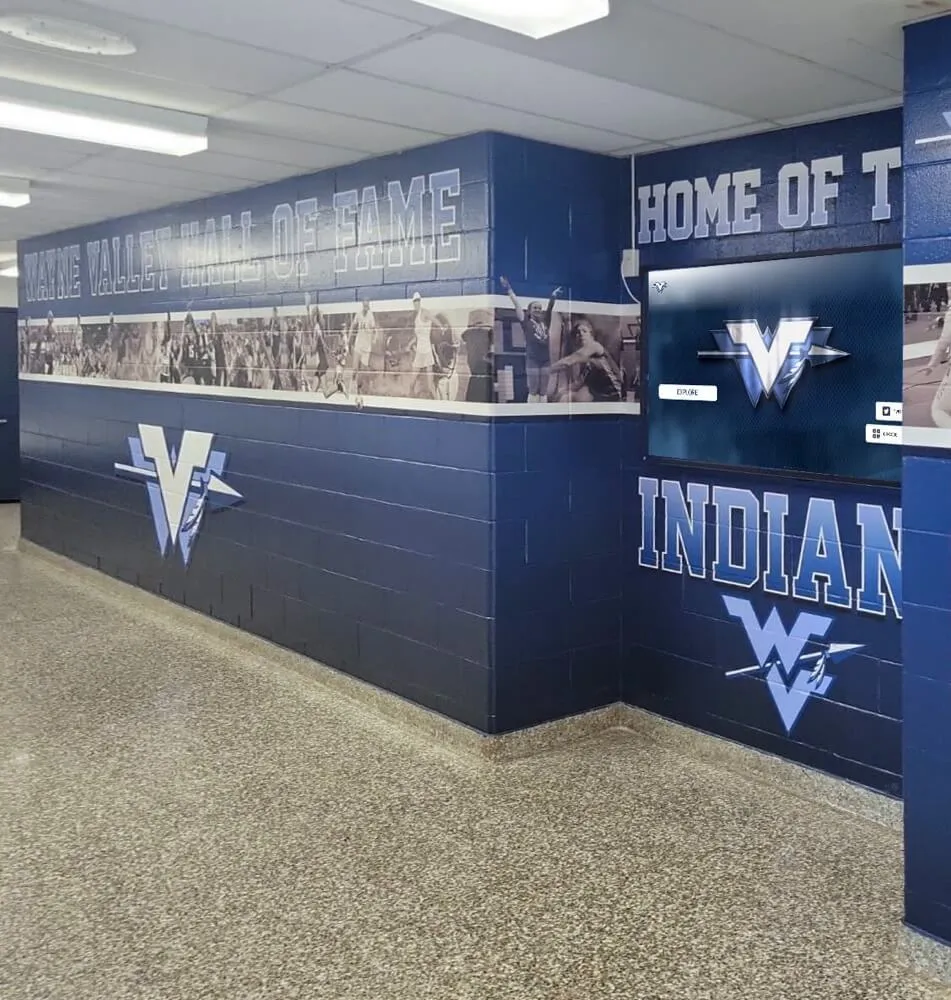
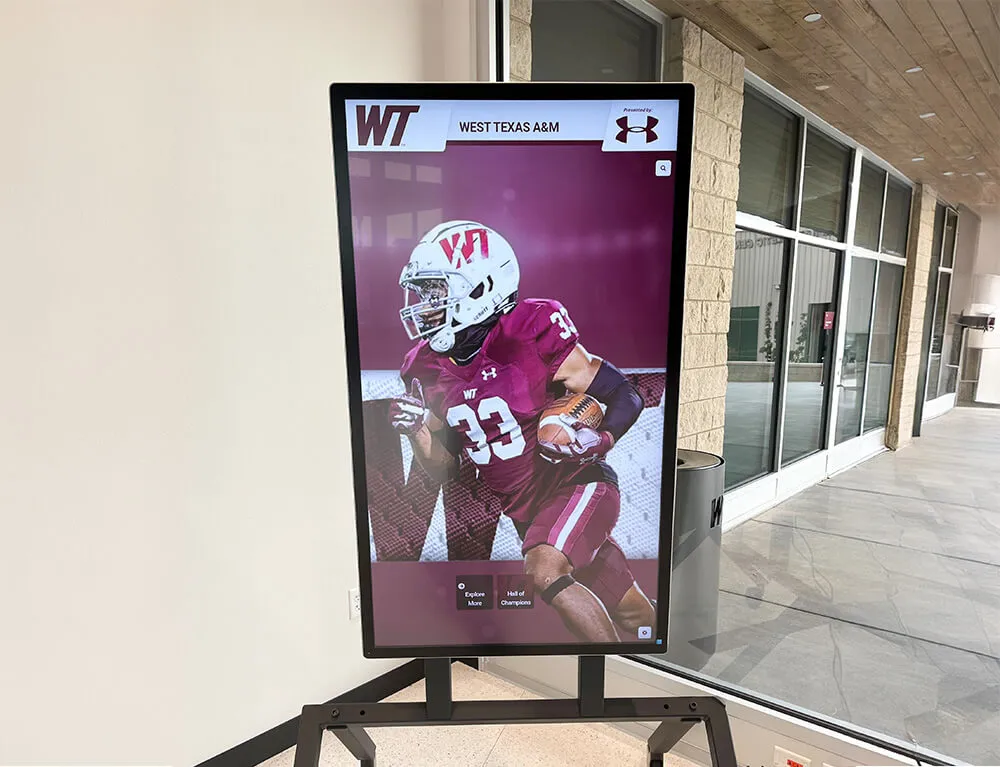
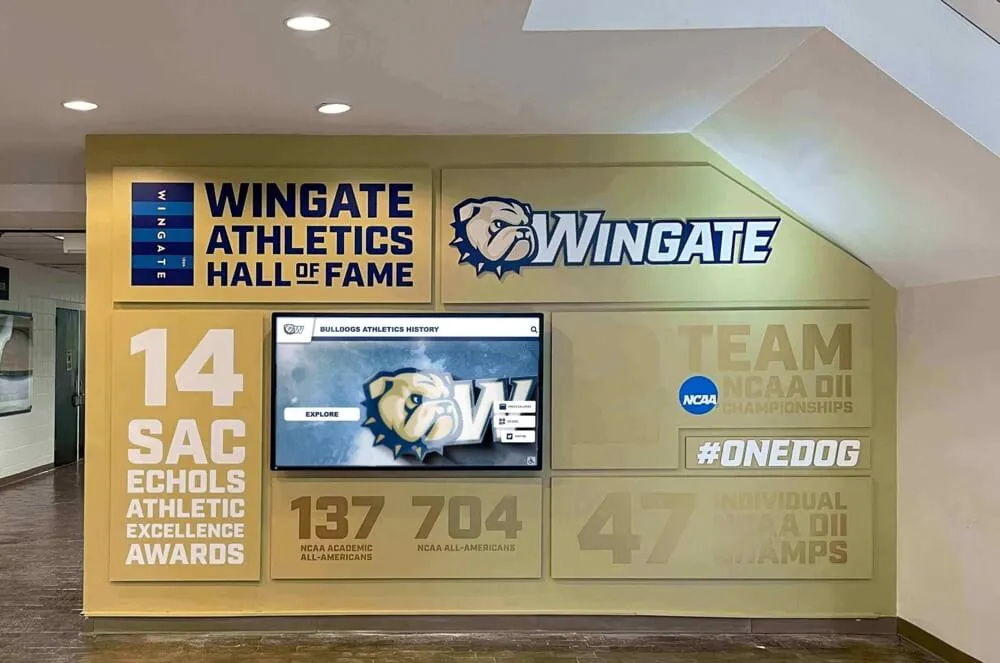
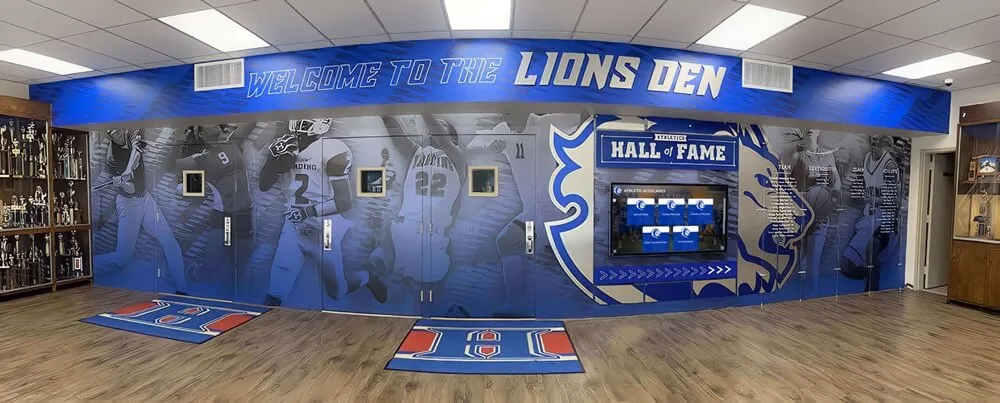
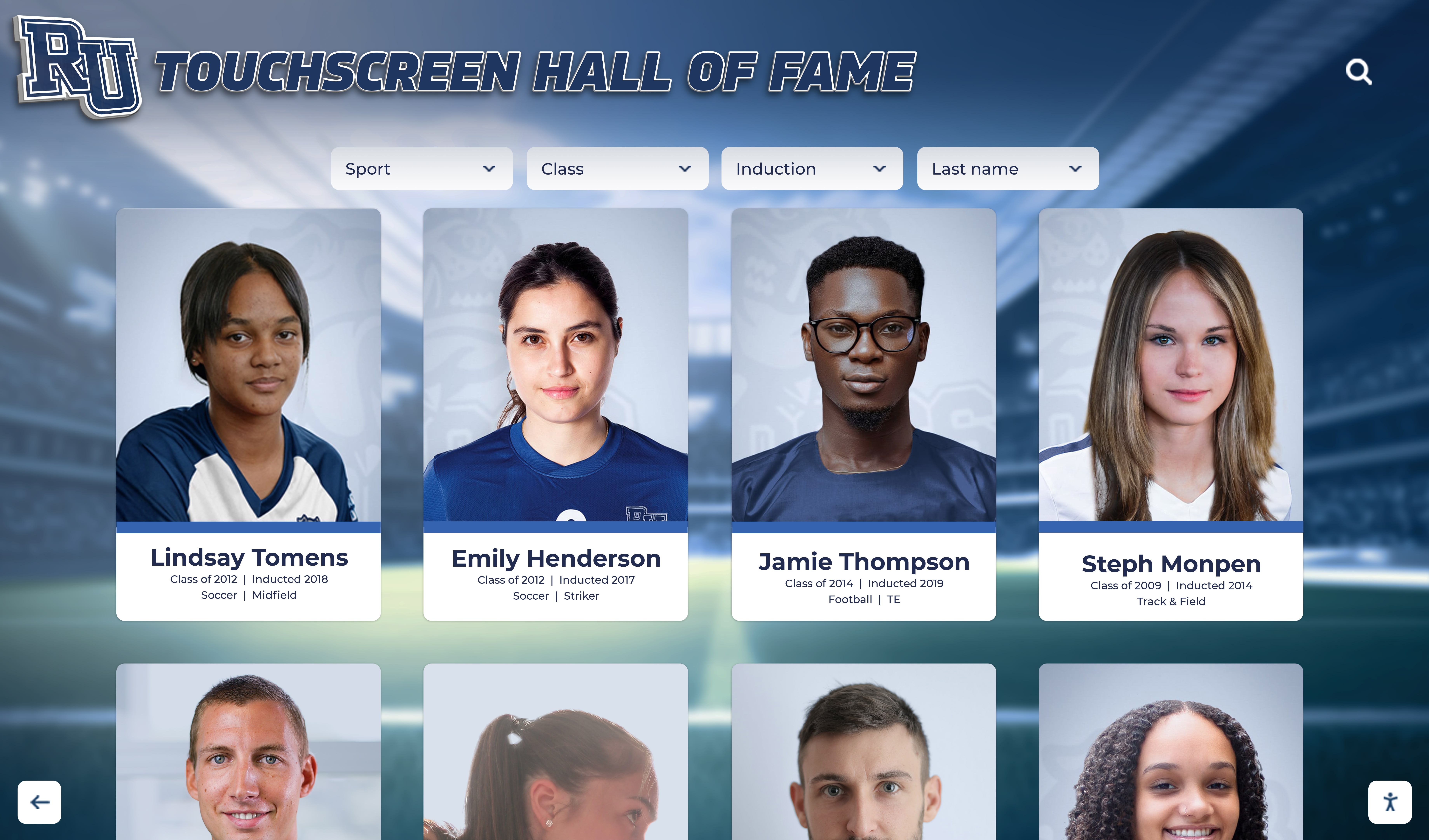
Digital touchscreen recognition systems revolutionize how schools celebrate 1,000-point scorers, eliminating traditional limitations while providing superior recognition experiences.
Immediate Recognition and Real-Time Updates
The most transformative advantage of digital displays is eliminating the frustrating delays inherent in traditional physical recognition.
Same-Day Achievement Recognition:
When a player scores their 1,000th point on Tuesday evening, their recognition can appear on school displays by Wednesday morning—or even immediately if updated remotely from the game. This real-time capability fundamentally transforms recognition impact:
Athletes receive immediate validation of their achievement without waiting months, local media can photograph players with their recognition during peak interest periods, current teammates and younger players witness instant recognition demonstrating that excellence receives immediate celebration, families can share and celebrate recognition while excitement remains highest, and social media engagement capitalizes on timely content when community attention focuses on the achievement.
Simple Update Process:
Modern content management systems make adding recognition remarkably straightforward:
Five-Minute Recognition Update:
- Administrator logs into web-based dashboard from computer or mobile device
- Selects “Add Achievement” or “Add Player” from intuitive interface
- Enters player information using simple form fields—name, graduation year, points, statistics
- Uploads photos directly from smartphone or computer storage
- Clicks “Publish” and changes appear immediately across all connected displays
No technical expertise required. No vendor waiting periods. No design skills needed. Just simple, immediate recognition when achievement occurs.
Schools using digital hall of fame displays report that eliminating recognition delays significantly enhances athlete satisfaction and family appreciation while maintaining higher community engagement.
Comprehensive Player Profiles and Storytelling
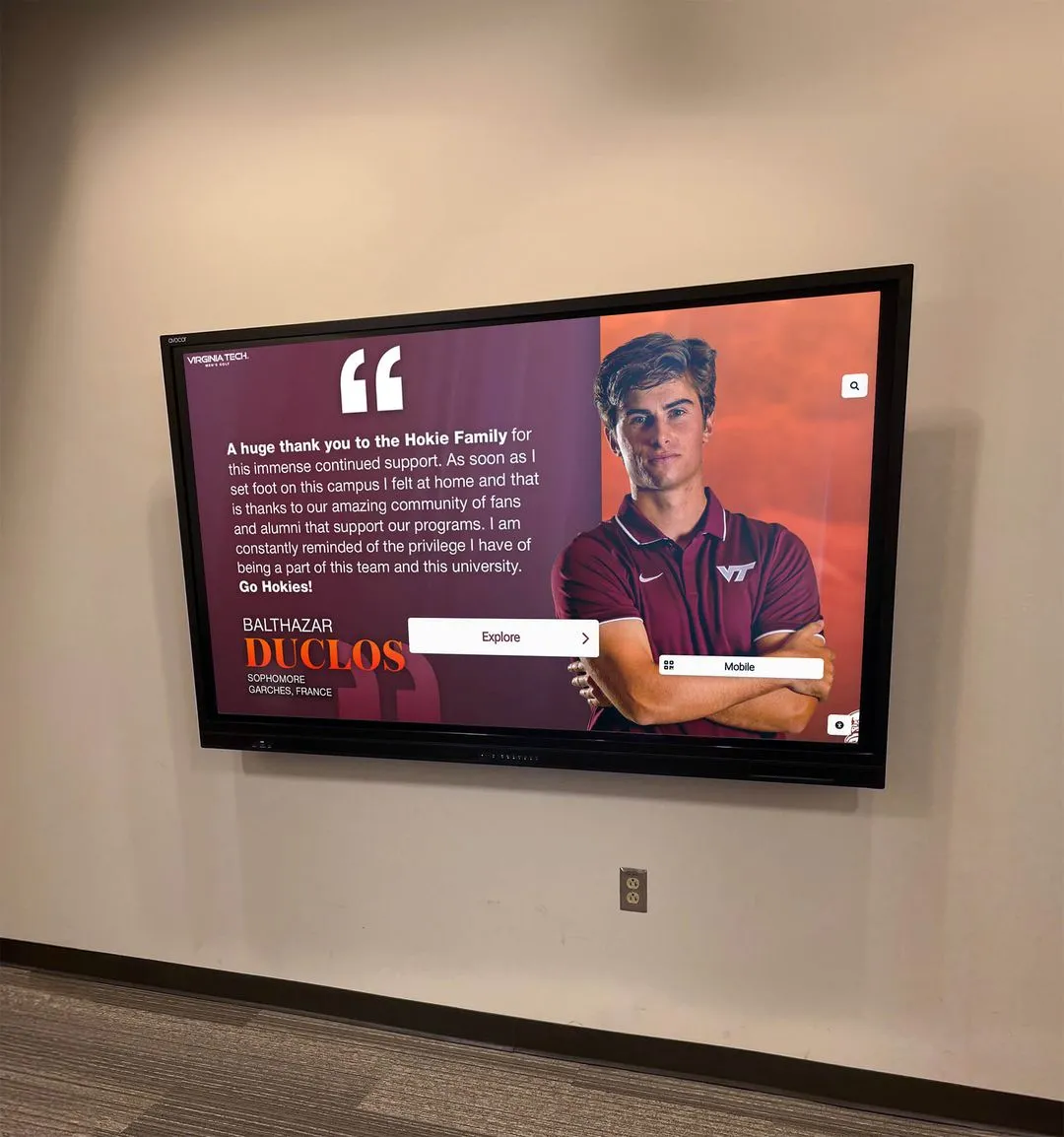
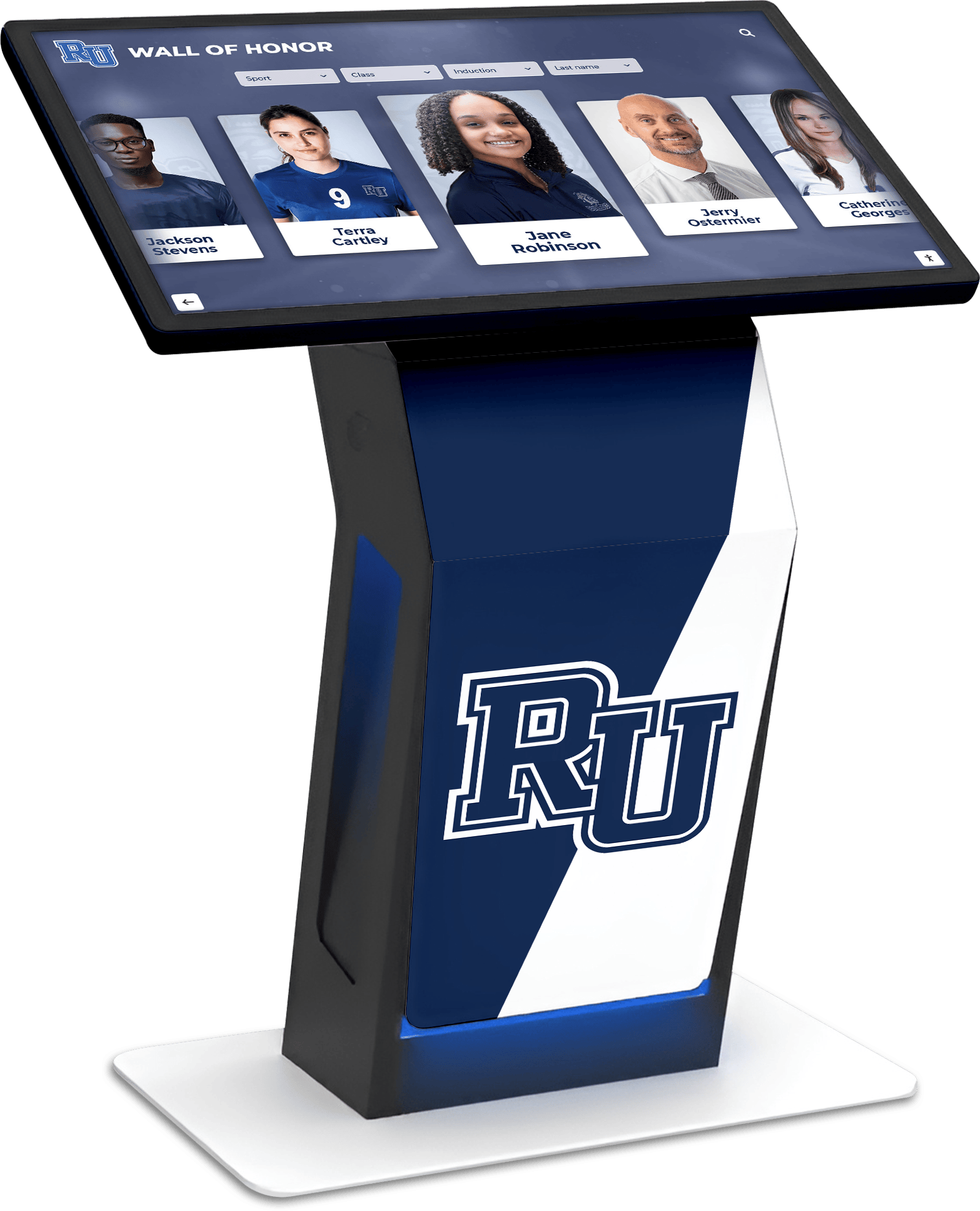
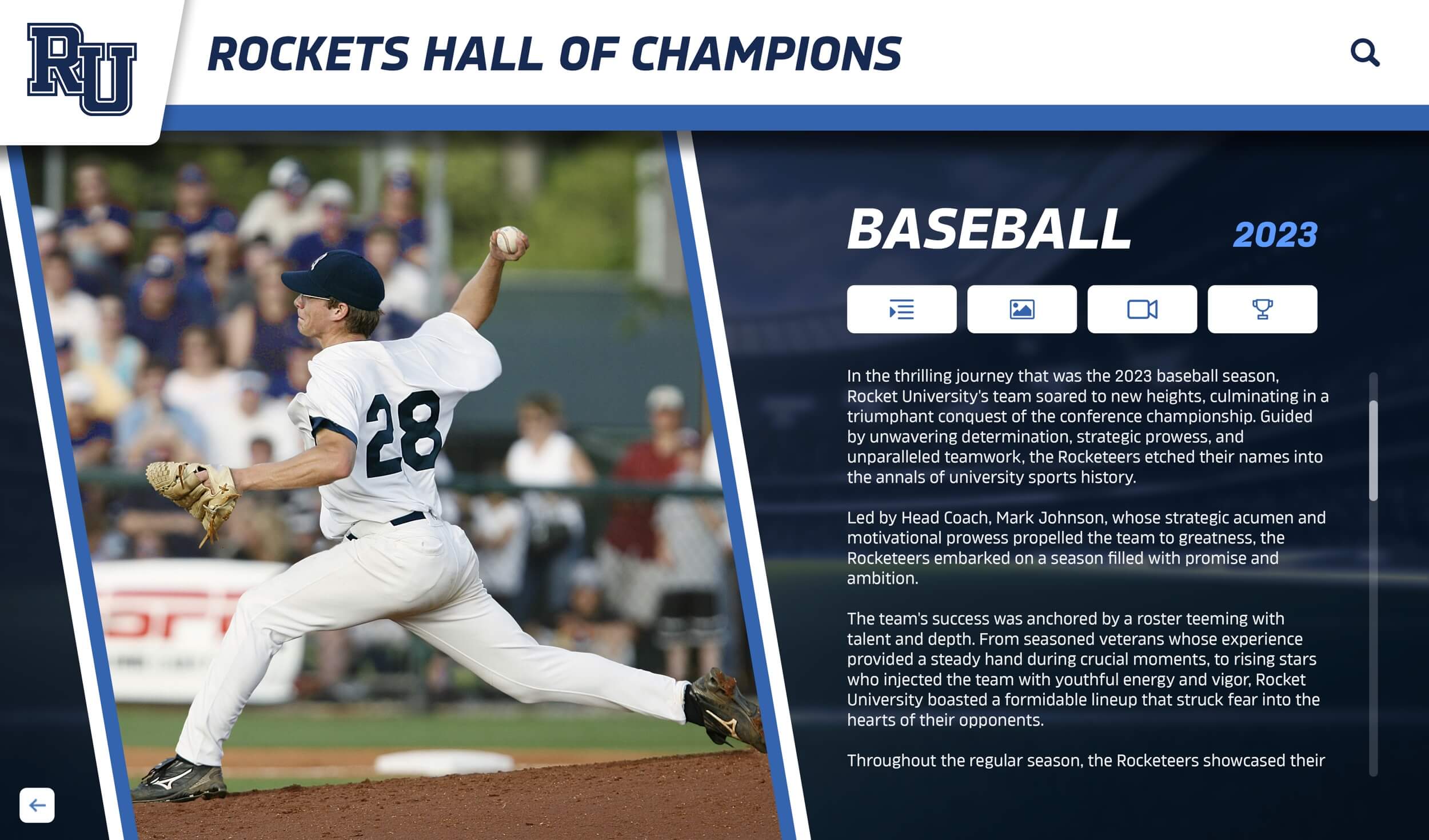
Digital platforms enable rich, detailed recognition impossible with physical banners or plaques.
Complete Achievement Documentation:
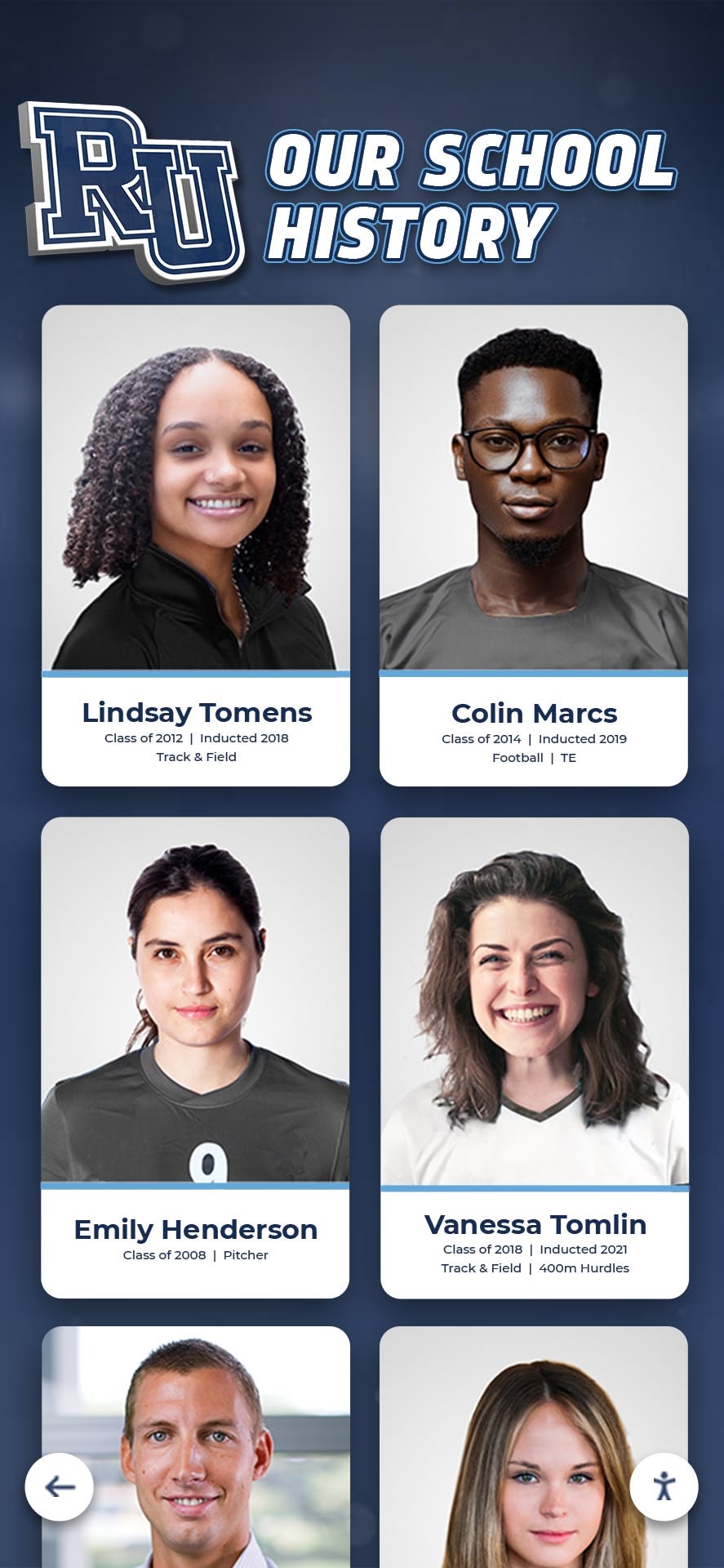
Modern displays can include comprehensive information for each 1,000-point scorer:
Statistical Excellence:
- Career total points and per-game scoring average
- Points by season showing development progression
- Notable single-game performances and career highs
- Shooting percentages across career
- Three-point totals and free throw statistics
- School and conference record comparisons
- Historical context among program’s all-time scorers
Development Timeline:
- Freshman season introduction and early contributions
- Sophomore year growth and increasing responsibility
- Junior season emergence as featured scorer
- Senior season milestone achievement and leadership
- Notable performances in playoffs and tournaments
- Key games and moments in journey to 1,000 points
Multimedia Content:
- Multiple high-quality action photographs from various games and seasons
- Video highlights showcasing scoring ability and memorable baskets
- The actual 1,000th point footage when captured
- Interview clips discussing achievement and career
- Celebration photos with teammates, coaches, and family
- Recognition ceremony and commemorative presentations
Personal Narratives:
- Journey from youth basketball through high school
- Challenges overcome and adversity conquered
- Gratitude to coaches, teammates, and family supporters
- Academic achievements alongside athletic excellence
- College plans and future basketball aspirations
- Advice and inspiration for younger players pursuing similar goals
- Reflections on what achieving 1,000 points means personally
This depth transforms simple name recognition into comprehensive storytelling that inspires current players while appropriately honoring achievement magnitude.
Unlimited Recognition Capacity
Physical space constraints completely disappear with digital platforms.
Every Achievement Honored:
Digital systems can accommodate:
- All-time 1,000-point scorers throughout program history
- Career 500-point scorers as emerging achievers
- Single-season scoring leaders across decades
- Career leaders in rebounds, assists, and other statistics
- Championship team rosters and complete statistics
- All-State athlete recognition and conference honors
- Coaching milestone achievements and career records
- Alumni playing at college and professional levels
Schools recognize everything worthy of celebration without space limitations forcing difficult prioritization.
Historical Preservation:
Digital platforms enable schools to honor athletes from throughout their history, not just recent decades:
Research and digitize information about 1,000-point scorers from the 1970s, 1980s, and earlier eras, scan old photographs and newspaper clippings preserving historical documentation, interview former coaches and teammates capturing stories before memories fade, create searchable archives making historical information easily accessible, and connect current players to rich program traditions spanning generations.
This preservation builds program identity while ensuring earlier achievers receive recognition equal to current players. Solutions for developing athletic history timelines help schools systematically document and celebrate their basketball heritage.
Recognition Ceremonies and Milestone Celebrations
Beyond permanent displays, memorable ceremonies create special moments celebrating 1,000-point achievements publicly.
The Commemorative Basketball Tradition
Many schools present custom basketballs to 1,000-point scorers—tangible recognition athletes treasure for life.
Custom Basketball Elements:
Commemorative basketballs typically include:
- Player name prominently displayed
- School name, colors, and logo
- “1,000 Point Scorer” designation
- Career dates and final point total
- Season-by-season scoring breakdown
- School record position if applicable
- Signatures from coaches and teammates
- Date when milestone occurred
These basketballs provide physical keepsakes athletes display proudly at home while digital platforms ensure permanent public recognition accessible to broader communities.
Presentation Timing Options:
Schools typically present commemorative basketballs using one of several approaches:
During the next home game following achievement—halftime presentation with family on court, during senior night celebrations if milestone occurs late in final season, at end-of-season basketball banquet alongside other team awards, or immediately post-game following the contest where 1,000th point was scored for maximum emotional impact.
Timing should balance creating memorable special moments with recognizing achievement while excitement remains highest and media attention continues.
Public Recognition at Home Games
Creating memorable public recognition during basketball games amplifies celebration impact and involves broader communities.
Game-Time Recognition Elements:
During the next home game following the 1,000-point milestone:
Pre-game announcement informing crowd about the special recognition planned, video tribute on scoreboards showing career highlights and memorable performances, halftime ceremony bringing player and family onto the court for formal recognition, coach testimonial discussing player’s career, work ethic, and character, presentation of commemorative basketball and other recognition items, photo opportunity with family, coaches, teammates, and administrators, and standing ovation from home crowd celebrating the rare achievement.
Integrated Digital Display Recognition:
Coordinate in-game ceremony with comprehensive digital recognition:
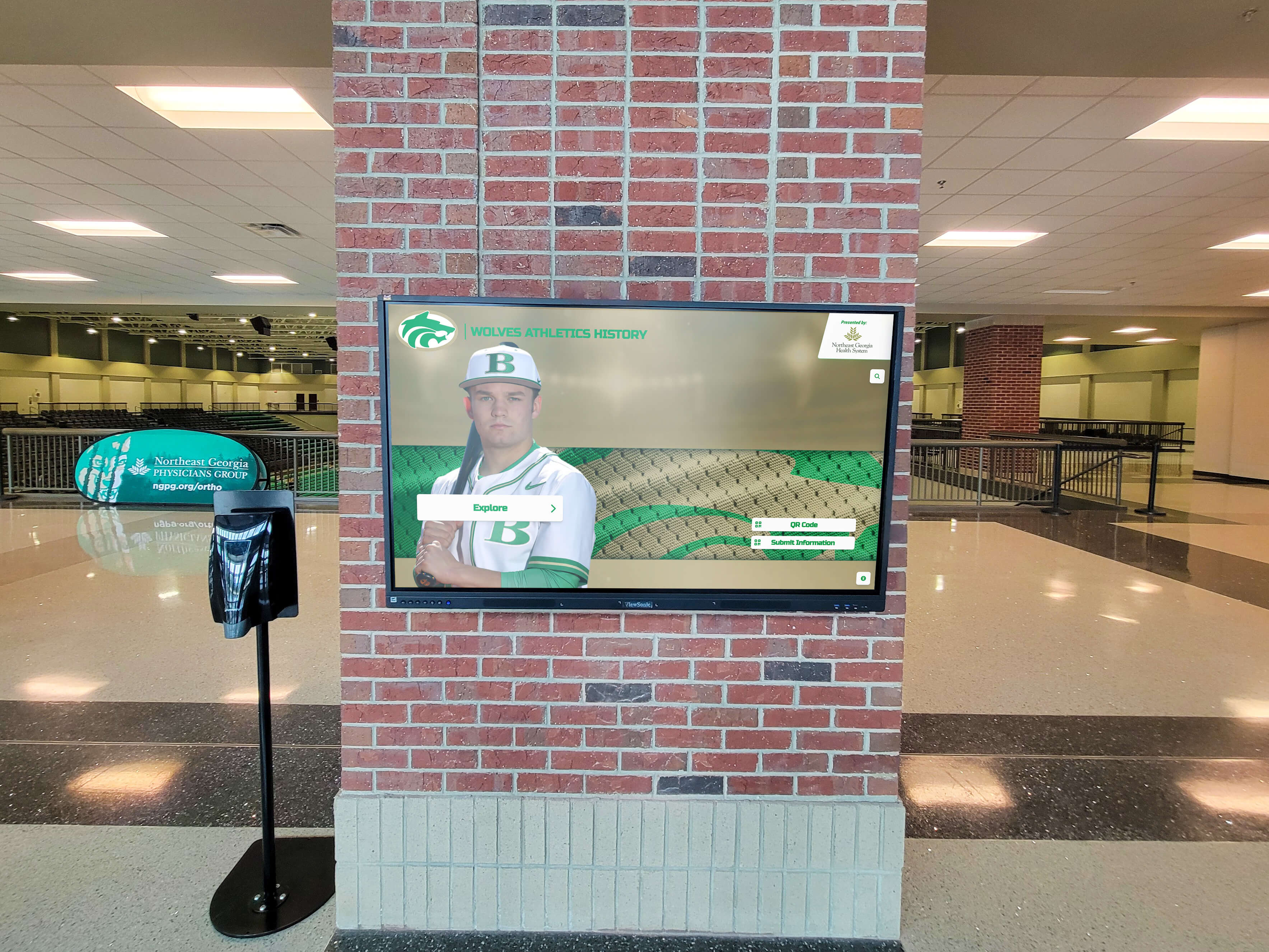
Feature 1,000-point scorer prominently on lobby and hallway touchscreen displays during game, display career statistics and achievement timeline on gymnasium scoreboards throughout contest, share social media posts during game enabling family and friends to celebrate and share, capture ceremony photos and video for addition to permanent digital profile, and create highlight content for continuous display showcasing both achievement and recognition celebration.
This integration creates cohesive recognition across all platforms while generating content that remains accessible for years, inspiring future players who explore recognition displays.
Involving Family and Community
Effective ceremonies engage broader school communities in celebrating exceptional achievement.
Family Recognition:
Provide advance notice to families allowing them to plan attendance at recognition ceremonies, reserve special seating for immediate and extended family members, invite family members to participate in on-court recognition presentations, create photo opportunities after public recognition for family keepsake memories, provide commemorative programs or certificates for families, and tag families in social media posts enabling easy sharing with their networks.
Youth Program Connections:
Invite youth basketball teams to attend games featuring 1,000-point scorer recognition, introduce younger players to milestone achievers as role models and mentors, create visual connections showing pathway from youth basketball through high school success, inspire next generation of program participants through tangible examples of excellence, and potentially arrange mentorship opportunities connecting 1,000-point scorers with aspiring young players.
Media Coverage Coordination:
Notify local newspaper, radio, and television outlets about upcoming 1,000-point milestone recognition, provide press releases with player information, statistics, and achievement context, coordinate photographer and reporter access during recognition ceremonies, share high-resolution photos and video for media publication, post recognition on school athletic department and district social media channels, and tag local media outlets in social posts encouraging coverage and sharing.
Comprehensive community involvement transforms individual achievement into collective celebration building program pride and community connection.
Inspiring Future Athletes Through Visible Recognition
Beyond honoring individual achievements, 1,000-point scorer recognition creates powerful motivation for current and future players.
Goal Setting and Development Pathways
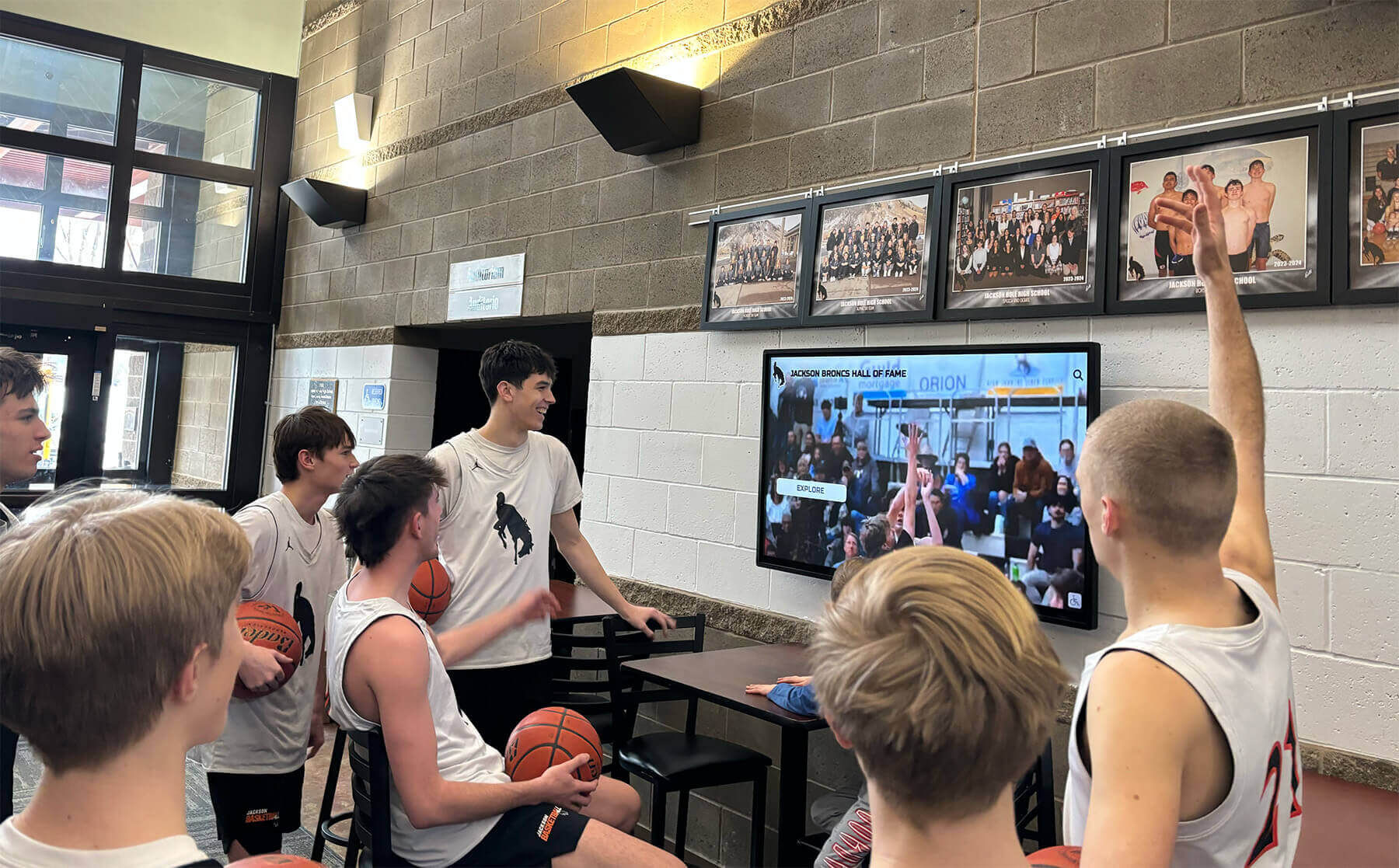
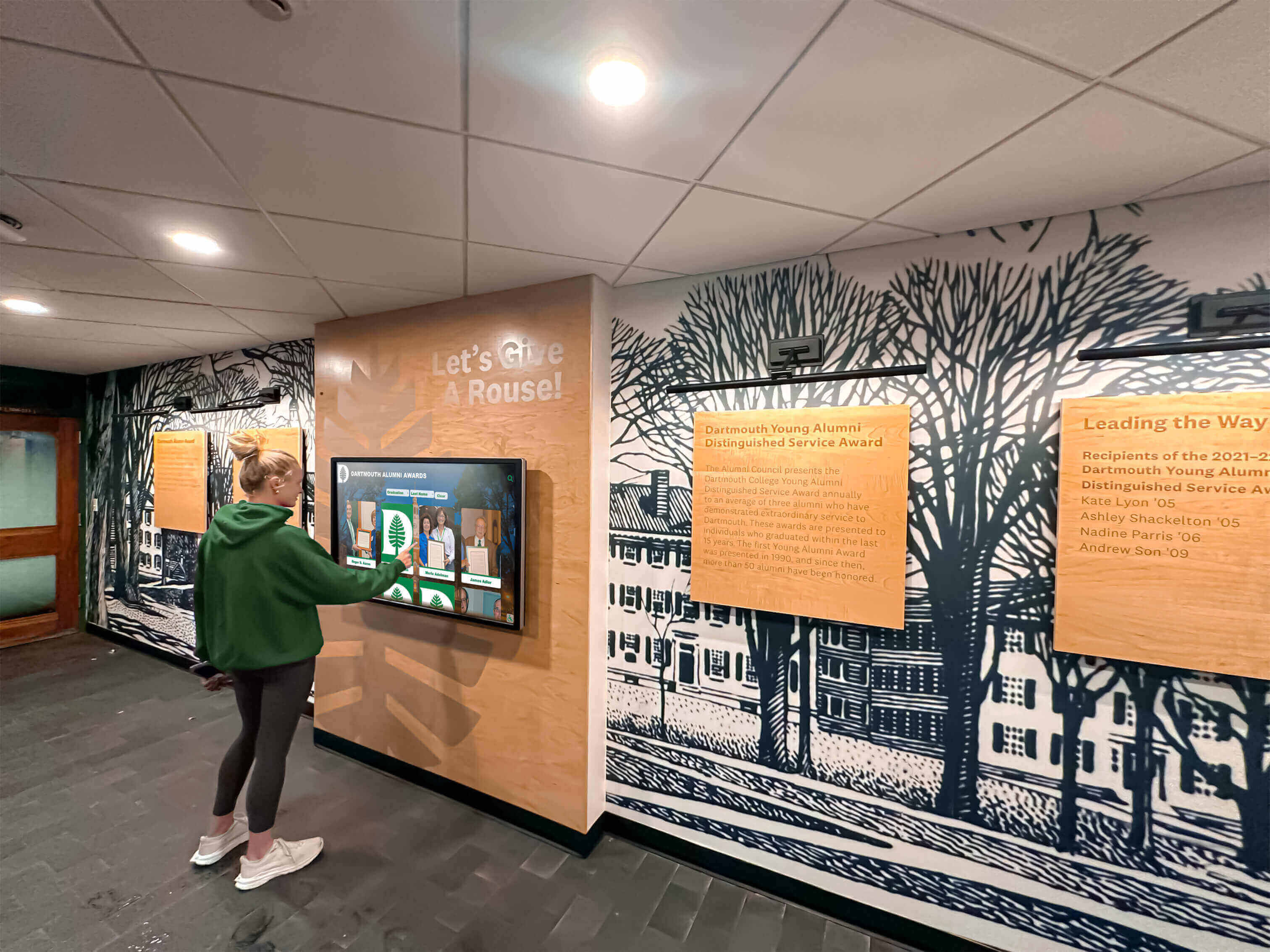
When younger players can interact with recognition of past achievements through touchscreen displays, those accomplishments transform from abstract possibilities into concrete, attainable goals.
Interactive Exploration:
Digital displays allow underclassmen to:
Browse comprehensive profiles of players who scored 1,000+ points, study progression patterns showing how scorers developed across four years, calculate specific scoring averages needed to reach the milestone, discover that most 1,000-point scorers weren’t dominant freshmen but developed progressively, understand work ethic, training commitment, and dedication required for sustained excellence, connect achievement to players they personally watched or knew, and visualize themselves potentially joining this elite group.
This self-directed exploration creates personal motivation more effectively than abstract encouragement from coaches or parents.
Developmental Framework:
Digital displays help younger players understand realistic progression toward 1,000 points:
Freshman Year:
- Learn varsity standards and competition level
- Focus on skill development and earning playing time
- Target 100-200 points in limited minutes
- Build foundation for future production
Sophomore Year:
- Increase playing time and offensive responsibility
- Target 200-300 points with expanded role
- Study how previous scorers developed at this stage
- Identify specific skill areas needing improvement
Junior Year:
- Assume featured role in team offense
- Target 300-350 points as primary scoring option
- Reach approximately 600-800 career points
- Recognize pathway to 1,000 is achievable
Senior Year:
- Lead team while pursuing individual milestone
- Achieve 300-400+ points reaching 1,000
- Cement legacy in program history
- Inspire next generation through achievement
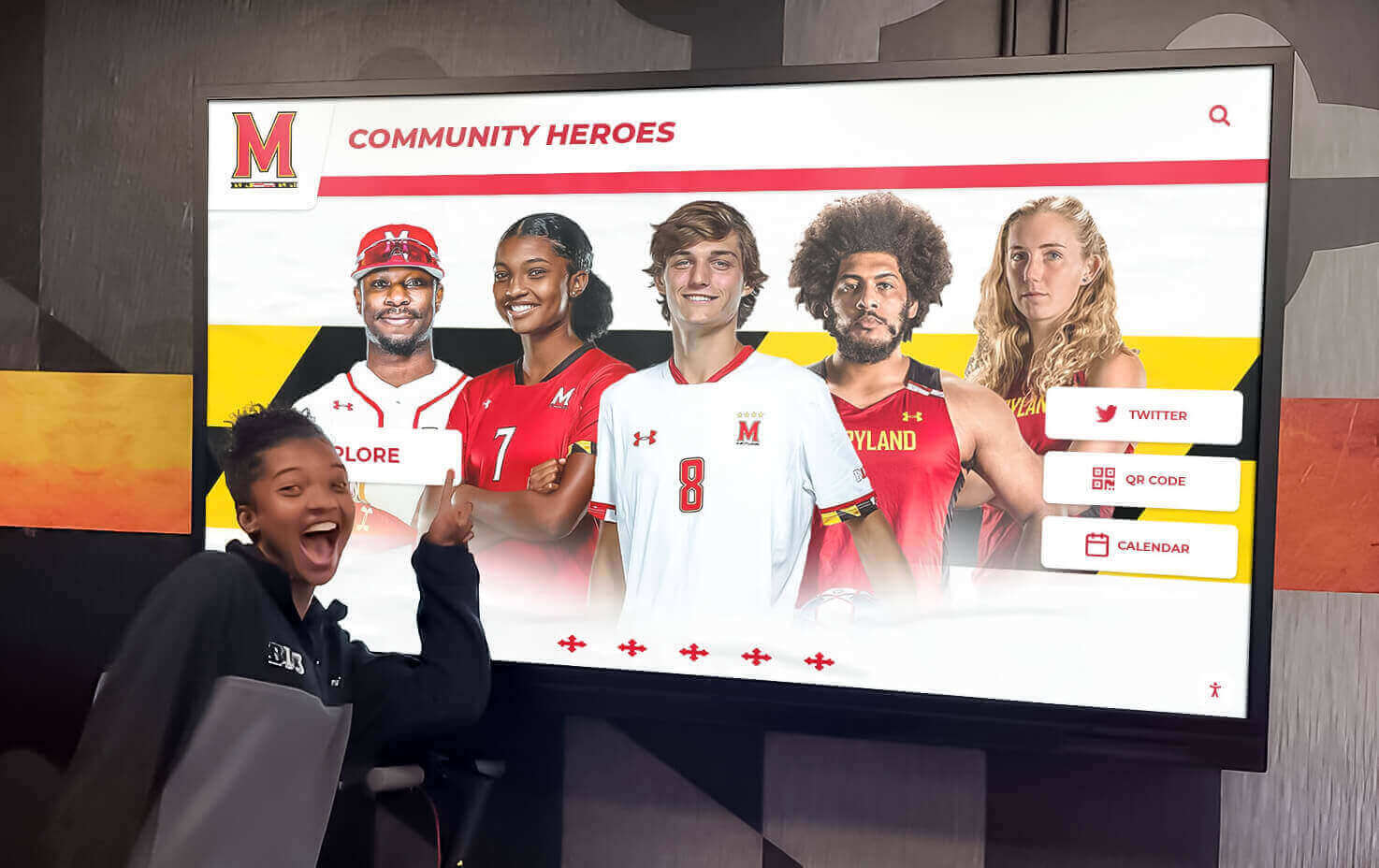
This framework, illustrated through actual player examples on digital displays, helps athletes understand that 1,000 points requires sustained excellence rather than immediate dominance—an encouraging message for developing players.
Building Program Culture and Tradition
Comprehensive 1,000-point scorer recognition contributes to broader basketball program culture development.
Establishing Excellence Standards:
Visible recognition throughout facilities communicates program values:
Individual achievement matters and receives lasting celebration, excellence sustained over multiple years earns permanent recognition, the program honors those who represent its values both on and off the court, current players can add their names to historical legacy through dedication and performance, and achievement requires both talent and character worthy of recognition.
These messages shape how players approach their high school careers, understanding they can earn lasting recognition through sustained commitment to excellence. Programs that develop strong athletic recognition cultures often achieve greater sustained success across multiple seasons and coaching transitions.
Generational Connections:
Digital recognition systems create connections spanning decades:
Current players discover names of older siblings, parents, or family members who scored 1,000 points, alumni visiting campus find their achievements prominently displayed decades after graduation, younger players identify with recent graduates they watched play during youth, coaching staffs show recruits program tradition of consistent excellence and player development, and community members see continuous threads of achievement spanning generations.
These connections strengthen program identity and create pride extending well beyond current rosters or individual seasons.
Implementing Digital Recognition in Your Program
Schools considering digital recognition for 1,000-point scorers should understand implementation requirements, technology considerations, and best practices.
Technology Selection and Hardware Requirements
Display Specifications:
Effective basketball achievement displays typically require:
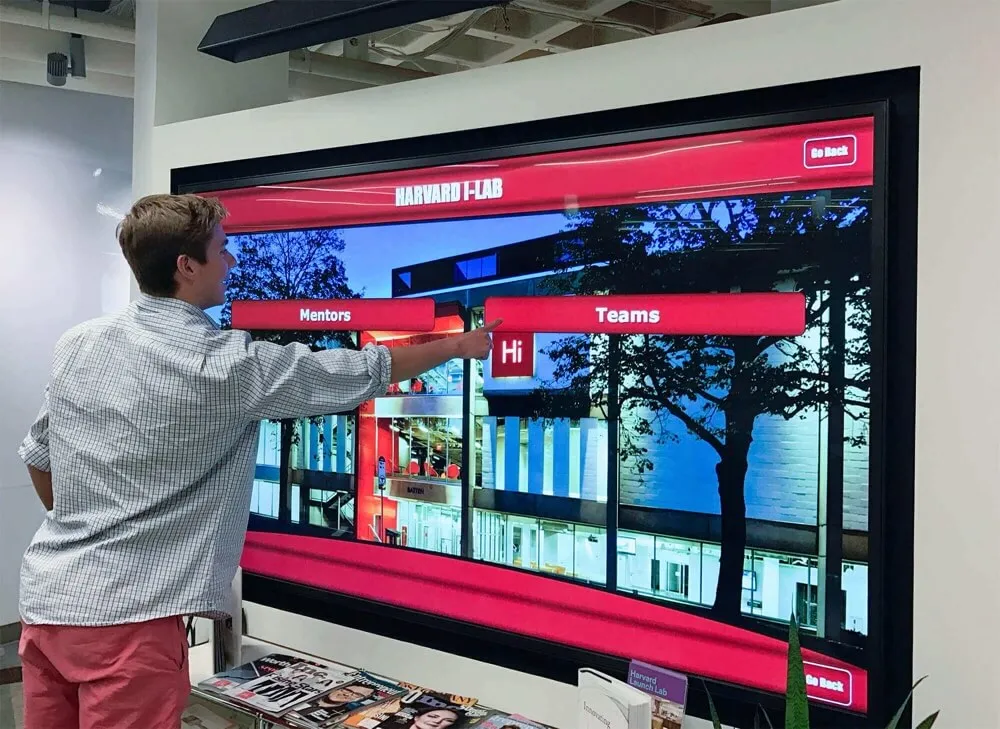
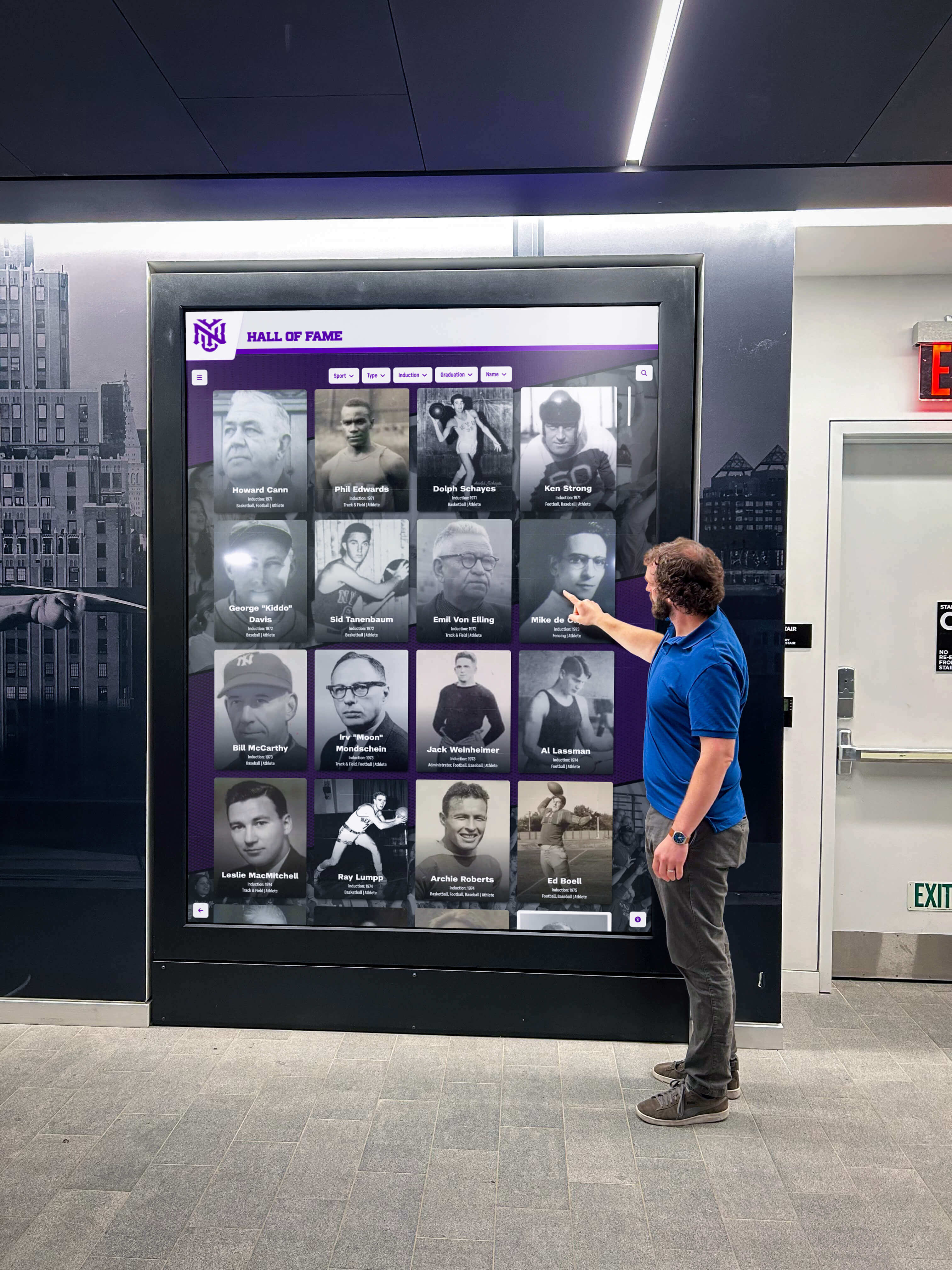
43-55 inch touchscreens for hallway installations or 55-75 inch displays for gymnasium lobbies and high-traffic areas, commercial-grade displays rated for 16+ hours daily operation in high-traffic environments, responsive multi-touch technology supporting simultaneous interactions from multiple users, adequate brightness (450+ nits) for ambient lighting in athletic facilities, durable construction or protective installation preventing damage from equipment or student interaction, and reliable internet connectivity for content updates and remote management.
Software Platform Considerations:
Choose platforms specifically designed for educational athletic recognition rather than generic digital signage systems:
User-friendly content management requiring no technical expertise or design skills, template systems ensuring professional appearance without custom design work, mobile access enabling updates from smartphones and tablets, cloud-based architecture eliminating local server maintenance, responsive customer support from educational technology specialists, and proven implementation record in similar high school environments.
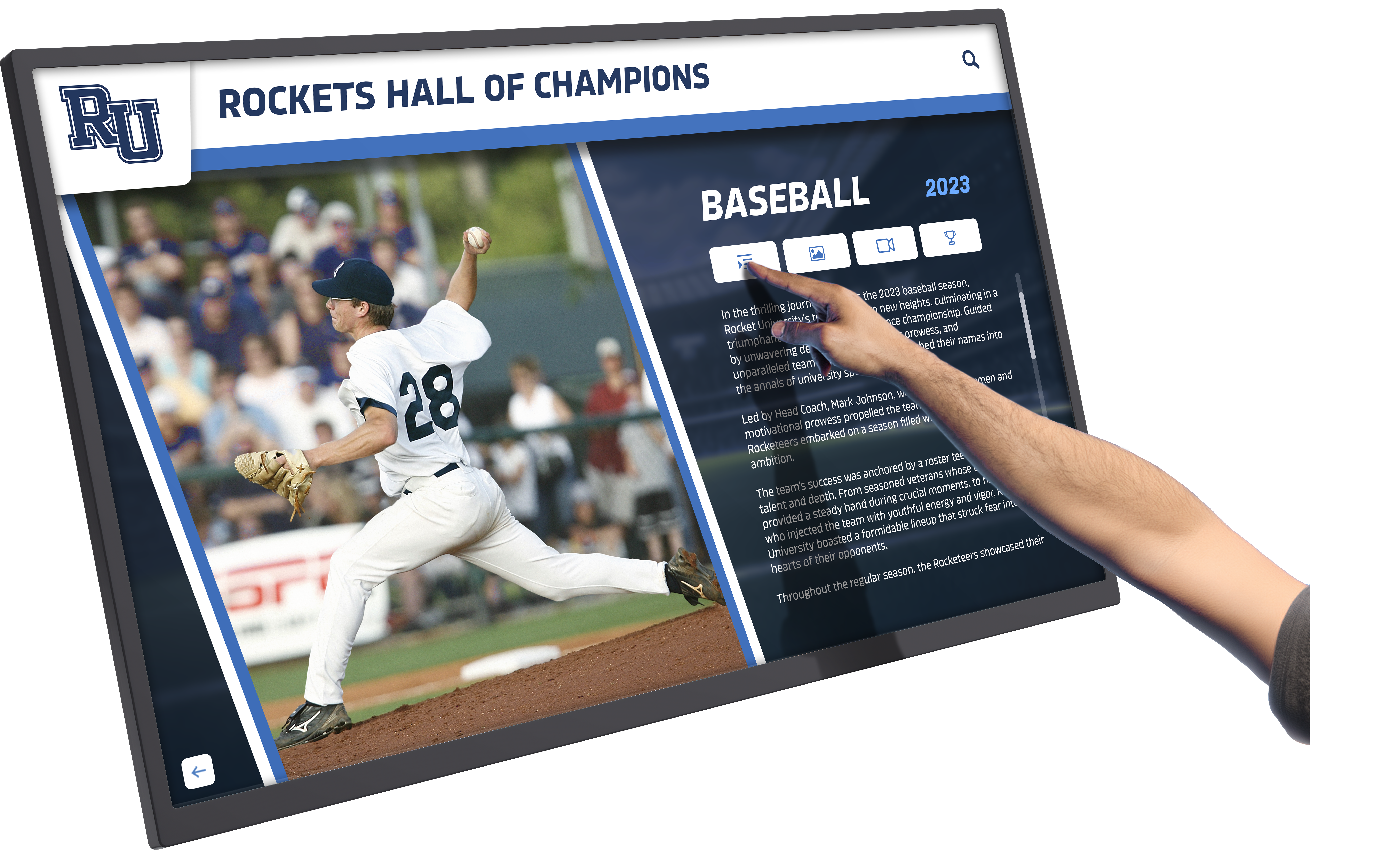
Solutions like Rocket Alumni Solutions specialize in athletic recognition for schools, offering purpose-built platforms designed specifically for these applications rather than generic systems requiring extensive customization.
Budget Considerations:
Digital recognition system costs vary based on scope:
Entry-Level Implementation: $5,000-$10,000
- Single display with basic software platform
- Standard commercial-grade touchscreen
- Cloud-based content management system
- Initial content setup assistance
- Ongoing software updates and support
Comprehensive Program: $15,000-$30,000
- Multiple displays across campus locations
- Premium commercial-grade hardware
- Advanced software features and customization
- Professional installation and training
- Comprehensive ongoing support and maintenance
Long-Term Cost Analysis:
Traditional gymnasium banners cost $200-500 each. A school producing one 1,000-point scorer every 3-4 years spends $2,000-5,000 over 20 years on banners alone, plus additional costs for championship banners and other recognition. This doesn’t include space constraints forcing banner removal or replacement costs when banners deteriorate.
Digital systems require higher initial investment but typically achieve cost neutrality within 5-7 years while providing dramatically superior recognition capabilities with unlimited capacity for all achievements.
Content Development Strategy
Historical Research:
Begin implementation by documenting all-time 1,000-point scorers:
Review record books and archived statistical documents, search yearbooks for photographs and biographical information, contact former coaches for insights about players and memorable moments, reach out to alumni for photos, stories, and personal reflections, search local newspaper archives for achievement coverage and historical context, and document comprehensive statistics and context for each historical scorer.
This foundation creates impressive program recognition from day one rather than starting only with current players.
Current Season Monitoring:
Establish systems tracking players approaching 1,000 points:
Maintain spreadsheet monitoring career point totals for juniors and seniors, calculate points needed for each player to reach milestone, prepare content templates before milestones occur requiring only final details, coordinate with coaches about anticipated timing of milestone achievements, arrange photographers to capture milestone moments during potential 1,000th point games, and pre-draft profile content enabling immediate publication when achievement occurs.
This preparation enables same-day recognition when milestones happen rather than scrambling to create content retroactively.
Ongoing Maintenance:
Sustain program value through regular attention:
Add new 1,000-point scorers immediately upon achievement with comprehensive profiles, update current season statistical leaders creating year-round engagement, feature alumni achievements at college levels maintaining connections, refresh content periodically preventing staleness, add newly discovered historical information as research continues, and incorporate family or community photo submissions enriching content quality.
Regular maintenance ensures displays remain valuable and engaging rather than becoming static and ignored.
Staff Training and Responsibility Assignment
Initial Training:
Quality vendors provide comprehensive training ensuring success:
In-person or virtual training sessions covering all platform features and workflows, detailed documentation of content creation and update procedures, guidelines for photo quality, writing style, and information standards, troubleshooting guidance for resolving common issues independently, and best practice recommendations maximizing engagement and recognition impact.
Effective training ensures staff can confidently manage systems without ongoing vendor dependence or technical expertise requirements.
Role Assignment:
Designate clear responsibilities preventing recognition from becoming neglected:
Primary administrator (typically athletic director) with ultimate responsibility for program success, content manager responsible for creating profiles and updating information, media coordinator capturing photos and videos at games and events, and technical liaison coordinating with IT department on network access and connectivity issues.
Clear ownership ensures recognition receives ongoing attention rather than fading after initial enthusiasm. Schools implementing digital storytelling for athletic programs report that designated responsibility proves essential for sustained success.
Beyond 1,000 Points: Comprehensive Basketball Recognition
While 1,000-point scorers represent marquee achievements, comprehensive programs celebrate diverse accomplishments across basketball excellence.
Additional Scoring Milestones
500-Point Club:
Recognizing players who score 500+ career points celebrates substantial achievement while including more athletes:
Many programs feature multiple 500-point scorers per decade where 1,000-point scorers remain rare, younger players see 500 points as more immediately achievable goal, junior year 500-point achievers understand 1,000 points becomes realistic senior season target, and comprehensive recognition demonstrates program values diverse levels of excellence.
Single-Season and Single-Game Records:
Beyond career totals, recognize outstanding individual performances:
Single-season scoring records highlighting exceptional year-long production, school record for points in a game celebrating remarkable individual performances, consecutive games scoring double-figures showing remarkable consistency, and tournament and playoff scoring achievements in high-pressure situations.
All-Around Statistical Excellence
Multi-Category Leaders:
Recognize players excelling beyond just scoring:
- Career rebounding leaders
- Career assist leaders
- Career steals and defensive leaders
- Three-point shooting record holders
- Free throw percentage leaders
- Players achieving 1,000 points + 500 rebounds
- Players achieving 1,000 points + 500 assists
These recognitions honor diverse skills and playing styles beyond pure scoring ability.
Team Success Recognition
Championship and Success Milestones:
Comprehensive programs balance individual and team recognition:
Conference championship team rosters and statistics, state championship trophy displays and complete documentation, tournament advancement achievements and memorable playoff runs, team winning streak milestones and consecutive success periods, and team single-season records for points, defense, or efficiency.
Digital platforms accommodate unlimited recognition categories without space constraints or additional costs per achievement type.
Coaching Recognition
Coaching Milestones:
Outstanding coaches deserve recognition alongside player achievements:
Career victory milestones (100, 200, 300+ wins), conference championships won during tenure, state tournament appearances and championships, number of 1,000-point scorers developed, college players coached and developed, and coach of the year awards and honors received.
Recognizing coaching excellence acknowledges that player development and achievement occur within coaching systems and program cultures created by dedicated coaches.
Conclusion: Recognition That Honors Excellence and Inspires Achievement
When a basketball player scores their 1,000th career point, they accomplish something genuinely extraordinary—joining a select group representing only a tiny percentage of high school basketball players across decades of competition. This achievement deserves recognition matching its magnitude: immediate celebration without frustrating delays, comprehensive profiles telling complete achievement stories, permanent visibility inspiring current and future players, and lasting tributes accessible to broader communities beyond just those walking specific hallways.
Digital recognition displays enable exactly this kind of meaningful recognition. Athletes see their achievements celebrated immediately while excitement remains high. Younger players explore detailed profiles of past scorers, understanding specific pathways to similar success. Families share pride in permanent digital recognition accessible from anywhere. The entire school community benefits from professional, engaging displays that build program pride and tradition across generations.
Most importantly, modern systems eliminate impossible choices between recognizing achievement and managing limited physical space. Schools can honor every 1,000-point scorer throughout history—plus 500-point scorers, statistical leaders, championship teams, coaching milestones, and countless other worthy achievements—without cluttered gymnasiums or difficult prioritization decisions.
The message becomes clear and powerful: sustained excellence earns lasting recognition. Not recognition delayed until excitement fades. Not recognition that deteriorates and disappears. Real-time, permanent, professional recognition that inspires current players, honors past achievements, and builds traditions extending across generations of basketball excellence.
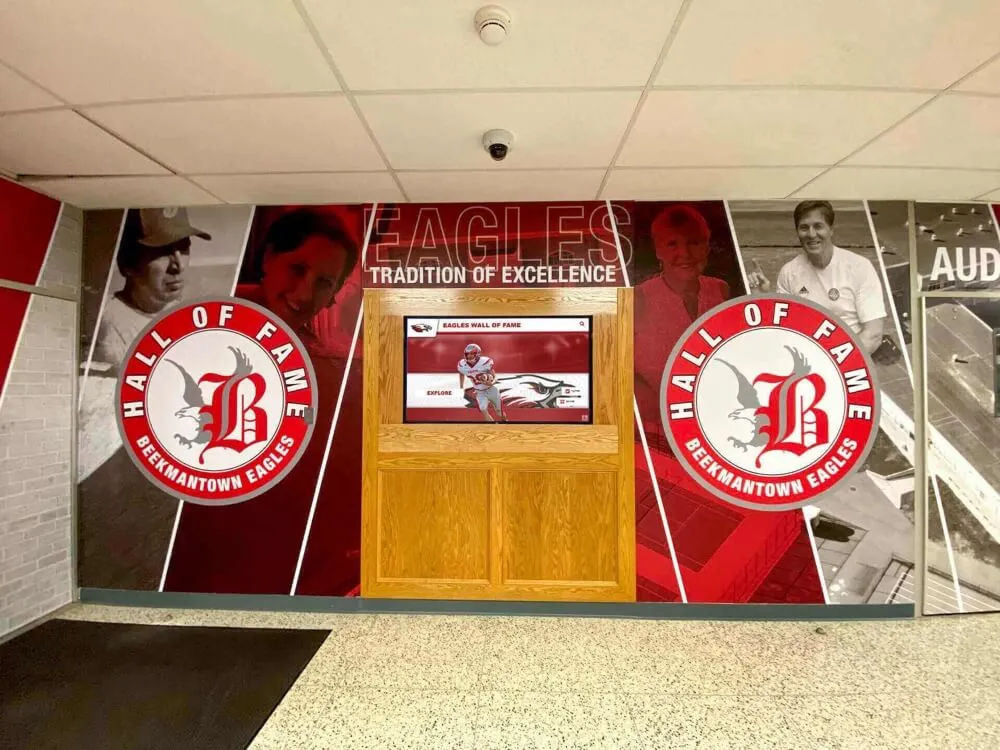
Ready to Transform Your Basketball Recognition?
Discover how Rocket Alumni Solutions enables schools to celebrate 1,000-point scorers and other basketball achievements through intuitive digital touchscreen displays designed specifically for athletic recognition. Our platform offers the simplicity athletic directors and coaches need with the power to create professional, engaging recognition that inspires athletes and builds lasting program pride.
Stop waiting months to add names to increasingly crowded gymnasium banners. Start recognizing achievement in real-time with interactive digital recognition displays designed for how modern athletic programs operate and how current families expect to engage with their schools.
Visit Rocket Alumni Solutions to explore how digital recognition transforms milestone celebrations from delayed physical updates into immediate, inspiring, permanent tributes to excellence. Your 1,000-point scorers deserve recognition matching their extraordinary achievements—professional, permanent, and powerful.
Contact us today to discuss your vision for basketball recognition and discover how the right display solution can honor excellence while inspiring the next generation of 1,000-point scorers in your program.