



Key Takeaways
Compare the 10 best Hall of Fame tools for athletics, donor recognition, arts programs, and historical displays. Expert analysis of features, pricing, and capabilities to help you choose the right recognition platform.
Understanding Hall of Fame Tool Categories and Selection Criteria
Before examining specific platforms, understanding how different tool types serve various recognition needs prevents selecting solutions fundamentally mismatched to your requirements.
Primary Hall of Fame Tool Categories
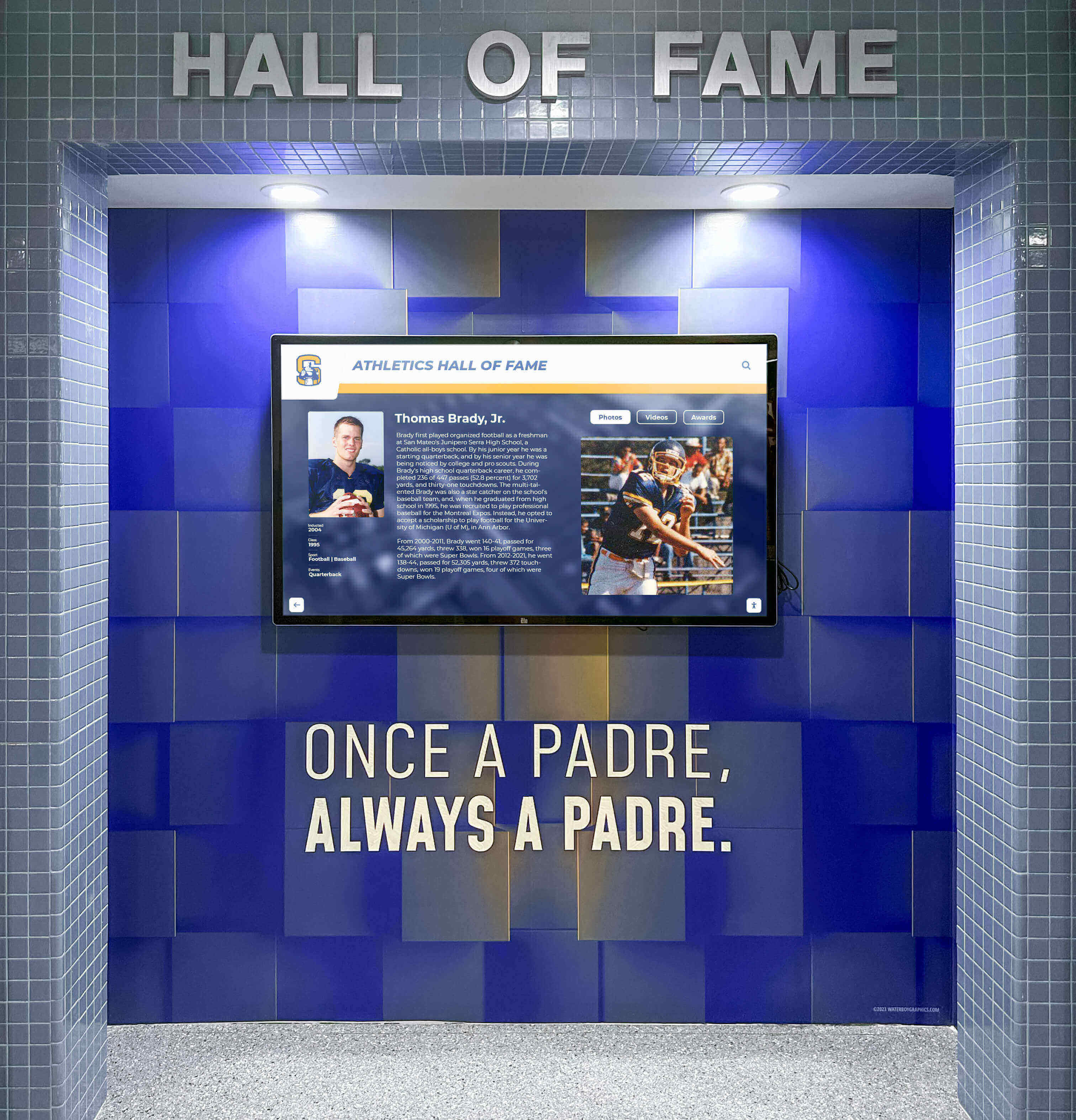
Purpose-Built Recognition Platforms specialize exclusively in celebrating achievements and honoring individuals. These systems combine database architecture supporting unlimited profiles with interactive exploration interfaces and comprehensive content management. Purpose-built platforms understand recognition-specific workflows, delivering features like achievement categorization, record tracking, multimedia storytelling, and search functionality designed specifically for halls of fame rather than adapted from other uses.
Digital Signage Systems Adapted for Recognition serve multiple communication purposes with recognition as one application among many. These platforms excel at displaying rotating content like announcements and alerts but typically lack database structures, advanced search capabilities, and content depth required for comprehensive halls of fame. They work well when recognition content shares displays with other communications but poorly when recognition represents the primary purpose.
Content Management Systems Requiring Custom Development provide complete flexibility through platforms like WordPress but demand significant web development expertise, extended implementation timelines, and ongoing technical maintenance. These approaches suit organizations with dedicated IT resources and unique requirements that off-the-shelf solutions cannot accommodate, but rarely prove cost-effective for typical recognition programs.
Graphic Design Tools for Recognition Content Creation enable producing professional graphics and social media content celebrating achievements but cannot create interactive, searchable halls of fame. These supplementary tools enhance recognition promotion without replacing comprehensive recognition platforms.
Critical Evaluation Criteria for Hall of Fame Tools
Content Management Capabilities determine whether your staff can confidently update recognition without vendor dependencies or technical expertise. Intuitive cloud-based interfaces, template systems ensuring consistency, bulk upload capabilities for historical content, and approval workflows protecting quality separate platforms enabling self-sufficient operation from systems creating ongoing vendor reliance.
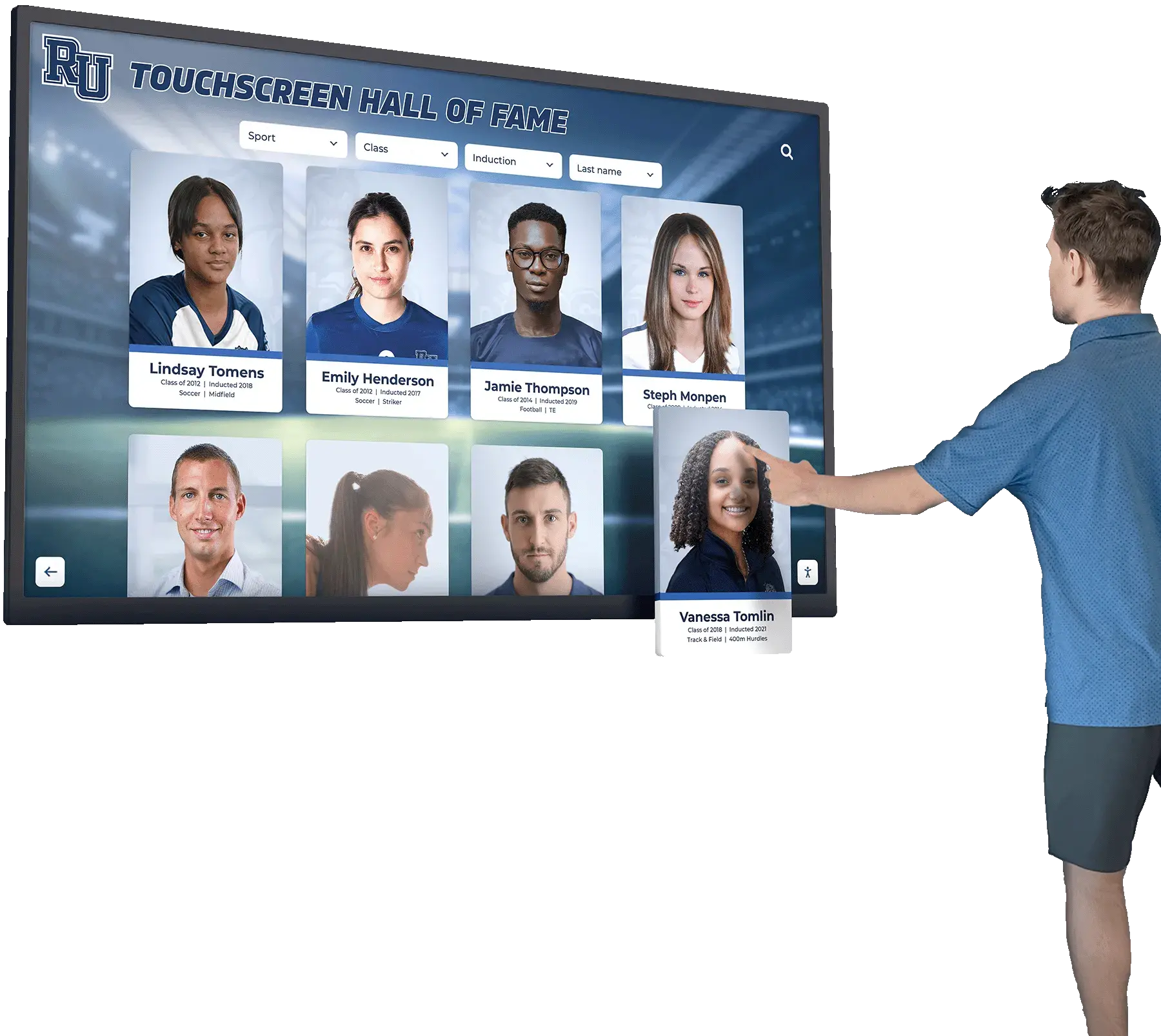
Interactive User Experience Quality dictates whether visitors engage deeply with content or ignore displays entirely. Responsive touchscreen interfaces, powerful search and filtering tools, compelling attract modes drawing attention, and mobile-responsive design extending access beyond physical locations create engagement that static approaches cannot achieve. For organizations serving diverse communities, consider platforms supporting digital athletic achievement displays with accessibility features.
Scalability and Capacity Limitations reveal whether systems accommodate growth or impose artificial constraints requiring expensive upgrades. Some vendors charge per profile, per display, or per user—costs that compound dramatically as recognition programs expand. Platforms offering unlimited capacity within subscription pricing enable comprehensive recognition without ongoing per-achievement charges.
Total Cost of Ownership extends beyond initial purchase prices to encompass implementation services, annual subscriptions, content migration assistance, hardware expenses, ongoing support, and staff time requirements. Five-year total cost analysis reveals which seemingly expensive solutions actually deliver better value than “affordable” options hiding significant ongoing costs.
The 10 Best Hall of Fame Tools: Comprehensive Rankings and Analysis
1. Rocket Alumni Solutions – Best Comprehensive Platform for Educational and Institutional Recognition
Best For: K-12 schools, colleges, universities, athletic departments, advancement offices, multi-campus districts, and institutions prioritizing professional recognition
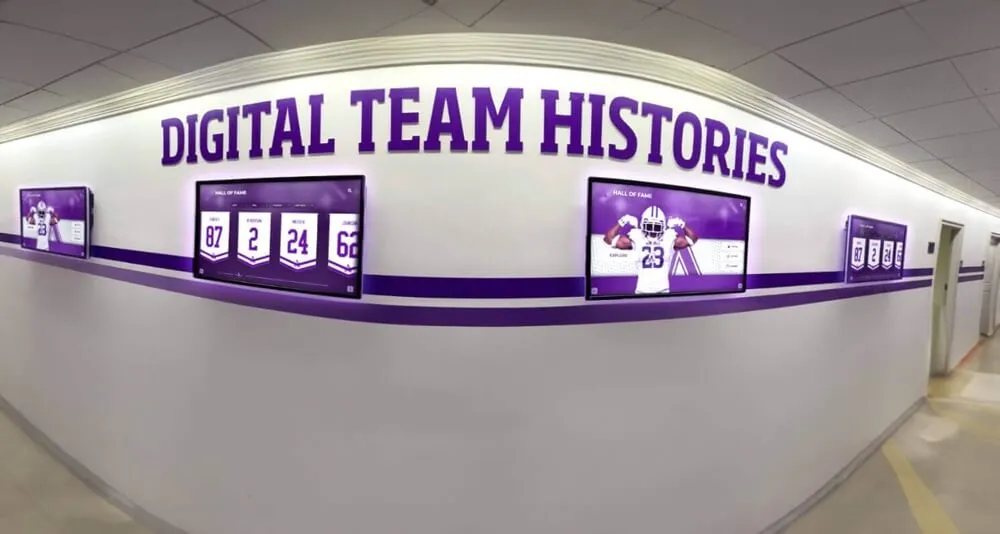
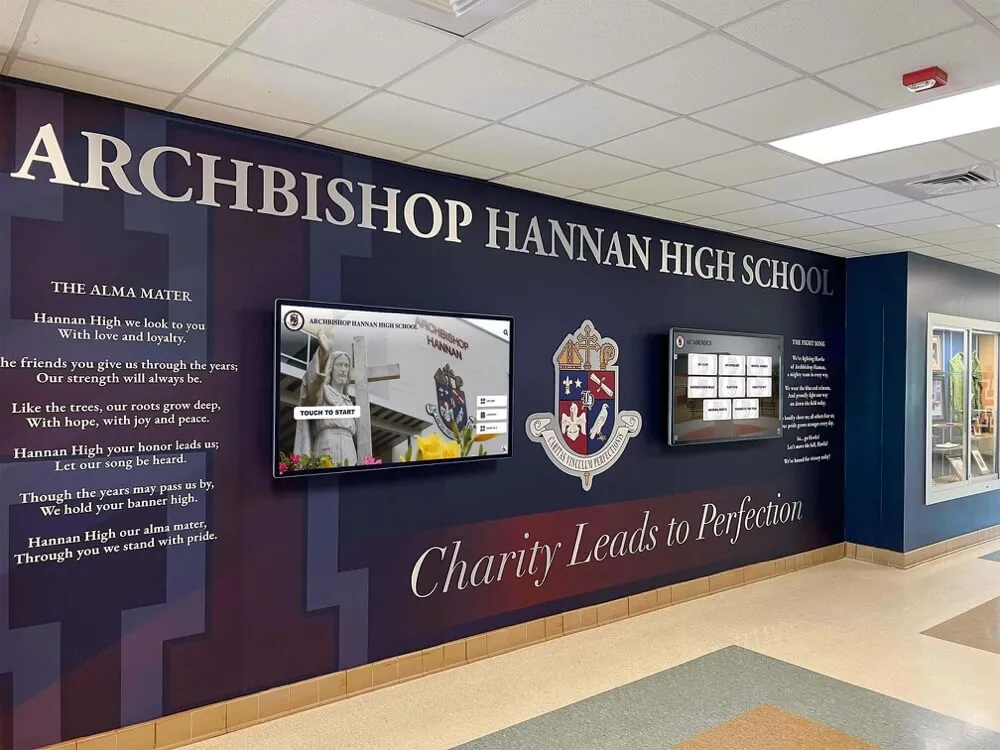
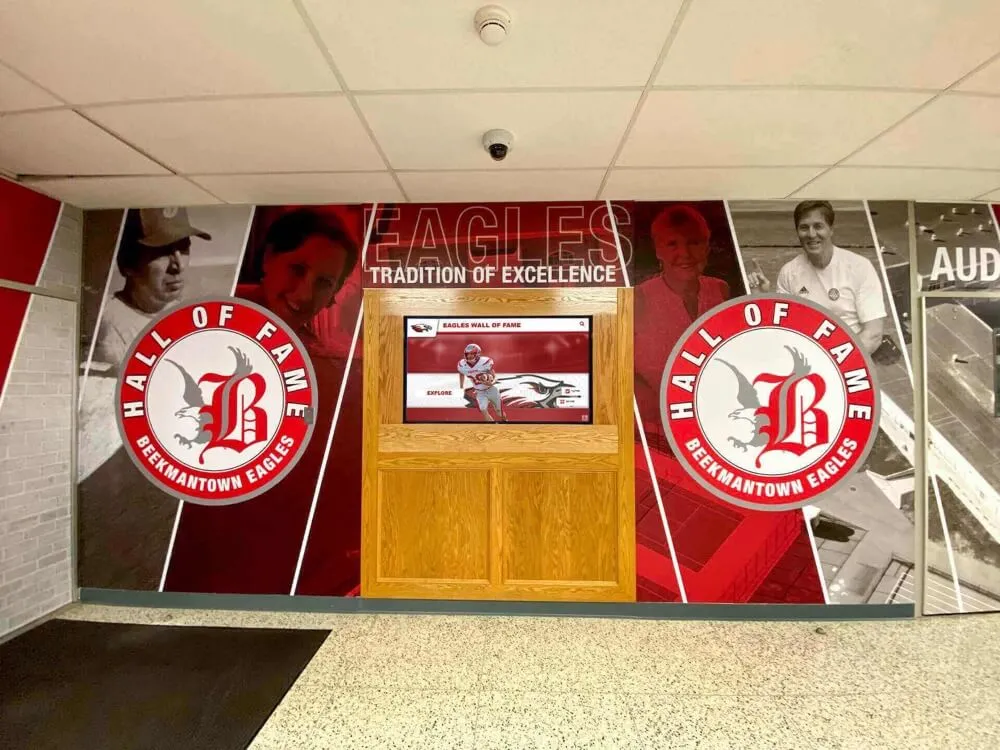
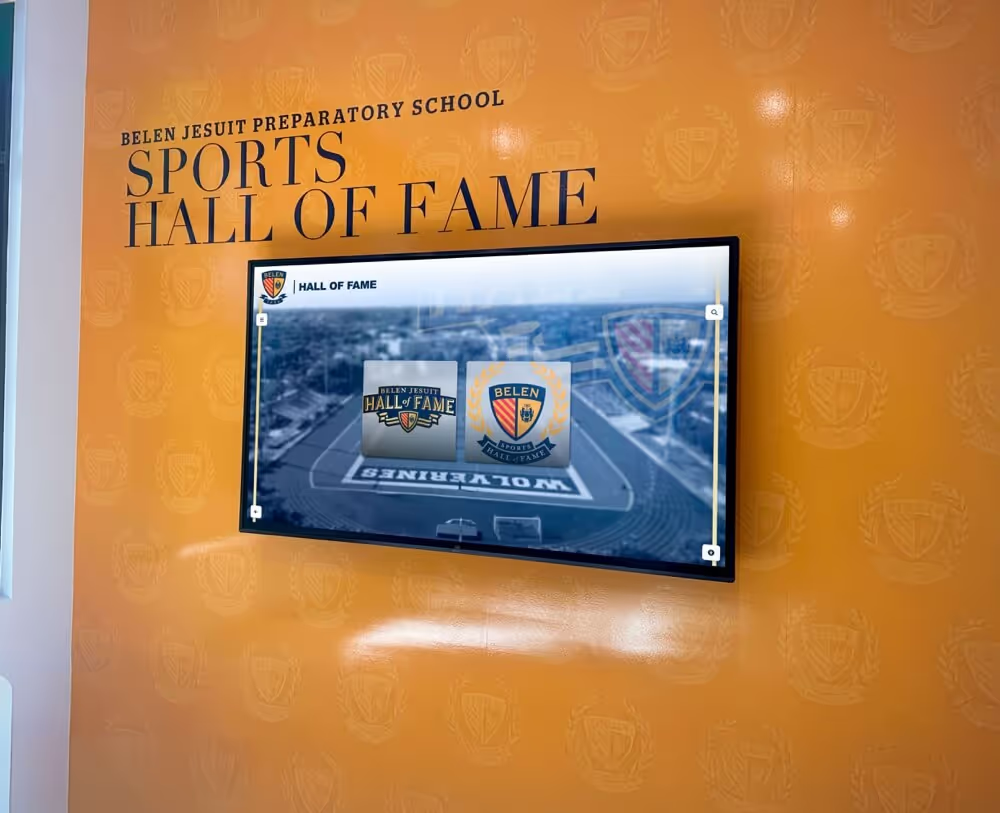
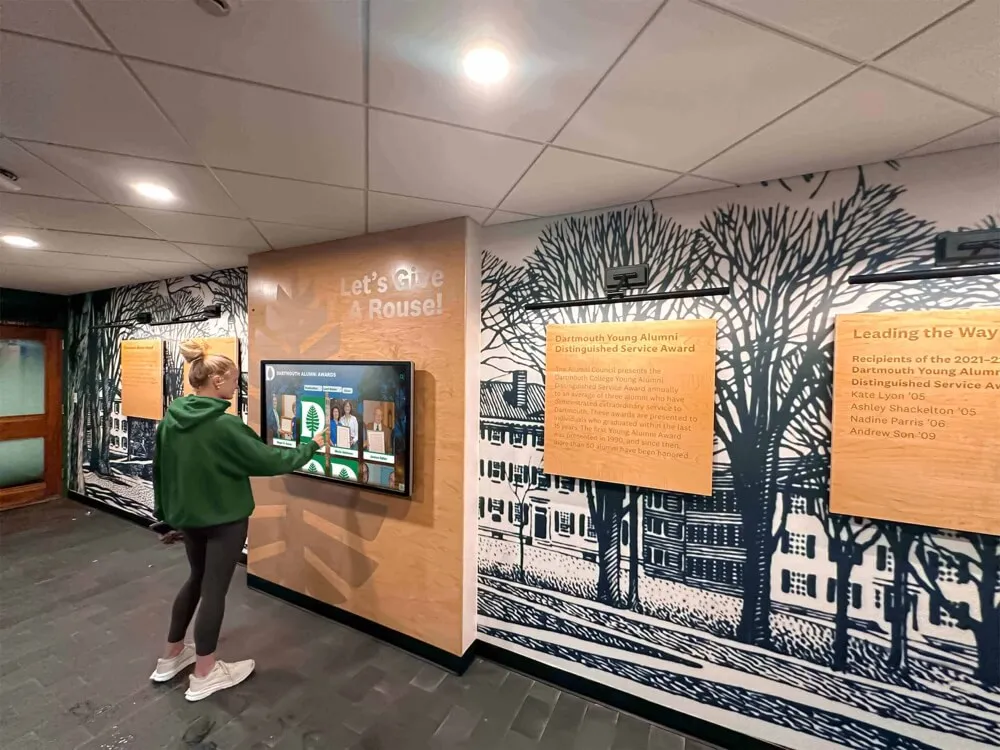
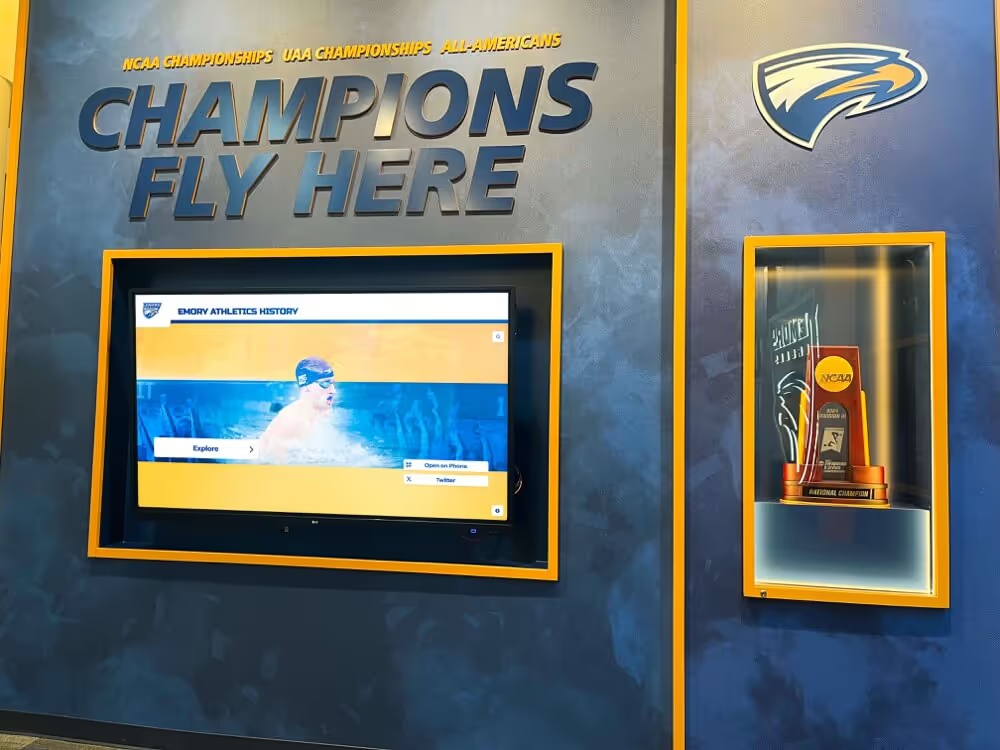
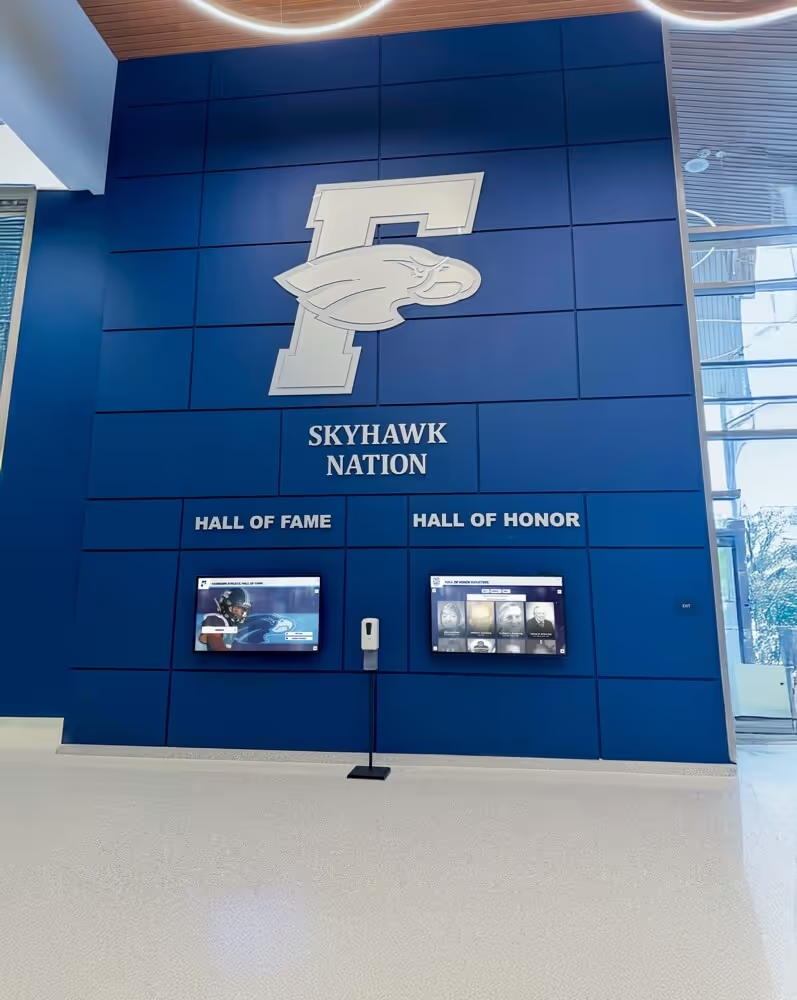
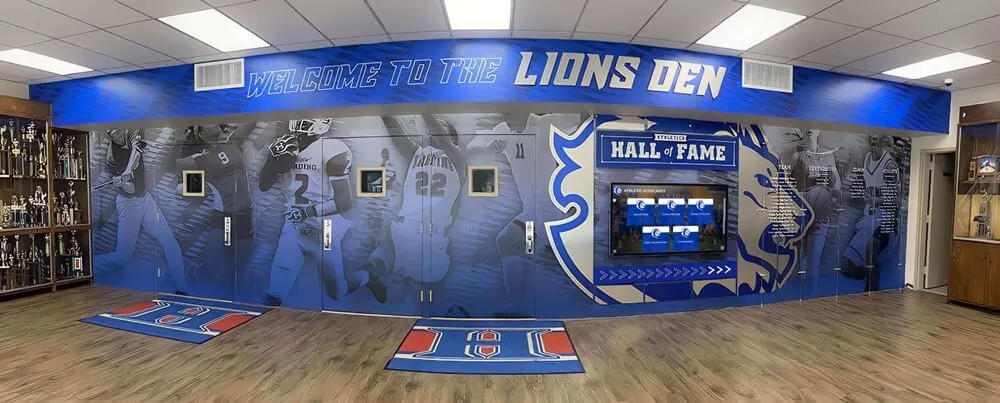
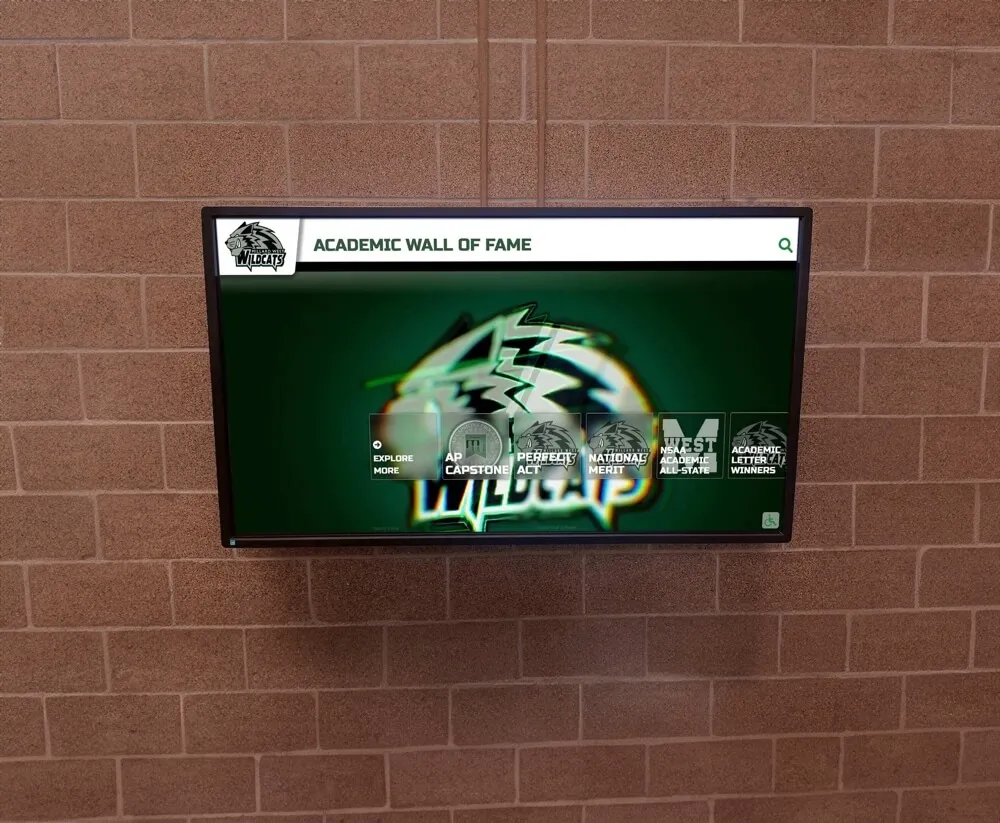
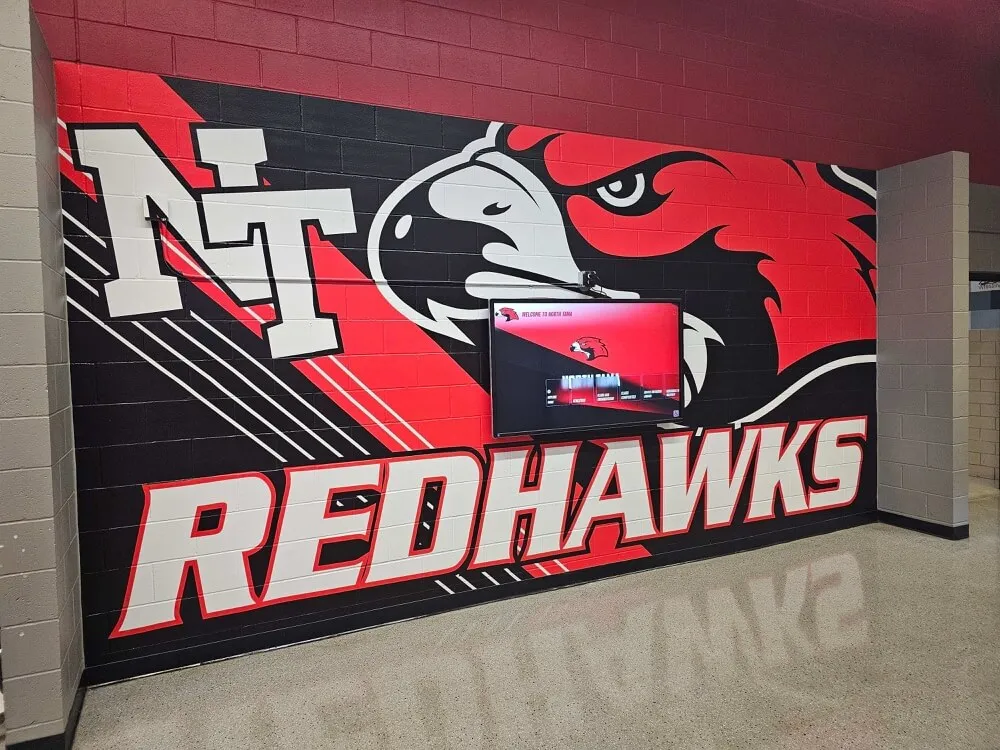
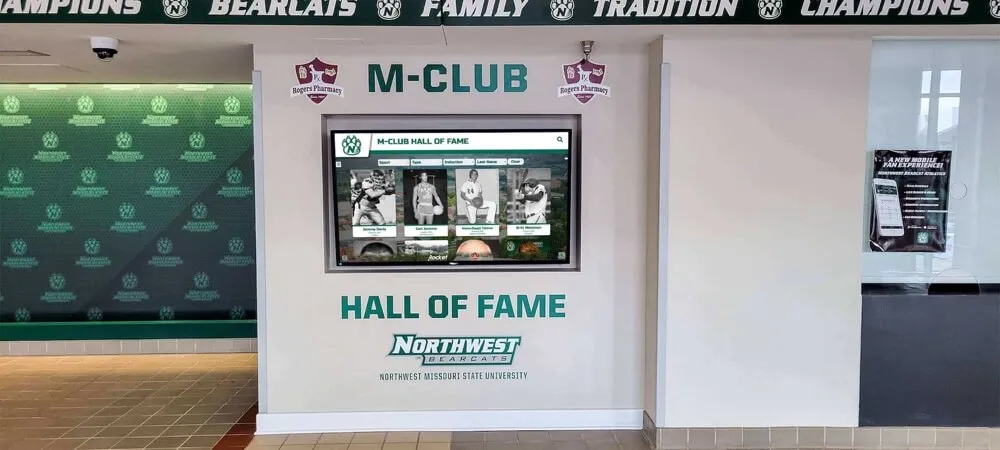
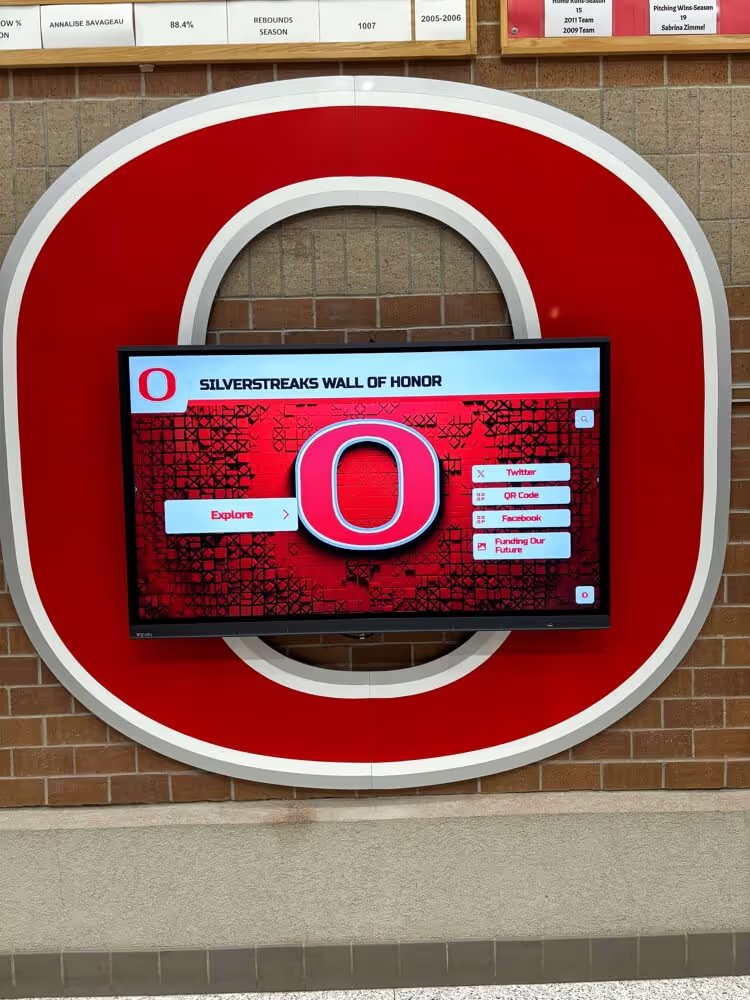
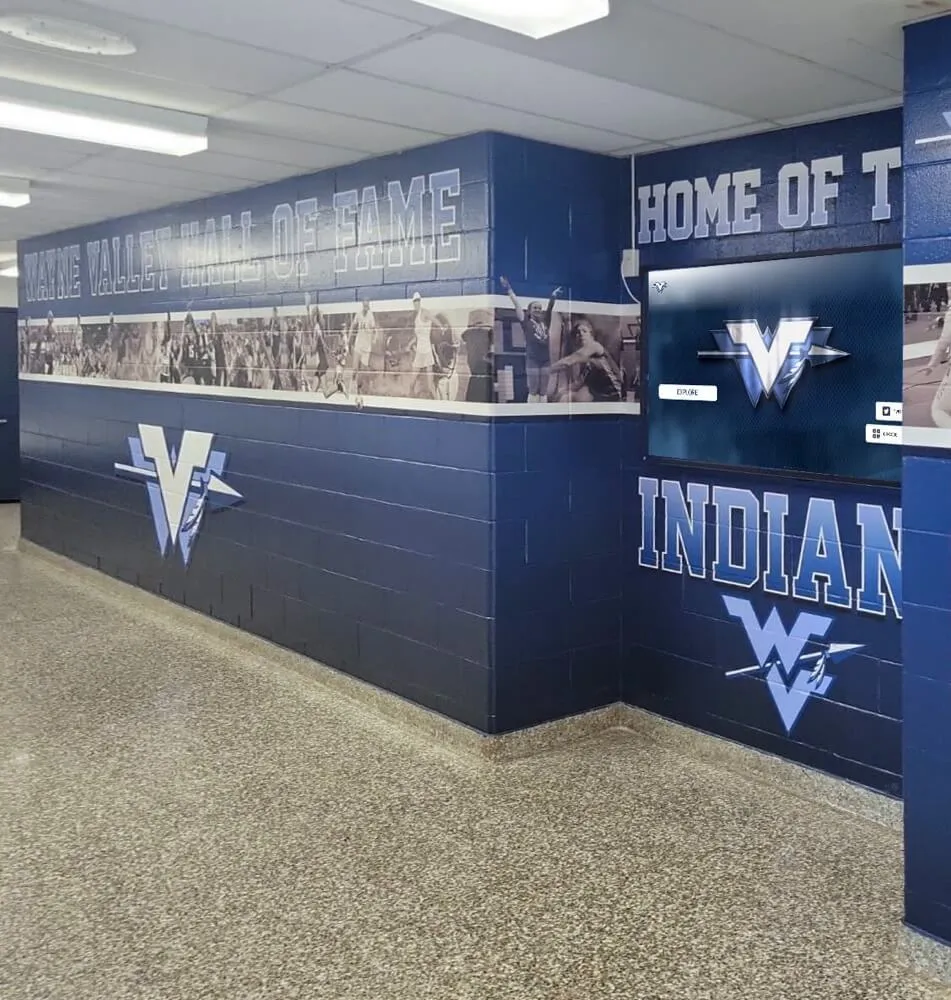
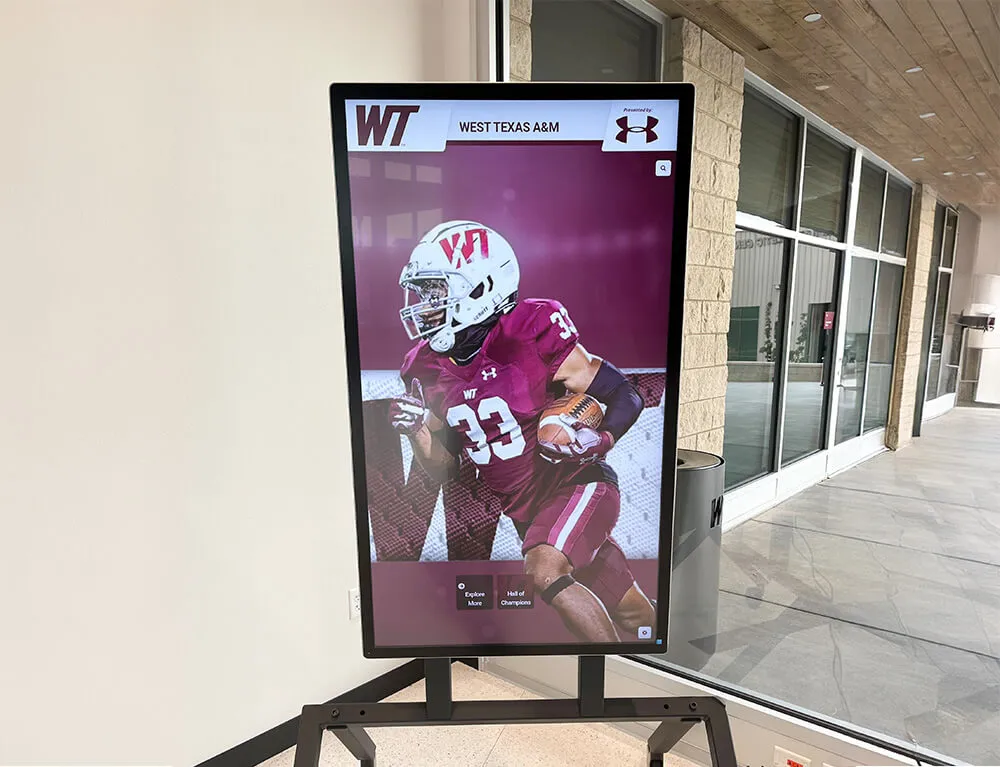
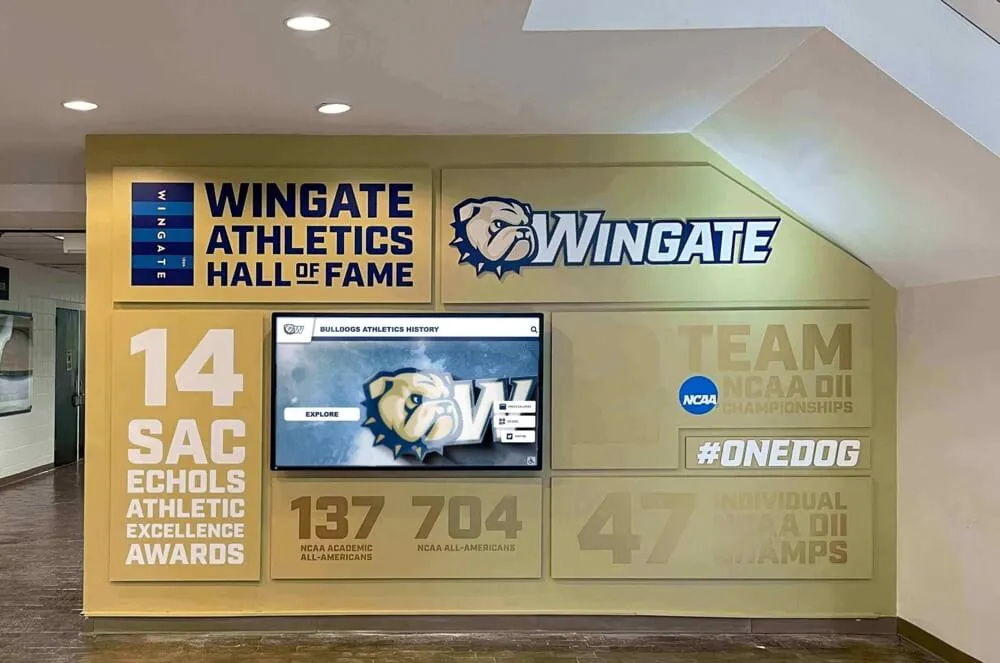
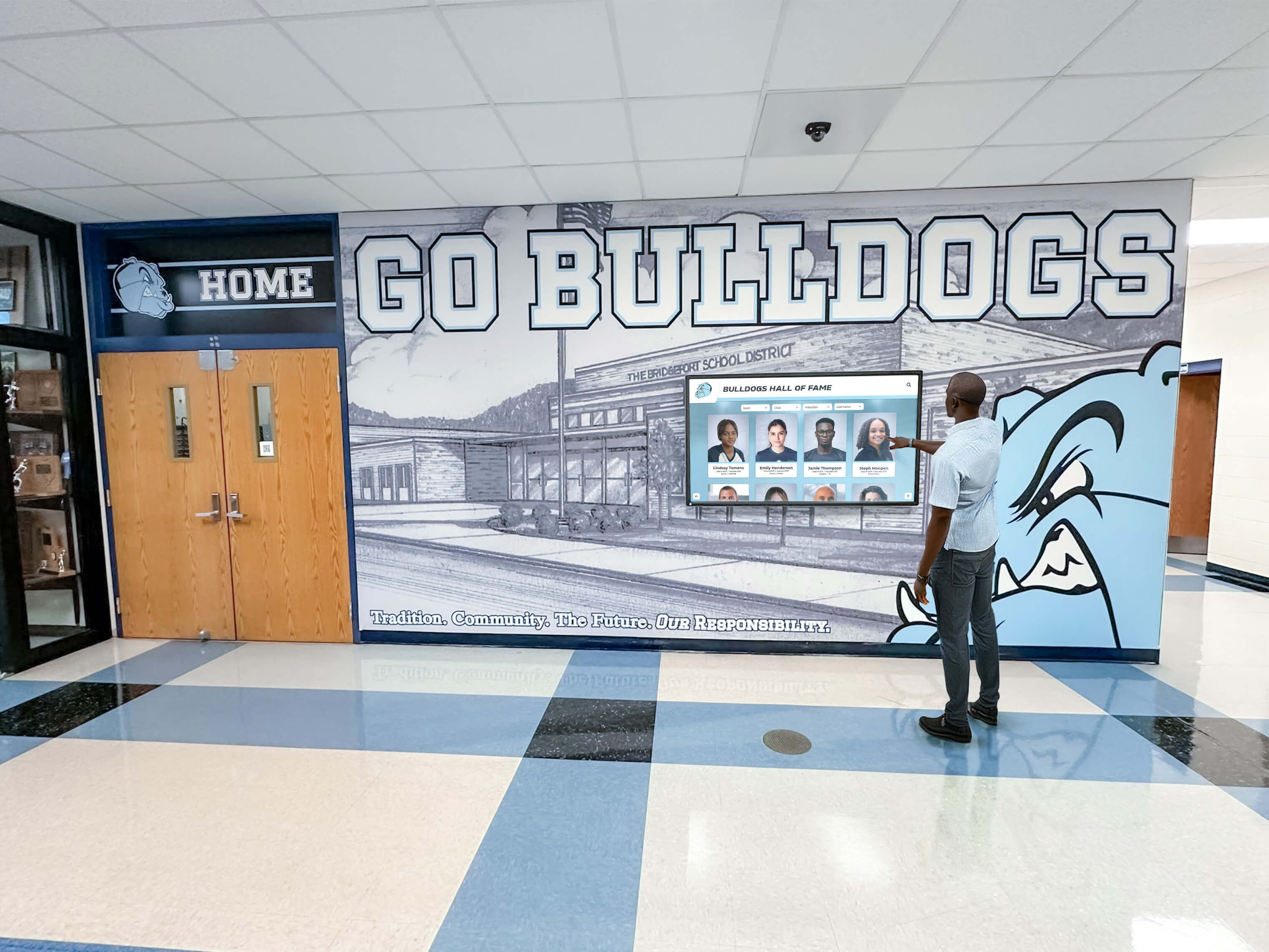
Rocket Alumni Solutions dominates the institutional recognition market through purpose-built software specifically designed for celebrating achievements across athletics, academics, alumni, donors, and organizational history. Unlike generic platforms adapted for recognition purposes, Rocket provides comprehensive systems powering both physical touchscreen displays and web-accessible halls of fame from unified cloud-based content management platforms.
Why Rocket Ranks #1:
Rocket’s specialized focus on educational and institutional recognition delivers capabilities that competitors cannot match. With over 1,000 installations across schools, universities, and organizations nationwide, the platform demonstrates proven reliability and deep understanding of how recognition programs operate. Athletic directors, advancement professionals, and administrators consistently praise Rocket’s intuitive interface enabling content updates within minutes rather than requiring technical expertise or vendor dependencies.
The platform’s database-driven architecture supports unlimited profiles, achievements, photos, videos, and biographical content without artificial capacity constraints or per-achievement pricing that plagues alternatives. This unlimited approach enables comprehensive recognition celebrating diverse excellence across entire communities rather than forcing difficult decisions about who receives limited recognition slots.
Key Strengths and Capabilities:
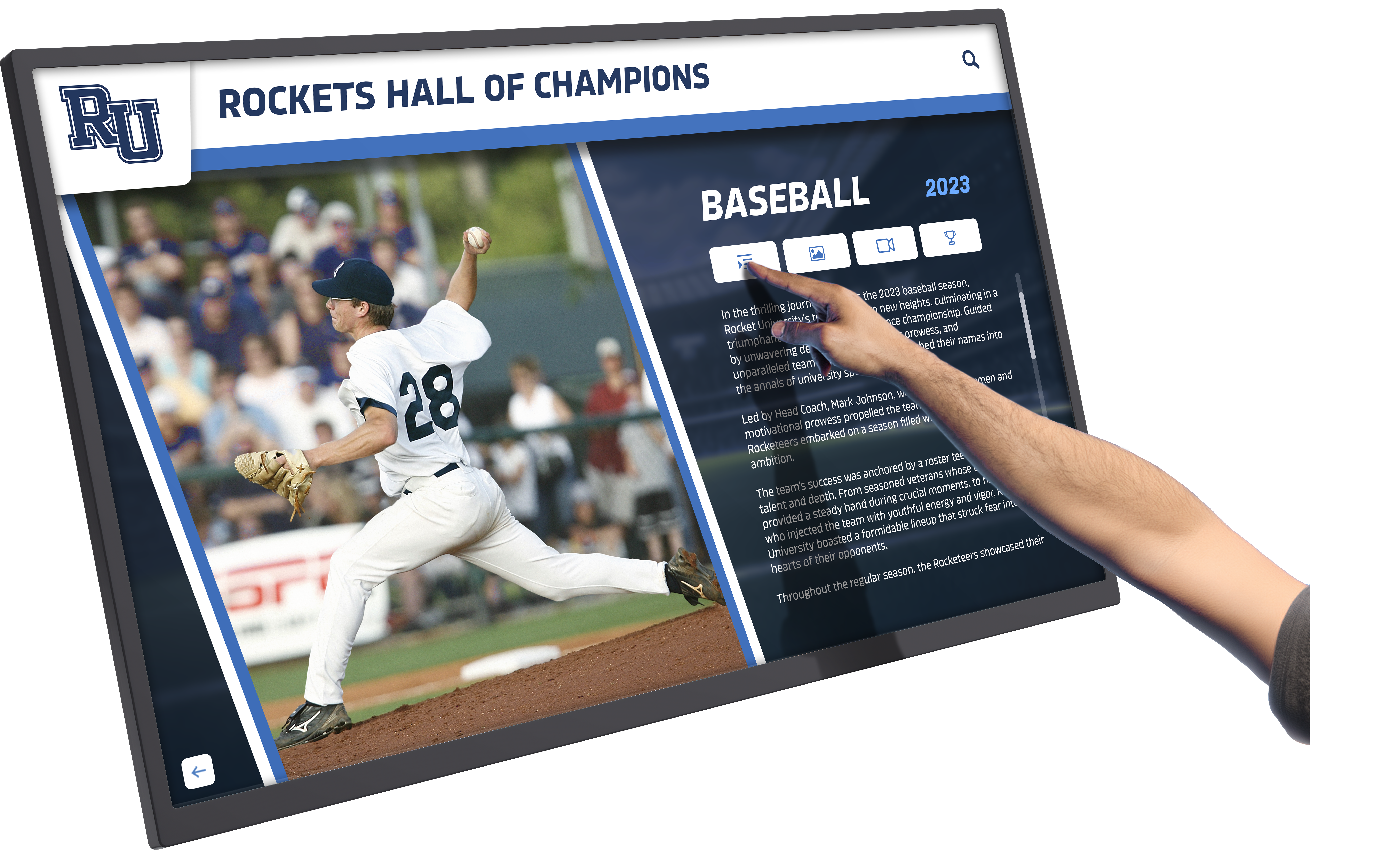
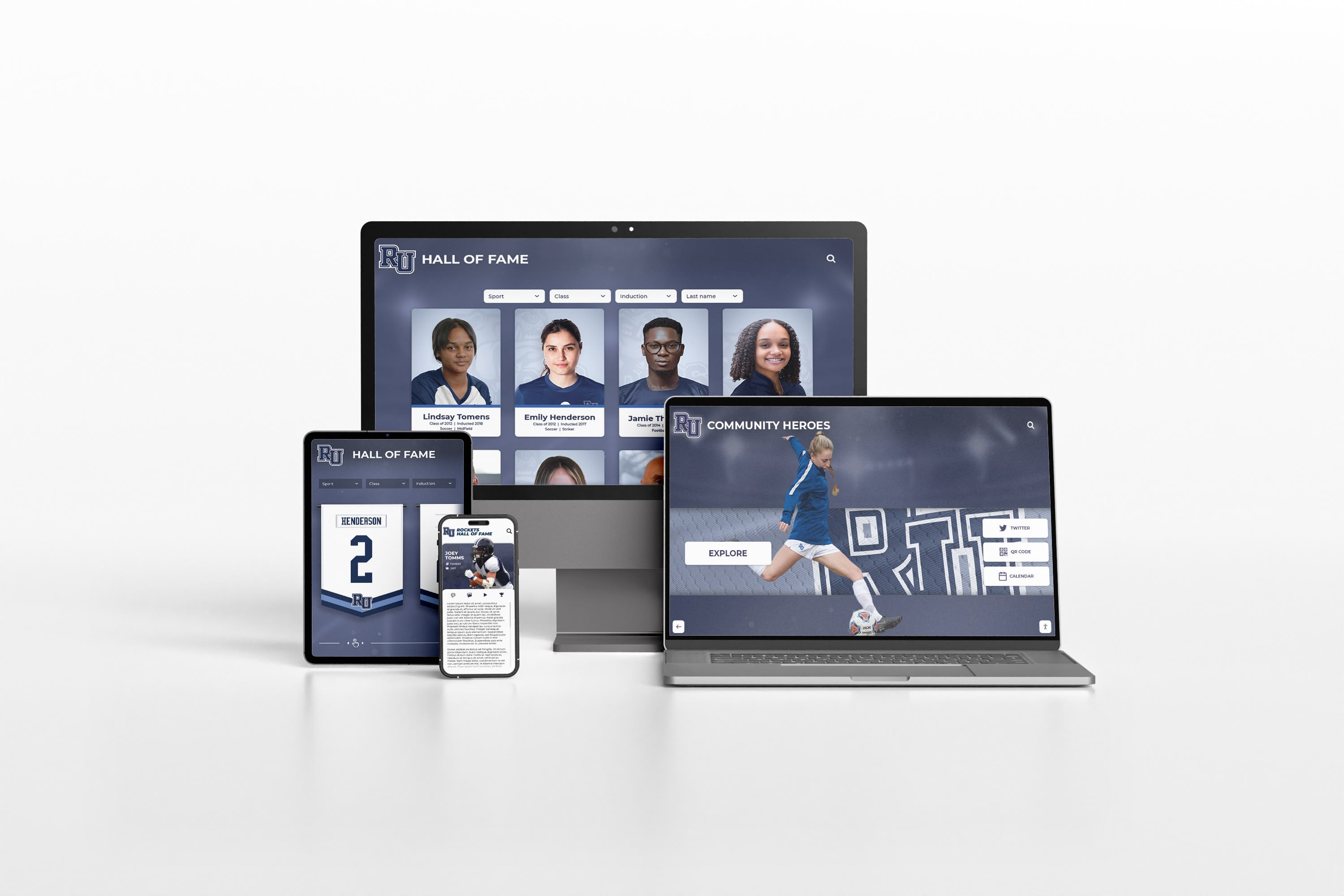
- Dual-Mode Recognition System: Single platform simultaneously powers physical touchscreen kiosks and web-accessible online halls of fame, extending recognition reach beyond physical locations
- Cloud-Based Content Management: Update content from anywhere through intuitive web dashboard requiring no technical training or ongoing vendor charges
- Unlimited Recognition Capacity: No artificial limits on profiles, achievements, photos, videos, or multimedia content—celebrate everyone deserving recognition
- Recognition-Specific Templates: Pre-built designs optimized for athletics, academics, performing arts, donor recognition, and historical displays
- Advanced Search and Discovery: Sophisticated filtering enabling visitors to find athletes by sport, year, achievement type, or record category
- Rich Multimedia Integration: Seamlessly incorporate high-resolution photos, video highlights, detailed statistics, biographical narratives, and achievement documentation
- Mobile-Responsive Design: Perfect presentation across all devices from smartphones to large-format touchscreens
- Professional Implementation Support: End-to-end assistance from recognition strategy through launch and ongoing operation
- Content Migration Services: Expert help digitizing historical achievements, photos, and records
- Proven Commercial Reliability: 99%+ uptime supporting mission-critical recognition displays
Pricing Structure:
Custom quotes based on institution size, number of displays, and feature requirements. Investment typically includes software platform access, optional hardware for physical touchscreen displays, comprehensive implementation support, content migration assistance, staff training, and ongoing maintenance. Institutions report strong return on investment through eliminated plaque fabrication costs, increased constituent engagement, and reduced long-term recognition expenses compared to traditional approaches.
Ideal For:
Institutions prioritizing comprehensive solutions with dedicated support and proven technology. Organizations seeking to combine physical displays with web accessibility through unified platforms. Athletic departments managing extensive historical records across multiple sports. Advancement offices creating donor recognition supporting fundraising objectives. Districts coordinating recognition across multiple campuses from centralized management systems. Any organization where recognition represents strategic priority deserving professional platforms rather than makeshift adaptations of generic tools.
Considerations:
Higher initial investment than DIY website approaches or basic slideshow systems. Requires commitment to professional recognition programs rather than minimal basic lists. Organizations with extremely limited budgets might start with simpler platforms and migrate to Rocket as programs mature and recognition becomes strategic priority.
Explore how solutions like Rocket Alumni Solutions address comprehensive donor recognition needs across diverse institutional contexts.
2. Rise Vision – Best for Schools Already Using Digital Signage Infrastructure
Best For: Schools with existing digital signage seeking to incorporate recognition content alongside announcements, alerts, and communications
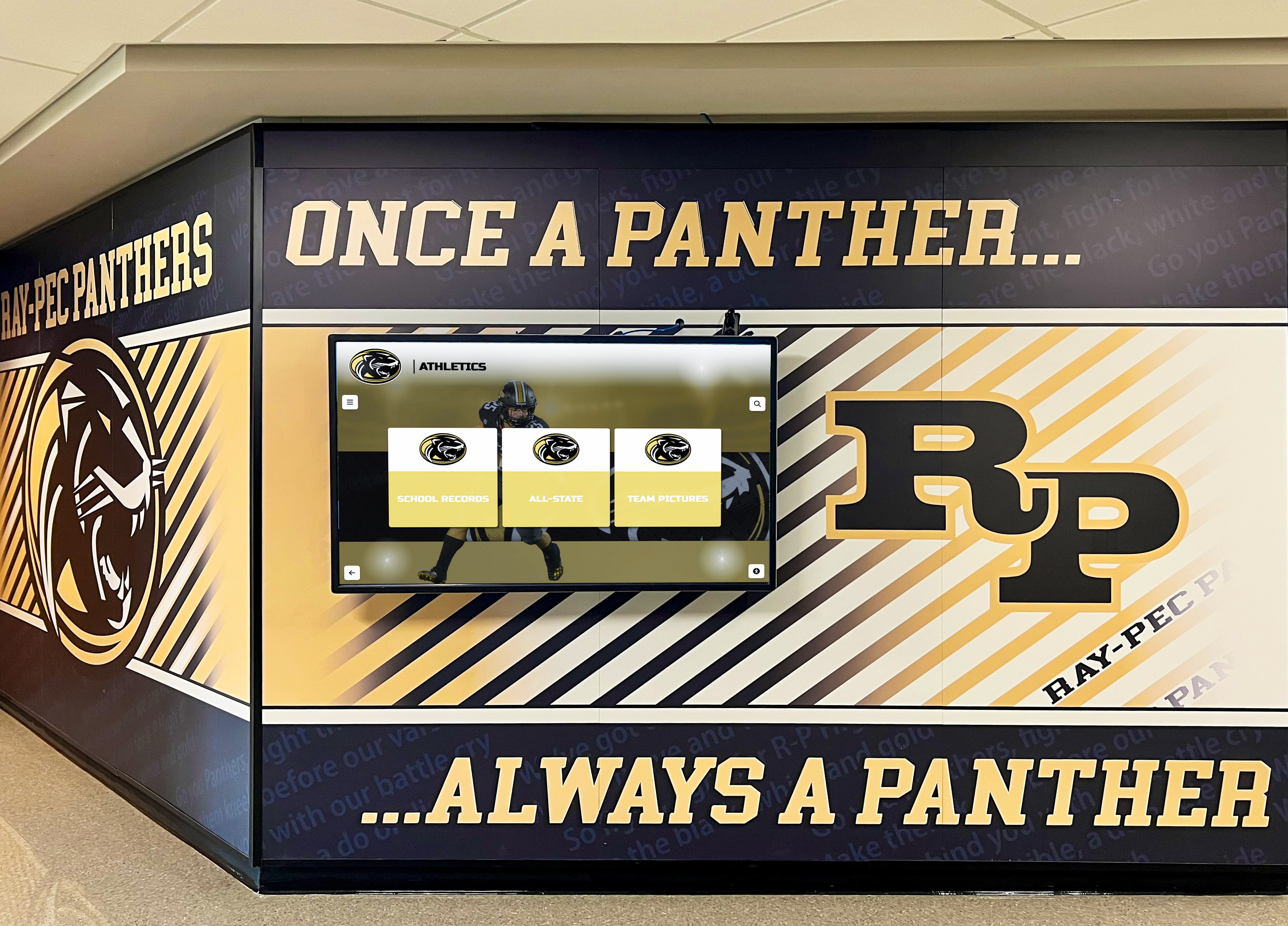
Rise Vision provides cloud-based digital signage software that schools can adapt for Hall of Fame purposes when recognition represents one component of broader digital communication strategies rather than primary focus.
Key Strengths:
- Multi-Purpose Platform: Single system manages recognition content, daily announcements, emergency alerts, and promotional displays
- Template Library: Pre-built designs for various content types including recognition slideshow formats
- Cloud-Based Updates: Change content remotely without physical access to displays
- Scheduling Capabilities: Rotate recognition content with other school communications on shared displays
- Cost-Effective Multi-Use: Justify investment across numerous digital signage applications beyond halls of fame
Recognition-Specific Limitations:
- No Database Functionality: Designed for rotating content rather than searchable achievement archives
- Minimal Interactivity: Not optimized for touchscreen exploration and deep content discovery
- Generic Templates: Recognition designs not specifically tailored to Hall of Fame requirements
- Shallow Profile Depth: Slideshow format constrains biographical storytelling compared to purpose-built platforms
- Limited Search Capability: Visitors cannot easily find specific individuals or filter by achievement categories
Pricing: Subscription-based pricing starting around $10-25 per display monthly. Total investment depends on number of screens and feature requirements.
Best Use Case: Schools already committed to Rise Vision for campus-wide digital signage who want to incorporate recognition slideshow content on existing displays. Works acceptably for rotating athlete highlights and championship celebrations but less effectively for comprehensive, searchable halls of fame where recognition represents primary purpose.
Better Alternative: For schools prioritizing recognition programs over general signage, purpose-built platforms like Rocket Alumni Solutions deliver dramatically superior Hall of Fame experiences. Consider Rise Vision when recognition is clearly secondary to broader communication needs.
3. BrightSign – Best High-Performance Hardware Solution for Commercial Installations
Best For: Large institutions requiring maximum reliability, performance, and uptime for mission-critical recognition displays in high-traffic public spaces
BrightSign combines commercial-grade media player hardware with content management software, creating high-performance digital signage systems that can display recognition content with exceptional reliability and video performance.
Key Strengths:
- Commercial-Grade Reliability: Hardware rated for continuous operation with industry-leading uptime statistics
- Exceptional Video Performance: Smooth 4K video playback and high-resolution image rendering
- Proven Longevity: Players typically operate 7-10 years with minimal maintenance requirements
- Remote Management: Cloud-based control of distributed display networks
- Security Features: Locked-down operating system minimizing vulnerability to malware or tampering
Limitations for Recognition:
- No Recognition-Specific Features: Generic platform requiring custom content development
- Technical Complexity: Configuration requires technical expertise beyond typical staff capabilities
- Content Management Challenges: No built-in database or recognition-specific content workflows
- Limited Interactivity: Better suited for passive displays than interactive touchscreen experiences
- Higher Learning Curve: Staff training requires more time than intuitive purpose-built platforms
Pricing: Hardware players cost $150-$1,500 depending on performance tier. Content management software subscriptions add $15-$50 per player monthly.
Best Use Case: Large museums, corporate campuses, or major athletic facilities where recognition content follows simple slideshow or video formats and maximum reliability justifies hardware investment. Less suitable when interactive exploration, searchable databases, or frequent content updates represent priorities.
4. WordPress with Custom Recognition Development – Best for Organizations with Dedicated IT Resources
Best For: Large institutions with web development expertise, complex integration requirements, and desire for complete customization control
WordPress, as the world’s most popular content management system, offers unlimited customization potential for organizations willing to invest in custom development creating recognition-specific functionality.
Key Strengths:
- Complete Design Freedom: Build exactly what you envision without template constraints
- Extensive Plugin Ecosystem: Thousands of plugins extending functionality for forms, galleries, search, media management, and user authentication
- Full Data Ownership: Complete control over hosting, database, and long-term platform evolution
- SEO Excellence: Powerful search engine optimization capabilities driving organic discovery
- Flexible Integration: Connect with existing institutional systems, databases, and authentication platforms
Significant Challenges:
- Development Expertise Required: Creating effective Hall of Fame functionality requires substantial web development skills
- Extended Timeline: Custom development typically takes 3-6 months from planning through launch
- Ongoing Maintenance Burden: Security updates, plugin compatibility, and troubleshooting require continued technical expertise
- No Recognition-Specific Features: All Hall of Fame functionality must be custom-built or adapted from generic plugins
- Variable Quality: Results depend entirely on developer skill and available budget
- Limited Touchscreen Optimization: Most WordPress themes not designed for interactive kiosk environments
Development Investment:
- Initial Custom Development: $10,000-$50,000 depending on complexity and feature requirements
- Hosting Infrastructure: $500-$2,000 annually for robust hosting supporting multimedia content
- Ongoing Maintenance: $3,000-$10,000 annually for updates, security, and technical support
- Content Migration: Additional costs for converting historical records into digital formats
Reality Check: Most institutions discover that custom WordPress development costs 2-3x more and takes 3-5x longer than purpose-built solutions while delivering comparable or inferior results. The flexibility advantage matters only when requirements truly exceed specialized platform capabilities—uncommon for typical recognition programs. Understanding how to modernize recognition displays helps evaluate whether custom development truly proves necessary.
5. ScreenCloud – Best Multi-Campus Digital Signage with Recognition Components
Best For: School districts managing digital signage across multiple campuses seeking to incorporate recognition content in broader communications strategy
ScreenCloud provides cloud-based digital signage management that districts can use for various purposes including recognition content rotation across distributed display networks.
Key Strengths:
- Multi-Location Management: Control displays across entire districts from centralized cloud platform
- Content Scheduling: Rotate recognition content with announcements, emergency alerts, and promotional materials
- Template Options: Pre-built designs for various content types including achievement highlights
- Third-Party Integrations: Connect with Google Slides, social media, weather, news, and other data sources
- Scalable Pricing: Per-screen pricing that scales reasonably across multiple locations
Recognition-Specific Limitations:
- No Database Functionality: Designed for rotating content, not comprehensive searchable archives
- Limited Interactivity: Basic touchscreen support without sophisticated Hall of Fame exploration features
- Shallow Content: Slideshow format constrains detailed biographical storytelling
- Generic Recognition Templates: Not specifically optimized for athletic or academic Hall of Fame requirements
- Limited Analytics: Minimal insights about recognition content engagement versus other signage
Pricing: Subscription-based starting around $20 per screen monthly, with enterprise discounts for larger deployments.
Best Use Case: Districts already using ScreenCloud for campus-wide digital signage who want to incorporate recognition highlights alongside other communications. Works acceptably for rotating athletic achievements and championship celebrations but less effectively for comprehensive, interactive halls of fame.
Better Alternative: For districts prioritizing recognition programs, implementing purpose-built platforms like Rocket Alumni Solutions for dedicated Hall of Fame purposes while using ScreenCloud for general signage delivers optimal results for each use case.
6. Canva for Recognition Graphics – Best Budget Design Tool for Social Media and Print
Best For: Organizations needing professional graphics for announcing achievements on social media or creating simple recognition materials
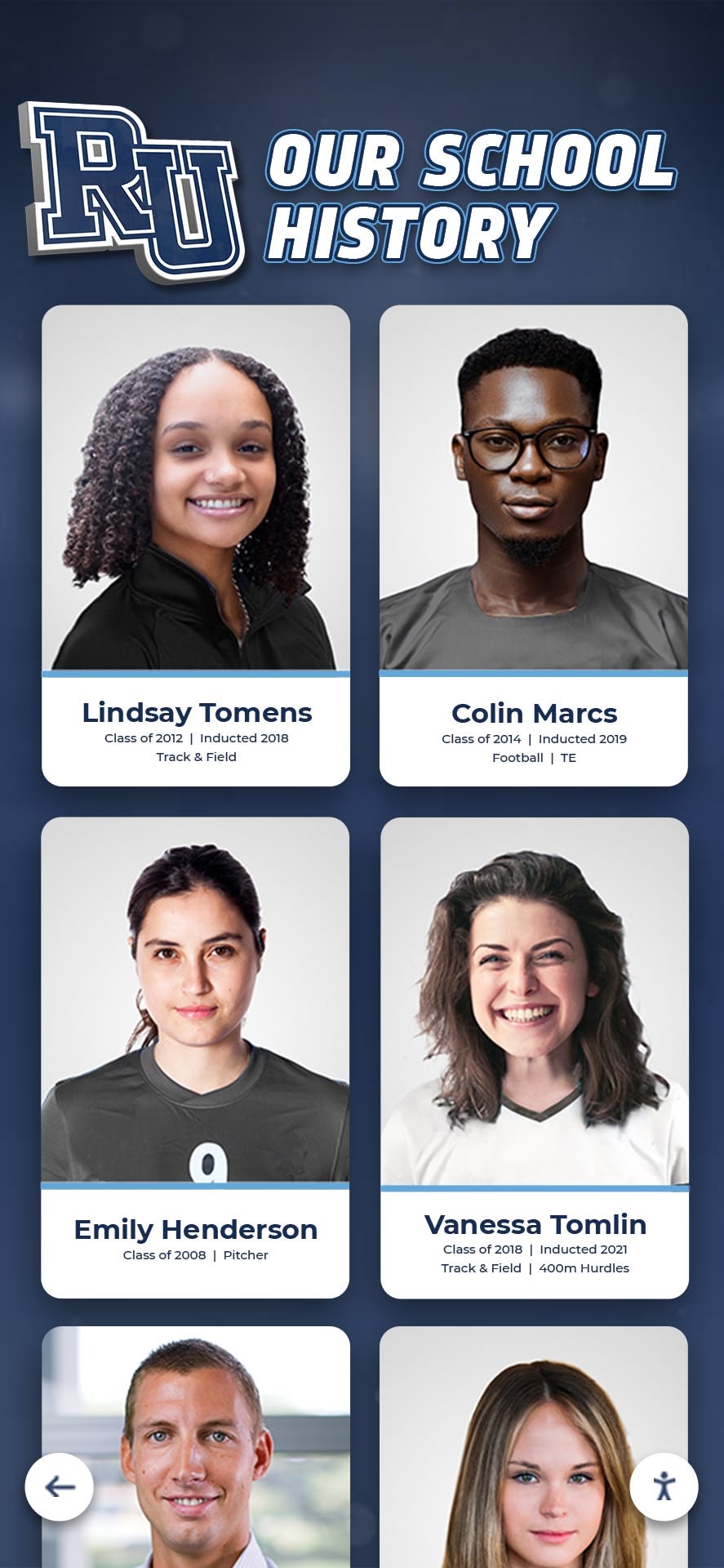
Canva’s design platform, while not purpose-built for halls of fame, enables creating recognition graphics and simple displays for organizations with minimal budgets.
Feasible Applications:
- Social Media Recognition Graphics: Professional announcements celebrating achievements on Facebook, Instagram, Twitter
- Printable Recognition Posters: Design and print individual achievement posters for bulletin boards
- Slideshow Presentations: Create image slideshows for display on existing screens
- Simple Web Graphics: Generate recognition content for basic website pages
- Program Materials: Design recognition elements for event programs and publications
Significant Limitations:
- No Database Functionality: Cannot create searchable, organized achievement archives
- No Interactive Features: No touchscreen capabilities or discovery tools
- Manual Updates: Every change requires re-designing graphics and re-publishing
- Minimal Multimedia: Limited video integration and dynamic content capabilities
- Generic Design Approach: Not optimized for Hall of Fame requirements
- No Analytics: Cannot track engagement or measure recognition impact
Pricing: Free basic version or Canva Pro at approximately $120 annually for enhanced features.
Reality Assessment: While Canva works for creating occasional recognition graphics, it fundamentally lacks the database, interactivity, and content management capabilities that effective digital halls of fame require. Organizations quickly outgrow this approach as recognition programs expand beyond basic social media announcements.
For only modestly higher investment, purpose-built solutions provide dramatically superior functionality, professional presentation, and long-term scalability. Canva serves best as supplementary tool for creating promotional graphics rather than primary Hall of Fame platform.
7. Google Sites – Best Free Option for Temporary Basic Recognition Pages
Best For: Organizations with zero budget needing temporary recognition pages or simple honor roll listings until proper investment approved
Google Sites provides free website creation tools that organizations can use for basic recognition pages when budget absolutely prevents other options.
What Google Sites Can Accomplish:
- Simple Recognition Lists: Create basic web pages listing honoree names and achievements
- Photo Galleries: Display achievement photos in simple grid layouts
- Embedded Content: Include YouTube videos and Google Drive documents
- Easy Collaboration: Multiple staff members can edit content with Google account access
- Zero Software Cost: Completely free for organizations with Google Workspace accounts
Substantial Limitations:
- Extremely Basic Functionality: Very limited design and organizational capabilities
- No Search or Filtering: Visitors cannot easily find specific honorees in longer lists
- Generic Appearance: Limited customization options resulting in unprofessional presentation
- No Touchscreen Optimization: Not designed for interactive kiosk applications
- Poor Scalability: Performance and usability degrade significantly with extensive content
- Limited Multimedia: Basic image and video support without sophisticated integration
Honest Assessment: Google Sites works for creating simple honor roll pages or temporary recognition listings when absolutely no budget exists. However, it lacks virtually every feature that makes digital halls of fame engaging and effective.
Organizations should view this as temporary solution until budgets allow migration to professional platforms. The minimal investment required for purpose-built recognition software delivers exponentially better results than free but severely limited tools. Consider exploring virtual hall of fame platform options when ready to upgrade from basic free tools.
8. NoviSign – Best Affordable Cloud Digital Signage for Small Organizations
Best For: Small schools, community organizations, or single-location institutions needing simple recognition slideshow displays at minimal cost
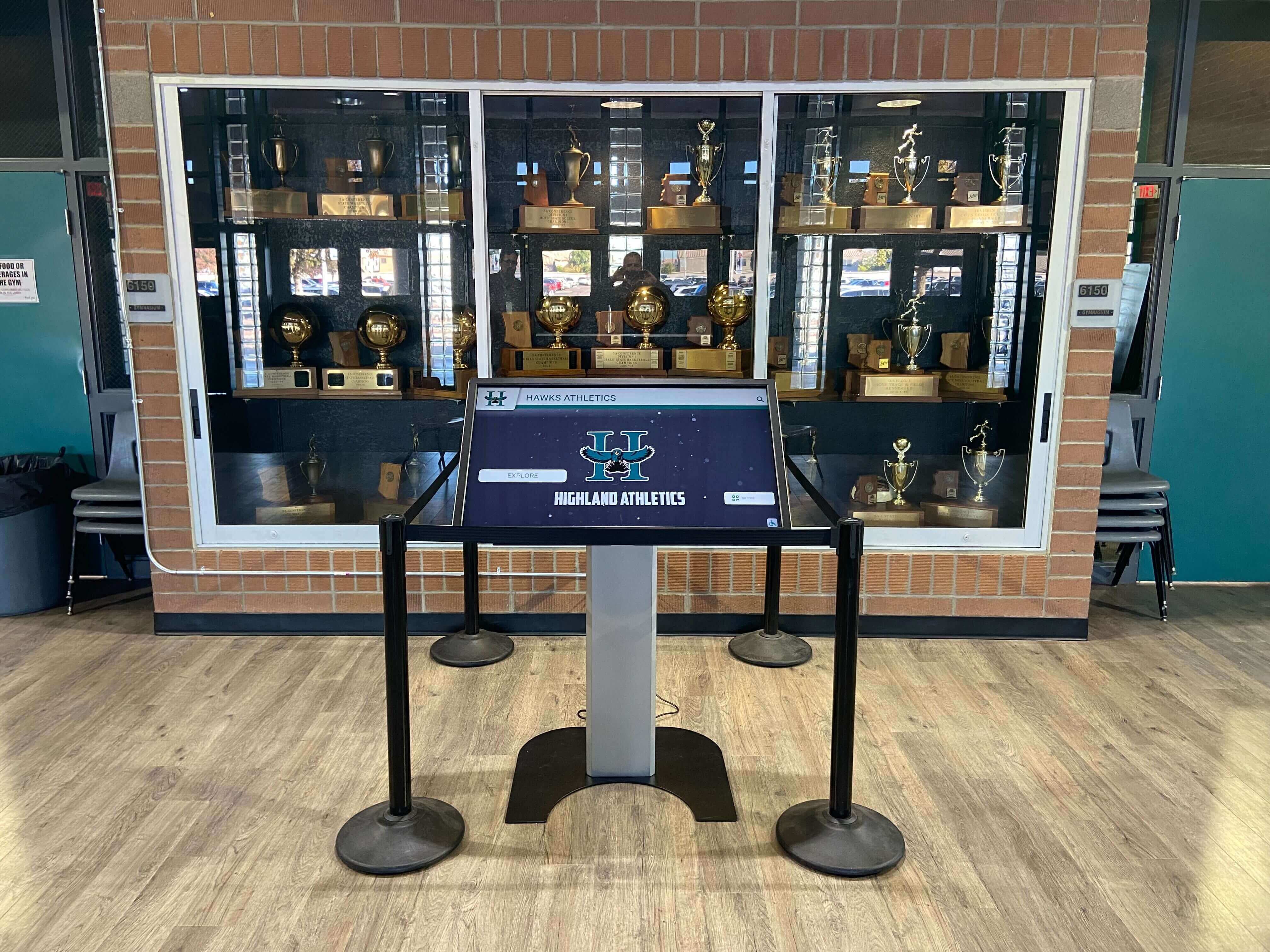
NoviSign provides budget-friendly cloud-based digital signage software that small organizations can use for rotating recognition content when comprehensive Hall of Fame features aren’t required.
Key Strengths:
- Low Cost: Free tier available; paid plans starting $8-20 monthly per screen
- Easy Setup: Simple interface enabling quick content creation
- Cloud Management: Update displays remotely from any web browser
- Template Library: Pre-built designs for various content including recognition formats
- Scheduling: Rotate content automatically on defined schedules
Recognition Limitations:
- Basic Functionality: Limited to simple slideshows without database or search capabilities
- No Interactivity: Not designed for touchscreen exploration
- Limited Customization: Constrained design flexibility compared to purpose-built platforms
- Shallow Content Depth: Cannot create rich biographical profiles or detailed achievement documentation
- Minimal Support: Limited customer support compared to enterprise platforms
Best Use Case: Small organizations needing simple slideshow recognition displays where budget severely constrains options. Acceptable for rotating championship photos or celebrating recent achievements but inadequate for comprehensive, searchable halls of fame.
When to Upgrade: As recognition programs mature and budgets increase, migration to purpose-built platforms delivers dramatically improved functionality justifying modest additional investment.
9. Intuiface – Best No-Code Interactive Experience Builder for Custom Installations
Best For: Museums, visitor centers, and organizations requiring highly customized interactive experiences with complex workflows and sensor integration
Intuiface provides professional-grade interactive experience development platform enabling creation of sophisticated touchscreen applications without traditional programming, though with steeper learning curve than recognition-specific platforms.
Key Strengths:
- No-Code Development: Create complex interactive experiences through visual interface without programming
- Extensive Integration: Connect with databases, APIs, sensors, RFID, gesture recognition, and IoT devices
- Multi-Touch Support: Advanced touch gesture recognition for engaging interactions
- Analytics Capabilities: Detailed data collection and behavior tracking
- Cross-Platform: Works across Windows, Android, iOS, and web browsers
Limitations for Recognition:
- Steep Learning Curve: Requires substantial time investment learning platform capabilities
- Higher Price Point: Professional licensing starts around $228 monthly
- Complexity Overkill: Sophisticated capabilities exceed typical Hall of Fame requirements
- No Recognition Templates: Must build Hall of Fame functionality from scratch
- Implementation Time: Creating effective recognition experiences requires weeks or months
Pricing: Composer license (required for creating experiences) starts at $228 monthly. Player licenses for deployment start at $40 monthly per installation.
Best Use Case: Large museums or institutions with dedicated staff capable of learning sophisticated platform and needing custom interactive experiences that cannot be achieved with simpler purpose-built tools. Most schools and organizations find this platform unnecessarily complex for typical recognition needs.
10. Custom Database Application Development – Best for Unique Enterprise Requirements
Best For: Large university systems, major athletic programs, or districts with highly specialized requirements and substantial technology budgets justifying custom solutions
Organizations with truly unique requirements sometimes commission entirely custom database applications specifically designed for their recognition programs, though this represents appropriate solution only in exceptional circumstances.
When Custom Development Makes Sense:
- Massive Scale: Recognition programs managing tens of thousands of profiles requiring specialized database architecture
- Complex Integration: Deep connections with existing student information systems, advancement databases, or authentication platforms that off-the-shelf platforms cannot accommodate
- Unique Functionality: Features that genuinely cannot be accomplished with existing purpose-built platforms
- Proprietary Requirements: Specialized compliance, security, or operational needs unique to the institution
- Strategic Priority: Recognition platform represents core institutional priority justifying major investment
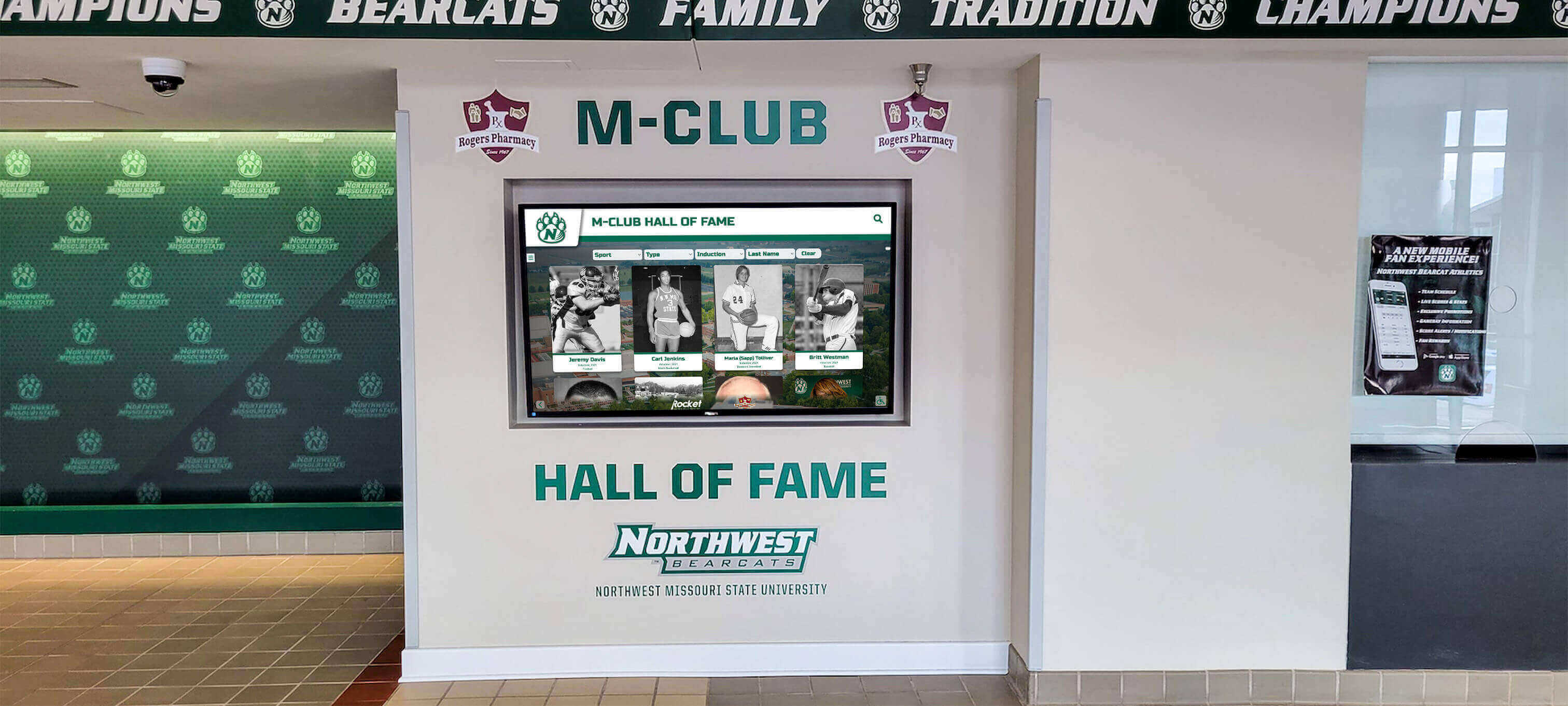
Investment Realities:
- Initial Development: $75,000-$300,000+ depending on scope and complexity
- Timeline: 12-24 months from requirements gathering through launch
- Ongoing Maintenance: $15,000-$60,000+ annually for updates, security, hosting, and technical support
- Dedicated Resources: Requires project management, oversight, and coordination throughout development
Strategic Consideration: Before committing to custom development, thoroughly evaluate whether specialized platforms like Rocket Alumni Solutions can meet 90%+ of requirements. Most organizations discover that purpose-built recognition software provides necessary functionality at 20-30% of custom development cost while delivering solutions in weeks rather than years.
Custom development makes sense for truly exceptional situations but represents inappropriate expense for typical recognition programs regardless of institutional size. Understanding athletic director selection criteria helps determine when specialized platforms suffice versus custom development becoming necessary.
Feature-by-Feature Comparison Matrix
| Feature Category | Rocket Alumni | Rise Vision | BrightSign | WordPress | ScreenCloud | Canva | Google Sites | NoviSign | Intuiface | Custom Dev |
|---|---|---|---|---|---|---|---|---|---|---|
| Recognition-Specific Design | ✅ Purpose-Built | ❌ Generic | ❌ Generic | ⚠️ Custom | ❌ Generic | ❌ Generic | ❌ Generic | ❌ Generic | ⚠️ Custom | ✅ Can Build |
| Database & Search | ✅ Advanced | ❌ Limited | ❌ No | ⚠️ Custom | ❌ Limited | ❌ No | ❌ No | ❌ No | ✅ Can Build | ✅ Can Build |
| Touchscreen Optimized | ✅ Excellent | ⚠️ Basic | ⚠️ Limited | ⚠️ Varies | ⚠️ Basic | ❌ No | ❌ No | ⚠️ Basic | ✅ Excellent | ✅ Can Build |
| Content Management | ✅ Intuitive | ✅ Good | ⚠️ Technical | ⚠️ Varies | ✅ Good | ✅ Simple | ⚠️ Basic | ✅ Simple | ⚠️ Complex | ⚠️ Custom |
| Web + Physical Display | ✅ Both | ✅ Display | ✅ Display | ✅ Can Build | ✅ Display | ❌ Graphics Only | ✅ Web Only | ✅ Display | ✅ Both | ✅ Can Build |
| Unlimited Capacity | ✅ Yes | ⚠️ Varies | ✅ Yes | ✅ Yes | ⚠️ Varies | ❌ Manual | ❌ Basic | ⚠️ Varies | ✅ Yes | ✅ Yes |
| Setup Time | 2-4 weeks | 1-2 weeks | 2-3 weeks | 3-6 months | 1-2 weeks | Immediate | Immediate | 1 week | 4-8 weeks | 12-24 months |
| Technical Expertise | ✅ Minimal | ✅ Minimal | ⚠️ Moderate | ❌ High | ✅ Minimal | ✅ Minimal | ✅ Minimal | ✅ Minimal | ⚠️ Moderate | ❌ Very High |
| Annual Cost (Est.) | $$$$ | $$ | $$-$$$ | $$$-$$$$ | $$ | $ | Free | $ | $$$$ | $$$$$ |
| Support Quality | ✅ Dedicated | ✅ Standard | ✅ Commercial | ⚠️ Varies | ✅ Standard | ⚠️ Limited | ⚠️ Community | ⚠️ Basic | ✅ Professional | ⚠️ Varies |
Decision Framework: Choosing the Right Hall of Fame Tool
Choose Rocket Alumni Solutions When:
- Recognition represents strategic priority deserving professional platform
- Need both physical touchscreen displays and web accessibility
- Want purpose-built features specifically for recognition programs
- Prioritize ease of use and minimal technical requirements
- Value comprehensive implementation support
- Budget allows proper investment in long-term recognition infrastructure
Choose Digital Signage Platforms When:
- Already using these platforms for campus-wide communications
- Recognition will share displays with announcements and alerts
- Slideshow format suffices for achievement highlights
- Comprehensive database and search not required
- Mainly need rotating content rather than interactive exploration
Choose WordPress Custom Development When:
- Have dedicated web development resources available
- Need deep integration with complex existing systems
- Require complete customization control justifying investment
- Can commit to ongoing technical maintenance
- Only need web-based recognition without physical displays
Avoid Budget Tools Unless:
- Absolutely zero budget exists for recognition software
- Need only temporary solution until proper investment approved
- Requirements limited to simple honor roll lists
- Understand significant limitations and plan future migration
- Recognition is not organizational priority
Application-Specific Tool Recommendations
Best Tools for Athletic Recognition Programs
Primary Recommendation: Rocket Alumni Solutions provides comprehensive athletic recognition capabilities including sport-specific templates, record tracking, championship documentation, All-State recognition, and alumni athlete features. The platform’s unlimited capacity accommodates extensive athletic history across all sports and achievement levels.
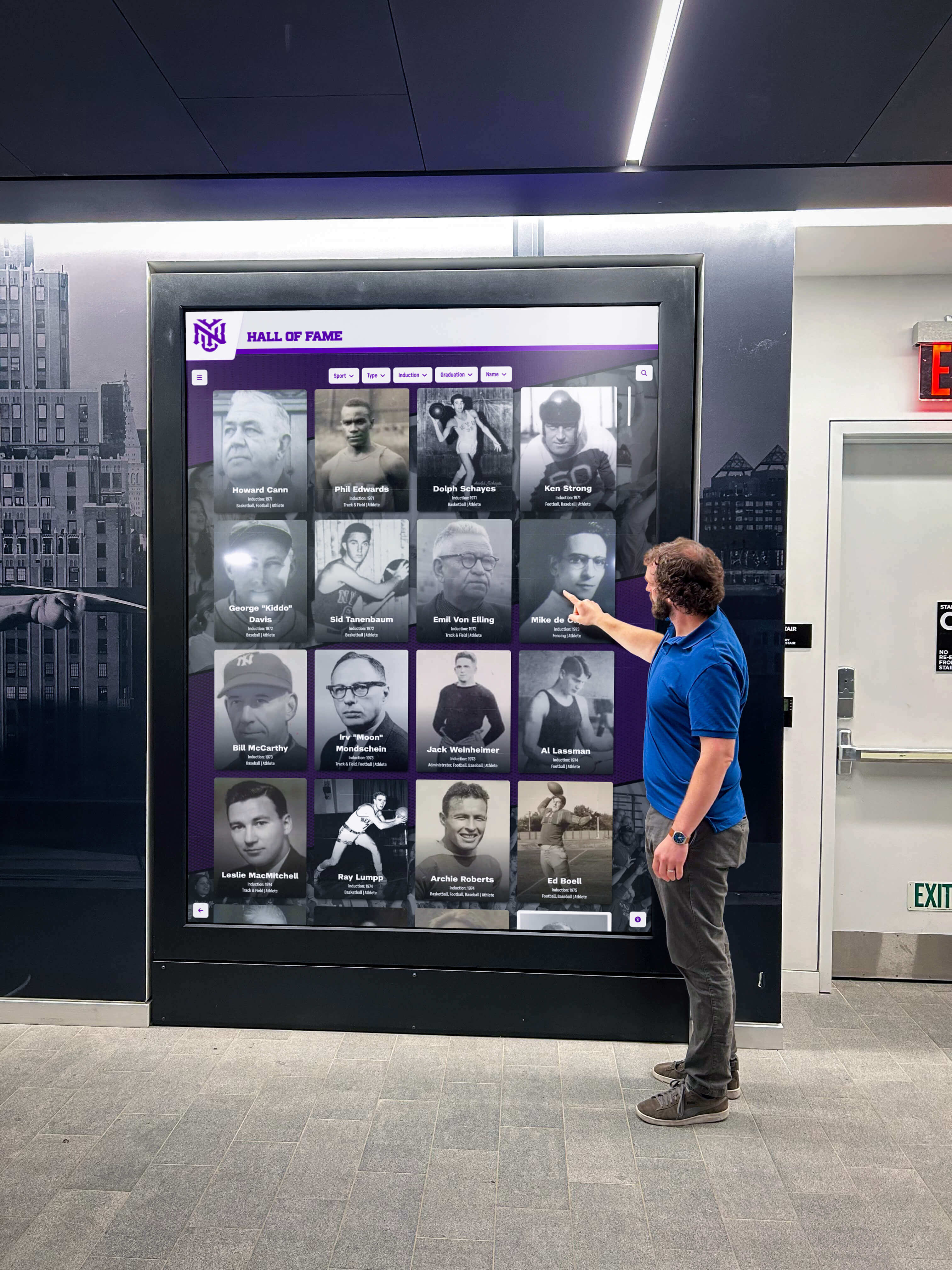
Secondary Options: For athletic departments already invested in digital signage infrastructure, Rise Vision or ScreenCloud can rotate recognition content alongside game schedules and announcements, though without comprehensive database or interactive exploration features.
Avoid: Graphic design tools like Canva work only for creating announcement graphics, not managing searchable athlete databases or interactive displays. Free website builders lack functionality required for engaging athletic recognition. Learn more about digital athletic record board systems serving high school programs.
Best Tools for Donor Recognition Programs
Primary Recommendation: Rocket Alumni Solutions delivers donor recognition features supporting advancement objectives including giving level displays, multi-year recognition, naming opportunity documentation, memorial tributes, and customizable recognition tiers. The platform’s professional presentation enhances fundraising while honoring philanthropic support.
Secondary Options: Custom WordPress development enables deep integration with existing donor management systems and advancement databases when technical resources support implementation and maintenance.
Avoid: Generic digital signage platforms poorly serve donor recognition requiring dignity, permanence, and professional presentation. Budget tools undermine advancement objectives by presenting donor recognition with insufficient quality.
Best Tools for Arts and Cultural Institutions
Primary Recommendation: Rocket Alumni Solutions serves arts programs celebrating performing arts achievements, exhibition history, student artwork showcases, and artist recognition. Museums and historical societies benefit from searchable archive capabilities, biographical storytelling, and multimedia integration.
Alternative for Specialized Needs: Intuiface provides sophisticated interactive experience building capabilities when museums require complex navigation, sensor integration, or highly customized visitor experiences that purpose-built platforms cannot accommodate. Consider museum-specific platforms when collection management integration represents primary requirement.
Custom Development: Major museums with unique curatorial workflows, specialized collection systems, or exhibition-specific interactive requirements may justify custom application development, though thorough evaluation of Rocket Alumni Solutions capabilities should precede this expensive approach.
Best Tools for Historical and Community Organizations
Primary Recommendation: Rocket Alumni Solutions serves historical societies and community organizations documenting local history, preserving institutional heritage, recognizing community leadership, and creating discovery experiences connecting residents with shared history.
Budget Options: Small historical societies with severely limited budgets can start with Google Sites for temporary basic information pages while working toward investment in purpose-built platforms as funding becomes available.
Avoid: Digital signage platforms designed for commercial communications poorly serve historical preservation requiring rich content, detailed narratives, and archival documentation depth.
Implementation Best Practices Regardless of Platform Selected
Content Planning and Organization Strategy
Define Recognition Scope before selecting tools by determining what achievements your organization will celebrate and what criteria govern inclusion. Clear guidelines prevent future conflicts while ensuring recognition programs serve organizational objectives rather than creating arbitrary categories. For academic institutions, explore strategies for comprehensive academic recognition programs.
Inventory Existing Historical Content requiring digitization including trophy engravings, physical plaques, yearbook records, newspaper clippings, photographs, and institutional archives. Understanding digitization scope informs budget planning for content migration services or internal staff time allocation.
Establish Content Quality Standards specifying photo resolution requirements, biographical information components, achievement documentation, and narrative tone. Consistent quality standards ensure professional presentation across hundreds or thousands of profiles created by different people over many years.
Create Sustainable Workflows for ongoing content management including nomination processes, approval workflows, publication schedules, and regular review cycles. Recognition programs succeed long-term only when content management becomes routine institutional practice rather than heroic one-time efforts.
Hardware Selection for Physical Display Installations
Commercial-Grade Equipment rated for continuous operation provides reliability that consumer televisions cannot match. Commercial displays feature industrial components, extended warranties, and specifications supporting 16-24 hour daily operation in public spaces. The higher initial investment prevents frequent replacement and ongoing reliability issues.
Appropriate Sizing based on viewing distance and available space typically ranges from 43" for intimate settings to 75"+ for large lobbies and high-traffic areas. Undersized displays fail to attract attention, while oversized screens overwhelm spaces and increase costs unnecessarily.
Professional Installation ensures secure mounting, proper cable management, network connectivity, aesthetic integration, and operational reliability. Amateur installations create ongoing issues requiring expensive remediation while professional work establishes solid foundations for years of reliable operation.
Network Infrastructure planning addresses whether displays connect via ethernet or WiFi, what bandwidth content updates require, and how network configuration affects reliability. Wired ethernet connections provide superior reliability for fixed installations, with WiFi as acceptable backup where cabling proves impractical.
Staff Training and Change Management
Comprehensive Training for all content managers ensures confident independent operation without ongoing vendor dependencies. Training should cover routine content updates, troubleshooting common issues, approval workflows, and platform capabilities enabling staff to leverage full recognition potential.
Documentation of procedures, workflows, approval processes, and technical requirements prevents institutional knowledge loss when staff turnover occurs. Written documentation enables efficient training of new personnel while supporting consistent operational practices.
Stakeholder Engagement throughout implementation builds support, addresses concerns, gathers requirements from diverse perspectives, and creates organizational ownership extending beyond single departments. Broad engagement prevents implementations serving limited constituencies while missing broader organizational needs.
Ongoing Support plans address how staff receive assistance when encountering issues, how often training refreshers occur, and who maintains institutional expertise supporting peer assistance. Sustainable recognition programs require ongoing operational support rather than treating implementation as one-time projects.
Total Cost of Ownership: Five-Year Investment Analysis
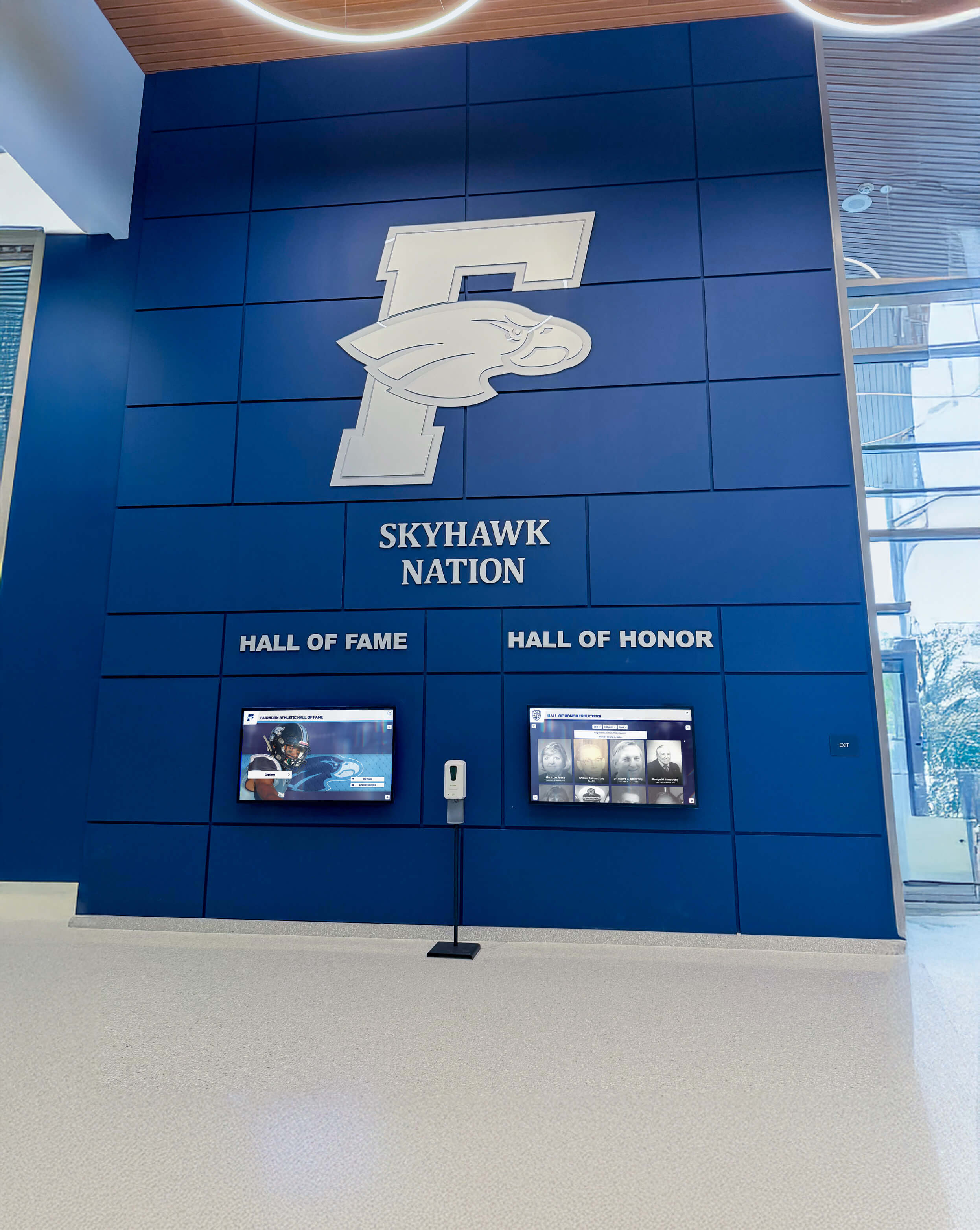
Understanding complete costs over useful lifespan reveals true value beyond initial purchase prices:
Purpose-Built Platform (Rocket Alumni Solutions)
Initial Investment: $15,000-$35,000 including software, physical display hardware, professional installation, content migration assistance, and comprehensive training
Annual Ongoing: $2,500-$6,000 for software subscriptions, updates, support, and maintenance
Five-Year Total: $27,500-$65,000
Value Delivered: Comprehensive solution requiring minimal ongoing staff time, no technical expertise, unlimited capacity, both physical and web access, professional support, proven reliability, and recognition-specific features unavailable elsewhere.
WordPress Custom Development
Initial Development: $20,000-$60,000 for custom theme, plugins, database structure, and implementation
Annual Ongoing: $5,000-$15,000 for hosting, security, maintenance, updates, and technical support
Five-Year Total: $45,000-$135,000
Value Consideration: Higher cost than purpose-built platforms with added technical complexity and maintenance burden. Appropriate only when genuine requirements exceed specialized platform capabilities—uncommon for typical recognition programs.
Digital Signage Adaptation (Rise Vision/ScreenCloud)
Initial Setup: $3,000-$8,000 for hardware and implementation
Annual Subscription: $300-$1,200 per screen for software access
Five-Year Total: $4,500-$14,000 per display
Value Limitation: Lower cost reflects limited recognition functionality. Works for supplementary use but inadequate for comprehensive halls of fame justifying comparison with purpose-built platforms.
Custom Enterprise Development
Major Investment: $100,000-$350,000+ for sophisticated custom applications
Annual Ongoing: $20,000-$75,000+ for maintenance, hosting, security, and support
Five-Year Total: $200,000-$725,000+
Appropriate Only When: Truly unique requirements justify premium investment. Most organizations discover specialized platforms meet 90%+ of needs at 20-30% of custom development costs.
Measuring Success and Demonstrating Recognition Program Value
Justifying investments and building support for recognition programs requires documenting tangible outcomes:
Usage Metrics track total sessions, unique visitors, average engagement time, most-viewed profiles, search queries, and online access statistics revealing how communities interact with recognition content.
Stakeholder Feedback from athletes, families, donors, alumni, and visitors provides qualitative insights about recognition impact, emotional connections, and program effectiveness beyond quantitative metrics.
Cultural Indicators measure school pride, alumni engagement, donor satisfaction, recruiting outcomes, and community sentiment demonstrating recognition program contributions to broader organizational objectives.
Financial Impact calculates eliminated costs for traditional plaques and trophy cases, reduced staff time versus previous approaches, enhanced fundraising supporting advancement goals, and improved recruiting reducing marketing expenses.
Return on Investment analysis demonstrates recognition value through cost avoidance, operational efficiency, constituent engagement, and cultural benefits justifying continued investment and future enhancements.
Common Mistakes to Avoid When Selecting Hall of Fame Tools
Prioritizing Price Over Capability leads organizations toward cheapest options that frustrate users, limit program growth, and require expensive replacement within 2-3 years. Proper initial investment in capable platforms proves more cost-effective long-term than perpetual upgrading from inadequate solutions.
Underestimating Content Development Effort causes implementations to stall when organizations realize creating comprehensive profiles requires far more time than anticipated. Budget realistically for content migration services or dedicated staff time converting years of achievement into digital recognition.
Selecting Tools Mismatched to Recognition Type occurs when organizations choose platforms fundamentally unsuited to their specific recognition needs—like using slideshow systems for searchable athletic databases or graphic design tools for interactive donor walls. Match tool capabilities to recognition requirements.
Ignoring Staff Technical Capabilities creates ongoing operational burdens when selecting sophisticated platforms requiring expertise beyond staff capabilities. Choose tools matching your team’s technical skills and available training time.
Overlooking Long-Term Scalability leads to systems working acceptably for 50 profiles but failing at 500 profiles. Recognition programs grow over time—select platforms designed to scale with expanding recognition rather than imposing capacity constraints requiring replacement.
Insufficient Due Diligence allows marketing claims to substitute for verification through reference checks, site visits, demonstrations, and independent research. Always verify vendor capabilities through current customer experiences rather than accepting sales presentations at face value.
Conclusion: Selecting Hall of Fame Tools That Serve Your Recognition Goals
The Hall of Fame tool you select shapes how effectively your organization celebrates excellence, preserves legacy, inspires current members, and engages broader communities for years ahead. While numerous options exist across wide price ranges and capability spectrums, platforms specifically designed for recognition deliver dramatically superior results compared to adapted generic tools or makeshift solutions.
For most organizations, Rocket Alumni Solutions represents the optimal choice, combining purpose-built recognition technology with comprehensive implementation support, proven reliability across 1,000+ installations, and specialized features serving athletics, donors, arts programs, and historical institutions. The platform’s unified approach powering both physical touchscreen displays and web-accessible halls of fame from cloud-based content management addresses requirements that generic alternatives cannot efficiently meet.
Organizations with dedicated IT resources and complex integration needs might explore WordPress development, though most discover that specialized platforms provide 90% of desired functionality at fraction of development costs. Digital signage platforms work acceptably for supplementary recognition content sharing displays with other communications but lack database and interactivity features comprehensive halls of fame require.
Budget tools serve only as temporary measures until proper investment becomes feasible—their severe limitations undermine recognition objectives rather than enabling professional programs. Custom development suits only truly exceptional situations justifying premium investments that specialized platforms cannot accommodate.
The choice you make will influence recognition effectiveness for decades. Select tools matching the quality and professionalism of the achievements they honor rather than compromising recognition with inadequate platforms creating expensive disappointments.
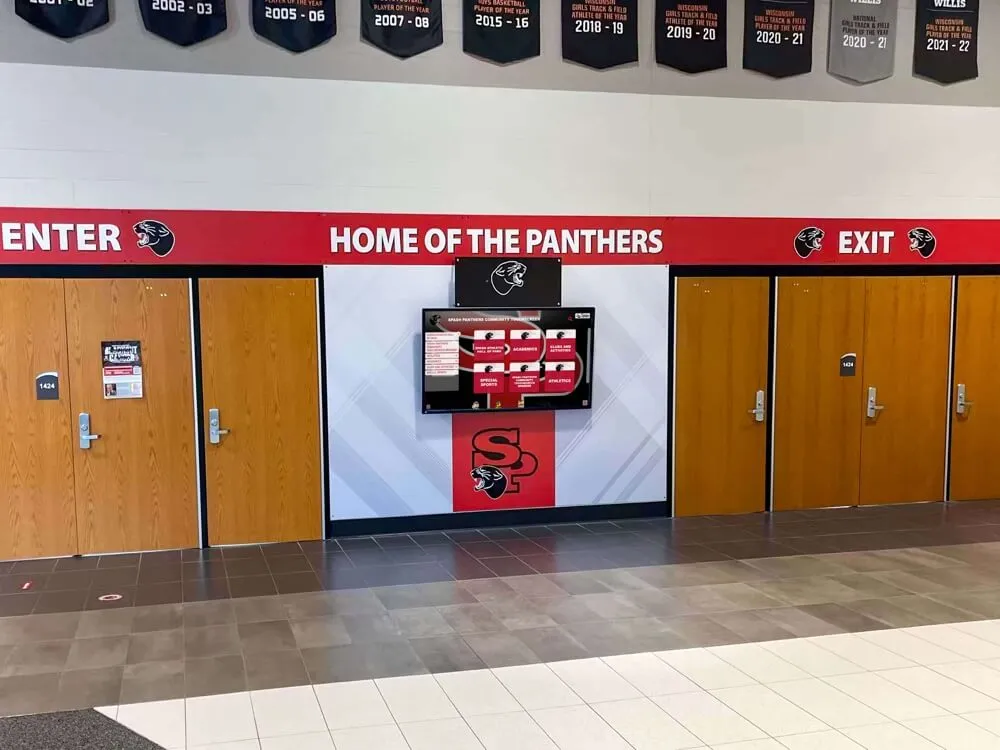
Ready to explore how purpose-built recognition platforms transform how you celebrate achievement? Discover Rocket Alumni Solutions and see how specialized platforms deliver capabilities that adapted generic tools cannot match. Learn more about comprehensive hall of fame strategies, explore alumni recognition wall concepts, or understand school history preservation approaches that honor institutional legacy while inspiring future generations.
Your greatest achievements deserve recognition technology specifically designed to celebrate excellence. Choose platforms that match the quality of the accomplishments they honor.
Disclaimer: This comparison is based on publicly available information as of December 2025. All product names and trademarks belong to their respective owners. Comparative statements reflect Rocket Alumni Solutions’ interpretation of available data and may change over time. This content was produced by or on behalf of Rocket Alumni Solutions. All trademarks are property of their respective owners. Rocket Alumni Solutions is not affiliated with or endorsed by Rise Vision, BrightSign, ScreenCloud, WordPress, Canva, Google, NoviSign, or Intuiface.